
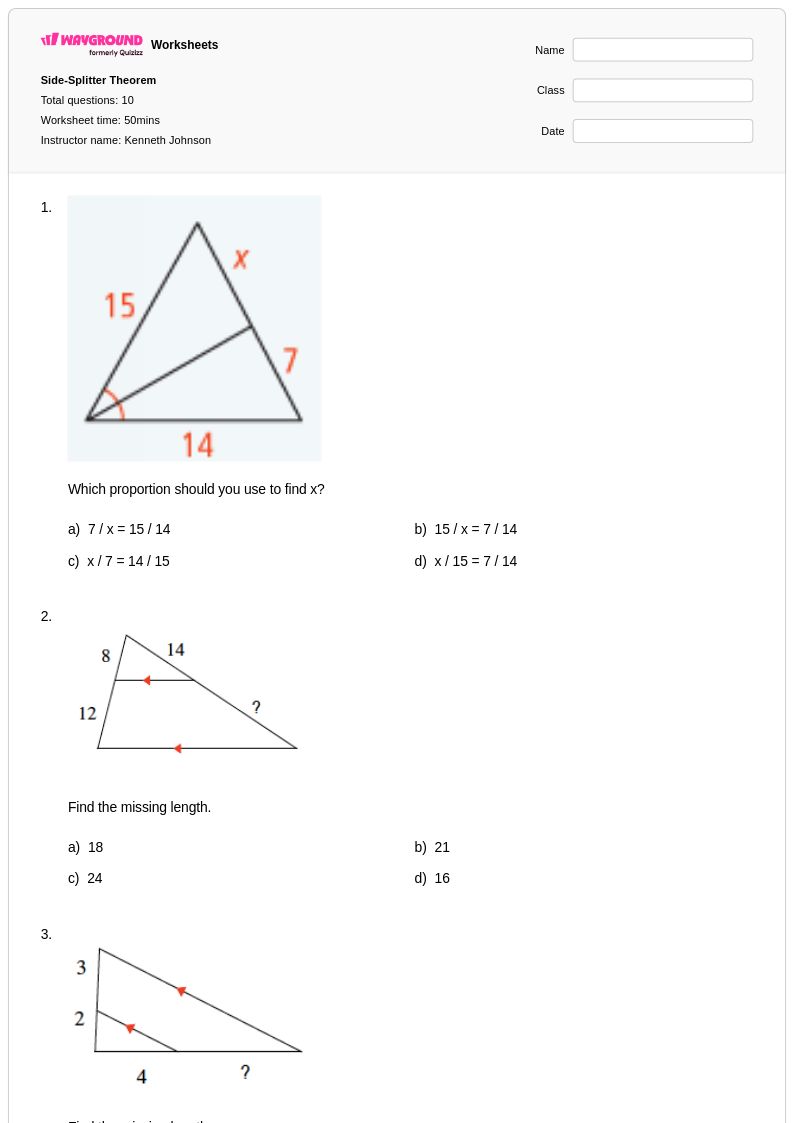
10 Q
10th
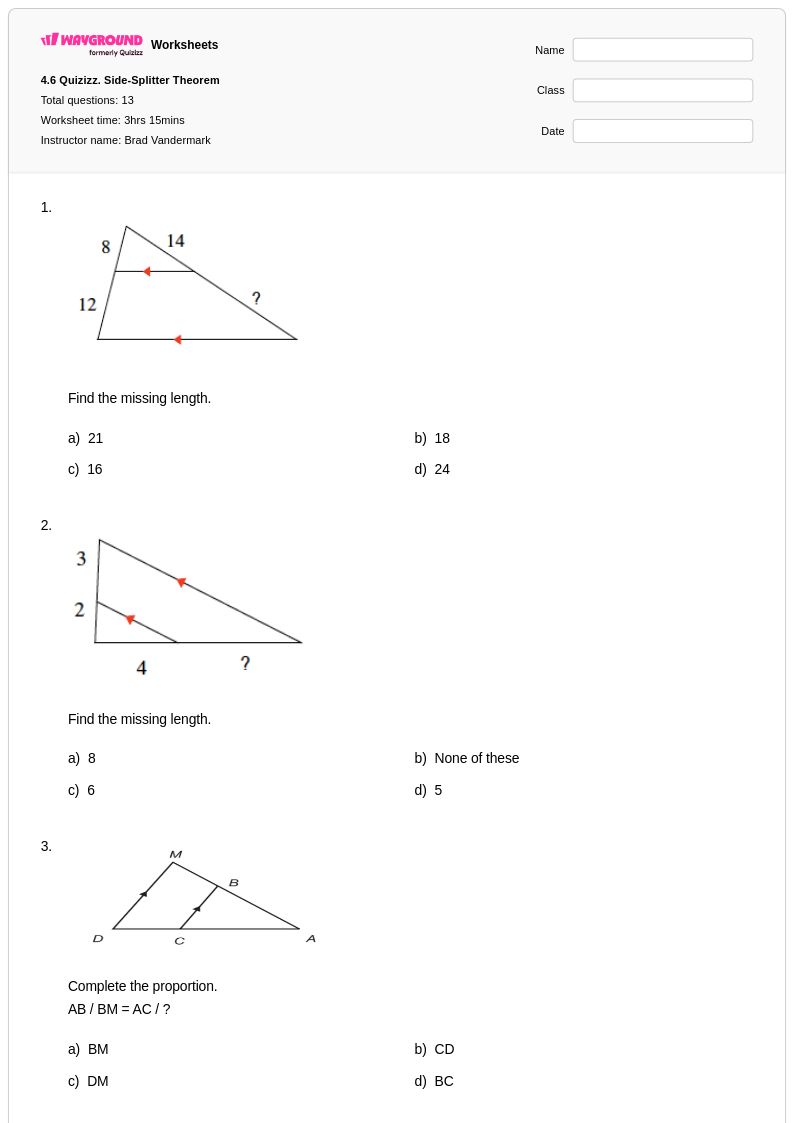
13 Q
10th
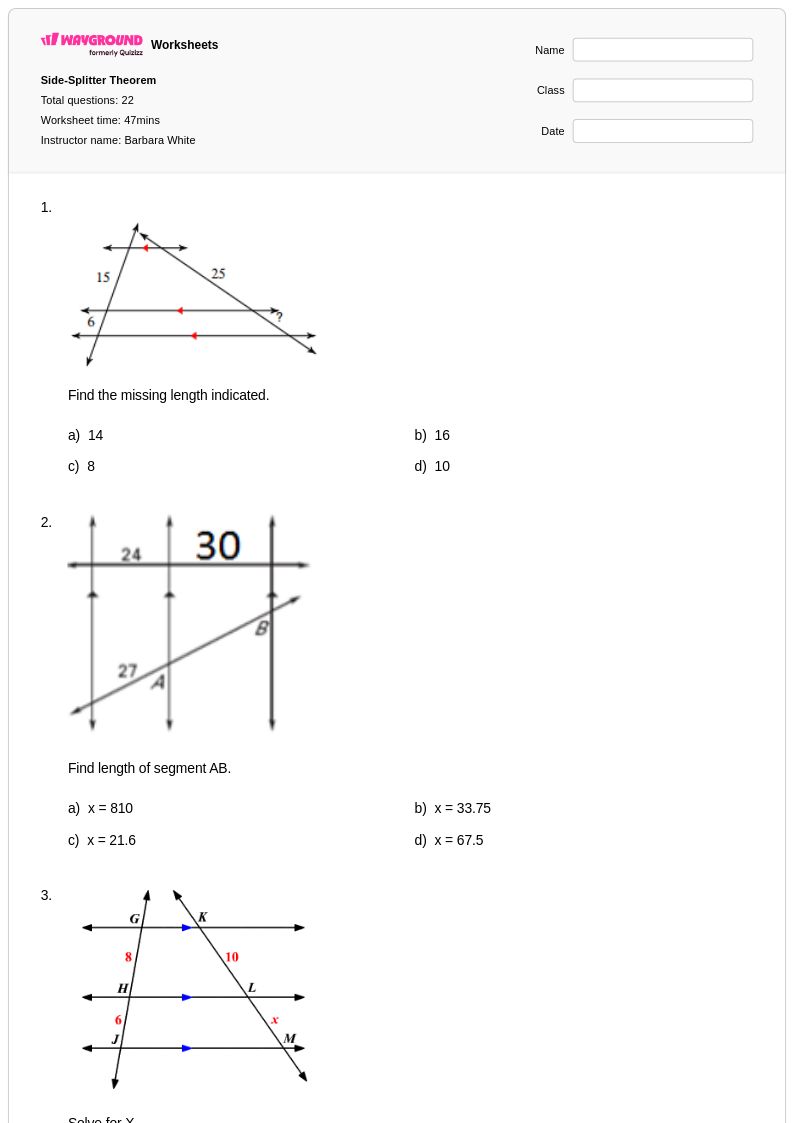
22 Q
10th
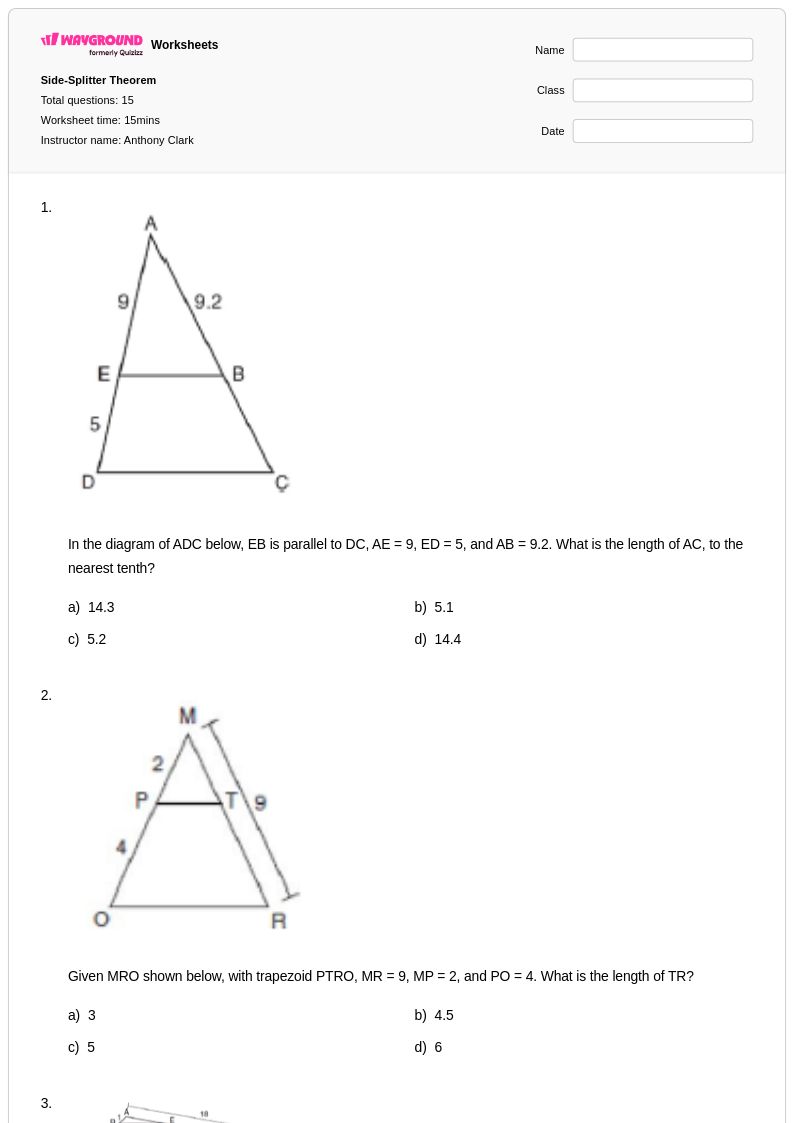
15 Q
10th - Uni
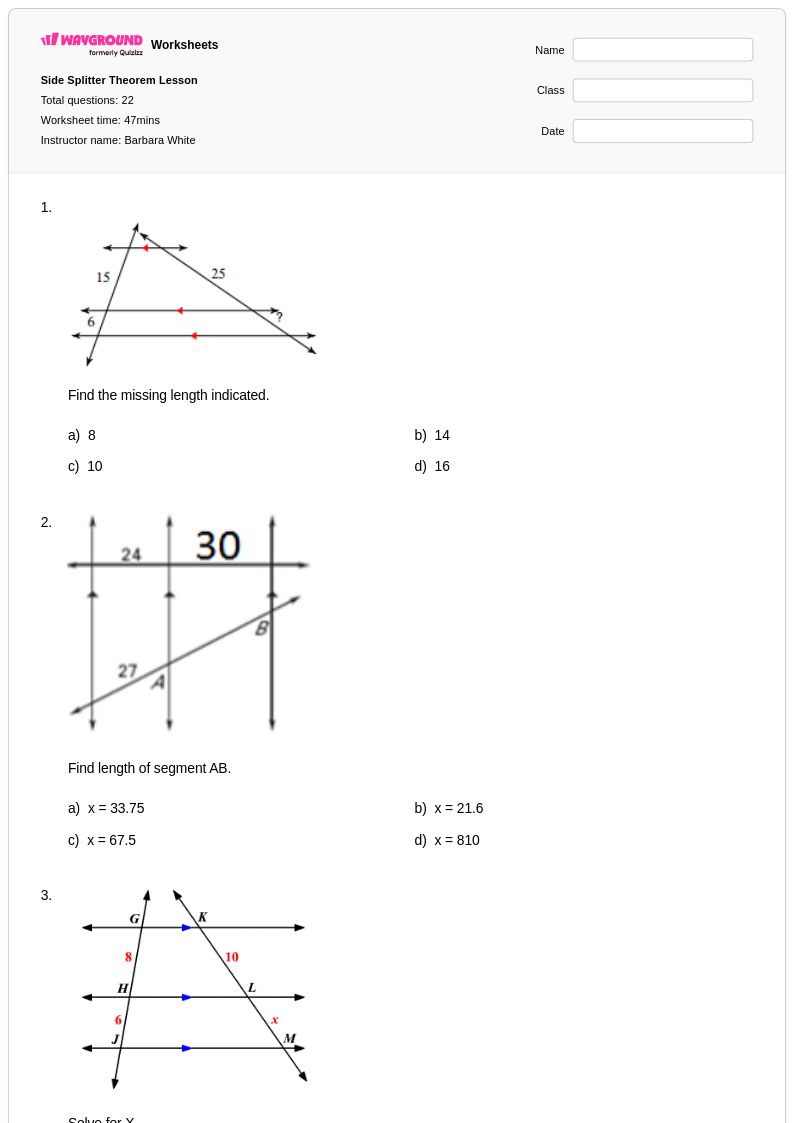
22 Q
10th
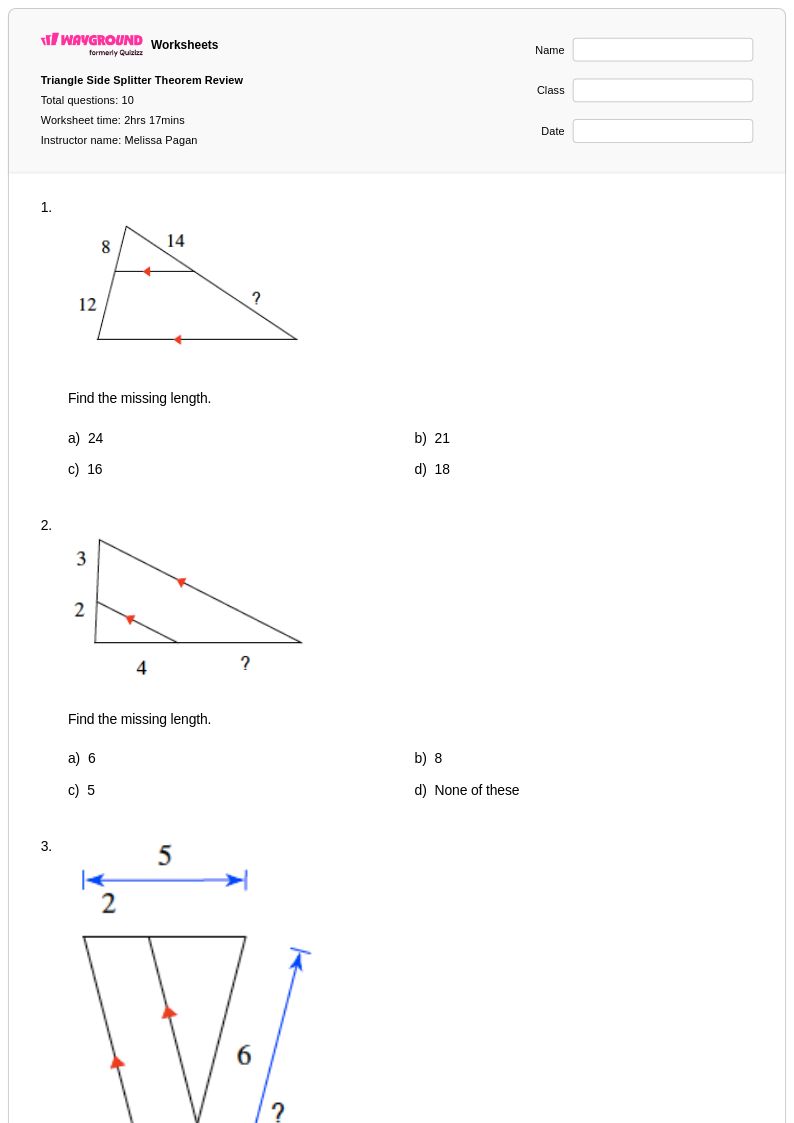
10 Q
9th - 12th
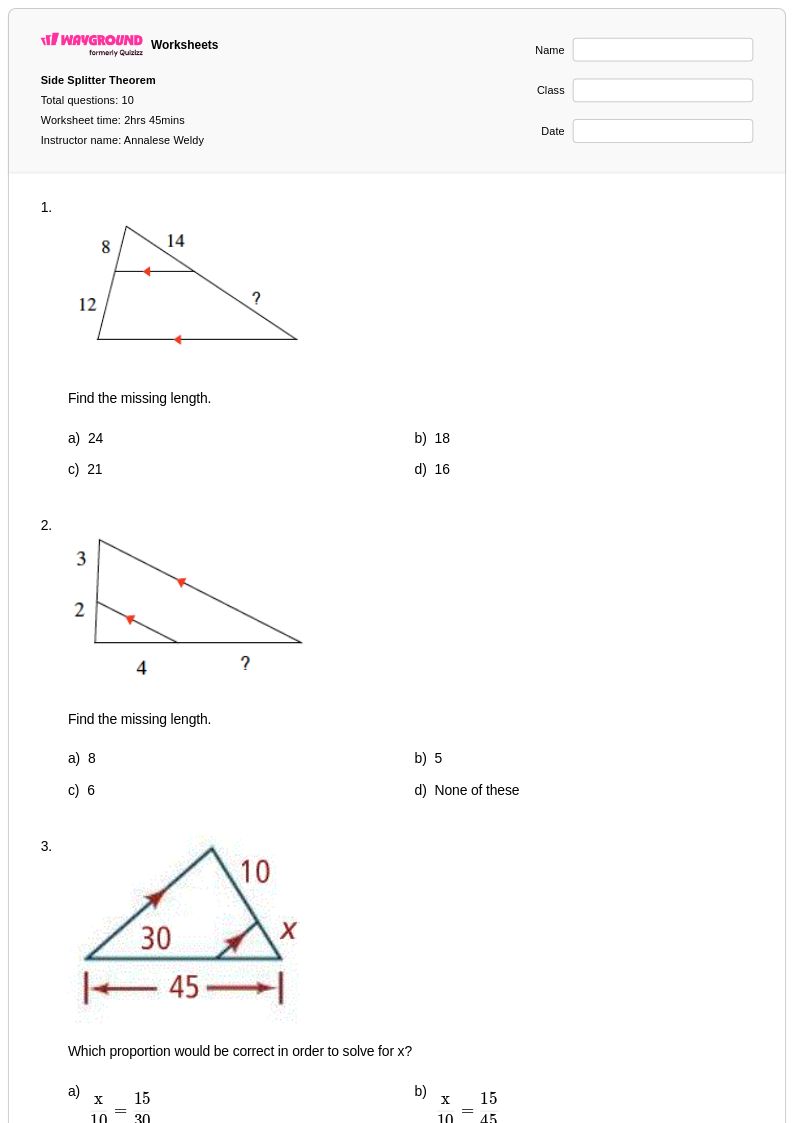
10 Q
9th
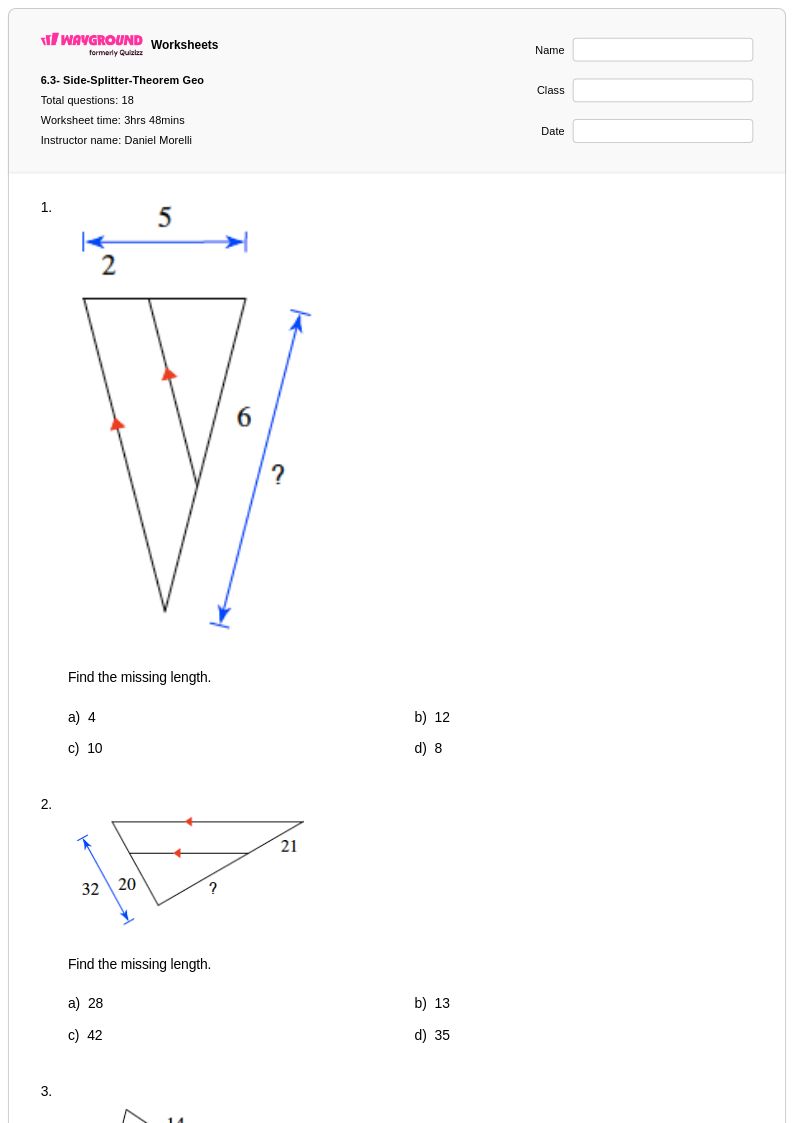
18 Q
PD
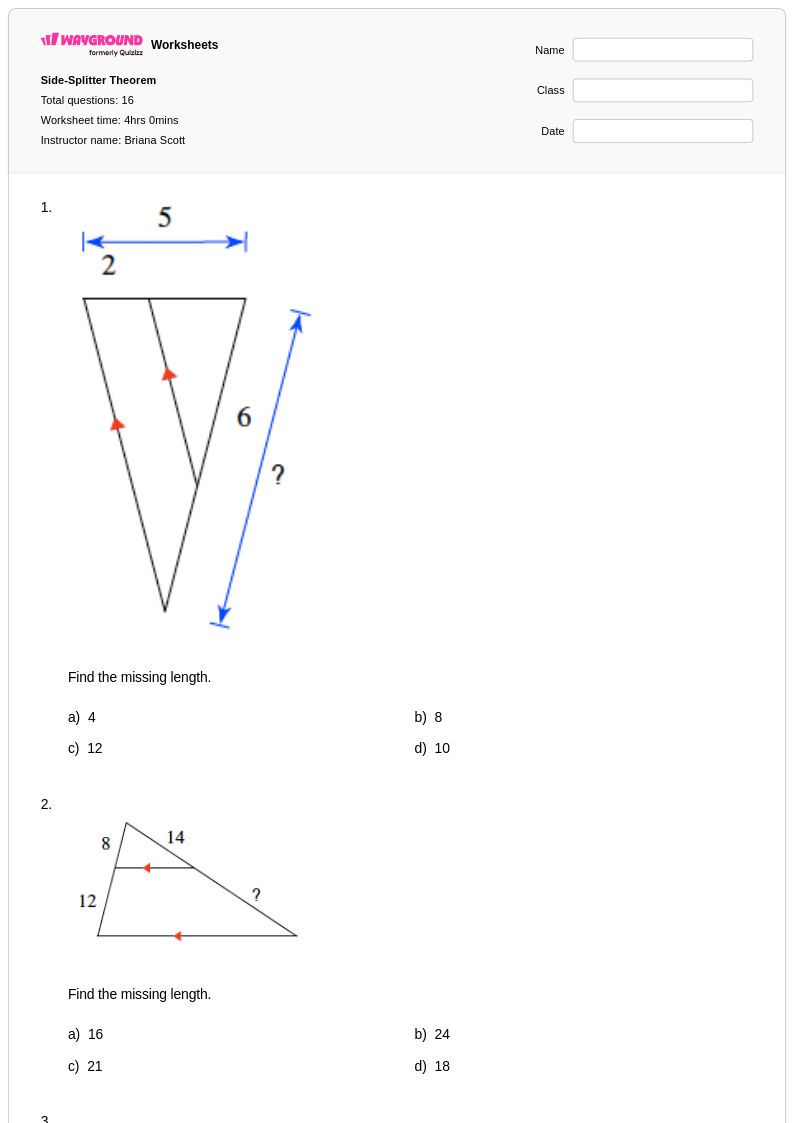
16 Q
9th - 12th
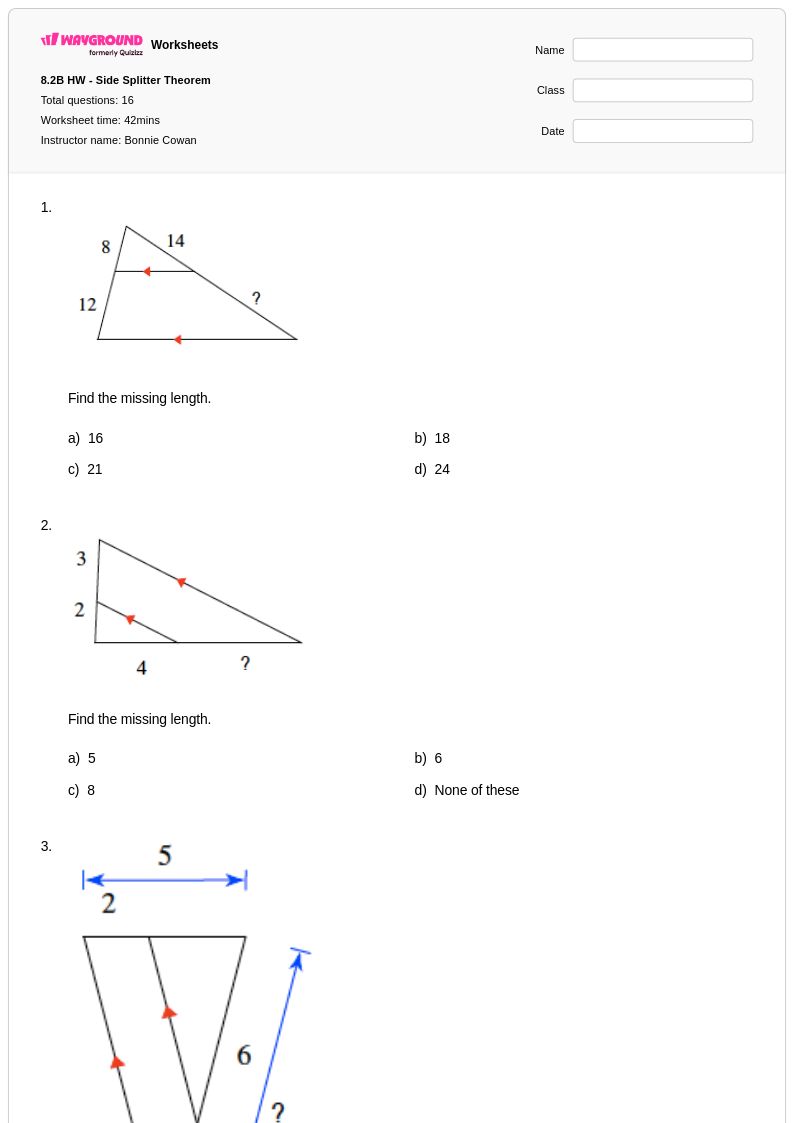
16 Q
10th
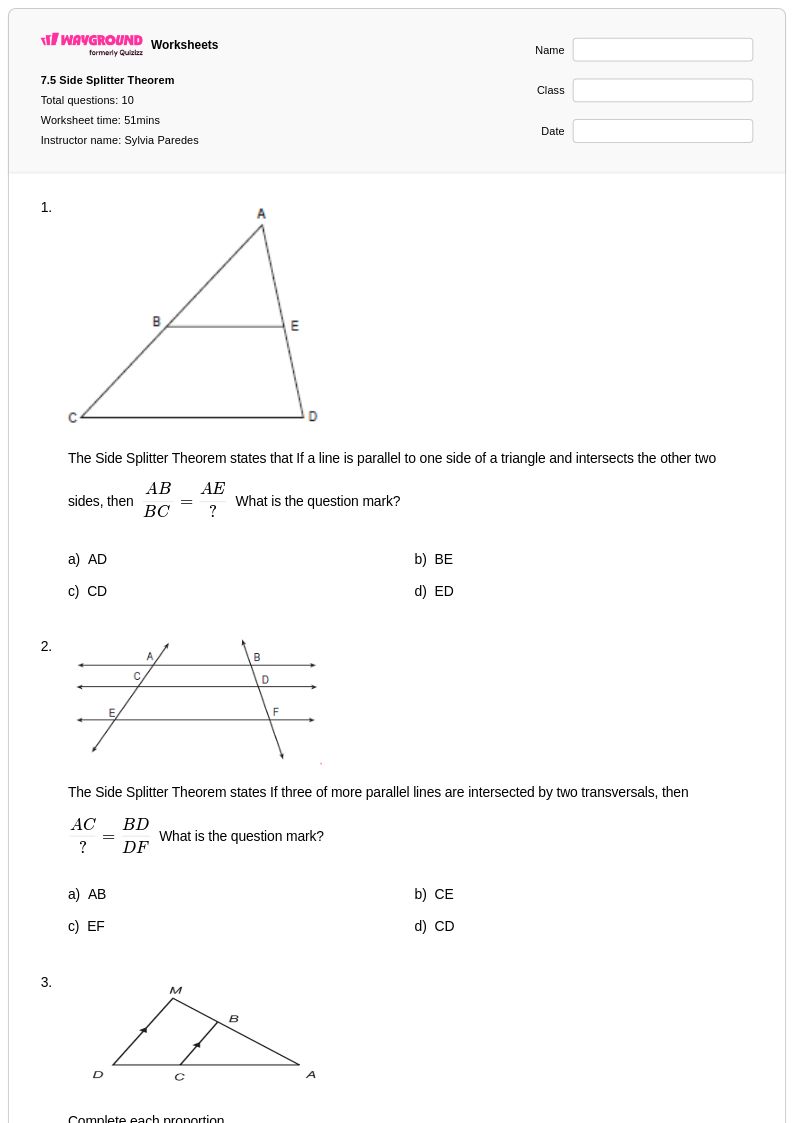
10 Q
9th - 12th
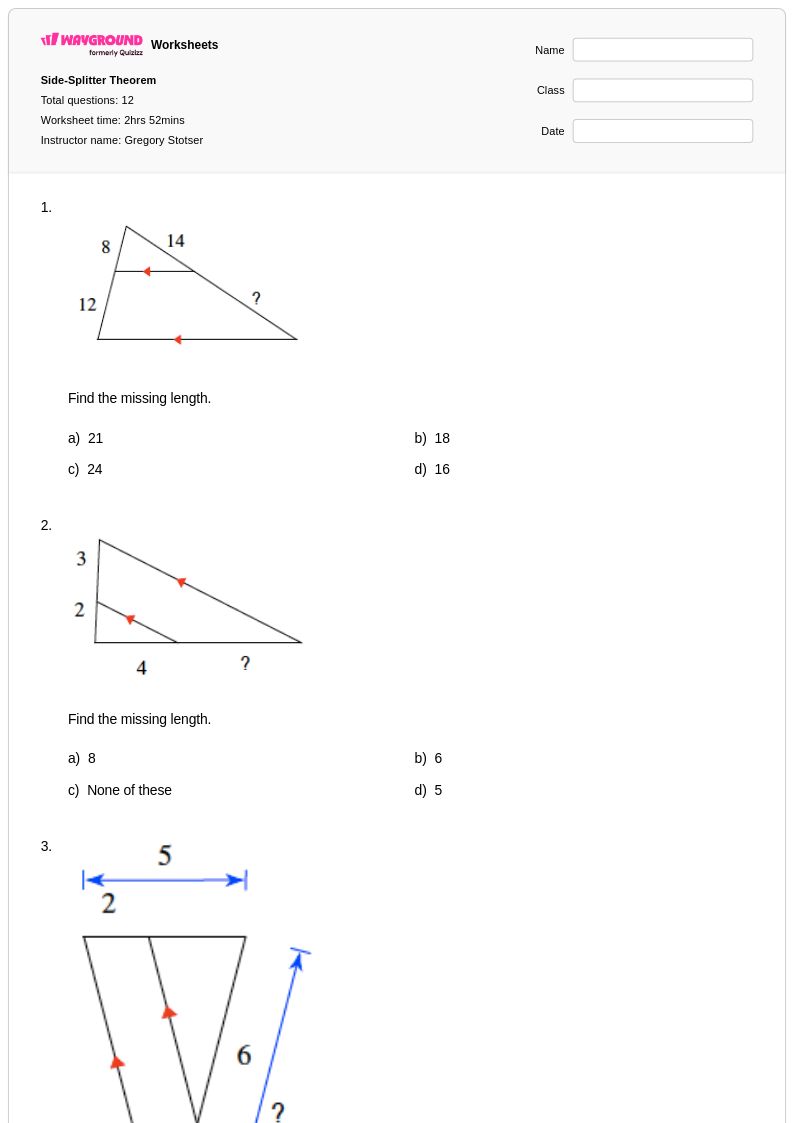
12 Q
KG - Uni
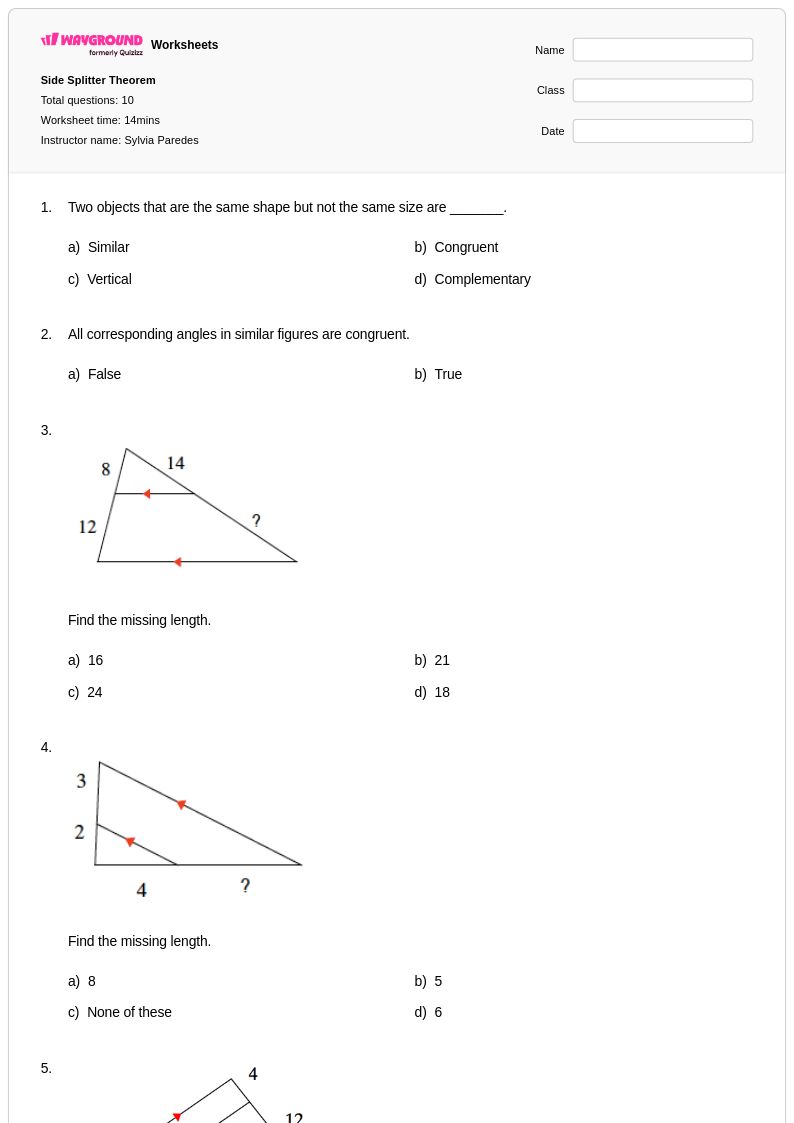
10 Q
10th
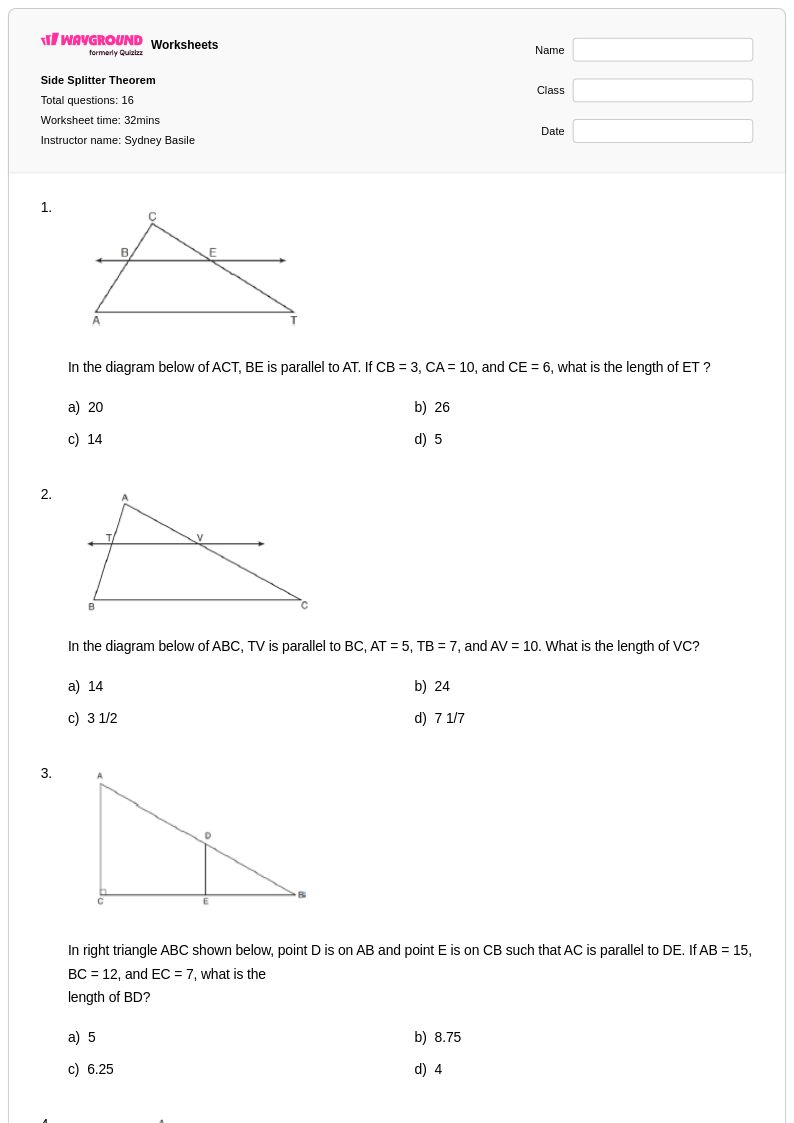
16 Q
9th - 12th
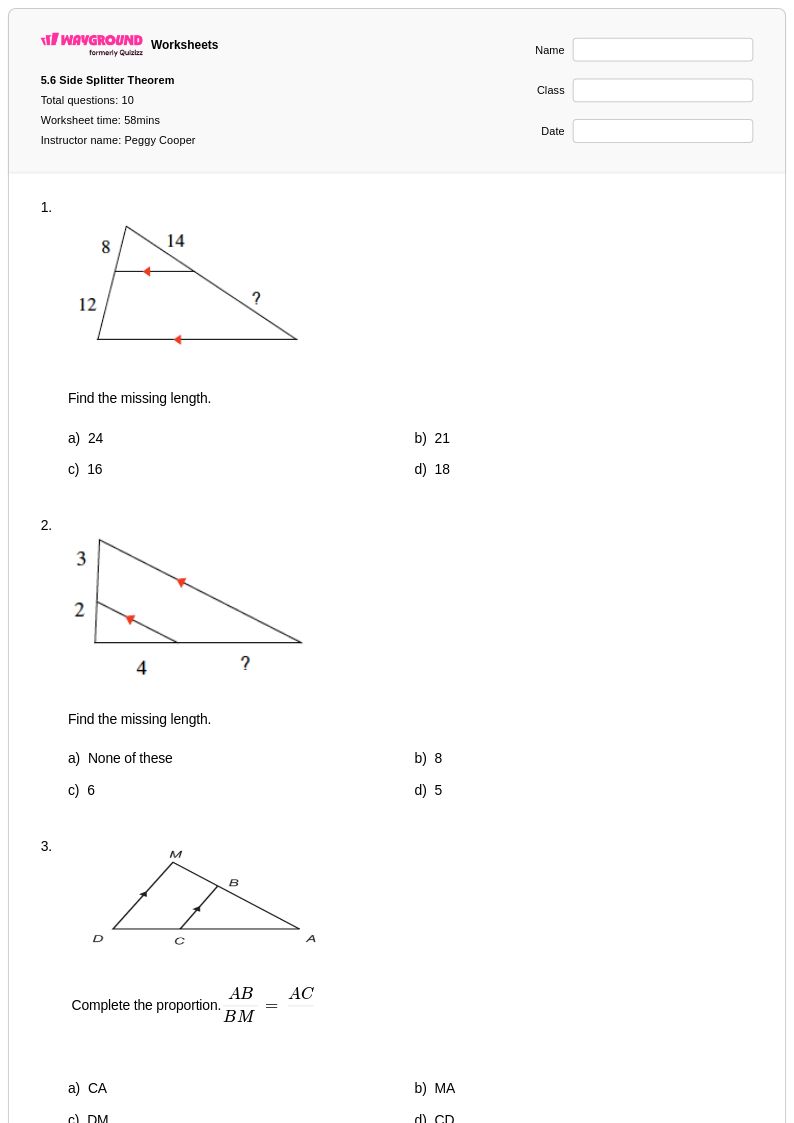
10 Q
9th - 10th
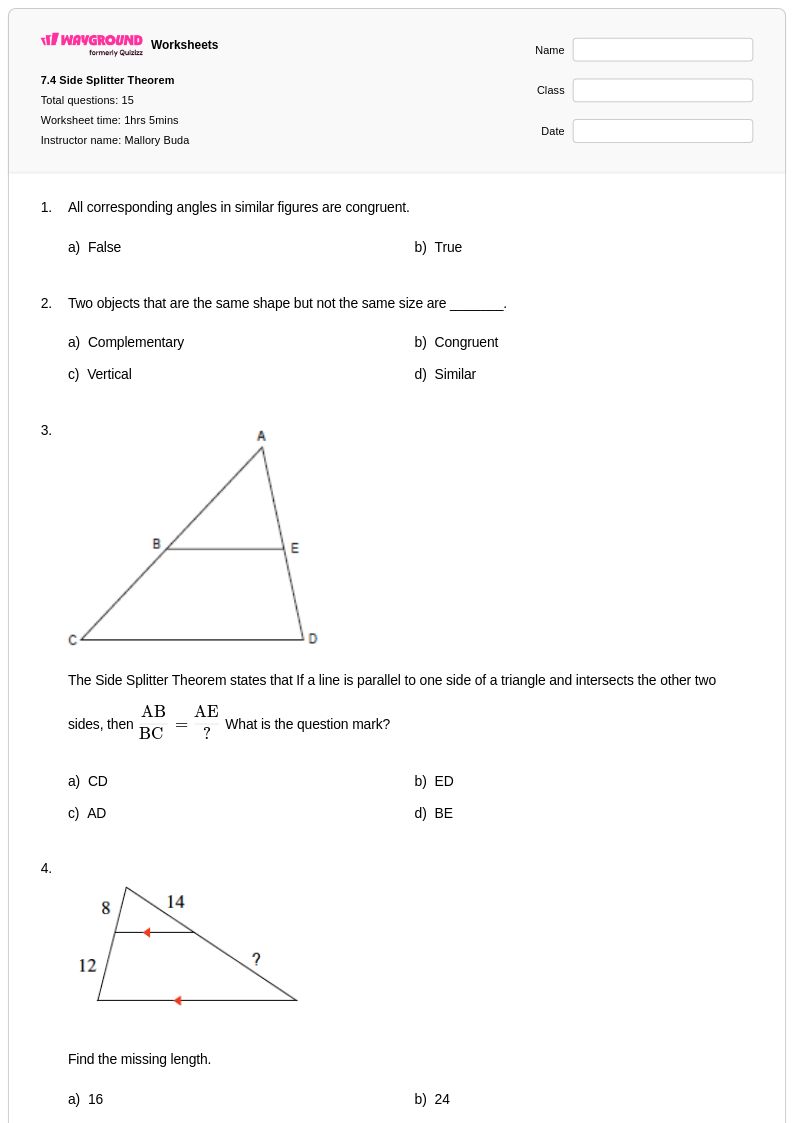
15 Q
9th - 10th
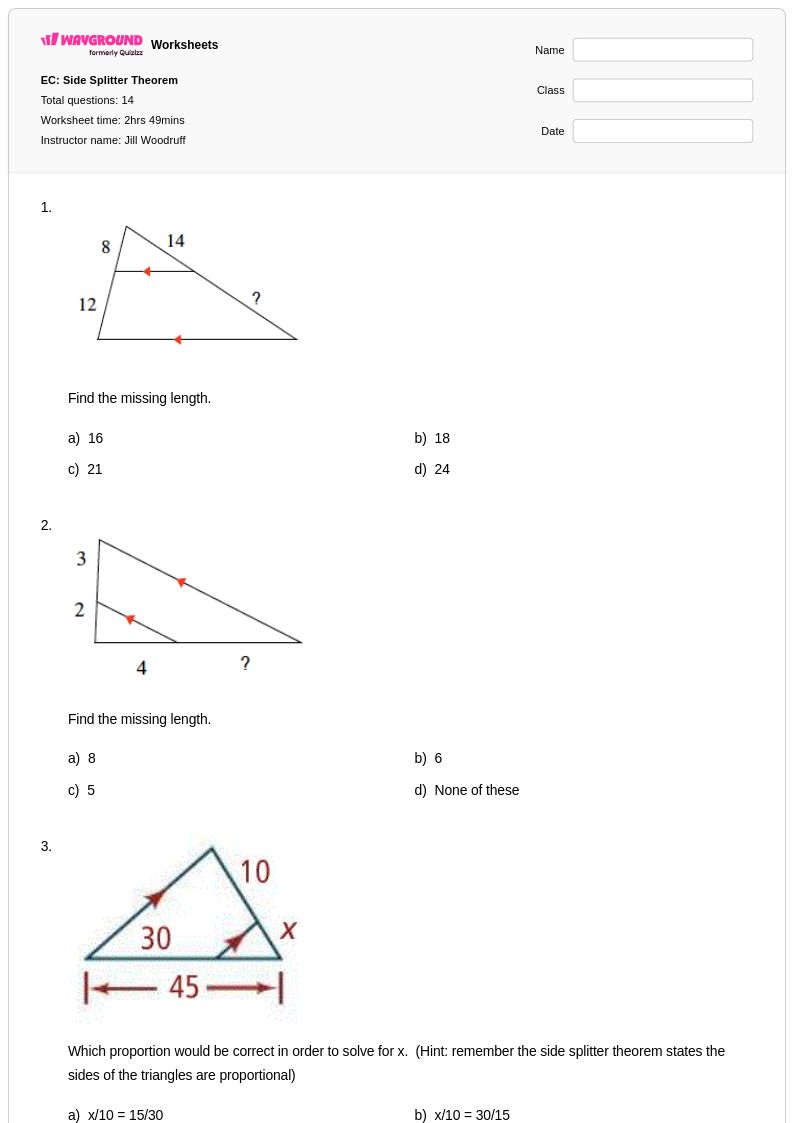
14 Q
9th - 12th
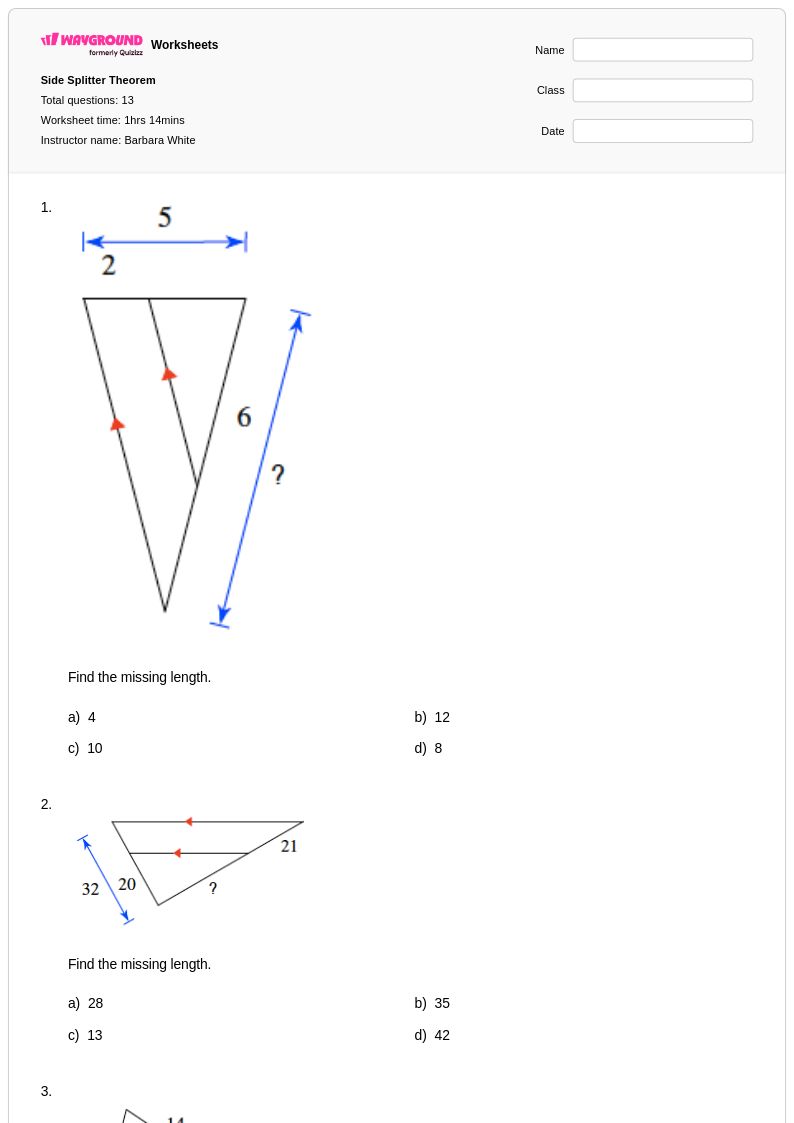
13 Q
9th - 12th
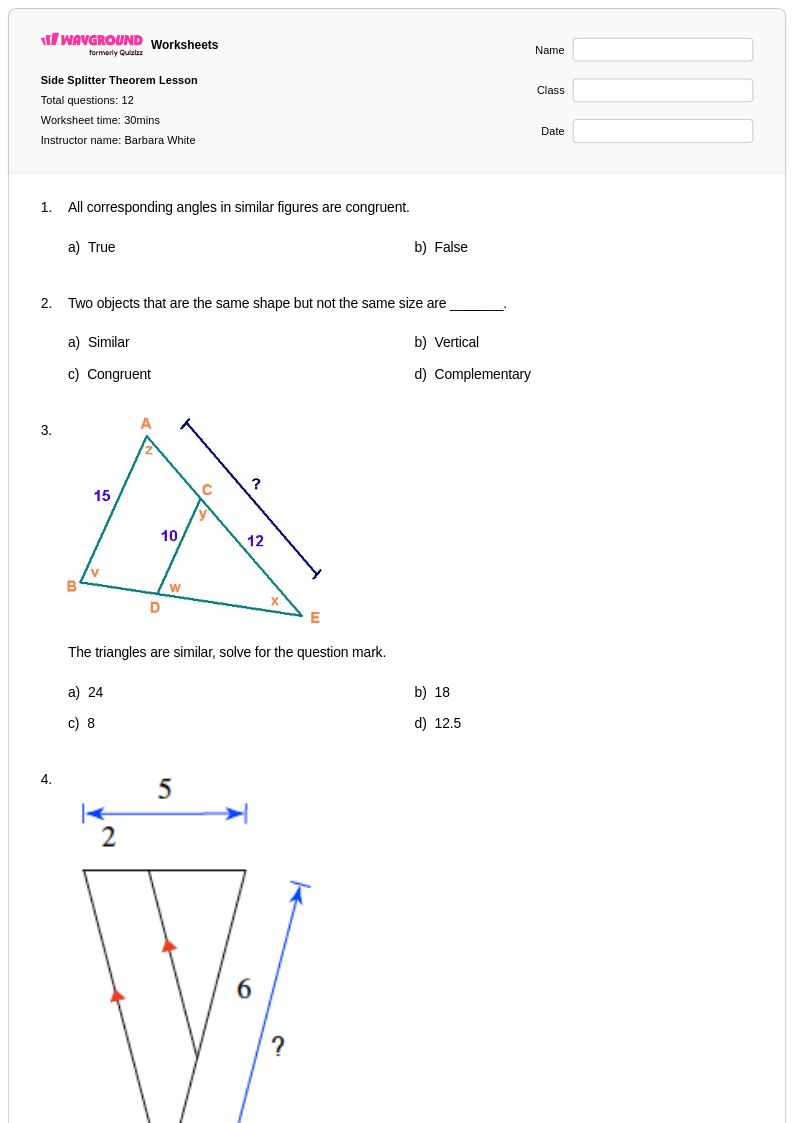
12 Q
9th - 10th
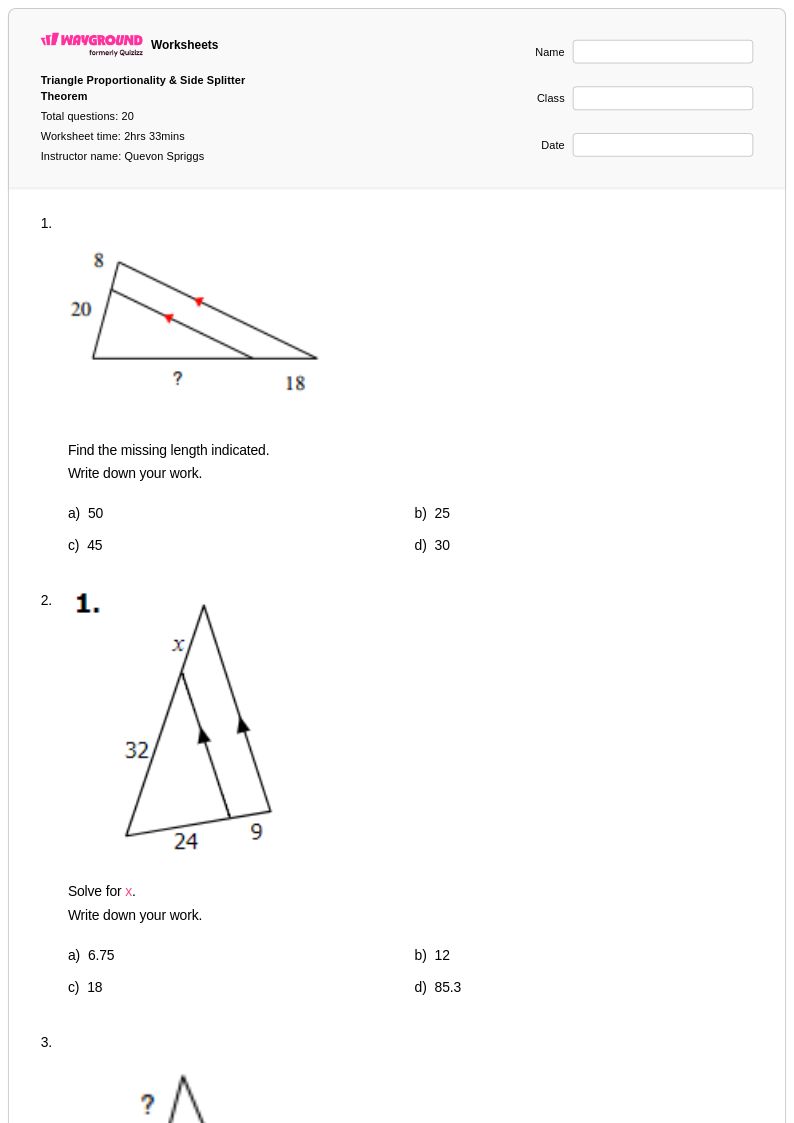
20 Q
9th - 12th
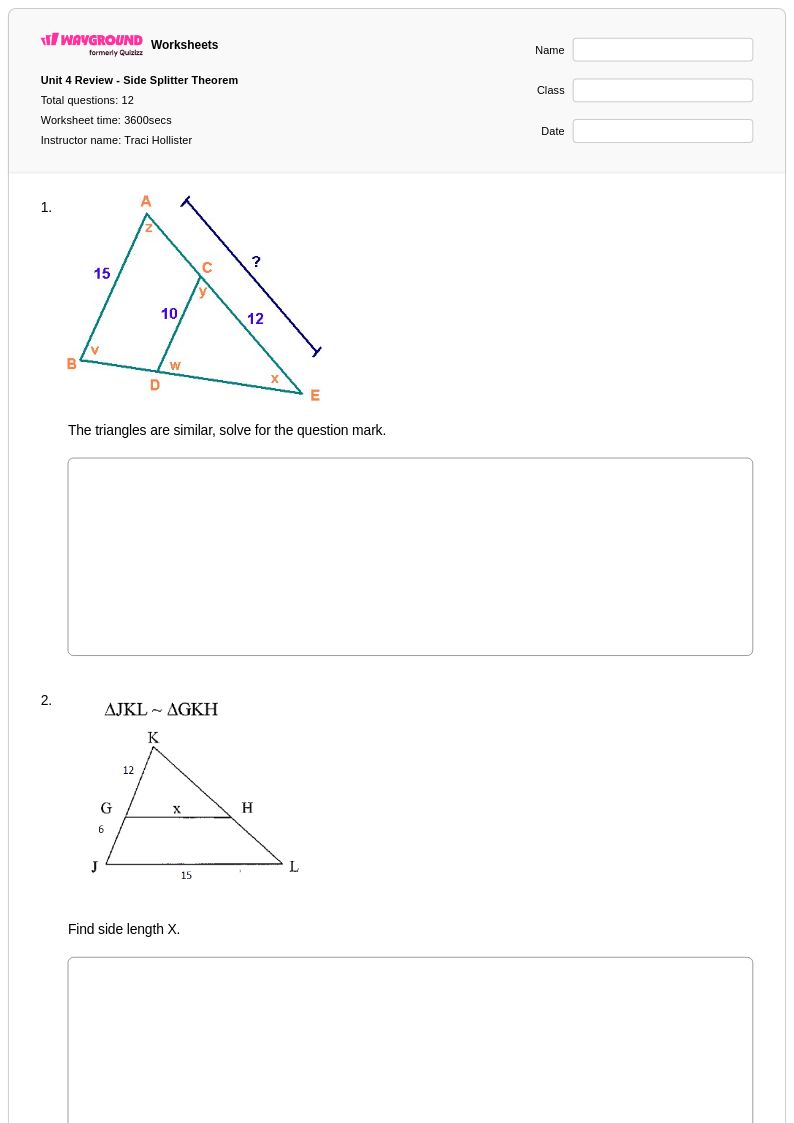
12 Q
11th
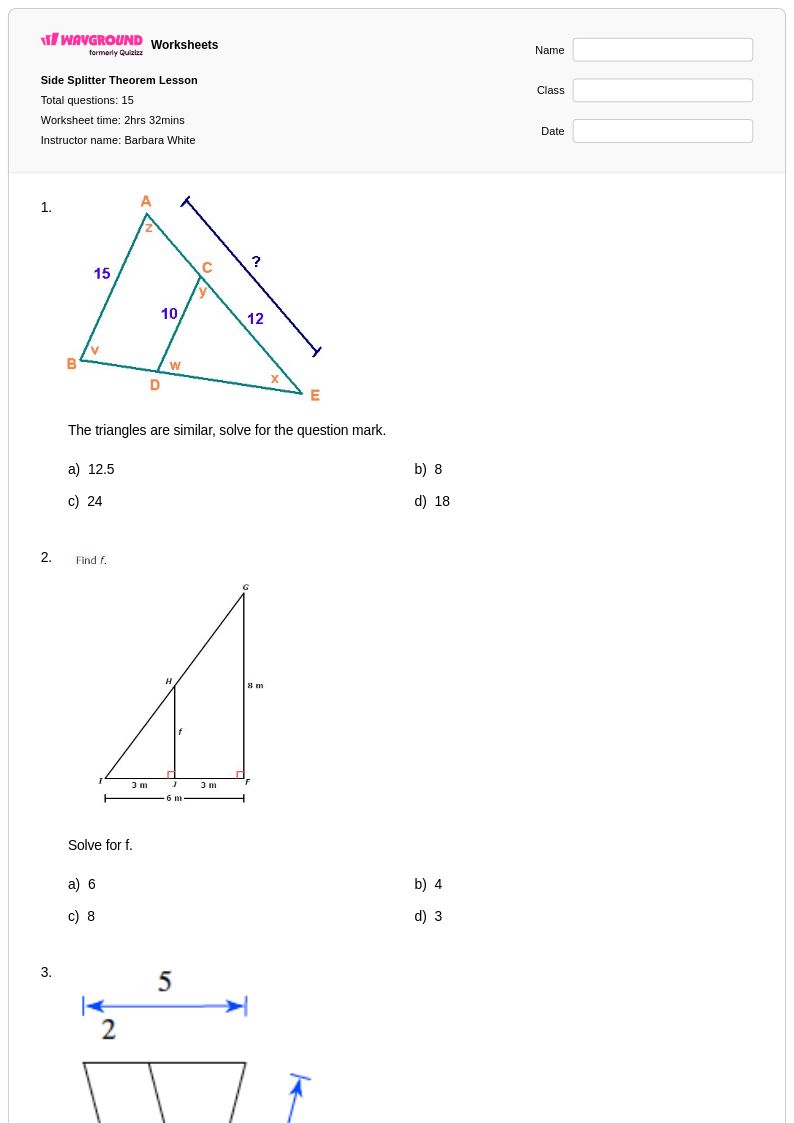
15 Q
9th - 10th
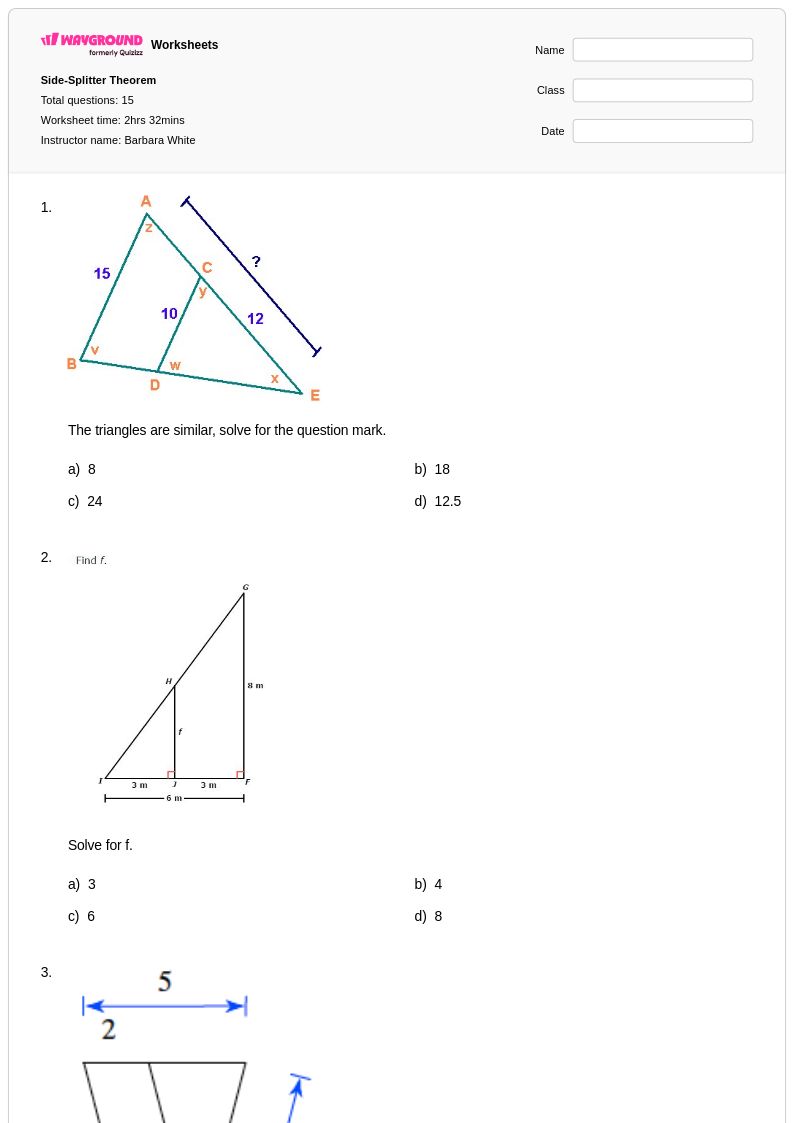
15 Q
9th - 10th
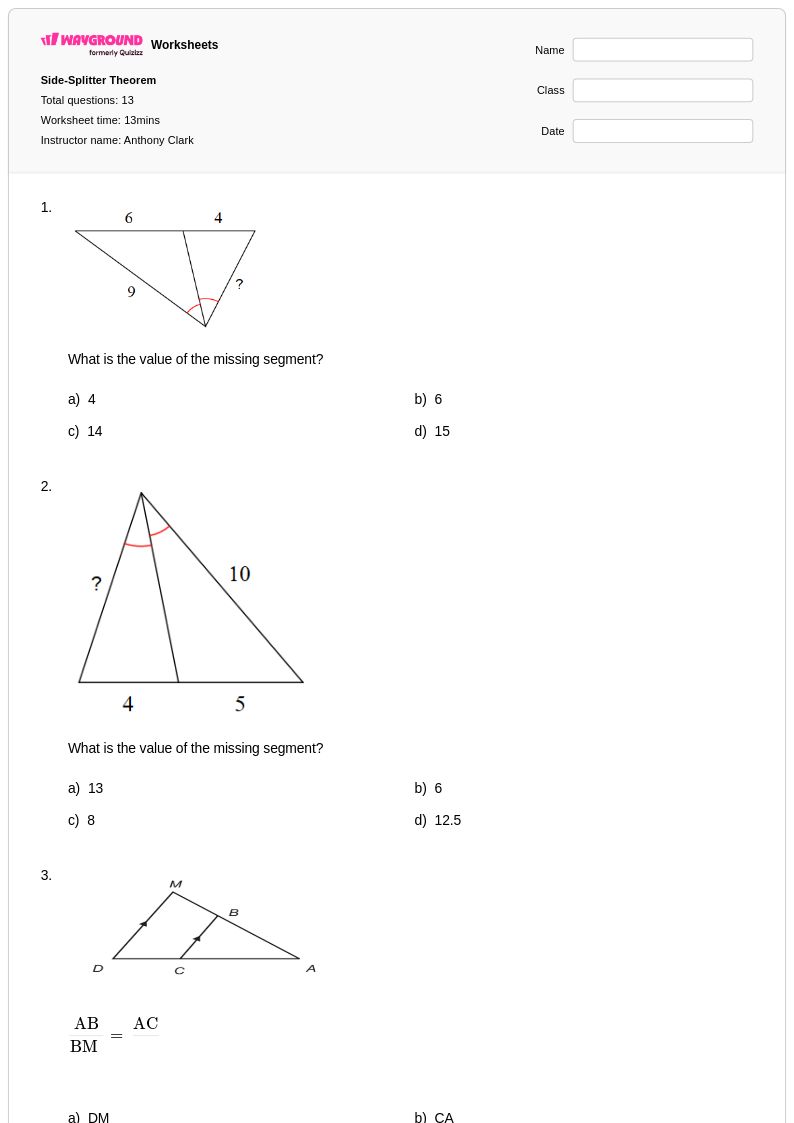
13 Q
10th - Uni
Explore Worksheets by Subjects
Explore printable Side Splitter Theorem worksheets
Side Splitter Theorem worksheets available through Wayground (formerly Quizizz) provide comprehensive practice opportunities for students to master this fundamental geometric concept that demonstrates proportional relationships in triangles. These carefully designed resources focus on developing students' ability to identify parallel segments that intersect triangle sides and calculate unknown measurements using proportional reasoning. The worksheets strengthen critical skills including setting up proportions, cross-multiplying to solve for variables, and applying the theorem to solve real-world geometric problems. Each worksheet collection includes detailed answer keys that support both independent study and classroom instruction, with free printable materials available in convenient PDF format to facilitate easy distribution and practice problem completion.
Wayground (formerly Quizizz) empowers educators with millions of teacher-created Side Splitter Theorem resources that feature robust search and filtering capabilities to locate materials perfectly aligned with specific curriculum standards and learning objectives. The platform's differentiation tools allow teachers to customize worksheets for various skill levels, providing both remediation support for struggling students and enrichment opportunities for advanced learners. These flexible resources are available in both printable PDF formats for traditional classroom use and digital formats for interactive online instruction, making lesson planning more efficient and effective. Teachers can seamlessly integrate these materials into their geometry curriculum to provide targeted skill practice, assess student understanding of proportional relationships in triangles, and support students in developing the mathematical reasoning necessary for success in advanced geometric concepts.
FAQs
How can I introduce the Side Splitter Theorem to my students?
What types of problems help students practice the Side Splitter Theorem?
What is the most common mistake students make with the Side Splitter Theorem?
How can I use this Side Splitter Theorem worksheet in my class?
How does the Side Splitter Theorem fit into the geometry curriculum?
What grade do students typically learn the Side Splitter Theorem?