
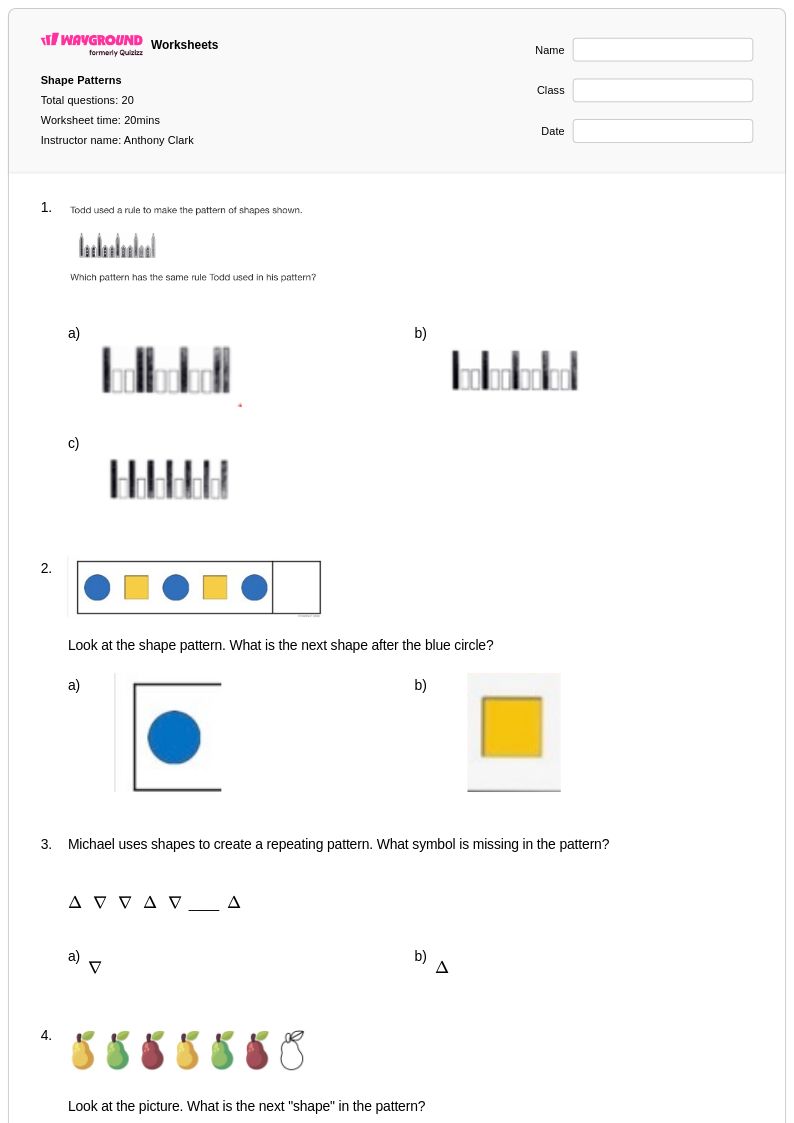
20 Q
4th - Uni
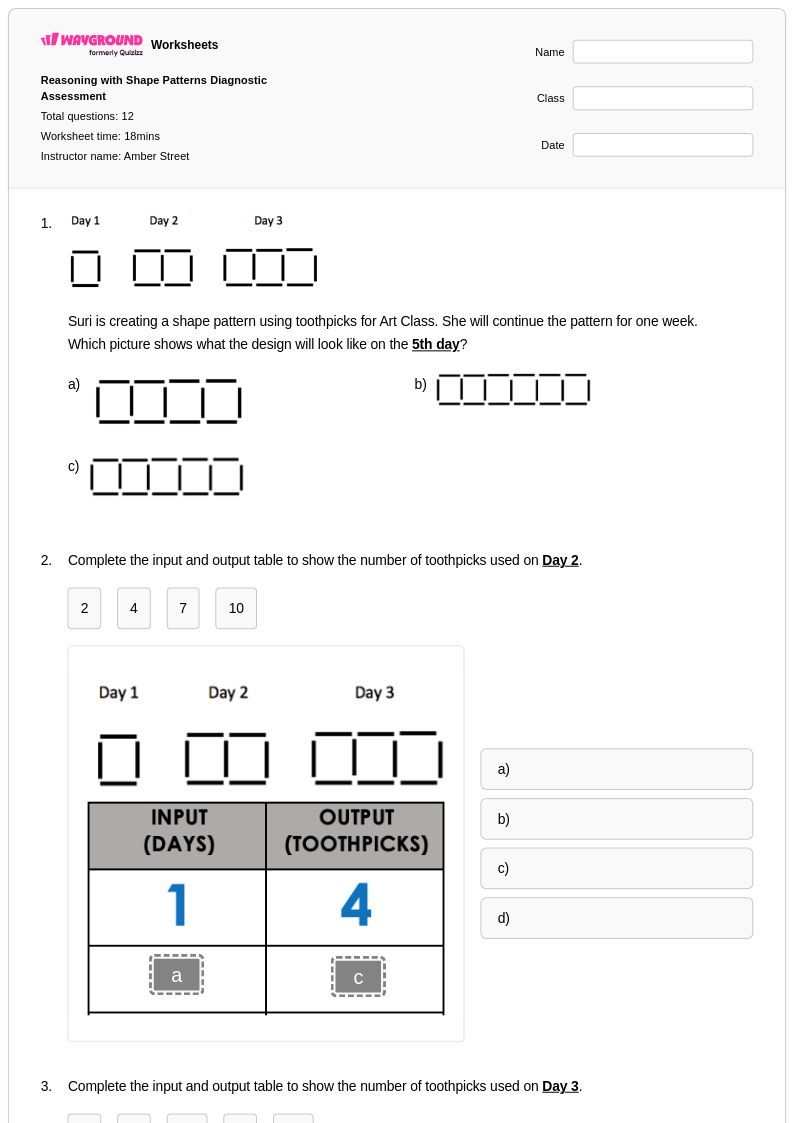
12 Q
4th
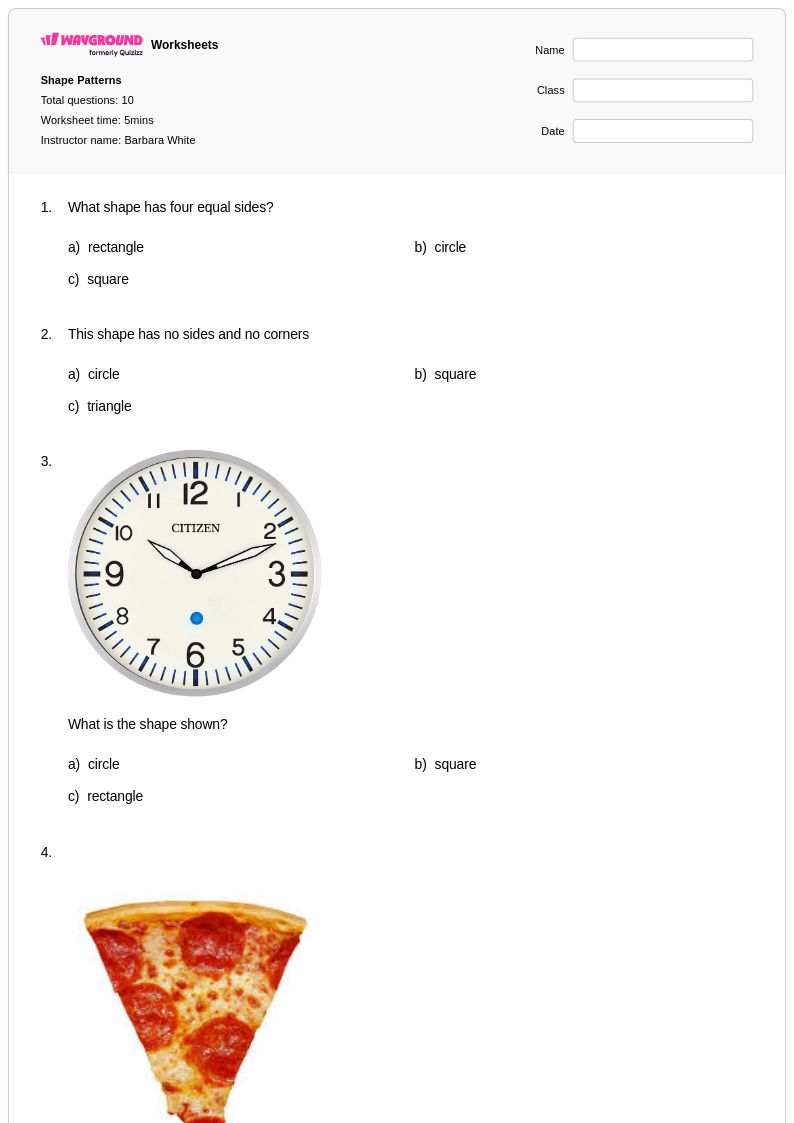
10 Q
1st
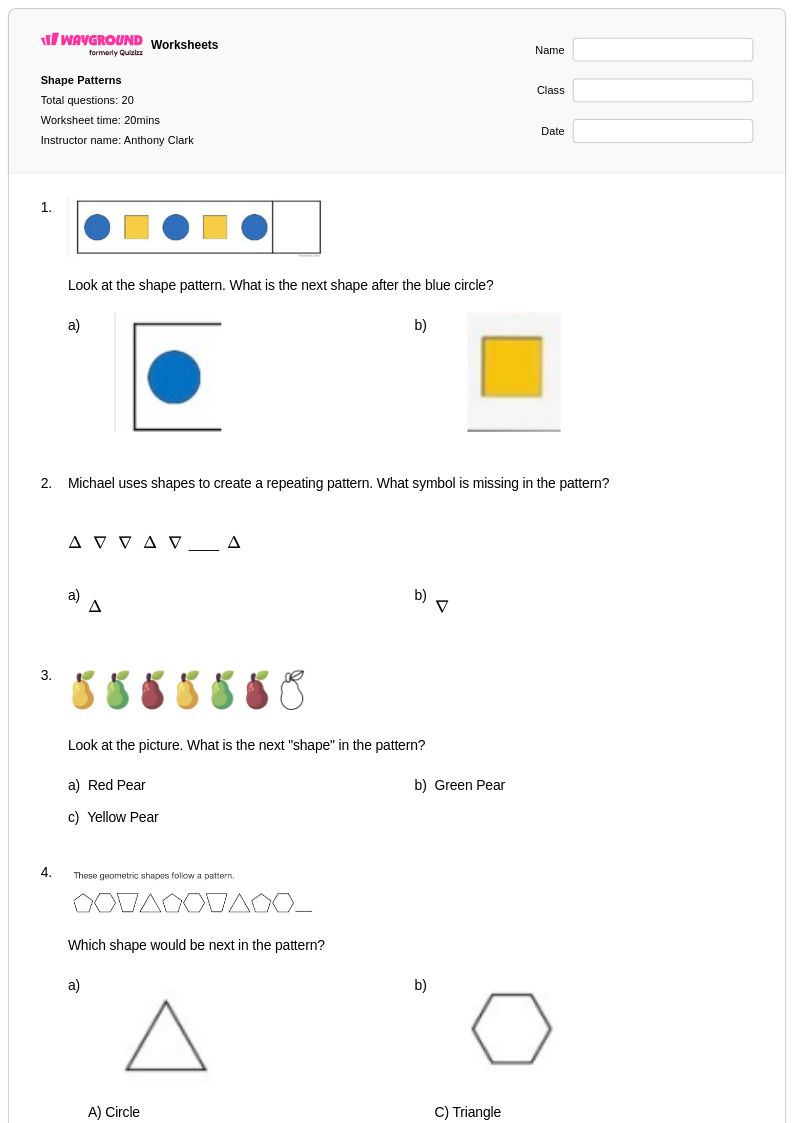
20 Q
5th - Uni
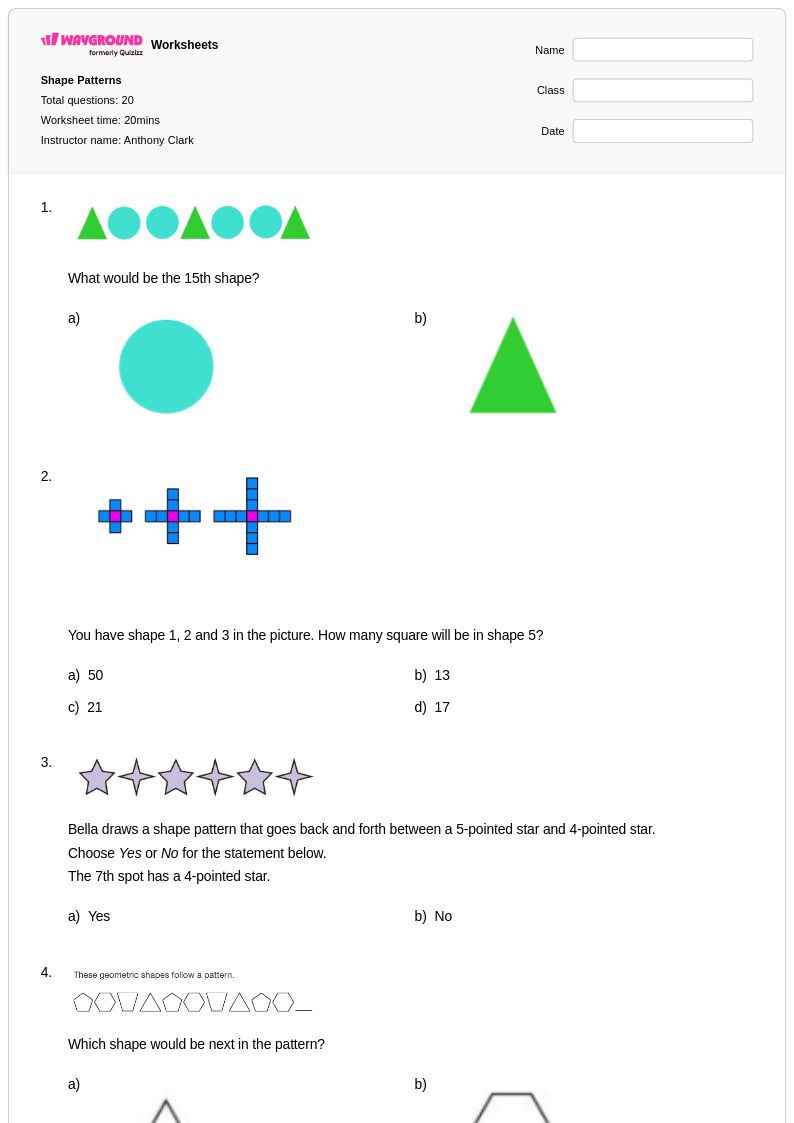
20 Q
4th - Uni
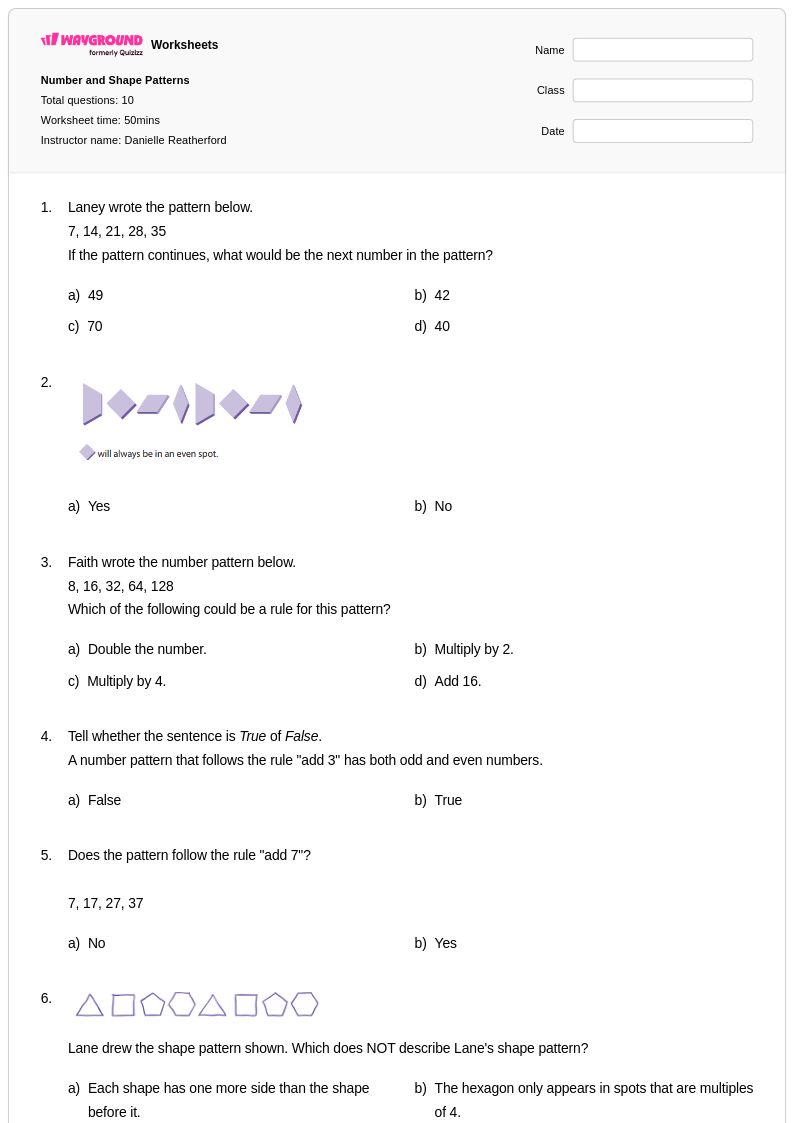
10 Q
4th
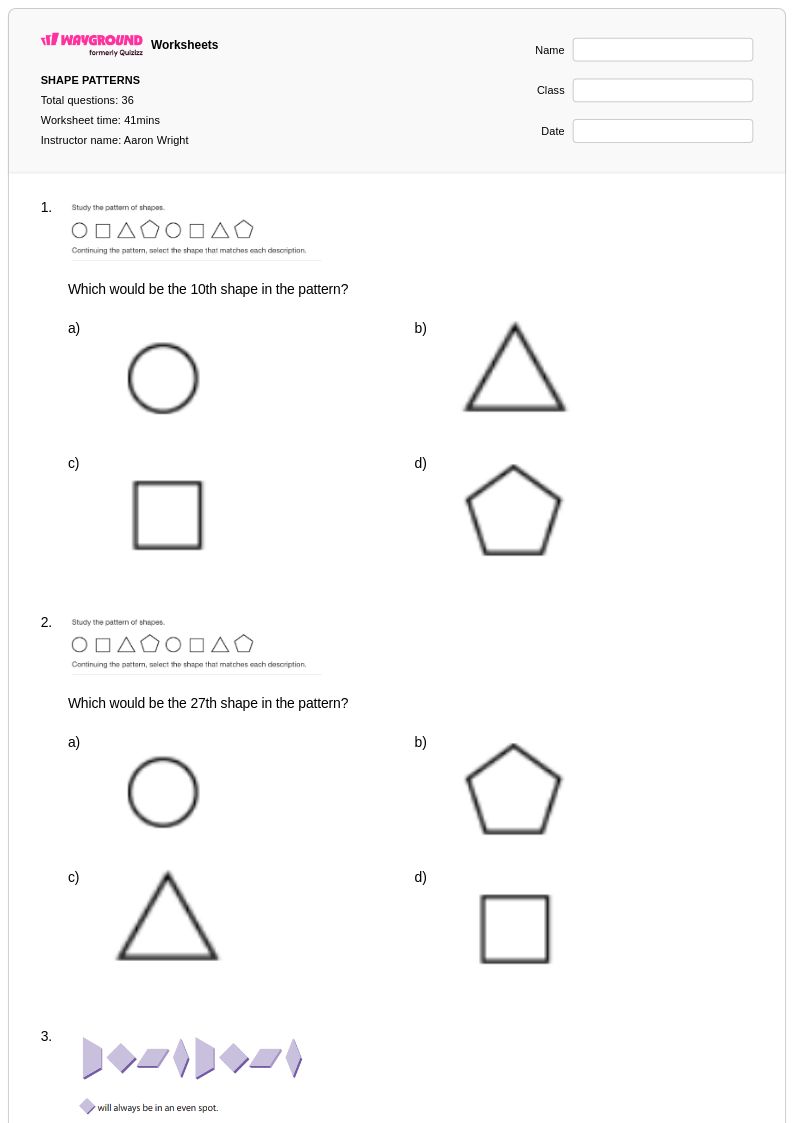
36 Q
4th
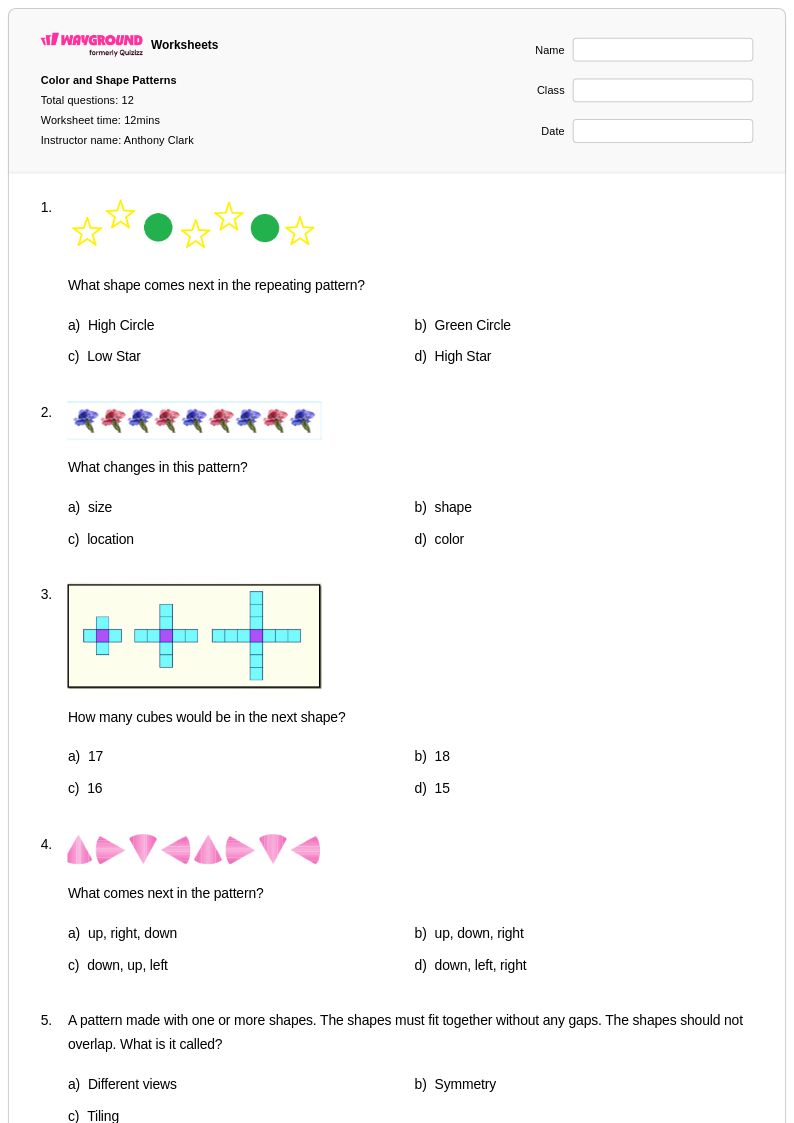
12 Q
3rd - Uni
10 Q
4th
10 Q
4th
10 Q
1st
20 Q
2nd
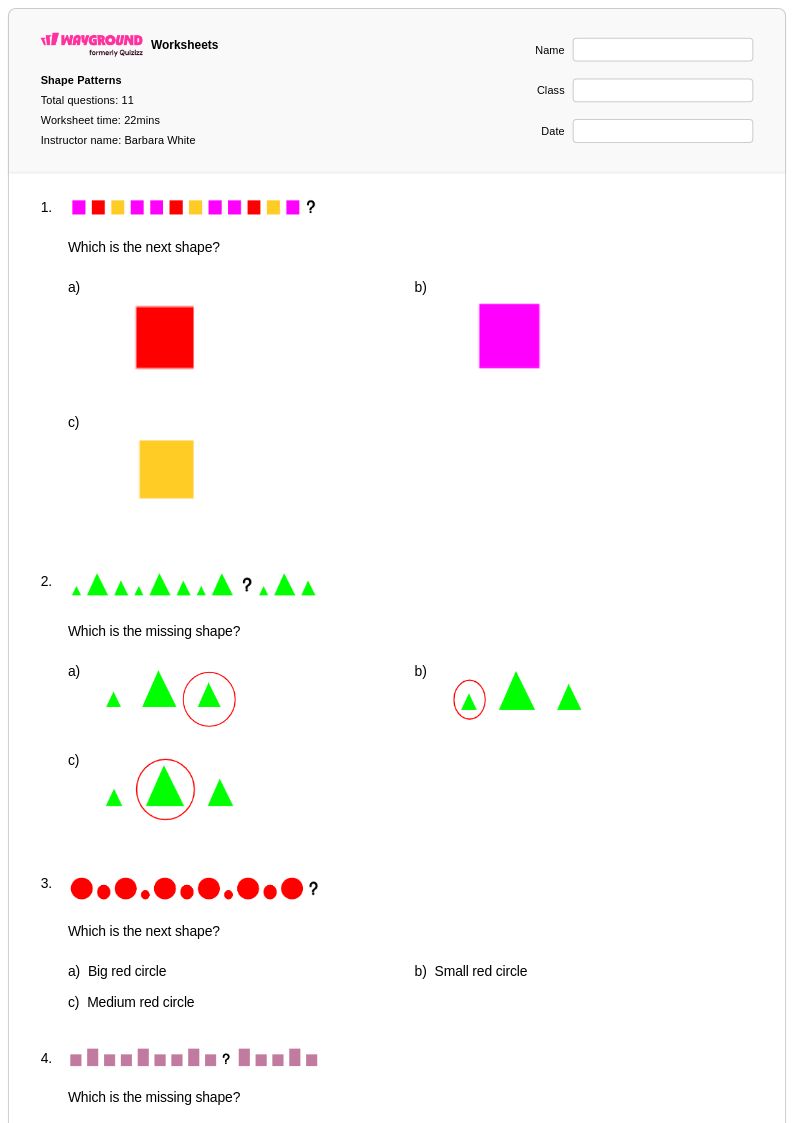
11 Q
1st
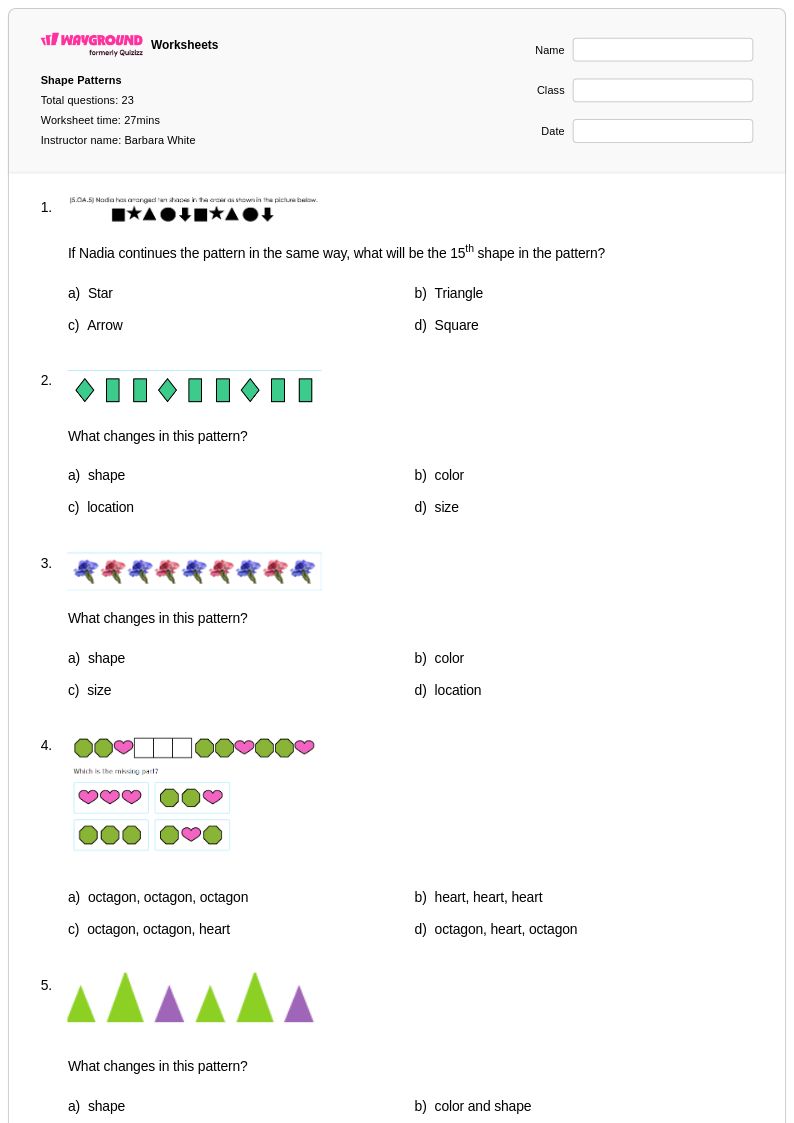
23 Q
4th
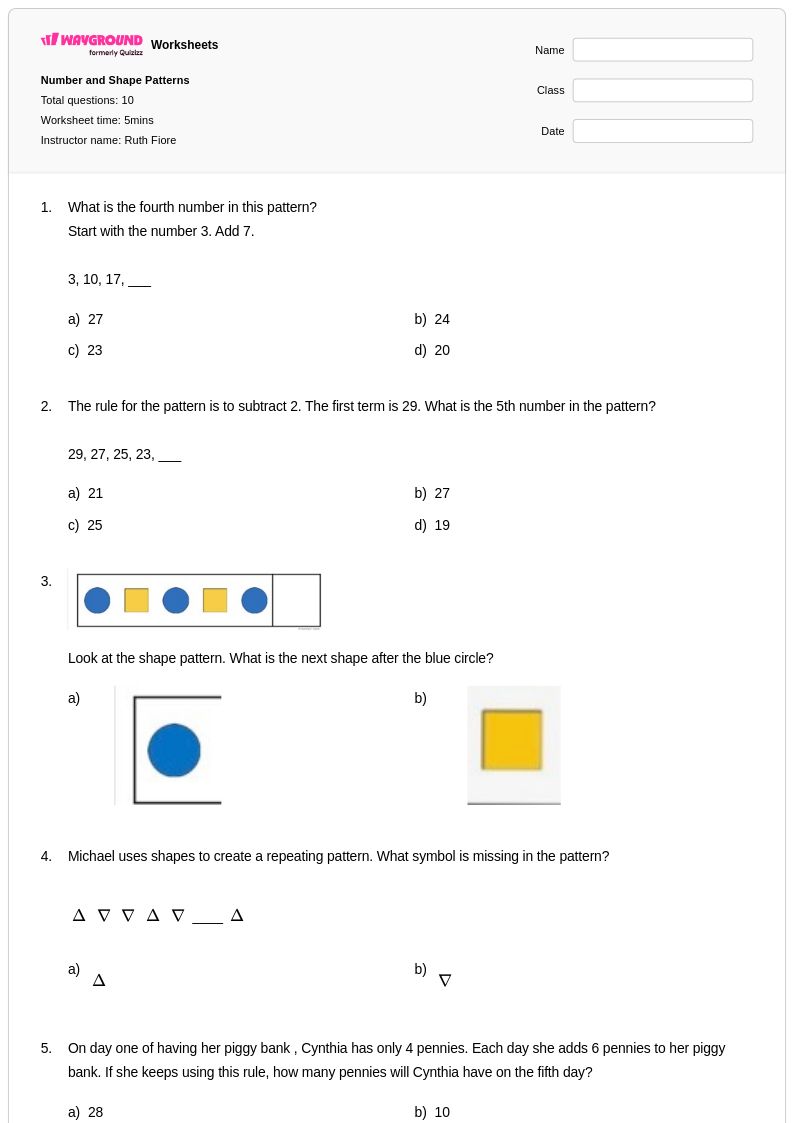
10 Q
4th
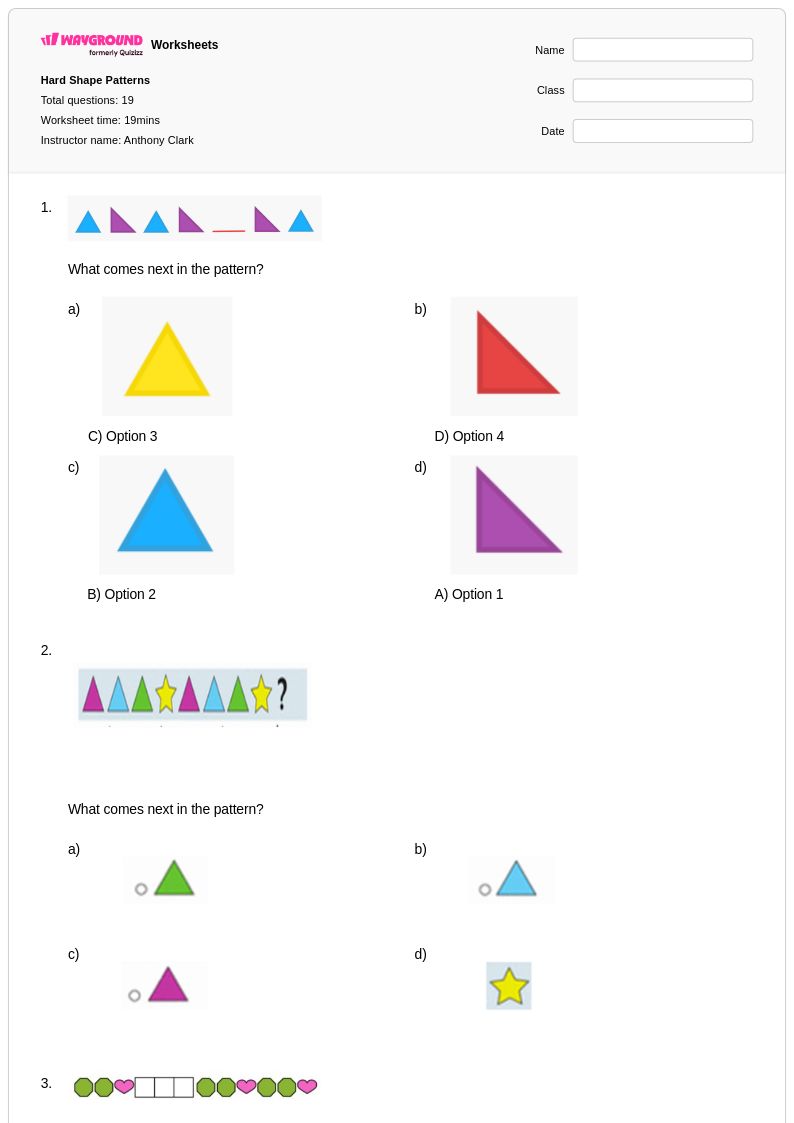
19 Q
1st - Uni
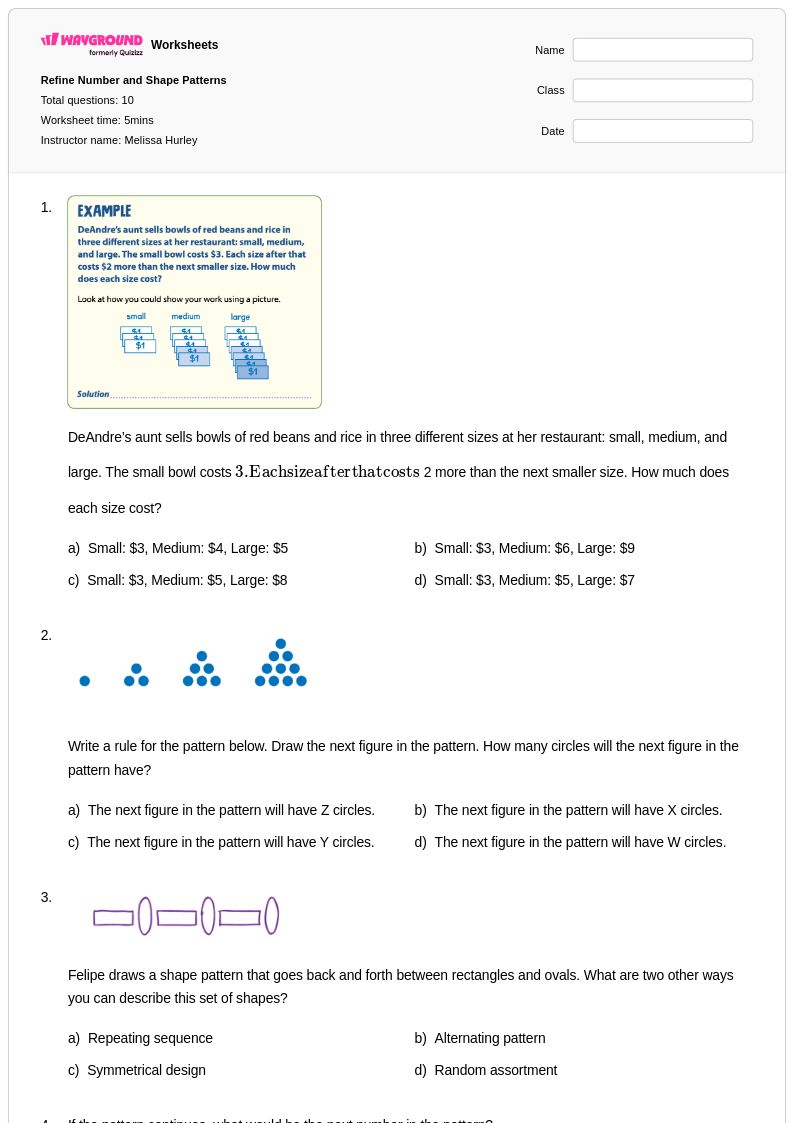
10 Q
4th
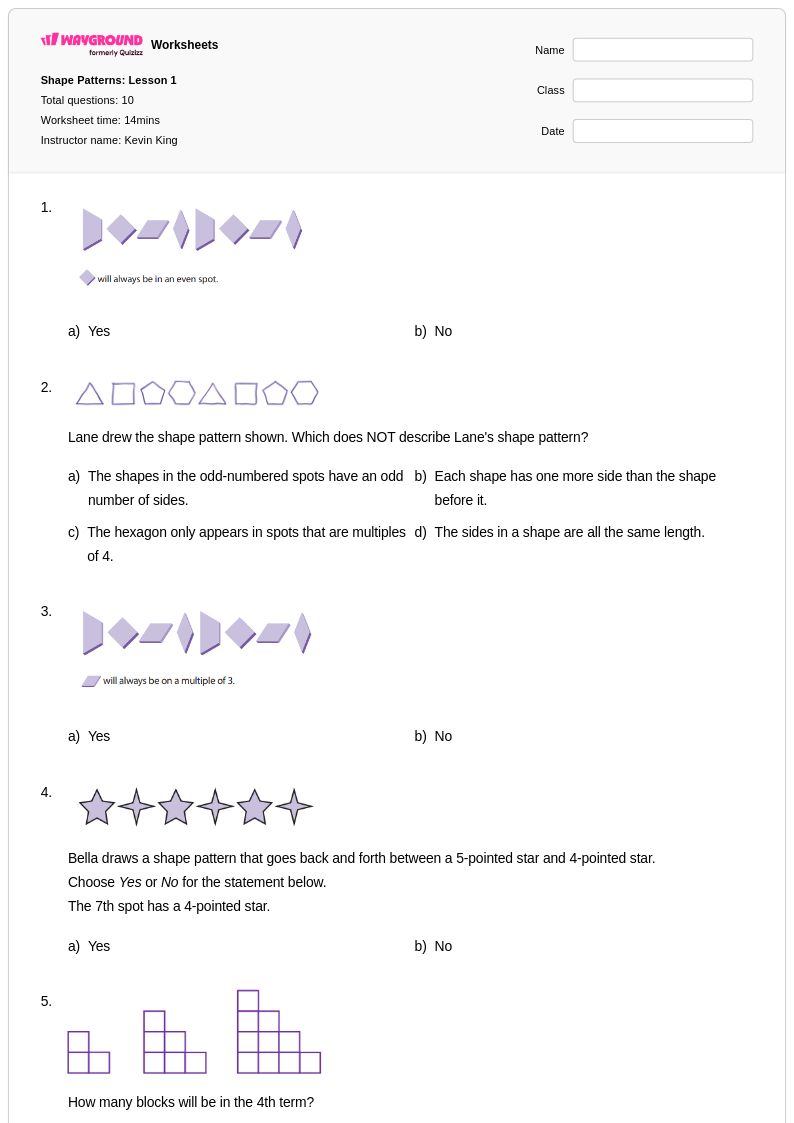
10 Q
4th
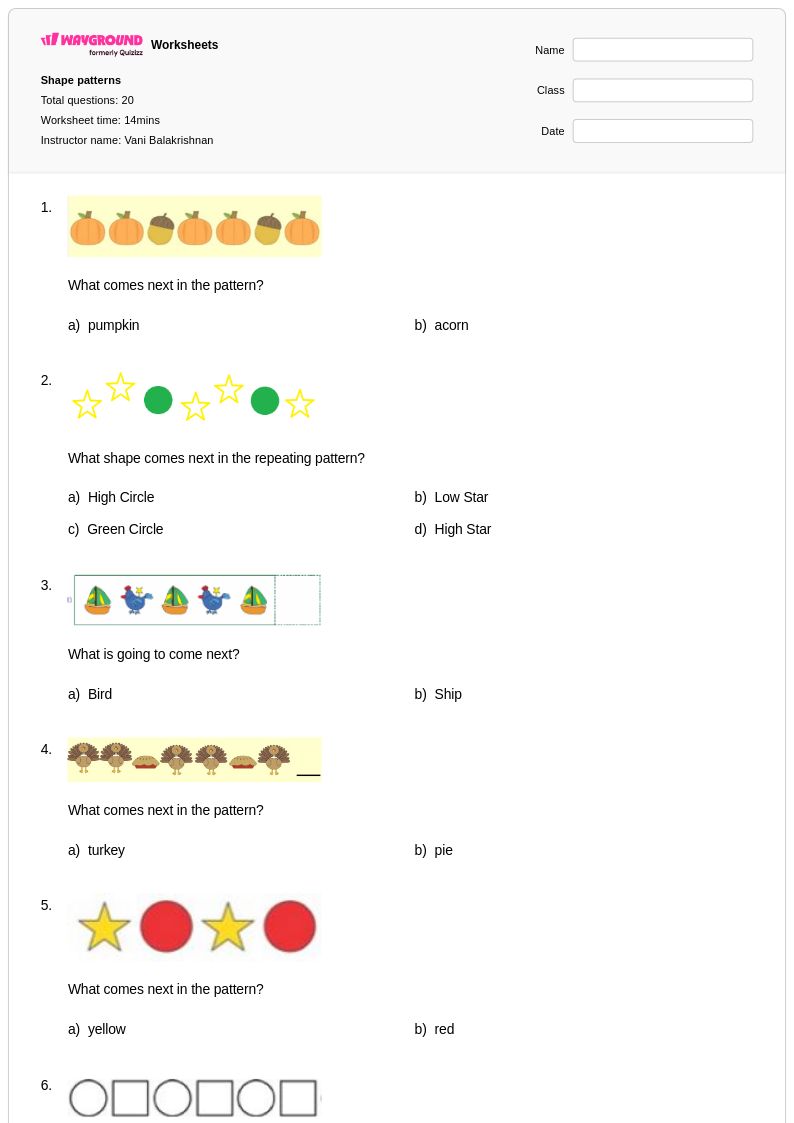
20 Q
2nd
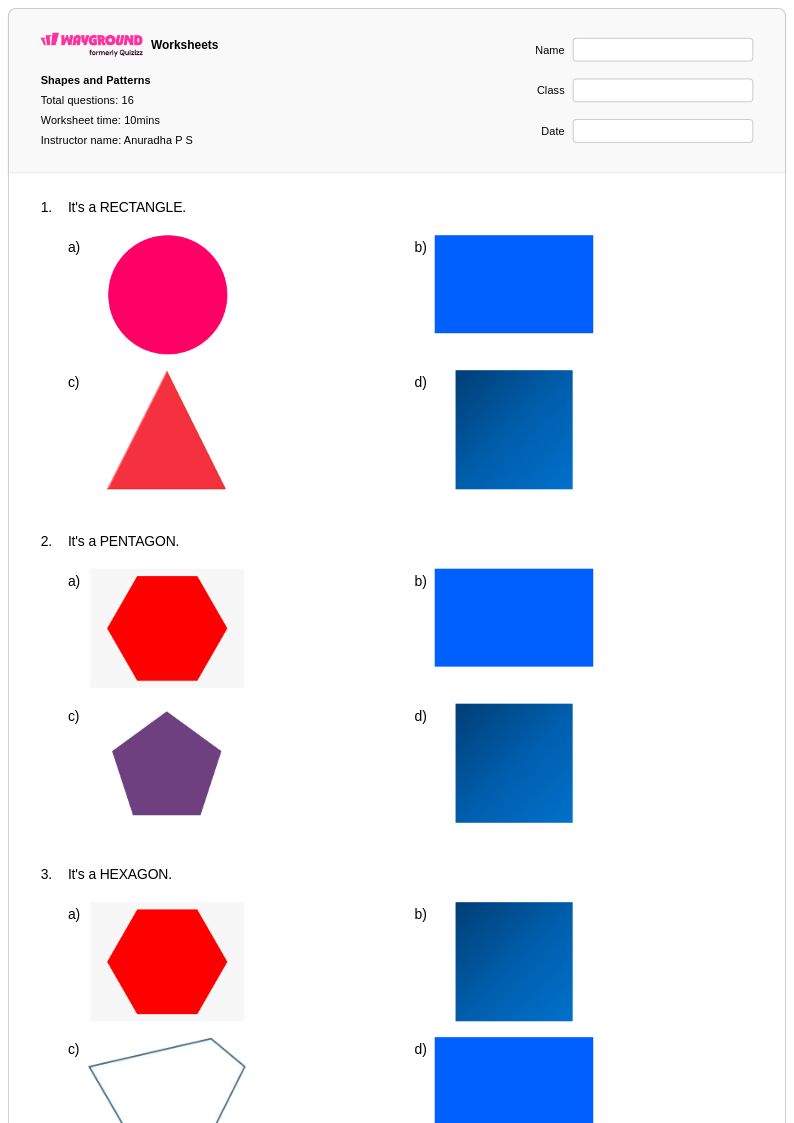
16 Q
1st
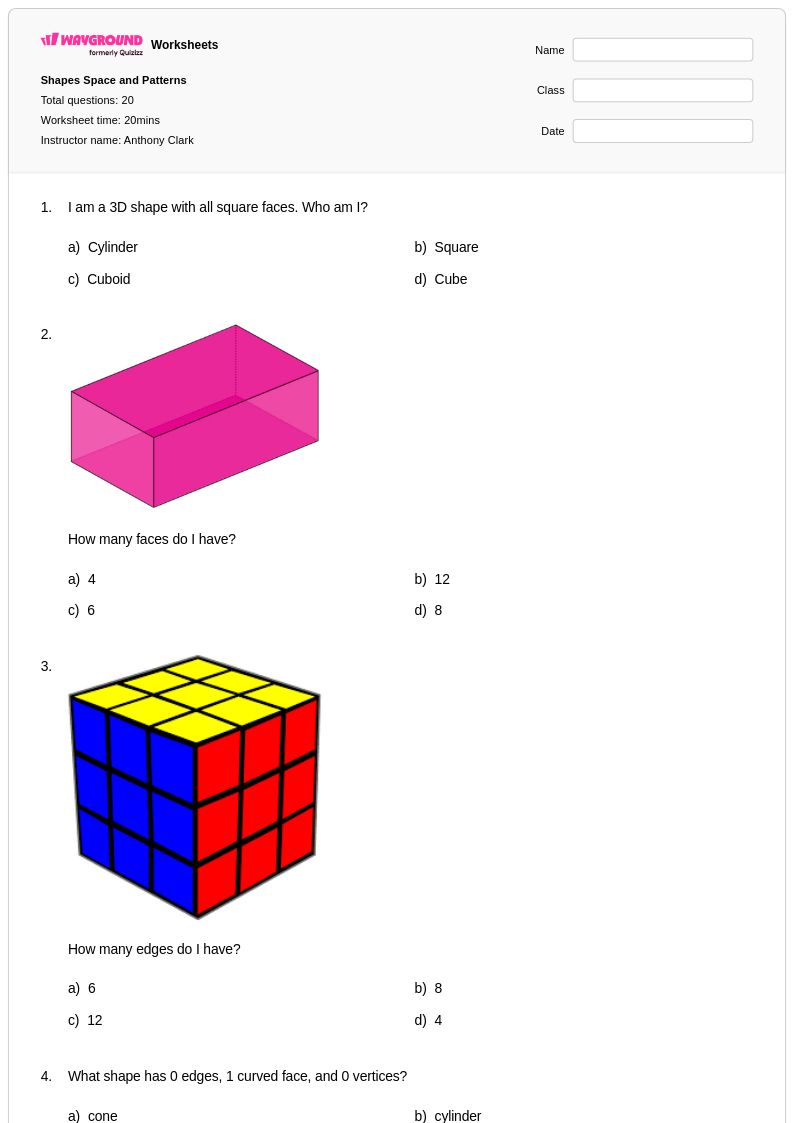
20 Q
3rd - Uni
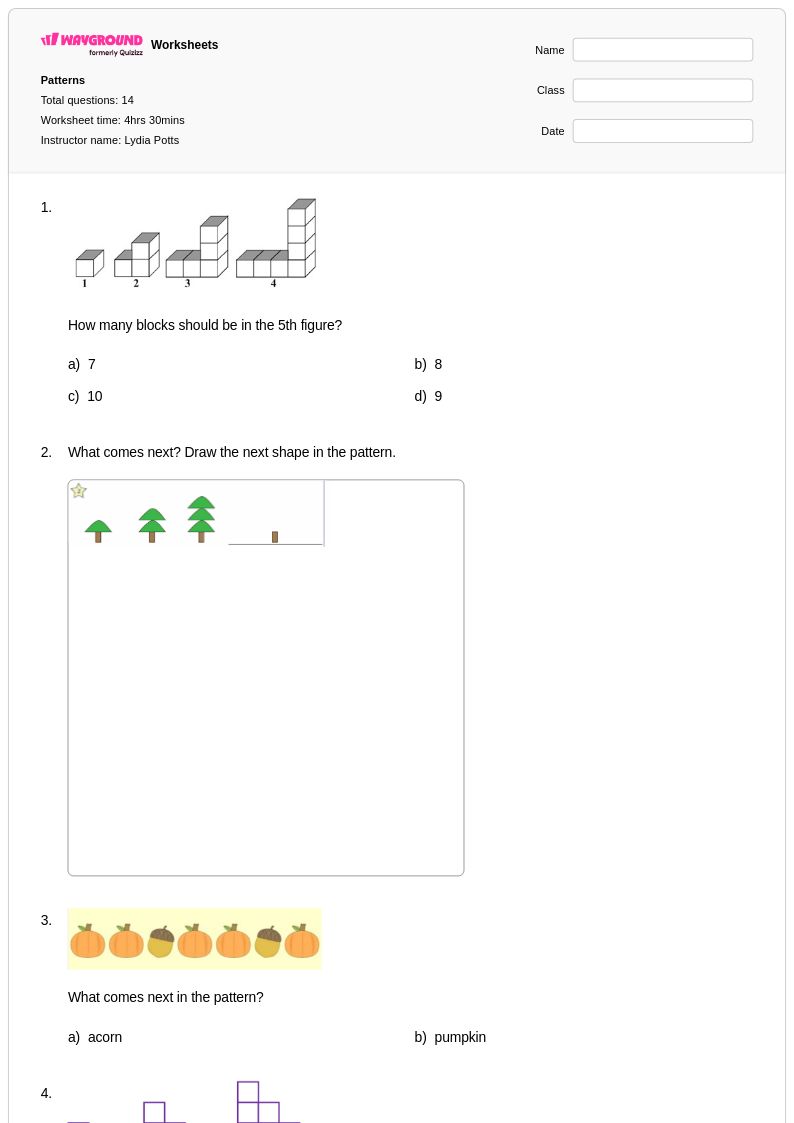
14 Q
4th
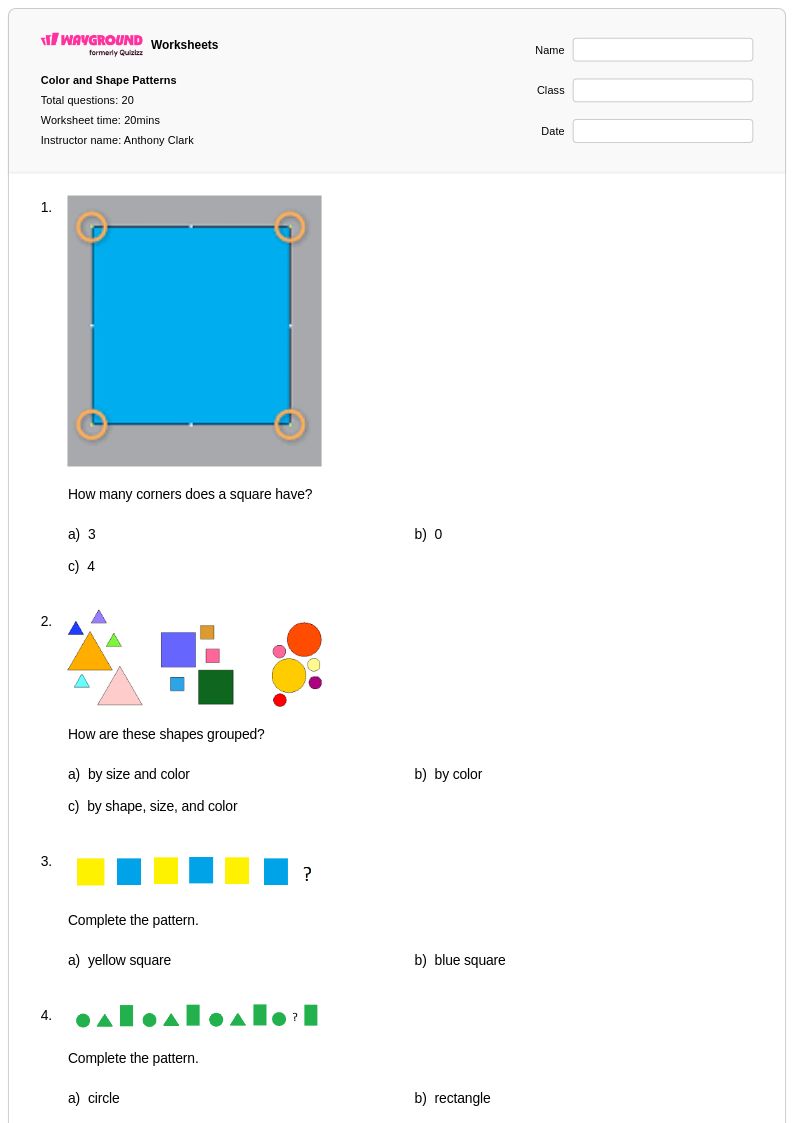
20 Q
3rd - Uni
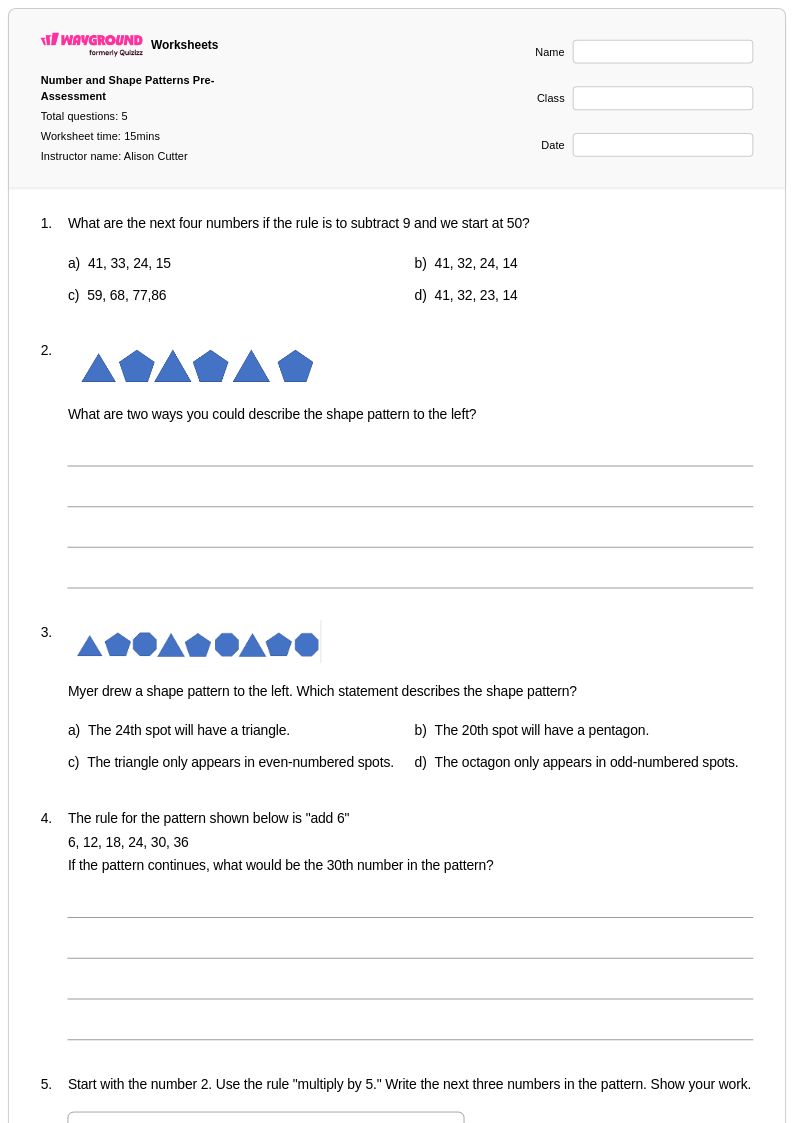
5 Q
4th
Explore Worksheets by Subjects
Explore printable Shape Patterns worksheets
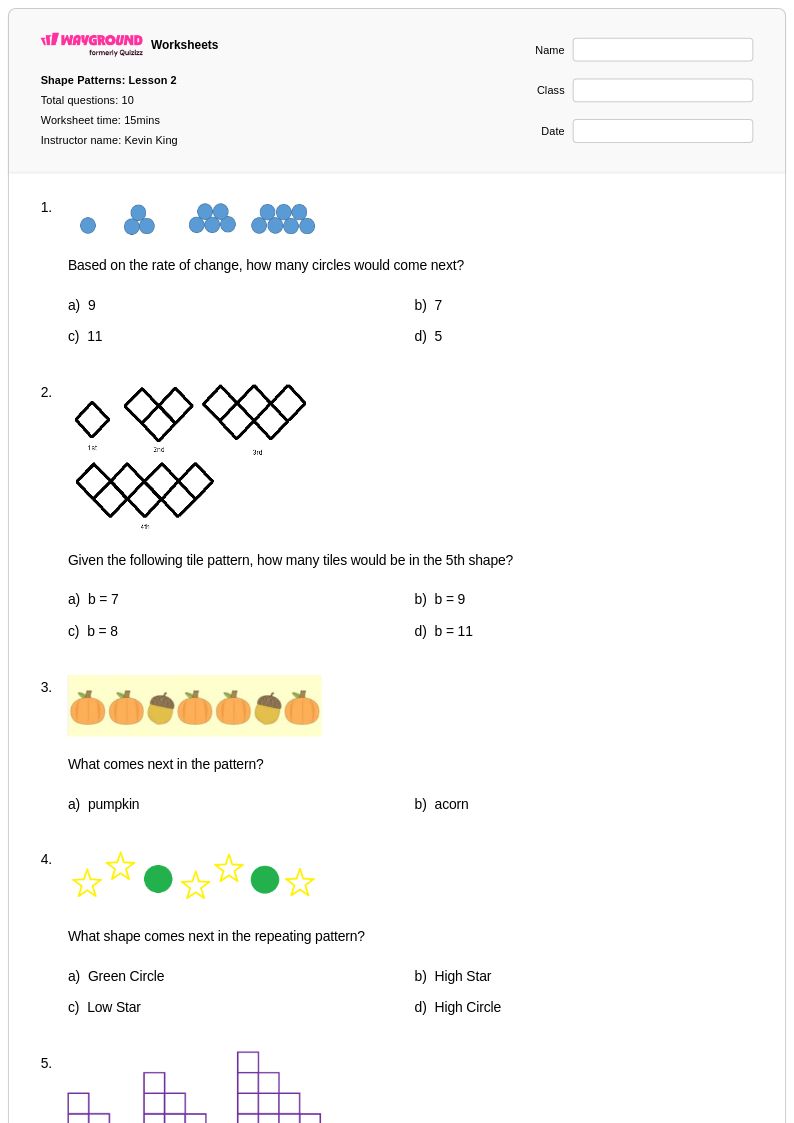
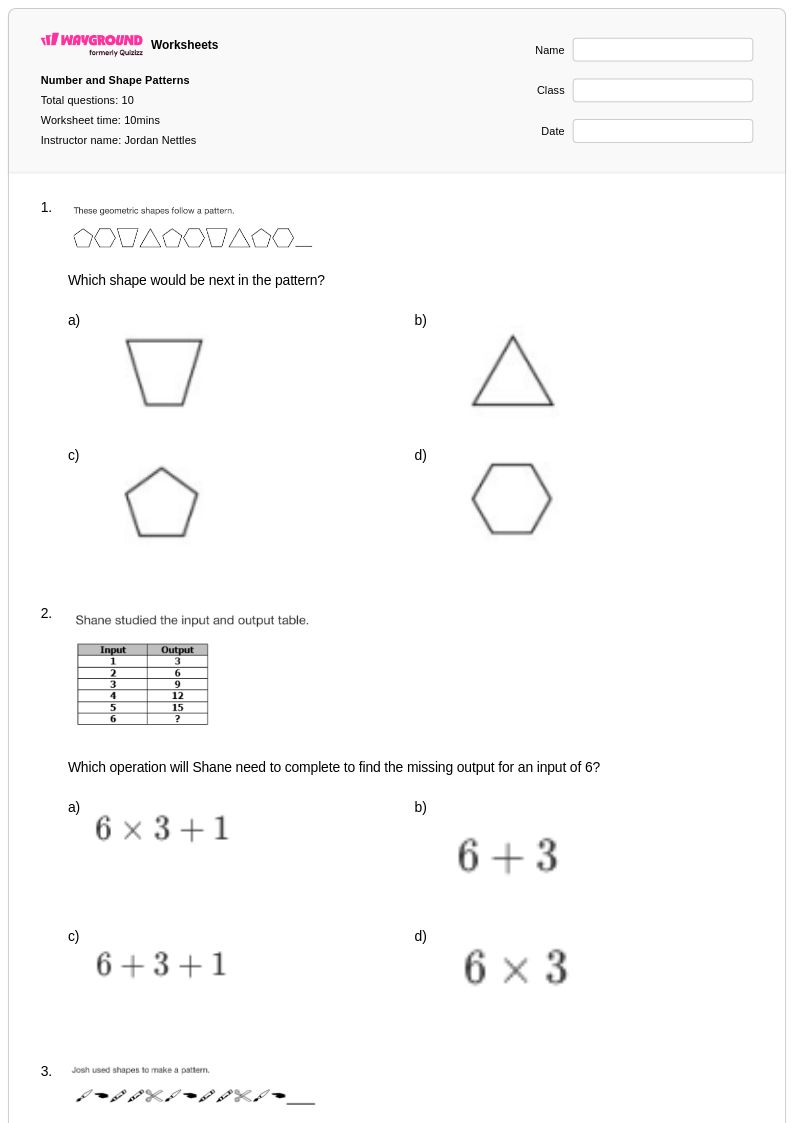
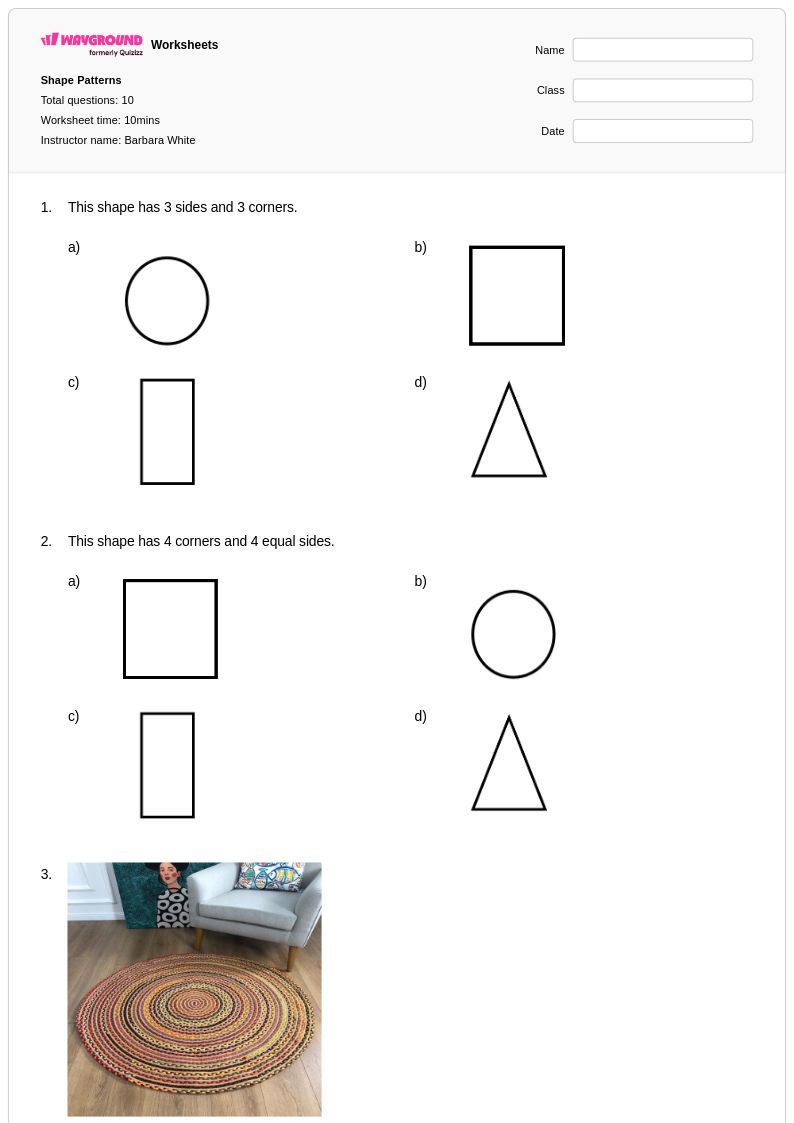
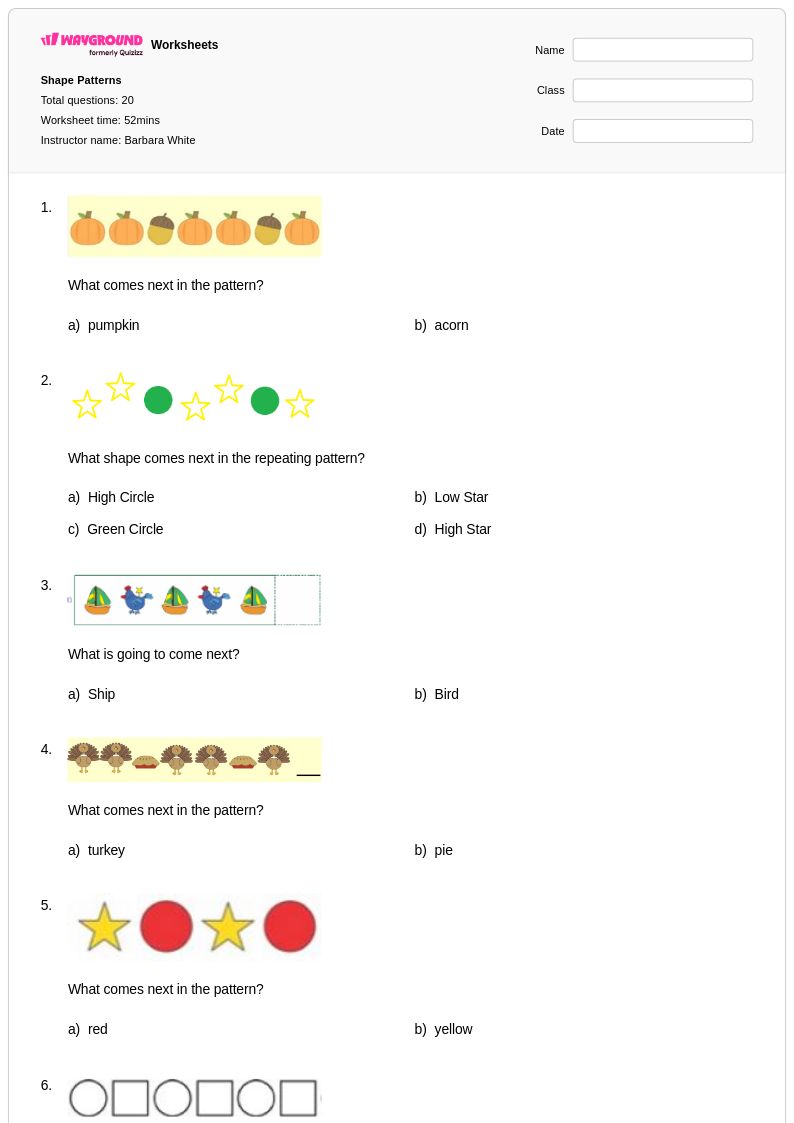
Shape patterns worksheets available through Wayground (formerly Quizizz) provide essential practice opportunities for students to develop critical geometric reasoning and visual-spatial skills. These comprehensive resources focus on helping learners identify, analyze, and extend various geometric sequences including repeating patterns with 2D and 3D shapes, growing patterns that demonstrate mathematical relationships, and complex arrangements that require advanced pattern recognition abilities. The practice problems within these free printable worksheets systematically guide students through fundamental concepts such as recognizing pattern rules, predicting subsequent elements in sequences, and creating their own geometric patterns using various attributes like shape type, size, color, and orientation. Each worksheet collection includes detailed answer keys that support both independent learning and instructional assessment, while the pdf format ensures easy distribution and consistent formatting across different educational environments.
Wayground (formerly Quizizz) empowers educators with an extensive library of millions of teacher-created shape pattern resources that streamline lesson planning and enhance mathematical instruction. The platform's robust search and filtering capabilities allow teachers to quickly locate worksheets that align with specific curriculum standards and learning objectives, while differentiation tools enable seamless customization for diverse learning needs and ability levels. These versatile materials are available in both printable and digital formats, providing flexibility for traditional classroom instruction, remote learning environments, and hybrid educational models. Teachers can efficiently utilize these resources for targeted skill practice, diagnostic assessment, remediation support for struggling learners, and enrichment activities for advanced students, creating a comprehensive approach to geometric pattern instruction that addresses the full spectrum of student needs and promotes deep mathematical understanding.
FAQs
How do I teach shape patterns to my students?
What exercises help students practice shape patterns?
What are common mistakes students make with shape patterns?
How do I use this shape patterns worksheet?
How do shape patterns fit into the math curriculum?
How can I differentiate shape pattern activities for my students?