Free Printable Distance on the Coordinate Plane worksheets
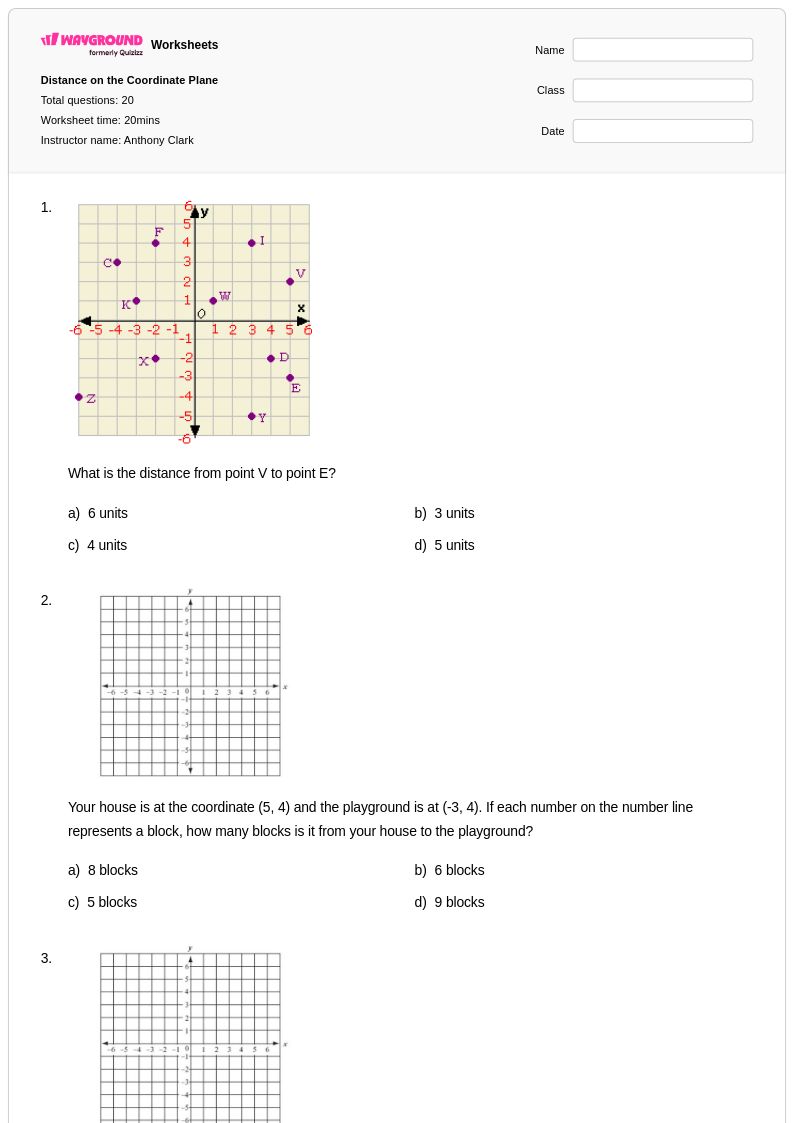
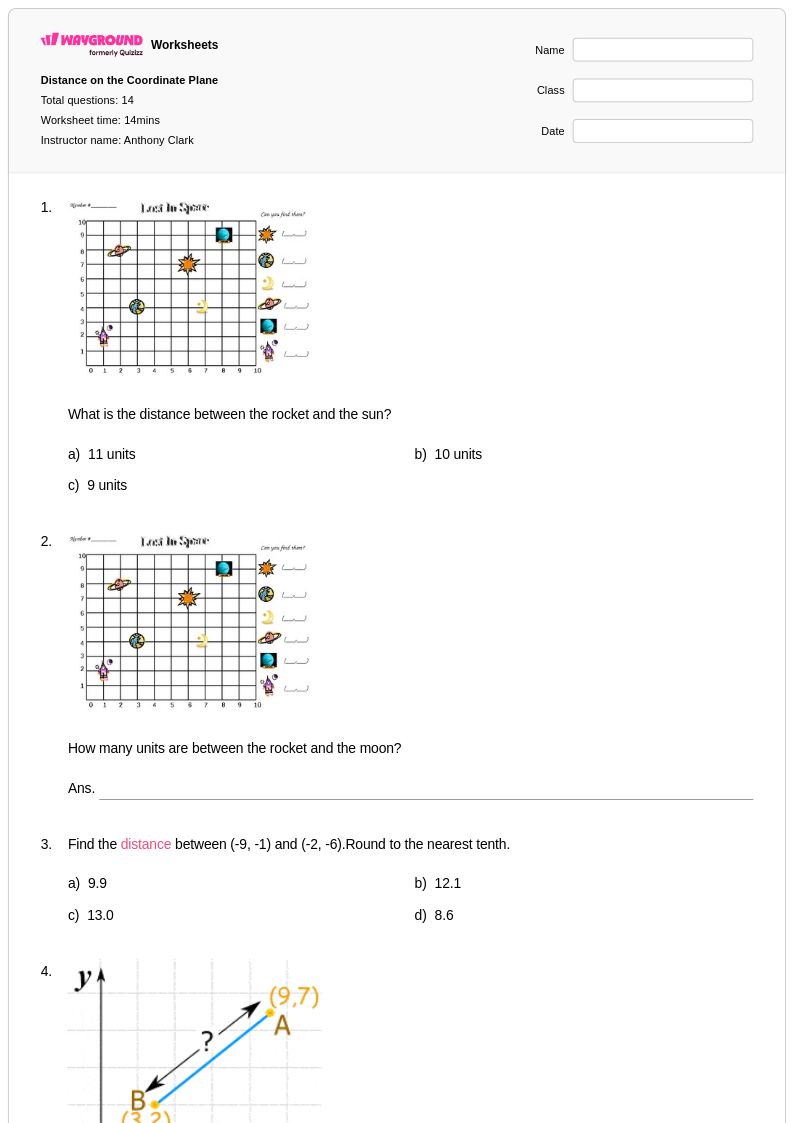
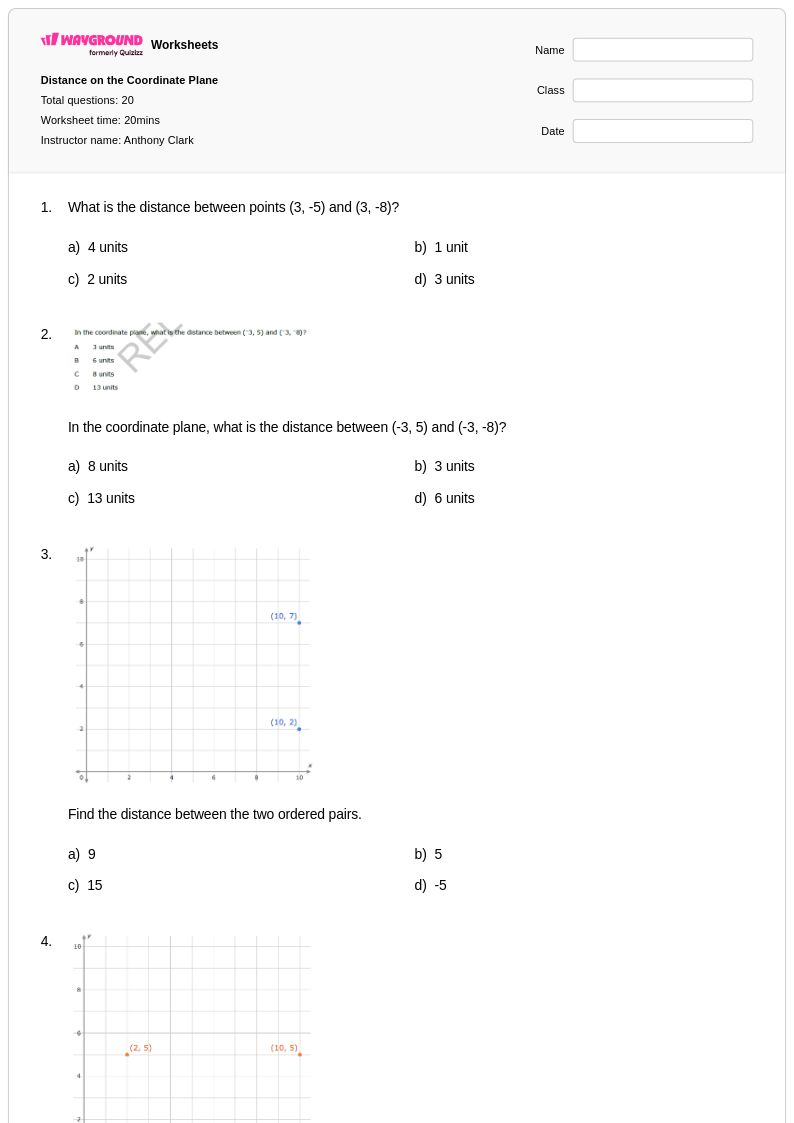
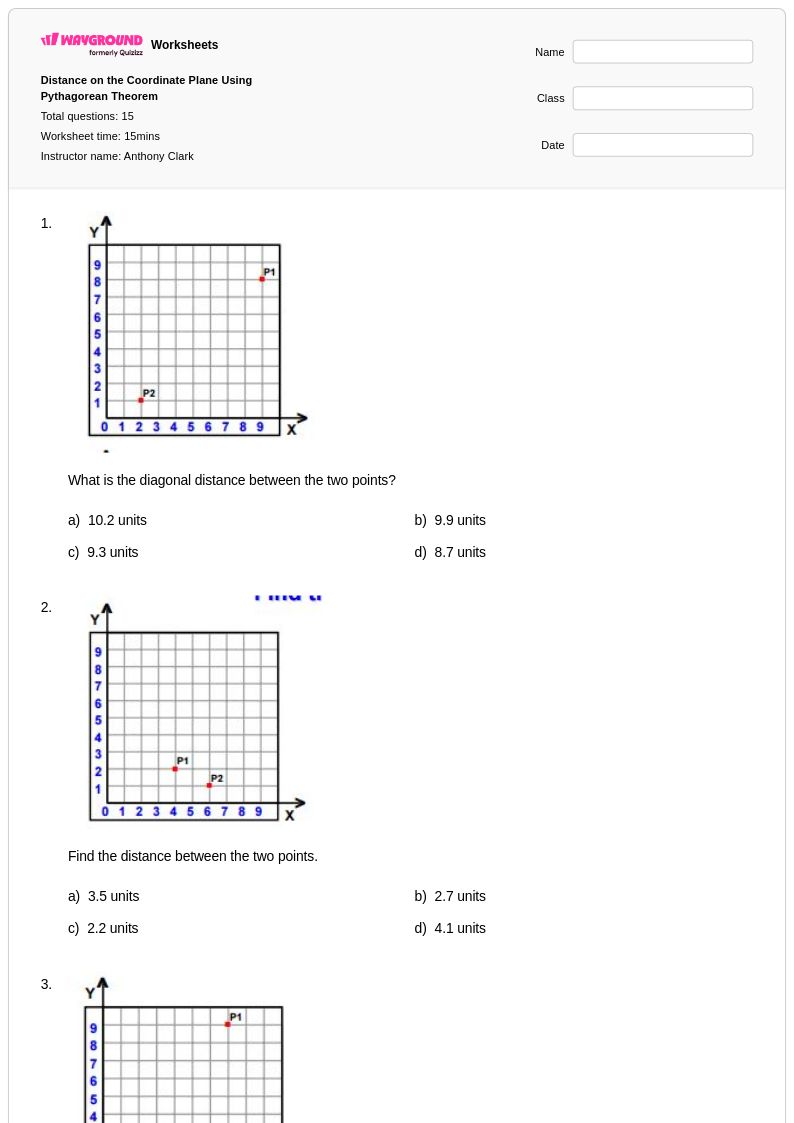
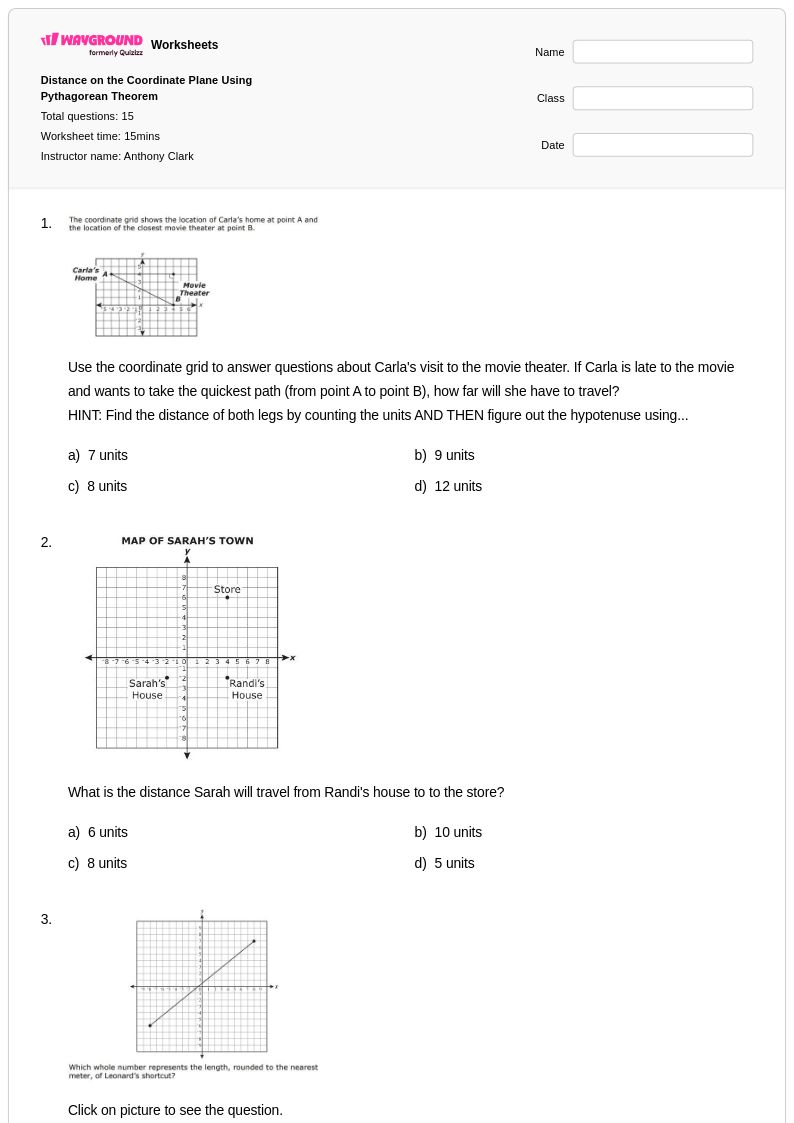
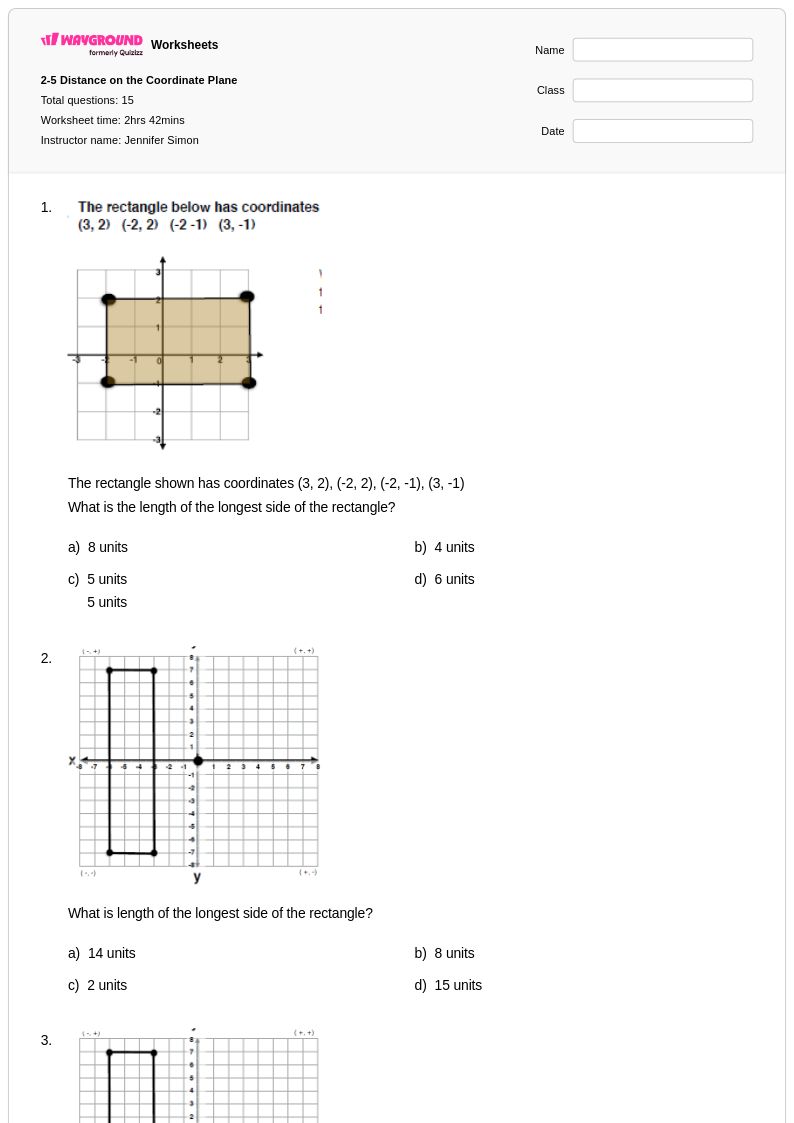
Explore free printable worksheets and practice problems focused on distance on the coordinate plane, helping students master calculating distances between points using the distance formula with comprehensive answer keys.
Explore printable Distance on the Coordinate Plane worksheets
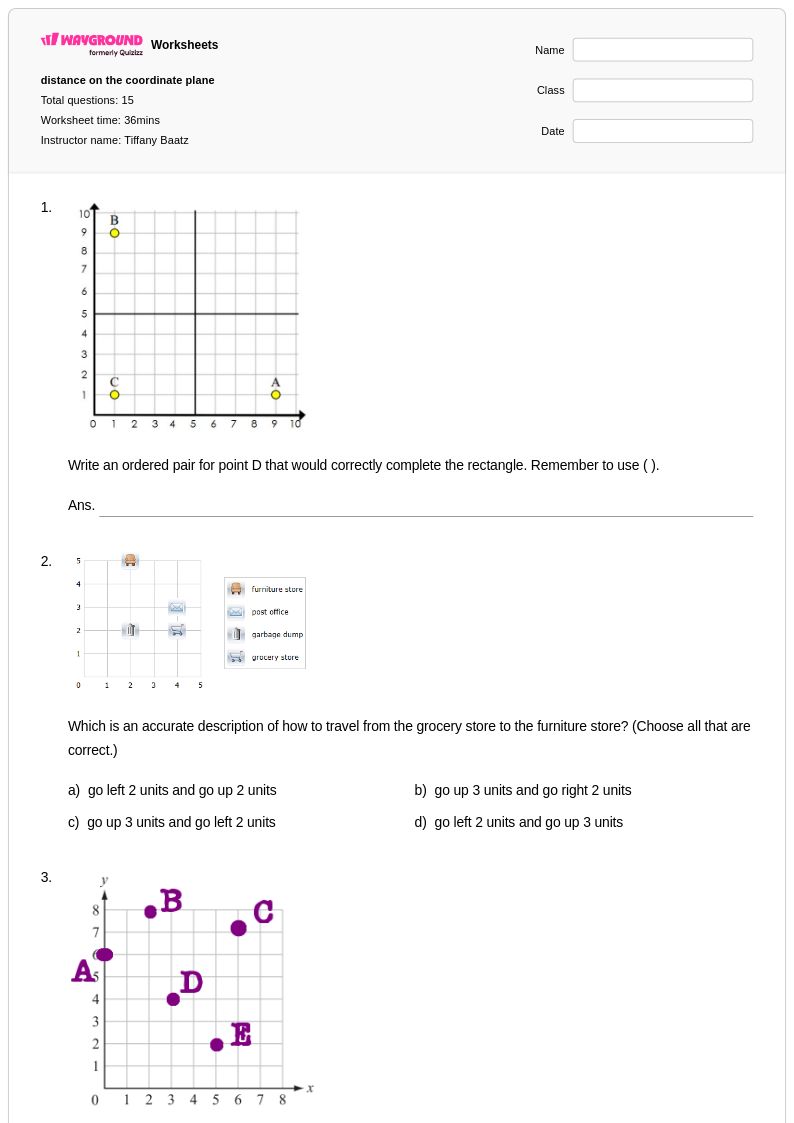
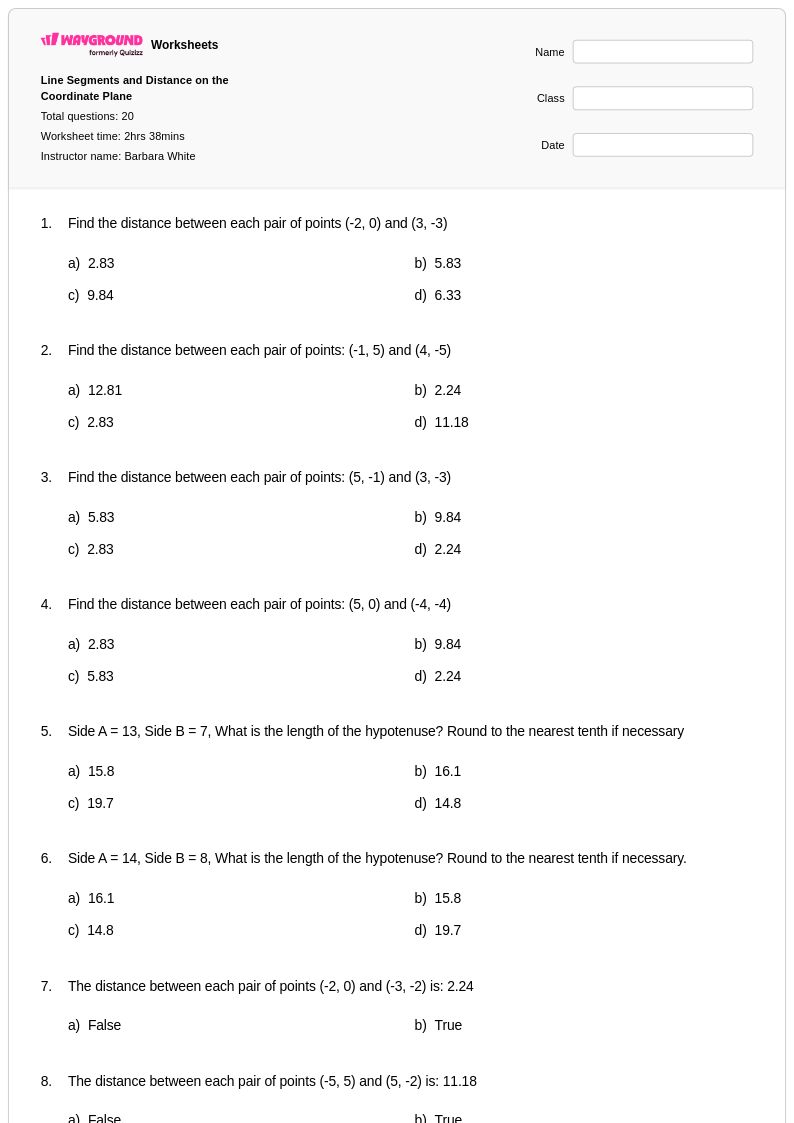
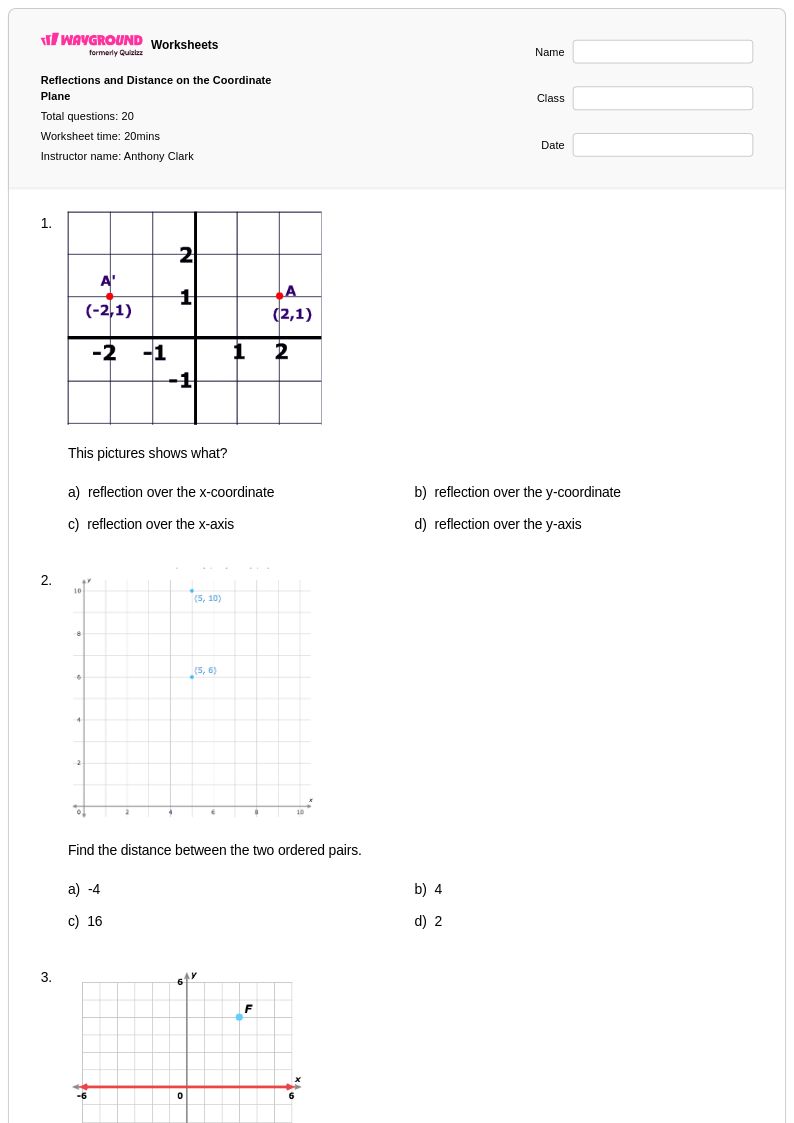
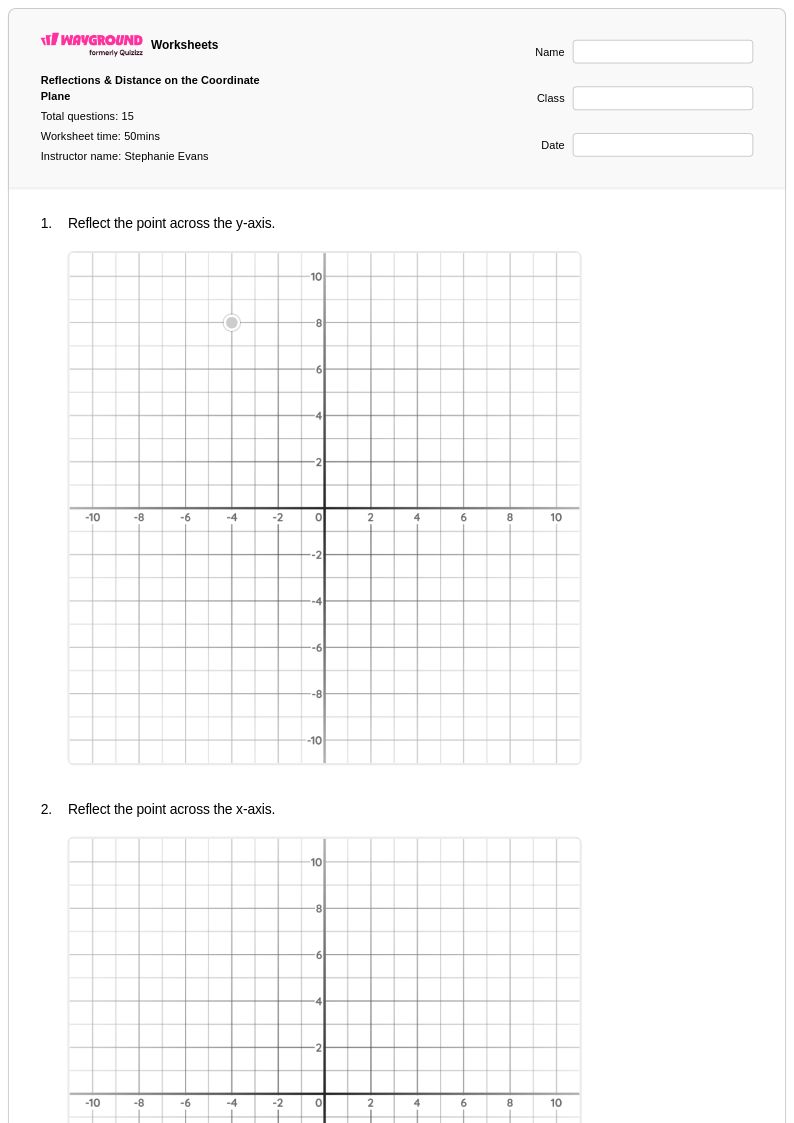
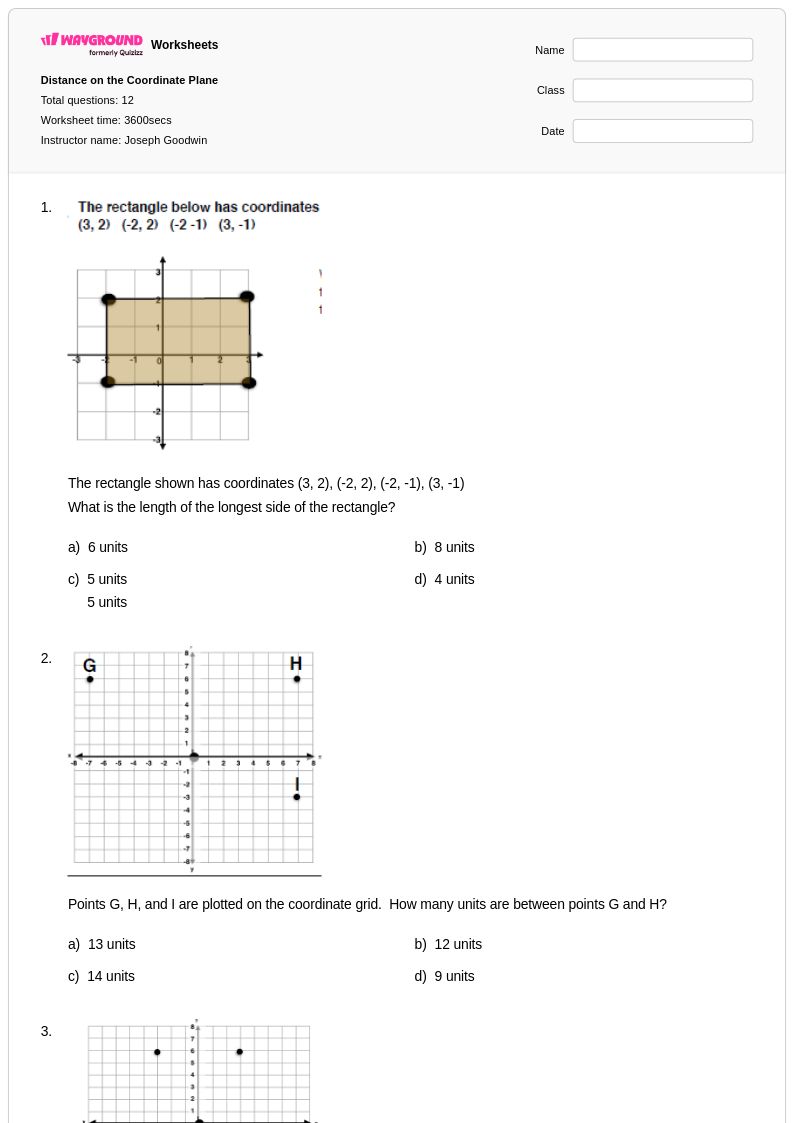
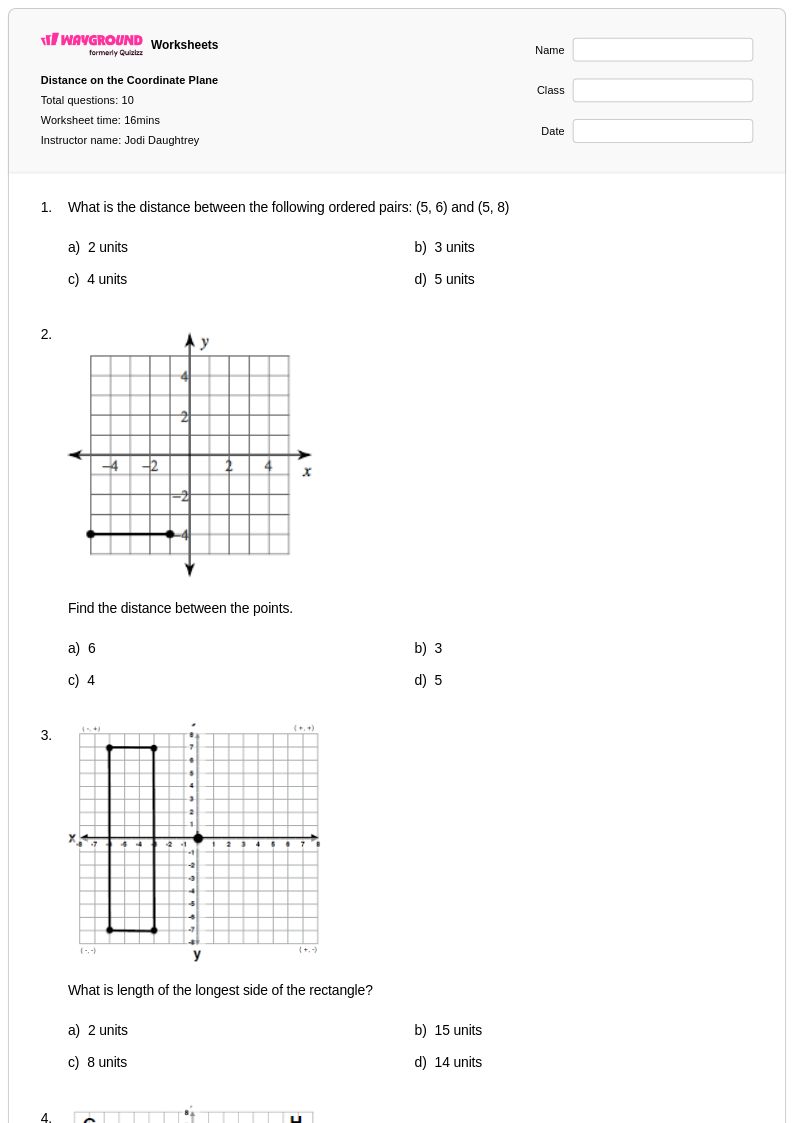
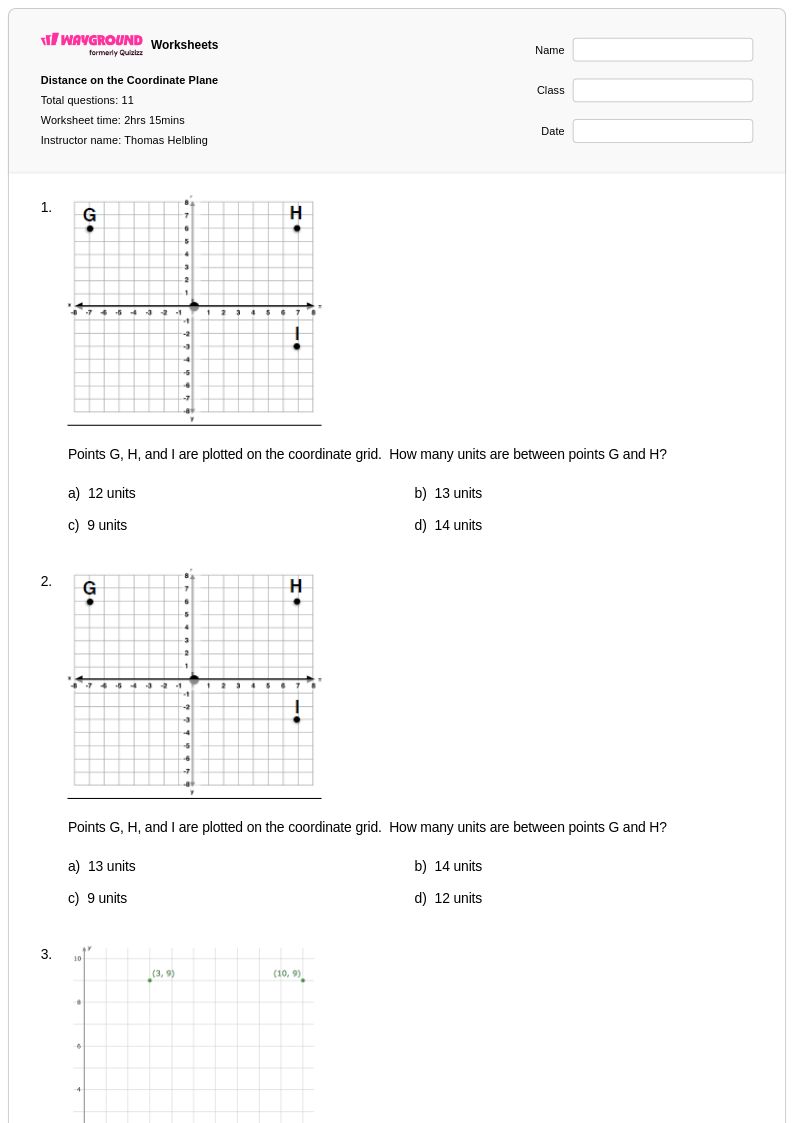
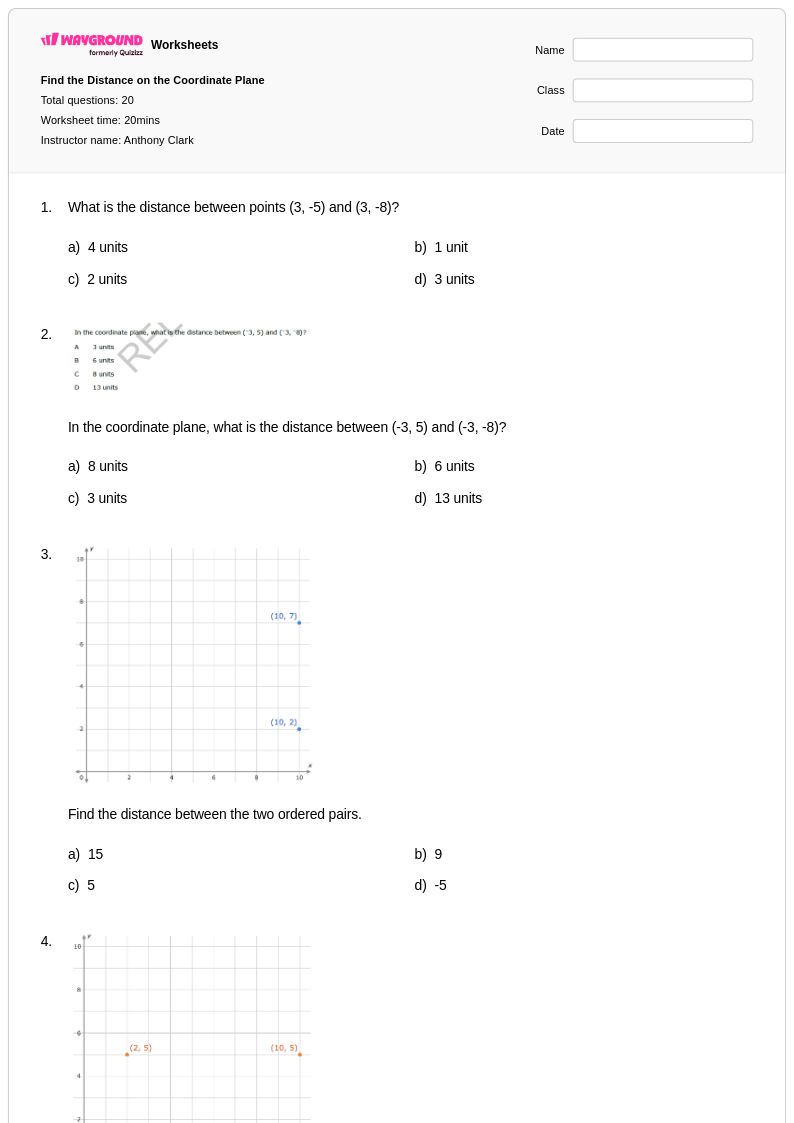
Distance on the Coordinate Plane worksheets available through Wayground (formerly Quizizz) provide comprehensive practice for students learning to calculate distances between points using the coordinate system. These carefully designed resources strengthen essential mathematical skills including applying the distance formula, working with ordered pairs, and understanding the Pythagorean theorem in coordinate geometry contexts. Students develop proficiency in plotting points, identifying coordinates, and computing exact distances between any two points on a coordinate plane through systematic practice problems that progress from basic integer coordinates to more complex scenarios involving fractions and decimals. Each worksheet collection includes detailed answer keys and is available as free printable pdf resources, making them accessible for classroom instruction, homework assignments, and independent study sessions.
Wayground (formerly Quizizz) supports mathematics educators with an extensive library of millions of teacher-created resources focused on coordinate plane distance calculations and related geometry concepts. The platform's robust search and filtering capabilities allow teachers to quickly locate worksheets that align with specific curriculum standards and match their students' skill levels, while built-in differentiation tools enable customization for diverse learning needs. These comprehensive worksheet collections are available in both printable pdf formats and interactive digital versions, providing flexibility for various instructional approaches including in-class practice, remote learning, and blended educational environments. Teachers can efficiently plan lessons, provide targeted remediation for struggling students, offer enrichment opportunities for advanced learners, and ensure consistent skill practice through these professionally developed coordinate geometry resources that seamlessly integrate into existing mathematics curricula.
FAQs
How do I teach distance on the coordinate plane?
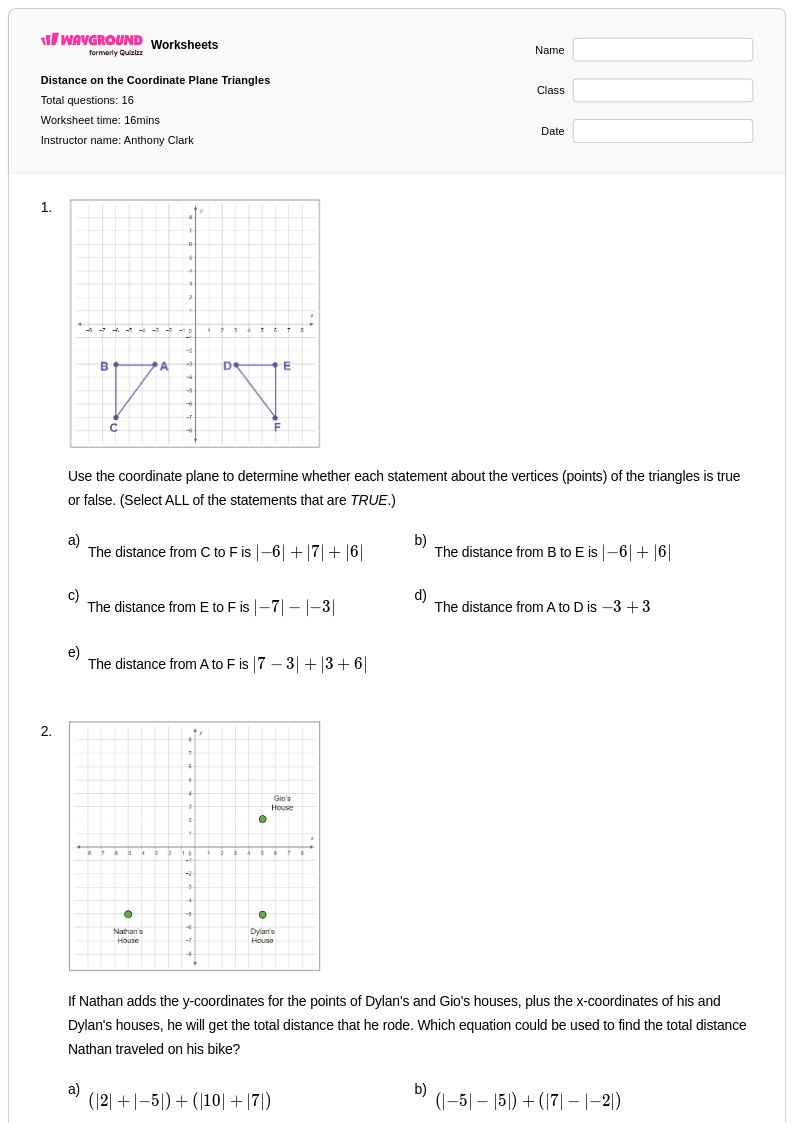
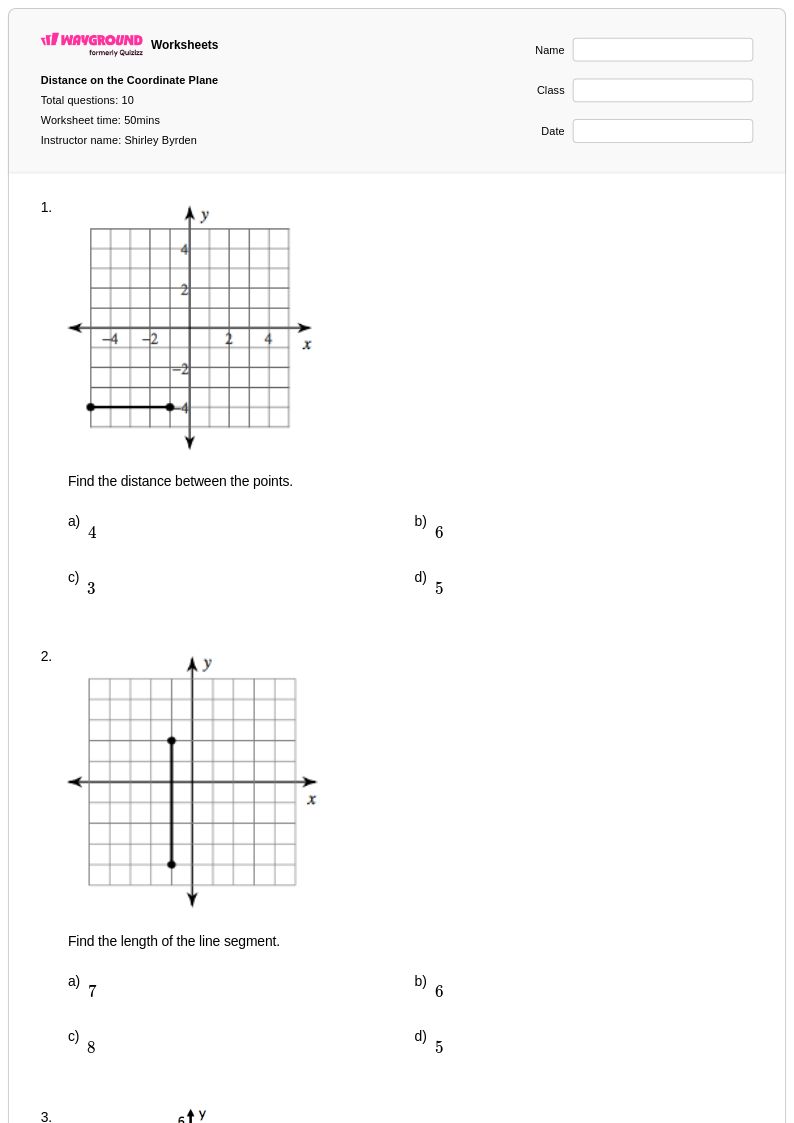
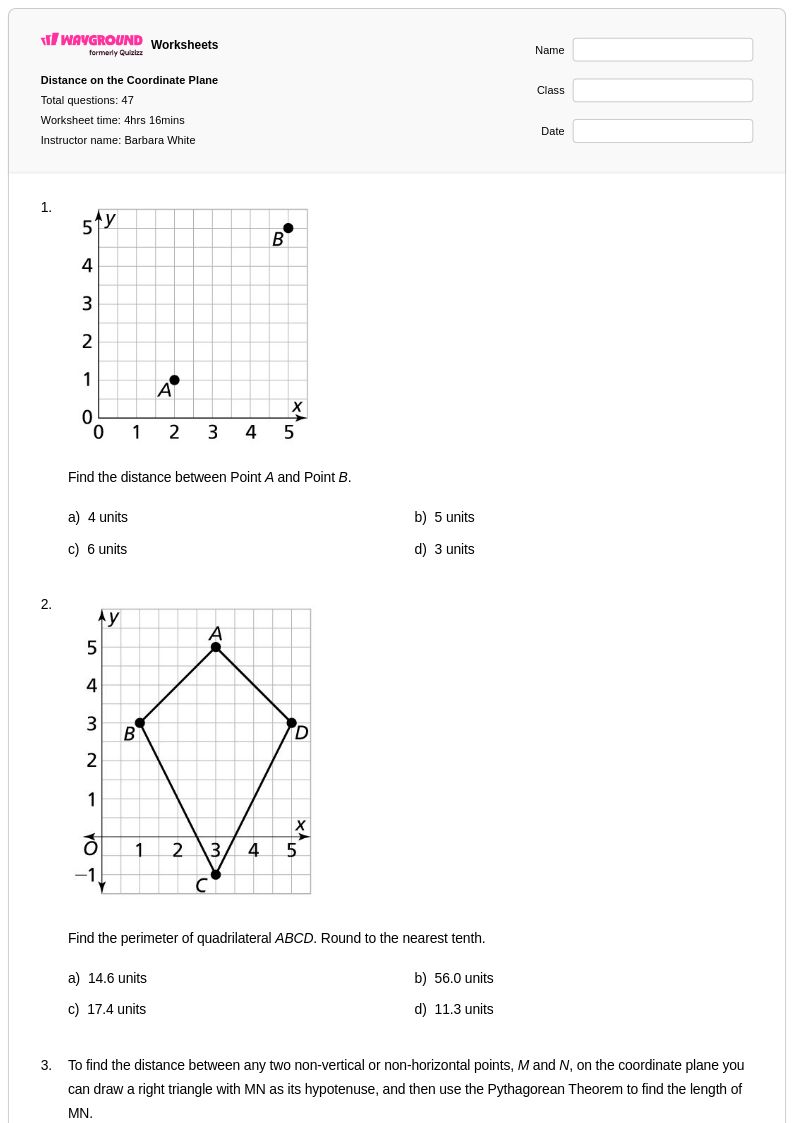
Start with horizontal and vertical distances, where students can count grid units directly. Once that's solid, introduce diagonal distances by drawing the right triangle formed by two points — the legs become the horizontal and vertical distances, and the hypotenuse is what students need to find. That visual setup makes the distance formula feel like a natural extension of the Pythagorean theorem rather than a rule to memorize. From there, move to problems with negative coordinates and eventually decimals or fractions.
What exercises help students practice finding distance on the coordinate plane?
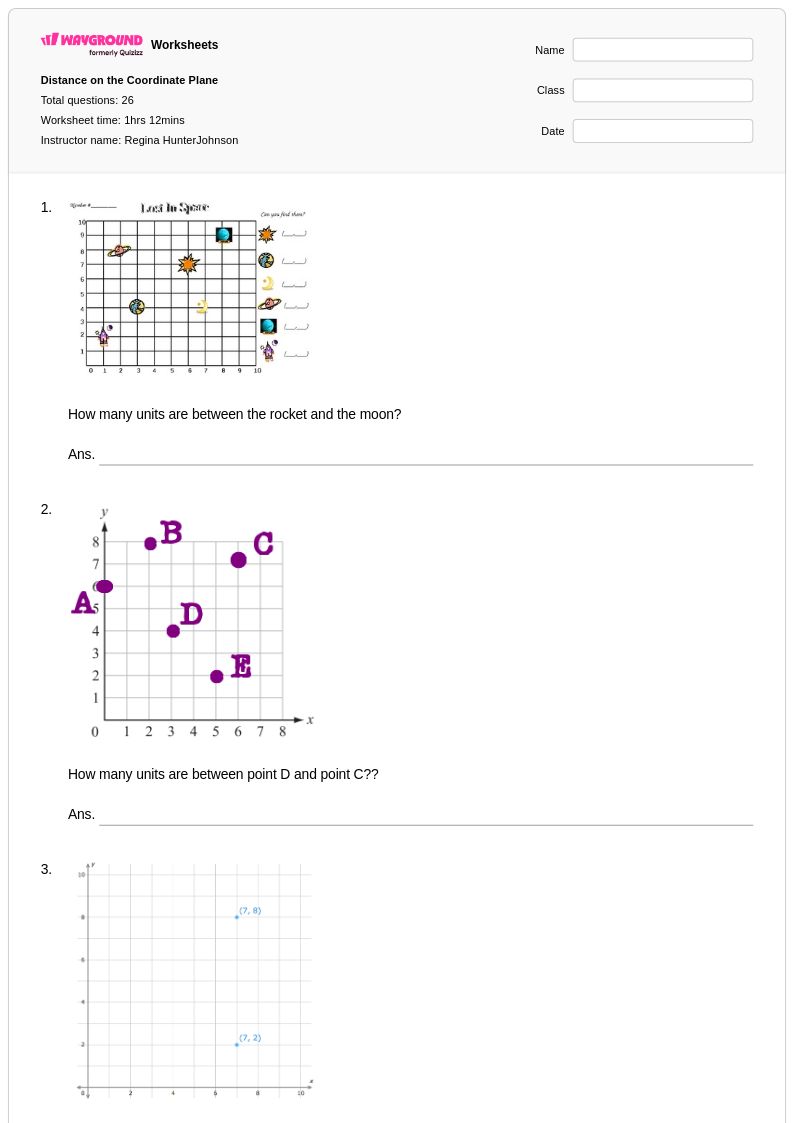
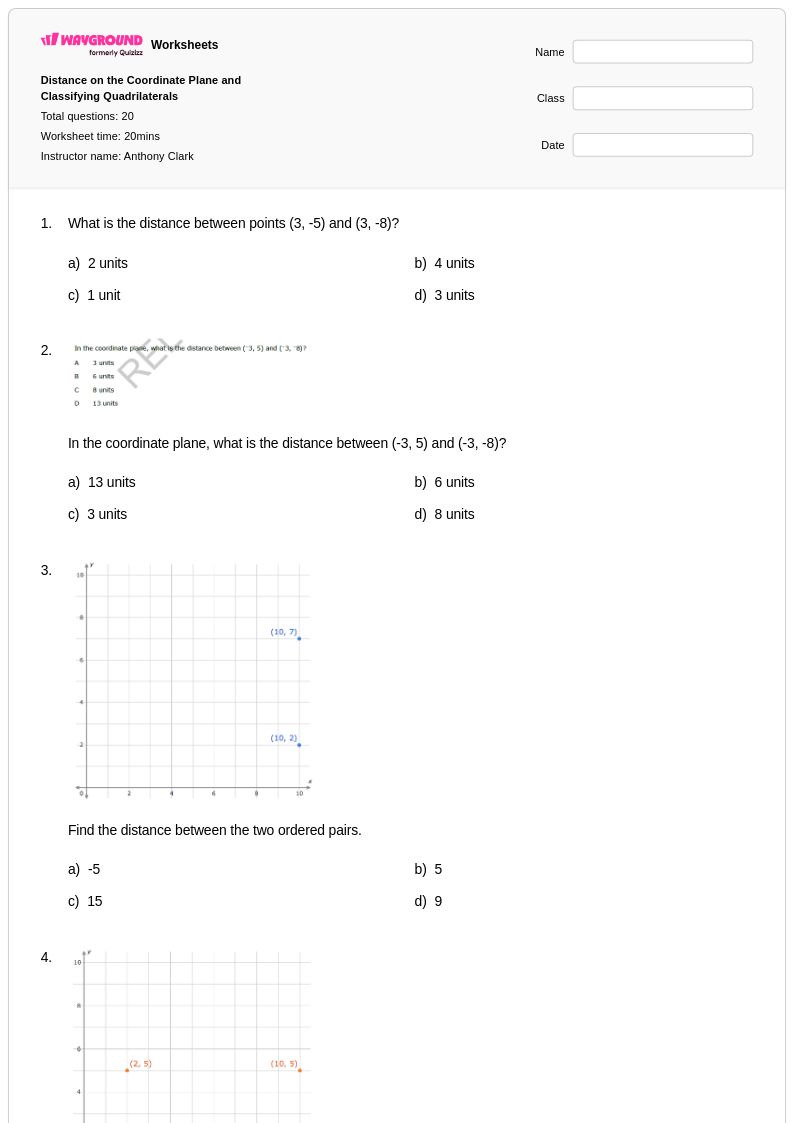
The most effective practice sequence moves from simple to complex: start with points that share an x- or y-coordinate (so students only compute one dimension), then introduce diagonal distances with integer coordinates, then add negatives, then decimals and fractions. Mixing in real-world contexts — like finding the distance between two locations on a map grid — helps students see why the skill matters beyond the worksheet.
What mistakes do students commonly make when calculating distance on the coordinate plane?
Three errors come up repeatedly. First, students subtract coordinates in the wrong order — but since the formula squares the differences, this only matters when they forget to square and just take the absolute value inconsistently. Second, they confuse which values are x-coordinates and which are y-coordinates when the points are given as ordered pairs. Third, they misapply the Pythagorean theorem by adding the distances instead of the squared distances before taking the square root. Catching that last one early prevents a lot of downstream confusion.
How do I use Wayground's distance on the coordinate plane worksheets in my class?
Each worksheet comes with a complete answer key, so you can assign it as independent practice or homework without extra prep. For digital use, you can host the worksheet as an interactive quiz on Wayground — students submit answers online and you get results immediately. If you prefer paper, download the printable PDF and use the Wayground for Teachers app to scan or capture student work for grading. Both formats contain the same problems, so the choice comes down to your classroom setup.
How does distance on the coordinate plane fit into the Common Core math progression?
Common Core introduces the coordinate plane in Grade 5, where students plot points in the first quadrant and find distances between points that share a coordinate. By Grade 6, all four quadrants are in play and students find distances between points with the same x- or y-value by taking the absolute value of the difference. The distance formula itself — built on the Pythagorean theorem — arrives in Grade 8, where students apply it to find diagonal distances between any two points. This topic sits at that Grade 8 convergence point, connecting coordinate geometry to the Pythagorean theorem work students have already done.
How can I differentiate distance on the coordinate plane practice for mixed-ability classes?
For students who struggle with the algebraic manipulation, Wayground's reduced answer choices accommodation lowers the cognitive load so they can focus on setting up the problem correctly rather than getting lost in the arithmetic. The dyslexia-friendly font and adjustable font size options help students who find dense coordinate notation hard to parse. For the worksheet itself, scaffolding by coordinate type — integers first, then negatives, then decimals — lets you assign different problem sets to different students from the same worksheet collection without making the differentiation obvious.
Is the distance formula the same as the Pythagorean theorem?
Yes — the distance formula is the Pythagorean theorem applied to a coordinate grid. When you draw a right triangle connecting two points, the horizontal leg has length |x₂ − x₁| and the vertical leg has length |y₂ − y₁|. Plugging those into a² + b² = c² and solving for c gives you exactly the distance formula. Teaching it this way, rather than as a separate rule, gives students a conceptual anchor they can reconstruct if they forget the formula.