Free Printable Distance on the Coordinate Plane Worksheets for Class 9
Class 9 distance on the coordinate plane worksheets from Wayground offer free printable PDFs with practice problems and answer keys to help students master calculating distances between points using the distance formula.
Explore printable Distance on the Coordinate Plane worksheets for Class 9
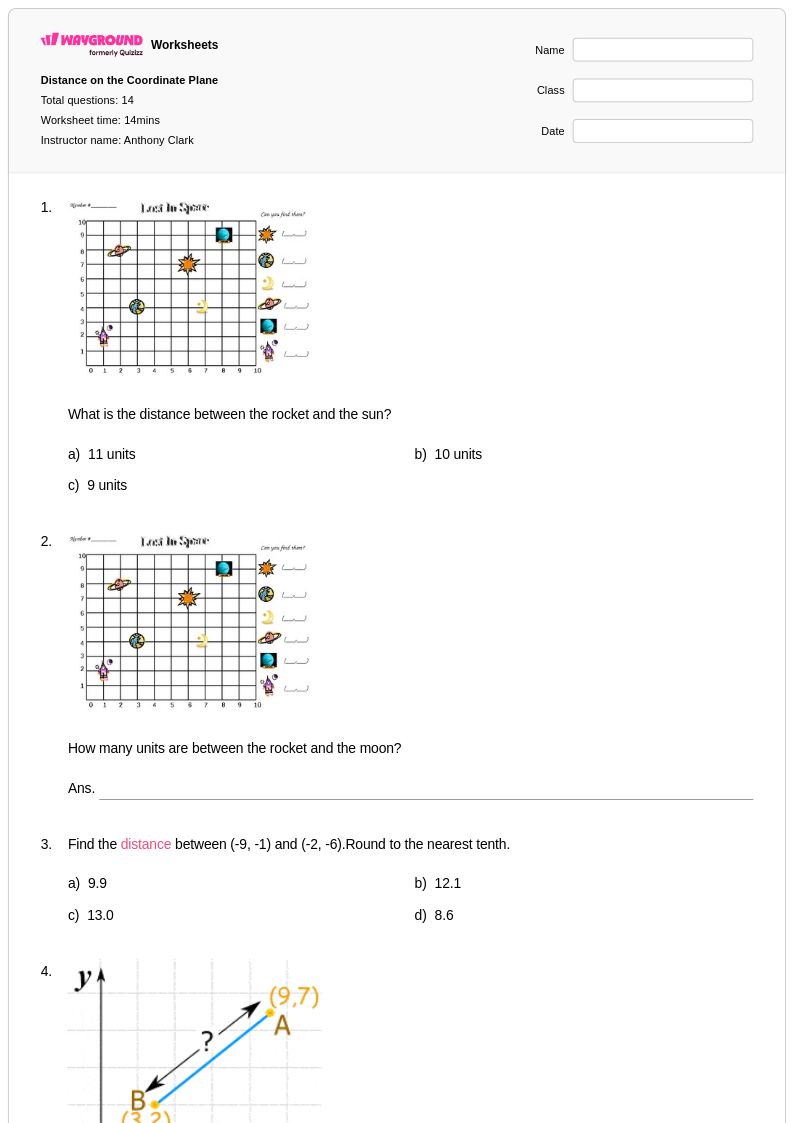
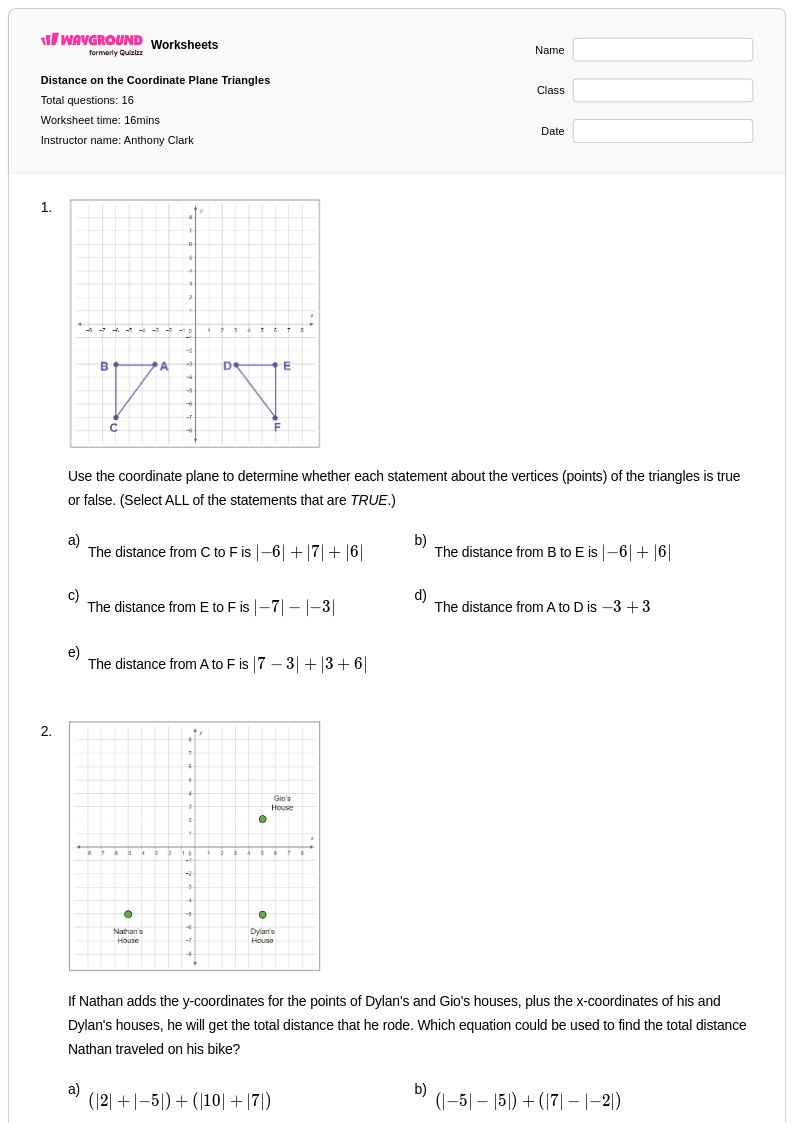
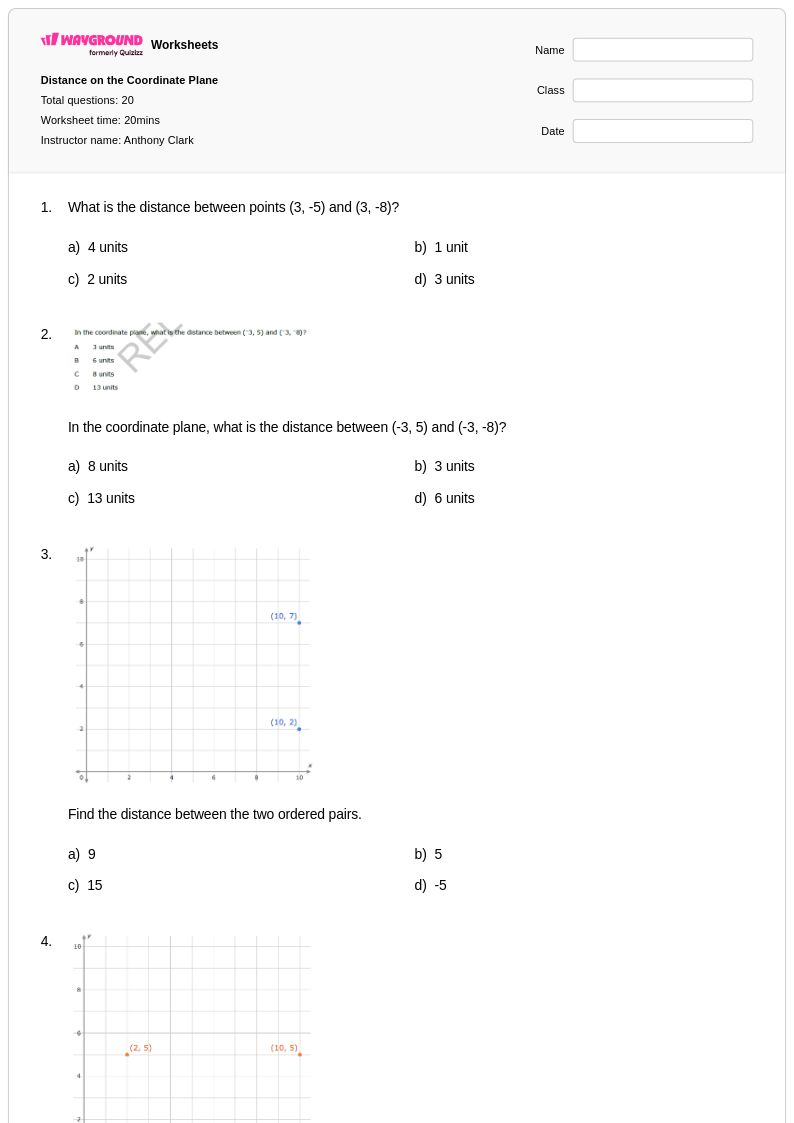
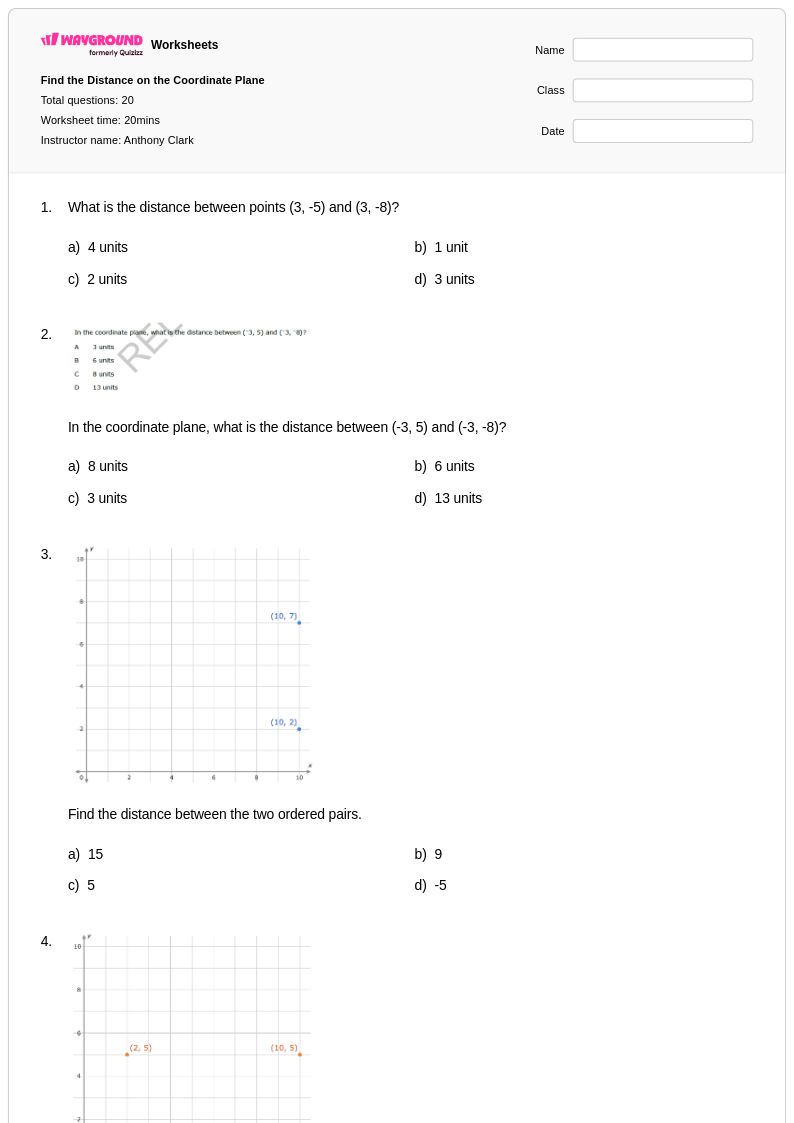
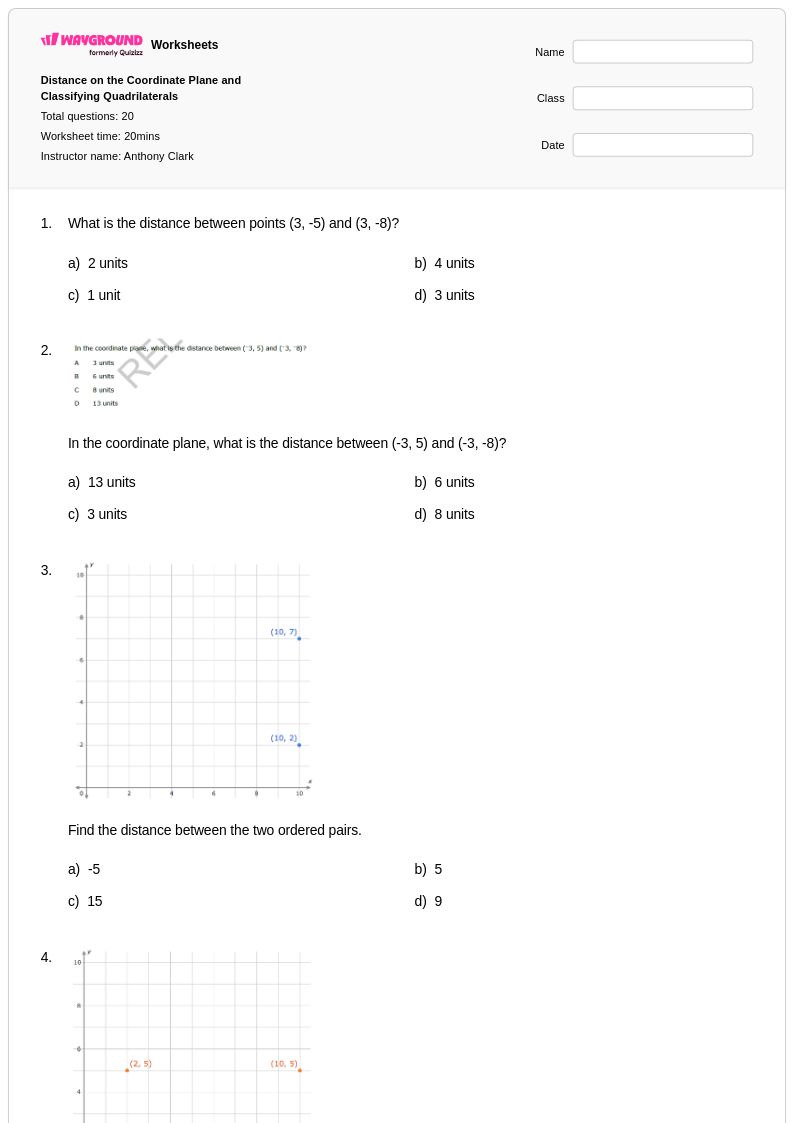
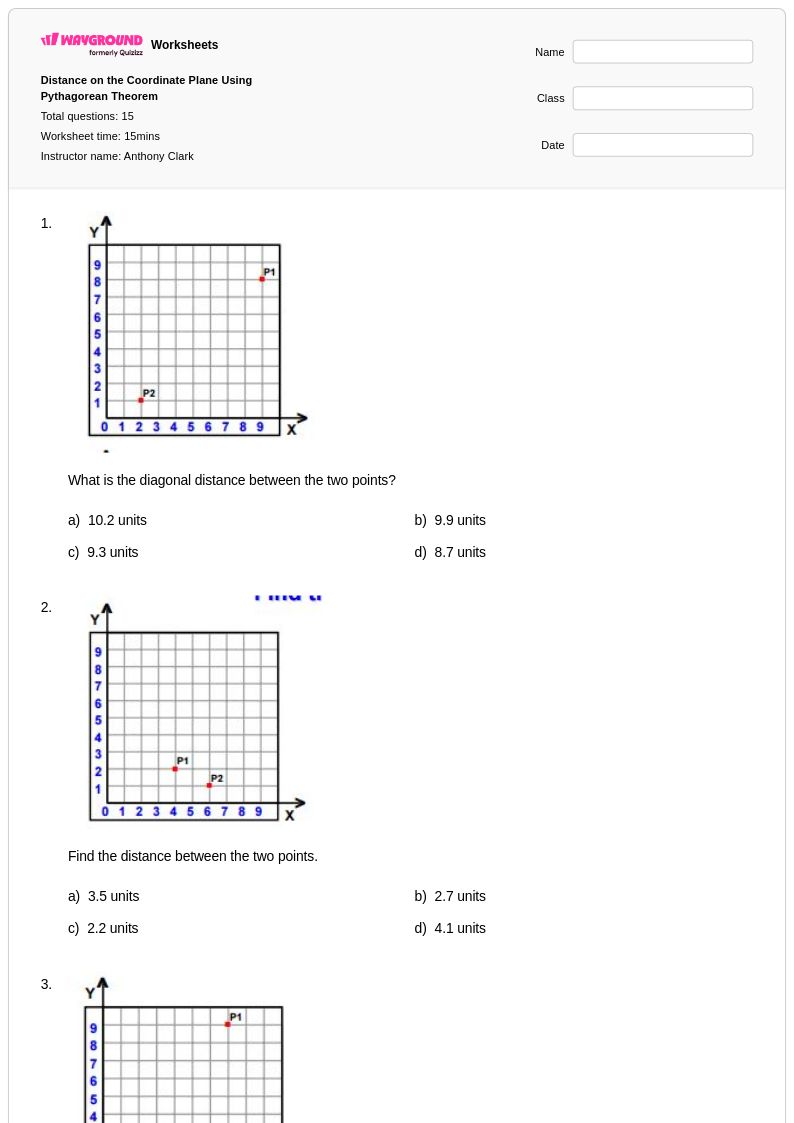
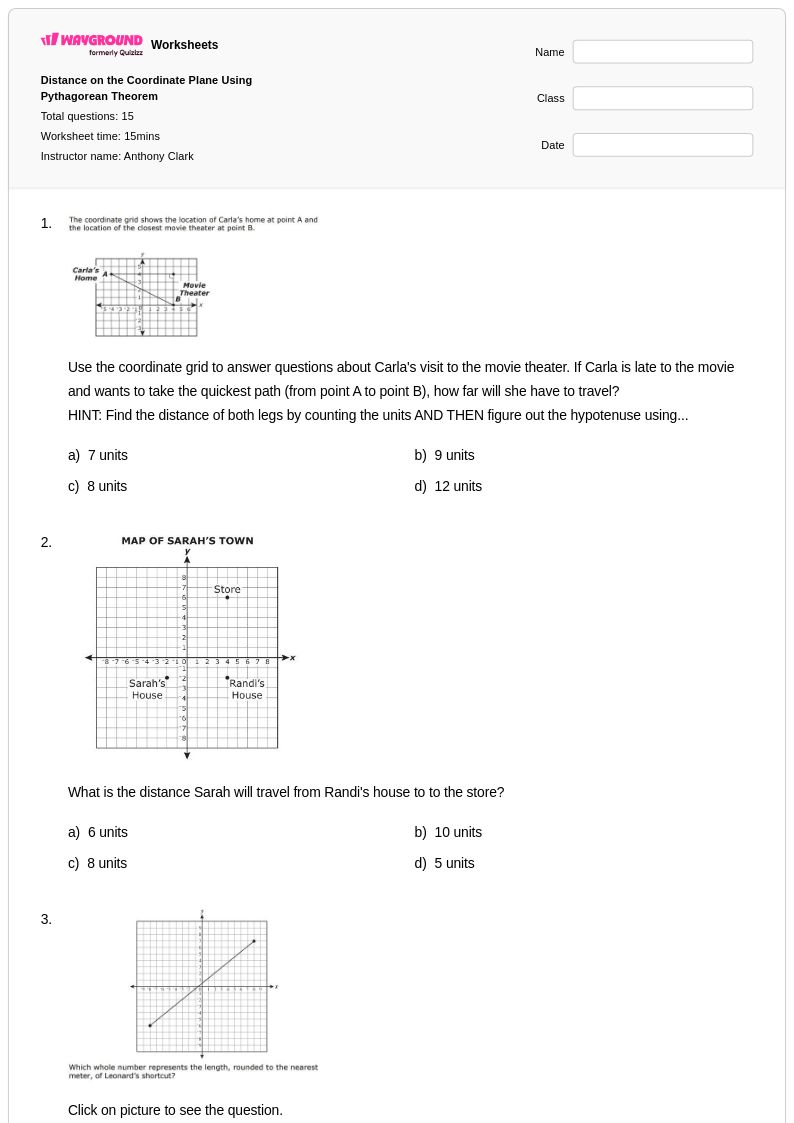
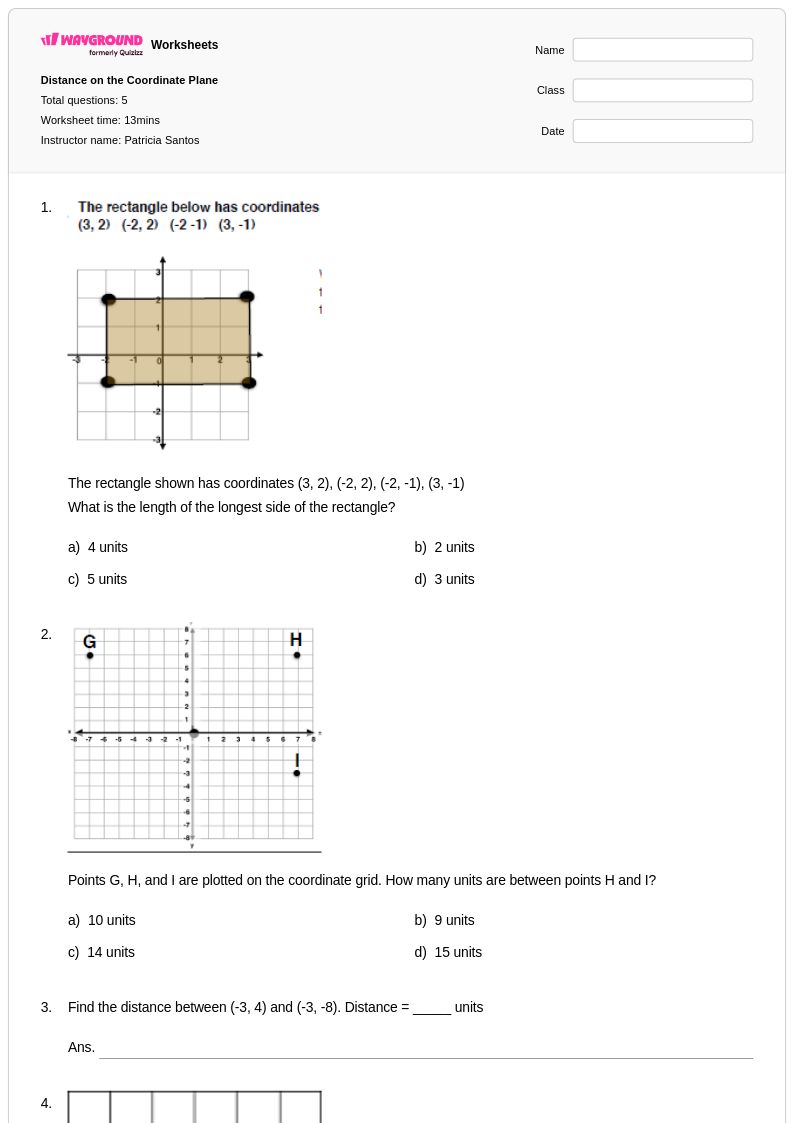
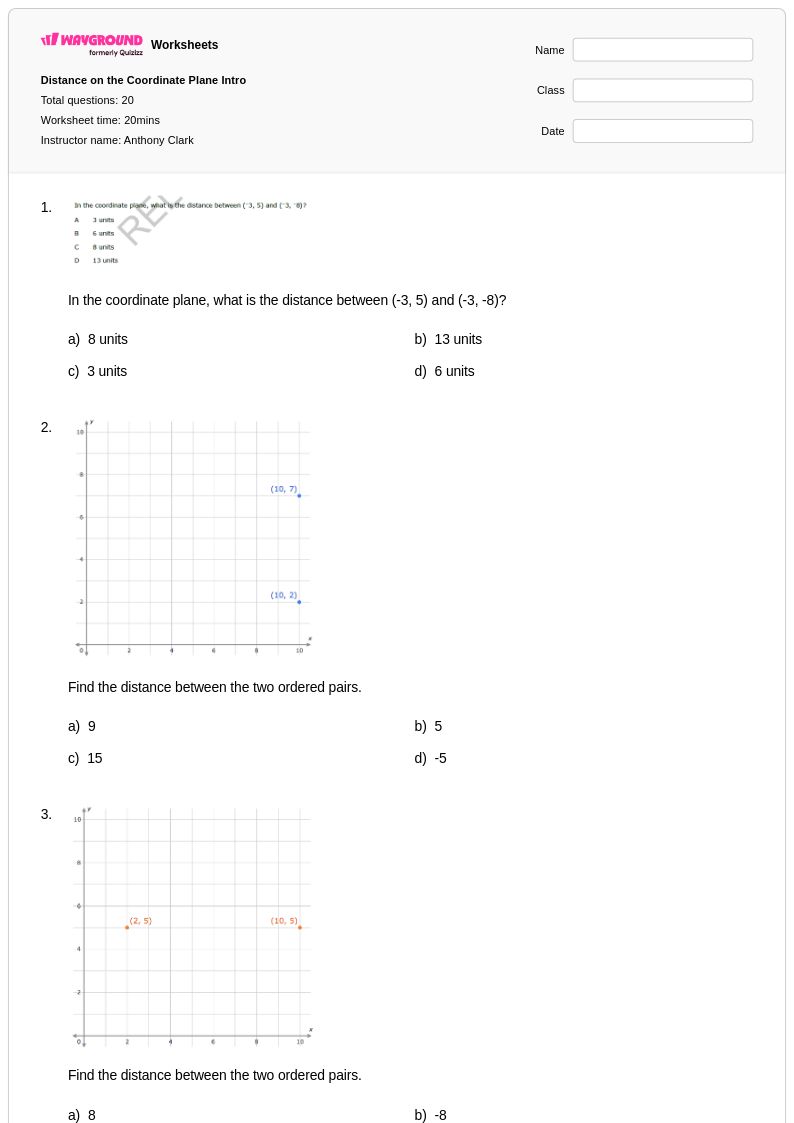
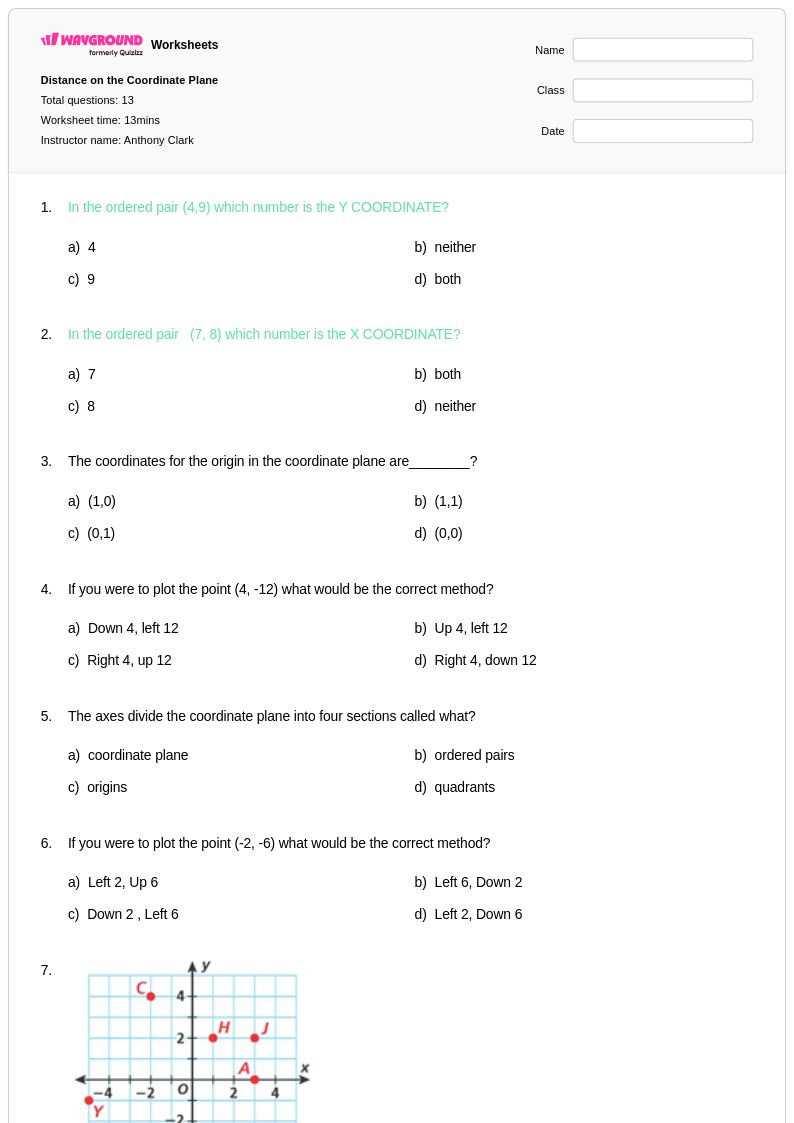
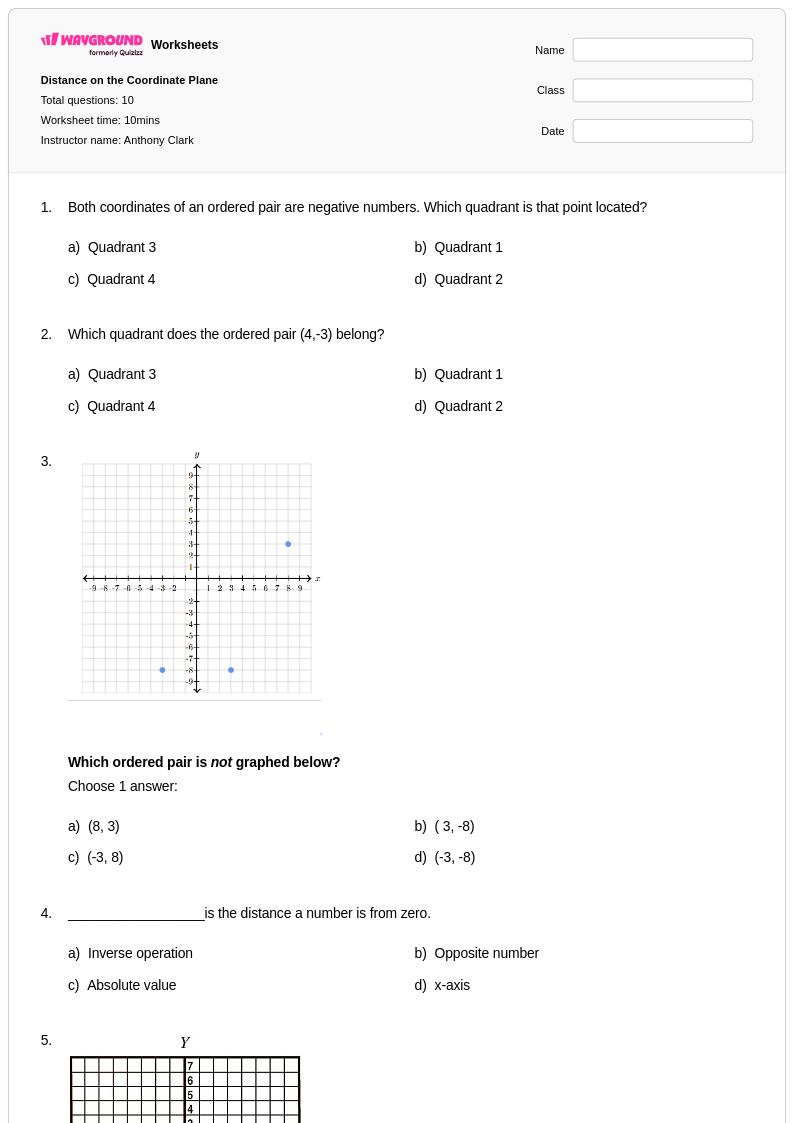
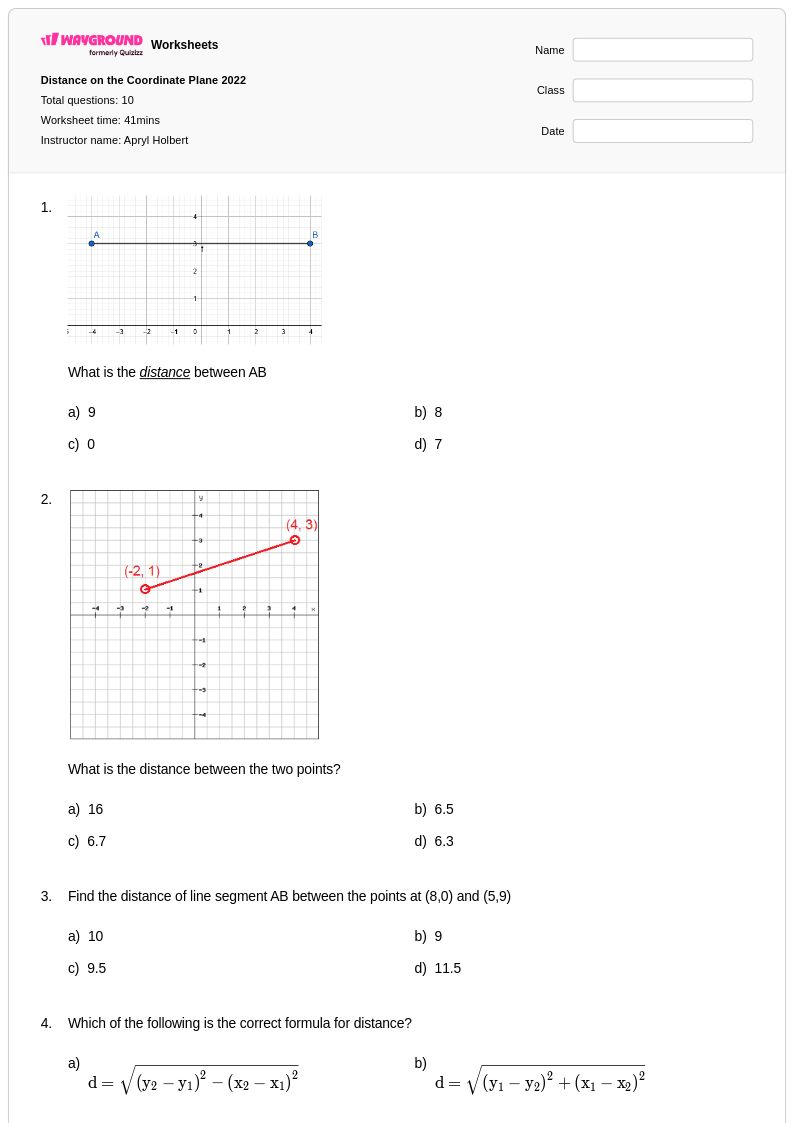
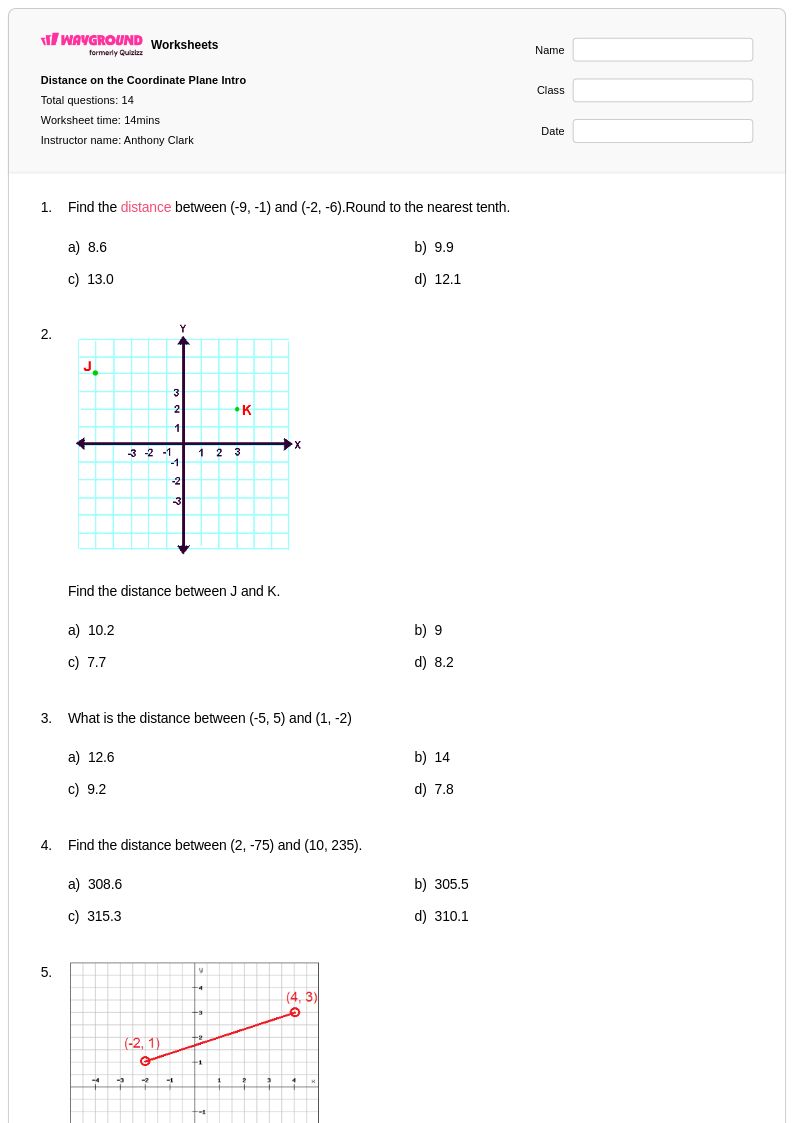
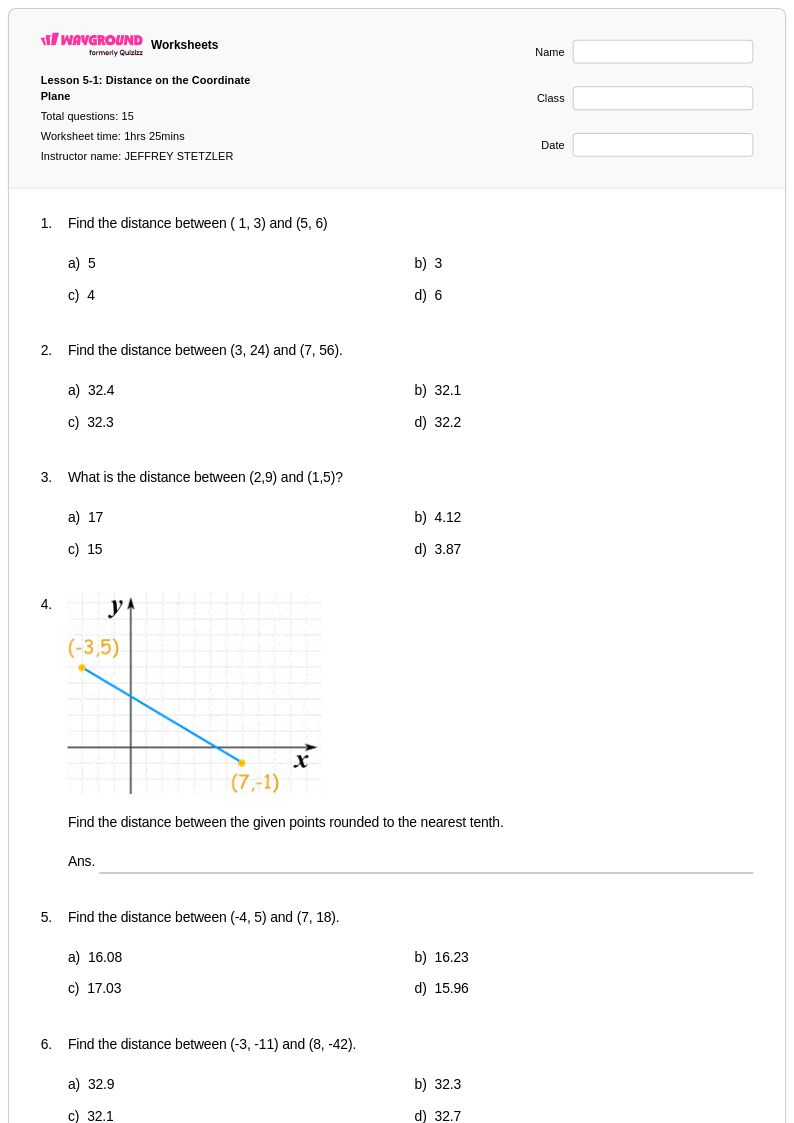
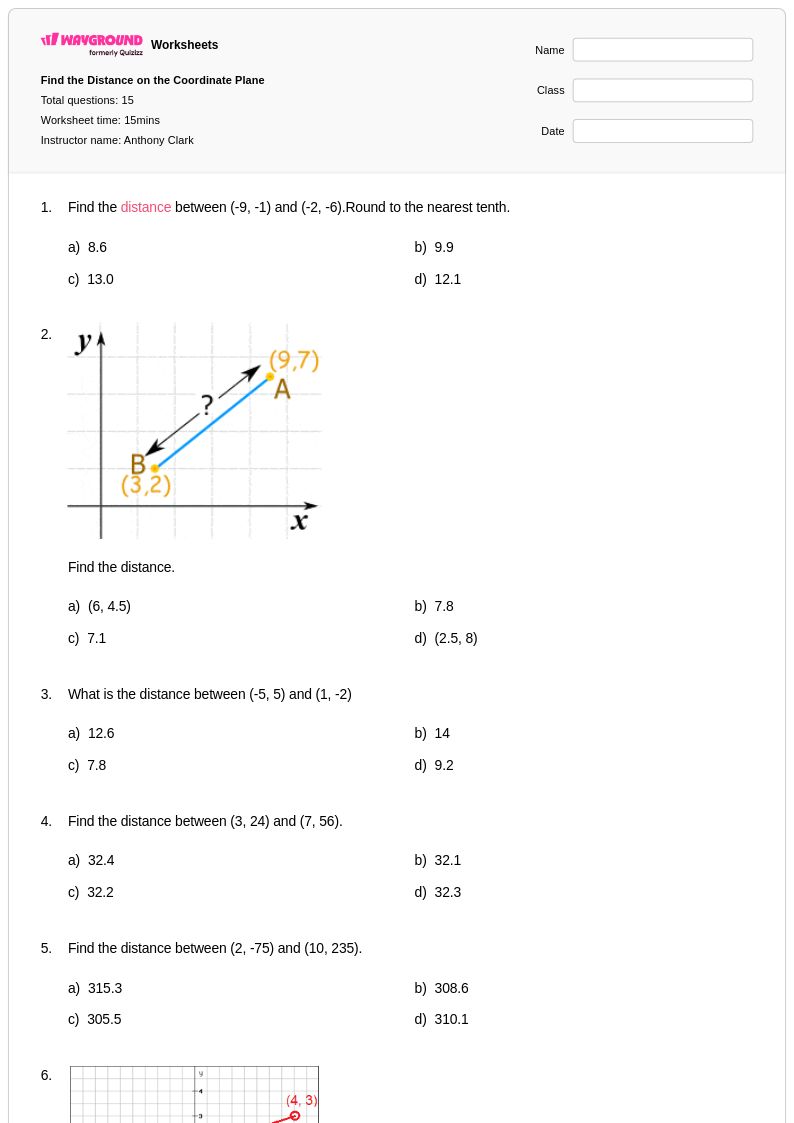
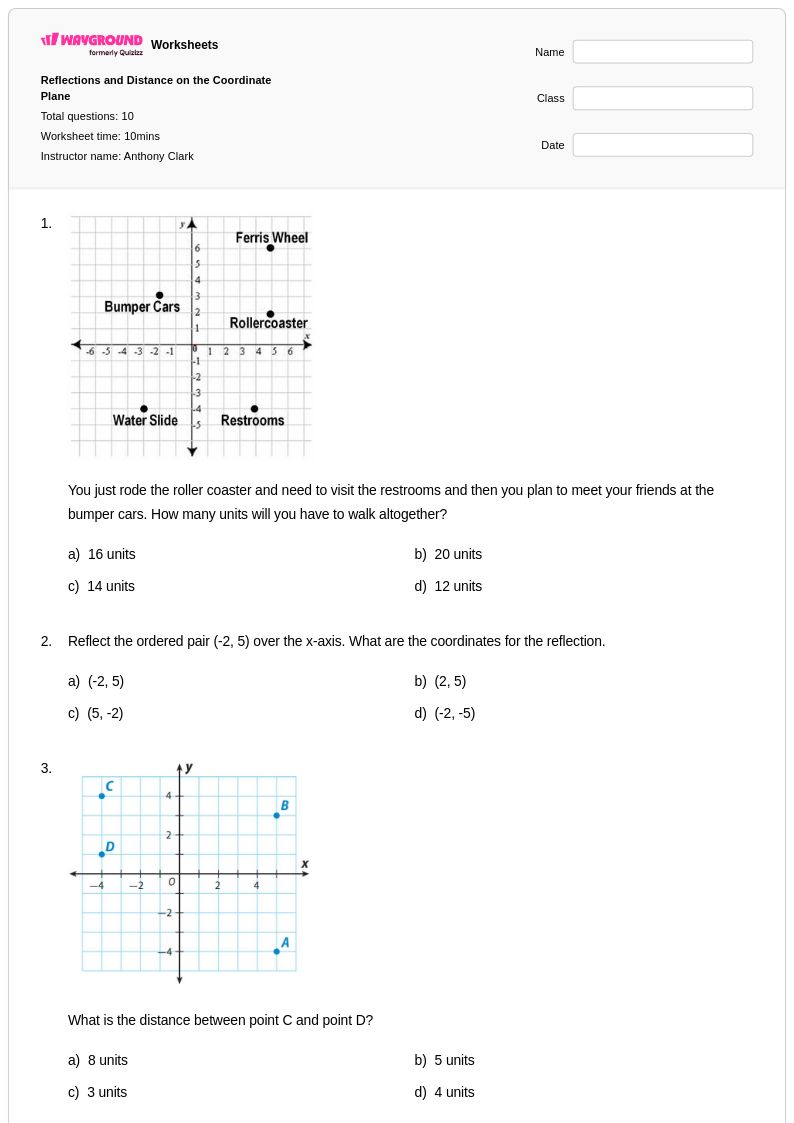
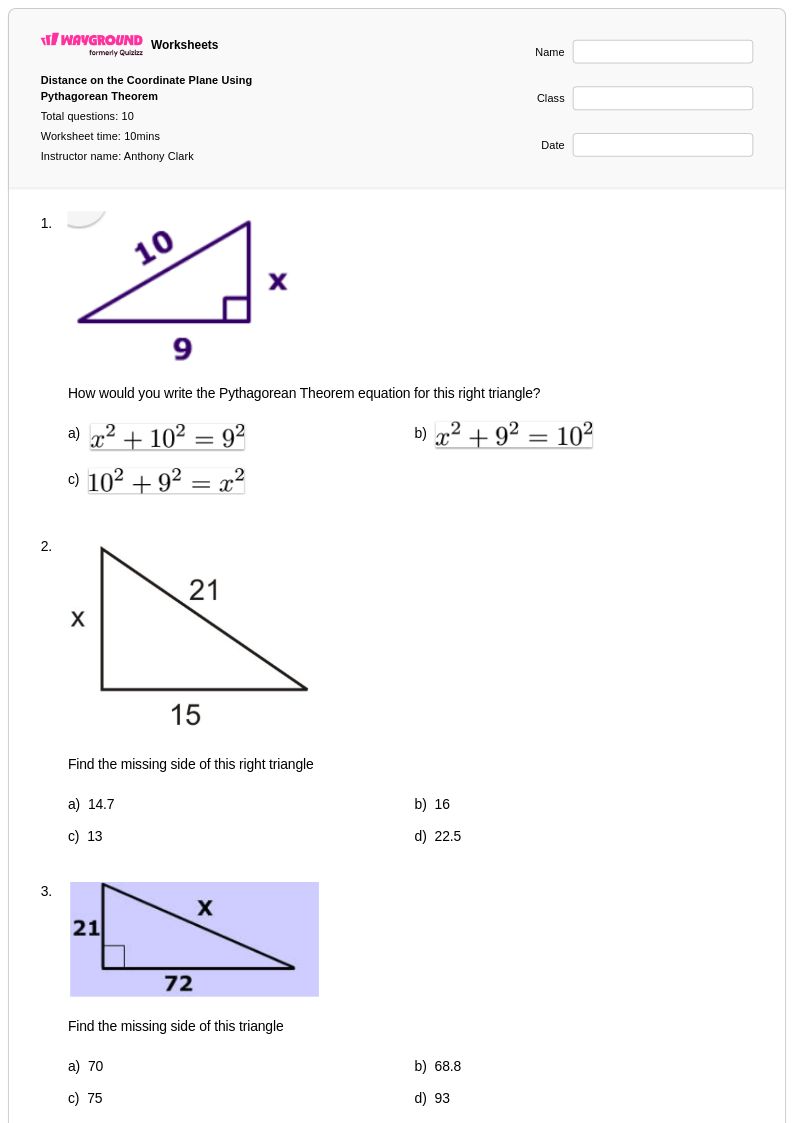
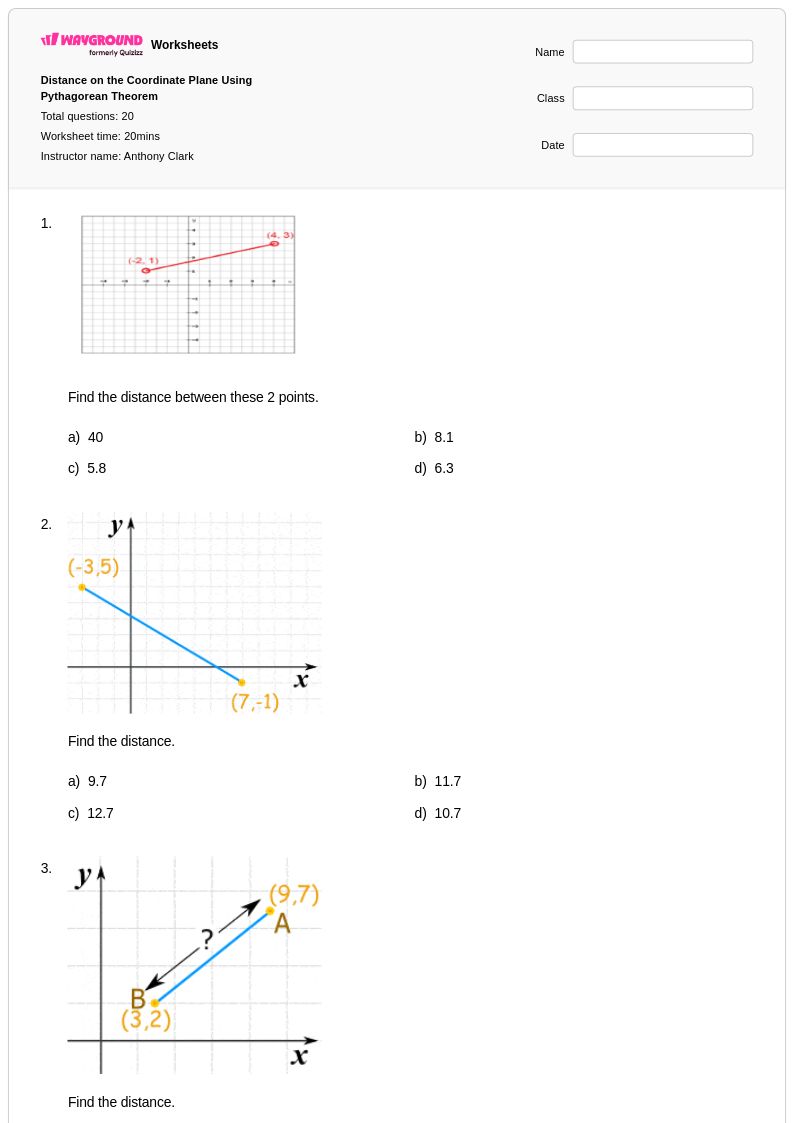
Distance on the Coordinate Plane worksheets for Class 9 students provide comprehensive practice with calculating distances between points using the distance formula and Pythagorean theorem. These mathematics resources strengthen essential geometry skills including plotting coordinates, identifying right triangles formed by coordinate points, applying the distance formula d = √[(x₂-x₁)² + (y₂-y₁)²], and solving real-world problems involving distances on coordinate grids. Available through Wayground (formerly Quizizz), these free printables feature systematically designed practice problems that progress from basic point-to-point calculations to complex multi-step applications, complete with detailed answer keys and step-by-step solutions in convenient pdf format.
Wayground (formerly Quizizz) supports mathematics educators with an extensive collection of teacher-created Distance on the Coordinate Plane resources, drawing from millions of worksheets developed by experienced classroom professionals. The platform's robust search and filtering capabilities allow teachers to quickly locate materials aligned with specific geometry standards and grade-level expectations, while built-in differentiation tools enable customization for varying skill levels within the same classroom. These flexible worksheet collections are available in both printable pdf format and interactive digital versions, making them ideal for lesson planning, targeted remediation sessions, enrichment activities, and independent skill practice, ensuring that Class 9 students develop mastery of coordinate geometry concepts through varied and engaging mathematical exercises.
FAQs
How do I teach distance on the coordinate plane at the 9th grade level?
By Grade 9, students have seen the distance formula before — the goal is fluency and application, not first exposure. Focus instruction on multi-step problems: finding the perimeter of a polygon plotted on a grid, proving geometric properties (like whether a quadrilateral is a rectangle) by comparing side lengths and diagonals, or solving real-world problems where coordinates represent actual locations. If students are still shaky on the formula itself, a quick derivation from the Pythagorean theorem resets the foundation faster than re-teaching the formula directly.
What exercises help 9th graders practice coordinate plane distances?
At this level, straight point-to-point calculations are warm-up material. The more valuable practice involves using distance as a tool: classifying triangles by side length, finding the midpoint and then the distance from the midpoint to a vertex, or working with coordinates that include decimals and radicals. Problems that require students to set up and solve rather than just compute are what build the fluency expected in high school geometry.
What mistakes do 9th graders still make with the distance formula?
The most common residual error is mishandling negative coordinates inside the formula — specifically, failing to apply the subtraction correctly when one coordinate is negative, so (−3) becomes 3 mid-calculation. A subtler issue: students sometimes confuse distance with displacement and expect a signed answer. In a geometry context, distance is always non-negative, and students who've done a lot of physics or number-line work sometimes need that distinction made explicit.
How do I use these Grade 9 worksheets in my class?
The worksheets include detailed answer keys and step-by-step solutions, which makes them useful for self-paced review or test prep — students can check their own work and identify exactly where they went wrong. You can assign them as a digital quiz on Wayground for immediate scoring, or print the PDF for paper-based practice. Either way, the same problems, the same rigor.
How does distance on the coordinate plane fit into 9th grade geometry standards?
In Common Core-aligned high school geometry, the distance formula is a foundational tool for proving geometric theorems using coordinates. Students use it to verify properties of triangles and quadrilaterals — for example, confirming that a shape is a rhombus by showing all four sides are equal length — and to connect algebraic and geometric reasoning. This is a step beyond the Grade 8 introduction, where the formula was applied to straightforward point-to-point calculations. At Grade 9, the expectation is that students use distance as part of a larger geometric argument, not as an end in itself.
How can I differentiate distance formula practice for my 9th grade class?
For students who are still consolidating the formula, Wayground's reduced answer choices accommodation helps them focus on setting up the problem correctly without being overwhelmed by similar-looking options. For students ready for extension, assign multi-step problems that require distance as one step in a larger proof or construction. Wayground's worksheet translation feature is also worth noting for classes with English language learners — the same problems can be rendered in another language without changing the mathematical content.