
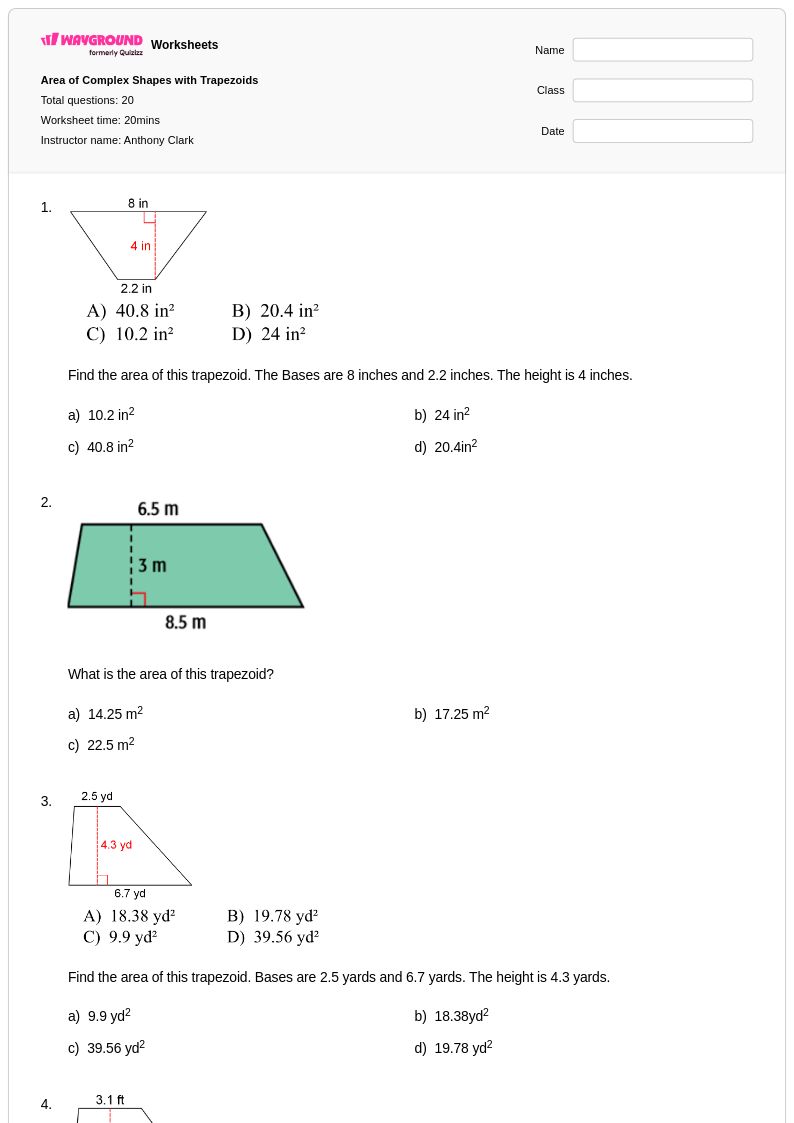
20 Q
6th - Uni
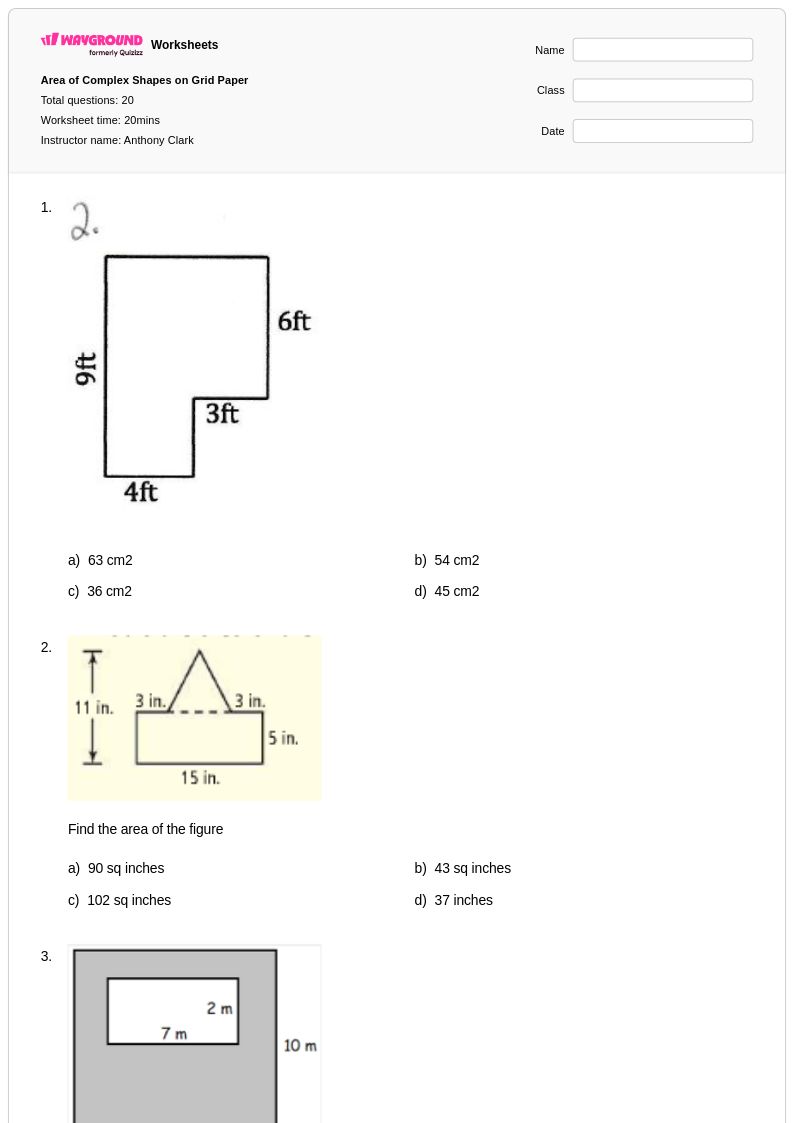
20 Q
7th - Uni
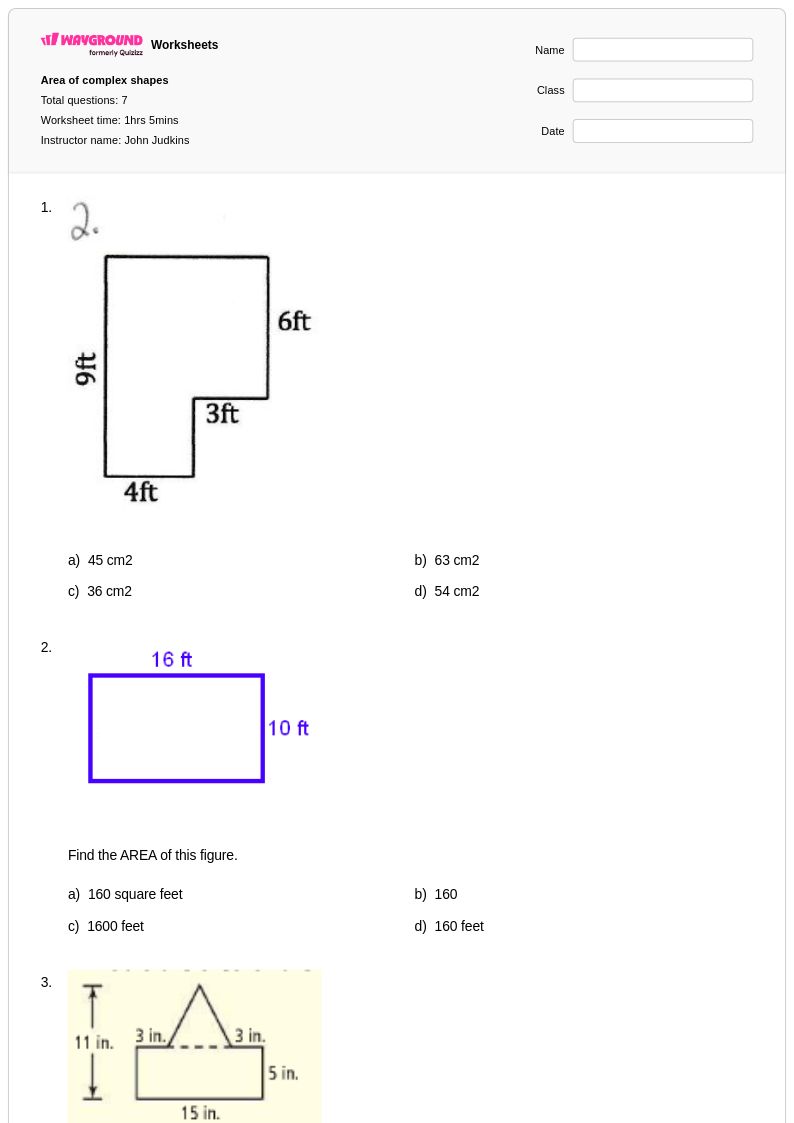
7 Q
9th - 11th
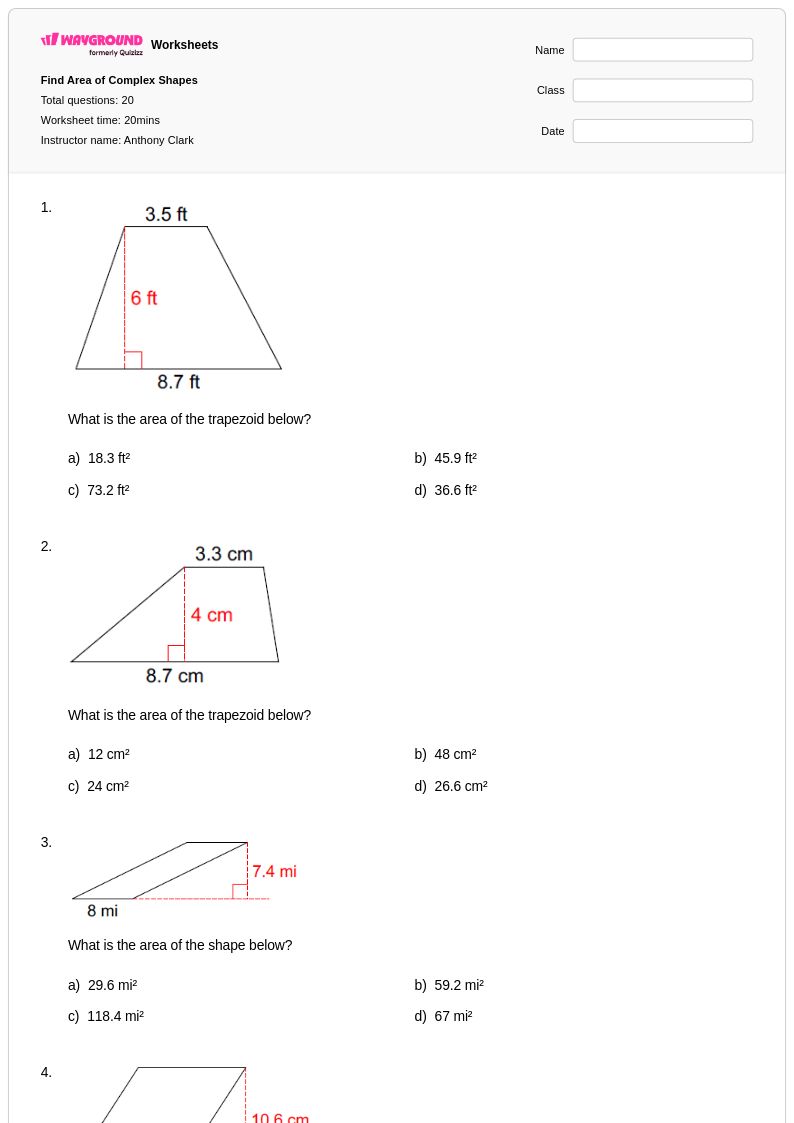
20 Q
7th - Uni
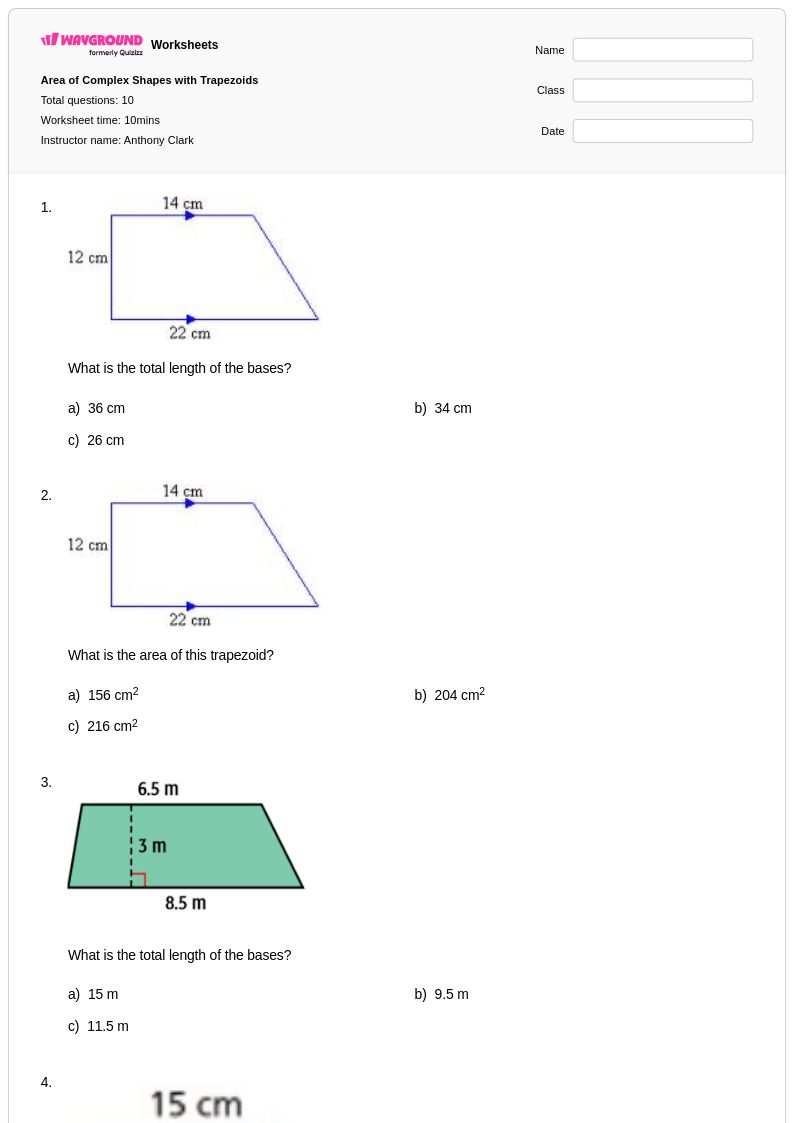
10 Q
6th - Uni
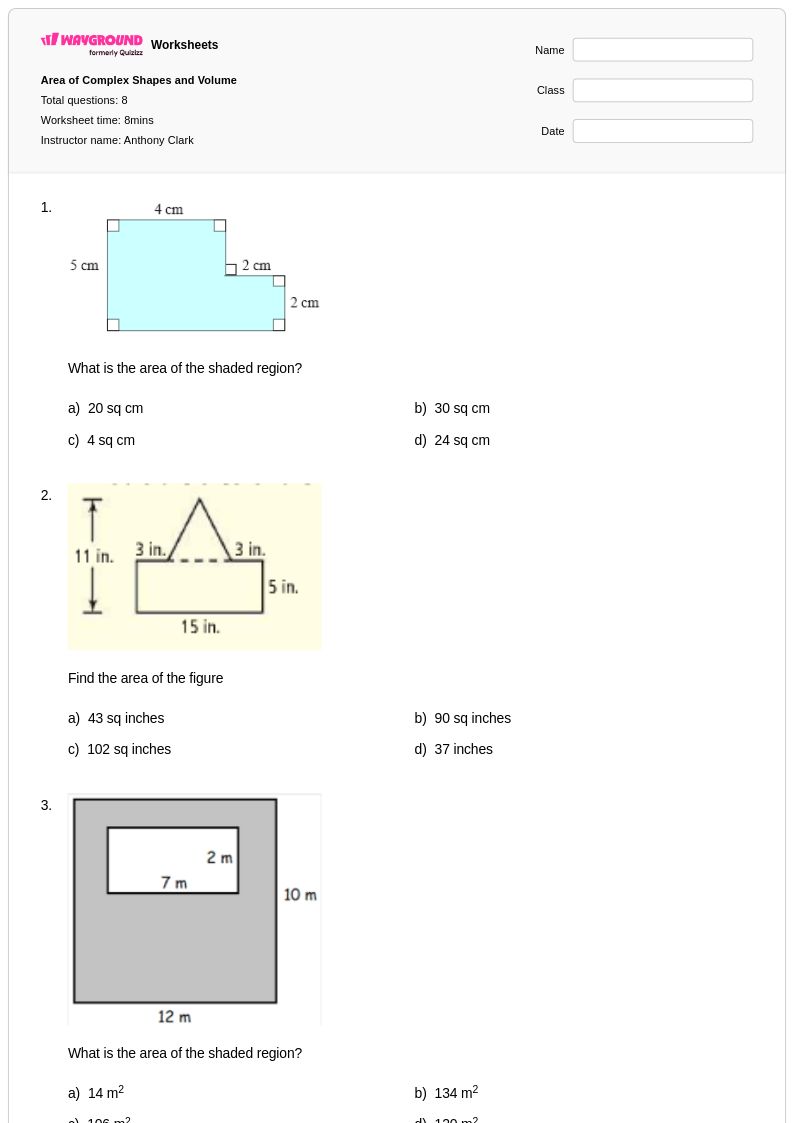
8 Q
6th - Uni
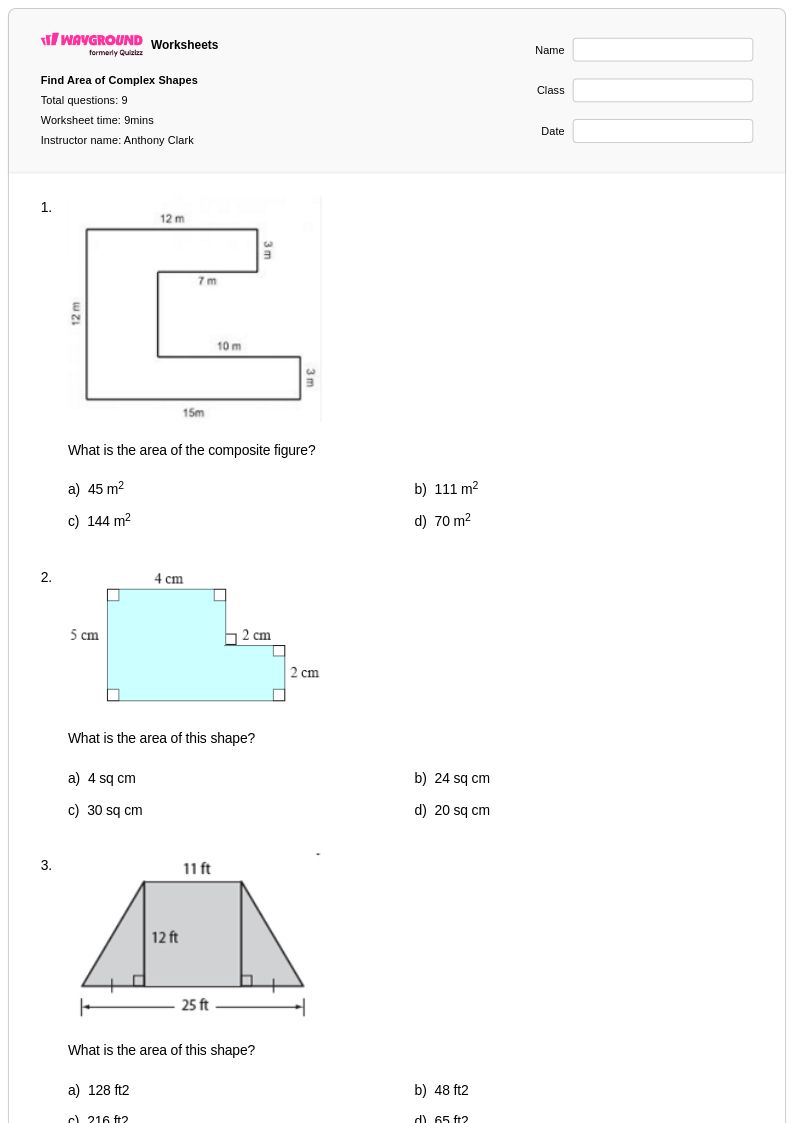
9 Q
7th - Uni
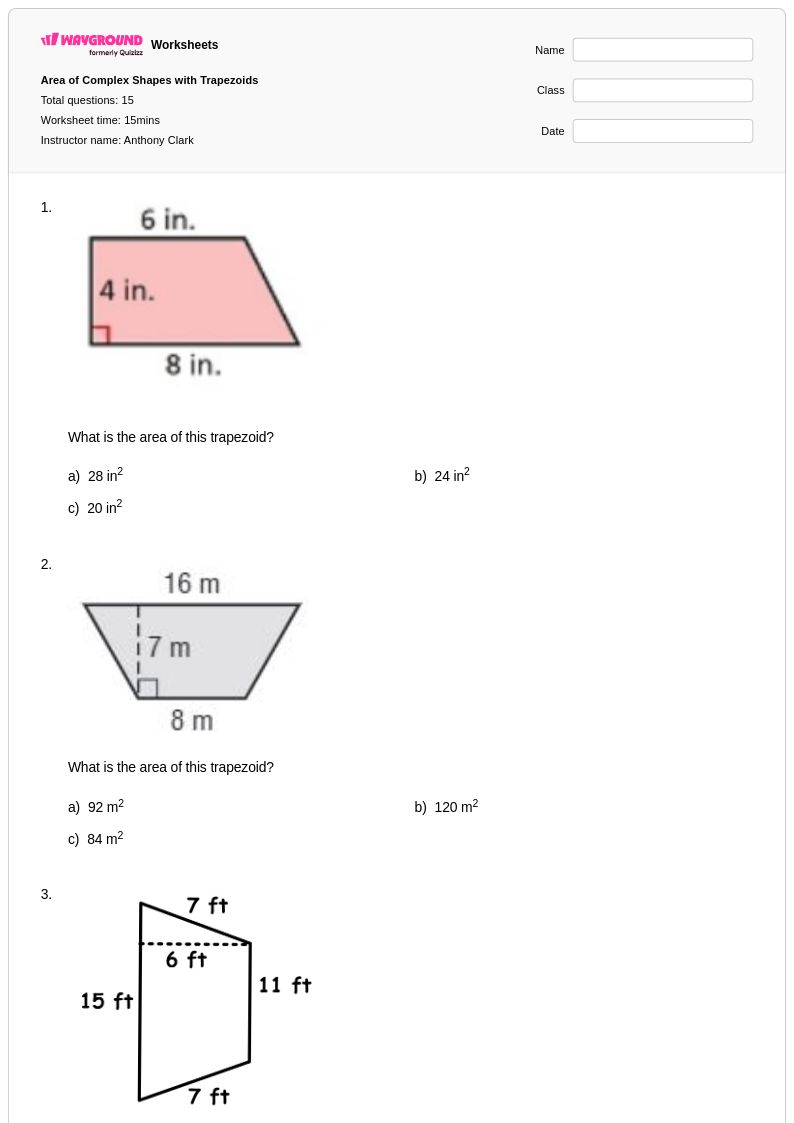
15 Q
6th - Uni
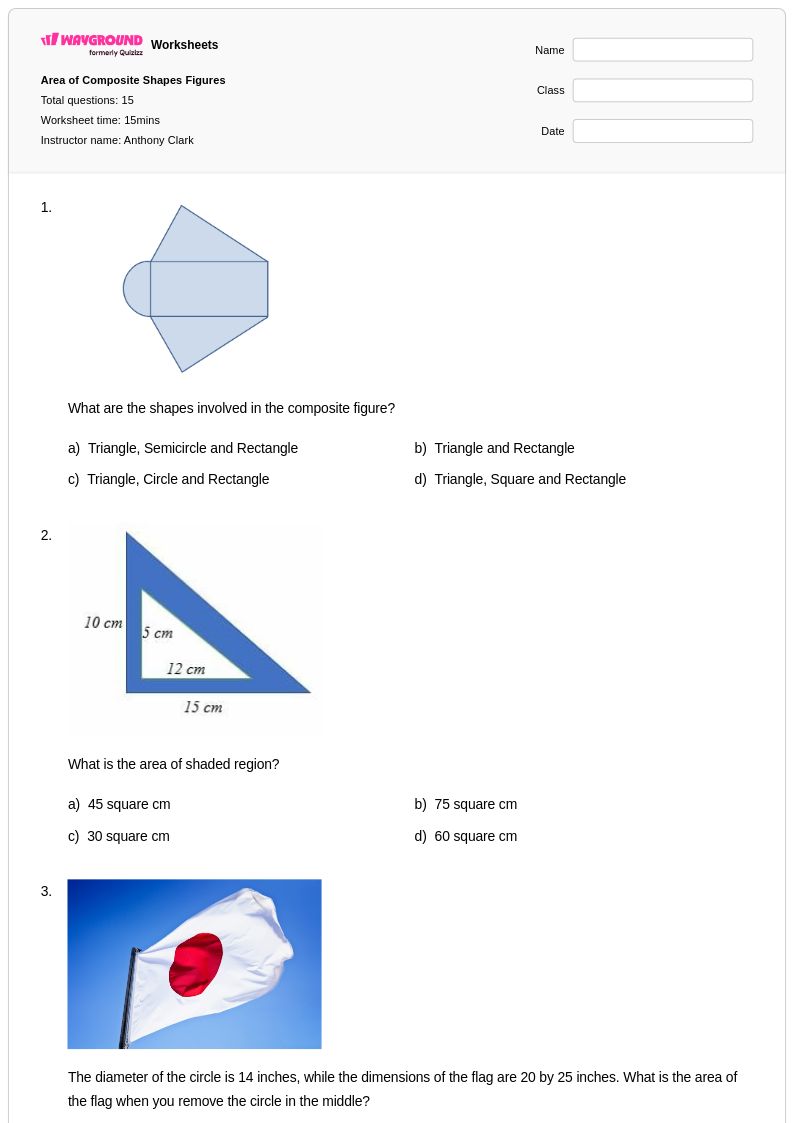
15 Q
7th - Uni
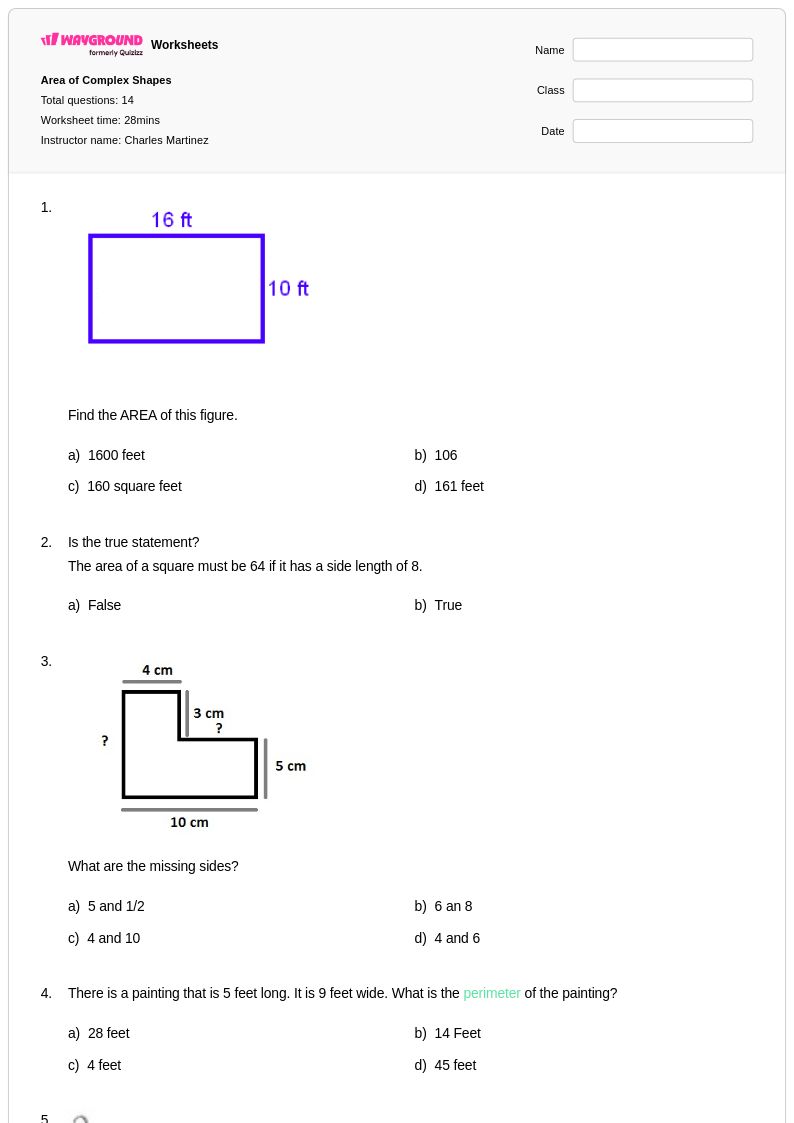
14 Q
9th - 12th
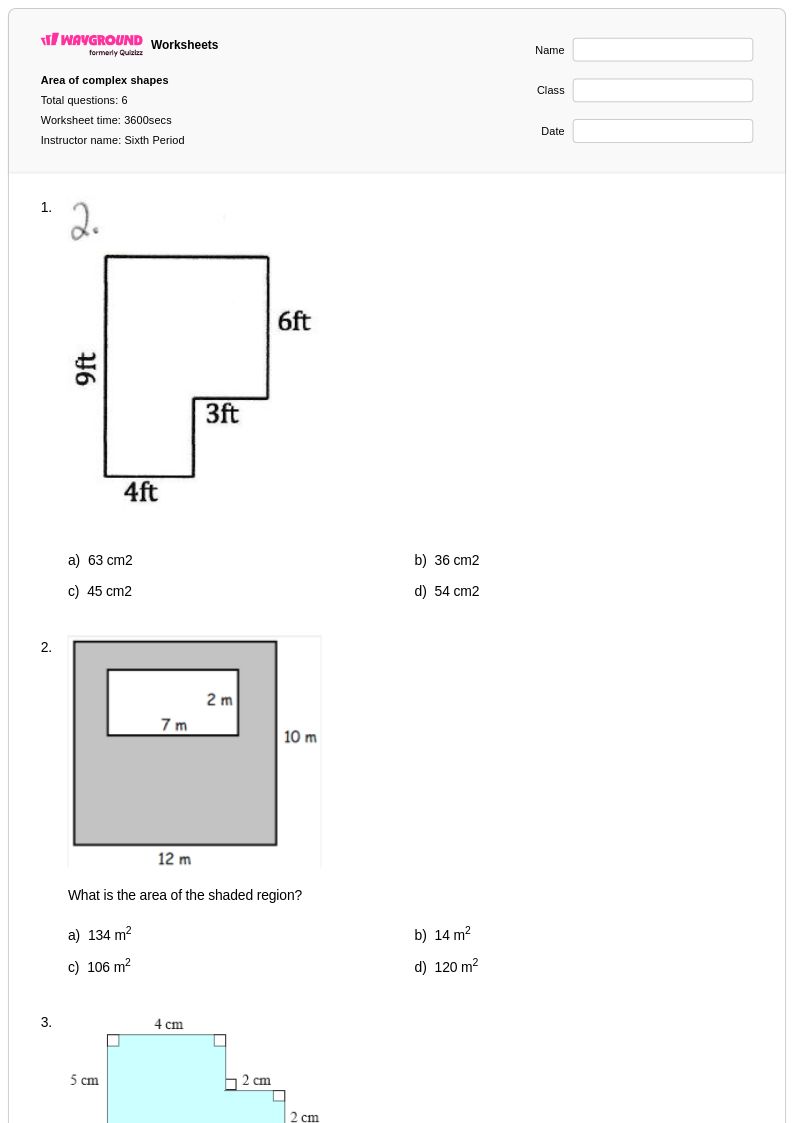
6 Q
9th
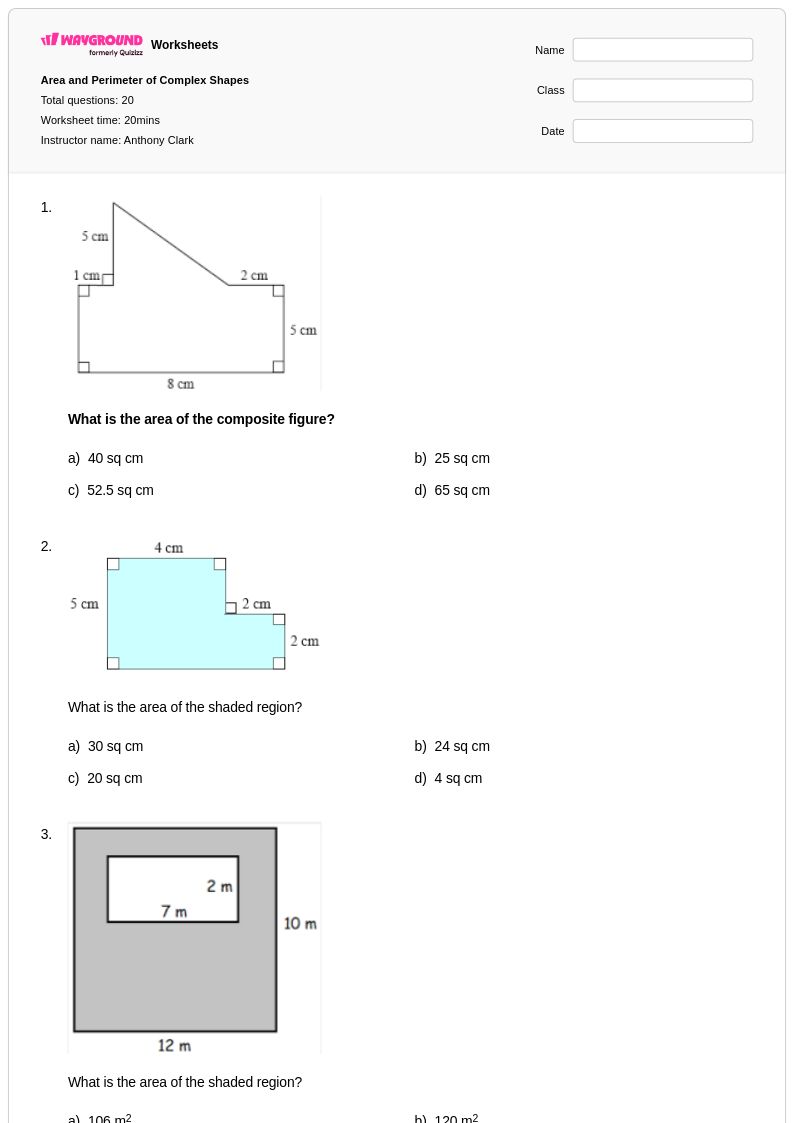
20 Q
7th - Uni
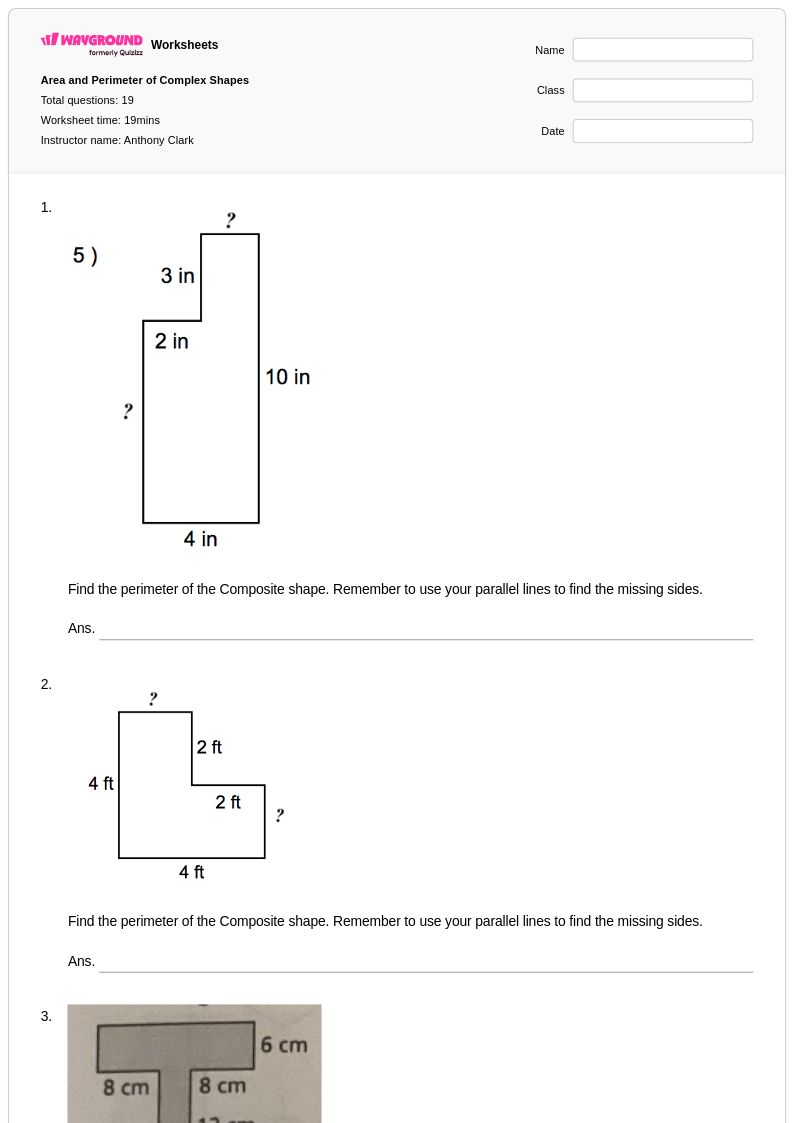
19 Q
7th - Uni
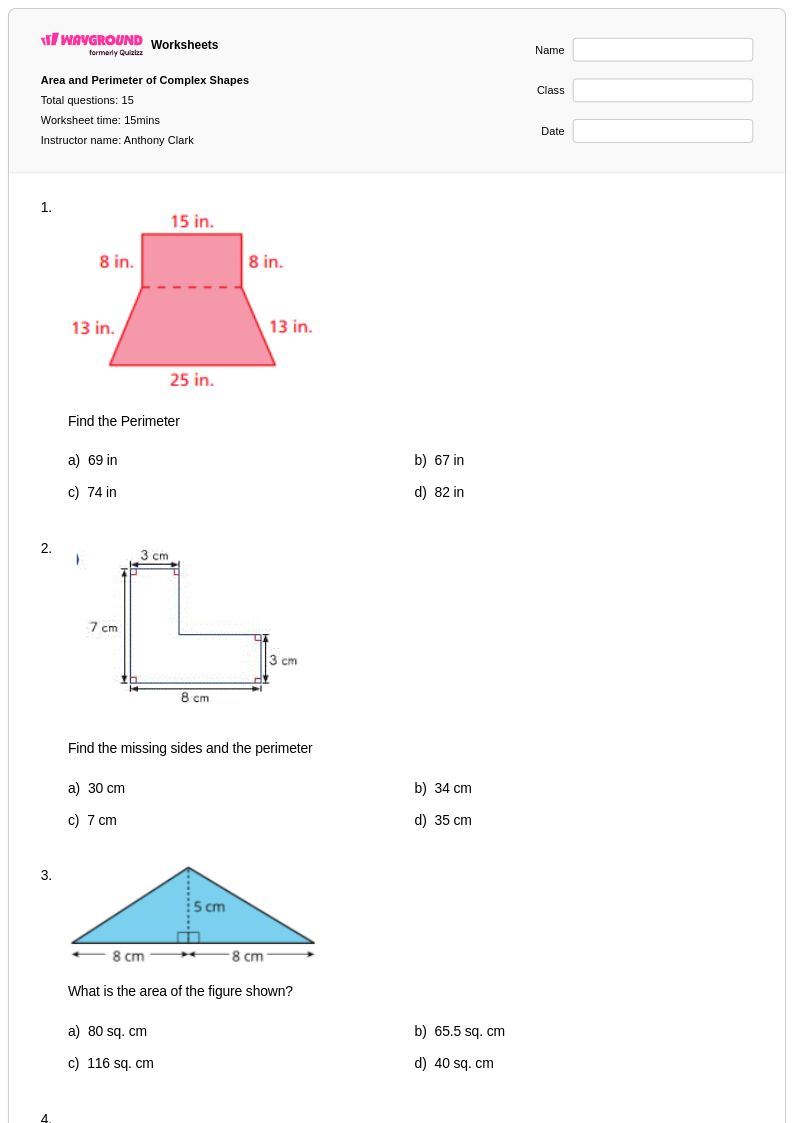
15 Q
7th - Uni
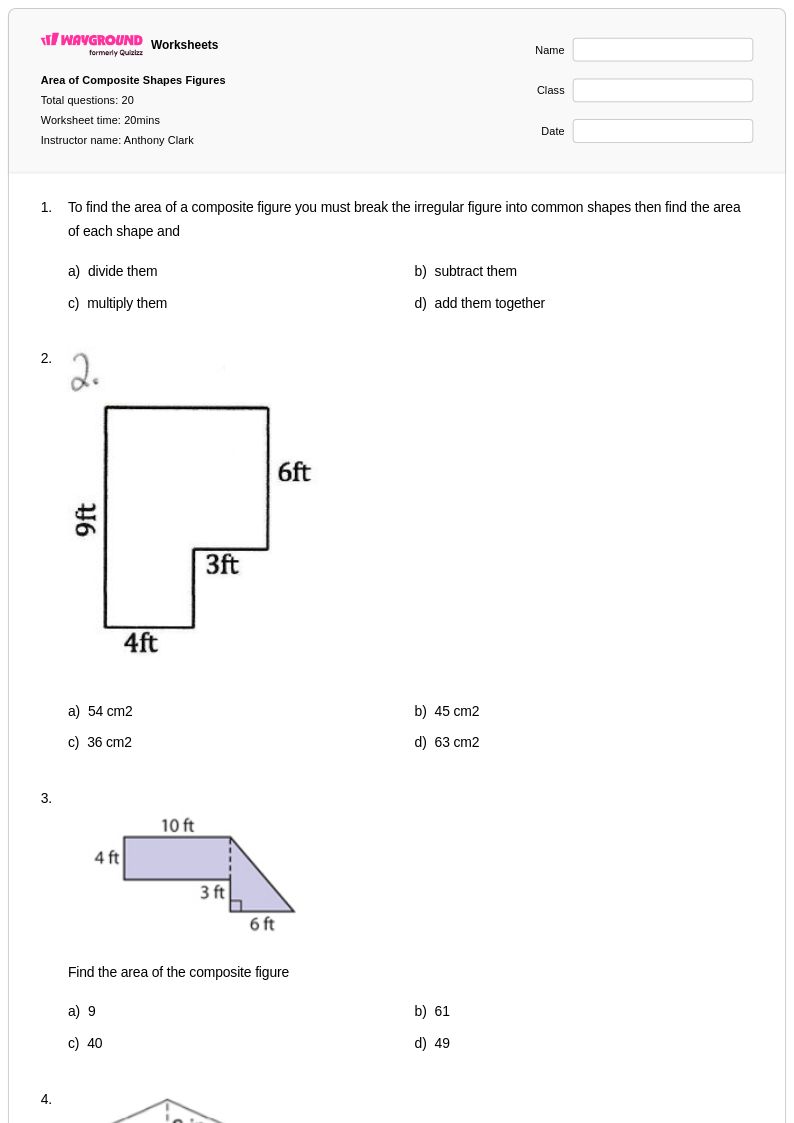
20 Q
7th - Uni
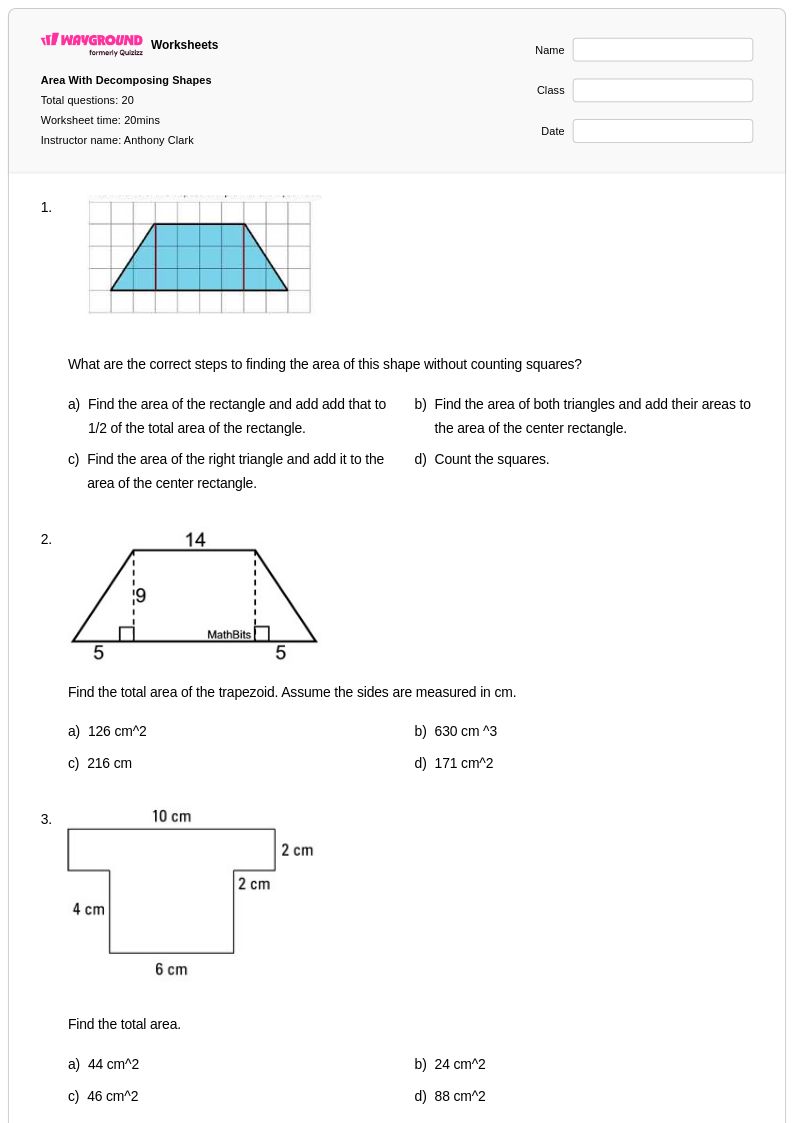
20 Q
6th - Uni
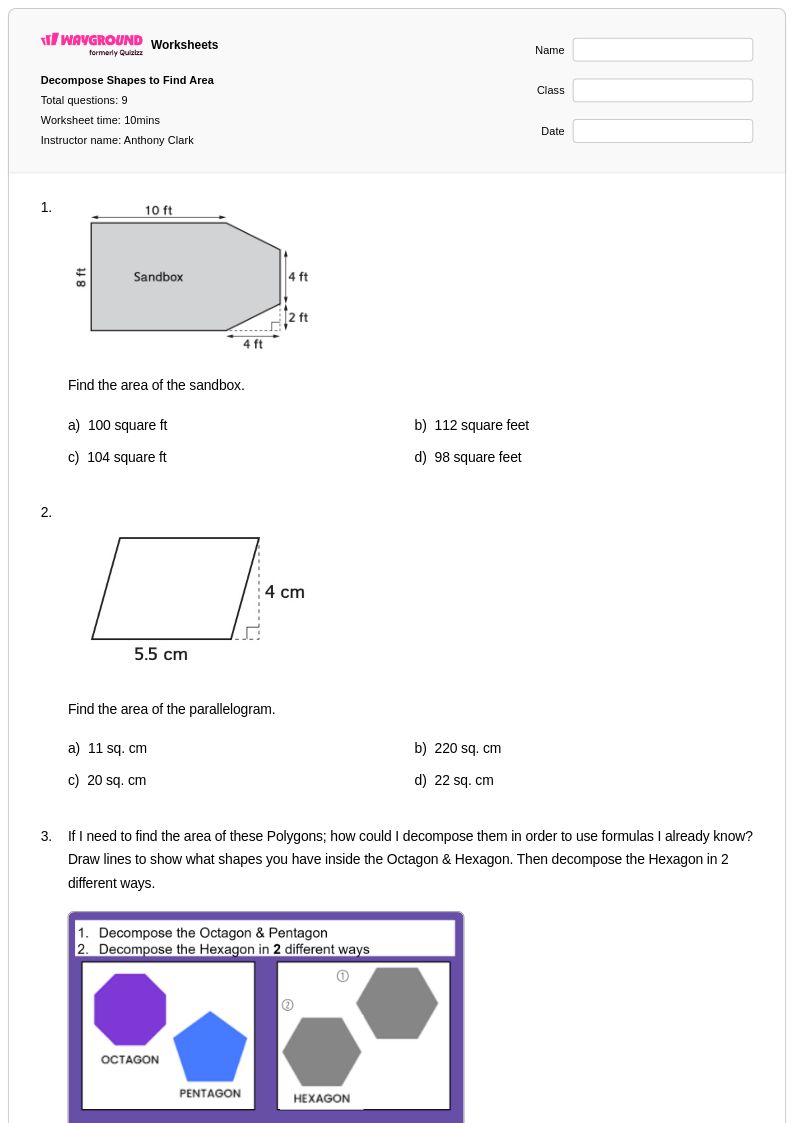
10 Q
6th - Uni
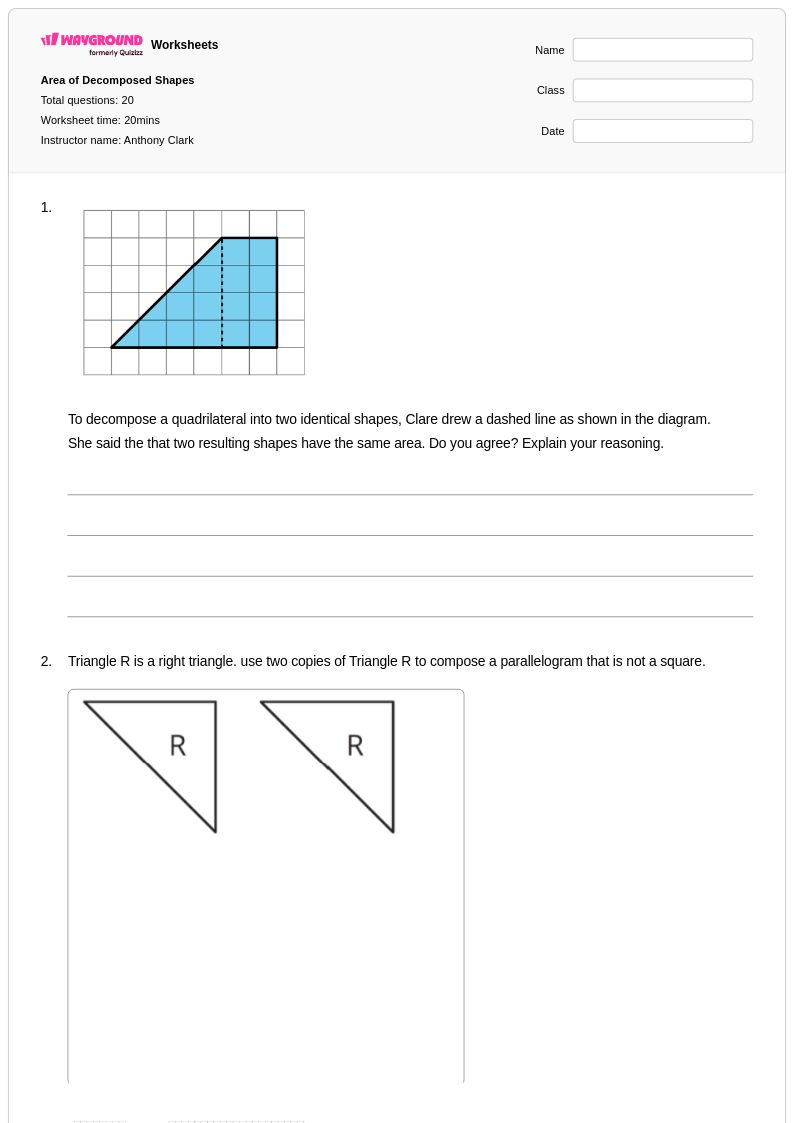
20 Q
6th - Uni
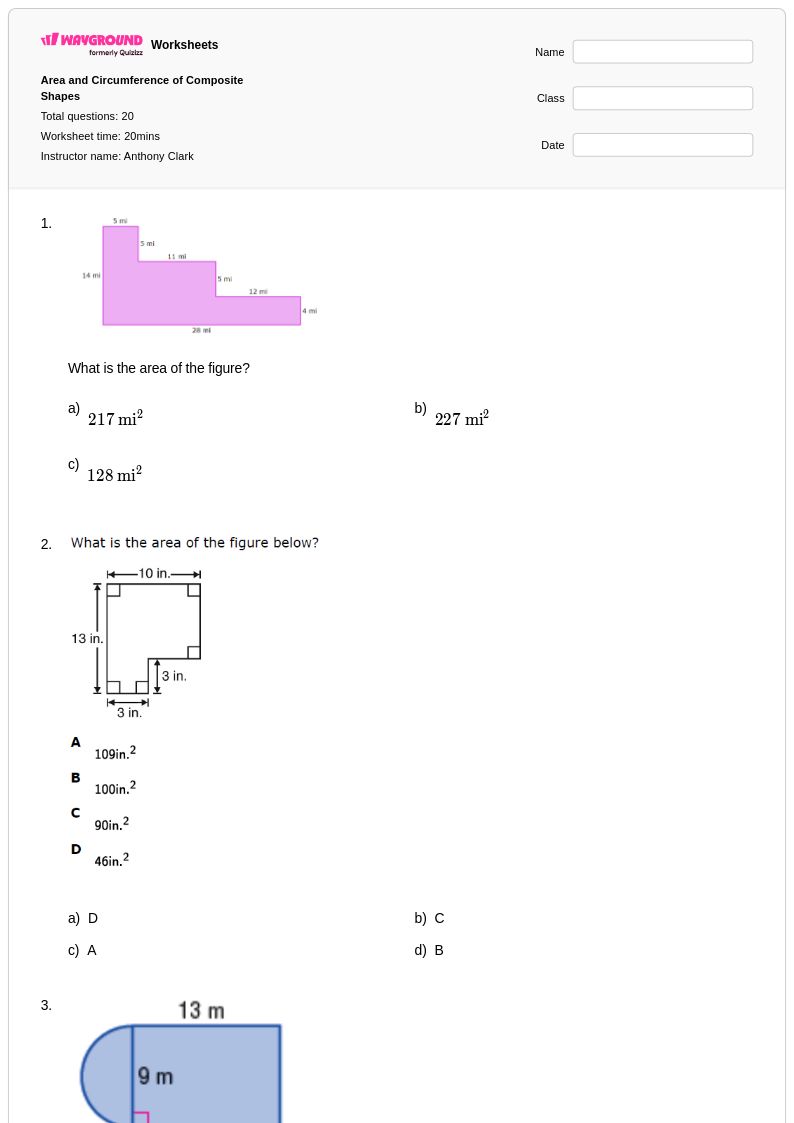
20 Q
7th - Uni
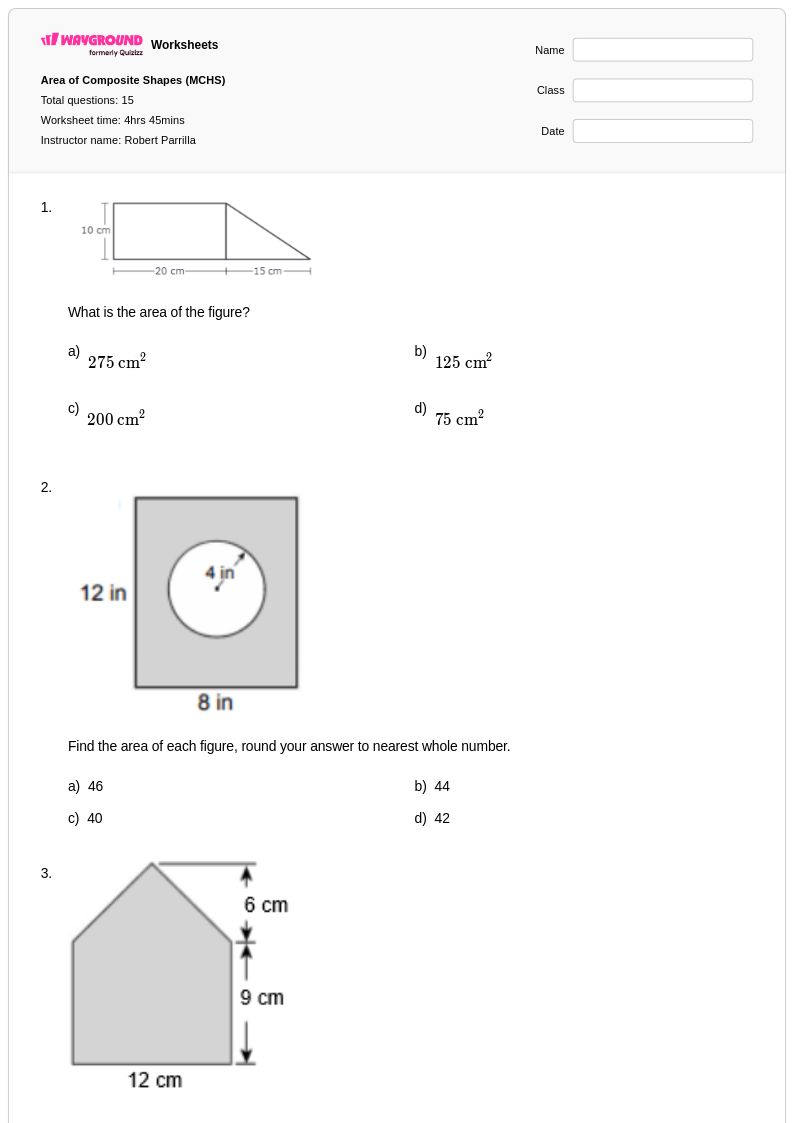
15 Q
9th
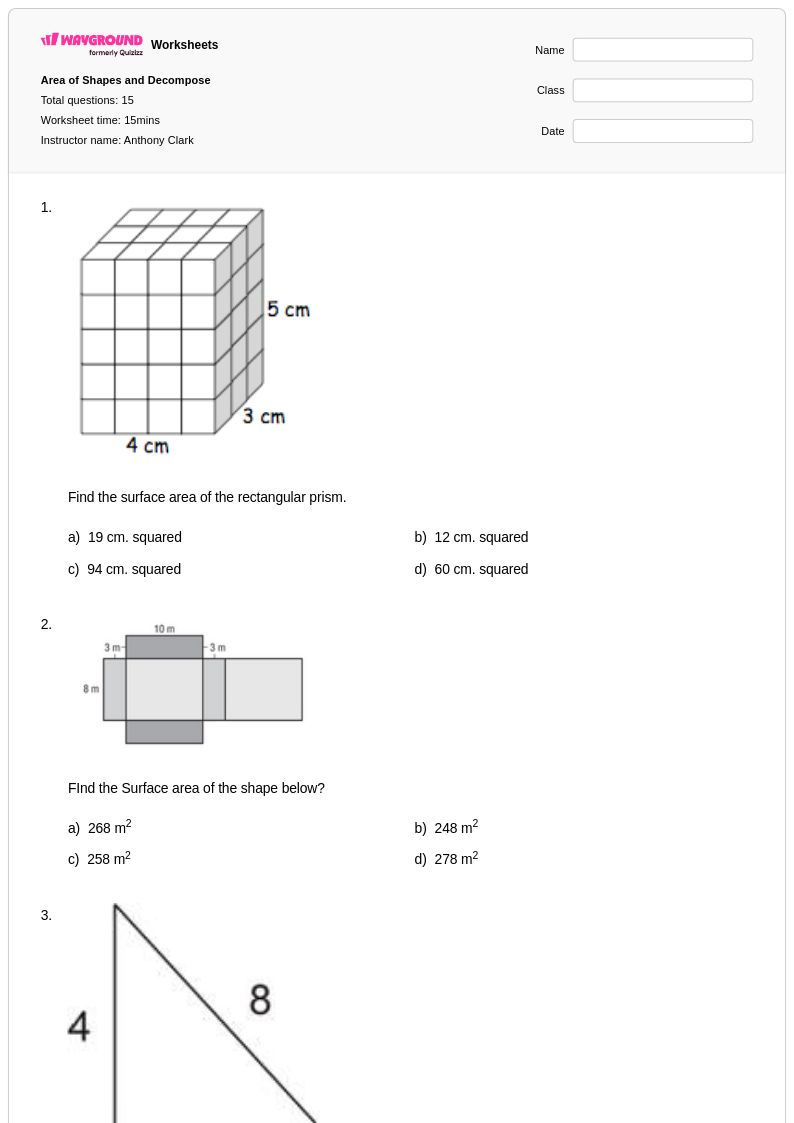
15 Q
6th - Uni
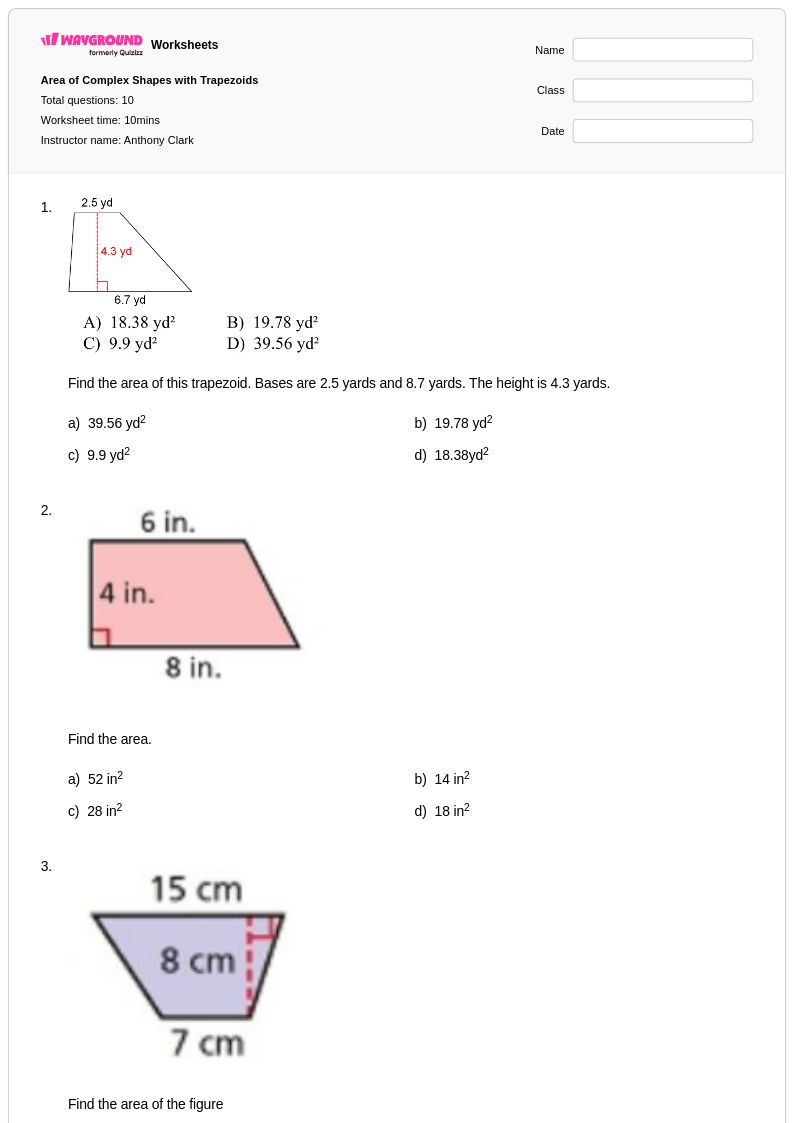
10 Q
6th - Uni
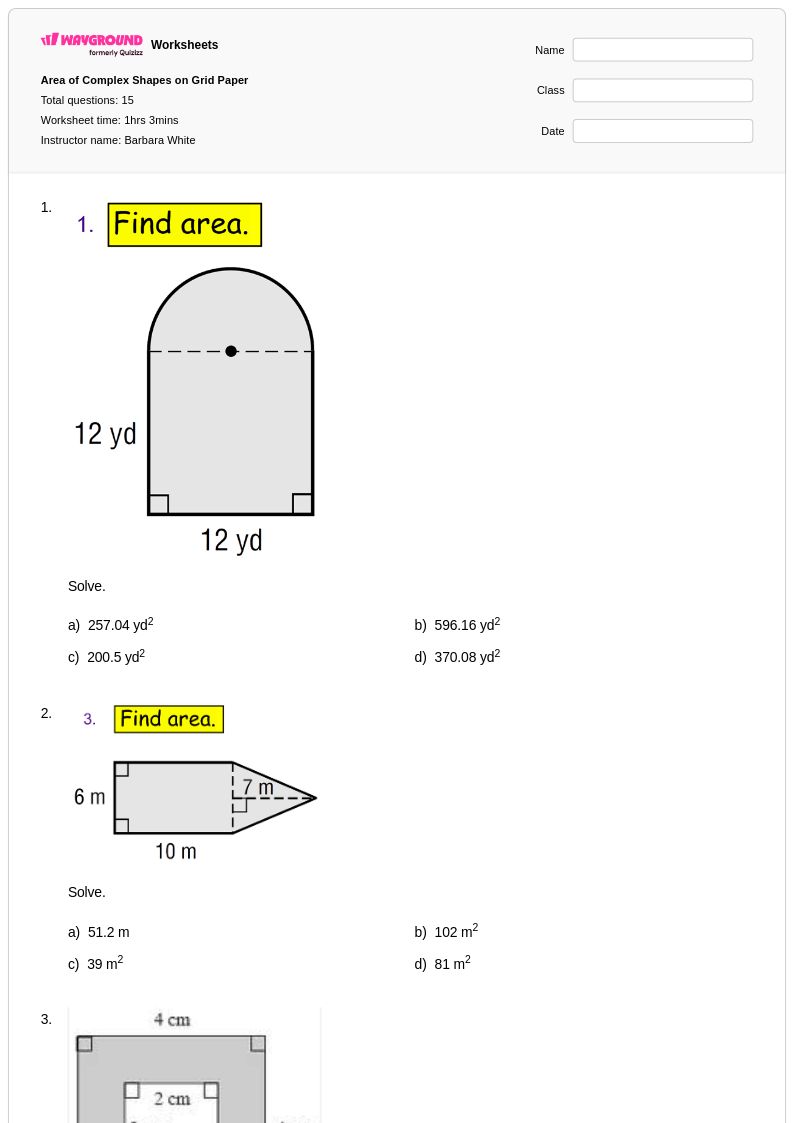
15 Q
7th - 9th
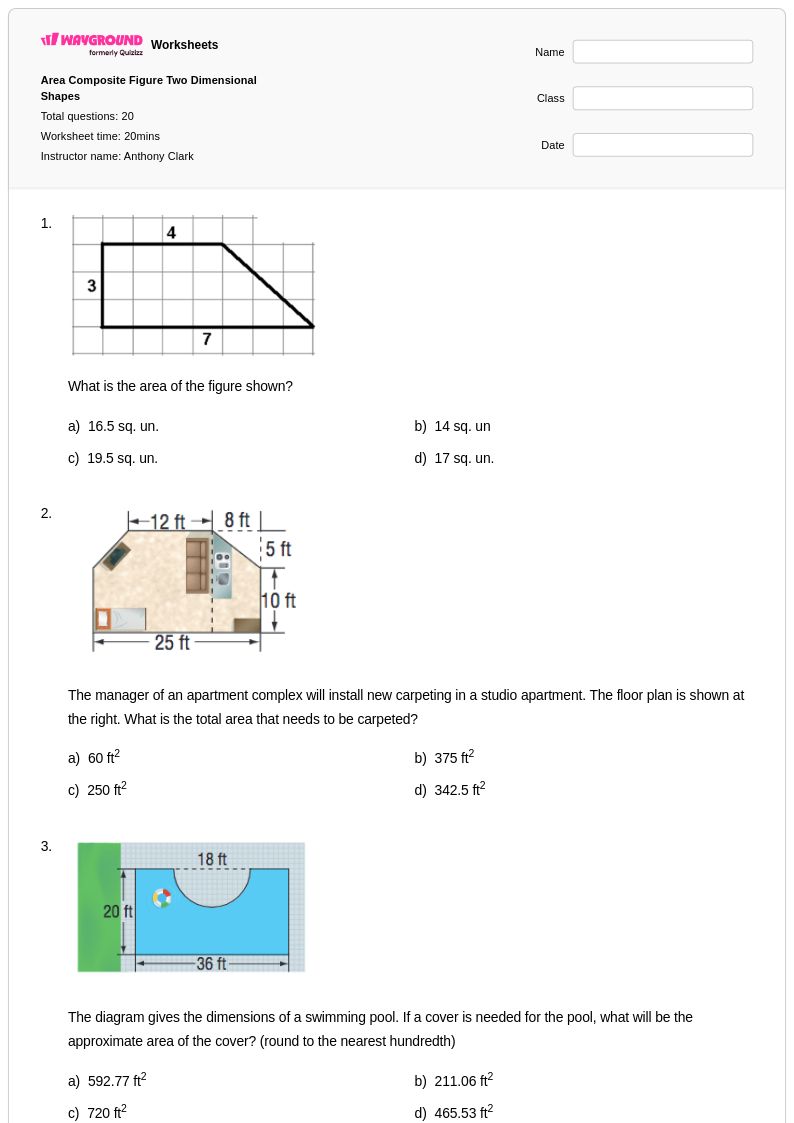
20 Q
7th - Uni
Explore Area of Complex Shapes Worksheets by Grades
Explore Other Subject Worksheets for class 9
Explore printable Area of Complex Shapes worksheets for Class 9
Area of complex shapes worksheets for Class 9 students available through Wayground (formerly Quizizz) provide comprehensive practice with calculating areas of composite figures, irregular polygons, and shapes with cutouts or overlapping sections. These carefully designed printables strengthen students' ability to decompose complex figures into familiar shapes like rectangles, triangles, circles, and parallelograms, then apply appropriate area formulas to find total areas through addition or subtraction methods. Each worksheet collection includes detailed answer keys and step-by-step solutions that help students verify their work and understand the problem-solving process, while free pdf downloads make these resources easily accessible for both classroom instruction and independent practice at home.
Wayground (formerly Quizizz) empowers mathematics educators with millions of teacher-created resources specifically focused on geometry concepts like area calculations for complex shapes, all searchable through robust filtering tools that align with state and national mathematics standards for Class 9. Teachers can easily customize these worksheet collections to match their students' skill levels, selecting from printable pdf formats for traditional paper-and-pencil work or digital versions for interactive learning experiences. These differentiation tools enable educators to provide targeted remediation for students struggling with basic area concepts while simultaneously offering enrichment opportunities through more challenging composite figure problems, streamlining lesson planning and ensuring that every student receives appropriate skill practice regardless of their current mathematical proficiency level.
FAQs
What is the best way to teach area of complex shapes in Grade 9?
What practice helps ninth graders master area of composite figures?
What common mistakes occur in Grade 9 composite-area problems?
How can I assign an area of complex shapes worksheet on Wayground?
Does area of complex shapes support the Grade 9 Common Core geometry progression?
How can I differentiate Grade 9 composite-area work?
Is area of complex shapes suitable for Grade 9 geometry?