
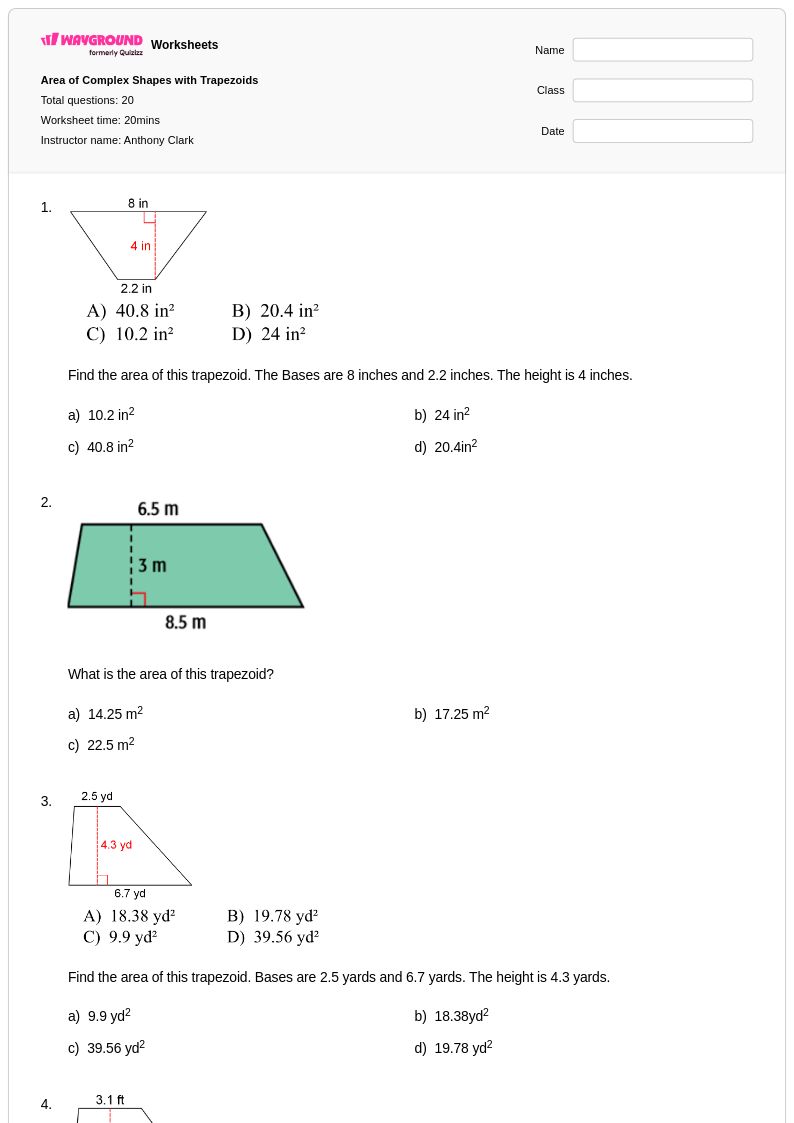
20 Q
6th - Uni
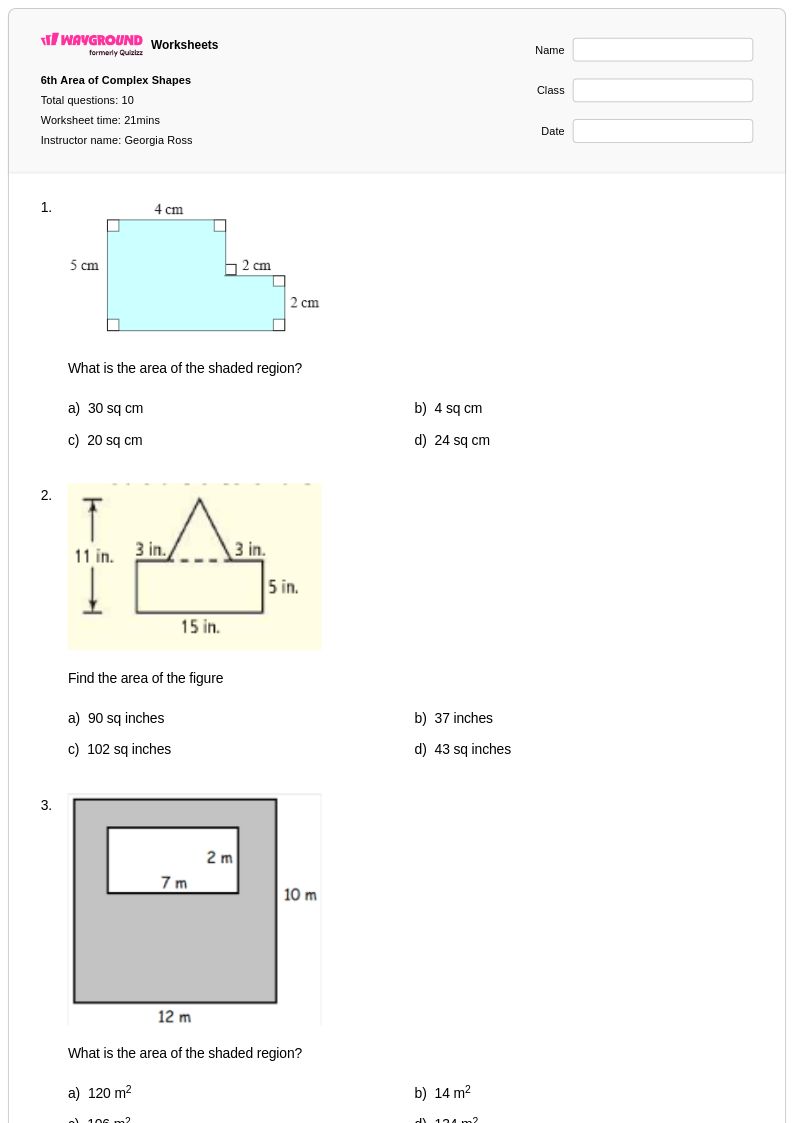
10 Q
6th
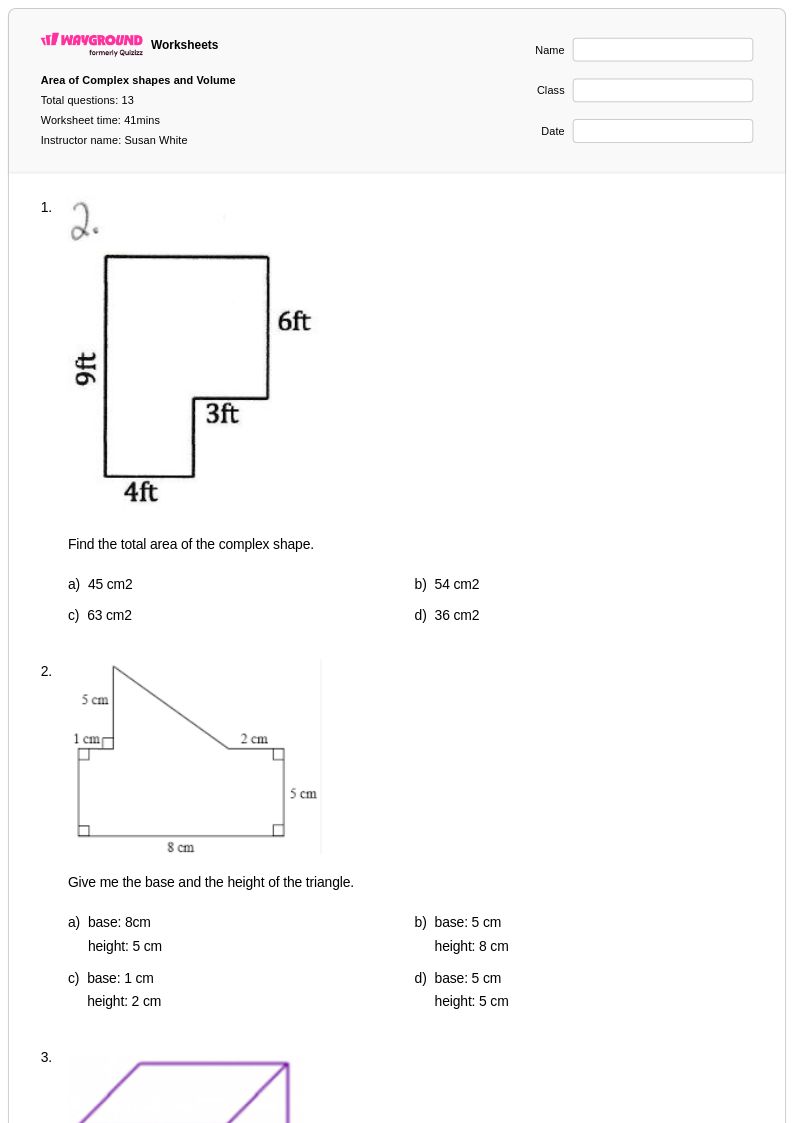
13 Q
6th
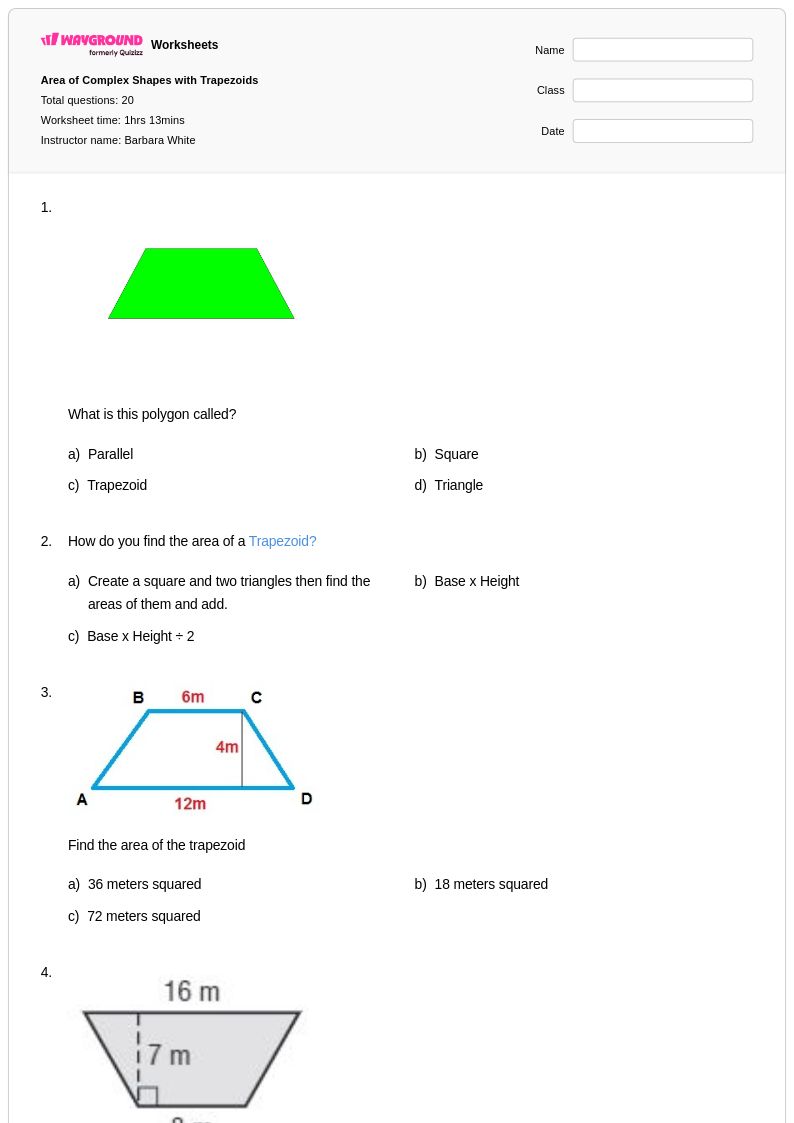
20 Q
6th - 7th
10 Q
6th
15 Q
6th
10 Q
6th - Uni
8 Q
6th - Uni
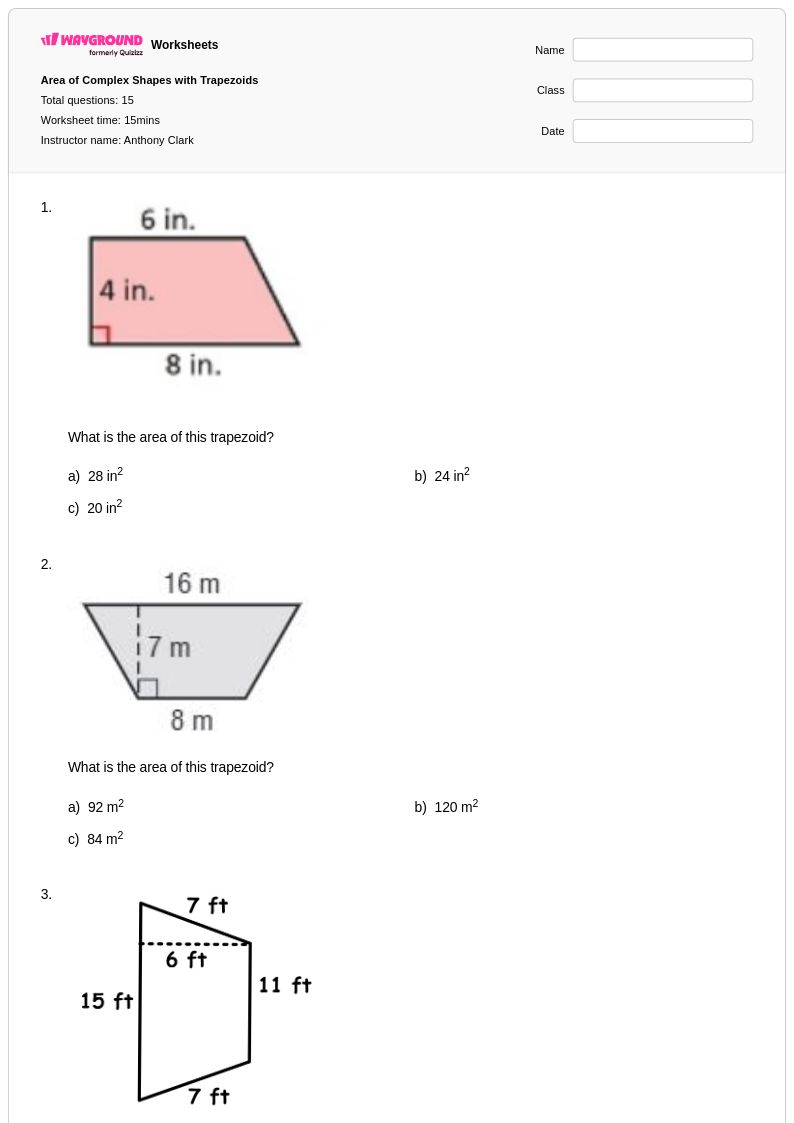
15 Q
6th - Uni
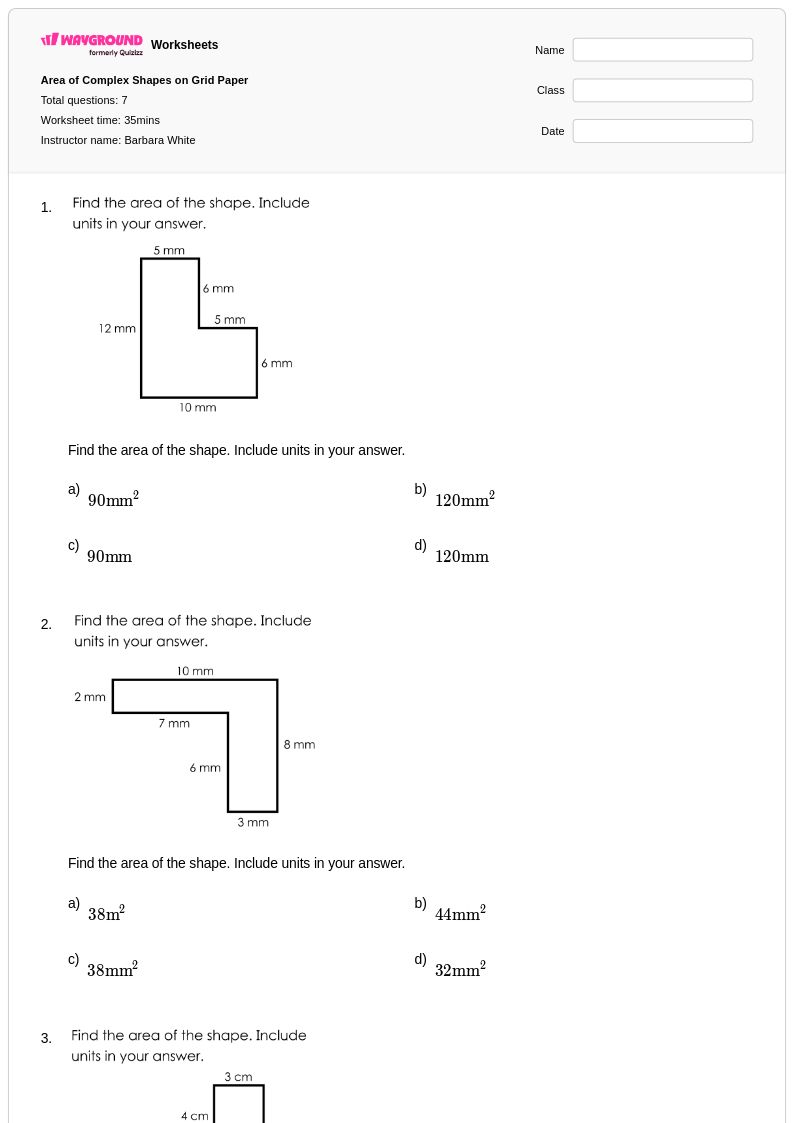
7 Q
4th - 6th
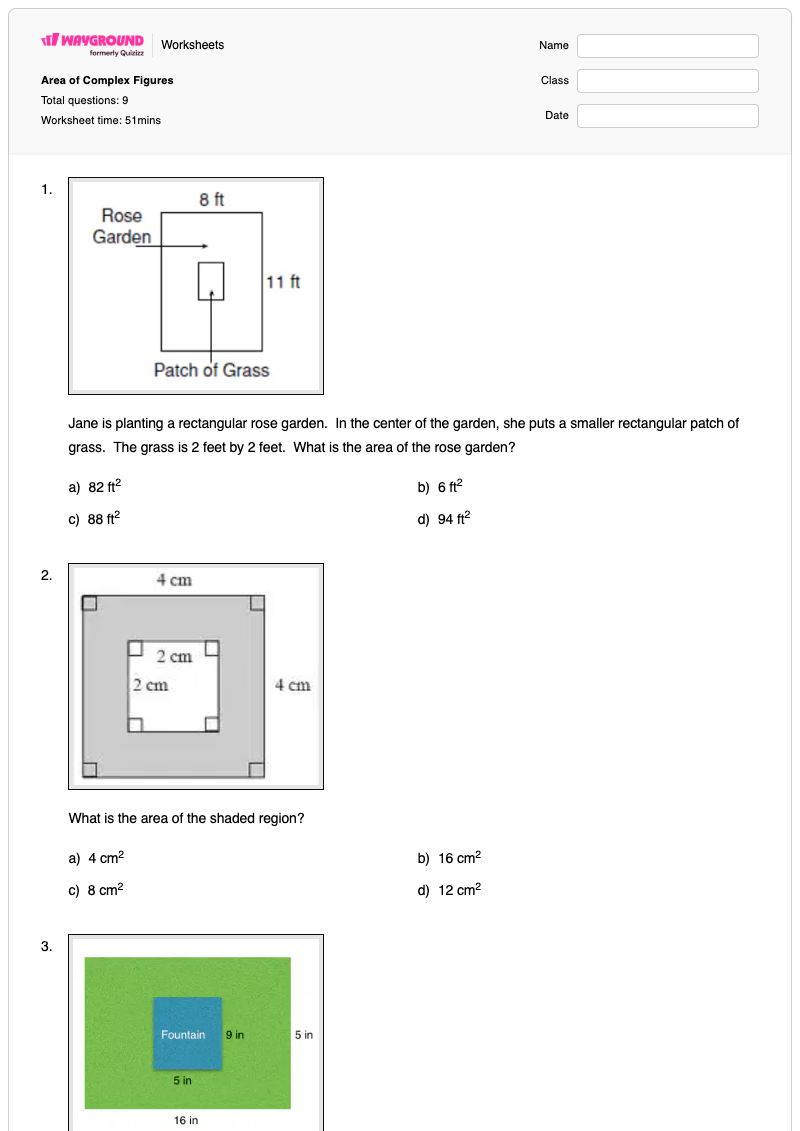
9 Q
6th
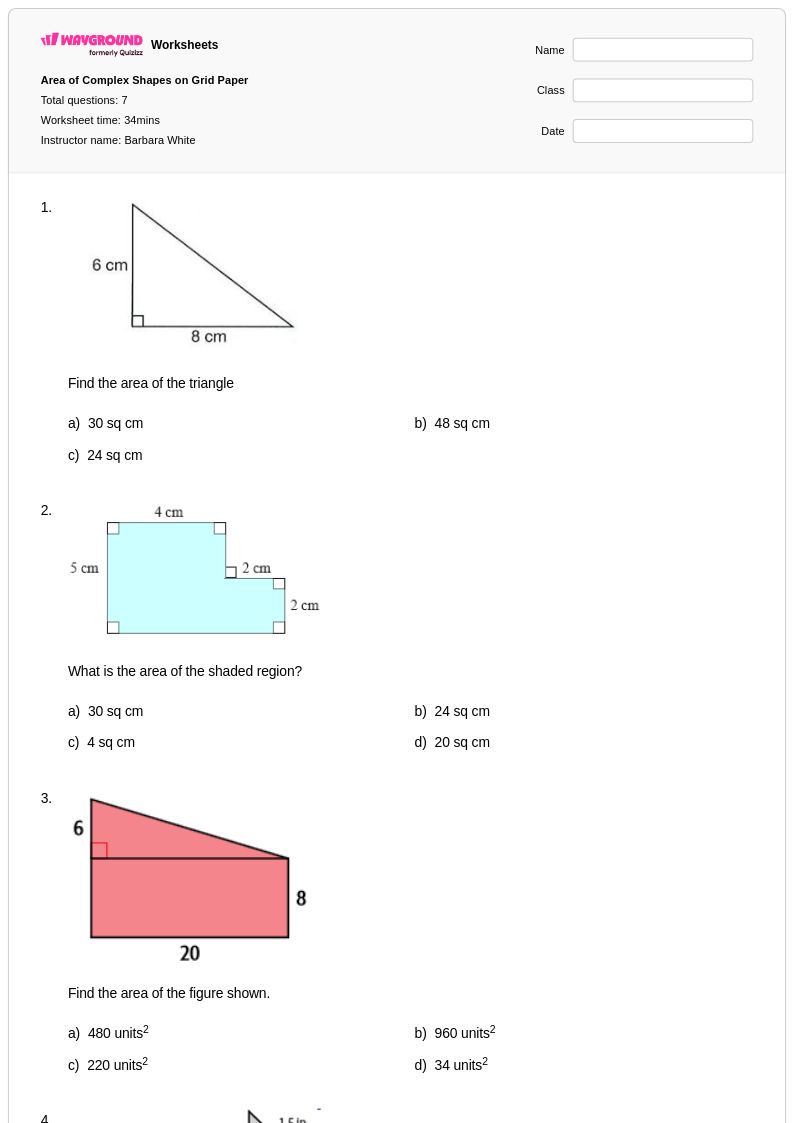
7 Q
6th
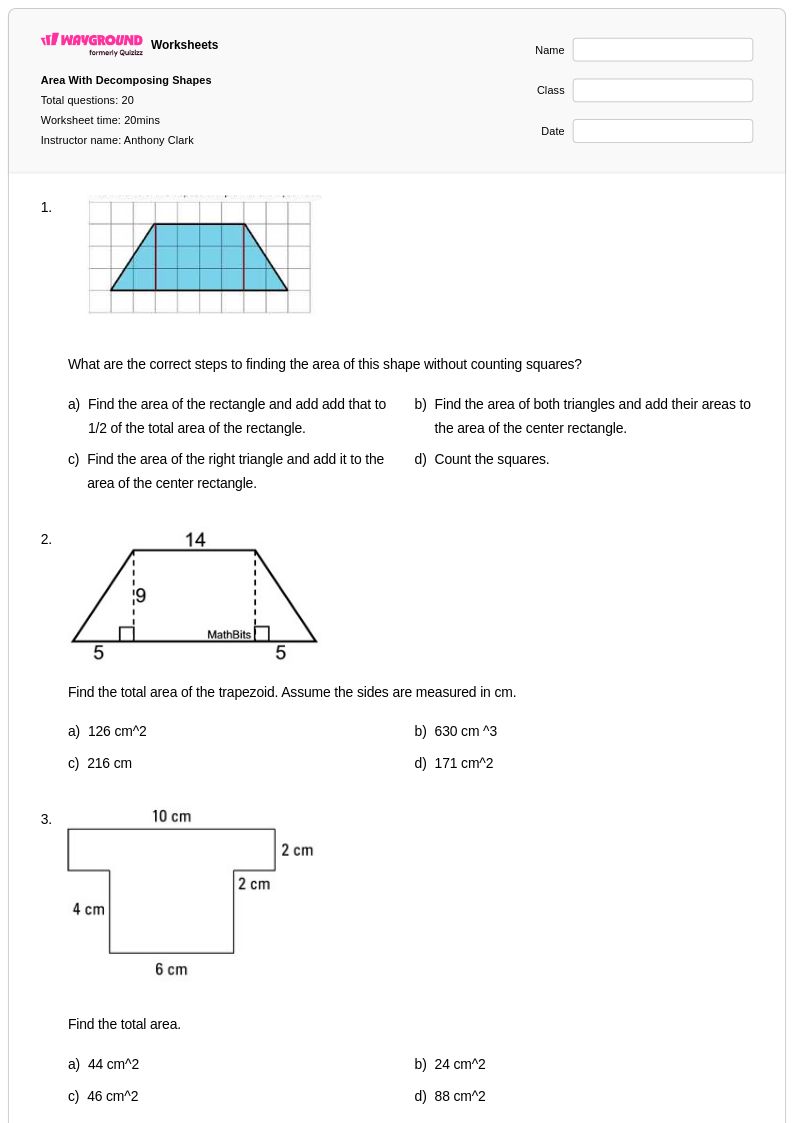
20 Q
6th - Uni
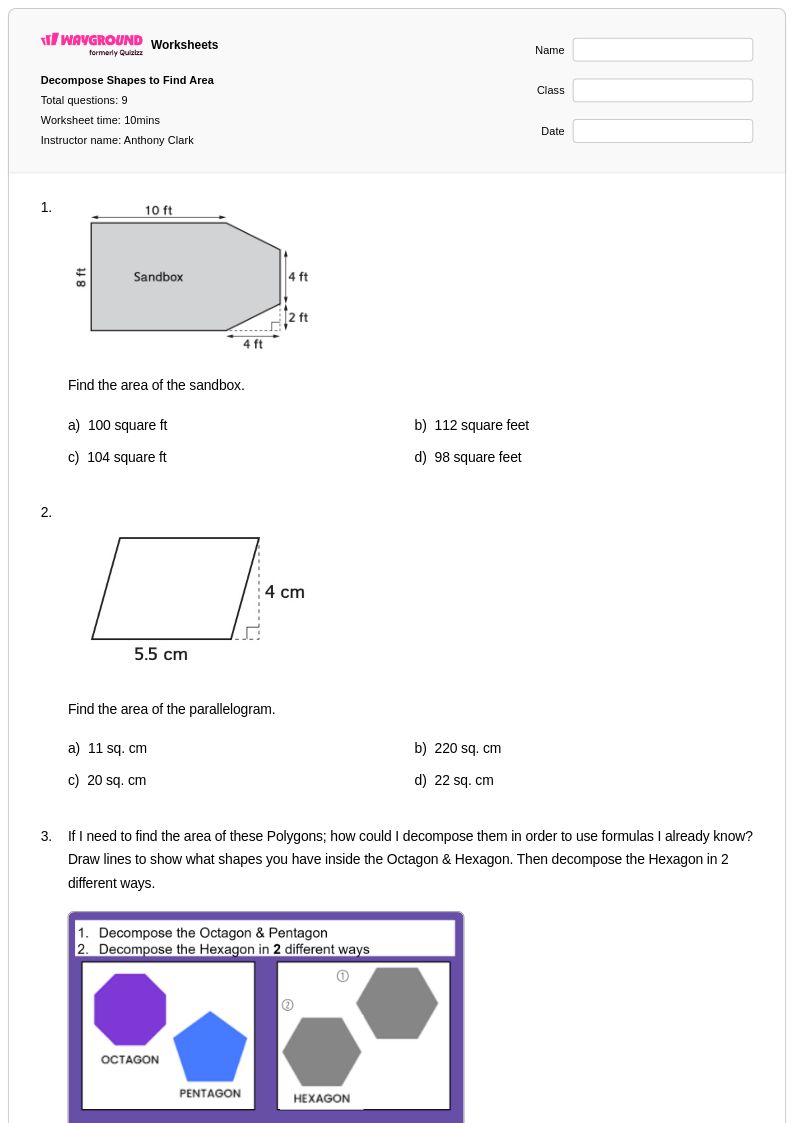
10 Q
6th - Uni
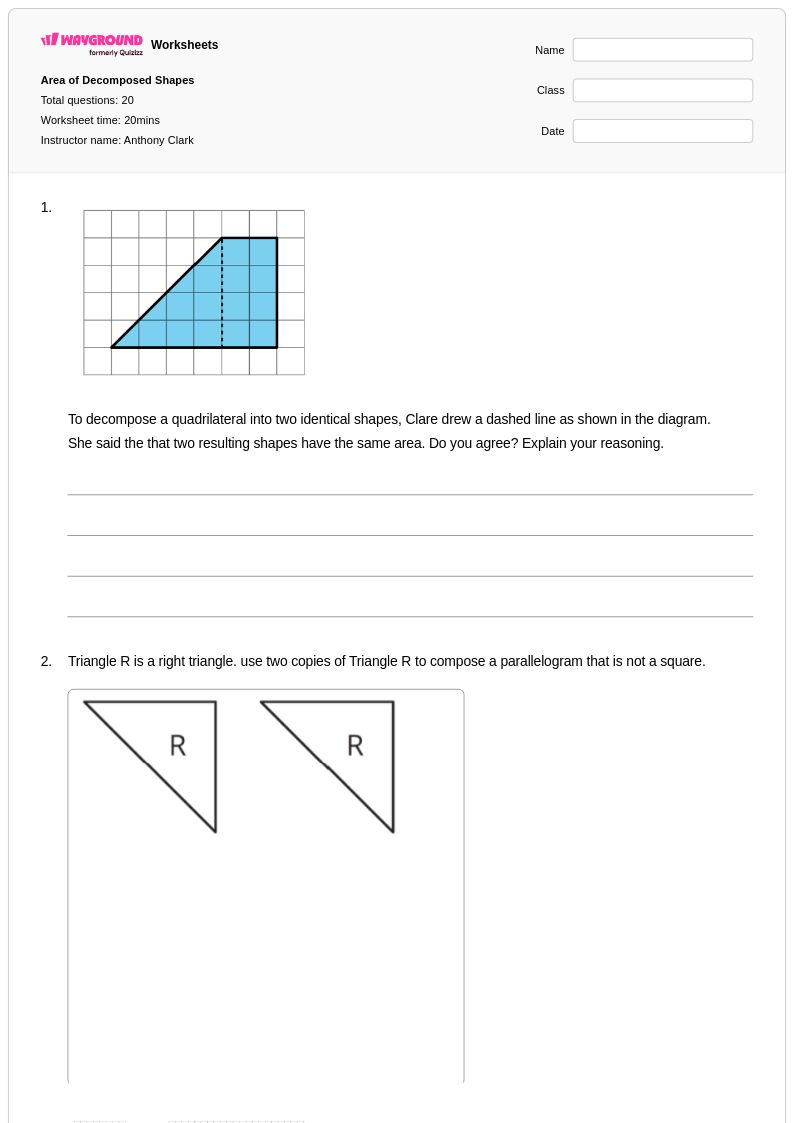
20 Q
6th - Uni
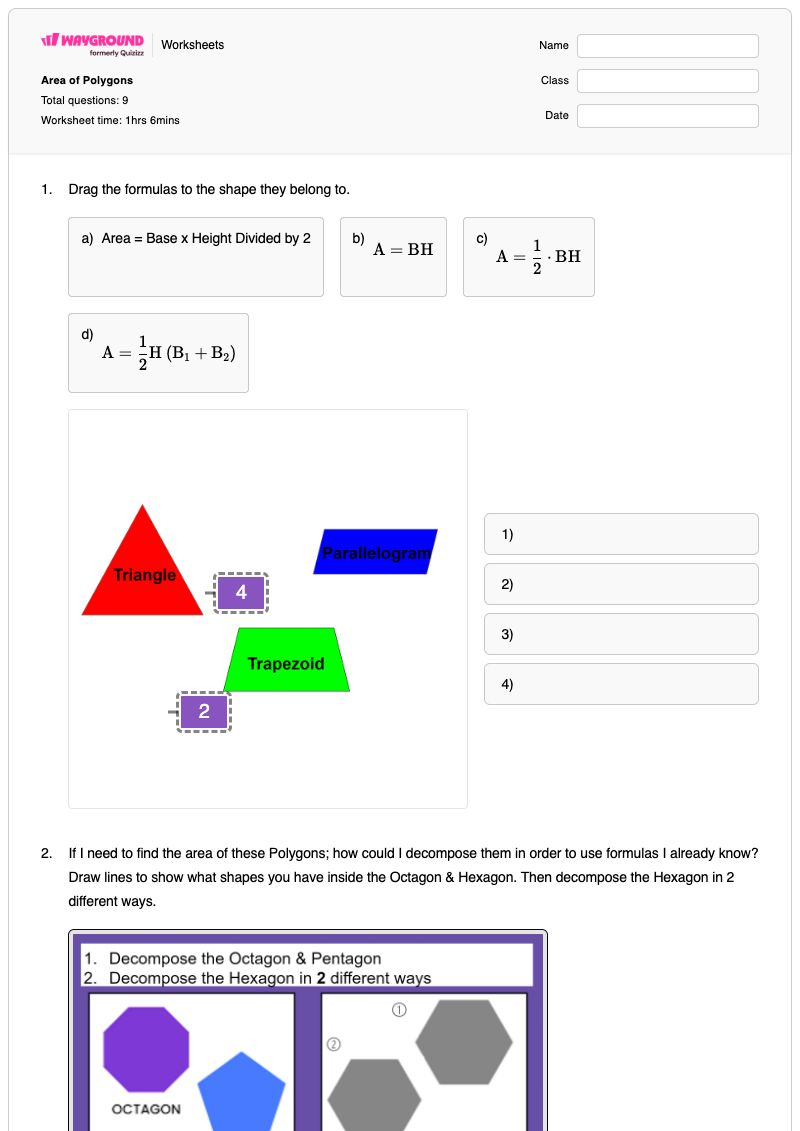
16 Q
6th
24 Q
6th - 8th
10 Q
6th - Uni
20 Q
6th - Uni
20 Q
6th
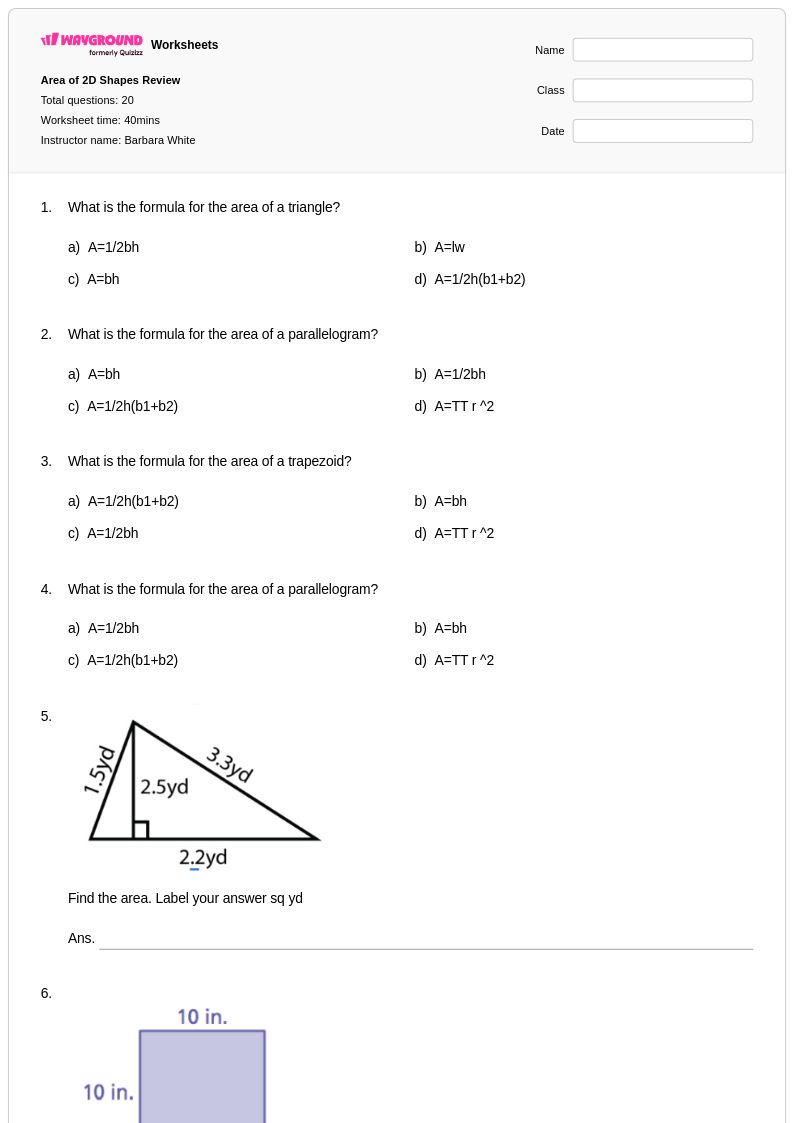
20 Q
6th
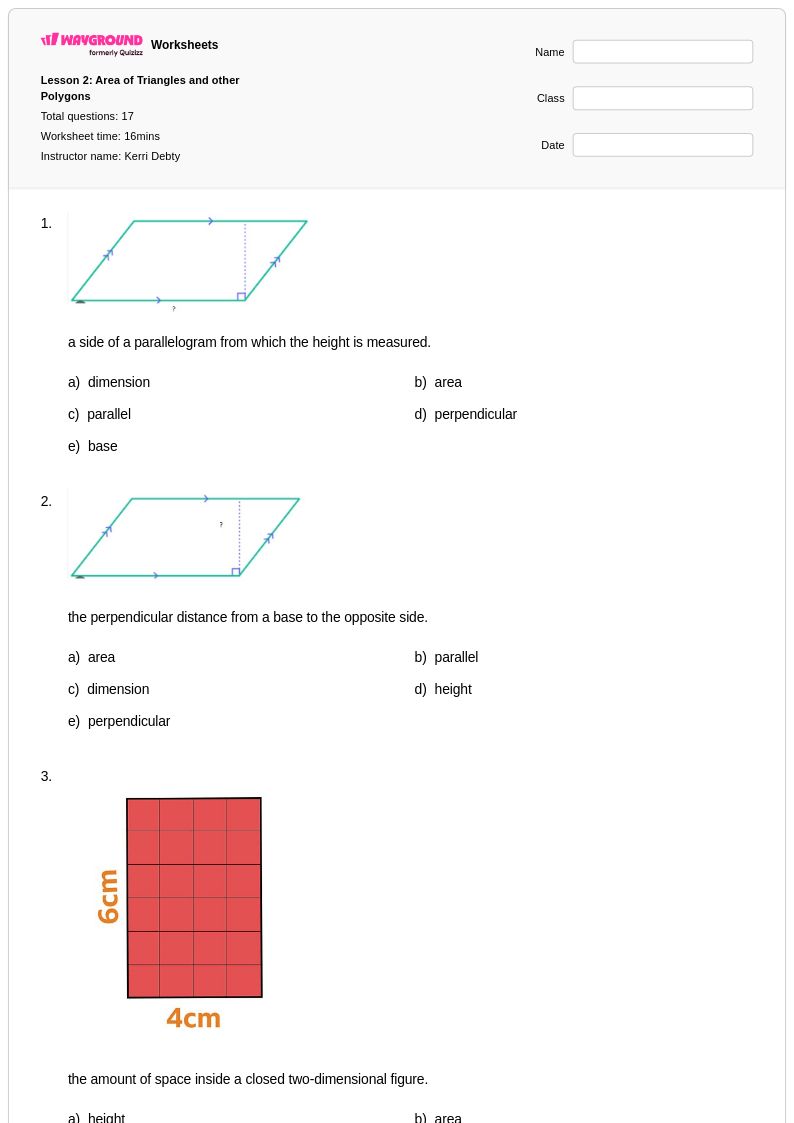
17 Q
6th
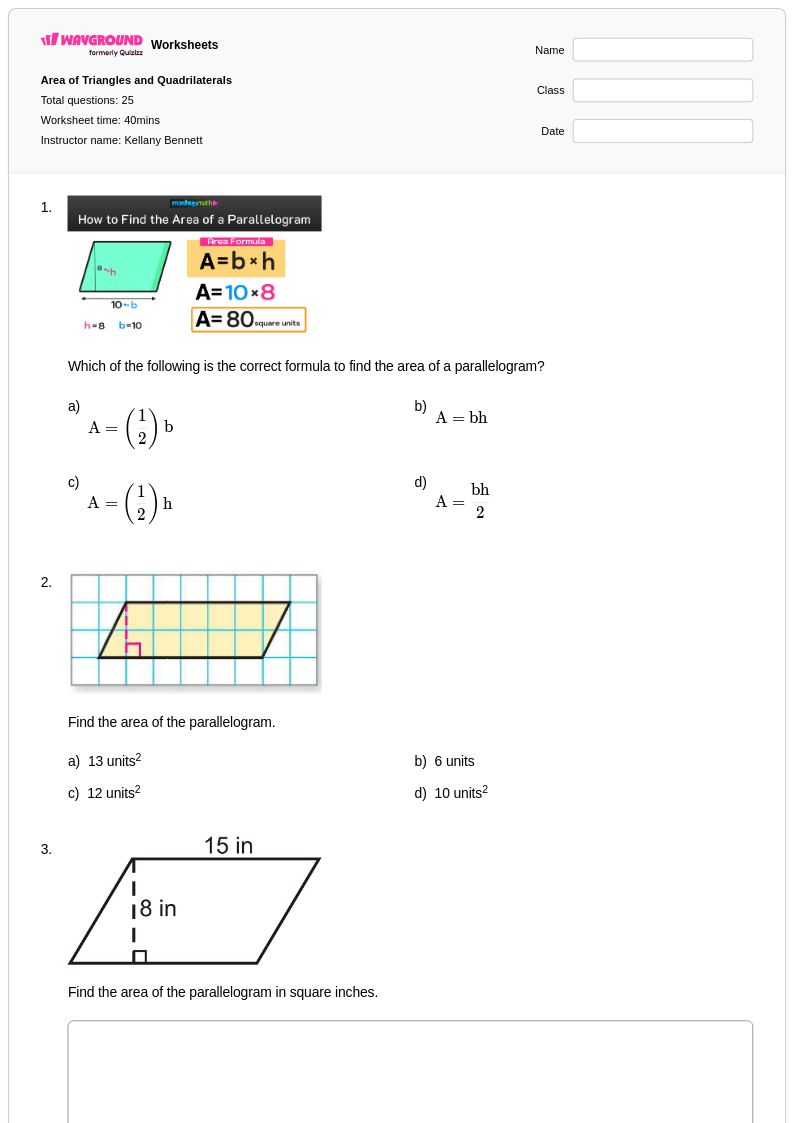
25 Q
6th
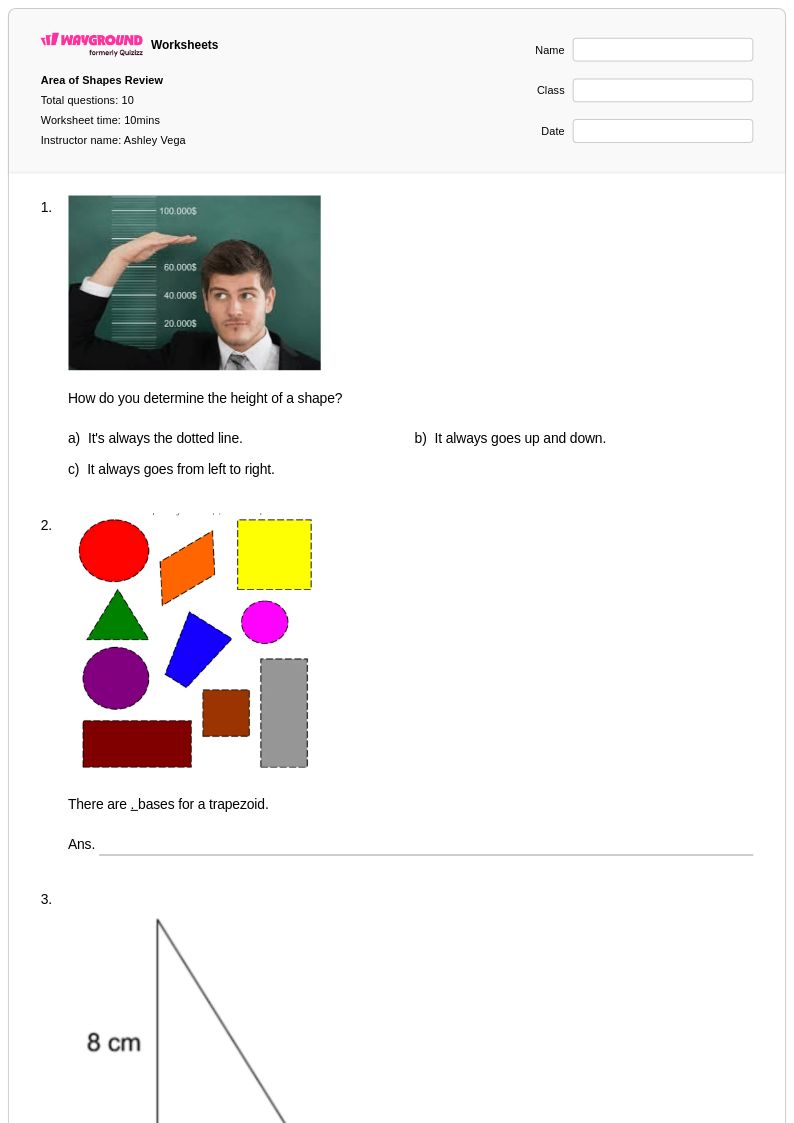
10 Q
6th
Explore Area of Complex Shapes Worksheets by Grades
Explore Other Subject Worksheets for class 6
Explore printable Area of Complex Shapes worksheets for Class 6
Area of complex shapes worksheets for Class 6 students available through Wayground (formerly Quizizz) provide comprehensive practice with calculating areas of irregular polygons, composite figures, and multi-step geometric problems. These carefully designed printables strengthen students' ability to decompose complex shapes into familiar rectangles, triangles, and other basic polygons, then apply appropriate area formulas to find total measurements. Each worksheet collection includes detailed answer keys and features progressive difficulty levels that guide sixth graders from simple L-shaped figures to more challenging composite shapes involving circles, parallelograms, and trapezoids. The free pdf resources emphasize critical thinking skills as students learn to identify the most efficient decomposition strategies and develop spatial reasoning abilities essential for advanced geometry concepts.
Wayground (formerly Quizizz) empowers teachers with millions of educator-created area of complex shapes resources that streamline lesson planning and differentiated instruction for Class 6 mathematics. The platform's robust search and filtering capabilities allow educators to quickly locate worksheets aligned with specific curriculum standards while accessing customization tools that adapt content difficulty for remediation or enrichment purposes. Teachers can seamlessly distribute materials in both printable pdf format for traditional classroom use and digital formats for interactive learning experiences. These comprehensive worksheet collections support systematic skill practice through varied problem types, enable targeted intervention for struggling learners, and provide advanced challenges for students ready to explore more sophisticated geometric reasoning, making area calculation instruction both effective and engaging.
FAQs
How do I teach area of complex shapes to sixth graders?
What exercises help Grade 6 students practice area of composite figures?
What mistakes do students make when finding the area of complex shapes?
How can I use an area of complex shapes worksheet on Wayground?
How does area of complex shapes fit into the Grade 6 Common Core math progression?
How can I differentiate composite-area practice in Grade 6?
Is area of complex shapes appropriate for Grade 6?