
9 Q
6th
15 Q
6th
20 Q
6th - Uni
15 Q
6th - Uni
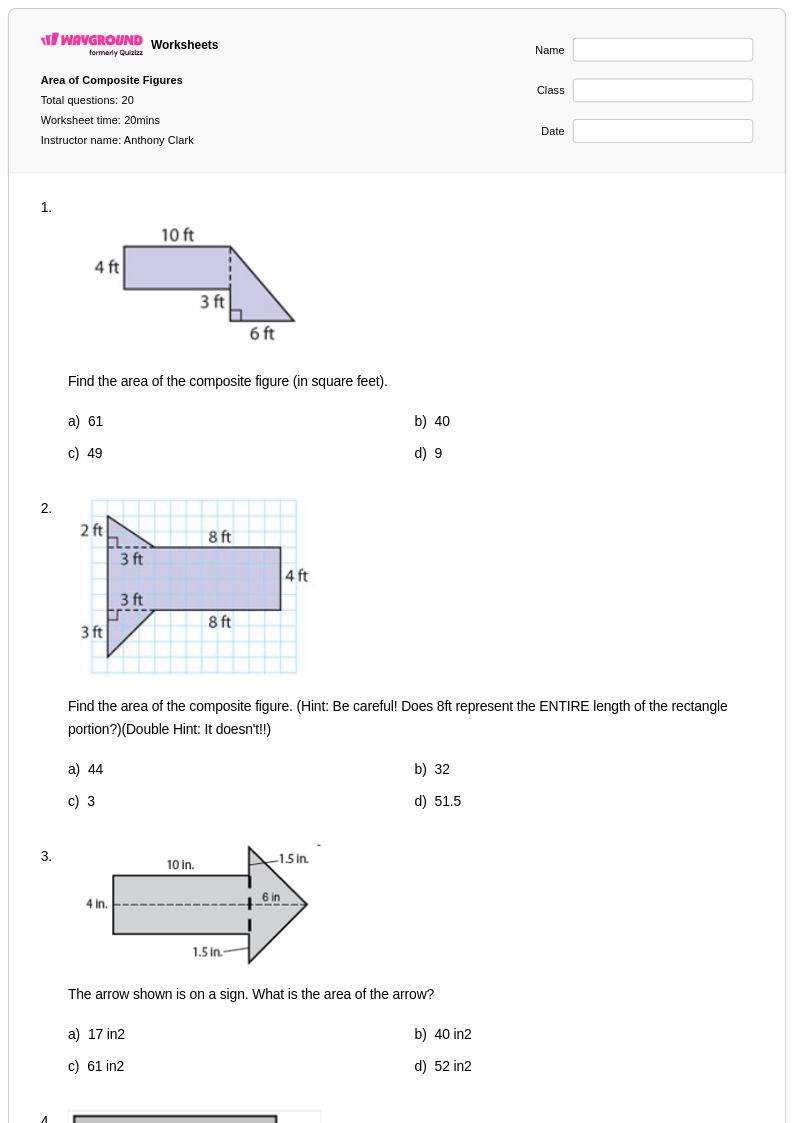
20 Q
6th - Uni
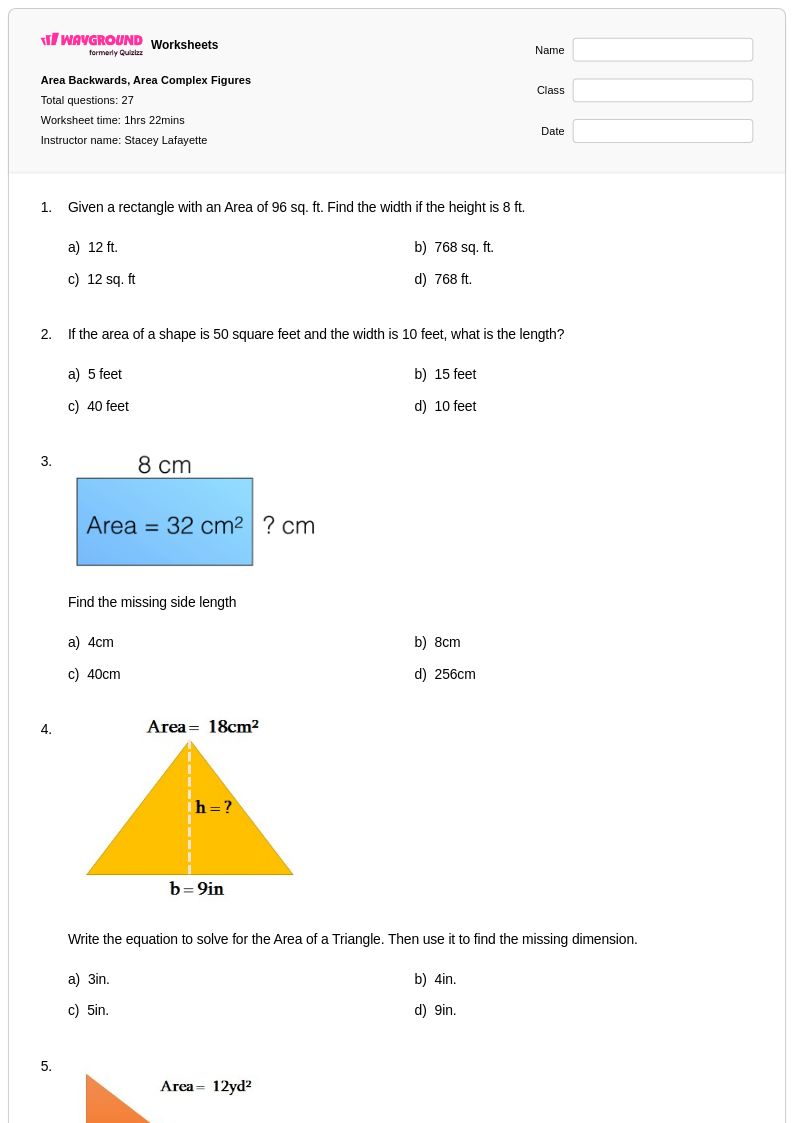
27 Q
6th - 7th
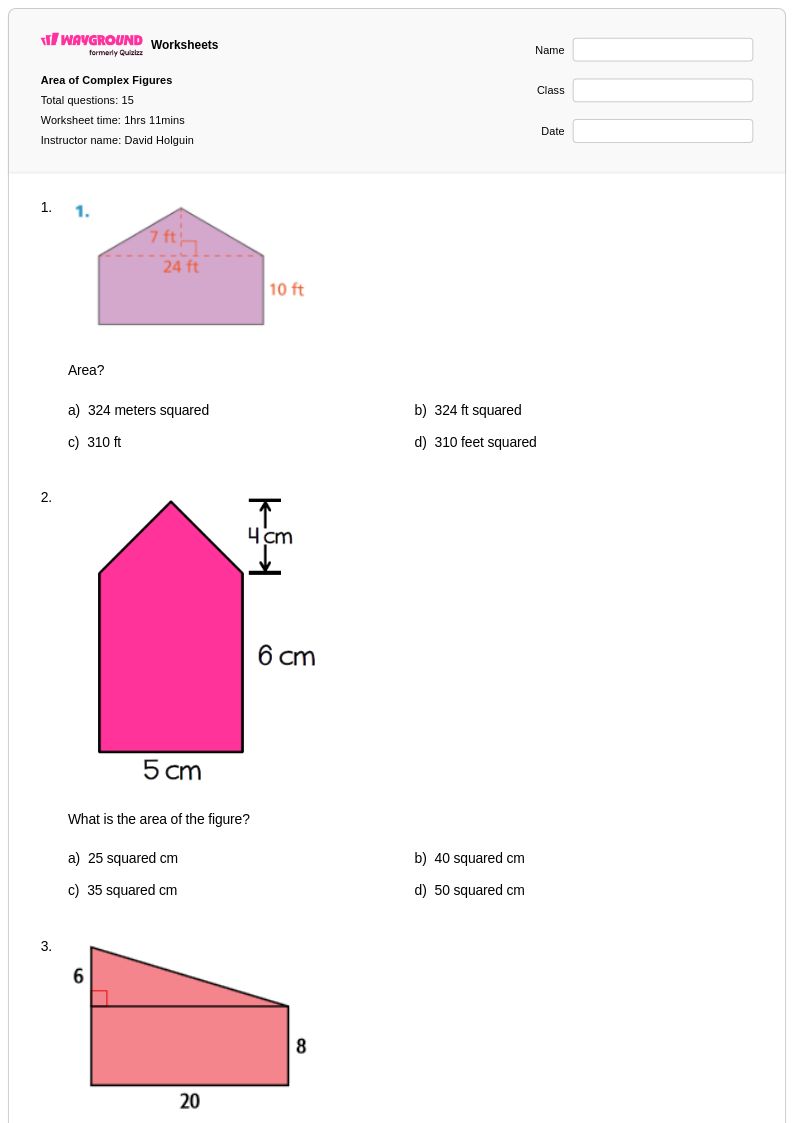
15 Q
6th
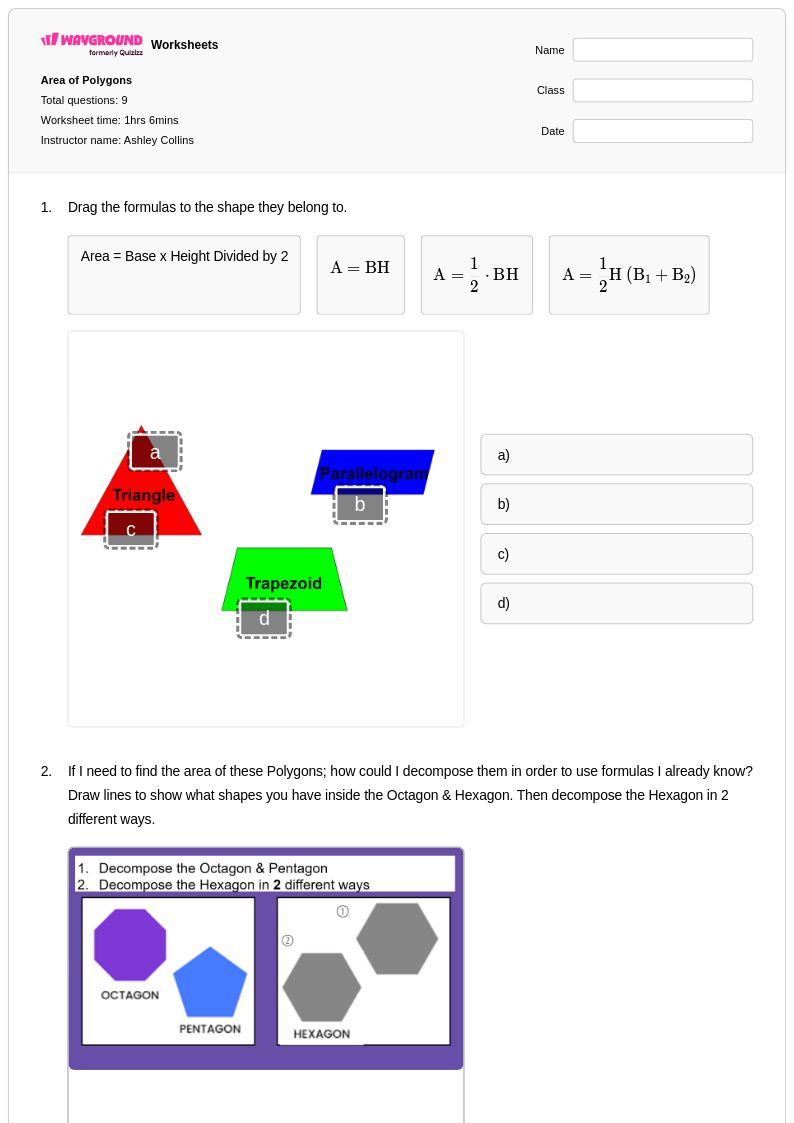
16 Q
6th
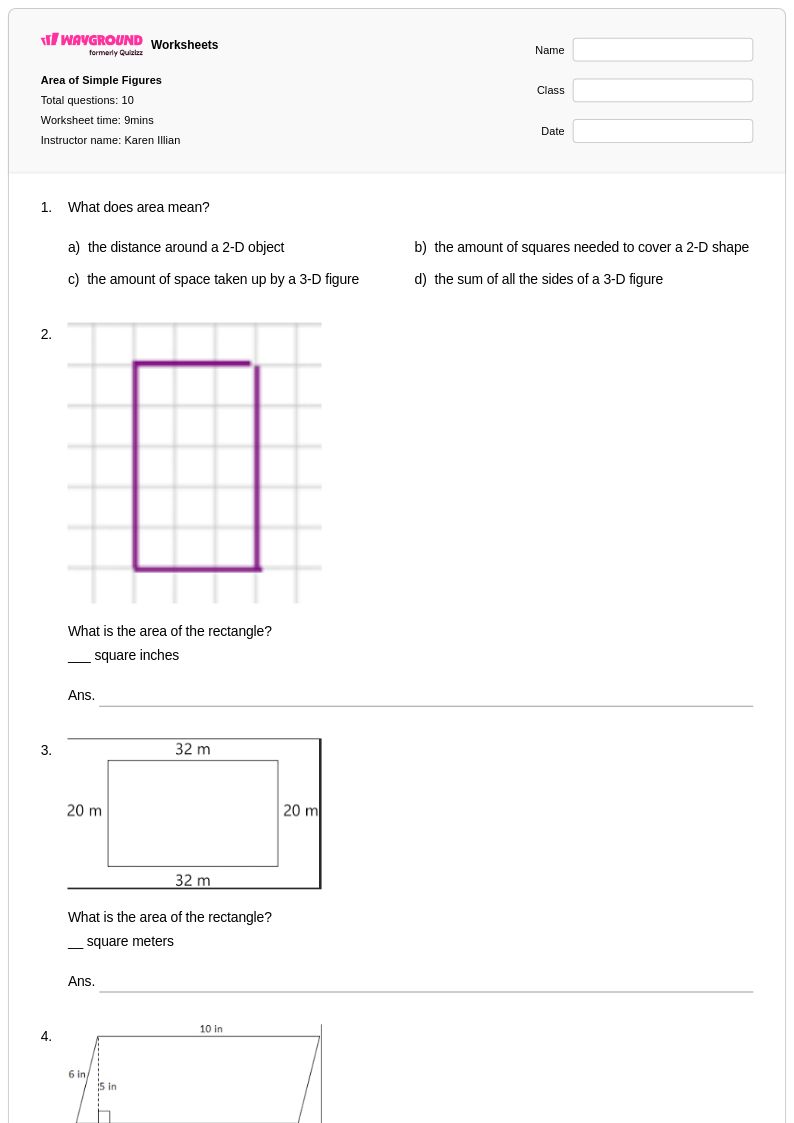
10 Q
6th
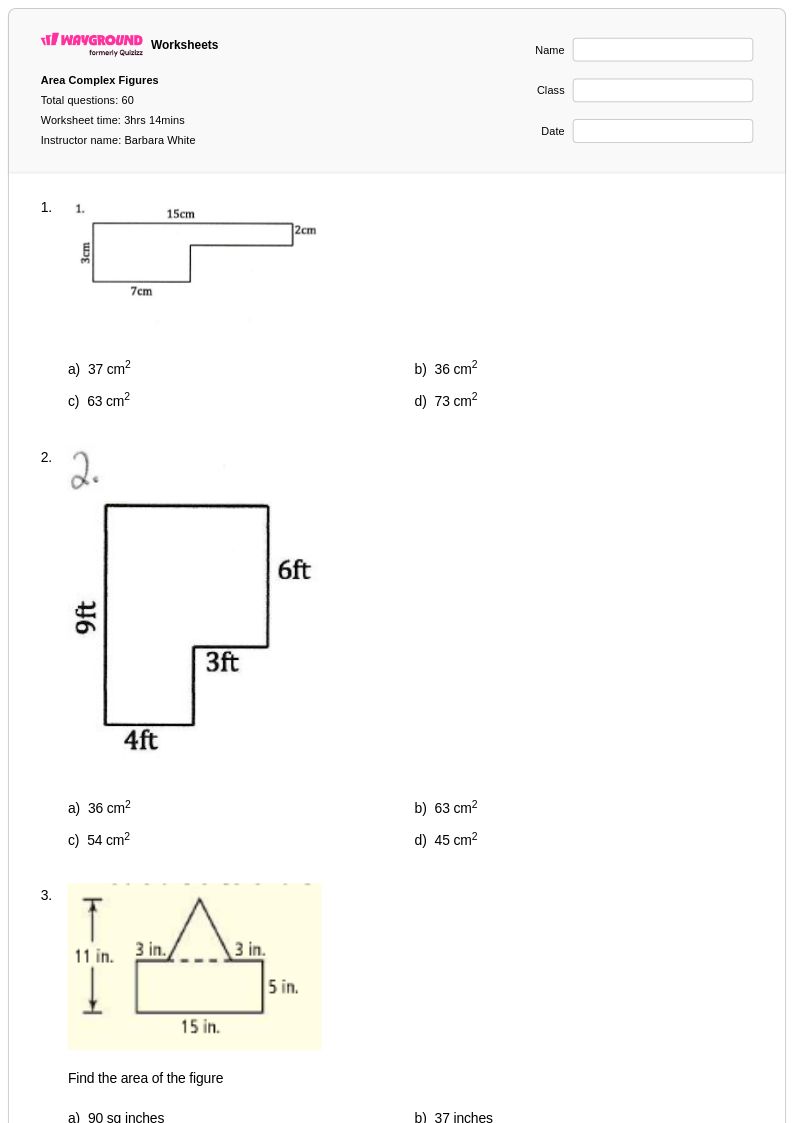
60 Q
6th
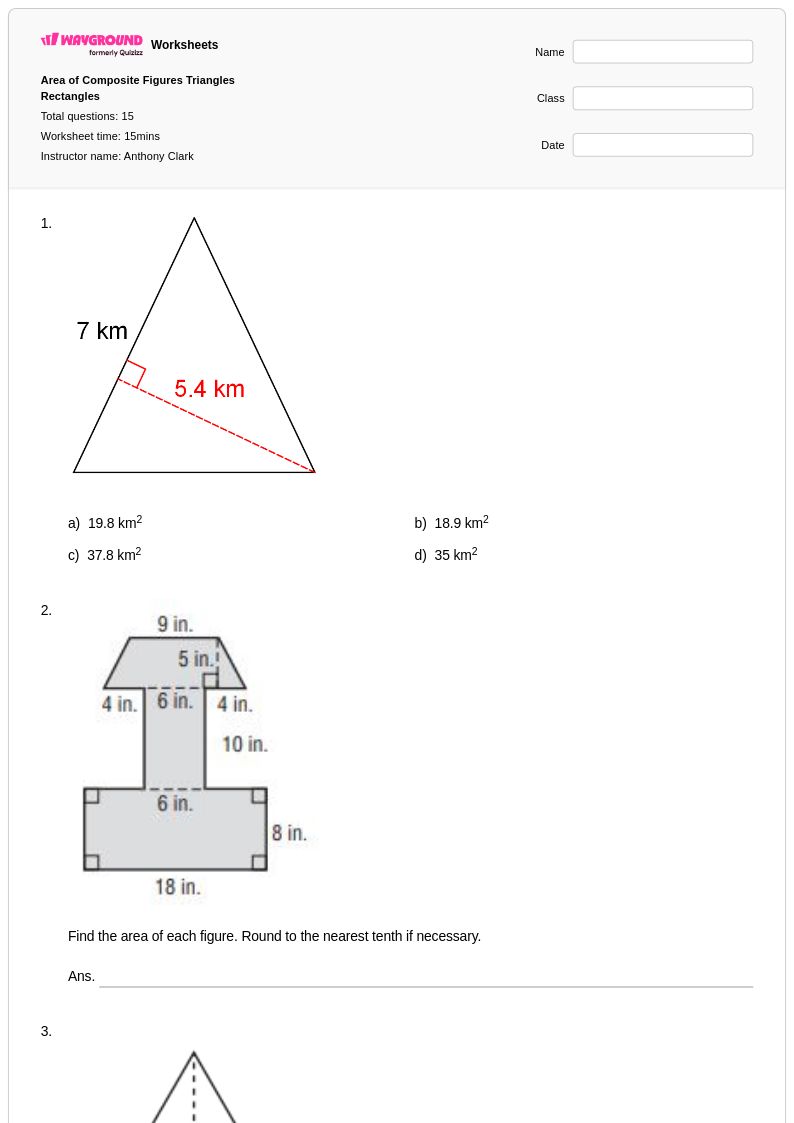
15 Q
6th - Uni
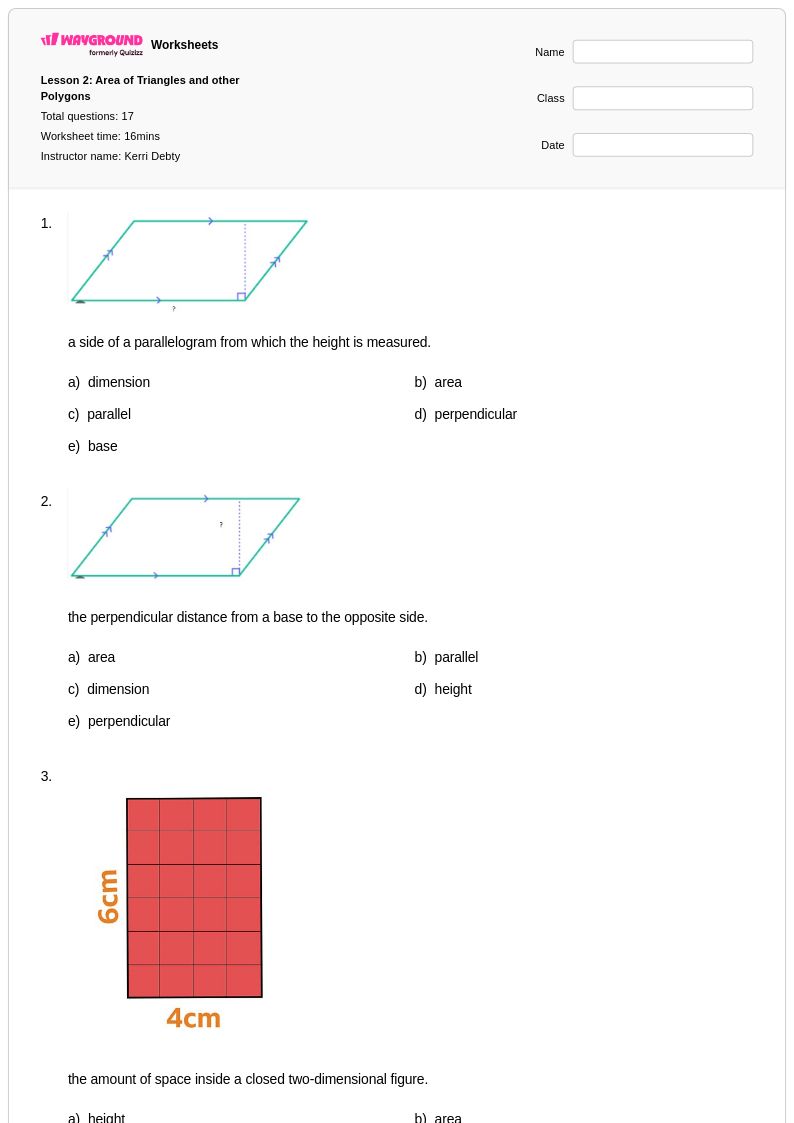
17 Q
6th
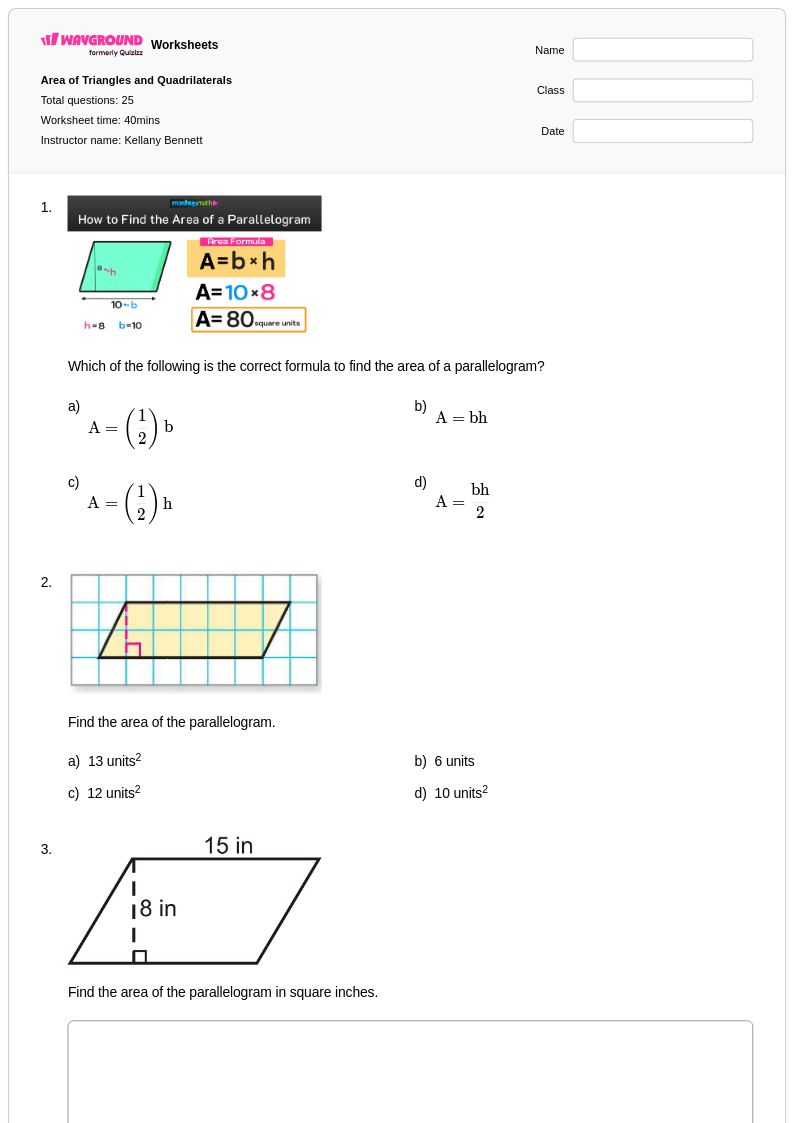
25 Q
6th
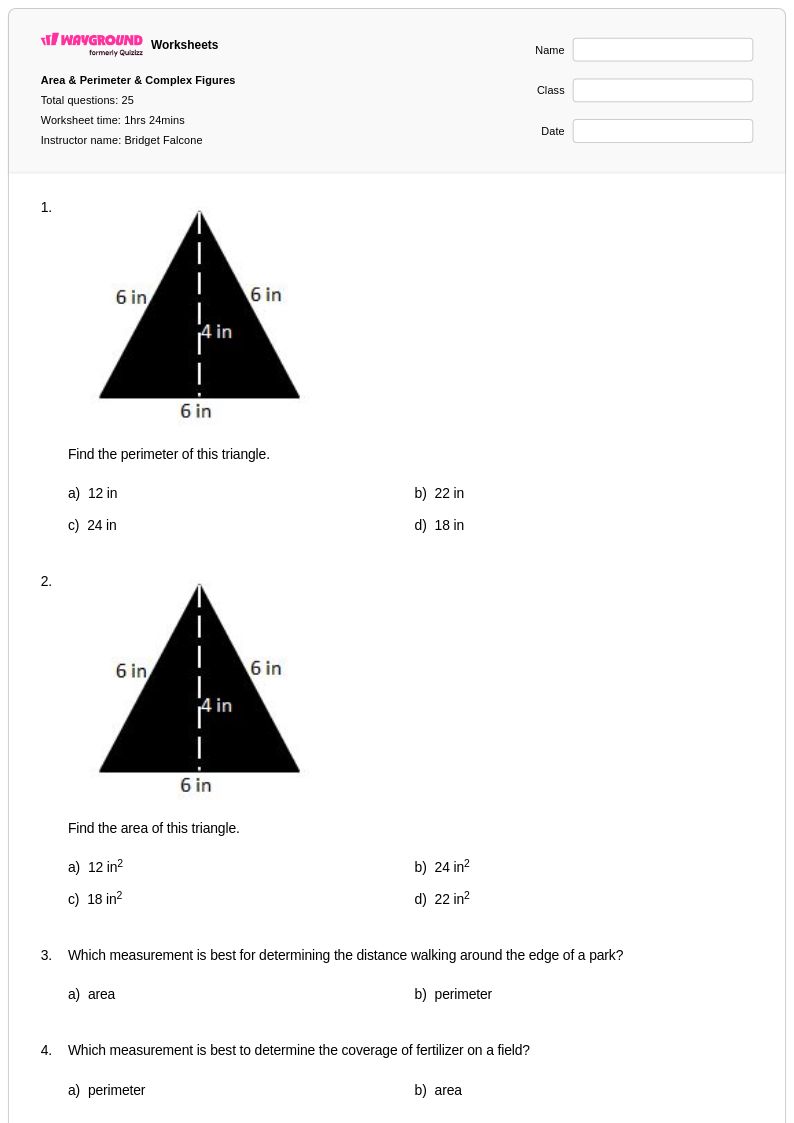
25 Q
6th - 7th
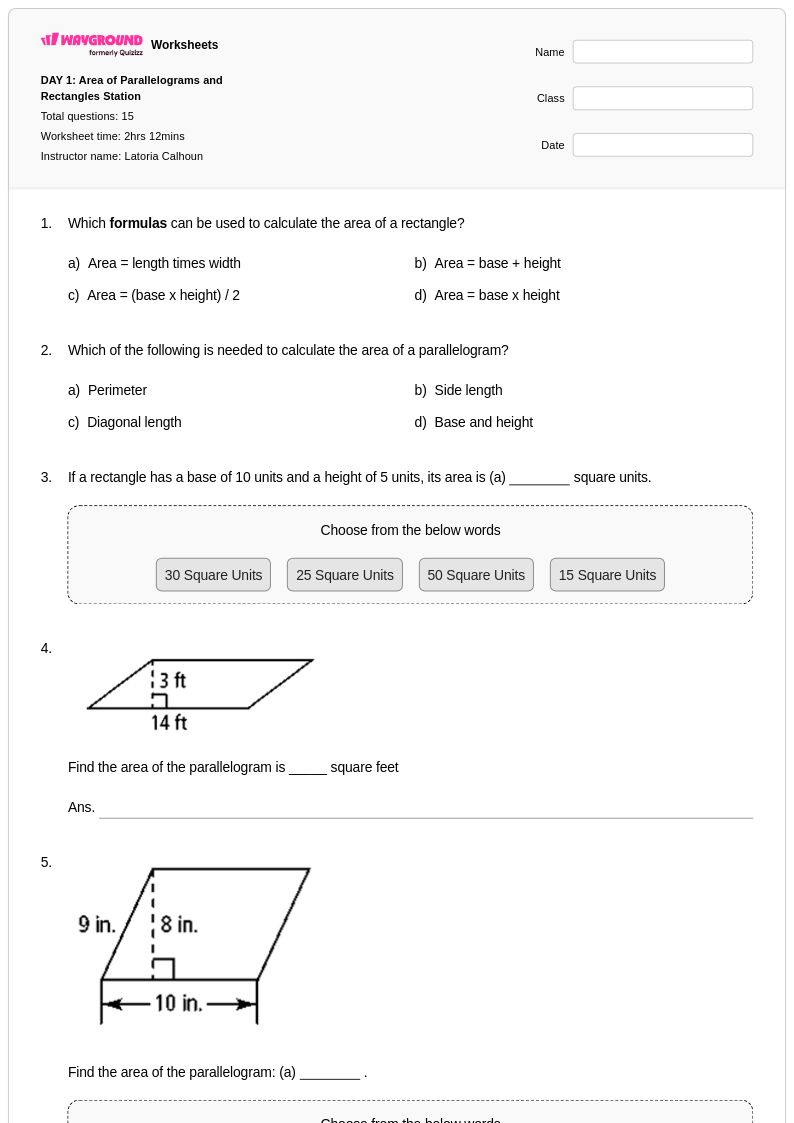
15 Q
6th
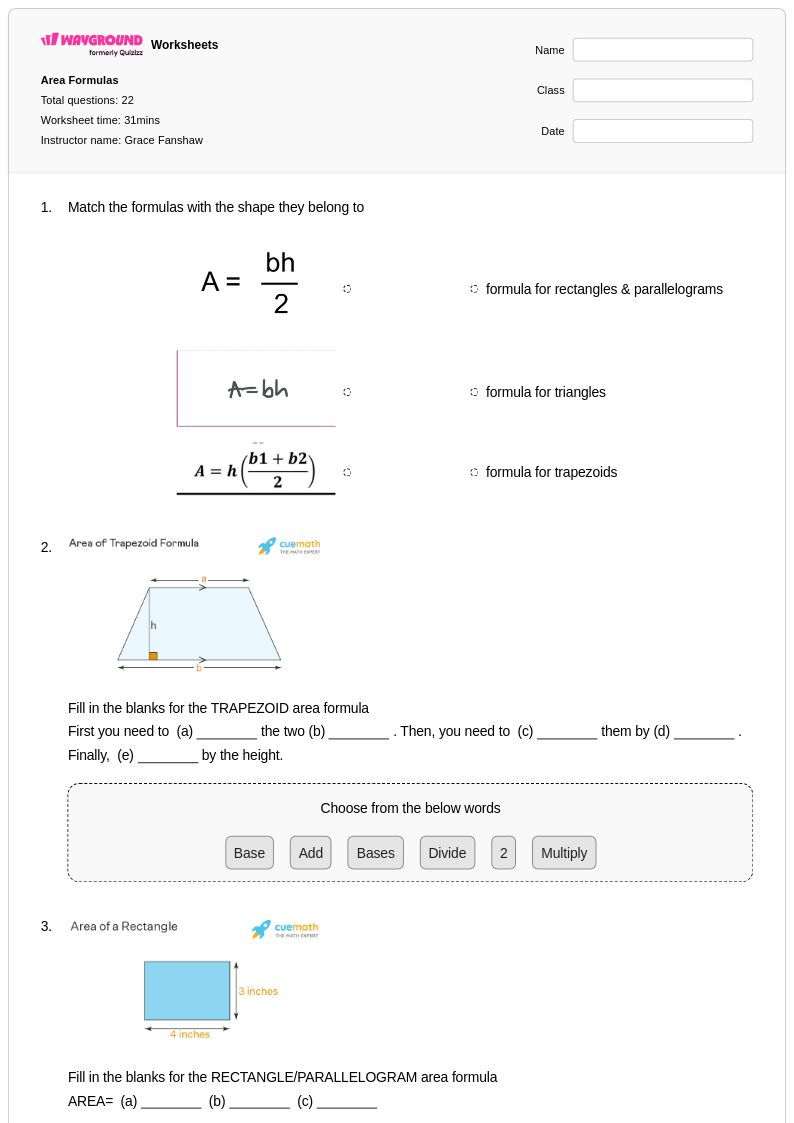
24 Q
6th - 8th
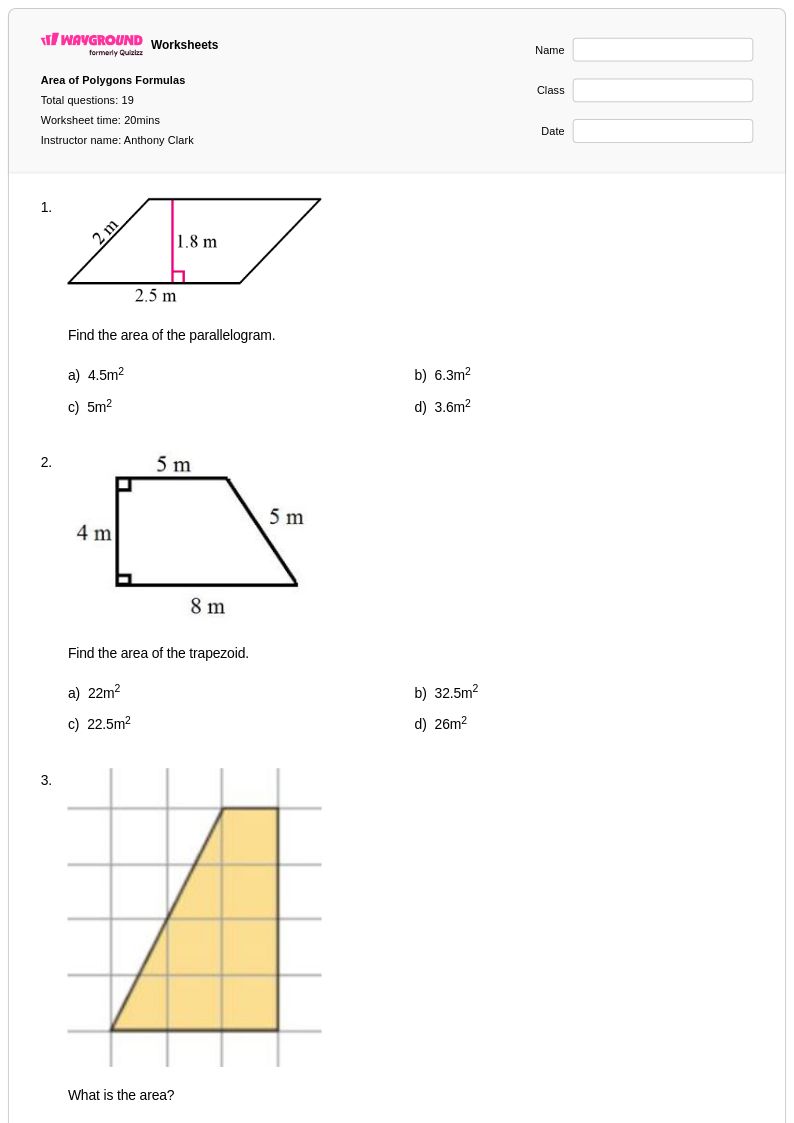
20 Q
6th - Uni
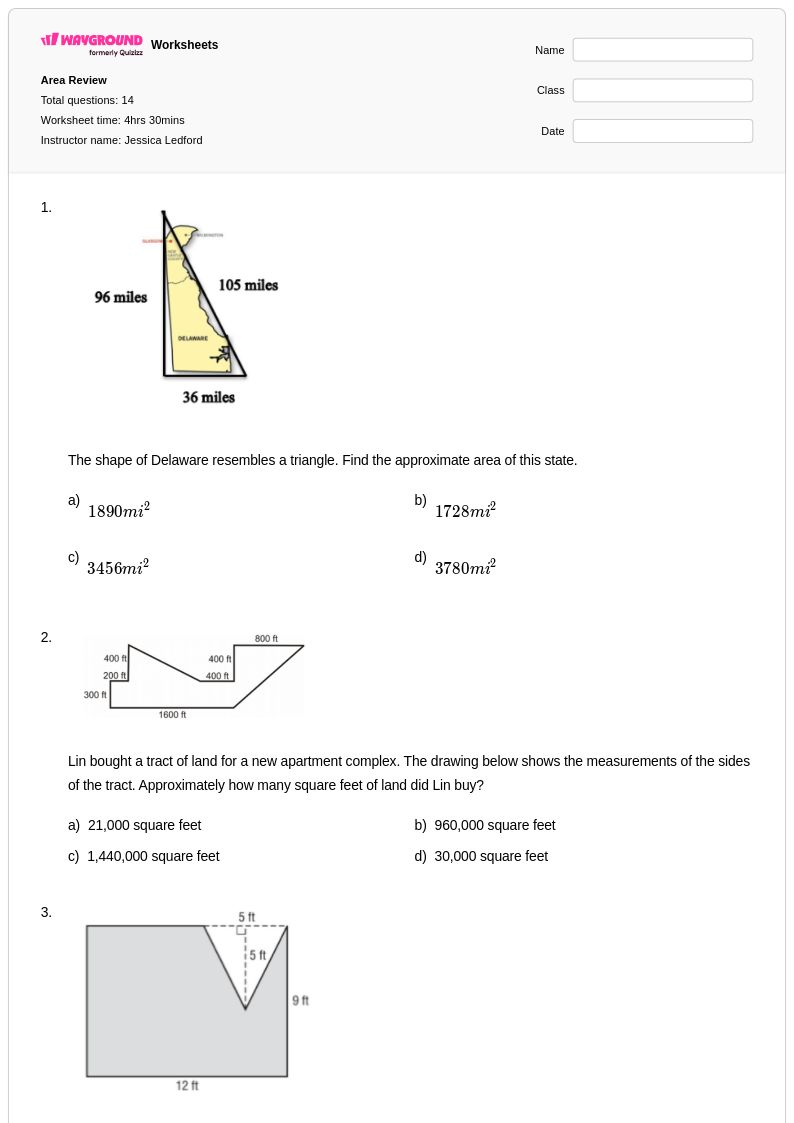
14 Q
6th
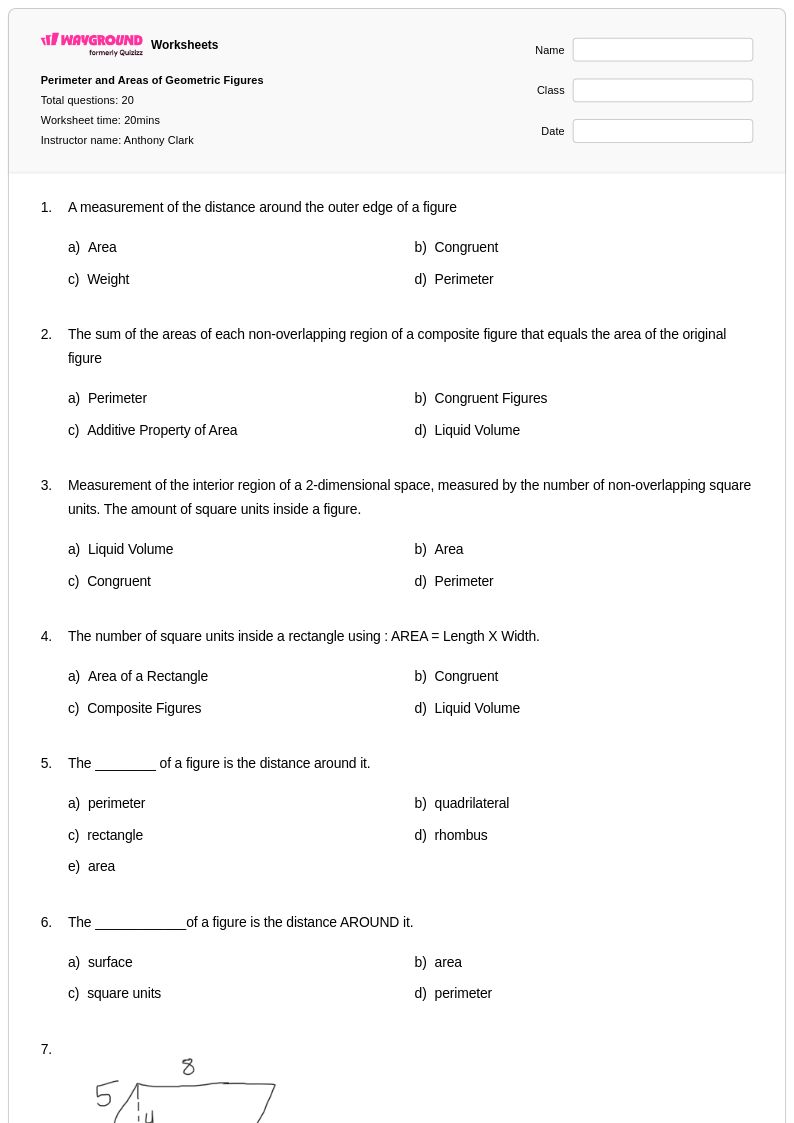
20 Q
3rd - Uni
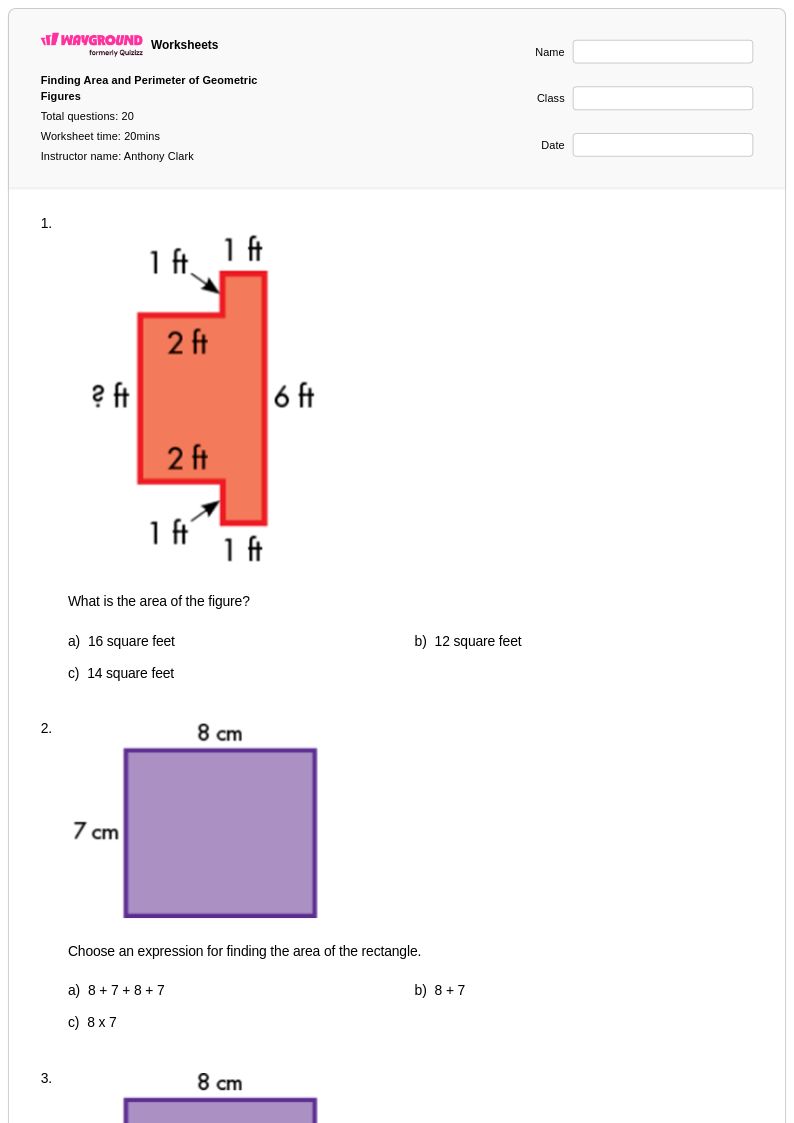
20 Q
4th - Uni
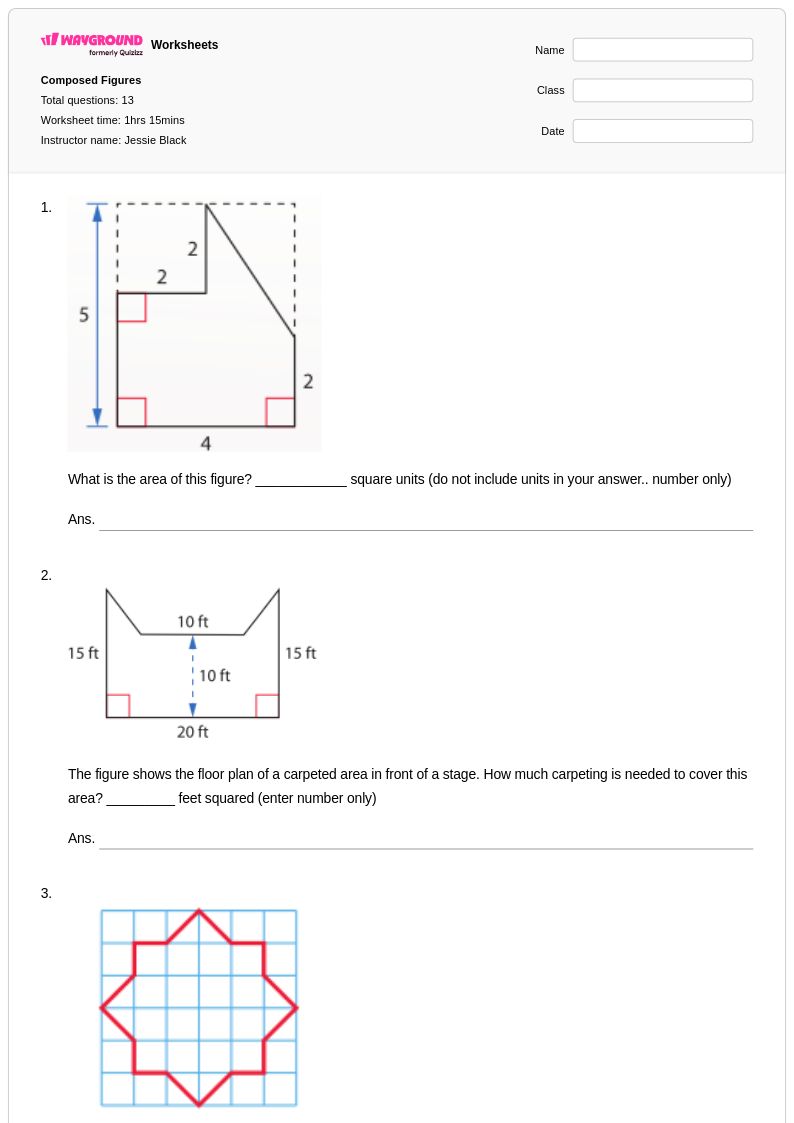
13 Q
6th - 7th
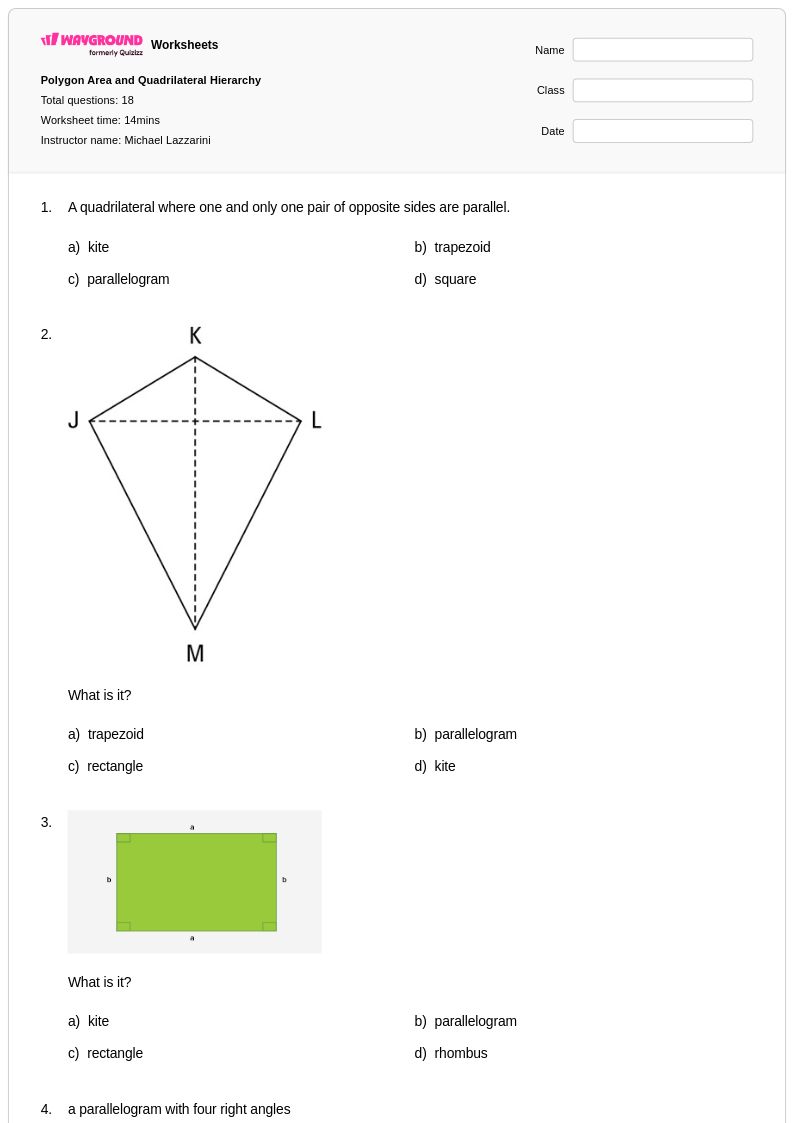
18 Q
6th
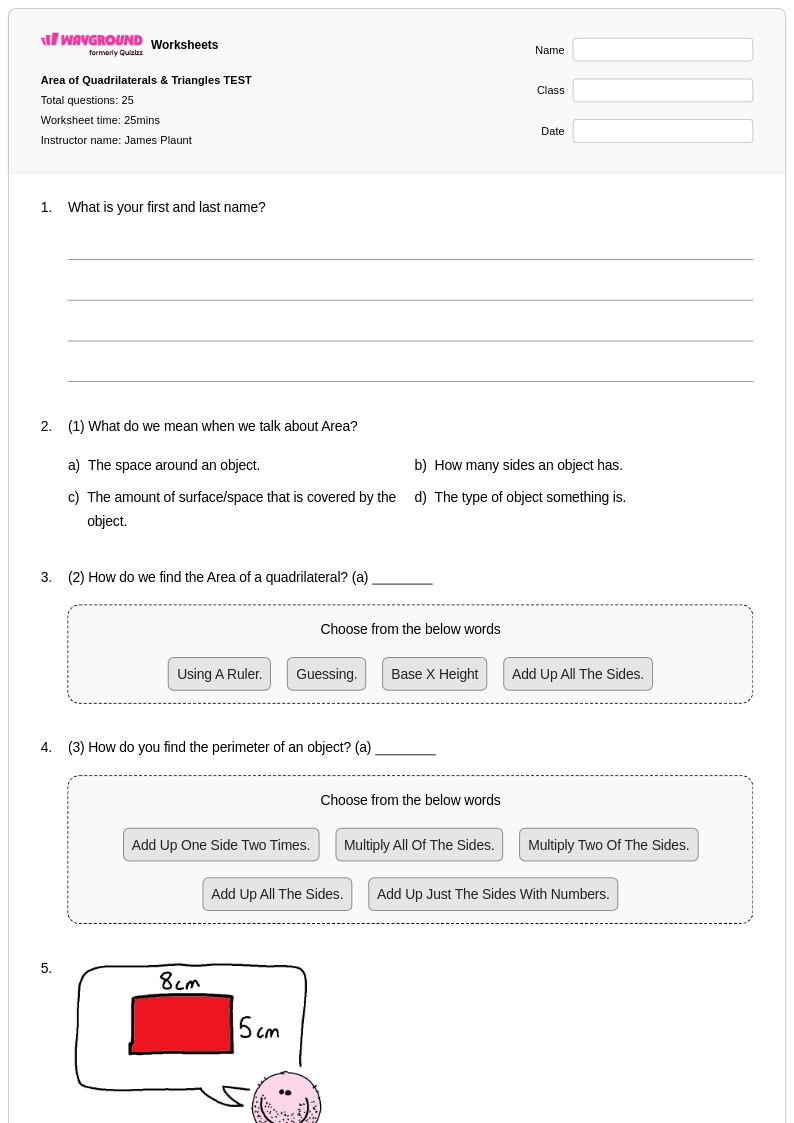
25 Q
6th - 8th
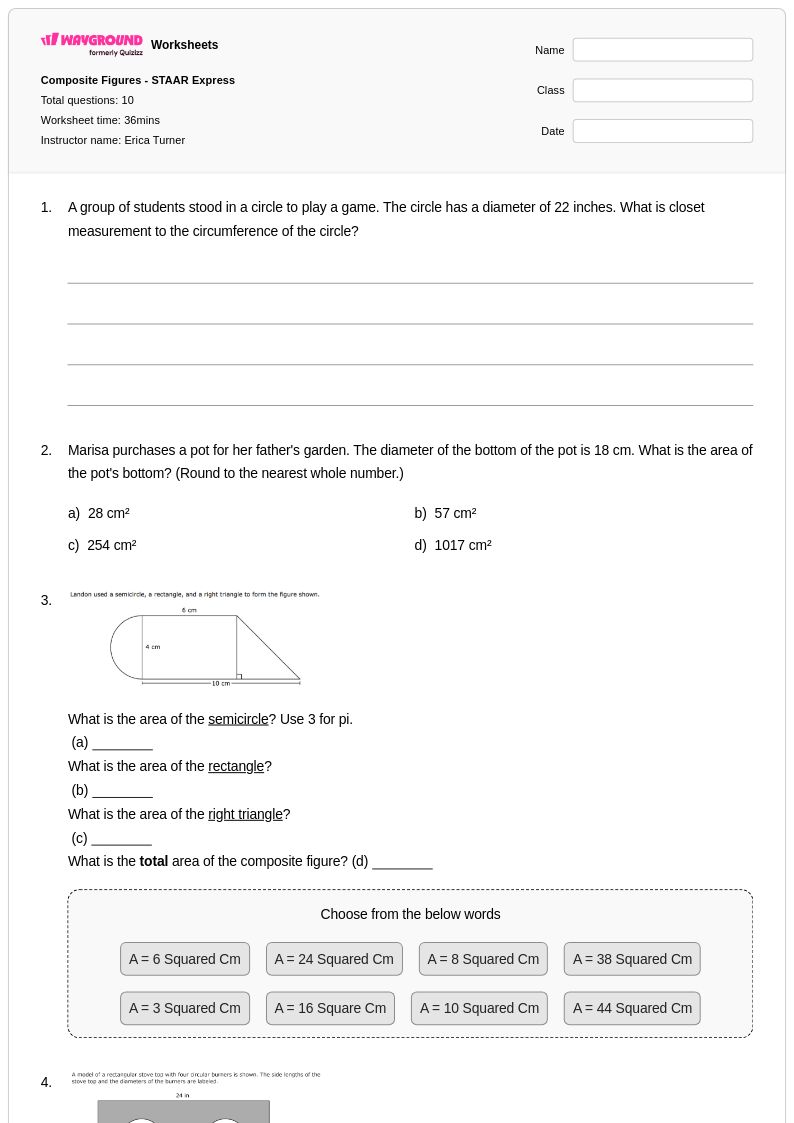
10 Q
6th - 8th
Explore Area of Complex Figures Worksheets by Grades
Explore Other Subject Worksheets for class 6
Explore printable Area of Complex Figures worksheets for Class 6
Area of complex figures worksheets for Class 6 provide essential practice for students learning to calculate the area of composite shapes by breaking them down into simpler geometric components. These comprehensive worksheets available through Wayground (formerly Quizizz) help students master the fundamental skill of decomposing irregular polygons, L-shapes, and combined rectangles into manageable parts they can solve using basic area formulas. Each worksheet includes carefully structured practice problems that progress from simple two-rectangle combinations to more challenging multi-part figures, with complete answer keys provided to support independent learning and immediate feedback. Teachers can access these free printables in convenient pdf format, making them ideal for classroom instruction, homework assignments, or assessment preparation.
Wayground (formerly Quizizz) empowers educators with millions of teacher-created resources specifically designed for Class 6 geometry instruction, including extensive collections of area of complex figures worksheets that align with state mathematics standards. The platform's advanced search and filtering capabilities allow teachers to quickly locate worksheets that match their specific instructional needs, whether for introducing new concepts, providing remediation for struggling students, or offering enrichment challenges for advanced learners. These flexible resources are available in both printable and digital formats, with customization tools that enable educators to modify difficulty levels, adjust problem sets, and differentiate instruction to meet diverse learning needs. This comprehensive approach supports effective lesson planning while providing students with targeted skill practice that builds confidence in geometric problem-solving and spatial reasoning.
FAQs
How do I teach area of complex figures to Grade 6 students?
What exercises help sixth graders practice finding the area of complex figures?
What mistakes do students make when calculating the area of composite shapes?
How can I use these Grade 6 area of complex figures worksheets?
How does area of complex figures fit into the Grade 6 Common Core math progression?
How can I differentiate composite-area practice in a mixed-ability Grade 6 class?
What grade do students learn to find the area of complex figures?