
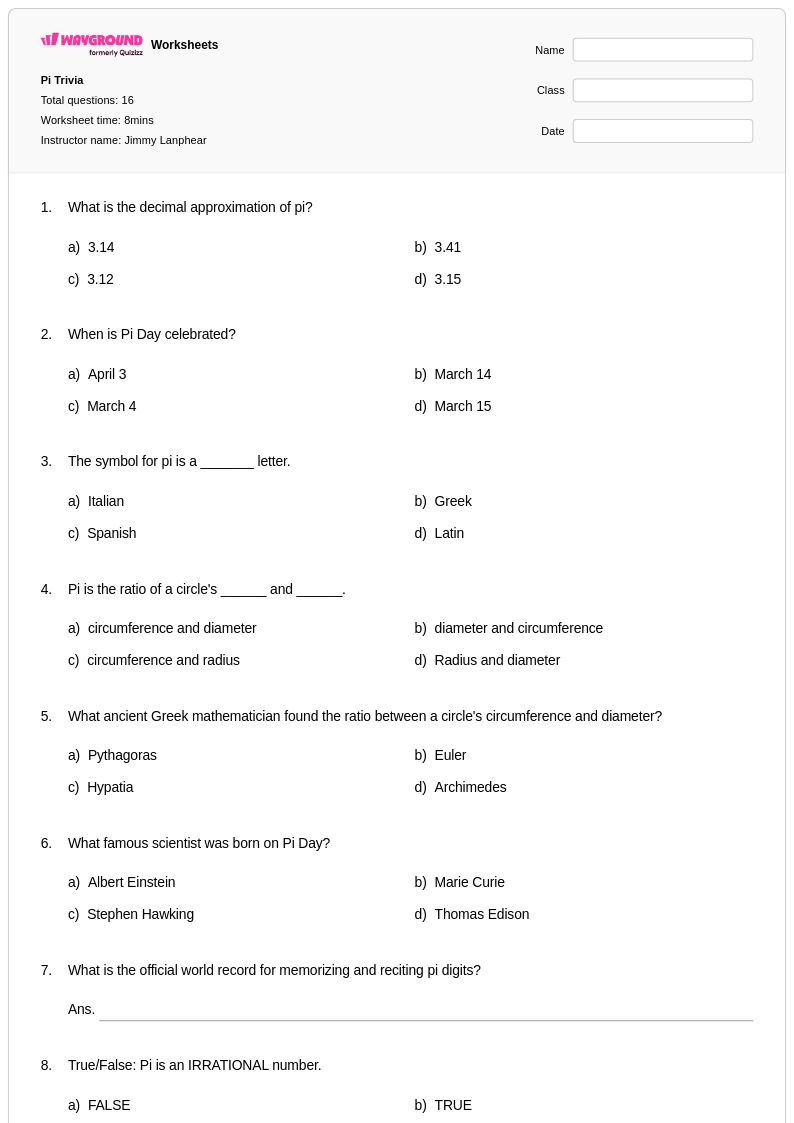
16 Q
6th - 8th
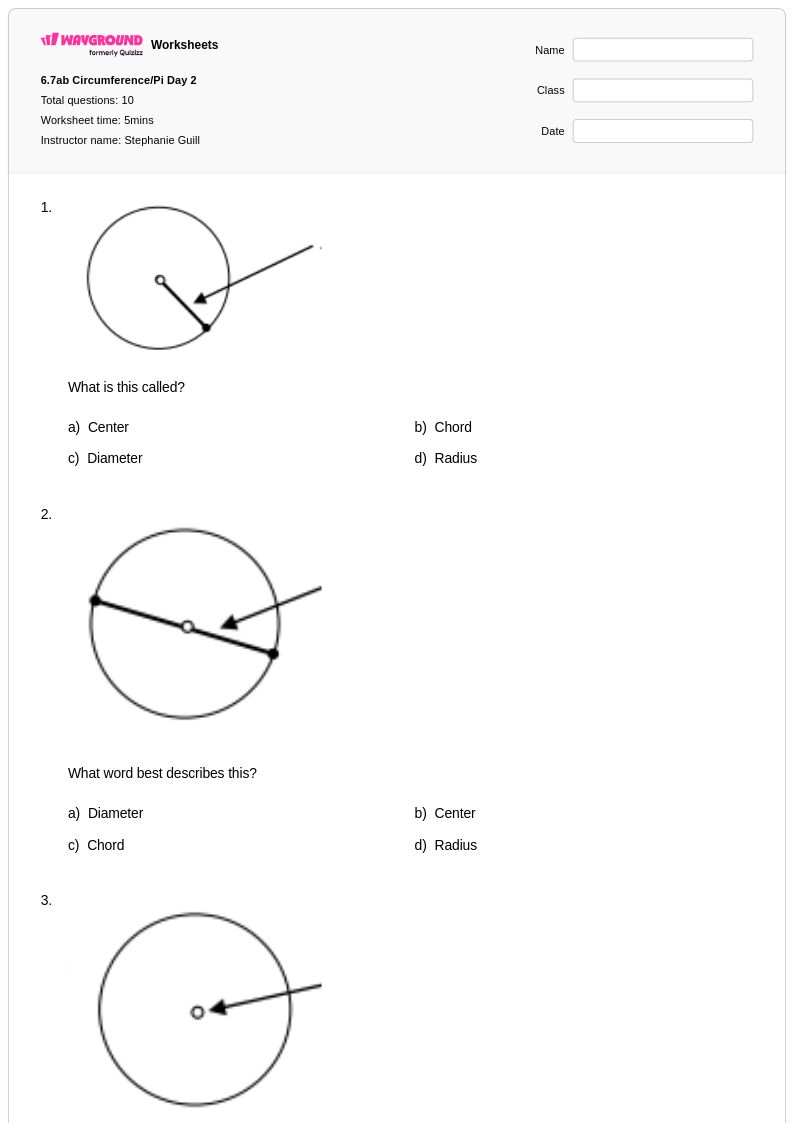
10 Q
6th
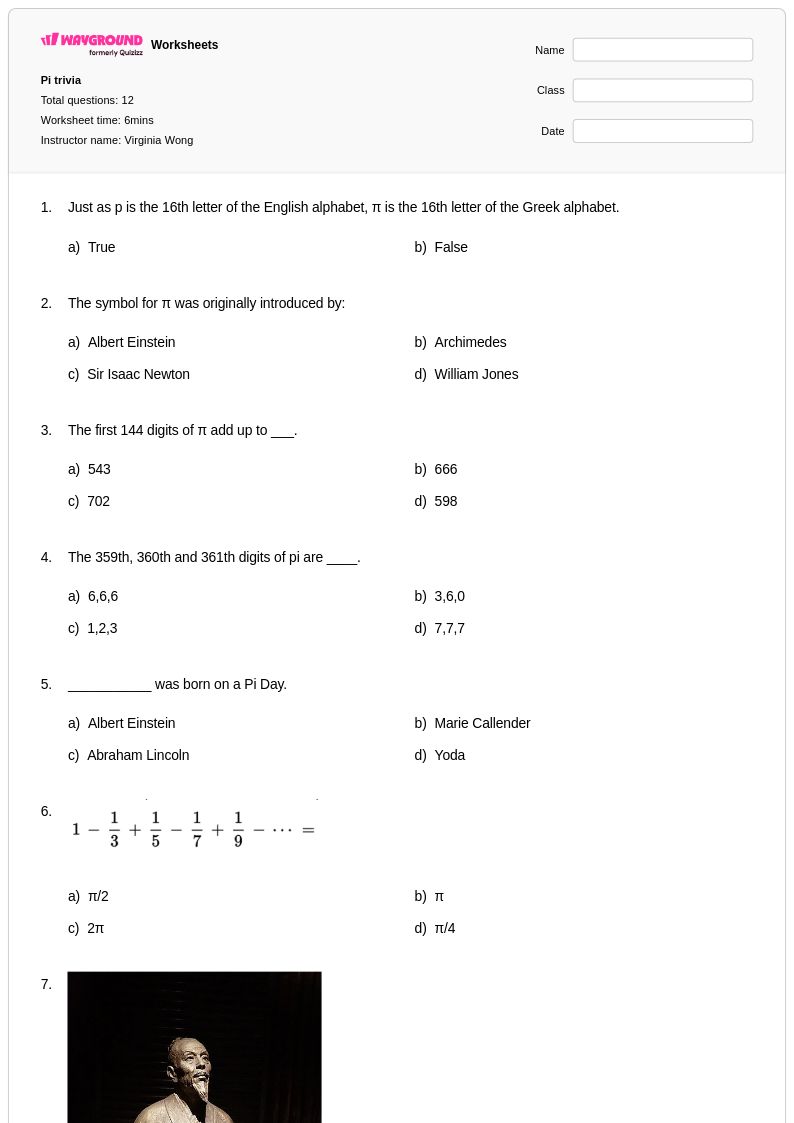
12 Q
5th - 8th
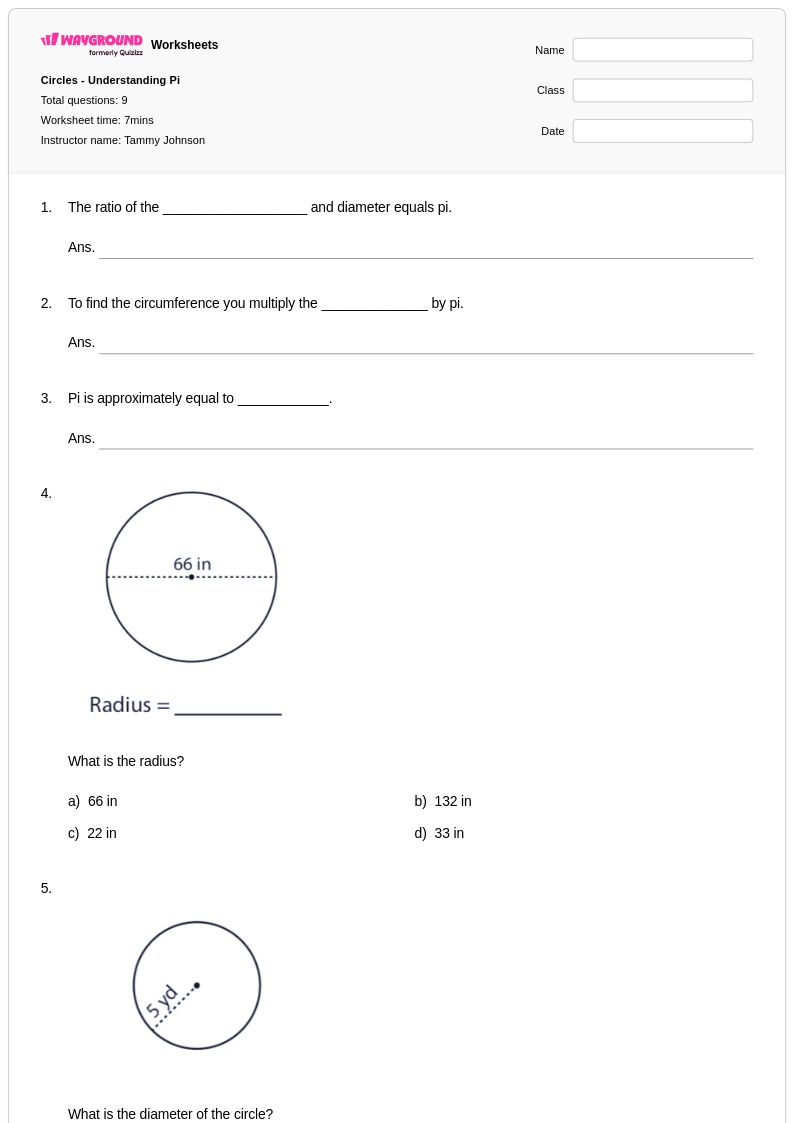
9 Q
6th
8 Q
6th
10 Q
6th
10 Q
6th - 8th
12 Q
5th - 7th
28 Q
6th
10 Q
6th
22 Q
6th - 8th
12 Q
6th
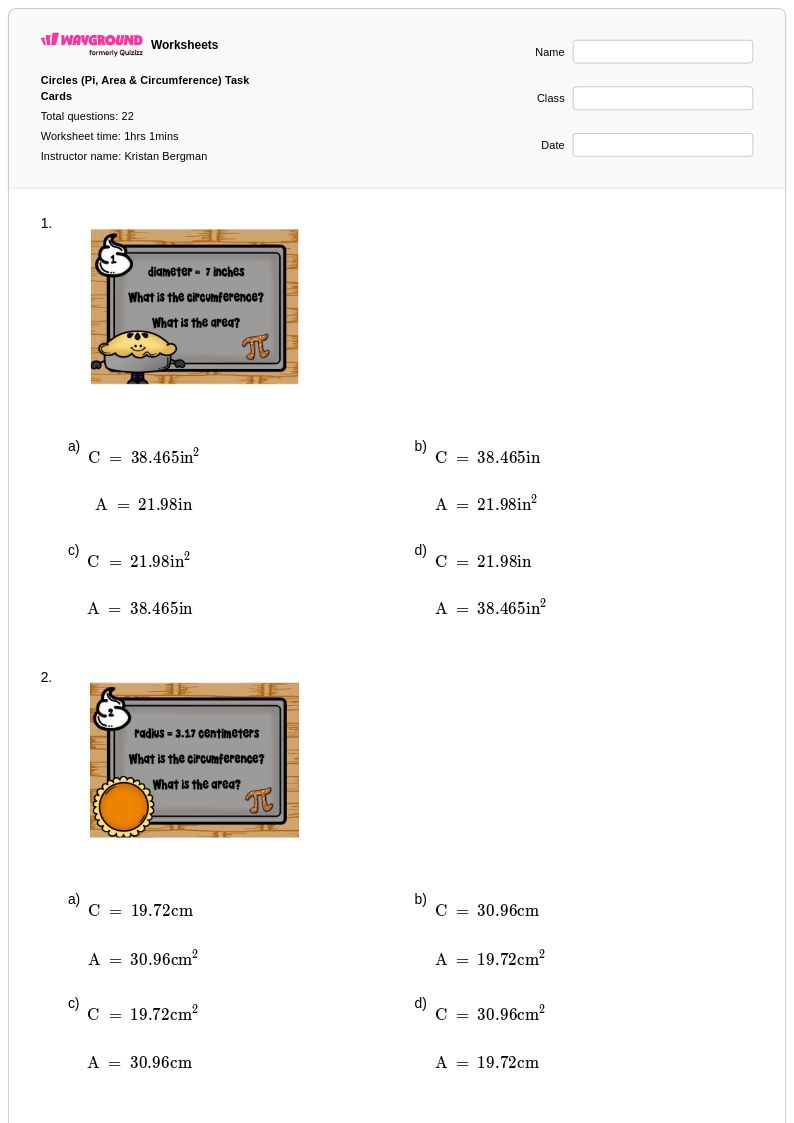
22 Q
6th
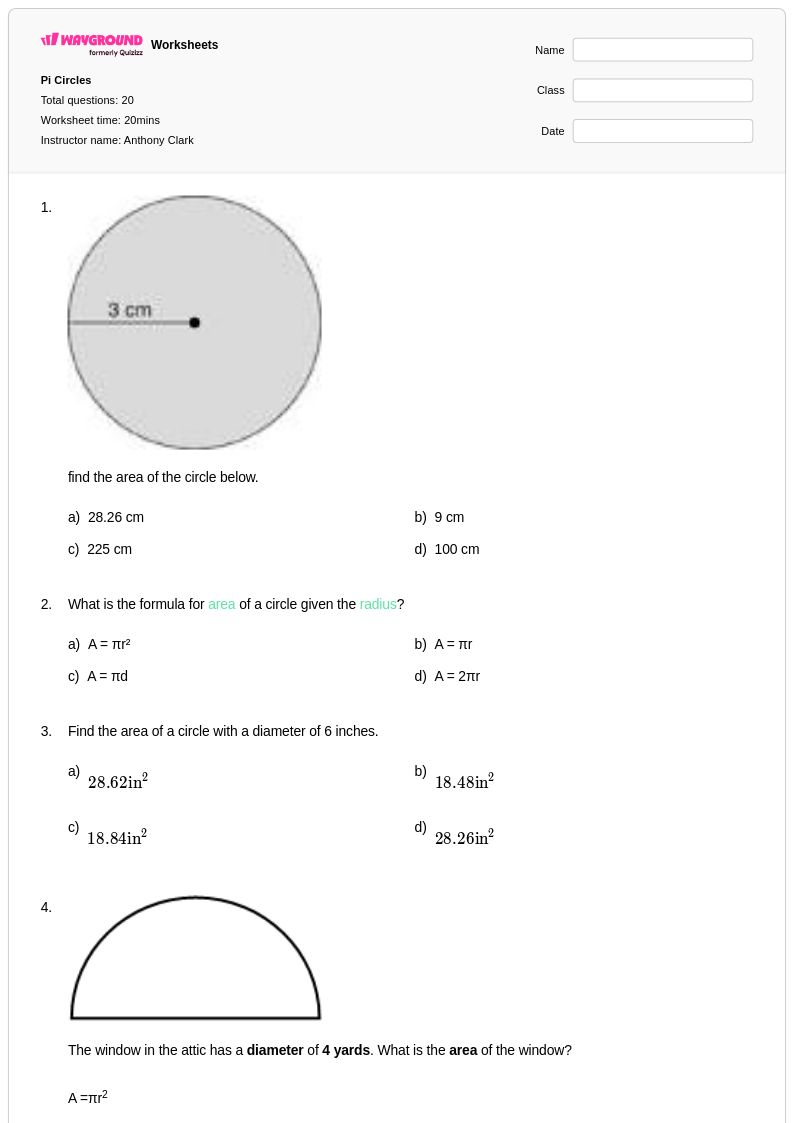
20 Q
6th - Uni
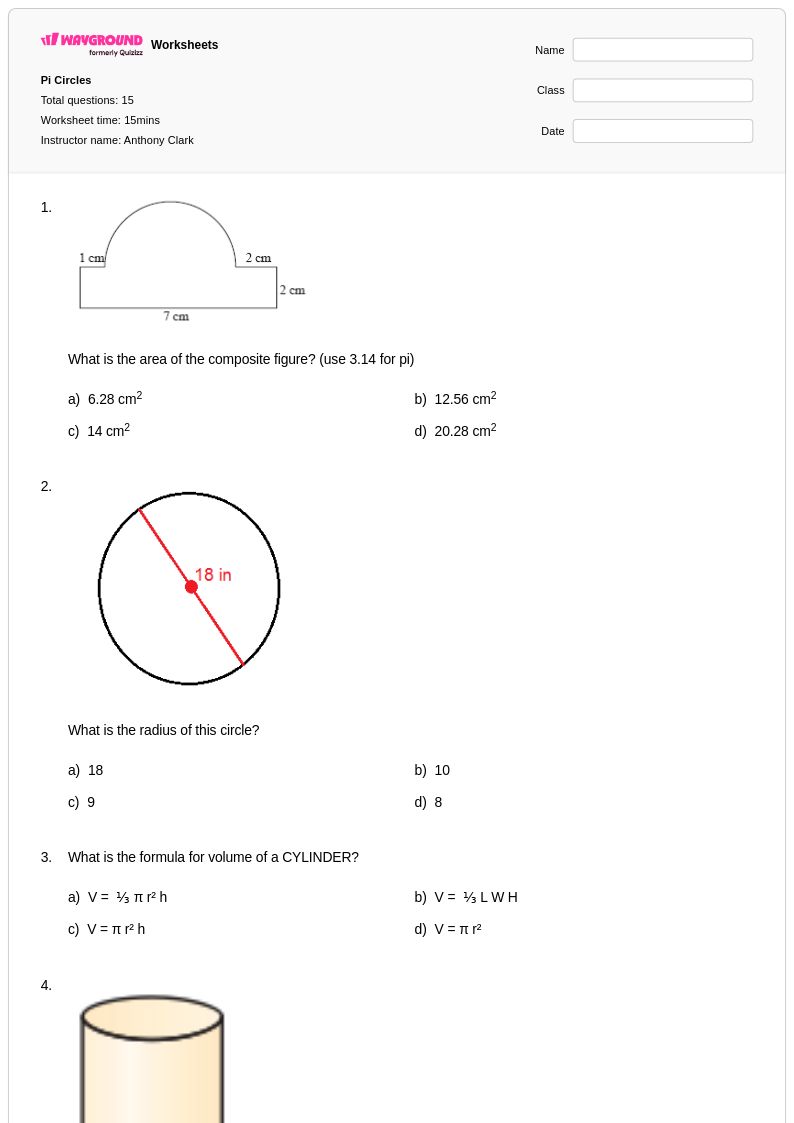
15 Q
6th - Uni
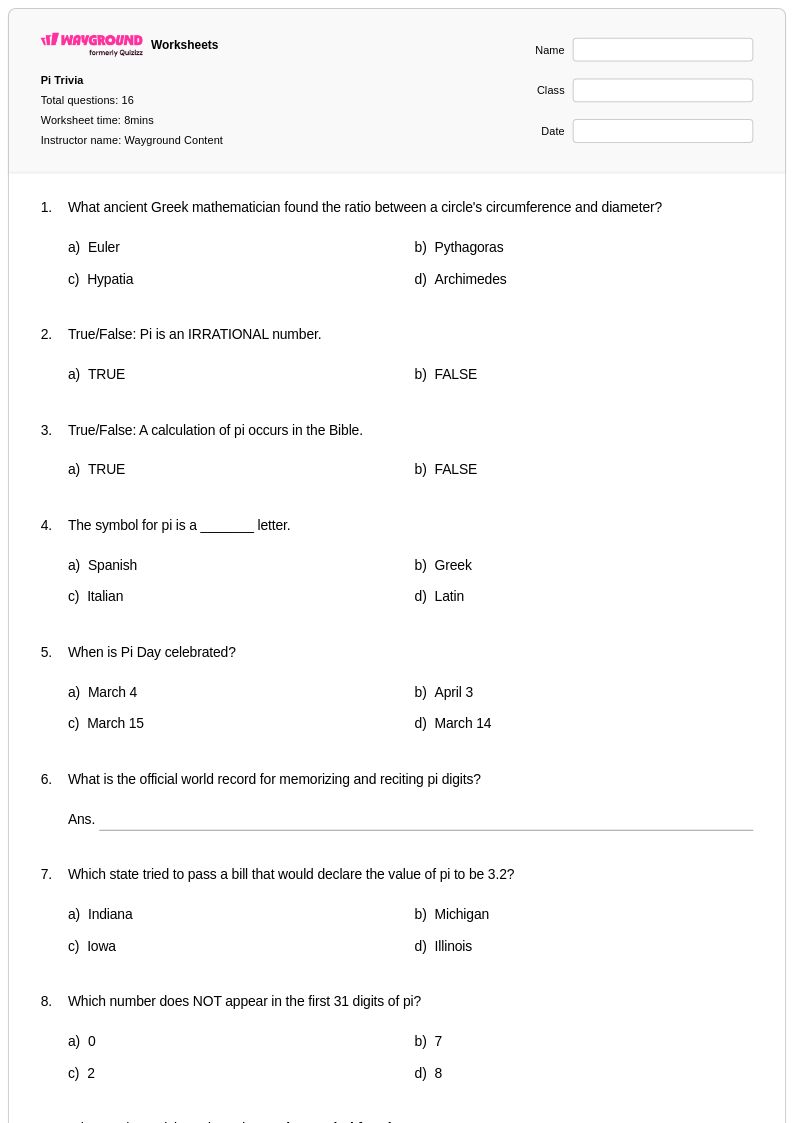
16 Q
6th - 8th
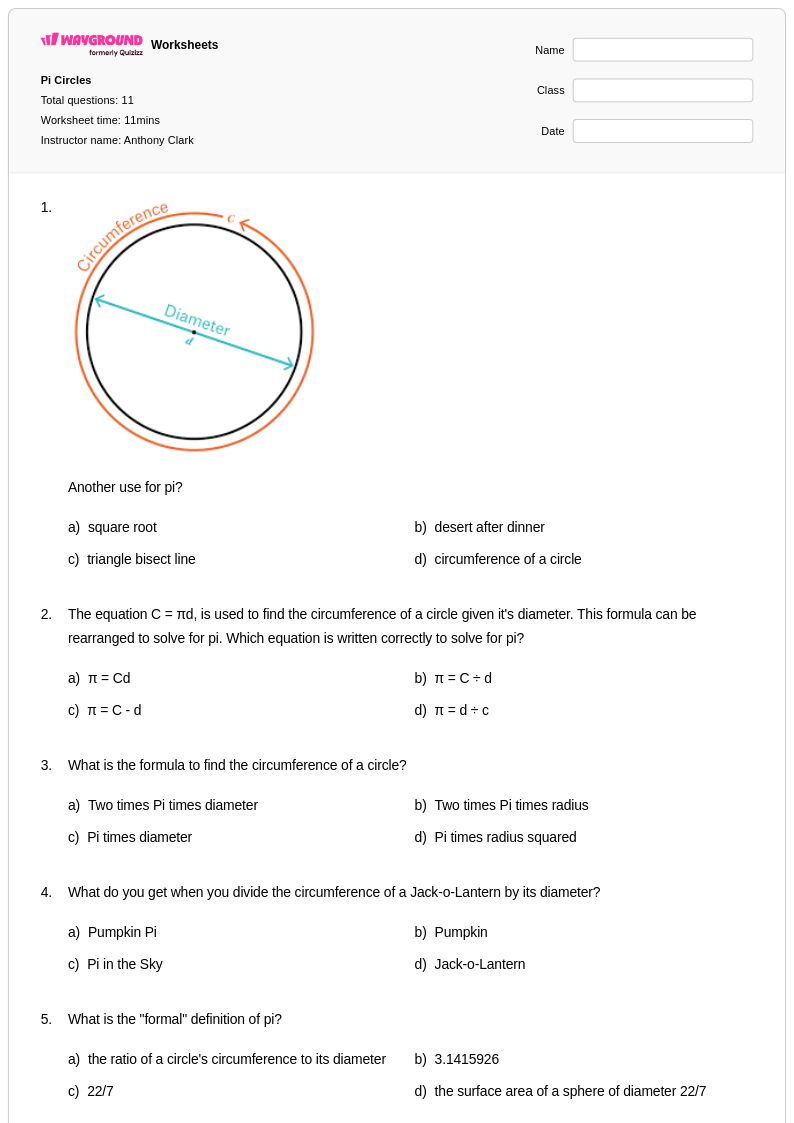
11 Q
6th - Uni
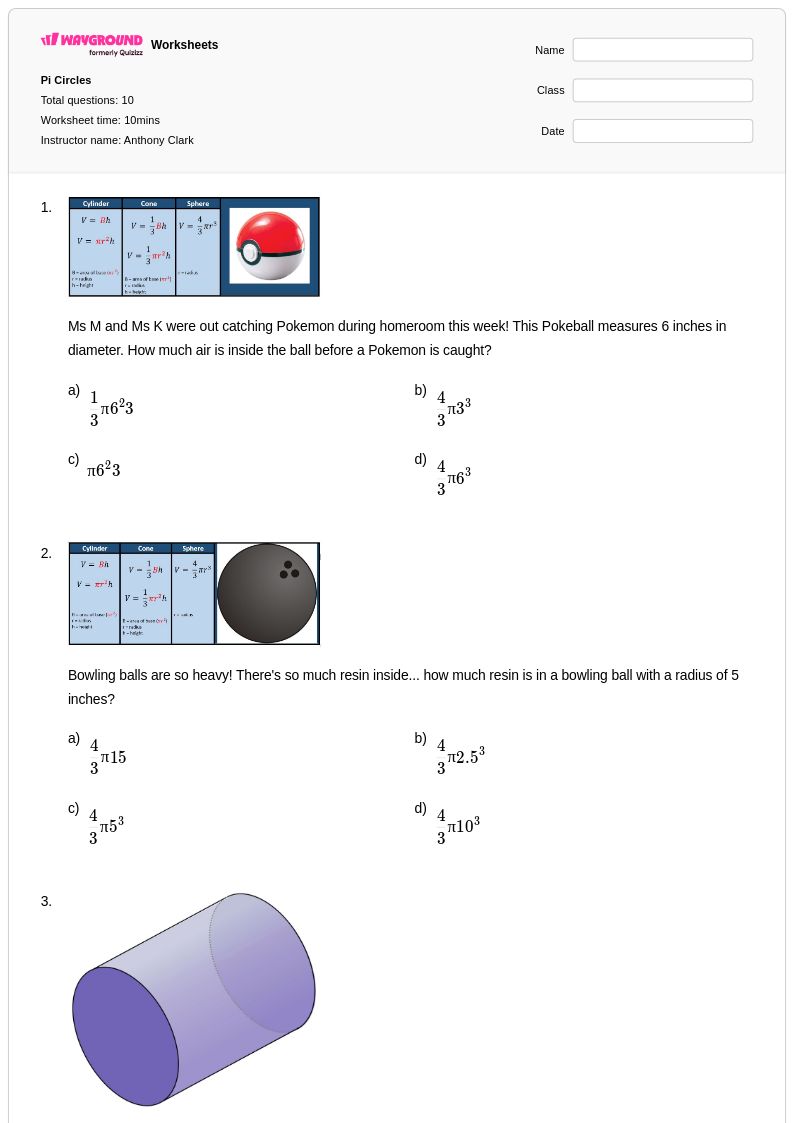
10 Q
6th - Uni
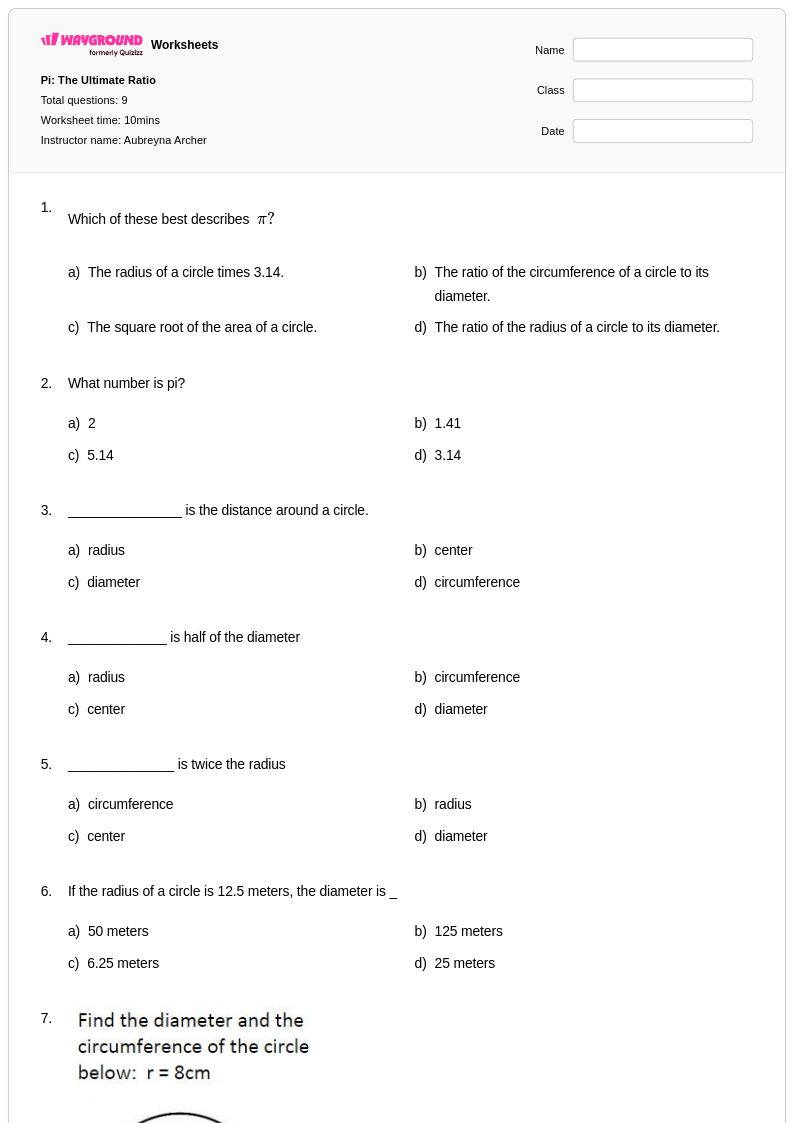
9 Q
6th - 7th
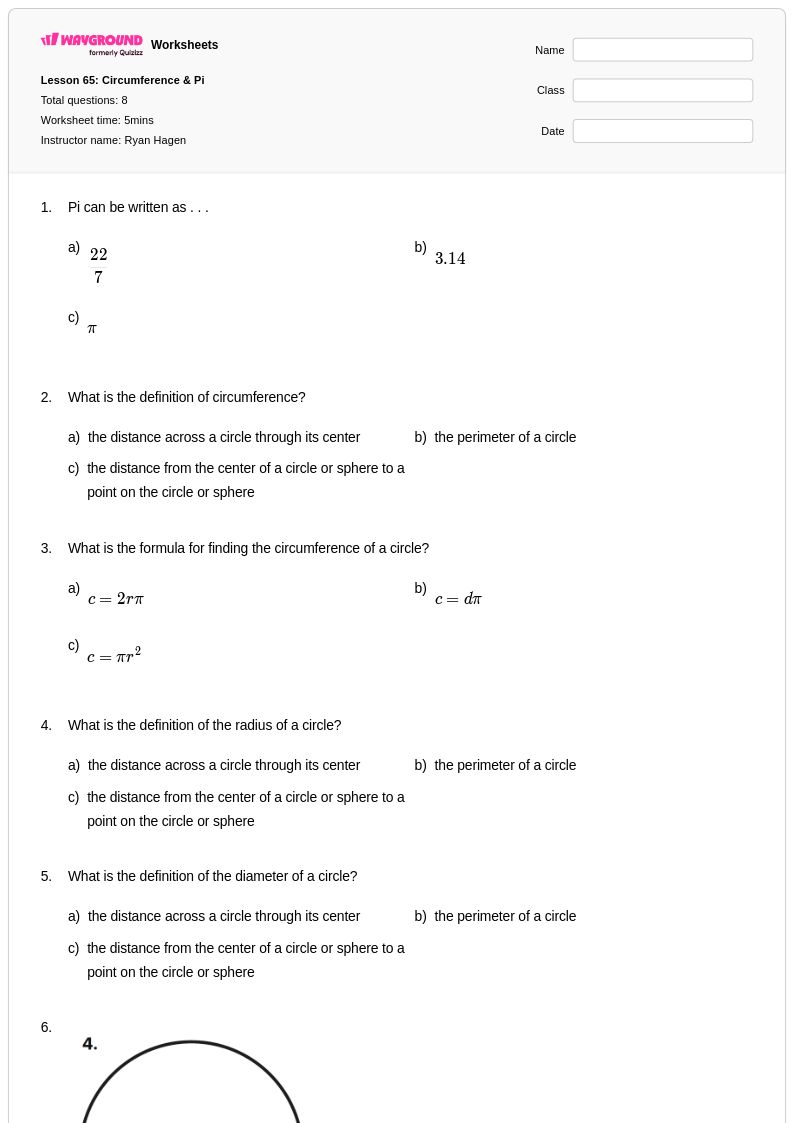
8 Q
6th - 8th
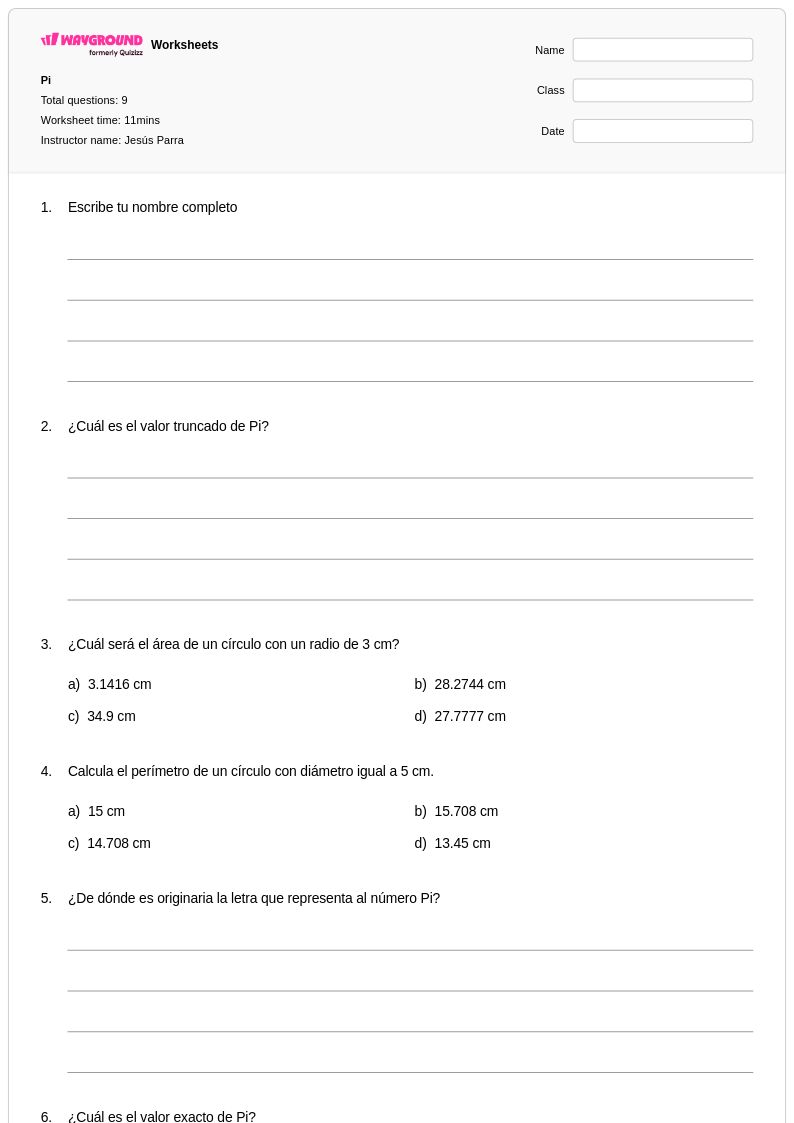
9 Q
6th
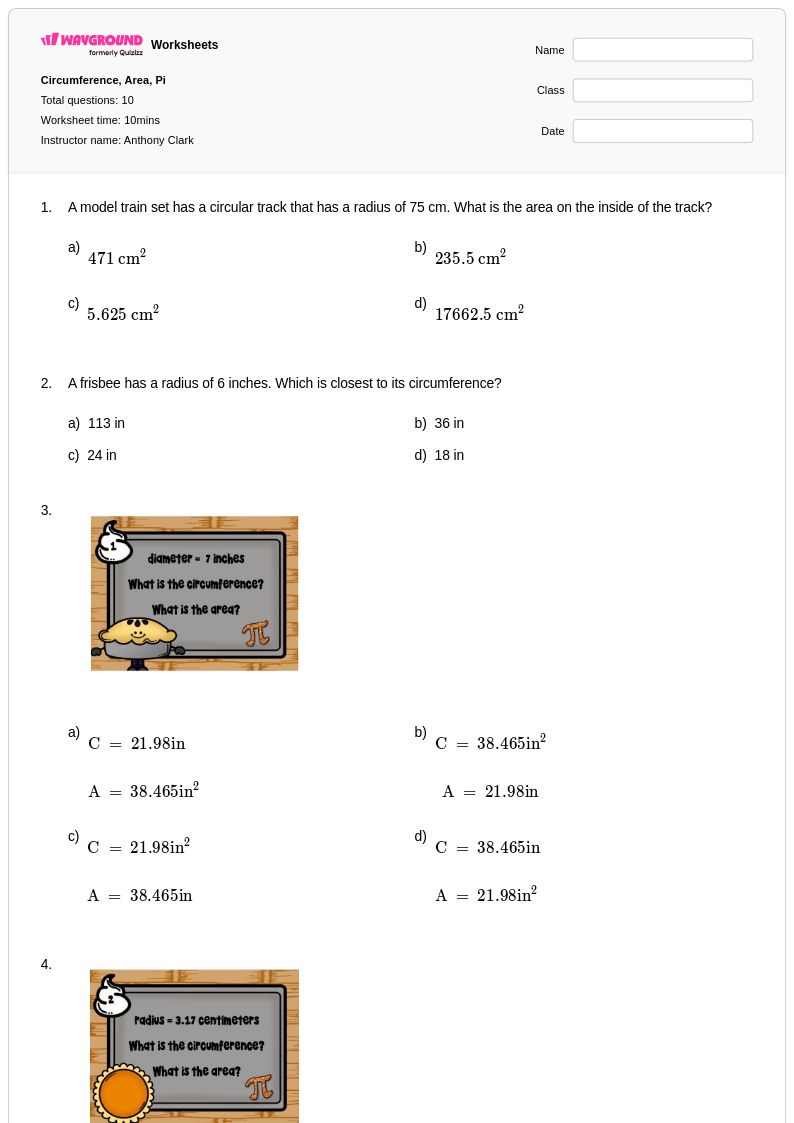
10 Q
6th - Uni
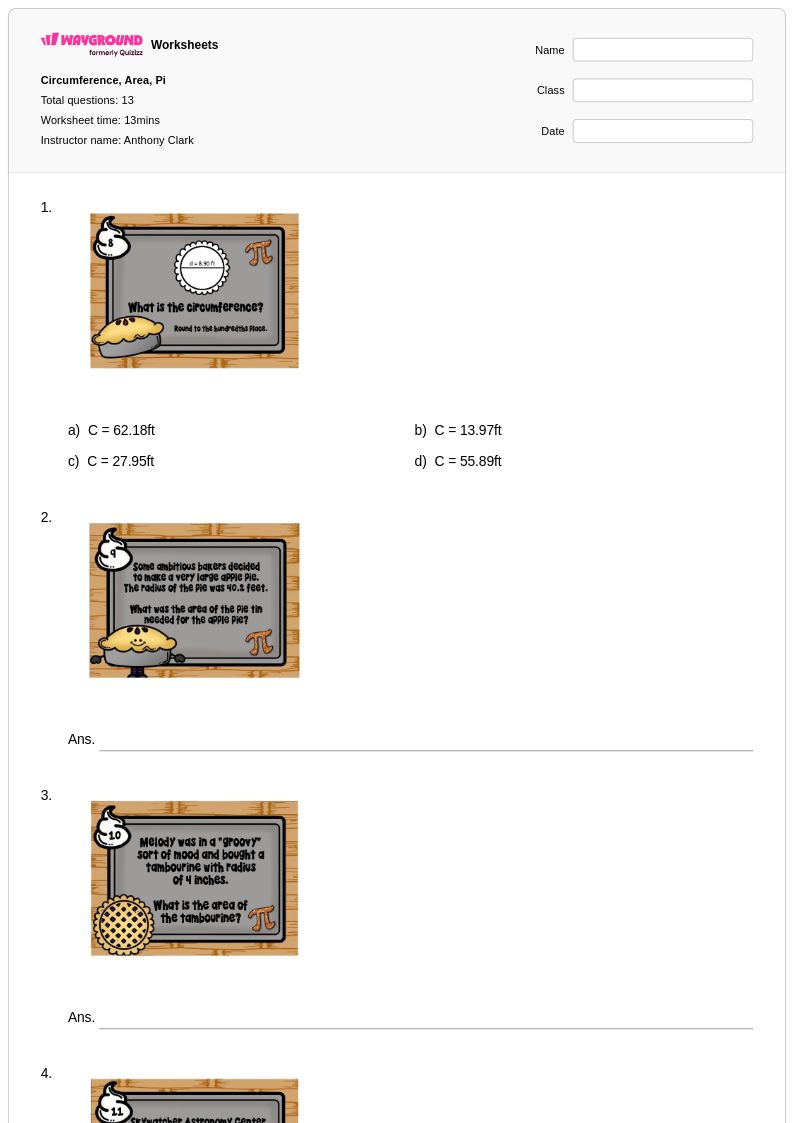
13 Q
6th - Uni
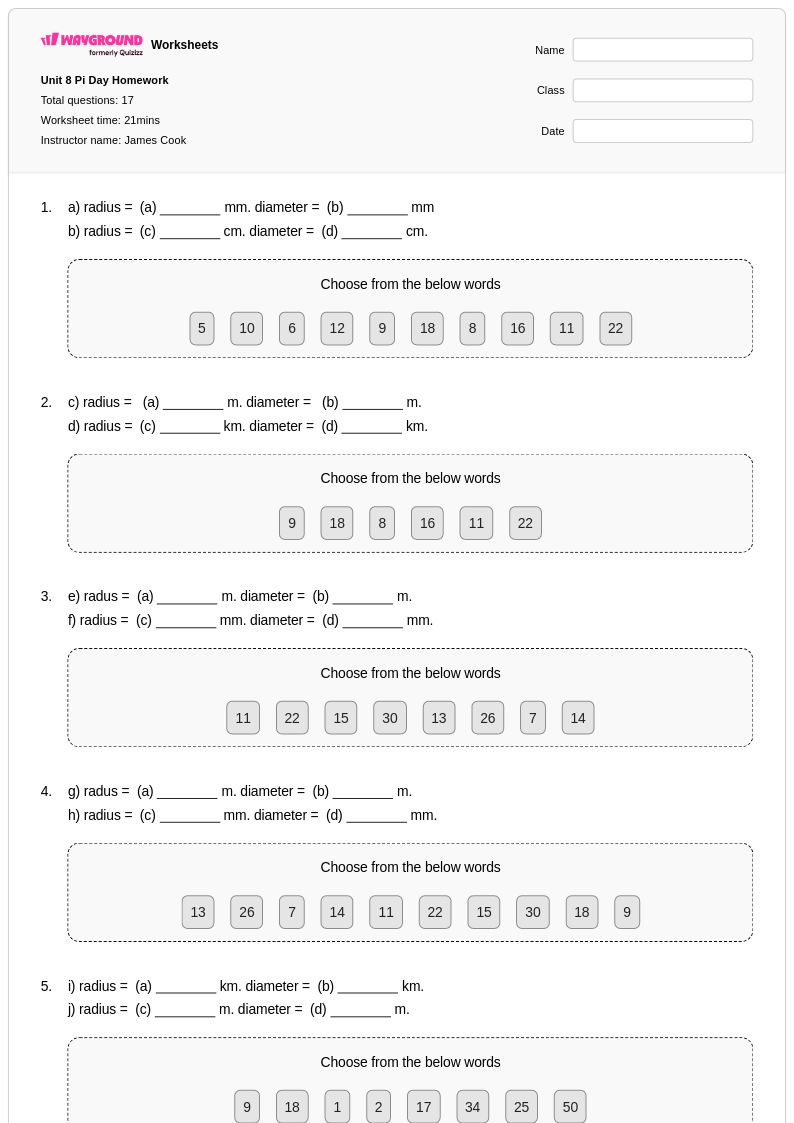
17 Q
6th
Explore Pi Worksheets by Grades
Explore Other Subject Worksheets for class 6
Explore printable Pi worksheets for Class 6
Pi worksheets for Class 6 students available through Wayground (formerly Quizizz) provide comprehensive practice with one of mathematics' most fascinating constants. These carefully designed resources help sixth-grade learners develop essential skills in understanding pi as the ratio of a circle's circumference to its diameter, calculating circumference and area of circles, and applying pi in real-world problem-solving scenarios. Students work through practice problems that build conceptual understanding while strengthening computational fluency with both exact answers using π and decimal approximations. Each worksheet includes a complete answer key and is available as free printable pdf resources, making them accessible for both classroom instruction and independent study.
Wayground (formerly Quizizz) empowers teachers with millions of educator-created pi worksheets specifically aligned to Class 6 mathematics standards and learning objectives. The platform's robust search and filtering capabilities allow teachers to quickly locate resources that match their specific instructional needs, whether introducing the concept of pi, reinforcing circumference calculations, or challenging students with advanced applications. Teachers can easily customize these digital and printable materials to support differentiated instruction, using them for skill-building practice, targeted remediation for struggling learners, or enrichment activities for advanced students. The flexibility to access resources in both interactive digital formats and traditional pdf printables ensures seamless integration into any teaching environment while supporting diverse learning preferences and classroom technology capabilities.