
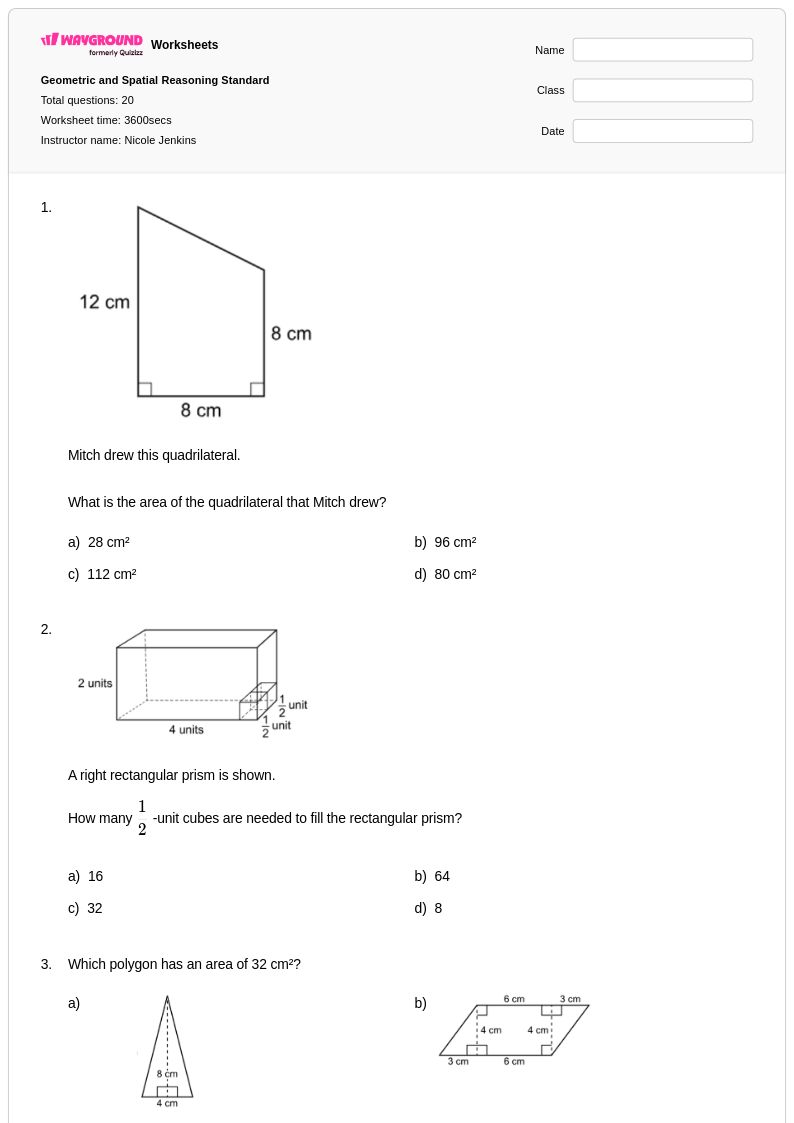
20 T
6th
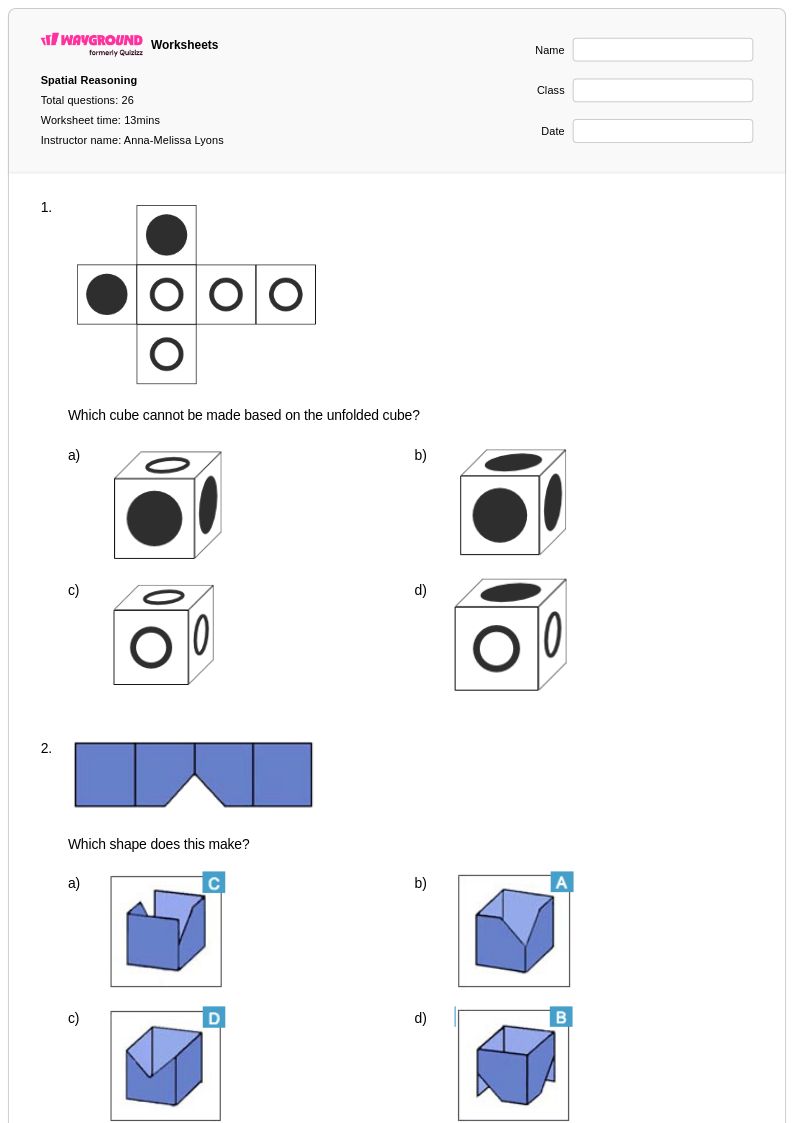
26 T
6th - 9th
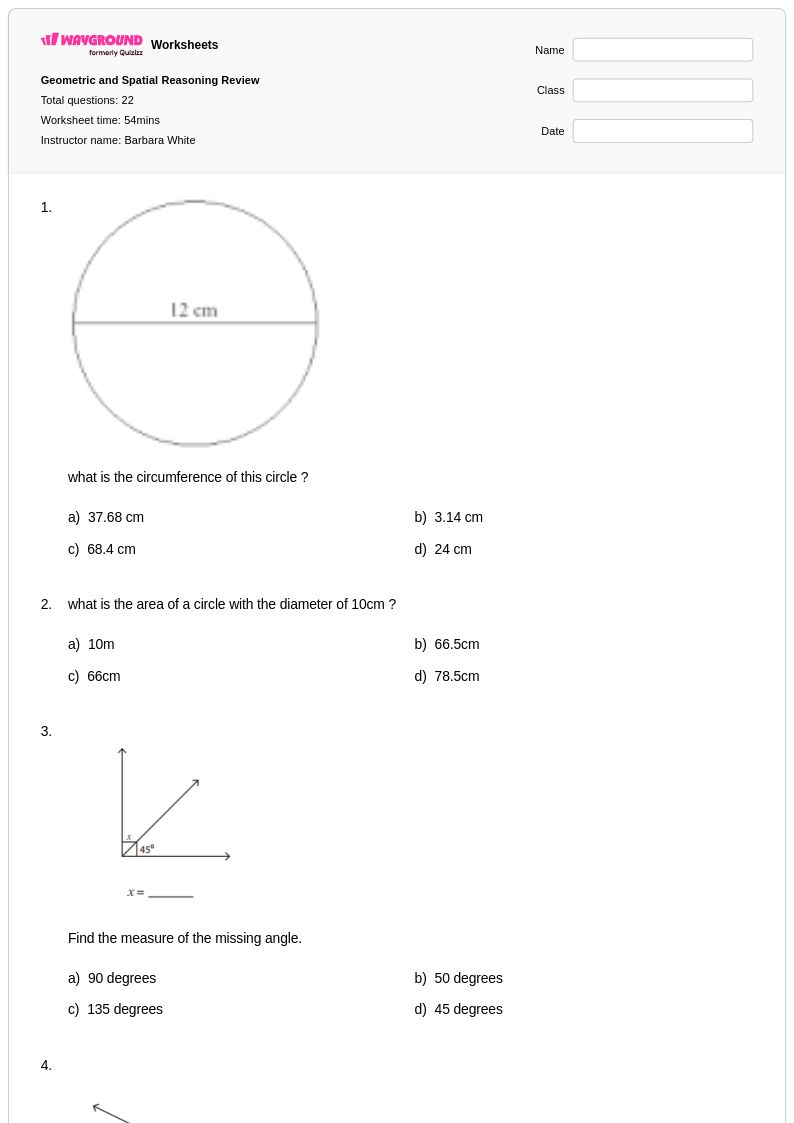
22 T
6th - 8th
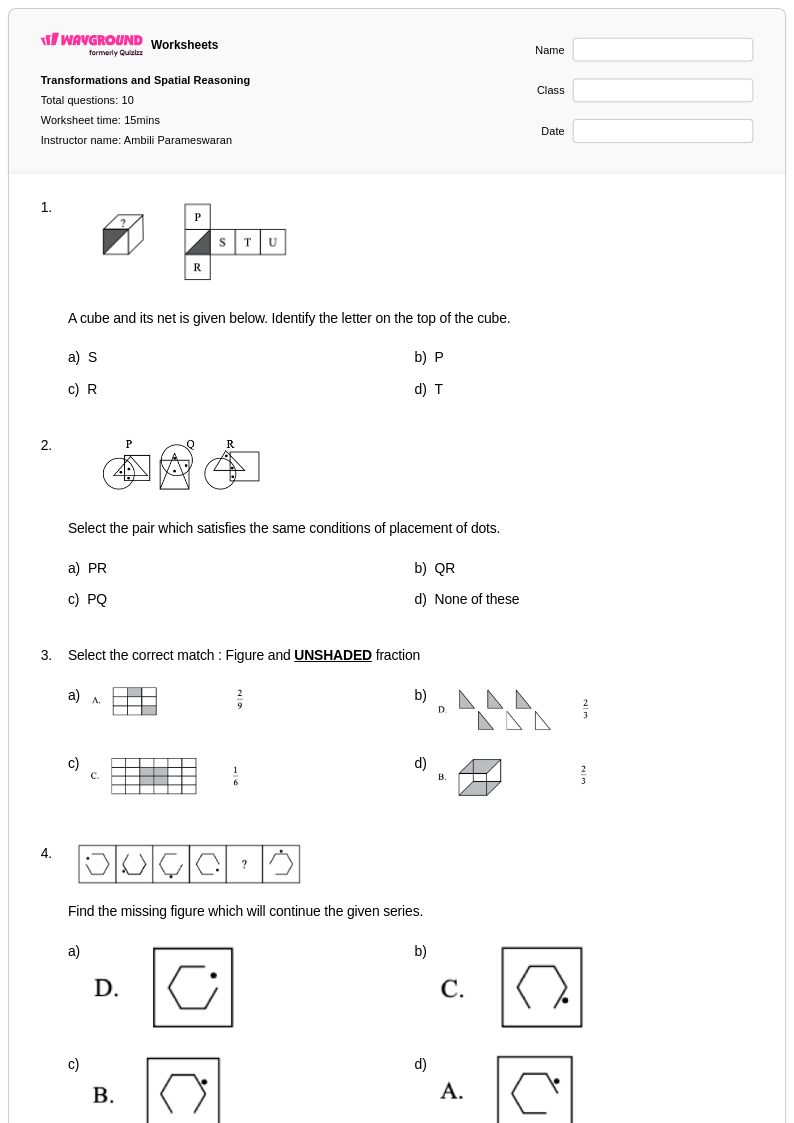
10 T
6th
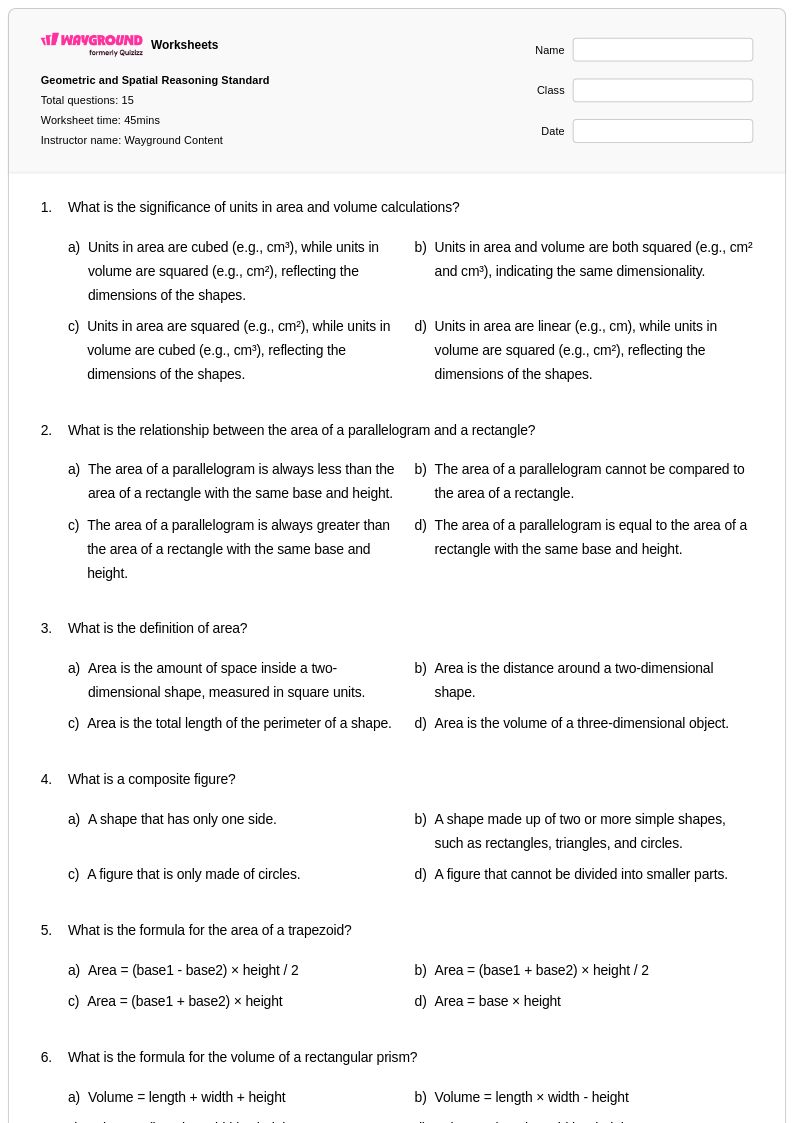
15 T
6th
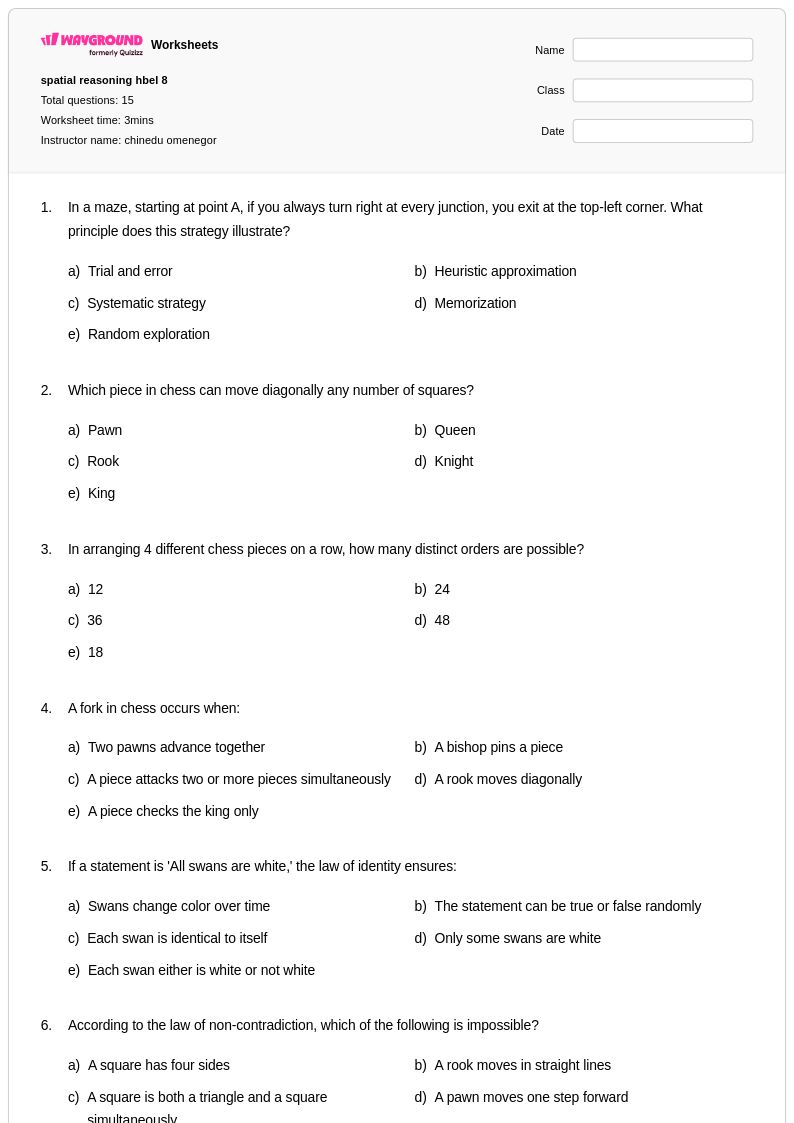
15 T
6th - 8th
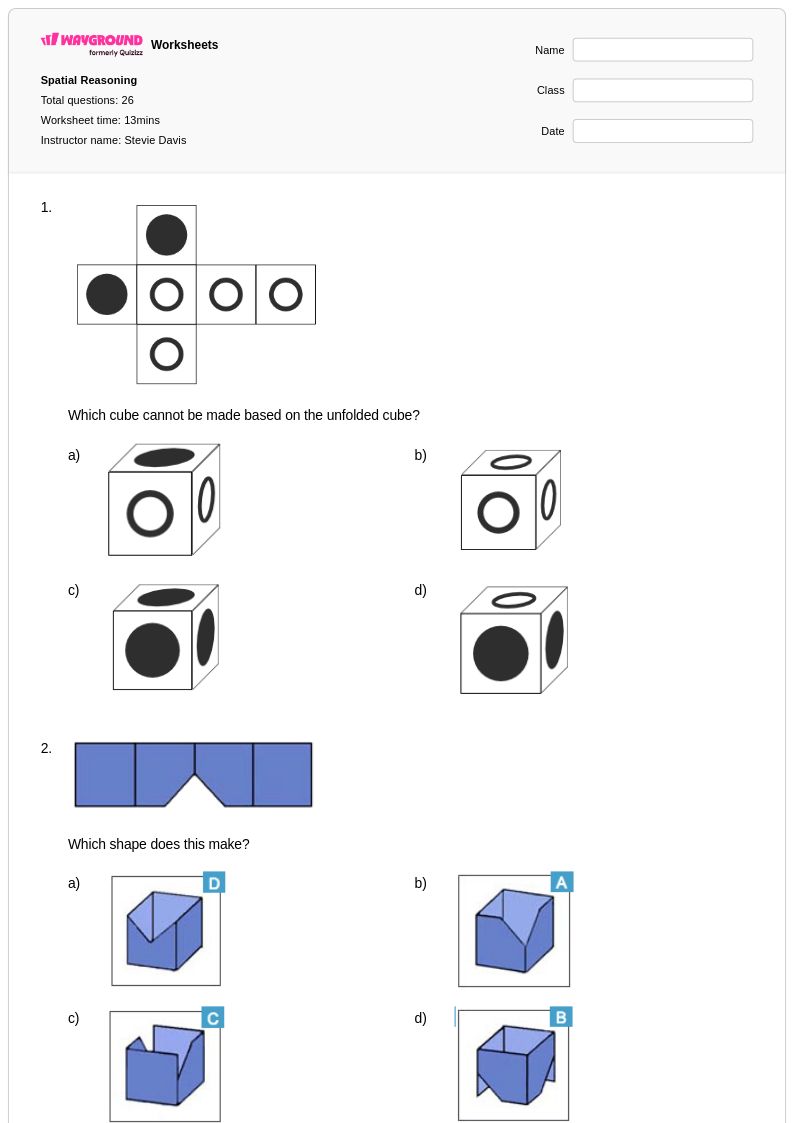
26 T
6th - 8th
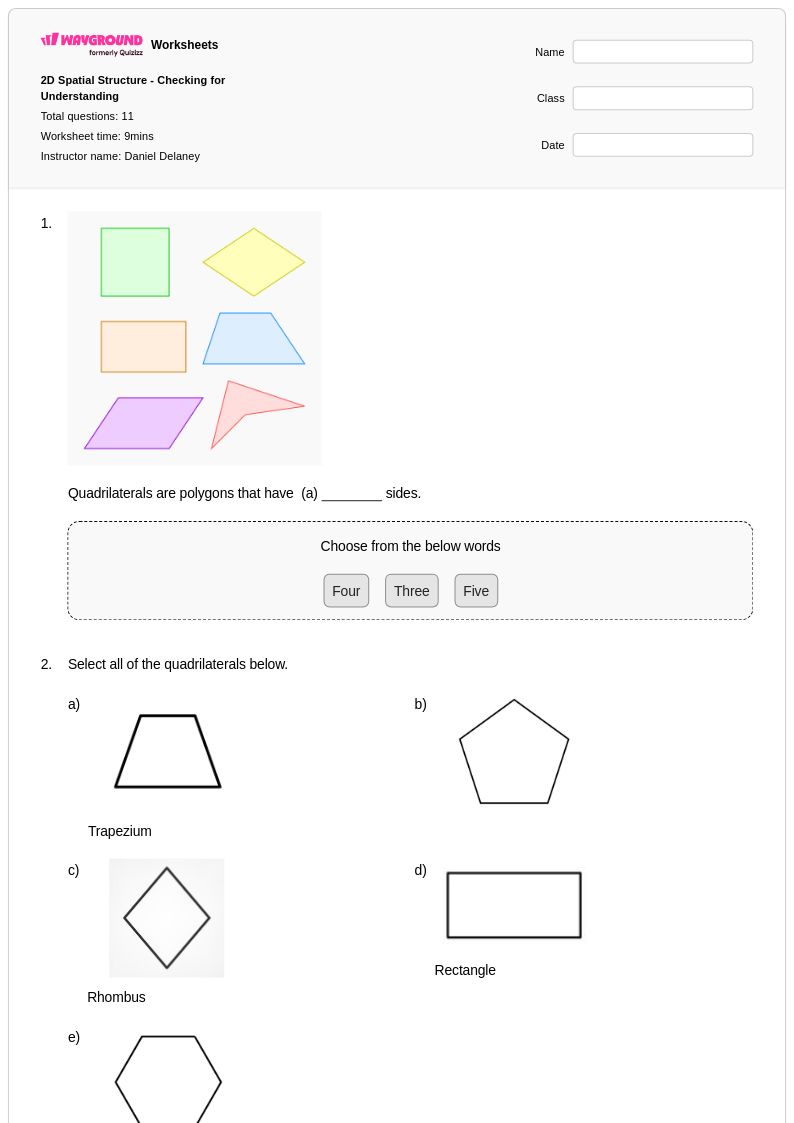
11 T
6th - Uni
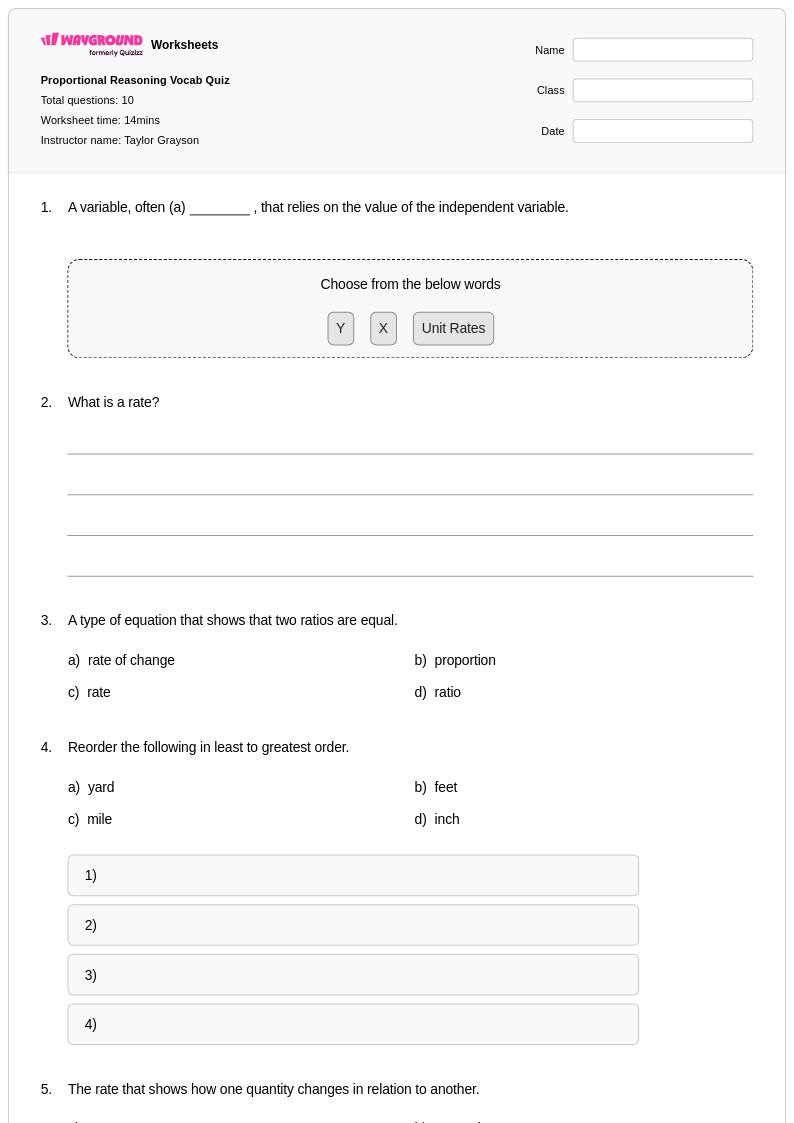
10 T
6th
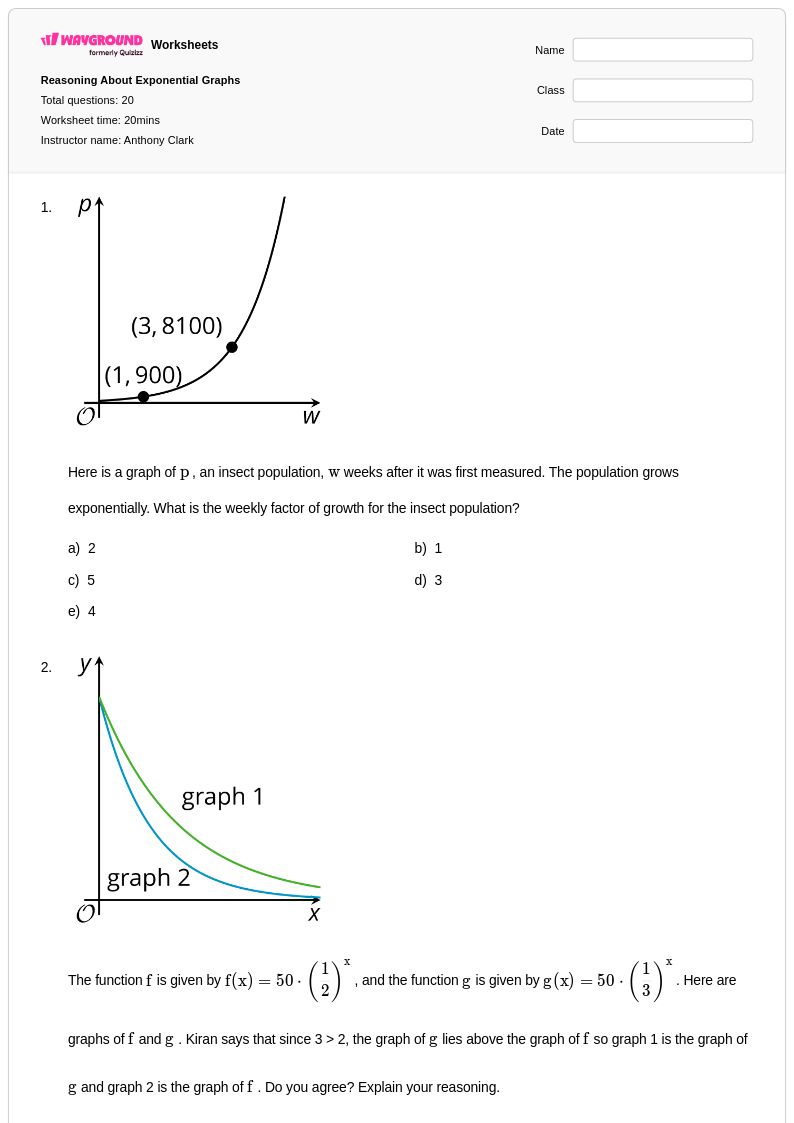
20 T
6th - Uni
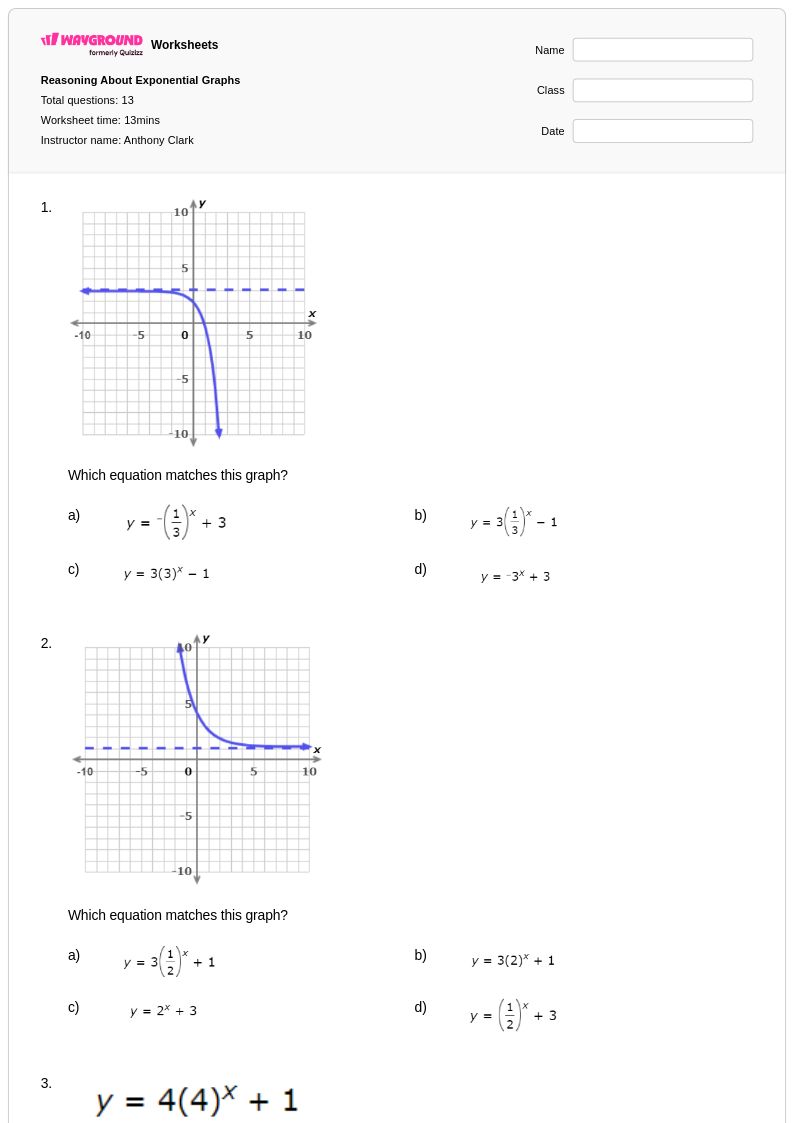
13 T
6th - Uni
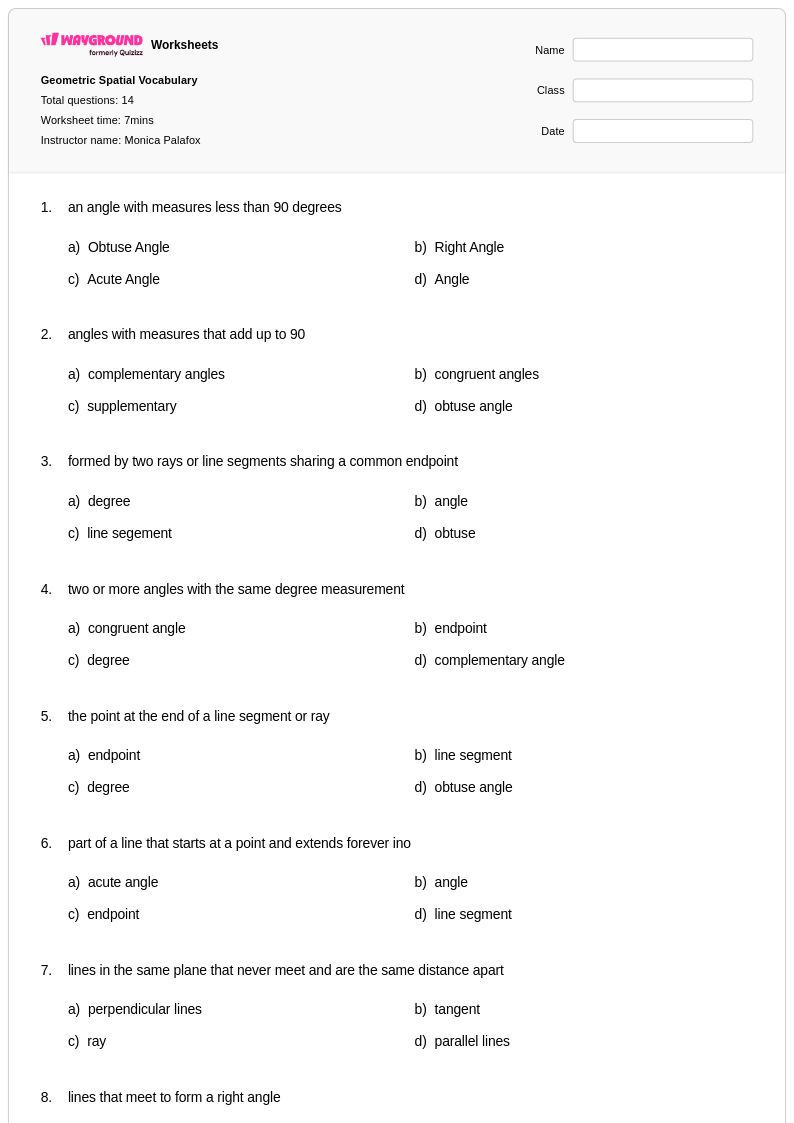
14 T
6th - 8th
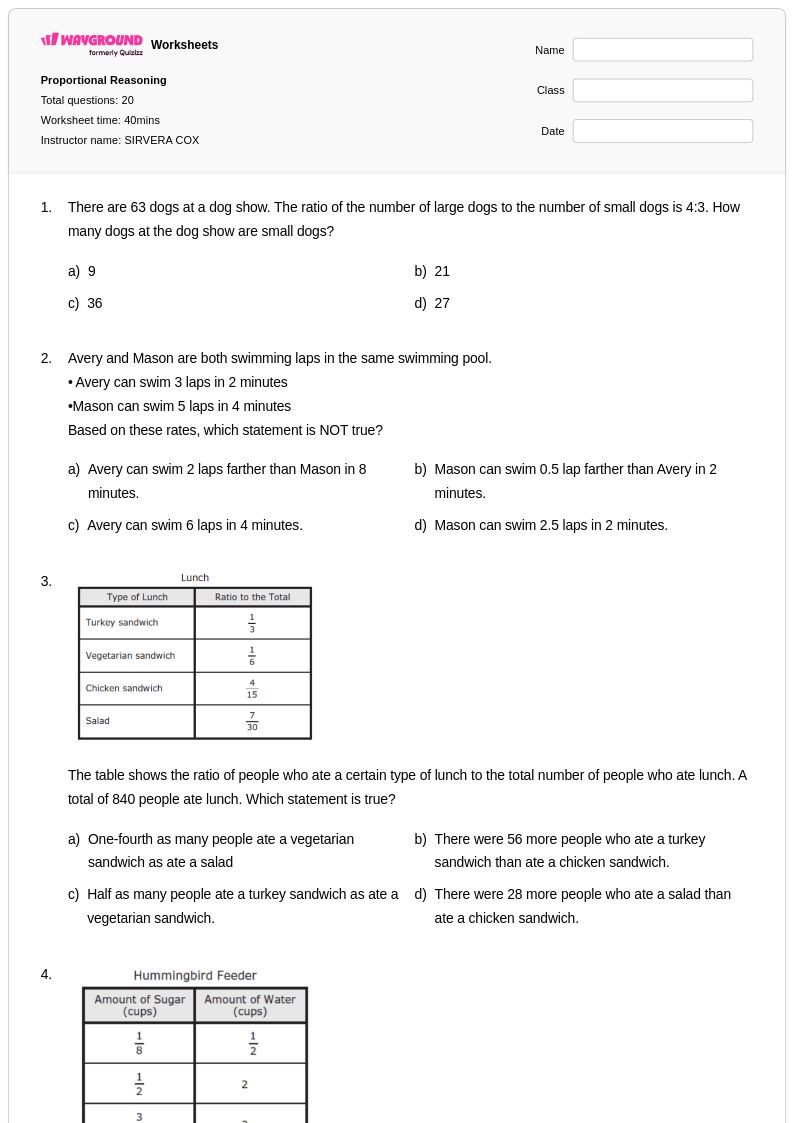
20 T
6th
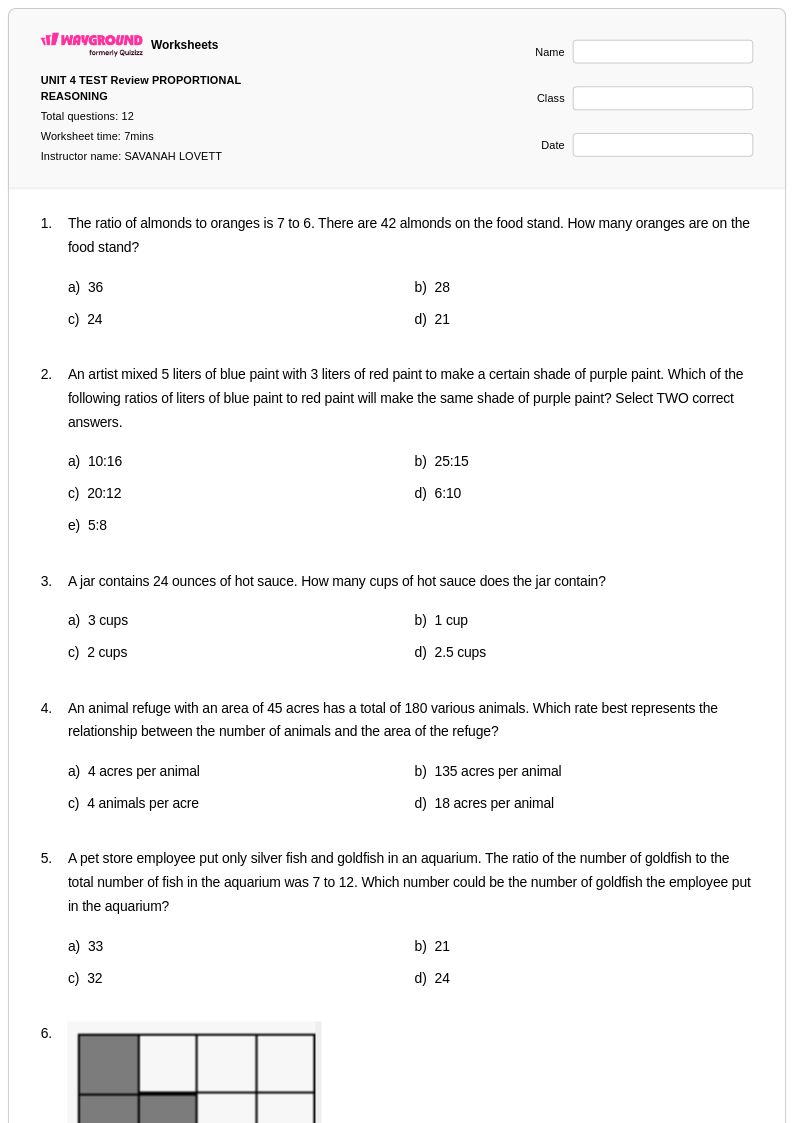
12 T
6th
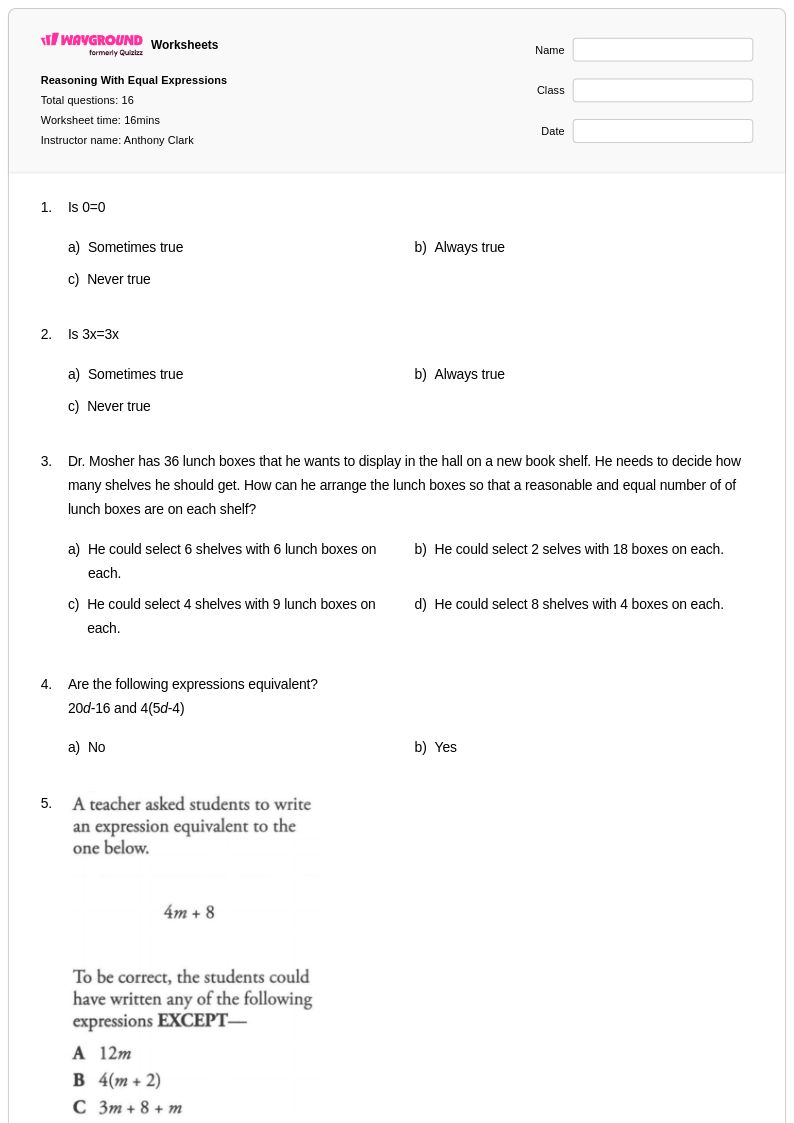
16 T
6th - Uni
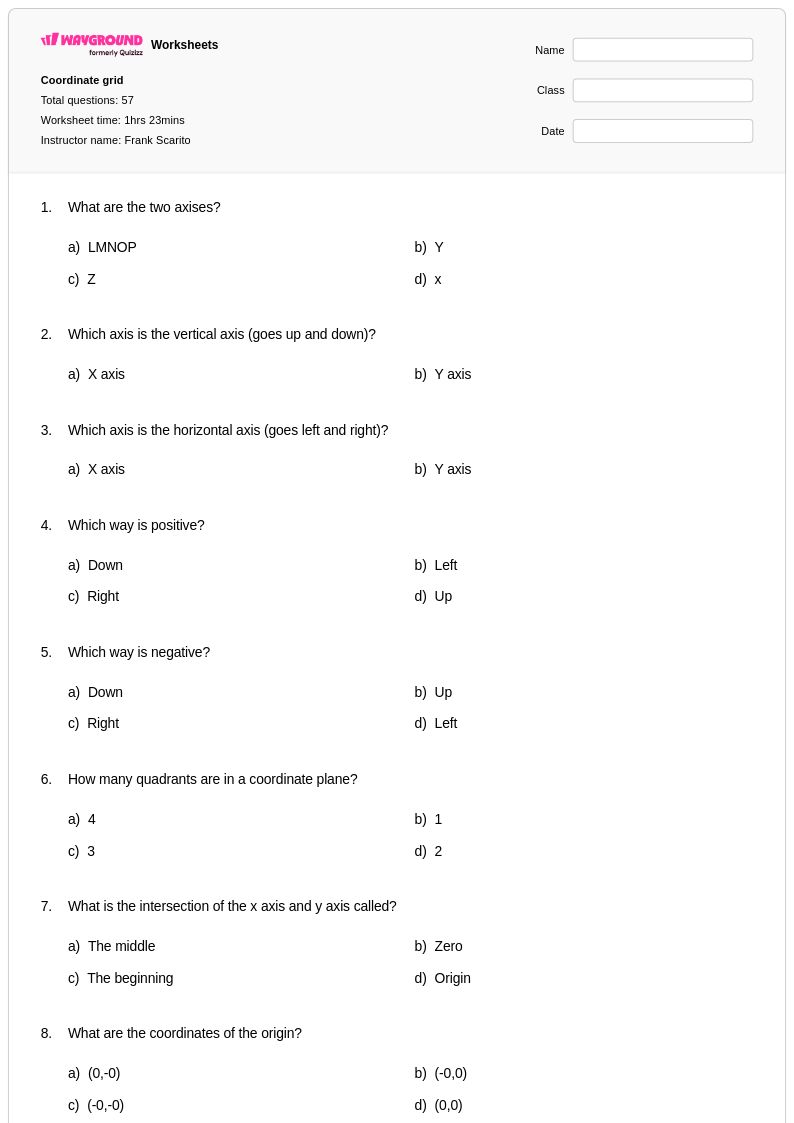
57 T
6th - 8th
28 T
6th - Uni
13 T
6th
8 T
6th
14 T
5th - 7th
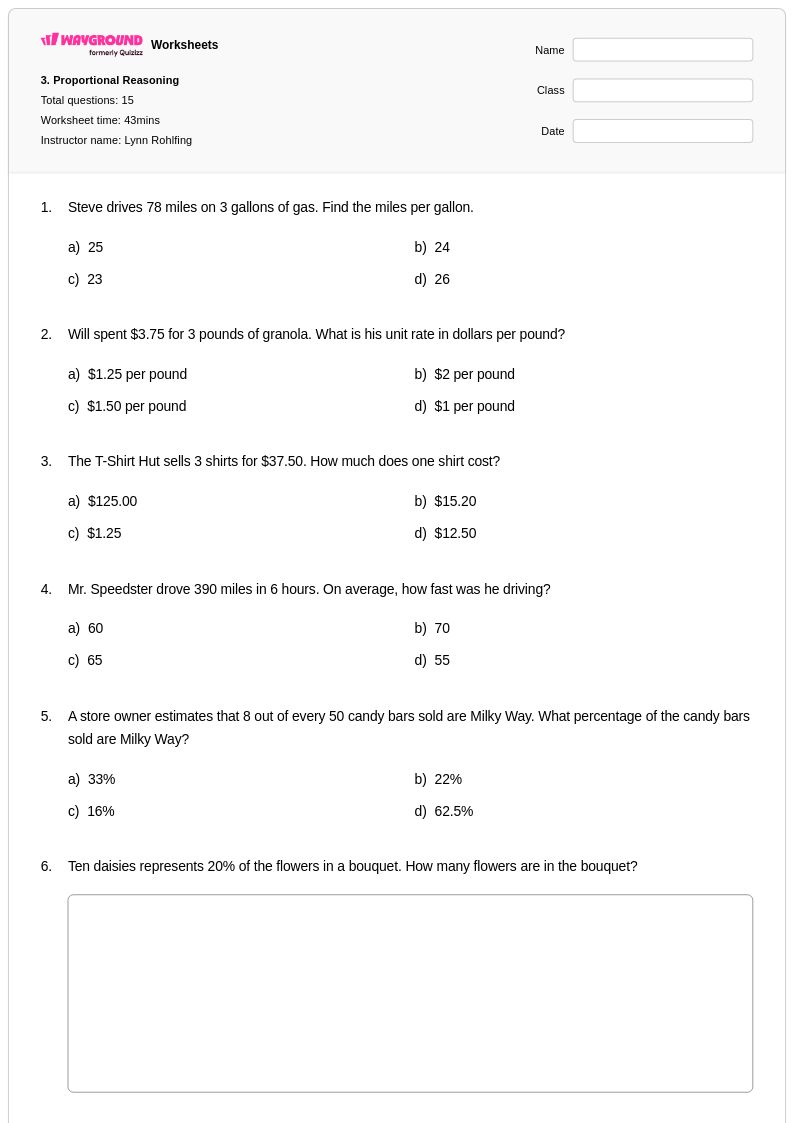
15 T
6th
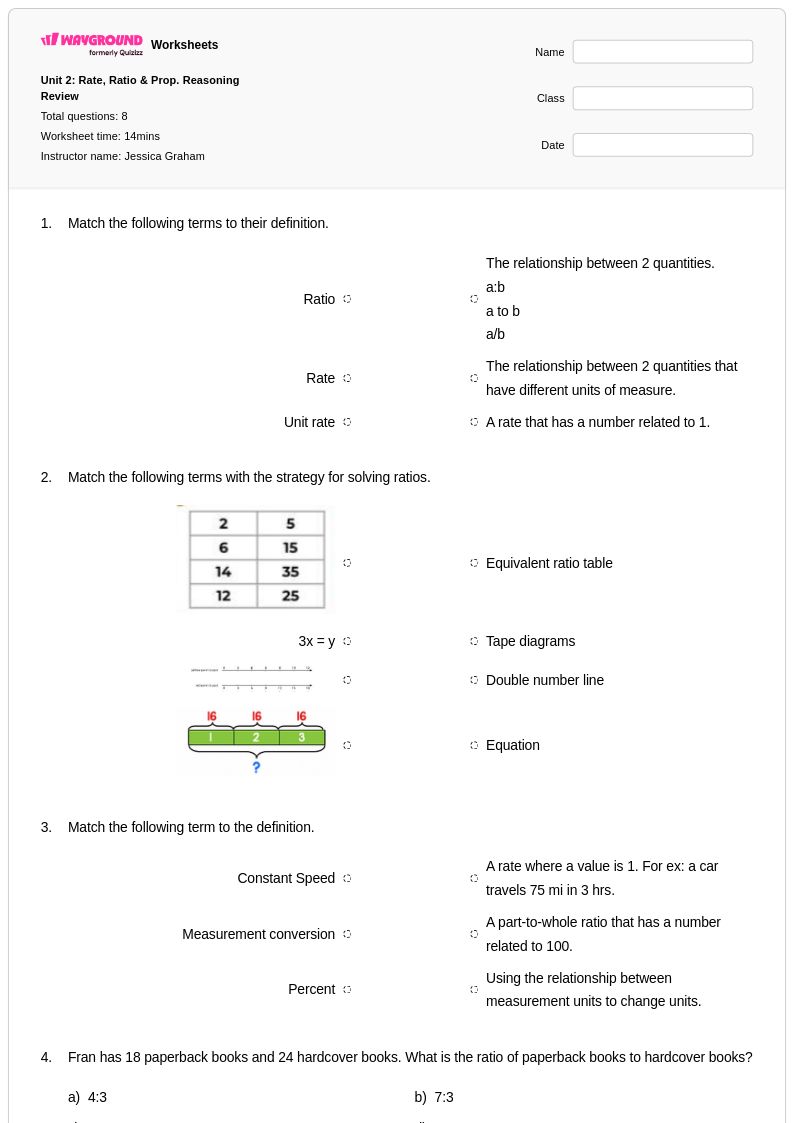
8 T
6th
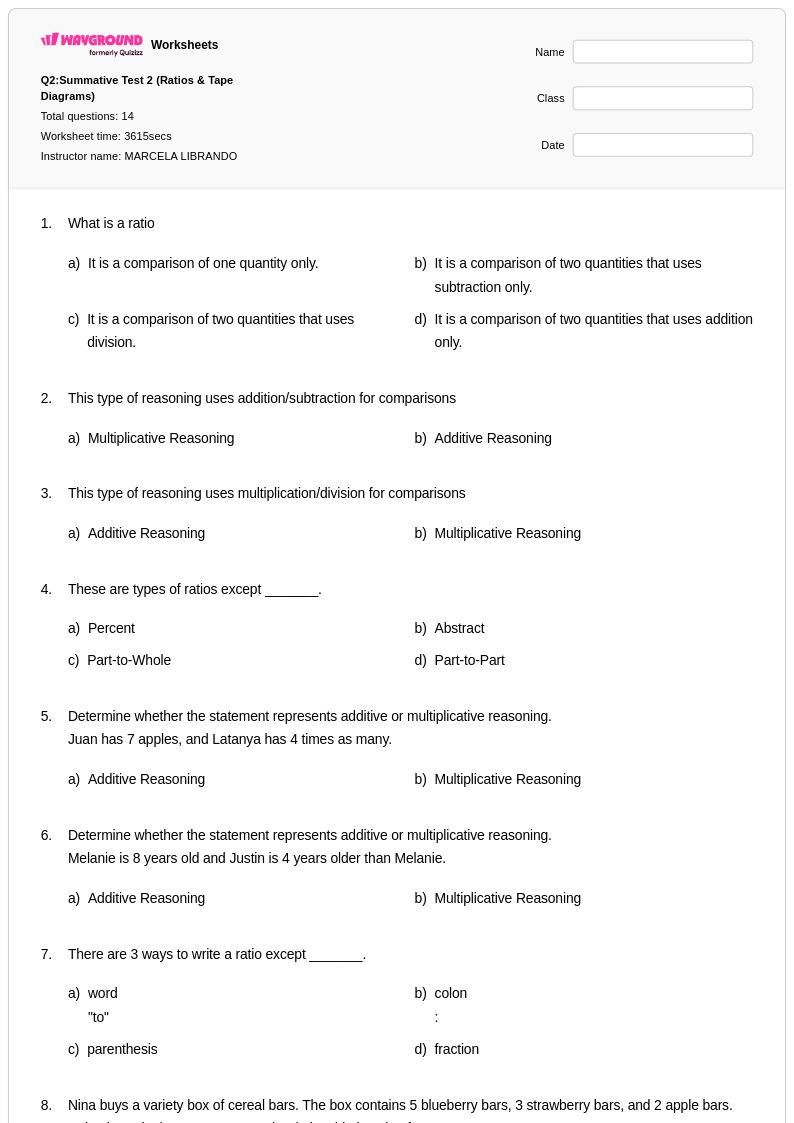
14 T
6th
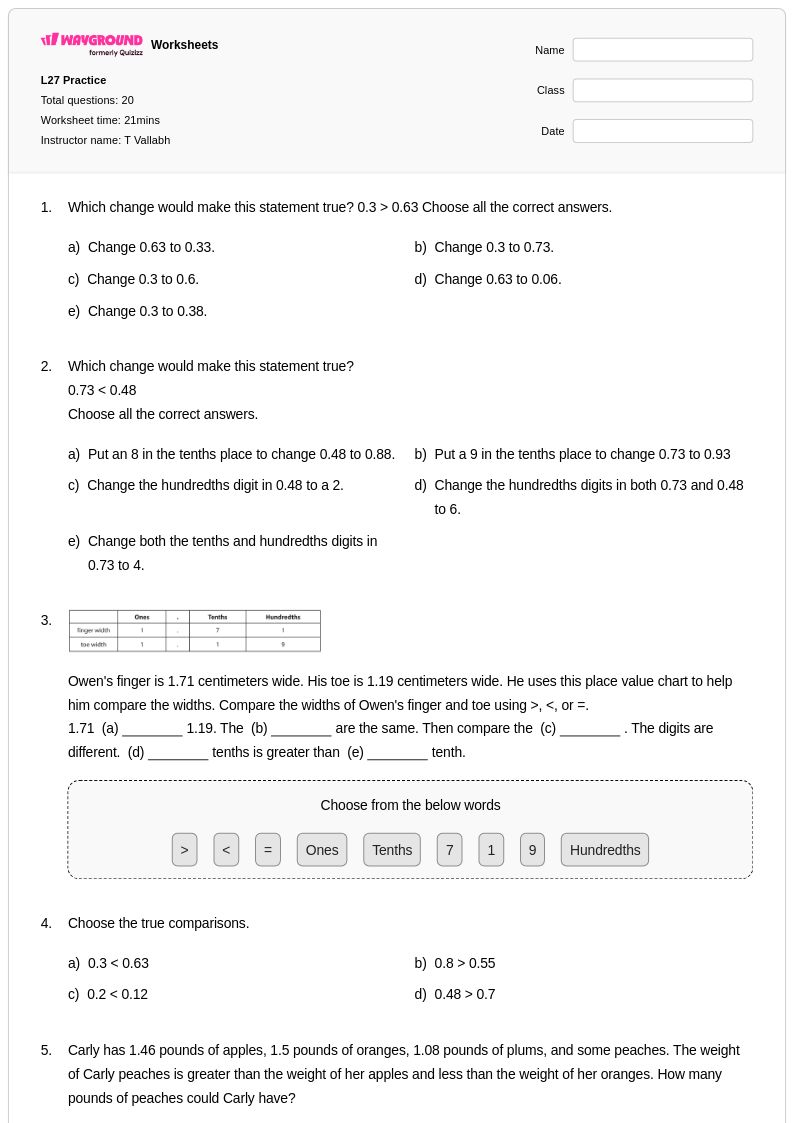
20 T
4th - Uni
Jelajahi Spatial Reasoning Lembar Kerja berdasarkan Nilai
Jelajahi Lembar Kerja Mata Pelajaran Lainnya untuk class 6
Explore printable Spatial Reasoning worksheets for Class 6
Class 6 spatial reasoning worksheets available through Wayground (formerly Quizizz) provide comprehensive practice opportunities for students developing critical three-dimensional thinking skills in mathematics. These carefully designed resources strengthen students' ability to visualize, manipulate, and analyze geometric shapes and their relationships in space, including concepts such as rotation, reflection, translation, and cross-sectional views of solid figures. Each worksheet collection includes detailed answer keys and is available as free printable pdf resources, allowing students to work through practice problems that build foundational skills in mental rotation, perspective taking, and geometric transformation. The exercises progress systematically from basic spatial visualization tasks to more complex problems involving nets of three-dimensional shapes and coordinate plane transformations.
Wayground (formerly Quizizz) supports Class 6 mathematics teachers with an extensive library of millions of teacher-created spatial reasoning resources that can be easily searched and filtered by specific skill areas and learning objectives. The platform's robust differentiation tools enable educators to customize worksheets based on individual student needs, offering multiple difficulty levels and problem types within the same spatial reasoning concept. Teachers benefit from standards-aligned content that seamlessly integrates with curriculum requirements, while the flexible format options allow resources to be used both as printable pdf worksheets for traditional classroom work and digital assignments for technology-enhanced learning environments. This comprehensive approach facilitates effective lesson planning, targeted remediation for struggling learners, enrichment opportunities for advanced students, and consistent skill practice that builds spatial reasoning competency throughout the academic year.