
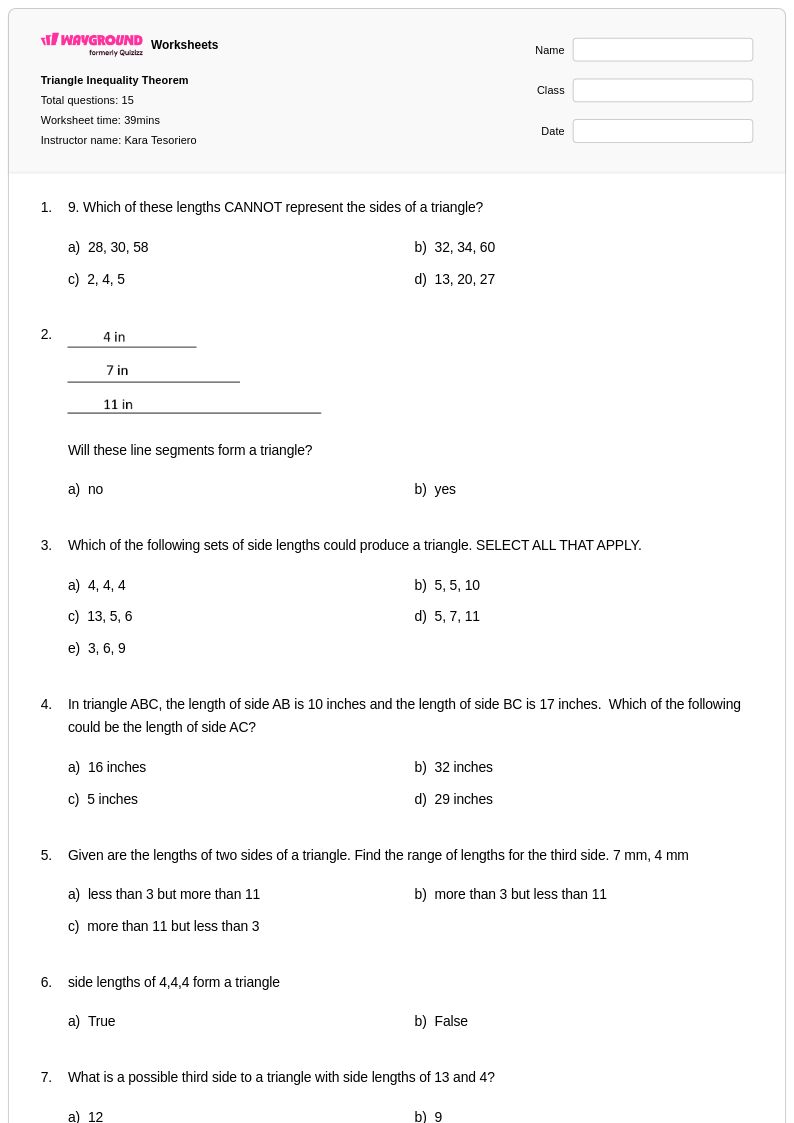
15 Q
6th - 8th
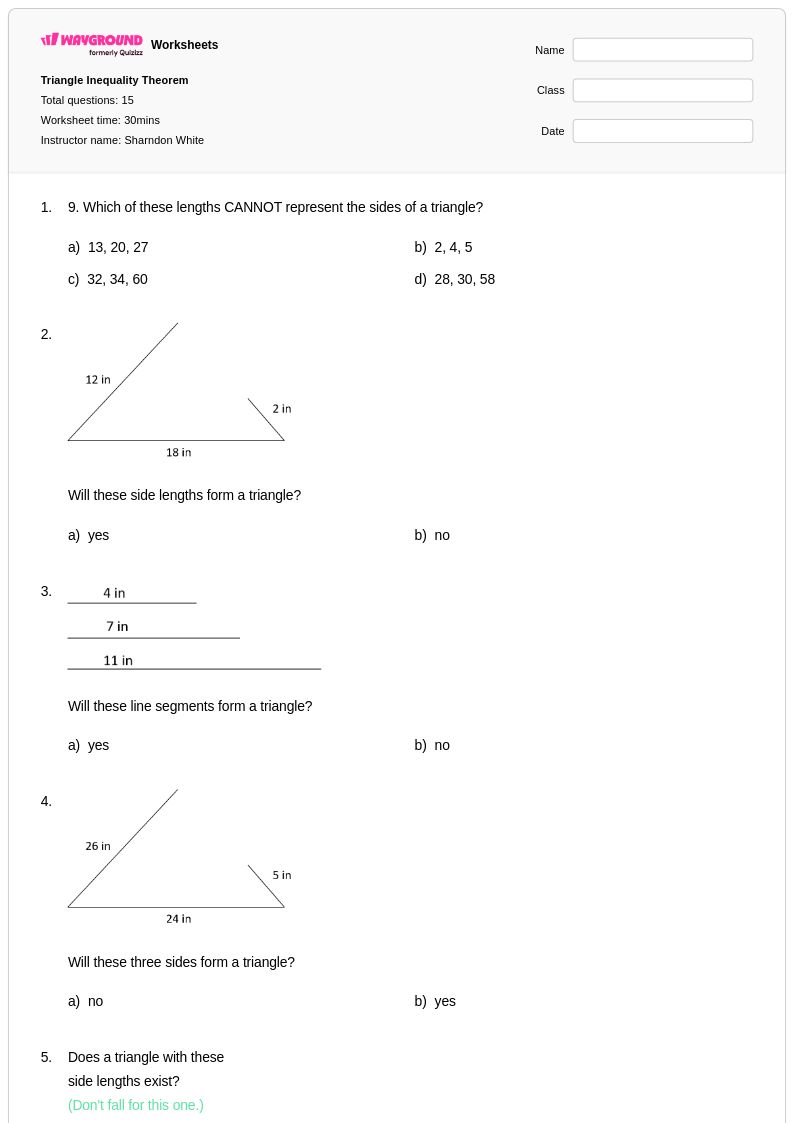
15 Q
6th
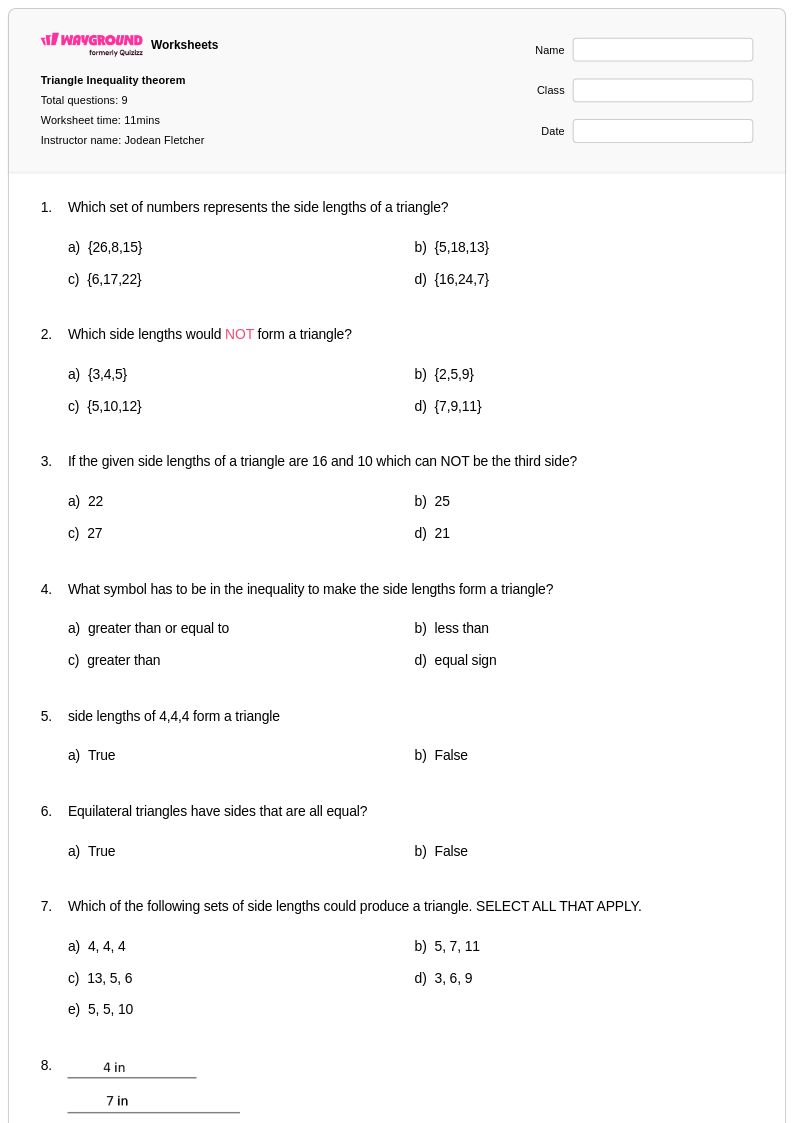
9 Q
6th - 7th
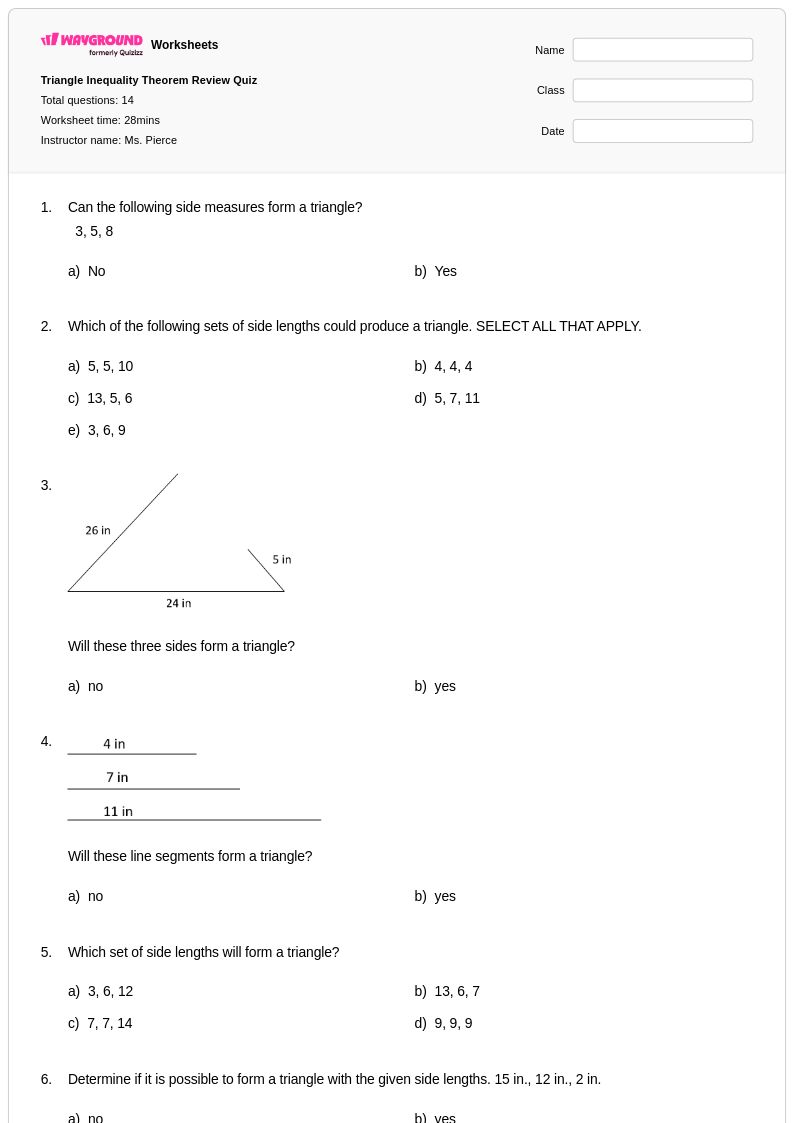
14 Q
6th
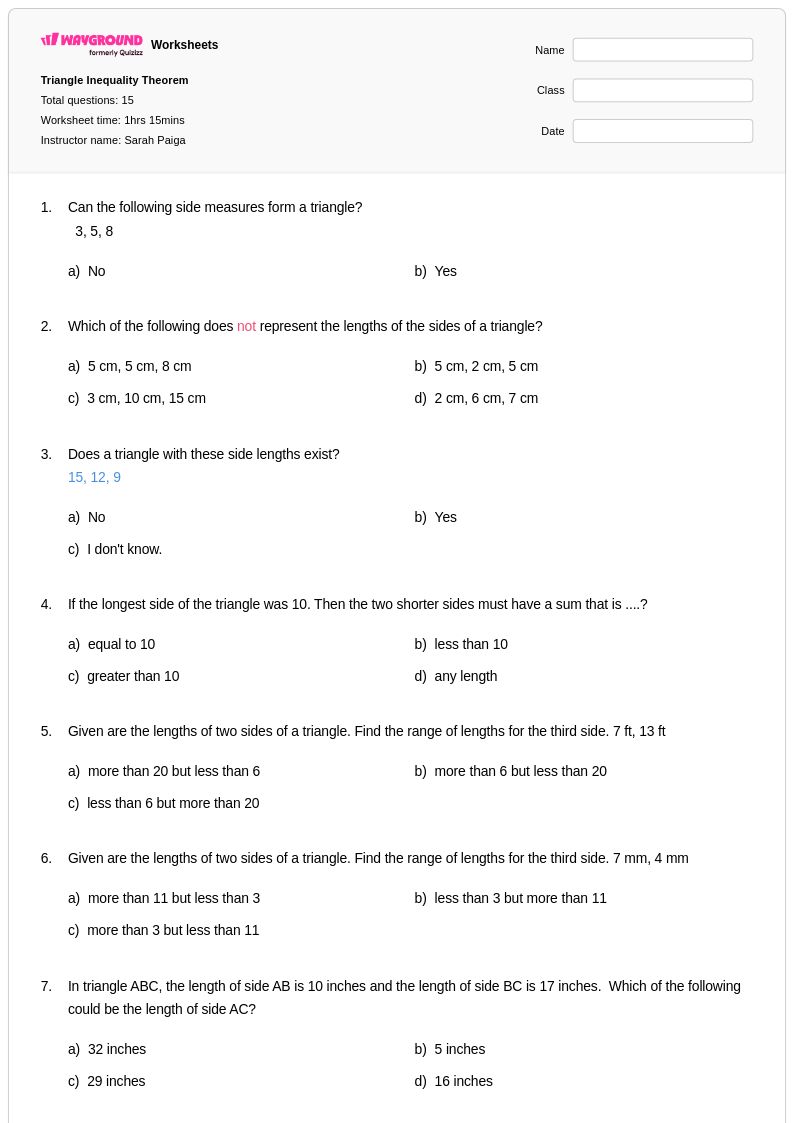
15 Q
6th
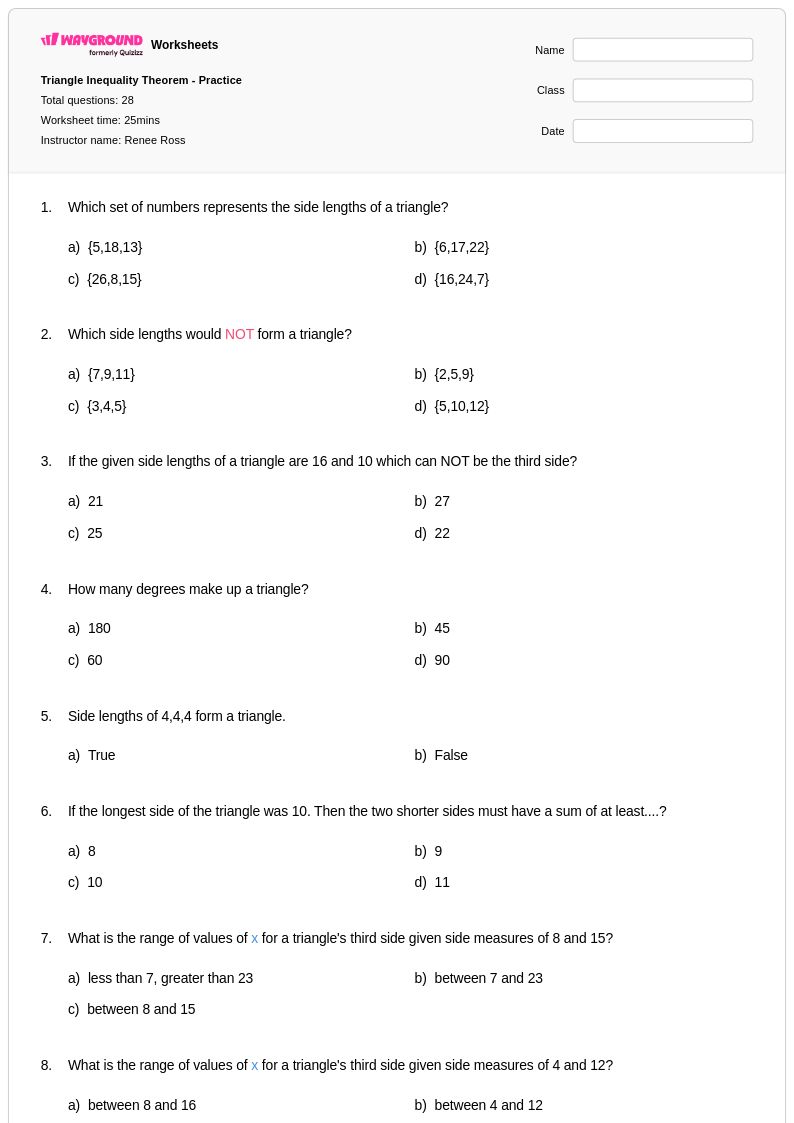
28 Q
6th - 8th
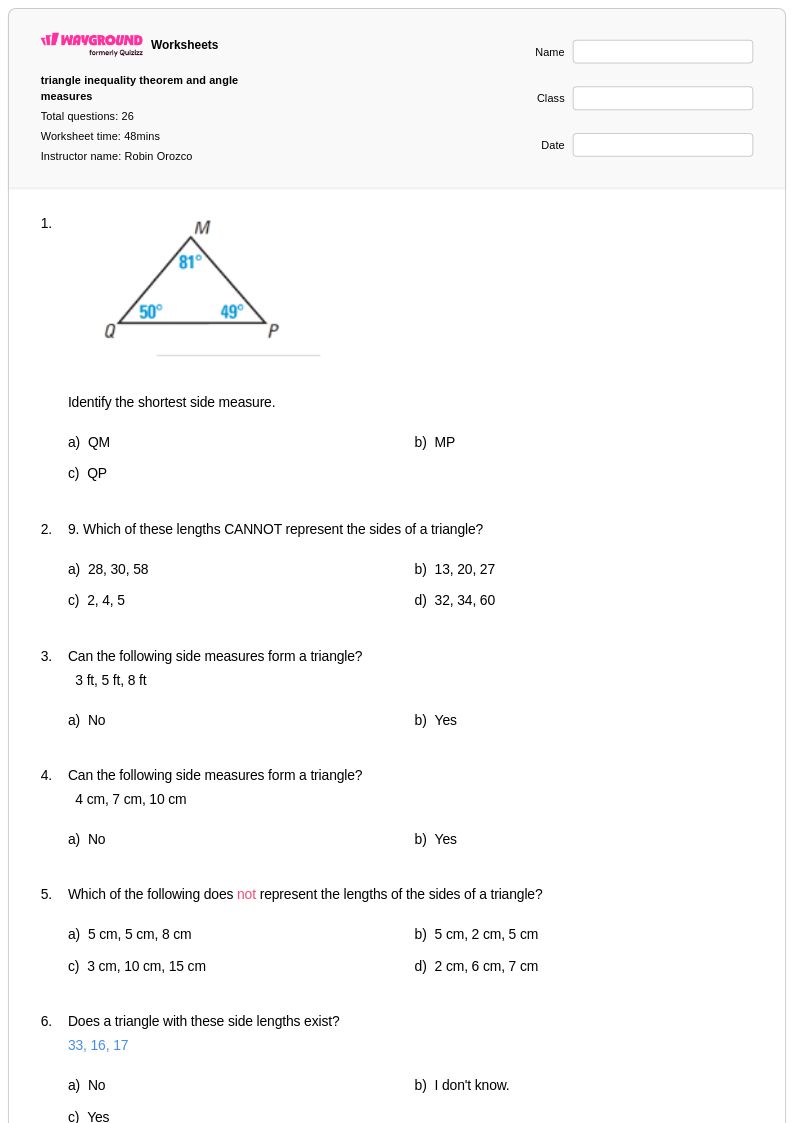
26 Q
6th
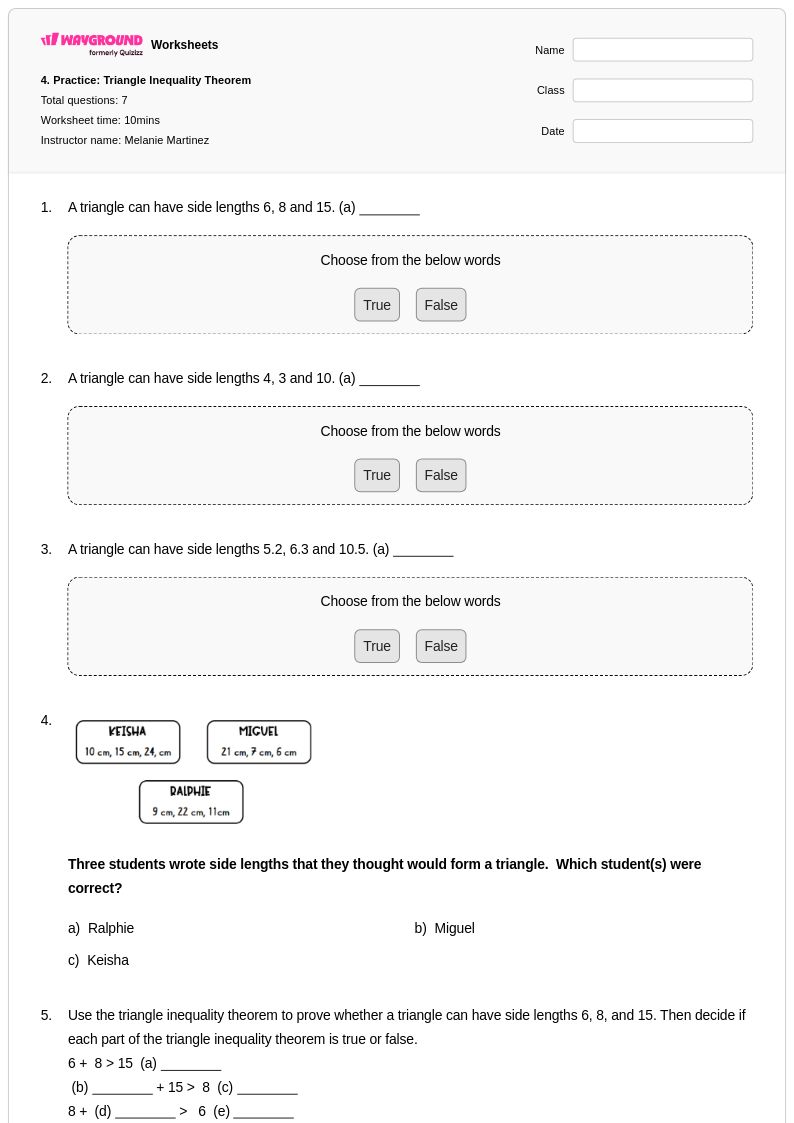
7 Q
6th
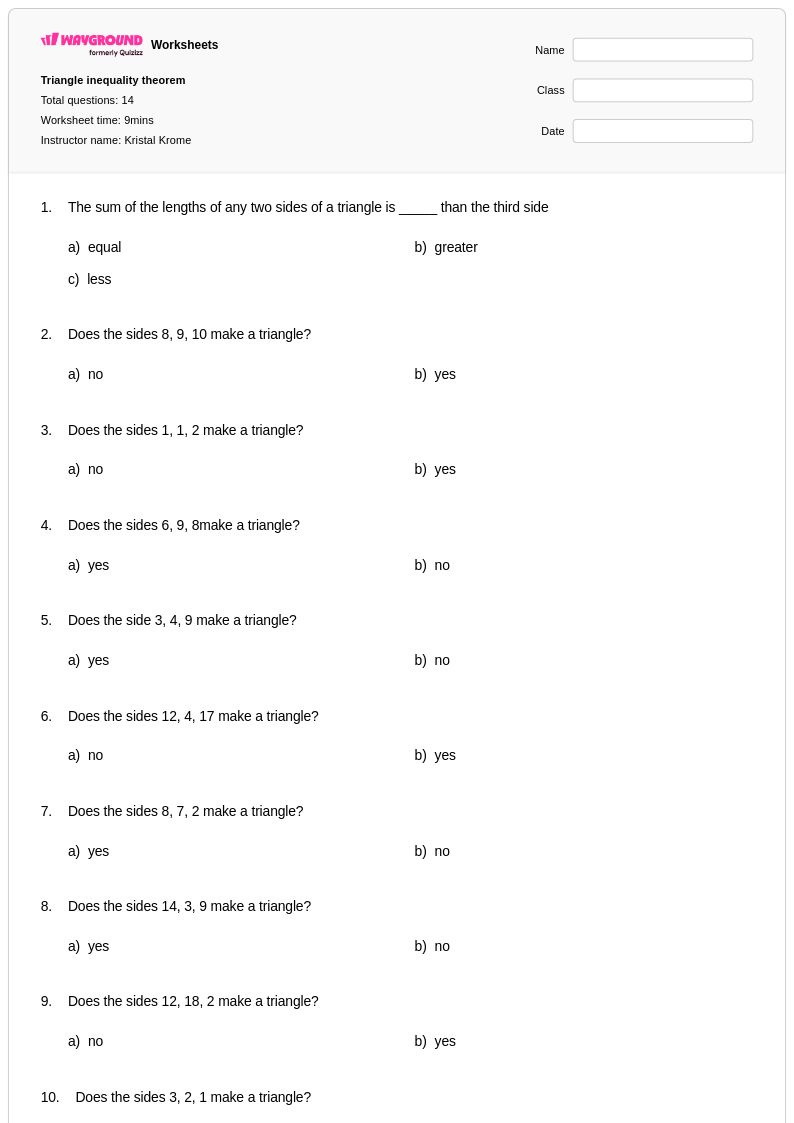
14 Q
6th
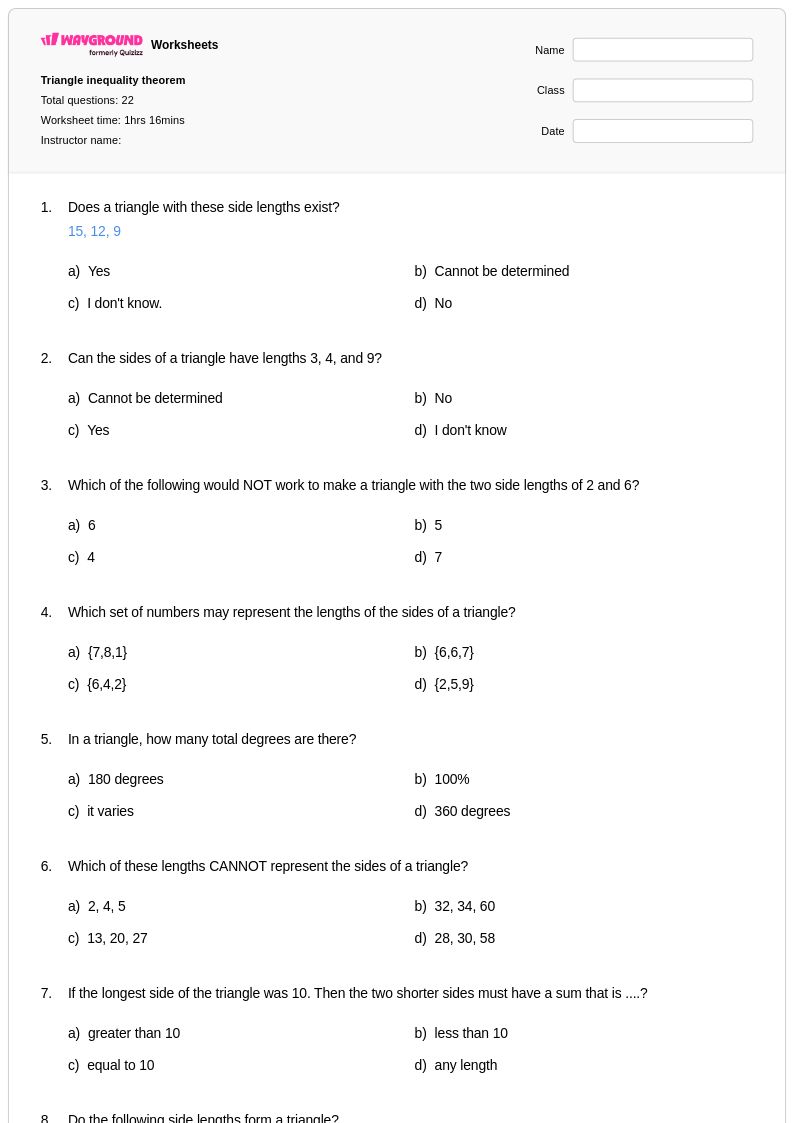
22 Q
6th
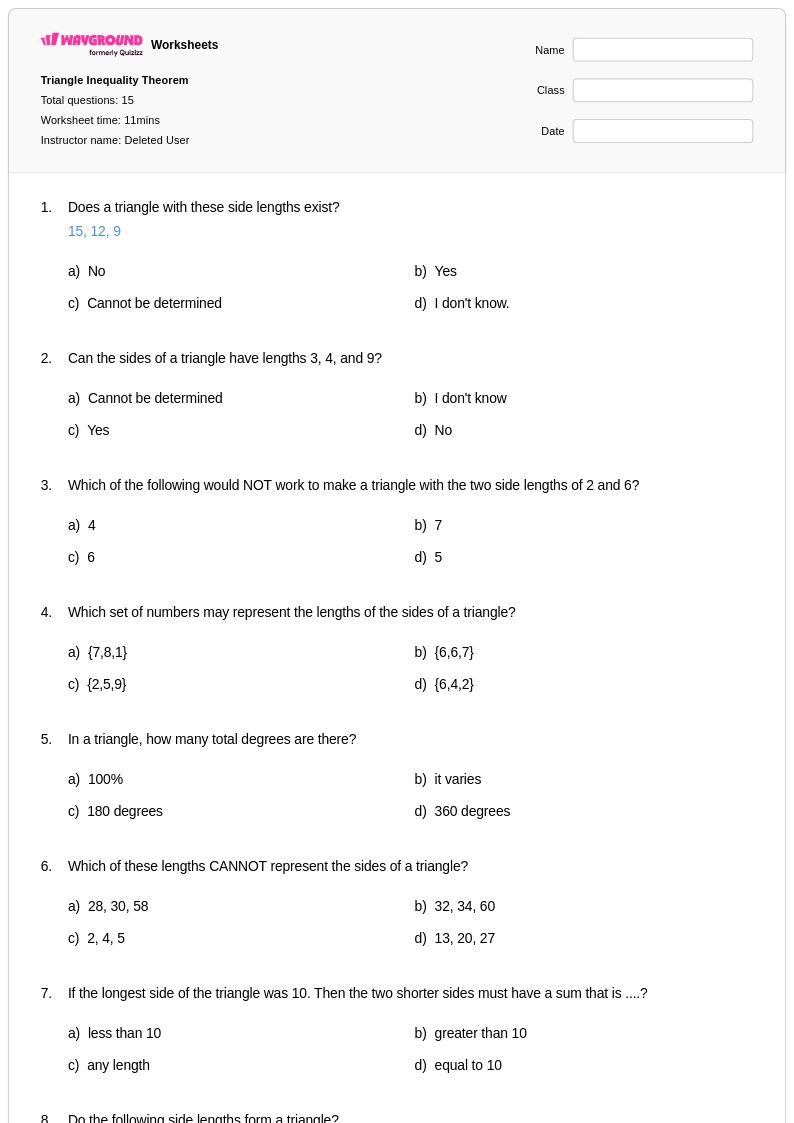
15 Q
6th
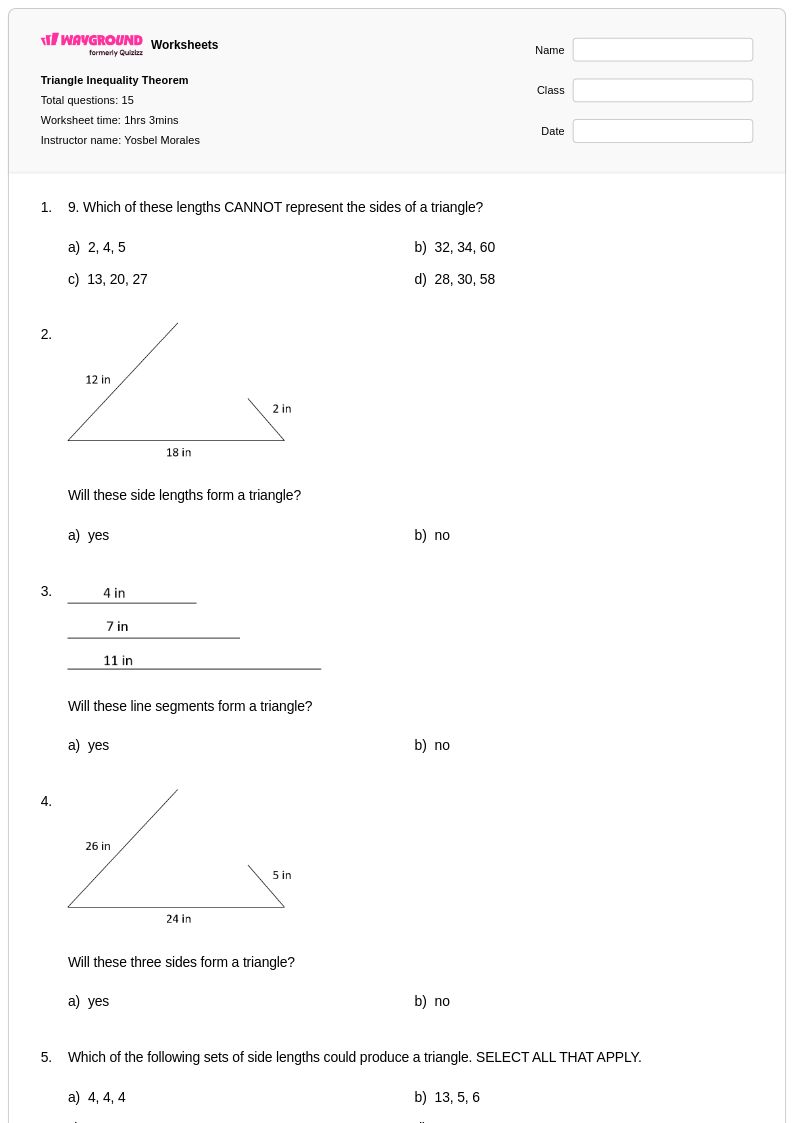
15 Q
6th - 8th
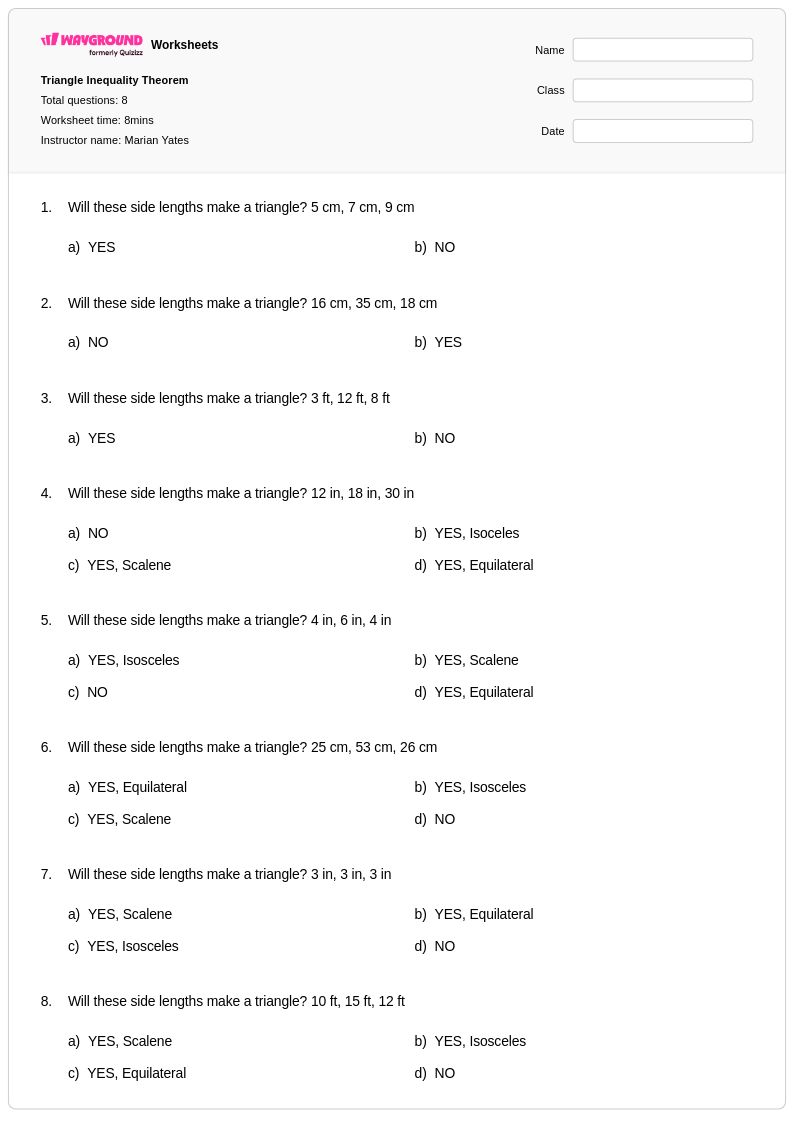
8 Q
6th - 7th
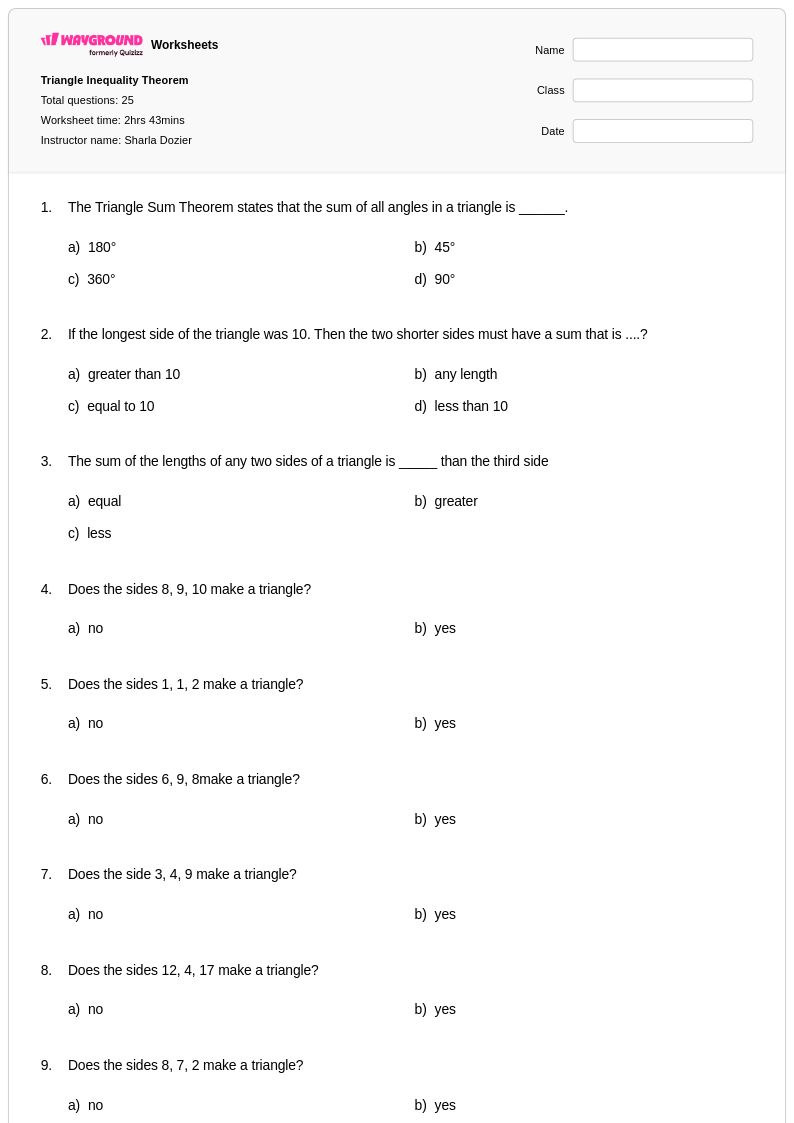
25 Q
6th - 8th
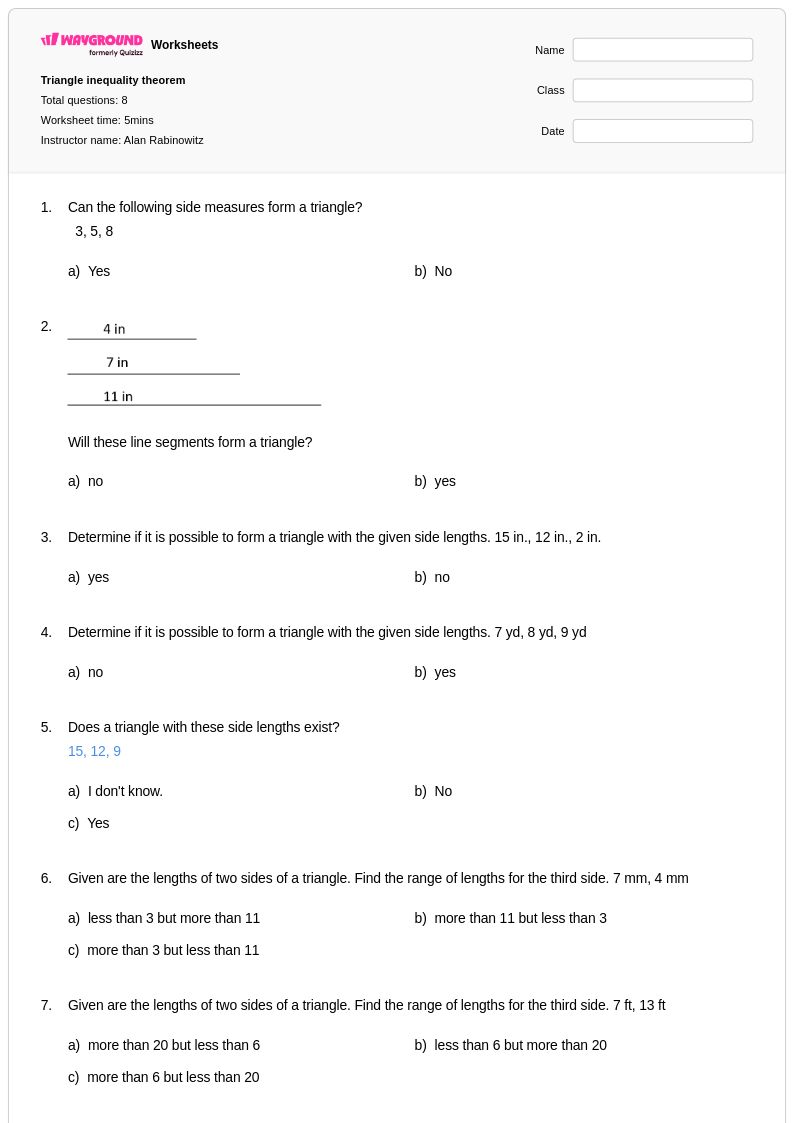
8 Q
6th - Uni
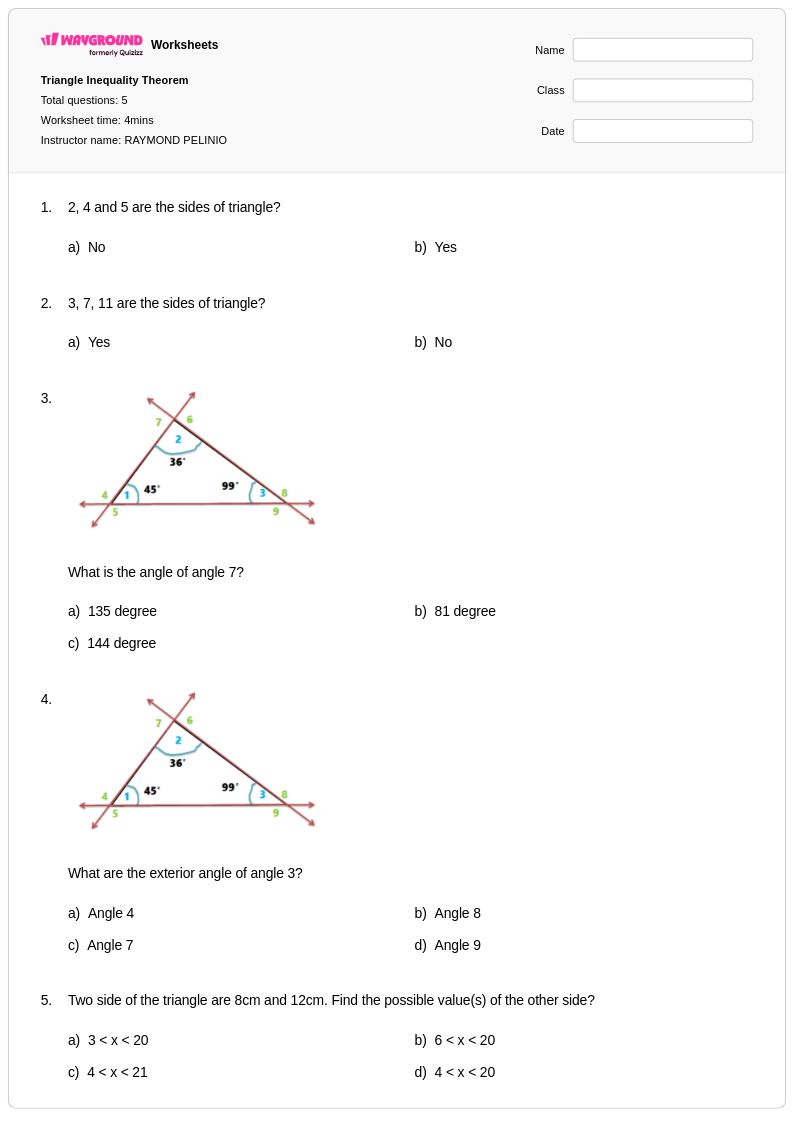
5 Q
1st - 12th
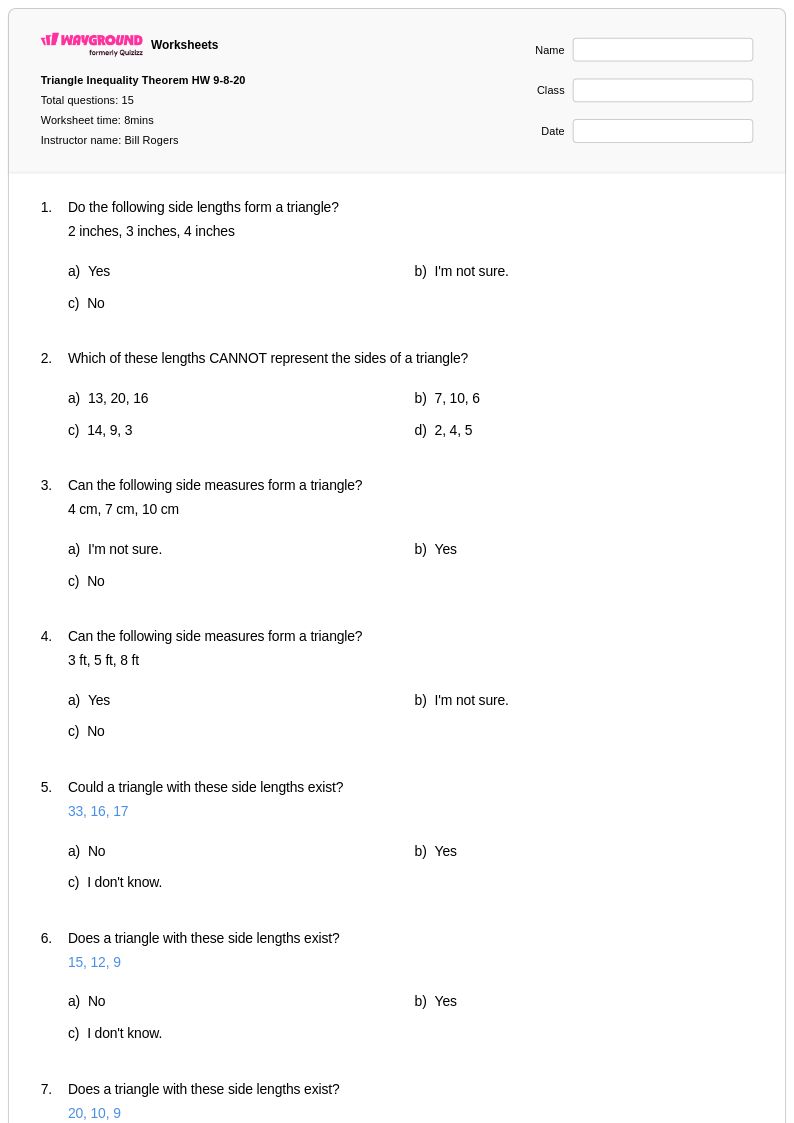
15 Q
6th - 7th
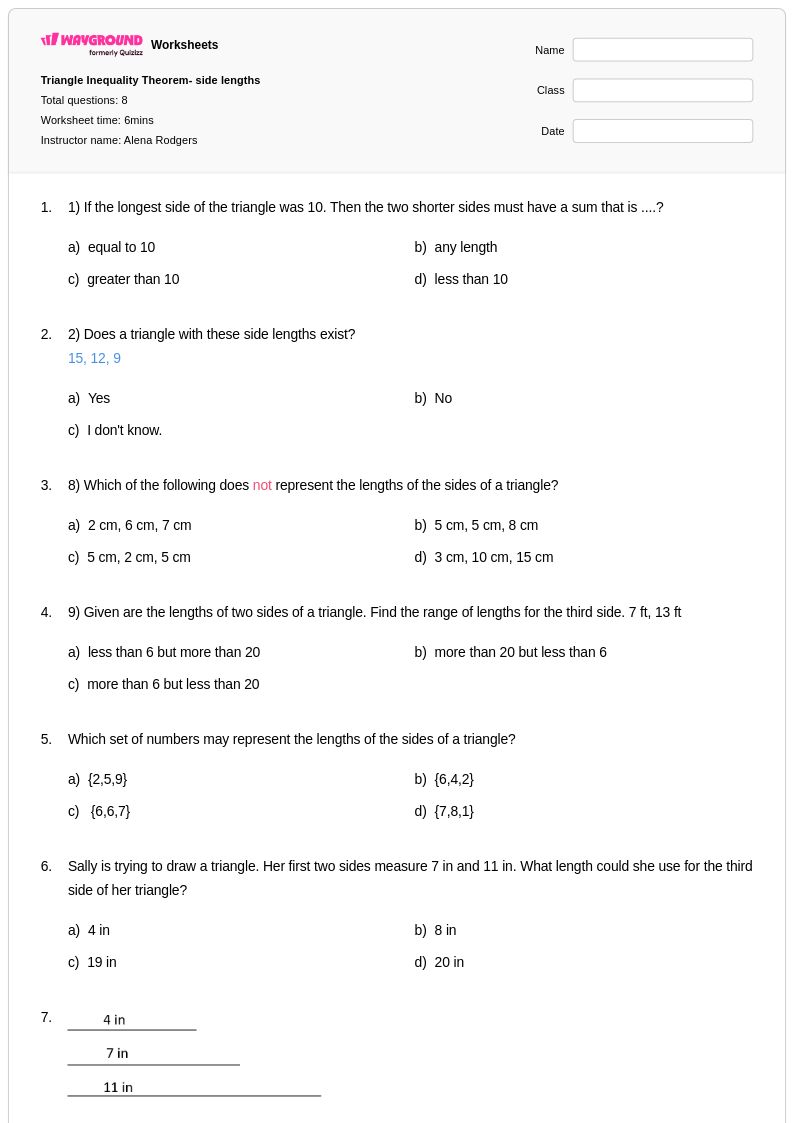
8 Q
6th - 8th
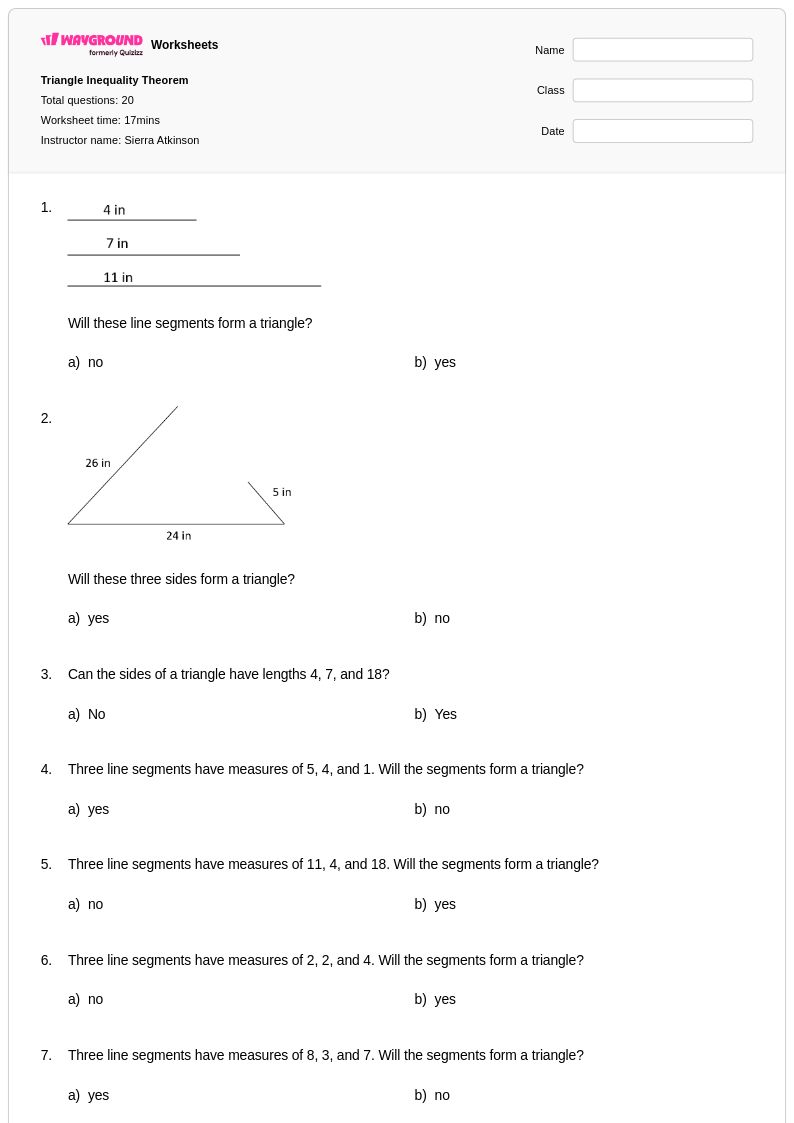
20 Q
6th
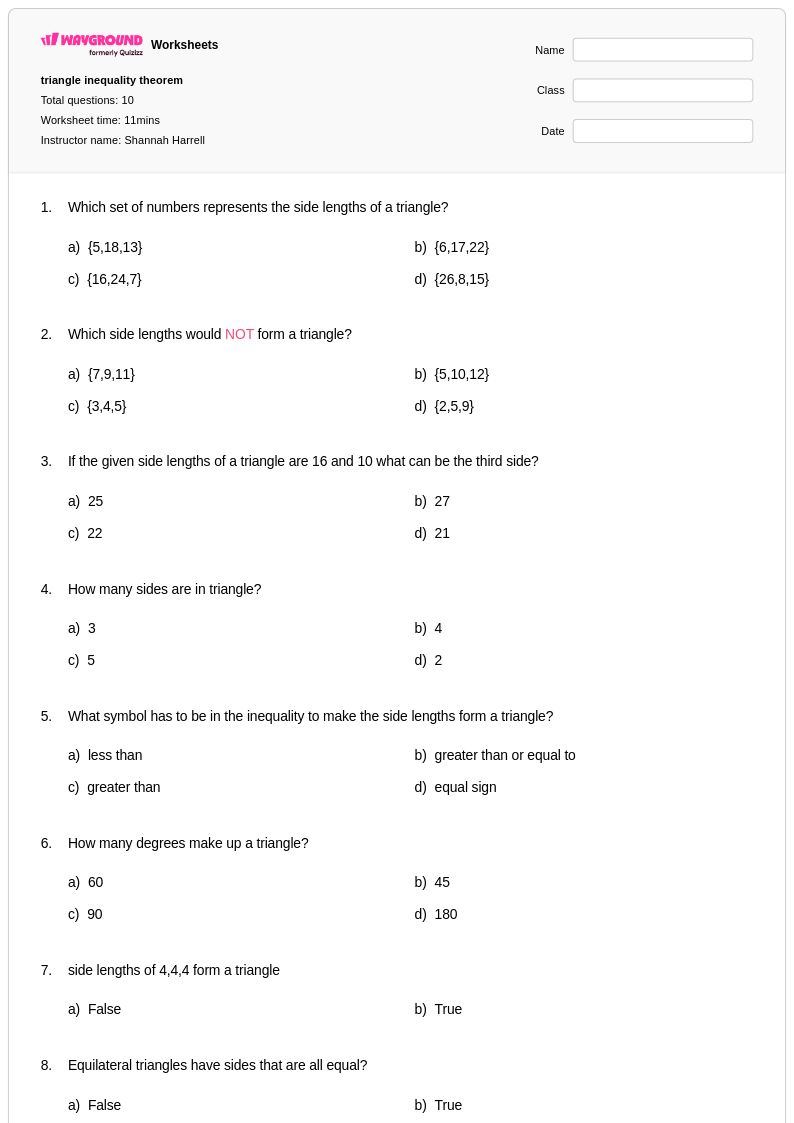
10 Q
6th
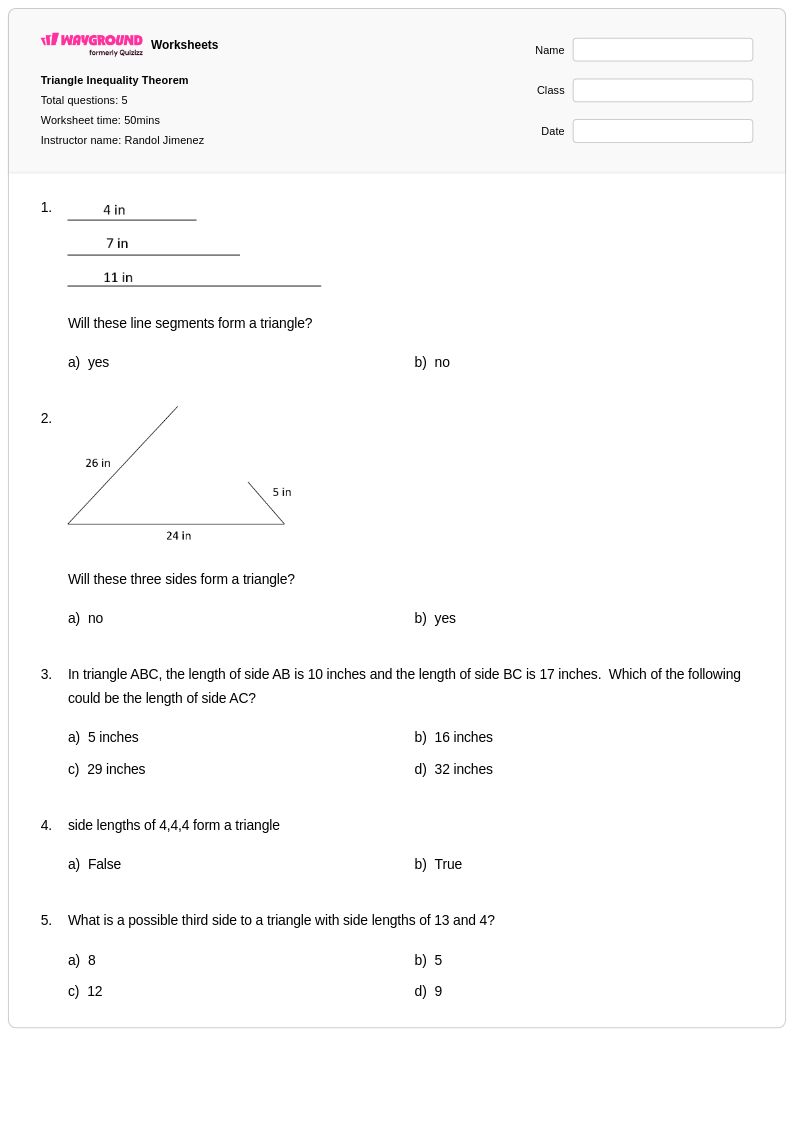
5 Q
6th - 8th
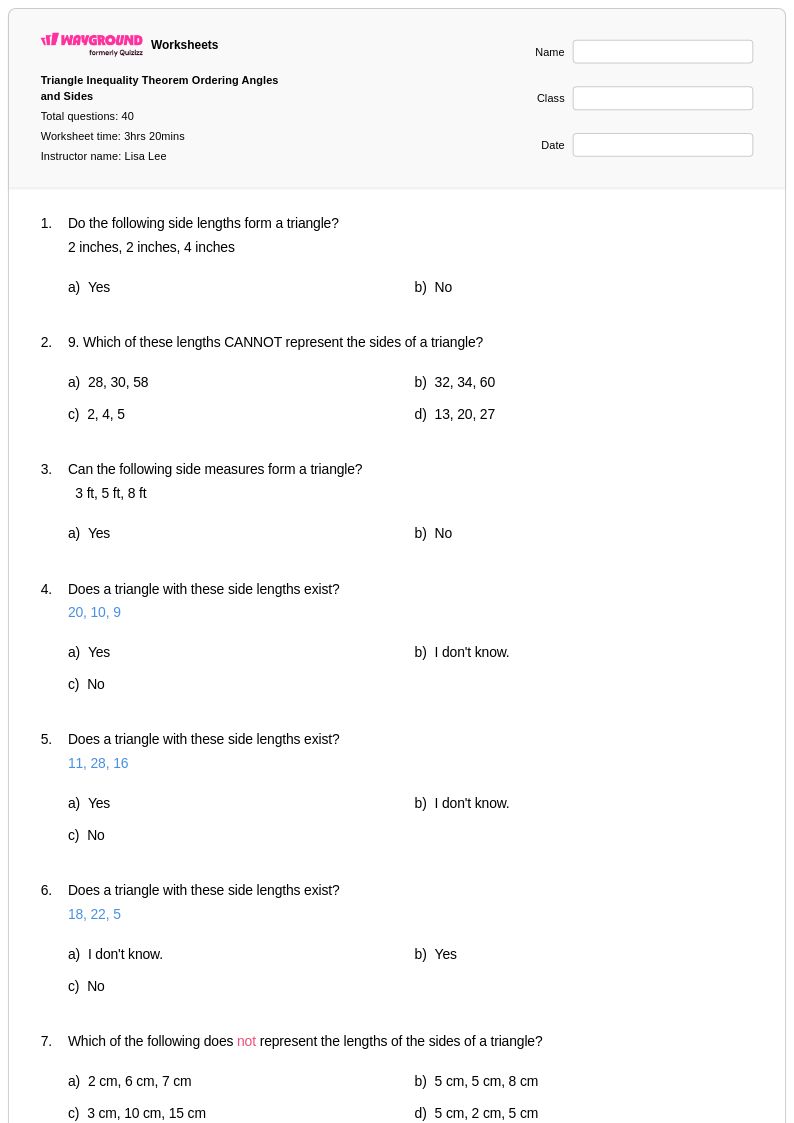
40 Q
6th - 7th
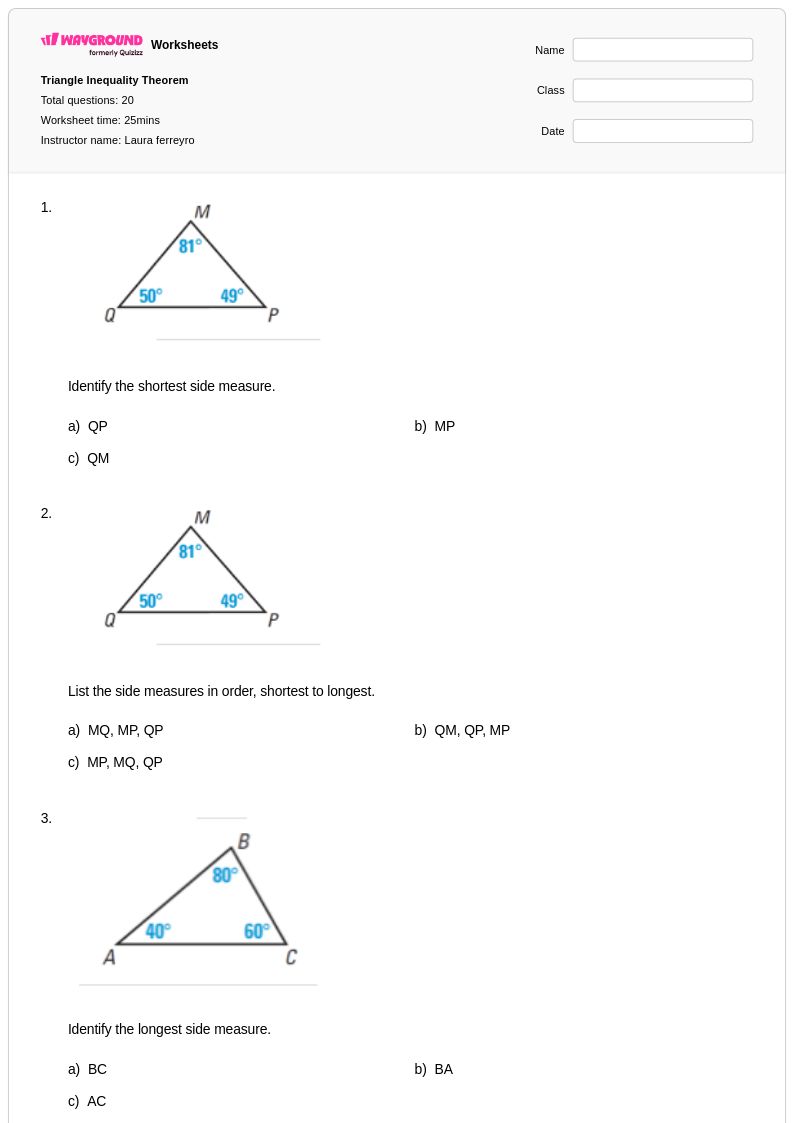
20 Q
6th
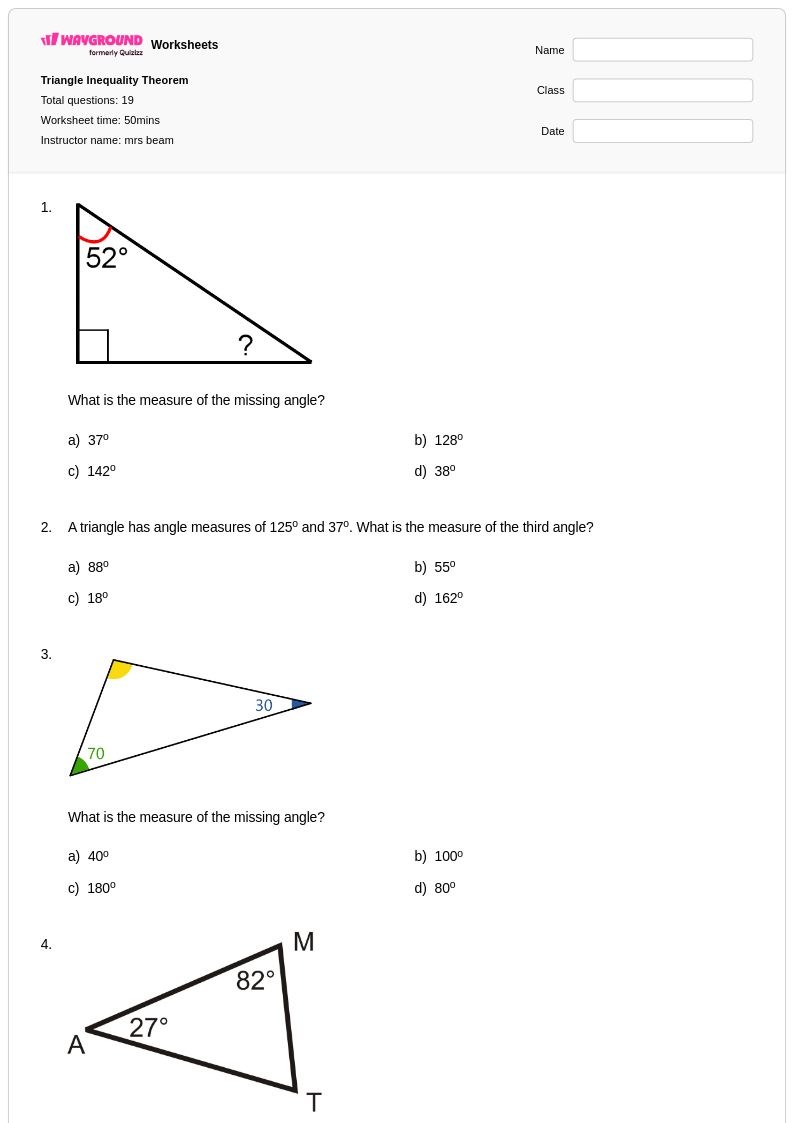
19 Q
6th
Explore Triangle Inequality Theorem Worksheets by Grades
Explore Other Subject Worksheets for class 6
Explore printable Triangle Inequality Theorem worksheets for Class 6
Triangle Inequality Theorem worksheets for Class 6 mathematics provide students with essential practice in understanding one of geometry's fundamental principles. These comprehensive worksheet collections through Wayground (formerly Quizizz) focus on helping sixth-grade students master the concept that the sum of any two sides of a triangle must be greater than the third side. Students work through carefully structured practice problems that build their ability to determine whether three given side lengths can form a valid triangle, analyze geometric relationships, and apply logical reasoning to triangle construction scenarios. Each worksheet includes detailed answer keys and is available as free printables in PDF format, making it easy for educators to incorporate this critical geometric concept into their lesson plans and provide targeted skill reinforcement.
Wayground (formerly Quizizz) empowers teachers with millions of educator-created Triangle Inequality Theorem resources that streamline lesson planning and enhance student learning outcomes. The platform's robust search and filtering capabilities allow instructors to quickly locate grade-appropriate materials that align with mathematics standards and curriculum requirements. Teachers can easily differentiate instruction by selecting from various difficulty levels and problem types, then customize worksheets to meet specific classroom needs or individual student requirements. These versatile resources are available in both printable and digital formats, including downloadable PDFs, enabling seamless integration into traditional classroom instruction, homework assignments, remediation sessions, and enrichment activities that strengthen students' geometric reasoning and problem-solving abilities.