Free Printable Homeostasis Worksheets for Class 12
Explore Class 12 homeostasis worksheets and printables that help students master biological regulation mechanisms through comprehensive practice problems, free PDF resources, and detailed answer keys.
Explore printable Homeostasis worksheets for Class 12
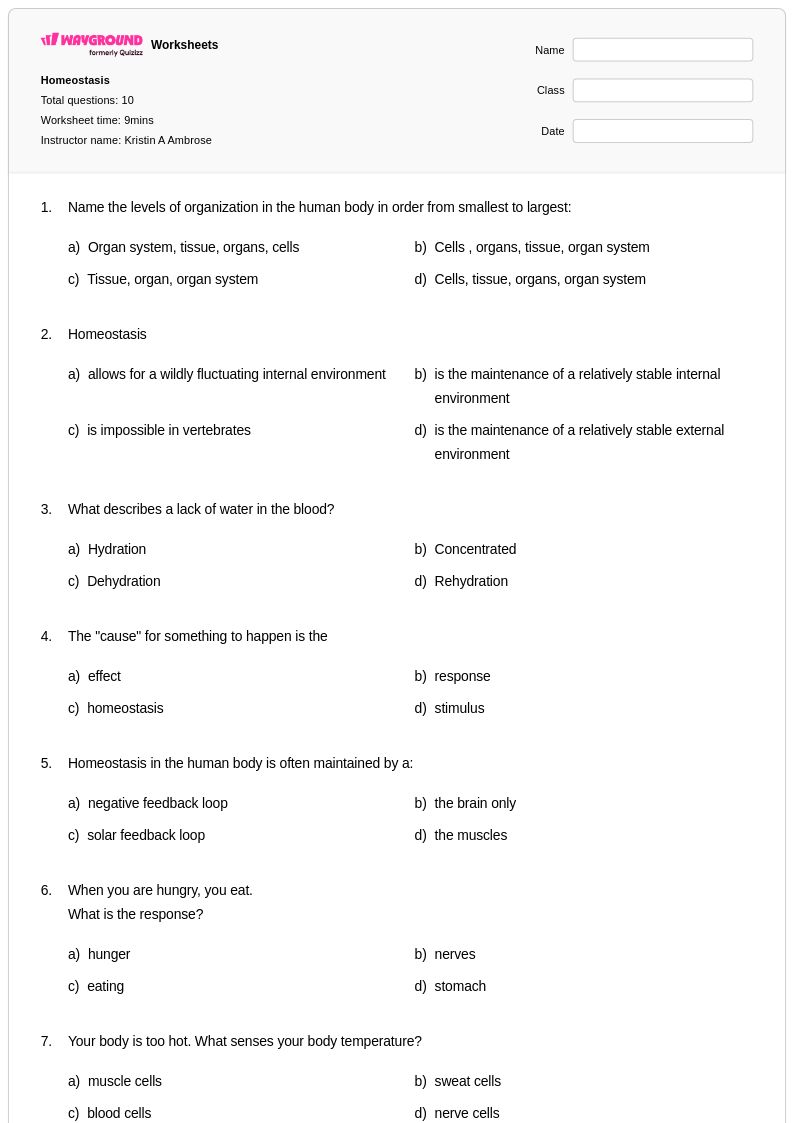
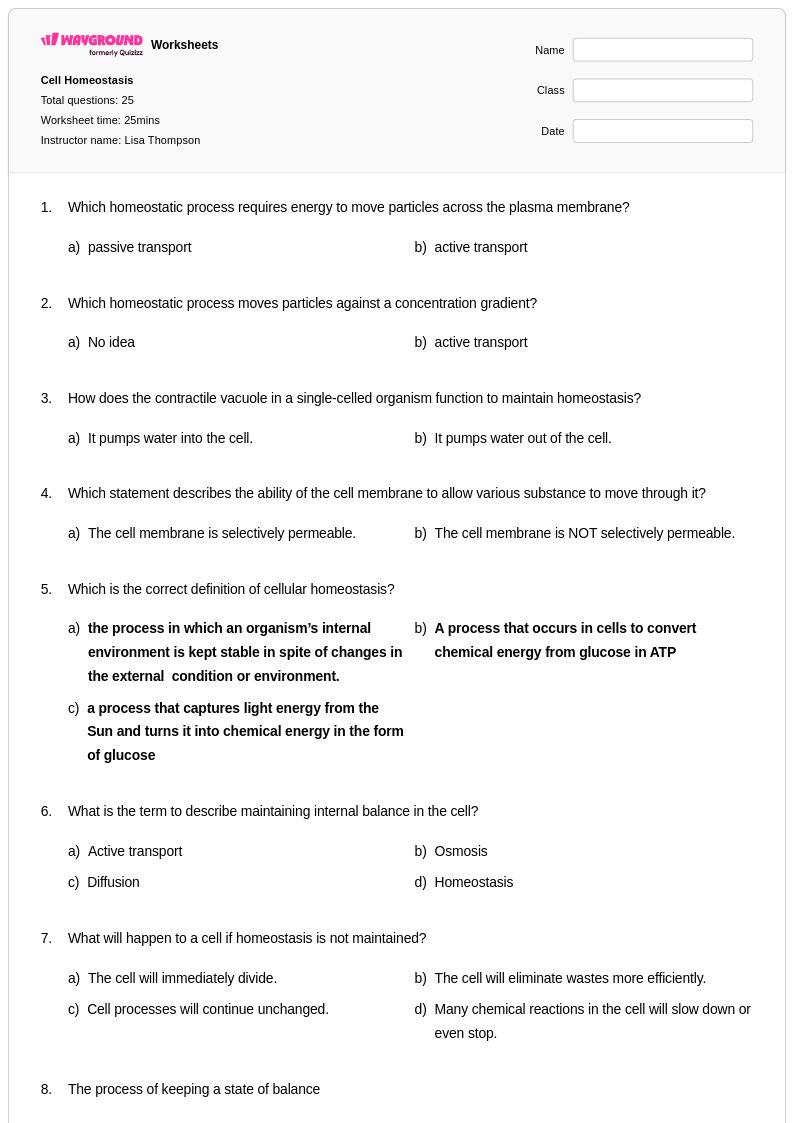
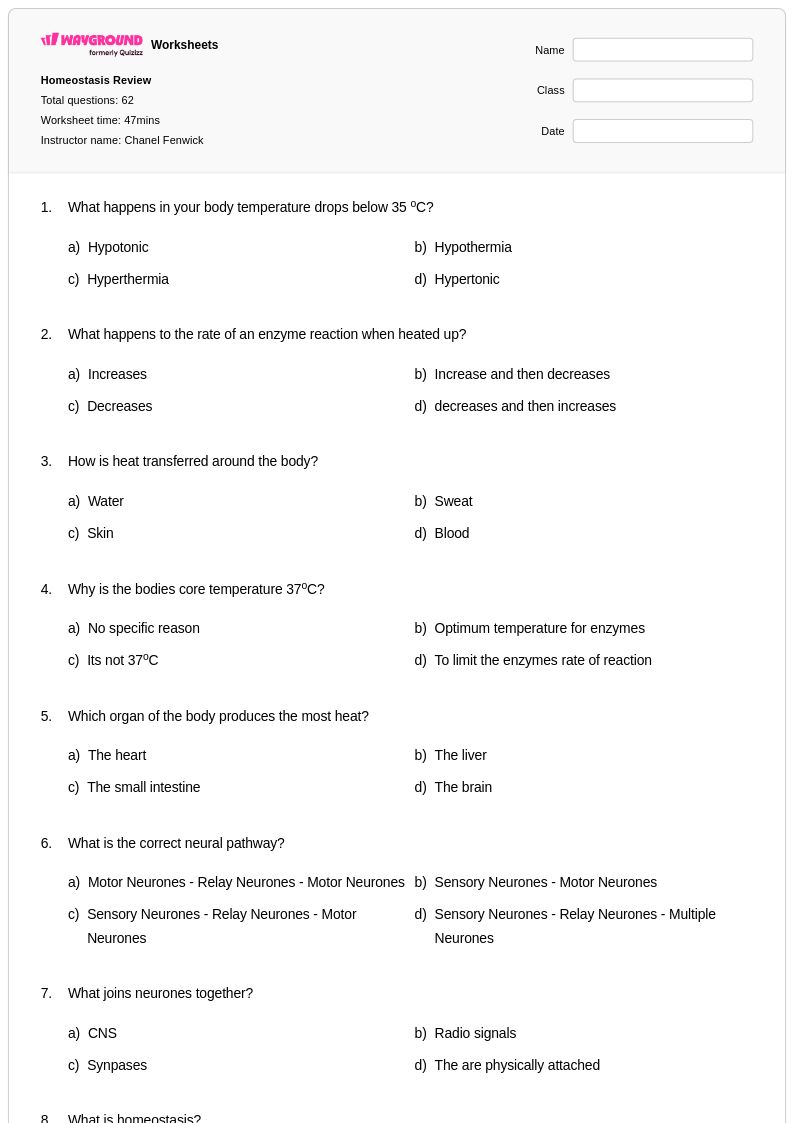
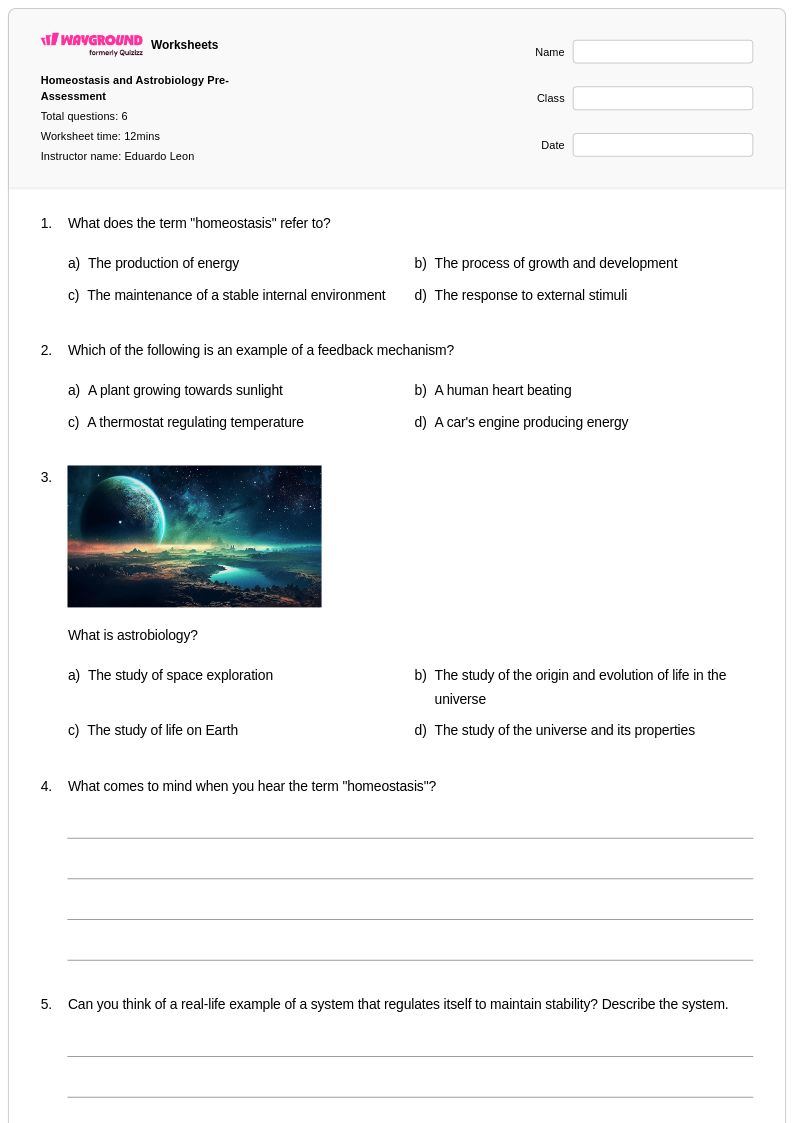
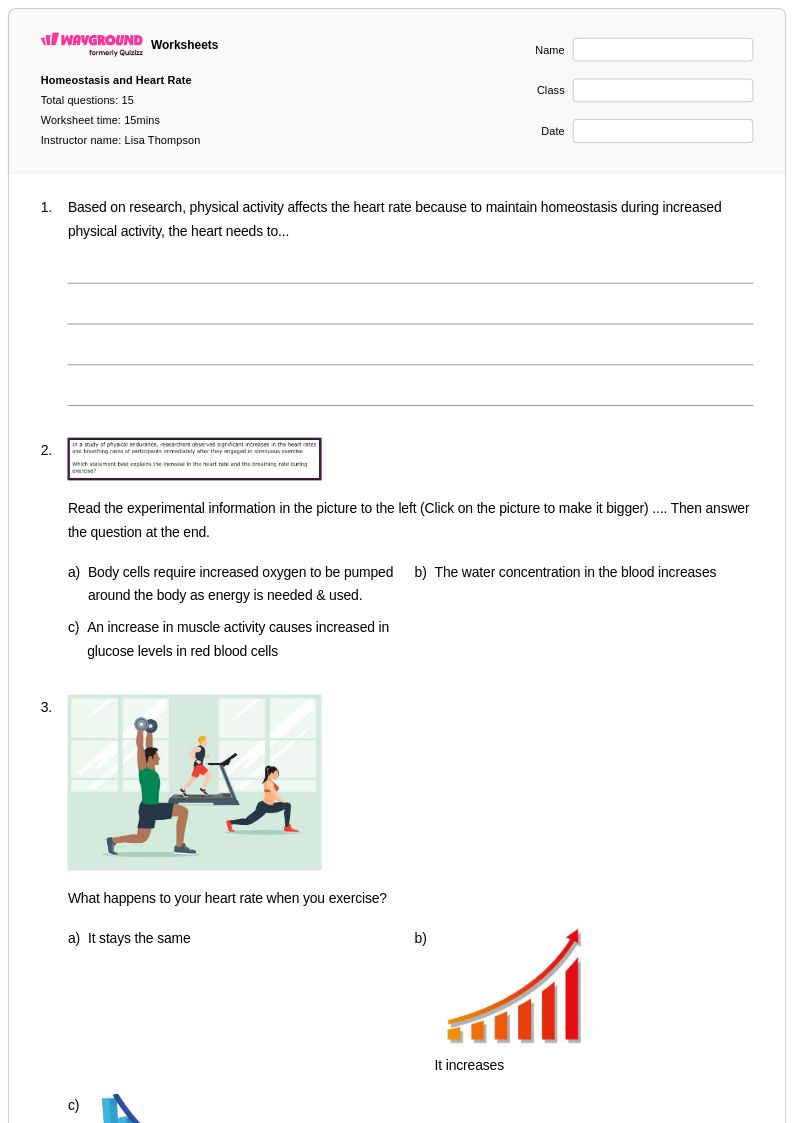
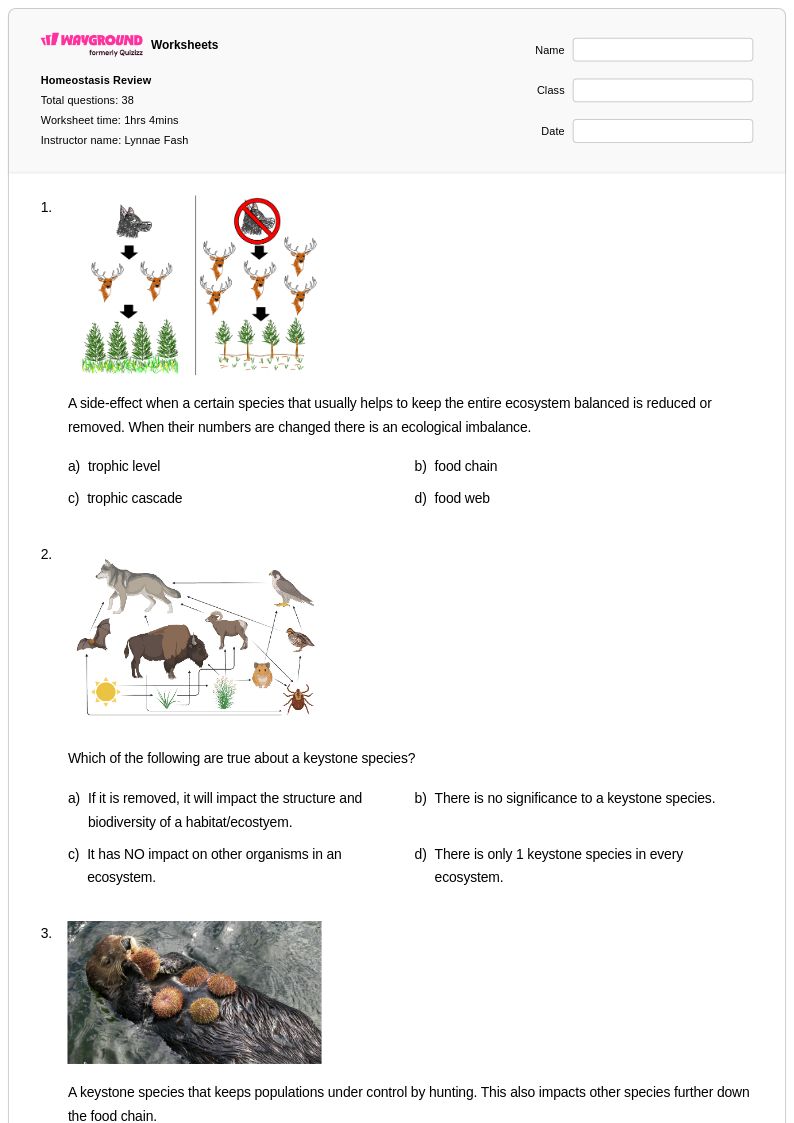
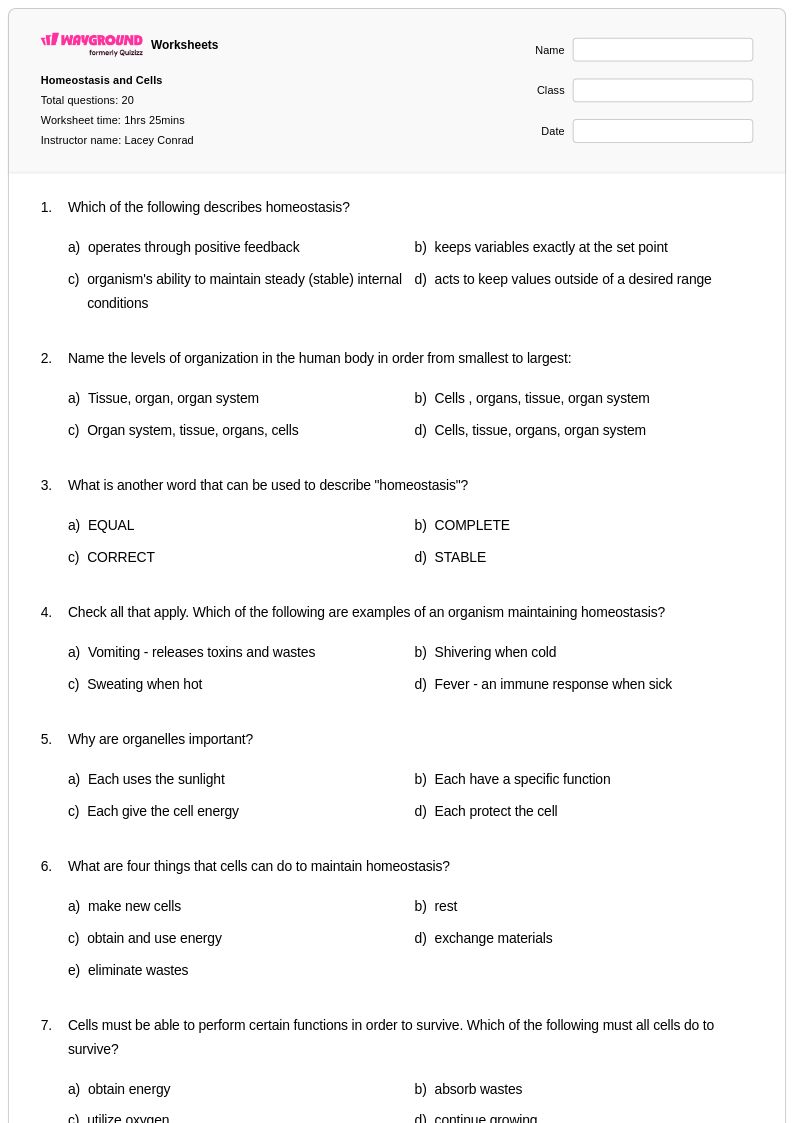
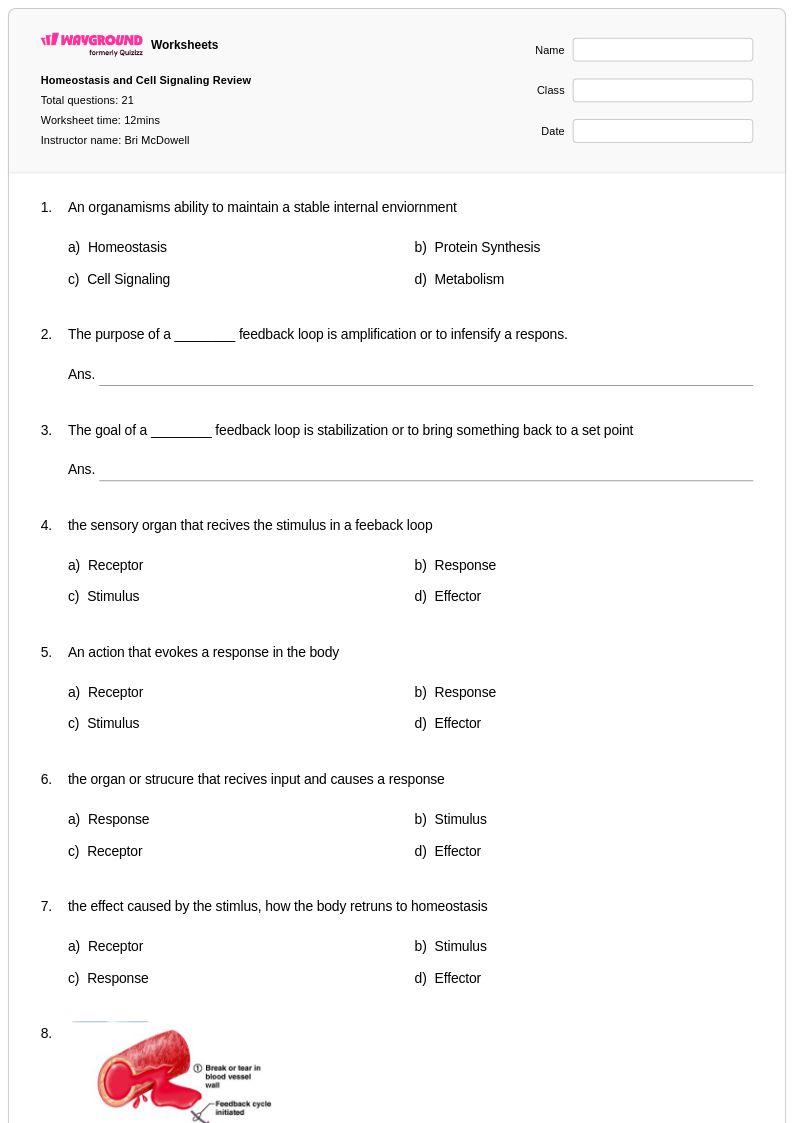
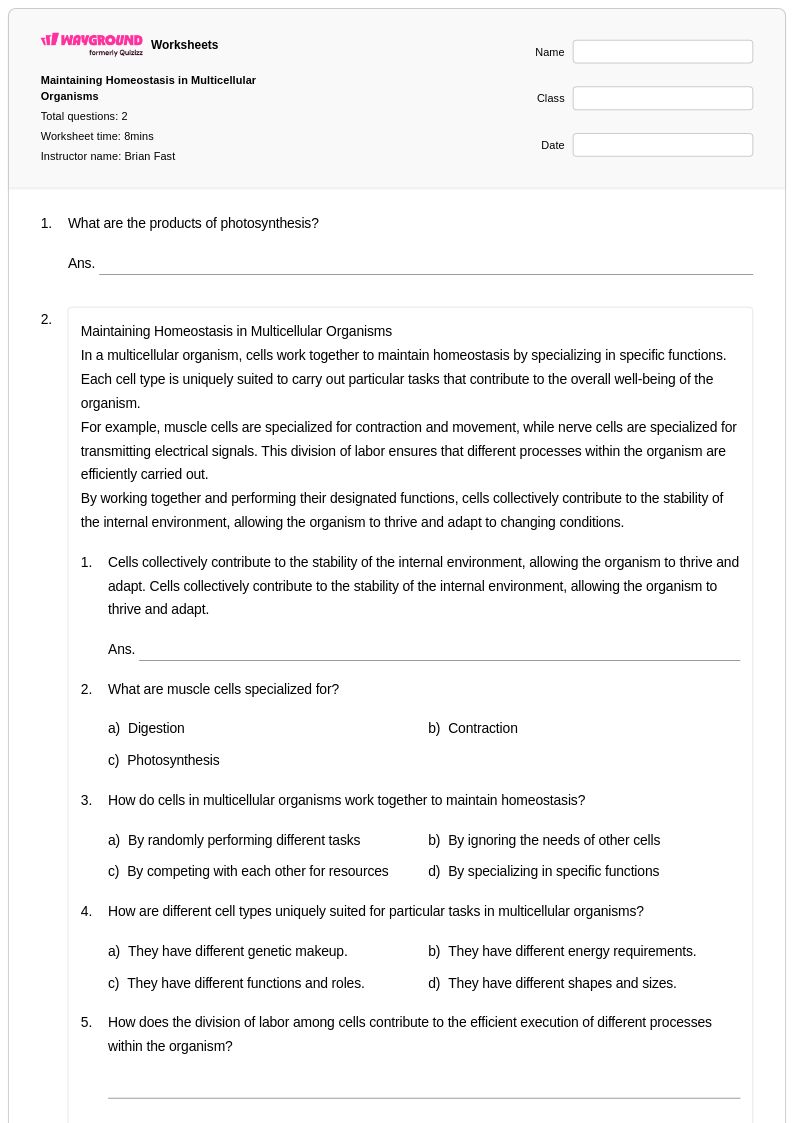
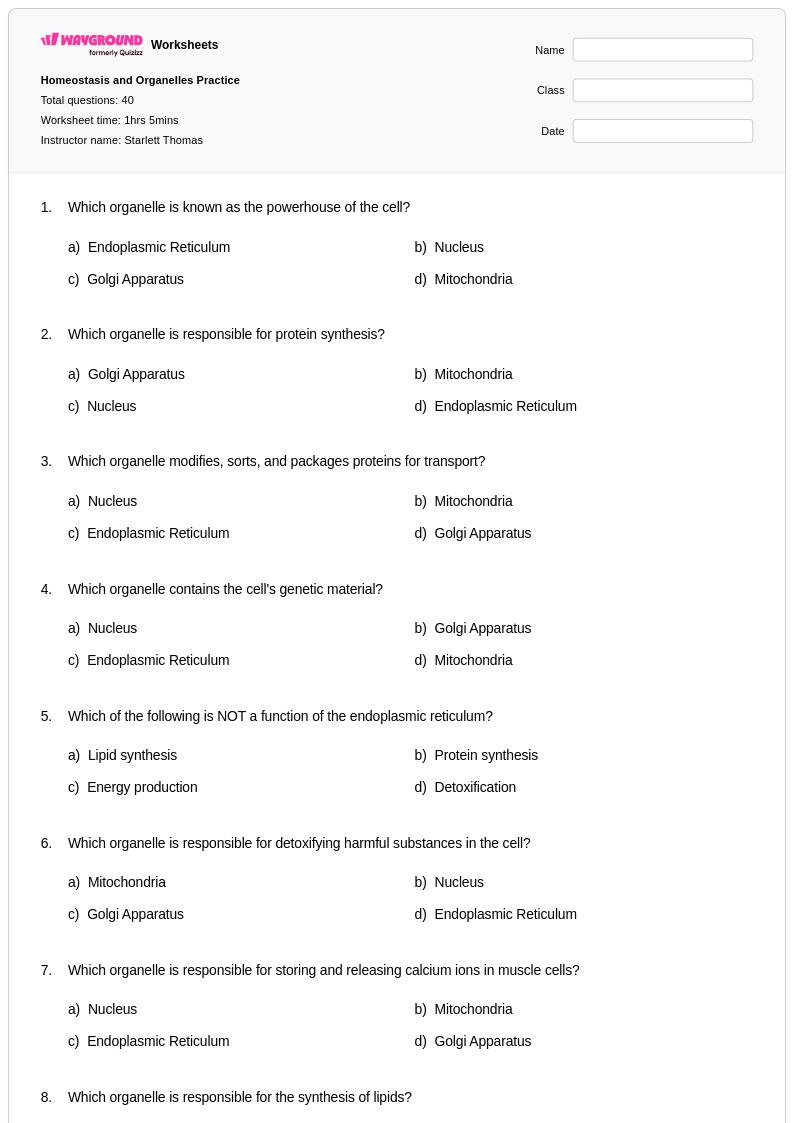
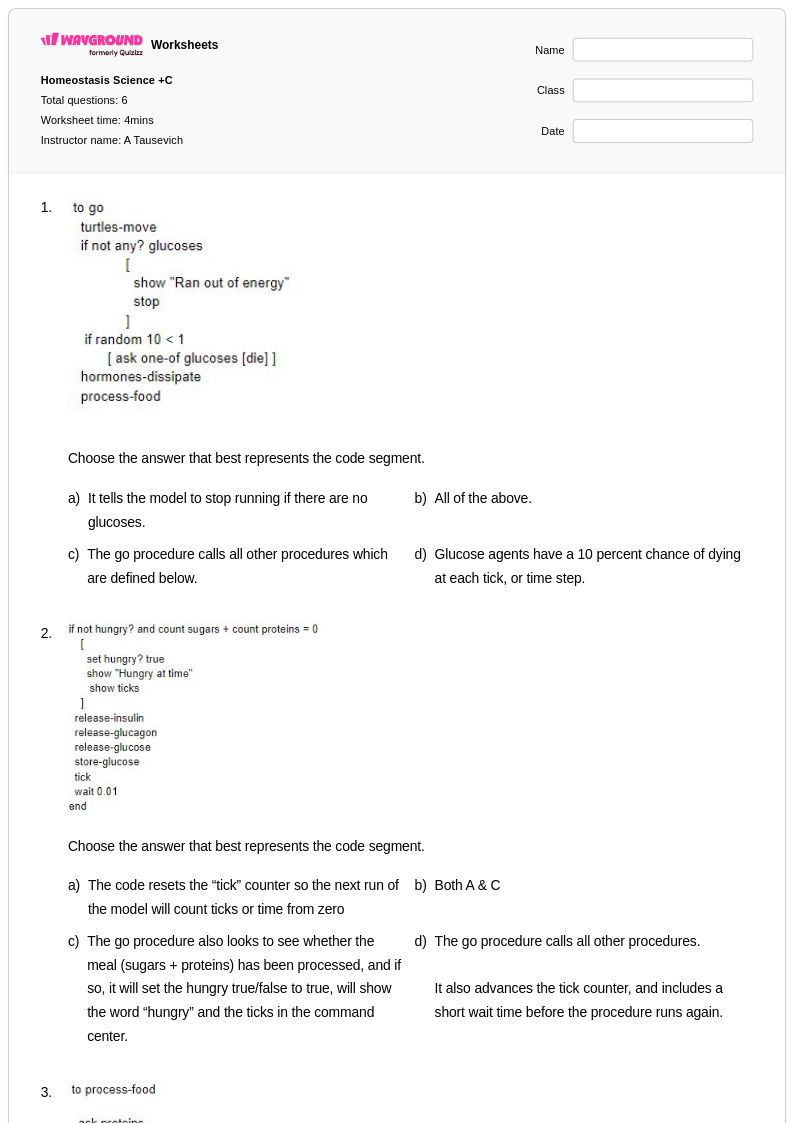
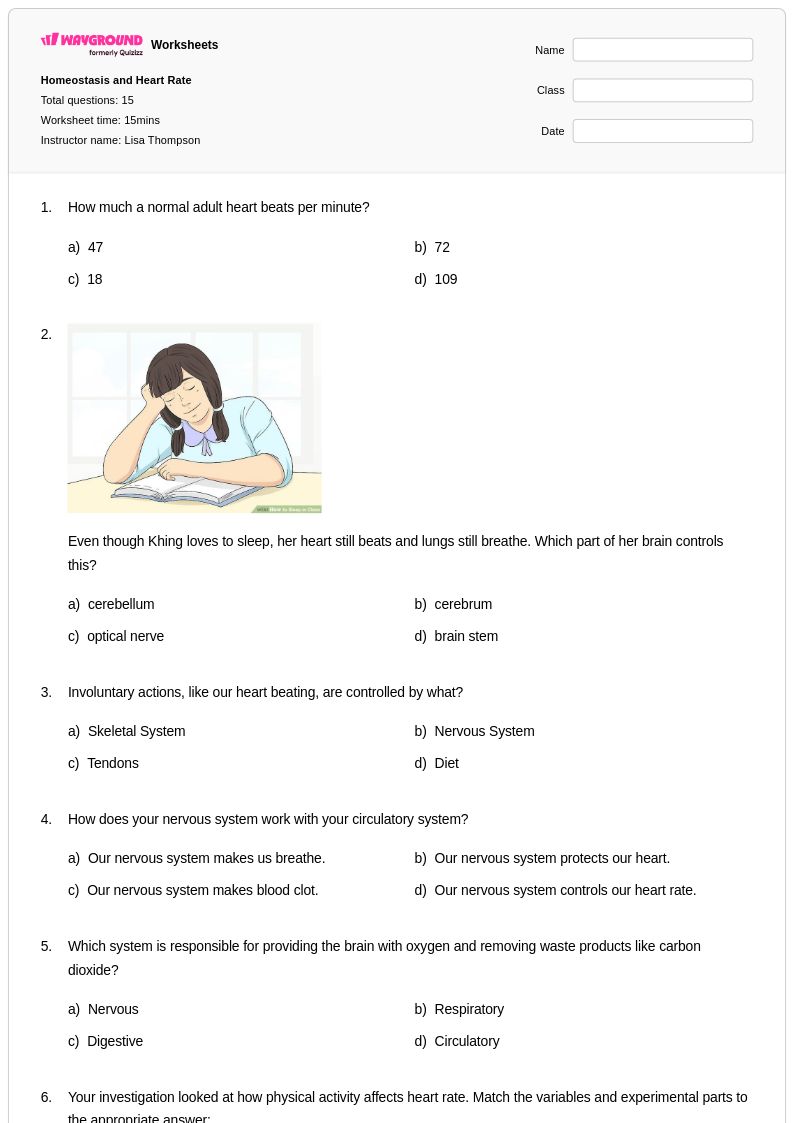
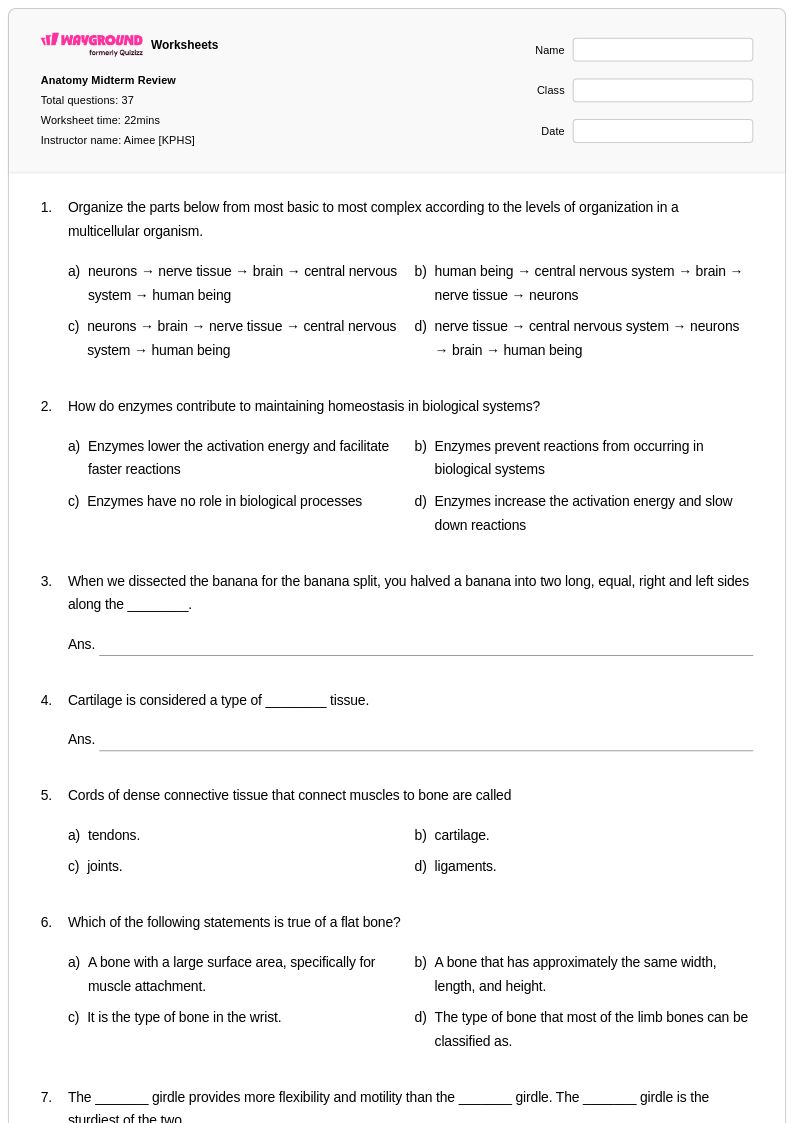
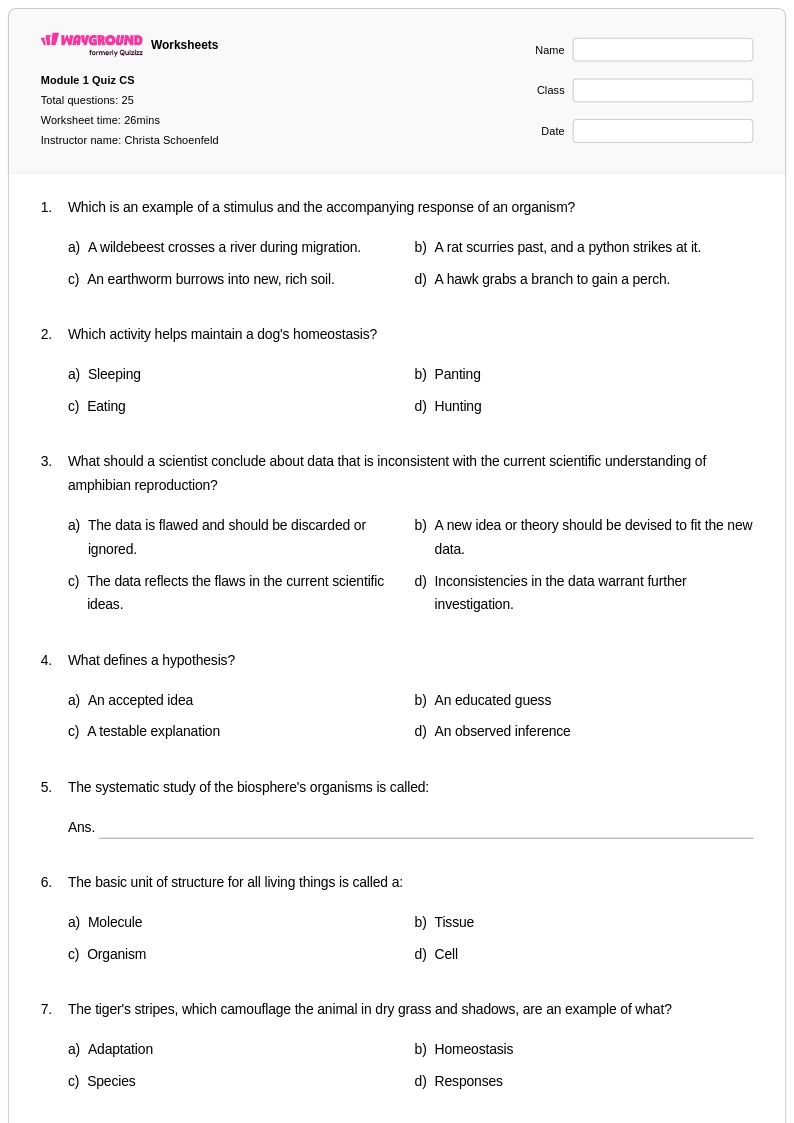
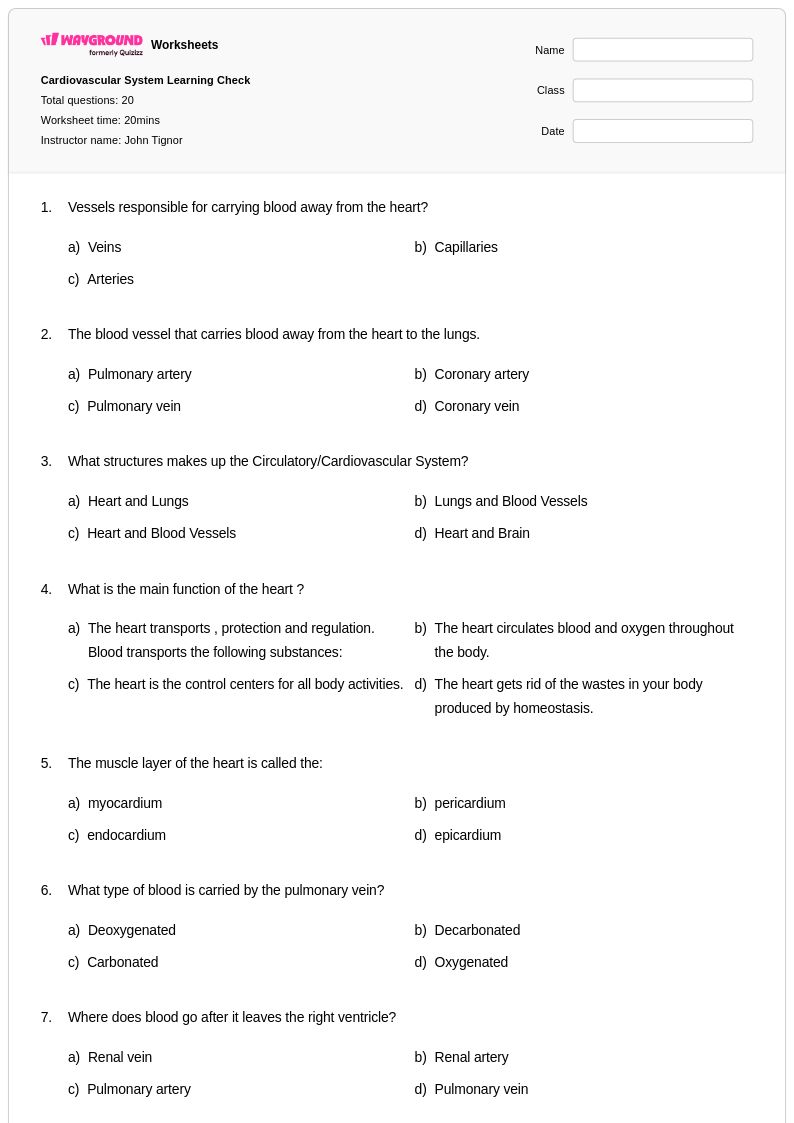
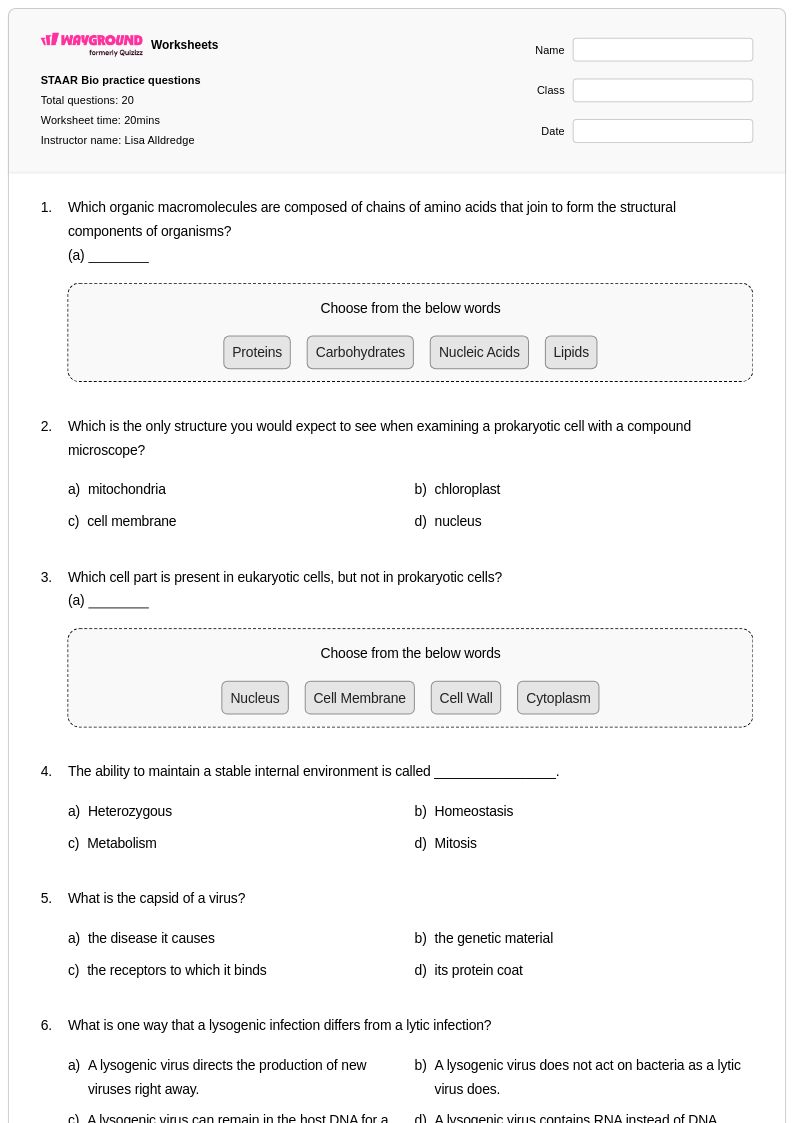
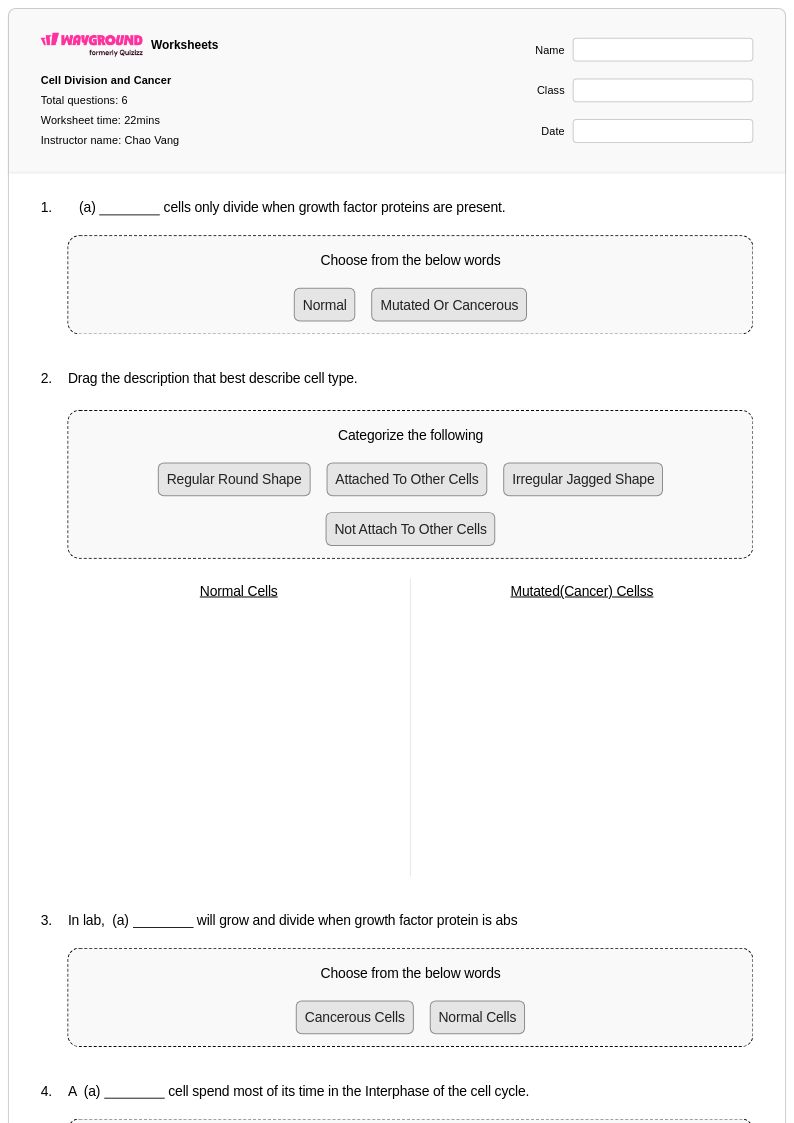
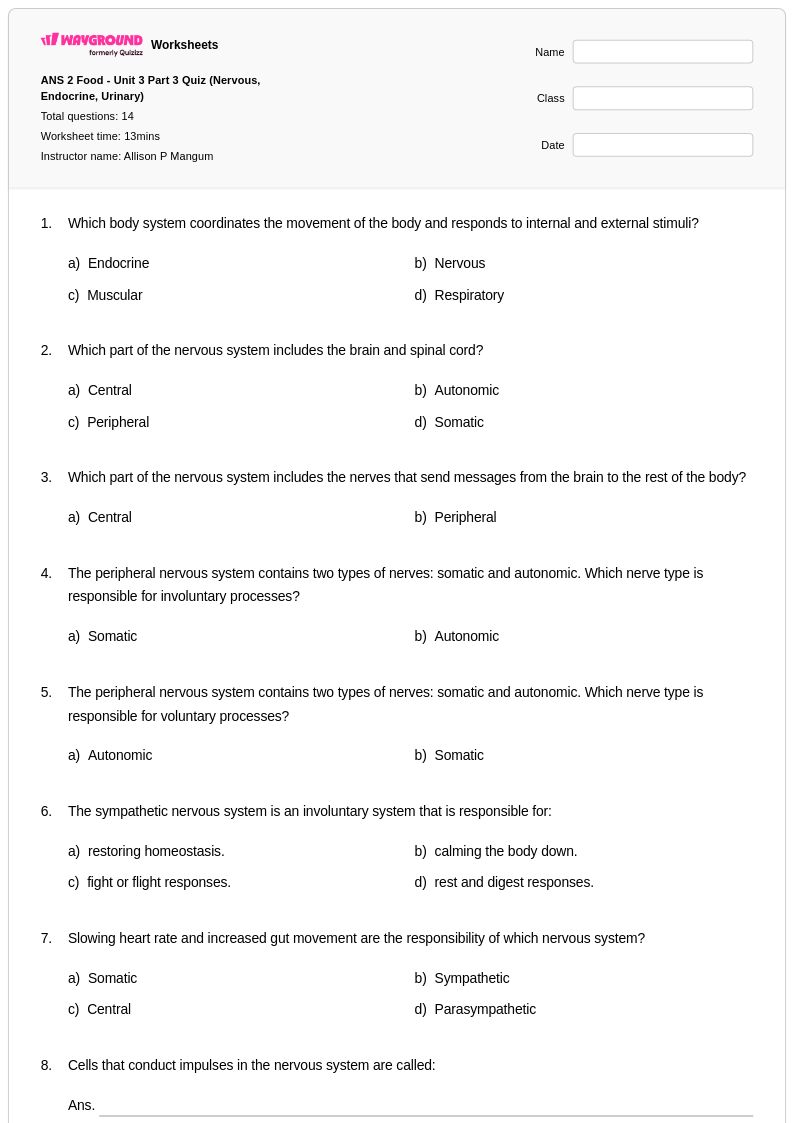
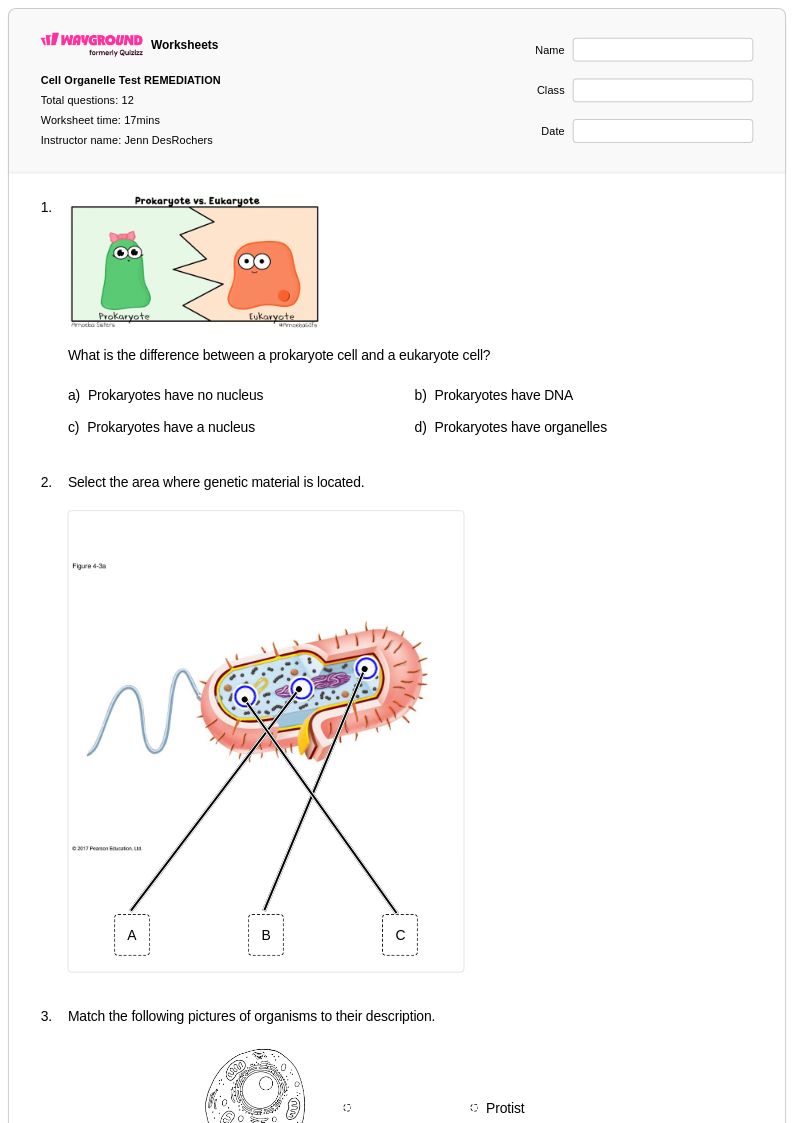
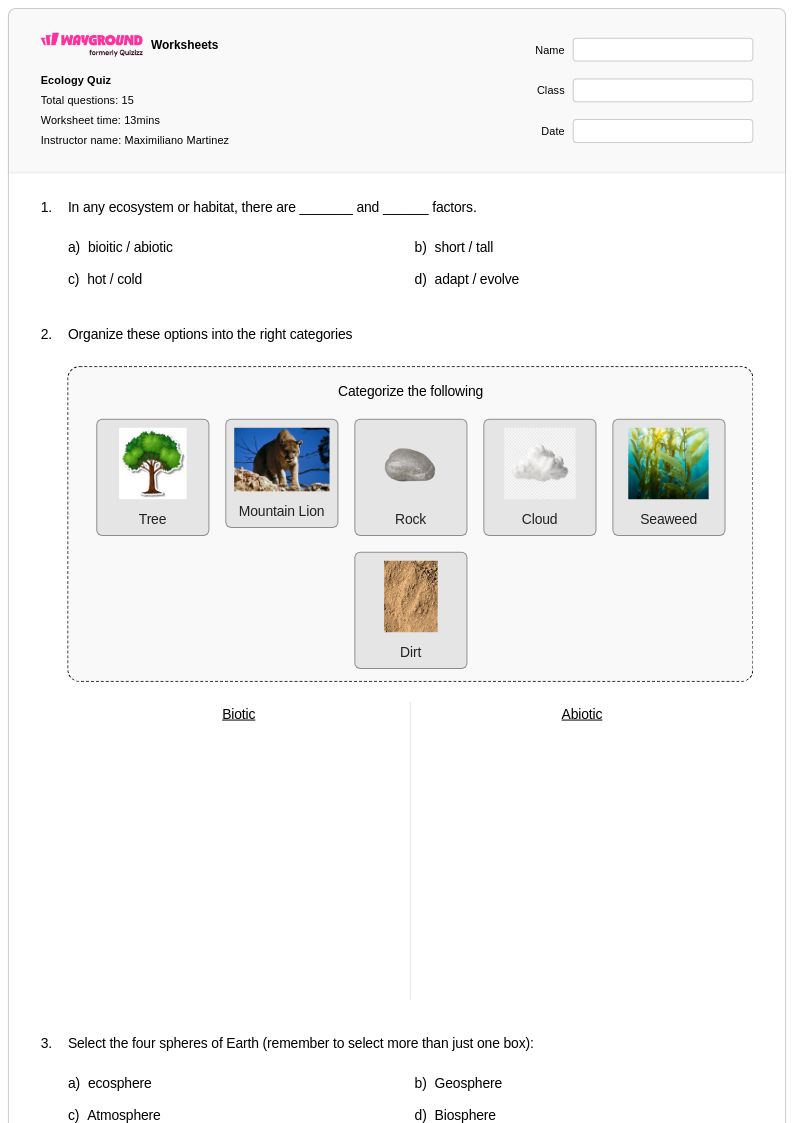
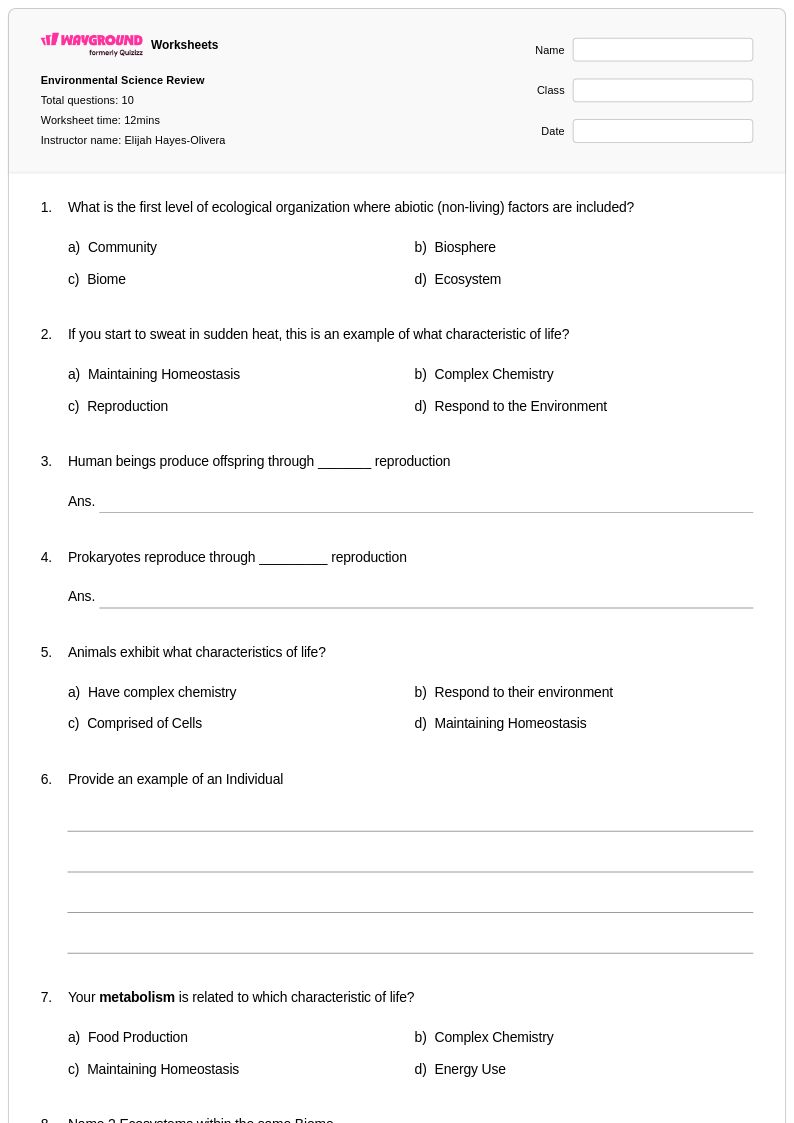
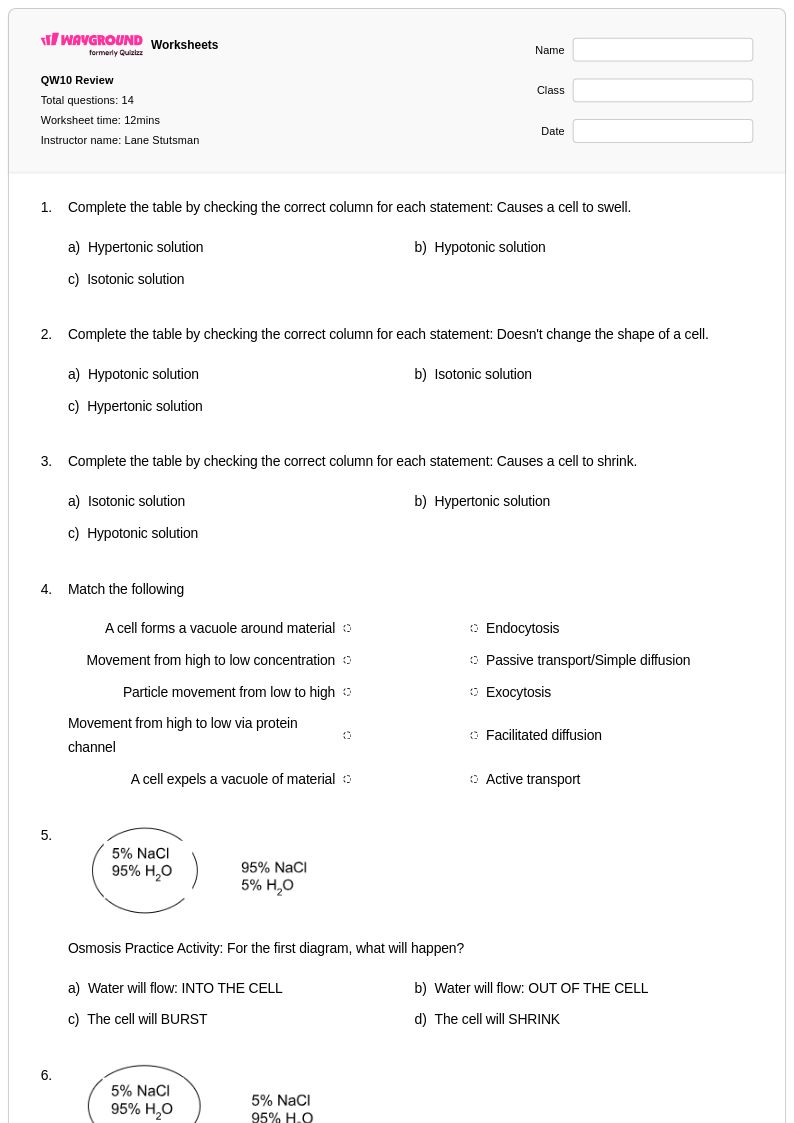
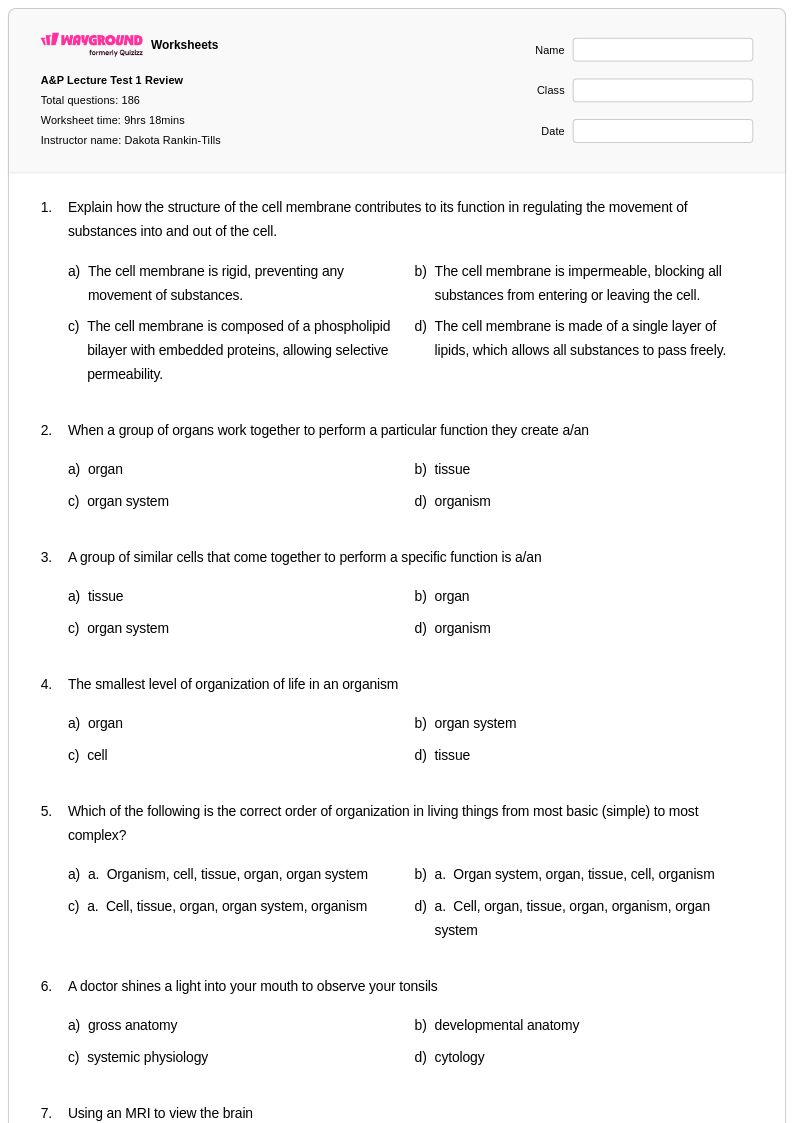
Homeostasis worksheets for Class 12 biology students available through Wayground (formerly Quizizz) provide comprehensive practice with the complex regulatory mechanisms that maintain internal stability in living organisms. These expertly crafted resources strengthen students' understanding of feedback loops, temperature regulation, blood glucose control, water balance, and pH homeostasis through detailed practice problems that challenge critical thinking skills. The worksheet collections include answer keys for immediate feedback, free printable options for classroom flexibility, and pdf formats that ensure consistent formatting across different devices and printing systems, making them ideal for both in-class instruction and independent study sessions.
Wayground (formerly Quizizz) empowers educators with access to millions of teacher-created homeostasis resources that streamline lesson planning and enhance student learning outcomes. The platform's robust search and filtering capabilities allow teachers to quickly locate worksheets aligned with specific biology standards and learning objectives, while differentiation tools enable customization for students with varying ability levels. These flexible resources are available in both printable and digital formats, including downloadable pdfs, supporting diverse classroom environments and teaching styles. Teachers can effectively use these comprehensive worksheet collections for targeted skill practice, remediation of challenging homeostatic concepts, enrichment activities for advanced learners, and formative assessment to monitor student progress in understanding biological regulation systems.
FAQs
How do I teach homeostasis to biology students?
Teach homeostasis by anchoring instruction in concrete, relatable examples before introducing abstract mechanisms. Start with body temperature regulation during exercise, then formalize the concept of negative feedback loops using a thermostat analogy. From there, extend to blood glucose control and osmoregulation so students can see how the same regulatory logic applies across different body systems. Pairing direct instruction with scenario-based practice problems helps students move from memorizing definitions to genuinely understanding how internal balance is maintained.
What are the most effective ways for students to practice homeostasis concepts?
Students practice homeostasis most effectively when they work through real-world regulatory scenarios rather than isolated vocabulary drills. Practice problems that ask students to trace a feedback loop from stimulus to response, identify whether a mechanism is negative or positive feedback, and predict what happens when a system fails are especially high-value. Worksheets that include diagrams of blood sugar regulation, temperature control, and water balance give students repeated exposure to multiple systems without treating each one as a separate topic.
What mistakes do students commonly make when learning about homeostasis?
The most frequent misconception is that homeostasis means the body keeps internal conditions perfectly constant rather than within a dynamic range. Students also routinely conflate positive and negative feedback, often assuming 'negative' means harmful when it actually describes a loop that reverses a change to restore balance. A third common error is treating each homeostatic system as isolated, when in practice systems like the nervous, endocrine, and circulatory systems work together to maintain equilibrium.
How do I explain the difference between negative and positive feedback loops?
Negative feedback loops detect a deviation from a set point and trigger a corrective response that brings the system back toward that set point, making them the primary mechanism of homeostasis. Blood glucose regulation is a clear example: rising glucose triggers insulin release, which lowers glucose back toward normal. Positive feedback loops amplify a change rather than reversing it, and while they are less common in homeostasis, childbirth contractions and blood clotting are standard classroom examples that illustrate when amplification serves a biological purpose.
How can I use homeostasis worksheets to support students who are struggling with the concept?
For struggling learners, scaffolded worksheets that break a feedback loop into labeled steps before asking students to complete one independently are more effective than open-ended diagram tasks. Wayground's accommodation tools allow teachers to enable Read Aloud so question text is read to students who need it, reduce answer choices to lower cognitive load on multiple-choice items, and assign extended time per question, all configurable per student without other students being notified. These settings are saved and reusable across future sessions, making it practical to maintain consistent support over time.
How do I use Wayground's homeostasis worksheets in my classroom?
Wayground's homeostasis worksheets are available as printable PDFs for traditional classroom use and in digital formats for technology-integrated environments, including the option to host them as a live quiz directly on Wayground. Teachers can use the search and filtering tools to locate worksheets aligned to specific curriculum standards, then assign them as guided practice, homework, or remediation. Each worksheet includes a complete answer key, so they work equally well for independent student work and teacher-led review sessions.