
12 Q
3rd - 5th
20 Q
3rd - 5th
15 Q
1st - 7th
11 Q
3rd - 6th
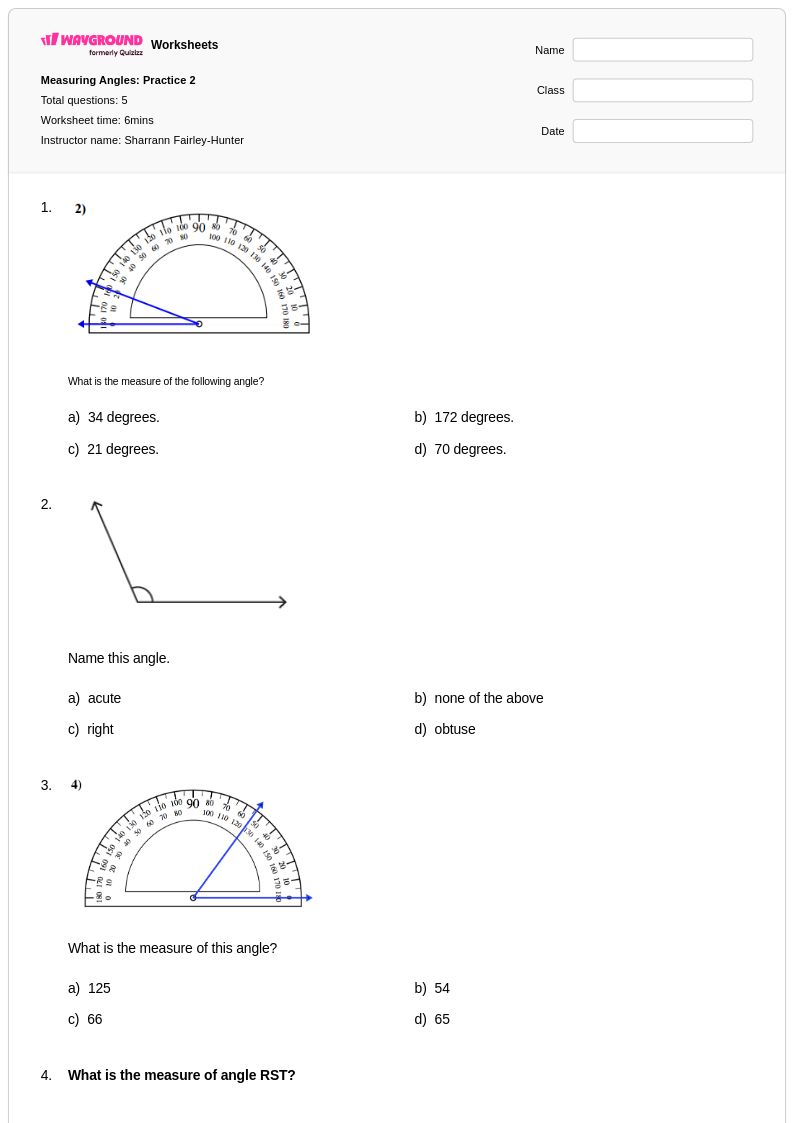
5 Q
1st - 5th
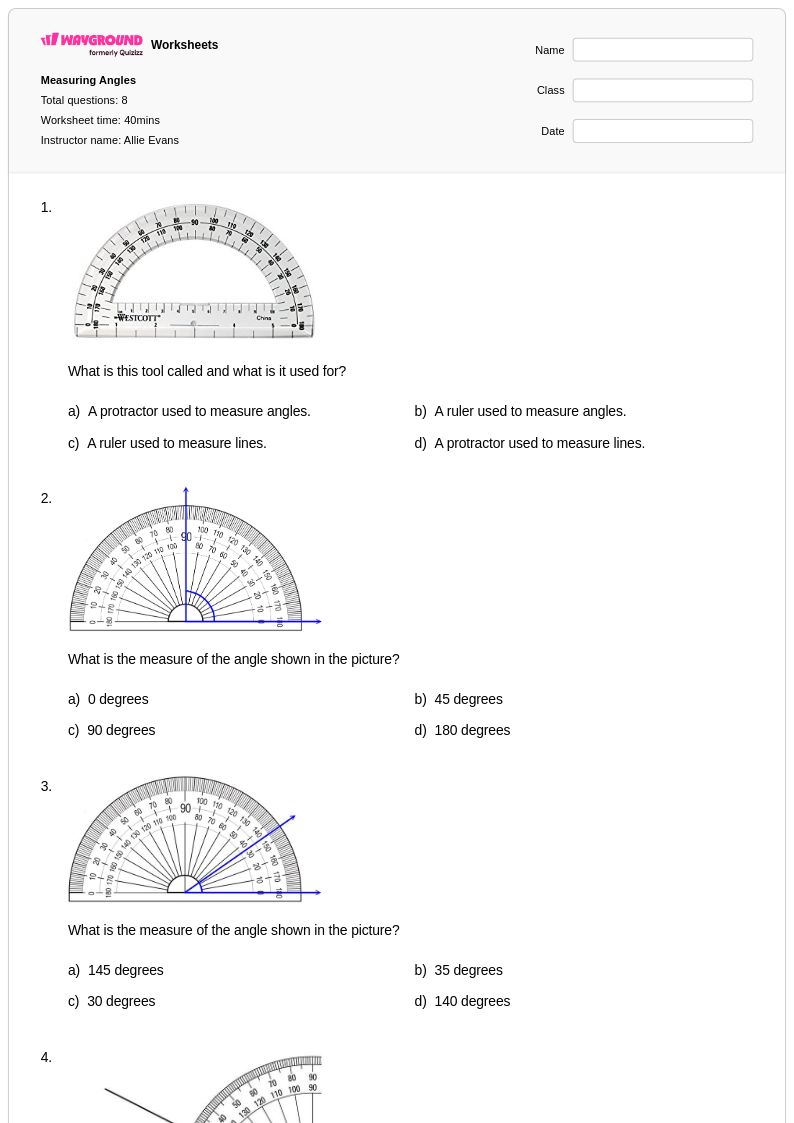
8 Q
3rd - 5th
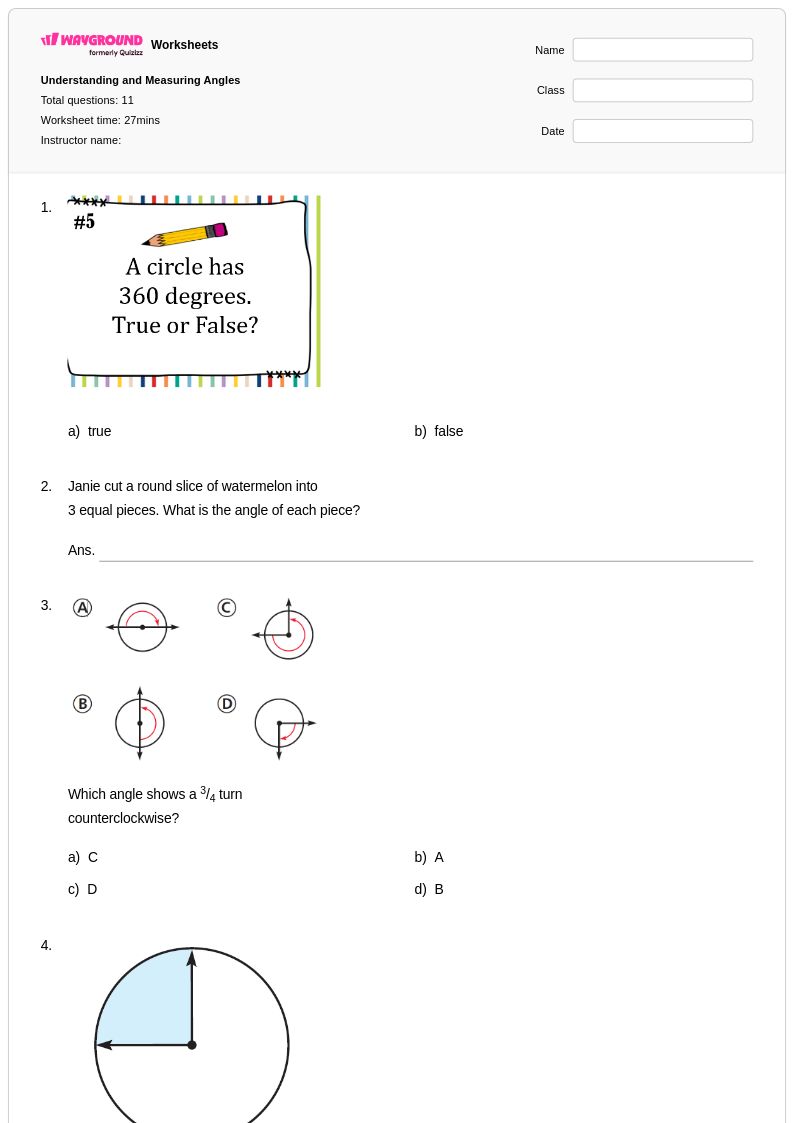
11 Q
3rd - 5th
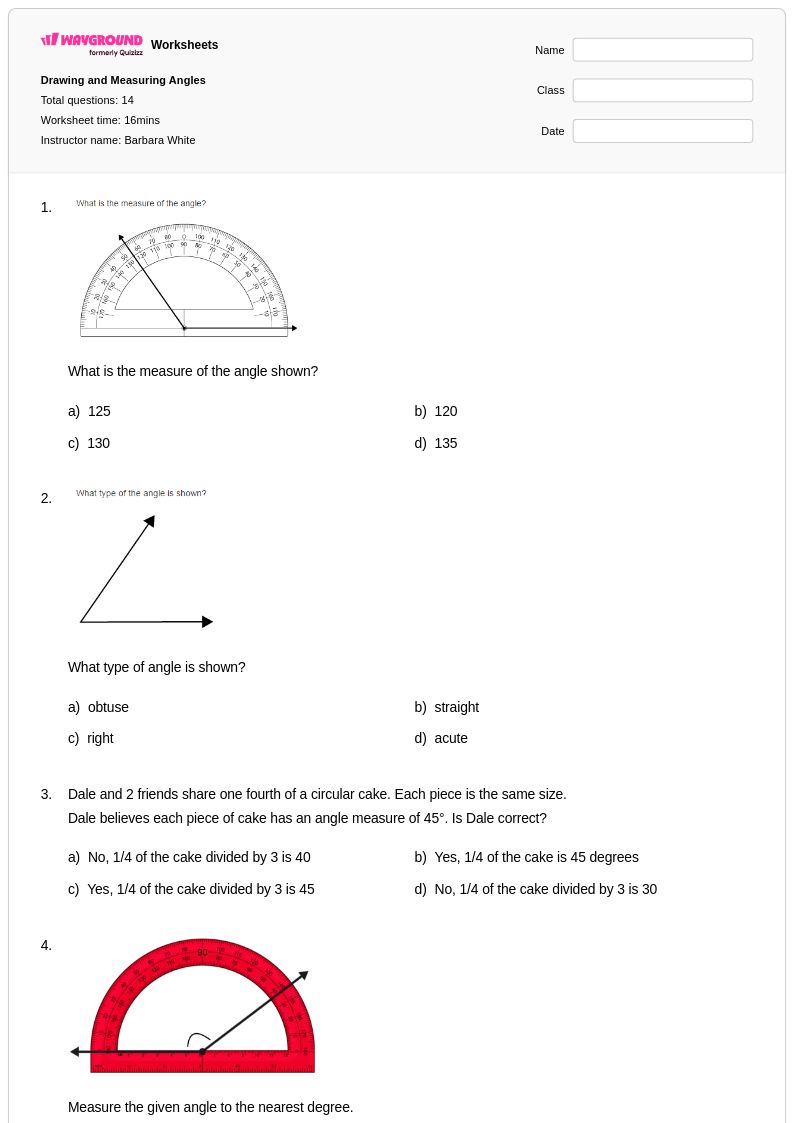
14 Q
3rd - 4th
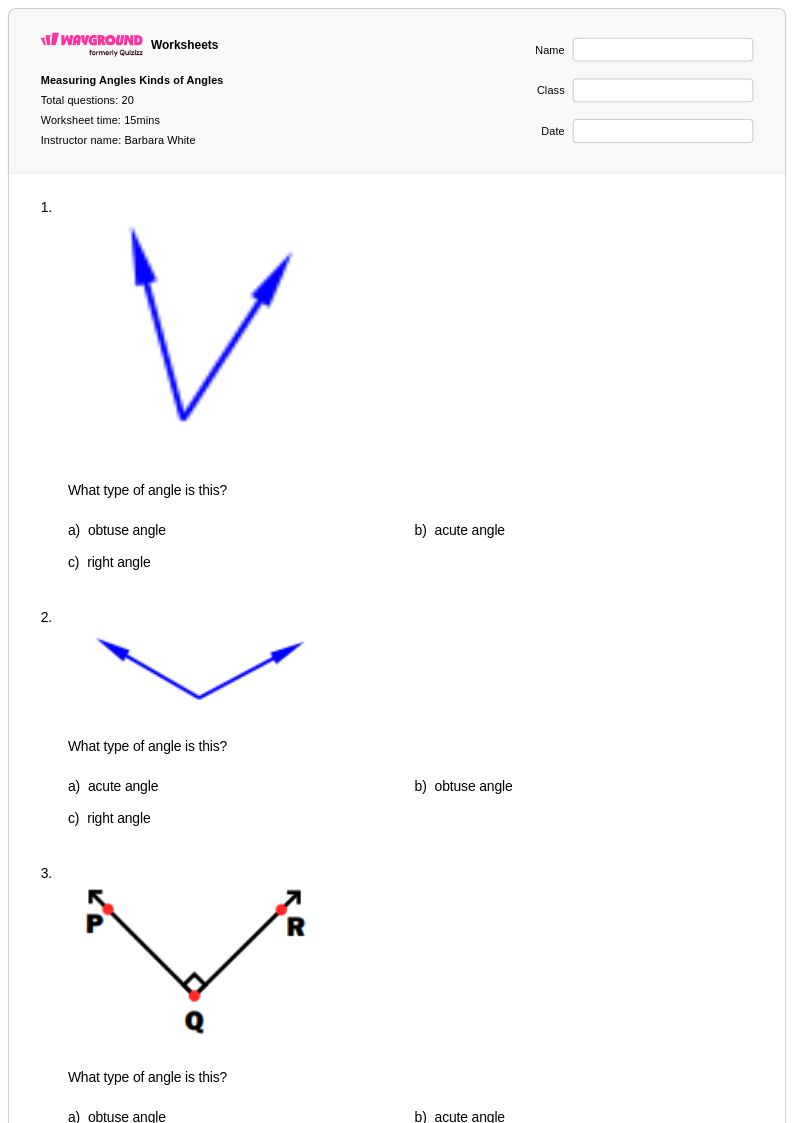
20 Q
3rd
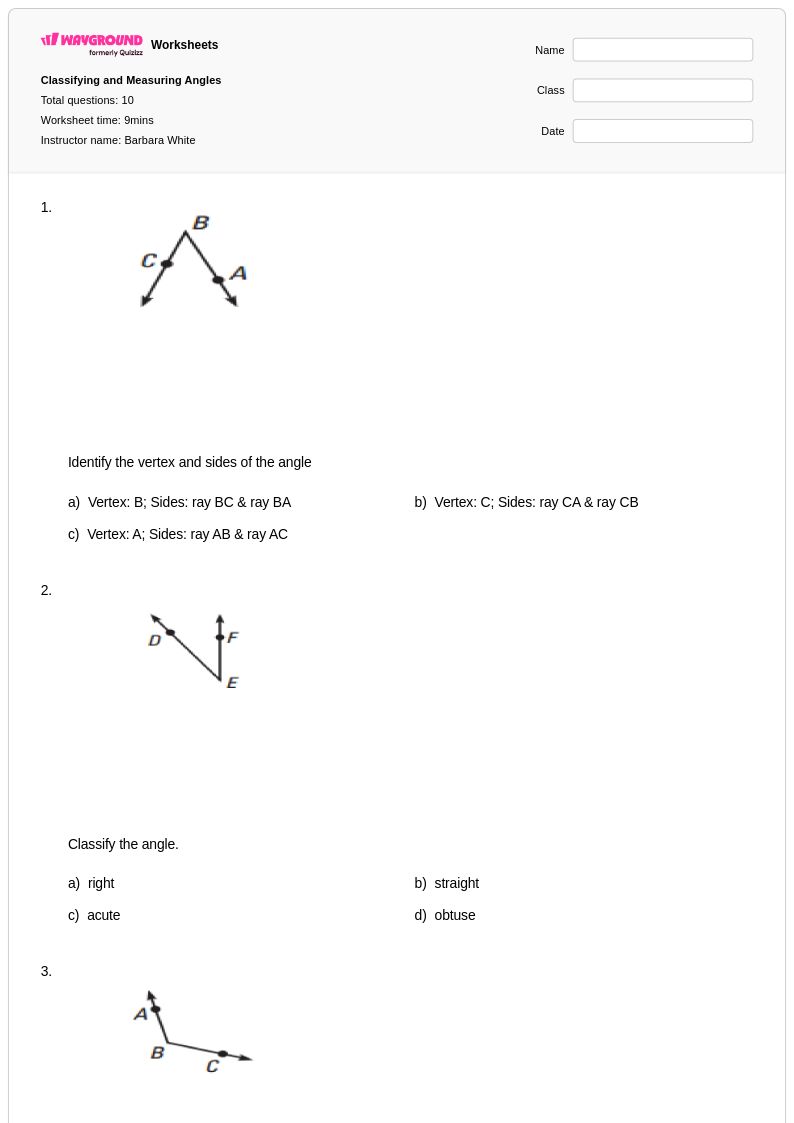
10 Q
3rd - 12th
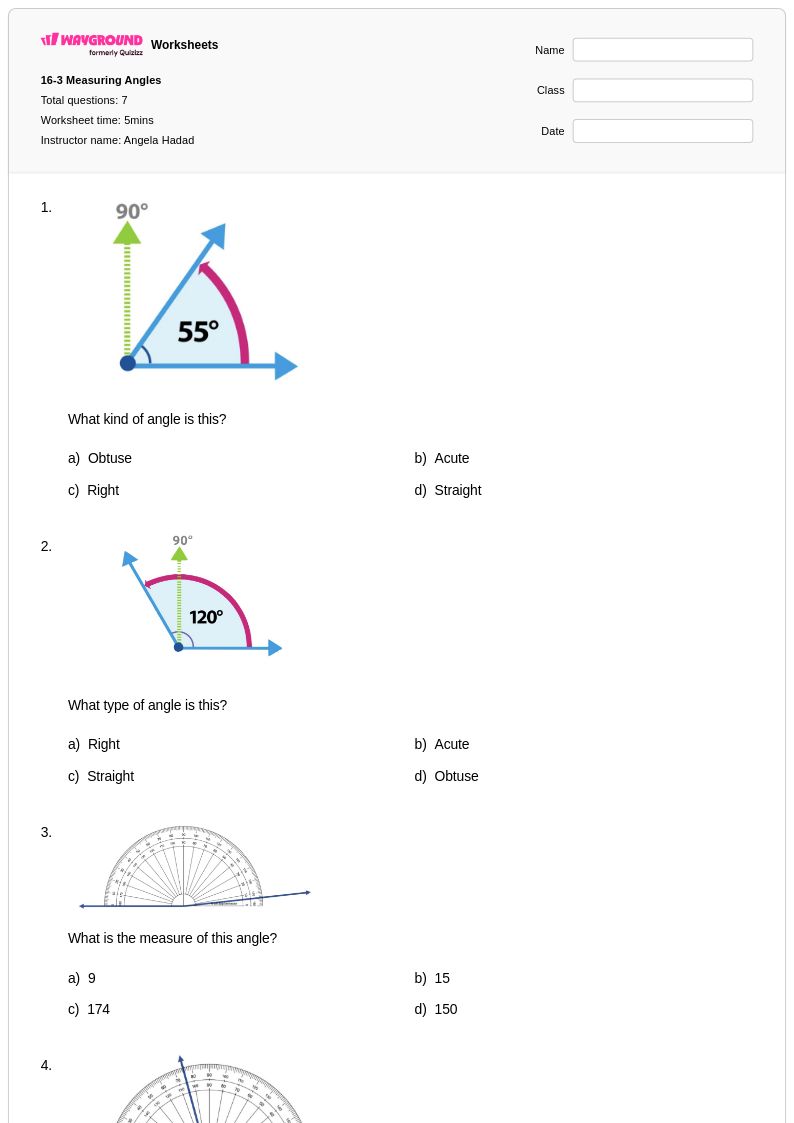
7 Q
3rd - 4th
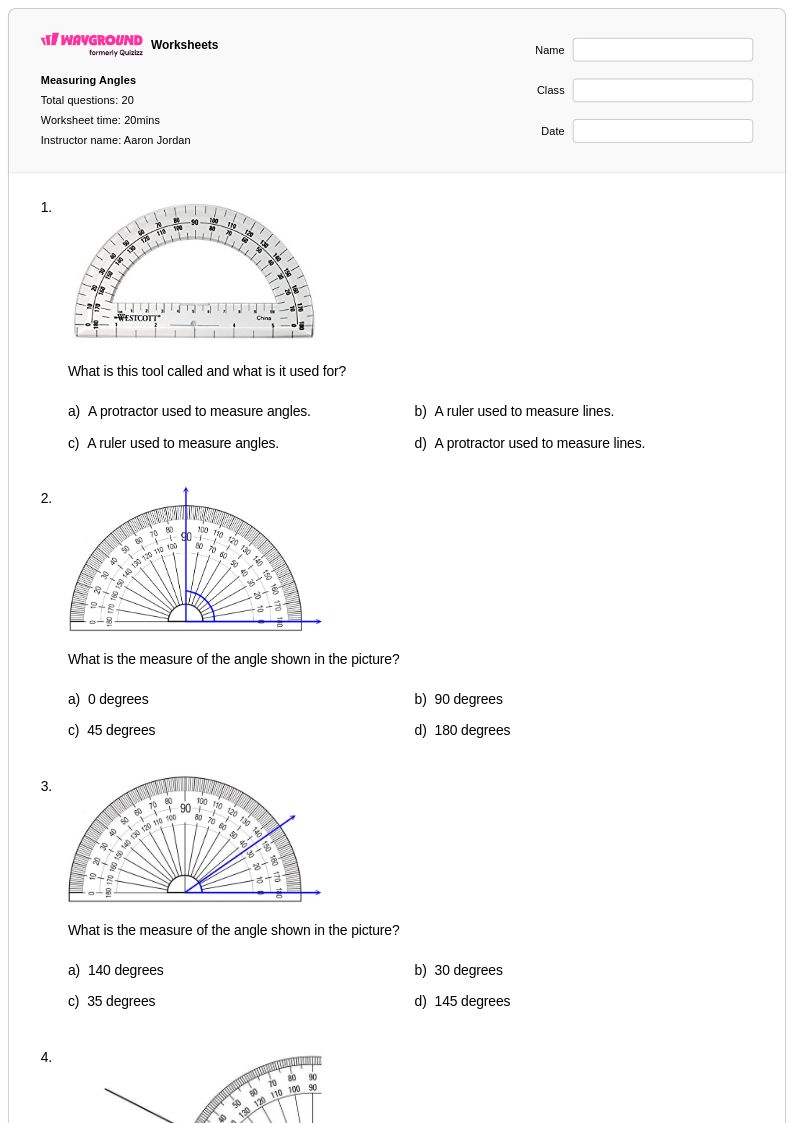
20 Q
3rd
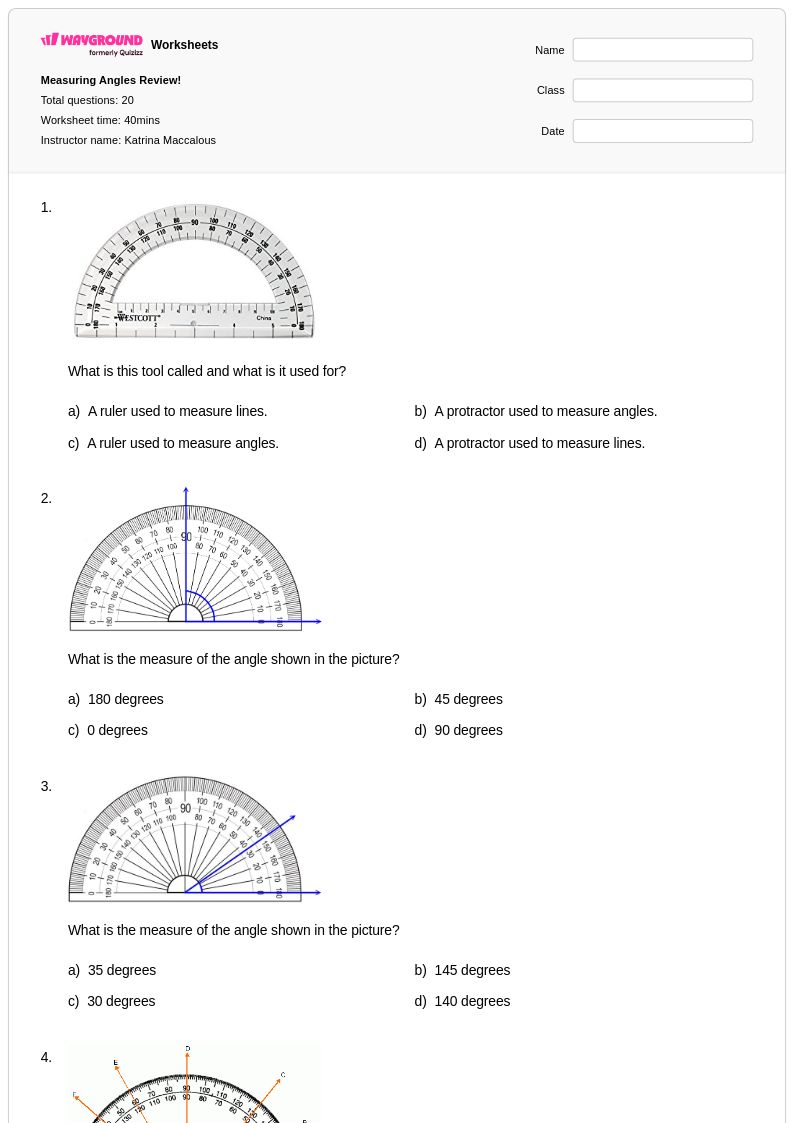
20 Q
3rd - 5th
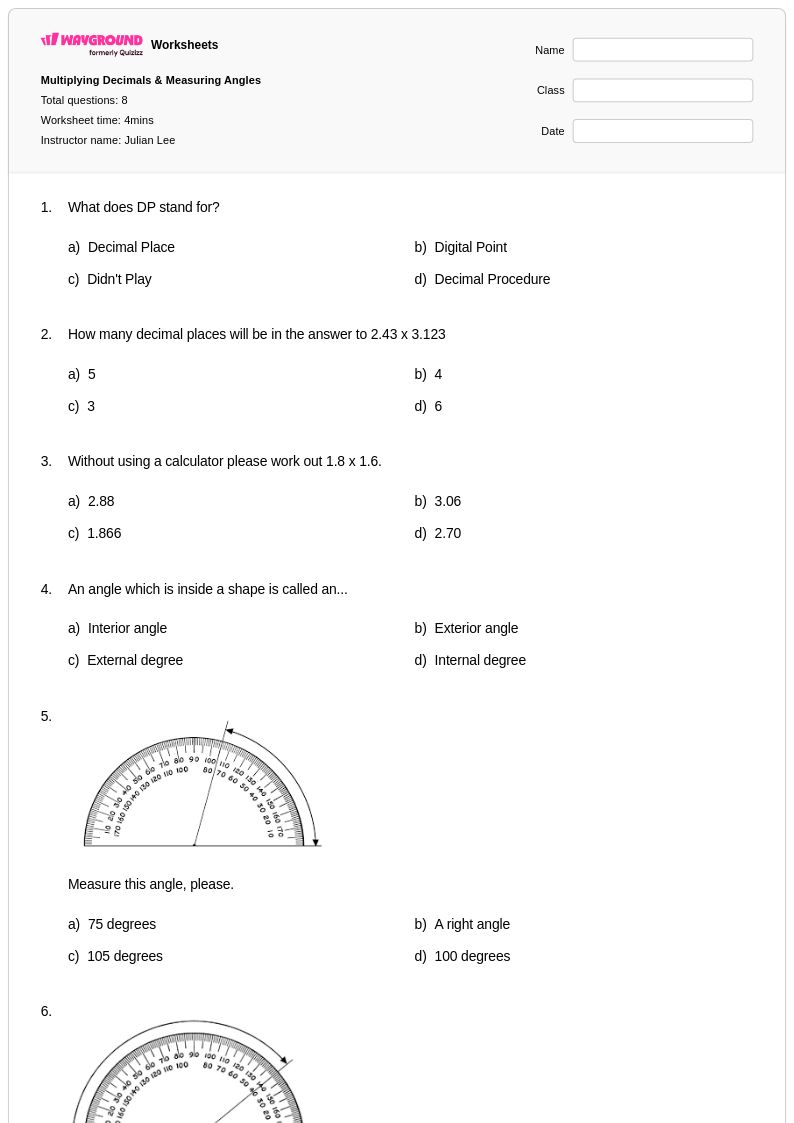
8 Q
1st - 12th
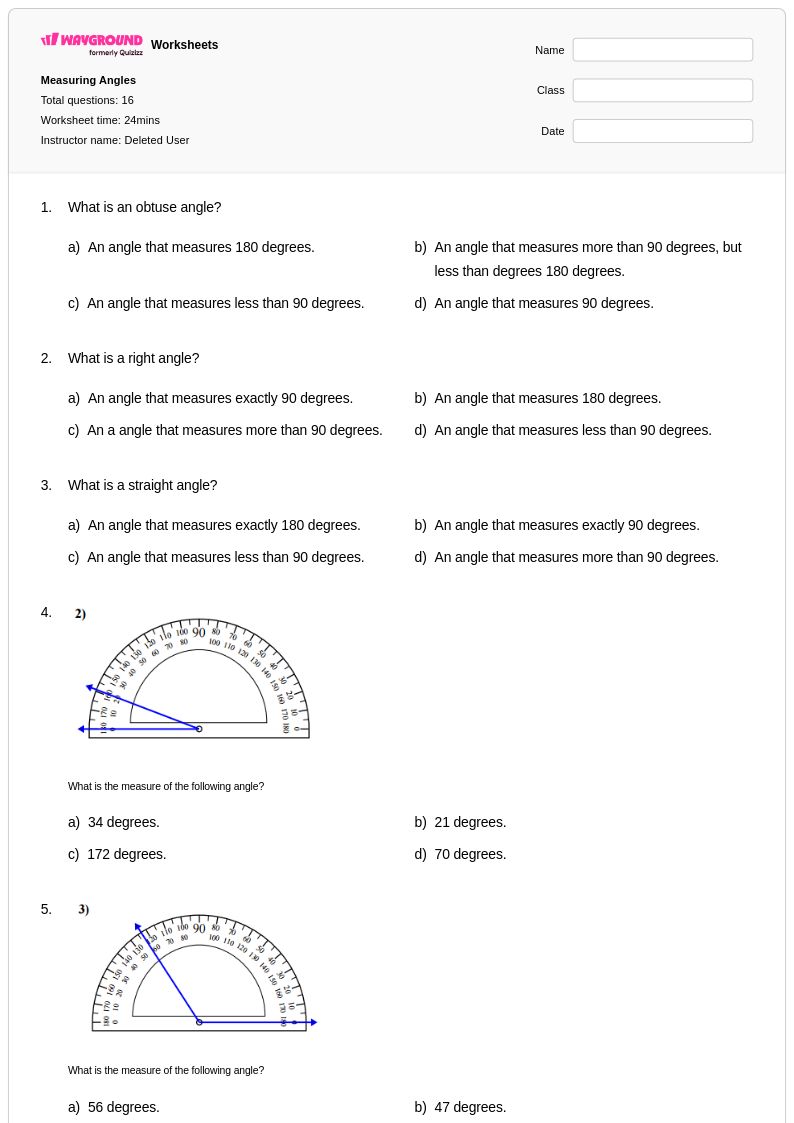
16 Q
3rd - 5th
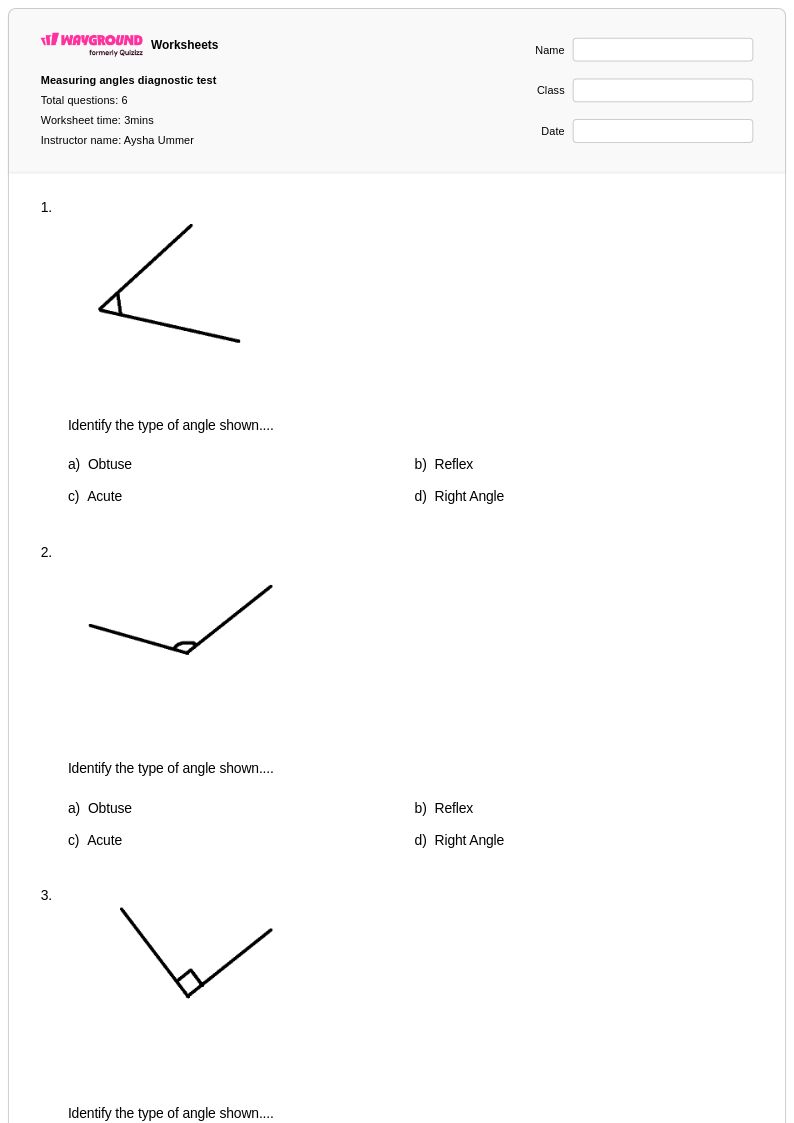
6 Q
KG - Uni
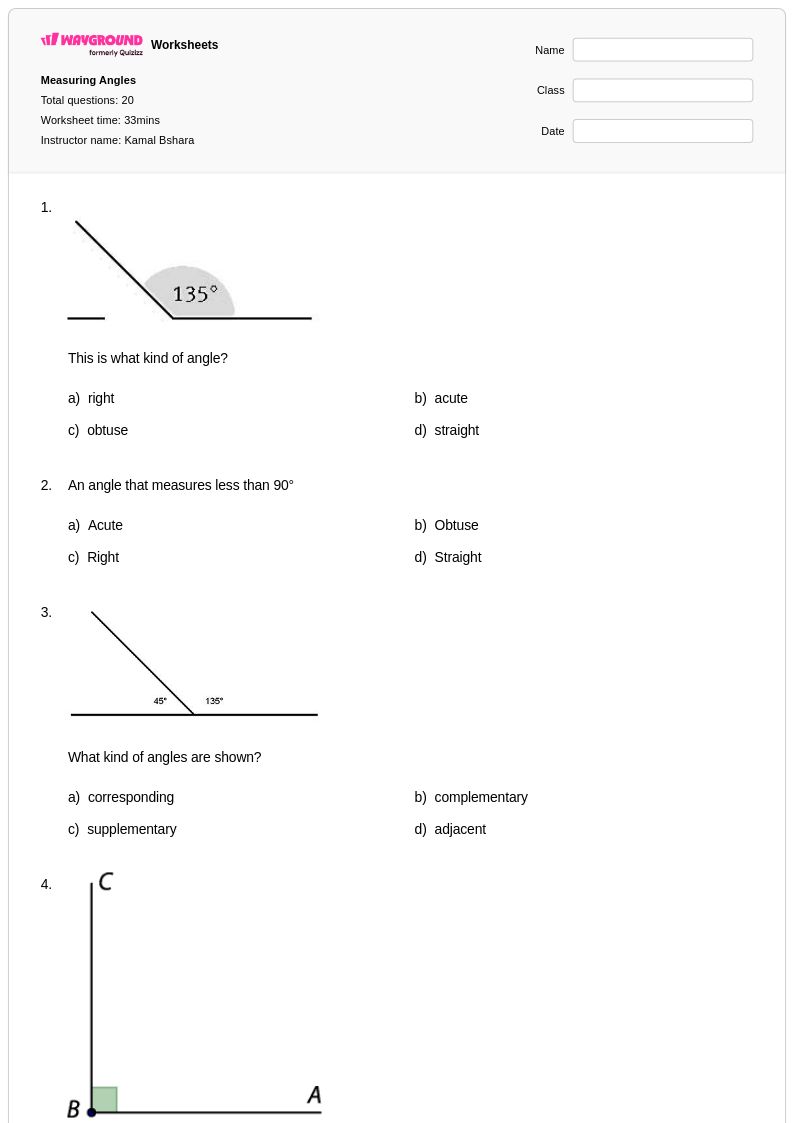
20 Q
2nd - 3rd
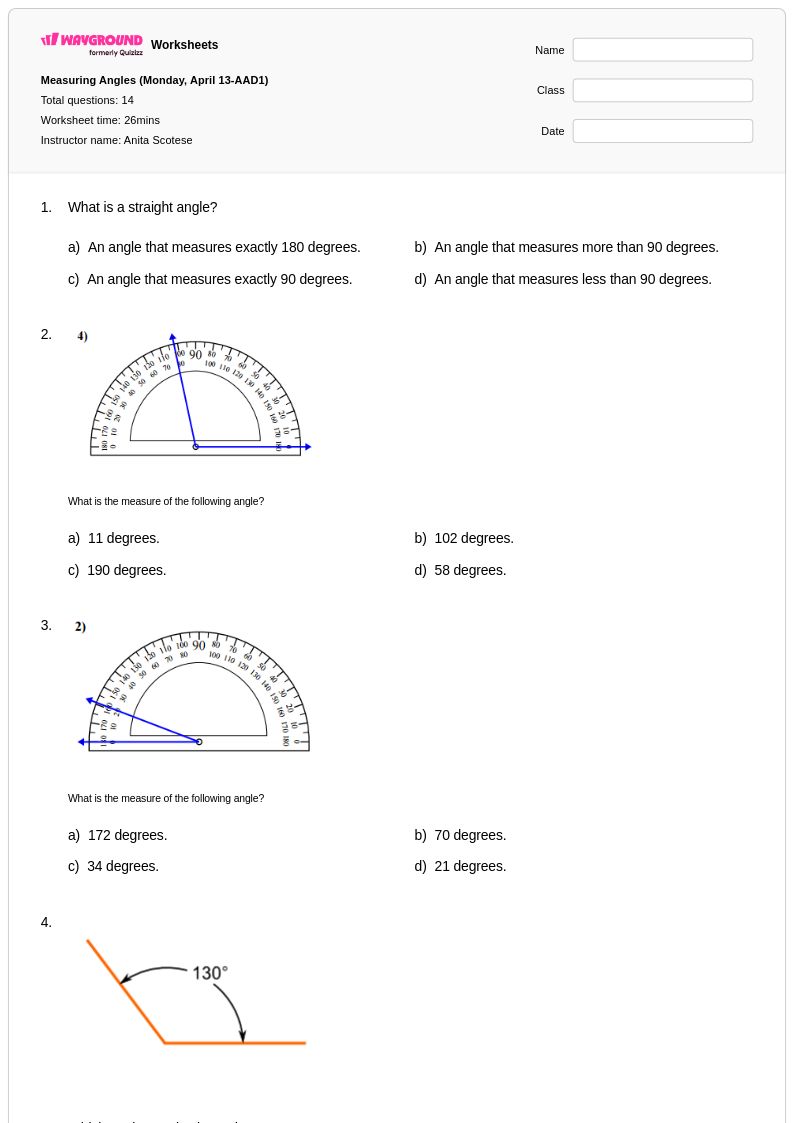
14 Q
3rd - 5th
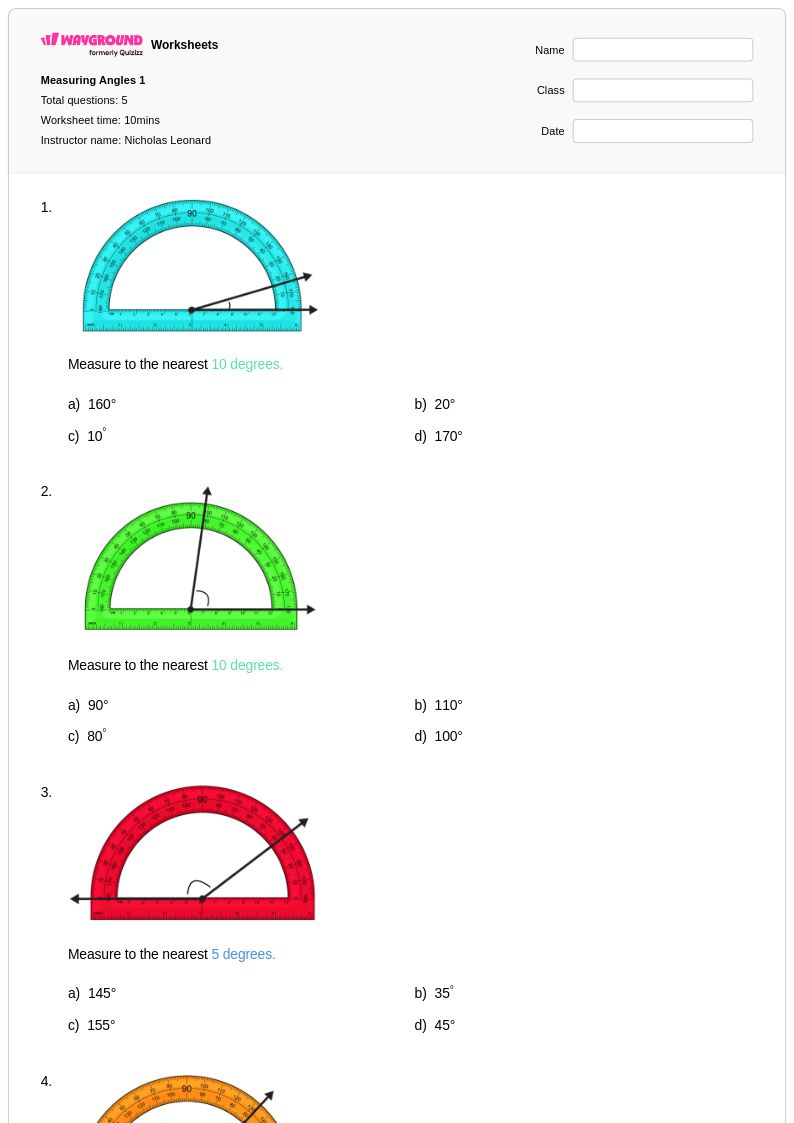
5 Q
3rd - 6th
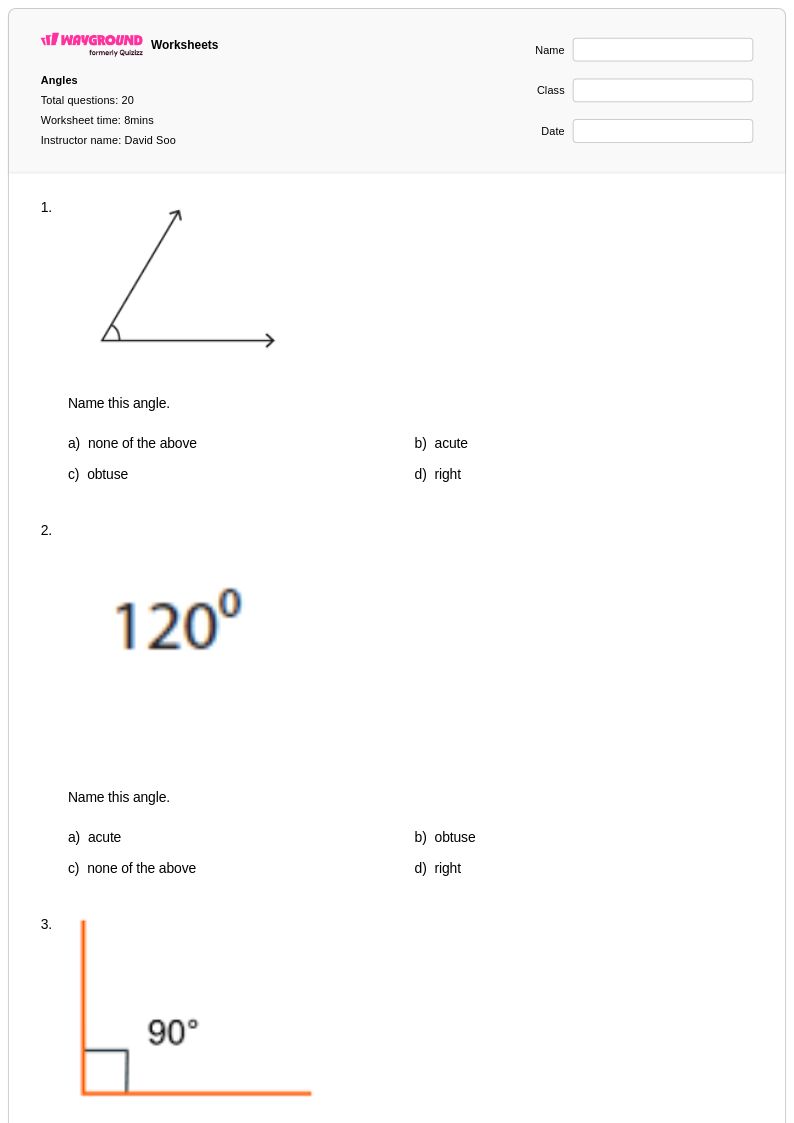
20 Q
3rd
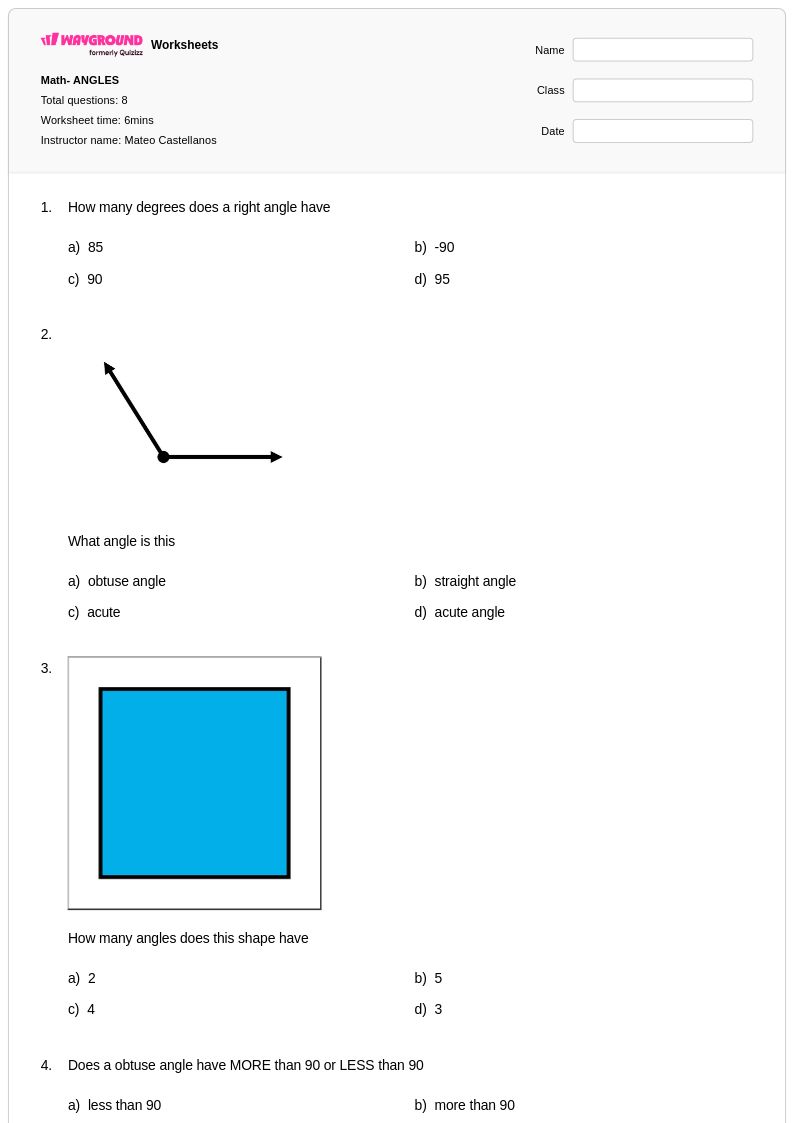
8 Q
3rd - 5th
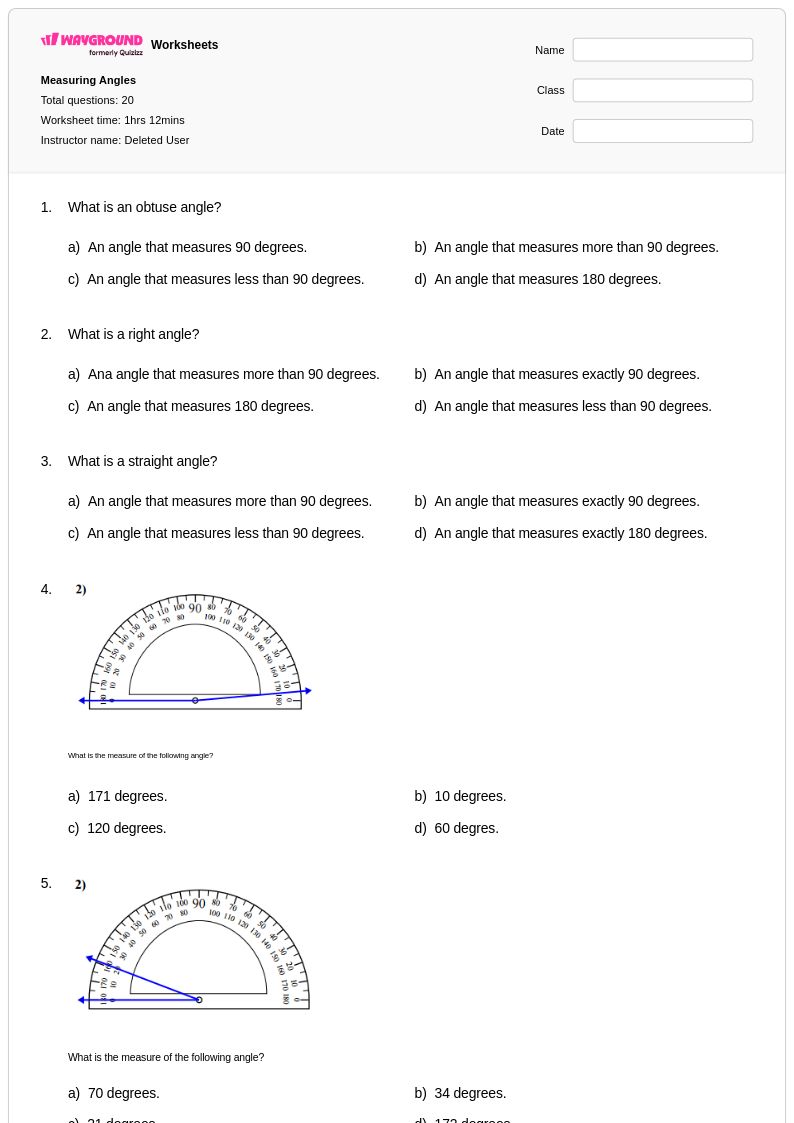
20 Q
KG - Uni
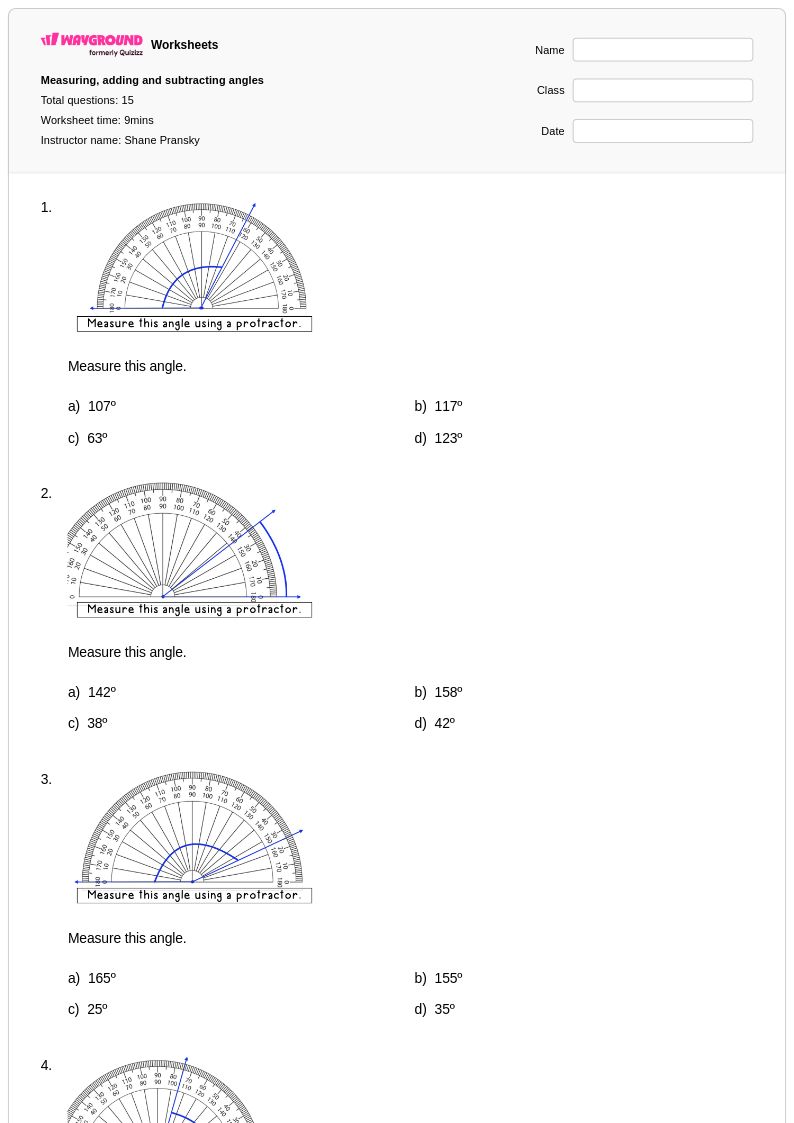
15 Q
3rd - 5th
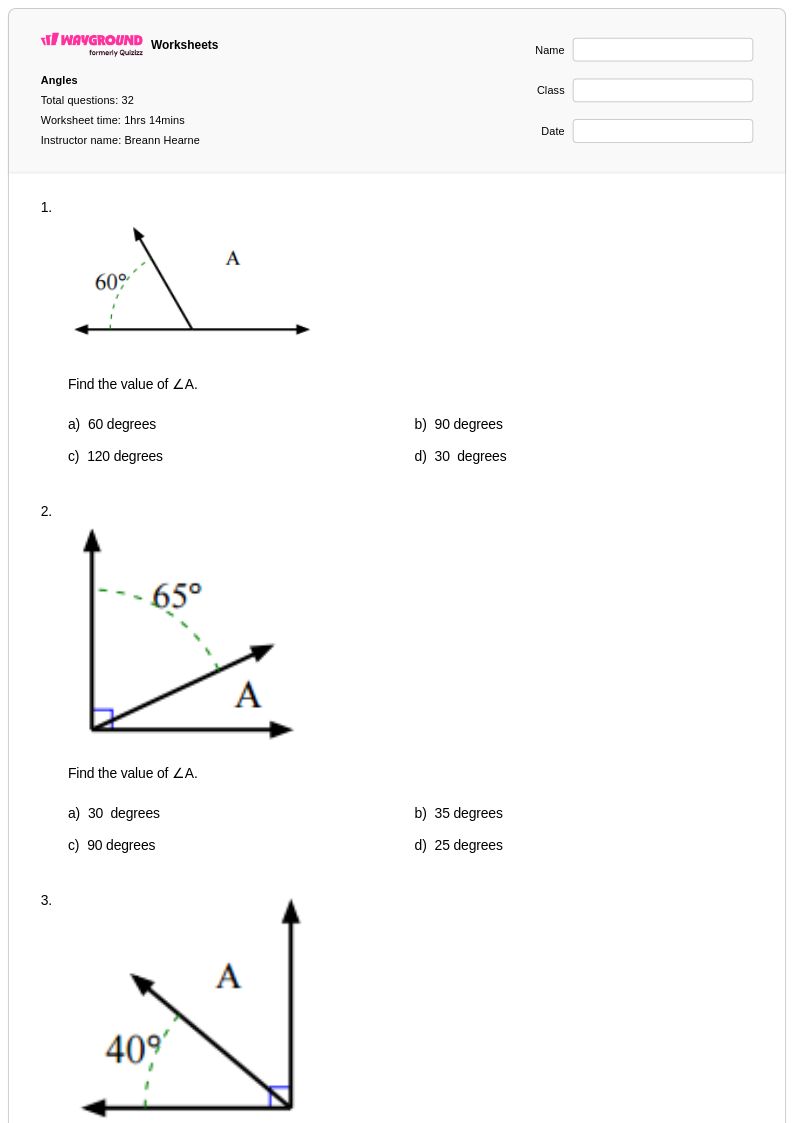
32 Q
3rd - 5th
Explore Other Subject Worksheets for class 3
Explore printable Measuring Angles worksheets for Class 3
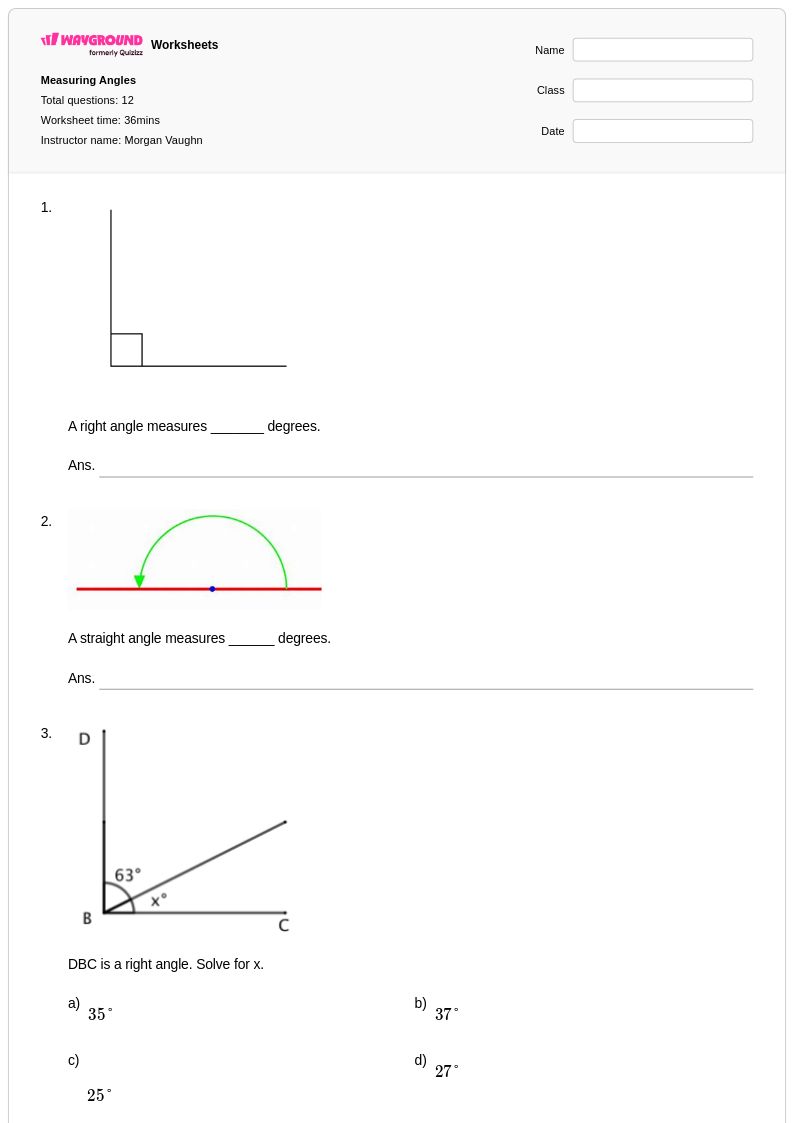
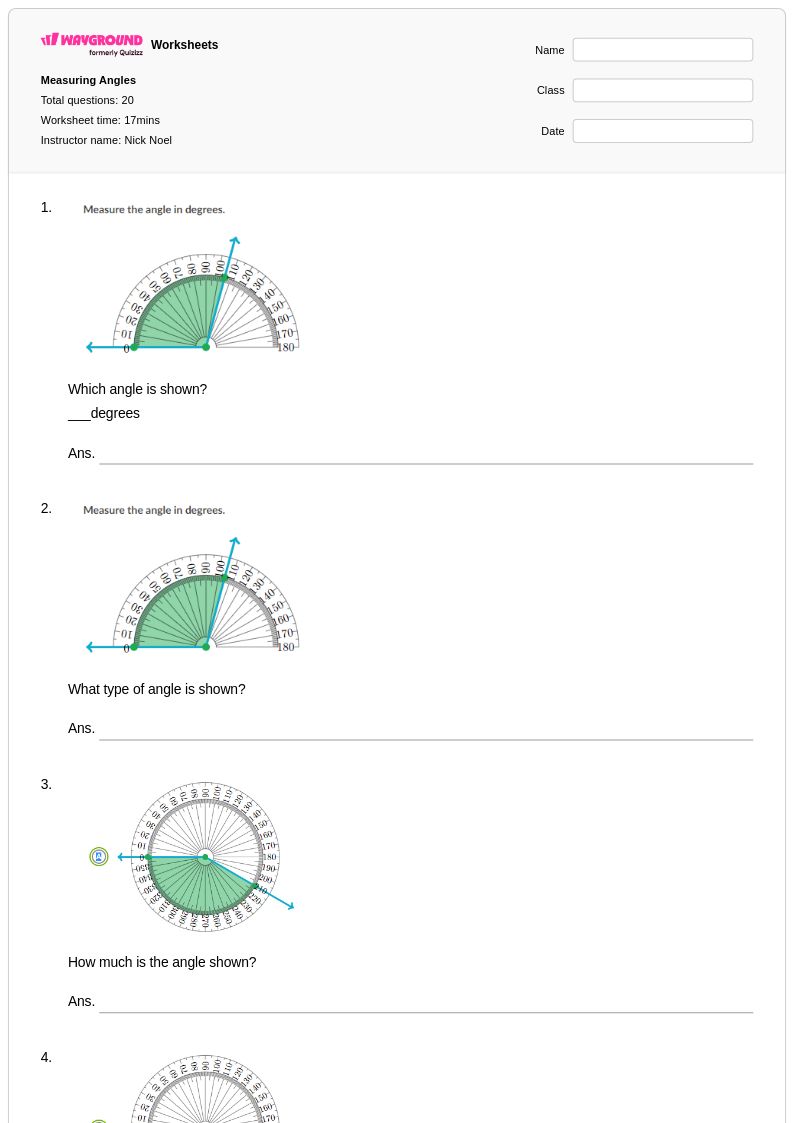
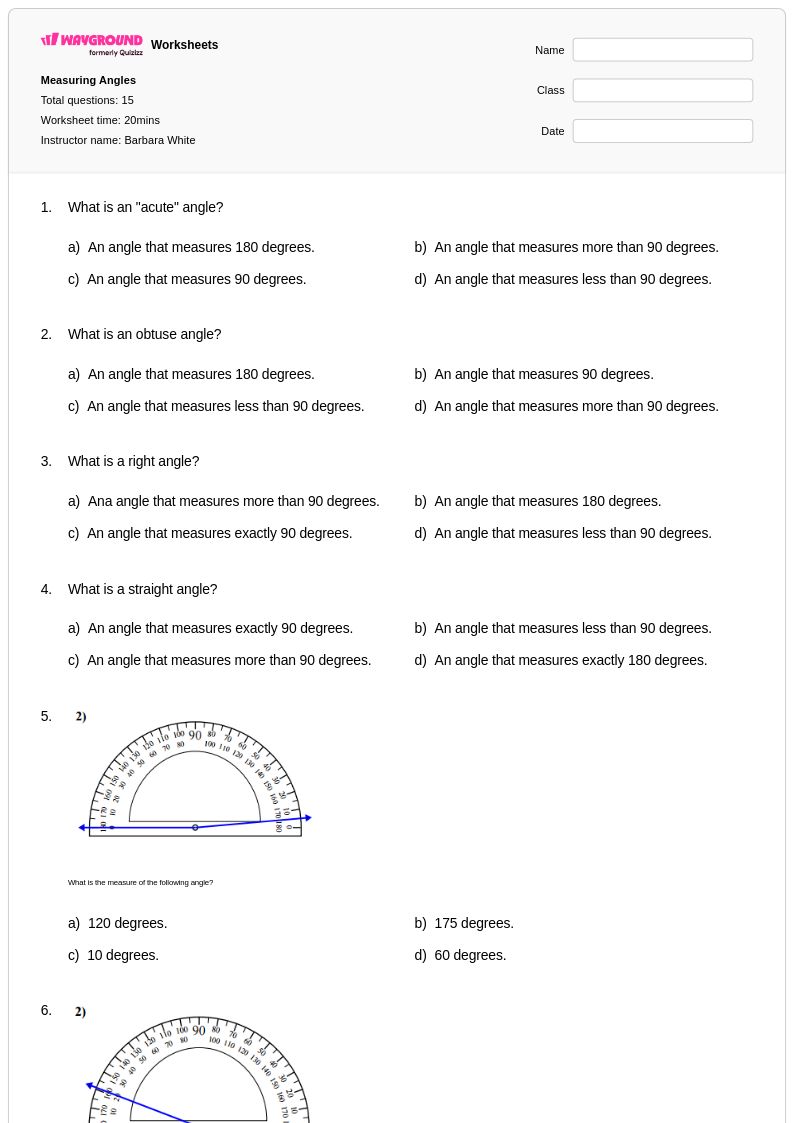
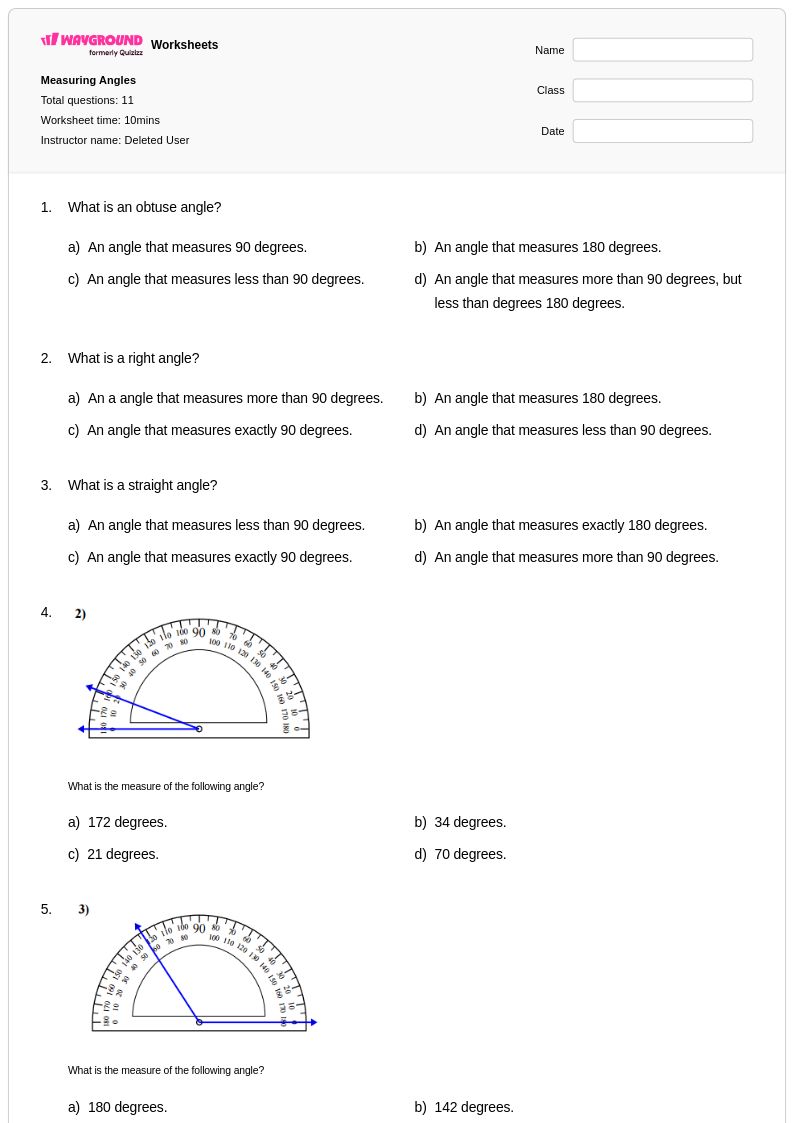
Measuring angles worksheets for Class 3 students available through Wayground (formerly Quizizz) provide foundational experiences with angle measurement concepts that prepare young learners for more advanced geometric reasoning. These carefully structured practice problems introduce third-grade students to identifying, comparing, and measuring angles using both visual estimation and basic tools like protractors adapted for their developmental level. The worksheets strengthen essential spatial reasoning skills while building vocabulary around angle types, helping students distinguish between acute, obtuse, and right angles through hands-on measurement activities. Each printable resource includes comprehensive answer keys that support independent learning and self-checking, while the free pdf format ensures easy classroom distribution and home practice opportunities.
Wayground (formerly Quizizz) empowers educators with access to millions of teacher-created measuring angles worksheets specifically designed for Class 3 mathematics instruction, featuring robust search and filtering capabilities that allow teachers to locate resources aligned with specific curriculum standards and learning objectives. The platform's differentiation tools enable instructors to customize worksheet difficulty levels, ensuring that struggling students receive appropriate scaffolding while advanced learners encounter enriching challenges that extend their understanding of angle measurement concepts. These versatile resources are available in both printable and digital formats, including downloadable pdf versions, making them ideal for diverse instructional settings from traditional classrooms to remote learning environments. Teachers can efficiently plan targeted skill practice sessions, design remediation activities for students who need additional support, and create enrichment opportunities that deepen conceptual understanding of geometric measurement principles.