
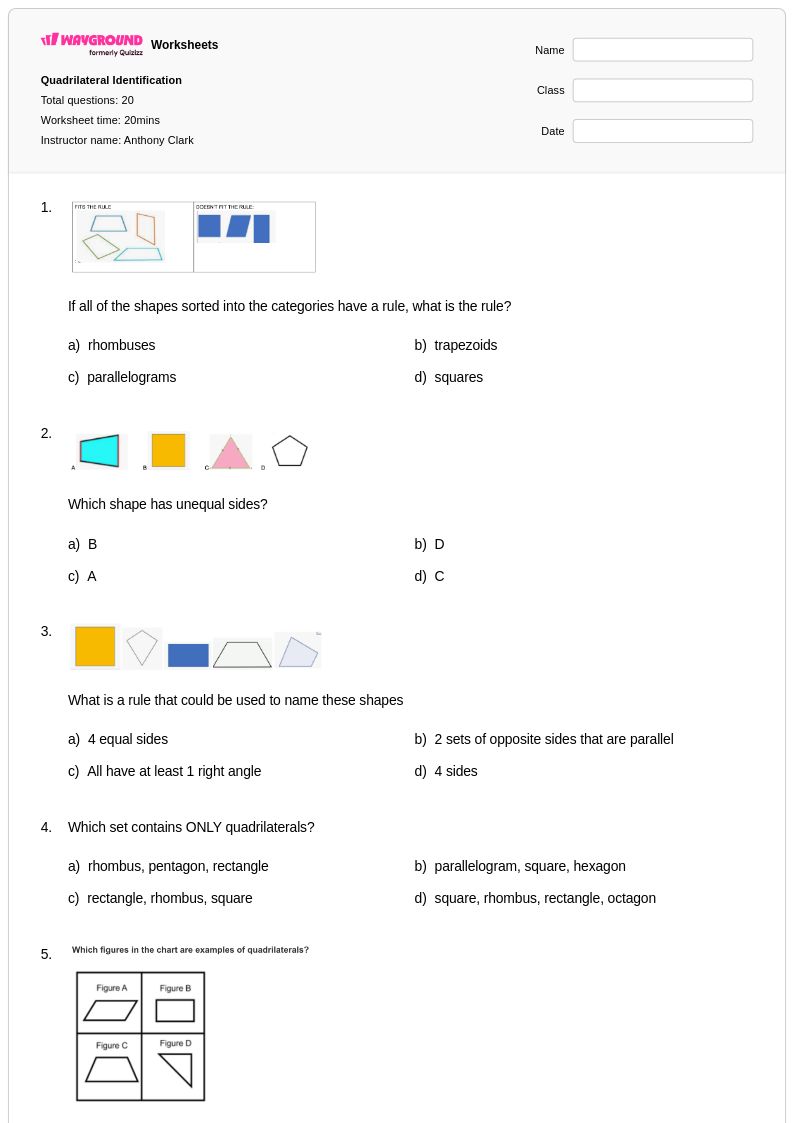
20 Q
3rd - Uni
14 Q
3rd
20 Q
3rd
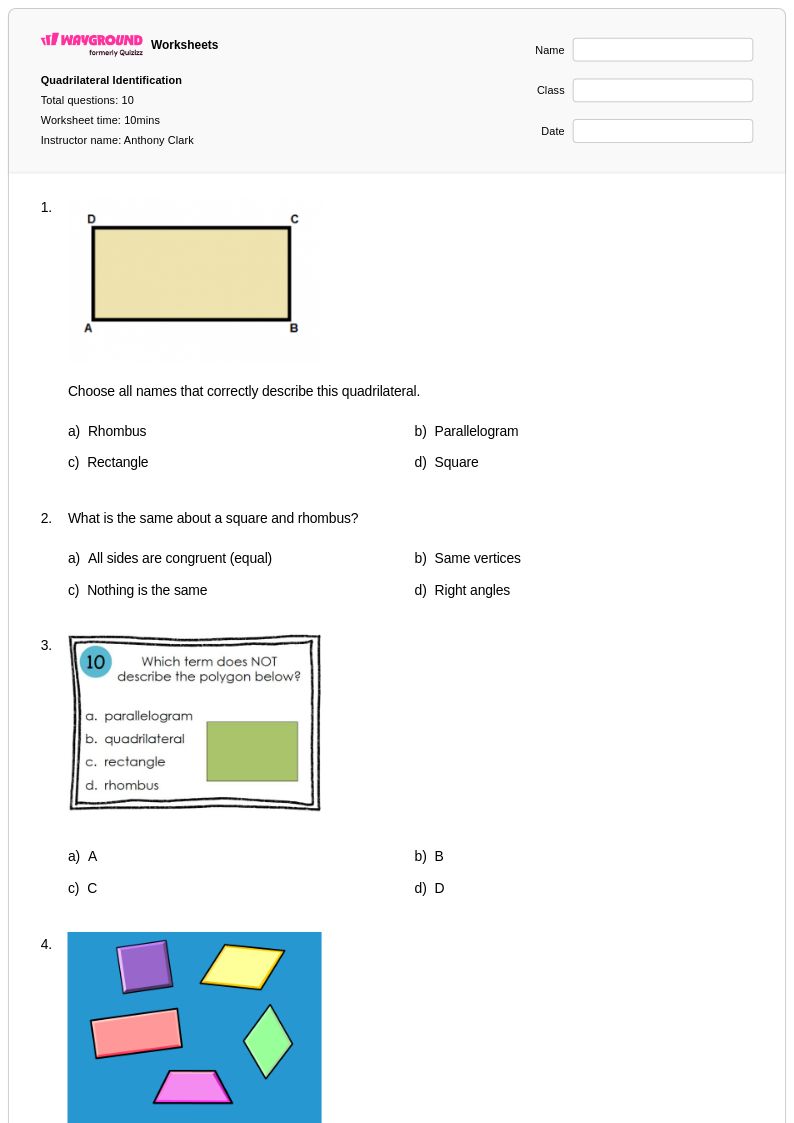
10 Q
3rd - Uni
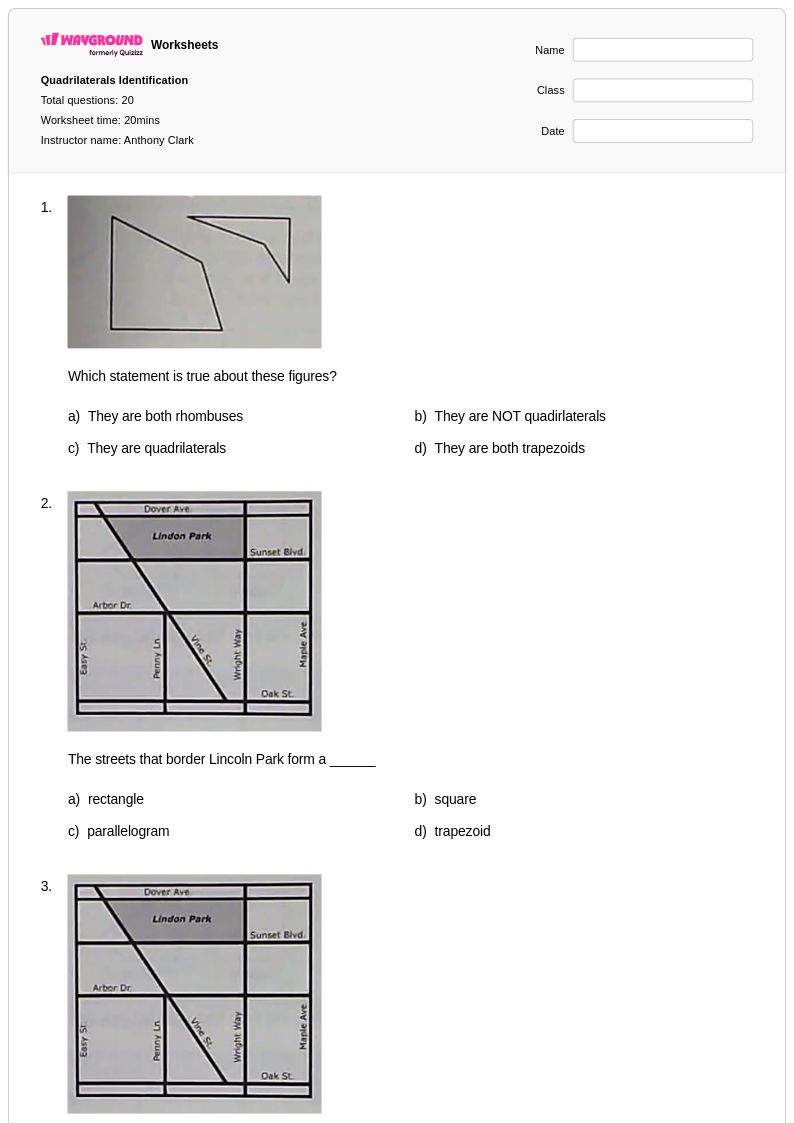
20 Q
3rd - Uni
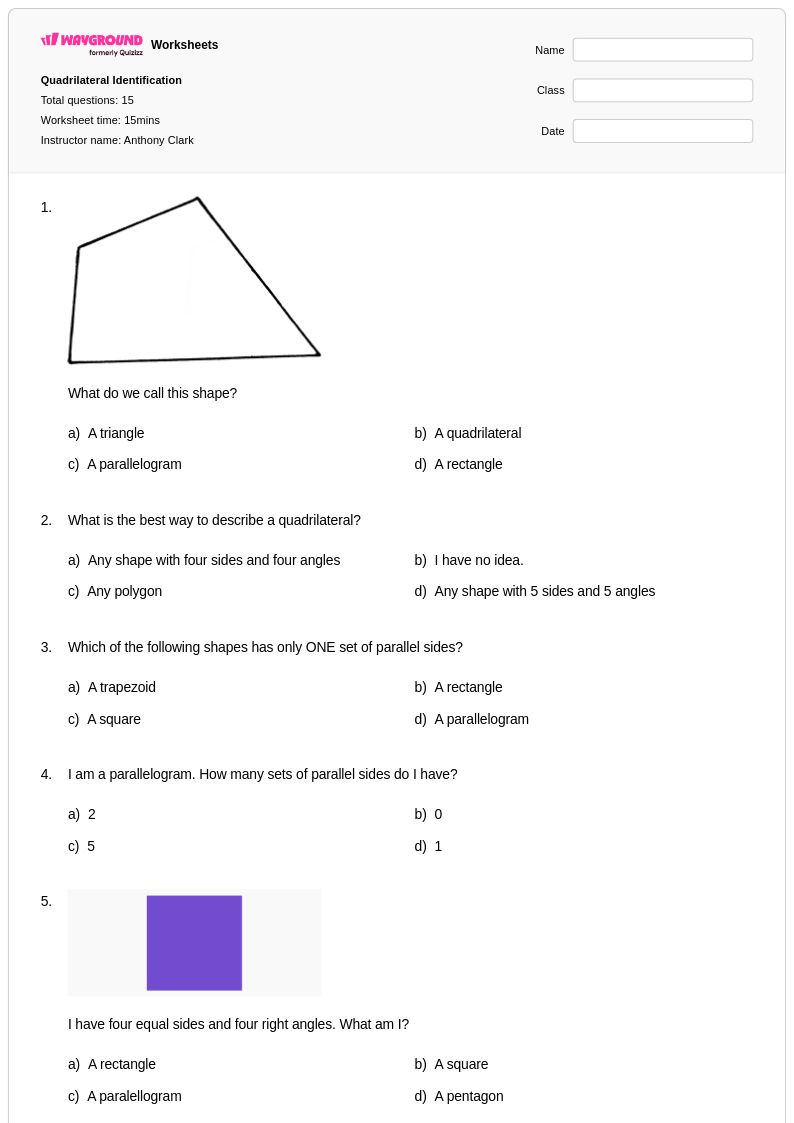
15 Q
3rd - Uni
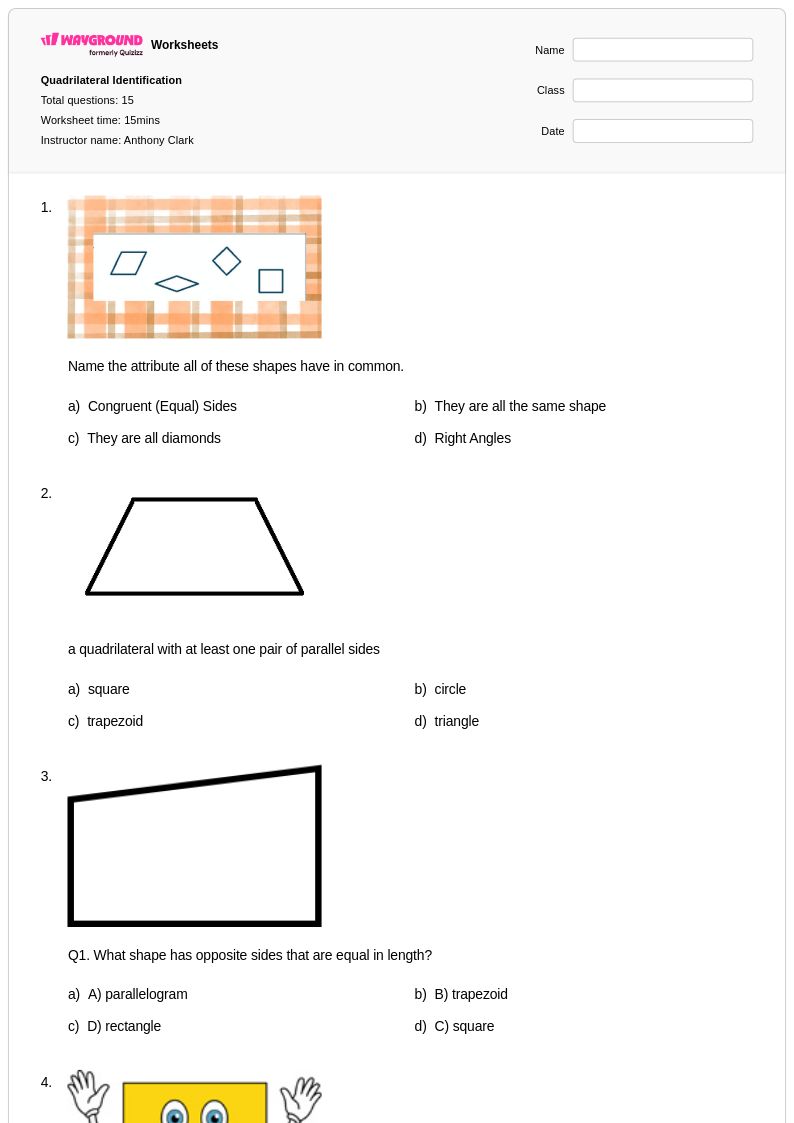
15 Q
3rd - Uni
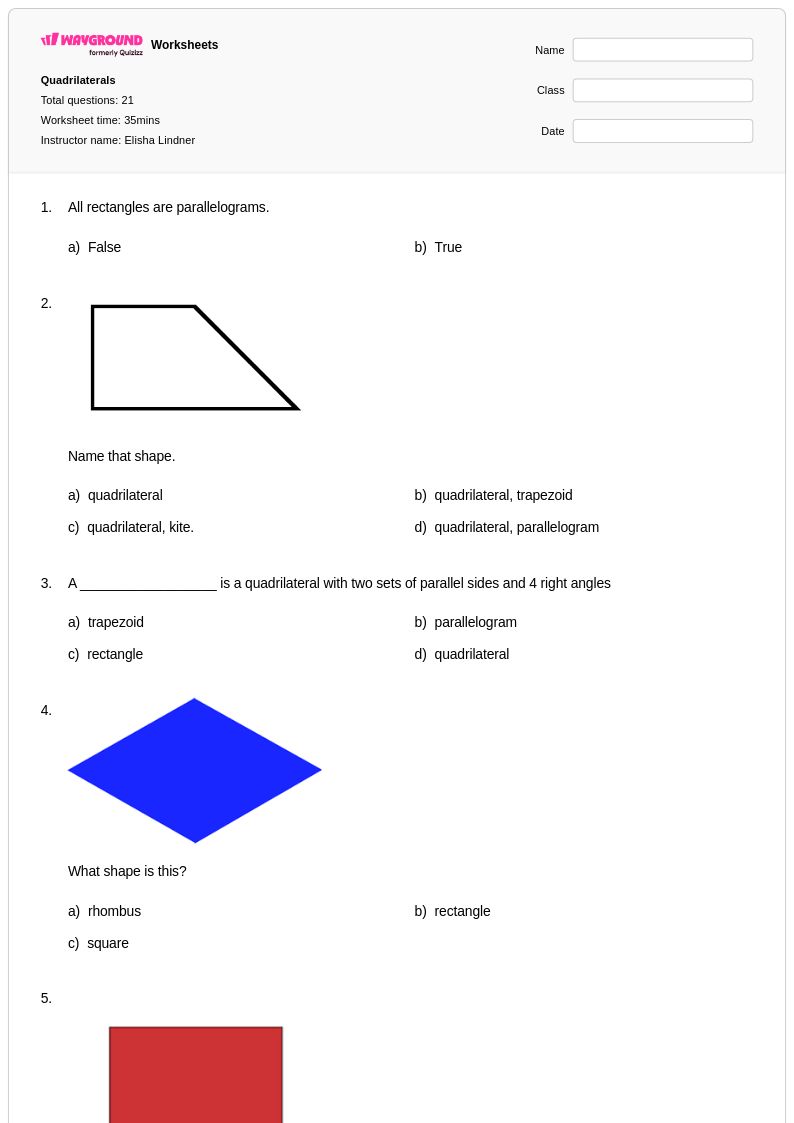
21 Q
3rd
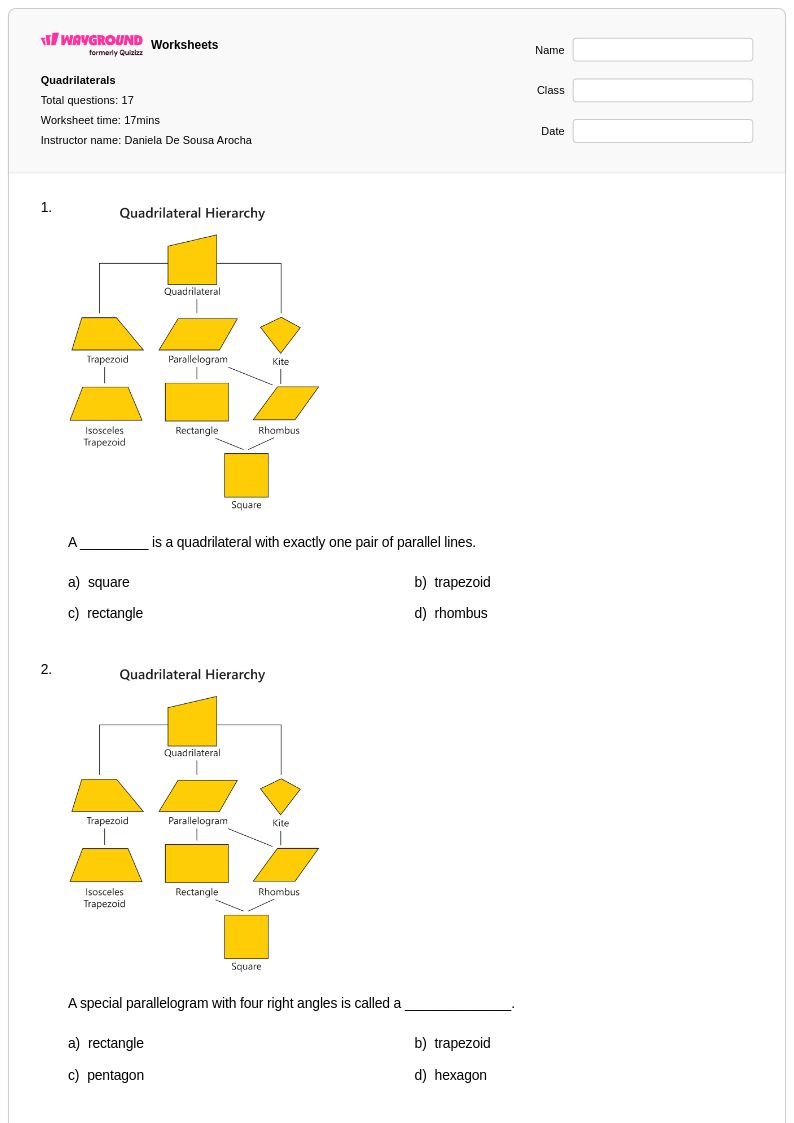
17 Q
3rd
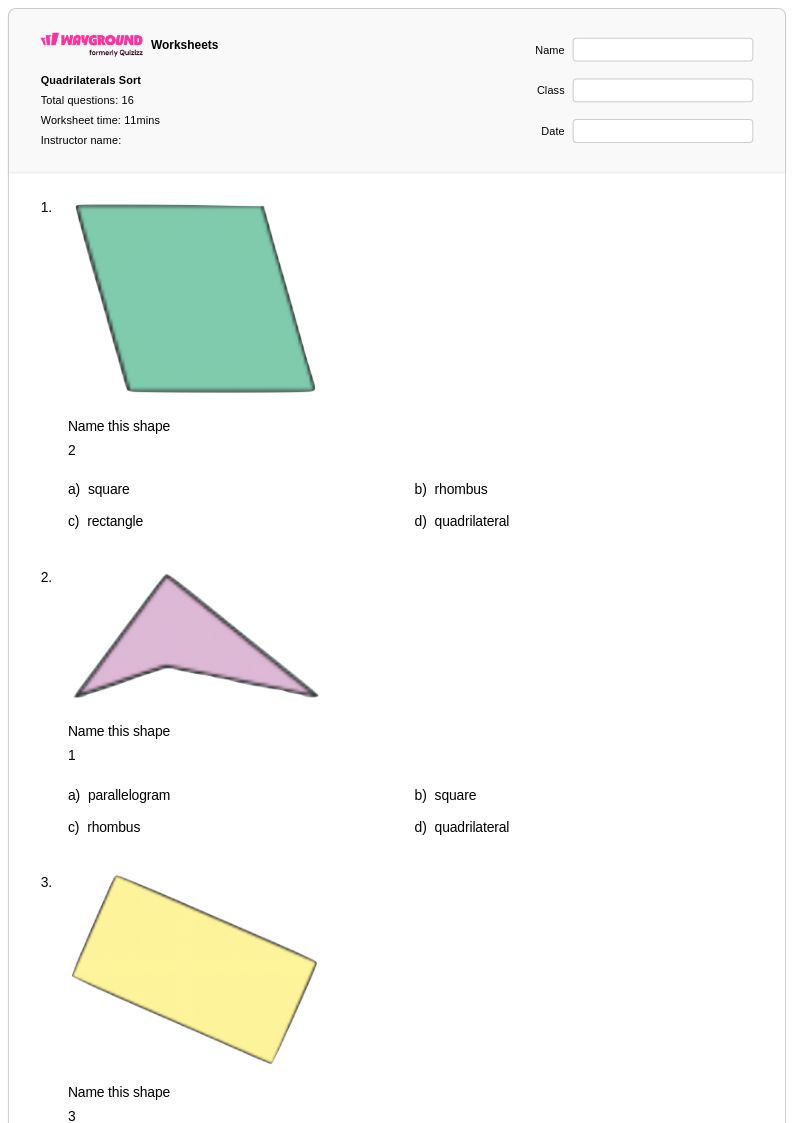
16 Q
3rd
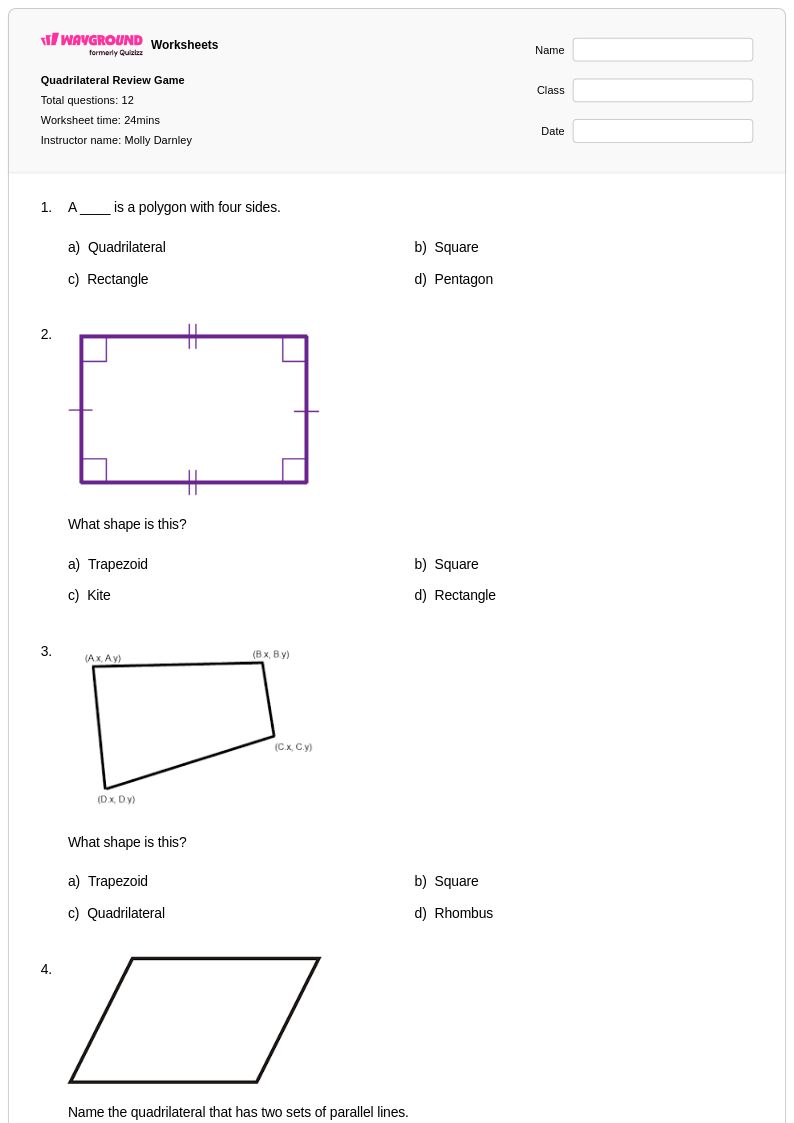
12 Q
3rd
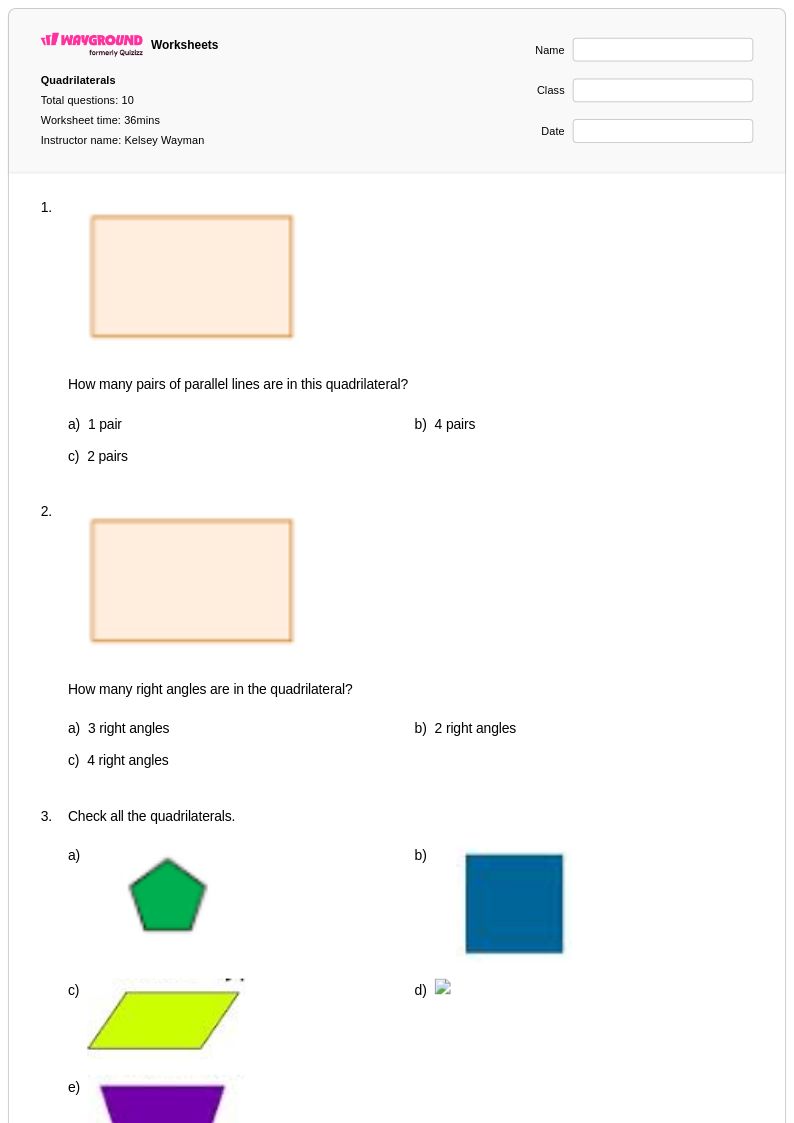
10 Q
3rd
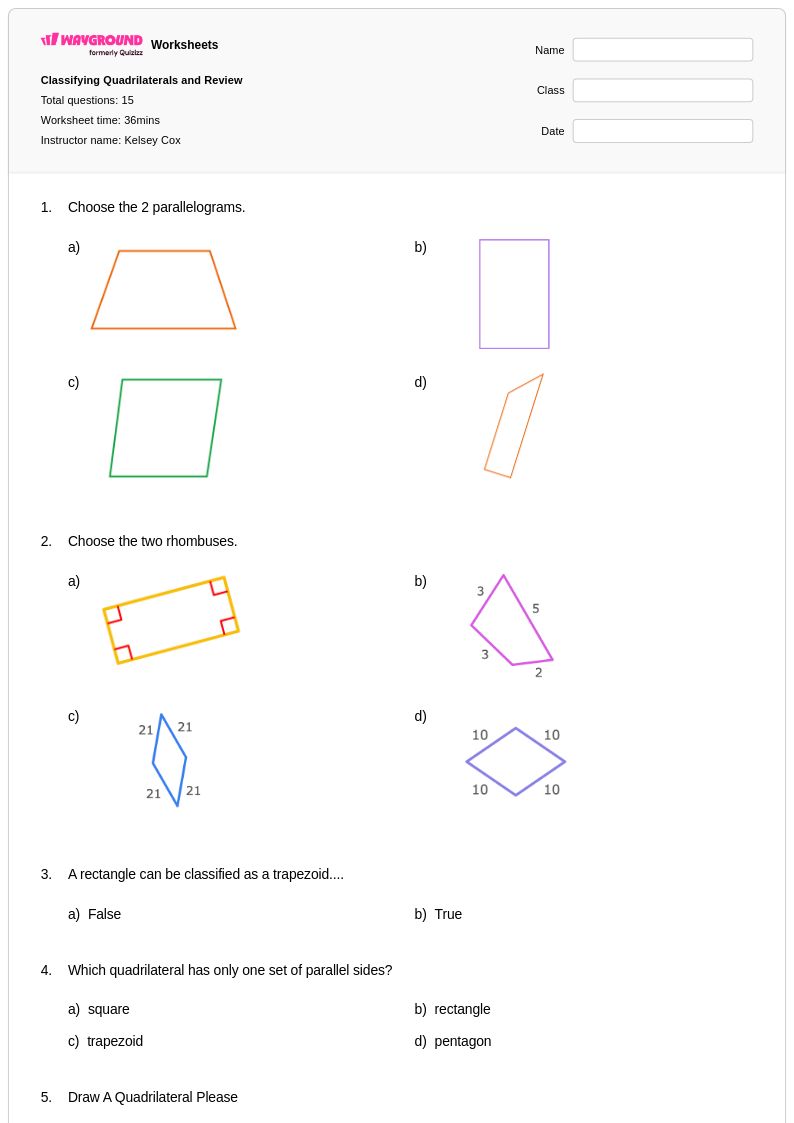
15 Q
3rd
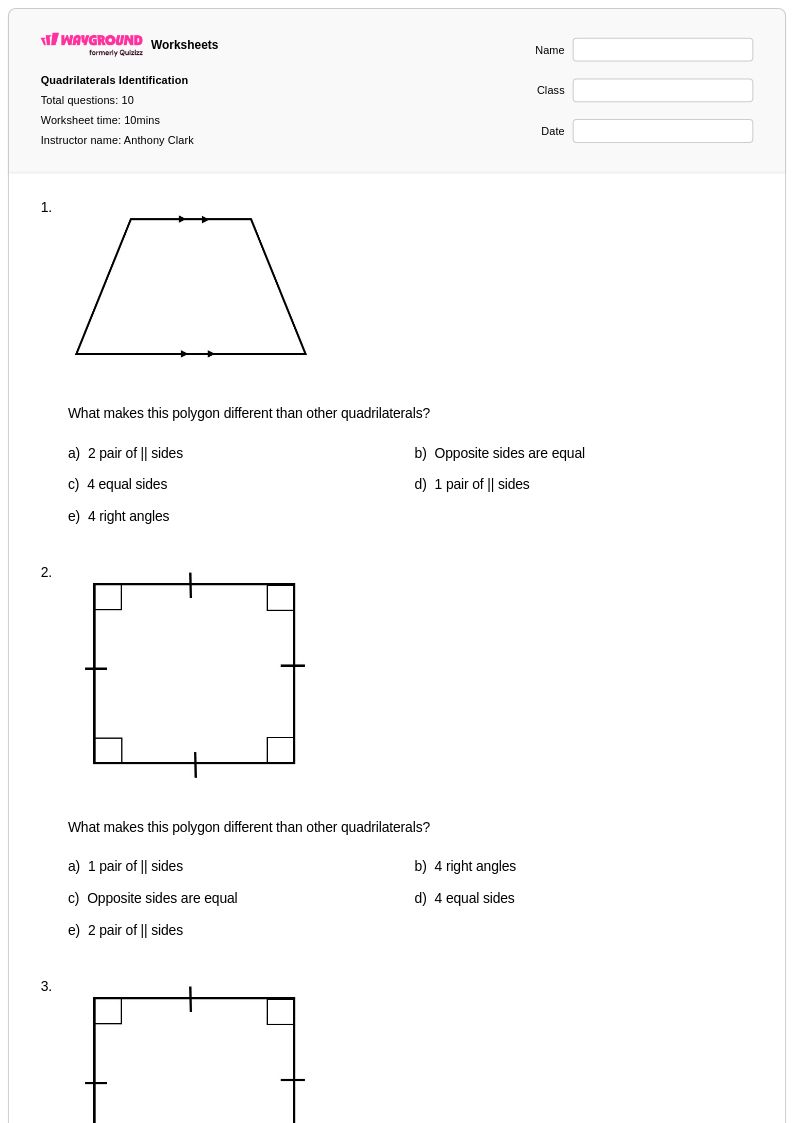
10 Q
3rd - Uni
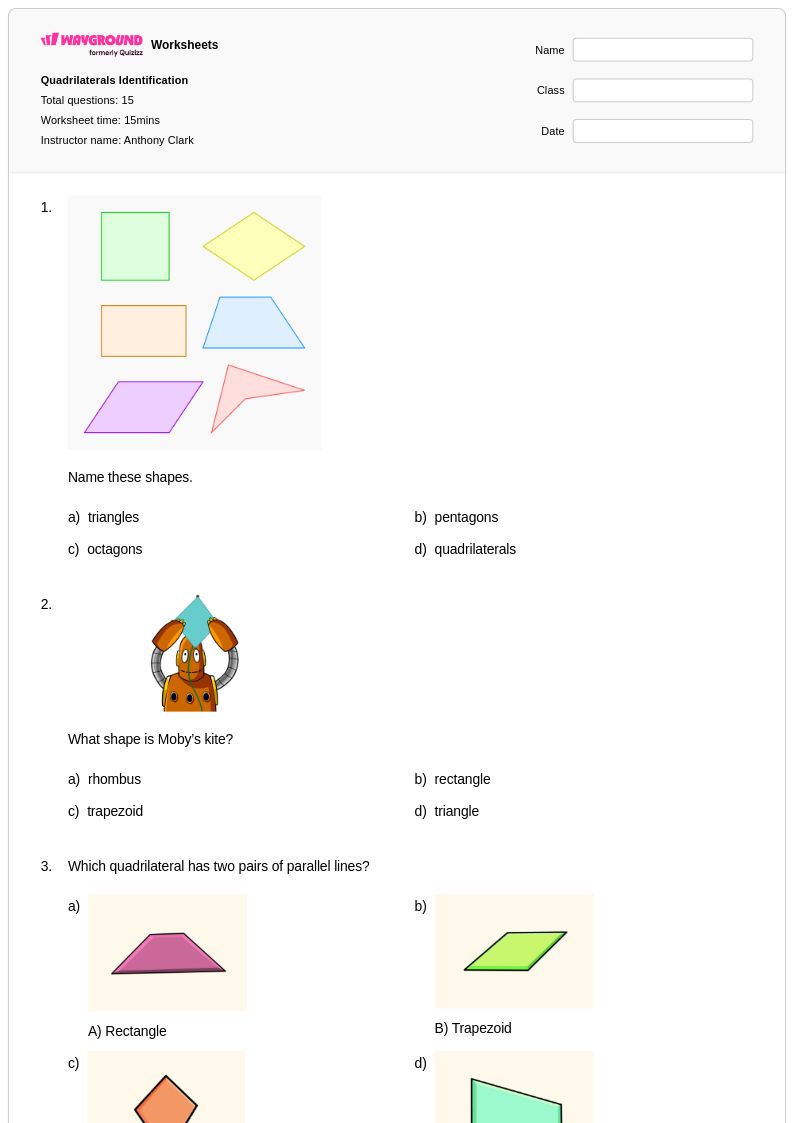
15 Q
3rd - Uni
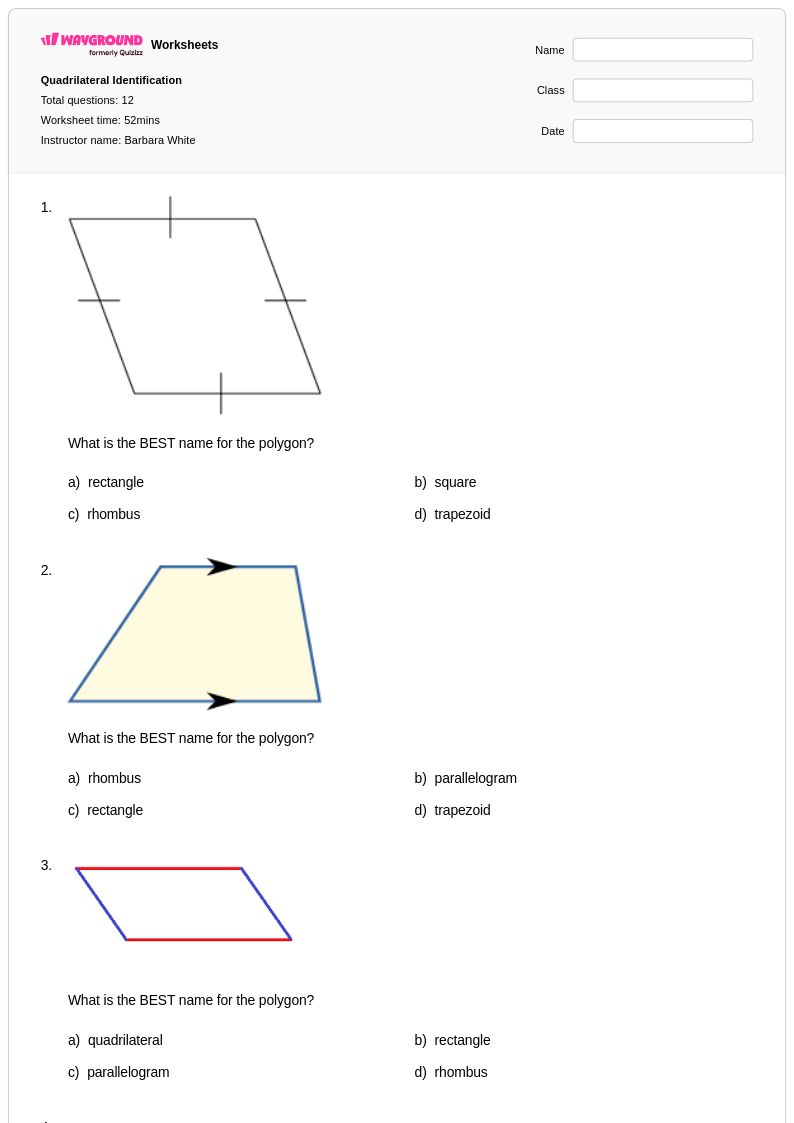
12 Q
2nd - 6th
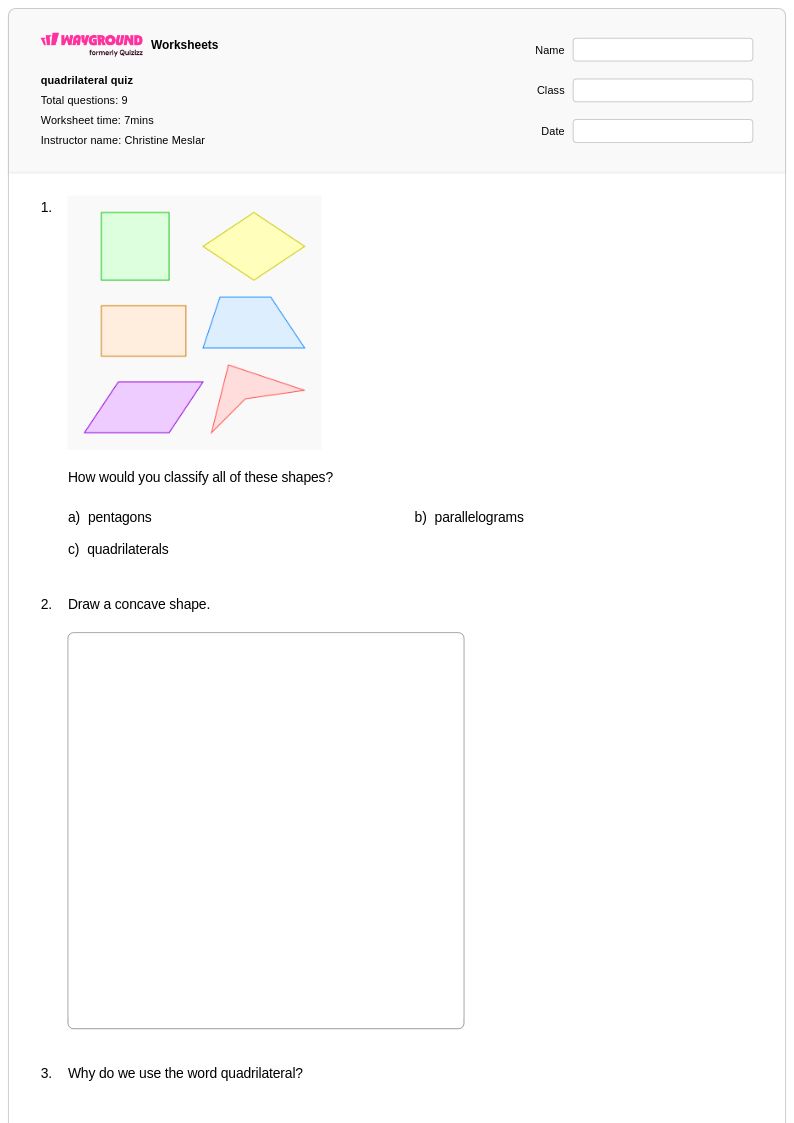
9 Q
3rd
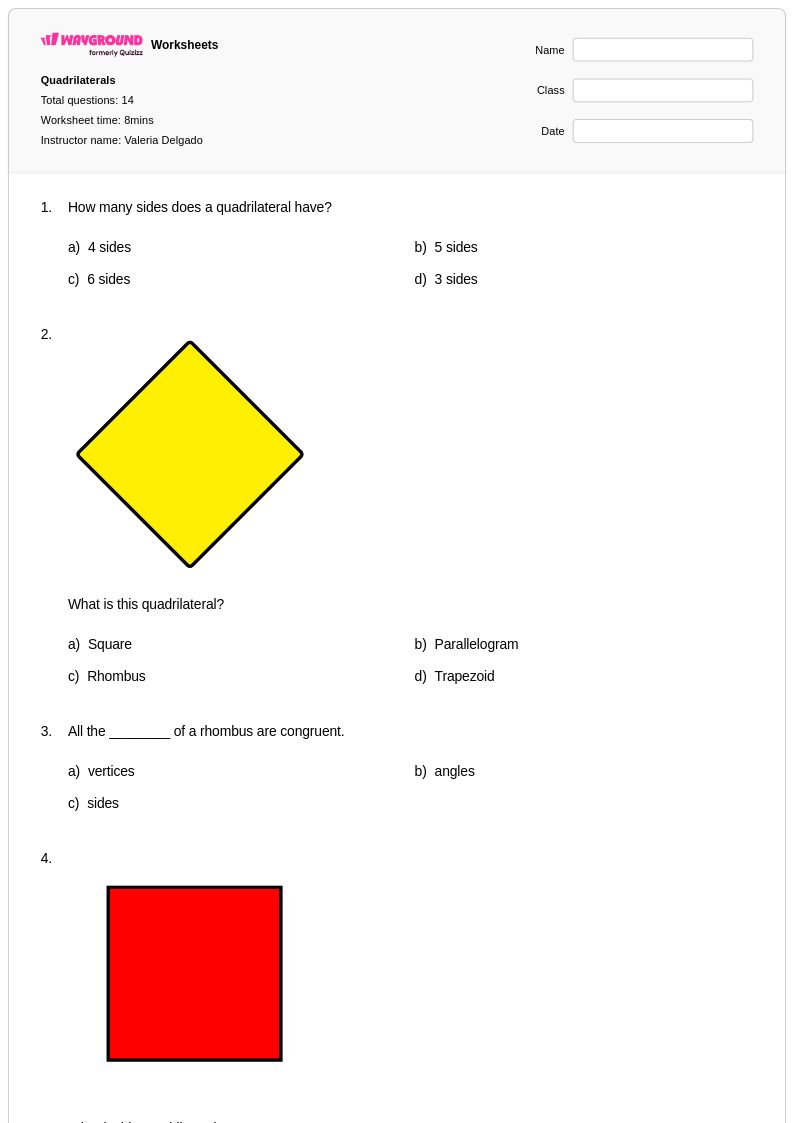
14 Q
2nd - 3rd
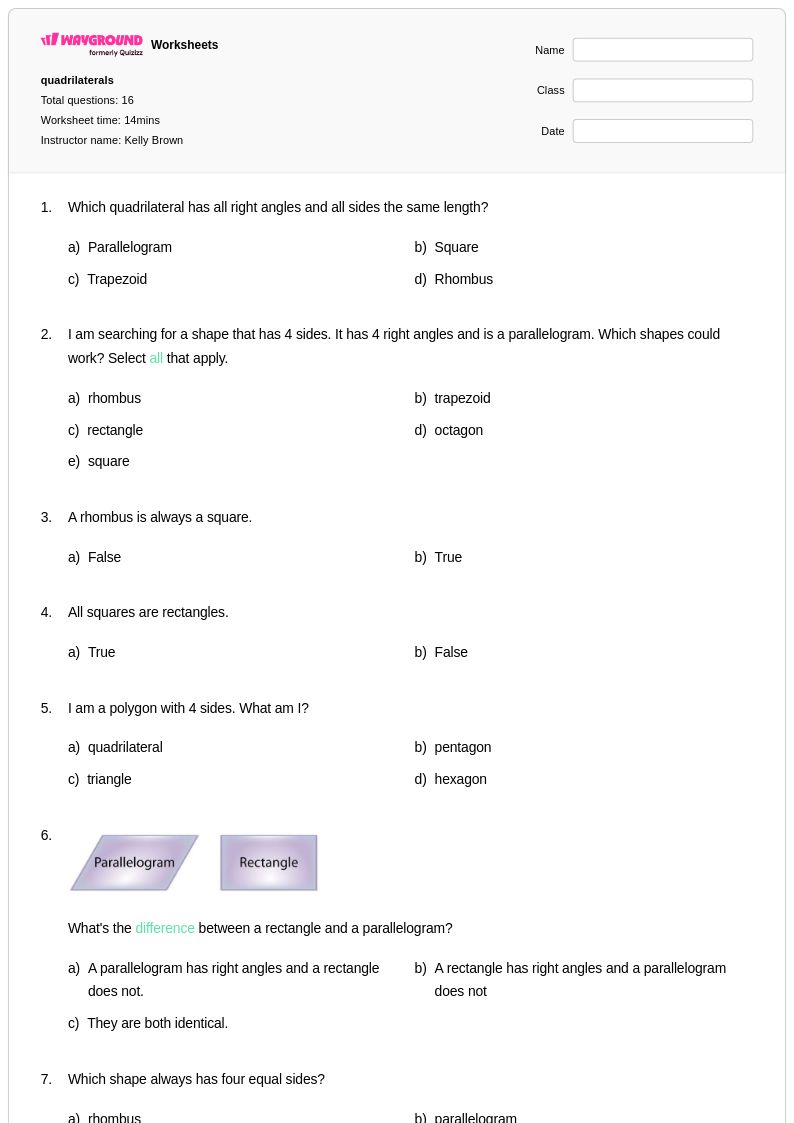
16 Q
3rd
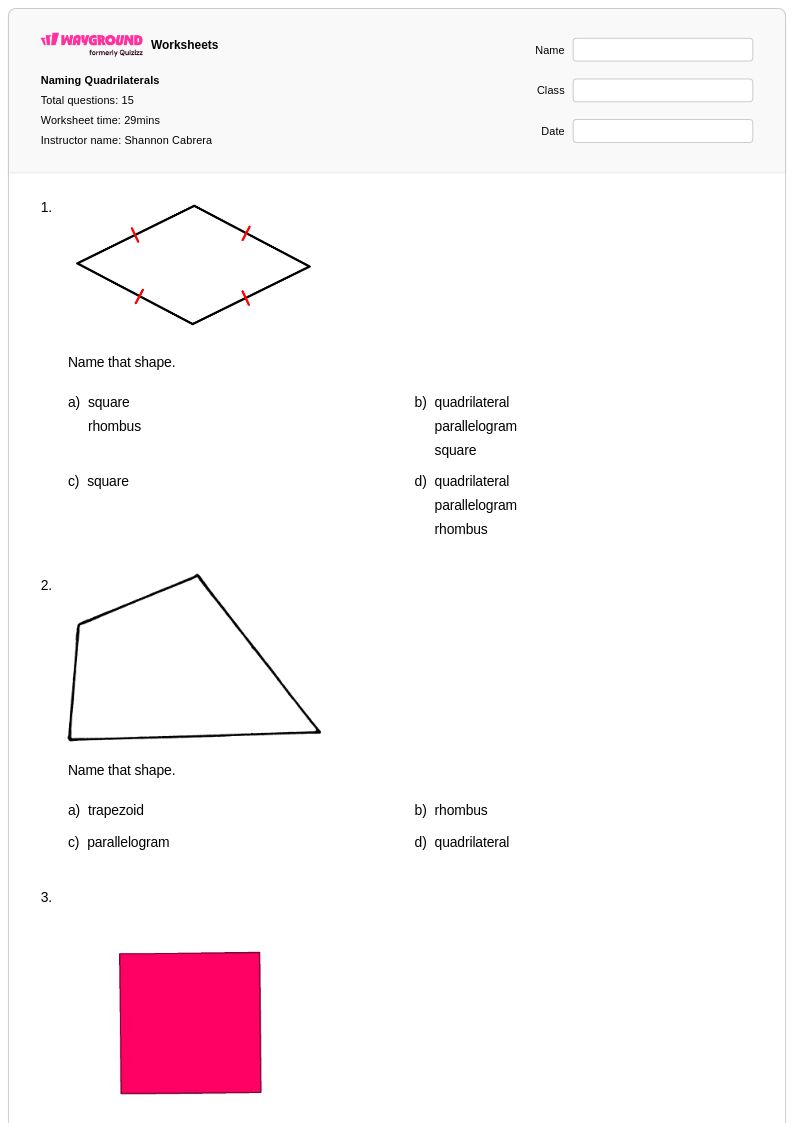
15 Q
3rd
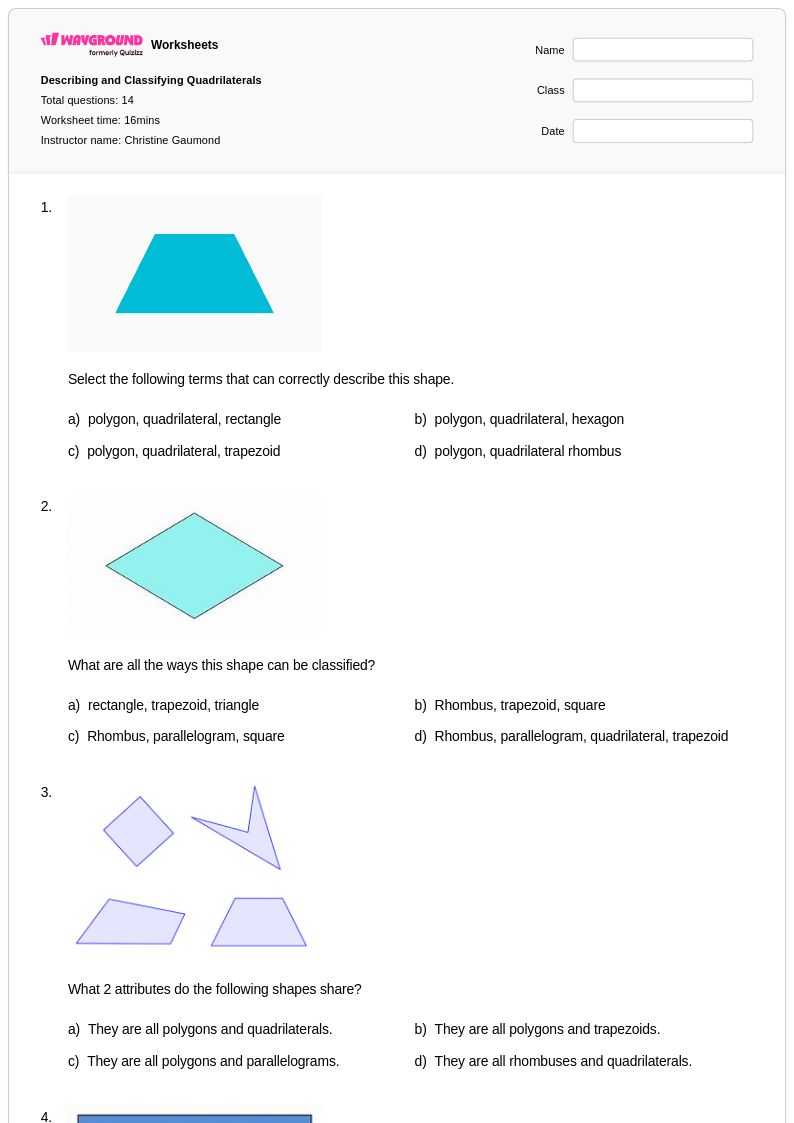
14 Q
3rd
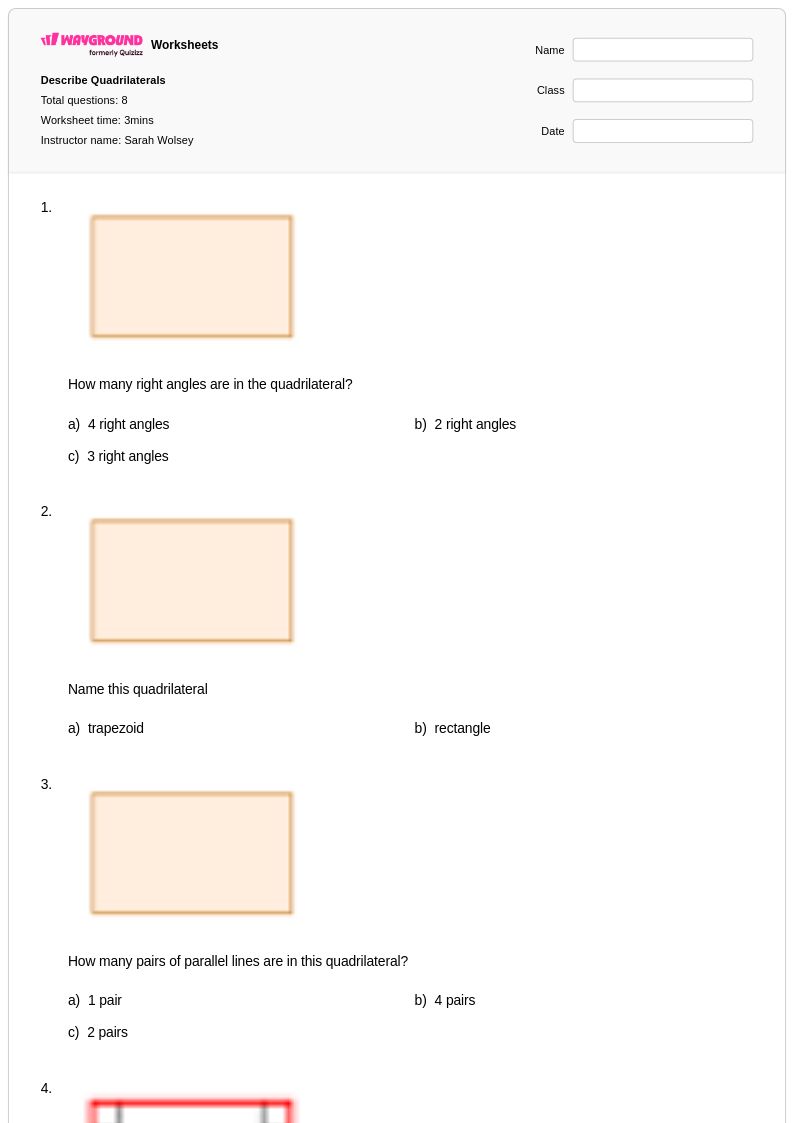
8 Q
3rd
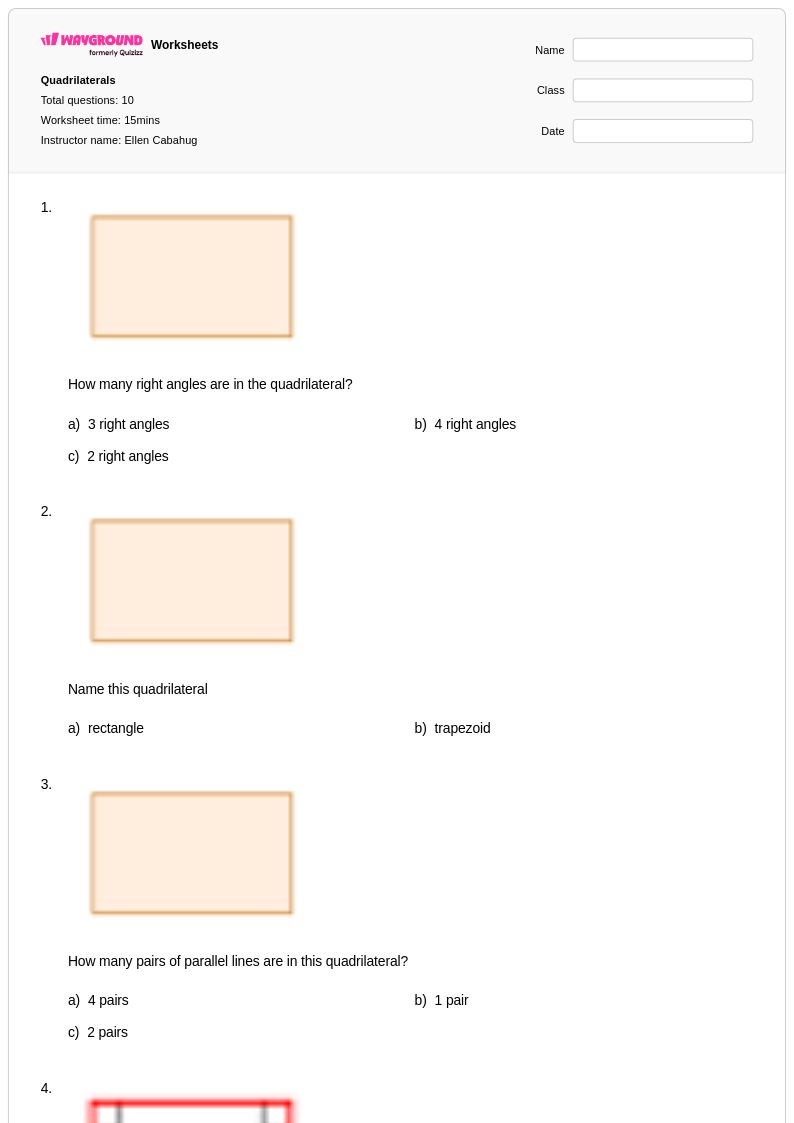
10 Q
3rd
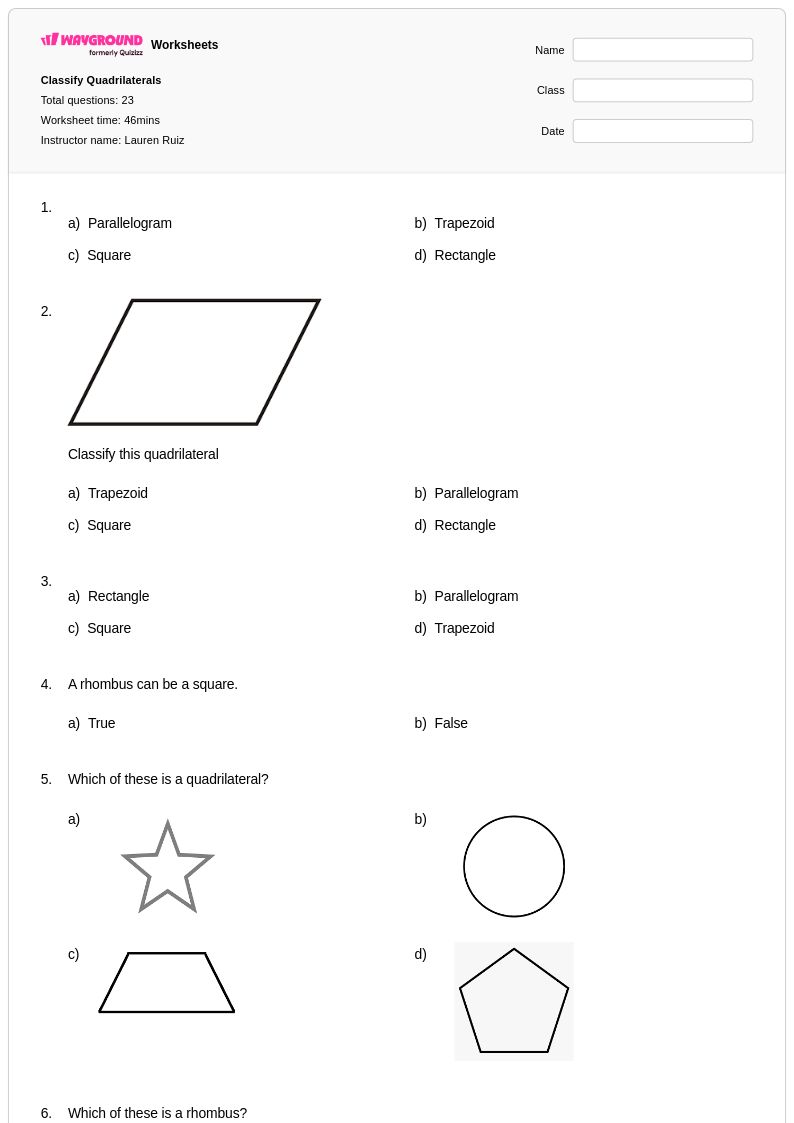
23 Q
3rd
Explore Quadrilateral Identification Worksheets by Grades
Explore Other Subject Worksheets for class 3
Explore printable Quadrilateral Identification worksheets for Class 3
Quadrilateral identification worksheets for Class 3 students through Wayground (formerly Quizizz) provide essential practice in recognizing and distinguishing between different four-sided geometric shapes. These carefully crafted resources help young learners develop fundamental geometry skills by teaching them to identify squares, rectangles, parallelograms, trapezoids, and rhombuses based on their unique properties such as side lengths, parallel sides, and right angles. Each worksheet collection includes comprehensive answer keys that enable both independent learning and guided instruction, while the free printable format ensures accessibility for all classrooms. The practice problems progress systematically from basic shape recognition to more complex identification tasks, building students' spatial reasoning abilities and geometric vocabulary through engaging visual exercises.
Wayground (formerly Quizizz) empowers educators with an extensive library of millions of teacher-created quadrilateral identification resources specifically designed for Class 3 mathematics instruction. The platform's robust search and filtering capabilities allow teachers to quickly locate worksheets that align with specific curriculum standards and match their students' varying skill levels. These differentiation tools enable seamless customization of content difficulty, ensuring that both struggling learners and advanced students receive appropriate challenges in geometric shape recognition. Available in both printable PDF format and interactive digital versions, these worksheet collections support diverse teaching environments while facilitating efficient lesson planning, targeted remediation sessions, and enrichment activities that strengthen foundational geometry concepts essential for future mathematical success.
FAQs
What do third graders learn about quadrilaterals?
How can I help third graders understand that a shape can belong to multiple categories?
What skills do these Grade 3 worksheets focus on?
What is the most common mistake students make when classifying quadrilaterals?
How does this topic connect to Grade 3 Common Core standards?
How can I use this worksheet for practice or assessment?