
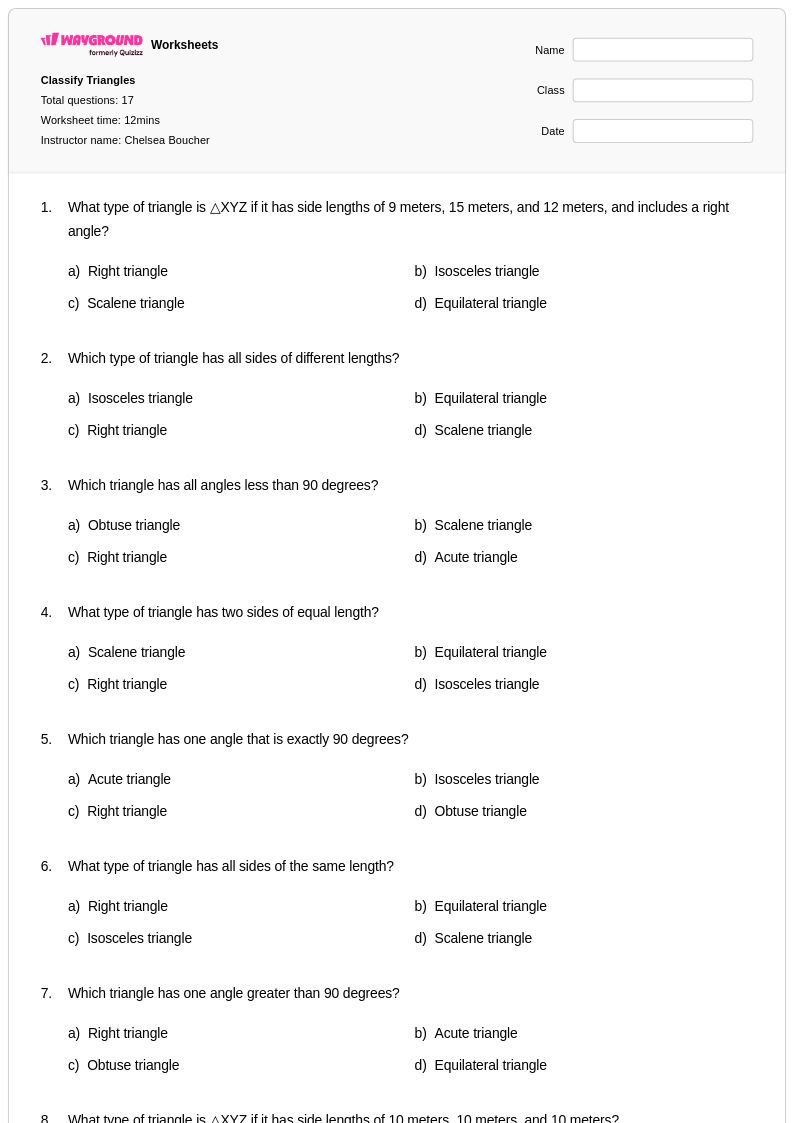
17 Q
3rd - 4th
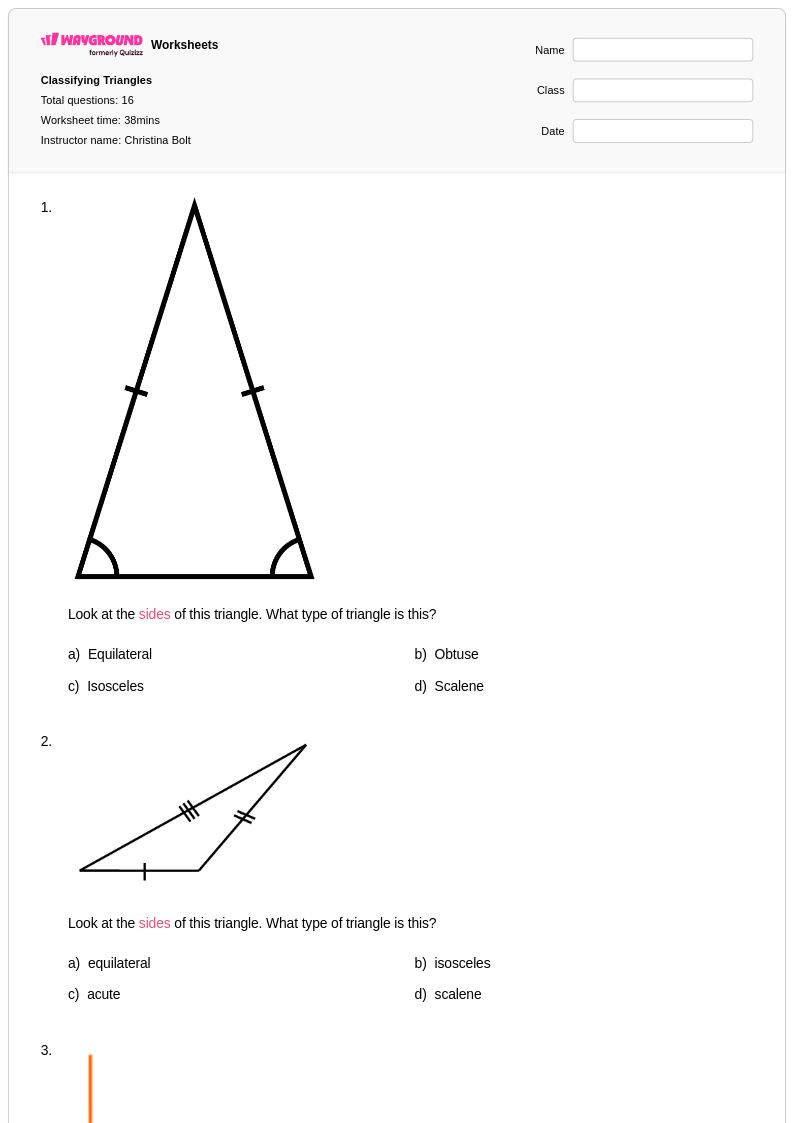
16 Q
3rd - 5th
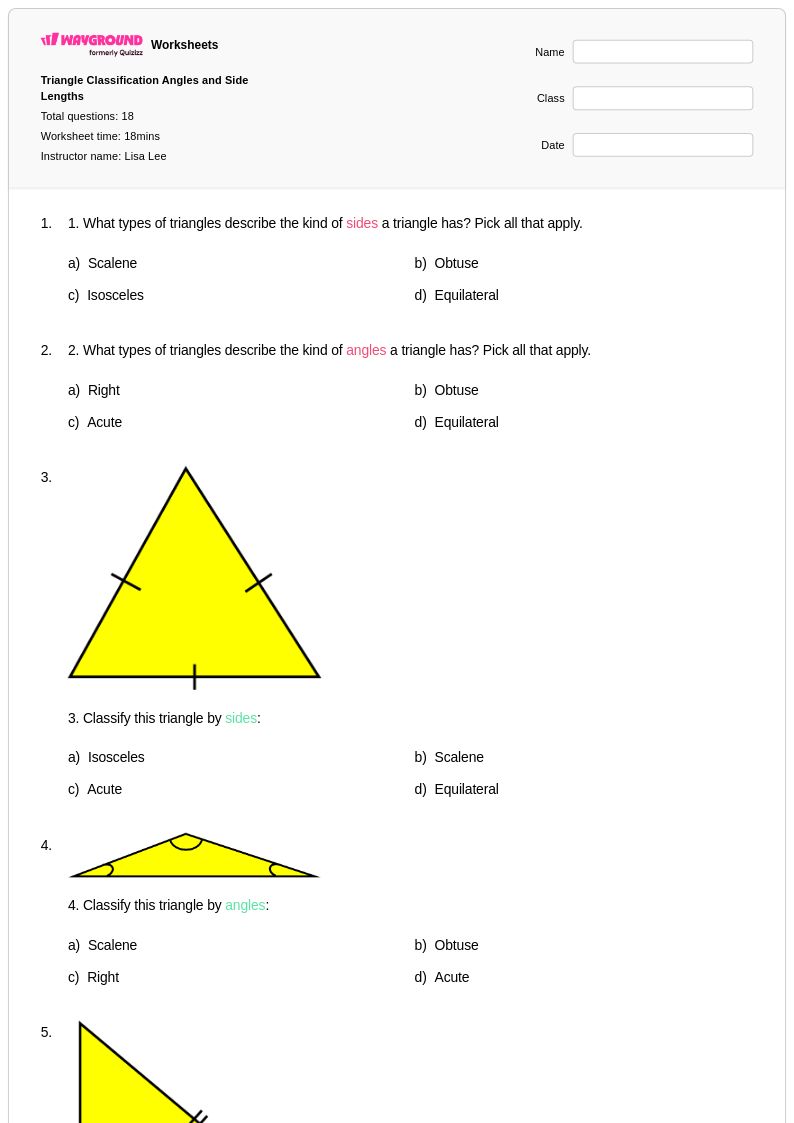
18 Q
3rd - 4th
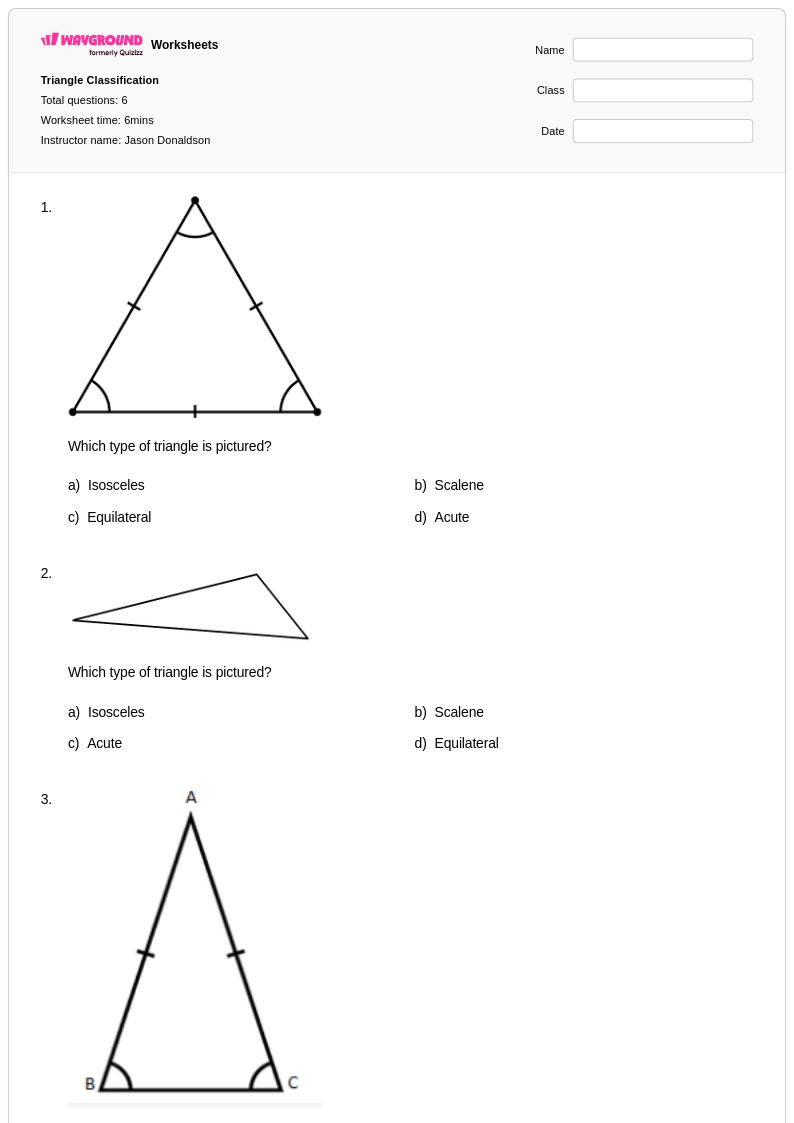
6 Q
3rd - 4th
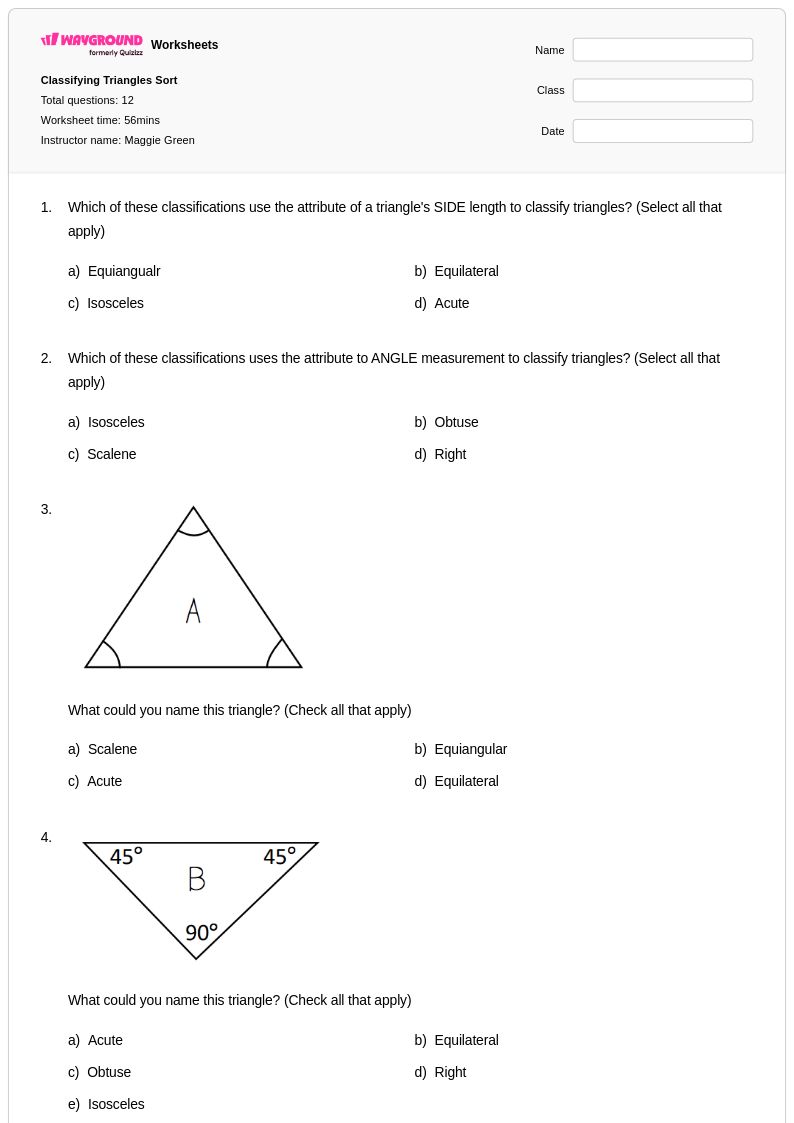
12 Q
3rd - 5th
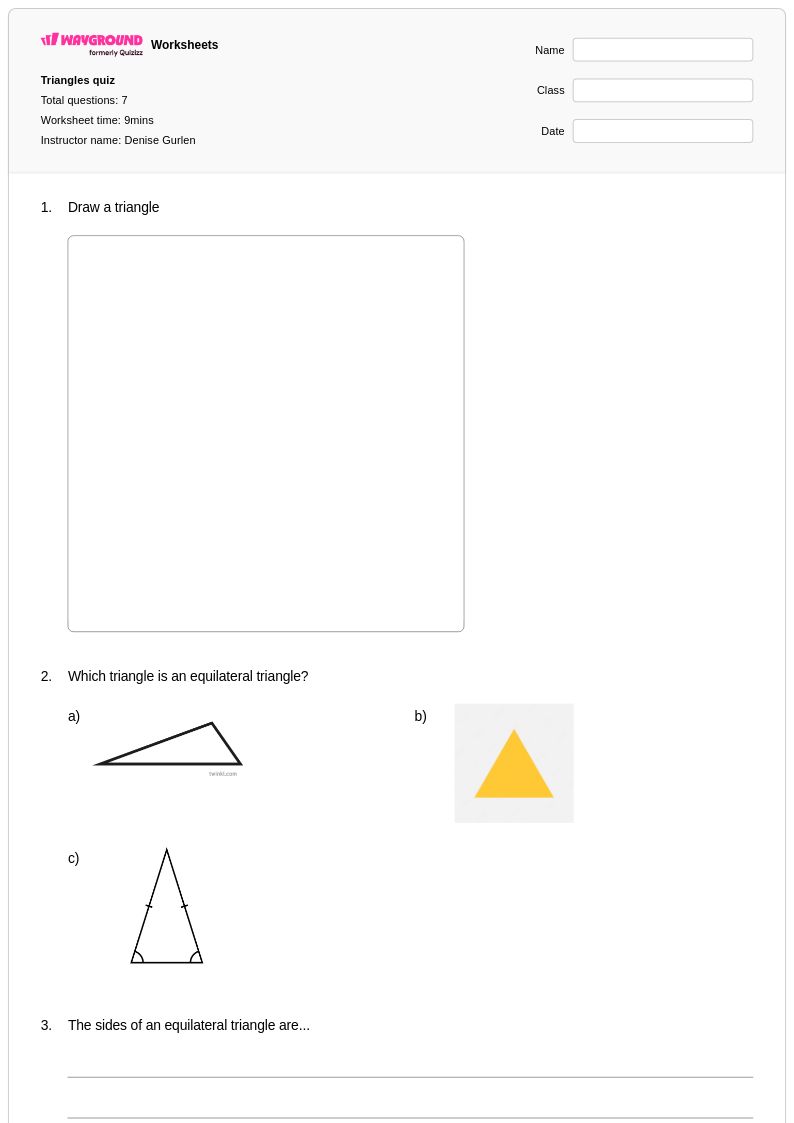
7 Q
3rd
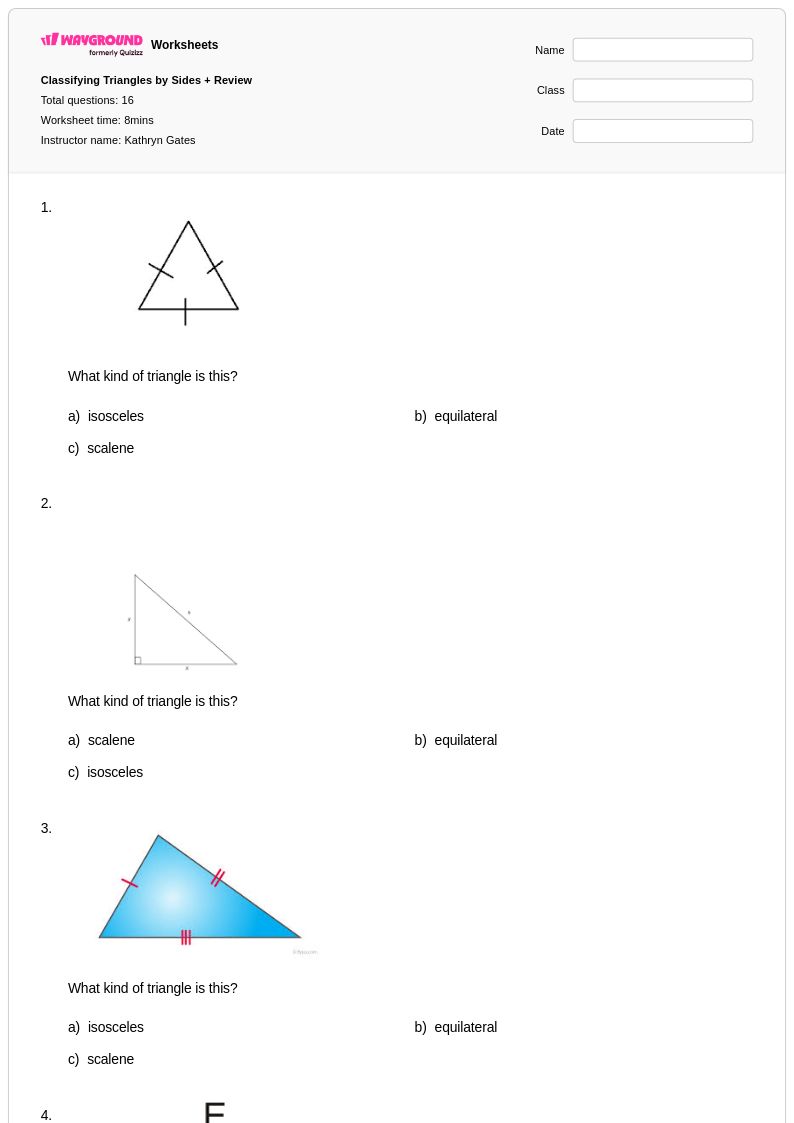
16 Q
3rd - 4th
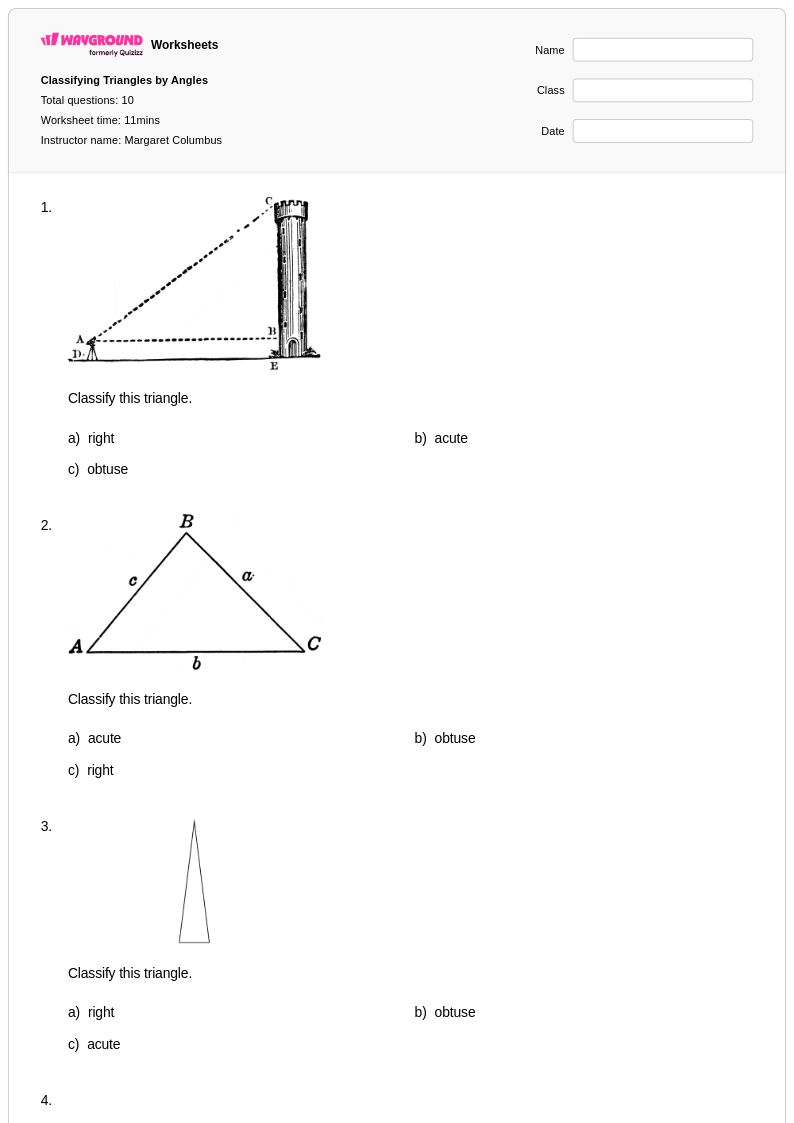
10 Q
3rd - 4th
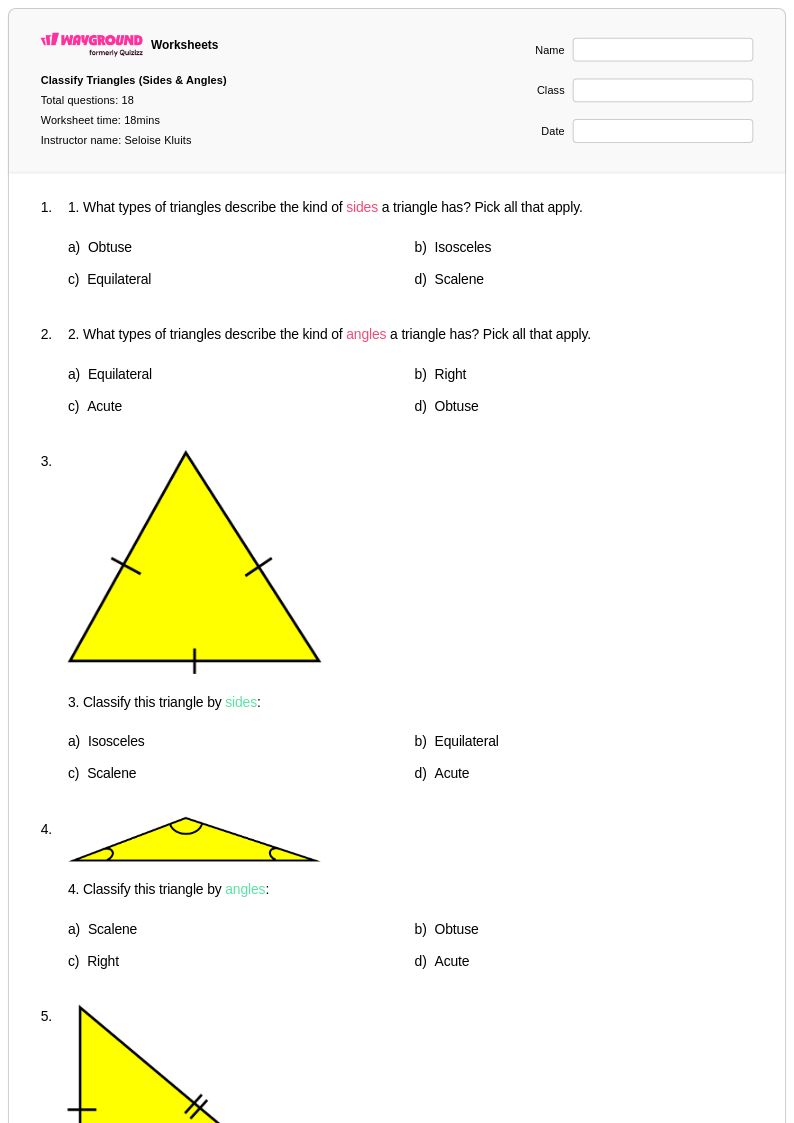
18 Q
3rd - 4th
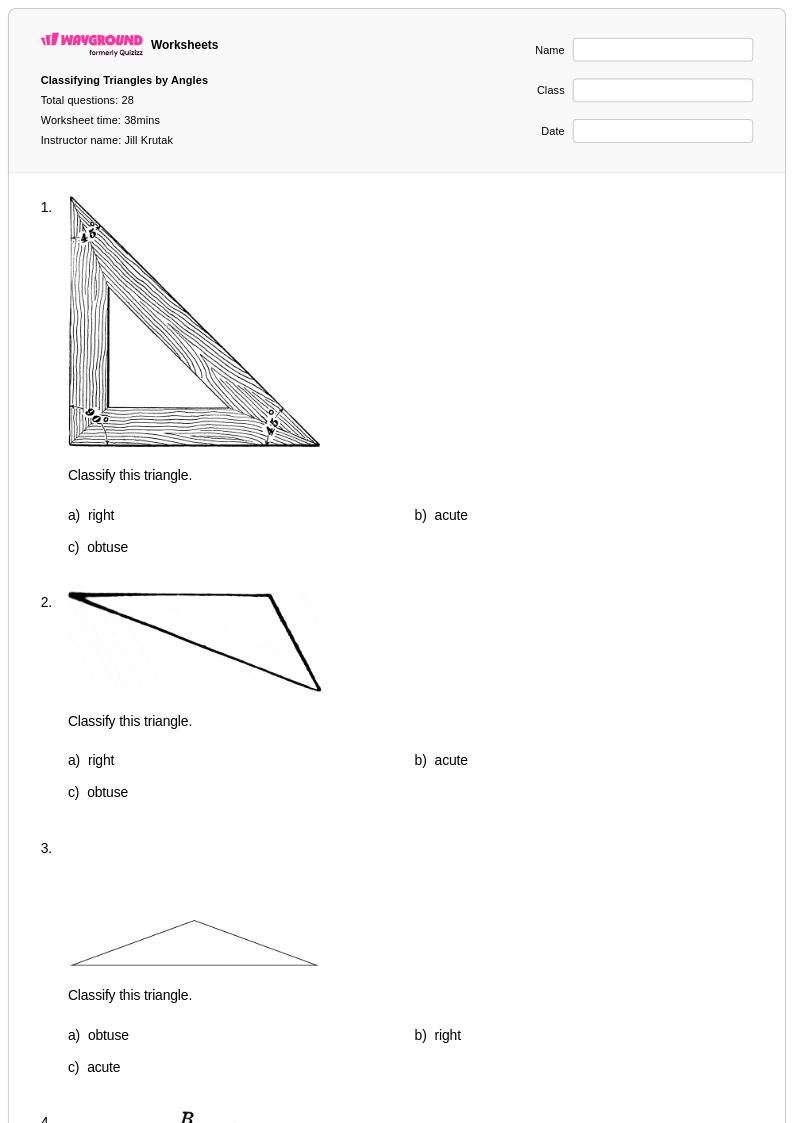
28 Q
3rd - 5th
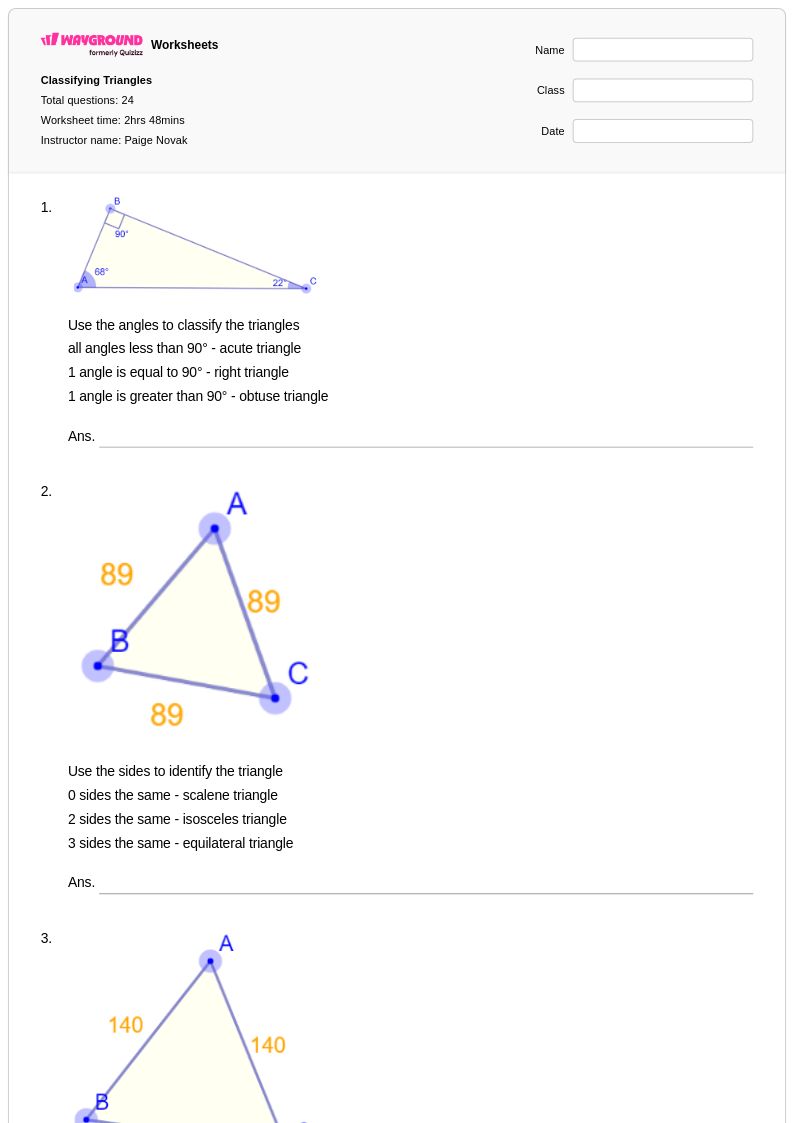
24 Q
3rd
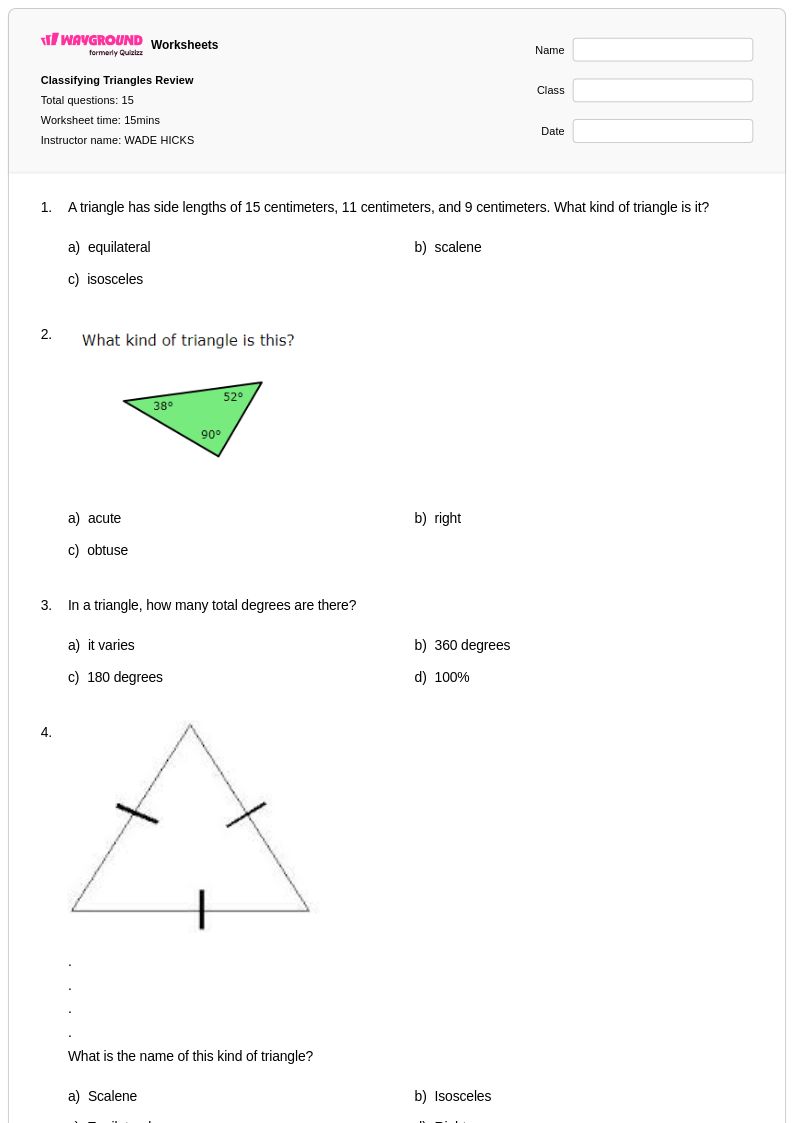
15 Q
3rd - 5th
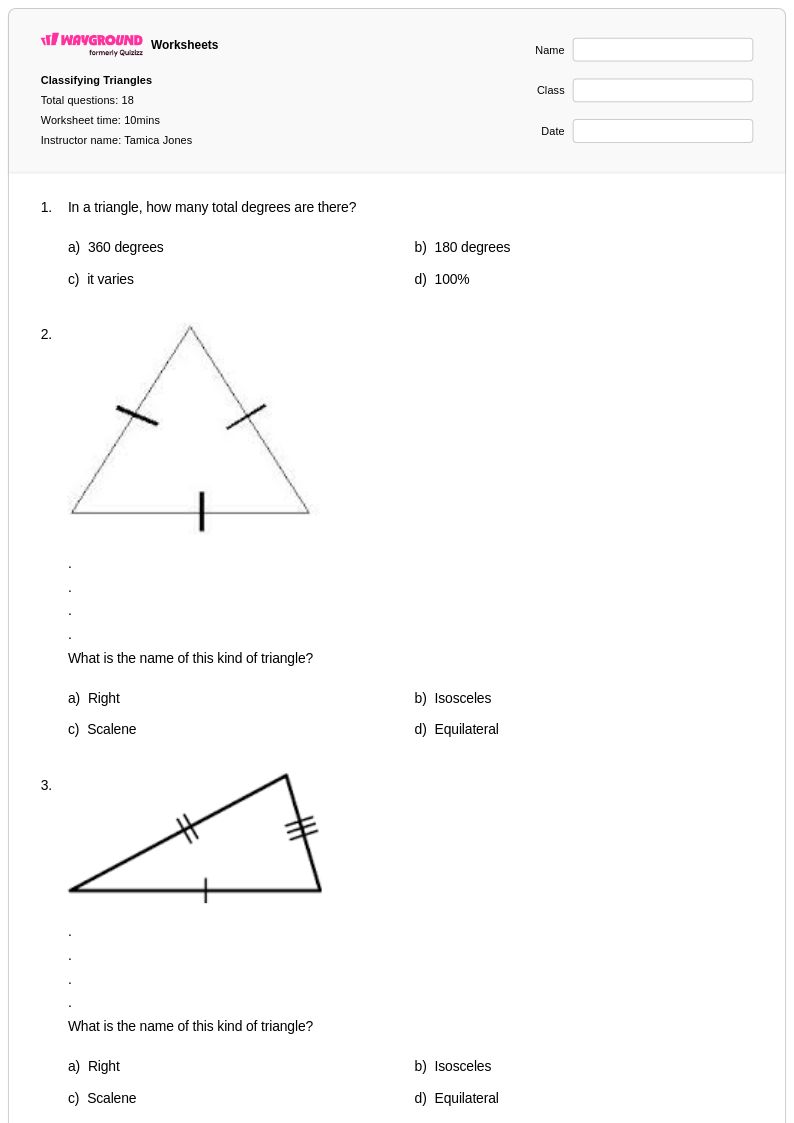
18 Q
3rd - 5th
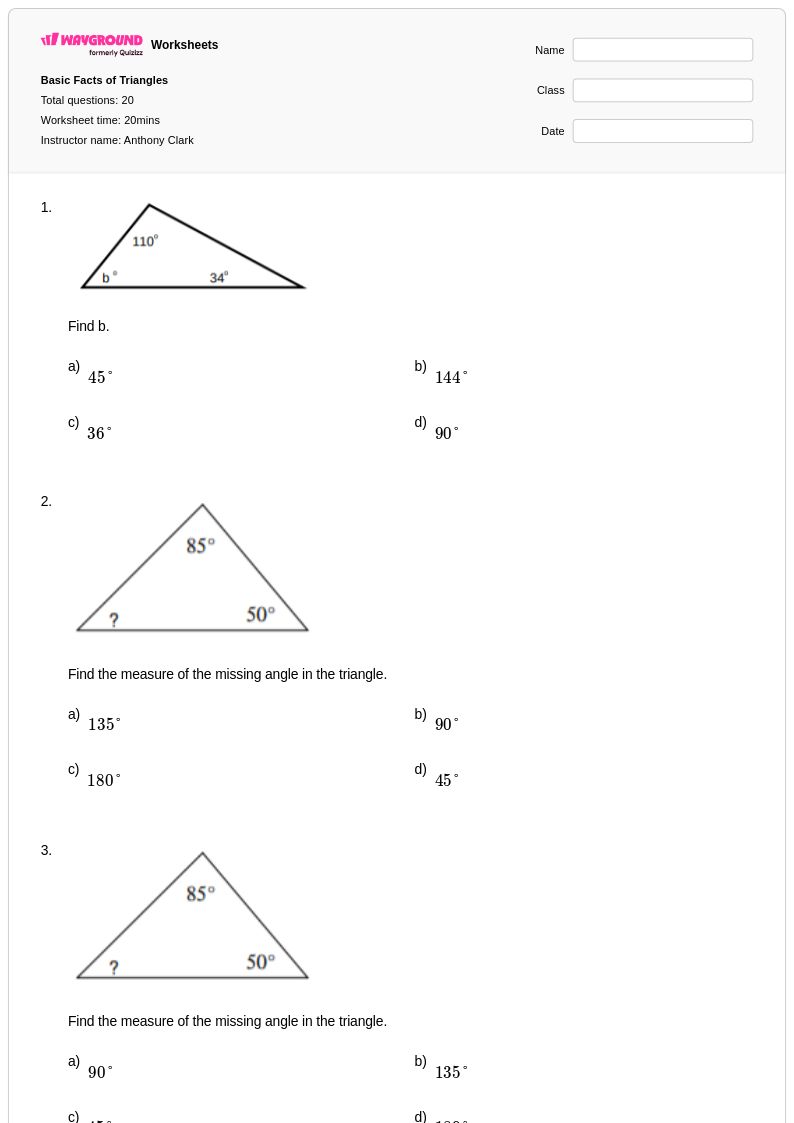
20 Q
3rd - Uni
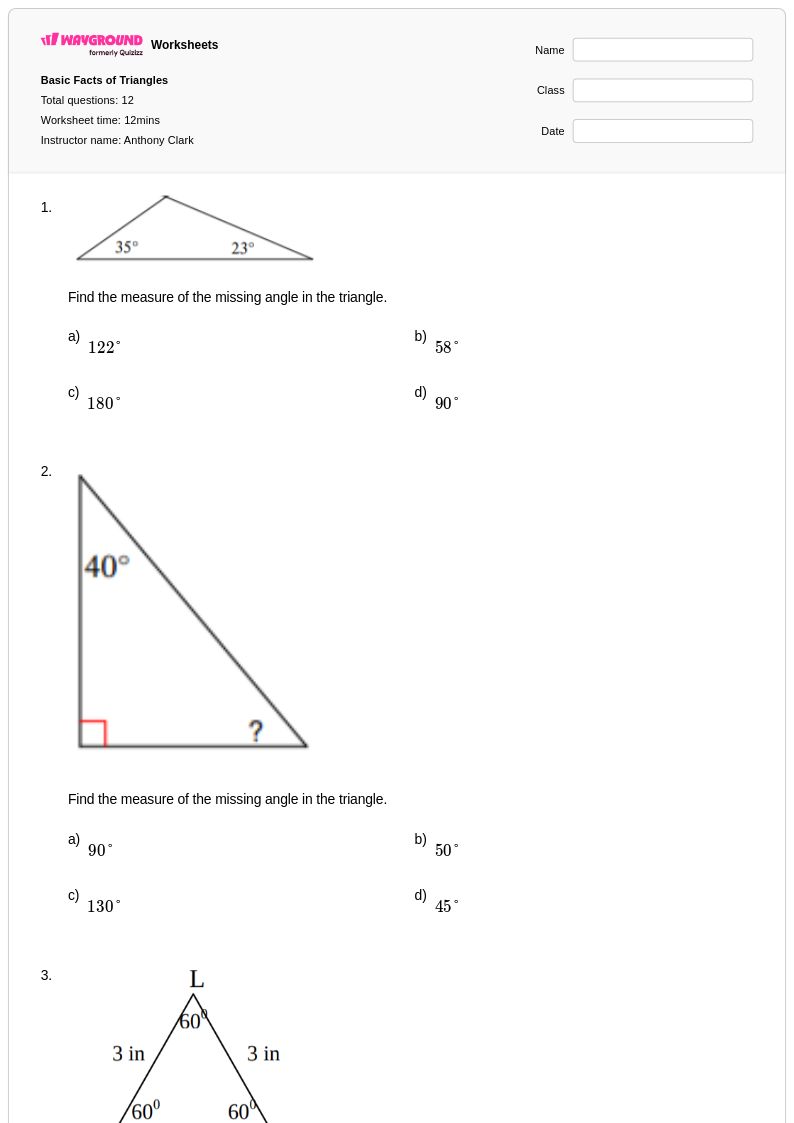
12 Q
3rd - Uni
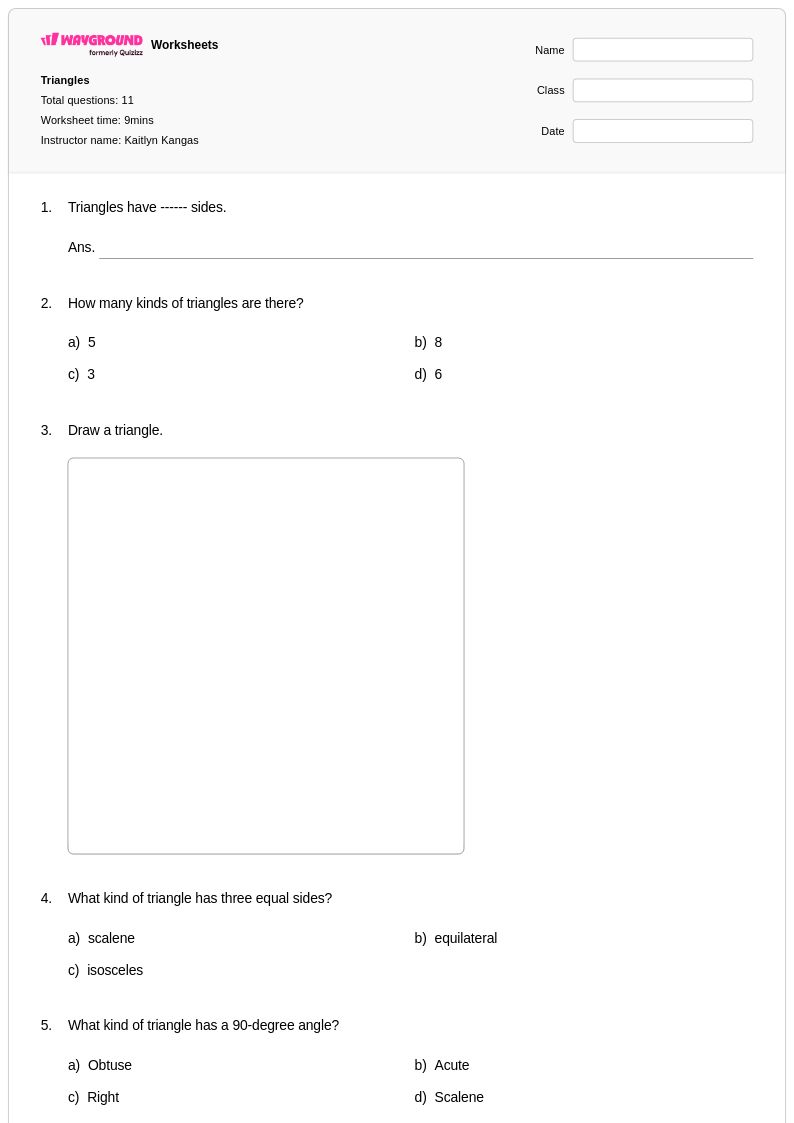
11 Q
2nd - 5th
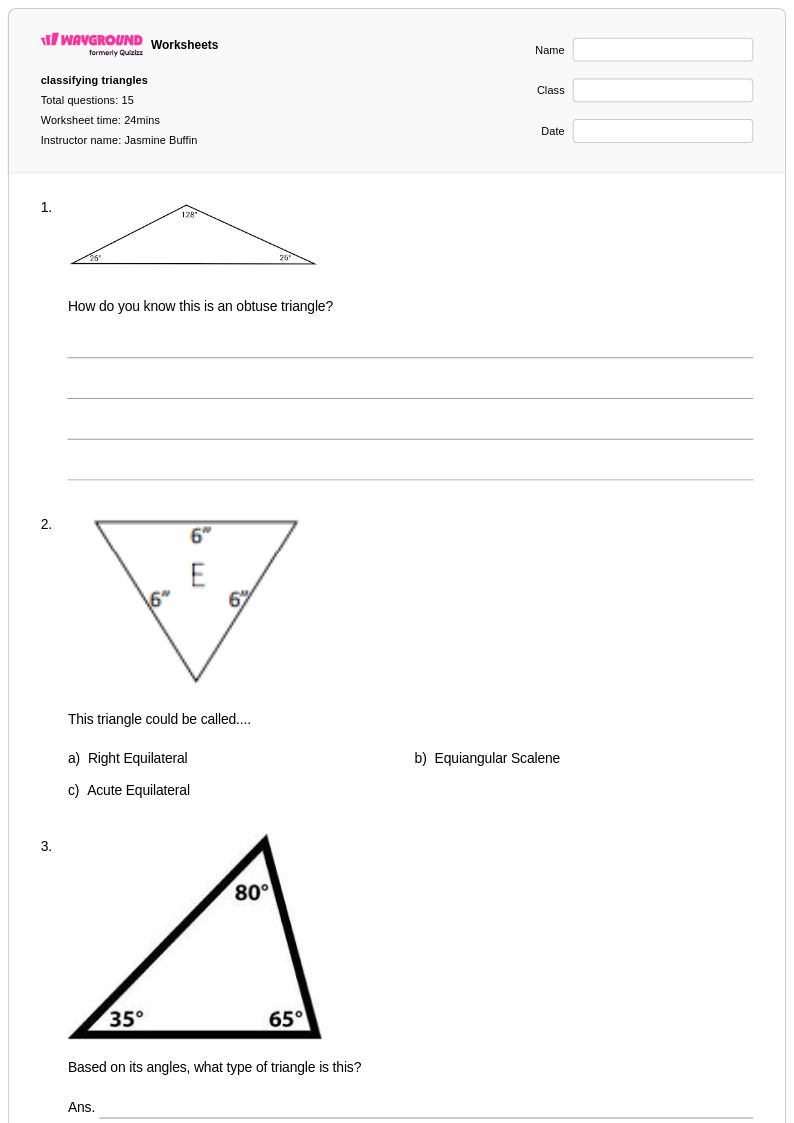
15 Q
3rd
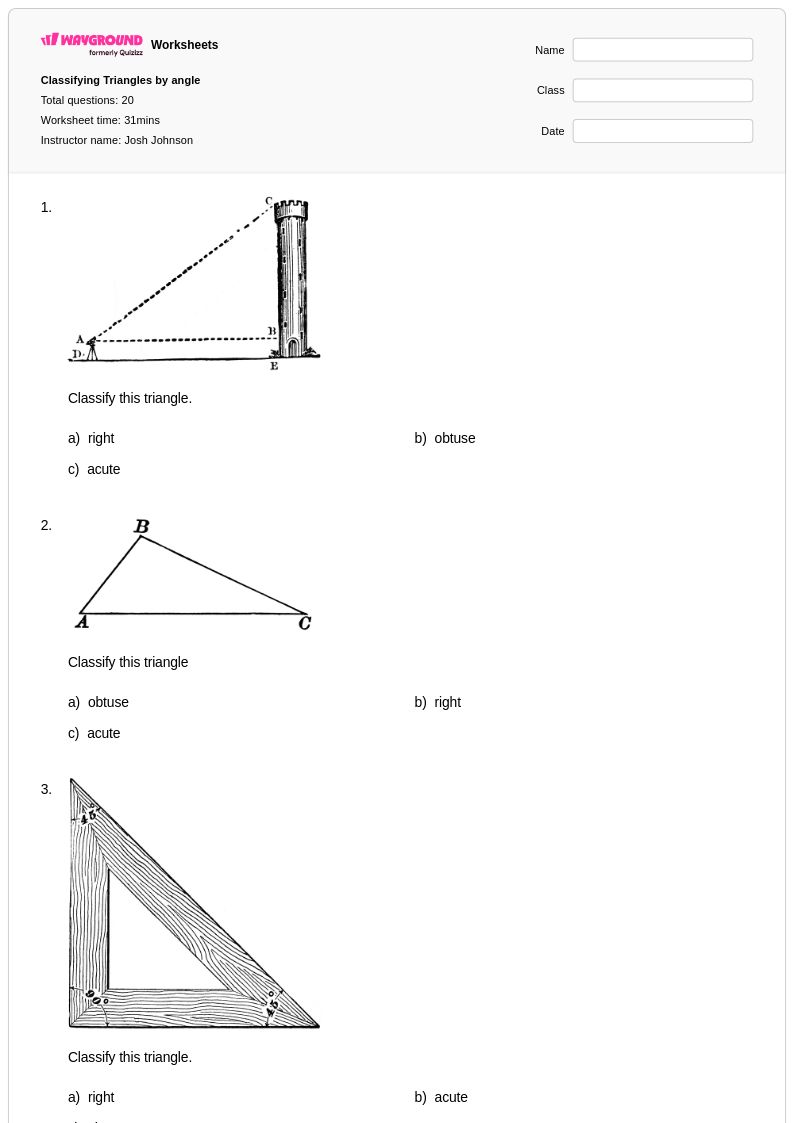
20 Q
3rd - 5th
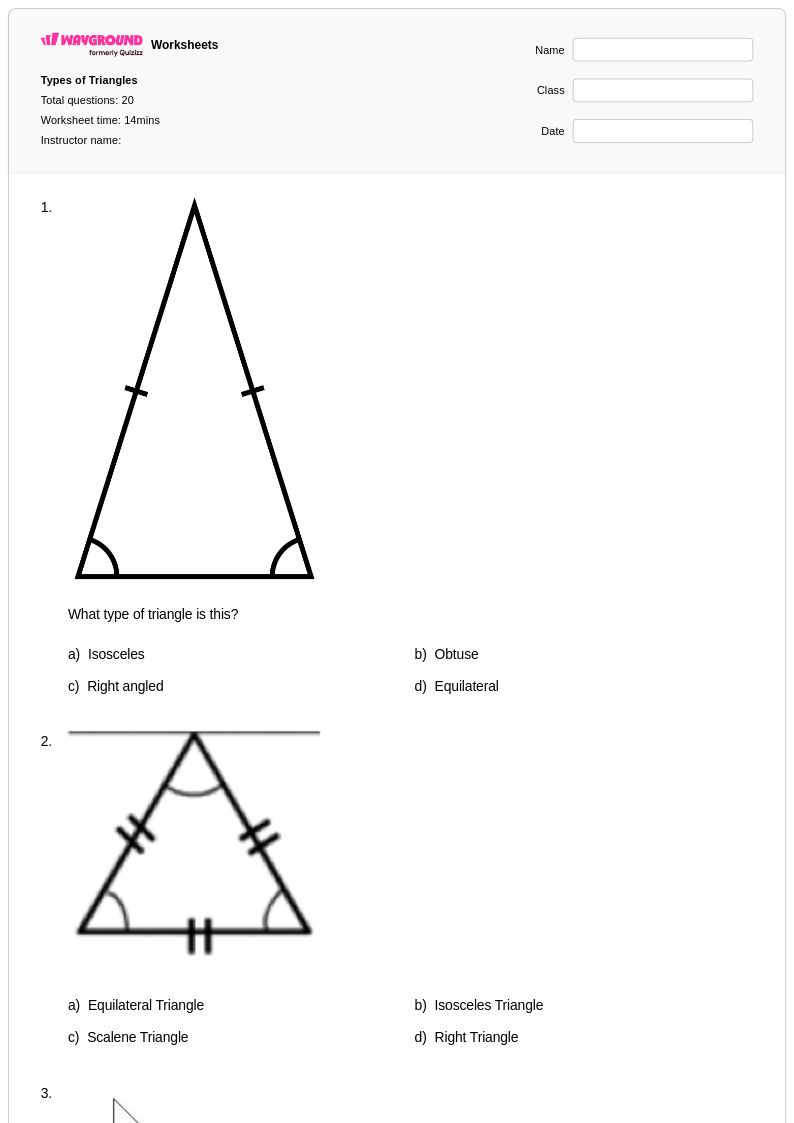
20 Q
3rd
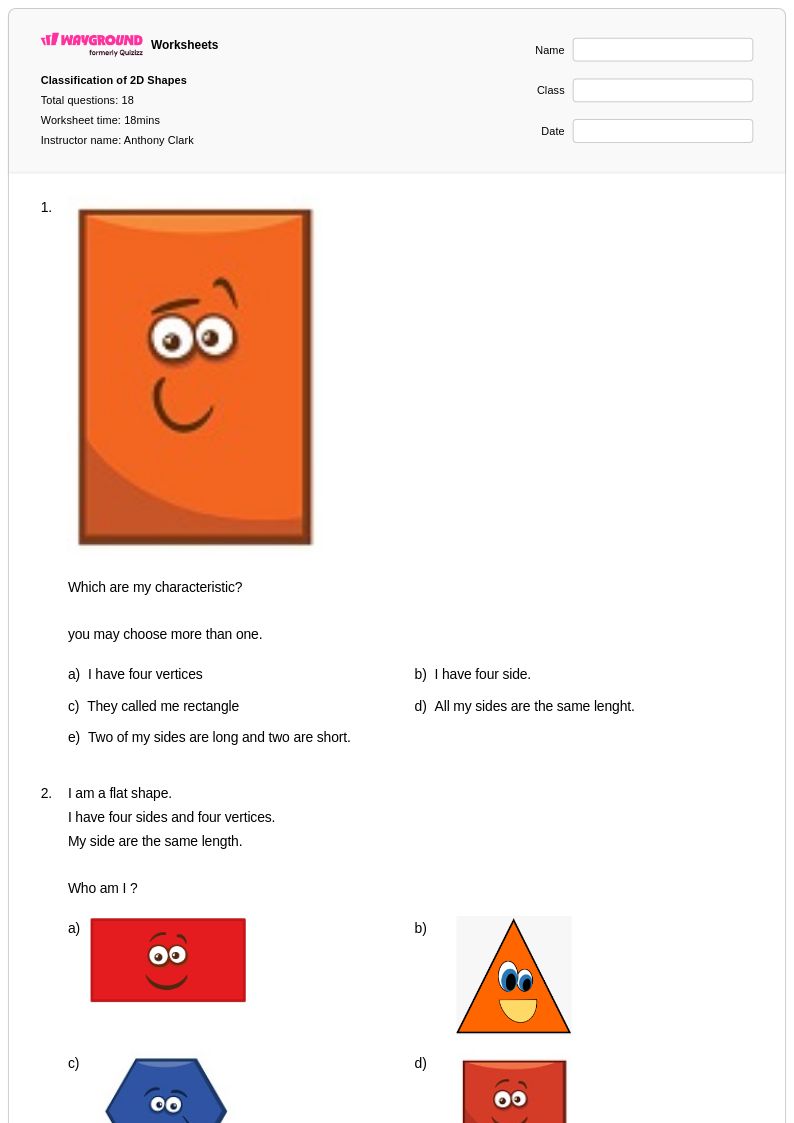
18 Q
1st - Uni
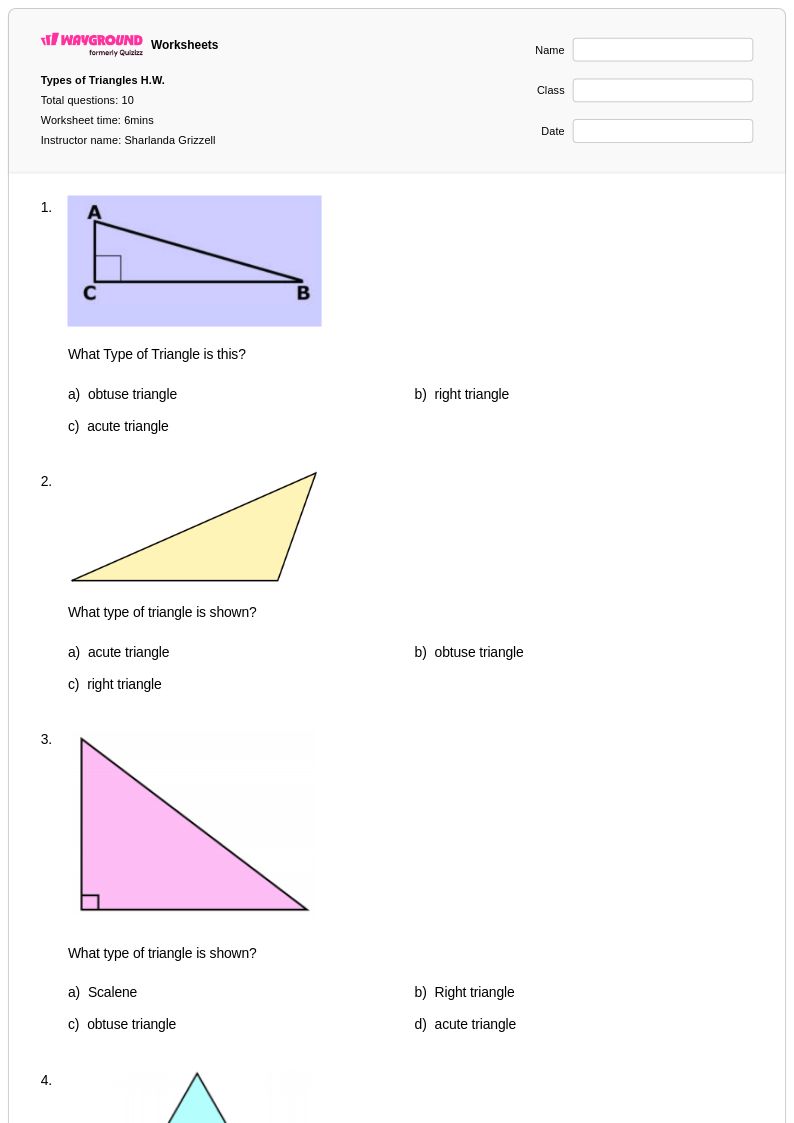
10 Q
3rd
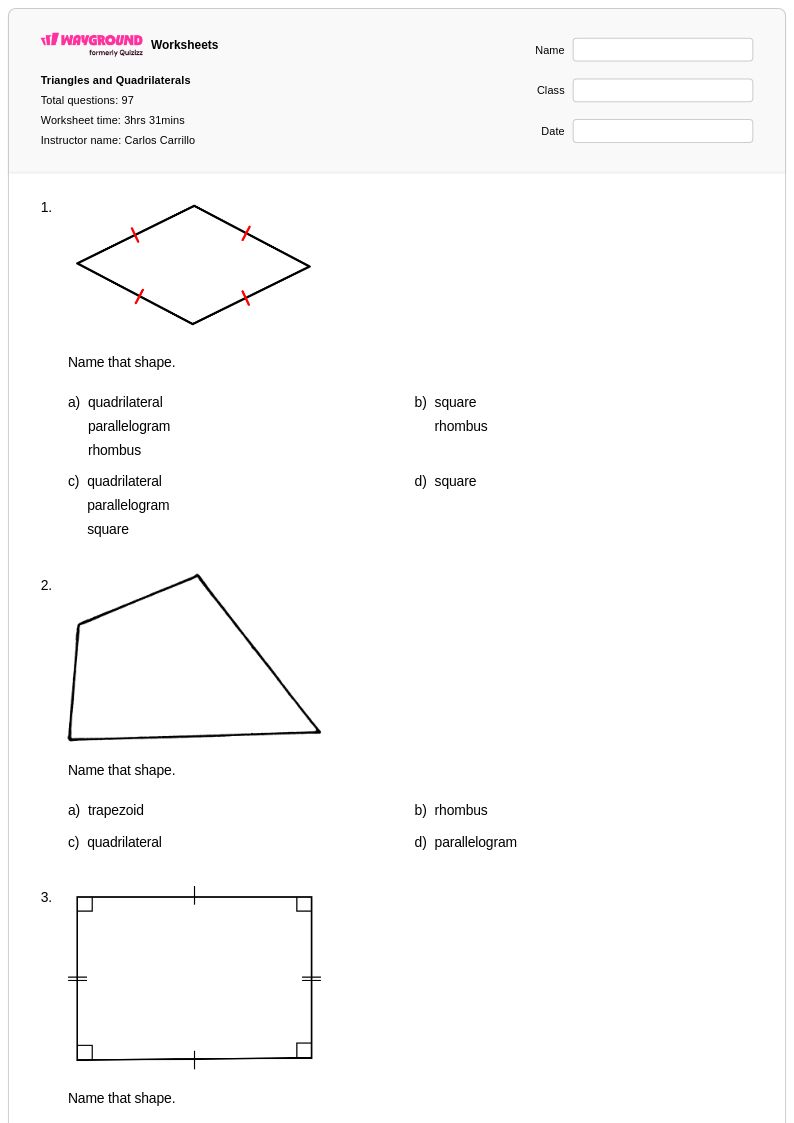
97 Q
3rd
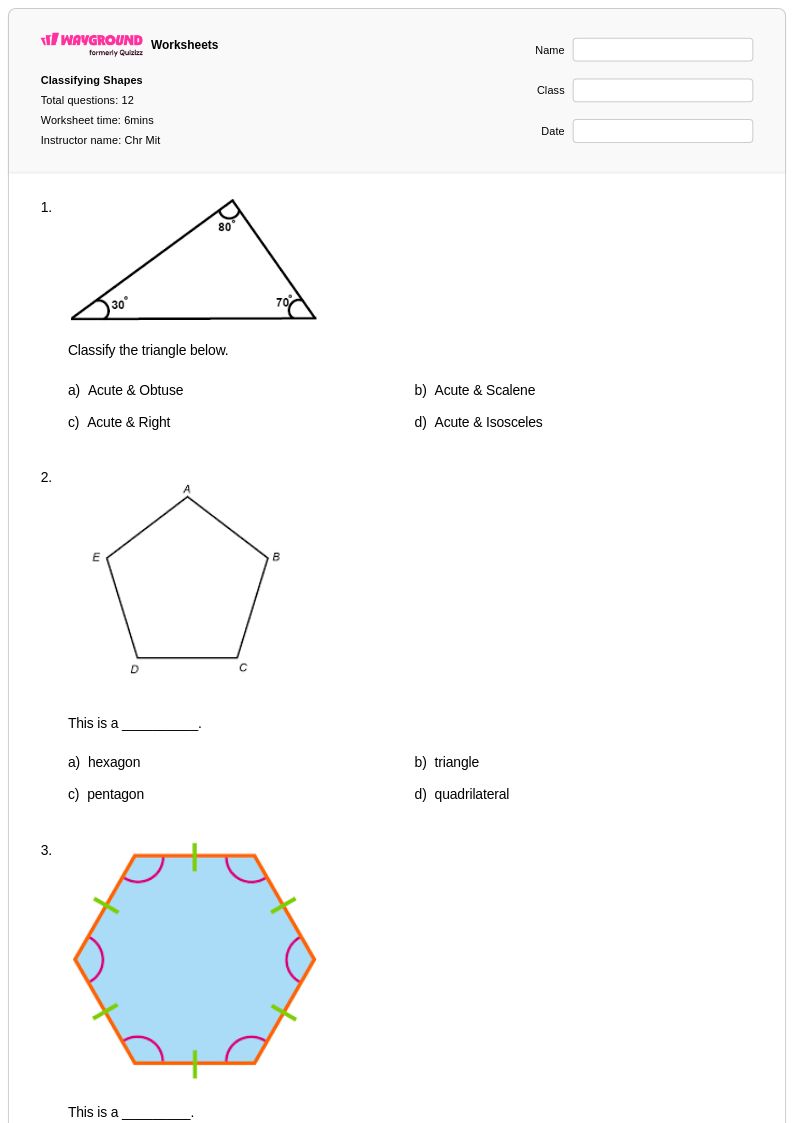
12 Q
3rd - 4th
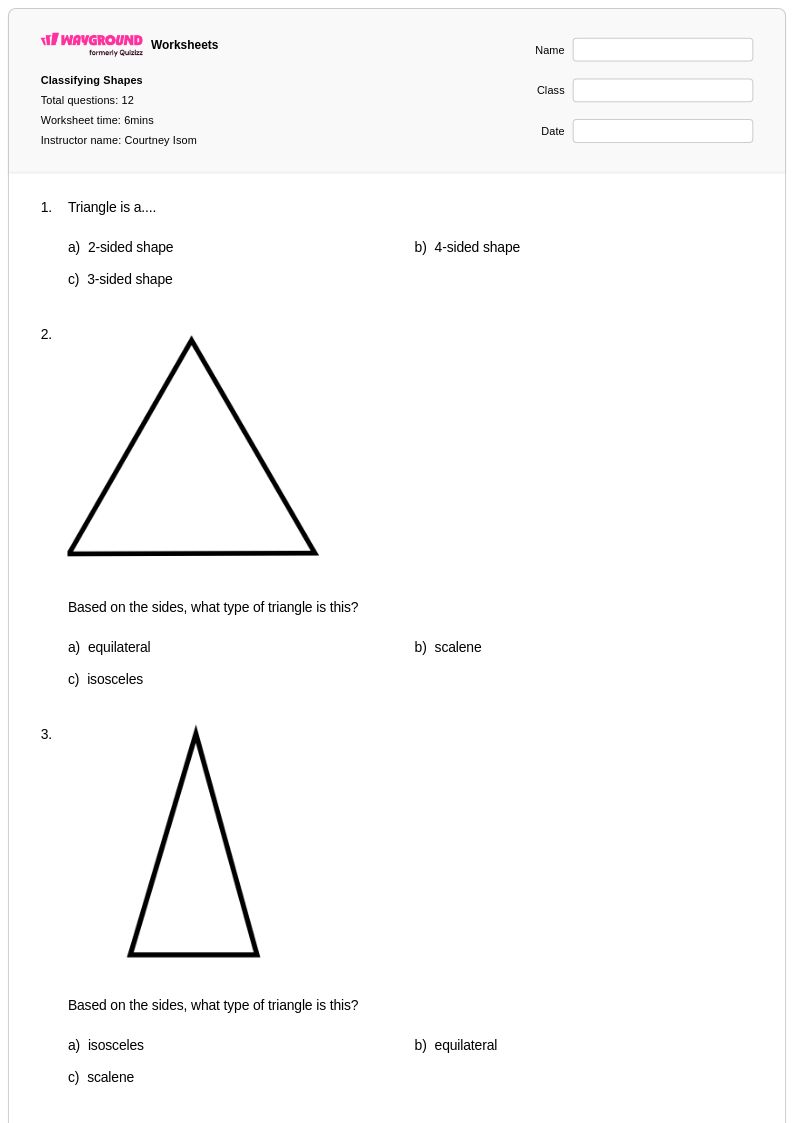
12 Q
3rd - 4th
Explore Other Subject Worksheets for class 3
Explore printable Triangle Classification worksheets for Class 3
Triangle classification worksheets for Class 3 students available through Wayground (formerly Quizizz) provide essential foundational practice in geometric shape analysis and categorization. These comprehensive resources help young learners develop critical spatial reasoning skills by teaching them to identify and distinguish between equilateral, isosceles, and scalene triangles based on side lengths, as well as recognize acute, right, and obtuse triangles according to their angle measurements. The collection includes systematically designed practice problems that progress from basic triangle identification to more complex classification tasks, with each worksheet featuring complete answer keys and available as free printable pdf downloads that support both classroom instruction and independent study.
Wayground (formerly Quizizz) empowers educators with an extensive library of millions of teacher-created triangle classification resources specifically designed for Class 3 mathematics instruction. The platform's robust search and filtering capabilities allow teachers to quickly locate worksheets that align with specific curriculum standards and learning objectives, while built-in differentiation tools enable seamless adaptation of materials for students with varying skill levels. These versatile resources are available in both printable and digital formats, including downloadable pdfs, giving educators the flexibility to customize content for targeted remediation, skill reinforcement, or enrichment activities that strengthen students' geometric understanding and prepare them for more advanced mathematical concepts.