
20 Q
3rd - Uni
8 Q
3rd
10 Q
3rd
20 Q
3rd
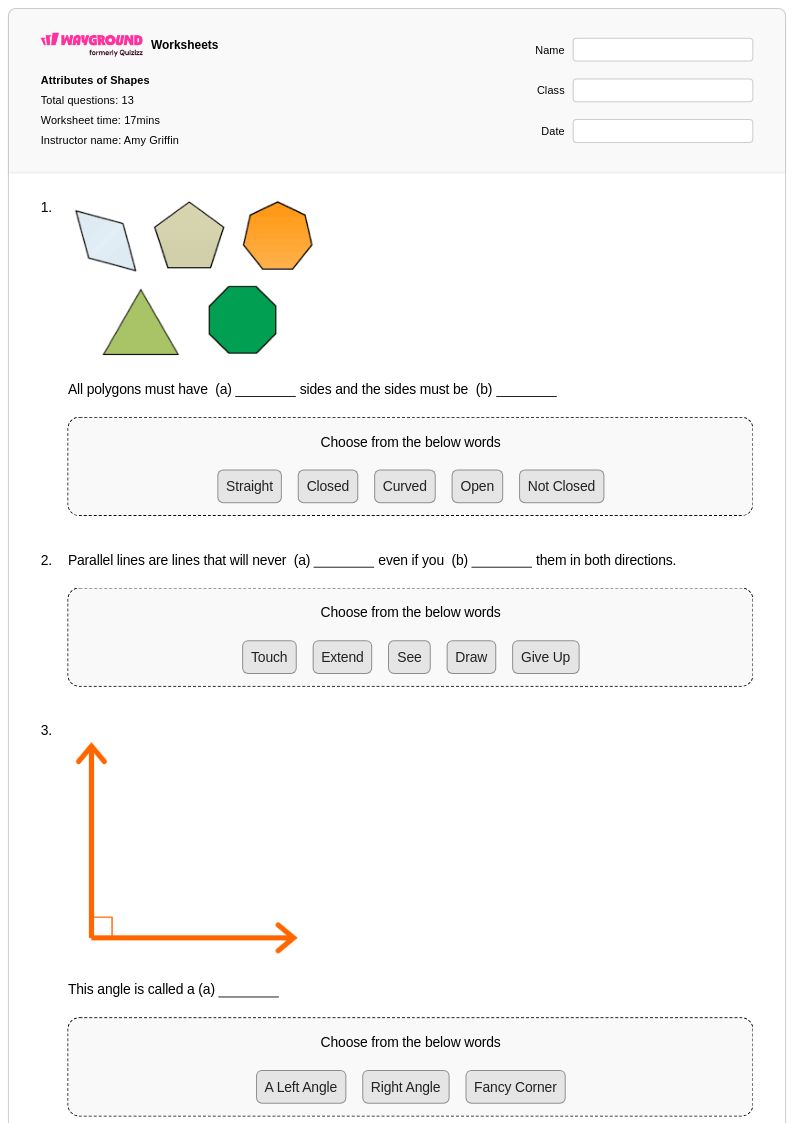
13 Q
3rd
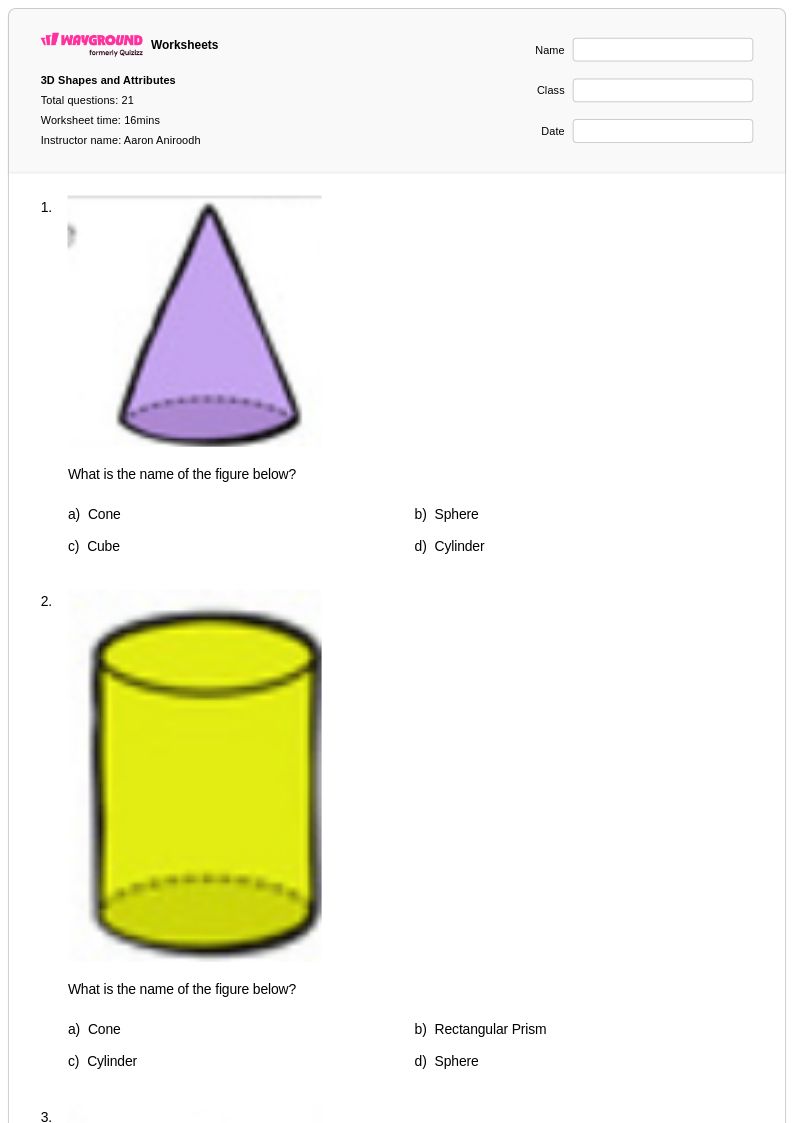
21 Q
3rd
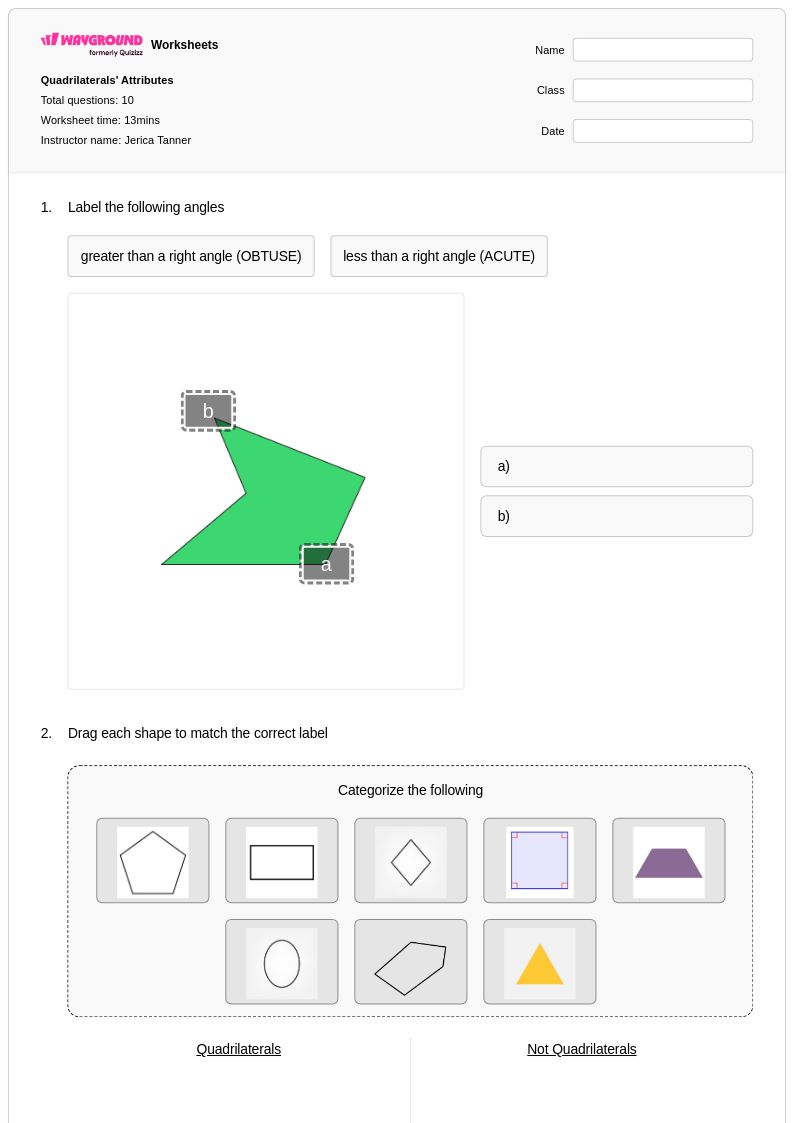
10 Q
3rd
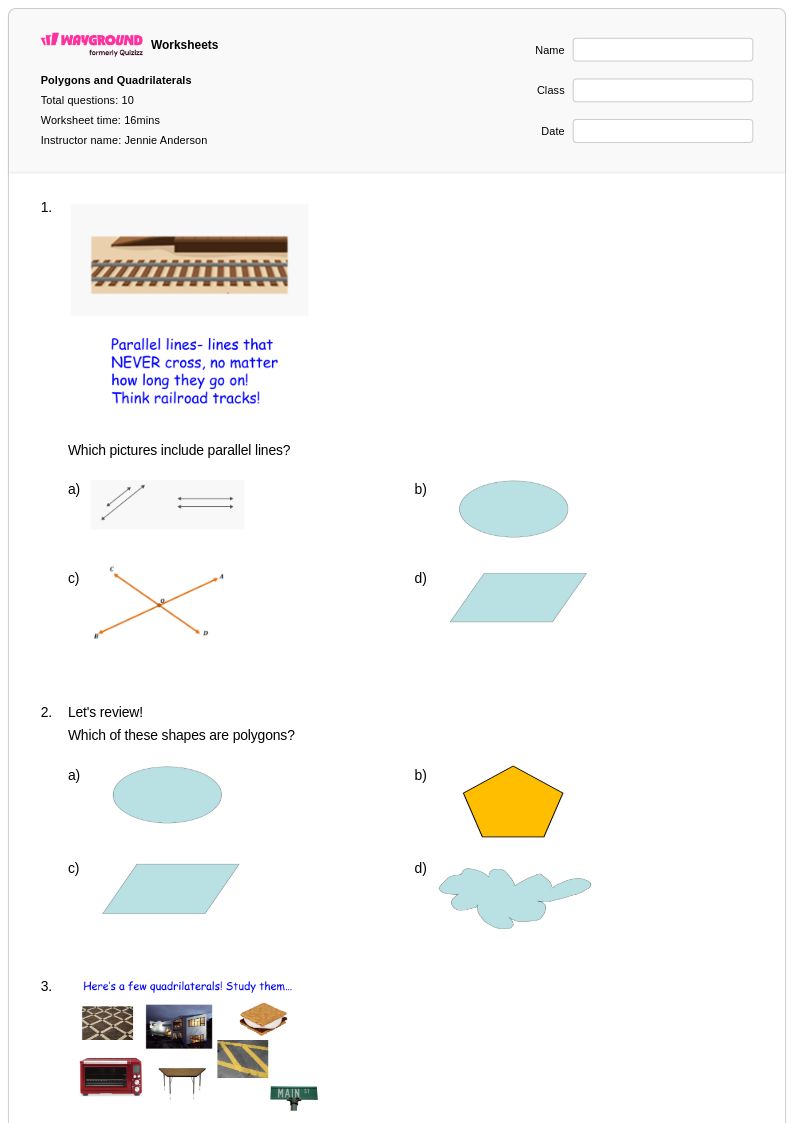
10 Q
3rd
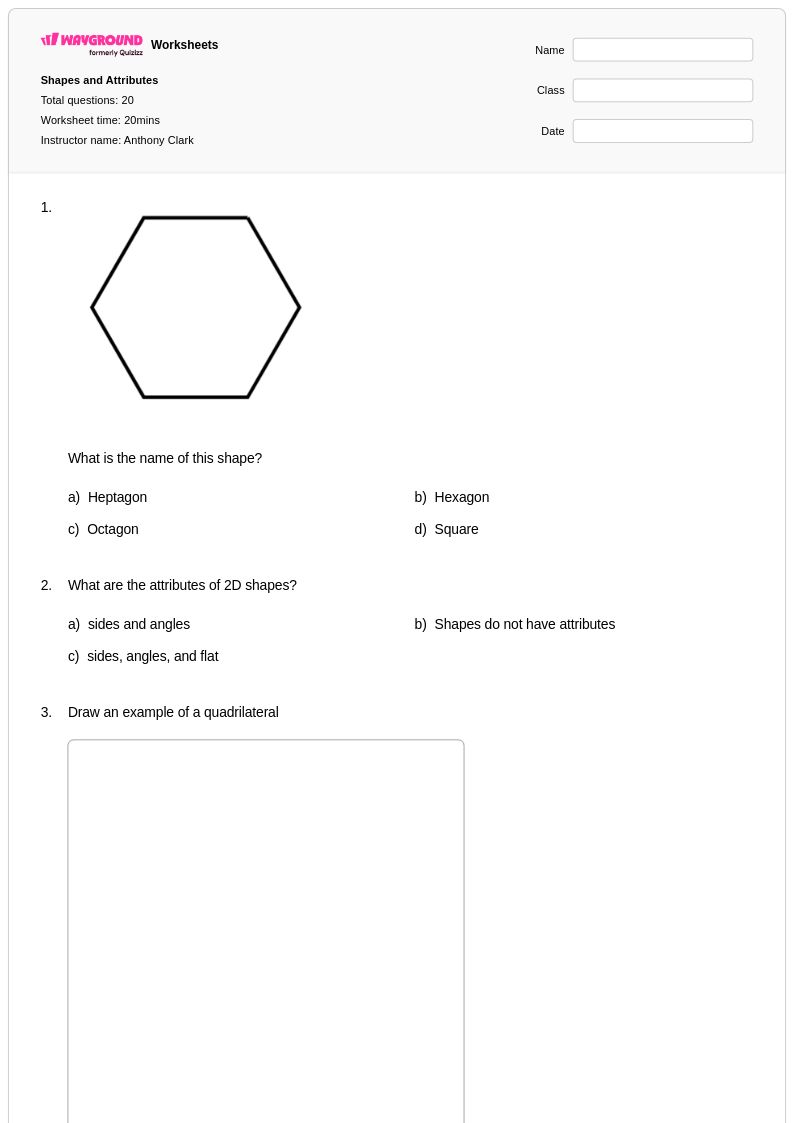
20 Q
3rd - Uni
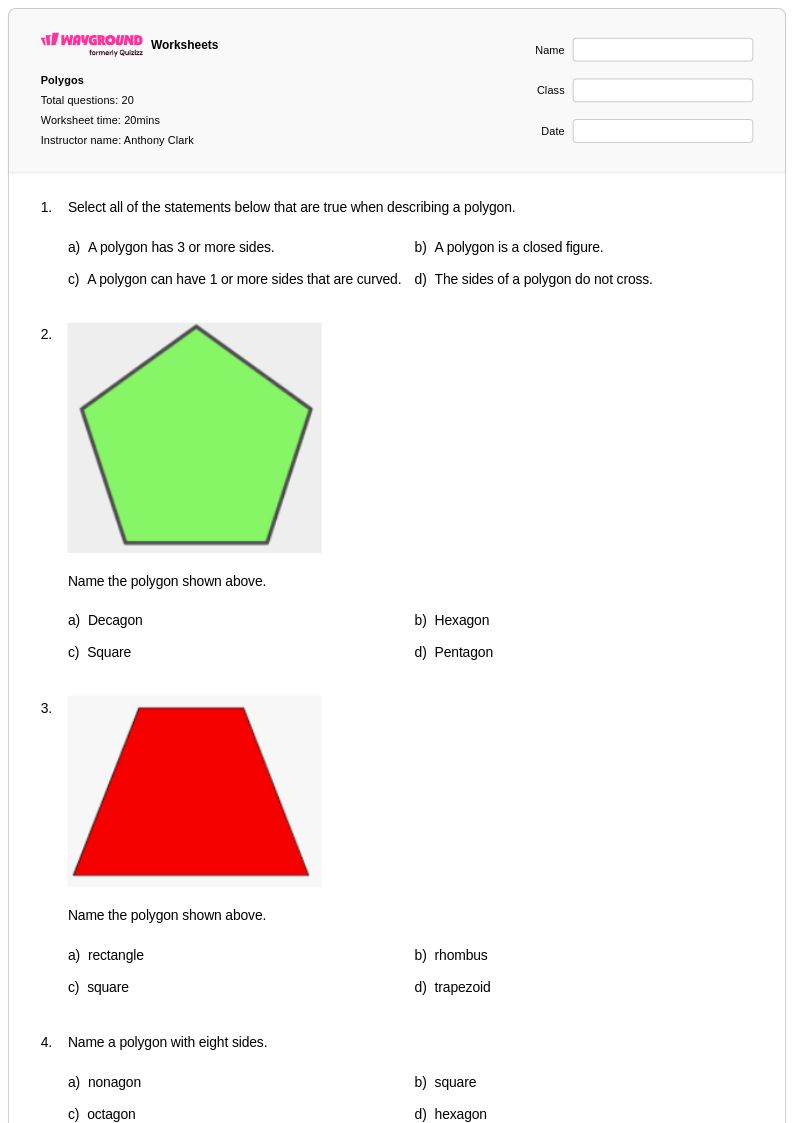
20 Q
3rd - Uni
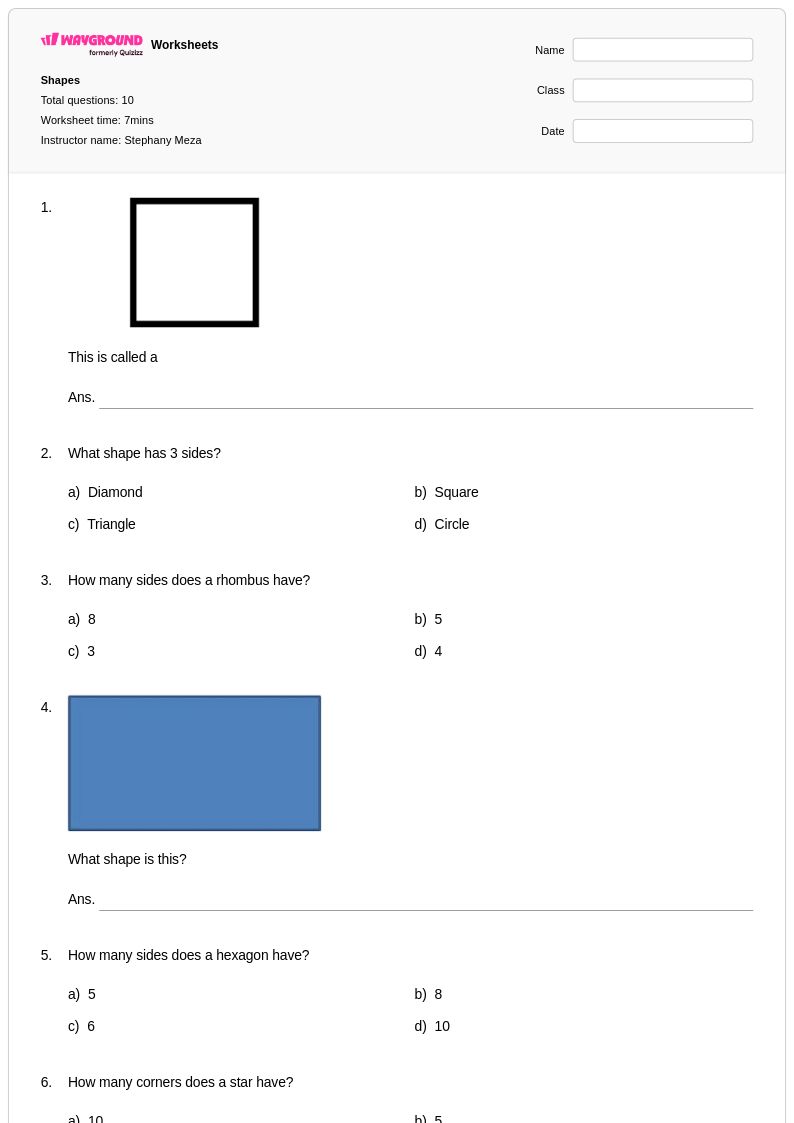
10 Q
1st - 3rd
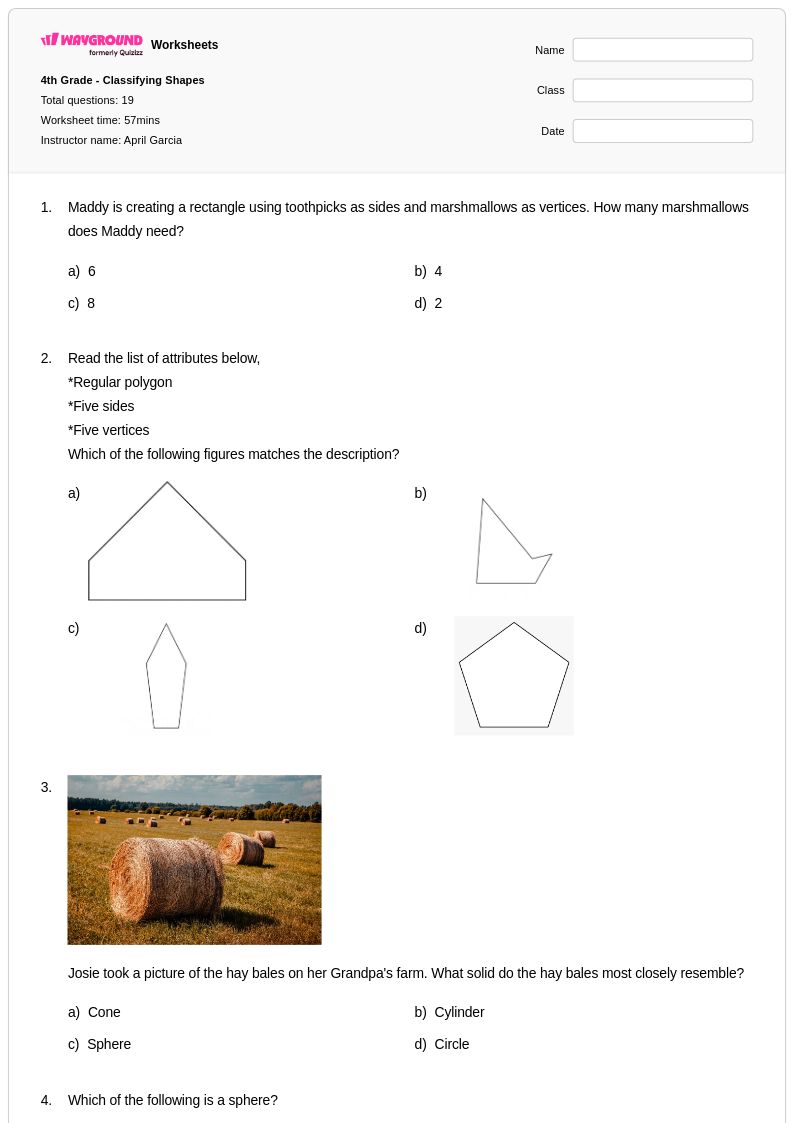
19 Q
3rd - 5th
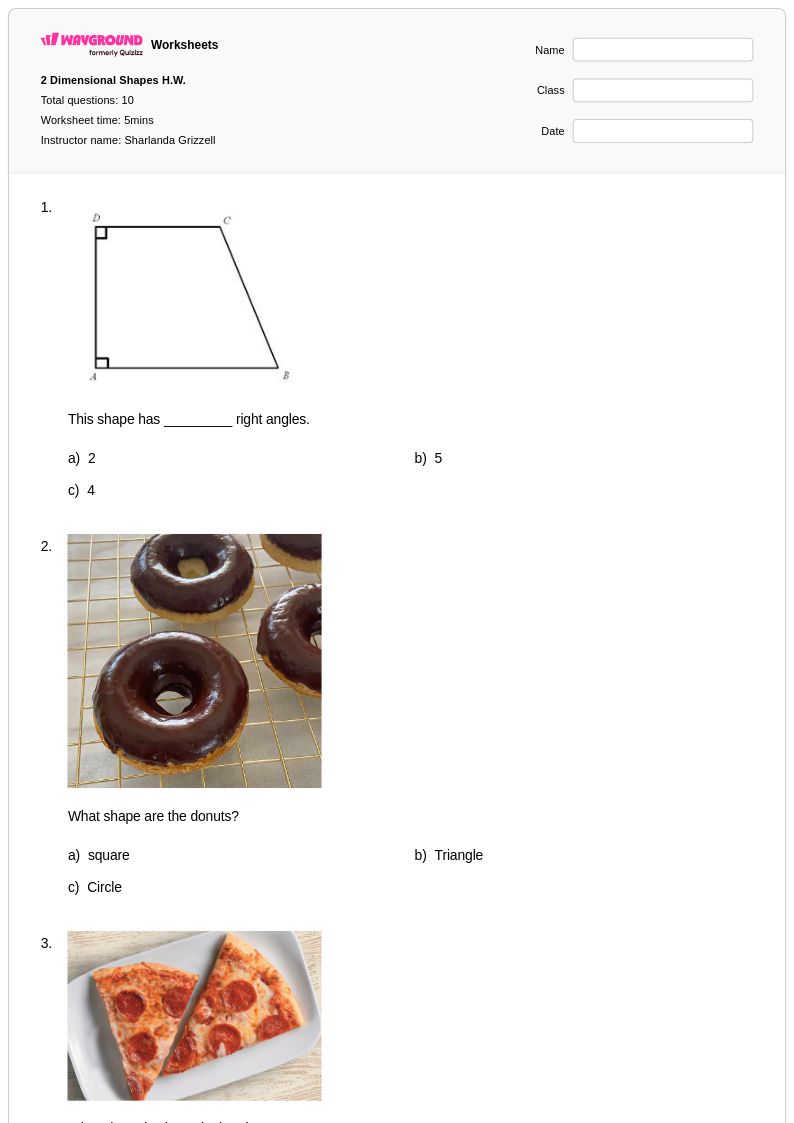
10 Q
3rd
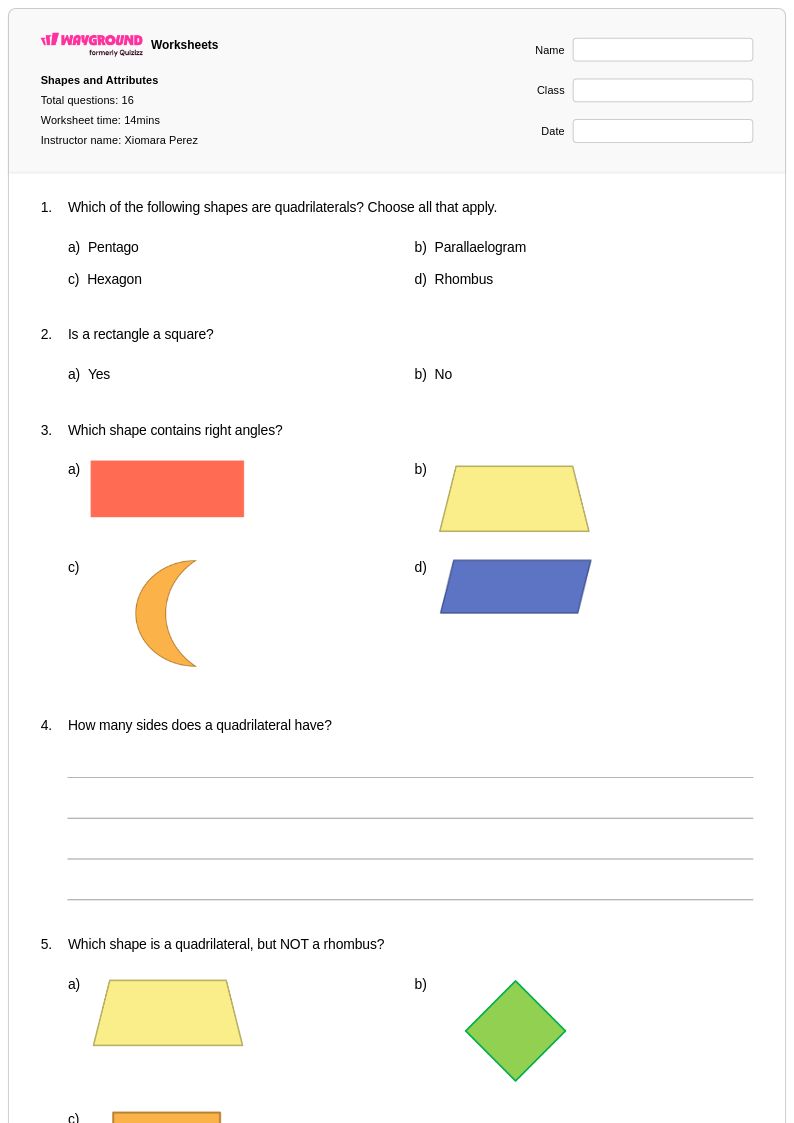
16 Q
3rd
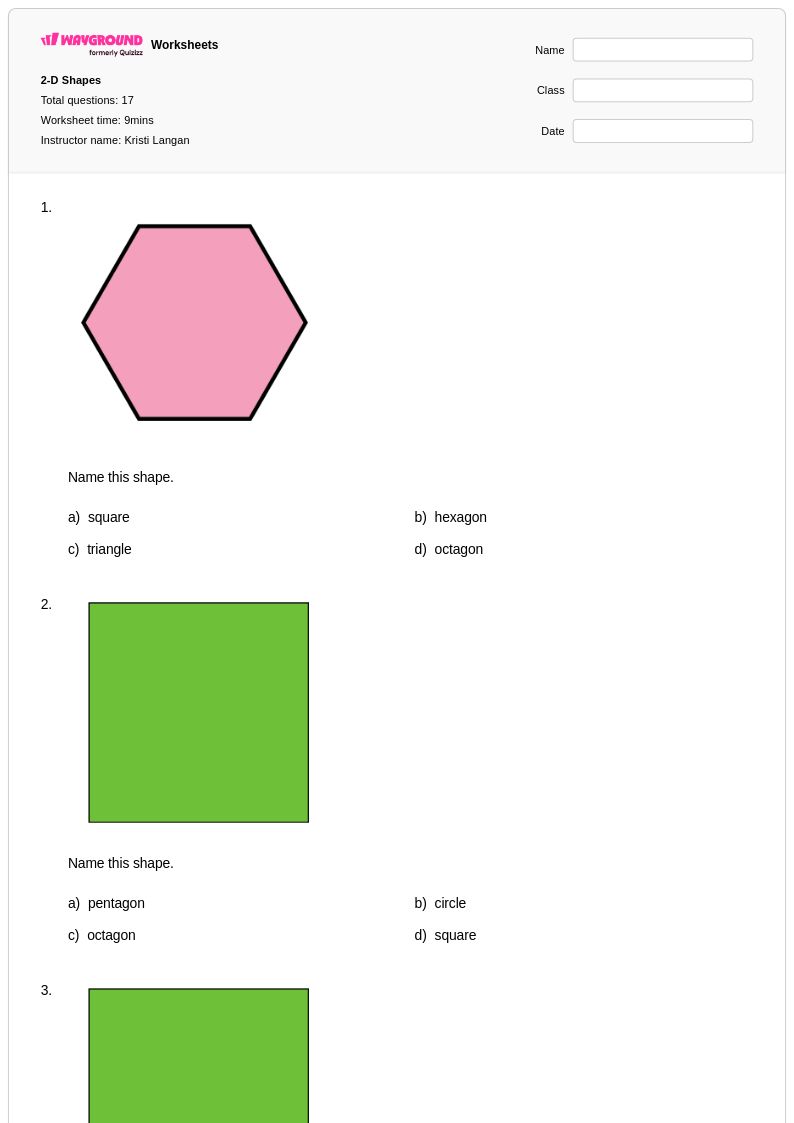
17 Q
1st - 3rd
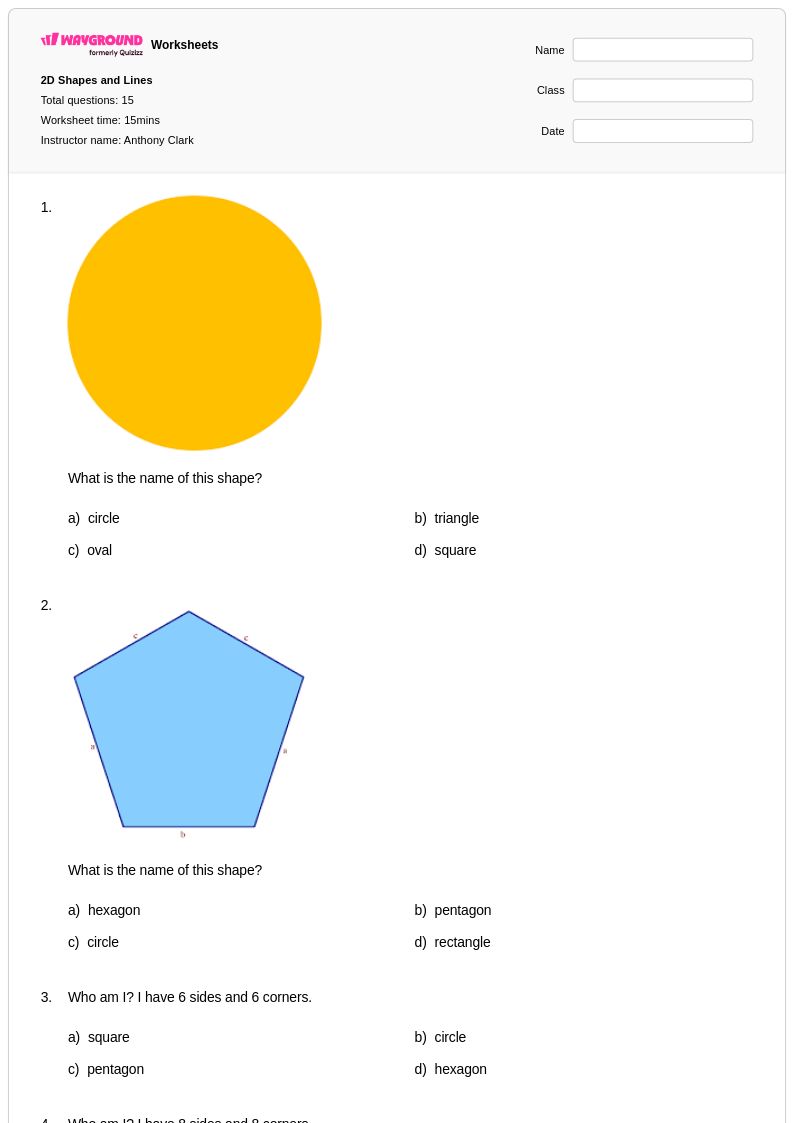
15 Q
3rd - Uni
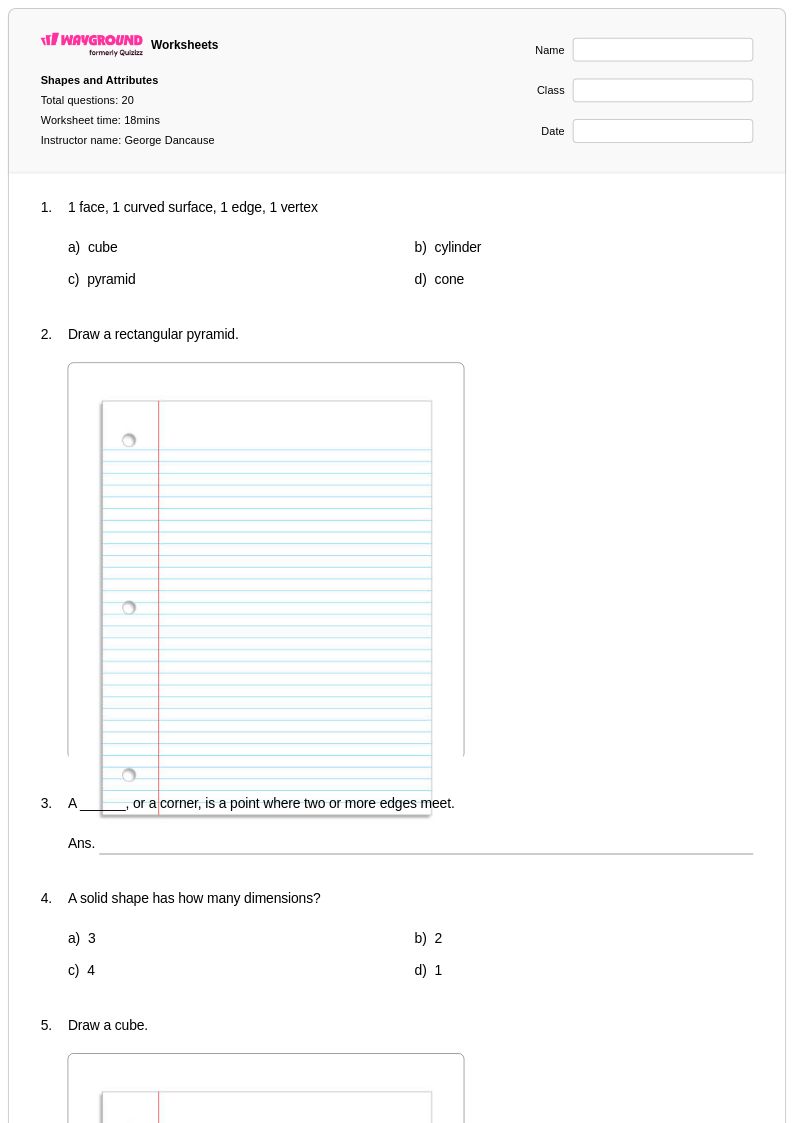
20 Q
3rd
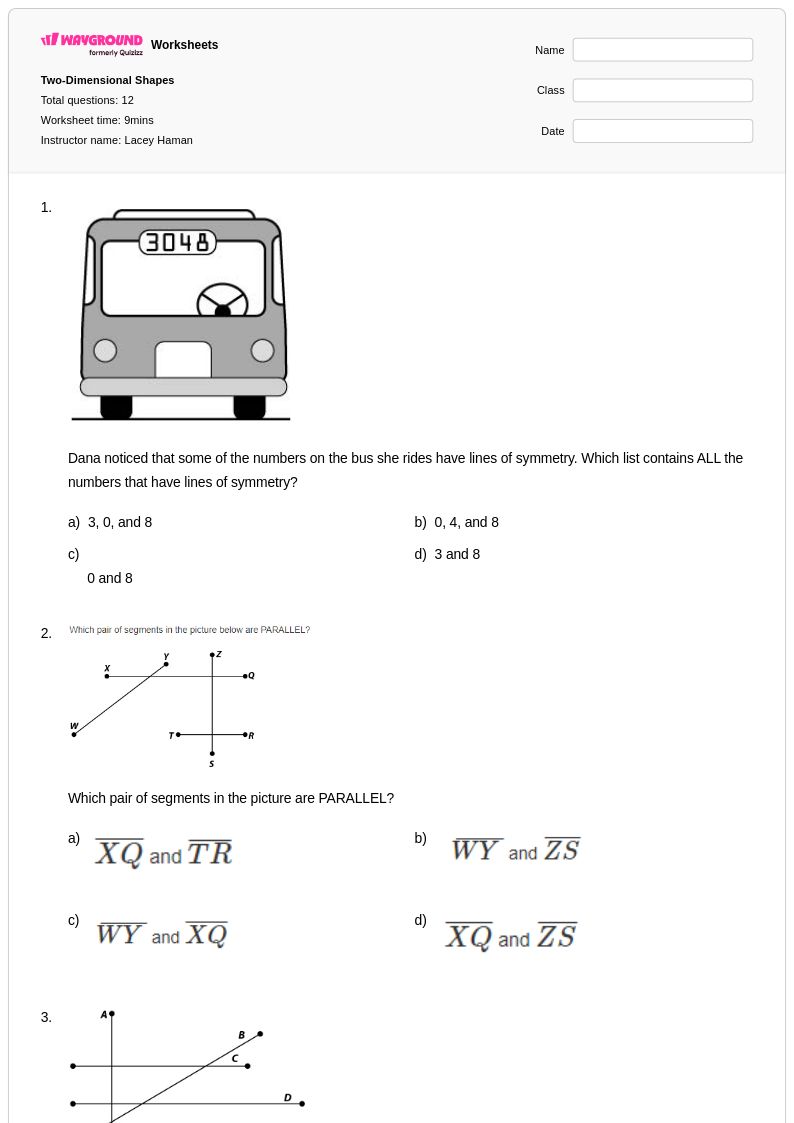
12 Q
3rd
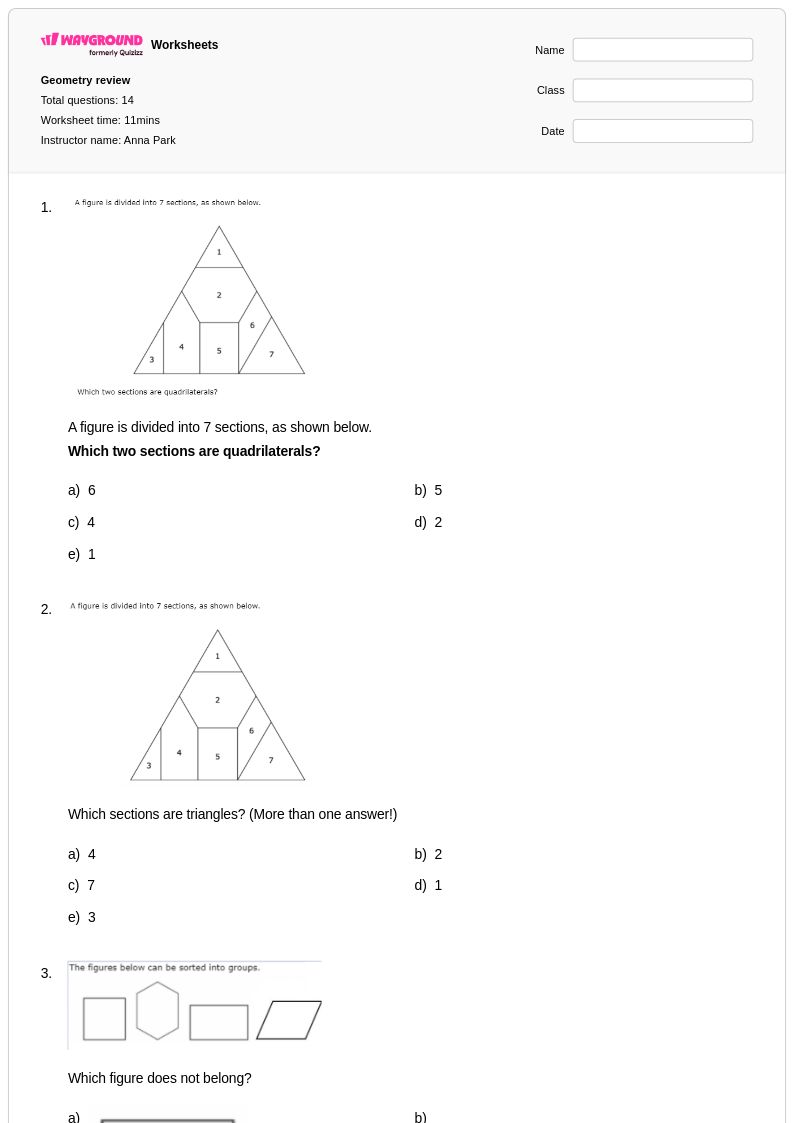
14 Q
3rd
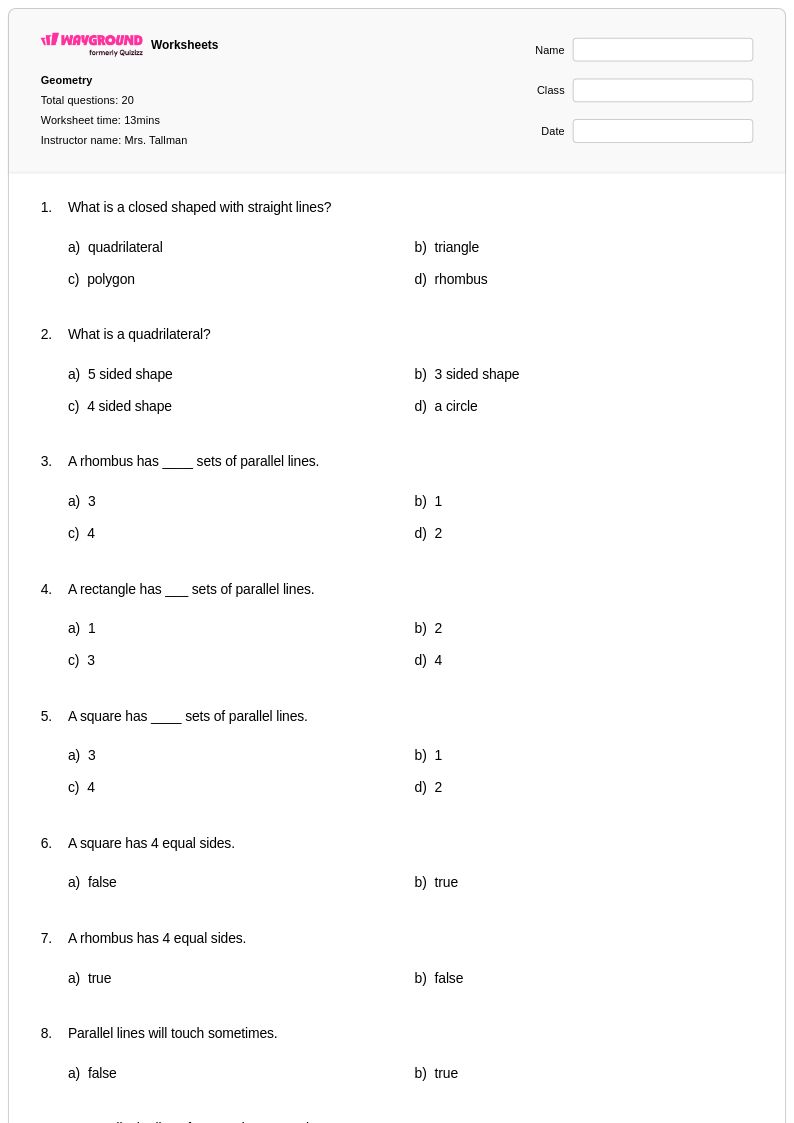
20 Q
3rd
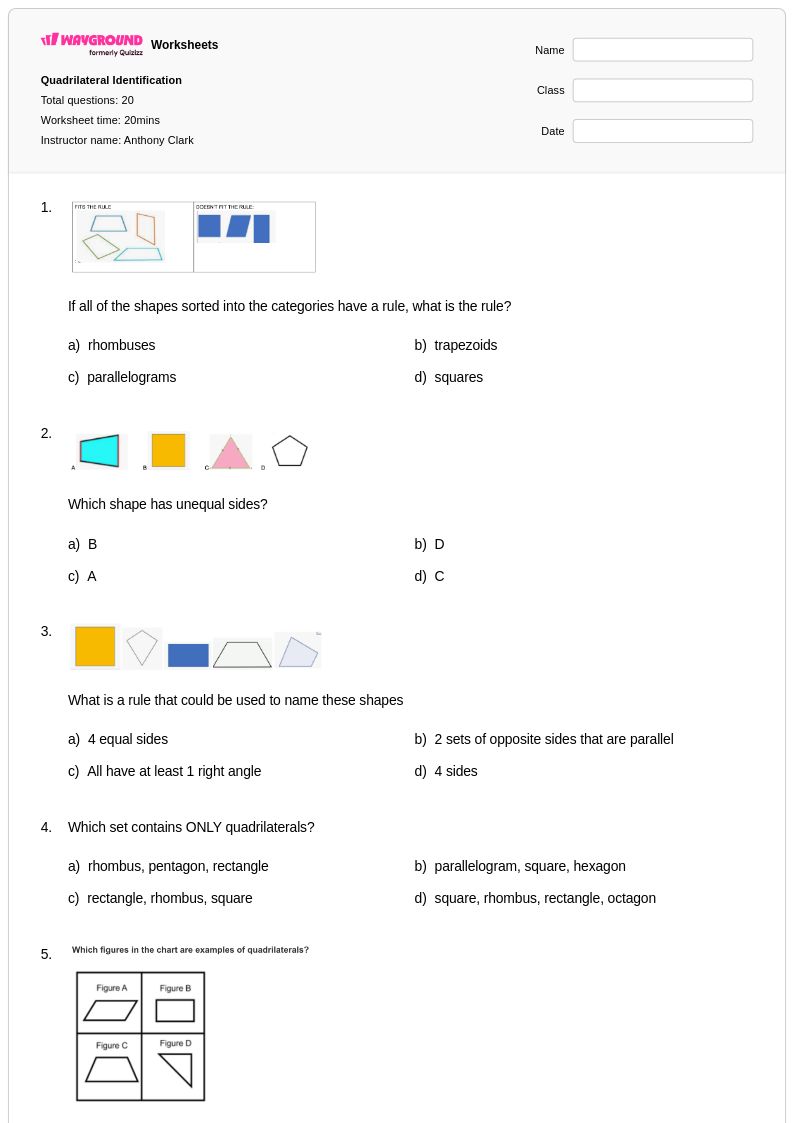
20 Q
3rd - Uni
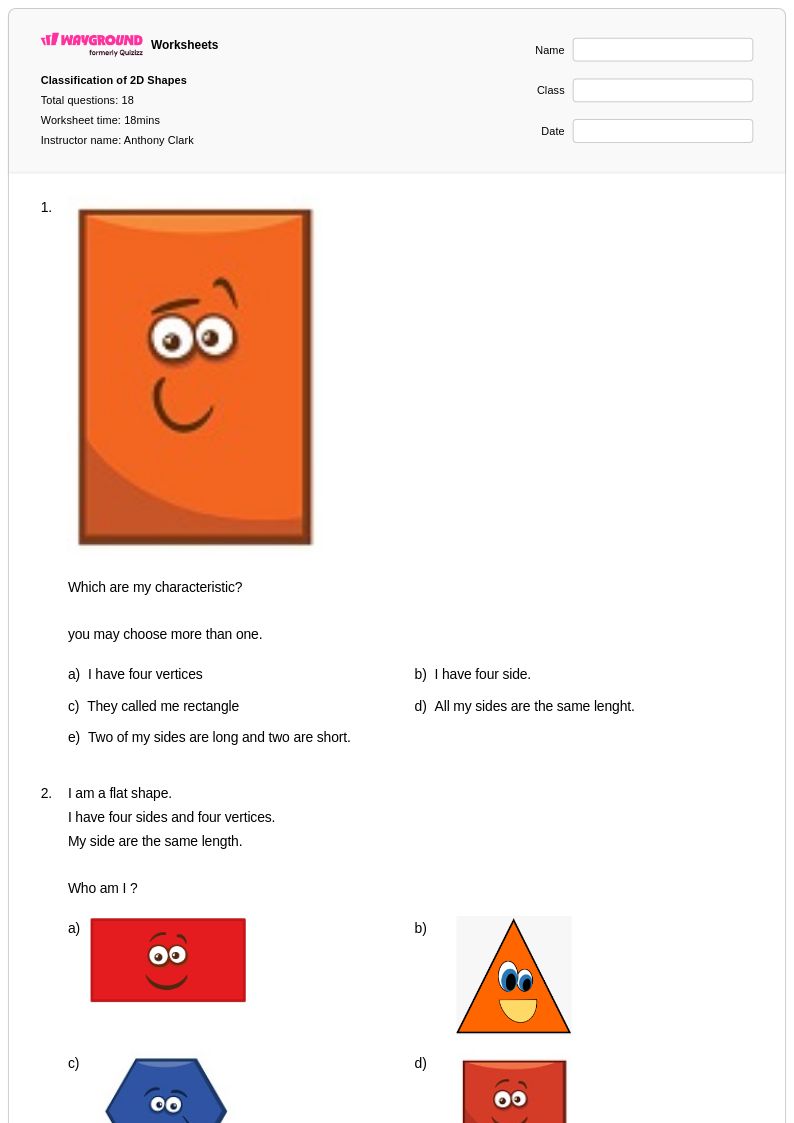
18 Q
1st - Uni
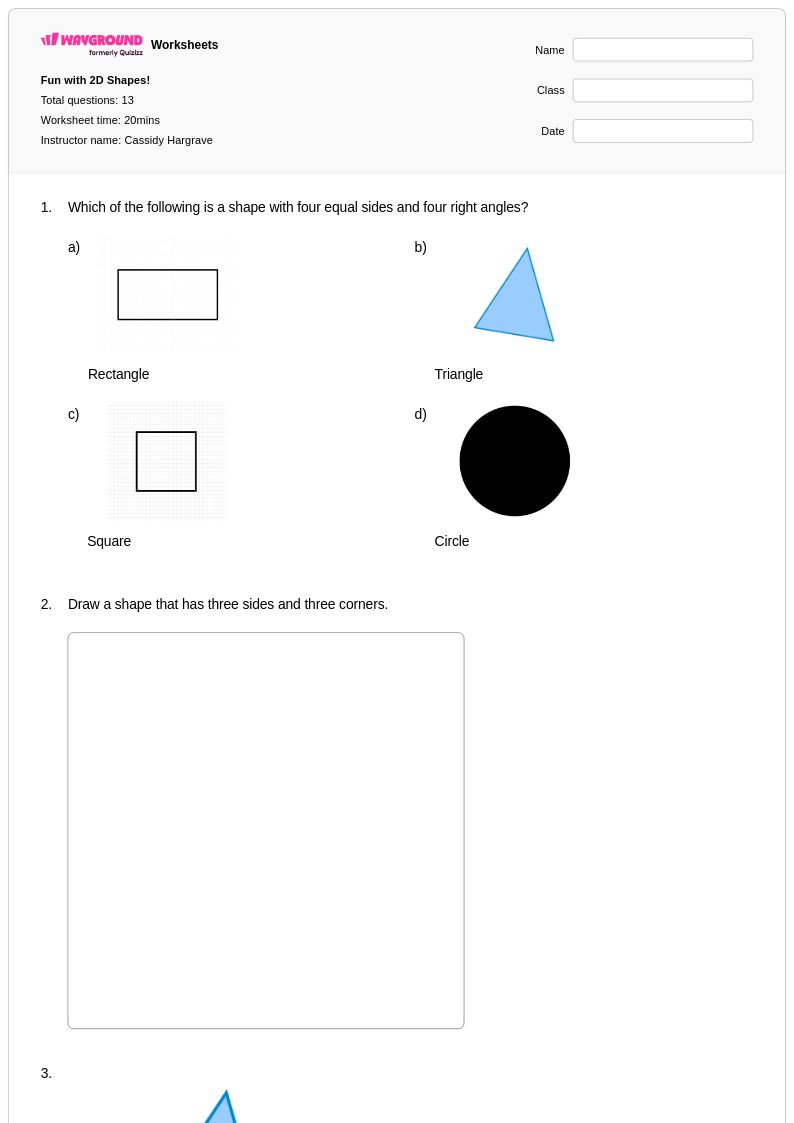
13 Q
2nd - Uni
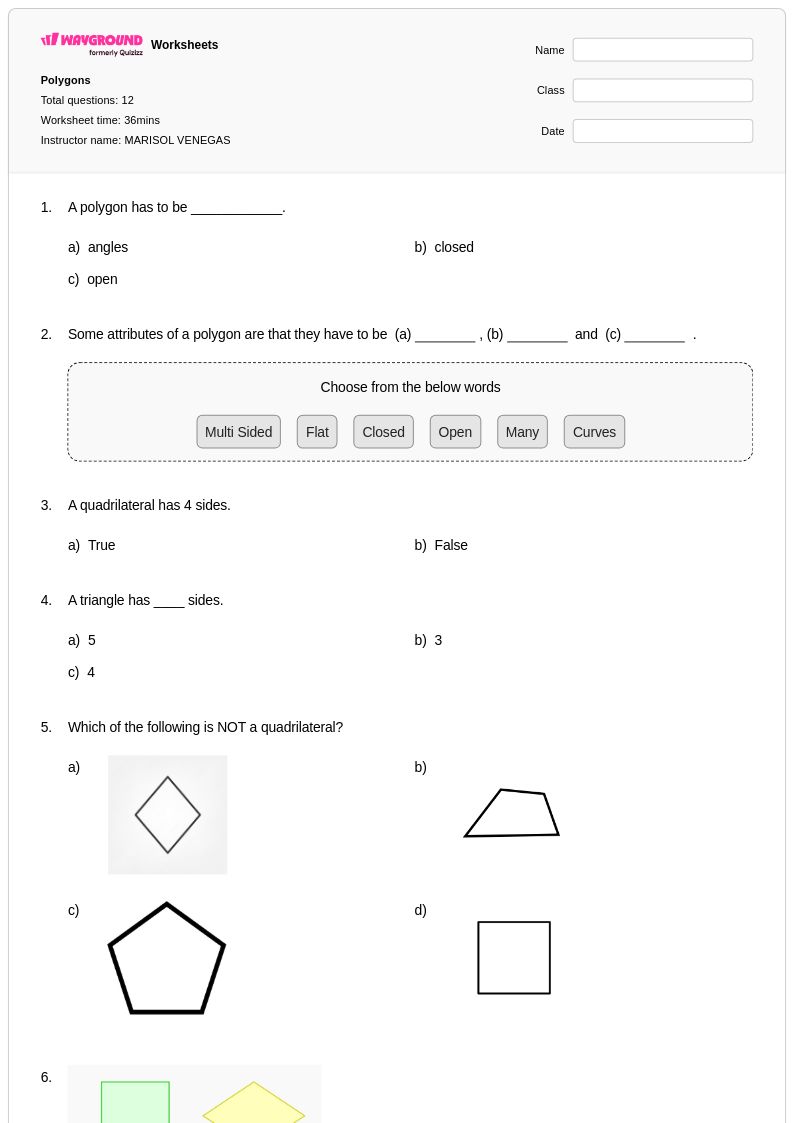
12 Q
3rd
Explore Other Subject Worksheets for class 3
Explore printable Sides of Shapes worksheets for Class 3
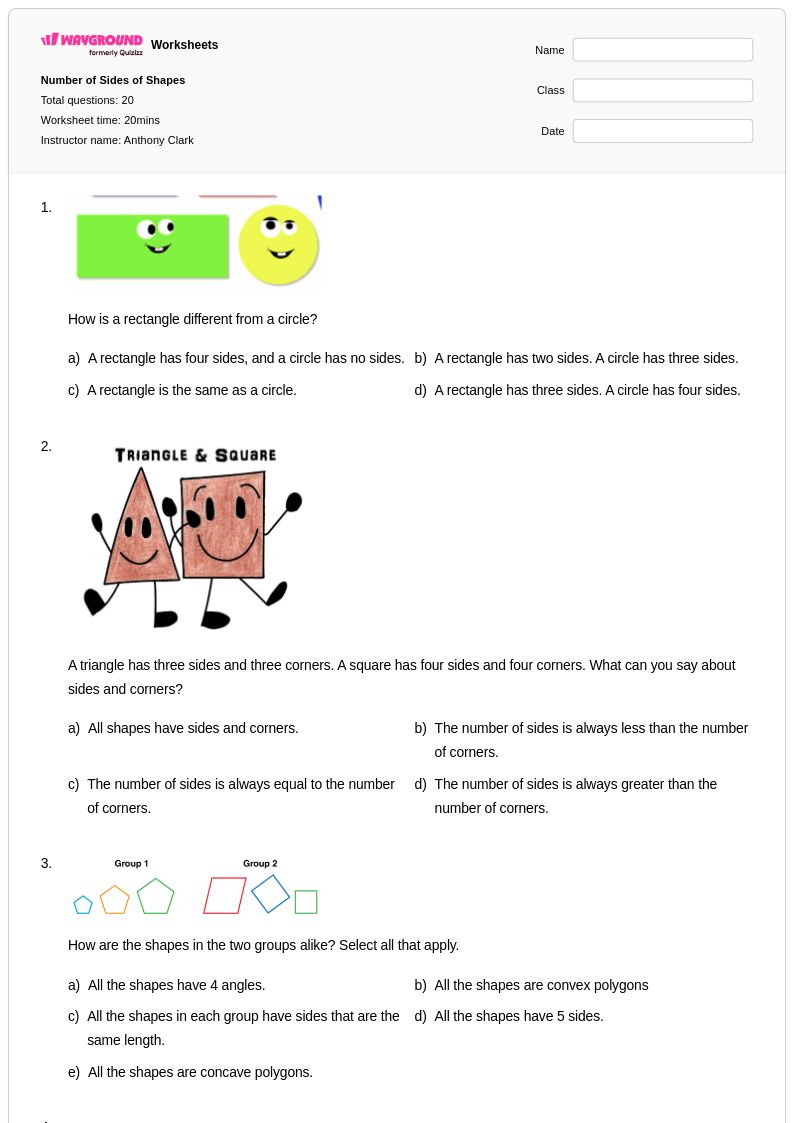
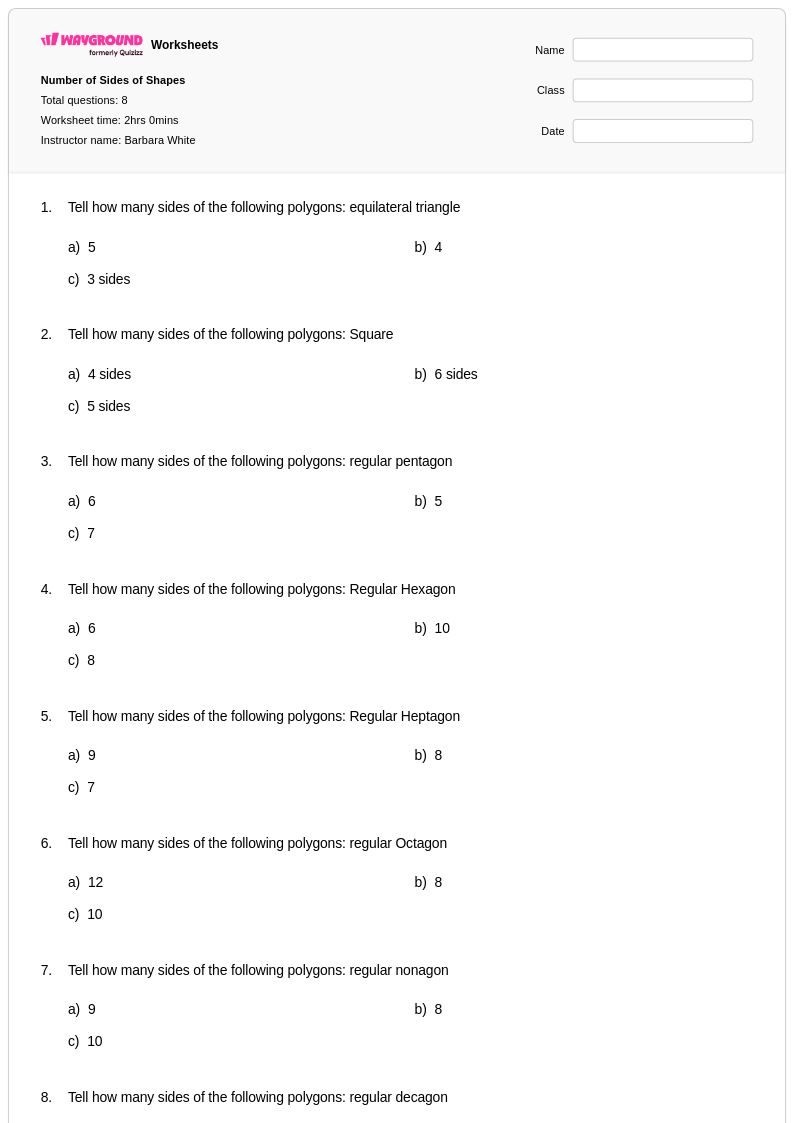
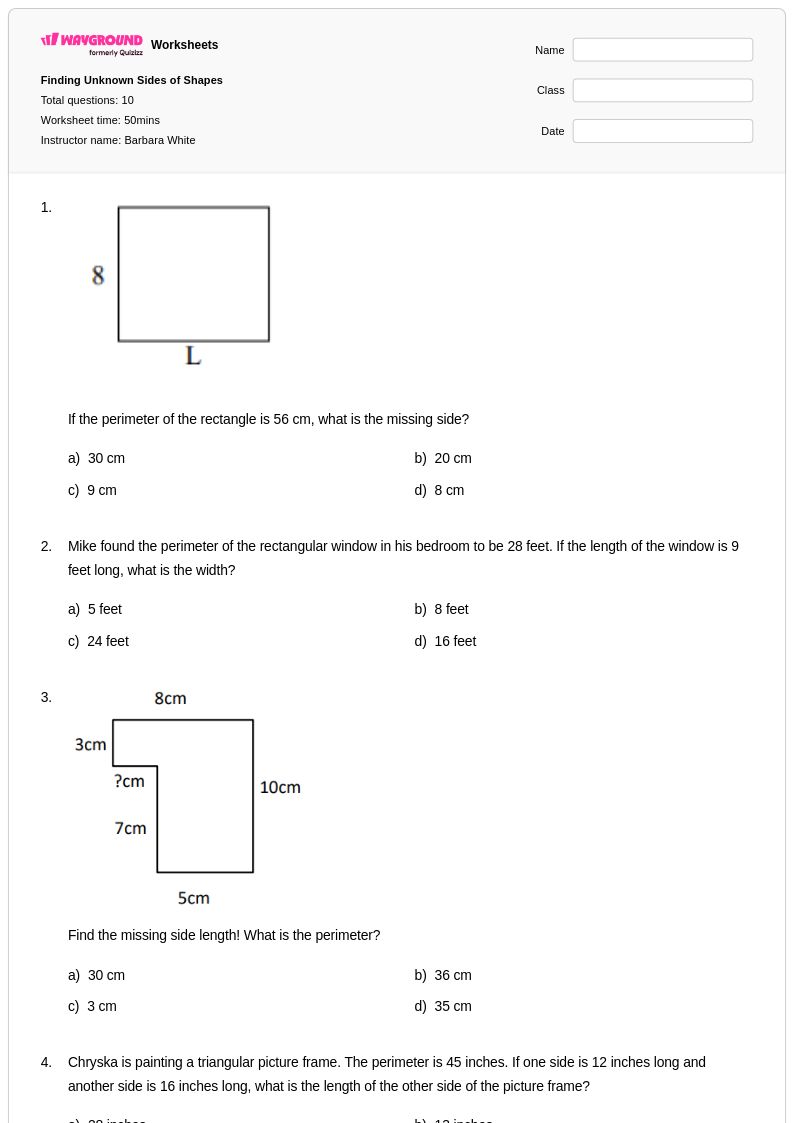
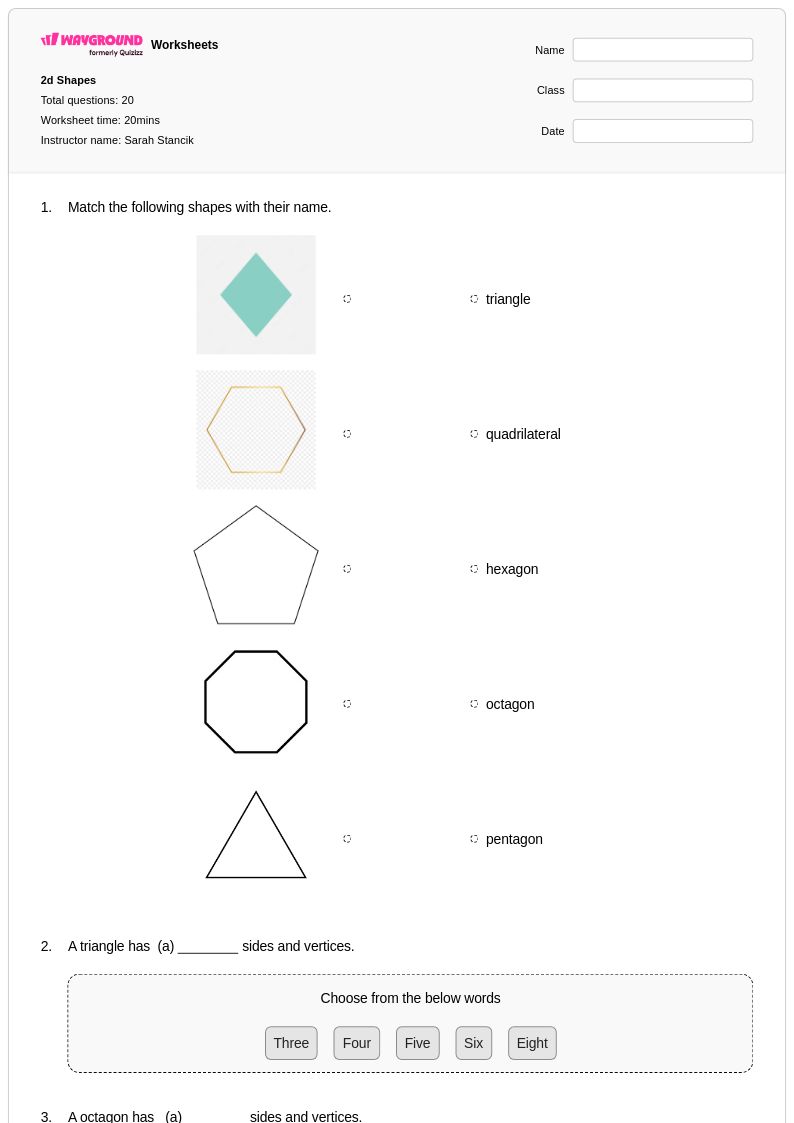
Sides of shapes worksheets for Class 3 students available through Wayground (formerly Quizizz) provide essential foundational practice in geometric recognition and analysis. These comprehensive worksheets guide young learners through identifying, counting, and categorizing the sides of various two-dimensional shapes including triangles, squares, rectangles, pentagons, hexagons, and other polygons. Students develop critical spatial reasoning skills as they work through practice problems that require them to distinguish between straight sides and curved edges, count sides accurately, and understand how the number of sides defines different shape categories. Each worksheet collection includes detailed answer keys and is available as free printables in convenient PDF format, making it easy for educators to provide consistent geometry practice that builds confident shape recognition abilities.
Wayground (formerly Quizizz) empowers teachers with an extensive library of millions of teacher-created resources specifically designed to support Class 3 geometry instruction focused on shape properties. The platform's robust search and filtering capabilities allow educators to quickly locate worksheets that align with specific learning standards and match their students' current skill levels. Teachers can easily customize these resources to meet diverse classroom needs, whether providing remediation for students who need additional practice identifying basic shape sides or offering enrichment activities that challenge advanced learners with complex polygons. The flexible digital and printable formats enable seamless integration into lesson planning, homework assignments, assessment preparation, and differentiated instruction strategies, ensuring that every student receives appropriate practice opportunities to master this fundamental geometric concept.
FAQs
How does the study of shapes evolve in 3rd grade?
How do I teach the concept of shape categories, like quadrilaterals?
What exercises help 3rd graders practice classifying shapes?
What is a common misconception for 3rd graders when classifying shapes?
How can I use this worksheet with my 3rd grade class?
How can I differentiate this topic for diverse learners?