
Recommended Topics for you
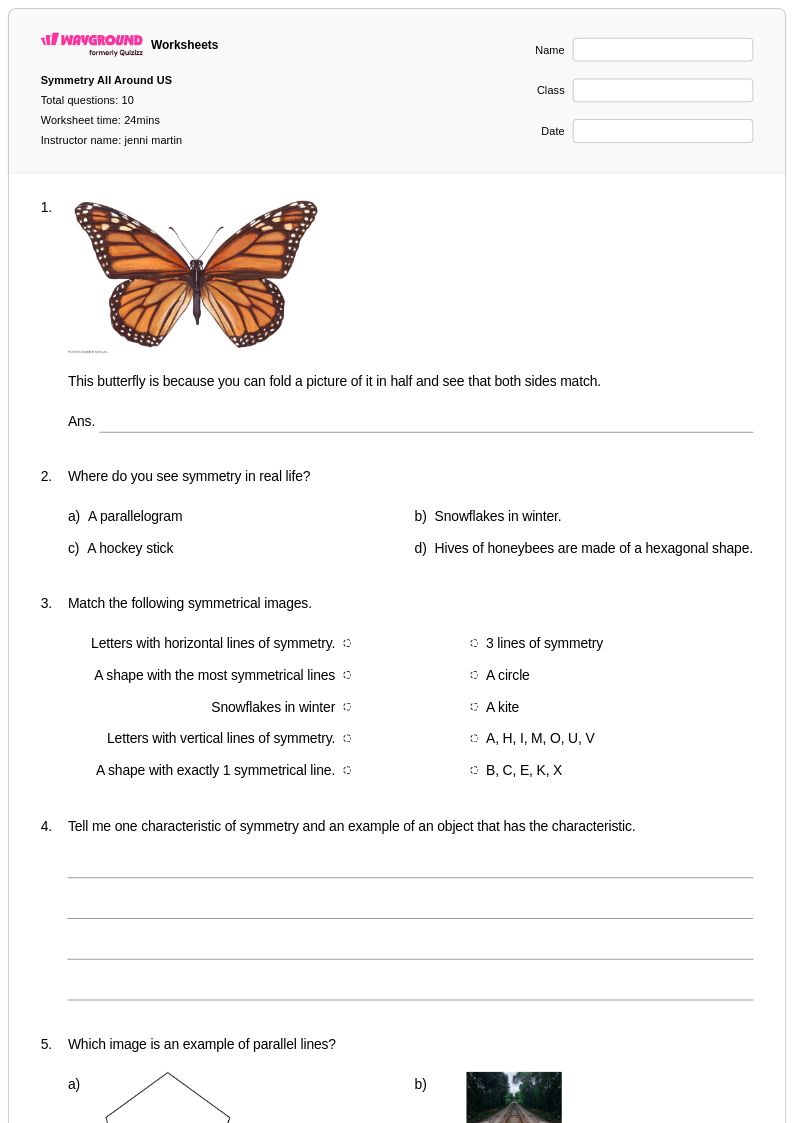
10 Q
3rd - 5th
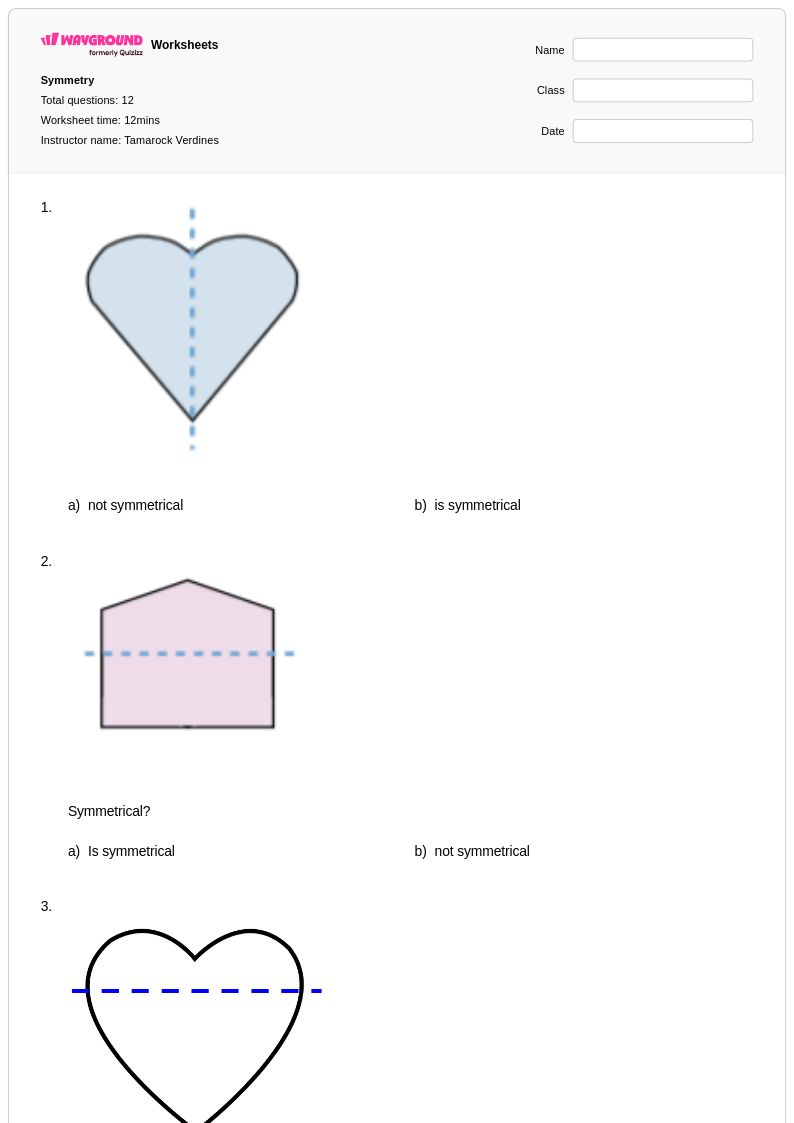
12 Q
3rd
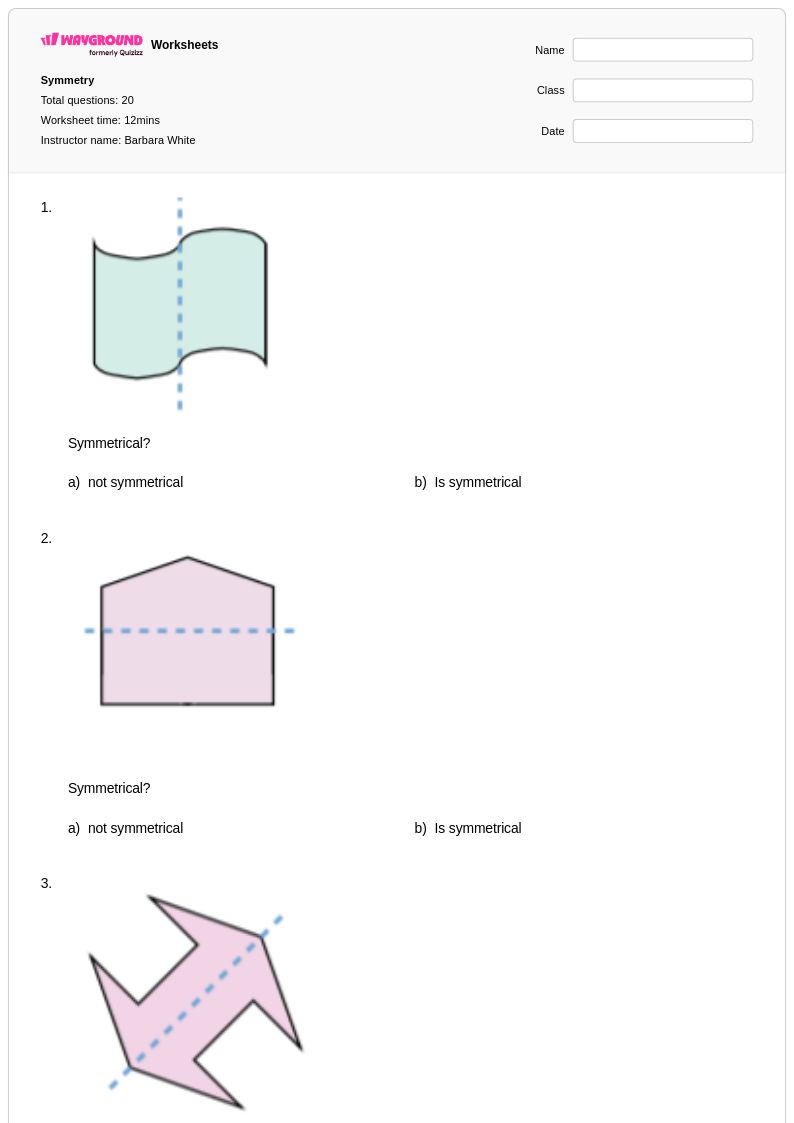
20 Q
3rd
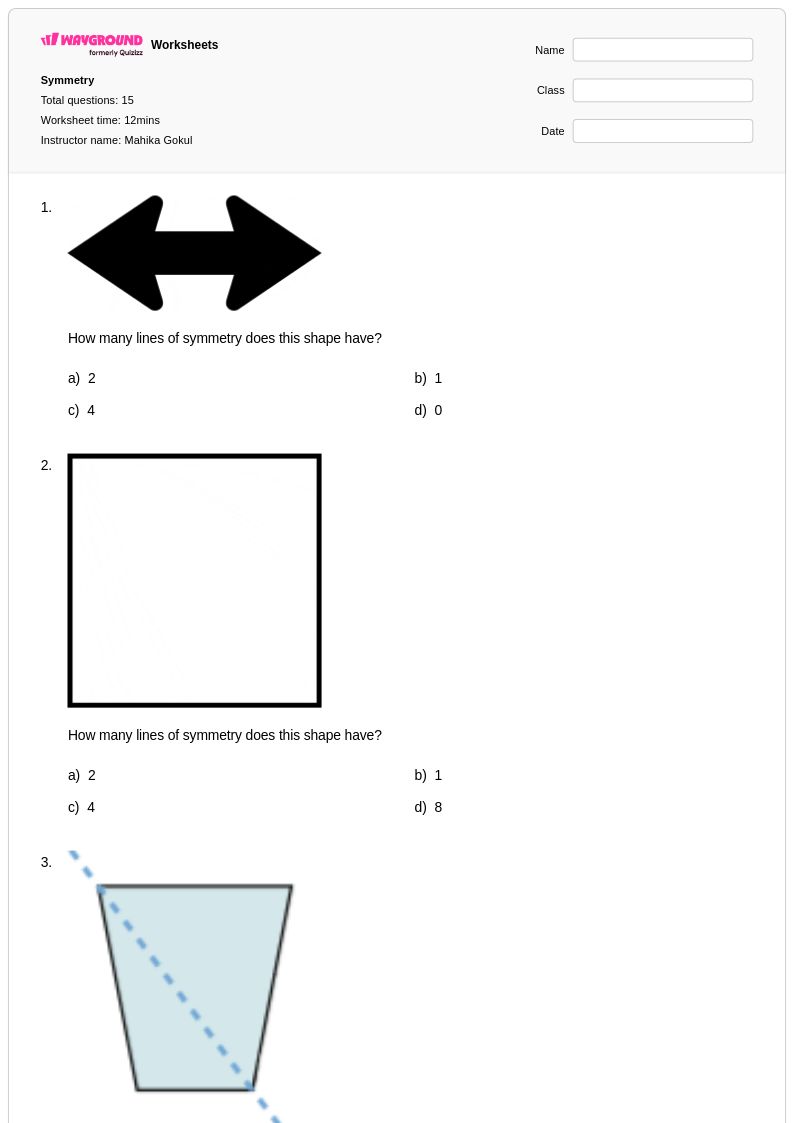
15 Q
3rd - 7th
10 Q
2nd - 4th
10 Q
3rd - 4th
18 Q
2nd - Uni
15 Q
3rd
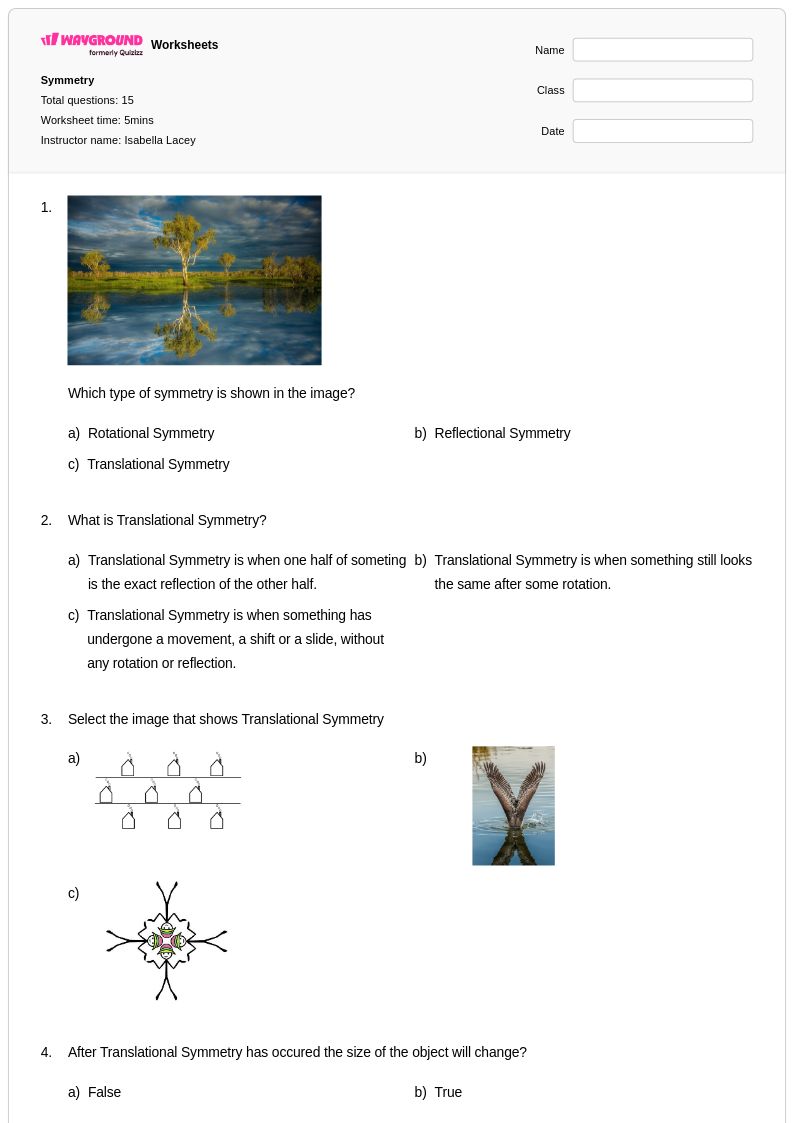
15 Q
3rd
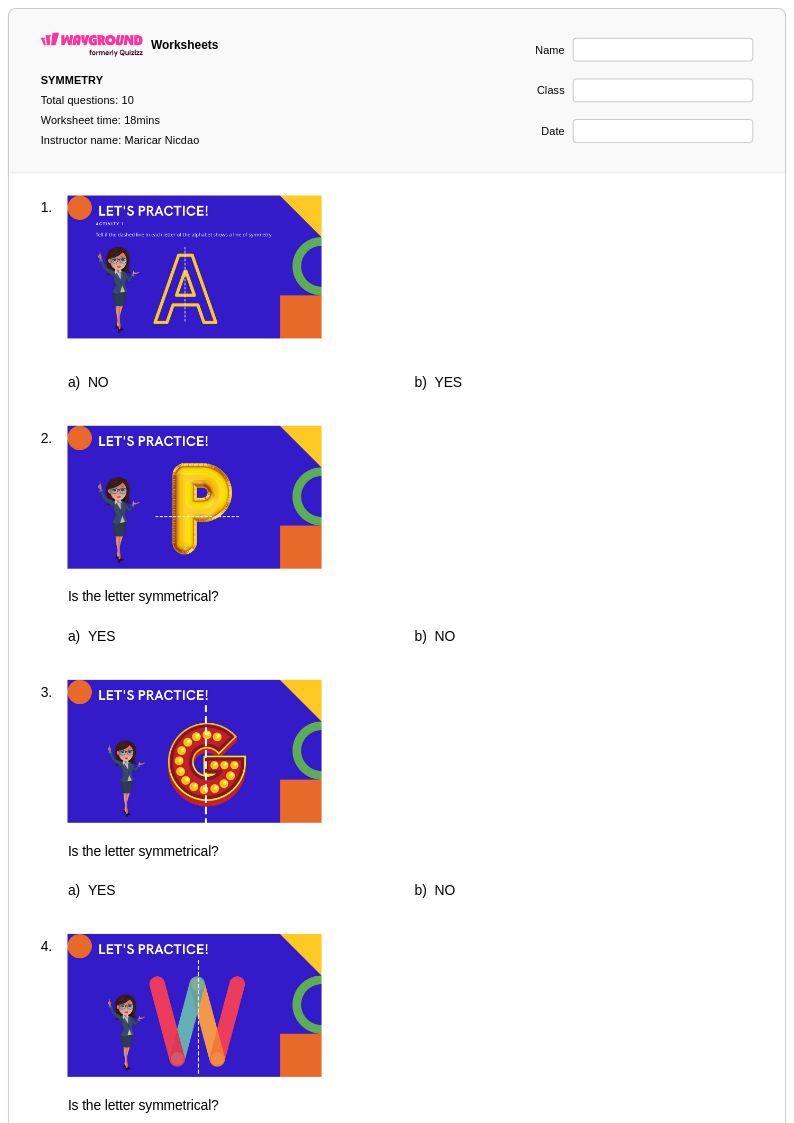
10 Q
3rd
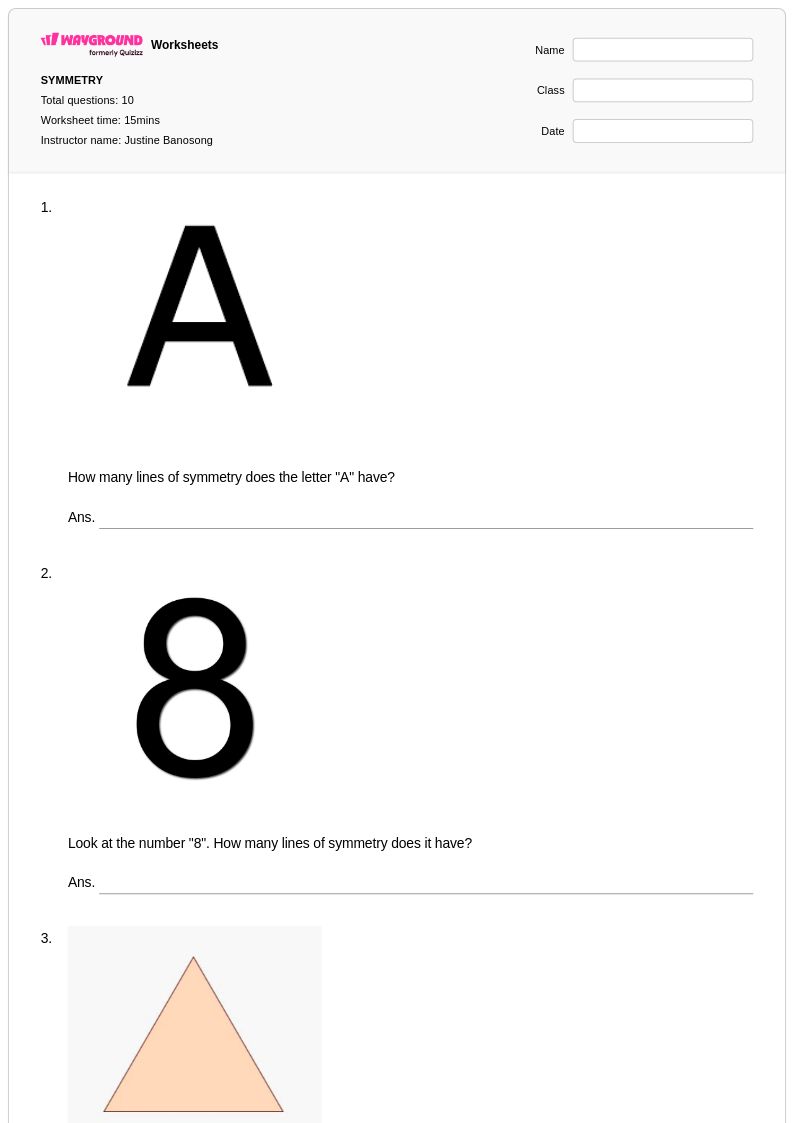
10 Q
3rd
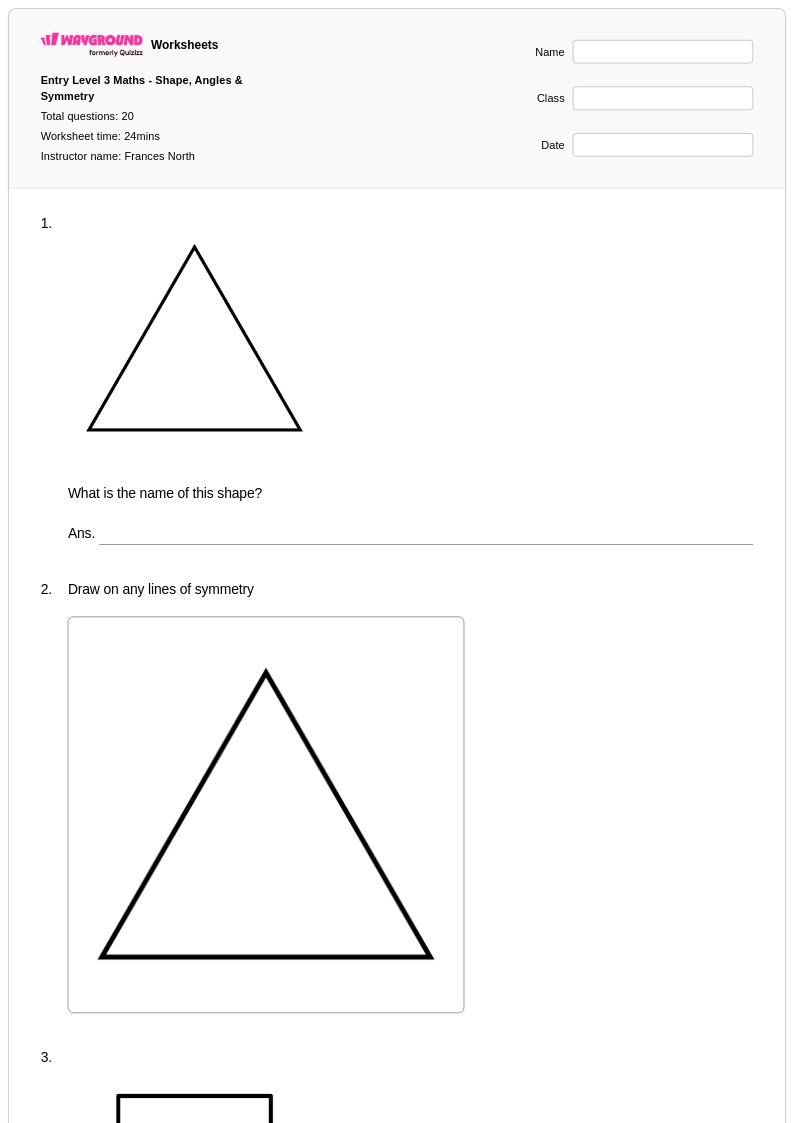
20 Q
1st - 7th
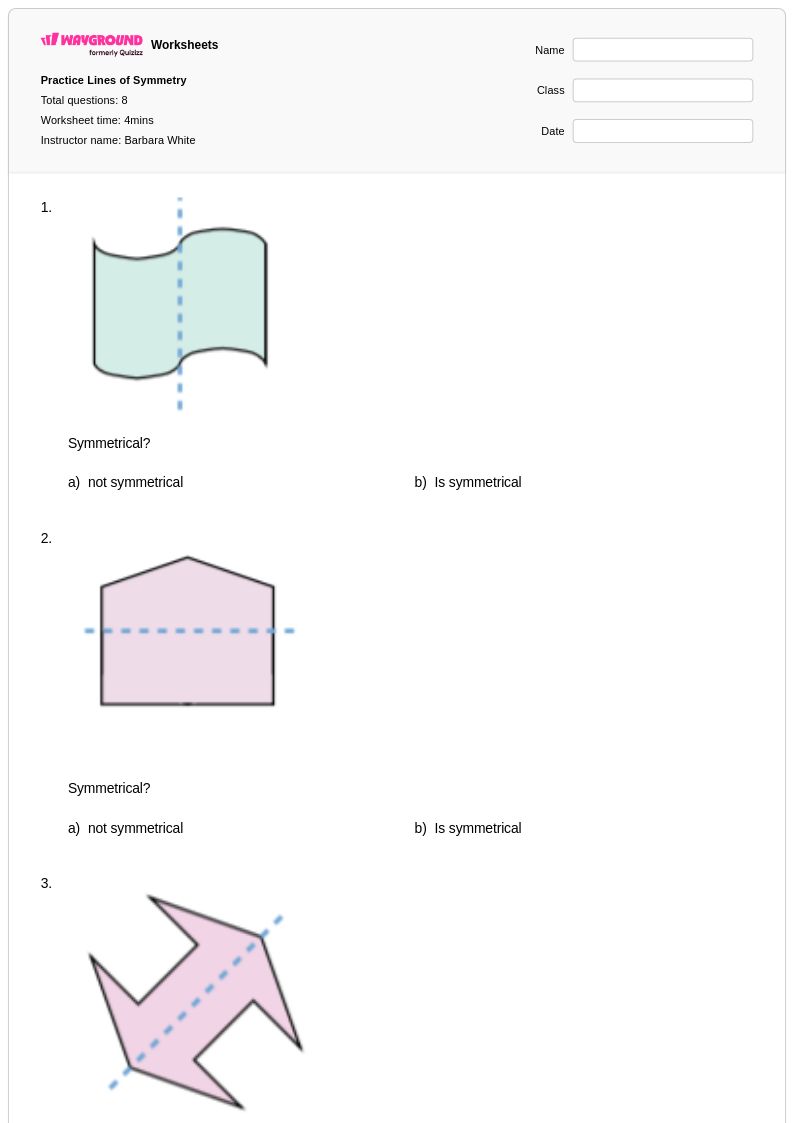
8 Q
3rd
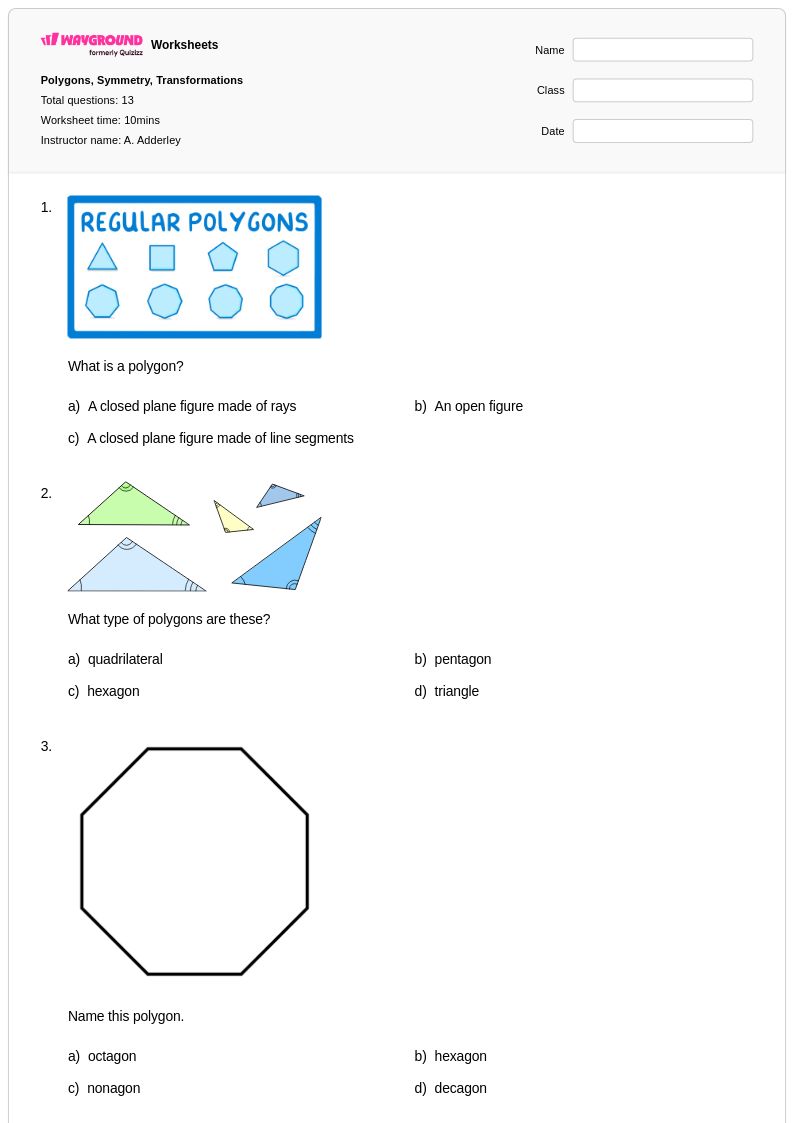
13 Q
3rd - 5th
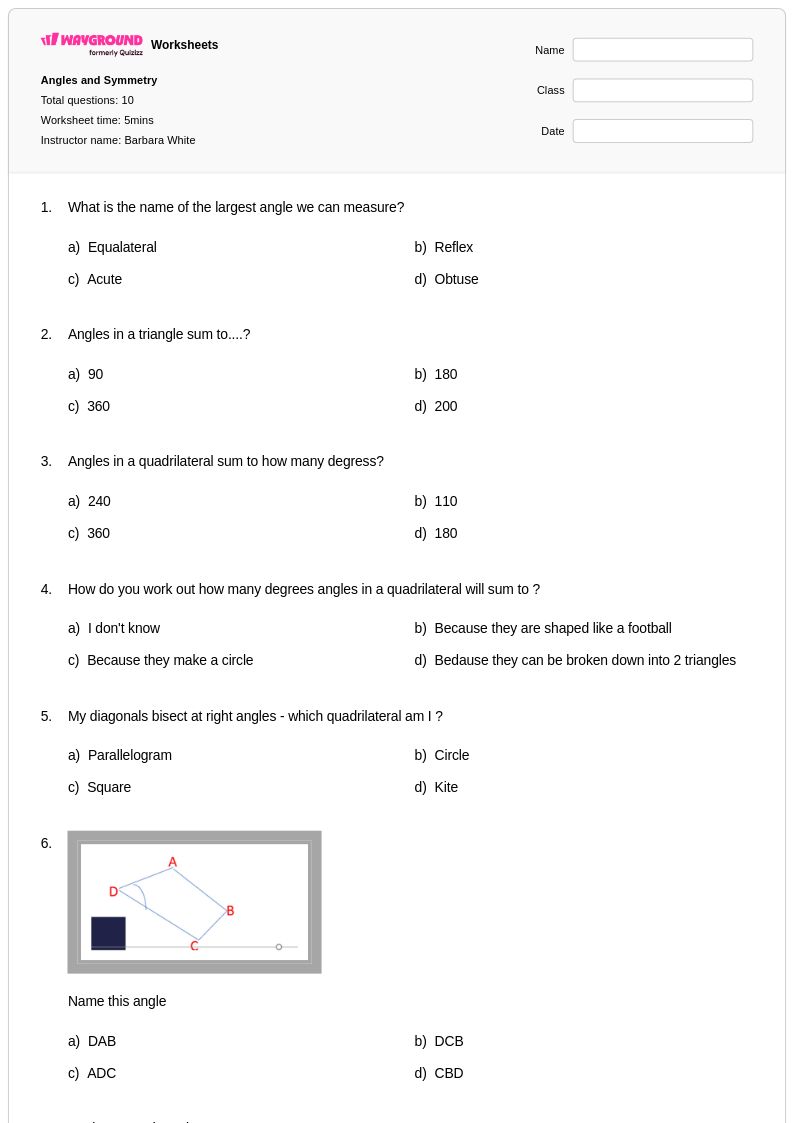
10 Q
3rd - 4th
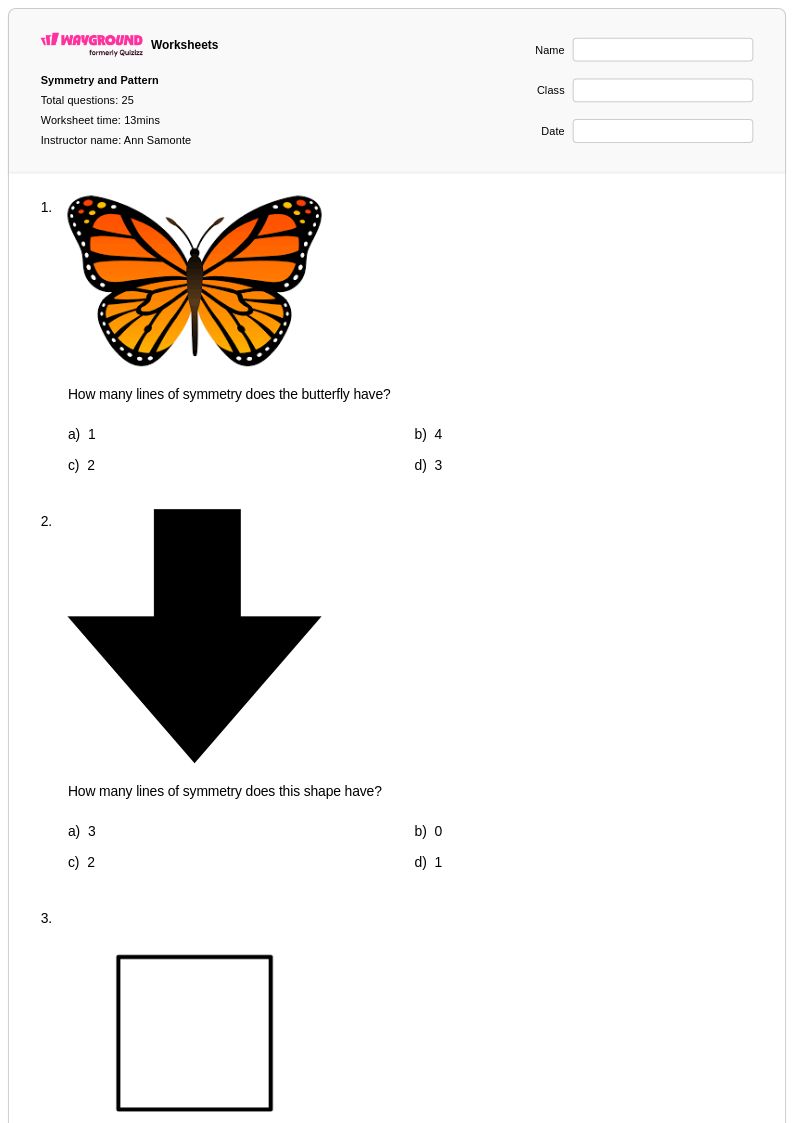
25 Q
3rd
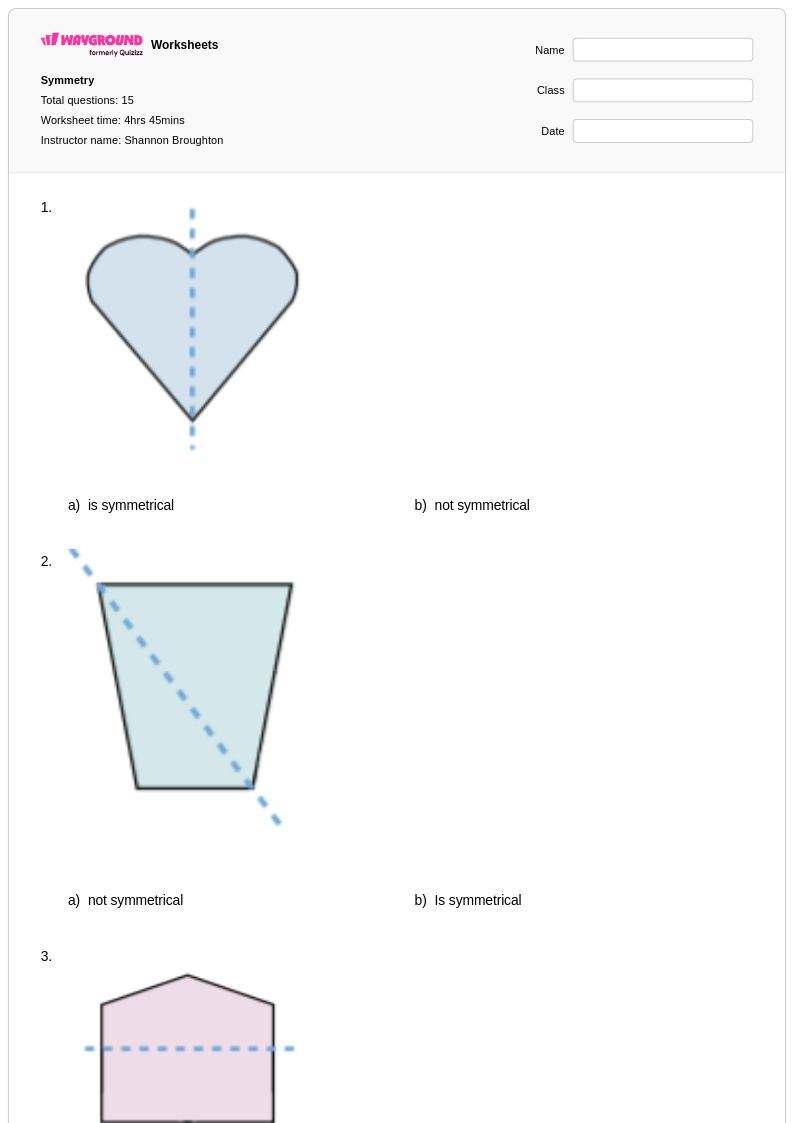
15 Q
3rd - 8th
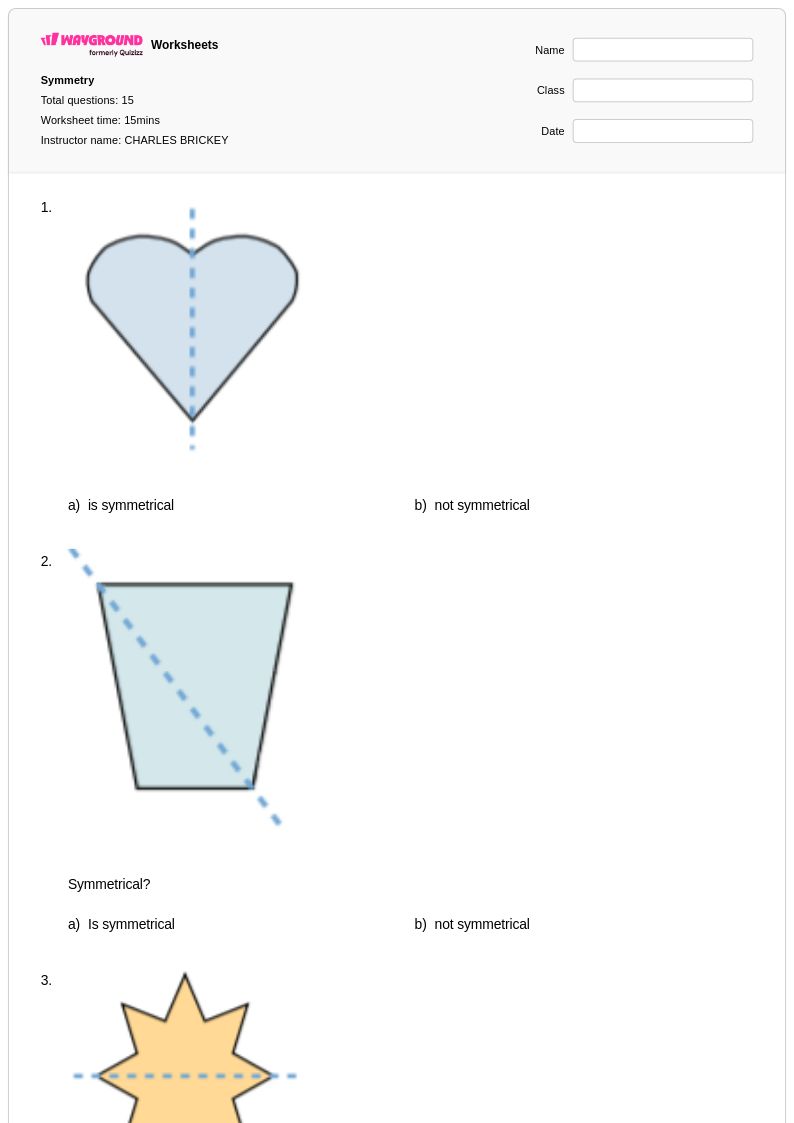
15 Q
3rd - 5th
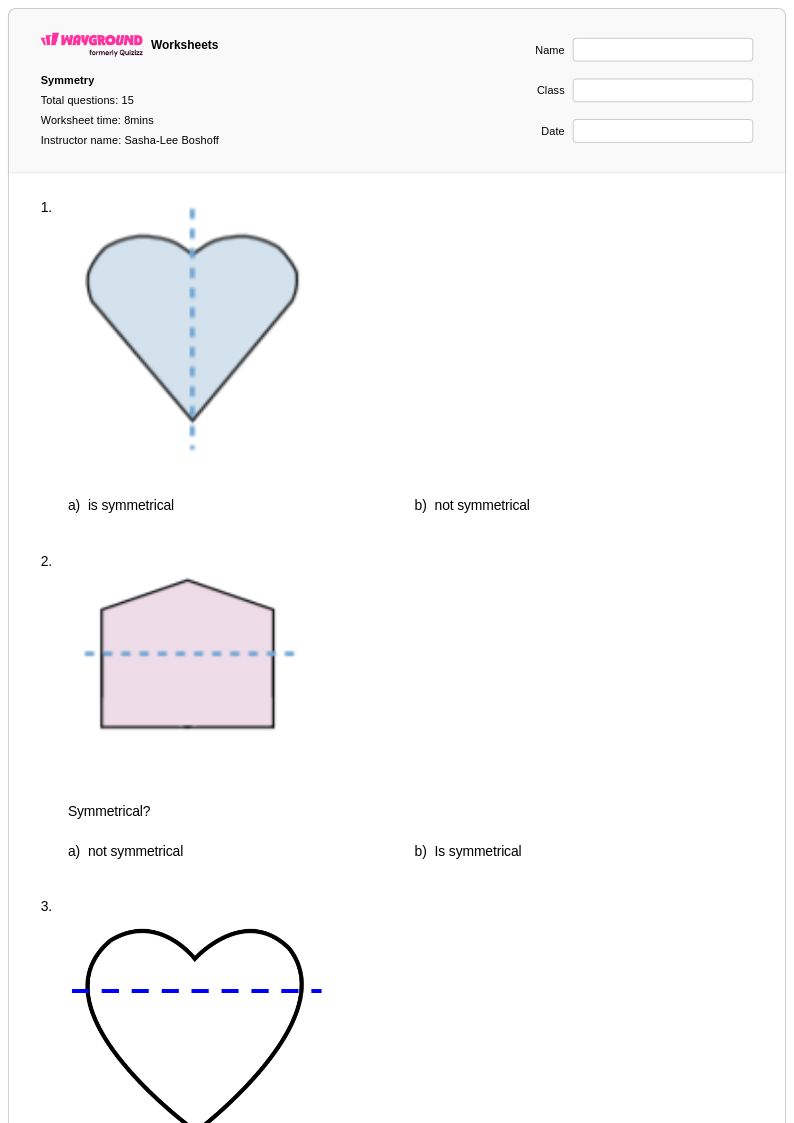
15 Q
3rd - 5th
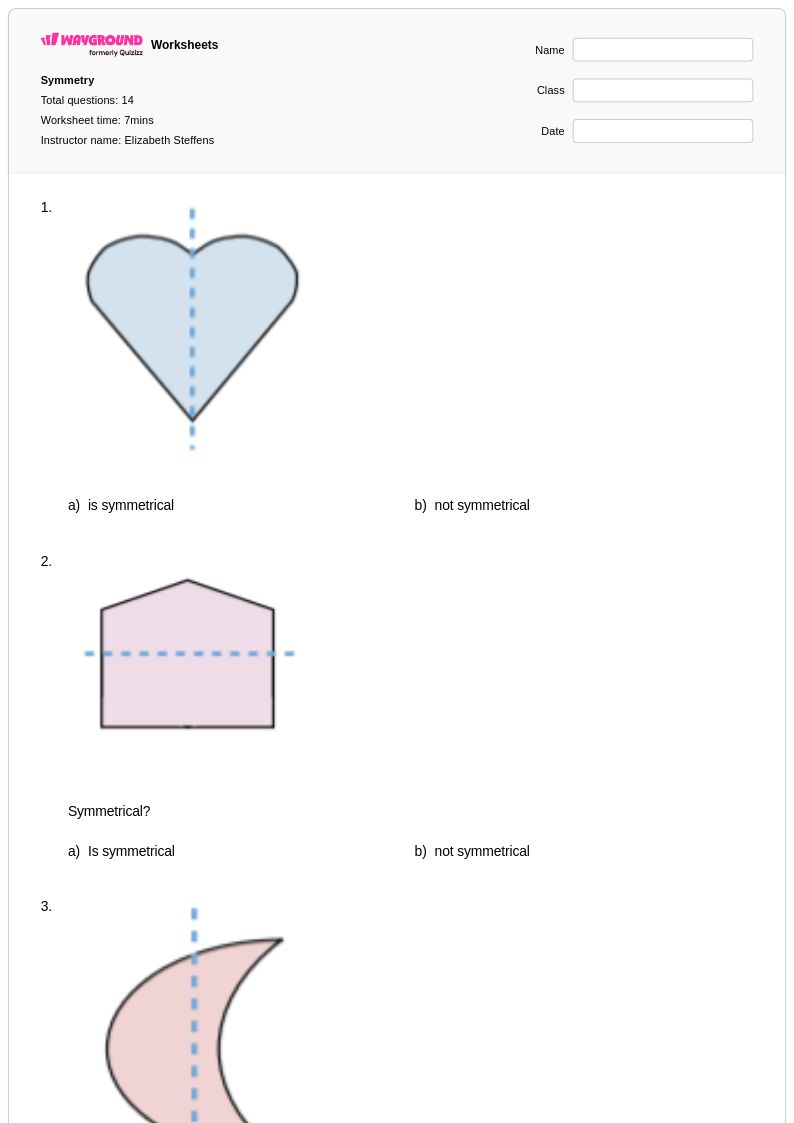
14 Q
2nd - 4th
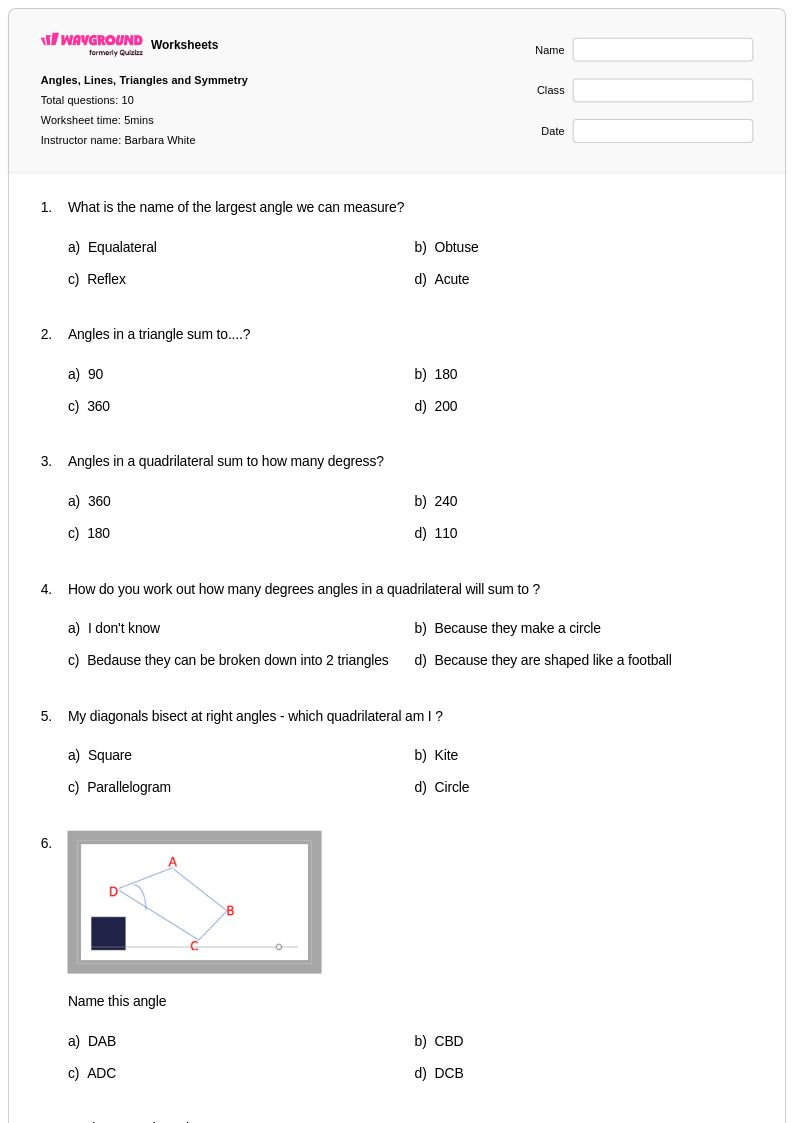
10 Q
3rd - 4th
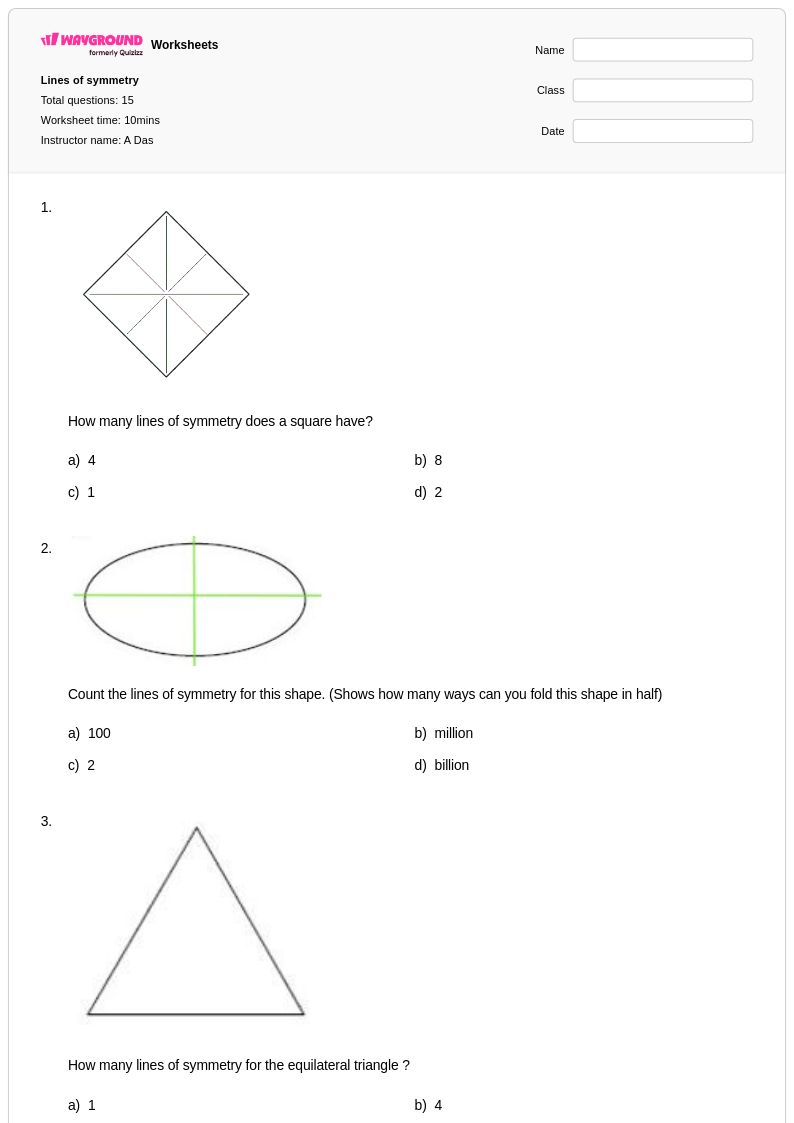
15 Q
1st - 5th
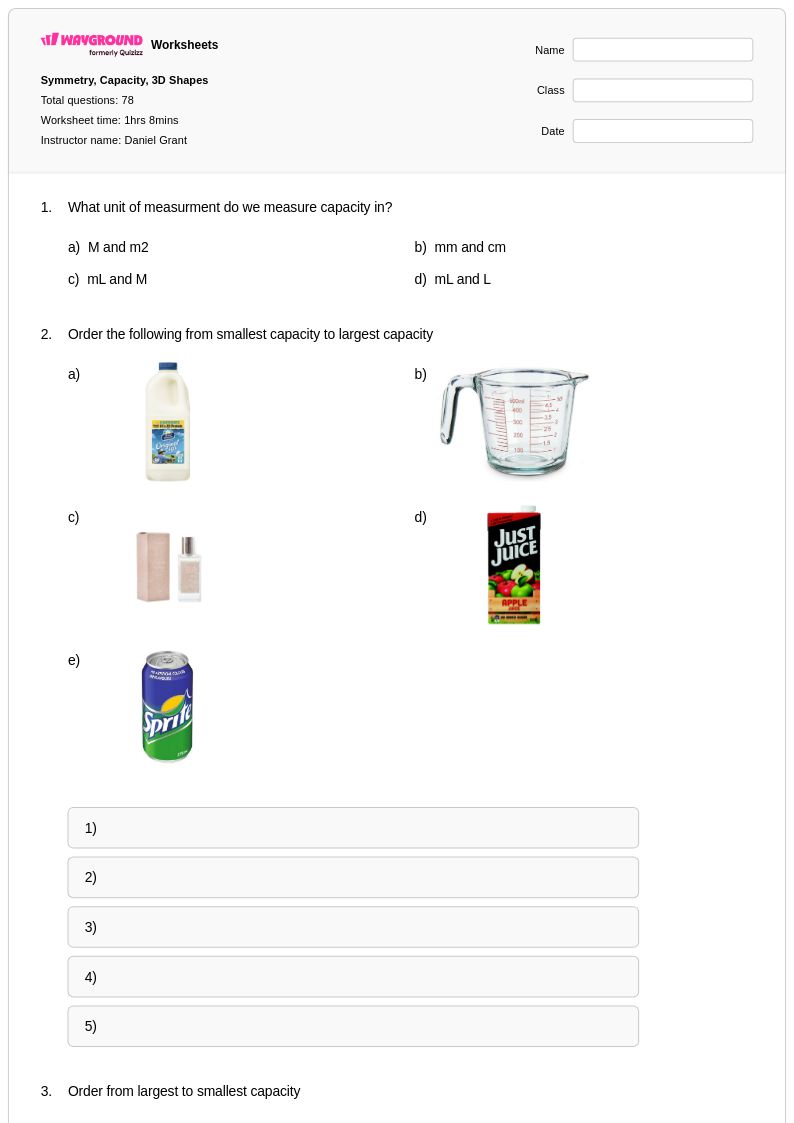
78 Q
3rd
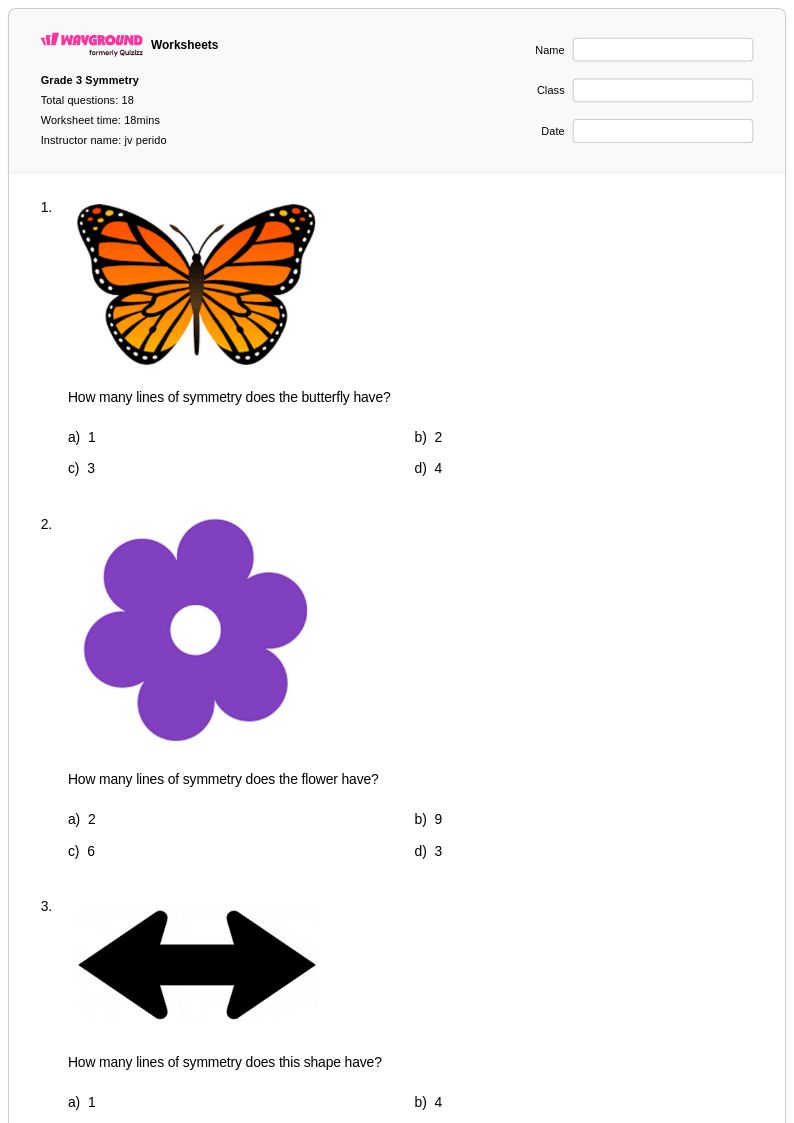
18 Q
3rd
Explore Symmetry Worksheets by Grades
Explore Symmetry Worksheets for class 3 by Topic
Explore Other Subject Worksheets for class 3
Explore printable Symmetry worksheets for Class 3
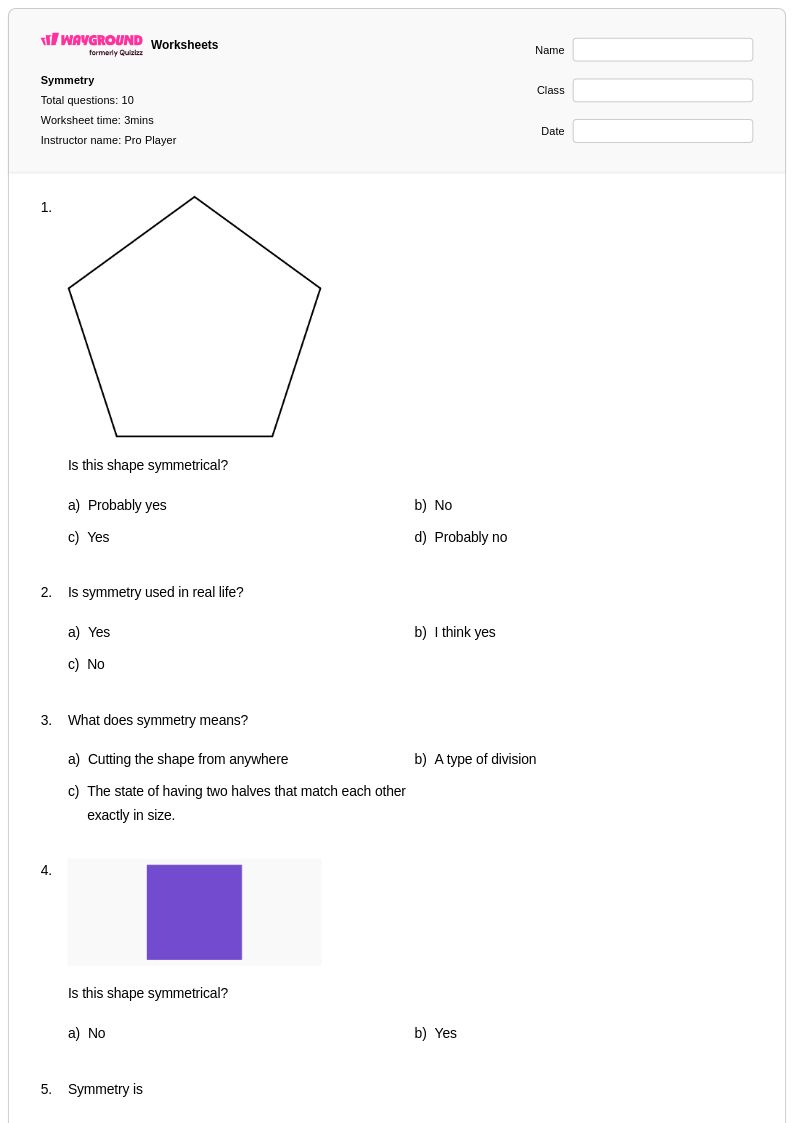
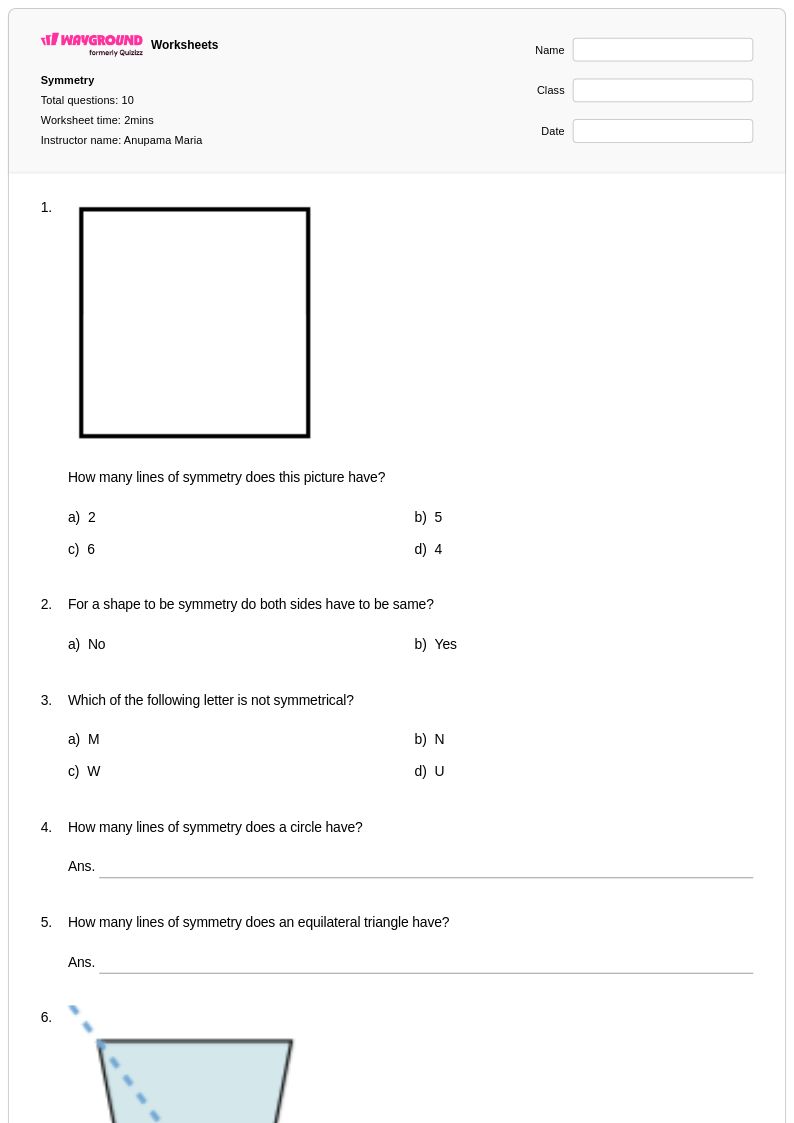
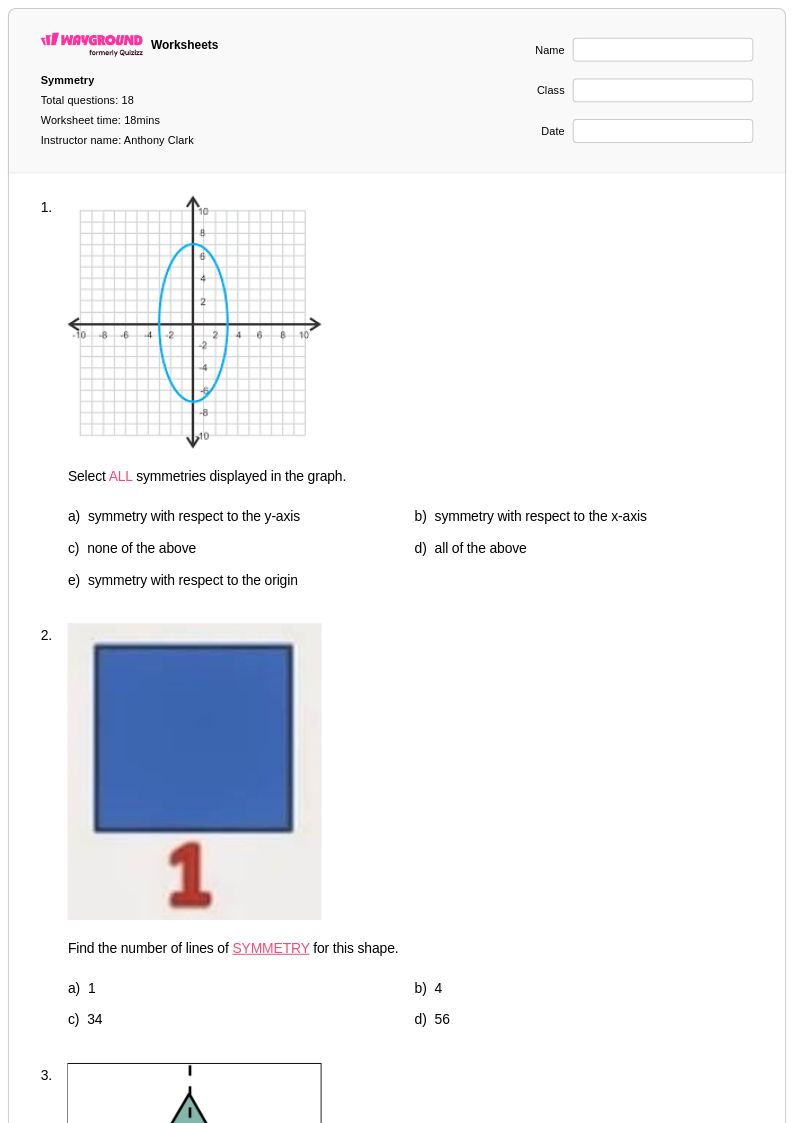
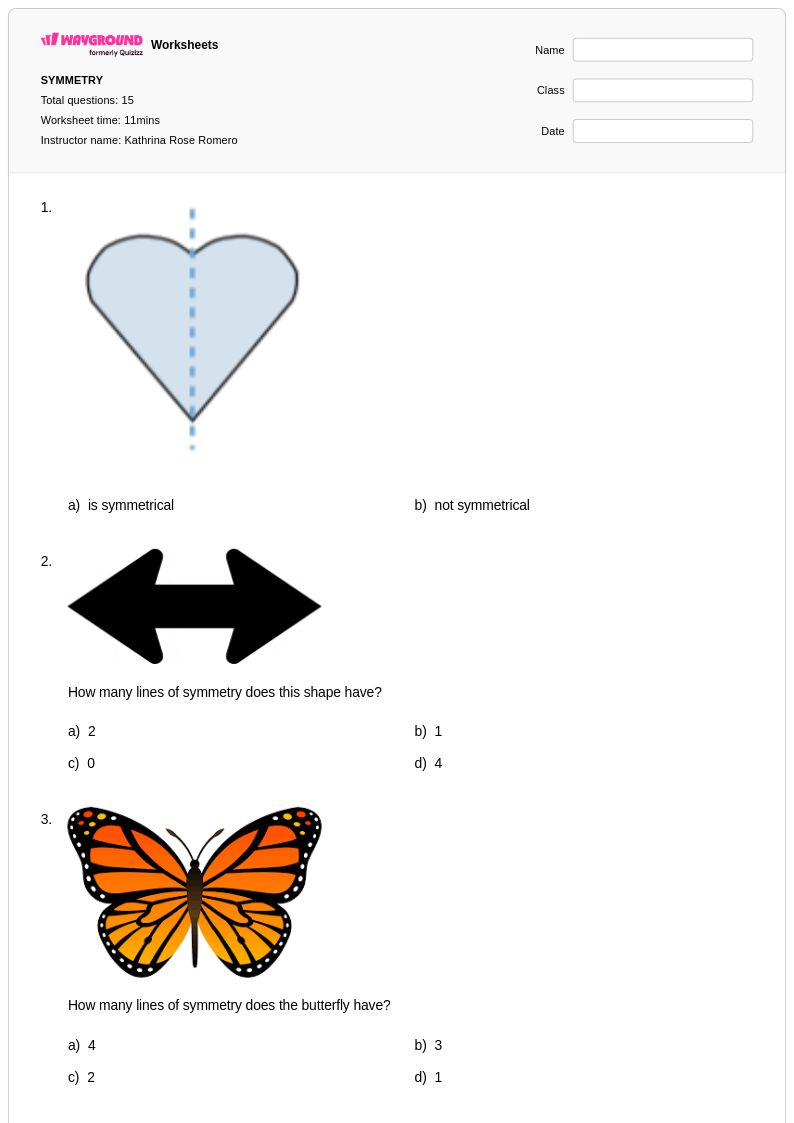
Symmetry worksheets for Class 3 students available through Wayground (formerly Quizizz) provide essential practice in recognizing, creating, and analyzing symmetric patterns and shapes. These comprehensive printables strengthen foundational geometric reasoning skills by engaging young learners with activities that explore lines of symmetry in everyday objects, geometric figures, and nature-inspired designs. Students develop spatial awareness and critical thinking abilities as they work through practice problems that require them to identify whether shapes are symmetric, draw missing halves of symmetric figures, and create their own symmetric designs. Each worksheet collection includes detailed answer keys that support both independent learning and guided instruction, while the free pdf format ensures easy access for classroom use and home practice.
Wayground's extensive library of teacher-created symmetry resources supports educators with millions of carefully curated worksheets that address diverse learning needs in Class 3 geometry instruction. The platform's robust search and filtering capabilities enable teachers to quickly locate materials aligned with specific curriculum standards, while differentiation tools allow for seamless customization of content complexity and visual presentation. These symmetry worksheet collections are available in both printable pdf formats and interactive digital versions, providing flexibility for traditional classroom settings, remote learning environments, and hybrid instruction models. Teachers can efficiently plan lessons, provide targeted remediation for struggling learners, offer enrichment opportunities for advanced students, and deliver consistent skill practice that builds mathematical confidence and geometric understanding across all ability levels.
FAQs
How should I teach symmetry in Grade 3?
What worksheet exercises build Grade 3 symmetry skills?
What mistakes do third graders commonly make with symmetry?
How can I use a Grade 3 symmetry worksheet from Wayground?
How does Grade 3 symmetry support the Common Core geometry progression?
How can I differentiate a Grade 3 symmetry worksheet?
What symmetry concepts should Grade 3 students know?