
13 Q
3rd
20 Q
2nd - Uni
5 Q
3rd
5 Q
3rd
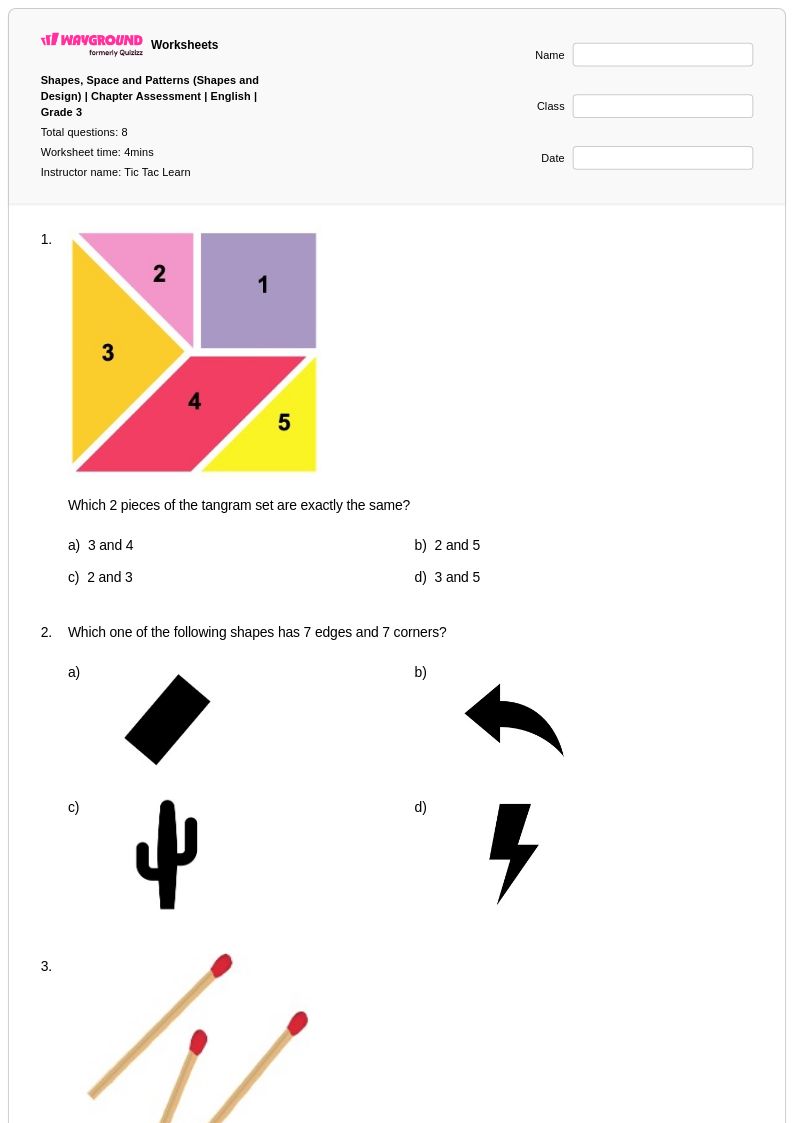
8 Q
3rd
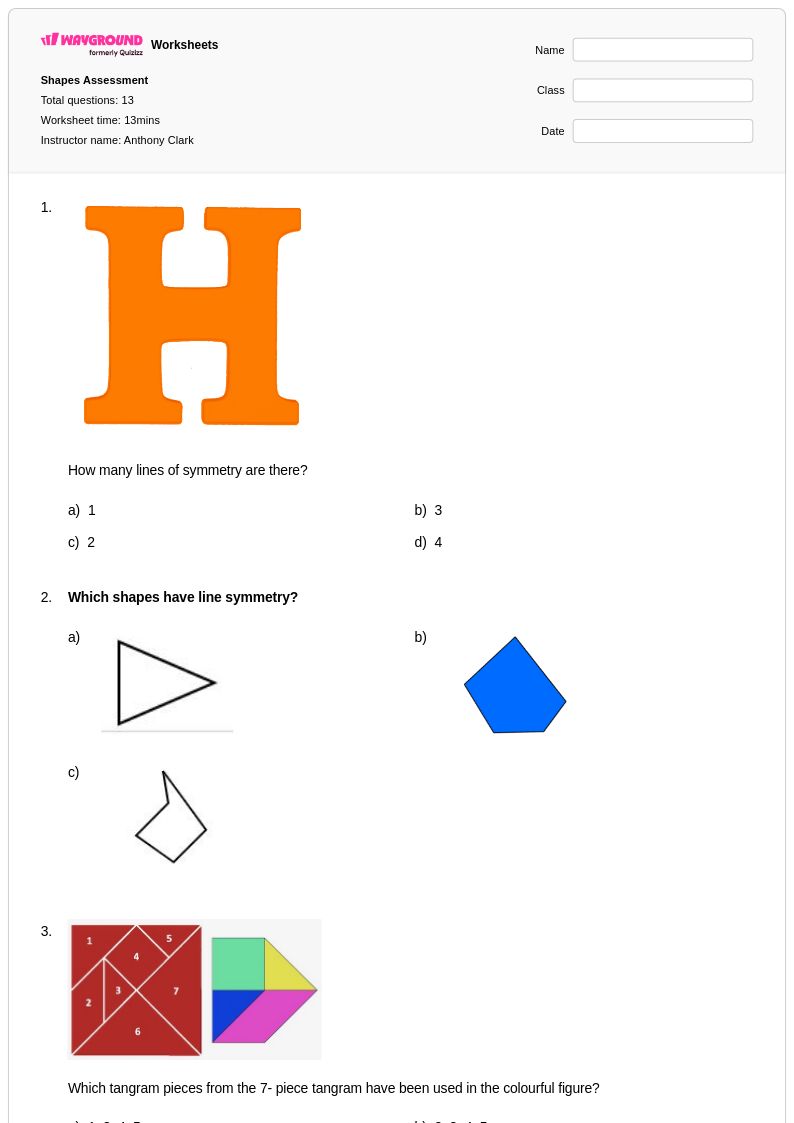
13 Q
3rd - Uni
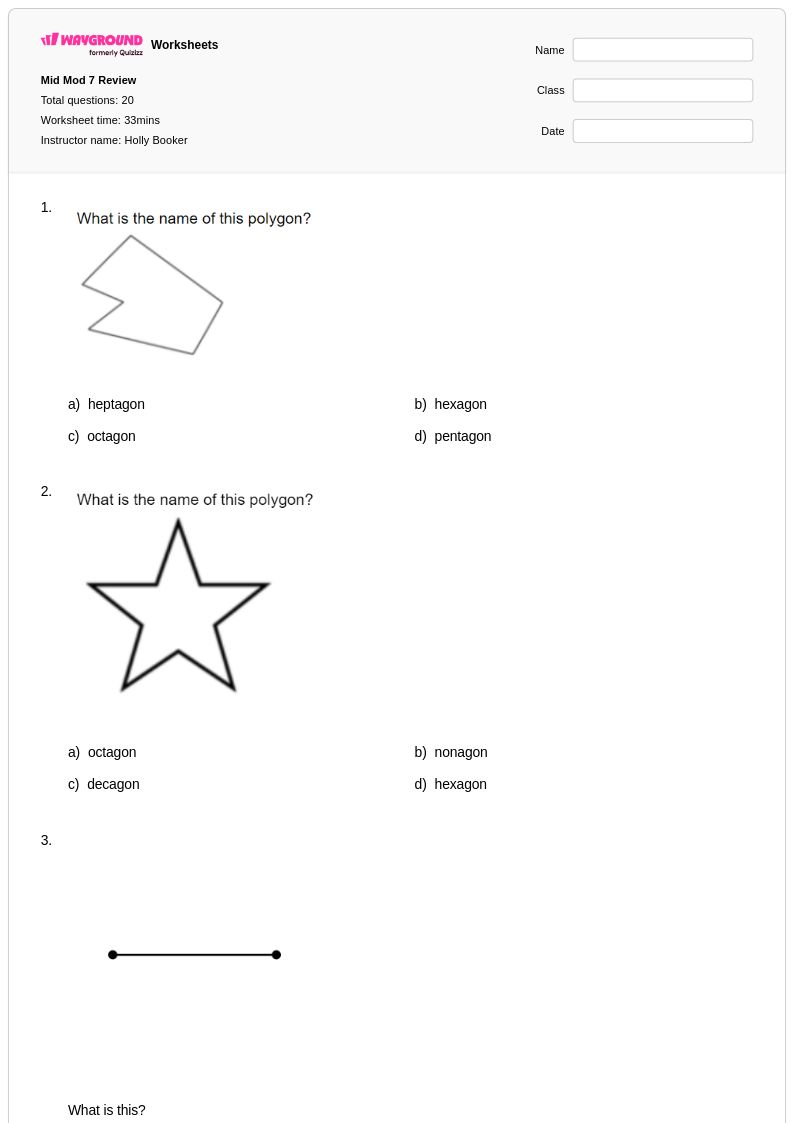
20 Q
3rd
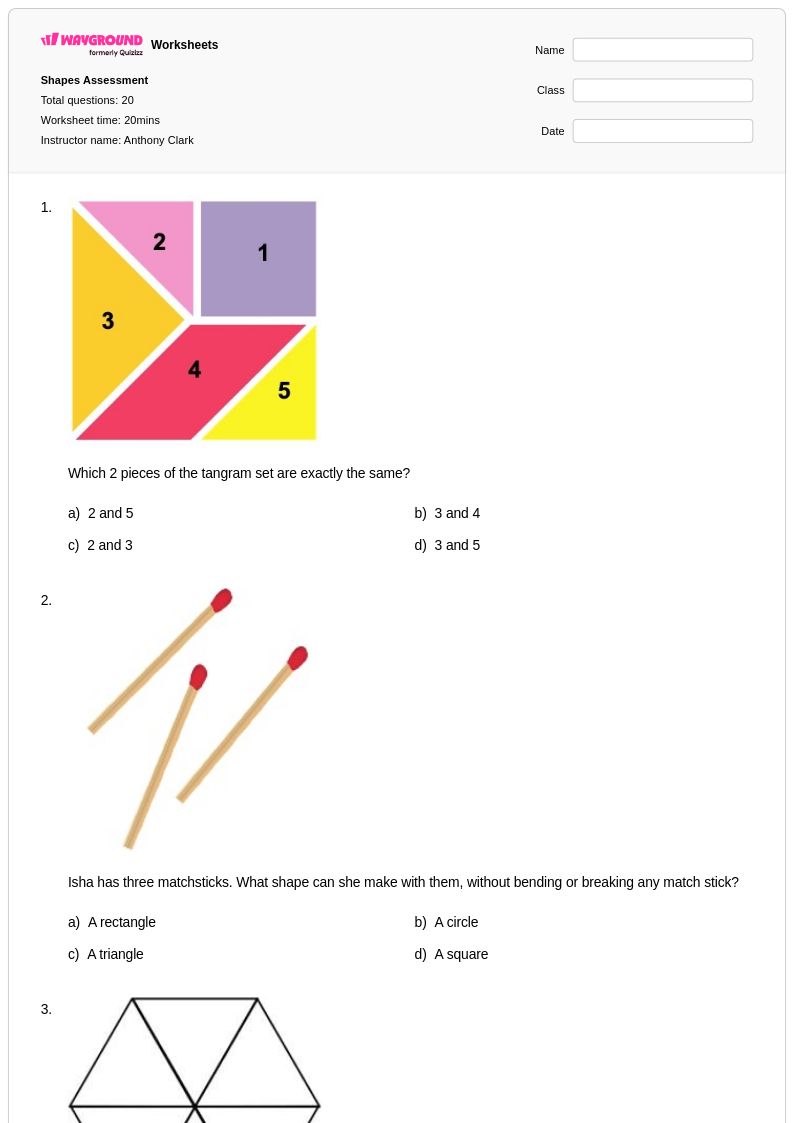
20 Q
3rd - Uni
26 Q
3rd
15 Q
3rd
14 Q
3rd
30 Q
3rd
13 Q
3rd
10 Q
3rd
15 Q
3rd
31 Q
1st - 5th
20 Q
3rd - Uni
13 Q
3rd
22 Q
2nd - 5th
17 Q
3rd
10 Q
KG - Uni
11 Q
1st - 12th
15 Q
3rd
10 Q
3rd - 5th
Explore Other Subject Worksheets for class 3
Explore printable Tangrams worksheets for Class 3
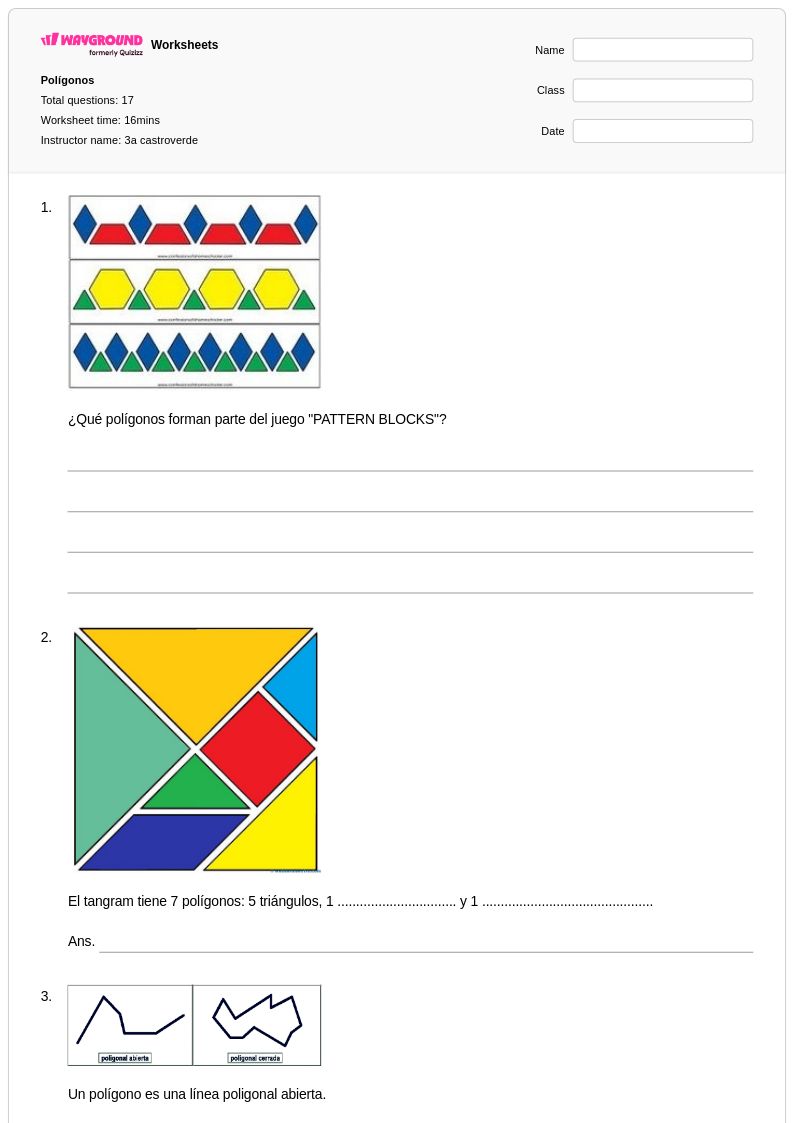
Tangrams worksheets for Class 3 students available through Wayground (formerly Quizizz) provide essential hands-on geometry practice that develops spatial reasoning and problem-solving abilities. These comprehensive printables guide young learners through the ancient Chinese puzzle tradition, where seven geometric shapes called tans must be arranged to form specific silhouettes and patterns. Each worksheet collection includes carefully structured practice problems that progress from simple animal and object shapes to more complex geometric configurations, strengthening students' understanding of shape properties, spatial relationships, and visual-motor coordination. The accompanying answer keys allow educators to efficiently assess student progress while providing immediate feedback, and the free pdf format ensures accessibility for both classroom instruction and home practice sessions.
Wayground (formerly Quizizz) empowers teachers with an extensive library of millions of educator-created tangram resources that streamline geometry instruction for Class 3 classrooms. The platform's robust search and filtering capabilities enable teachers to quickly locate worksheets that align with specific learning objectives and state standards, while differentiation tools support varied ability levels within the same classroom. These tangram collections are available in both printable and digital formats, offering flexibility for traditional paper-based activities or technology-integrated lessons. Teachers can customize existing worksheets or create original tangram challenges to meet individual student needs, making these resources invaluable for targeted skill practice, remediation support, and enrichment opportunities that enhance spatial thinking development.
FAQs
How do I teach tangrams in third-grade geometry?
What tangram exercises challenge third graders?
What misconceptions do third graders have about tangrams?
How can I assign Wayground Grade 3 tangram worksheets?
How do Grade 3 tangrams connect to Common Core math?
How can I differentiate tangram puzzles for third graders?
Are tangrams appropriate for Grade 3 students?