
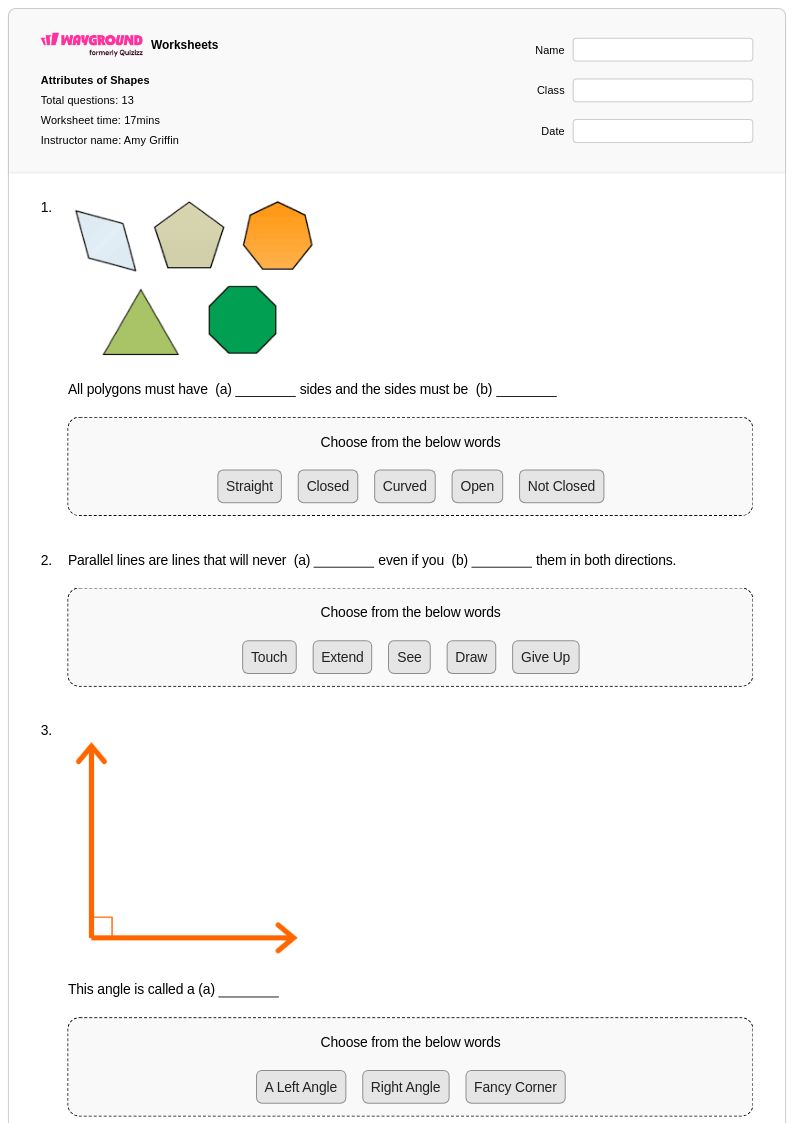
13 Q
3rd
21 Q
3rd
20 Q
3rd - Uni
10 Q
3rd
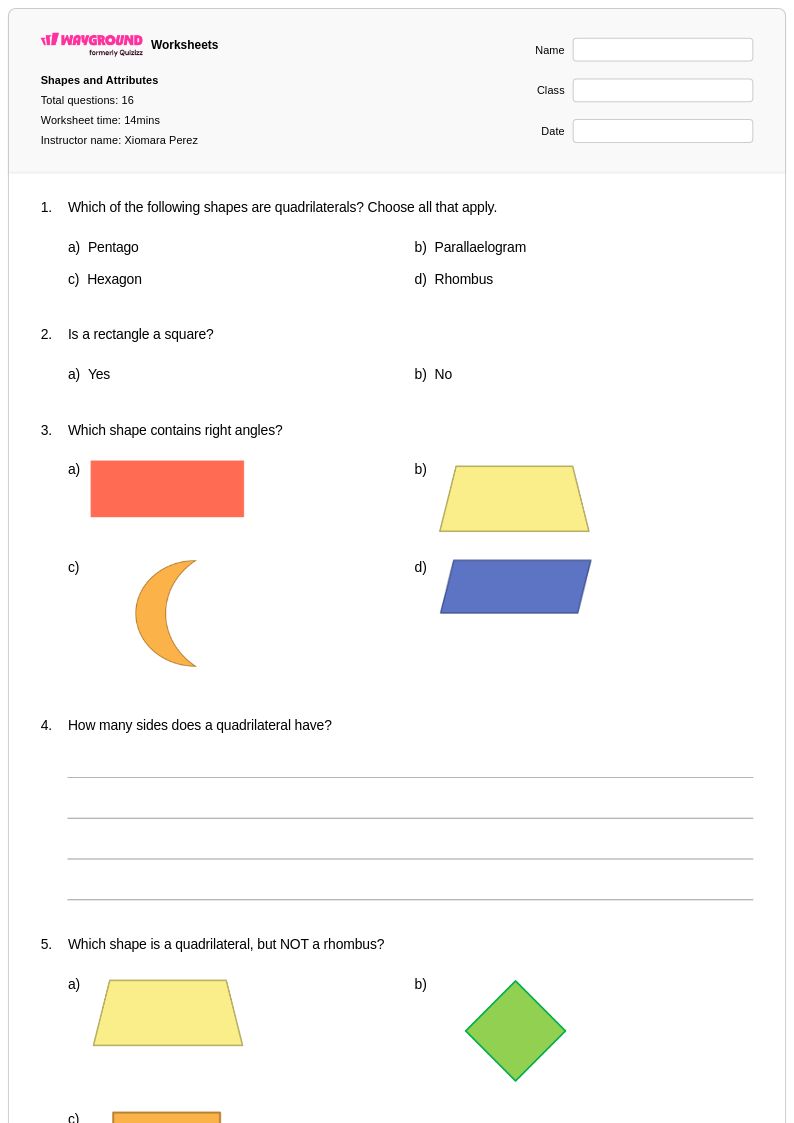
16 Q
3rd
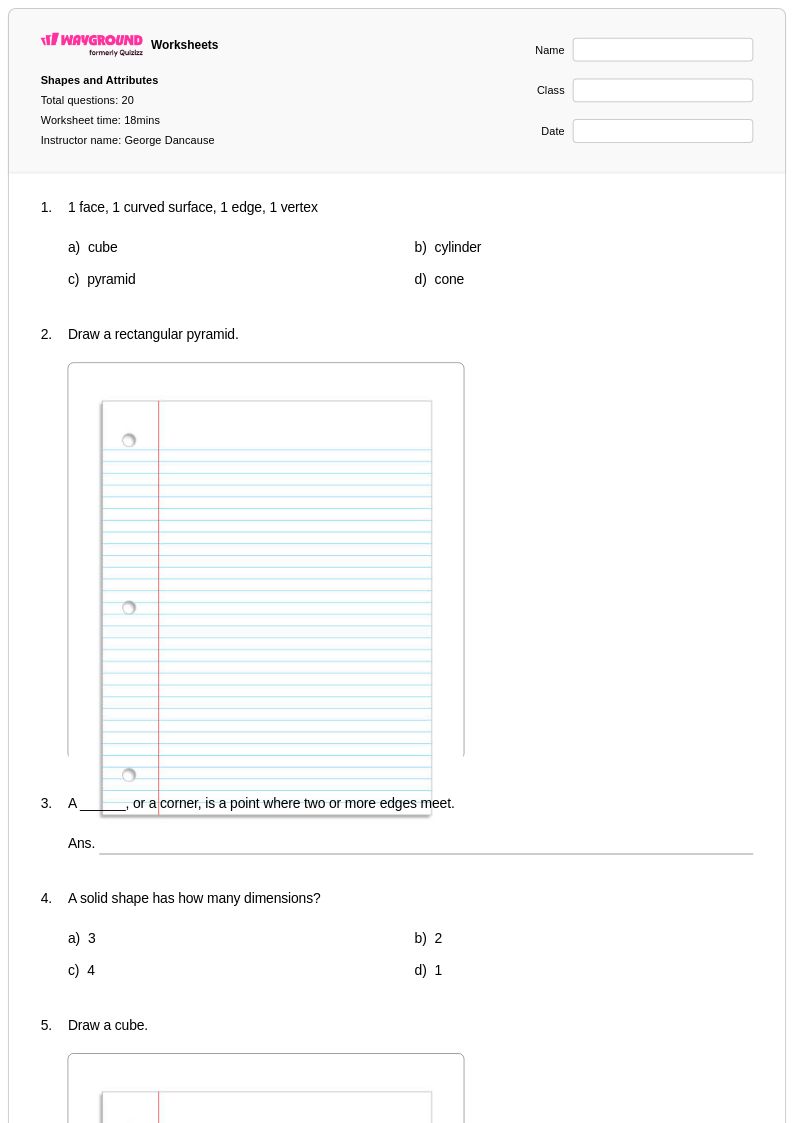
20 Q
3rd
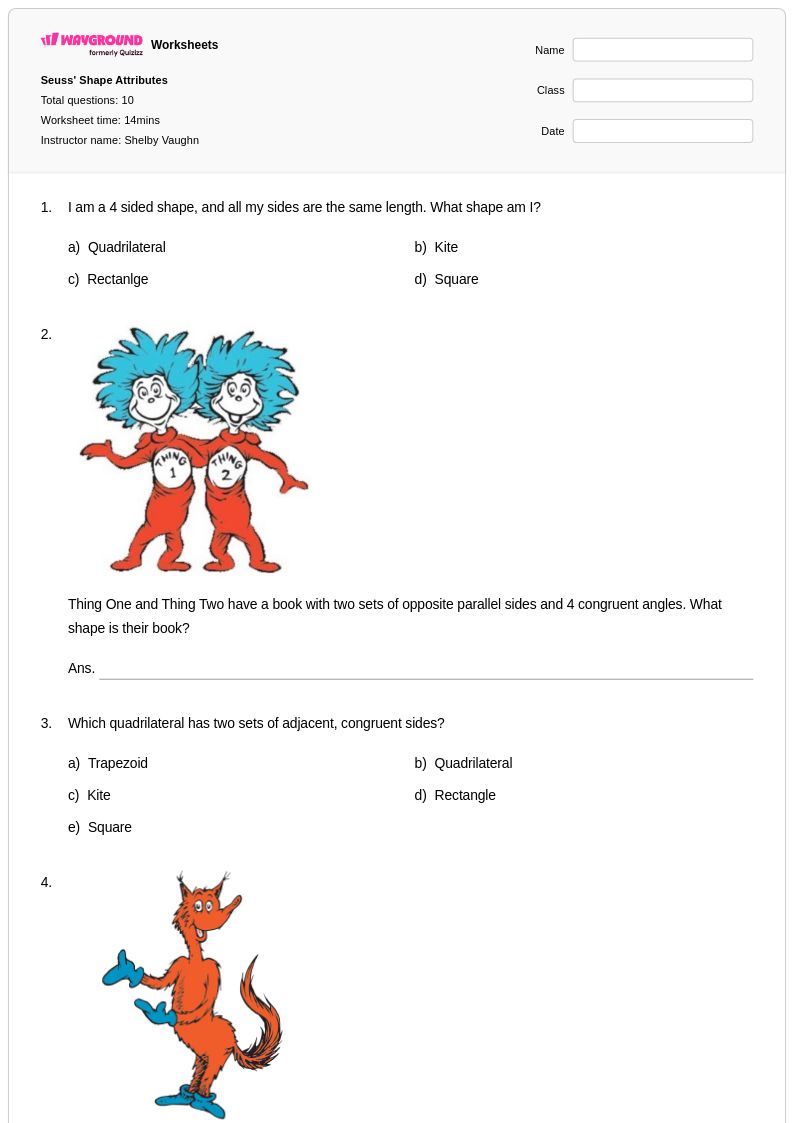
10 Q
3rd - 5th
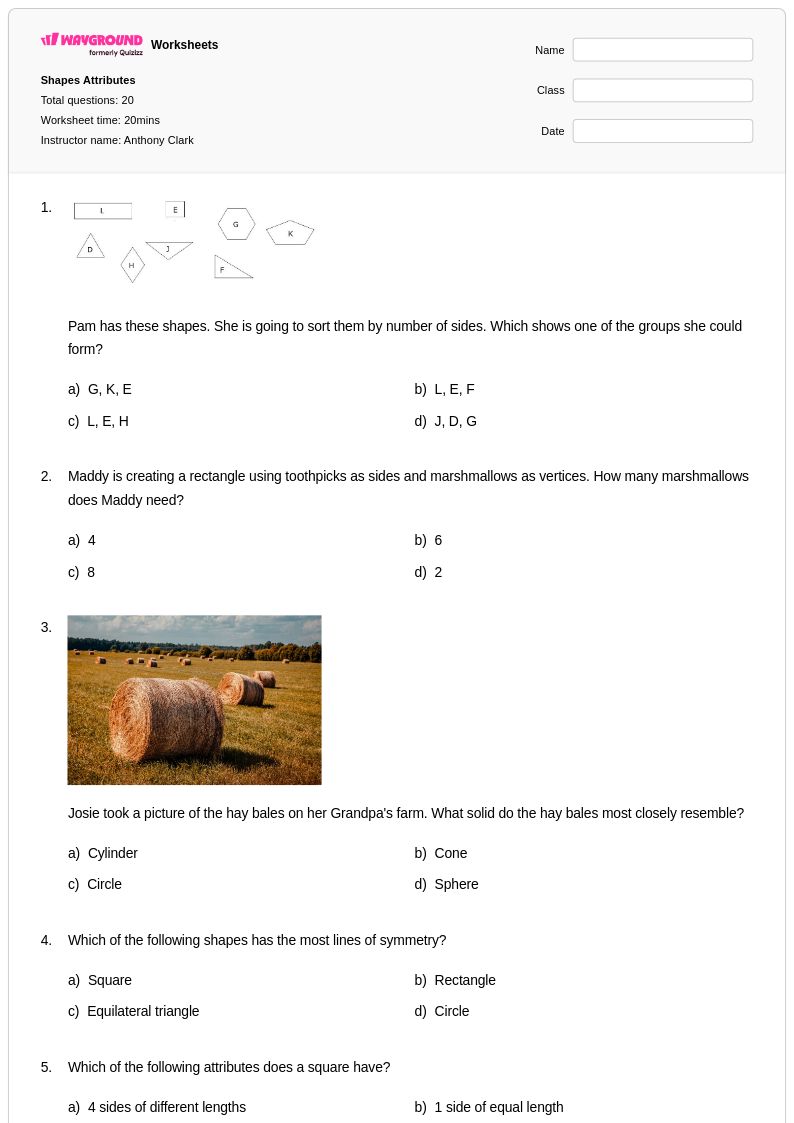
20 Q
3rd - Uni
20 Q
2nd - Uni
11 Q
3rd
19 Q
3rd - Uni
18 Q
3rd - Uni
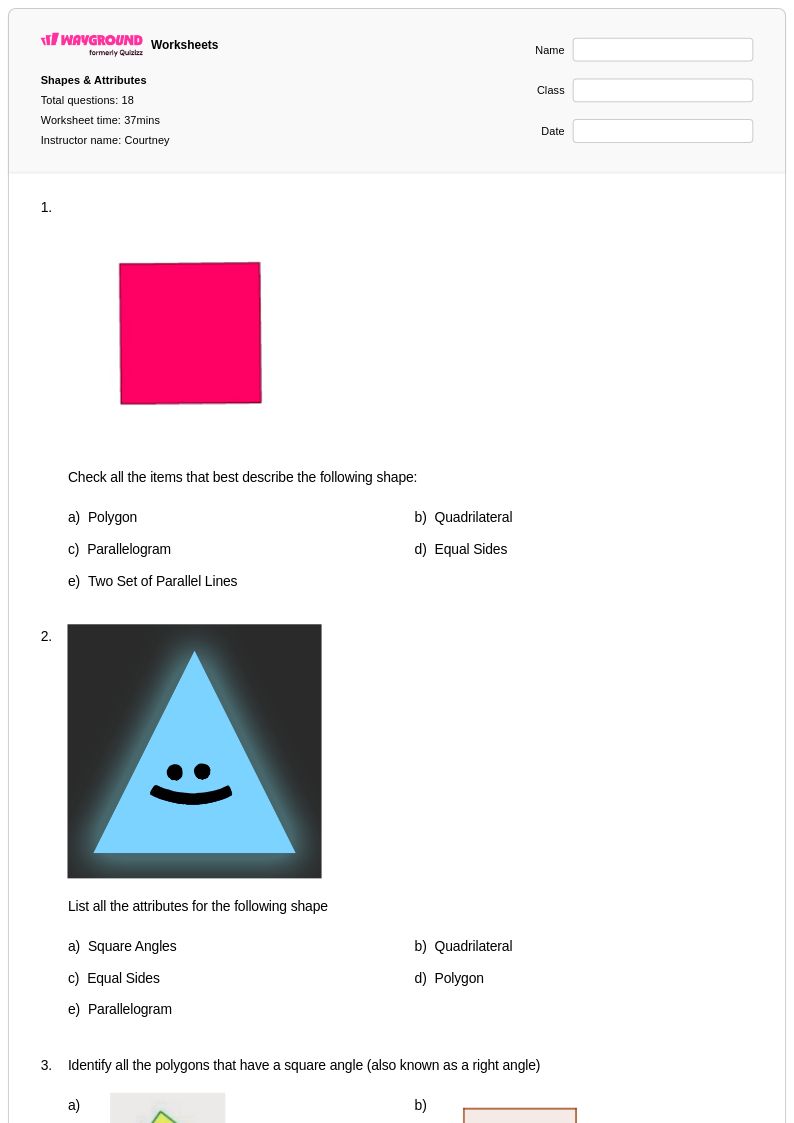
18 Q
3rd - 5th
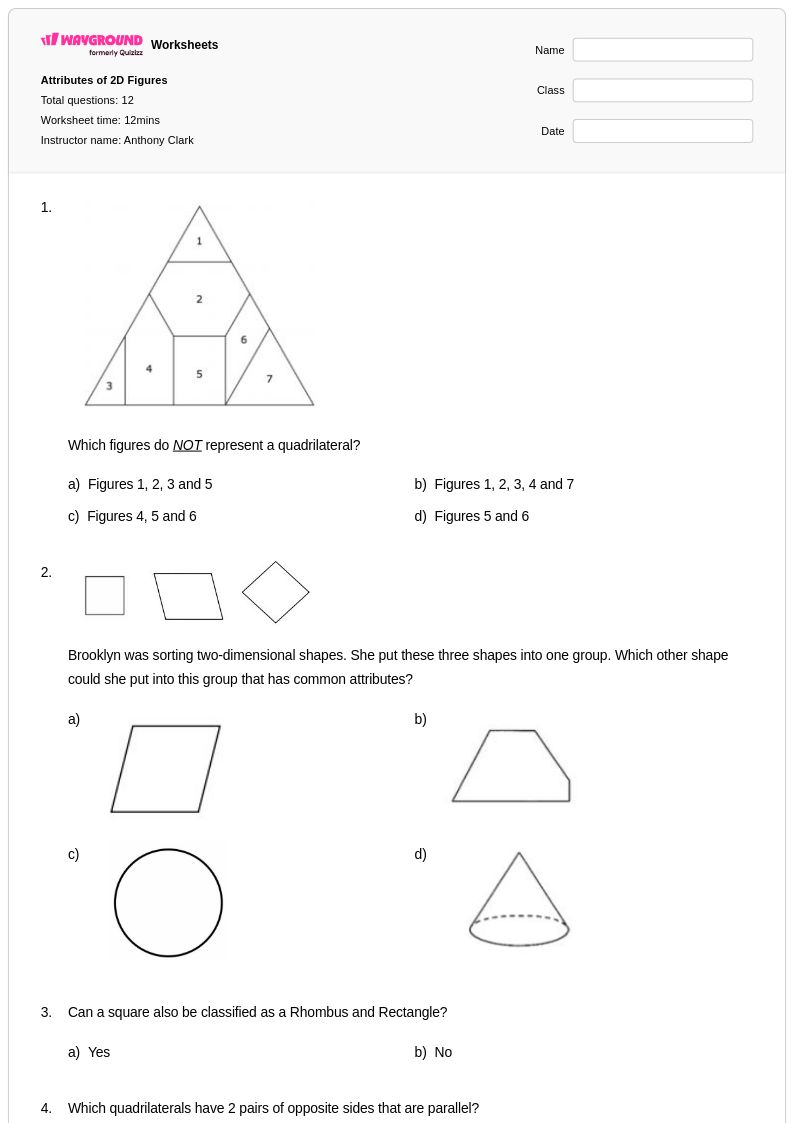
12 Q
3rd - Uni
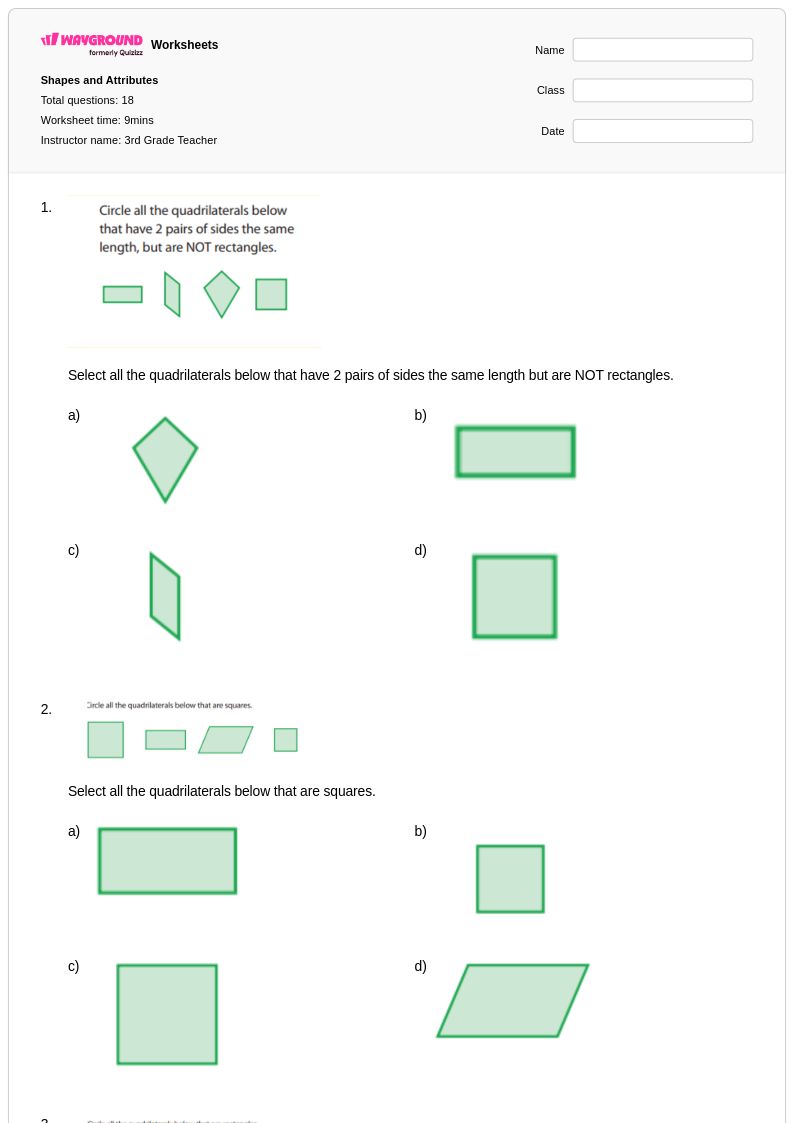
18 Q
3rd
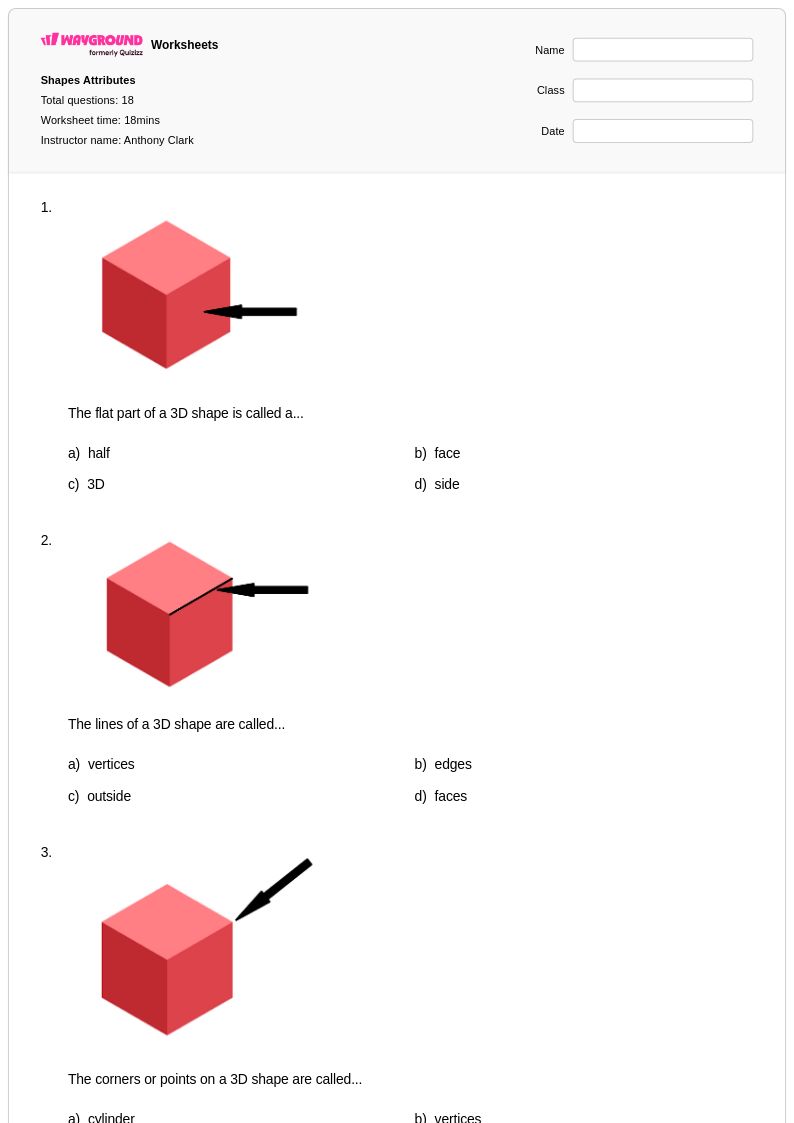
18 Q
3rd - Uni
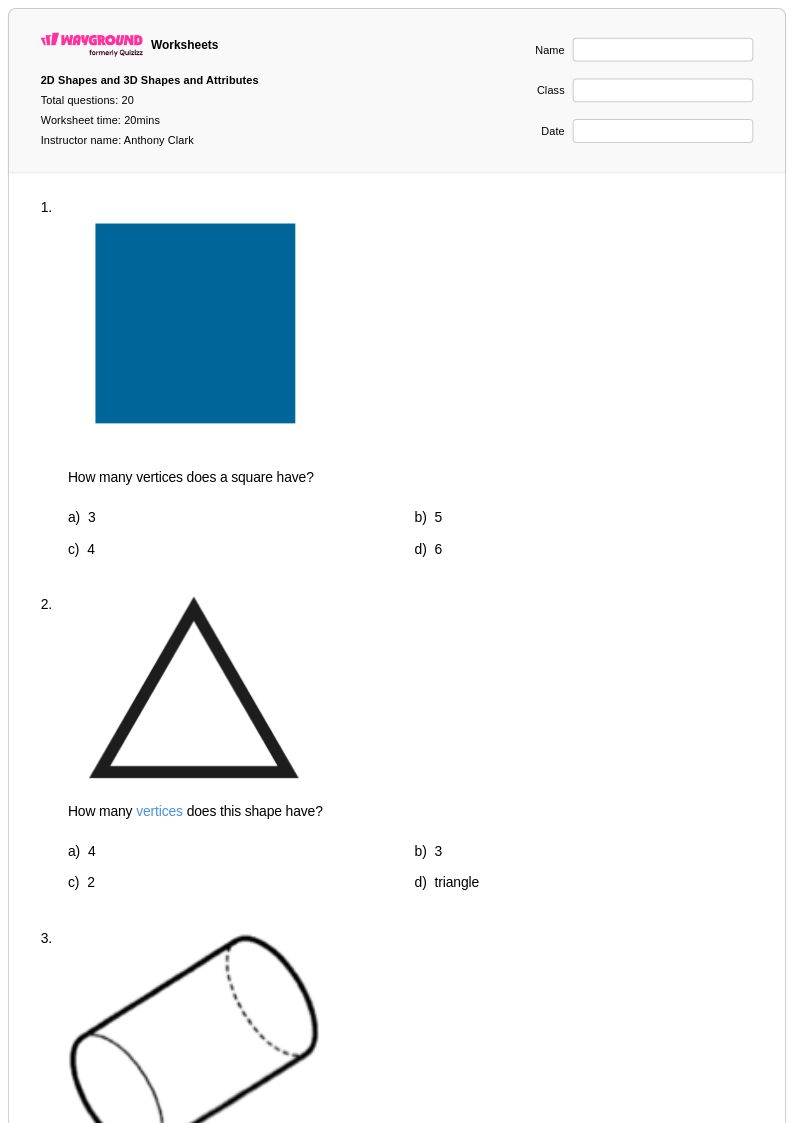
20 Q
2nd - Uni
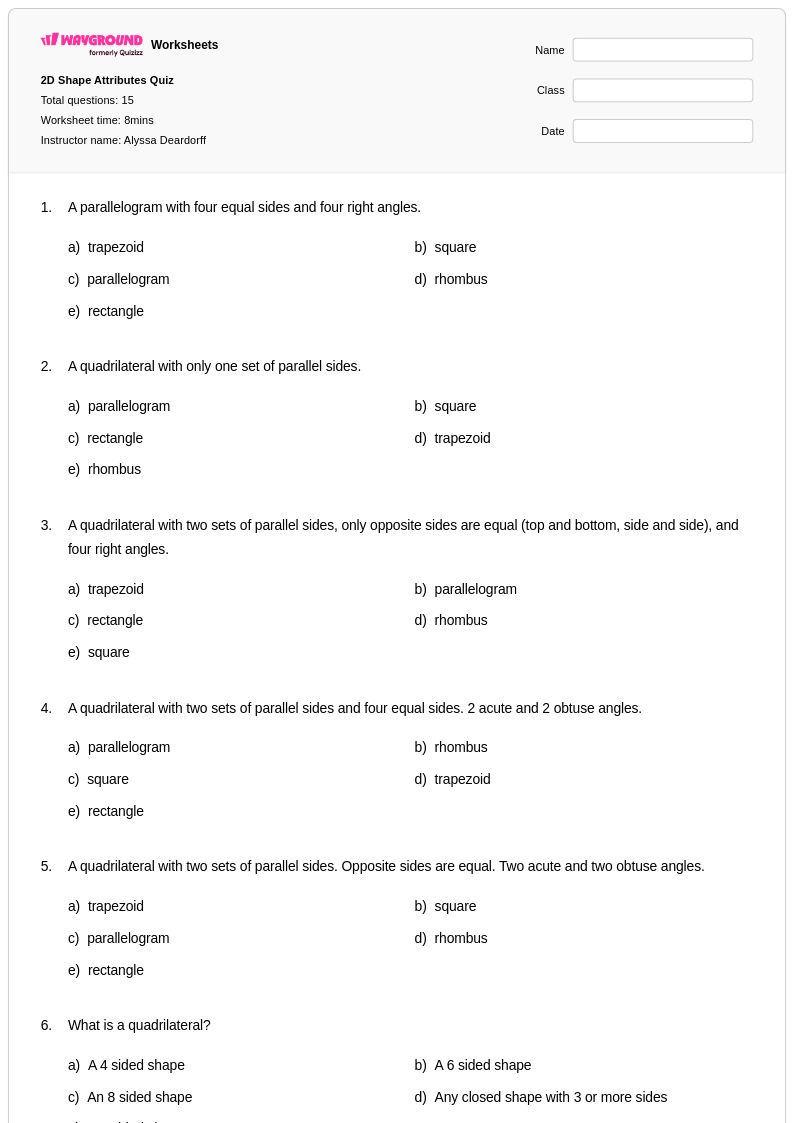
15 Q
3rd - Uni
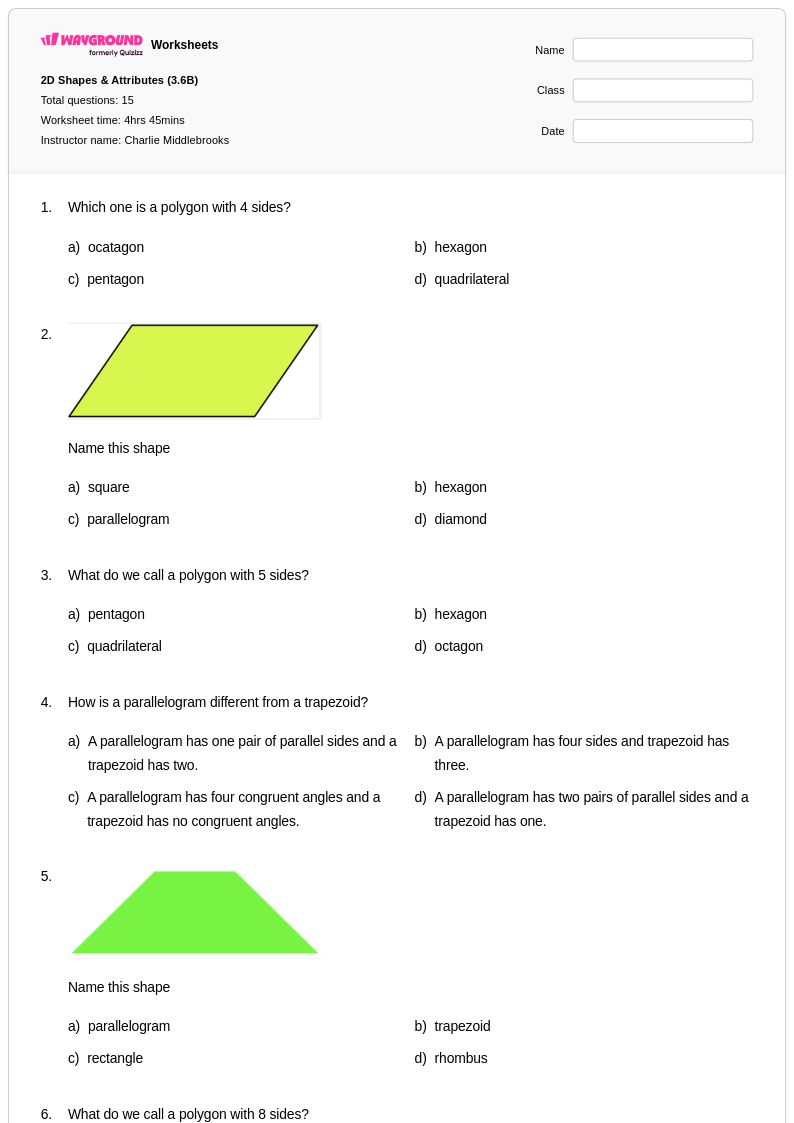
15 Q
3rd
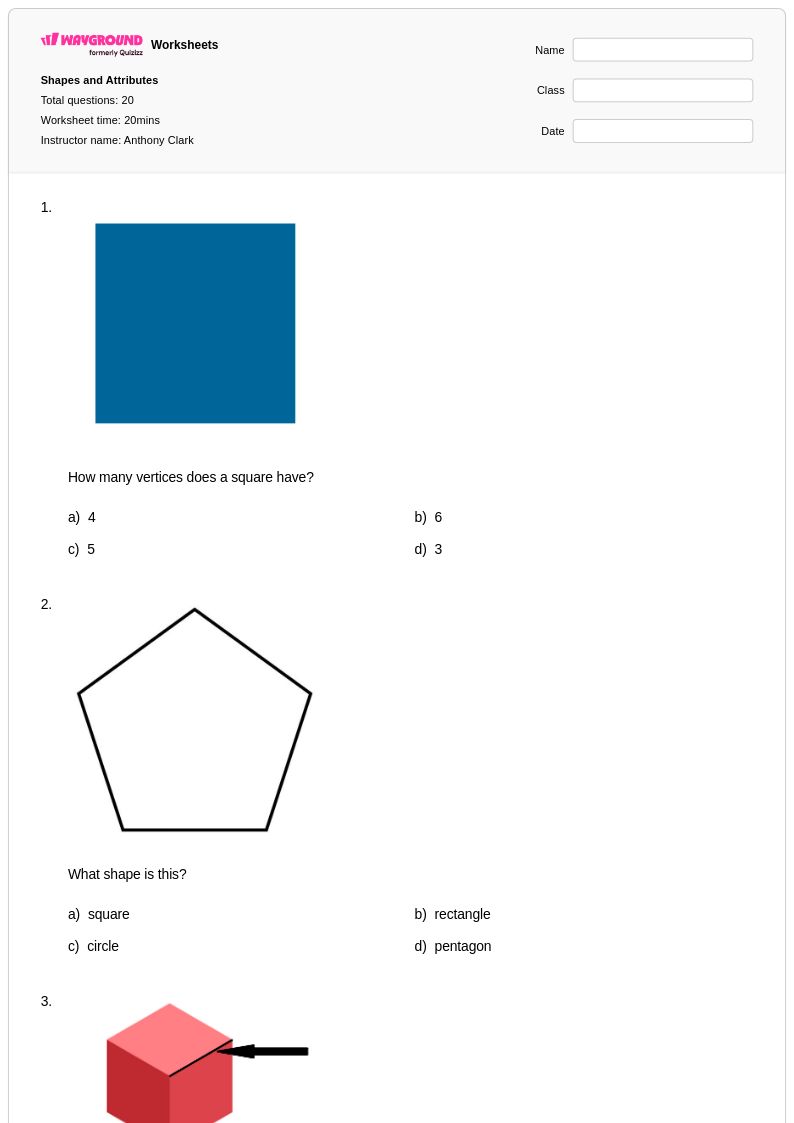
20 Q
3rd - Uni
15 Q
3rd - Uni
15 Q
3rd - Uni
20 Q
3rd - Uni
18 Q
2nd - 3rd
Explore Shape Attributes Worksheets by Grades
Explore Other Subject Worksheets for class 3
Explore printable Shape Attributes worksheets for Class 3
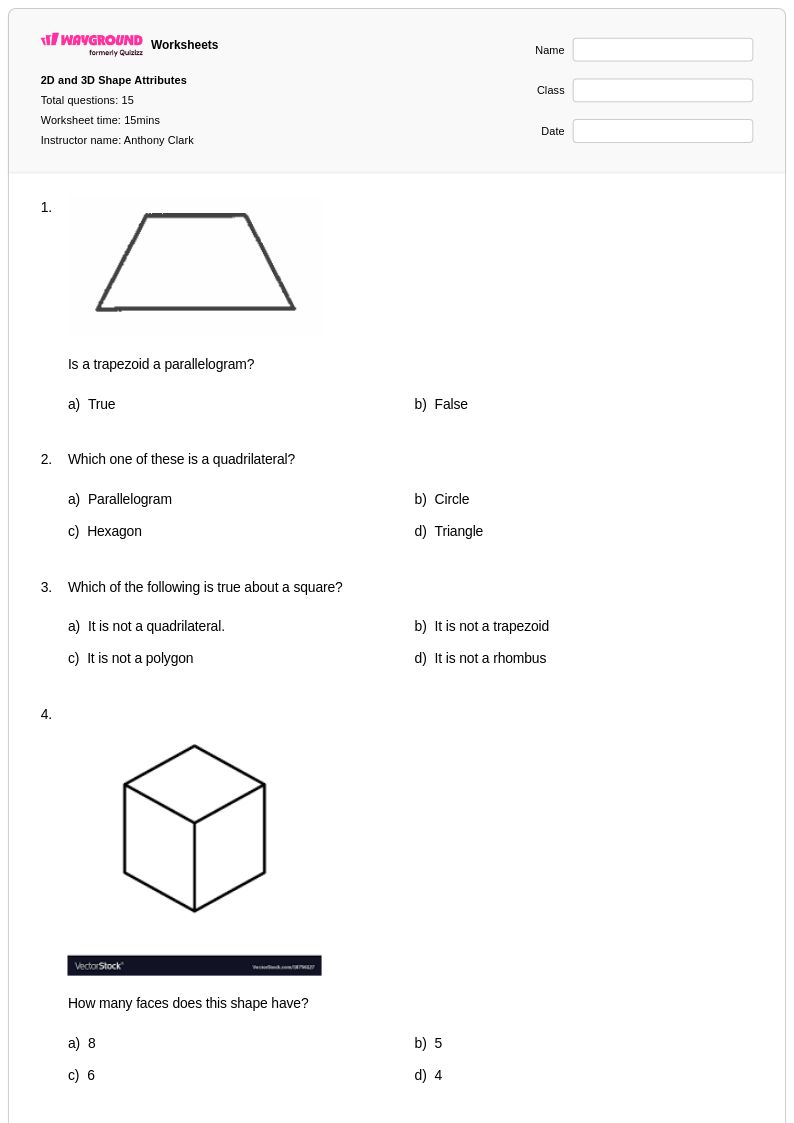
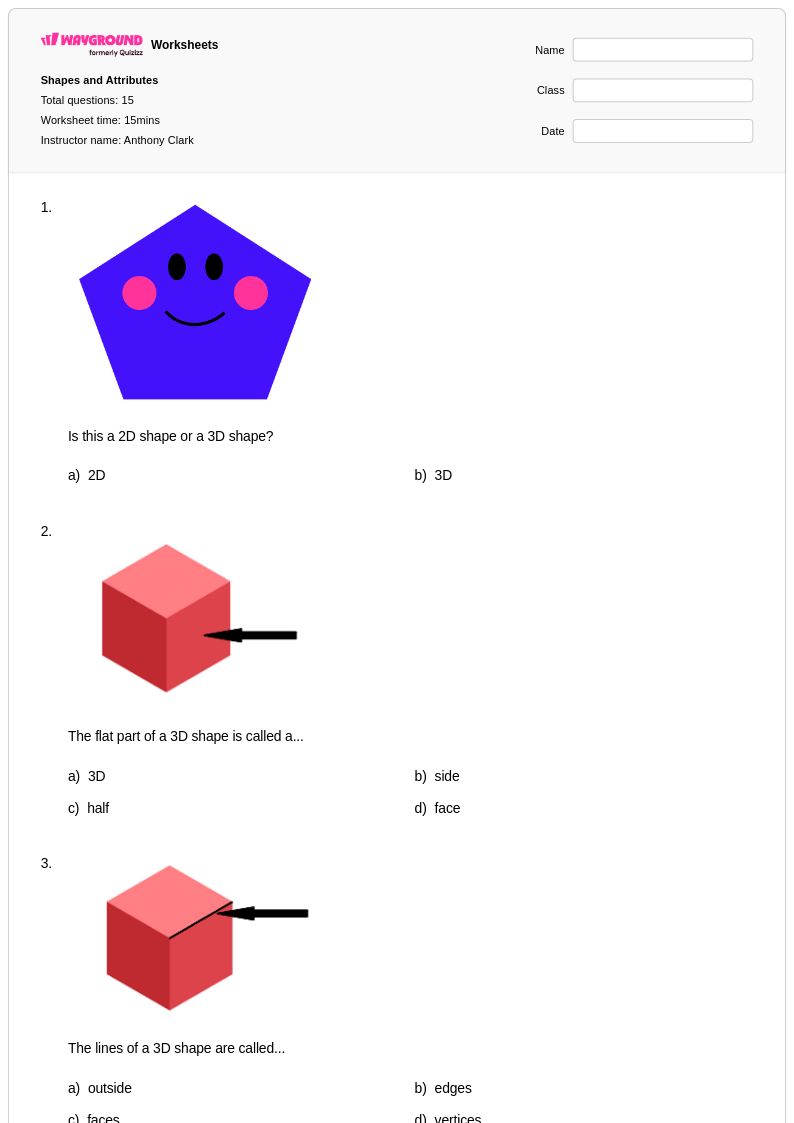
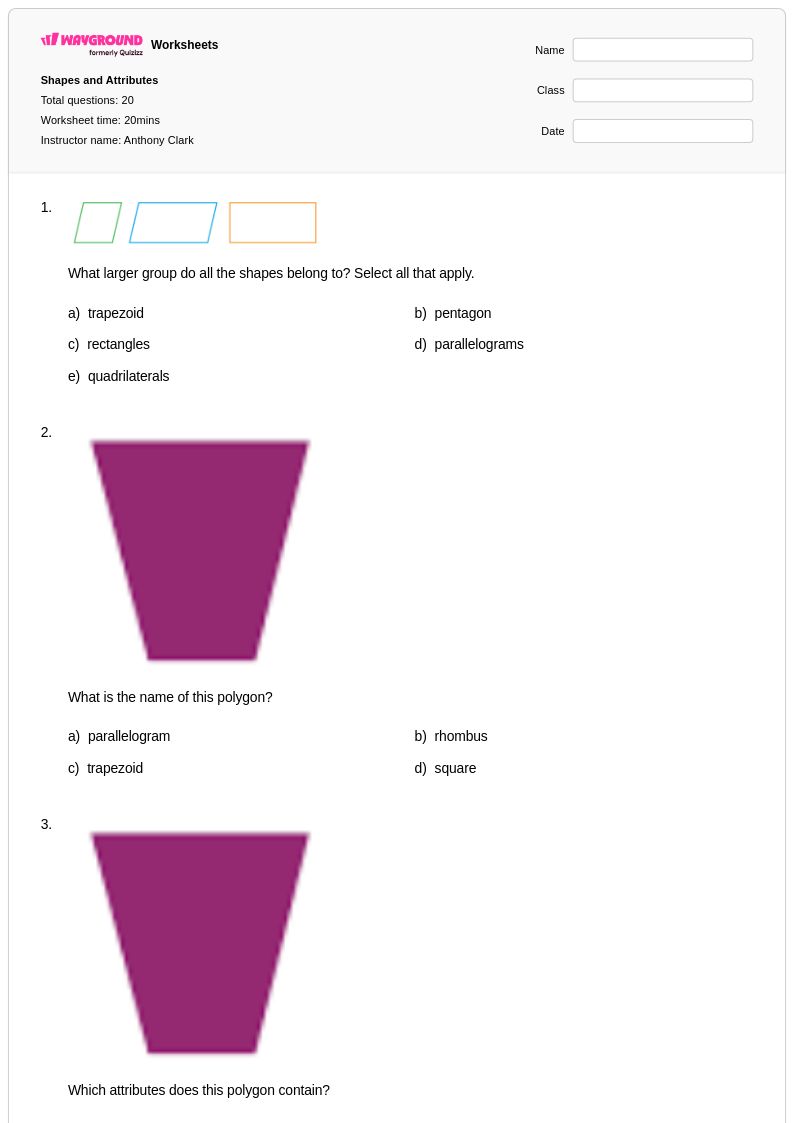
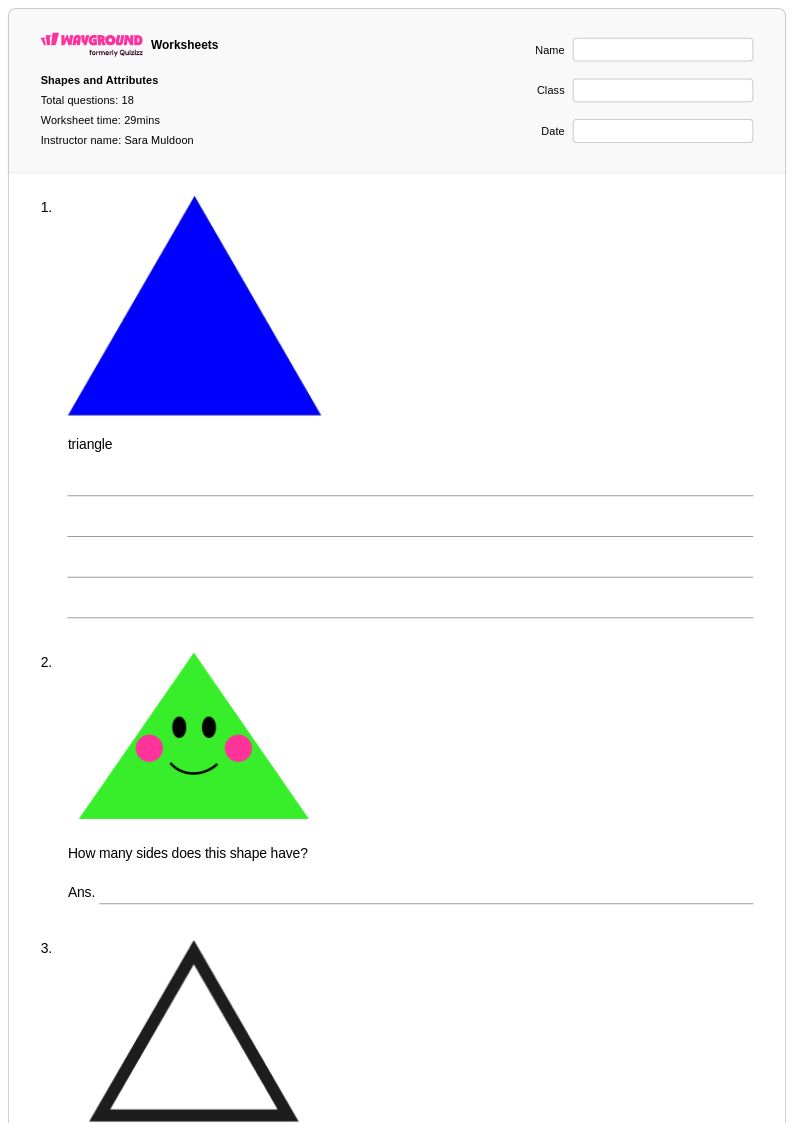
Shape attributes worksheets for Class 3 provide essential foundational practice for young mathematicians learning to identify, classify, and analyze geometric properties. These comprehensive printable resources from Wayground (formerly Quizizz) help students develop critical spatial reasoning skills by exploring the defining characteristics of two-dimensional and three-dimensional shapes, including the number of sides, vertices, angles, and faces. Each worksheet collection includes detailed answer keys and offers systematic practice problems that guide third-grade students through recognizing attributes such as parallel sides in rectangles, equal sides in squares, and curved versus straight edges in circles and polygons. The free pdf resources strengthen students' ability to sort shapes by common attributes, compare geometric figures, and articulate mathematical reasoning using precise vocabulary essential for geometry success.
Wayground (formerly Quizizz) empowers teachers with millions of educator-created shape attributes worksheets specifically designed for Class 3 mathematics instruction. The platform's robust search and filtering capabilities allow instructors to quickly locate standards-aligned materials that match their specific curriculum requirements and student needs. Teachers can easily customize these printable and digital pdf worksheets to provide targeted remediation for struggling learners or enrichment activities for advanced students, while the differentiation tools ensure every third-grader receives appropriate challenge levels. The extensive collection supports flexible lesson planning by offering varied practice formats, assessment options, and skill-building exercises that help teachers reinforce shape recognition, attribute identification, and geometric vocabulary development across diverse learning styles and classroom settings.
FAQs
What is the main focus of shape attributes in Grade 3?
How do I teach the concept of classifying shapes?
What practice helps third graders with shape classification?
What indicates a third grader is mastering shape classification?
How can I use this Grade 3 shape attributes worksheet?
How does Grade 3 geometry prepare students for Grade 4?
How can I support struggling students with shape classification?