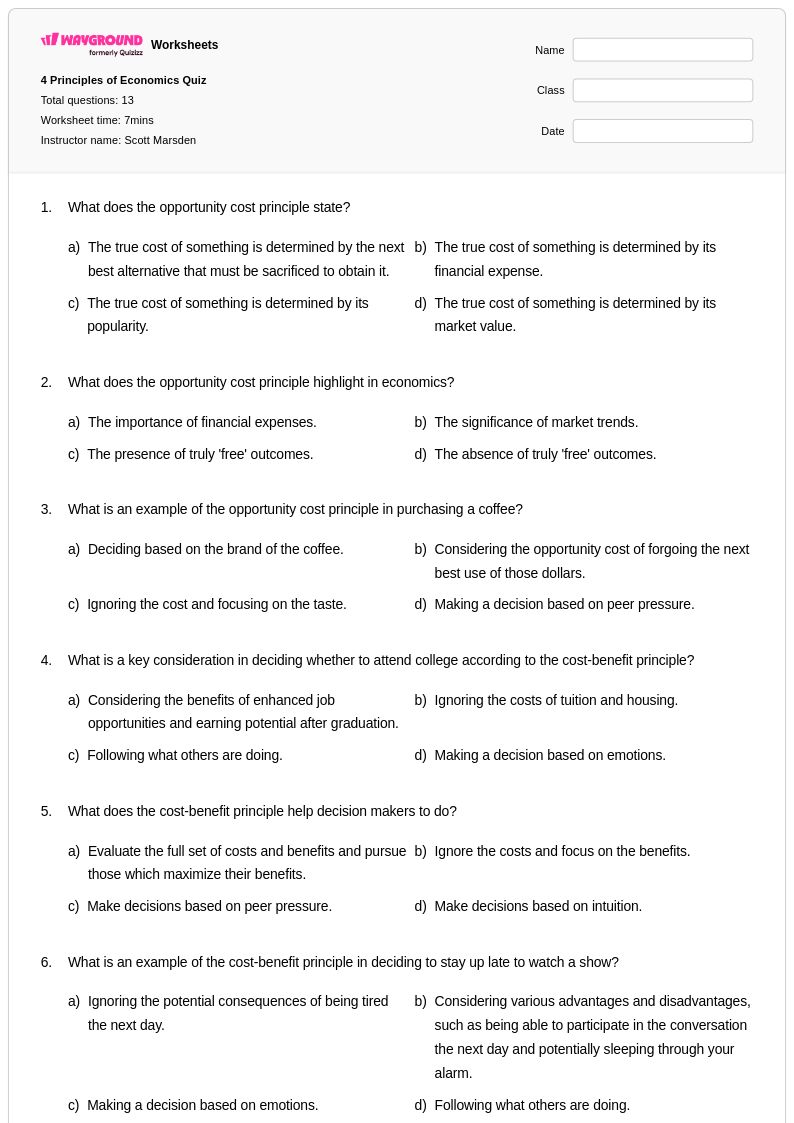
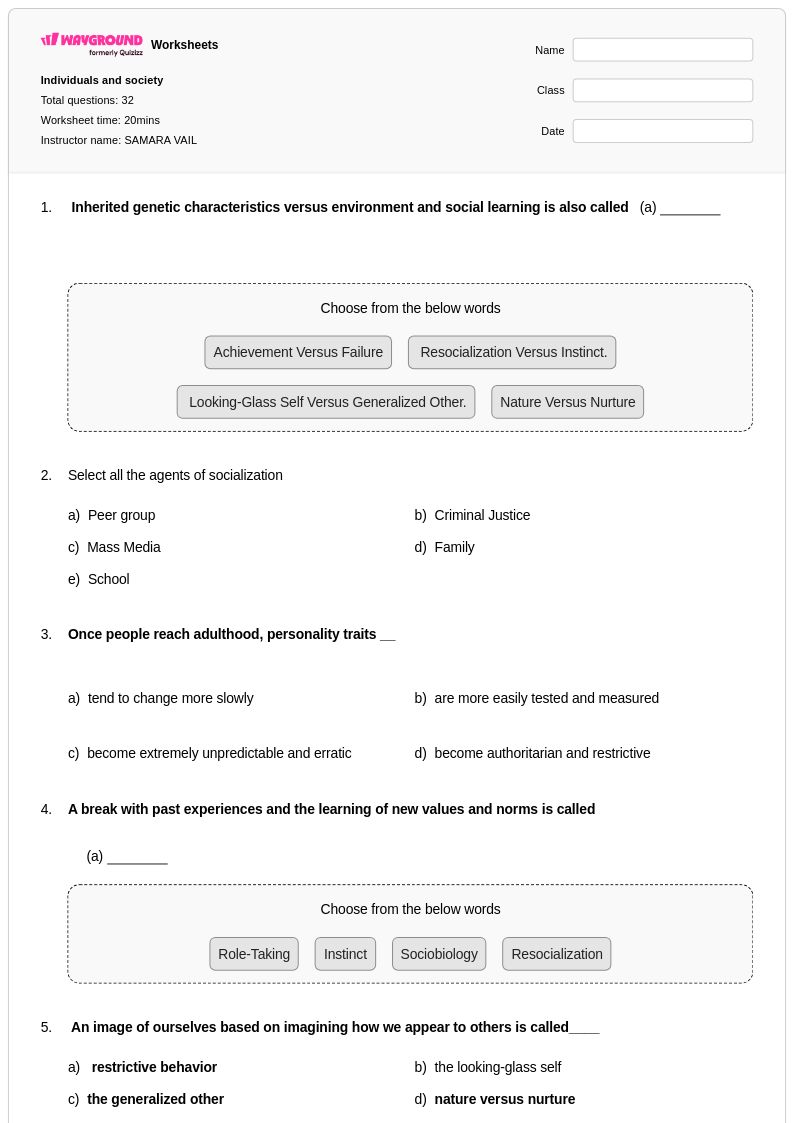
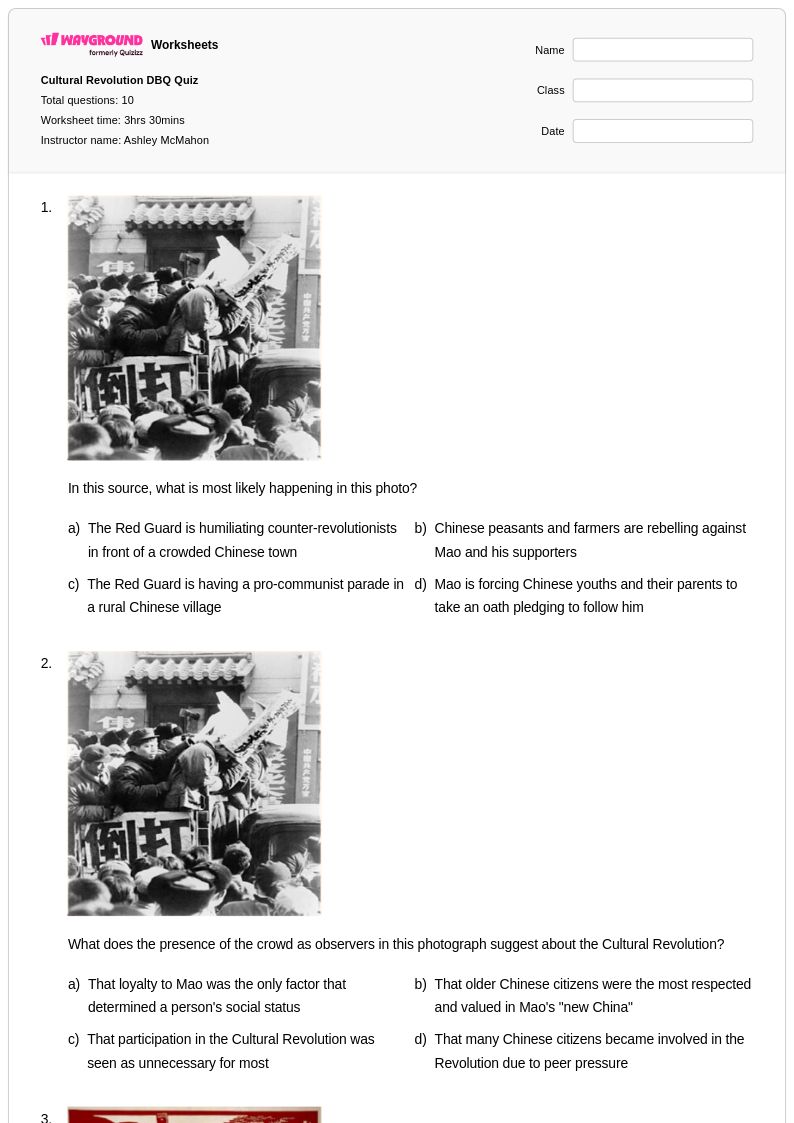
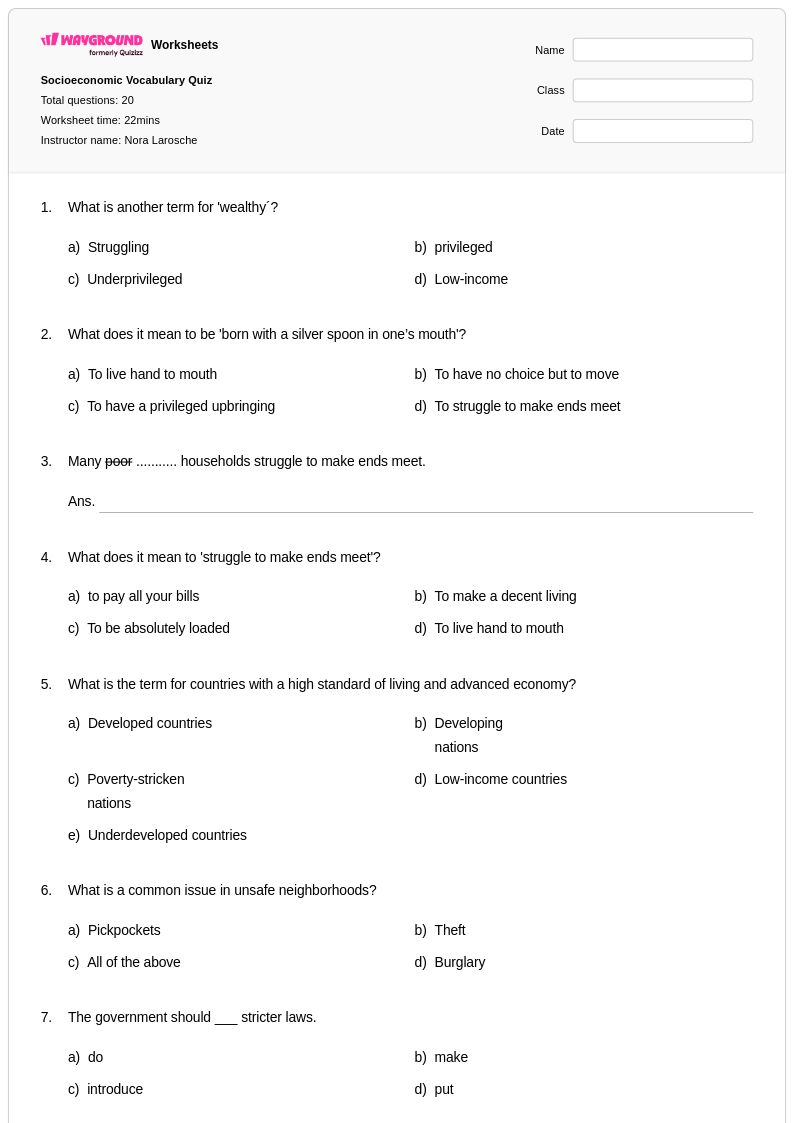
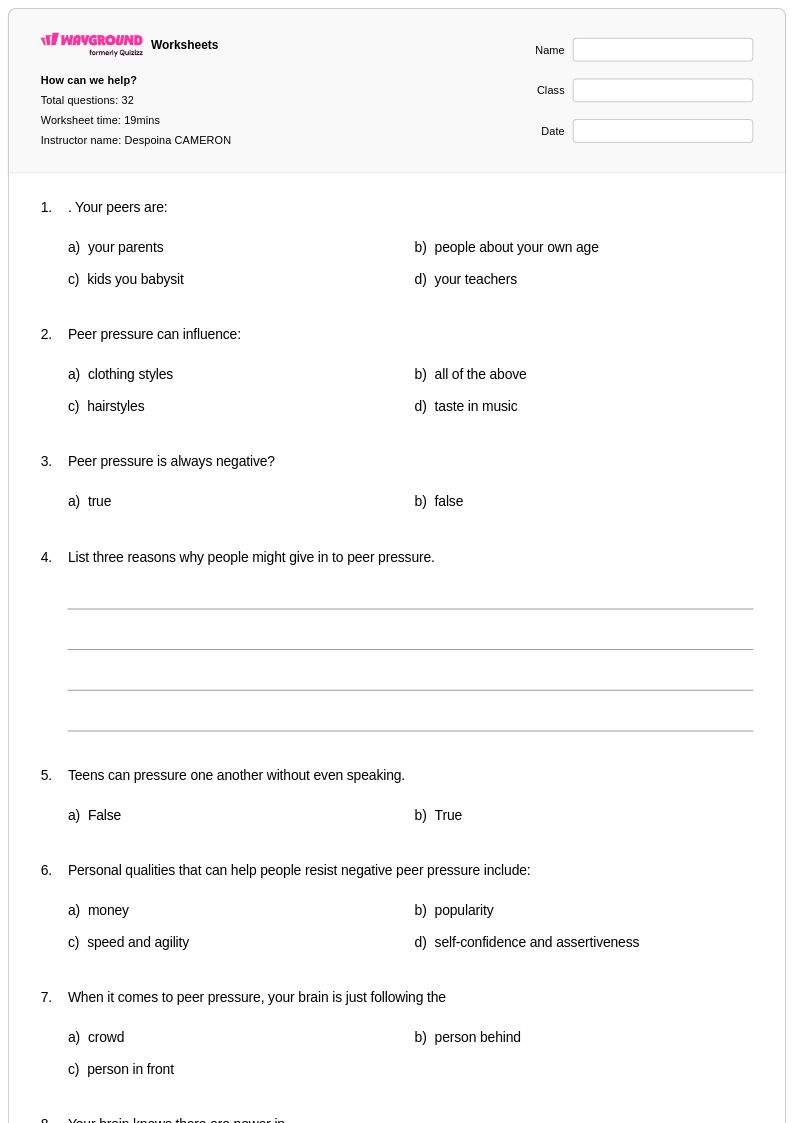
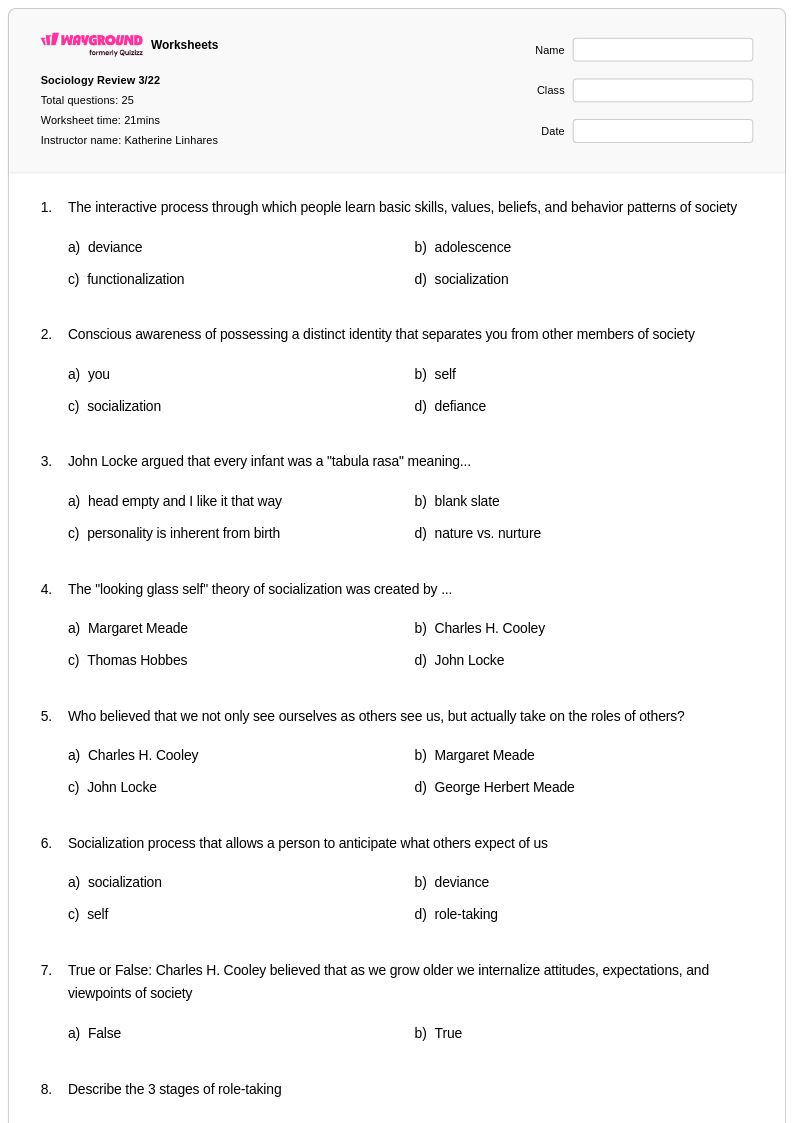
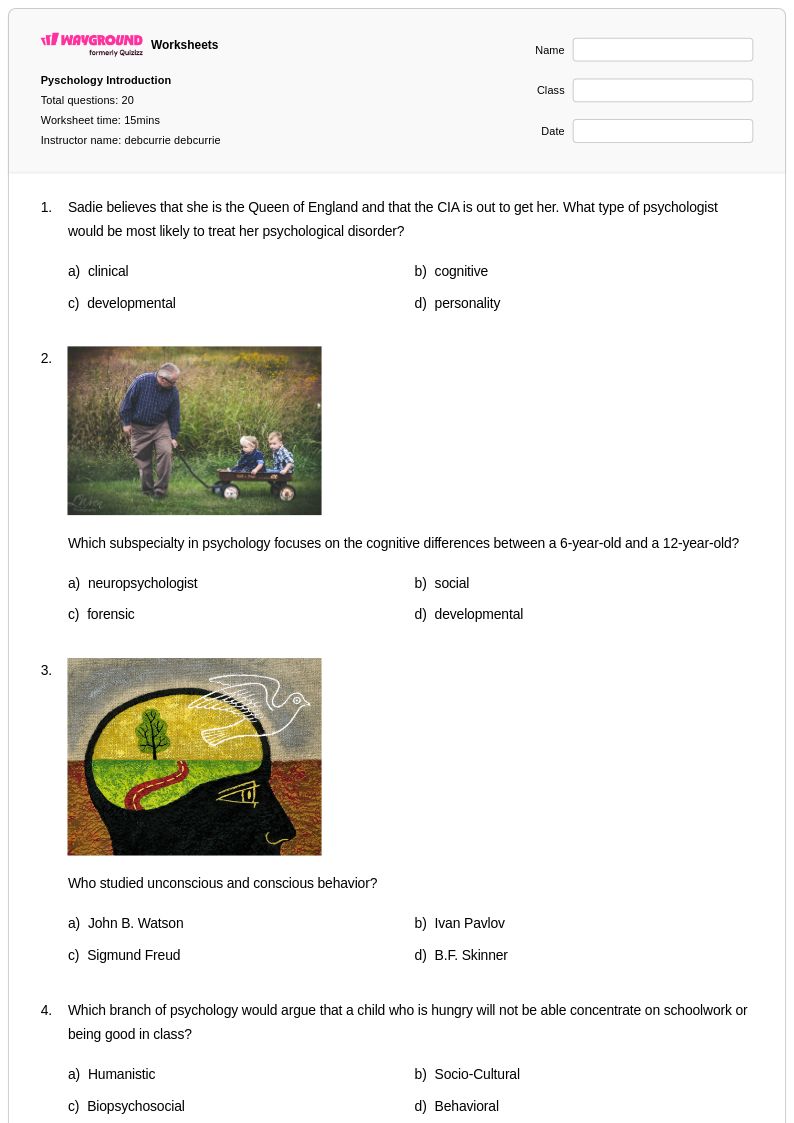
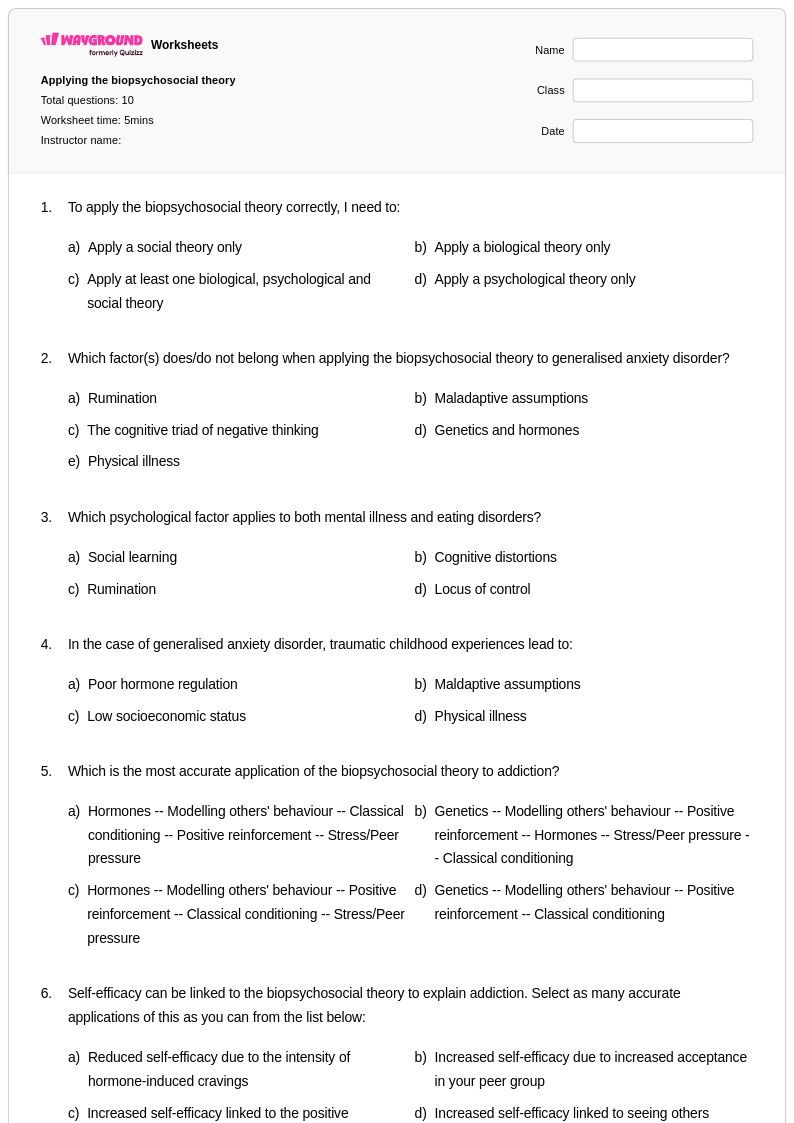
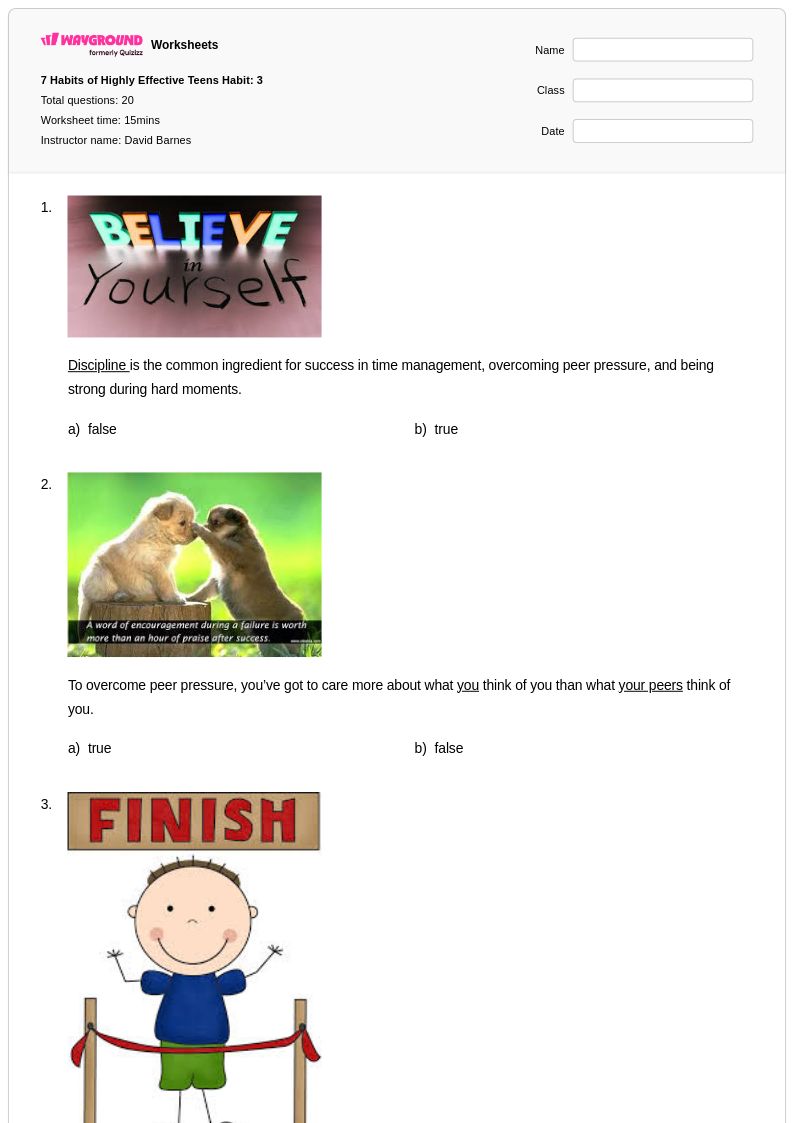
Explore free peer pressure worksheets and printables from Wayground that help students develop critical thinking skills to recognize, understand, and respond to social influences with confidence through engaging practice problems and comprehensive answer keys.
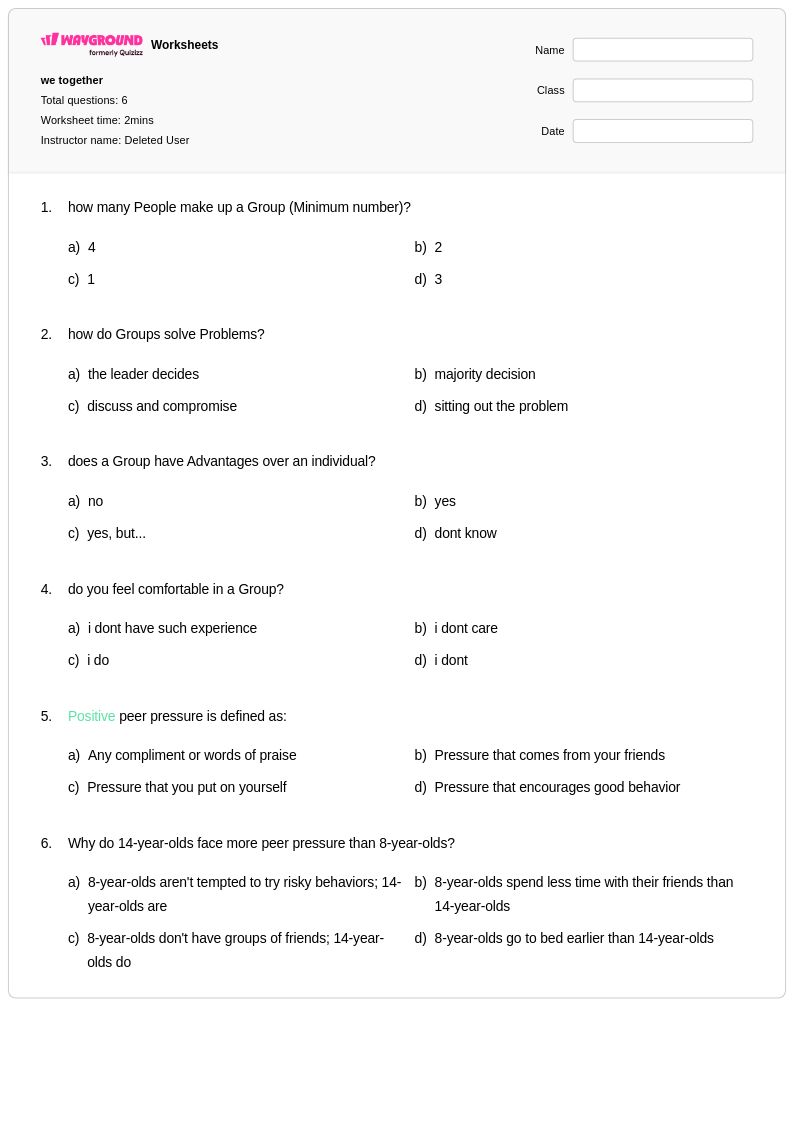
Peer pressure worksheets available through Wayground (formerly Quizizz) provide students with essential tools for developing critical thinking skills and emotional intelligence when navigating social situations. These comprehensive resources focus on helping learners recognize different types of peer influence, understand the psychology behind conformity pressures, and develop effective strategies for making independent decisions that align with their values. The worksheets strengthen key social-emotional learning competencies through scenario-based practice problems that present realistic situations students might encounter, complete with answer keys that facilitate meaningful discussions about healthy relationship boundaries and assertive communication techniques. Teachers can access these free printables in pdf format, making them readily available for classroom instruction, homework assignments, or individual student support.
Wayground's extensive collection of peer pressure worksheets draws from millions of teacher-created resources, ensuring educators have access to diverse, high-quality materials that address various aspects of social influence and decision-making skills. The platform's robust search and filtering capabilities allow teachers to quickly locate age-appropriate content that aligns with social-emotional learning standards and character education objectives. These differentiation tools enable instructors to customize worksheets for students with varying skill levels and learning needs, supporting both remediation for those struggling with social confidence and enrichment opportunities for advanced learners ready to explore more complex ethical scenarios. Available in both printable and digital formats, these resources seamlessly integrate into lesson planning while providing flexible options for skill practice, whether used for whole-class discussions, small group activities, or independent reflection exercises.
FAQs
How do I teach students to recognize and resist peer pressure?
Effective peer pressure instruction begins with helping students distinguish between positive and negative social influence, then building the vocabulary and confidence to respond assertively. Scenario-based activities work particularly well because they ask students to analyze realistic social situations before they encounter them in real life. Role-playing refusal strategies, discussing the psychology of conformity, and connecting decision-making to personal values are all proven approaches that build both awareness and resilience.
What worksheet activities help students practice responding to peer pressure?
Scenario-based practice problems are the most effective format for this topic, presenting realistic social situations and asking students to identify the type of pressure, evaluate the risks, and formulate an assertive response. Reflection prompts that ask students to connect situations to their own values deepen the learning beyond surface-level refusal scripts. Worksheets that include a range of influence types, from direct dares to subtle social exclusion, give students practice recognizing pressure in its less obvious forms.
What misconceptions do students commonly have about peer pressure?
Many students believe peer pressure is always direct and obvious, such as someone explicitly daring them to do something, when in reality much of it is indirect, such as feeling excluded for not going along with a group. Another common misconception is that only 'weak' people give in to peer pressure, which prevents students from honestly examining their own behavior. Students also frequently underestimate the role of positive peer pressure, missing opportunities to recognize how social influence can support healthy choices.
How can I use peer pressure worksheets to support social-emotional learning in my classroom?
Peer pressure worksheets integrate naturally into SEL units focused on self-management, responsible decision-making, and healthy relationship boundaries. They work well as discussion launchers for whole-class conversations, structured reflection tools for small groups, or independent assignments that prepare students for a follow-up debrief. When paired with answer keys, they also support meaningful dialogue about why certain responses are more assertive or value-aligned than others, moving the lesson beyond right-or-wrong into genuine reasoning practice.
How do I differentiate peer pressure worksheets for students at different confidence or skill levels?
For students who are earlier in their SEL development, simpler scenarios with fewer variables and reduced answer choices help build foundational recognition skills without overwhelming them. More advanced students benefit from complex ethical scenarios that require weighing competing social values or anticipating long-term consequences. On Wayground, teachers can apply individual accommodations such as reduced answer choices or read-aloud support for students who need additional scaffolding, while the rest of the class works through default settings simultaneously.
How do I use Wayground's peer pressure worksheets in my classroom?
Wayground's peer pressure worksheets are available as printable PDFs for traditional classroom use and in digital formats for technology-integrated environments, giving teachers flexibility regardless of their instructional setup. Digital versions can be hosted as a quiz directly on Wayground, allowing teachers to track student responses and facilitate structured discussion around social decision-making scenarios. The included answer keys make it straightforward to lead follow-up conversations about healthy boundaries and assertive communication techniques.