
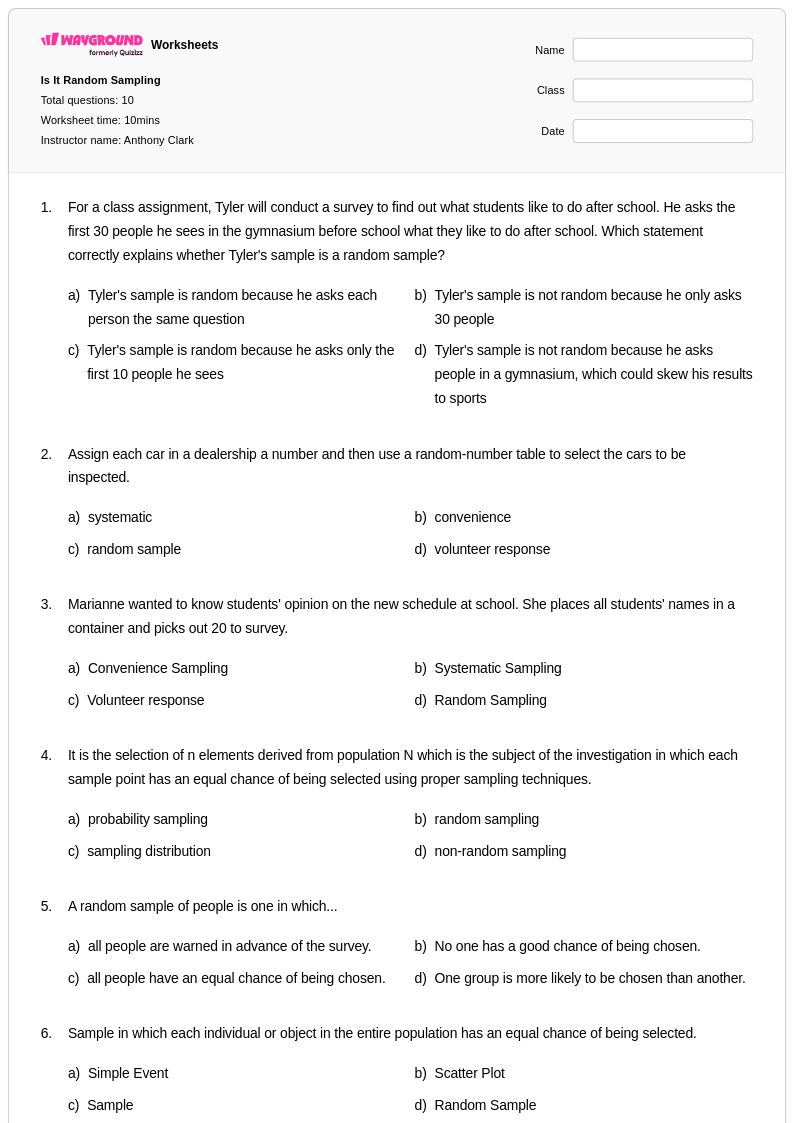
10 Q
11th - Uni
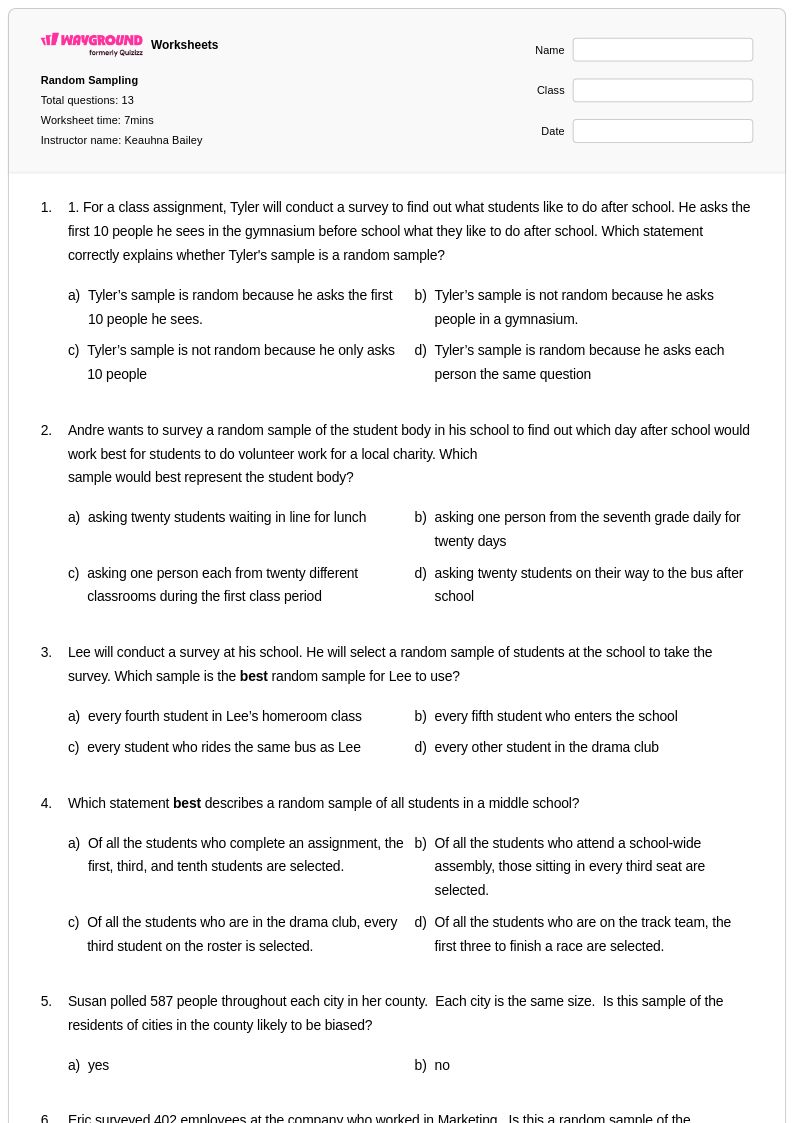
13 Q
8th

12 Q
7th
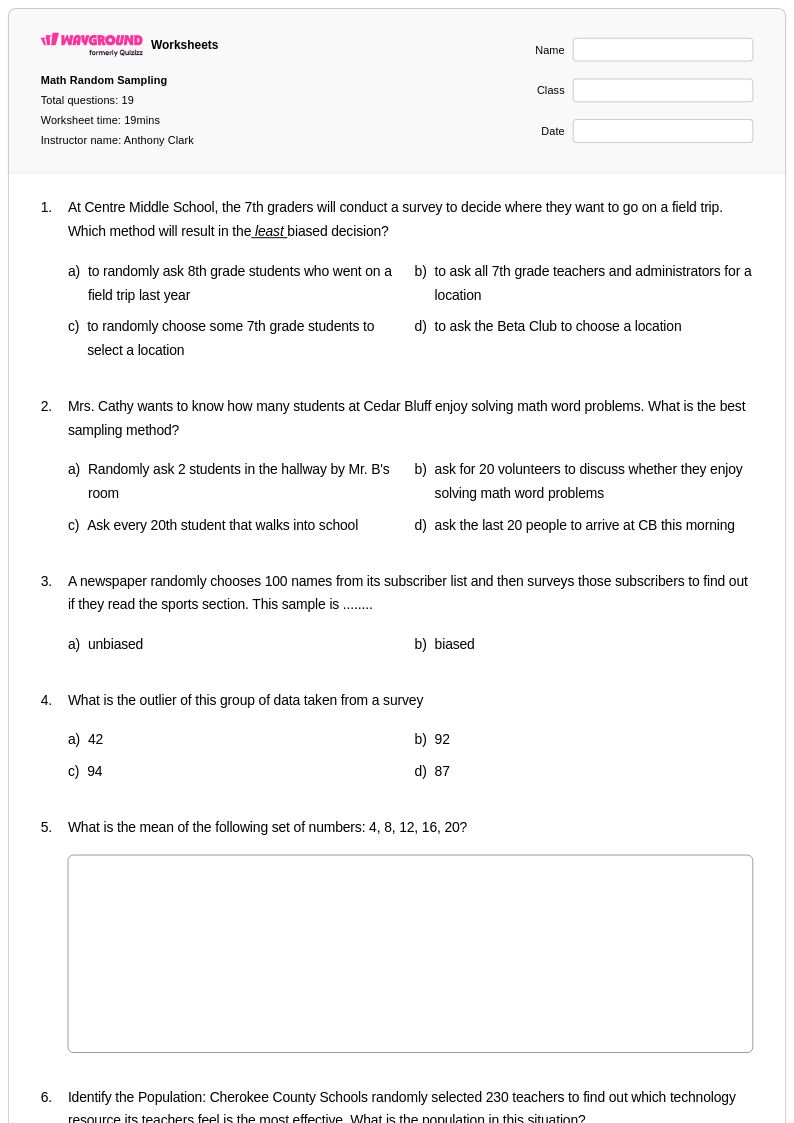
19 Q
7th - Uni
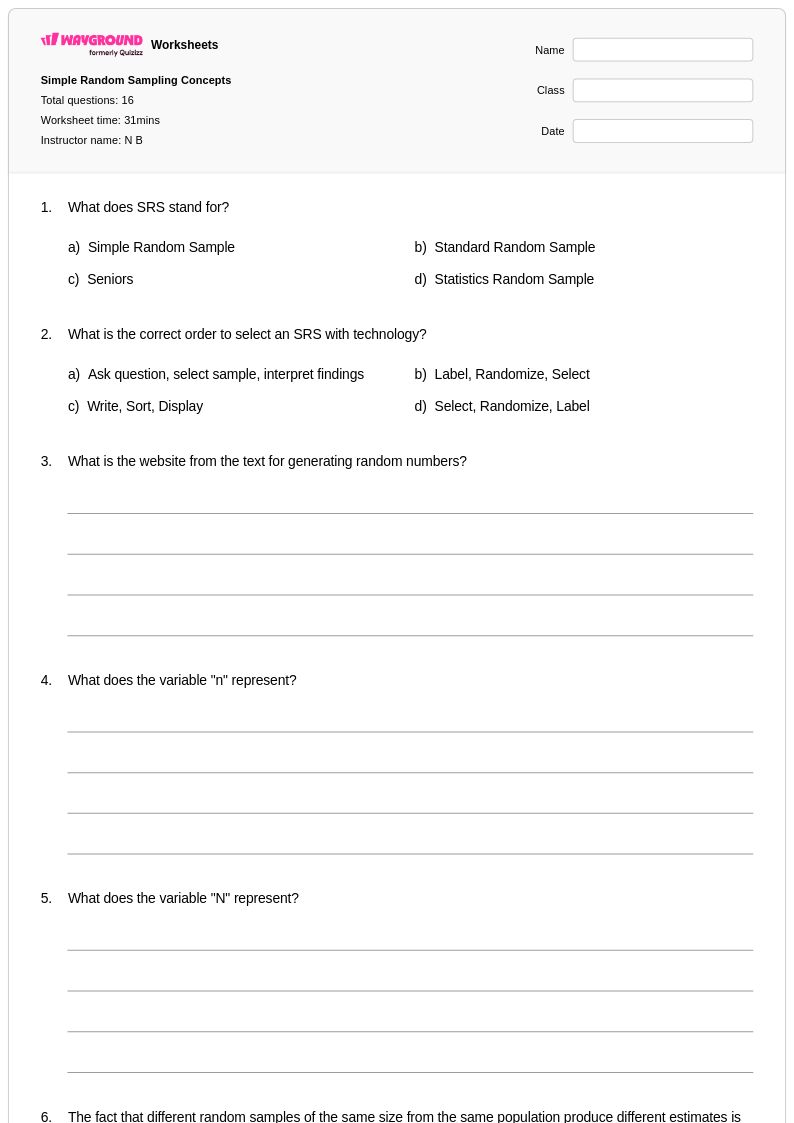
16 Q
12th
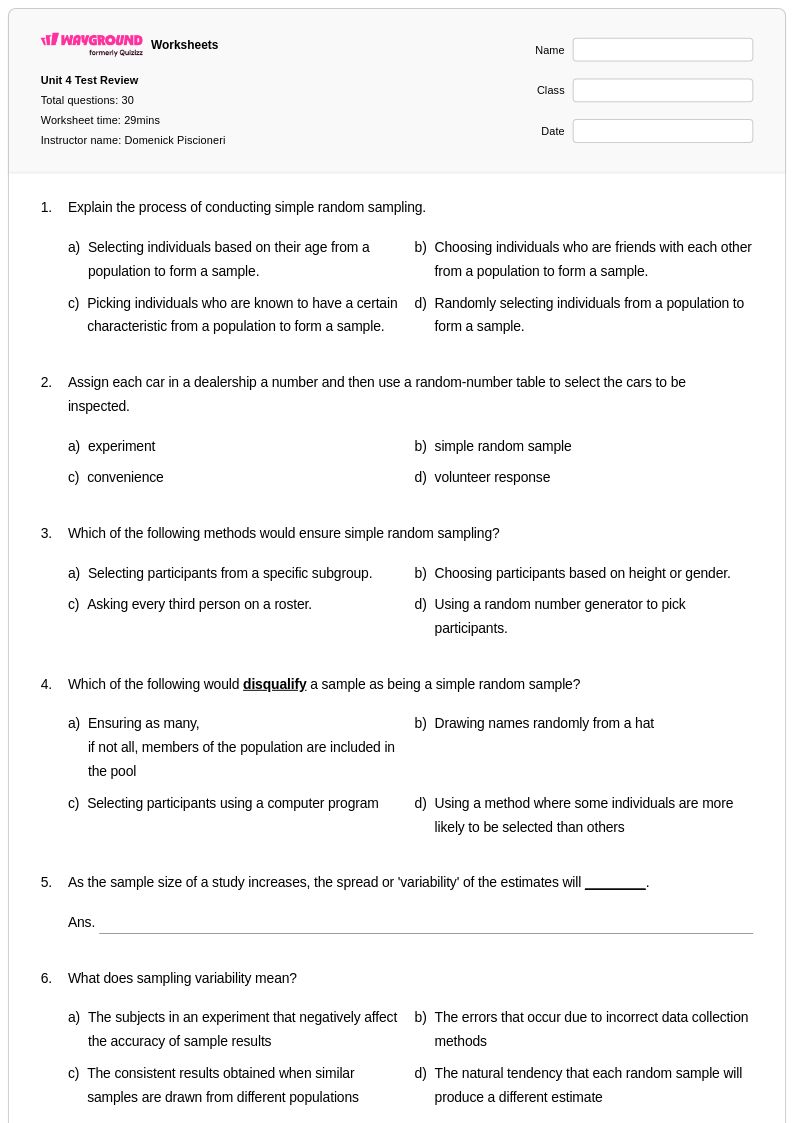
30 Q
7th - Uni
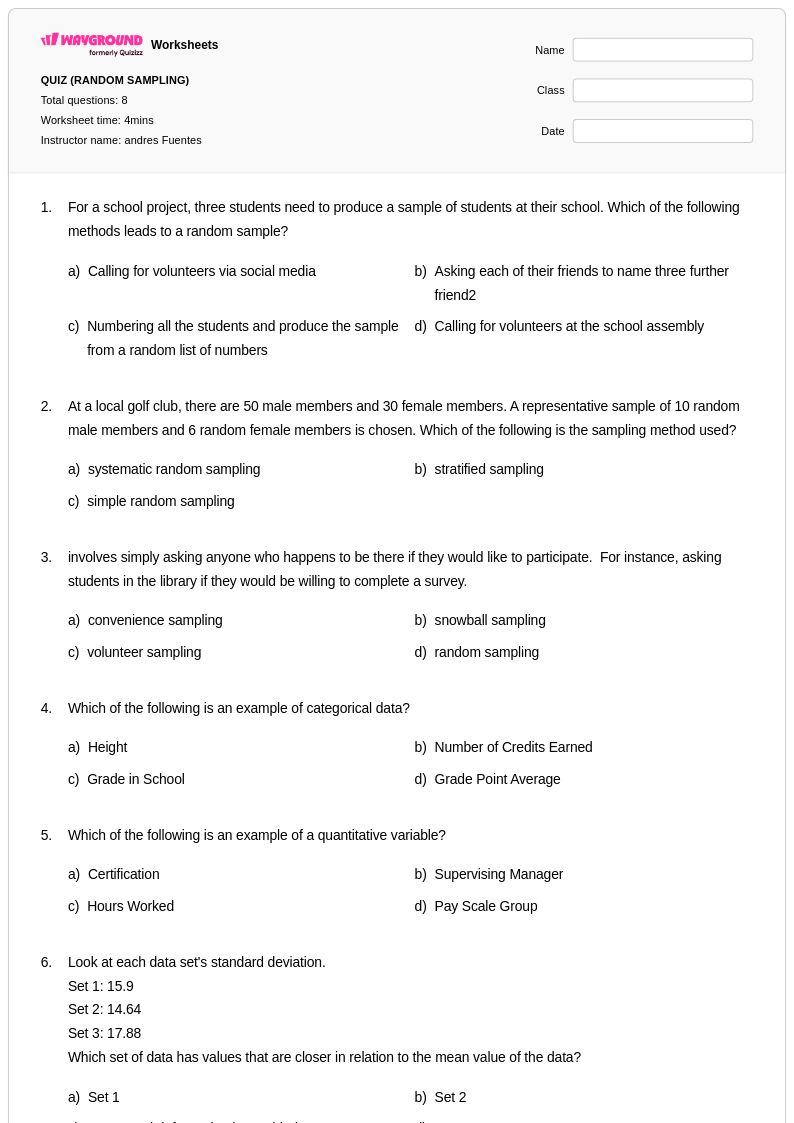
8 Q
9th - 11th
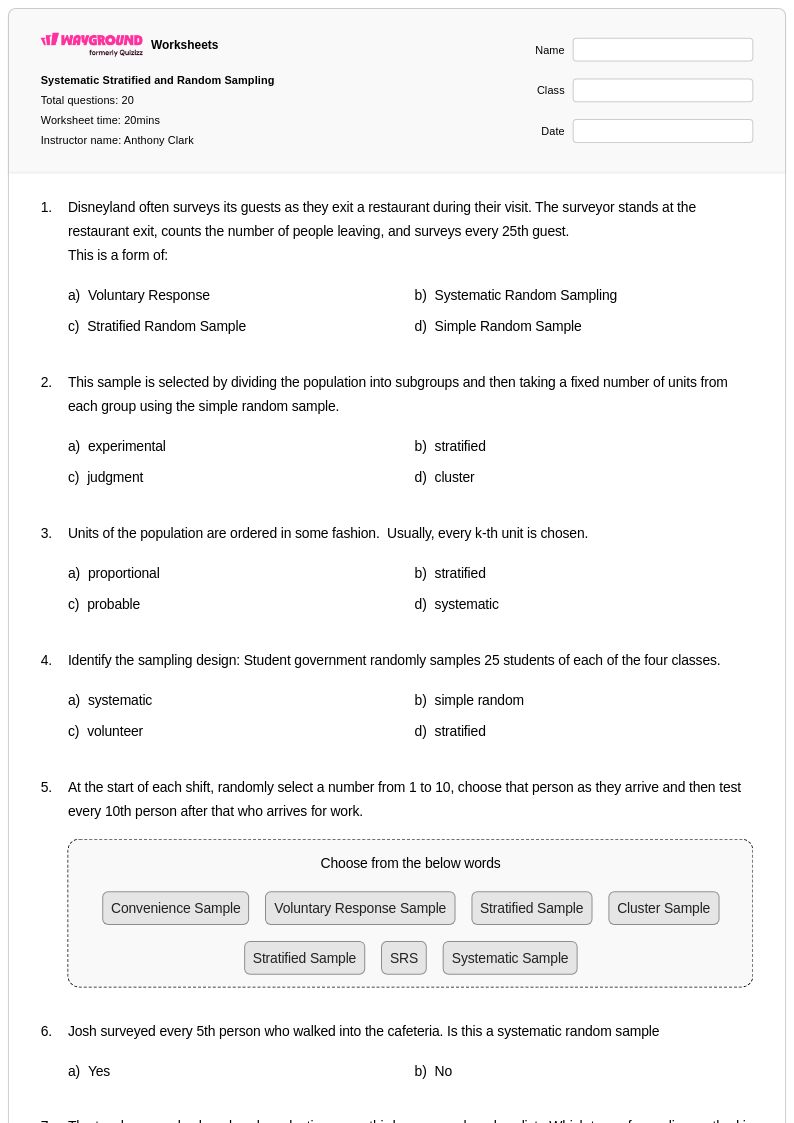
20 Q
12th - Uni
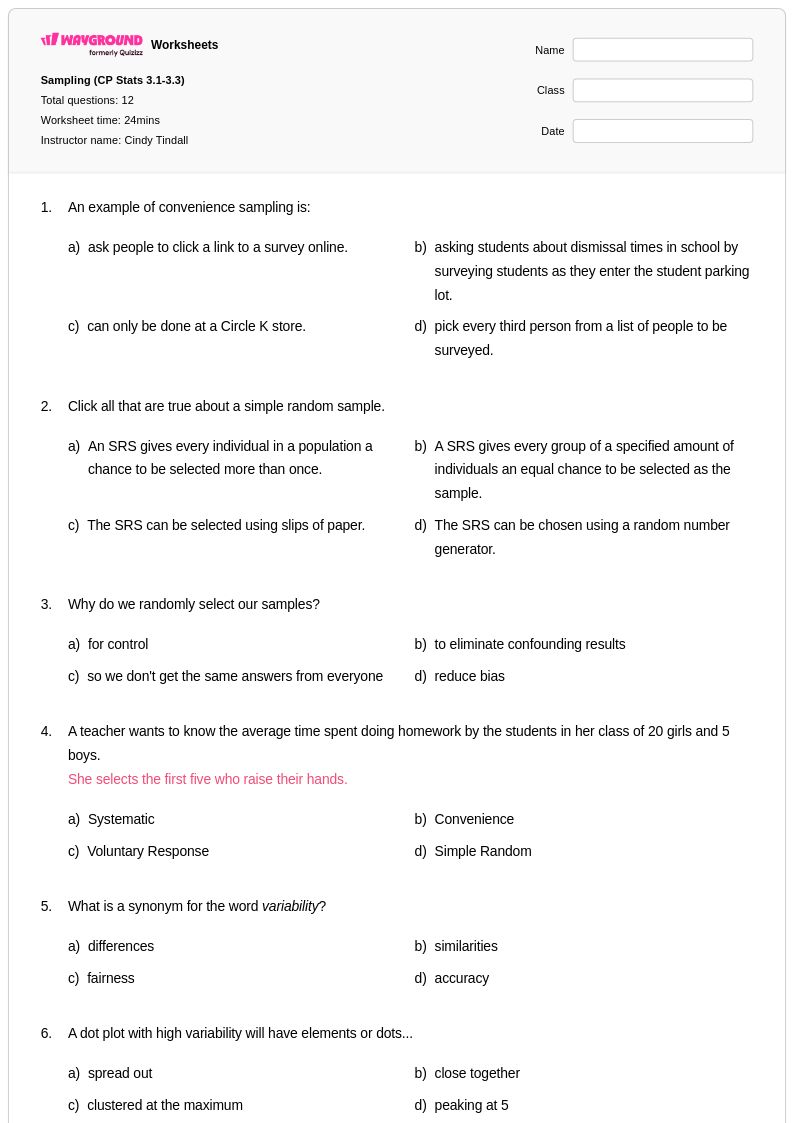
12 Q
11th
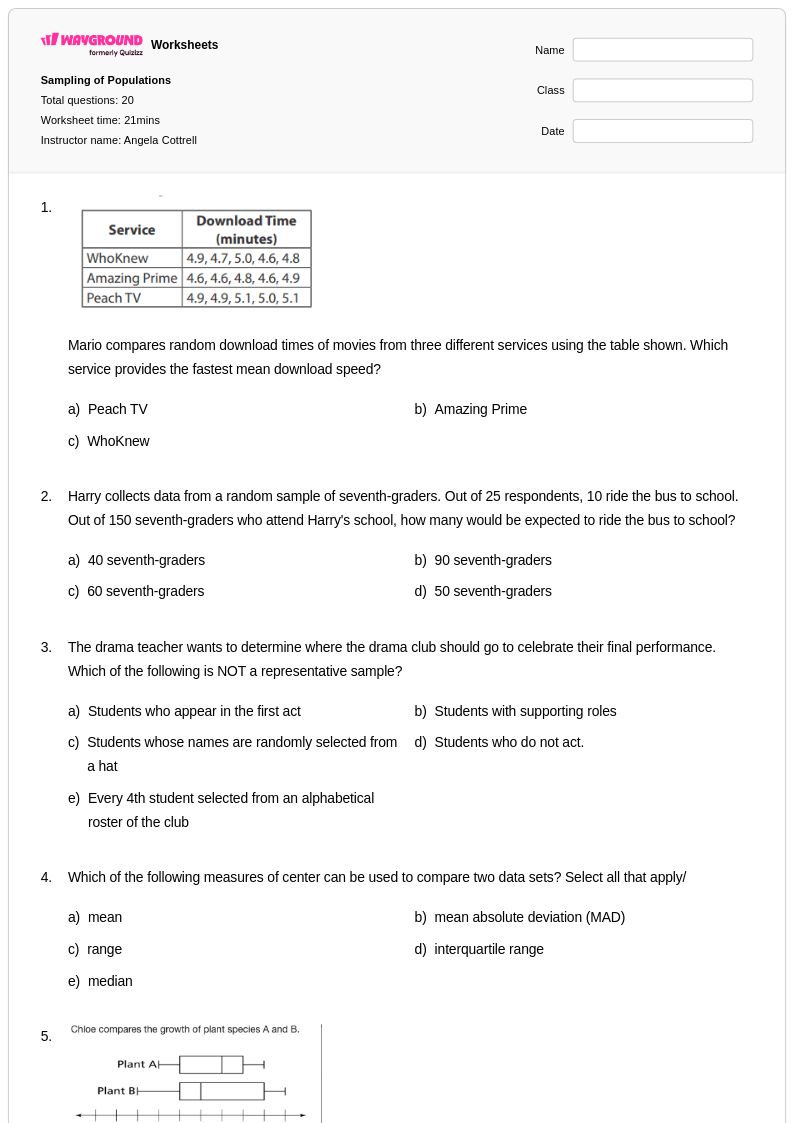
20 Q
7th
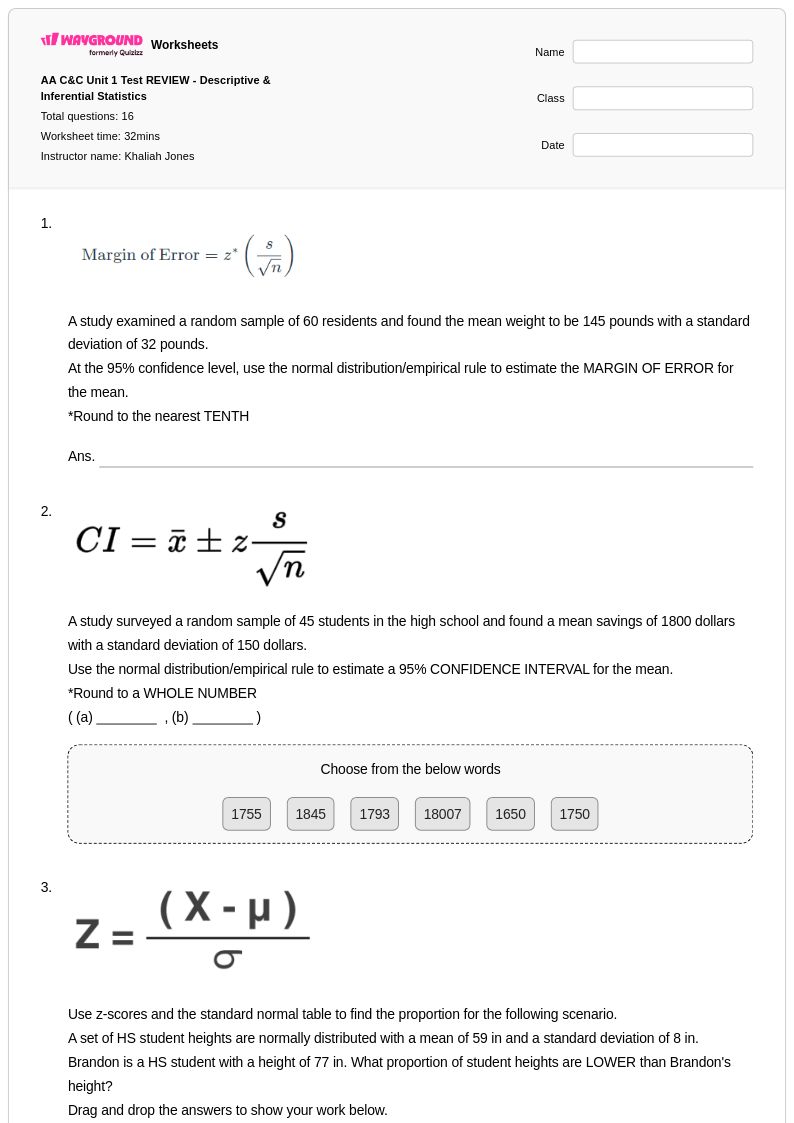
16 Q
11th
27 Q
11th
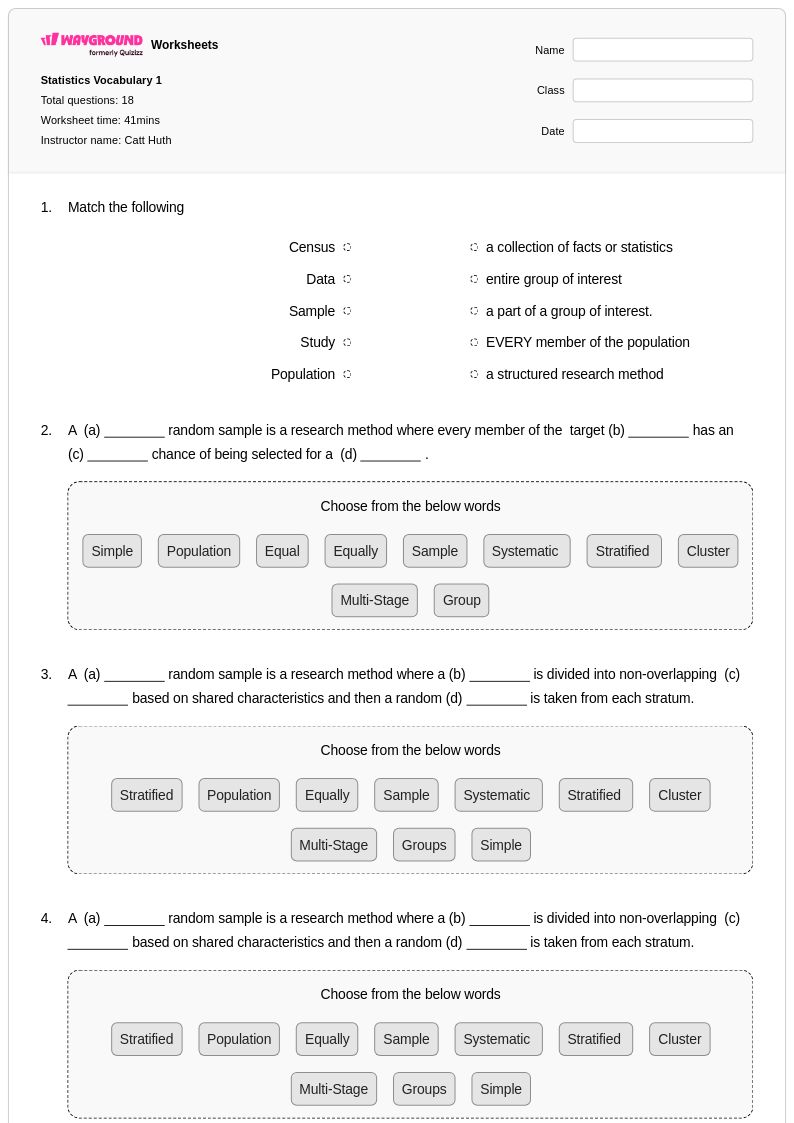
18 Q
9th - 12th
10 Q
11th
18 Q
7th
20 Q
6th
29 Q
12th
20 Q
Uni
24 Q
12th
10 Q
Uni
10 Q
7th
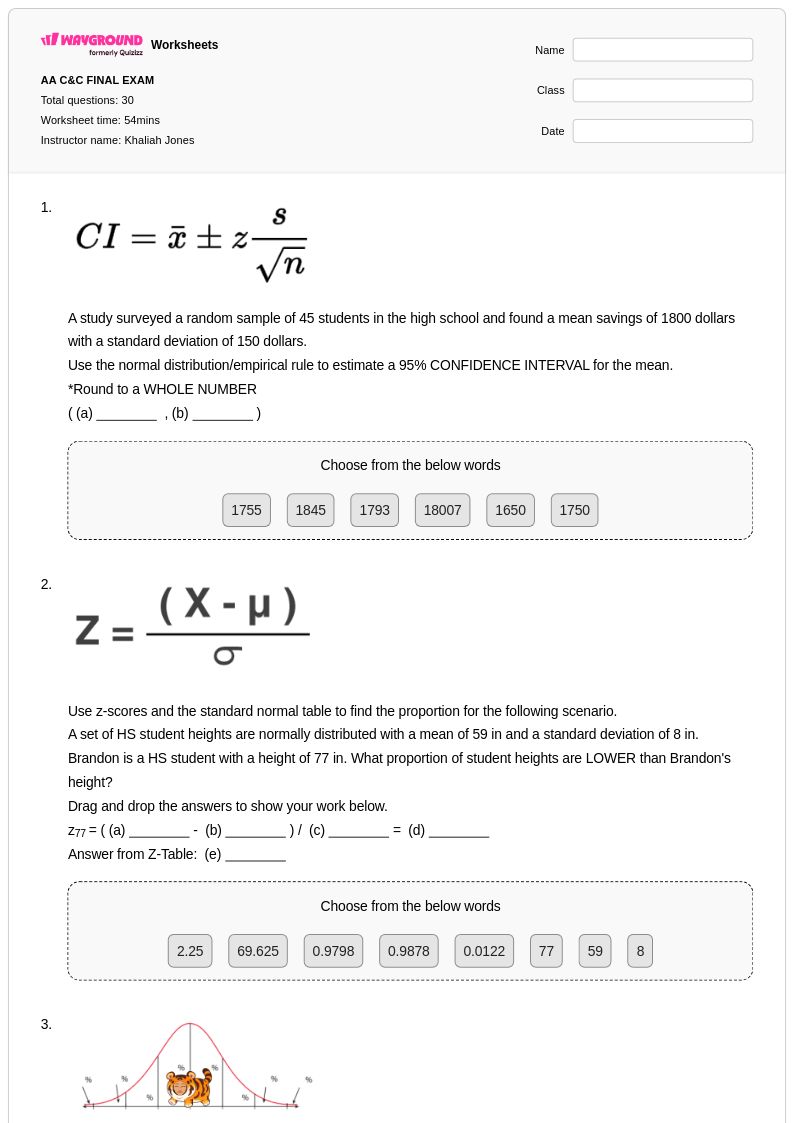
30 Q
11th
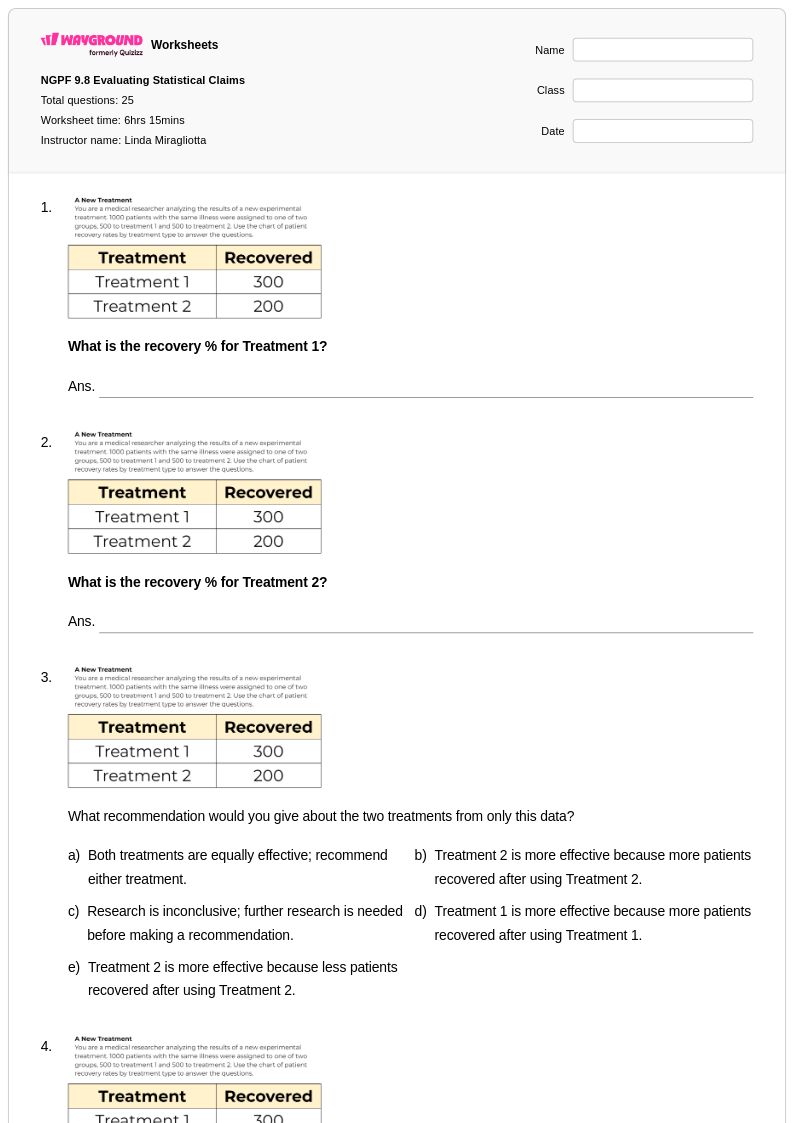
25 Q
9th - 12th
Explore Worksheets by Subjects
Explore printable Random Sampling worksheets
Random sampling worksheets available through Wayground (formerly Quizizz) provide comprehensive practice opportunities for students to master this fundamental concept in probability and statistics. These carefully designed resources help students develop critical skills in understanding sampling techniques, identifying bias in sample selection, calculating sampling distributions, and applying various random sampling methods including simple random sampling, stratified sampling, and systematic sampling. The worksheets feature structured practice problems that guide students through real-world scenarios where random sampling principles apply, from survey methodology to quality control processes. Each worksheet collection includes detailed answer keys and is available as free printables in convenient pdf format, allowing educators to seamlessly integrate these resources into their probability and statistics curriculum while providing students with immediate feedback on their understanding of sampling concepts.
Wayground (formerly Quizizz) empowers educators with access to millions of teacher-created random sampling worksheets that support diverse instructional needs across mathematics classrooms. The platform's robust search and filtering capabilities enable teachers to quickly locate resources aligned with specific standards and learning objectives, while differentiation tools allow for seamless customization to meet individual student needs and varying skill levels. These flexible worksheet collections are available in both printable and digital formats, including downloadable pdf versions, making them ideal for in-class instruction, homework assignments, remediation sessions, and enrichment activities. Teachers can efficiently plan lessons around random sampling concepts, provide targeted skill practice, and assess student understanding using these comprehensive resources that adapt to different teaching styles and classroom environments.
FAQs
How can I introduce random sampling to my students?
What exercises help students practice identifying sampling bias?
What's a common misconception students have about random sampling?
How can I use this random sampling worksheet in my class?
How does random sampling fit into the math curriculum?
How can I differentiate this topic for students at different levels?