
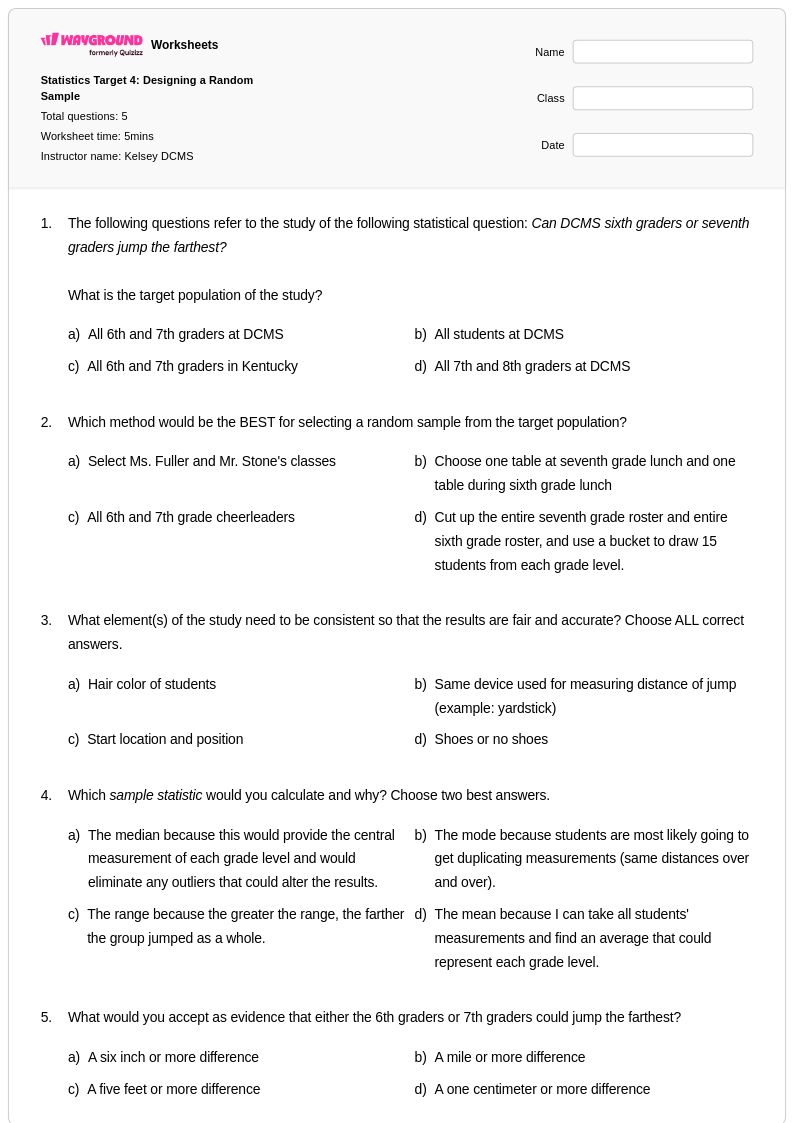
5 Q
6th - 8th
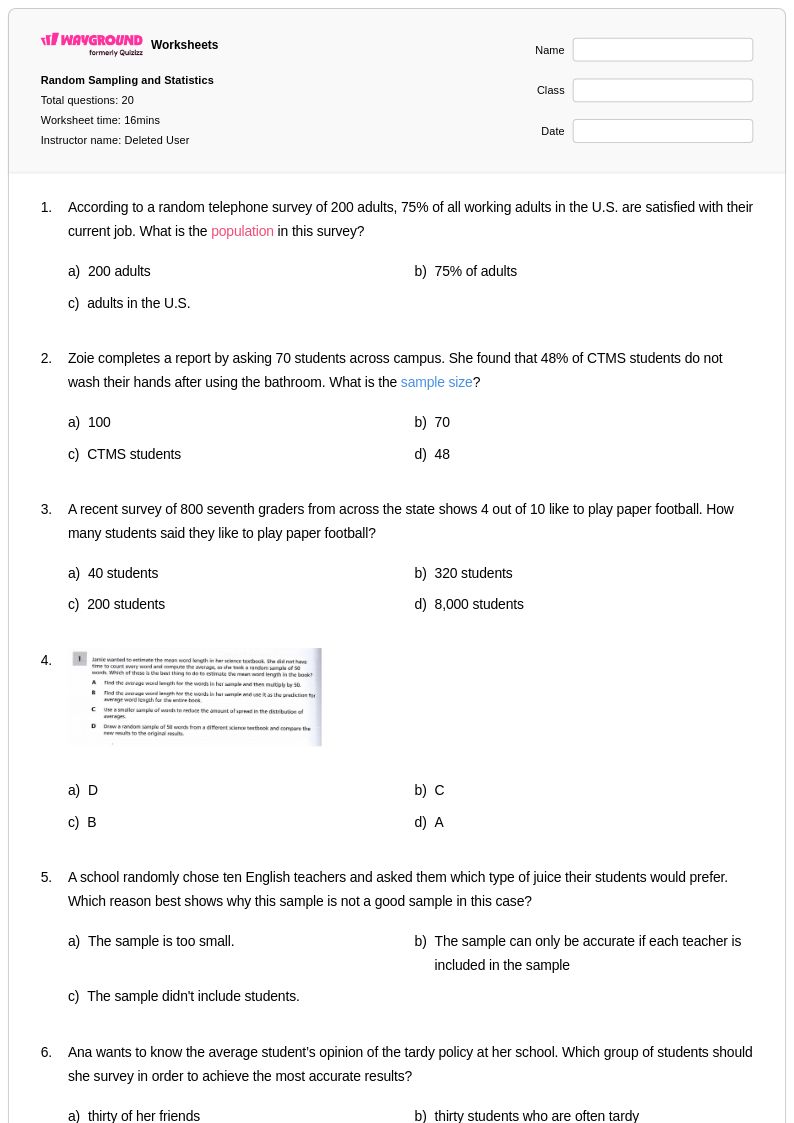
20 Q
6th - 8th
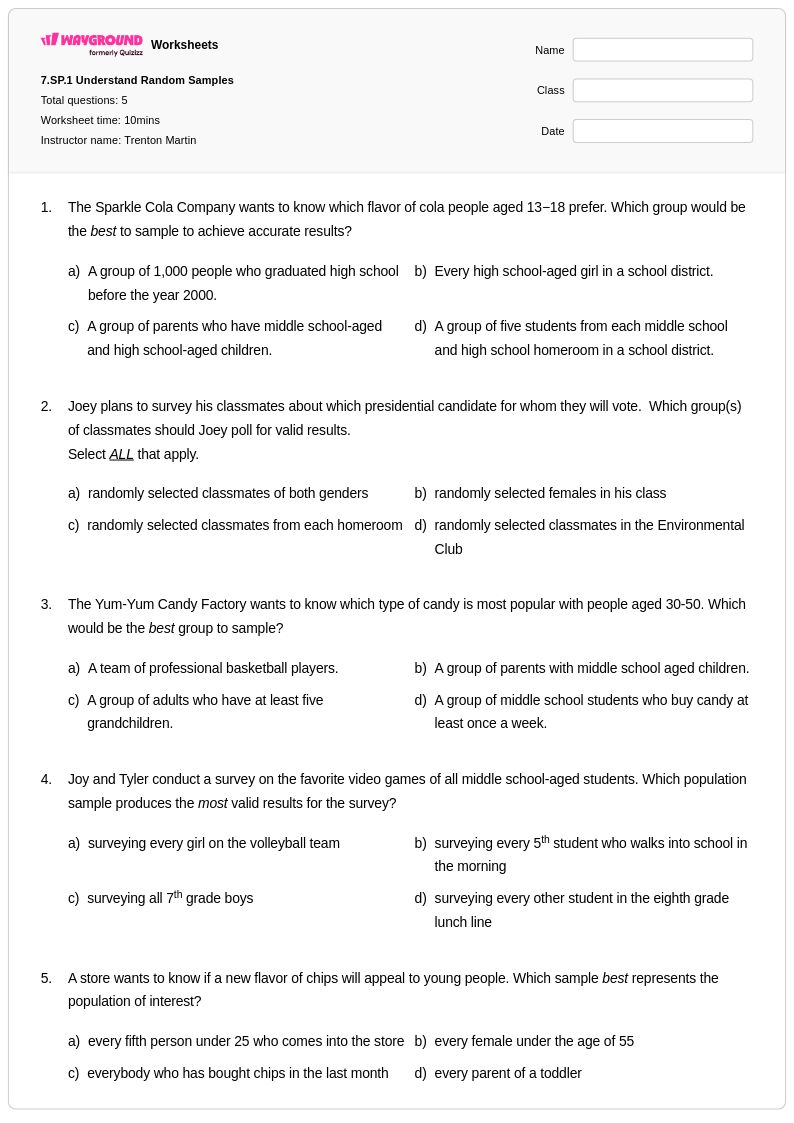
5 Q
6th - 8th
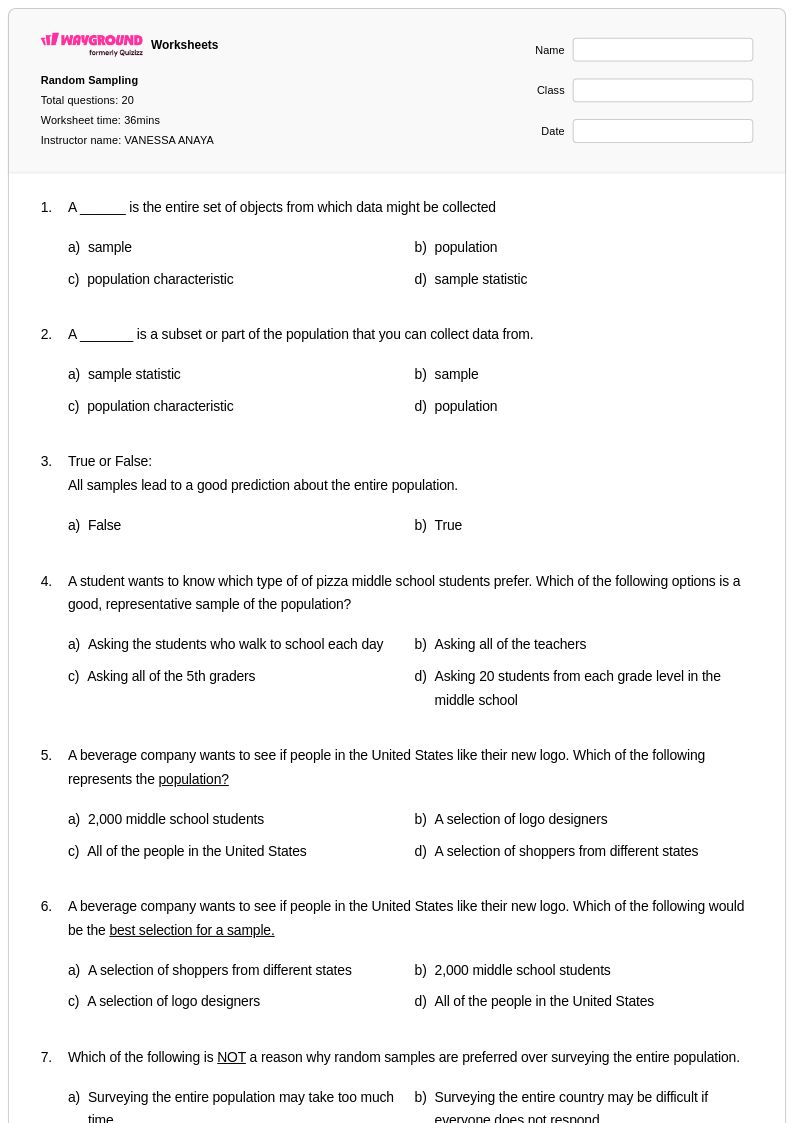
20 Q
6th
20 Q
3rd - Uni
24 Q
6th - 8th
13 Q
5th - Uni
24 Q
6th - 12th
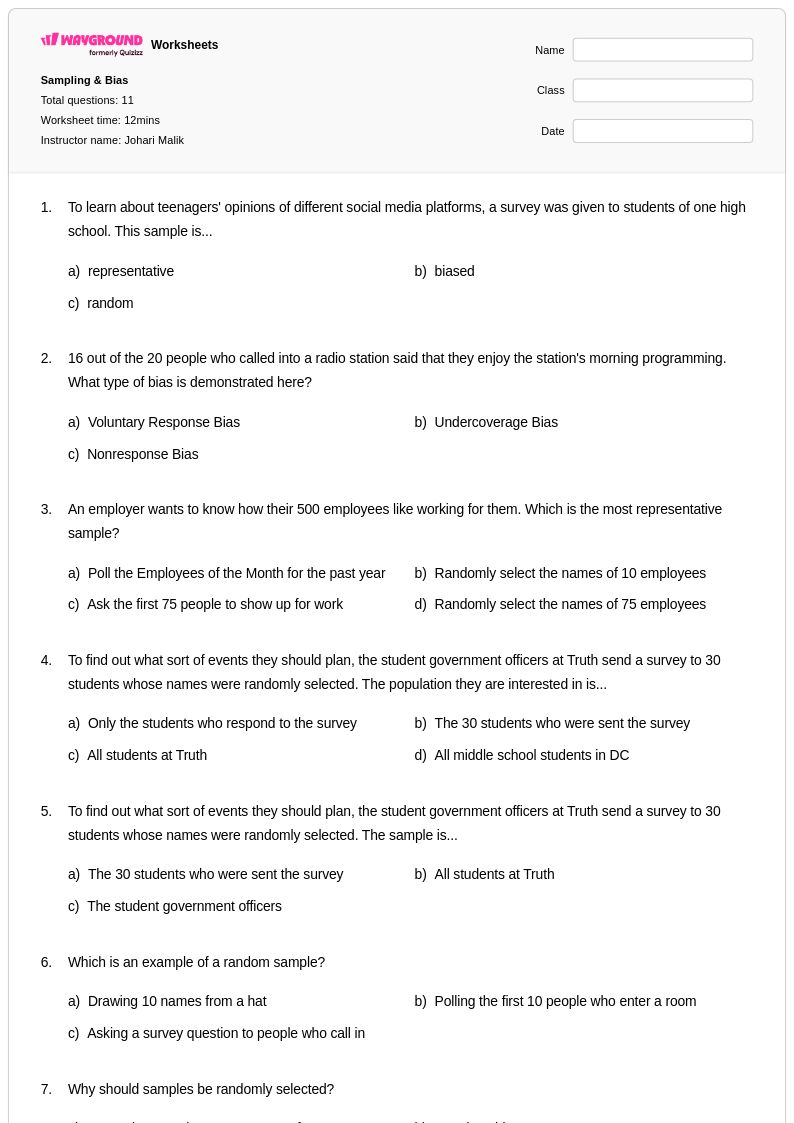
11 Q
6th - 7th
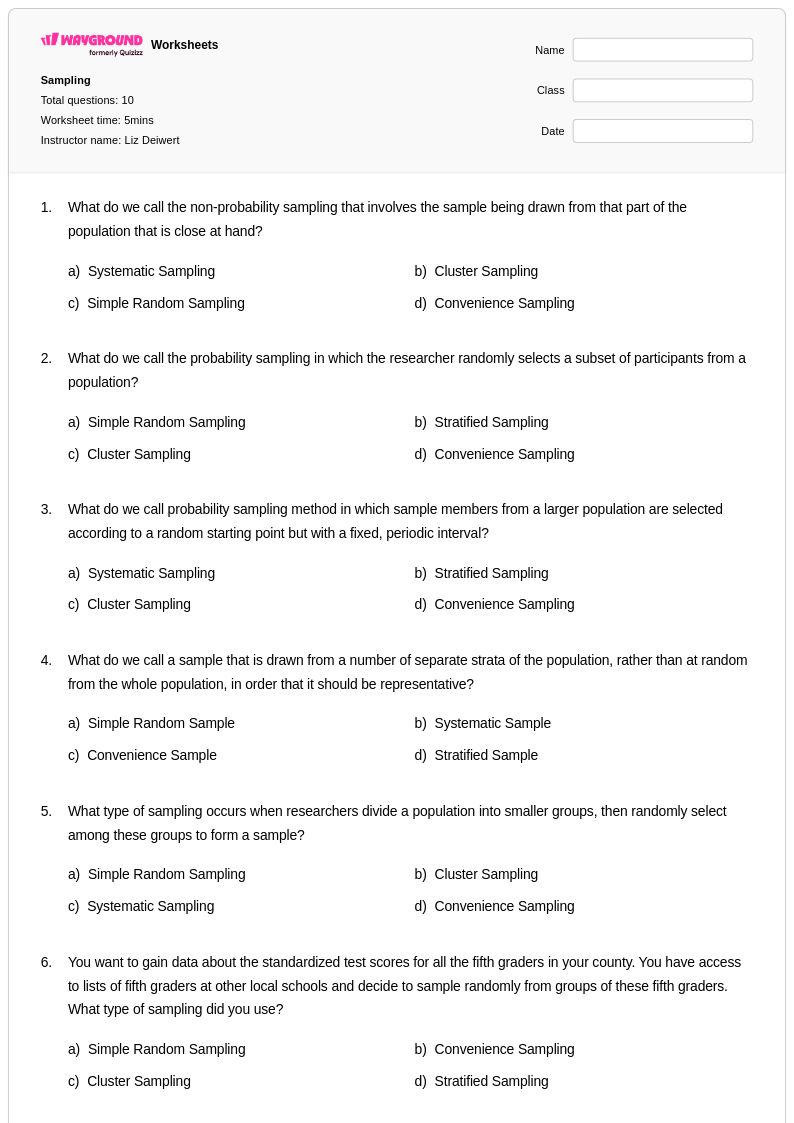
10 Q
6th - 9th
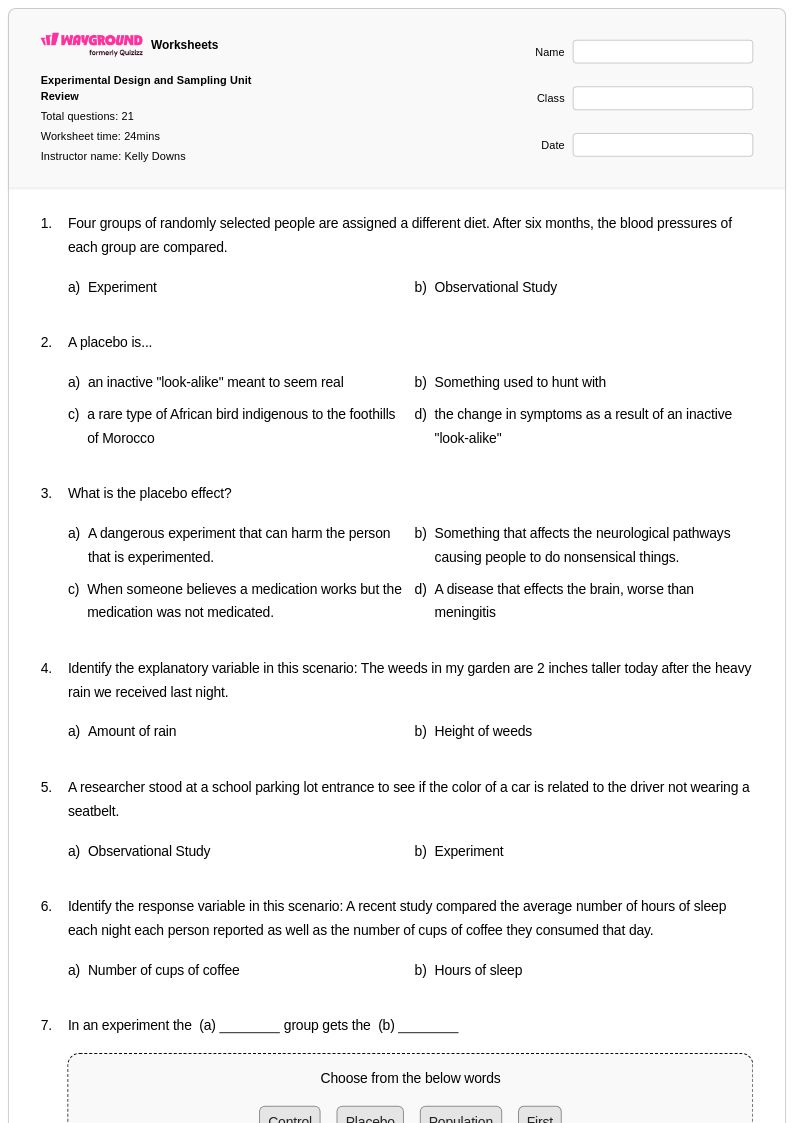
21 Q
5th - 12th
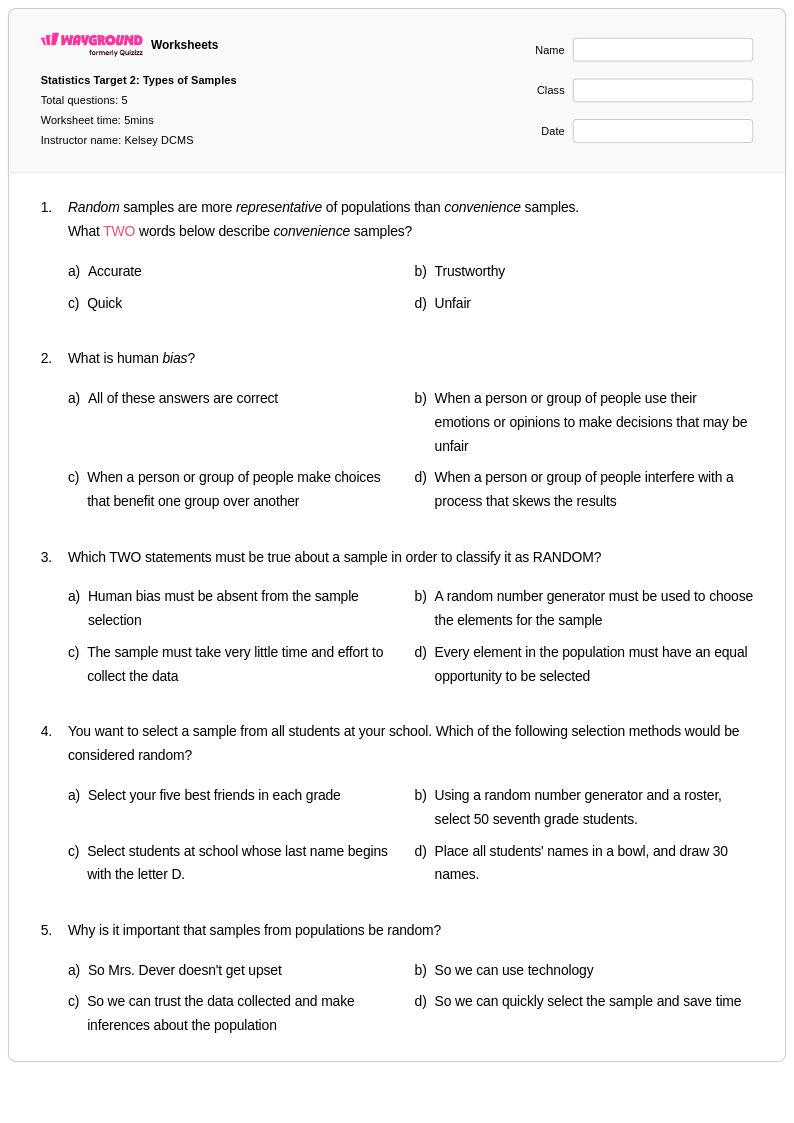
5 Q
6th - 8th
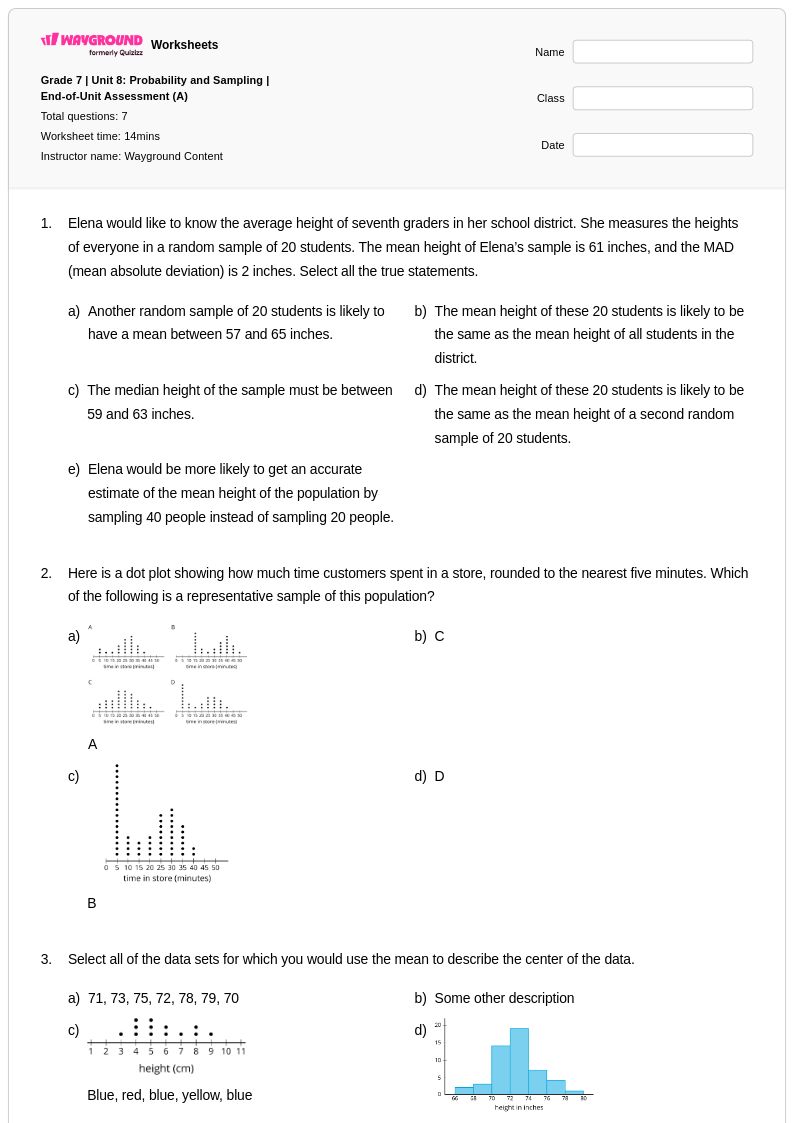
7 Q
6th - Uni
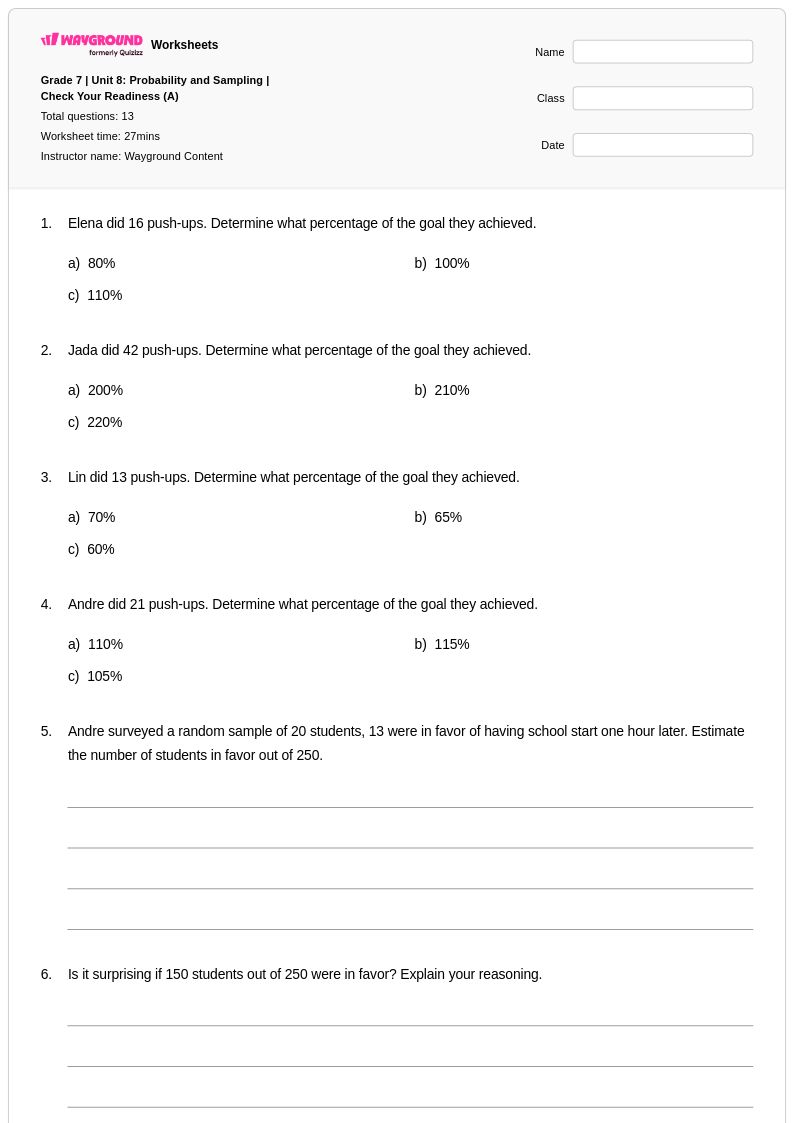
13 Q
6th - Uni
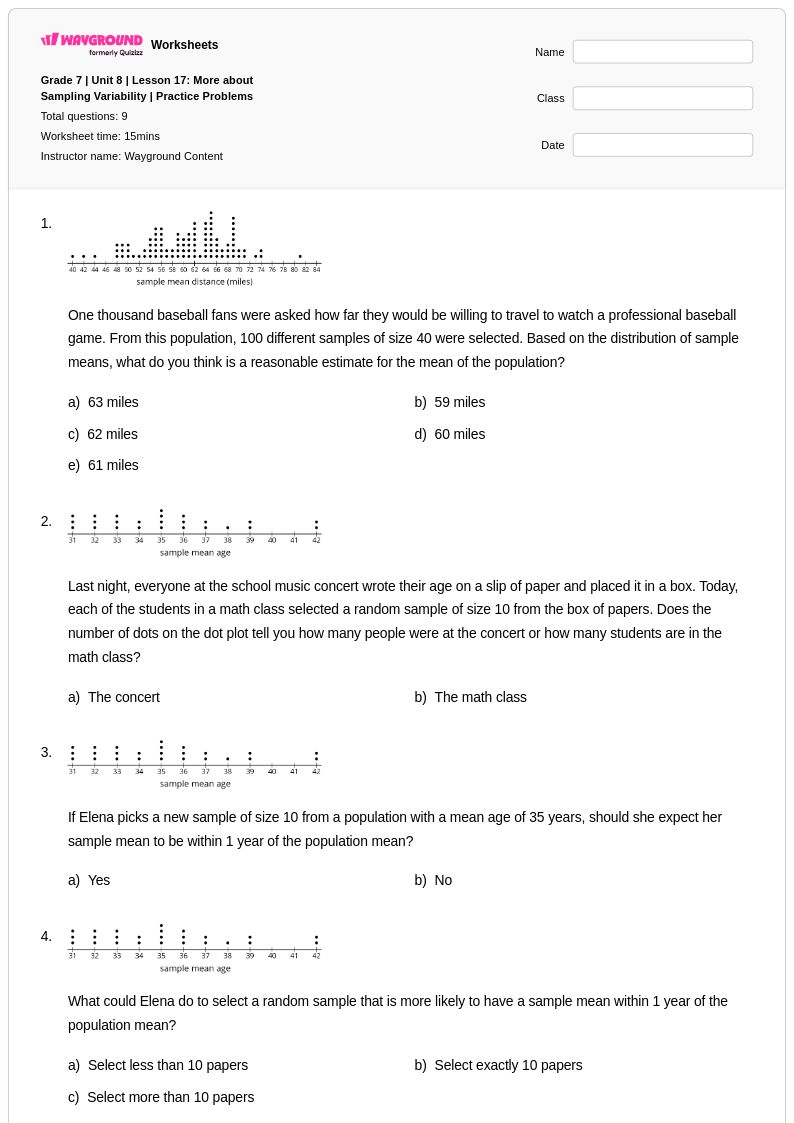
9 Q
6th - Uni
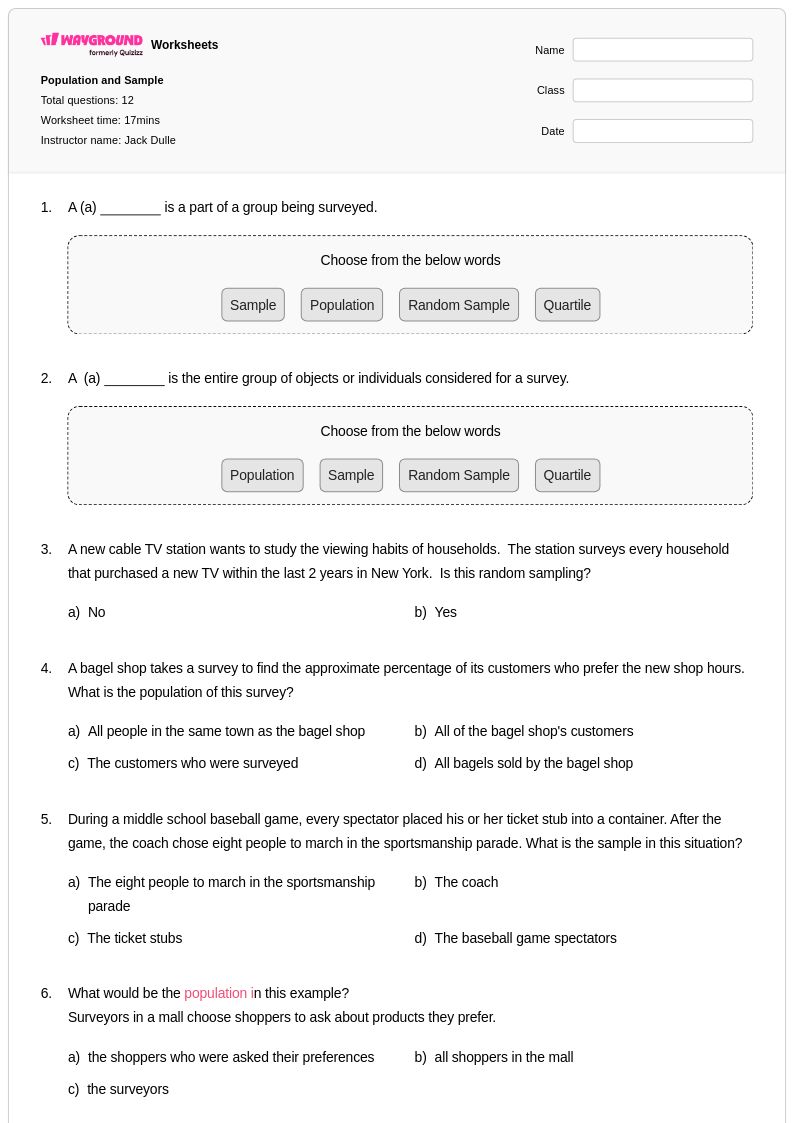
12 Q
6th - 8th
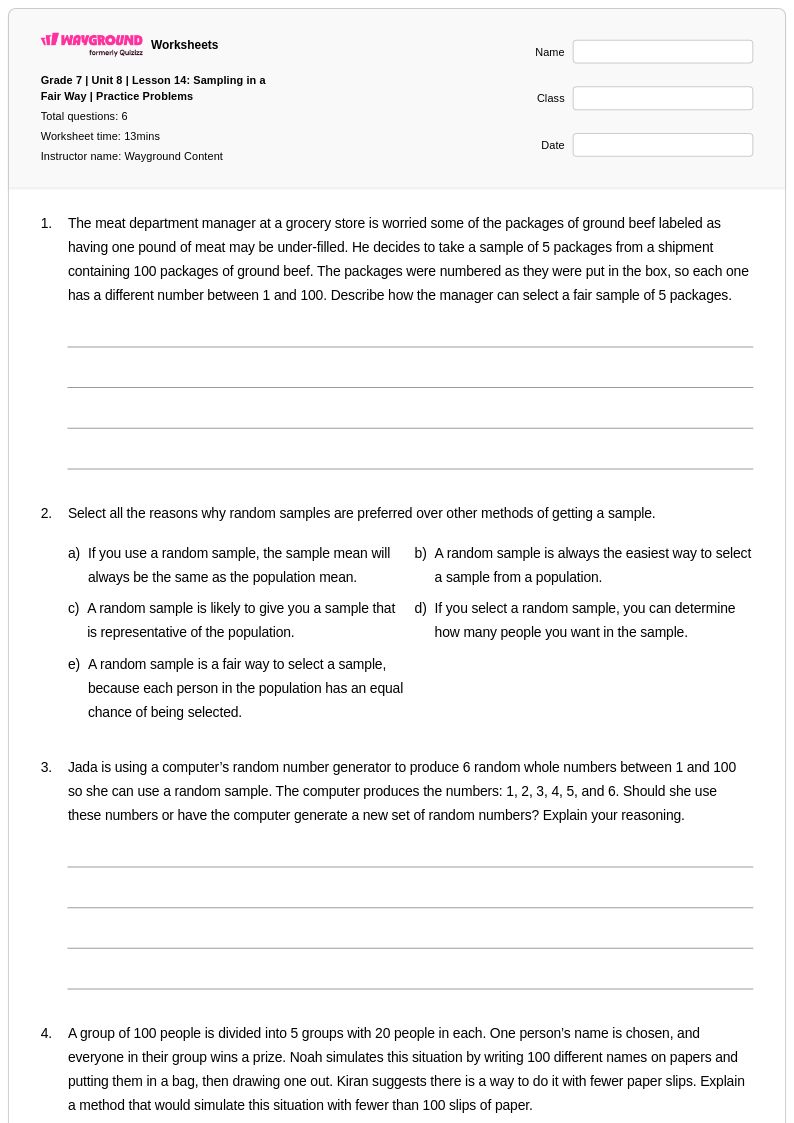
6 Q
6th - Uni
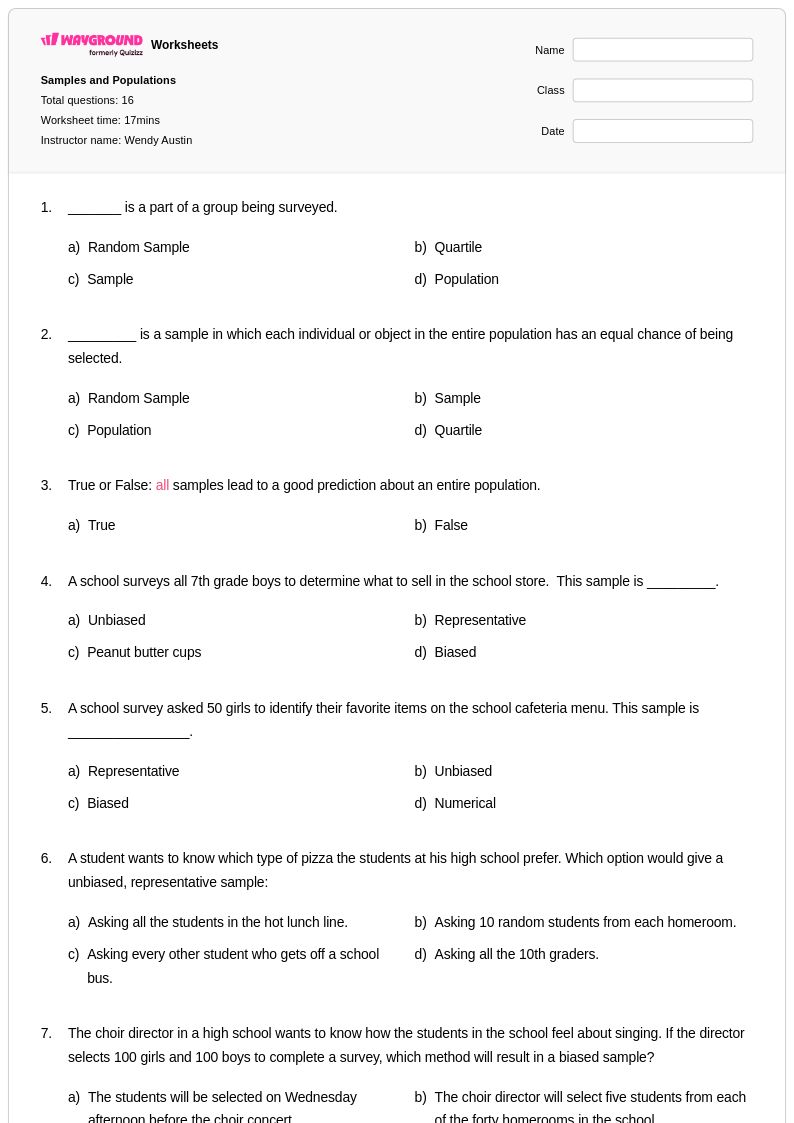
16 Q
6th - 7th
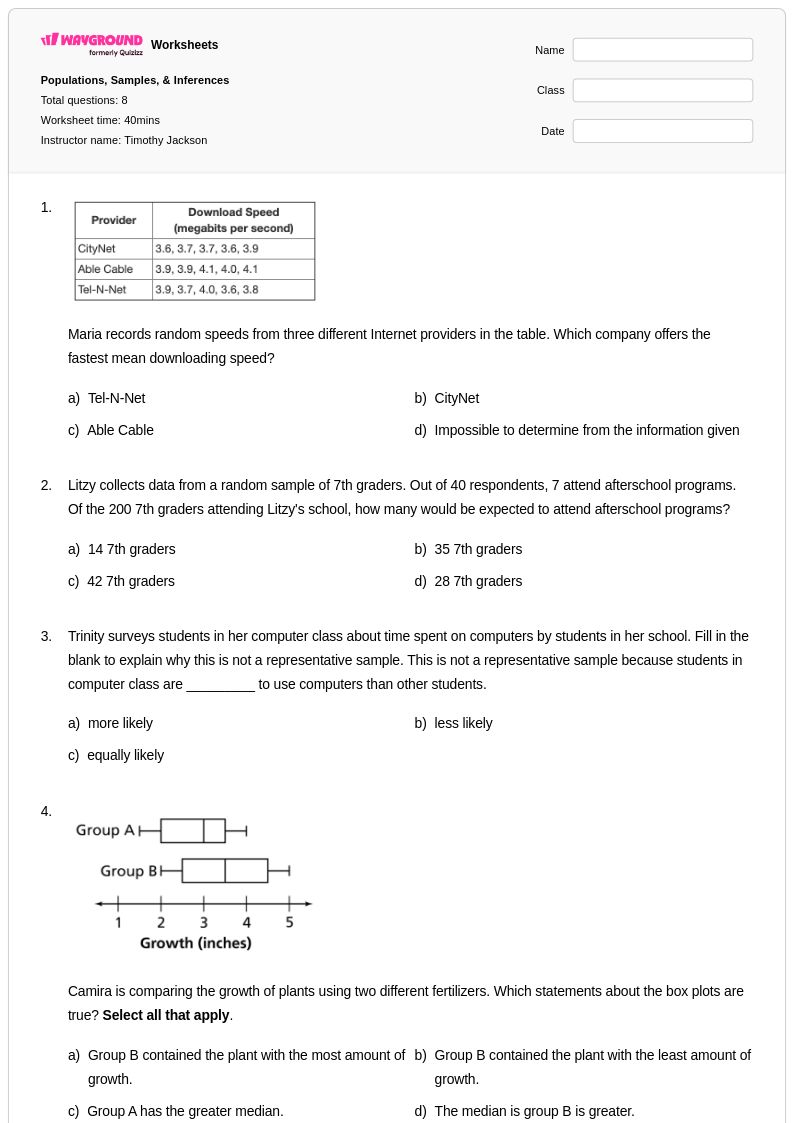
8 Q
6th - 8th
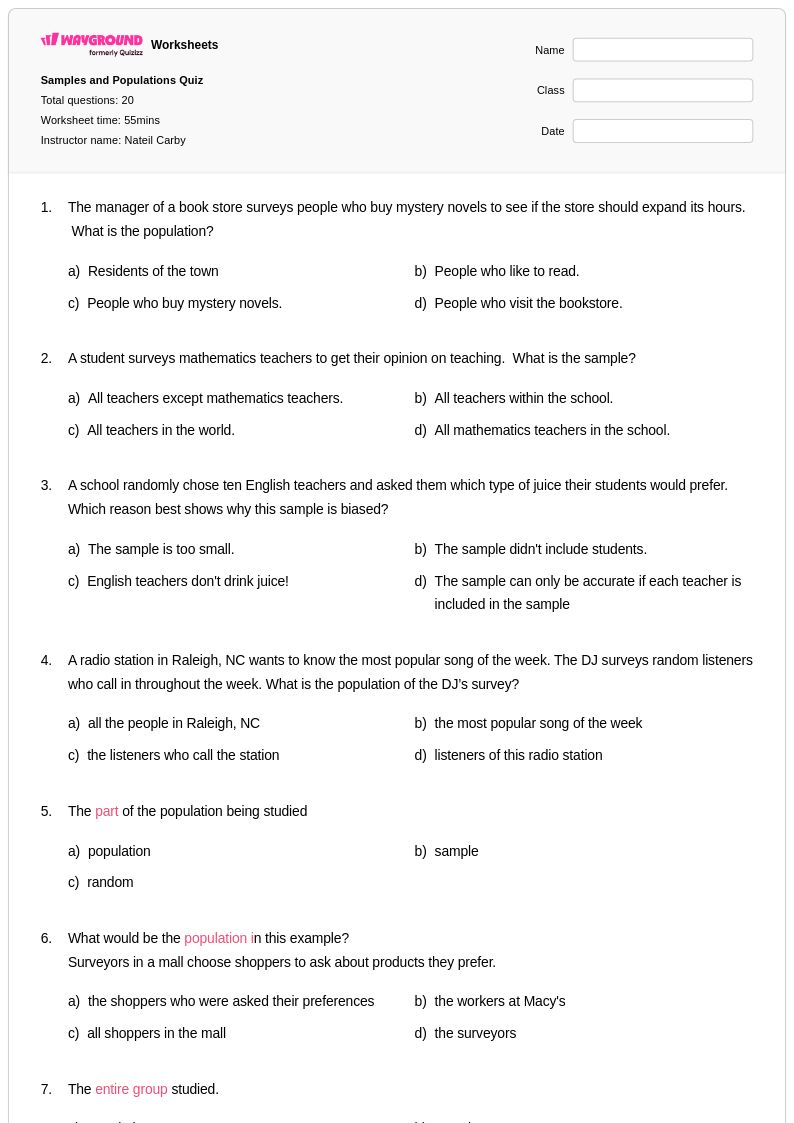
20 Q
6th - 8th
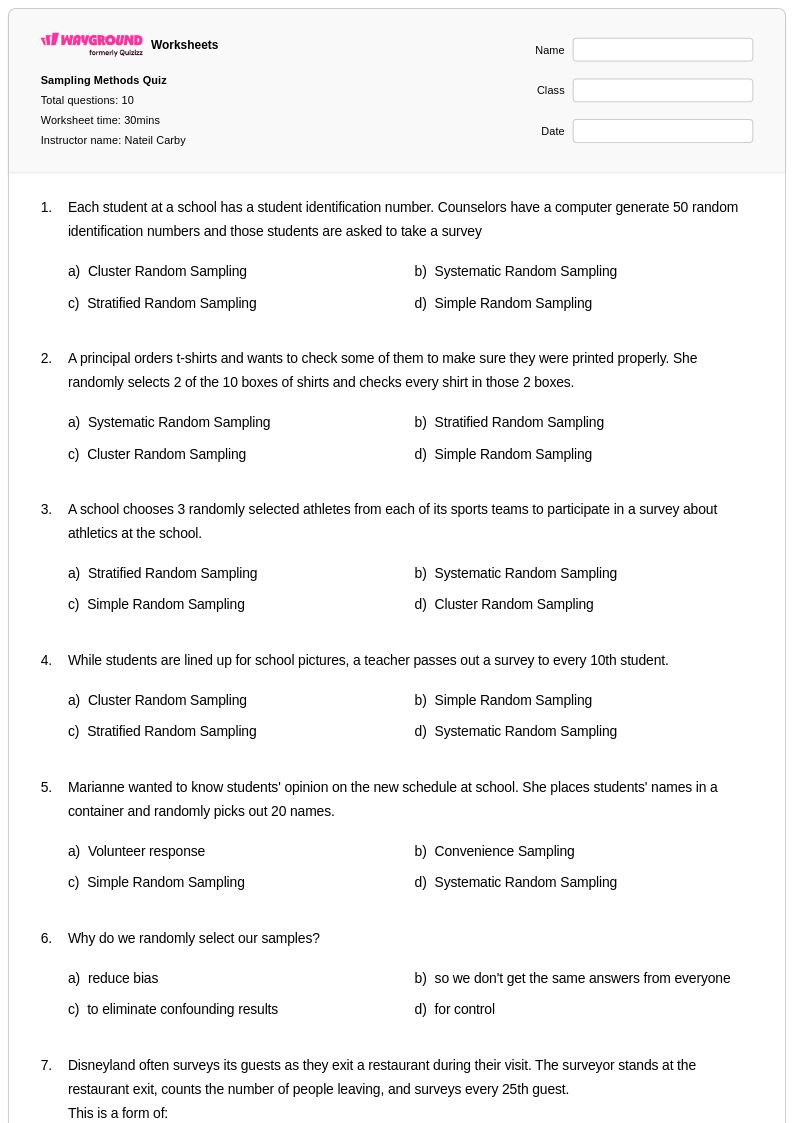
10 Q
6th - 8th
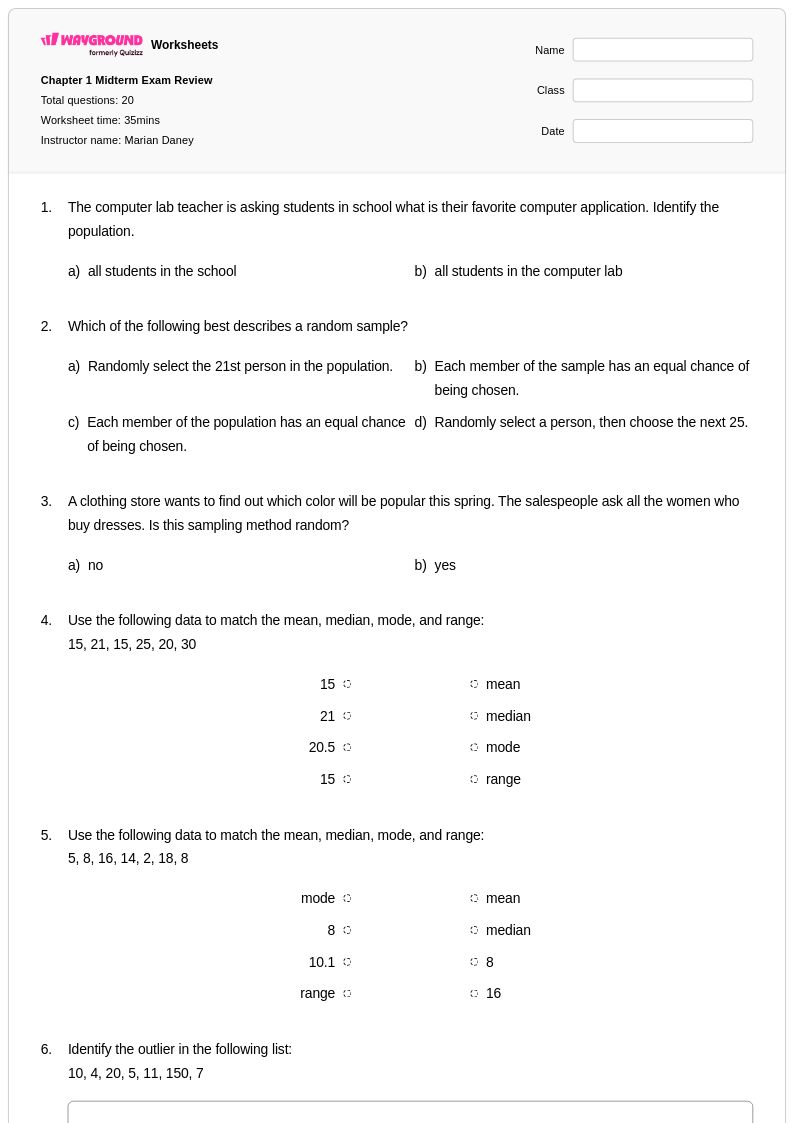
20 Q
6th
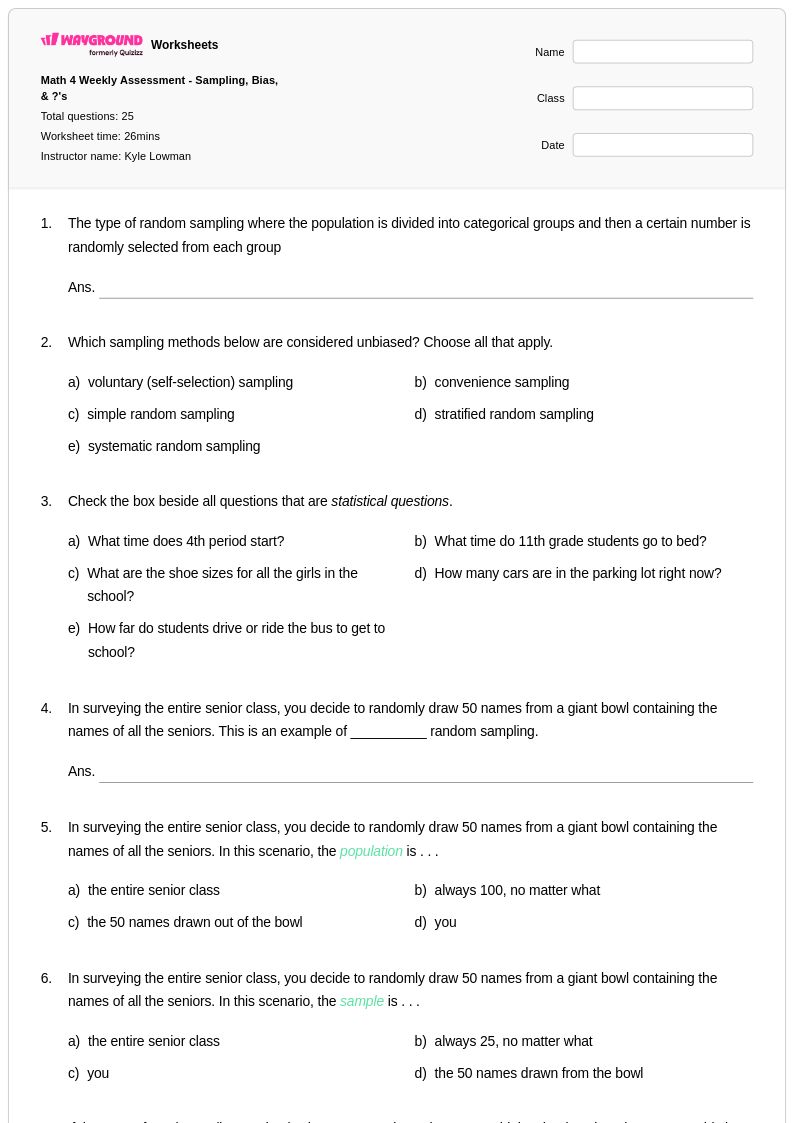
25 Q
6th - 12th
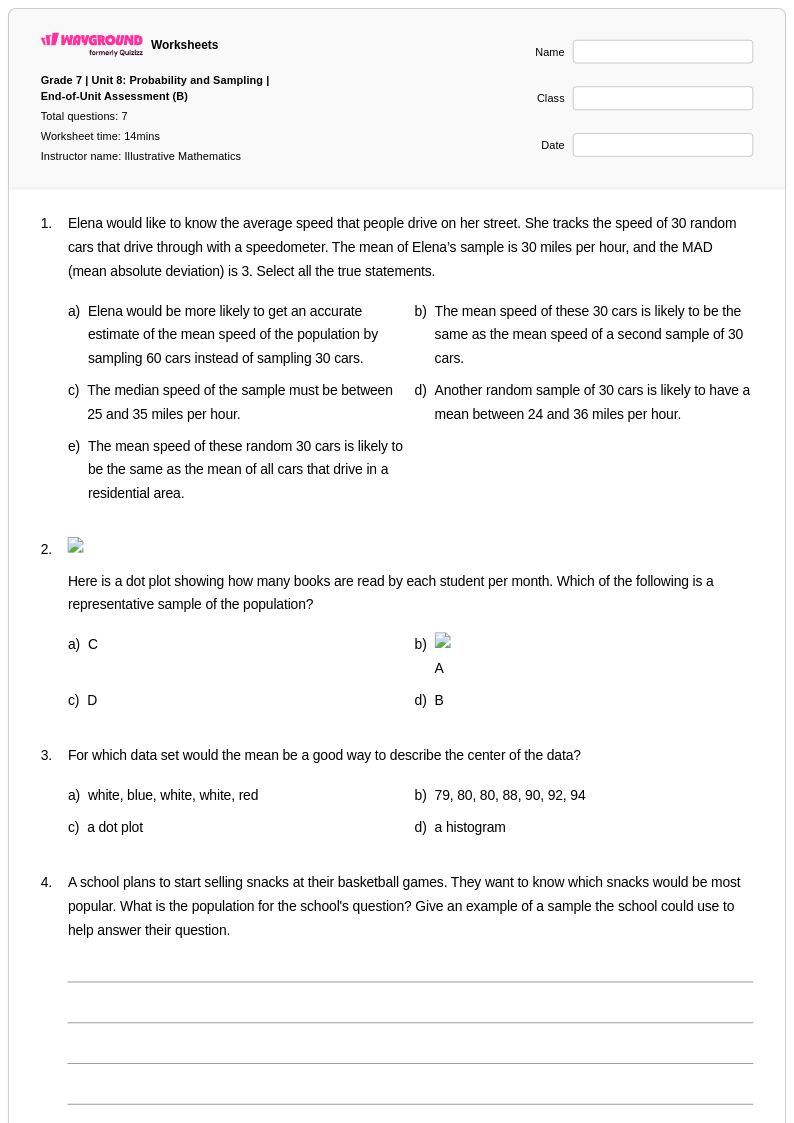
7 Q
6th - Uni
Explore Other Subject Worksheets for class 6
Explore printable Random Sampling worksheets for Class 6
Random sampling worksheets for Class 6 students available through Wayground (formerly Quizizz) provide comprehensive practice with fundamental statistical concepts that form the foundation for advanced data analysis skills. These carefully designed resources help sixth-grade learners understand how to select representative samples from larger populations, distinguish between random and biased sampling methods, and recognize the importance of sample size in drawing valid conclusions. Students work through practice problems that involve real-world scenarios such as surveying classmates, analyzing survey techniques, and identifying potential sources of bias in data collection. Each worksheet includes detailed answer keys that allow students to check their understanding independently, while the free printables offer flexible options for classroom use and homework assignments in convenient pdf format.
Wayground (formerly Quizizz) empowers educators with millions of teacher-created resources specifically designed to support random sampling instruction at the Class 6 level. The platform's robust search and filtering capabilities enable teachers to quickly locate worksheets that align with specific learning standards and match their students' varying skill levels. Advanced differentiation tools allow instructors to customize content complexity, ensuring that both struggling learners and advanced students receive appropriate challenges in understanding sampling techniques and statistical reasoning. These resources are available in both printable and digital formats, including downloadable pdf versions, making them ideal for diverse classroom environments and learning modalities. Teachers can seamlessly integrate these materials into lesson planning, use them for targeted remediation when students struggle with sampling concepts, or deploy them for enrichment activities that extend statistical thinking beyond basic curriculum requirements.
FAQs
What should a 6th grader learn about random sampling?
What's a good way to introduce sampling to 6th graders?
What kind of practice problems are best for this grade level?
What's a common mistake 6th graders make with this topic?
How can I use this Grade 6 worksheet with my students?
How does this topic align with 6th-grade math standards?