
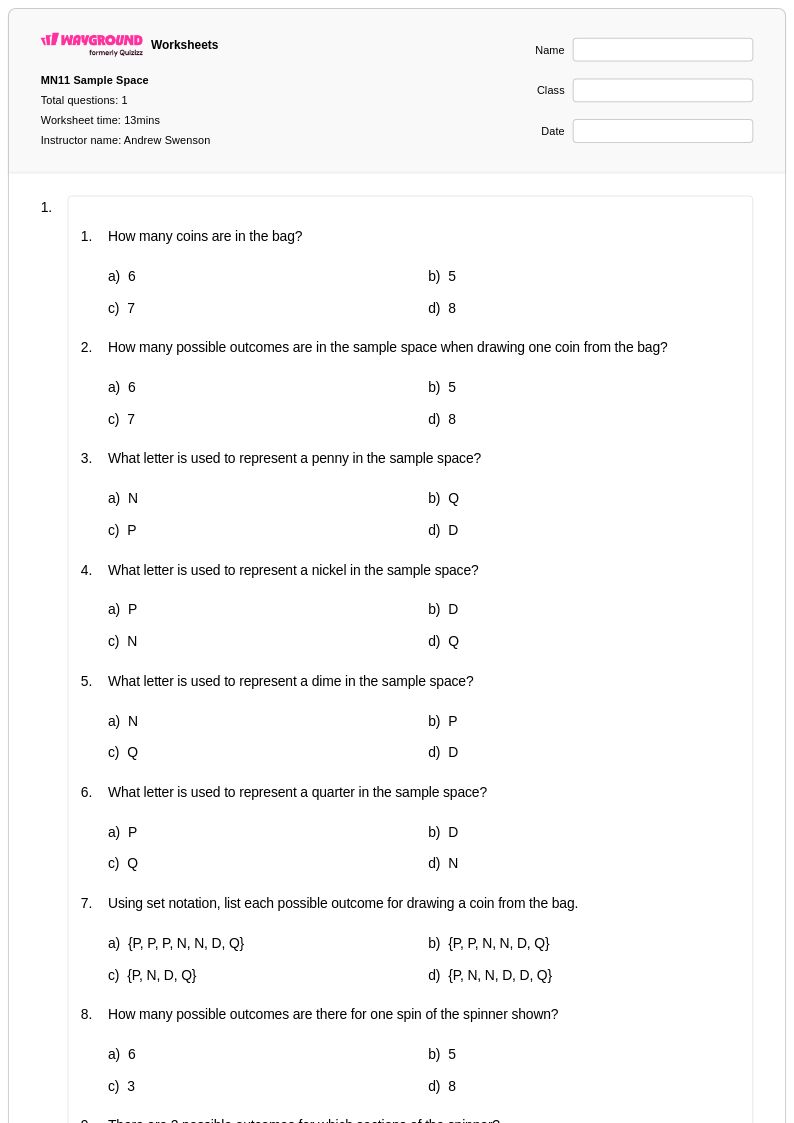
22 Q
6th
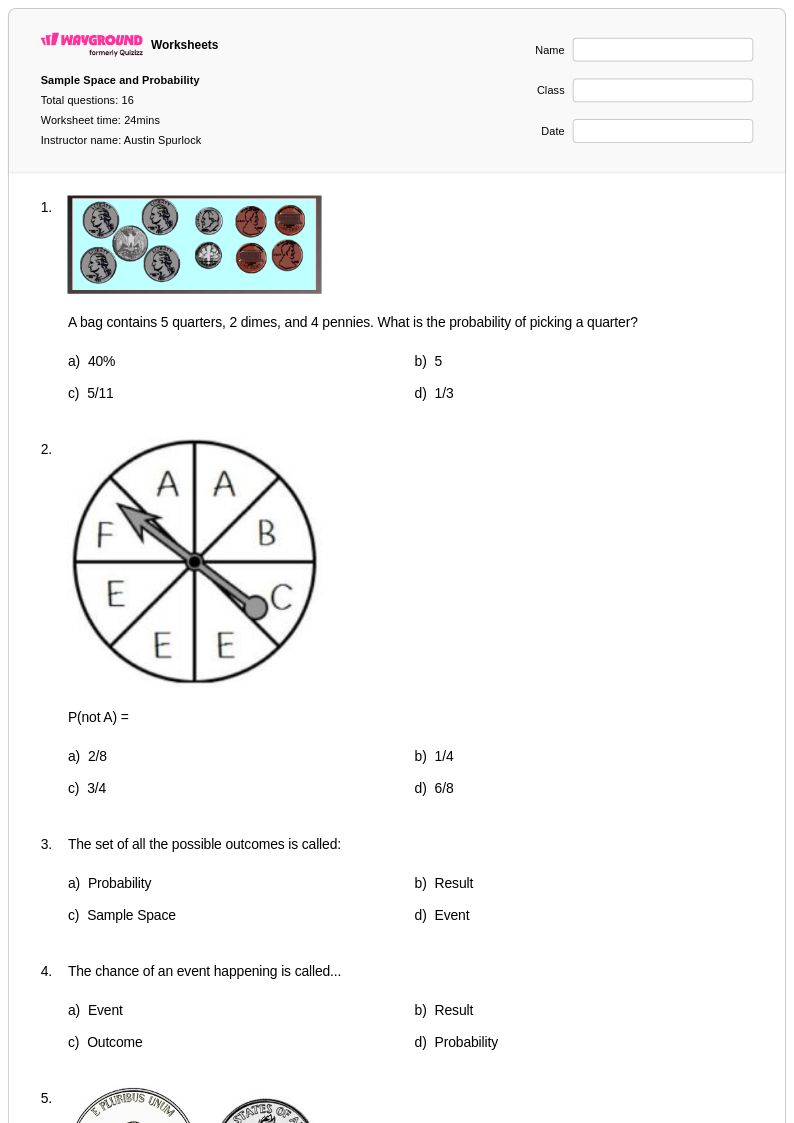
16 Q
6th
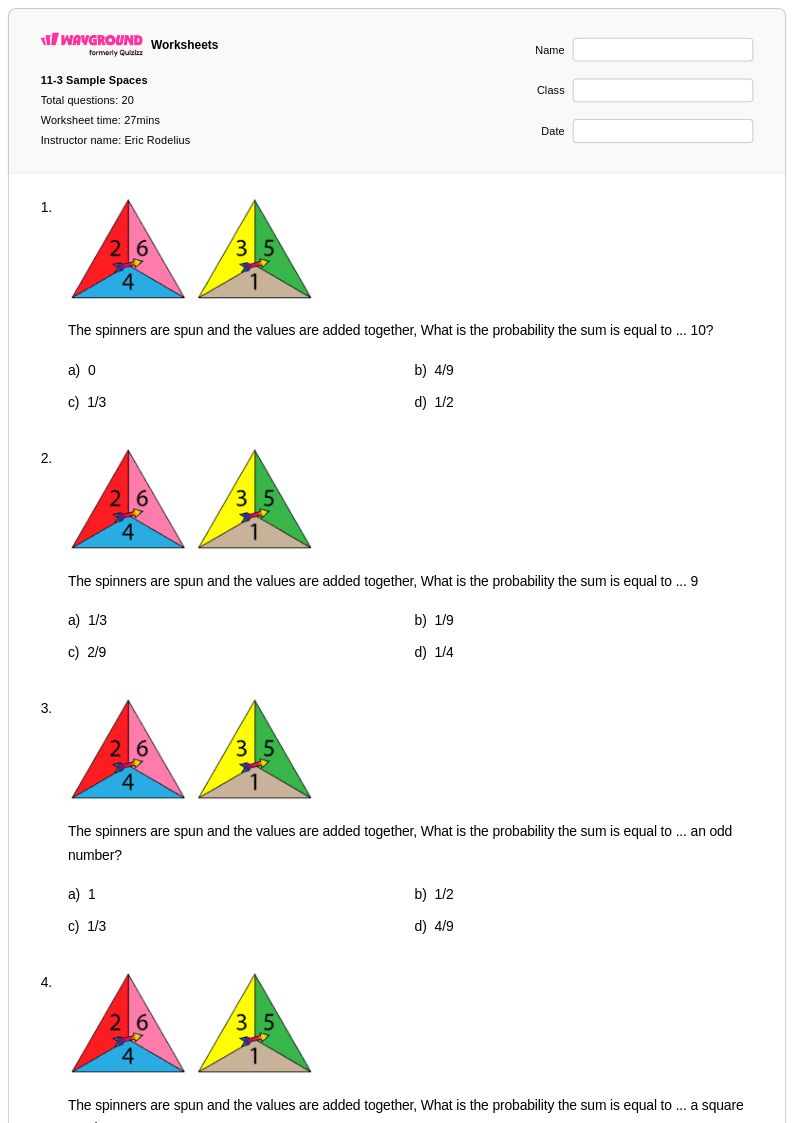
20 Q
6th - 7th
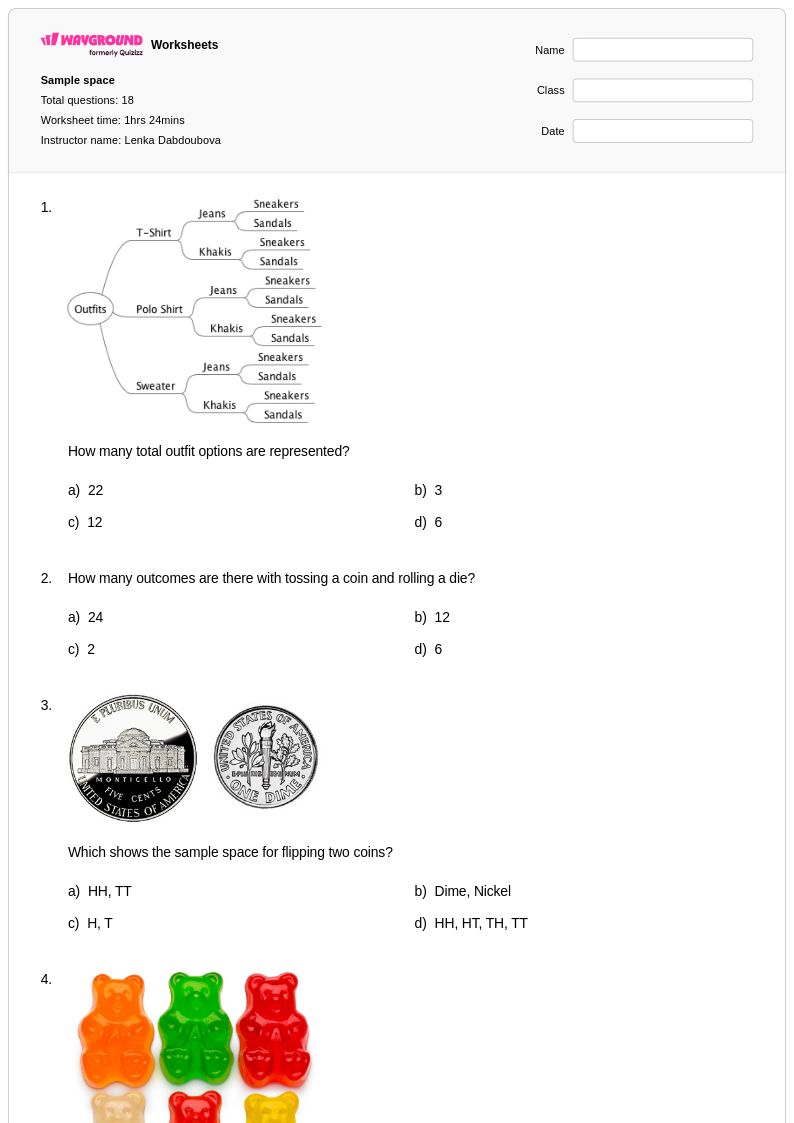
18 Q
6th - 8th
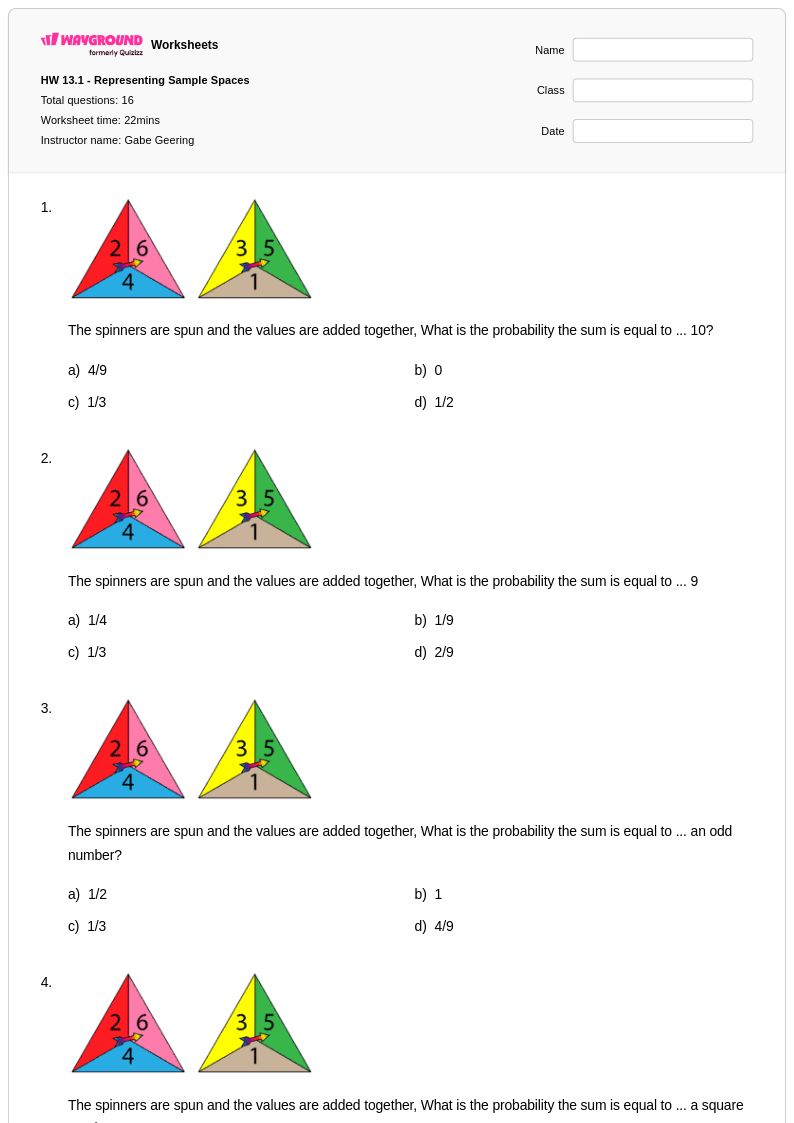
16 Q
6th - 12th
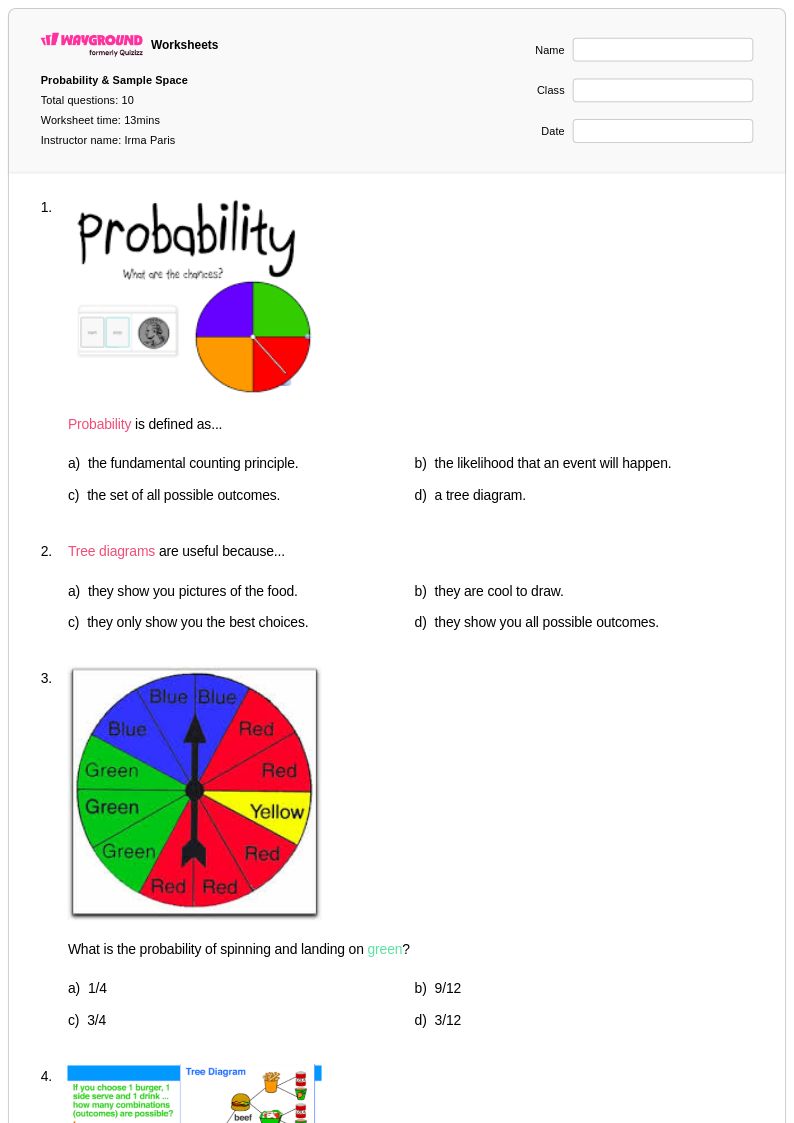
10 Q
4th - 6th
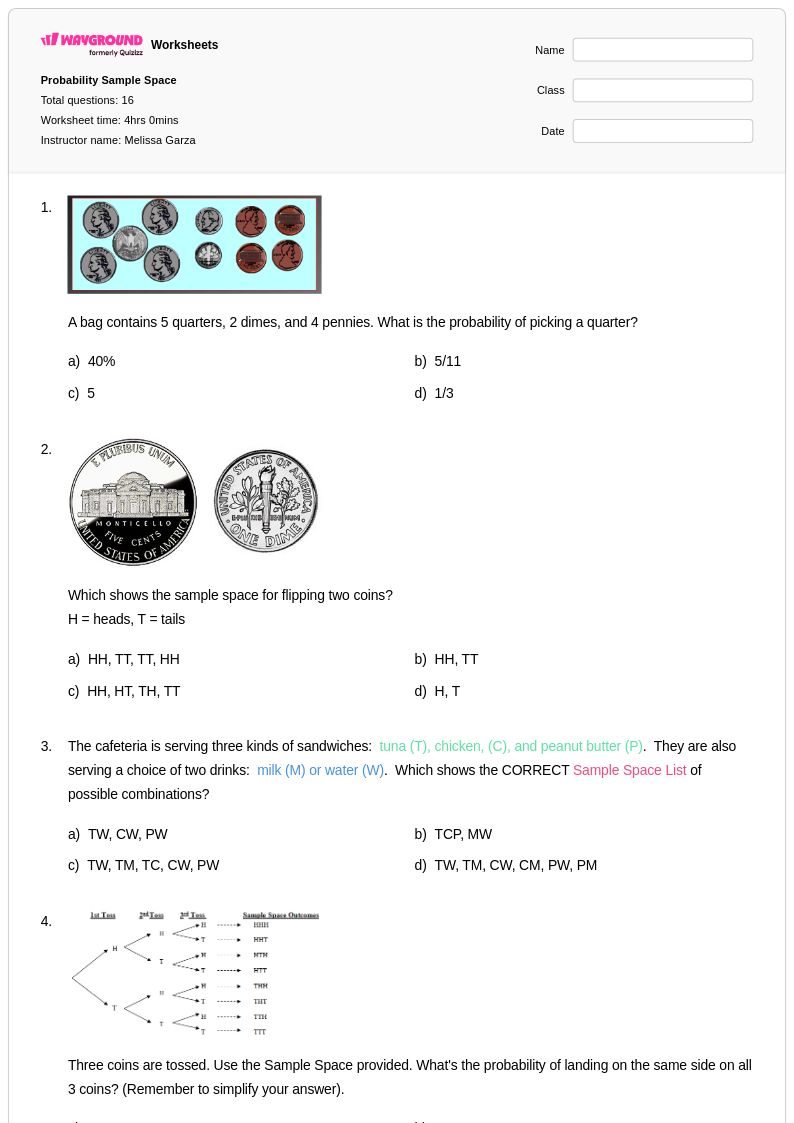
16 Q
6th - 7th
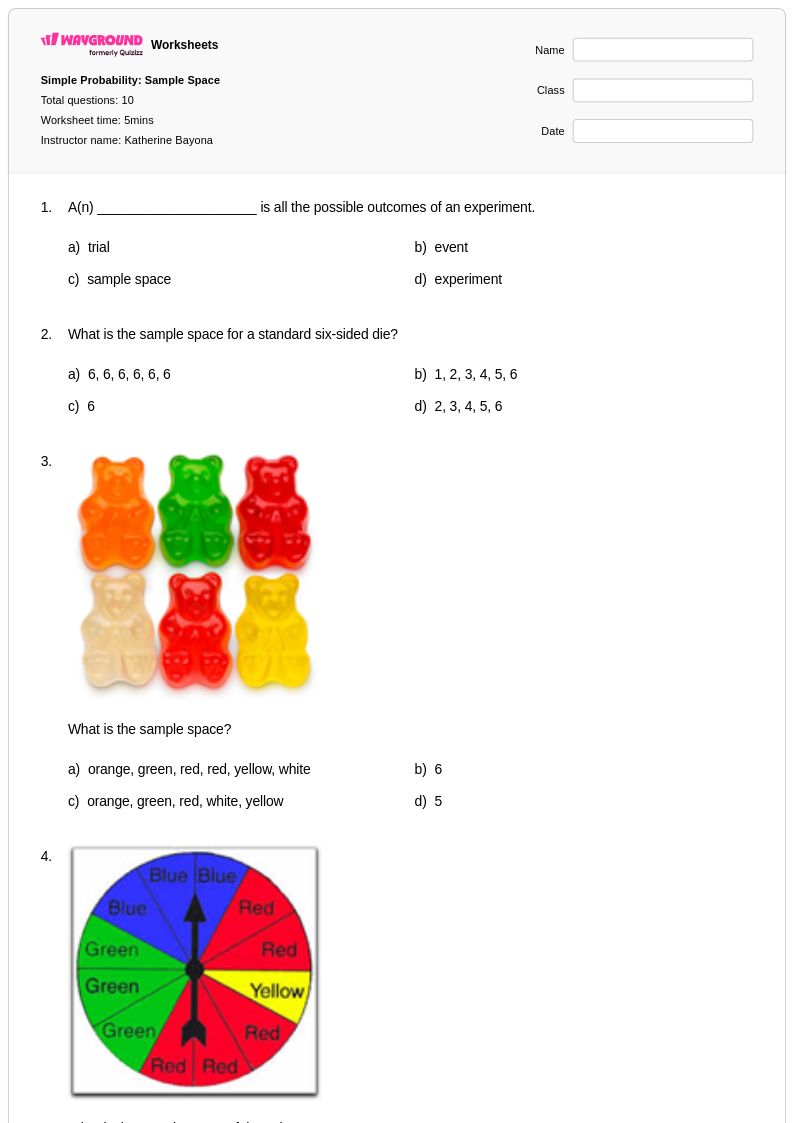
10 Q
6th - 7th
13 Q
6th
10 Q
6th - 7th
20 Q
6th - 8th
11 Q
6th
16 Q
4th - 6th
10 Q
4th - 6th
10 Q
6th - 9th
10 Q
6th - 7th
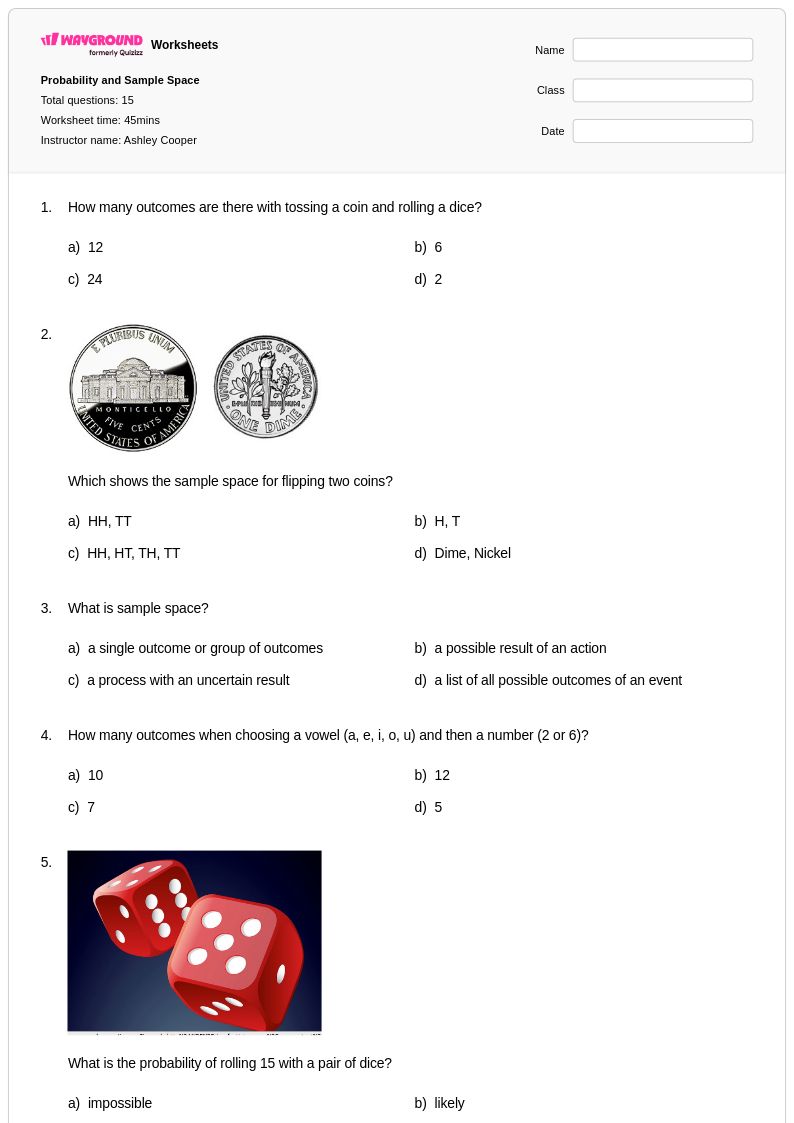
15 Q
6th
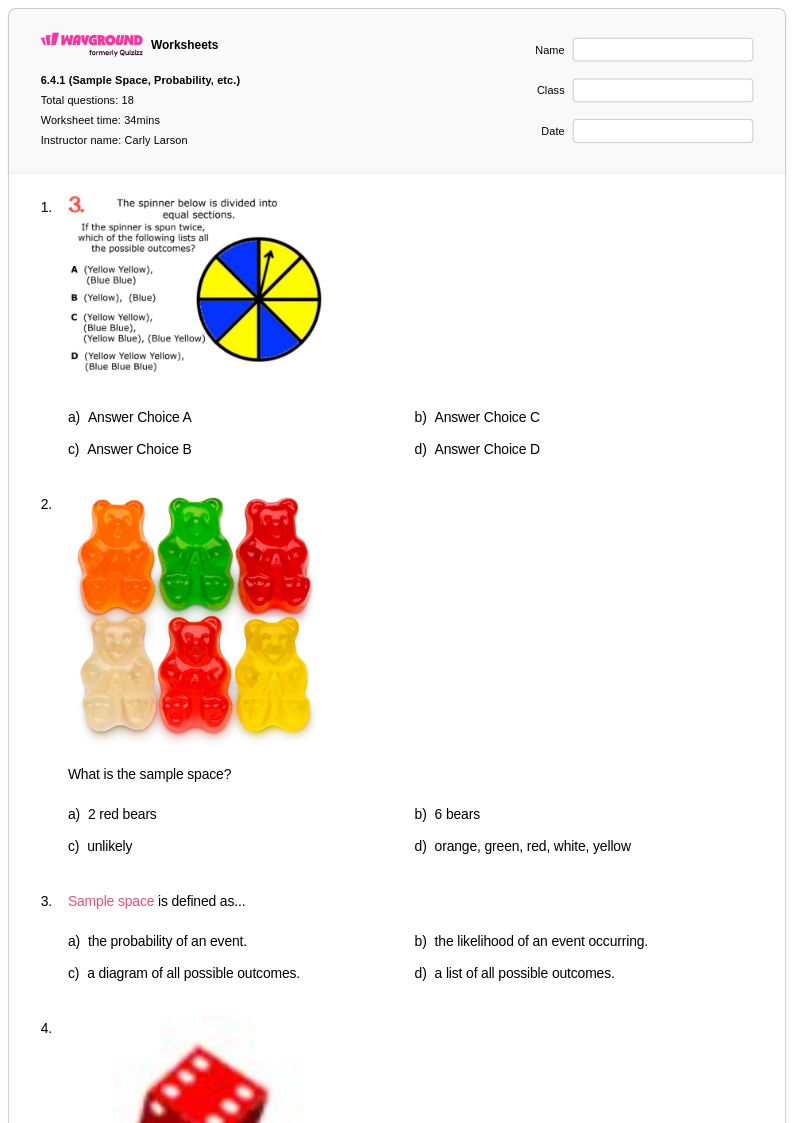
18 Q
6th - 8th
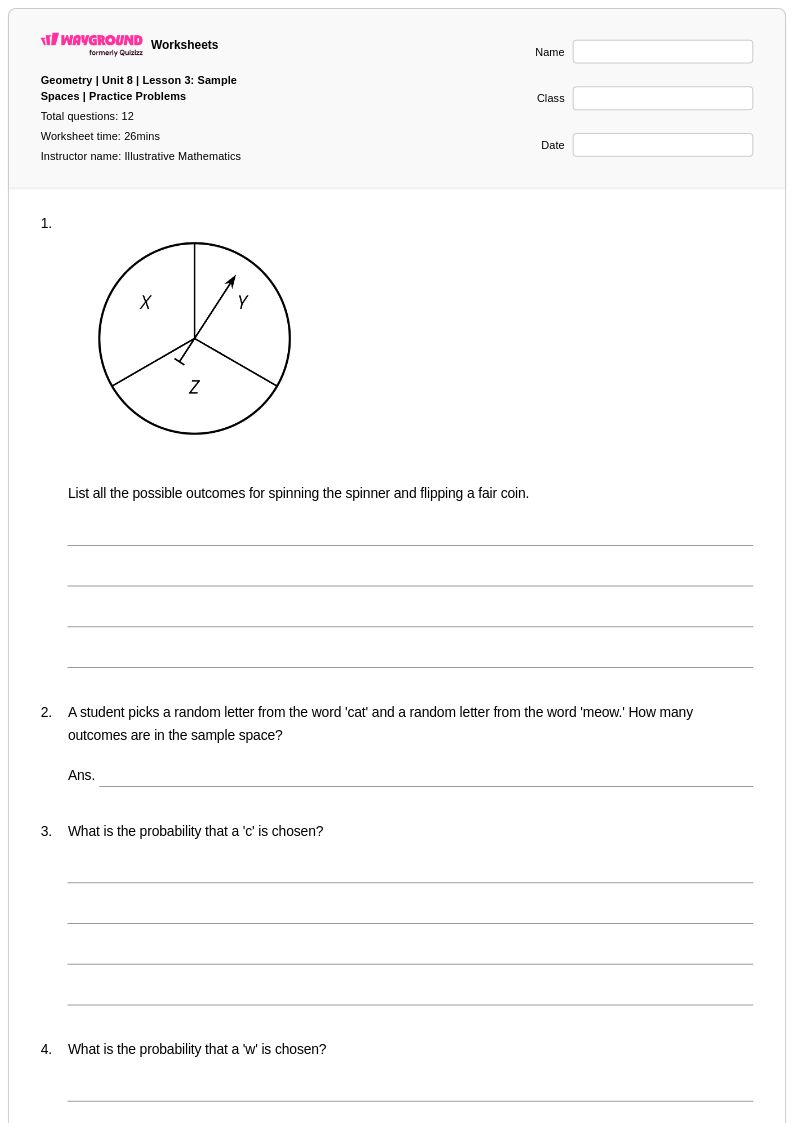
12 Q
6th - Uni
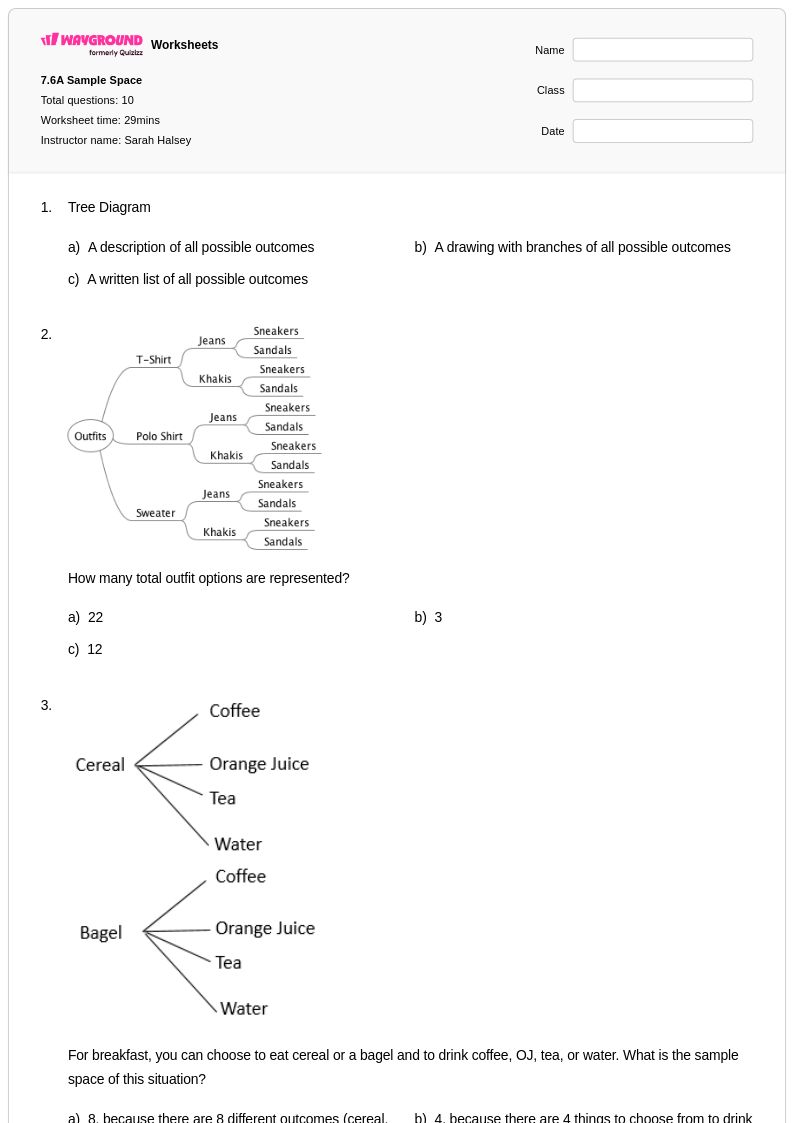
10 Q
6th - 8th
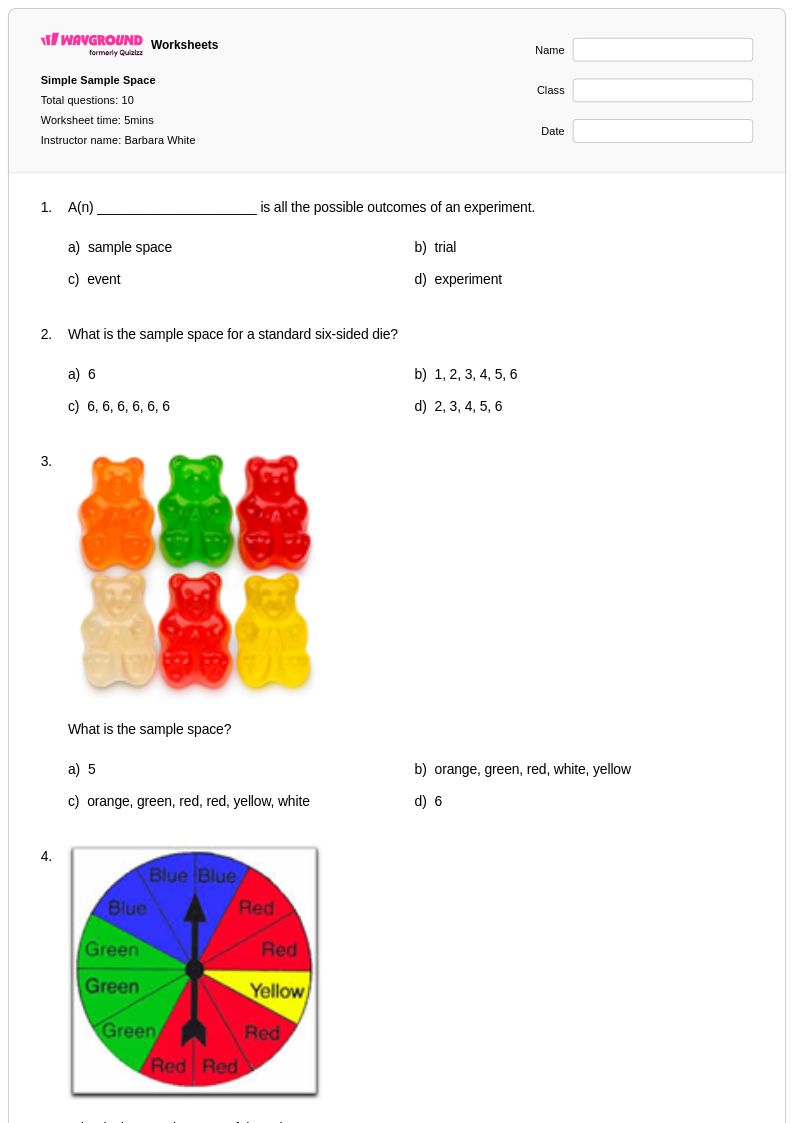
10 Q
6th - 7th
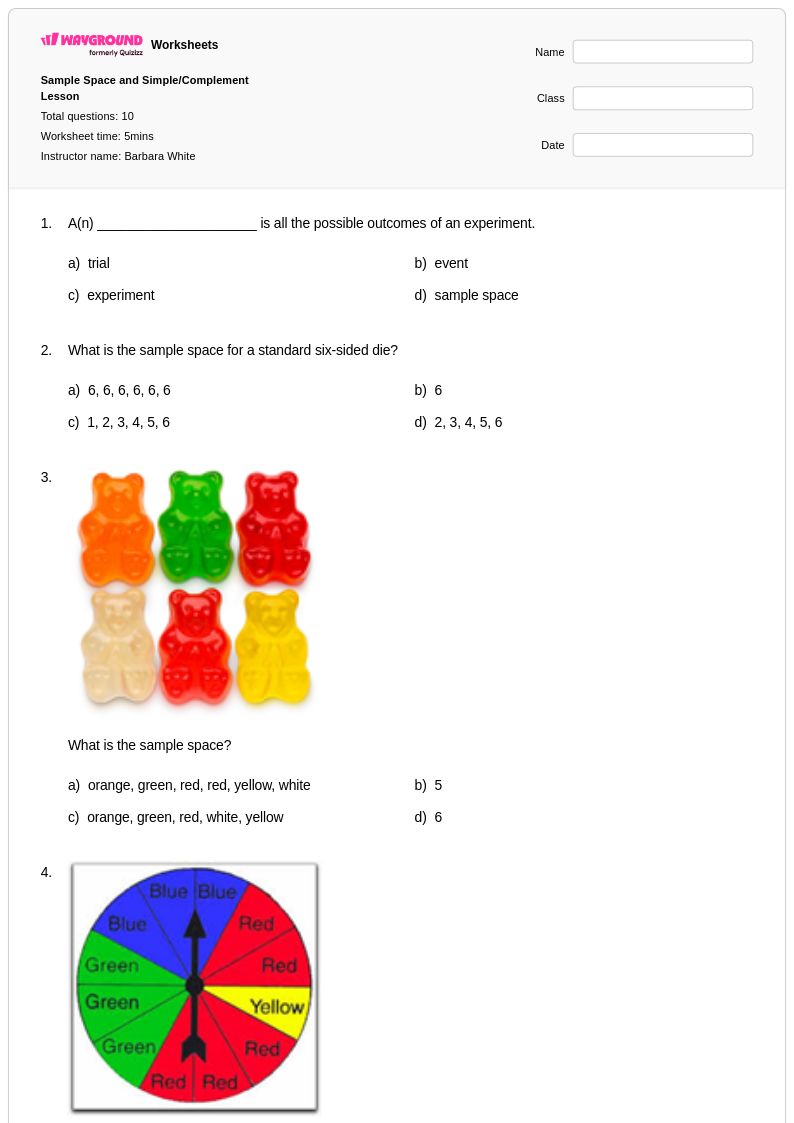
10 Q
6th - 7th
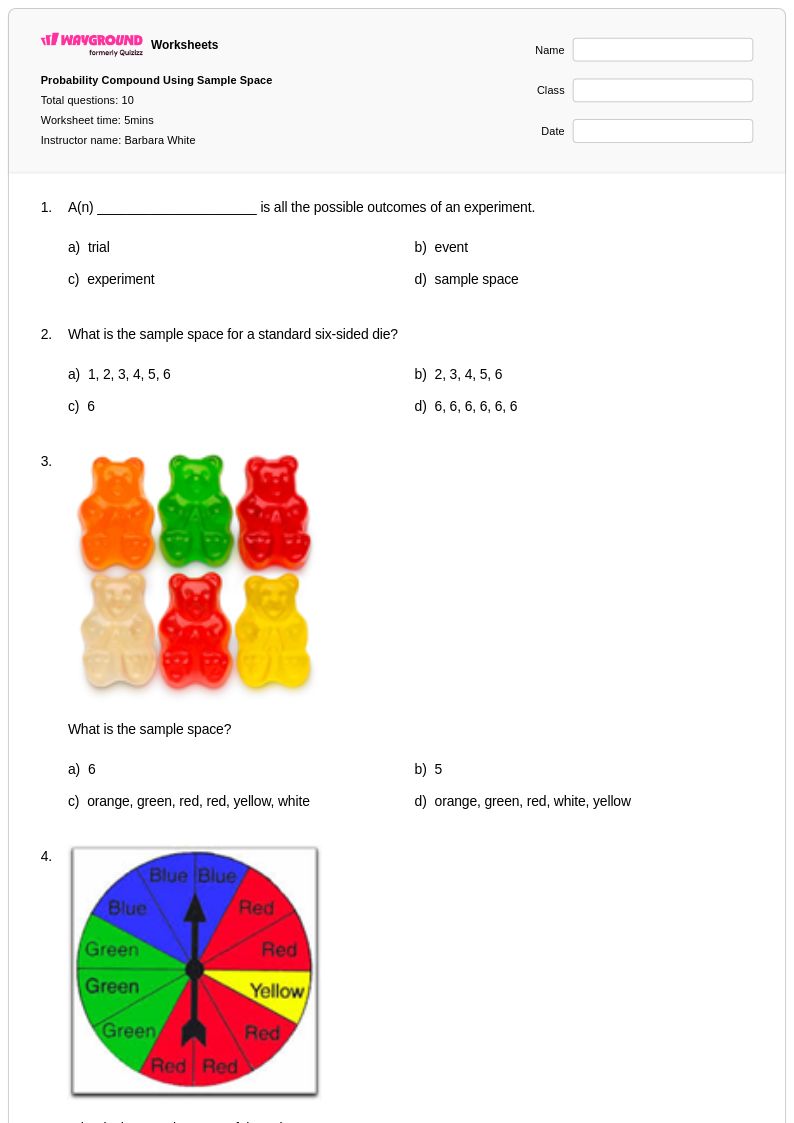
10 Q
6th - 7th
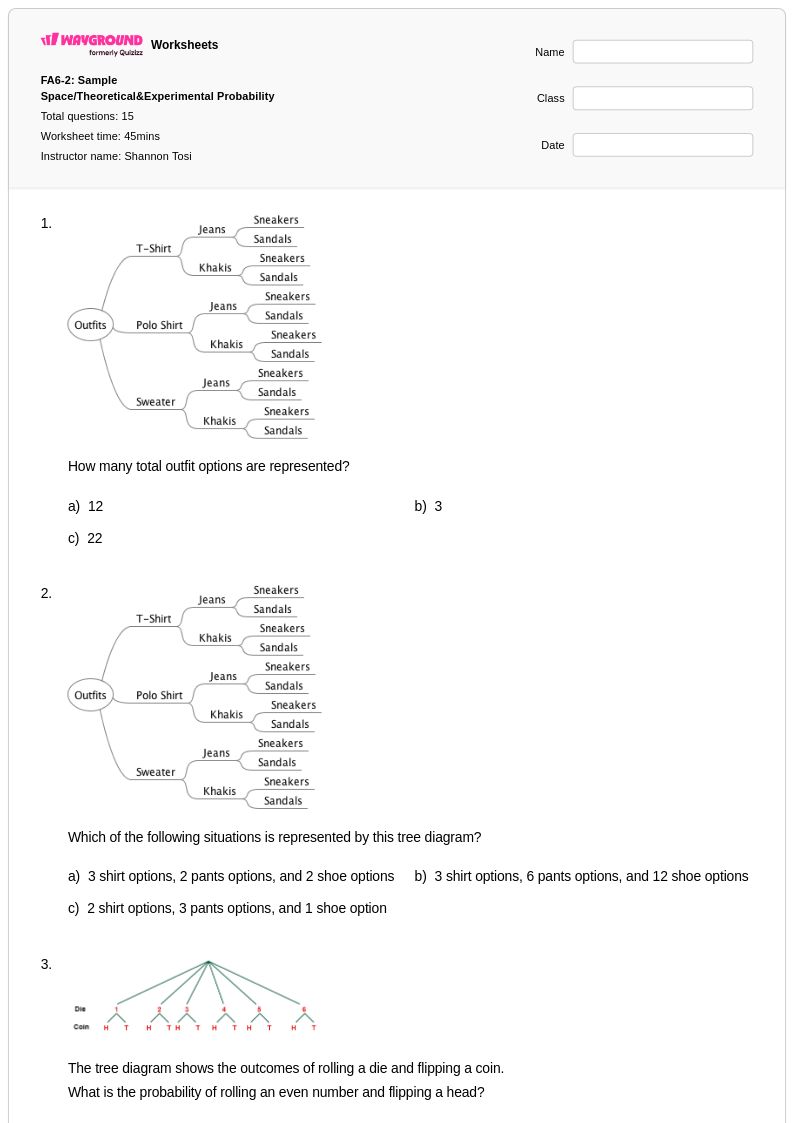
15 Q
6th
Explore Other Subject Worksheets for class 6
Explore printable Sample Space worksheets for Class 6
Sample Space worksheets for Class 6 students available through Wayground (formerly Quizizz) provide comprehensive practice in identifying and analyzing all possible outcomes of probability experiments. These carefully designed resources strengthen students' foundational understanding of how to systematically list, count, and organize sample spaces for simple and compound events, including experiments involving coins, dice, spinners, and card draws. Each worksheet includes detailed practice problems that guide students through the process of determining complete sample spaces, while accompanying answer keys allow for immediate feedback and self-assessment. The free printable materials progress from basic single-event scenarios to more complex situations involving multiple stages, helping students develop the analytical thinking skills essential for advanced probability concepts.
Wayground's extensive collection of Sample Space worksheets draws from millions of teacher-created resources, offering educators powerful search and filtering capabilities to locate materials perfectly aligned with Class 6 mathematics standards and individual classroom needs. Teachers can easily differentiate instruction by selecting from various difficulty levels and problem types, while the platform's flexible customization tools allow for modifications to match specific learning objectives or student abilities. Available in both digital and printable PDF formats, these worksheets support diverse teaching environments and learning preferences, making them invaluable for lesson planning, targeted remediation, enrichment activities, and regular skill practice. The comprehensive nature of the collection ensures that educators have access to high-quality materials that systematically build students' competency in sample space identification and probability reasoning.
FAQs
What do 6th graders learn about sample space?
How should I teach sample space to 6th graders?
What exercises are best for 6th-grade sample space practice?
What errors do 6th graders commonly make with sample space?
How can I use this 6th-grade worksheet?
How does teaching sample space in 6th grade align with Common Core?