
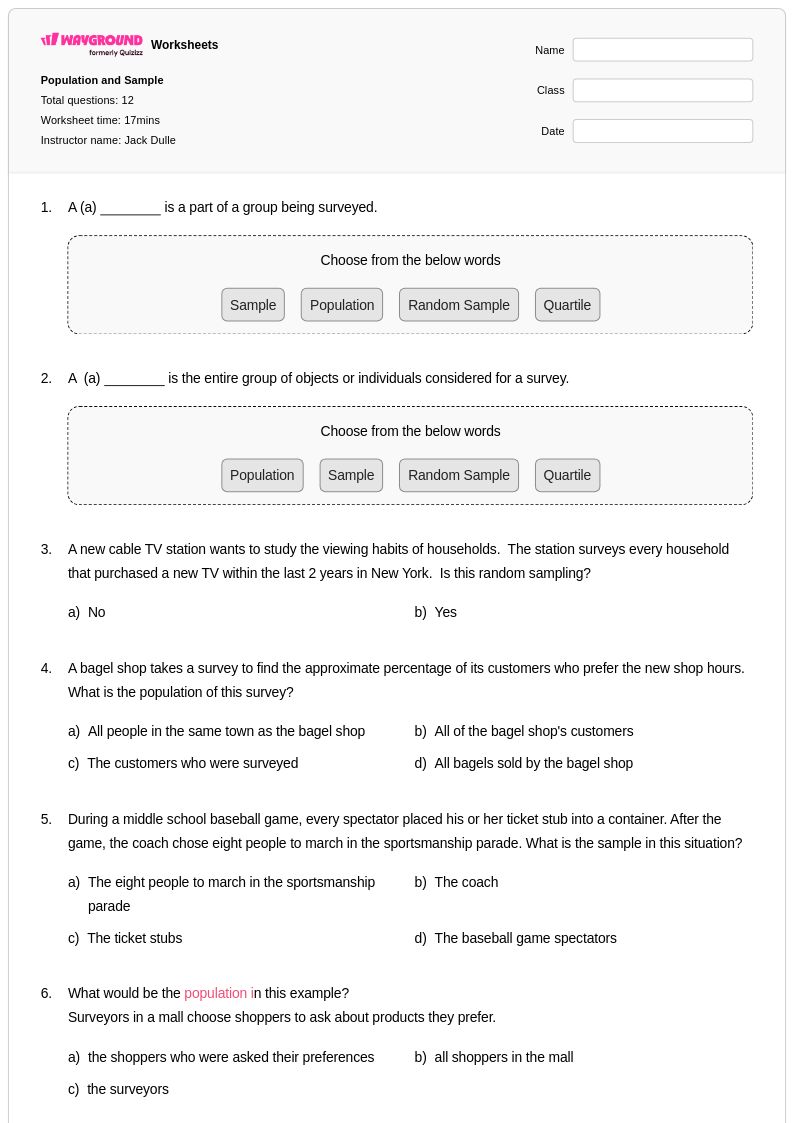
12 Q
6th - 8th
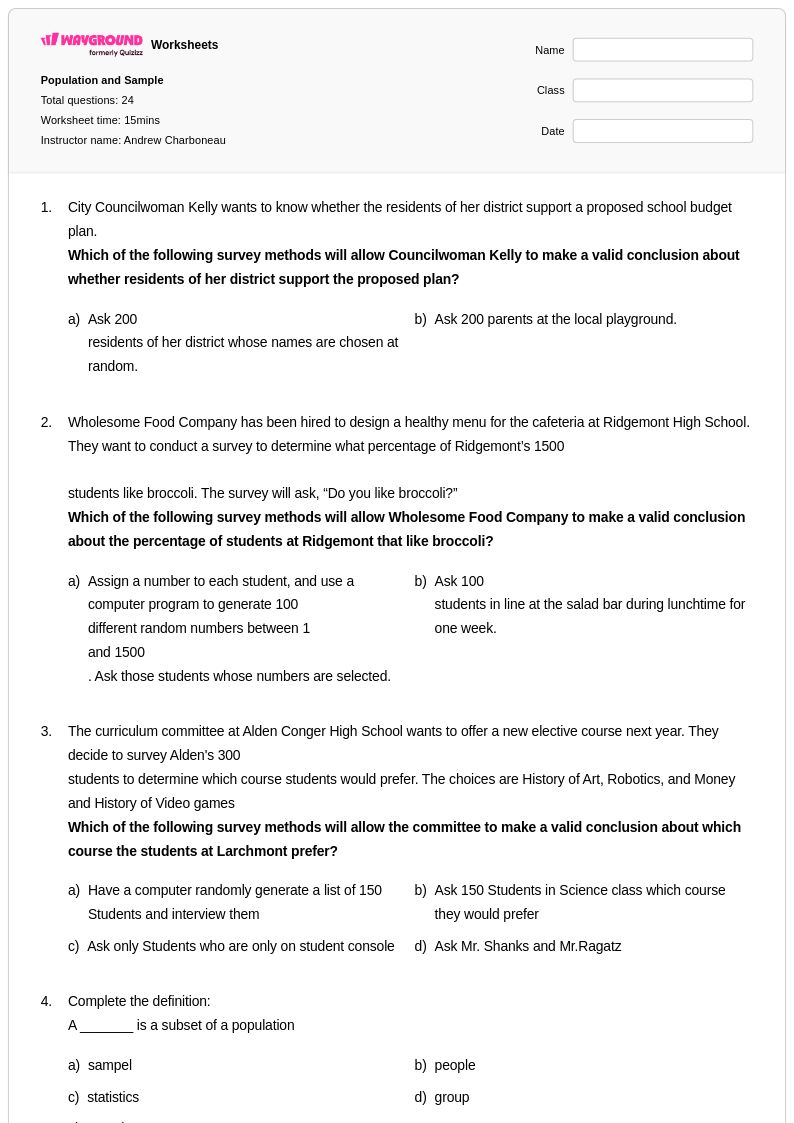
24 Q
6th - 8th
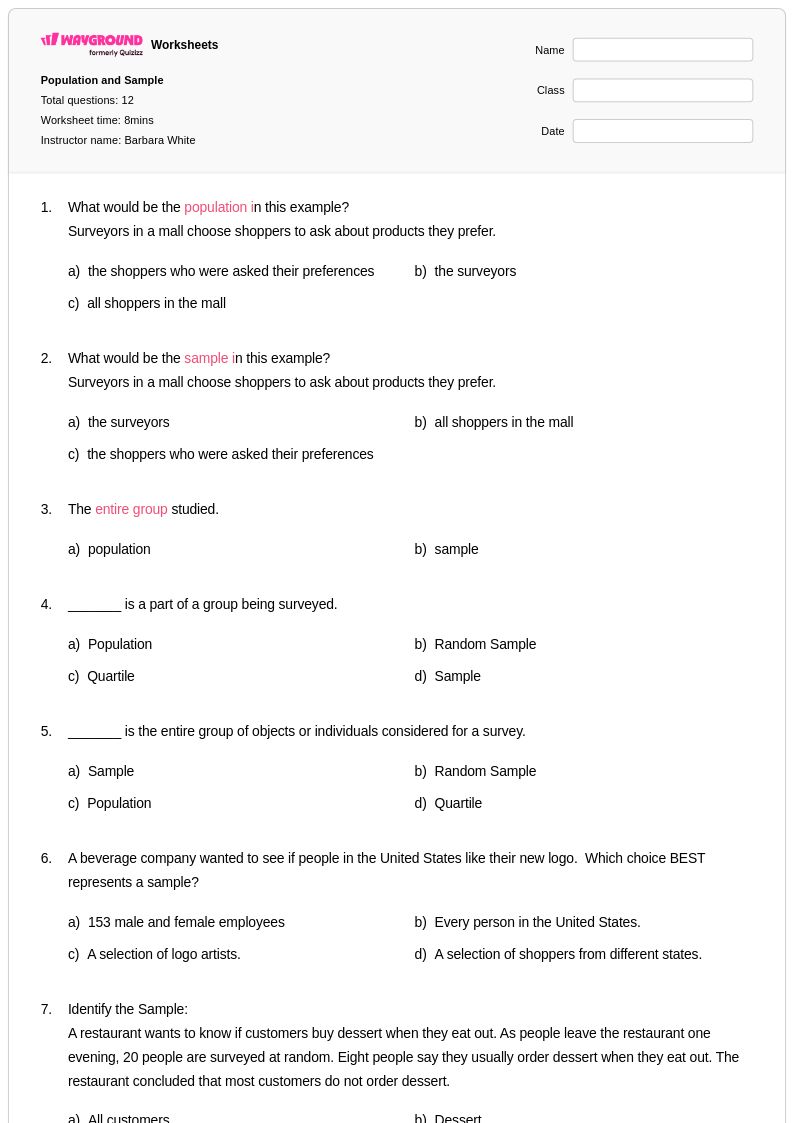
12 Q
6th - 8th
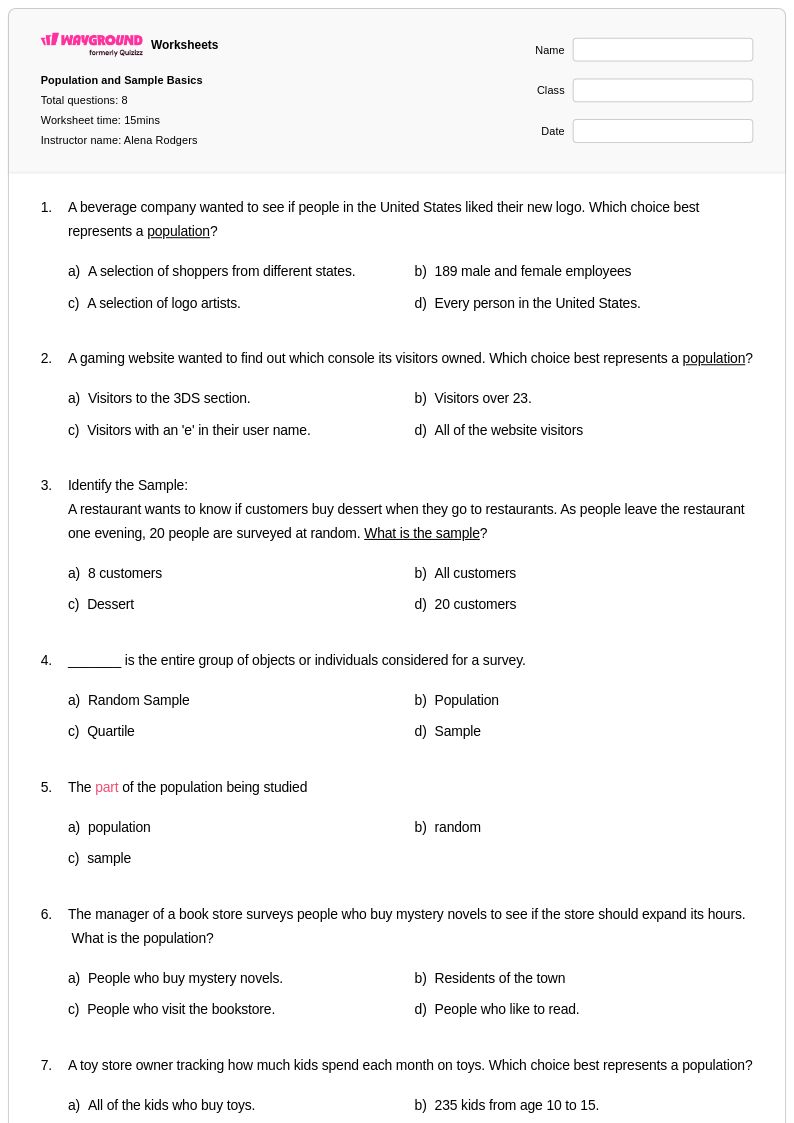
10 Q
6th - 8th
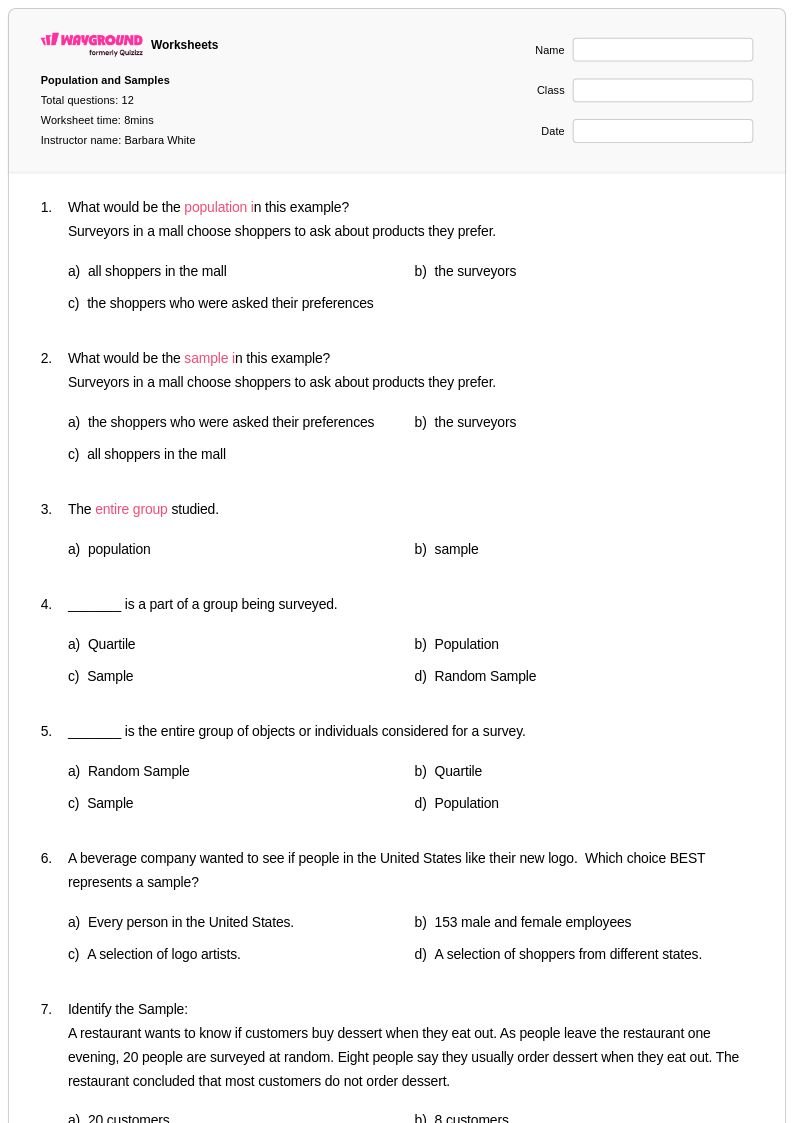
12 Q
6th - 8th
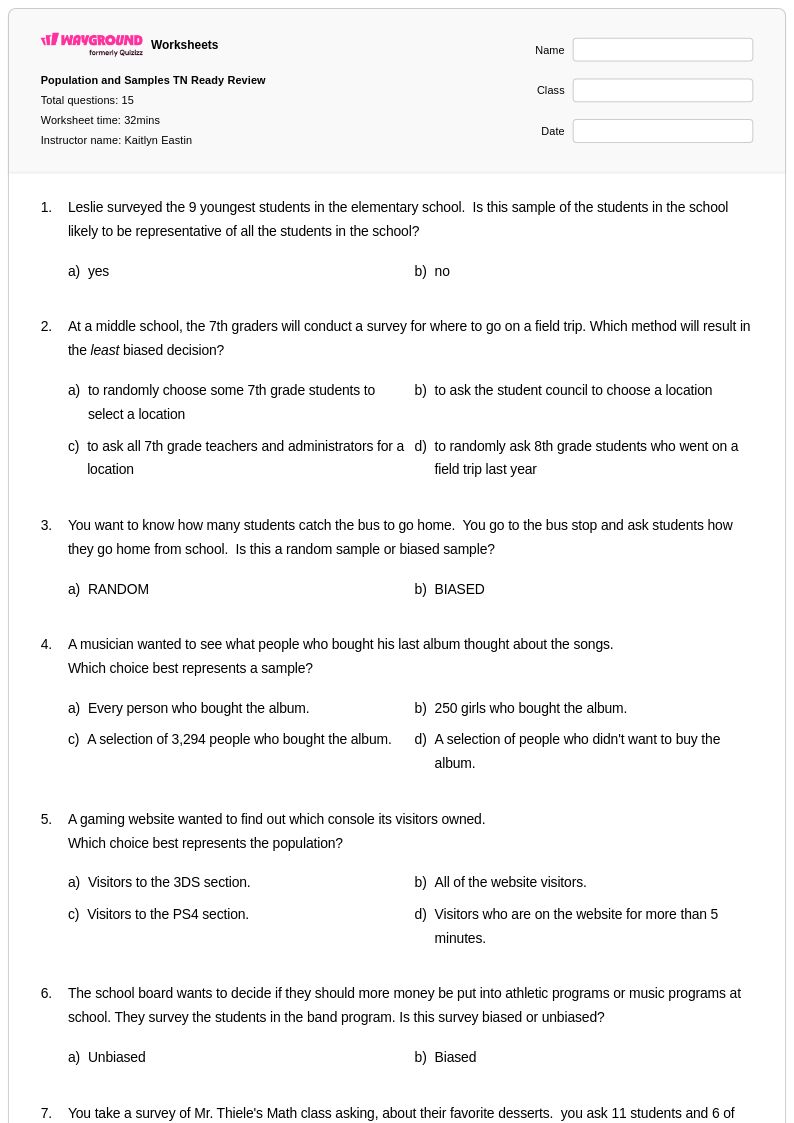
15 Q
6th - 8th
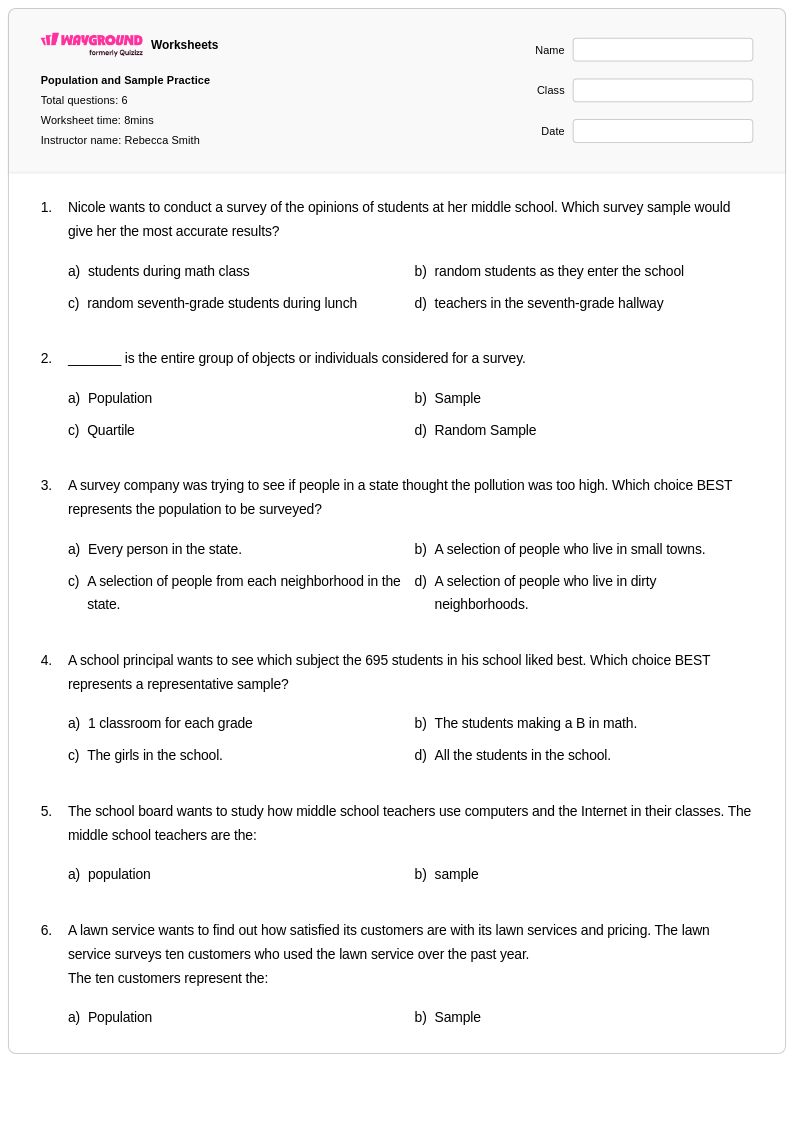
6 Q
6th
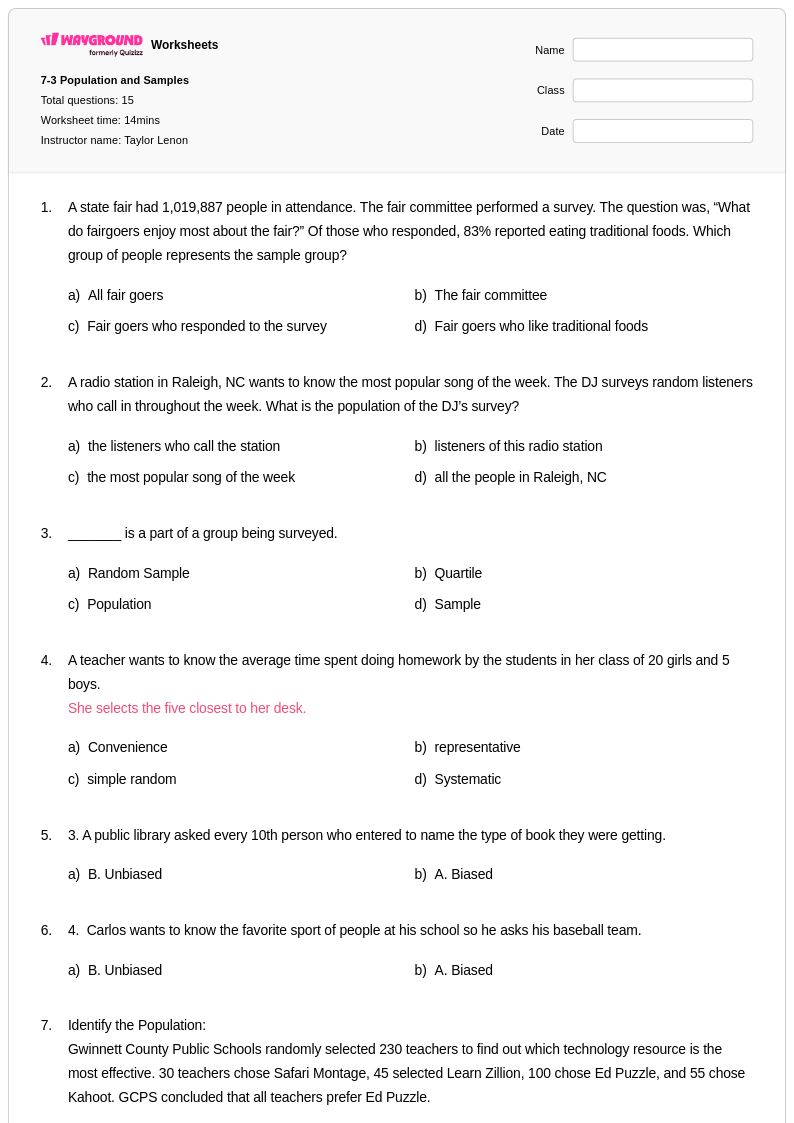
15 Q
6th - 7th
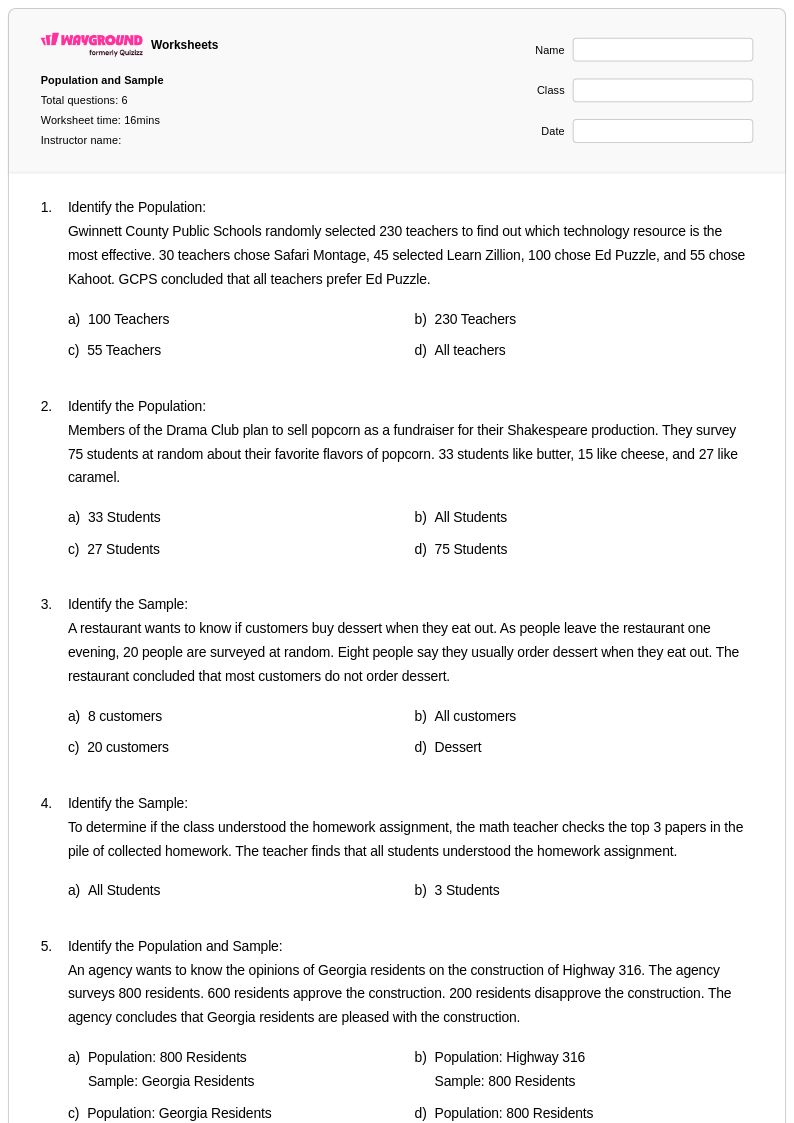
6 Q
6th - 8th
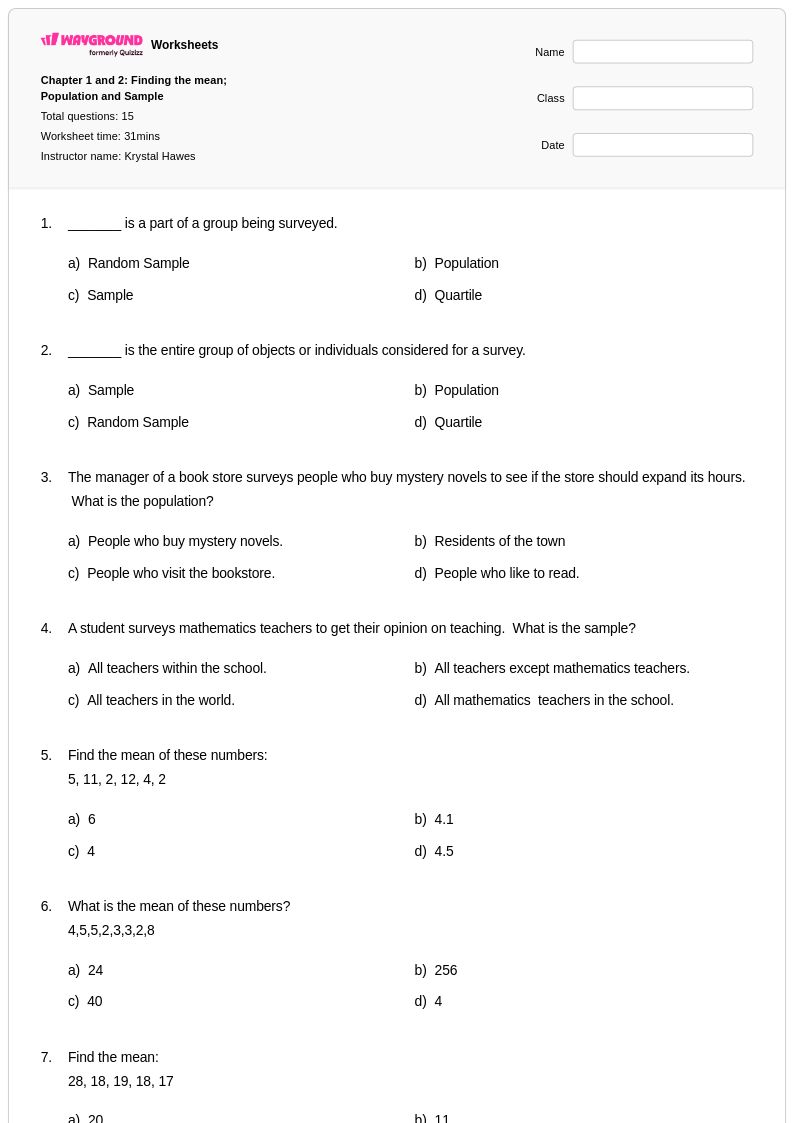
15 Q
6th
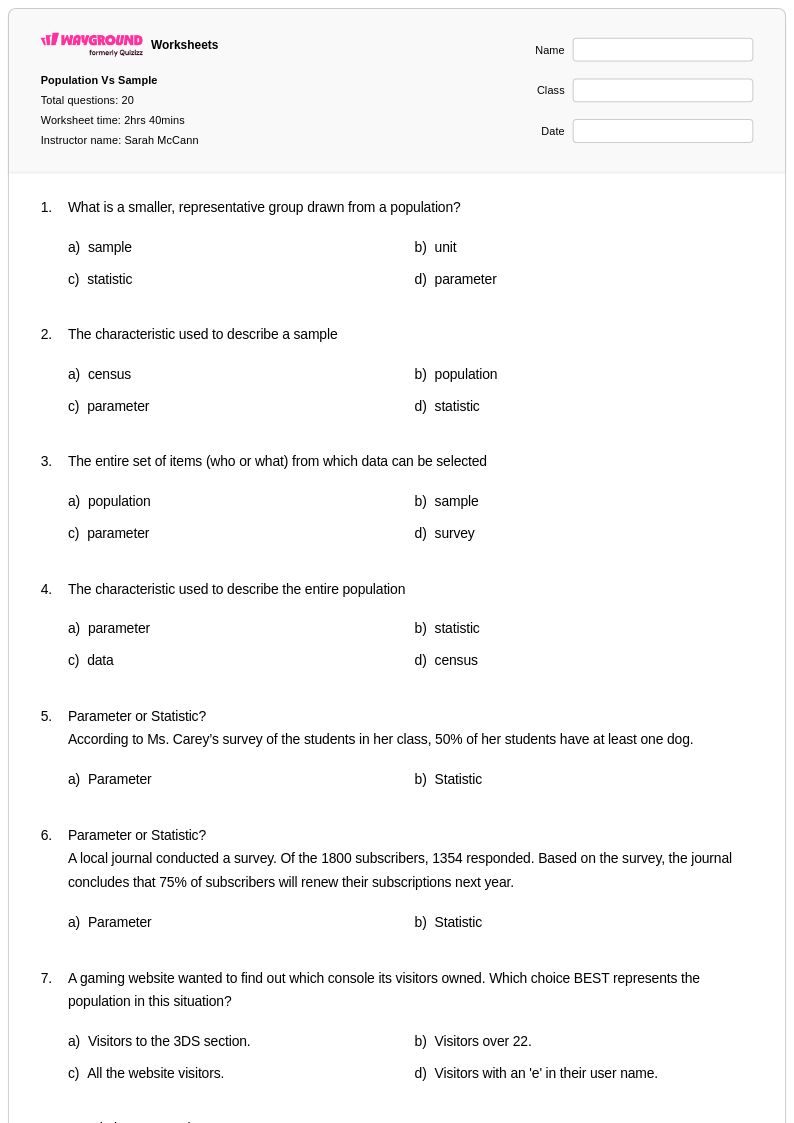
20 Q
6th - 8th
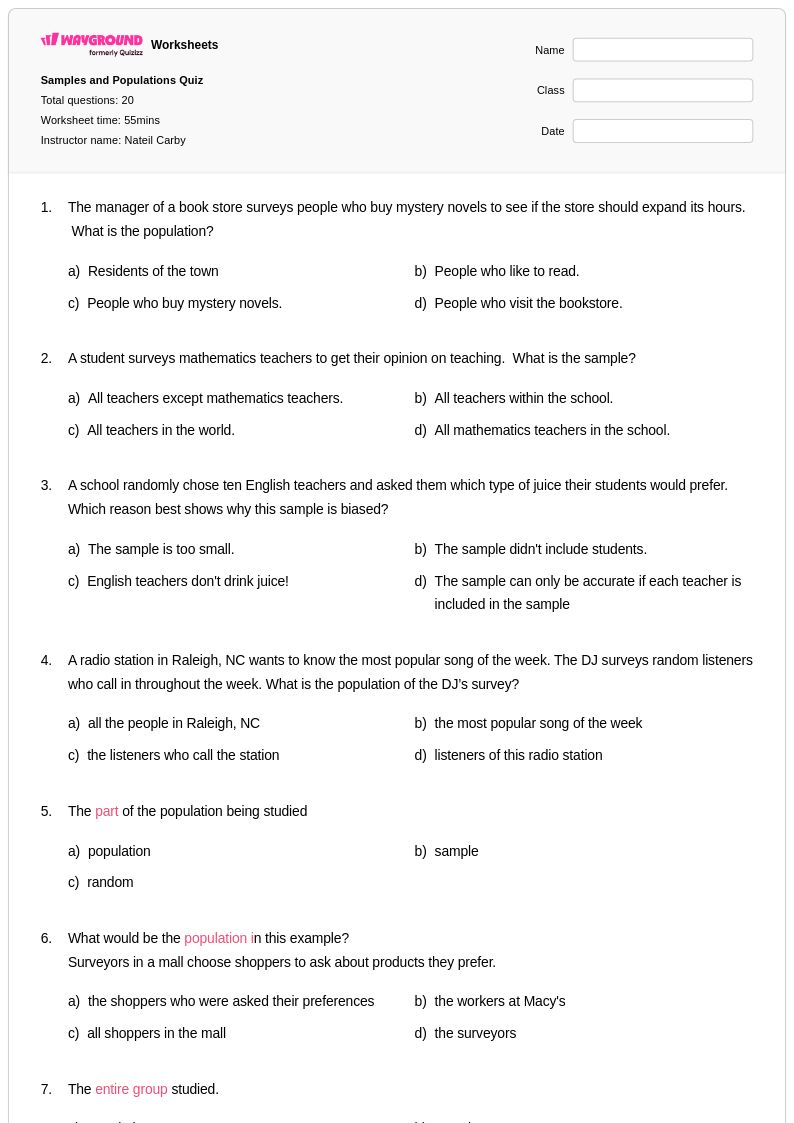
20 Q
6th - 8th
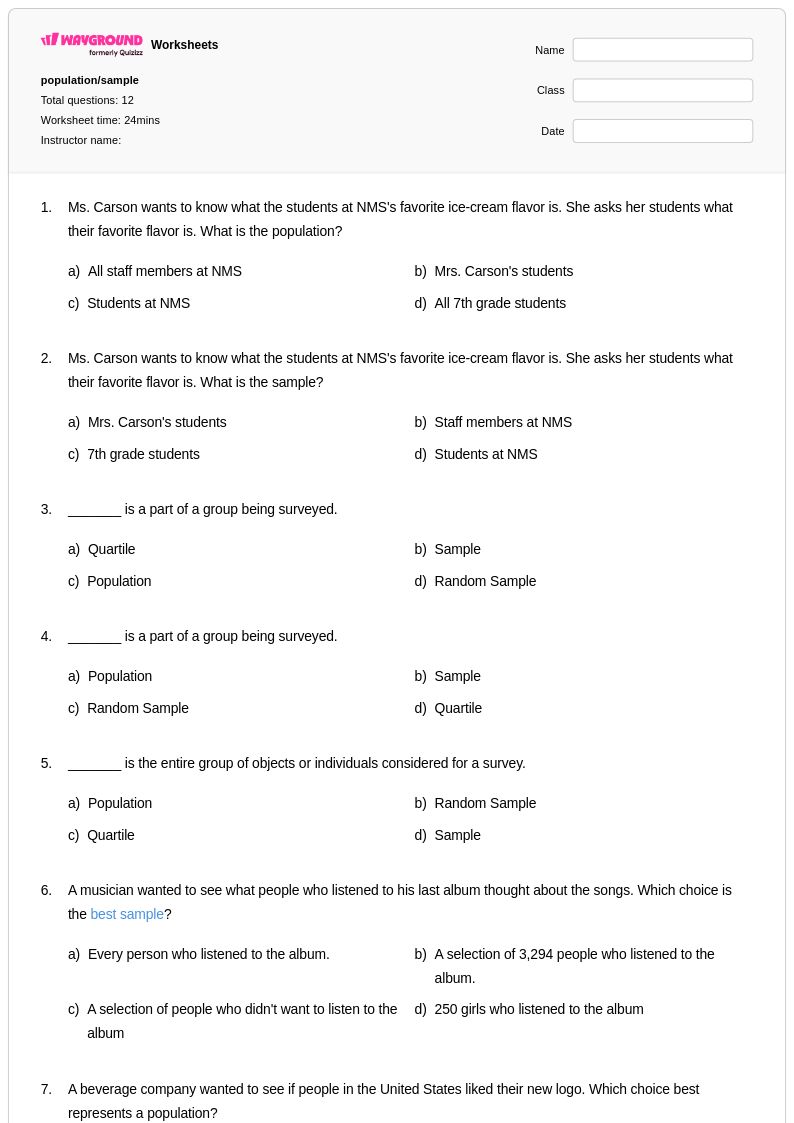
12 Q
6th - 7th
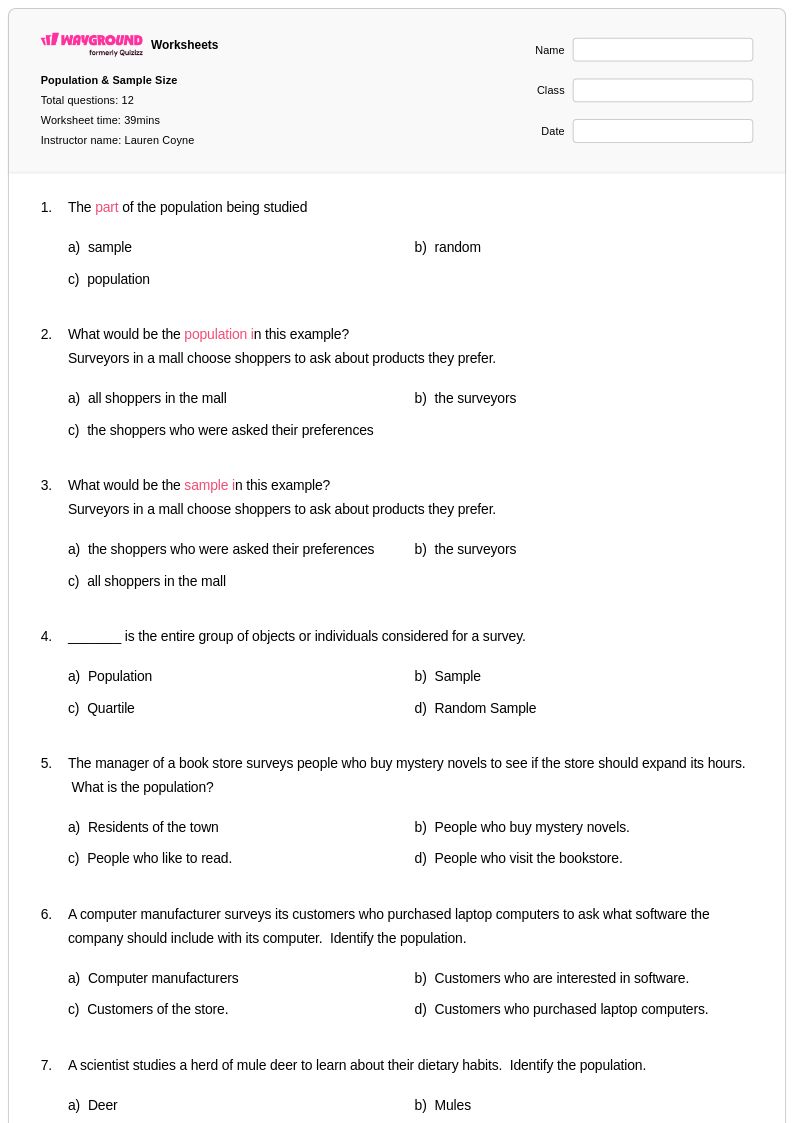
12 Q
6th - 7th
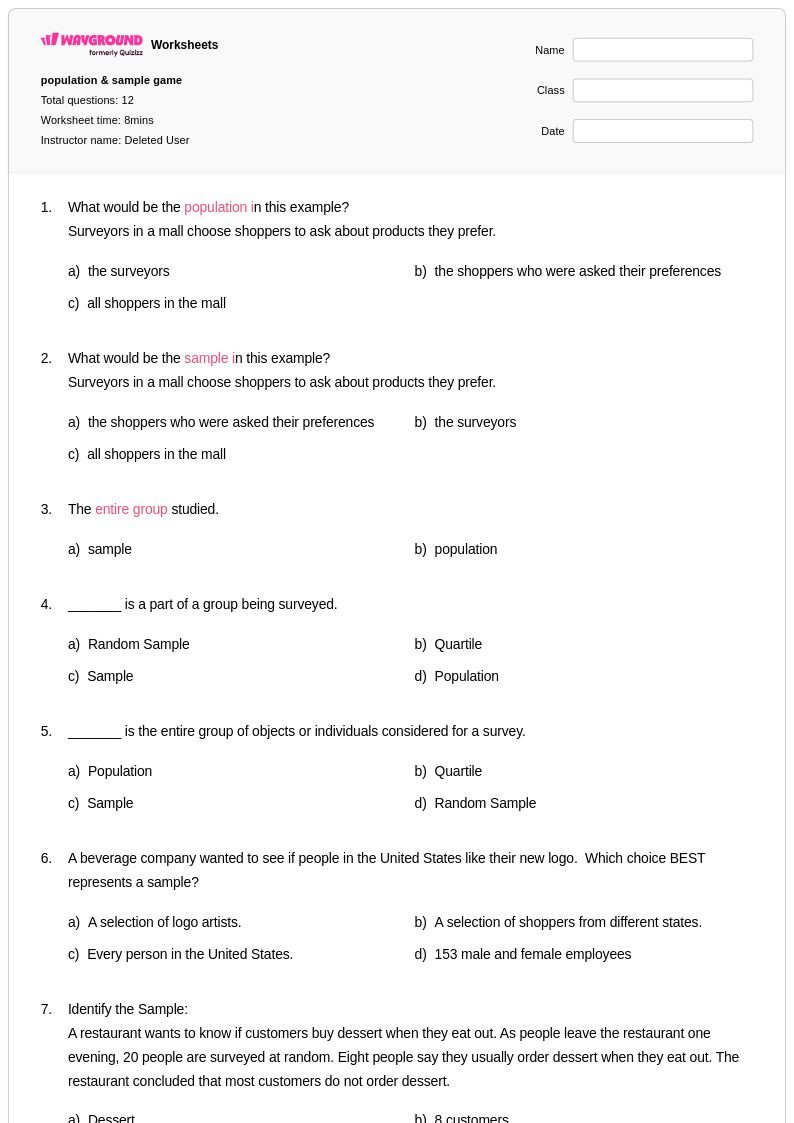
12 Q
6th - 8th
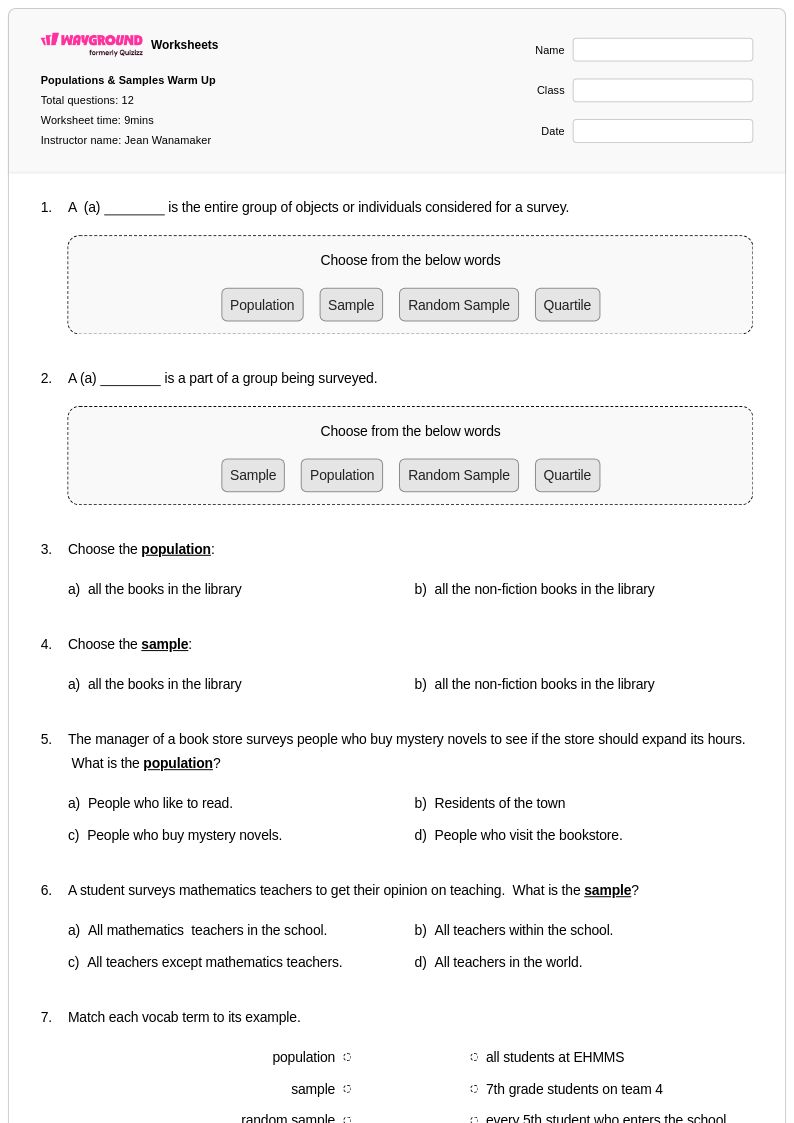
12 Q
6th - 8th
10 Q
6th - 8th
20 Q
6th - Uni
20 Q
6th - Uni
12 Q
6th - 7th
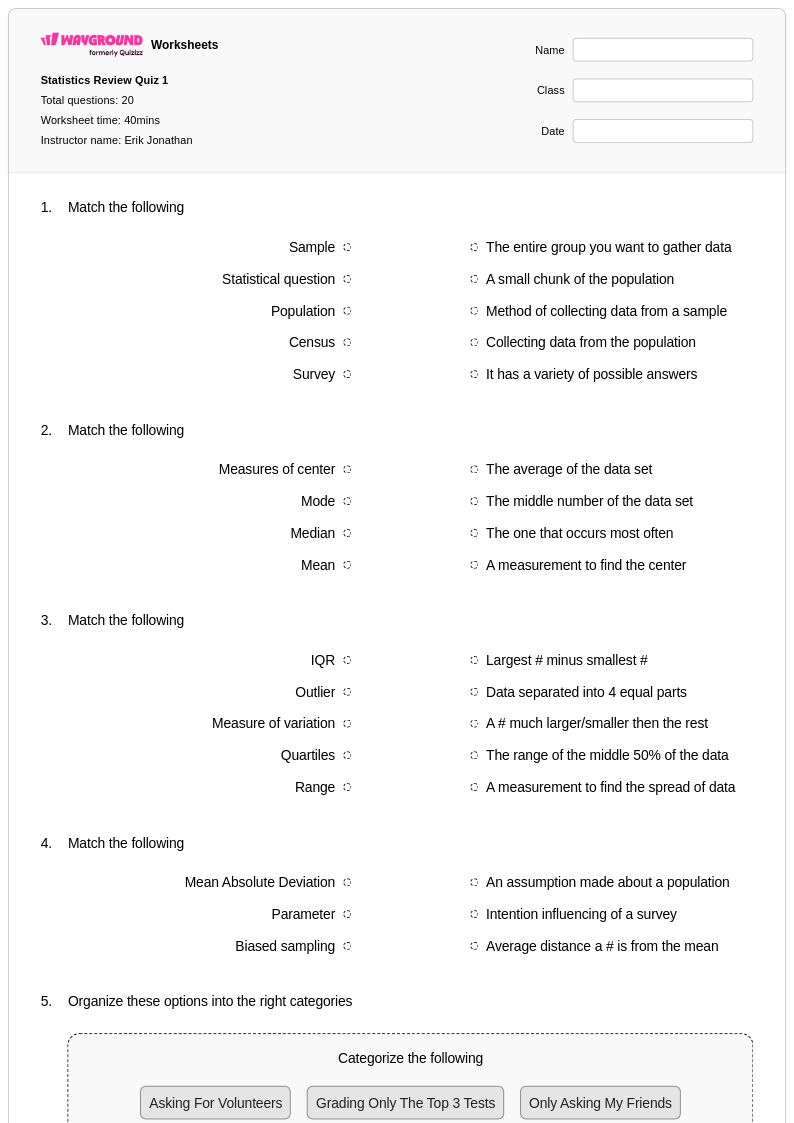
20 Q
6th
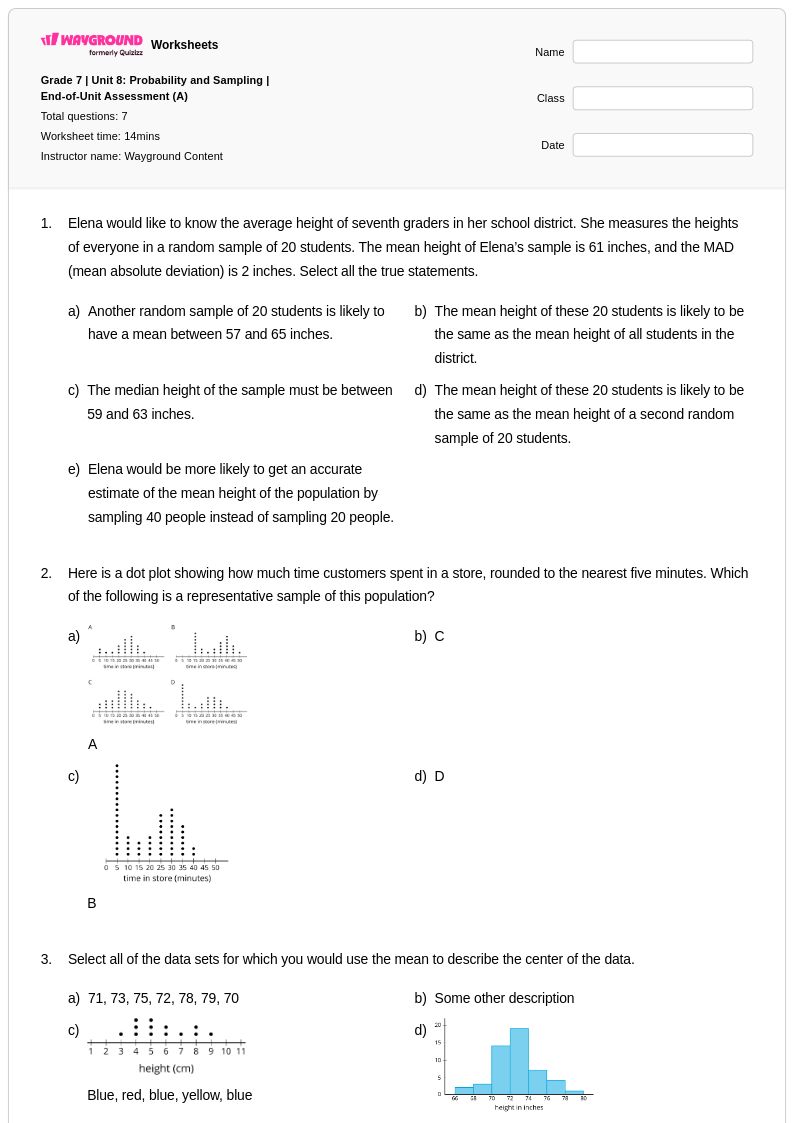
7 Q
6th - Uni
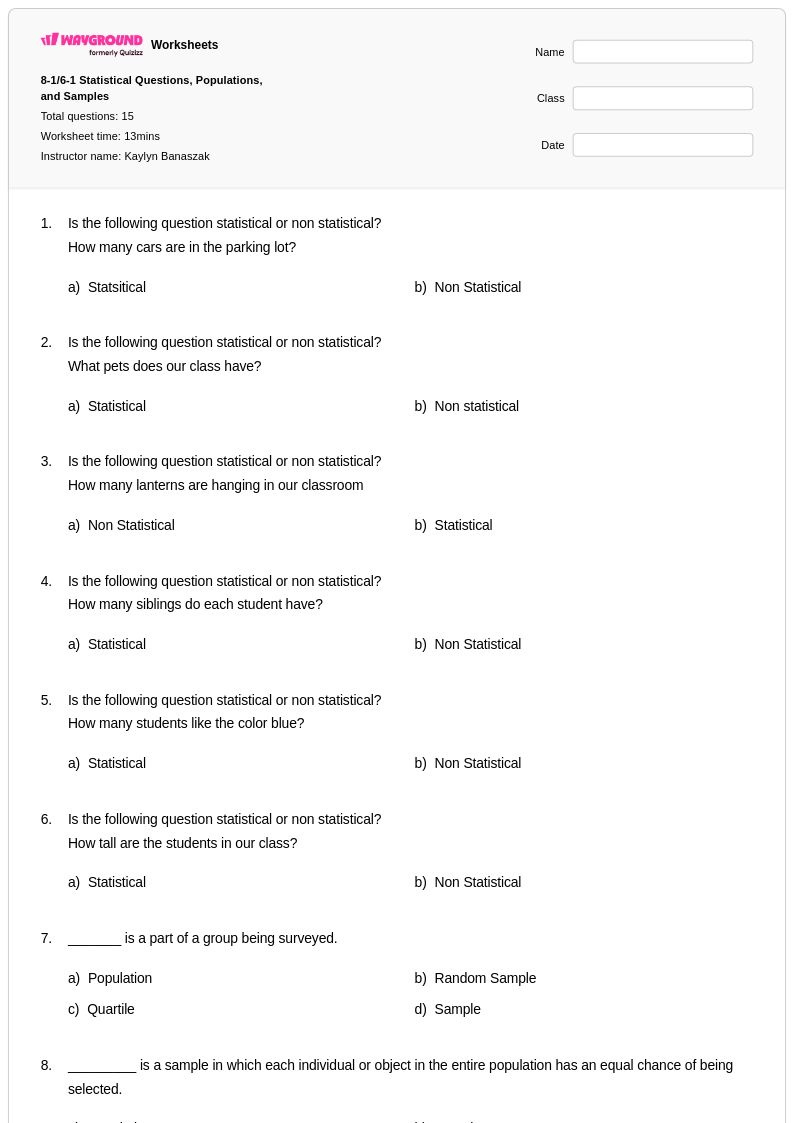
15 Q
6th - 7th
Explore Population and Sample Worksheets by Grades
Explore Other Subject Worksheets for class 6
Explore printable Population and Sample worksheets for Class 6
Population and Sample worksheets for Class 6 students available through Wayground (formerly Quizizz) provide essential foundation work in understanding how statisticians collect and analyze data from larger groups. These comprehensive worksheets guide sixth-grade learners through the fundamental distinction between populations and samples, helping them recognize when complete data collection is possible versus when sampling becomes necessary. Students develop critical thinking skills as they work through practice problems that demonstrate how samples can represent larger populations, while also learning to identify potential biases in sampling methods. Each worksheet includes detailed answer keys that support independent learning, and the free printable pdf format ensures accessibility for both classroom instruction and home practice, strengthening students' ability to make informed conclusions about data collection strategies.
Wayground (formerly Quizizz) empowers educators with millions of teacher-created resources specifically designed for Class 6 probability and statistics instruction, featuring robust search and filtering capabilities that help teachers locate precisely the right population and sample materials for their students' needs. The platform's standards-aligned content supports differentiated instruction through flexible customization options, allowing teachers to modify worksheets for remediation, enrichment, or targeted skill practice based on individual student requirements. Available in both printable and digital pdf formats, these resources streamline lesson planning while providing teachers with immediate access to high-quality materials that can be adapted for various learning environments. The comprehensive collection enables educators to scaffold learning effectively, moving students from basic population identification to more complex sampling technique analysis with confidence and pedagogical precision.
FAQs
What do 6th graders learn about population and sample?
What's a good way to introduce population and sample to 6th graders?
What kind of practice is best for 6th graders learning about samples?
What's a common misconception for 6th graders with this topic?
How can I use this Grade 6 worksheet in my classroom?
How does this topic align with 6th-grade math standards?