
Recommended Topics for you
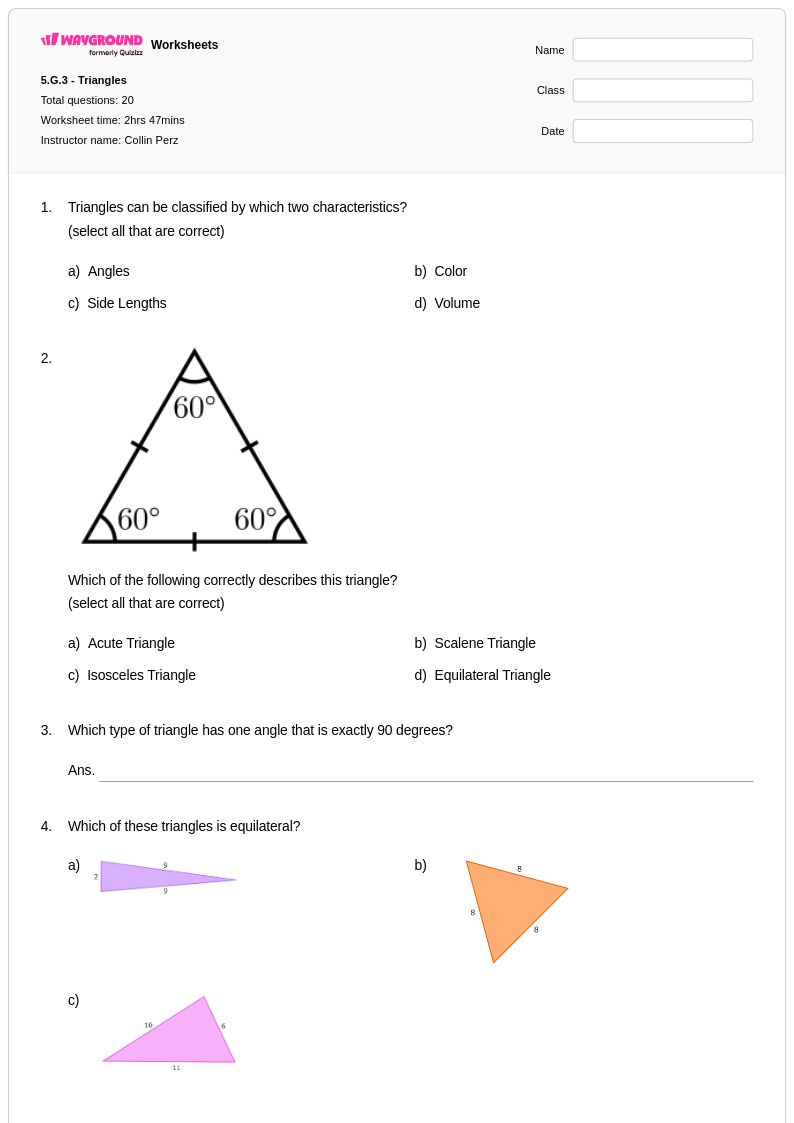
20 Q
5th
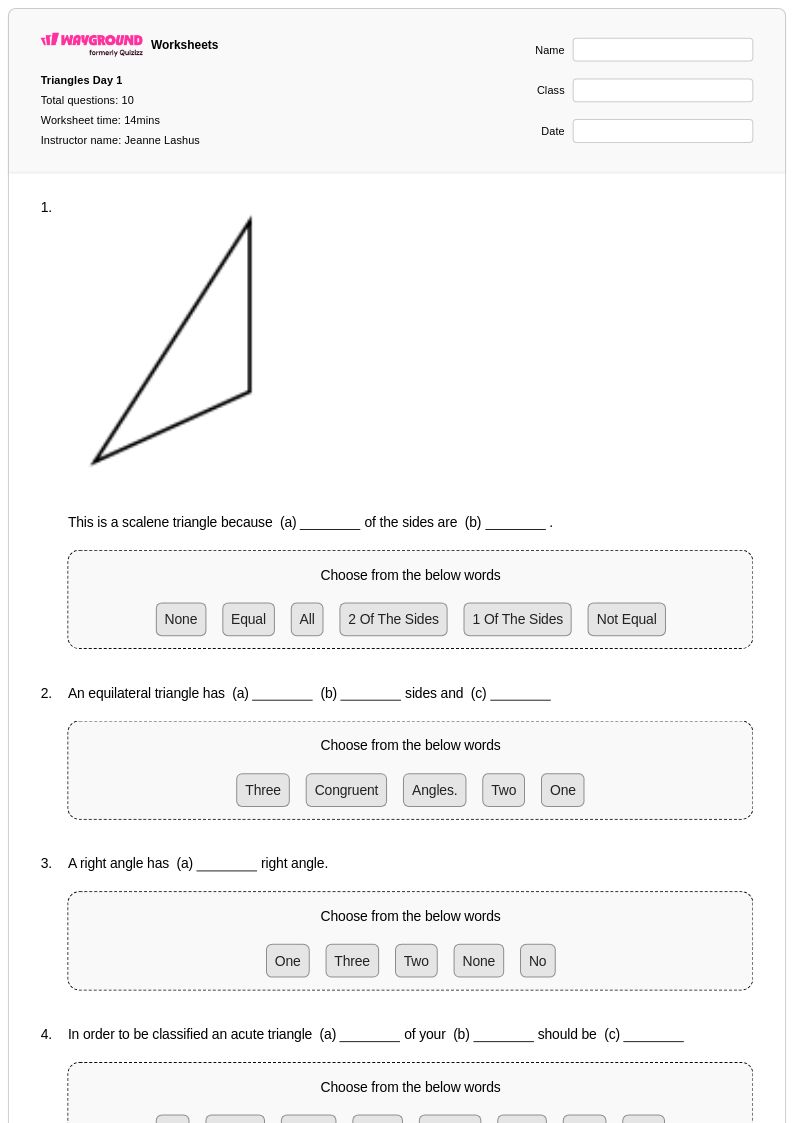
10 Q
5th
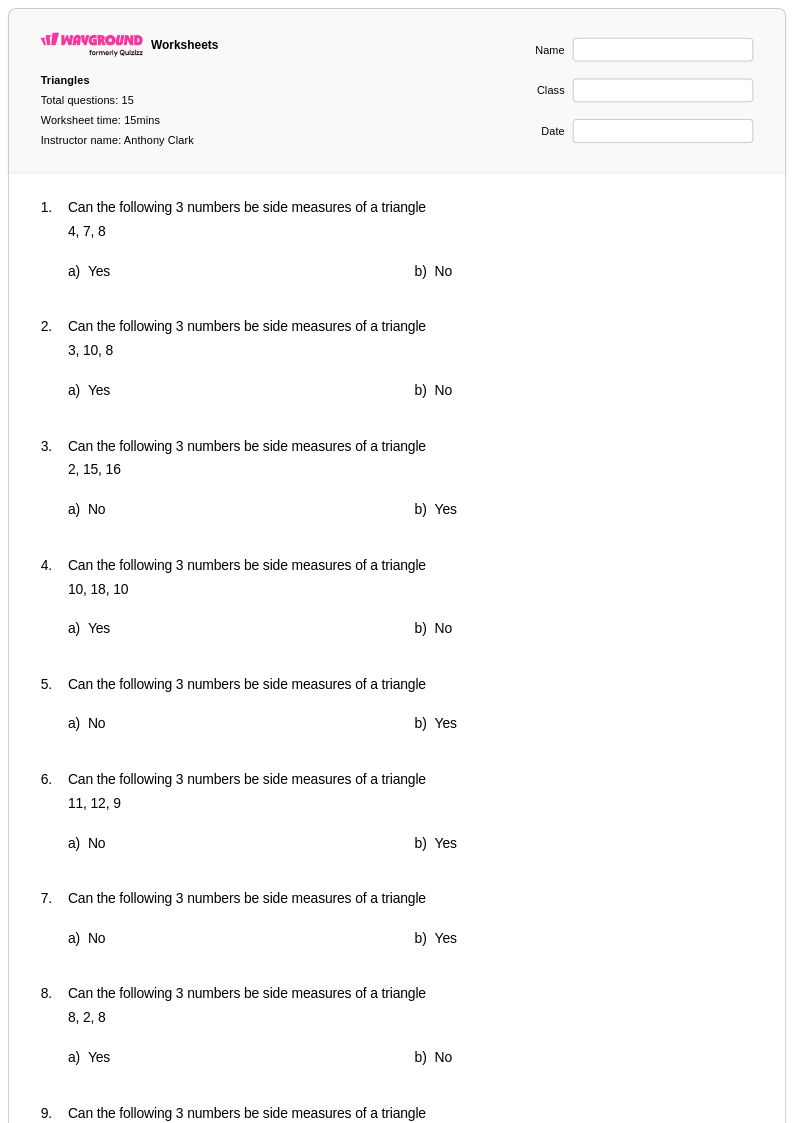
15 Q
5th - Uni
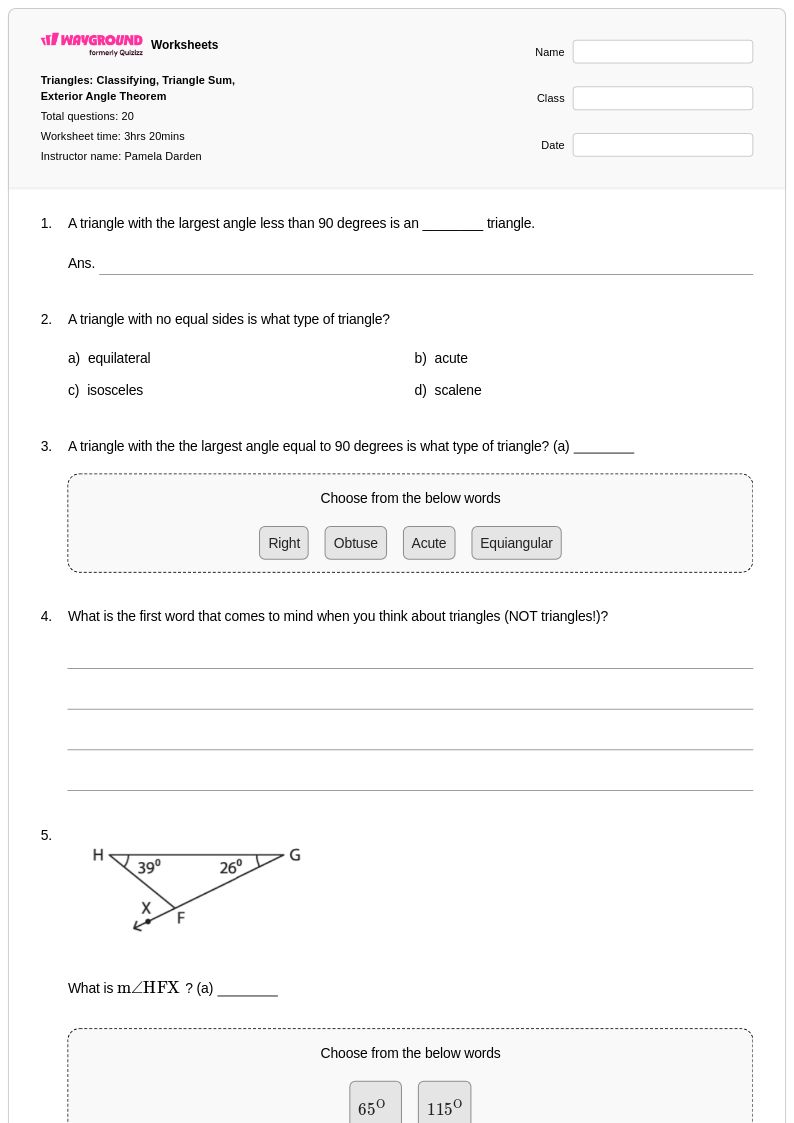
20 Q
9th - 12th
13 Q
5th
10 Q
5th
20 Q
3rd - Uni
20 Q
5th - Uni
12 Q
10th
20 Q
7th - Uni
20 Q
7th - Uni
16 Q
10th
20 Q
12th
10 Q
5th
45 Q
5th
20 Q
5th - Uni
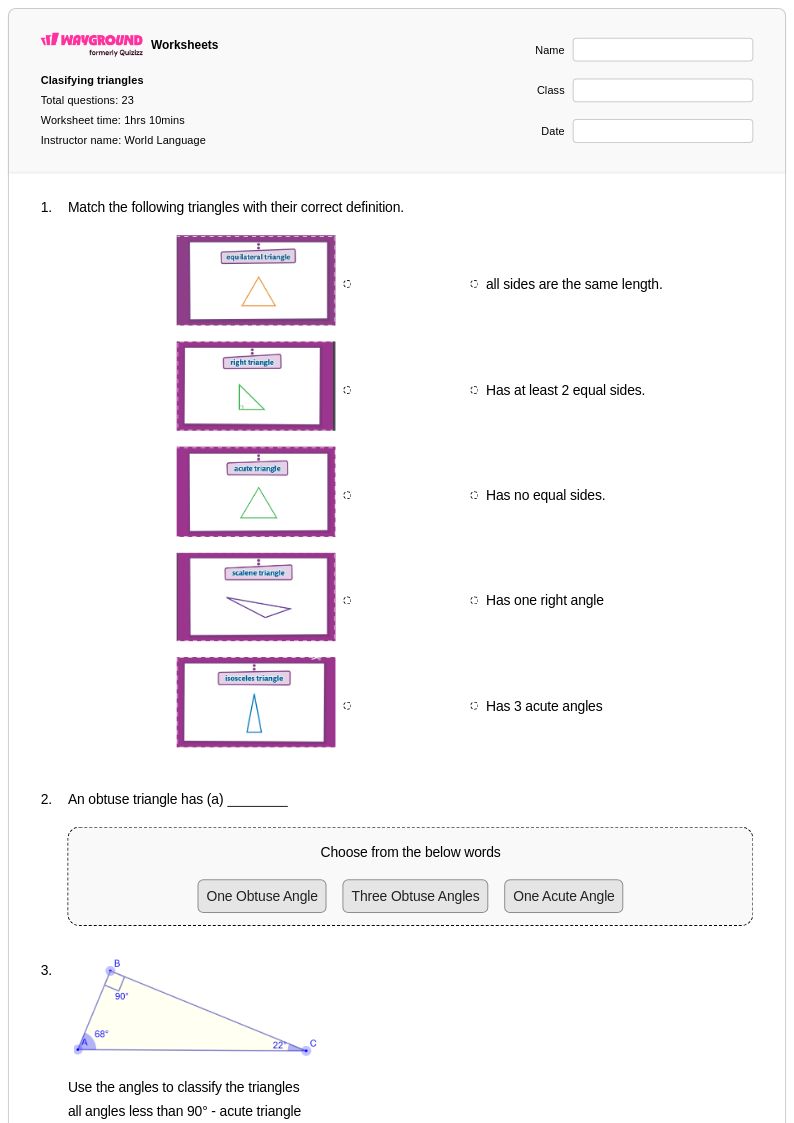
23 Q
5th
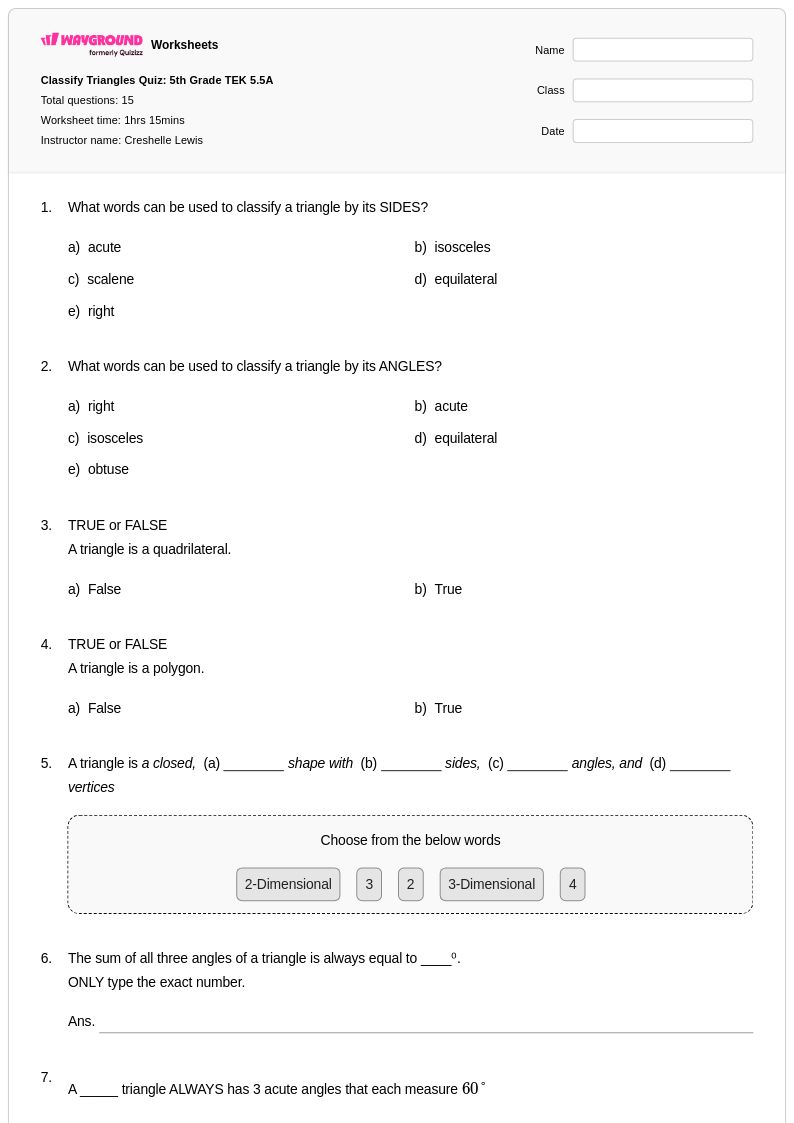
15 Q
5th
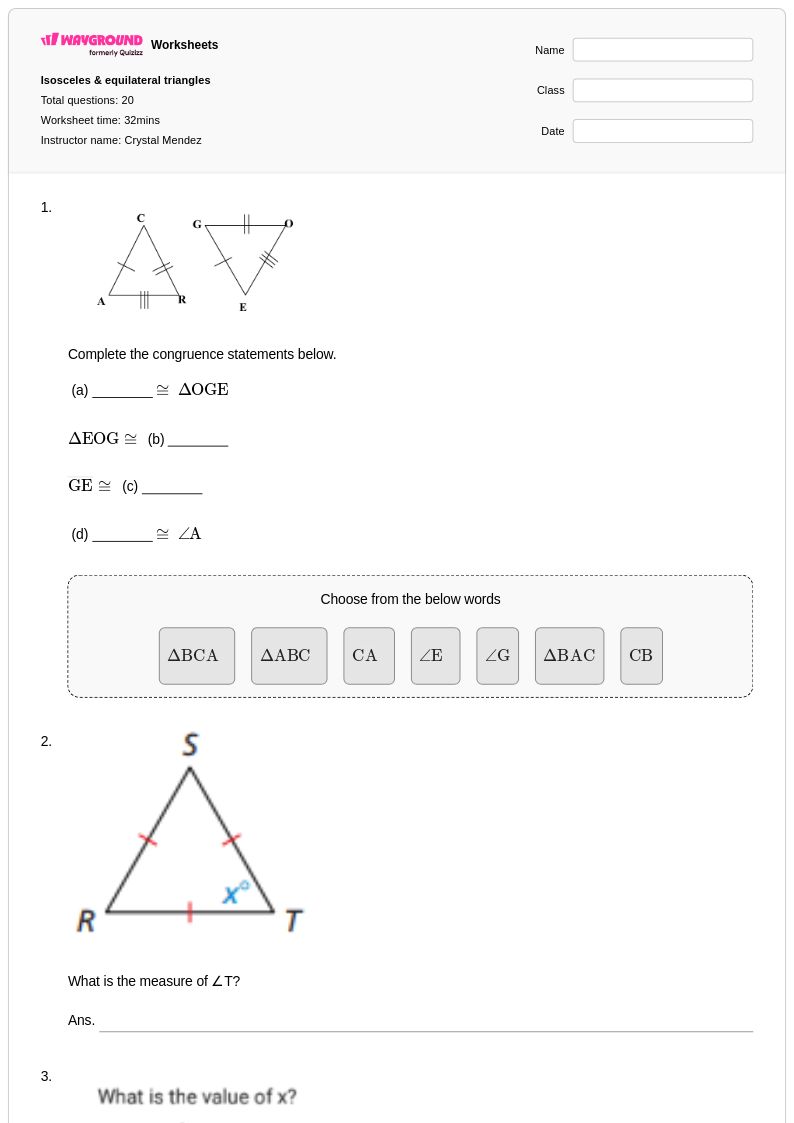
20 Q
10th
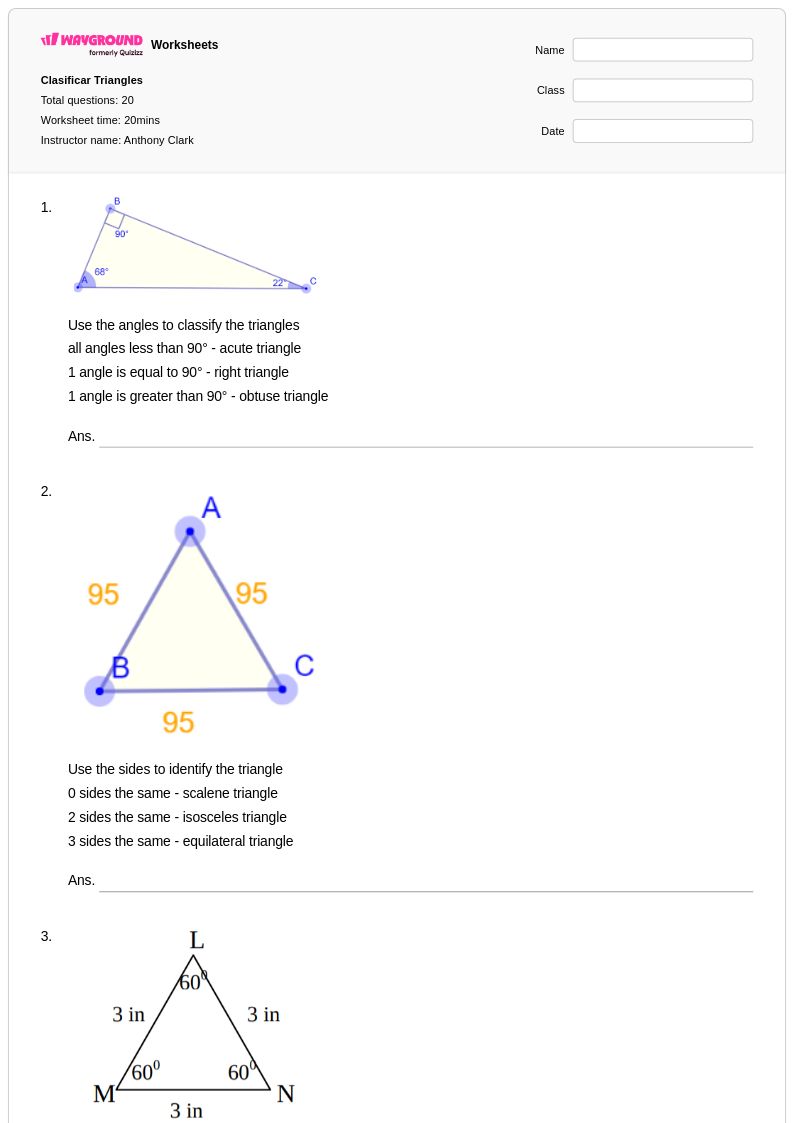
20 Q
7th - Uni
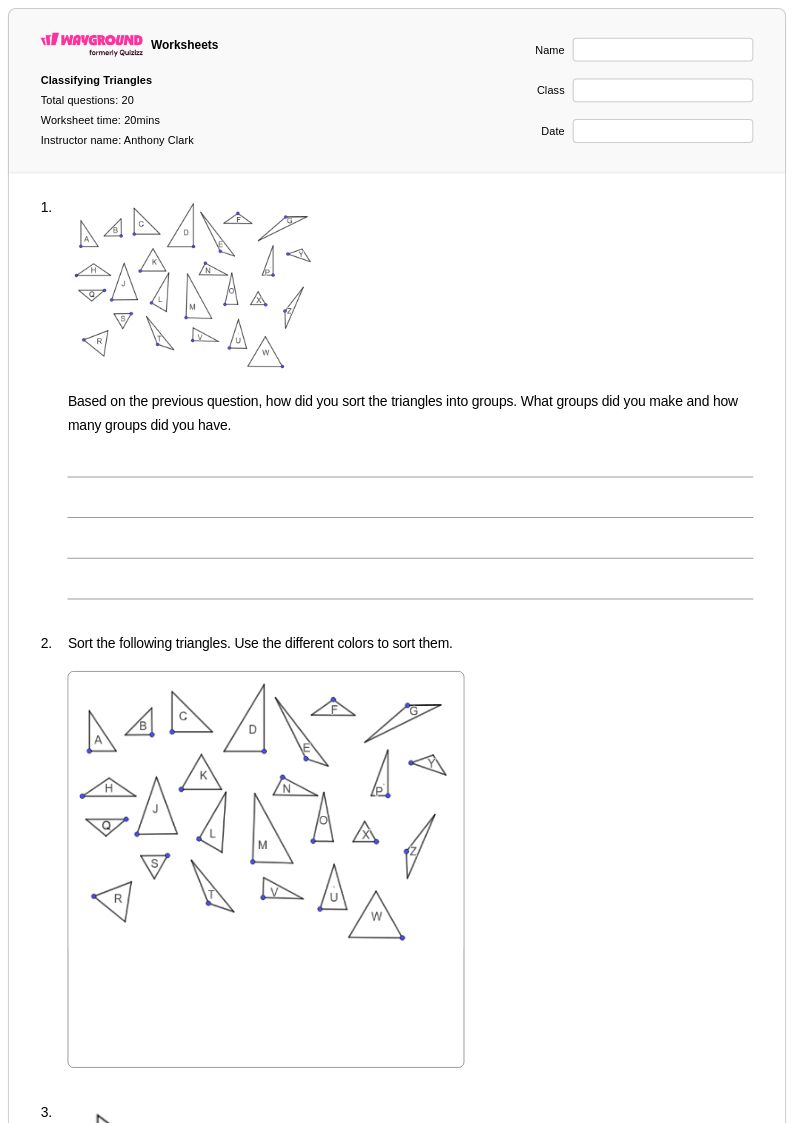
20 Q
5th - Uni
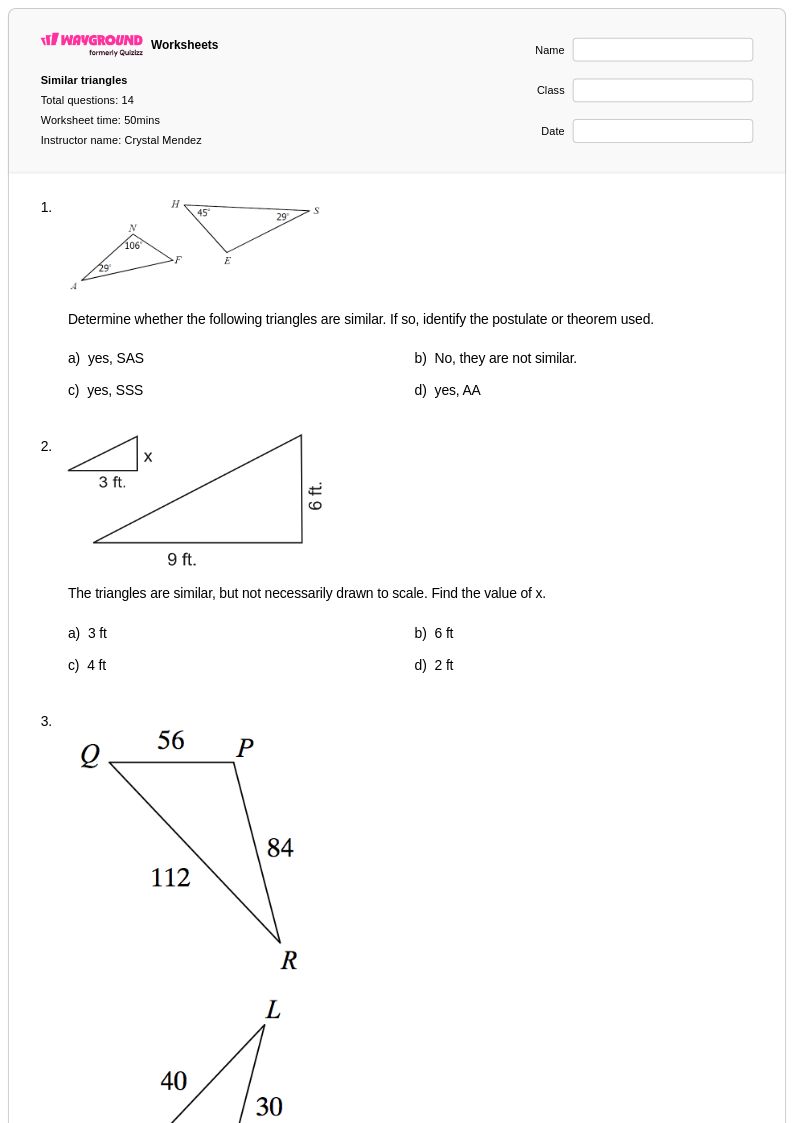
14 Q
10th
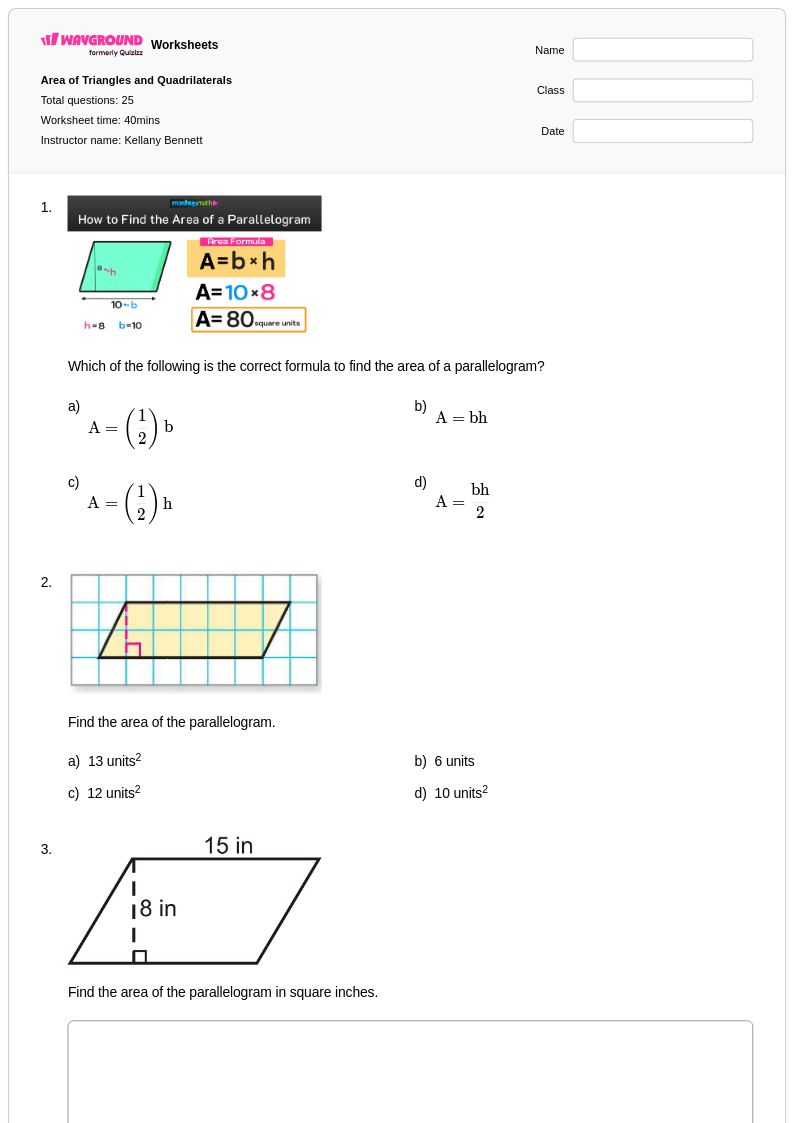
25 Q
6th
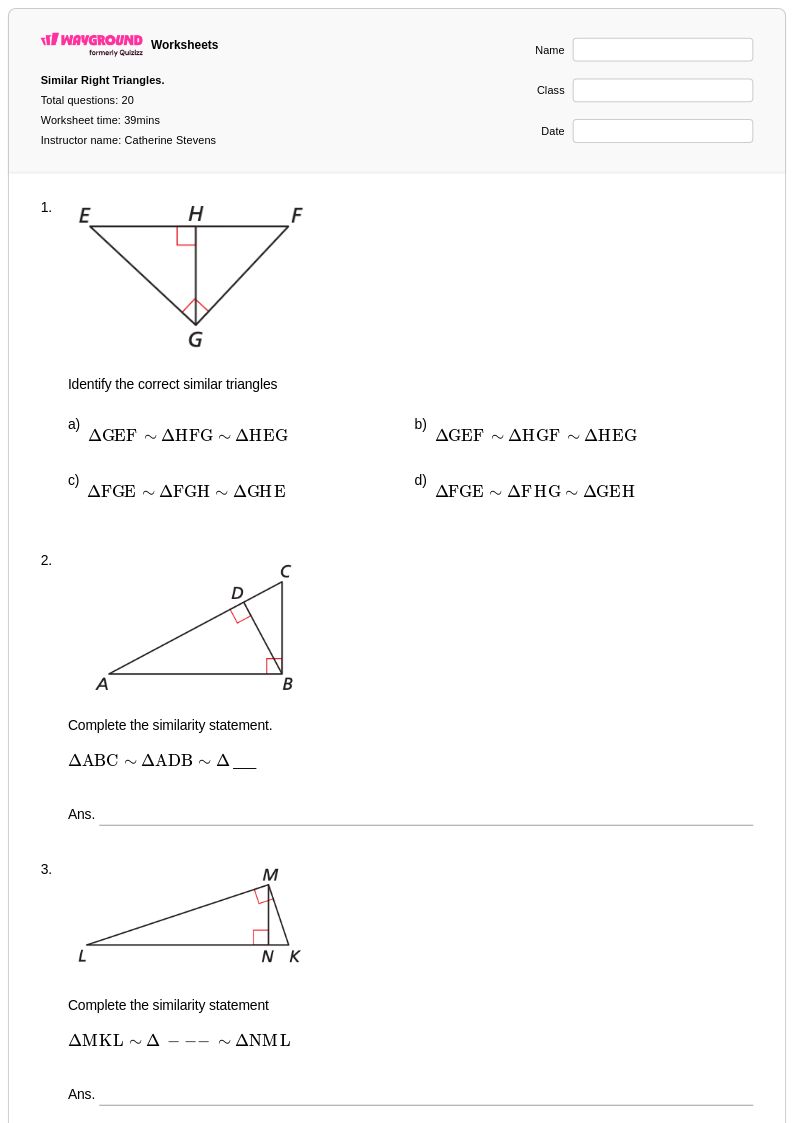
20 Q
10th
Explore Triangles Worksheets by Topics
Explore Worksheets by Subjects
Explore printable Triangles worksheets
Triangle worksheets available through Wayground (formerly Quizizz) provide comprehensive practice materials that strengthen students' understanding of these fundamental three-sided polygons and their essential properties. These mathematics resources cover critical concepts including triangle classification by angles (acute, right, and obtuse triangles), classification by side lengths (equilateral, isosceles, and scalene triangles), angle sum relationships, and the application of triangle inequality theorems. Students engage with practice problems that develop spatial reasoning skills while reinforcing geometric vocabulary and measurement techniques. Each worksheet includes detailed answer keys that support independent learning and self-assessment, with free printable pdf formats ensuring accessible distribution across diverse classroom environments.
Wayground (formerly Quizizz) empowers educators with millions of teacher-created triangle worksheet resources that feature robust search and filtering capabilities for precise content alignment with curriculum standards and learning objectives. The platform's differentiation tools enable teachers to customize triangle problems based on individual student needs, whether targeting foundational concept reinforcement or advanced geometric proof applications. These versatile worksheet collections support comprehensive lesson planning through flexible formatting options, including both printable pdf versions for traditional classroom use and interactive digital formats for technology-enhanced learning environments. Teachers leverage these resources for targeted remediation of triangle concept gaps, enrichment activities for accelerated learners, and systematic skill practice that builds geometric reasoning proficiency across diverse student populations.