
 Worksheets
Mitosis - cell theory
Total questions: 134
Worksheet time: 45mins
Name
Class
Date
1.

Name the phase:
a)
Anaphase
b)
Telophase
c)
Metaphase
d)
Prophase
2.

Name the phase:
a)
Anaphase
b)
Telophase
c)
Metaphase
d)
Prophase
3.

What is the next phase of mitosis?
a)
Prophase
b)
Metaphase
c)
Anaphase
d)
Telophase
4.
What is the next phase of mitosis?
a)
Prophase
b)
Metaphase
c)
Anaphase
d)
Telophase
5.

What is the next phase of mitosis?
a)
Prophase
b)
Metaphase
c)
Anaphase
d)
Telophase
6.

What is the next phase of mitosis?
a)
Prophase
b)
Metaphase
c)
Anaphase
d)
Telophase
7.

Name the previous phase.
a)
Prophase
b)
Metaphase
c)
Anaphase
d)
Telophase
8.

Name the previous phase.
a)
Prophase
b)
Metaphase
c)
Anaphase
d)
Telophase
9.

Name the previous phase.
a)
Prophase
b)
Metaphase
c)
Anaphase
d)
Telophase
10.

Name the previous phase.
a)
Prophase
b)
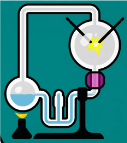
Metaphase
c)
Anaphase
d)
Telophase
11.

Name the phase:
a)
Prophase
b)
Metaphase
c)
Anaphase
d)
Telophase
12.

Name the phase:
a)
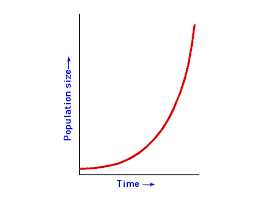
Prophase
b)
Metaphase
c)
Anaphase
d)
Telophase
13.

Name the phase:
a)
Prophase
b)
Metaphase
c)
Anaphase
d)
Telophase
14.

Name the phase:
a)
Prophase
b)
Metaphase
c)
Anaphase
d)
Telophase
15.

Name the phase:
a)
Prophase
b)
Metaphase
c)
Anaphase
d)
Telophase
16.

The stages of mitosis in order
a)
Metaphase, Anaphase, Prophase, Telophase
b)
Prophase, Anaphase, Metaphase, Telophase
c)
Prophase, Metaphase, Anaphase, Telophase
d)
Anaphase, Prophase, Telophase, Metaphase
17.

Why would it be important to replicate DNA before a cell divides in mitosis or meiosis?
a)
In order for genetic information to be transferred into daughter cells.
b)
In order for the cell to be able to increase in size.
c)
In order for the DNA to be contained in the nucleus.
d)
In order for the cell to re-order the DNA sequencing in the new cells.
18.

In mitosis, the two resulting cells are
a)
different from the starting cell and identical to each other.
b)
different from the starting cell and different from each other.
c)
identical to the starting cell and different from each other.
d)
identical to the starting cell and identical to each other.
19.

How many chromosomes do humans have?
a)
46
b)
21
c)
10
20.
The time between cell divisions in the life cycle of the cell is called
a)
anaphase
b)
interphase
c)
prophase
d)
metaphase
21.
Where does a cell contain it's genetic material?
a)
nucleus
b)
nucleolus
c)
cytoskeleton
d)
golgi
22.
A process where one cell forms two identical daughter cells is called...
a)
cell cycle
b)
cell division (mitosis)
c)
interphase
d)
cytokinesis
23.
During interphase the cell ___________.
a)
divides into two cells
b)
divides its nucleus
c)
replicates its DNA
d)
replicates the organelles within the cell
24.
What does DNA stand for?
a)
DeNatured Acid
b)
DomiNant Acid
c)
DeoxyriboNucleic Acid
d)
DiriboNucleic Acid
25.
The following describes __________ during mitosis. The chromatin condenses and spindle fibers form at each side of the cell. The nuclear membrane breaks apart.
a)
prophase
b)
metaphase
c)
anaphase
d)
telophase
26.
The following describes ________ during mitosis. The chromosomes line up along the center of the cell and the spindle fibers attach to each chromosome at the centromere.
a)
prophase
b)
metaphase
c)
anaphase
d)
telophase
27.
The following describes _________ during mitosis. The spindle fiber splits the centromere and the chromatids move to opposite sides of the cell.
a)
prophase
b)
metaphase
c)
anaphase
d)
telophase
28.
What is the correct term for "contains the genetic material (DNA) and serves as the control center of the cell"?
a)
centriole
b)
nucleus
c)
spindle fibers
d)
cytokinesis
29.
The dividing cell separates into two diploid daughter cells
a)
Mitosis
b)
Interphase
c)
Metaphase
d)
Cytokinesis
30.
90% or more of the cell cycle is spent here.
a)
Interphase
b)
Mitosis
c)
Cytokinesis
d)
Anaphase
31.

Have you ever heard of a skin graft? Skin cells can be harvested from one area and be grown in order to help burn victims or other skin injuries. Which process would result in the development of more skin cells in this treatment?
a)
Mitosis
b)
Meiosis
c)
Crossing Over
d)
Interphase
32.

This picture shows which process?
a)
mitosis
b)
meiosis
c)
the cell cycle
33.
Unlike mitosis, meiosis in male mammals results in the formation of
a)
one haploid gamete
b)
three diploid gametes
c)
four diploid gametes
d)
four haploid gametes
34.
Why do we need meiosis?
a)
To double the number of chromosomes going into sex cells
b)
To halve the number of chromosomes going into sex cells
c)
To triple the number of chromosomes going into sex cells
d)
To not change the number of chromosomes going into sex cells
35.

When an area of a chromatid is exchanged with the matching area on a chromatid of its homologous chromosome, _________________ occurs
a)
crossing over
b)
mutagenesis
c)
hybridization
d)
fertilization
36.
The cells produced via meiosis are called:
a)
sex cells
b)
somatic cells
c)
body cells
d)
skin cells
37.
If the Diploid number of Carrots is 18, the haploid number is
a)
18
b)
9
c)
27
d)
36
38.
If a body cell in a butterfly contains 24 chromosomes, a butterfly egg would contain
a)
3
b)
6
c)
12
d)
24
39.
The chromosomes that pair up during meiosis, are called __________ chromosomes.
a)
homozygous
b)
asexual
c)
homologous
d)
genes
40.
How many daughter cells are produced from meiosis ?
a)
10
b)
6
c)
4
d)
2
41.
At the end of mitosis you have _____ cells
a)
2 identical
b)
2 different
c)
4 identical
d)
4 different
42.
Human eggs and sperm are _____, and each has ____ chromosomes.
a)
diploid, 23
b)
diploid, 46
c)
haploid, 23
d)
haploid, 46
43.

Which process and type of resulting cells are represented?
a)
mitosis, gametes
b)
mitosis, body cells
c)
meiosis, gametes
d)
meiosis, body cells
44.

The process shown here is
a)
mitosis
b)
meiosis
45.
Which invention from the 17th century allowed for the development of modern cell theory?
a)
x-rays
b)
computers
c)
the light microscope
d)
the scanning electron microscope
46.
Cell theory was first proposed in 1838. Evidence obtained through additional scientific investigations resulted in the current cell theory. Which statement describes a component of the original cell theory that was removed because of the new scientific knowledge?
a)
All living things are made of cells.
b)
All cells come from other preexisting cells.
c)
Cells form through spontaneous generation.
d)
Cells are the basic structural and functional units of life.
47.
Cells are the basic structural and functional units of life.
a)
Plants have cells but animals do not.
b)
They are both made of one or more cells.
c)
They both come from the same kind of cell.
d)
They both come from a non-living organism.
48.
A plant and an animal are both living things. According to the Cell Theory, what can you conclude about these two very different organisms?
a)
Plants have cells but animals do not.
b)
They are both made of one or more cells.
c)
They both come from the same kind of cell.
d)
They both come from a non-living organism.
49.
Cell theory states:
a)
All living cells must have a cell wall.
b)
All living cells require glucose for survival.
c)
The basic unit of life is a cell.
d)
All cells contain a nucleus
50.
Unlike eukaryotes, prokaryotes do not have:
a)
DNA
b)
cytoplasm
c)
cell walls
d)
a membrane bound nucleus
51.
There are three parts to the cell theory. Which is NOT one of those parts?
a)
All organisms are composed of one or more cells.
b)
The cell is the basic unit of structure and organization in organisms.
c)
Cells spontaneously arise from carbon and nutrients carried in the bloodstream.
d)
All cells come from pre-existing cells.
52.
All existing cells are produced by other
a)
living cells
b)
dead cells
c)
atom cells
d)
animal cells
53.
All organisms are made of:
a)
organelles
b)
cytoplasm
c)
cell walls
d)
cells
54.
This contains a nucleus
a)
Eukaryotic Cell
b)
Prokaryotic cell
c)
Both
d)
Neither
55.
This does not contain a nucleus
a)
Eukaryotic cell
b)
Prokaryotic cell
c)
Both
d)
Neither
56.
What is a difference between eukaryotic cells and prokaryotic cells?
a)
Only prokaryotic cells have cytoplasm
b)
Only eukaryotic cells have a cell membrance
c)
Only prokaryotic cells have genetic material
d)
Only eukaryotic cells have membrance-bound organelles
57.
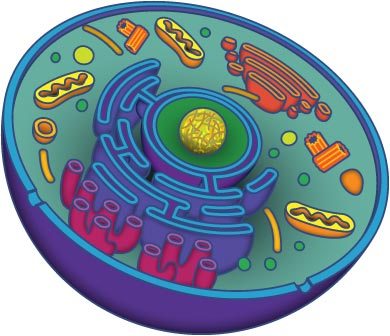
All living things are made up of...
a)
cells
b)
cell tissues
c)
organ
d)
organ systems
58.
Which characteristic of water will allow a paperclip to remain floating on water when the paperclip is gently placed on top of the water?
a)
adhesion
b)
surface tension
c)
solvent properties
d)
nonpolar
59.
What is the basic structural and functional unit of all living things?
a)
atom
b)
cell
c)
molecule
d)
human
60.
Which of the following structure can be found in a plant cell but NOT an animal cell?
a)
vacuole
b)
nucleus
c)
chloroplast
d)
mitochondria
61.

What cell part is NOT found in all cells?
a)
Cell Wall
b)
Cell Membrane
c)
Cytoplasm
d)
Genetic Material
62.

Four students examined the cells and made the following observations:
Student 1: Cell 1 is a plant cell because it has a cell wall
Student 2: Cell 2 is an animal cell because it has a nucleus
Student 3: Cell 1 is a plant cell because it has chloroplasts
Student 4: Cell 2 is an animal cell because it has a cell membrane
Who is correct?
Student 1: Cell 1 is a plant cell because it has a cell wall
Student 2: Cell 2 is an animal cell because it has a nucleus
Student 3: Cell 1 is a plant cell because it has chloroplasts
Student 4: Cell 2 is an animal cell because it has a cell membrane
Who is correct?
a)
Student 1 and Student 2
b)
Student 2 and Student 3
c)
Student 1 and Student 3
d)
Student 2 and Student 4
63.

Type of cell shown?
a)
Bacterial
b)
Prokaryotic
c)
Eukaryotic
d)
Red blood
64.

What type of cells are humans made up of?
a)
Prokaryotic
b)
Eukaryotic
c)
Plant
65.

In what year did exponential growth start to occur for the population on the graph?
a)
1850
b)
1900
c)
1825
d)
1800
66.

According to cell theory, where did this cell come from?
a)
another living cell
b)
energy from sun
c)
a multicellular organism
d)
the nonliving environment
67.
This is referred to as the energy currency of the cell
a)
ADP
b)
ATP
c)
Mitochondria
d)
Nucleus
68.
Cellular respiration takes place in the
a)
nucleus
b)
cytoplasm
c)
ribosomes
d)
mitochondria
69.
Which is not a waste product of cellular respiration?
a)
Water
b)
Heat
c)
Carbon Dioxide
d)
Oxygen
70.
This means that oxygen is needed
a)
anaerobic
b)
aerobic
71.
This means that oxygen is not needed
a)
anaerobic
b)
aerobic
72.
What is one of the reactants of cellular respiration?
a)
energy
b)
glucose
c)
carbon dioxide
d)
water
73.
In which way are photosynthesis and cellular respiration different?
a)
Cellular respiration stores ATP, while photosynthesis releases ATP.
b)
Cellular respiration produces oxygen, while photosynthesis uses oxygen.
c)
Photosynthesis releases energy, while cellular respiration stores energy.
d)
Photosynthesis used carbon dioxide, while cellular respiration produces carbon dioxide.
74.

Which of the following structure is where cellular respiration occurs in the cell?
a)
nucleus
b)
cytoplasm
c)
mitochondria
d)
vacuoles
75.
What are the reactants in the equation for cellular respiration?
a)
oxygen and lactic acid
b)
carbon dioxide and water
c)
glucose and oxygen
d)
water and glucose
76.
What is the correct equation for cellular respiration?
a)
6O2 + C6H12O6 -> 6CO2 + 6H2O + Energy
b)
6O2 + C6H12O6 + Energy -> 6CO2 + 6H2O
c)
6CO2 + 6H2O -> 6O2 + C6H12O6 + Energy
d)
6CO2 + 6H2O + Energy -> 6O2 + C6H12O6
77.
What does cellular respiration use that photosynthesis produces?
a)
Oxygen and glucose
b)
Water and carbon dioxide
78.
What does photosynthesis use that cellular respiration produces?
a)
Oxygen and glucose
b)
Water and carbon dioxide
79.
When respiration occurs with oxygen, it is called _______
a)
anaerobic
b)
aerobic
c)
light-dependent
d)
fermentation
80.
Because fermentation takes place in the absence of oxygen, it is said to be
a)
aerobic
b)
anaerobic
c)
cyclic
d)
oxygen-rich
81.

What is the source of energy for photosynthesis?
a)
carbohydrates-chemical
b)
sunlight-radiant
c)
heat-thermal
d)
television-electrical
82.
What are the reactants (what's needed) for photosynthesis?
a)
glucose and oxygen
b)
light, water, and carbon dioxide
83.
What gas is released by plants during photosynthesis?
a)
sulfur
b)
carbon dioxide
c)
oxygen
d)
hydrogen
84.
What is the purpose of photosynthesis?
a)
make glucose
b)
make ATP
c)
make light
d)
release carbon dioxide
85.
What are the products (what's made) during photosynthesis?
a)
glucose and oxygen
b)
water, light, and carbon dioxide
86.
What type of organism uses photosynthesis?
a)
plants
b)
bacteria
c)
animals
d)
both plants and bacteria
87.
What is the energy conversion during photosynthesis?
a)
chemical --> chemical
b)
thermal --> electrical
c)
chemical --> electrical
d)
radiant --> chemical
88.

In which organelle (part of the cell) does photosynthesis take place?
a)
mitochondria
b)
chloroplast
c)
nucleus
d)
cell membrane
89.
What is the gas we breath out that plants use for photosynthesis?
a)
sulfur
b)
carbon dioxide
c)
oxygen
d)
hydrogen
90.
How can photosynthesis be related to cellular respiration?
a)
What's produced (made) by one is needed (the reactants) for the other
b)
They both produce the same products
c)
They both have the same reactants (need the same things)
d)
These 2 processes have nothing in common
91.
Which of the following is the correct equation for PHOTOSYNTHESIS?
a)
6CO2 + 6H2O --> 6O2 + C6H12O6
b)
6CO2 + C6H12O6 + 6H2O --> O2
c)
6O2 + 6H2O --> 6CO2 + C6H12O6
d)
C6H12O6 + 6O2 ---> 6H2O + 6CO2
92.
Which gas is removed from the atmosphere during photosynthesis?
a)
hydrogen
b)
oxygen
c)
nitrogen
d)
carbon dioxide
93.
Structures that are inherited from a common ancestor are homologous.
a)
True
b)
False
94.
Humans, birds, whales, and lizards all have similar arm bones. What is the reason for this?
a)
The function of these bones is the same in all animals
b)
They live in similar environments
c)
They have a common ancestor
d)
All organisms resemble humans
95.
Bird wings and butterfly wings are an example of
a)
Homologous structure
b)
Analogous structure
c)
Mimicry
d)
Camoflague
96.
Shark fins and dolphin fins are examples of analogous structures.
a)
True
b)
False
97.
Analogous structures show common ancestry.
a)
True
b)
False
98.
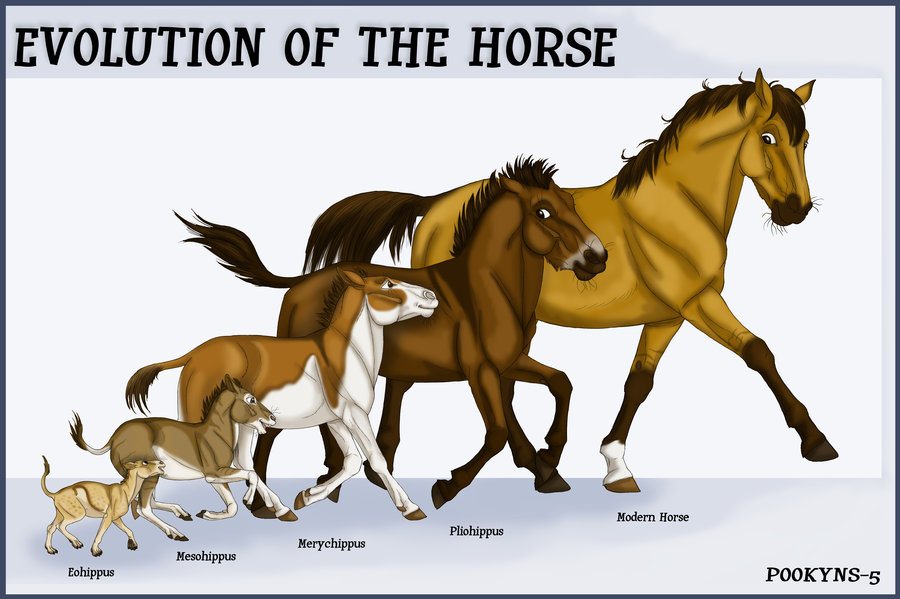
Some organisms that share a common ancestor have features that have different functions, but similar structures. These are known as
a)
vestigial structures
b)
analogous structures
c)
homologous structures
d)
fossil structures
99.
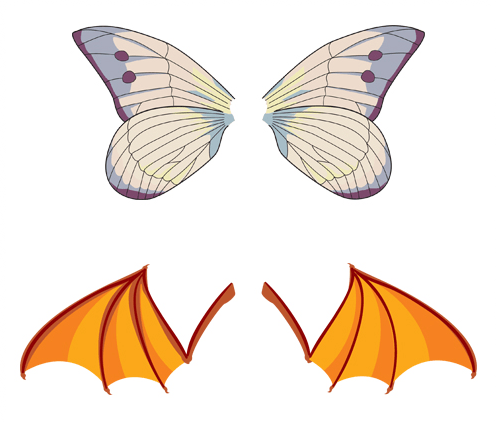
How would you describe this evolution?
a)
Homologous structure
b)
Analogous structure
c)
Structural adaption
d)
Functional adaption
100.
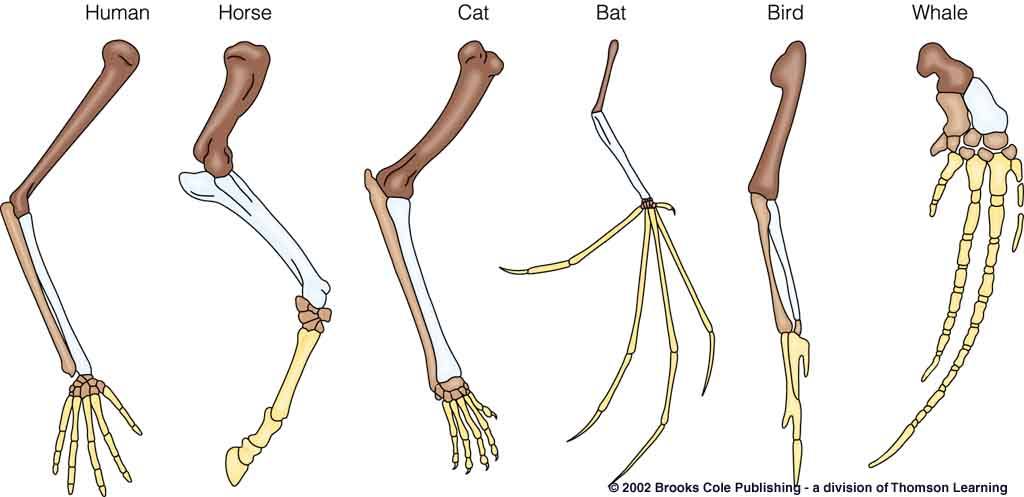
The structures shown are_________
a)
homologous
b)
heterologous
c)
analogous
d)
vestigial
101.
Structures that are inherited from a common ancestor are homologous.
a)
True
b)
False
102.

Which question were the scientists trying to answer with this experiment?
a)
Where do cells come from?
b)
What came first the chicken or the egg?
c)
How are biomolecules formed?
d)
What gave rise to the Eukaryotic cell?
103.
The apparatus in the experiment was used to mimic what?
a)
proteins
b)
Earth's present conditions
c)
early Earth's conditions
d)
they didn't mean to mimic anything in particular
104.
The gas in the apparatus mimicked?
a)
space
b)
time
c)
stars
d)
atmosphere
105.
The electrical sparks mimicked?
a)
heat waves
b)
lightening
c)
volcano
d)
hurricane
106.
The water used in the apparatus was used to mimic what part of early Earth?
a)
sea
b)
swimming pool
c)
ocean
d)
rain
107.
What was the result of the Miller-Urey Experiment?
a)
amino acids
b)
nucleotides
c)
lipids
d)
glucose
108.

Is the pictured graph growth, decay, or linear or none?
a)
Exponential Growth
b)
Exponential Decay
c)
Linear
d)
None
109.

What point on the graph represents the carrying capacity?
a)
A
b)
B
c)
C
d)
D
110.
Why has the population been able to grow so quickly in such a short period of time?
a)
Doctors have developed easier and safer ways to have babies
b)
People needed more help to work their farms so they had more children
c)
Because people stayed in one place and only moved when crowded out
d)
Because of medical care, clean water and better access to nutritious food
111.

Will competition increase/decrease the carrying capacity of an ecosystem for the animal in competition?
a)
Decrease
b)
Increase
112.

When a population grows past the ecosystem's carrying capacity, what happens to the population?
a)
Continues to grow
b)
The population starts to die off to return to carrying capcity
c)
The population will go extinct due to lack of resources
d)
The population grows then finds a new carrying capacity
113.

If the amount of food or resources available increases, the carrying capacity for an animal:
a)
Stays the same
b)
Increases
c)
Decreases
d)
Fluctuates
114.

If the carrying capacity of a predator decreases, what will happen to the carrying capacity of the prey?
a)
Will Increase
b)
Will Decrease
c)
Will stay the same
d)
Will fluctuate
115.

The largest number of individuals in a species that an environment can support long term
a)
carrying capacity
b)
emigration
c)
immigration
d)
population density
116.

Any thing or organism that regulates the size of a population is known as __________.
a)
a limiting measure
b)
a limiting factor
c)
carrying capacity
d)
biodiversity
117.
Limiting factors are sometimes helpful because they can keep the population from getting to large.
a)
True
b)
False
118.

What is the carrying capacity of this population?
a)
100
b)
200
c)
300
d)
400
119.

If a disease destroying barley plants in a field swept through an ecosystem, what would happen to the barley eating bird population in the the field ?
a)
The bird population would stay the same
b)
The bird population would infinitely increase
c)
The bird population would decrease
120.
What type of growth is shown in the diagram?
a)
exponential growth
b)
logistic growth
c)
predator-prey cycle
d)
boom-bust curve
121.
Largest number of individuals of a population that the environment can support...
a)
carrying capacity
b)
population crash
c)
lag phase
d)
mutualism
122.

Plants and animals that are not native to a habitat (nonindigenous)...
a)
predators
b)
biological magnification
c)
invasive species
d)
prey
123.
What do you call a period of rapid growth?
a)
exponential growth
b)
logistic growth
c)
emigration
d)
predator-prey cycle
124.

What type of growth curve is pictured?
a)
exponential
b)
logistic
c)
predator-prey
d)
invasive
125.

Which type of growth is best illustrated by this rabbit population?
a)
exponential
b)
logistic
c)
S-shaped
d)
predator-prey
126.
Type of growth that occurs when disease and parasites are present...
a)
exponential
b)
J-shaped
c)
predator-prey
d)
logistic
127.
an organism that makes its own food
a)
producer
b)
consumer
c)
herbivore
d)
scavenger
128.
In an energy pyramid, energy_______ as you move up the pyramid.
a)
Increases
b)
Decreases
c)
Stays the same
d)
Changes up and down
129.
An organism that eats another organism.
a)
Autotroph
b)
Heterotroph
c)
Plant
d)
Producer
130.

In the energy pyramid here, how much of the energy in the producers gets passed to the herbivores?
a)
10%
b)
20%
c)
80%
d)
90%
131.

A food pyramid represent the relative amount of energy in trophic levels. Which of the following correctly shows a food pyramid?
a)
A
b)
B
c)
C
d)
D
132.

The deer, grasshopper, and bird are all examples of which type of consumers on this food pyramid?
a)
decomposers
b)
omnivores
c)
carnivore
d)
herbivore
133.
A third-level consumer has to be which type?
a)
Carnivore.
b)
Decomposer.
c)
Producer.
d)
Herbivore.
134.
A secondary consumer
a)
eats primary consumers
b)
eats producers
c)
eats plants
100 %

