
 Worksheets
Unit 6 Woolly Mammoth
Total questions: 139
Worksheet time: 2hrs 48mins

Which of the following leads to a decrease in biodiversity?
introduction of invasive species
prevention of erosion
ecological land use planning
pollution control
Illegal hunting for profit is called
sport hunting.
poaching.
commercial hunting.
subsistence hunting.
Law of the 70's that protects endangered species in the U.S.
Endangered Species Act
CITES
Lacey Act
One Act Plays
Presently, the biggest threat to biodiversity is;
Asteriod strikes, such as what happened 65 million years ago and resulted in the extinction of the dinosaurs.
Human population growth, because as population increases, so does the number of plants and animals it consumes, resulting in a decrease of those organisms.
Habitat destruction, such as cutting down portions of tropical rain forest, which destroys the niches occupied by tropical organisms.
The proliferation of zoos and botanical gardens, causing causing people to care less about preserving species in the wild because they are being cared for those in sanctuaries.
Which of the following international treaties bans the hunting, capture, and sale of threatened or endangered species in 181 countries? CITES
Endangered Species Act (ESA)
The National Marine Fisheries Act
The Convention on International Trade in Endangered Species (CITIES)
National Enviornmental Policy Act (NEPA)
The Marine Mammal Protection Act

Areas that have been set aside for the protection of threatened or endangered species and their habitats are known as;
National parks.
National zoos
National wildlife refuges.
National recreation areas.
National forest reserves.
Choose the option that expresses the definition the best.
"Logging, mining, building of roads, and urban development."
Habitat destruction,degradation, and fragmentation.
Invasive (nonnative species).
Population and resource use growth.
Greenhouse effect.
Overexplotation.
Which is the newest part of HIPPCO?
Climate change
Population & Pollution
Invasive Species
Habitat Loss
Overharvesting
Why do endangered species matter?
Because they are cute
Biodiversity
Because if they die we cannot have them as pets
Because they cannot be in the zoo

The endangered black rhinos is hunted for what?
its horns
its eyes
its meat
In the 1970s, the United States introduced the _________________________ which calls for a recovery plan to be created for each endangered species.
National Environmental Policy Act
Resource Conservation and Recovery Act
Clean Water Act
Endangered Species Act
What do you call hunting whales?
Hunting
Whaling
Sailing
Poaching
The "6th mass extinction" is Anthropogenic which means.
cause by man
cause by aliens
caused by a meteor storm
caused by a volcano

What was the last feline species to go extinct?
Iberian Lynx
Snow Leopard
Saber Toothed Tiger

What endangered animal is the largest land mammal?
Hippos
Rhinos
African Elephants

Approximately how long ago did dinosaurs become extinct?
55 million years
65 million years
85 million years

People should destroy the forest.
People shouldn´t take the rubbish with them.
We shouldn´t make products with their fur.
People should make products with their fur.

How can I protect it?
We should use natural substances.
We should leave non-biodegradable materials.
You shouldn´t protect the forest.
You shouldn´t take wild animals as a pets.

How can we protect it?
We should protect their habitat.
We should take wild animal as a pets.
People shouldn´t make products from their fur.
People shouldn´t take wild animals as a pets.

How can we protect it?
We should pick any flower.
You should stay on the official paths.
We shouldn´t pick any flower.
We should use any repellent.

How can we protect it?
We shouldn´t hunt them.
We should take the trash home with you.
We should protect its habitat.
We should hunt them.

How can we protect it?
We should cutting the trees
We should pick any flower.
We shouldn´t use natural substances.
We should protect the rainforest.

How can we protect it?
People should cut down some trees.
We should protect its habitat.
People should hunt them.
People should take wild animals as a pets.
Charlotte, Isla, and Lily are working on a school project about biodiversity. They are researching different groups of organisms and their conservation status. According to their research, which group of organisms has the highest proportion of threatened members?
Amphibians
Mammals
Birds
Warm water coral
How can competition between plant species in Abigail's garden contribute to endangerment?
Competition promotes species diversity
Competition leads to habitat destruction
Competition limits the range of species
Competition increases population size
Ava, Daniel, and Zoe are discussing the main threat to conifers in their environmental science class. What do they identify as the primary threat?
Climate change
Habitat destruction
Overpopulation
Natural selection
Scientists found the fossilized remains of a woolly mammoth that is believed to be an ancestor of modern day elephants. What method can be used to study the evolutionary relationship between the woolly mammoth and the elephant?
examine the rock layers where the fossil was found
examine anatomical similarities between the two species
examine the environments where modern elephants live
examine the fossils of species that lived near woolly mammoths
What is the best way for a scientist to prove that a modern-day animal evolved from a recently discovered fossil?
Show similar minerals within the fossil and organism.
Show comparative anatomy within the fossil and organism.
Show evidence of each organism with an ice core sample.
Show that each organism lived in an identical environment.
What question could best be answered by studying fossils?
How are canyons created by rivers?
How was water formed on Earth's surface?
How are coral reefs formed on ocean floors?
How did birds evolve from reptiles over time?

Scientists think that the ancient animal on the left is related to the modern animal on the right and has gone through many changes over time.
How did the scientists conclude that the animal changed over time?
by examining fossil records
by learning about natural selection
by studying deposition of sediments
by observing different types of rock formations
How do rock layers help geologists better understand the evolution of life on Earth?
They can provide a random order of events.
They can provide a variable order of events.
They can provide a general order of events.
They can provide a perfect order of events.

Examine the diagram showing fossils within sedimentary rock layers.
Which statement best explains the evolution of these fossils?
The fossil in layer A is more closely related to a modern organism.
The fossil in layer B is more closely related to a modern organism.
The fossil in layer C is more closely related to a modern organism.
The fossil in layer D is more closely related to a modern organism.


Which of these is not a fossil fuel?
Coal
Oil
Electricity
Natural Gas
What is the Greenhouse Affect?
As carbon dioxide concentrations increase, temperatures increase
Condition that is caused by carbon dioxide, methane, and water vapor trapping heat in the Earth's atmosphere
causes sea levels to rise because it adds water to the ocean.
The cooling of Earth due to air pollution.
Which of the following events would be MOST likely to add Greenhouse Gases to the atmosphere?
Hurricane
Tsunami
Forest Fire
Ecological Succession
The following are Greenhouse Gases:
Carbon Dioxide
Methane
Salt
Phosphorus
Water vapor
Why is Carbon Dioxide considered to be a Greenhouse Gas?
It is a combination of natural and human forces
It has a biogeochemical cycle
It is a type of weather that occurs during a particular season
It absorbs and reradiates infrared radiation to warm the Earth
What is one way volcanic eruptions can effect climate?
When a volcano errupts, secondary succession begins
Lava is hot which makes the community hotter
Ash blocks sunlight, causing temperatures to drop
Select 2 of the following that are true for greenhouse gases.
They allow light to pass through
They allow heat to pass through
They trap light
They trap heat
How does carbon dioxide concentration affect temperature?
the higher the carbon dioxide, the lower the temperature
the higher the carbon dioxide, the higher the temperature
carbon dioxide does not affect temperature
How does the combustion of fossil fuels affect the carbon cycle?
adds more CO2
removes CO2
does not affect CO2
True or false, the loss of one species in an ecosystem affects the rest of the community.
true
false
What is the direct cause of rising sea levels?
Melting Sea Ice
Melting Land Ice
Climate Change

The main human activity that releases greenhouse gases is
using public transportation and there by reduce the affects of greenhouse gases.
burning fossil fuels
texting on cellphones
eating meat
Which of the following is contributing to an INCREASE in carbon dioxide in the atmosphere?
deforestation
photosynthesis
oceans
all of the above
the loss of animal species


The total set of carbon emissions caused by an individual.
carbon cycle
carbon handprint
carbon footprint
carbon summary
Why should you be concerned with the size of your carbon footprint?
Sometimes its hard to find shoes that are the right size.
If we don't decrease greenhouse gas emissions Earth will continue to cool.
Greenhouse gases are becoming scarce in Earth's atmosphere.
Increases in greenhouse gases in the atmosphere are contributing to global climate change.


During a forest fire most vegetation (plants) burn. Which ecological succession will take place after a forest fire?
Primary
Secondary

After a volcanic eruption the lava cools and becomes rock. Which succession must take place in order for vegetation (plants) to return?
Primary Succession
Secondary Succession

Primary or secondary ecological succession?


Which of the following is something that can create new land?
Snow
Rain
Volcanic Eruption
Wind
Which type of succession occurs after some kind of natural disaster wipes out most of the vegetation in a habitat?
Primary Succession
Secondary Succession
Which of these is NOT a primary air pollutant?
smog
particulate matter (PM2.5)
carbon monoxide (C0)
sulfur dioxides (S02)
Which pair below are the two main sources of air pollution in urban (populated) areas?
vehicles, volcanoes
vehicles, industries
Industries, agriculture
All of the above
Which is true of air pollution and human health?
Years of research link air pollution to lung diseases, birth defects, and cancer
Air pollution is commonly listed as a cause of death.
None of the health effects of air pollution are reversible.
Healthy adults are most affected by air pollution.
Noise pollution can cause
high blood pressure.
loss of sleep.
hearing loss.
All of the above
Acid precipitation can lead to all of the following EXCEPT…
a decrease in a community’s standard of living.
an increase in respiratory ailments.
an increase of aquatic biodiversity.
a destruction of historic monuments.
Acid precipitation/rain can be traced back to
the burning of fossil fuels.
the use of electrostatic precipitators.
thermal inversions.
the release of particulate matter into the atmosphere.
Which of the following pH measurements of rainwater would indicate acid precipitation/rain?
pH 6.0
pH 4.1
pH 7.3
pH 9.6
Which range indicates a base/alkaline?
1-6
8-14

Instead of riding his bike, a college student drives to class every day. He also drives to the store, to friend's houses, and everywhere else. every time he fills up his tank, a little bit of gasoline drips to the ground. The car's exhaust contains nitrogen oxides, which contribute to nitrogen levels in nearby water bodies.
Toxic
Sediment
Nutrient
Bacterial

By rotating their crops, farmers can reduce their dependence on fertilizers, herbicides, and pesticides. Despite the benefits of crop rotation, many farmers only grow one or two crops year after year. This increases their use of fertilizers, herbicides, and pesticides.
Toxic
Sediment
Nutrient
Bacterial

After buying a new house by a lake, the Harrison's decided to cut down the trees and bushes that were blocking their view. This left an open area with no vegetation between the house and the lake.
Toxic
Sediment
Nutrient
Bacterial

If the the air quality index is 30, it is safe for everyone to go outside. (a)
The ozone layer protects us from (a)
The ozone layer is damaged by (a)
Dust, ash and pollen are examples of this air pollutant (a)
SUnburn occurs when your skin is exposed to harmful (a) rays
The Montreal Protocol was passed in
1985
1986
1987
1982
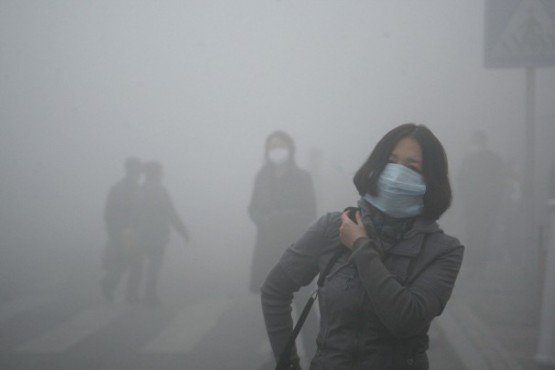
Indoor air pollution is caused by...
chemicals we bring into our homes and use
outdoor air pollution entering the home
fumes from cooking and baking
smog and acid precipitation
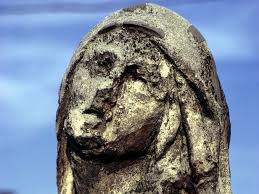
Natural causes of air pollution include all of the following (check all that apply)
forest fires
volcanic ash
wind
pollen
______________ ______________ is produced when fuels containing sulfur are burned in the presence of oxygen.
Carbon dioxide
Sulfur oxides
Carbon monoxide
Greenhouse gas

Which diagram below indicates that species D is more closely related to C than it is to either A or B?
1
2
3
4

Some orders of land and marine animals are closely related. Molecular data recently collected from dolphins, camels, deer, and hippopotamuses have shown that hippopotamuses are the closest living relatives of dolphins.
Which cladogram models this evolutionary relationship?
1
2
3
4

Base your answer to the question on the information and diagram below and on your knowledge of biology. The diagram represents the evolutionary relationships among many organisms.
Three species with the most similar traits are most likely
F, I , G
D, H, J
B, D, G
F, A, J

Base your answer to the question on the information below and on your knowledge of biology.
Unique populations of giant tortoises live in the Galapagos Islands. This is the same group of islands where Darwin studied his famous finches. It is thought that the original ancestors of today’s giant tortoises came from the mainland of South America. These animals left and drifted in the ocean to the islands where they began to live, reproduce, and evolve. Each of the islands has a different habitat. Each species varies in shell shape and body structure. Information about two of these species of giant tortoises and their habitats is found in the table below.
When the saddle-backed tortoises extend their long necks out of the shell, they are unprotected from attack. Scientists hypothesize that during the evolution of this tortoise, they had few predators. Which statement best supports this hypothesis?
Competition between the predators and the tortoises would have resulted in a greater number of long necked tortoises.
The number of predators was greater than the number of tortoises.
Saddle-backed tortoises were not a part of the food chain.
Predators would have killed the tortoises with long necks, leaving more tortoises with shorter necks.
What type of electricity is produced by solar panels?
Direct current
Alternating current
Static Electricity
Solar panels do not
release carbon dioxide (CO2)
produce air pollution
produce useable electricity
produce direct current

Which device is used to convert solar energy into electrical energy?
Wind turbine
Solar panel
Hydroelectric dam
Geothermal plant

Which of the following is NOT a type of solar energy system?
Photovoltaic systems
Solar thermal systems
Biomass systems
Concentrated solar power systems
What is the primary purpose of the Endangered Species Act?
To provide funding for wildlife conservation projects
To regulate hunting seasons
To protect and recover imperiled species and the ecosystems upon which they depend
To monitor international trade of wildlife
Which of the following species has been directly benefited from the Endangered Species Act?
Passenger Pigeon
Bald Eagle
Dodo Bird
Tasmanian Tiger
What does Mariana Fuentes say we should do to help sea turtles?
stop people from going to beaches where sea turtles lay eggs
move more sea turtles to zoos
keep sea turtle nests and eggs safe
Which organization is responsible for implementing measures to protect species at risk of extinction under the Endangered Species Act?
United States Department of Agriculture (USDA)
U.S. Fish and Wildlife Service (USFWS) and National Oceanic and Atmospheric Administration (NOAA)
Environmental Protection Agency (EPA)
National Park Service (NPS)
Which of the following is a conservation effort to protect sea turtles?
Urban development
Beach cleanups
Increased fishing
Deforestation
What is the term used to describe the disappearance of a species from all or part of its range?
Extirpation
Extinction
Endangerment
Exclusion
Which of the following species is currently classified as endangered?
African Elephant
Domestic Cat
Gray Squirrel
European Rabbit
________________ has the record of all endangered and extinct species.
Black data book
Red data book
Green data book
Yellow data book

