
 Worksheets
F4C2 Cell structure
Total questions: 83
Worksheet time: 58mins
Name
Class
Date
1.
Controls what enters and leaves the cell
a)
Mitochondria
b)
Cell Membrane
c)
Cell Wall
d)
Nucleus
2.
Stores food and water for the cell.
a)
Cytoplasm
b)
Cell Wall
c)
Vacuole
d)
Nucleus
3.

What would happen to the plant cell without the chloroplasts?
a)
There wouldn't be an organelle that performs photosynthesis
b)
There wouldn't be an organelle that serves as the resevoir for water and waste
c)
There wouldn't be an organelle that regulates what comes in and out of the cell
d)
They wouldn't be an organelle that makes necesary proteins
4.

What do all of these organisms have in common?
a)
They all have uniform offspring
b)
They are all made of cells
c)
They possess the same features
d)
They have the same internal and external structures
5.

According to cell theory, where did this cell come from?
a)
another living cell
b)
energy from sun
c)
a multicellular organism
d)
the nonliving environment
6.
Which of the following is NOT a cell theory.
a)
All non-living things are made of cells
b)
All cells come from pre-existing cells
c)
Cells are the basic unit of structure and function of all living things
7.
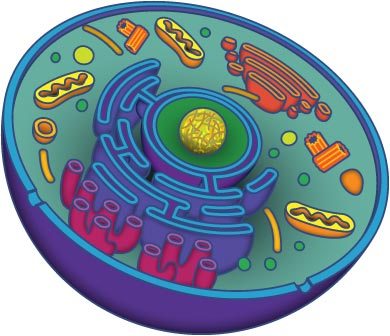
All living things are made up of...
a)
cells
b)
cell tissues
c)
organ
d)
organ systems
8.
All cells come from___________ cells.
a)
pregnant
b)
pre-existing
c)
paternal
d)
pin size
9.

Robert Hooke, Anton van Leeuwenhoek, Theodor Schwann, Rudolf Virchow, and Matthias Schliden were all responsible for what theory?
a)
The Theory of Gravity
b)
The Theory of Relativity
c)
The Cell Theory
d)
The Theory of Continental Drift
10.
Rocks are not living because
a)
they never move
b)
they aren't needed for humans
c)
they are not made of cells
d)
they don't break down
11.
What is the basic structural and functional unit of all living things?
a)
atom
b)
cell
c)
molecule
d)
human
12.
All cells are produced ____________.
a)
from nothing
b)
from other cells
13.
An organism made of one cell is called
a)
unicellular
b)
multicellular
14.
what is the control center in a cell
a)
mitochondria
b)
DNA
c)
nucleus
d)
movement
15.
also known as the "powerhouse"
a)
cell membrane
b)
storage
c)
cytoskeleton
d)
mitochondria
16.

What is the fluid inside a cell called?
a)
Endoplasimic Reticulum
b)
Orange Juice
c)
Water
d)
Cytoplasm
17.
the photosynthesis equation is
a)
6CO2+6H2O+sunlight~C6H12O6+6O2
b)
nothing
c)
H2O
d)
CO2
18.

This organelle helps plants keep their rigid structure.
a)
Cell wall
b)
Cell membrane
c)
Chloroplast
d)
Nucleus
19.
This is a double layer of phospholipids that creates a barrier between the cells internal and external environments; it controls what comes in or out of the cell (selective permeable)
a)
Nucleus
b)
Cilia
c)
Cell membrane
d)
Flagella
20.

a)
where ribosomes are made
b)
receives proteins from ER and distributes them
c)
assembles amino acids into proteins
21.

a)
produces energy a cell needs
b)
where ribosomes are made
c)
packages amino acids and moves them out of the cell
22.

a)
assembles amino acids to create proteins
b)
control center of the cell
c)
capturesenergy from sunlight
23.

a)
contain DNA
b)
used in photosynthesis
c)
give plants their taste
24.

a)
control center of the cell
b)
captures energy from sunlight
c)
found in plant and animal cells
25.

a)
produces ribosomes
b)
contains genetic information
c)
stores food, water, wastes and other materials
26.
This organelle is a rigid outer layer that protects plant cells.
a)
Cell Membrane
b)
Cell Wall
c)
Nucleus
d)
Chloroplast
27.
This organelle controls what goes in and out of plant and animal cells.
a)
Cell Wall
b)
Cell Membrane
c)
Cytoplasm
d)
Cytoplasm
28.
The _____________ stores food, water, wastes, and other materials in both plant and animal cells.
a)
Vacuole
b)
Mitochondria
c)
Ribosomes
d)
Chromatin
29.
An organelle that captures energy from the sunlight in order to use it to produce food in plant cells is ______________.
a)
Chromatin
b)
Chloroplast
c)
Cytoplasm
d)
Cell Membrane
30.
This can be found in the nucleus, and are tiny strands that contain the instructions for directing the cell's functions.
a)
DNA/Chromatin
b)
Chloroplasts
c)
Golgi Bodies
d)
ER
31.
The _________ ____________ can be found in plant and animal cells, and receive proteins and materials from the ER, packages them, and distributes them.
a)
ER
b)
Golgi Bodies
c)
Cell Membrane
32.
This organelle can be found inside the nucleus, and produces ribosomes.
a)
Nucleus
b)
Nucleolus
c)
New Moon
d)
New Balance Shoe
33.
Breaks down food to release energy. Known as the power plant of the cell.
a)
Endoplasmic Reticulum
b)
Mitochondria
c)
Ribosomes
d)
Cell Wall
34.
The part of the cell that is used for storage.
a)
Nucleus
b)
Cell Membrane
c)
Mitochondria
d)
Vacuole
35.

What organelle is called the "power house" of a cell?
a)
Endoplasmic Reticulum
b)
Nucleus
c)
Mitochondria
d)
Nucleolus
36.

What are tiny organelles that convert glucose (sugar) into ATP energy?
a)
Ribosomes
b)
Vesicles
c)
Cytoskeleton
d)
Mitochondria
37.

The two kinds of cells are Prokaryotes and Eukaryotes. How are they different?
a)
Prokaryotes have a nucleus.
b)
Eukaryotes have a nucleus.
c)
Prokaryotes are plant cells.
d)
There is no difference.
38.

a)
controls what enters and exits the cell
b)
contains chlorophyll
c)
thick and rigid
39.
a)
where ribosomes are made
b)
receives proteins from ER and distributes them
c)
assembles amino acids into proteins
40.
a)
control center of the cell
b)
captures energy from sunlight
c)
found in plant and animal cells
41.
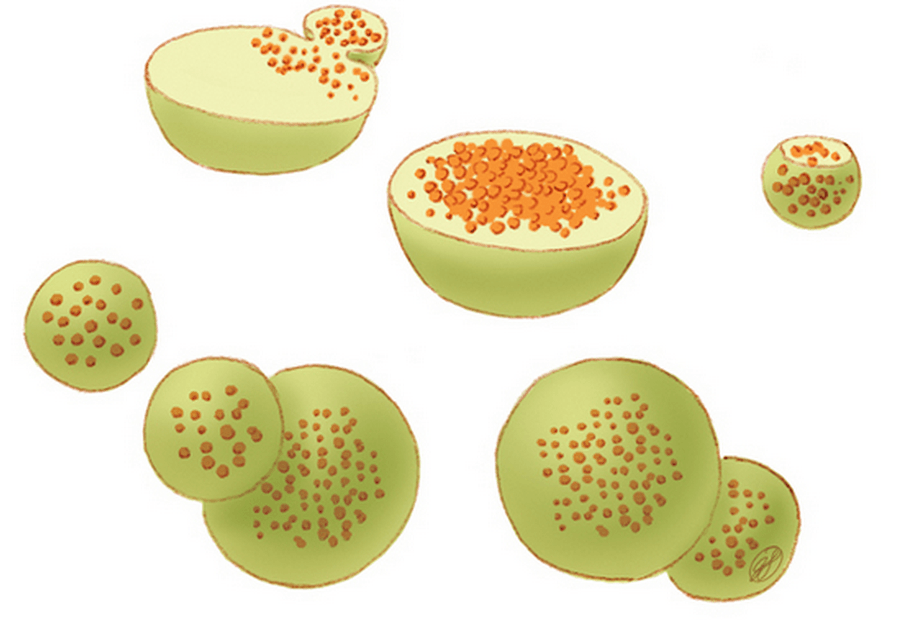
You might think of me as the trash collector, but recycler is maybe more accurate. What am I?
a)
mitochondria
b)
lysosome
c)
vacuole
d)
ribosome
42.

Which type of cell?
a)
Prokaryote
b)
Eukaryote
43.

What is the difference between rough and smooth ER?
a)
There is no difference.
b)
Plants have rough ER, animals have smooth ER.
c)
What type of injuries the Doctors treat.
d)
Rough has ribosomes, smooth does not.
44.

What is this?
a)
mitochondria
b)
lysosomes
c)
chloroplast
d)
endoplasmic reticulum
45.
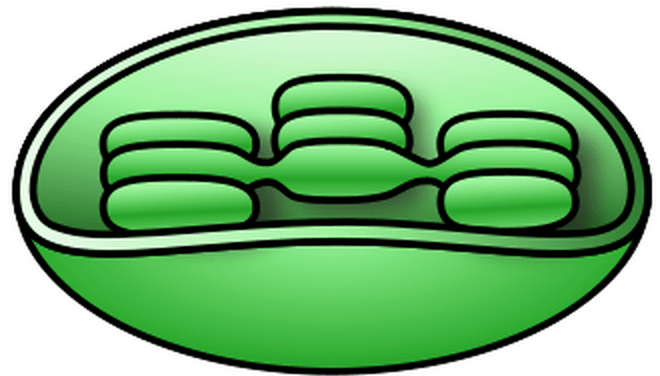
I am only found in a plant cell. What am I?
a)
cell wall
b)
mitochondria
c)
cytoplasm
d)
chloroplast
46.

What does this structure do?
a)
supports the cell
b)
cell's control center
c)
converts energy to food
d)
makes proteins
47.

I make proteins for the cell. What am I?
a)
ribosome
b)
mitochondria
c)
chloroplast
d)
lysosome
48.

Which 2 organelles are in plants and animals?
a)
cell wall and cytoplasm
b)
nucleus and chloroplast
c)
cell membrane and cytoplasm
d)
cell membrane and cell wall
49.

All living things are made up of...
a)
cells
b)
cell tissues
c)
organ
d)
organ systems
50.
Which part of the cell is the cells mailroom?
a)
golgi body
b)
ER
c)
vacuole
d)
ribosomes
51.

This is a example of........
a)
organ system
b)
cells
c)
organ
d)
tissue
52.
When many organ systems work together it can form...
a)
organ
b)
cells
c)
organ system
d)
organism
53.
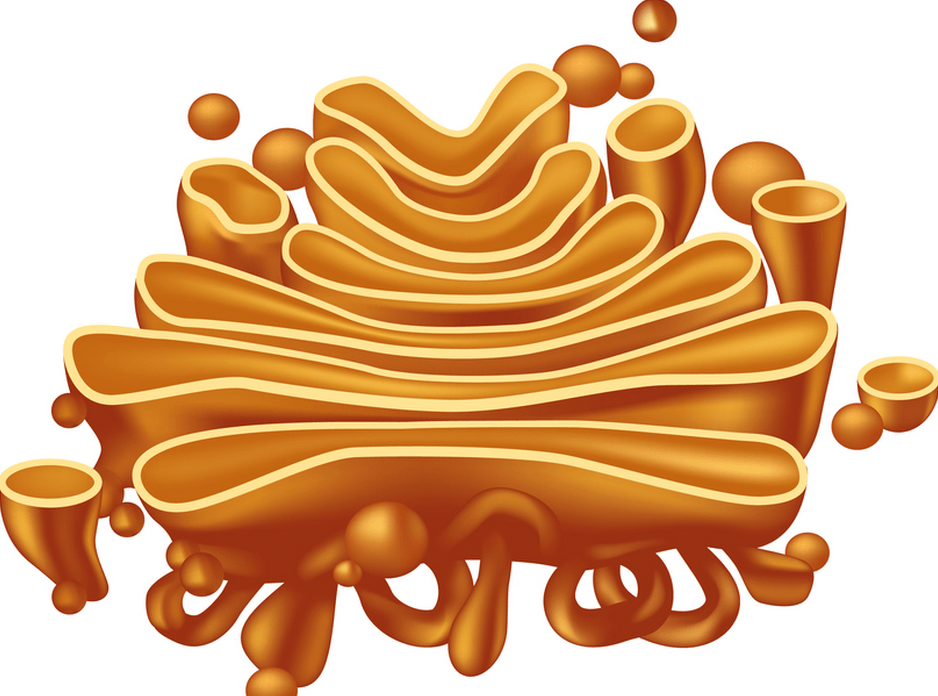
I am a protein packaging and shipping machine! Who am I?
a)
vacuole
b)
ribosome
c)
mitochondrion
d)
golgi apparatus
54.
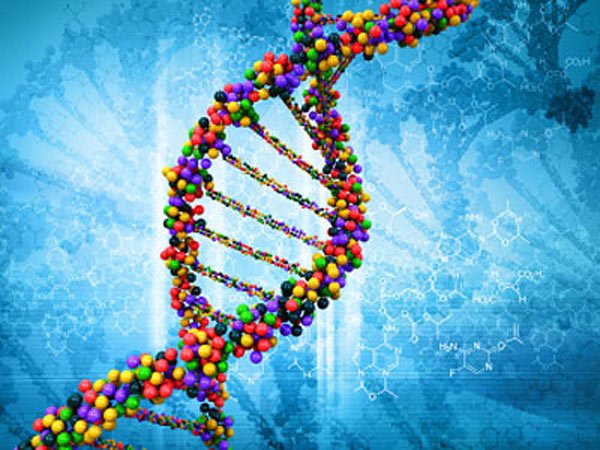
What is the name of the genetic material that is inside the nucleus?
a)
ER
b)
ATP
c)
YOLO
d)
DNA
55.
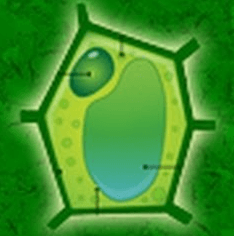
A rigid layer that lies outside the cell's membrane is...
a)
Cytoskeleton
b)
Cilia
c)
Cell Wall
d)
Flagella
56.
A group of tissues that work together to perform a similar function is called_____. (Examples include the heart, lungs or stomach)
a)
cells
b)
tissues
c)
organs
d)
organ system
57.
Which of the following is NOT a type of tissue?
a)
Connective
b)
Muscular
c)
Endocrine
d)
Nervous
58.
What is the largest organ in your body?
a)
Heart
b)
Lungs
c)
Large Intestine
d)
Skin
59.

Which protein is responsible for color pigments in your skin that protect you from UV light?
a)
Collagen
b)
Elastin
c)
Keratin
d)
Melanin
60.

Which protein is responsible making up nails, hair, animal horns, tusks, and claws?
a)
Collagen
b)
Elastin
c)
Keratin
d)
Melanin
61.

Layers of dead skin cells make up the majority of the ___.
a)
Epidermis
b)
Dermis
c)
Subcutaneous Layer
d)
Subdermal Layer
62.

Hmm...which of the following is NOT a type of muscle?
a)
Cardiac
b)
Rough
c)
Skeletal
d)
Smooth
63.

Which of the following proteins overlap to cause a muscle contraction?
a)
Keratin & Fibrin
b)
Fibrin & Collagen
c)
Actin & Myosin
d)
Flexin & Buffin
64.

The two upper chambers of the heart are called:
a)
Myocardium
b)
Endocardium
c)
Atria
d)
Ventricles
65.

What part of the bone is responsible for creating new blood cells?
a)
Periosteum
b)
Compact Bone
c)
Spongy Bone
d)
Bone Marrow
66.

Which of the following vessels carry blood away from the heart?
a)
Arteries
b)
Capillaries
c)
Veins
d)
Lymphatic Vessels
67.

What is Vitamin A used for in the human body?
a)
Skin & Vision Care
b)
Increasing muscle mass
c)
Decreasing fat storage
d)
Boosting Immune System
68.
Hormone produced by the Adrenal Glands
a)
adrenaline
adrenaline
b)
Thyroxine
c)
Testosterone
Testosterone
d)
Growth hormone
Growth hormone
69.
Organ system that TRANSPORTS materials around your body
a)
Circulatory
b)
Respiratory
c)
Digestive
d)
Endocrine
70.
What is HOMEOSTASIS?
a)
Body's ability to maintain a STABLE internal environment
b)
Body's ability to maintain an internal environment that is constantly CHANGING
c)
When you have a fever
d)
An infection
71.
The body system that helps you heal is the _______________
a)
circulatory system
b)
immune system
c)
integumentary system
d)
respiratory system
72.
Digested food is absorbed in the_______.
a)
colon
b)
large intestine
c)
small intestine
d)
stomach
73.
The muscular organ that pumps blood through out your body is your _________
a)
diaphragm
b)
heart
c)
larynx
d)
pharynx
74.
Which organ system does the spleen belong to?
a)
endocrine
b)
muscular
c)
lymphatic
d)
nervous
75.
Which organ belongs to the reproductive system?
a)
gluteus maximus
b)
humerus
c)
radial artery
d)
testes
76.
This system supports and protects vital organs, stores minerals, and produces red blood cells.
a)
skeletal
b)
muscular
c)
circulatory
d)
nervous
77.
This system fights pathogens (germs) and produces and stores white blood cells.
a)
immune
b)
muscular
c)
endocrine
d)
integumentary
78.
What two systems work together to provide the cells with glucose?
a)
circulatory and respiratory
b)
digestive and resoiraory
c)
digestive and circulatory
d)
skeletal and muscular
79.
Which system sends electrical messages that helps control the body's responses to internal and external changes?
a)
nervous
b)
endocrine
c)
reproductive
d)
integumentary
80.

Lauren had pains in her abdomen and, after some tests, her doctor determined she had a stomach ulcer (a sore that develops on the lining of the esophagus, stomach, or small intestine). What body system is impacted the MOST by her condition?
a)
Digestive system
b)
Respiratory system
c)
Circulatory system
d)
Integumentary system
81.

In his teenage years, KC had lots of pimples. At a dermatologist, he was diagnosed with acne (a skin condition that occurs when hair follicles plug with oil and dead skin cells). What body system was impacted the MOST by his condition?
a)
Integumentary system
b)
Nervous system
c)
Digestive system
d)
Reproductive system
82.

Kevin has a severe headache and stiff neck. He goes to the doctor and discovers he has meningitis (Inflammation of brain and spinal cord membranes, typically caused by an infection). What body system is impacted the MOST by his condition?
a)
Nervous system
b)
Digestive system
c)
Respiratory system
d)
Circulatory system
83.

Juan has been coughing and has been having trouble breathing. He goes to the doctor and discovers he has pneumonia (Infection that inflames air sacs in one or both lungs, which may fill with fluid.) What body system is impacted the MOST by his condition?
a)
Muscular system
b)
Respiratory system
c)
Endocrine system
d)
Digestive system
100 %

