
 Worksheets
Life Science- Cells
Total questions: 83
Worksheet time: 59mins
This organelle converts food into energy for both plant and animal cells.
Chloroplast
Mitochondria
Lysosome
Ribosome
What is the site of photosynthesis?
Ribosome
Mitochondria
Chloroplast
Nucleus
When many organ systems work together, what can they form?
Organ
Cells
Organ system
Organism

This is an example of........
organ system
cells
organ
tissue

This is an example of ........
cell
organ system
organ
tissue
Which organelle is only found in a plant cell?
nucleus
chloroplast
mitochondria
cell membrane

Directs all cell activities through the DNA located there.
Lysosomes
Nucleus
Ribosomes
Mitochondria
Which of the following is directly involved in the transportation of materials within the cell?
Endoplasmic Reticulum
Vacuole
Lysosome
Mitochondria
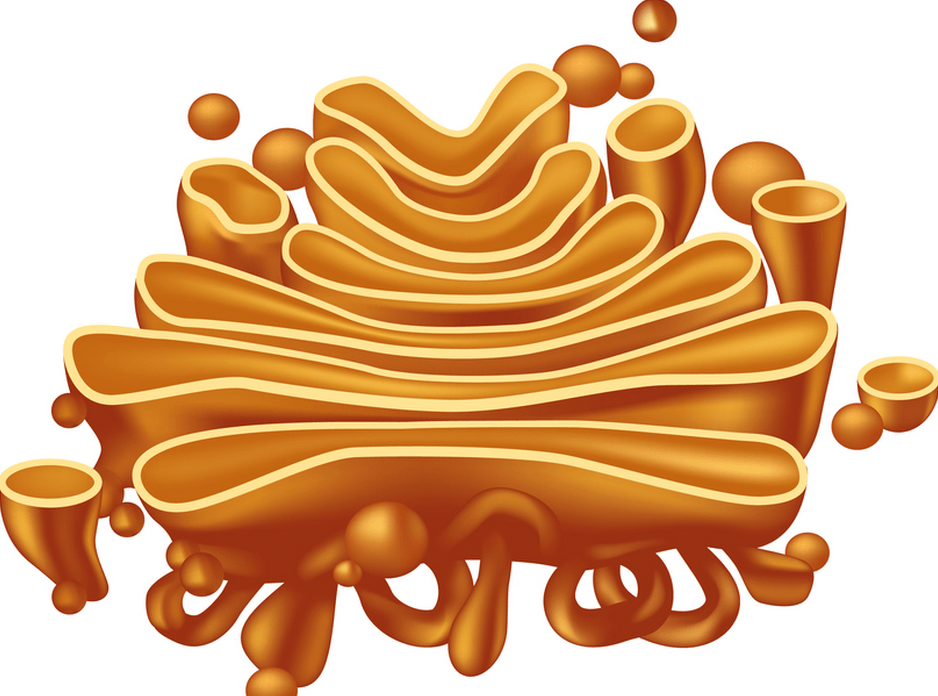
I am a machine that packages and ships proteins! Who am I?
vacuole
ribosome
mitochondrion
golgi apparatus
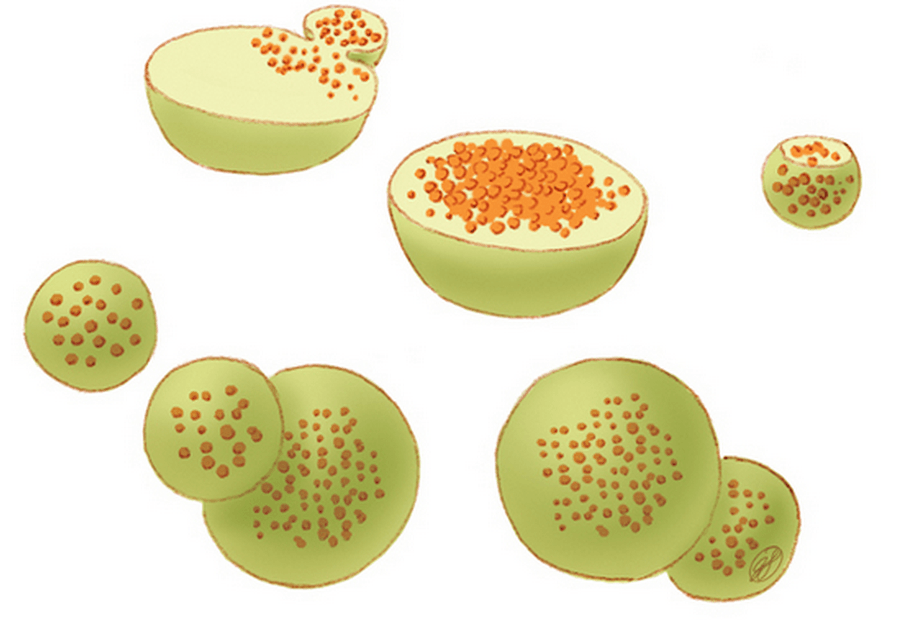
You might think of me as a trash collector, but perhaps recycler would be more accurate. What am I?
mitochondria
lysosome
vacuole
ribosome
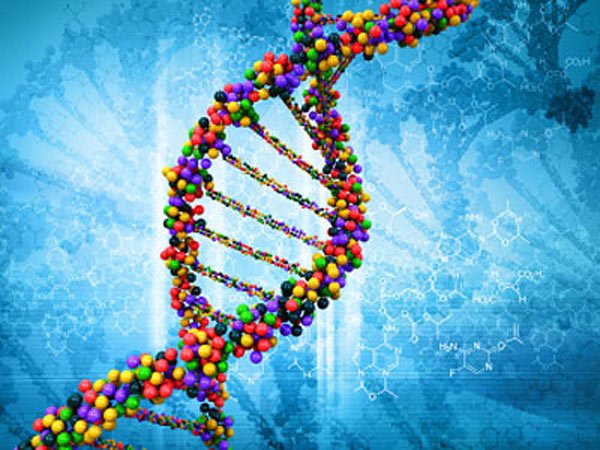

Which part of the cell is often referred to as "the brain of the cell"?
Nuclear membrane
Endoplasmic reticulum
Nucleus
Mitochondria

I am the outermost layer of an animal cell. What am I?
cell wall
nucleus
cell membrane
cell skin
Where are proteins made?
Golgi body
Mitochondria
Chromosomes
Ribosomes
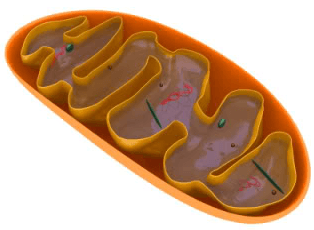
What are the tiny organelles that convert glucose into ATP?
Ribosomes
Vesicles
Cytoskeleton
Mitochondria
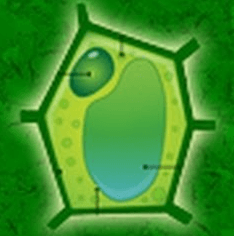
A rigid layer that lies outside the cell's membrane is...
Cytoskeleton
Cilia
Cell Wall
Flagella
What organelle is called the "powerhouse" of a cell?
Endoplasmic Reticulum
Nucleus
Mitochondria
Nucleolus
Which organelle helps with cell digestion?
Lysosomes
Ribosomes
Golgi Complex
ER
What is the gel-like substance inside of cells called?
photoplasm
photosynthesis
cytoskeleton
cytoplasm
Who is the main producer of ATP in all eukaryotes?
Chloroplast
Mitochondria
Lysosome
Smooth ER
A group of tissues that work together to perform a similar function is called what? (Examples include the heart, lungs, or stomach)
Cells
Tissues
Organs
Organ System
What is a group of cells that have similar functions called? Examples are nervous, epithelial, muscle and connective.
cells
tissues
organs
atoms
Organs that work together to perform a related function are called _____________?
cells
tissues
organ system
organs

According to the cell theory, where did this cell originate from?
another living cell
energy from the sun
a multicellular organism
the nonliving environment

What do all of these organisms have in common?
They all have uniform offspring
They are all made of cells
They possess the same features
They have the same internal and external structures
What controls the entry and exit of substances in a cell?
Mitochondria
Cell Membrane
Cell Wall
Nucleus

What would happen to the plant cell without chloroplasts?
There wouldn't be an organelle that performs photosynthesis
There wouldn't be an organelle that serves as the reservoir for water and waste
There wouldn't be an organelle that regulates what comes in and out of the cell
There wouldn't be an organelle that makes necessary proteins

Robert Hooke, Anton van Leeuwenhoek, Theodor Schwann, Rudolf Virchow, and Matthias Schleiden were all responsible for which theory?
The Theory of Gravity
The Theory of Relativity
The Cell Theory
The Theory of Continental Drift
Which tool do you use to view cells?
Metric ruler
Centrifuge
Microscope
Pipette
Which of the following is NOT a part of cell theory?
All non-living things are made of cells
All cells come from pre-existing cells
Cells are the basic unit of structure and function of all living things
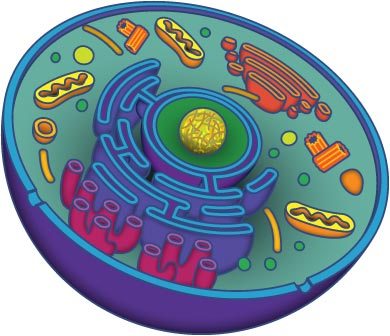
All living things are made up of...
cells
cell tissues
organs
organ systems
All cells come from ___________ cells.
pregnant
pre-existing
paternal
pin size
Why are rocks not considered living?
They never move
They aren't needed by humans
They are not made of cells
They don't break down
What is the basic structural and functional unit of all living things?
atom
cell
molecule
human
What is an organism made of one cell called?
Unicellular
Multicellular

What is the fluid inside a cell called?
Endoplasmic Reticulum
Orange Juice
Water
Cytoplasm

This organelle helps plants maintain their rigid structure.
Cell wall
Cell membrane
Chloroplast
Nucleus
Cells with a nucleus and membrane-bound organelles are called ______________.
prokaryotes
eukaryotes
bacteria
protists
What is the function of a cell wall?
To protect and support the cell
To perform different functions in each cell
To prevent water from passing through it
To prevent oxygen from entering the cell
In which part of the plant cell does the process of photosynthesis take place?
nucleus
mitochondria
chloroplasts
vacuoles
Who discovered that all plants are made of cells?
Anton van Leeuwenhoek
Theordor Schwann
Robert Hooke
Mattias Schleiden
Who was the first person to see cells under the microscope and give them their name?
Mattias Schleiden
Robert Hooke
Theordor Schwann
Anton van Leeuwenhoek
Chloroplasts are organelles that convert light energy to sugars. These organelles are found only in plants. Which organelles are found only in animals?
Golgi apparatus
lysosomes
mitochondria
ribosomes
Which organelle is NOT found in a prokaryote?
nucleus
cell membrane
Chromosomes (DNA)
ribosomes

What is a cell classified as?
A basic unit of structure and function for all living organisms
A unit based only on plants and animals that are living
In order to sustain life, what must all cells do?
Digest nutrients and water
Excrete waste and fluids
Maintain a homeostasis environment (aka cellular respiration and regulation)
All of the above
Which is NOT a part of the Cell Theory?
New cells are produced from existing cells
All living things are composed of cells
Only eukaryotic cells have a nucleus
Cells are the basic unit of structure and function in living things
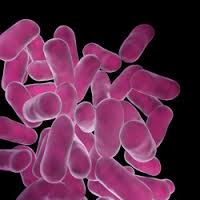
How are unicellular organisms different from multicellular organisms?
There are no differences.
They are made of many cells.
They are only classified as prokaryotes.
They are made of only one cell.
What do viruses need to reproduce?
They need genetic material
They need a host cell
They need bacteria
They need insulin
When a virus invades a living cell, its _______ takes over the cell's functions.
outer coat
genetic material
core
cytoplasm
What provides direct energy for a virus?
Food
Its host
The sun
A parasite
A tiny non-living particle that invades and then multiplies inside a living cell is called a:
vaccine
virus
bacteriophage
Do antibiotics kill viruses?
True
False
The reasons why viruses are considered nonliving are:
They are not cellular
They cannot reproduce on their own
They cannot make proteins
All of the above
How would you describe the size of a virus?
Smaller than bacteria
Larger than a parasite
About the size of a dime
Smaller than a proton
What do viruses need to reproduce?
They need genetic material
They need a host cell
They need bacteria
They need insulin

Which part of the phage contains the DNA?
A
B
C
D
What are viruses?
Prokaryotic
Eukaryotic
Non-living
Endospores

What is this process?
Phagocytosis
Lytic cycle
Lysogenic cycle
Formation of antibodies
Certain viruses only infect certain cells.
True
False
Depends upon the DNA in the virus
Depends upon the bacteriophage
Which viral life cycle kills its host cell by lysing?
Lytic (active)
Mitosis
Lysogenic (latent)
Nucleic cycle

Organelle 1 is a(n)
ribosome
vacuole
nucleus
lysosome
Organelle 2 is a(n)
ribosome.
vacuole.
nucleus.
lysosome.
Organelle 3 is a(n)
ribosome.
vacuole.
nucleus.
lysosome.

Organelle 7 is a(n)
endoplasmic reticulum.
golgi apparatus/body.
mitochondrion.
cell membrane.
Organelle 8 is a(n)
endoplasmic reticulum.
golgi apparatus/body.
mitochondrion.
cell membrane.

Organelle 3 is a(n)
ribosome.
vacuole.
nucleus.
Organelle 4 is a(n)
cell membrane.
cell wall.
What is Organelle 5?
Cell membrane.
Cell wall.
Organelle 8 is a
chloroplast
mitochondrion
Organelle 9 is a(n)
chloroplast.
mitochondrion.

Is this a plant cell or an animal cell? Choose all that are correct.
It's a plant cell because it has chloroplasts.
It's an animal cell because it doesn't have a cell wall.
It can't be a plant cell because it has a flagellum.
It can't be a plant cell because it lacks a central vacuole.

What organelle is labeled as F?
Vacuole
Mitochondria
Nucleolus
Cell Membrane
What organelle is labeled J?
Rough Endoplasmic Reticulum
Smooth Endoplasmic Reticulum
Golgi Body
Nucleus
What organelle is labeled L?
Cell Membrane
Cell Wall
Cytoplasm
Nucleus
What organelle is labeled as 'A'?
Cell Membrane
Cell Wall
Cytoplasm
Nucleus

Which cell organelle is labeled as 'A'?
Cell wall
Cell membrane
Vacuole
Nucleus
Which cell organelle is labeled as B?
Cell wall
Cell membrane
Vacuole
Nucleus
Which cell organelle is labeled as 'H'?
Cytoplasm
Lysosomes
Mitochondria
Golgi Body

