
 Worksheets
2017 Semester Exam Study Guide
Total questions: 145
Worksheet time: 2hrs 2mins
Name
Class
Date
1.
If a lab fire erupts, immediately:
a)
A. Notify (or tell) your teacher
b)
B. Run and scream
c)
C. Throw water at the fire
d)
D. Open the windows
2.
You are working in the lab using glassware. Your partner drops a glass beaker and it shatters. A piece of glass gets in his eyes. What should he have been wearing?
a)
A. Gloves
b)
B. Sun glasses
c)
C. Safety Goggles
d)
D. A lab aporn
3.
You are in lab and your partner accidentally gets their hair stuck in a triple beam balance. What should have your partner done?
a)
A. Worn a hat in class
b)
B. Skipped class
c)
C. Got a hair cut
d)
D. Tied/pulled their hair back
4.
If you have been injured in the lab, what should you do first?
a)
A. Apply the first aid yourself
b)
B. Go to doctor after school in a few hours
c)
C Tell your science teacher immediately
d)
D. Not tell anyone
5.
What tool do we use to measure length?
a)
graduated cylinder
b)
ruler
c)
triple beam balance
d)
both triple beam balance & graduated cylinder
6.
What tool do we use to measure mass/weight?
a)
graduated cylinder
b)
ruler
c)
triple beam balance
d)
both triple beam balance & graduated cylinder
7.
What tool do we use to measure volume?
a)
both triple beam balance & ruler
b)
both ruler & graduated cylinder
c)
triple beam balance
d)
both triple beam balance & graduated cylinder
8.

Part 9
a)
Body tube
b)
Eyepiece
c)
Objective
d)
Light Source
9.

Part 10
a)
Stage
b)
Arm
c)
Base
d)
Diaphragm
10.

Part 11
a)
Stage Clips
b)
Stage
c)
Diaphragm
d)
Illuminator
11.
This holds the eye piece and connects it to the objective
a)
Arm
b)
Base
c)
Body Tube
d)
Objective
12.
Uses a beam of electrons to create an image of the specimen
a)
Binocular Microscope
b)
Compound Microscope
c)
Electron Microscope
d)
Simple Microscope
13.
Similar to a magnifying glass and has only one lens
a)
Binocular Microscope
b)
Compound Microscope
c)
Electron Microscope
d)
Simple Microscope
14.
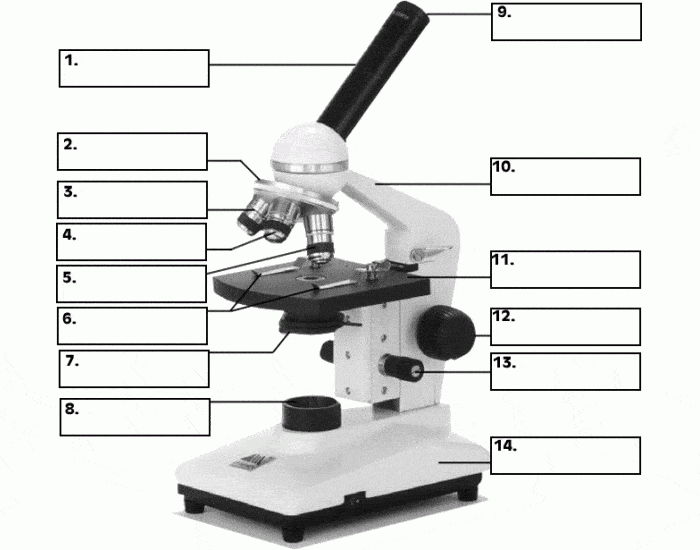
Part 12
a)
Fine Adjustment Knob
b)
Coarse Adjustment Knob
c)
Diaphragm
d)
Objective
15.

Part 13
a)
Fine Adjustment Knob
b)
Course Adjustment Knob
c)
Stage
d)
Diaphragm
16.
This bring the specimen into sharp focus
a)
Coarse Adjustment Knob
b)
Fine Adjustment Knob
c)
Eyepiece
d)
Diaphragm
17.
Source of light usually situated at the bottom/ base of the microscope
a)
Eyepiece
b)
Diaphragm
c)
Objective
d)
Illuminator
18.
This supports the microscope to stand and provides stability
a)
Stage
b)
Stand
c)
Base
d)
Arm
19.
Used to hold the slides in place
a)
Stage
b)
Stage Clips
c)
Diaphragm
d)
Arm
20.
The flat surface where the slide with the specimen is placed
a)
Base
b)
Arm
c)
Stage
d)
Diaphragm
21.
A possible explanation to a problem that has not yet been tested.
a)
data
b)
theory
c)
hypothesis
d)
fact
22.
This variable in an experiment is the one being deliberately changed by the scientist.
a)
dependent variable
b)
independent variable
c)
data
d)
control group
23.
A series of steps used by scientists to solve a problem or answer a question.
a)
scientific method
b)
recipe
c)
data collection
d)
metric system
24.
Mr. S. sets up an experiment to see how the mass of a ball affects the distance it rolls off a ramp. Identify the independent variable.
a)
distance traveled by the ball
b)
height of the ramp
c)
mass of the ball
d)
weight of the ball
25.
Mr. S. sets up an experiment to see how the mass of a ball affects the distance it rolls off a ramp. Identify the dependent variable.
a)
height of the ramp
b)
distance traveled by the ball
c)
mass of the ball
d)
weight of the ball
26.
A student is planning an experiment to find out how the height from which he drops a ball affects how high the ball bounces. The dependent variable is the _____.
a)
Diameter of the ball
b)
Force acting on the ball
c)
Height that the ball bounces
d)
Height from which the ball is dropped
27.
When experimenting with the growth of a plant, a scientist uses three (of the same type of) plants, two different fertilizers, equal light, and equal water. What type of variable is the fertilizer?
a)
Dependent
b)
Independent
c)
Control
d)
Compound
28.
If I study for my scientific method quiz, then I will have a better test score. What is the dependent variable?
a)
Scientific Method
b)
Studying
c)
Independent variable
d)
Test score
29.
What is a hypothesis?
a)
A hypothesis is the right answer to an experiment.
b)
A hypothesis is the wrong answer to an experiment.
c)
A hypothesis is an educated guess.
d)
I don't know.
30.
Which is NOT a step in the scientific method?
a)
Make observation
b)
Form a theory
c)
Collect data
d)
Form a hypothesis
31.
What step does every scientific experiment begin with?
a)
hypothesis
b)
question/problem
c)
procedures
d)
conclusion
32.
Why do we want to test only one independent variable at a time?
a)
Because it is hard to setup a data table with more than one variable
b)
To better identify what is causing the changes
c)
It is what has always been done
d)
It's easier to perform the experiment
33.
If the environment gets cold, we will often shiver in order to:
a)
keep body temperature the same as the external temperature
b)
decrease body temperature
c)
increase body temperature
d)
regulate blood pressure
34.
The maintenance of an organism’s internal environment is called:
a)
compensating
b)
homeostasis
c)
balancing
d)
routine
35.
The "cause" for something to happen is the
a)
response
b)
effect
c)
stimulus
d)
homeostasis
36.
The "effect" of a given stimulus is the...
a)
response
b)
stimulus
c)
cause
d)
result
37.
What is a factor that is measured for change in an experiment?
a)
control
b)
constant
c)
independent variable
d)
dependent variable
38.
What part of an experiment contains the data tables and graphs?
a)
Results
b)
Conclusion
c)
Hypothesis
d)
Materials
39.
The part of the experiment that does not contain the independent variable. Used for comparison.
a)
Control Group
b)
Experimental Group
c)
Results
d)
Data
40.
What are all the things that are kept the same in an experiment?
a)
controls
b)
data
c)
constants
d)
independent variables
41.
What is the part of the experiment that contains the independent variable?
a)
control group
b)
experimental group
c)
hypothesis
d)
dependent variable
42.
all matter is made of what
a)
energy
b)
atoms
c)
electrons
d)
compounds
43.
The positive particles of an atom are
a)
electrons
b)
positrons
c)
neutrons
d)
protons
44.
the central region of an atom where its neutrons and protons are is its
a)
nucleus
b)
electron cloud
c)
core
d)
center
45.
the central region of an atom where its neutrons and protons are is its
a)
nucleus
b)
electron cloud
c)
core
d)
center
46.
an atom with atomic number 6 would have how many protons
a)
6
b)
12
c)
3
d)
cannot be determined
47.
Particles in an atom that are neutral and have no charge are
a)
negatrons
b)
electrons
c)
neutrons
d)
protons
48.
True or False? Neutrons have a negative charge
a)
True
b)
False
49.
A particle that moves around the nucleus is a(n)...
a)
Proton
b)
Neutron
c)
Electron
d)
Quark
50.
What property of water allows it to be such a versatile solvent that it is often called the "universal solvent?"
a)
Purity
b)
Polarity and cohesion
c)
High heat capacity
d)
Expansion upon freezing
51.

The attraction that causes water and other liquids to form drops on thin films is called ________________. This is also water’s ability to be attraction to other water molecules.
a)
adhesion
b)
capillary action
c)
cohesion
d)
surface tension
52.

A molecule with electrically charged areas is called a _______________.
a)
magnet
b)
polar molecule
c)
solution
d)
electrical molecule
53.
Water is a universal solvent because it...
a)
It can be found anywhere
b)
It freezes when it gets cold
c)
floats when frozen
d)
Dissolves most substances
54.

A Compound that is being dissolved is called a
a)
Solution
b)
Solute
c)
Solvent
d)
Suspension
55.
Which characteristic of water will allow a paperclip to remain floating on water when the paperclip is gently placed on top of the water?
a)
adhesion
b)
surface tension
c)
solvent properties
d)
nonpolar
56.
Valence electrons are those in the ______ energy level of an atom.
a)
innermost
b)
outermost
c)
middle
57.
A charged atom is also called a(n) ______.
a)
ion
b)
isotope
c)
compound
d)
polyatomic compound
58.
Ionic Bonding involves...
a)
The transfer of protons
b)
The transfer of nuetrons
c)
The transfer of electrons
d)
None Of the above
59.
Covalent compounds
a)
Share electrons
b)
transfer electrons
c)
contain a sea of electrons
d)
conduct electricity
60.
What two types of atoms make a covalent bond?
a)
2 Nonmetals
b)
1 Nonmetal and 1 Metal
c)
2 Metals
d)
2 Noble Gases
61.

Which of these is covalent?
a)
NaCl
b)
Pb(NO3)2
c)
CO2
d)
AlCl3
62.
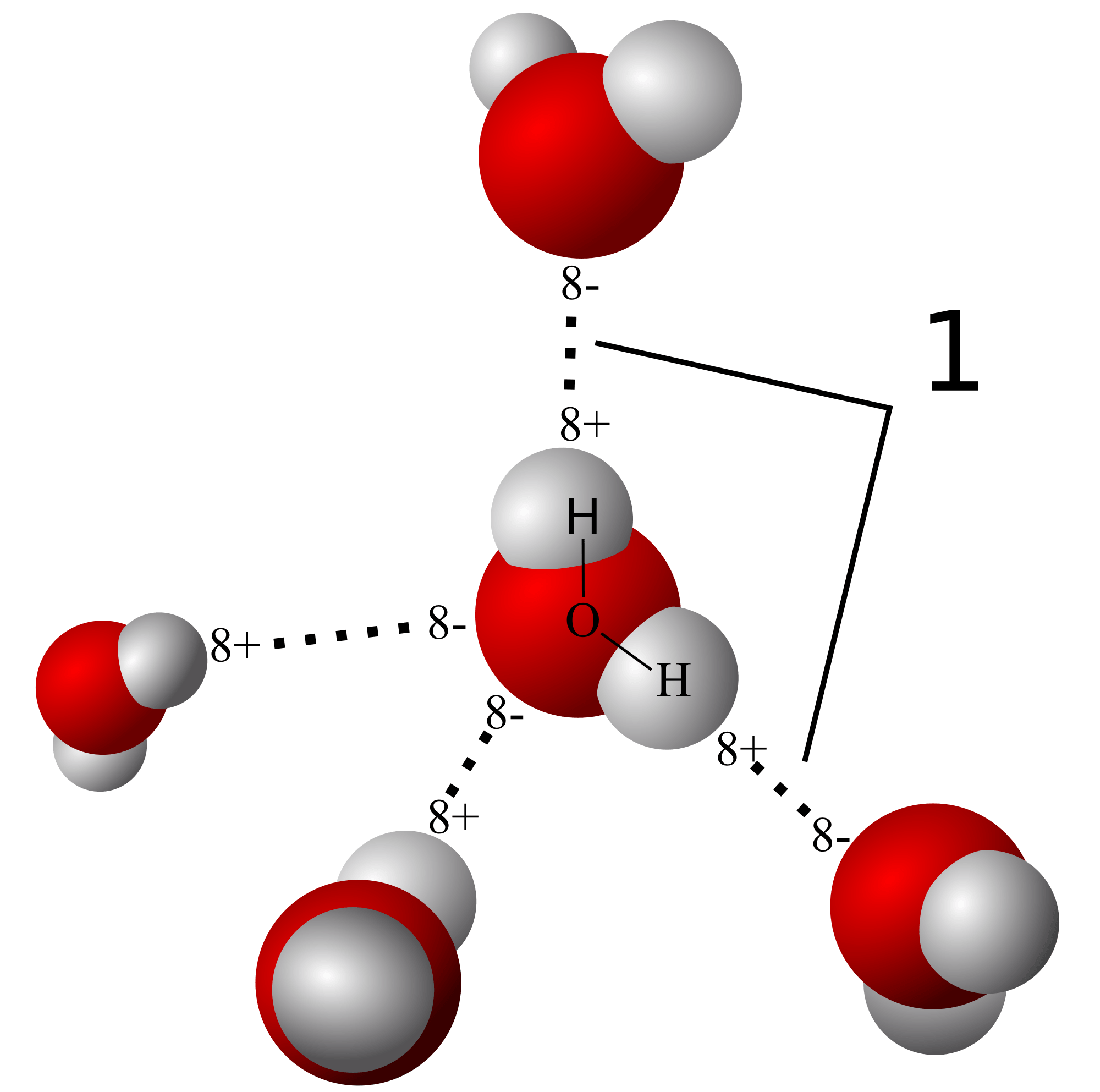
Attractions between water molecules are called
a)
Covalent bonds
b)
Ionic bonds
c)
Polar bonds
d)
Hydrogen bonds
63.
Most of water's properties occur because it is...
a)
A polar covalent
b)
Made with oxygen
c)
A polar ionic
d)
Makes up 75% of the Earth
64.

substance in a solution that dissolves the other substance and is present in the greater amount
a)
solvent
b)
solute
c)
solution
d)
acid
65.

substance in a solution that is dissolved and is present in a lesser amount
a)
base
b)
solution
c)
solvent
d)
solute
66.

uniform mixture of two or more substances
a)
solvent
b)
acid
c)
solution
d)
base
67.
If an acid is combined with a base of equal strength, the result will most likely be
a)
a neutral solution.
b)
a stronger acid.
c)
impossible to tell without testing the pH.
d)
a stronger base
68.
Which of the following is a base?
a)
orange juice
b)
water
c)
vinegar
d)
dishwashing detergent
69.
The pH of a solution is tested, and it is found to be a basic solution. Of the following choices, what could the pH have been?
a)
3
b)
9
c)
7
d)
5
70.
Human blood has a pH between 7.35 and 7.45. Which of the following best describes human blood?
a)
strongly acidic
b)
slightly acidic
c)
strongly basic
d)
slightly basic
71.
What would be considered the weakest base?
a)
8
b)
14
c)
7.8
d)
11.6
72.
Pure water has a pH of 7. Pure water _______.
a)
is a base
b)
is a neutral substance
c)
could be either an acid or a base
d)
is an acid
73.
Bases are ____________.
a)
corrosive
b)
slippery
c)
sour
d)
low on the pH scale
74.
Water has a pH of _____, meaning that it is neutral.
a)
0
b)
14
c)
1
d)
7
75.
What is the range of pH values in an acidic solution?
a)
0-7
b)
7-14
c)
15-239058204958
d)
pH = 7
76.
Which is the stronger acid?
a)
pH 1
b)
pH 4
c)
pH 8
d)
pH 13
77.
Enzymes are considered to be
a)
Lipids
b)
Carbohydrate
c)
Protein
d)
Nucleic Acid
78.
What is the purpose of an enzyme?
a)
give permission for the reaction
b)
raise activation energy
c)
speed up reactions
d)
control how many reactions occur
79.

What is structure A?
a)
Substrate
b)
Active site
c)
Enzyme
d)
Products
80.

What is structure D?
a)
Substrate
b)
Active site
c)
Enzyme
d)
Products
81.

What is structure C?
a)
Substrate
b)
Active site
c)
Enzyme
d)
Products
82.

What is structure E, F, G?
a)
Substrate
b)
Active site
c)
Enzyme
d)
Products
83.
How do enzymes speed up chemical reaction?
a)
Increasing activation energy
b)
Decreasing activation energy
c)
Increasing deactivation energy
d)
Decreasing deactivation energy
84.
What is a substance called if it speeds up a chemical reaction?
a)
reusable
b)
catalyst
c)
specific
d)
fragile
85.
Proteins are made of monomers called ___________
a)
Nucleotides
b)
Monosaccharides
c)
Amino Acids
d)
Glycerol and fatty acids
86.
The element _______is found in all of the organic compounds.
a)
Iron
b)
Nitrogen
c)
Carbon
d)
Oxygen
87.
_________ are composed out of carbon (C), hydrogen (H), oxygen (O), nitrogen (N), and phosphorus (P)
a)
Carbohydrates
b)
Lipids
c)
Proteins
d)
Nucleic Acids
88.
DNA and RNA are examples of
a)
Carbohydrates
b)
Lipids
c)
Proteins
d)
Nucleic Acids
89.
Nucleotides are monomers of
a)
Carbohydrates
b)
Lipids
c)
Proteins
d)
Nucleic Acids
90.
Monosaccharides are monomers of
a)
Carbohydrates
b)
Lipids
c)
Proteins
d)
Nucleic Acids
91.
What is the function of nucleic acids?
a)
store genetic information
b)
store energy (long-term)
c)
store energy (short-term)
d)
build skin, hair, nails, muscles
92.

Which macromolecule is shown?
View Figure 4 (if not visible)
View Figure 4 (if not visible)
a)
lipid
b)
protein
c)
nucleic acid
d)
carbohydrate
93.
The following examples Glucose, Starch, Cellulose, and Glycogen belong to which macromolecule:
a)
Carbohydrates
b)
Lipids
c)
Proteins
d)
Nucleic Acid
94.
What is found in both plant and animal cells but is much larger in plant cells?
a)
Nucleus
b)
Mitochondria
c)
Chloroplast
d)
Vacuole
95.
Where are proteins made?
a)
Golgi body
b)
Mitoichondria
c)
Chromosomes
d)
Ribosomes
96.
A phospholipid has 2 parts. What are they called?
a)
Hydrophilic Head, Hydrophobic Tail
b)
Hydrophobic Head, Hydrophilic Tail
97.
Which structures are found in every living cell?
a)
cell membrane and cytoplasm
b)
chloroplasts and mitochondria
c)
a cell wall and nucleus
d)
chloroplasts and cell wall
98.
Which cell structure is found in plant and animals cells and controls what can come into or leave a cell?
a)
cell membrane
b)
cytoplasm
c)
nucleus
d)
vacuole
99.
Where is the DNA found in a prokaryotic cell?
a)
floating around in the cytoplasm
b)
in the nucleus
100.
What type of cell does not have a nucleus?
a)
eukaryotic
b)
prokaryotic
101.

Identify letter K.
a)
nucleus
b)
mitochondria
c)
endoplasmic reticulum
102.
Identify letter I.
a)
nucleus
b)
mitochondria
c)
cell membrane
103.
Identify letter H.
a)
nucleus
b)
mitochondria
c)
Golgi complex
104.

Identify letter G.
a)
Golgi complex
b)
ribosome
c)
cell wall
105.
Identify letter B.
a)
Golgi complex
b)
nucleus
c)
cell wall
106.
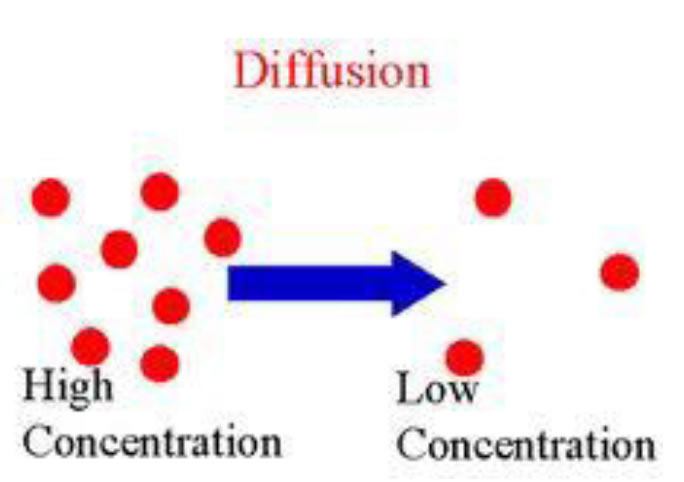
Movement of particles from high to low concentration.
a)
Passive Transport
b)
Active Transport
107.
a)
Passive Transport
b)
Active Transport
108.

a)
Passive Transport
b)
Active Transport
109.
This uses energy
a)
endocytosis
b)
exocytosis
c)
both
110.
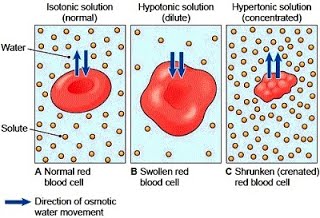
Osmosis is the movement of _____ across a membrane.
a)
food
b)
energy
c)
oxygen
d)
water
111.

This picture represents which type of cellular transport?
a)
passive transport
b)
endocytosis
c)
exocytosis
d)
osmosis
112.

The cell below is in a _________ solution.
a)
Hypotonic
b)
Hypertonic
c)
Isotonic
113.

The cell below is in a _____________ solution.
a)
Hypertonic
b)
Hypotonic
c)
Isotonic
114.
A cell in a hypotonic solution will
a)
swell
b)
shrink
c)
stay the same size
d)
impossible to tell
115.
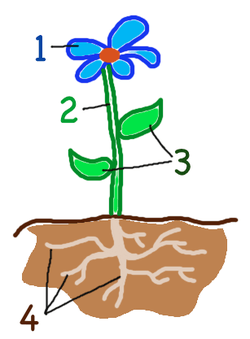
What part of the plant is #1?
a)
flower
b)
stem
c)
root
d)
leaf
116.
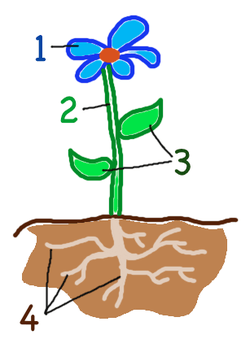
What part of the plant is #3?
a)
leaf
b)
root
c)
flower
d)
stem
117.
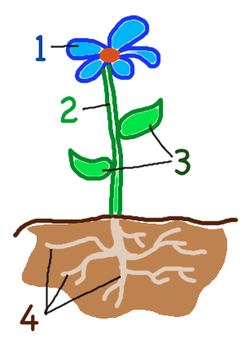
What part of the plant is #4?
a)
leaf
b)
flower
c)
stem
d)
root
118.

The stalk connecting the ovaries and stigmas.
a)
filament
b)
pistil
c)
style
d)
anther
119.

A flowering plant with leaves that have parallel veins.
a)
gymnosperms
b)
angiosperms
c)
dicot
d)
monocot
120.
The stalks in a flower that produce the male reproductive cells
a)
pistil
b)
stamen
c)
filament
d)
stigma
121.

Small leaf-like structures forming an outer circle at the base of a flower.
a)
petals
b)
sepal
c)
anthers
d)
dicots
122.

Their leaves are not veined, and the flower parts are usually in fours or fives.
a)
monocot
b)
dicot
c)
angiosperm
d)
gymnosperm
123.
What is the part of the flower that is brightly colored to attract pollinators?
a)
Petals
b)
Stamen
c)
Pistil
d)
Sepals
124.
What is the waxy layer on leaves?
a)
Chloroplasts
b)
Plastic
c)
Wax
d)
Cuticle
125.
What is the function of the cuticle on a leaf?
a)
to keep water from entering the leaf
b)
to keep water from leaving the leaf
c)
to keep bacteria out of the leaf
d)
to keep oxygen in the leaf
126.
Which of the following is the correct equation for PHOTOSYNTHESIS?
a)
CO2 + light + H2O --> O2 + Sugar
b)
CO2 + sugar + H2O --> O2 + light
c)
O2 + light + H2O --> CO2 + Sugar
d)
CO2 + O2 + H2O --> Light+ Sugar
127.
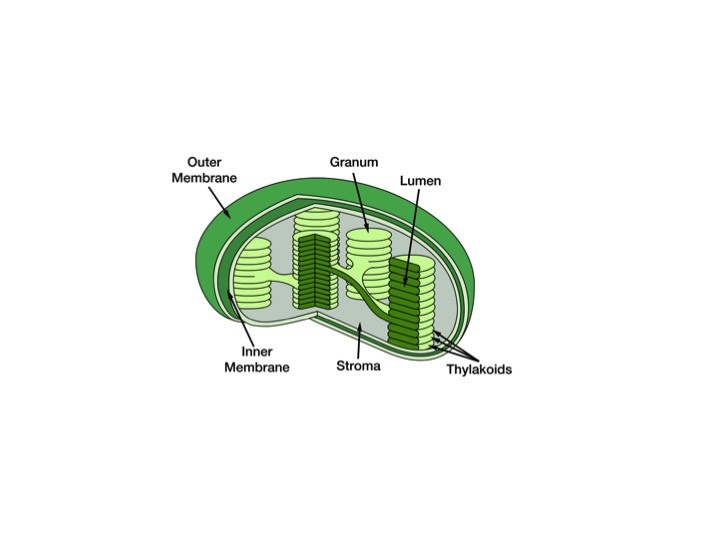
Chloroplasts are...
a)
Structures of animal cells to produce ATP
b)
Organelles where lipids are elaborated
c)
Specialized structures of plants where food is made
d)
Waste organelle of plants
128.

Which organelle from the plant cell is primarily responsible for converting sunlight to energy?
a)
Mitochonria
b)
Nucleus
c)
Vacuole
d)
Chloroplast
129.

Where do the light-dependent reactions occur?
a)
thylakoid membrane
b)
stroma
c)
mesophyll
d)
mitochondria
130.
Cellular respiration takes place in the
a)
nucleus
b)
cytoplasm
c)
ribosomes
d)
mitochondria
131.
Glucose is broken down during which process
a)
Krebs cycle
b)
Calvin cycle
c)
Glycolysis
d)
Photosynthesis
132.
This means that oxygen is needed
a)
anaerobic
b)
aerobic
133.
This means that oxygen is not needed
a)
anaerobic
b)
aerobic
134.
The process by which the nuclear material is divided equally between two new cells
a)
mitosis
b)
cancer
c)
spindle
d)
centromere
135.

Structure (b) is a ____.
a)
chromosome
b)
chromatid
c)
centromere
136.

Structure (a) is a ____.
a)
chromosome
b)
chromatid
c)
centromere
137.

Structure (c) is a ____.
a)
chromosome
b)
chromatid
c)
centromere
138.

Name the phase:
a)
Anaphase
b)
Telophase
c)
Metaphase
d)
Prophase
139.

What is the next phase of mitosis?
a)
Prophase
b)
Metaphase
c)
Anaphase
d)
Telophase
140.

Name the phase:
a)
Prophase
b)
Metaphase
c)
Anaphase
d)
Telophase
141.

Name the phase:
a)
Prophase
b)
Metaphase
c)
Anaphase
d)
Telophase
142.

Name the phase:
a)
Prophase
b)
Metaphase
c)
Anaphase
d)
Telophase
143.

Name the phase:
a)
Prophase
b)
Metaphase
c)
Anaphase
d)
Telophase
144.
The phase in mitosis where chromosomes move away and are pulled apart by spindles to opposite sides of the cell.
a)
prophase
b)
anaphase
c)
metaphase
d)
telephase
145.
Chromosomes condense from long stands into rod like structures.
a)
Prophase
b)
Interphase
100 %

