
 Worksheets
SNC 1D Review for Lab exam
Total questions: 90
Worksheet time: 1hrs 19mins
Name
Class
Date
1.
What is an example of a physical property?
a)
reactivity
b)
color
2.
Example for Physical property
a)
Odor
b)
burns in air
3.
ability to allow heat to flow
a)
Viscosity
b)
Conductivity
c)
Density
d)
Melting/Boiling Point
4.
Which of these is a property of metals?
a)
It's malleable
b)
It can't conduct electricity
c)
They are used in food
d)
It's very brittle
5.
If a material can easily be drawn into the shape of wire, it is.....
a)
Malleable
b)
Magnetic
c)
Ductile
d)
Reactive
6.
What kind of properties result in the substance changing into a new substance?
a)
Liquid Properties
b)
Physical Properties
c)
Chemical Properties
d)
Real Properties
7.
Which of the following tells you that a chemical change has occurred?
a)
Change Shape
b)
Melting
c)
Vaporizing
d)
Change in color
8.
What happens in ALL chemical changes?
a)
Change in state of matter
b)
A new substance is formed
c)
Bubbles are produced
d)
An explosion
9.
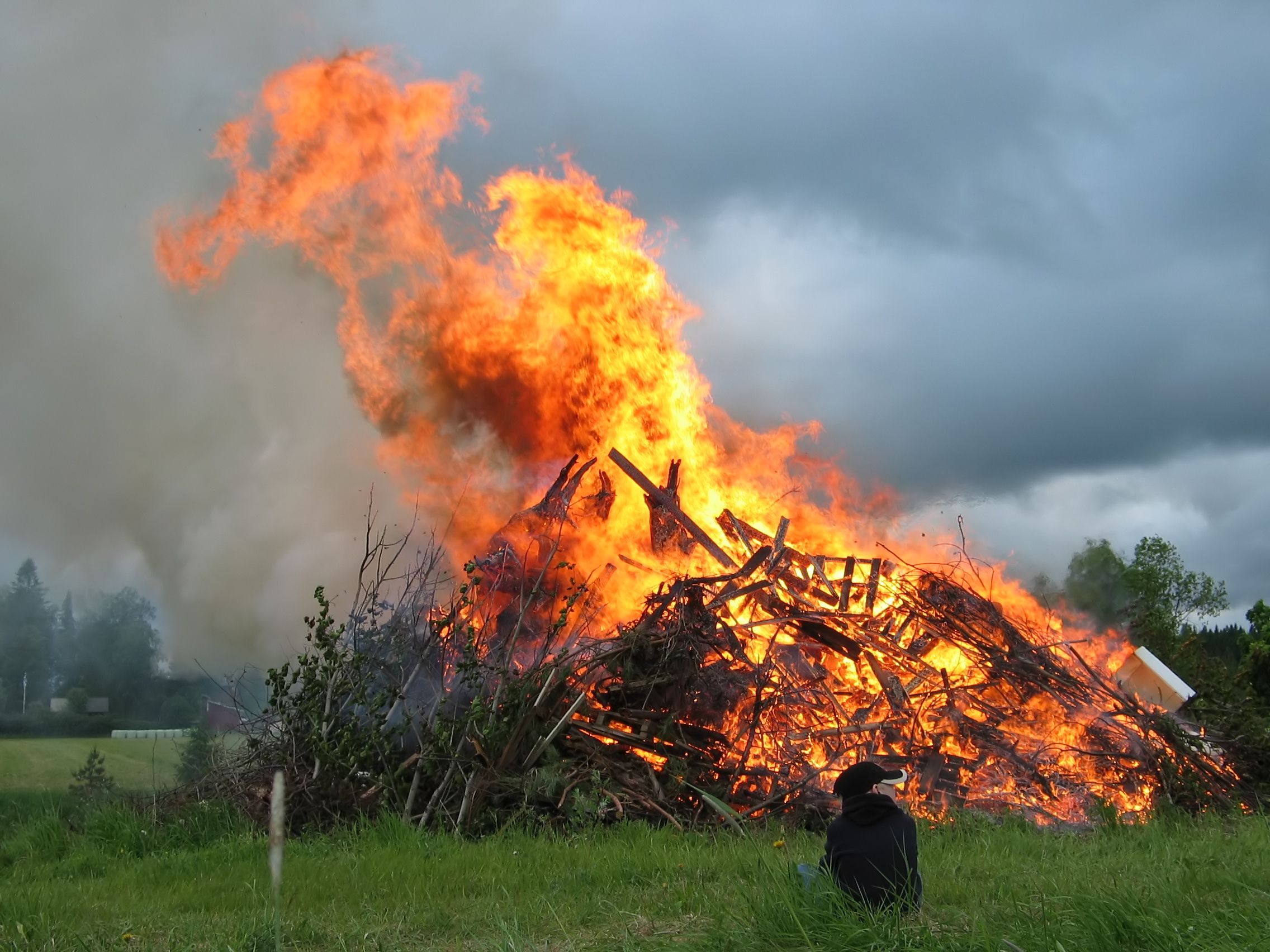
Is wood burning a physical or chemical change?
a)
Physical
b)
Chemical
10.

Is gatorade powder dissolving in water physical or chemical change?
a)
Physical
b)
Chemical
11.

Is making orange juice a physical or chemical change?
a)
Physical
b)
Chemical
12.
Which of the following is a chemical property of water?
a)
Reacts with pure Sodium
b)
Boils at 100 degrees Celsius
c)
Dissolves Sugar
d)
Has a density of 1 g/mL
13.
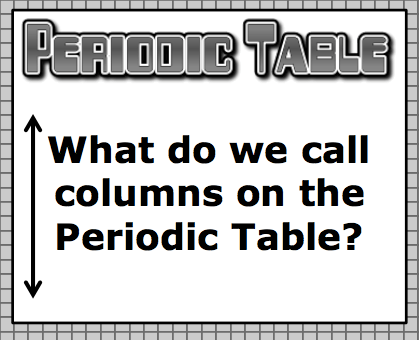
a)
Periods
b)
Groups
14.
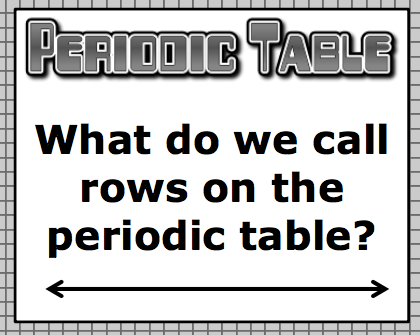
a)
Periods
b)
Groups
15.

a)
energy levels
b)
valence electrons
c)
protons
d)
neutrons
16.
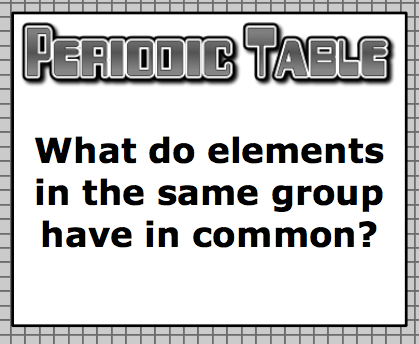
a)
energy levels
b)
valence electrons
c)
protons
d)
neutrons
17.
a)
Same group
b)
Same period
18.
a)
Group 1
b)
Group 17
c)
Group 2
d)
Group 18
19.

a)
Metals
b)
Nonmetals
20.

a)
Metals
b)
Nonmetals
21.
a)
Group 1
b)
Group 17
c)
Group 18
d)
Group 2
22.
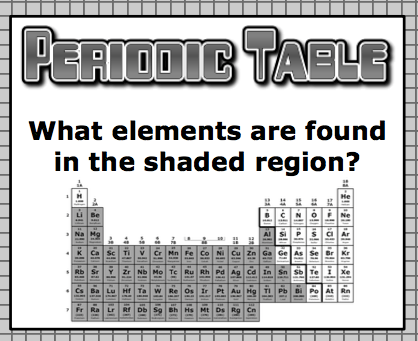
a)
Metals
b)
Nonmetals
c)
Metalloids
23.
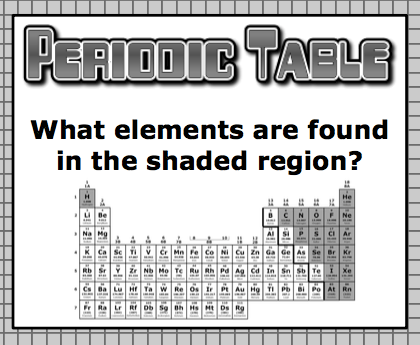
a)
Metals
b)
Nonmetals
c)
Metalloids
24.
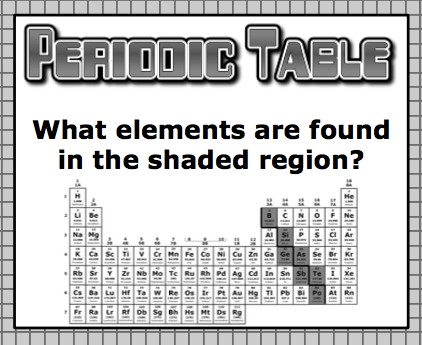
a)
Metals
b)
Nonmetals
c)
Metalloids
25.
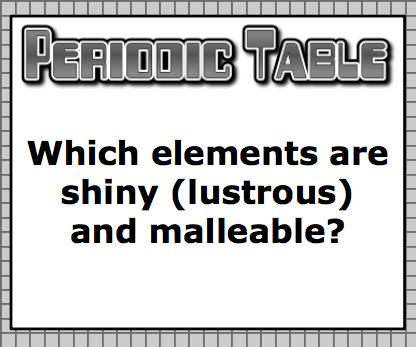
a)
Metals
b)
Nonmetals
c)
Metalloids
26.
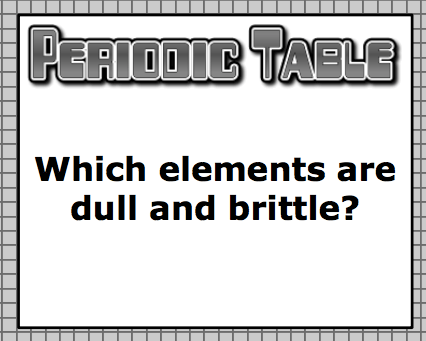
a)
Metals
b)
Nonmetals
c)
Metalloids
27.
You'll need a periodic table for the next few questions.
a)
Got one!
b)
Nah, I don't need one. (this will be wrong)
c)
Metalloids
28.

What element is this?
a)
Helium
b)
Hydrogen
c)
Argon
d)
Silver
29.

How many electrons does Si contain? (click to see image)
a)
14
b)
28
c)
2
d)
None of these
30.

How many electrons does potassium K contain? (click to see image)
a)
19
b)
39
c)
20
d)
40
31.

What element is represented in this Bohr Model?
a)
Carbon
b)
Hydrogen
c)
Aluminum
d)
Lithium
32.

What is the atomic number of this atom?
a)
2
b)
4
c)
6
d)
none of the above
33.

What is the mass number of this atom?
a)
1
b)
3
c)
4
d)
7
34.
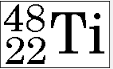
How many protons does this isotope of titanium have?
a)
48
b)
22
c)
26
d)
70
35.
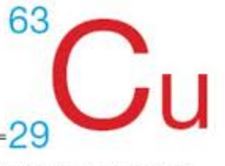
How many electrons does a Copper atom have?
a)
63
b)
29
c)
92
d)
34
36.

What group does this element belong to?
a)
Group 1: Alkali metals
b)
Group 18: Noble Gases
c)
Group 2: Alkaline-Earth Metals
d)
Group 17: Halogens
37.

What element is this?
a)
Beryllium
b)
Boron
c)
Barium
d)
Bromine
38.

What element is being modeled here?
a)
Carbon
b)
Oxygen
c)
Lithium
d)
Silicon
39.
What is the charge of a neutron?
a)
Positive
b)
Negative
c)
Neutral/no charge
40.
What is the center of the atom called?
a)
Orbital
b)
Nucleus
c)
Proton
d)
Electron shell
41.

relationship in which two species live closely together
a)
resource
b)
mutualism
c)
succession
d)
symbiosis
42.

A living relationship between two species in which one organism is harmed is called...
a)
mutualism
b)
commensalism
c)
parasitism
d)
niche
43.
Which is NOT an abiotic factor:
a)
soil
b)
air
c)
bacteria;
d)
water
44.
What might happen if you remove a primary consumer from the ecosystem?
a)
There would be more food for secondary consumers.
b)
The number of primary consumers would increase.
c)
The number of plants would increase.
d)
The number of secondary consumers would increase.
45.
A consumer that hunts is called:
a)
a producer.
b)
an omnivore.
c)
a predator.
d)
a herbivore.
46.

symbiotic relationship in which one organisms benefits and the other organism is not affected
a)
invasive (non-native) species
b)
mutualism
c)
nitrogen fixation
d)
commensalism
47.

symbiotic relationship in which both organisms benefit
a)
competition
b)
Mutualism
c)
nitrogen fixation
d)
energy pyramid
48.
Consumer that eats plants
a)
heterotroph
b)
herbivore
c)
producer
d)
community
49.

This is an image of a _________.
a)
consumer
b)
scavenger
c)
decomposer
d)
producer
50.
Consumer that eats animals or meat
a)
carnivore
b)
omnivore
c)
consumer
d)
producer
51.
Organisms that makes its own food using sunlight or chemicals; producer
a)
decomposer
b)
autotroph
c)
heterotroph
d)
herbivore
52.
Example of a decomposer
a)
fungus
b)
mouse
c)
plants
d)
frogs
53.
A tree is a ....
a)
composer
b)
decomposer
c)
producer
54.

An organism that gets energy from eating other organisms is a ______________
a)
producer
b)
consumer
c)
decomposer
d)
prey
55.
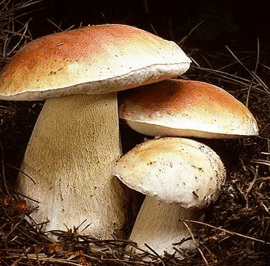
An organism that gets energy from breaking down dead organisms, non-living material or waste
a)
producer
b)
consumer
c)
decomposer
d)
autotroph
56.

Which of the following is a herbivore?
a)
cricket
b)
frog
c)
hawk
d)
shrew
57.

In this food chain, what will happen if the frogs become extinct?
a)
The snakes will increase.
b)
The grasshoppers will decrease.
c)
The eagles will remain the same.
d)
The grasshoppers will increase.
58.

Which organism do the owl and the weasel compete for in the food web?
a)
Hawk
b)
Spider
c)
Grasshopper
d)
Shrew
59.
A solar eclipse only happens during a ________ moon.
a)
New
b)
Cresent
c)
Gibbous
d)
Full
60.

a)
solar eclipse
b)
lunar eclipse
61.
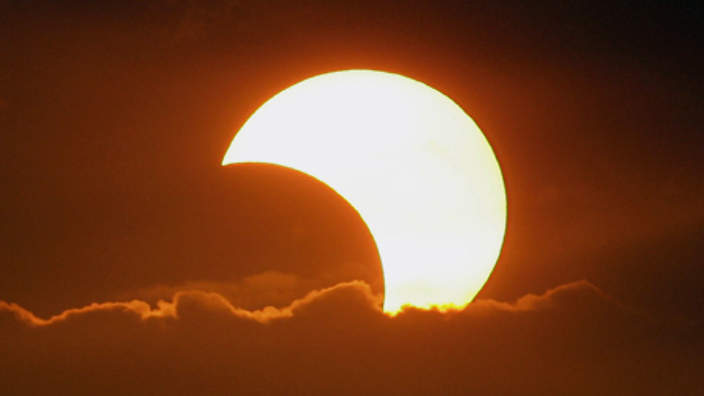
This image is an example of
a)
Lunar Eclipse
b)
Full Moon
c)
New Moon
d)
Solar Eclipse
62.
In order to have an eclipse, the Moon, Sun and Earth have to be?
a)
Below each other
b)
Above each other
c)
In alignment
63.
Which type of eclipse occurs when the Moon comes directly between Earth and the Sun?
a)
Lunar eclipse
b)
Solar eclipse
64.

a)
solar eclipse
b)
lunar eclipse
65.
What is the order during a lunar eclipse
a)
sun, moon, earth
b)
sun, earth, moon
66.

What is the darkest inner part of the shadow cone called, where a total eclipse can be viewed.
a)
Total
b)
Umbra
67.
When does a lunar eclipse occur?
a)
At night
b)
When the moon's shadow is on the earth
c)
when the moon comes between the sun and earth
d)
During the day
68.
What is static electricity?
a)
electricity produced by like electric charges attracting
b)
electricity used for powering radios and televisions
c)
a buildup of balanced electric charges
d)
a buildup of excess electric charge
69.
Electrons have ___ charge.
a)
no
b)
negative
c)
positive
70.
A positive charge in an atom can be achieved by...
a)
adding protons
b)
taking away electrons
c)
adding protons OR taking away electrons
71.

Two things with opposite charges will
a)
attract one another.
b)
repel one another.
72.

The girl's hair and the comb are attracting one another. The hair and the comb have
a)
opposite charges
b)
like charges
73.
A plastic rod is rubbed with a dry piece of cloth and the rod becomes positively charged. The rod has …
a)
gained electrons
b)
lost electrons
c)
gained protons
d)
lost protons
74.
If an object has the same number of positive and negative charges, its electrical charge is...
a)
positive
b)
negative
c)
neutral or no charge
d)
opposite
75.

this is the symbol for a _____?
a)
switch
b)
light
c)
battery
d)
wires
76.

what is this symbol for?
a)
light bulb
b)
cell
c)
battery
d)
resistor
77.

This is the symbol for a ...
a)
Bulb
b)
Battery
c)
Horn
d)
Fuse
78.

This is the symbol for a ...
a)
Wire
b)
Battery
c)
Buzzer
d)
Fuse
79.

This is the circuit symbol for ...
a)
an AC current source
b)
a DC current source
c)
an ammeter
d)
a voltmeter
80.

This is the circuit symbol for ...
a)
an AC current source
b)
a DC current source
c)
an ammeter
d)
a voltmeter
81.

This is the symbol for a _____?
a)
Lamp
b)
Water wheel
c)
Loudspeaker
d)
Motor
82.

What is the unit of Current?
a)
Amps
b)
Watts
c)
Volts
d)
Joules
83.

What kind of circuit is this?
a)
series
b)
parallel
84.
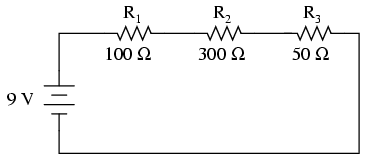
The total resistance in this circuit is
a)
100 ohms
b)
450 ohms
c)
400 ohms
d)
30 ohms
85.

This is an example of a ______ circuit
a)
Series
b)
Parallel
c)
Open
d)
Dihexihedral
86.

In a parallel circuit if one of the light bulbs burns out the rest _________.
a)
stop the flow of electricity
b)
can still light up
c)
will go out
d)
of the light bulbs burn out also
87.
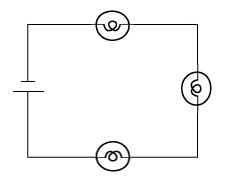
The picture shows an electrical circuit. This circuit is a series circuit because:
a)
It has 3 light bulbs.
b)
The same current flows through all three light bulbs.
c)
It uses a single battery.
d)
The electrical current is divided between the three light bulbs.
88.
If you increase the voltage of a circuit, what happens?
a)
Current decreases
b)
Current increases
c)
Electrons disappear
d)
Bulbs get dimmer
89.
Unit for resistance
a)
Ampere
b)
Ohm
c)
Volt
d)
Watt
90.
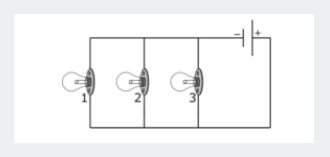
If bulb 1 burns out, what will occur?
a)
bulbs 2 and 3 will go out
b)
bulbs 2 and 3 receive more volts
c)
bulbs 2 and 3 will stay lit
d)
nothing will happen
100 %

