Wayground logo

Free Printable Worksheets

Font size

S
M
L
XL
Worksheets

Mitosis, meisos and development

Total questions: 120

Worksheet time: 3hrs 25mins

Name
Class
Date
1.
Repeated cell divisions during embryonic cell development is known as:___________.
a)
Fertilization
b)
Cleavage
c)
oogenesis
d)
spermatogensis
2.
Human reproduction usually involves
a)
internal fertilization and internal development
b)
external fertilization and external development
c)
internal fertilization and external development
d)
external fertilization and internal development
3.
Meiosis and fertilization are important processes because they may most immediately result in
a)
many body cells
b)
immune responses
c)
genetic variation
d)
natural selection
4.
External fertilization is common for organisms that live in:
a)
Trees
b)
Water
c)
Land
d)
Ummm, I'm pretty sure you didn't teach us this...
5.
The joining of a sperm cell and an egg cell is called...
a)
Fertilization
b)
Labor
c)
Zygote
d)
STOP ASKING ME THESE IMPOSSIBLE QUETSIONS!!
6.

Which of the following sequences represents the correct order of events in the formation of a human fetus?

a)

Zygote → Blastocyst → Embryo → Fertilization

b)

Fertilization → Zygote → Blastocyst → Embryo

c)

Blastocyst → Embryo → Differentiation → Zygote

d)

Fertilization → Growth → Differentiation → Zygote

7.
Which of the following is true of a zygote?
a)
It forms into a blastocyst
b)
It is an unfertilized egg
c)
It produces haploid male gametophytes
d)
It is made up of only one cell
8.
The diagram below shows a cellular process that occurs in organisms.
What is the name of this process?
a)
meiosis
b)
mitosis
c)
endocytosis
d)
phagocytosis
9.
The diagram below shows homologous chromosomes during prophase I of meiosis
Which of the following correctly describes the process being illustrated?
a)
mutation in which the DNA content of the gene is altered
b)
segregation of sister chromatid
c)
condensation and segregation of alleles
d)
crossing-over in which alleles are exchanged
10.
A scientist wants to change the DNA of a sexually reproducing organism and have the new DNA present in every cell of the organism. In order to do this after fertilization, she would change the DNA in which of the following?
a)
zygote
b)
placenta
c)
testes of the father
d)
ovaries of the mother
11.
What process does the zygote undergoe to become a blastula?
a)
Cleavage
b)
Gastrulation
c)
Metamorphosis
d)
Cephalization
12.
This is the hollow sphere that contains a clump of cells which develops into the baby. These cells are Embryonic Stem Cells
a)
fertilization
b)
zygote 
c)
blastocyst 
d)
egg
13.
A dog has 78 chromosomes in its body cells.  What is the diploid number?
a)
78
b)
39
c)
1
d)
100
14.
A Goat has 60 chromosomes in its body cells.  What is the haploid number?
a)
60
b)
30
c)
100
d)
120
15.
A human has 46 chromosomes in their body cells.  What is the haploid number?
a)
46
b)
92
c)
23
d)
12
16.
Mitosis produces cells with haploid or diploid number of chromosomes?
a)
Haploid
b)
Diploid
17.
Where does meiosis occur?
a)
Testes and ovaries 
b)
Only the ovaries
18.
Gametes are haploid
a)
True
b)
False
19.
The process of a diploid gamete producing haploid sperm and egg cells is 
a)
gametogenesis 
b)
photosynthesis
c)
anaerobic respiration
d)
mitosis
20.
How many polar bodies are found in oogenesis? 
a)
4
b)
6
c)
3
d)
2
21.
In human females, the process in which mature eggs are produced is called oogenesis.
a)
True
b)
False
22.
Gametes join outside of the organism's body (water)
a)
Internal Fertilization
b)
External Fertilization
c)
Internal Development
d)
External Devlopment
23.
Gametes join inside the female reproductive tract (Land adaptation)
a)
Internal Fertilization
b)
External Fertilization
c)
Internal Development
d)
External Devlopment
24.
Growth of embryo outside the body of the parent organism (water and land)
a)
Internal Fertilization
b)
External Fertilization
c)
Internal Development
d)
External Devlopment
25.
Growth of embryo inside the body of the female parent 
a)
Internal Fertilization
b)
External Fertilization
c)
Internal Development
d)
External Devlopment
26.
Advantages: Large #'s of offspring + easier to find a mate because gametes drift in the water
Disadvantages: Offspring are exposed to the environment and hazards, no guaranteed fertilization.
a)
Internal Fertilization
b)
External Fertilization
c)
Internal Development
d)
External Devlopment
27.
Advantages: Increased chances of gametes meeting + greater protection of offspring from the environment
Disadvantages: Limited number of offspring, harder to bring males and females together increased risk of disease.
a)
Internal Fertilization
b)
External Fertilization
c)
Internal Development
d)
External Devlopment
28.
Advantages: Less energy spent by females, less time to increase the population, + large number of offspring
Disadvantages: Embryo not well protected + exposed to predators and the environment.
a)
Internal Fertilization
b)
External Fertilization
c)
Internal Development
d)
External Devlopment
29.
Advantages: Embryo well protected + not exposed to environment
Disadvantages: Limited number of offspring, health risks, much more energy spent by female, takes longer to develop.
a)
Internal Fertilization
b)
External Fertilization
c)
Internal Development
d)
External Devlopment
30.
What percentage of chromosomes are handed down by a sperm cell?
a)
75%
b)
25%
c)
50%
d)
100%
31.
What is an advantage of sexual reproduction?
a)
Allows genetic variation
b)
Only needs one parent
c)
Happens very quickly
d)
Offspring are exact copies of parent
32.

The diagram and chart represent some of the changes a zygote undergoes during its development.The processes that are most directly responsible for these changes are

a)

sorting and recombination of genetic information

b)

mitosis and differentiation

c)

meiosis and adaptation

d)

fertilization and cycling of materials

33.

Random separation and sorting of genes occurs during

a)

cleavage

b)

mitotic cell division

c)

fertilization

d)

meiotic cell division

34.

Which process involves the recombining of genes

a)

mitosis

b)

meiosis

c)

fertilization

d)

gamete production

35.

The diagram below represents stages in the development of organisms The normal developmental sequence of the processes represented by the diagrams is

a)

4 – 1 – 2 – 3

b)

1 – 4 – 3 – 2

c)

4 – 1 – 3 – 2

d)

3 – 2 – 1 – 4

36.

The diagram represents some stages in the development of an embryo. Which stage represents a zygote?

a)

A

b)

B

c)

C

d)

D

37.

Which sequence represents the correct order of events in the development of sexually reproducing animals?

a)

fertilization → cleavage → differentiation → growth

b)

cleavage → fertilization → growth → differentiation

c)

growth → cleavage → fertilization → differentiation

d)

fertilization → differentiation → cleavage → growth

38.

Which process normally occurs at the placenta?

a)

Oxygen diffuses from fetal blood to maternal blood.

b)

Materials are exchanged between fetal and maternal blood.

c)

Maternal blood is converted into fetal blood.

d)

Digestive enzymes pass from maternal blood to fetal blood.

39.

The diagram represents processes involved in human reproduction. which correctly identify the processes represented by the letters in the diagram

a)

A-mitosis, B-meiosis, C-fertilization, D-differentiation

b)

A-meiosis, B-meiosis, C-fertilization, D-differentiation

c)

A-meiosis, B-mitosis, C-differentiation, D-fertilization

d)

A- mitosis, B-mitosis, C-differentiation, D-fertilization

40.

The diagram represents early stages of embryo development. The greatest amount of differentiation for organ formation most likely occurs at arrow

a)

A

b)

B

c)

C

d)

D

41.

This entire sequence (A through embryo) started with

a)

the periodic shedding of a thickened uterine lining

b)

mitotic cell division in a testis

c)

meiotic cell division in the placenta

d)

the process of fertilization

42.

If cell A has 46 chromosomes, how many chromosomes will most likely be found in each cell of stage G?

a)

23

b)

46

c)

69

d)

92

43.

Which sequence represents the order of some events in human development?

a)

zygote → sperm → tissues → egg

b)

fetus → tissues → zygote → egg

c)

zygote → tissues → organs → fetus

d)

sperm → zygote → organs → tissues

44.

Which structure is correctly paired with its function?

a)

testis — produces nutrients for the offspring

b)

placenta — allows nutrients to diffuse from the mother to the embryo

c)

uterus — produces testosterone used in egg production

d)

ovary — provides a place for the internal development of the embryo

45.

What normally happens immediately after fertilization in sexual reproduction?

a)

specialization of cells to form a fetus from an egg

b)

production of daughter cells having twice the number of chromosomes as the parent cell

c)

production of daughter cells having half the number of chromosomes as the parent cell

d)

division of cells resulting in the development of an embryo from a zygote

46.

Which diagram correctly represents a step in the normal process of human reproduction?

a)
b)
c)
d)
47.

What type of fertilization and development is exhibited by birds and many reptiles

a)

external fertilization and internal development

b)

internal fertilization and internal development

c)

external fertilization and external development
d)

internal fertilization and external development

48.
What is one disadvantage of sexual reproduction?
a)
Only one parent needed
b)
Off spring are exact copies of parents
c)
Happens very quickly
d)
Needs two parents
49.

All of the offspring of an organism have the same genetic material, which is identical to the parent organism. From this, we can conclude that this organism -

a)

makes its own food

b)

is unicellular

c)

live in a marine habitat

d)

reproduces asexually

50.
2 sets of chromosomes, half from mom & half from dad
a)
sister chromatids
b)
homogeneous chromosomes
c)
homologous chromosomes
d)
centromeres
51.

At the end of mitosis you have _____ cells

a)

identical

b)

different

c)

identical twins

d)

variety

52.

Which of the following shows the steps of embryo development in the correct order?

a)

Gastrulation, Gametogenesis, Fertilization, Organogenesis, Cleavage

b)

Cleavage, Fertilization, Gametogenesis, Gastrulation, Organogenesis

c)

Gametogenesis, Fertilization, Cleavage, Gastrulation, Organogenesis

d)

Fertilization, Gametogenesis, Cleavage, Gastrulation, Organogenesis

53.

What is the purpose of Cleavage?

a)

Make a zygote

b)

Make gametes

c)

Divide cells quickly and increase volume

d)

Divide cells quickly and keep volume the same

54.

What is the purpose of Gastrulation?

a)

Make gametes

b)

Divide cells quickly

c)

Move cells to form 3 germ layers

d)

Form organs

55.

What is the purpose of Organogenesis?

a)

Make gametes

b)

Form organs

c)

Move cells to form 3 germ layers

d)

Form a zygote

56.

The animal's digestive tract forms from the _______.

a)

endoderm

b)

mesoderm

c)

ecotoderm

d)

protostome

57.

The embryo layer that forms the skin and nervous tissue is the _____.

a)

endoderm

b)

mesoderm

c)

ectoderm

d)

deuterostome

58.

The ectoderm is on the outside of the developing embryo.

a)

True

b)

False

59.

The innermost layer of the blastocyst is the

a)

endoderm

b)

gastrula

c)

ectoderm

d)

mesoderm

60.

The middle layer of the blastocyst is the

a)

endoderm

b)

ectoderm

c)

mesoderm

d)

deuterostome

61.

Embryonic structure of an animal that consists of TWO cell layers

a)

blastula

b)

gastrula

c)

morula

d)

blastocyst

62.

______ implants itself into the lining of the uterus.

a)

blastual

b)

gastrula

c)

blastocyst

d)

morula

63.

Layer of cells that lines the gastrula

a)

endoderm

b)

ectoderm

c)

mesoderm

d)

protostome

64.

Single layer of cells surrounding a fluid-filled space that forms during early development

a)

morula

b)

gastrula

c)

blastocyst

d)

blastula

65.

The third cell layer formed in the developing embryo

a)

endoderm

b)

mesoderm

c)

ectoderm

66.
Mesoderm gives rise to ...
a)
Cells of the digestive system
b)
Neurons of the brain
c)
Red blood cells
d)
Cells of the lung
67.
There are 3 stages of prenatal development. The correct order is ...
a)
embryo, zygote, foetus
b)
foetus, zygote, embryo
c)
zygote, foetus, embryo
d)
zygote, embryo, foetus
68.
What is the blue arrow pointing to?
a)
Shell
b)
Vitaline Membrane
c)
Yolk
d)
Shell Membrane
69.
What does the chick use the yolk for? 
a)
Nothing, it just takes up space.
b)
To get nutrients.
c)
For a pillow.
d)
To help it breathe.
70.
Once cells of a certain type, such as nerve cells or muscle cells, have formed, the cells .
a)
can develop into a different type of cell
b)
cannot develop into a different type of cell
c)
will develop into a different type of cell
d)
may develop into a different type of cell
71.

The type of asexual reproduction that involves the production of single cells by mitosis that are released into the environment is called

a)

regeneration

b)

binary fission

c)

sporulation

d)

vegetative propagation

72.

The type of asexual reproduction in which one cell divides into 2 cells that are equal in size is called

a)

regeneration

b)

binary fission

c)

sporulation

d)

vegetative propagation

73.

Asexual reproduction that involves the regrowth of a lost body part is known as

a)

regeneration

b)

vegetative propagation

c)

binary fission

d)

sporulation

74.

Asexual reproduction in which there is an unequal division of cytoplasm is called

a)

regeneration

b)

budding

c)

binary fission

d)

sporulation

75.

Which type of cell division is used for asexual reproduction?

a)

Meiosis

b)

Mitosis

c)

Mutation

d)

Oogenesis

76.

How many daughter cells are created from Mitosis?

a)

1

b)

2

c)

3

d)

4

77.

How do daughter cells that are produced from Mitosis compare?

a)

Genetically different from each other

b)

Yankees > Mets

c)

Genetically identical to each other

d)

Genetically different from each other but appear identical

78.

How many daughter cells are produced from Meiosis?

a)

1

b)

2

c)

3

d)

4

79.

How do the daughter cells that are produced from Meiosis compare?

a)

Genetically identical

b)

Genetically different

c)

Genetically different but appear identical

d)

Genetically identical but appear different.

80.

Which of the follow produce spores from sporulation?

a)

Animals

b)

Fungi

c)

Plants

d)

Protozoans

81.
a)
budding
b)
sporulation
c)
vegetative propagation
d)
binary fission
82.
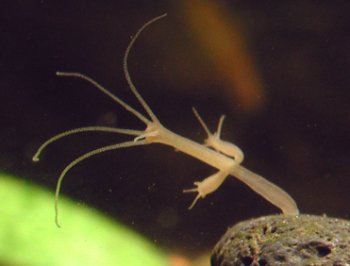
This is when a new organism grows by cell division on the body of its parent. The bud, or offspring is identical to the parent. The bud, when large enough, can break off of the parent and live on its own.  Examples of this include yeast, hydra and potatoes.
 
a)
Regeneration
b)
Vegetative propagation
c)
Fission
d)
Budding
83.
a)
budding
b)
binary fission
c)
sporulation
d)
regeneration
84.
Where is all the genetic material inside a cell?
a)
nucleus
b)
vacuole
c)
cell membrane
d)
ribosome
85.
Fruit fly body cells have 8 chromosomes. After mitosis, you would expect a resulting fruit fly daughter cell to have ...
a)
16 chromosomes.
b)
46 chromosomes.
c)
8 chromosomes.
d)
4 chromosomes.
86.
Structure (b) is a ____.
a)
chromosome
b)
chromatid
c)
centromere
87.
Structure (a) is a ____.
a)
chromosome
b)
chromatid
c)
centromere
88.
Structure (c) is a ____.
a)
chromosome
b)
chromatid
c)
centromere
89.
Name the phase:
a)
Anaphase
b)
Telophase
c)
Metaphase
d)
Prophase
90.
Name the phase:
a)
Prophase
b)
Metaphase
c)
Anaphase
d)
Telophase
91.
Name the phase:
a)
Prophase
b)
Metaphase
c)
Anaphase
d)
Telophase
92.
Name the phase:
a)
Prophase
b)
Metaphase
c)
Anaphase
d)
Telophase
93.
The organelle that helps in cell division and produces spindle fibers.
a)
Chromosome
b)
Centriole
c)
Cytoplasm
d)
Chloroplast
94.
The stages of mitosis in order
a)
Metaphase, Anaphase, Prophase, Telophase
b)
Prophase, Anaphase, Metaphase, Telophase
c)
Prophase, Metaphase, Anaphase, Telophase
d)
Anaphase, Prophase, Telophase, Metaphase
95.
What process does a multi-cellular organism use to replace its damaged body cells?
a)
mitosis
b)
meiosis
c)
replication
d)
transcription
96.
Identify the stage of mitosis. 
a)
interphase
b)
prophase
c)
anaphase
d)
cytokinesis
97.
The cells produced via meiosis are called:
a)
sex cells
b)
somatic cells
c)
body cells
d)
skin cells
98.
Meiosis makes sperm and egg cells. In humans, sperm and egg cells each have _____ chromosomes. Therefore a fertilized human egg cell (sperm and egg cell combined) would create a cell with _____ chromosomes.
a)
23, 46
b)
46, 23
c)
2, 4
d)
50, 100
99.
What causes genetic variation in meiosis?
a)
chromosomes lining up
b)
crossing over of chromosomes
c)
separation of chromosomes
d)
chromosomes pulling apart
100.
When an area of a chromatid is exchanged with the matching area on a chromatid of its homologous chromosome, _________________ occurs
a)
crossing over
b)
mutagenesis
c)
hybridization
d)
fertilization
101.
Goes through P.M.A.T two rounds 
a)
Mitosis
b)
Meiosis
c)
Osmosis
d)
Transcription
102.
If a somatic cell in a butterfly contains 24 chromosomes, a butterfly egg would contain
a)
3
b)
6
c)
12
d)
24
103.
When homologous chromosomes match up, they form a structure call a ___________.
a)
tetrad
b)
triad
c)
diploid
d)
gamete
104.
Crossing over helps promote 
a)
male genotype
b)
genetic variation
c)
DNA replication
d)
mitosis
105.
A human zygote should have _____ chromosomes inside.
a)
46
b)
23
c)
92
d)
64
106.
Which cellular process is shown?
a)
meiosis
b)
endocytosis
c)
mitosis
d)
phagocytosis
107.
Which best describes the process shown?
a)
mutation in which the DNA content of the gene is ltered
b)
segregation of sister chromatids
c)
condensation and segregation of the alleles
d)
crossing-over which alleles are exchanged
108.
Which of the following represents chromosome # during fertilization?
a)
n+n=2n
b)
n=n
c)
2n=n+n
d)
2n=2n
109.
Which of the following best explains why the chromosome number is an even number in organisms?
a)
It is only by coincidence, many organisms have an odd number
b)
The diploid number is always even so that when mitosis occurs each cell gets the same number of chromosmes
c)
The diploid chromosome number represents pairs of chromosomes, one from ech parent, so that it is always an even number
d)
Chromosomes double very time the cell divides, so after the first division, the number is always even
110.
How is this process used in the bodies of male animals?
a)
to produce sperm
b)
to produce DNA sequences
c)
to produce white blood cells
d)
to produce digestive enzymes
111.

Is the following cell diploid or haploid?

a)

Diploid

b)

Haploid

112.

Mitosis makes sure that all daughter cells are _____.

a)

genetically identical, diploid

b)

genetically identical, haploid

c)

genetically diverse, diploid

d)

genetically diverse, haploid

113.
The production, growth, and maturation of an egg or ovum
a)
spermatogenesis
b)
oogenesis
c)
fertilization
d)
conception
114.
The pairing of homologous chromosomes during meiosis
a)
synapsis
b)
tetrads
c)
polar bodies
d)
gametes
115.
When homologous chromosomes match up, they form a structure call a ___________.
a)
tetrad
b)
triad
c)
diploid
d)
gamete
116.
How many sperm cells are made during spermatogenesis
a)
2 sperm
b)
4 sperm
c)
8 sperm
d)
23 sperm
117.
An example of a disorder that an individual would have due to having an extra chromosome 21 would be:
a)
Tuburculosus
b)
Meningitis
c)
Down's Syndrome
d)
Cerebral Palsy
118.
The diagram below shows homologous chromosomes during prophase I of meiosis
Which of the following correctly describes the process being illustrated?
a)
mutation in which the DNA content of the gene is altered
b)
segregation of sister chromatid
c)
condensation and segregation of alleles
d)
crossing-over in which alleles are exchanged
119.

What is a hermaphrodite?

a)

animals with both ovaries and testes but cannot fertilize themselves

b)

animals that are only females with ovaries

c)

animals that are only males with testes

d)

animals that are able to fertilize themselves

120.

What is the difference between disjunction and nondisjunction

a)

Disjunction is when the homologous chromosomes separate and nondisjunction is when they don't which could result in the wrong number of chromosomes

b)

Nondisjunction is when the homologous chromosomes separate and disjunction is when they don't which could result in the wrong number of chromosomes