wayground logo

Free Printable Worksheets

Font size

S
M
L
XL
Worksheets

Chemistry Final Review

Total questions: 159

Worksheet time: 2hrs 14mins

Name
Class
Date
1.
What kind of properties can only be observed when a substance changes into a different substance?
a)
physical properties
b)
chemical properties
c)
liquid properties
d)
real properties
2.
Is hammering wood together to build a house a chemical or physical change?
a)
chemical
b)
physical
3.
Is melting butter for popcorn a chemical or physical change?
a)
chemical
b)
physical
4.
Is bleaching your hair a physical or chemical change?
a)
physical
b)
chemical
5.
Is burning wood a chemical or physical change?
a)
chemical
b)
physical
6.
A change in the size, shape, or state of matter.
a)
chemical change
b)
physical change
c)
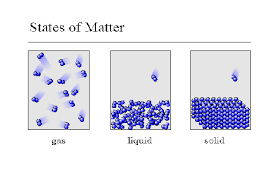
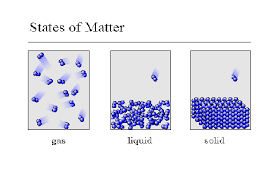
chemical reaction
d)
electron change
7.
Which of the following is NOT an example of a physical change?
a)
crumpled paper
b)
pencil sharpening
c)
shrunken clothing
d)
sour milk
8.
Kim puts an ice cube in a beaker and it melts. This is a good example of:
a)
a physical change.
b)
a chemical change.
c)
an experiment.
d)
an analysis.
9.
Photosynthesis is an example of a
a)
physical change
b)
chemical change
10.
When you break a cracker into pieces it is a 
a)
Chemical change
b)
Physical change
c)
Chemical Weathering
d)
Physical Weathering
11.
Adding baking soda and vinegar together and it fizzes and creates carbon dioxide.
a)
Chemical
b)
Physical
12.
What is an example of a Chemical change?
a)
Ripped paper 
b)
boiled egg
c)
cracked egg
d)
sugar in water
13.
Which is a physical change?
a)
burning match 
b)
vinegar in baking soda 
c)
melting butter
d)
cooking an egg
14.
Jayden asked Gabe what she could do to an egg for a chemical change. Gabe answered correctly and said...
a)
You can drop the egg.
b)
You can cook the egg.
c)
You can crack the egg.
d)
You can paint the egg.
15.
Which is a chemical change?
a)
freezing fruit juice
b)
slicing a potato
c)
boiling water
d)
copper metal turning green
16.
Which of the following does the discoloration of a coin  describe?
a)
Chemical Change
b)
Physical Change
c)
None of the above
d)
Both
17.
what is burning?
a)
physical change
b)
physical property
c)
chemical change
d)
chemical property
18.
which one is a chemical property?
a)
odor
b)
combustibility
c)
solubility
d)
all of the above
19.
what is digestion?
a)
body function
b)
chemical change
c)
physical change
20.
One cup of water is left outside for two days when it was checked there was only half a cup left. What happened?
a)
evaporation; chemical change
b)
condensation; physical change 
c)
evaporation; physical change
d)
condensation; chemical change
21.
Marie had a beaker with a small amount of baking soda. She added a few drops of pickle juice to the baking soda and observed fizzing and bubbling. Based on her observation, which of these can Marie determine about the new substance formed by mixing the baking soda and pickle juice?
a)
A chemical reaction produced a solid.
b)
A chemical reaction produced a gas.
c)
No chemical reaction took place.
d)
Only a physical change happened.
22.
Vanessa had a beaker with a small amount of baking soda. She added a few drops of vinegar to the baking soda and observed fizzing and bubbling. Based on her observation, which of these can Vanessa determine about the new substance formed by mixing the baking soda and vinegar?
a)
It was hot.
b)
It was a gas.
c)
It was magnetic.
d)
It was a conductor.
23.
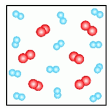
The Best Friend's Club uses "invisible ink" to write notes to each other. The invisible ink is actually lemon juice that is clear when it dries on paper, but turns brown when a club member holds a burning candle under the paper. Once it is heated, it is never invisible again.
 What type of change is occurring when the paper is heated?
a)
chemical change
b)
elemental change
c)
physical change
d)
temperature change
24.
Which of the following characteristics is shared by all chemical reactions?
a)
Produce a precipitate
b)
Show a color change
c)
Release heat energy
d)
Form new substances
25.
Bubbles and fizzing can be seen instantly when baking soda is mixed with vinegar. The bubbles are evidence of which of the following?
a)
A gas is formed when baking soda and vinegar are mixed.
b)
Baking soda dissolves in vinegar when they are mixed.
c)
Vinegar turns into alcohol when it is mixed with baking soda.
d)
A precipitate is formed when baking soda and vinegar are mixed.
26.
A granular substance is added to a liquid. Which of the following would provide evidence to suggest a chemical change has taken place?
a)
The liquid gives off heat.
b)
The granules dissolve completely.
c)
The volume of the liquid increases.
d)
The granules seem to get smaller.
27.
A student mixes two clear liquids together. After a few minutes, a white powdery solid can be seen settling on the bottom of the test tube. Which of the following is a conclusion that the student can draw based on these observations? The two clear liquids –
a)
were pure substances before they were mixed.
b)
are toxic and should be handled with extreme caution.
c)
have gone through a chemical change in which a new substance called a precipitate was produced.
d)
have been stored too long and are no longer good.
28.
A student added white crystals to a clear liquid. The crystals dissolved in the liquid. After a few seconds, the liquid became quite warm and then turned bright red in color. Indications that a chemical change was taking place could be observed when –
a)
the white crystals were added to the clear liquid.
b)
the crystals dissolved in the liquid leaving only the liquid visible.
c)
There are no indications of chemical change
d)
the temperature of the liquid increased and an unexpected color change occurred.
29.
A student observes some sugar as it is heated and burns. The student concludes that a chemical reaction has occurred. Which of the following observations about the burning sugar provides evidence of a chemical reaction?
a)
Heat is added to the sugar crystals.
b)
The sugar melts and becomes a liquid.
c)
Gas is produced as the sugar turns black.
d)
No evidence of chemical reaction is present.
30.
The melting point of ice is 00 C. This is an example of ________.
a)
physical intensive property
b)
physical extensive property
c)
Chemical change
d)
Chemical property
31.
The density of pyrite is 5g/cm. This is an example of 
a)
physical intensive property
b)
physical extensive property
c)
chemical change
d)
chemical property
32.
The mass of a lead cube is 64 grams. This is an example of 
a)
physical intensive property
b)
physical extensive property
c)
chemical change
d)
physical change
33.
The rose is red. This is an example of a 
a)
physical extensive property
b)
Chemical property
c)
physical intensive property
d)
physical change
34.
How many atoms make up an element?
a)
0
b)
1
c)
2
d)
3
35.
Which of the following is a compound?
a)
Na
b)
O
c)
Cl
d)
H2O (water)
36.
Combination of two or more pure substances that are not chemically combined
a)
compound          
b)
atom
c)
mixture 
d)
element
37.
made up of one kind of matter and has a definite set of properties
a)
compound          
b)
atom
c)
mixture 
d)
pure substance
38.
This diagram represents a _____.
a)
pure substance that is a compound
b)
mixture of elements
c)
pure substance that is an element
d)
mixture of compounds
39.
This diagram represents a _____.
a)
pure substance that is a compound
b)
mixture of elements
c)
pure substance that is an element
d)
mixture of compounds
40.
This diagram represents a _____.
a)
pure substance that is a compound
b)
mixture of elements
c)
pure substance that is an element
d)
mixture of compounds
41.
This diagram represents a _____.
a)
pure substance that is a compound
b)
mixture of elements and compounds
c)
pure substance that is an element
d)
mixture of compounds
42.
Muddy water is an example of what type of mixture?
a)
colloid
b)
solution
c)
suspension
d)
homogeneous
43.
silver spoon
a)
Mixture
b)
Compound
c)
Element
d)
Solution
44.
baking soda (NaHCO3)
a)
Heterogeneous mixture
b)
Element
c)
Compound
d)
Homogeneous mixture
45.
potting soil
a)
Solution
b)
Compound
c)
Mixture
d)
Element
46.
Cereal
a)
Homogeneous mixture
b)
Solution
c)
Compound
d)
Heterogeneous mixture
47.
Sugar water
a)
Homogeneous mixture
b)
Compound
c)
Heterogeneous mixture
d)
Element
48.
Water is a(n)
a)
Compound
b)
Mixture
c)
Element
d)
Solution
49.
Hydrogen
a)
Heterogenous mixture
b)
Homogeneous mixture
c)
Element
d)
Compount
50.
Gold
a)
Element
b)
Solution
c)
Compound
d)
Homogeneous mixture
51.
At higher temperatures
a)
particles in an object have less energy
b)
particles in an object move faster
c)
a gas contracts
52.
A gas
a)
has a definite shape but no definite volume
b)
has a definite volume but no definite shape
c)
has fast-moving particles
53.
Freezing
a)
Solid to gas
b)
Liquid to solid
c)
Gas to solid
d)
Liquid to gas
54.
Boiling
a)
liquid to gas
b)
gas to solid
c)
gas to liquid
d)
solid to liquid
55.
Which state of matter has tightly packed molecules?
a)
solid
b)
liquid
c)
gas
56.
Which state of matter has a definite shape?
a)
solid
b)
liquid
c)
gas
57.
What is happening when my ice cream changes from a solid to a liquid?
a)
freezing
b)
melting
c)
burning
d)
evaporation
58.
Define a liquid.
a)
Indefinite shape, indefinite volume
b)
Definite shape, definite volume
c)
Found in stars
d)
Definite volume, indefinite shape
59.
The state of matter that has no definite size or shape is
a)
Solid
b)
Liquid
c)
Gas
60.
Particles (molecules) in a ______________________ have more energy than the other states of matter.
a)
gas
b)
solid
c)
liquid
61.
Particles of a liquid
a)
are tightly packed together and stay in a fixed position.
b)
have no viscosity.
c)
decrease in volume with increasing temperature.
d)
are free to move around one another but still touch.
62.
What term describes a solid changing to a gas?
a)
Deposition
b)
Sublimation
c)
Evaporation
d)
Freezing
63.
Particles (molecules) in a ______________________ have more energy than the other states of matter.
a)
gas
b)
solid
c)
liquid
64.
What is condensation?
a)
gas to solid
b)
gas to liquid
c)
liquid to solid 
d)
solid to liquid 
65.
The speed of the molecules determines the _____.
a)
volume
b)
density
c)
pressure
d)
temperature
66.
Which has a greater distance between particles?
a)
Solid
b)
Liquid
67.
The slower the particles in a substance move,
a)
the colder it is.
b)
the warmer it is.
c)
the more energy it has.
d)
the less energy it has.
68.
What state of matter is X?
a)
solid 
b)
liquid
c)
gas
d)
supercritical fluid
69.
What state of matter is Y?
a)
solid 
b)
liquid
c)
gas
d)
supercritical fluid
70.
What state of matter is Z?
a)
solid 
b)
liquid
c)
gas
d)
supercritical fluid
71.
What change occurs from E to C?
a)
sublimation
b)
freezing
c)
melting
d)
boiling
72.
What change occurs from C to D?
a)
condensation
b)
vaporization
c)
melting
d)
sublimation
73.
At 0.10 atm, what phase(s) can exist?
a)
solid, liquid or gas
b)
liquid or gas
c)
solid only
d)
gas only
74.
At what temperature do nitrogen molecules move fastest?
a)
350 K
b)
300 K
c)
250 K
d)
200 K
75.
Pressure is caused by ______.
a)
gravity.
b)
gas molecules colliding with each other.
c)
gas molecules colliding with surfaces of the container.
d)
gas molecules reacting with each other.
76.
Gas molecules can easily be compressed  because ___________. 
a)
gas molecules are soft
b)
gas molecules are far apart
c)
gas molecules follow the shape of the container
77.
Among the following gases, which one is the heaviest?
a)
hydrogen gas
b)
nitrogen gas
c)
oxygen gas
d)
chlorine gas
78.
The movement of gas molecules is greatly affected by _________.
a)
the shape of the container
b)
size of the container
c)
temperature of the container
79.
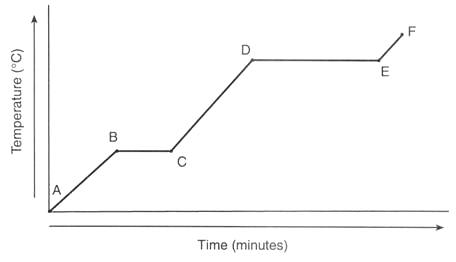
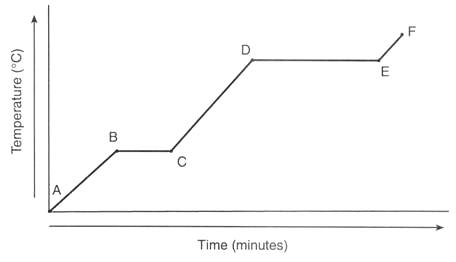
What line segment represents only the solid state?
a)
A-B
b)
B-C
c)
C-D
d)
D-E
80.
In which segment is the kinetic energy remaining constant?
a)
A-B
b)
B-C
c)
C-D
d)
E-F
81.
What state(s) of matter are present at D-E?
a)
Solid-liquid
b)
Liquid
c)
Liquid-gas
d)
Gas-Solid
82.
Between which points is the temperature of the substance remaining constant?
a)
A-B only. 
b)
A-B, C-D, E-F
c)
B-C only. 
d)
B-C, D-E
83.
Between which points is the temperature of the substance increasing?
a)
A-B only. 
b)
A-B, C-D, E-F
c)
B-C only. 
d)
B-C, D-E
84.
What state of matter is segment 5?
a)
Solid
b)
Liquid
c)
Gas
d)
Plasma
85.
Between which points is the substance changing state?
a)
A-B only. 
b)
A-B, C-D, E-F
c)
B-C only. 
d)
B-C, D-E
86.
A substance's heating curve is shown in the graph.  What is its boiling point?
a)
100 C
b)
60 C
c)
80 C
d)
20 C
87.
True or false: melting and freezing occur at the same temperature!
a)
True
b)
False
c)
I don't know
88.
Which of these conditions is always true for an exothermic process?
a)
They leave the surroundings feeling cold
b)
They release energy into the surroundings.
c)
They absorb energy from the surroundings
d)
The reactants gain energy as they form the products
89.
How do you convert Celsius to Kelvin?
a)
Add 273
b)
Subtract 273
c)
You can't convert those
d)
They are the same thing
90.
If you increase the pressure of a constant volume of gas, what will happen to the temperature?
a)
Increase
b)
Decrease
c)
Stay the same
d)
It will Blow Up
91.
What will happen to the volume of a gas under constant temperature if the pressure increases?
a)
Increase
b)
Decrease
c)
Nothing
d)
Explosion!
92.
What is 50 C in Kelvin?
a)
223
b)
323
c)
100
d)
50
93.
You have a gas that has a pressure of 2 ATM and a volume of 10L.  What would be the new volume if the pressure was changed to 1 ATM?
a)
5 L
b)
20 L
c)
It would stay at 10L
d)
1 L
94.
Which of the following would increase the pressure on a system?
a)
Increase the Temperature
b)
Pump in more gas
c)
Decrease the volume
d)
All of these
95.
What law combines all 3 factors (pressure, temperature, and volume)
a)
Combined Gas Law
b)
Charle's Law
c)
Boyle's Law
d)
Avagadros Ideal Gas Law
96.
If a nitrogen gas occupies a volume of 500ml at a pressure of 0.971atm. What volume will the gas occupy at a pressure of 1.50 atm, assuming the temperature remains constant?  
a)
323.6 ml
b)
728.25 ml
c)
772.39 ml
d)
None of the above
97.
A sample of a gas has a volume of 852 mL at 298 K. What temperature is necessary for the gas to have a volume of 945 mL?
a)
57.5⁰C
b)
57.5 K
c)
330.5 K
d)
330.5⁰C
98.
If a balloon is cooled what will happen to the volume?
a)
Volume will increase
b)
Volume will decrease
c)
Volume will not change
99.
If 200 mL of a gas at 27°C is cooled to -33°C at a constant pressure, the volume will be
a)
250 mL
b)
204 mL
c)
196 mL
d)
160 mL
100.
A gas occupies 4.31 liters at a pressure of 0.755 atm. Determine the volume if the pressure is increased to 1.25 atm.
a)
2.6L
b)
2.6mL
c)
2.6kL
d)
260L
101.
If the pressure exerted by a gas at 25 degrees C in a volume of 0.044 L is 3.81 atm, how many moles of gas are present?
a)
.002766 mole
b)
.0069 mol
c)
2.766 mol
d)
9.887 mol
102.
A nitrogen gas has a volume of 600mL at a pressure of 1atm. What volume will the gas occupy at a pressure of 3atm, assuming the temperature remains constant? 
a)
125mL
b)
300mL
c)
200mL
d)
400mL
103.
A sample of Argon gas occupies a volume of 1.8 L at 2.8 atm.  What will its volume be at 1.2 atm?
a)
.77 L
b)
1.87 L
c)
3.0 L
d)
4.2 L
104.
When the temperature of matter increases the particles...
a)
speed up and move closer
b)
speed up and move farther apart
c)
slow down and move closer together
d)
slow down and move farther apart
105.
What happens to the average kinetic energy of matter when it is heated?
a)
It increases
b)
It decreases 
c)
It doesn't change
d)
It cannot be determined
106.
0.200 atm is equal to ___________
a)
0.00026 mm Hg and 20.3 kPa
b)
0.00026 mm Hg and 2.03 kPa
c)
152 mm Hg and 2.03 kPa
d)
152 mm Hg and 20.3 kPa
107.
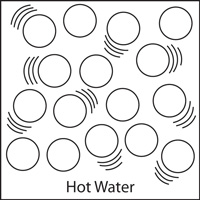
Which container will have lower pressure?
a)
left
b)
right
c)
they both have the same pressure
108.
At standard temperature and pressure, I have 48L of hydrogen gas. How many moles of gas do I have?
a)
0.5
b)
1
c)
2
d)
4
109.
A nitrogen gas has a volume of 600mL at a pressure of 1atm. What volume will the gas occupy at a pressure of 3atm, assuming the temperature remains constant? 
a)
125mL
b)
300mL
c)
200mL
d)
400mL
110.
Who discovered the nucleus of an atom?
a)
JJ Thomson
b)
Ernest Rutherford
c)
John Dalton
d)
Democritus
111.
He proposed the "muffin" or "plum pudding model of the atom.
a)
John Dalton
b)
Niels Bohr
c)
Ernest Rutherford
d)
JJ Thomson
112.
Which word would closely define the term "atomos"?
a)
Incredible
b)
Indivisible
c)
Indelible
d)
Independent
113.
What are electrons?
a)
Massive, positively charged particles
b)
Tiny, negatively charged particles
c)
Clouds of dust in the nucleus
d)
Neutral particles around the nucleus
114.
The section labeled D is known as the?
a)
Electron cloud
b)
Neutron
c)
Nucleus
d)
Electron
115.
The number of protons and electrons are the same as
a)
Neutrons
b)
Atomic number
c)
atomic mass
d)
Electron shells
116.
The section labeled D is known as the?
a)
Electron cloud
b)
Neutron
c)
Nucleus
d)
Electron
117.
Letter A Is positively charged particle called?
a)
Neutron
b)
Proton
c)
Electron
d)
Atom
118.
How many protons does this element have?
a)
6
b)
4
c)
2
d)
3
119.

Which scientist proposed a new model of the atom after the discovery of the electron in 1897? His model consisted of electrons embedded in a sea of positive charge like seeds in a watermelon.

a)

J.J. Thomson

b)

Ernest Rutherford

c)

Niels Bohr

d)

Albert Einstein

120.

Ernest Rutherford proposed which model of the atom?

a)

The Plum Pudding Model

b)

The Planetary Model

c)

The Quantum Model

d)

The Bohr Model

121.
This model was developed after J.J. Thompson discovered electrons, a particle smaller than an atom. Is shows electrons floating freely in a positive space.
a)
The "Plum Pudding Model" of the atom
b)
The "Rutherford Model" of the atom
c)
Democritus's model of the atom
d)
The "Solar System Model" of the atom
122.

This model added on to previous models by showing electrons existed at certain "energy levels". However is does not accurately show what those levels look like.

a)

The "Planetary Model" of the atom

b)

The "Rutherford Model" of the atom

c)

The "Plumb Pudding Model" of the atom

d)

The "Standard Model" of the atom

123.
Proposed that the atom had a dense positively charge center which was extremely small but consisted of mostly empty space.
a)
Ernest Rutherford
b)
J.J Thomson
c)
Robert Millikan
d)
John Dalton
124.

Place the following scientists in order, from earliest to latest:


A) Ernest Rutherford B) J.J. Thomson C) John Dalton

a)

B, C, A

b)

C, A, B

c)

A, C, B

d)

C, B, A

125.
What is the ATOMIC MASS of Krypton?
a)
36
b)
84.80
c)
49
d)
6
126.
How many ELECTRONS are an atom of Lithium?
a)
6.941
b)
4
c)
3
d)
7
127.
What is the ATOMIC NUMBER of Cobalt?
a)
58.933
b)
4
c)
27
d)
32
128.
Who created the "plum pudding" model of the atom?
a)
Democritus
b)
Rutherford
c)
Dalton
d)
Thomson
129.
Who came up with the modern day model in which the location of electrons cannot be determined?
a)
Bohr
b)
Rutherford
c)
Schrödinger / Heisenberg
d)
Thomson
130.
Which scientist theorized electrons travel in certain paths or energy levels?
a)
Schrödinger / Heisenberg
b)
Thomson
c)
Dalton
d)
Bohr
131.
A proton has a positive charge and a mass of ____ amu.
a)
0
b)
1
c)
.5
d)
2
132.
A neutron has a negative charge and a mass of ____ amu.
a)
0
b)
1
c)
2
d)
.5
133.
An electron has a negative charge and a mass of ___ amu.
a)
0
b)
1
c)
.5
d)
2
134.
The atomic mass on the periodic table is an average of all the ____ of an element based on abundance.
a)
protons
b)
isotopes
c)
ions
d)
charges
135.
The number of protons in an element can be found by:
a)
looking up the group the element is in.
b)
subtracting the atomic mass from atomic number
c)
looking up the atomic mass
d)
looking up the atomic number
136.
How do you calculate the charge of an atom?
a)
protons - electrons = charge
b)
protons - neutrons = charge
c)
its equal to the number of electrons = charge
d)
protons = charge
137.
How do you determine the number of  valence electrons the main group elements have when neutral?
a)
Corresponds to the period
b)
Corresponds to the group
c)
Corresponds to the block
138.
Cations (like Ca2+)gain a positive charge by ____ electrons accoring to the octet rule.
a)
gaining
b)
losing
139.
Anions (like Cl-) gain a negative charge by ____ electrons according to the octet rule.
a)
gaining
b)
losing
140.
How do you decide which isotope is the most common by looking at the periodic table?
a)
Round the atomic mass to the nearest whole number.
b)
Round the atomic number to the nearest whole number
c)
An equation is required.
d)
The periodic table does not provide this information.
141.
What would the ionic charge of a magnesium ion be?
a)
Mg2+
b)
Mg+
c)
Mg2-
d)
Mg-
142.
How many orbitals in the d subshell? 
a)
1
b)
7
c)
3
d)
5
143.
What atom matches this electron configuration?
1s22s22p63s2
a)
Neon
b)
Magnesium
c)
Aluminum
d)
Potassium
144.
What atom matches this electron configuration?
1s22s22p63s23p64s23d10
a)
Zinc
b)
Copper
c)
Nickel
d)
Germanium
145.
What electron configuration matches an oxygen atom?
a)
1s22s22p63s2, 3p64s23d104p5
b)
1s22s22p4
c)
1s22s22p6
d)
1s22s22p63s23p64s23d1
146.
What electron configuration matches an oxygen atom?
a)
1s22s22p63s2, 3p64s23d104p5
b)
1s22s22p4
c)
1s22s22p6
d)
1s22s22p63s23p64s23d1
147.
What is the noble gas configuration for Sulfur?
a)
[Ar] 3p4
b)
[He] 3s2 3p4
c)
[Ne] 3s2 3p4
d)
[Na] 3s2 3p4
148.
What is this element?
[Xe] 6s15d10
a)
Mercury
b)
Gold
c)
Platinum
d)
Thallium
149.
What is this element? 
[Ne] 3s23p64s2
a)
Calcium
b)
Sodium
c)
Scandium
d)
Titanium
150.
Which type of orbital is shaped like a sphere?
a)
s orbital
b)
p orbital
c)
d orbital
d)
f orbital
151.

Column 1 is known as ____________________________.

a)

alkaline earth metals

b)

noble gasses

c)

halogens

d)

alkali metals

152.

Column 1 is known as ____________________________.

a)

alkaline earth metals

b)

noble gasses

c)

halogens

d)

alkali metals

153.

Column 17 is known as ____________________________.

a)

alkaline earth metals

b)

noble gasses

c)

halogens

d)

alkali metals

154.

Column 18 is known as ____________________________.

a)

alkaline earth metals

b)

noble gasses

c)

halogens

d)

alkali metals

155.
This orbital fill after the s,  the shape is a dumbbell. 
a)
s
b)
p
c)
d
d)
f
156.
Maximum number of electrons that can be placed in an s orbital.  
a)
2
b)
6
c)
10
d)
14
157.
The maximum number of electrons that can be placed in an p orbital.  
a)
2
b)
6
c)
10
d)
14
158.
The maximum number of electrons that can be placed in an d  orbital.  
a)
2
b)
6
c)
10
d)
14
159.
The maximum number of electrons that can be placed in an f orbital.  
a)
2
b)
6
c)
10
d)
14