wayground logo

Free Printable Worksheets

Font size

S
M
L
XL
Worksheets

Bio 2 Semester 2 Final Review

Total questions: 118

Worksheet time: 2hrs 42mins

Name
Class
Date
1.
DNA is a polymer made of:
a)
Nucleotides
b)
Ribosomes
c)
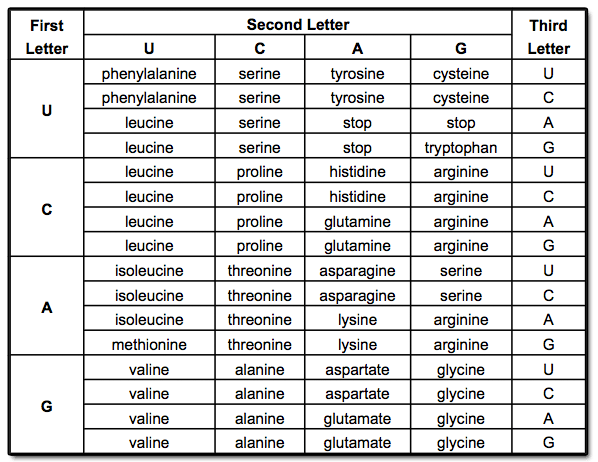
Purines
d)
Pyrimidines
2.
Which of the following best describes a DNA molecule?
a)
double helix
b)
contains ribose
c)
made of amino acids
d)
contains Uracil
3.
Which organelle is DNA usually found in?
a)
cell membrane
b)
vacuole
c)
ribosome
d)
nucleus
4.
In a molecule of double-stranded DNA, the amount of Adenine present is always equal to the amount of
a)
cytosine
b)
guanine
c)
thymine
d)
uracil
5.
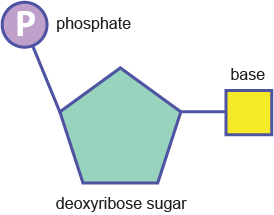
Nucleotides are made up of a sugar, phosphate, and..?
a)
nitrogenous base
b)
nucleic acid
c)
cholesterol
d)
fatty acid
6.
Guanine bonds with ______________.
a)
Adenine
b)
Guanine
c)
Cytosine
d)
Thymine
7.
What determines the code, or information, of a DNA molecule?
a)
the shape (structure) of the nitrogen bases
b)
the order (sequence) of the nitrogen bases
c)
the color of the nitrogen bases
d)
the frequency (number) of nitrogen bases
8.
Which shows the correct complementary base pairing for DNA?
a)
C-A, T-G
b)
A-G, C-T
c)
C-G, U-A
d)
T-A, G-C
9.
Why is DNA important?
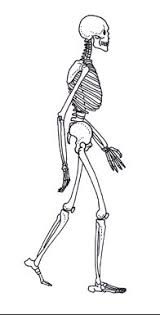
a)
it is very small and very complicated
b)
it's in everything
c)
it serves as the blueprint for traits of all living things
d)
because we eat it every day for energy
10.
Which sequence of DNA bases would pair with this partial strand
ATG TGA CAG
a)
ATG TGA CAG
b)
TAC ACT GTC
c)
GTA AGT GAC
d)
CAT TCA CTG
11.
A process in which DNA has the unique ability to make an exact copy of itself.
a)
Replication
b)
Translation
c)
Transcription
12.
Replicate the following strand of DNA: 
AATCATGGA
a)
AATCATGGA
b)
TTAGTACCT
c)
UUAGUACCU
d)
GGATAUCUA
13.
After analyzing a sample of DNA, a scientist recorded the data shown in the table. What percentage of the DNA sample is cytosine?
a)
22%
b)
25%
c)
28%
d)
56%
14.
What term names the process during which DNA is copied prior to cell division?
a)
DNA polymerase
b)
DNA replication
c)
DNA regneration
d)
DNA redistribution
15.
The enzyme that unzips the DNA to prepare for replication
a)
helicase
b)
replicase
c)
polymerase
d)
synthase
16.
DNA replication results in two DNA molecules,
a)
each one with two original strands
b)
each one with two new strands
c)
each one with one new strand and one original strand
d)
one with two new strands and the other with two original strands
17.
What is responsible for holding the two strands of the DNA double helix together?
a)
hydrogen bonds
b)
alleles
c)
London dispersion forces
d)
deoxyribose sugars
18.

Transcribe the following DNA strand: CTG AAT

a)

GAC TTA

b)

CTG AAT

c)

GAC UUA

d)

CUG AAU

19.

What is the order for Protein Synthesis?

a)

Transcription -> Translation -> Protein

b)

Translation - > Transcription -> Protein

c)

Protein -> Transcription -> Translation

d)

Translation -> Protein -> Transcription

20.
What will be the resulting mRNA from this DNA sequence:
GAT-TAC-AGA-TTA-CAT?
a)
CTA-ATG-TCT-AAT-GTA
b)
GAU-UAG-UGA-UUA-GUT
c)
CUA-AUG-UCU-AAU-GUA
d)
CAT-ACA-TAC-ATA-TAG
21.
What is the RNA sequence for this amino acid chain: LYSINE - GLYCINE - STOP
a)
AAA - CCC - UAA
b)
AAA - GGG - UAA
c)
AAG - AUC - CGA
d)
AAG - GGG - UUU
22.
What is the correct amino acid sequence for the mRNA code AUGCCAGUAUGA
a)
Met-Pro-Ala-Val
b)
Met-Pro-Val
c)
Tyr-Gly-His
d)
Tyr-Gly-Arg-His
23.
Every three letters (example: ATC) in DNA codes for what??
a)
Amino Acid
b)
Nucleotide
c)
Lipid
d)
Carbohydrate
24.
tRNA is involved in
a)
carrying amino acids 
b)
carrying ribosomes
c)
carrying glucose
d)
carrying lipids
25.
Amino acids are joined together in order to form
a)
DNA
b)
ribosomes
c)
proteins 
d)
RNA
26.
What has DNA?
a)
animals
b)
plants
c)
bacteria
d)
all of the above
27.
What is the relationship between a protein, the cell, and DNA?
a)
DNA is produced by protein which is produced in the cell
b)
Protein is composed of DNA which is produced in the cell
c)
DNA makes RNA which produces protein in the cell
d)
A cell is composed of DNA and protein
28.
The process of making RNA (i.e. mRNA) from DNA is called
a)
Replication
b)
Transcription
c)
Translation
d)
Protein synthesis
29.
Which of these is part of the description of protein?
a)
a folded chain of amino acids
b)
a folded chain of carbohydrates
c)
a branched chain of fatty acids
d)
a branched chain of nucleic acids
30.
What is the correct sequence?
a)
RNA --> DNA --> Protein
b)
Protein --> RNA --> DNA
c)
DNA --> RNA --> Protein
d)
DNA --> Protein --> RNA
31.
The complete instructions for making an organism, consisting of all the genetic material in that organism's chromosomes.
a)
genome
b)
epigenome
c)
genetic markers
d)
RNA codon
32.
The study of the inherited changes in gene expression that occur without a change in gene sequence and influence how an organism's genes express themselves. Mechanisms are influenced by food and environment. They play an important role in the fetal basis of adult disease susceptibility.
a)
genomics
b)
epigenetics
c)
bionomics
d)
fetal genetics
33.
Increases gene transcription
a)
methylation
b)
transcriptase
c)
helicase
d)
DNA acetylation
34.
Those "nonbiological" factors that are involved in a person's surroundings such as the nature of the person's parents, diet, the person's friends, atmospheric conditions, pollution, and the person's behavioral choices.
a)
biotic factors
b)
environmental factors
c)
dietetic factors
d)
parietal factors
35.
The process by which a cell becomes specialized for a specific structure or function.
a)
cell multiplication
b)
cell division
c)
mitosis
d)
cell differentiation
36.
Activation or deactivation of genes by environmental experiences throughout development
a)
turn on genes
b)
gene expression
c)
environmental factors
d)
gene markers
37.
Protein molecules around which DNA is tightly coiled in chromatin
a)
Histones
b)
Whey
c)
Casein
d)
Hemoglobin
38.
A chemical modification of DNA that does not affect the nucleotide sequence of a gene but makes that gene less likely to be expressed.
a)
methylation
b)
acetylation
c)
transcription
d)
translation
39.
Brown fur is dominant to white fur in dogs. A homozygous dominant dog is crossed with a heterozygous dog. What are the percentages of the possible genotypes?
a)
100% BB
b)
75% BB and 25%Bb
c)
50 % BB and 50% Bb
d)
50% Bb and 50% bb
40.
In a flowering plant species, red flower color (R) is dominant over white flower color (r). What is the probability of having a white flowered plant if the parents were heterozygous red and homozygous red?
a)
0%
b)
25%
c)
50%
d)
100%
41.
Snap dragon color is a incomplete dominant trait.  A red flower (RR) is crossed with white flower (rr)? What color are flowers that are Rr?
a)
Red
b)
Red and White
c)
White
d)
Pink
42.
Black fur is dominant (B) over white fur (b).  Find the probability of heterozygous offspring using the following genotype of these parents.
Bb + bb
a)
0%
b)
25%
c)
50%
d)
100%
43.
Suppose a father of blood type A and a mother of blood type B have a child of type O. What blood types are possible in their subsequent children?
a)
A,B,AB and O
b)
AB and O
c)
A and B
d)
O
44.
What are the possible blood types of the offspring of a cross between individuals that are type AB and type O?
a)
AB or O
b)
A,B, or O
c)
A or B
d)
A, B, AB or O
45.
In fruit flies, eye color is a sex linked trait. Red is dominant to white. What would be the percentages of offspring of a cross of a white eyed female with a red-eyed male?
a)
1 female white eyes, 1 female red-eyes, 1 male white eyes, 1 male red-eyes
b)
2 female red eyes, 2 males white eyes
c)
2 female white eyes, 2 males red eyes
d)
2 female red eyes, 1 male red eyes, 1 male white eyes
46.
An individual's sex is determined by 
a)
1 of 23 chromosomes
b)
2 of 46 chromosomes
c)
4 of 92 chromosomes
47.
Hemophilia is a recessive x-linked disorder.
Which genotype represents a female who is a carrier for hemophilia?
a)
XHXh
b)
XhXh
c)
XHXH
d)
XhY
48.
Hemophilia is a recessive x-linked disorder.
Which genotype represents a male with hemophilia?
a)
XHXh
b)
XhXh
c)
XHY
d)
XhY
49.
If a woman is a carrier for a sex linked recessive trait of hemophilia and her husband has hemophilia, which of the following is true?
a)
All sons will have hemophilia
b)
All daughters will have hemophilia
c)
50% of daughters and 50% of sons have hemophilia
d)
0% of sons have hemophilia but 100% of daughters are carriers
50.
What gamete possibilities could come from this parent's genotype?
a)
AB, AB, aB, aB
b)
Ab, AB, Ab, ab
c)
Ab, Ab, Ab, Ab
d)
AB, aB, ab, aB
51.
What gamete possibilities could come from this parent's genotype?
a)
aB, ab, AB, Ab
b)
aB, Ab, AB, AB
c)
AB, aB, AB, Ab
d)
aB, ab, aB, ab
52.
What goes in box 1
a)
AABb
b)
AABB
c)
aabb
d)
AaBb
53.
Cross Two Homozygous plants
(
RRYY x rryy)
R = round seeds, r  = wrinkled seeds Y = yellow seeds, y = green seeds
What percent will have Round and Yellow seeds? 
a)
0%
b)
25%
c)
50%
d)
100%
54.
Based off this punnett square, what fraction of the offspring will have wrinkled, yellow seeds?
a)
9/16
b)
3/16
c)
1/16
d)
16/16
55.
What fraction of offspring from the cross AaBB x Aabb will be heterozygous for both traits?
a)
1/16
b)
1/4
c)
1/2
d)
3/16
56.
A male beetle has the genotype Ttbb. If this beetle mates with a female with genotype TTBb, what is the chance their offspring will have the genotype TtBb?
a)
12.5%
b)
25%
c)
50%
d)
75%
57.
What type of inheritance is determined by multiple genes located at different loci on different chromosomes and there can be a range of traits?
a)
Codominance
b)
Incomplete dominance
c)
Polygenic traits
58.
An example of polygenic inheritance is...
a)
Skin Color
b)
hitch hikers thumb
c)
blood types
59.
How many alleles does someone have for a genotype?
a)
1
b)
2
c)
3
d)
4
60.
the characteristics of a trait that you can see
a)
genotype
b)
phenotype
61.

Which genotype would result in an individual with medium-colored skin? (Hint: Look at the number of dominant vs recessive alleles, not the letter).

a)

AabbCC

b)

AABBcc

c)

AaBbcc

d)

Aabbcc

62.
An interaction where one gene masks another gene is called:
a)
Polygenic Traits
b)
Epistasis
c)
X-Chromosome Inactivation
d)
X-linked traits (same as sex-linked)
63.
Type of Trait that is controlled by MANY genes at once. Many Genes will 'contribute' to one phenotype.
a)
Multiple Allele Trait
b)
Polygenic Trait
c)
Monogenic Trait
d)
Co-Dominant Trait
64.

B = Black, b = Chocolate. Some labs inherit black or brown fur alleles but have light fur. This graphic shows an example of...

a)

Codominance

b)

Epistasis

c)

Mendelian Dominance

d)

Polygenic inheritance

65.
 which is heterozygous ?  
a)
Tt
b)
TT
66.
Which is homozygous ?
a)
Zz
b)
SS
67.
Restriction Enzymes are . . . 
a)
proteins
b)
DNA
c)
fats
d)
carbohydrates
68.
Restriction Enzymes . . . 
a)
cut DNA at precise locations
b)
help bacteria to pick up DNA
c)
move DNA through a gel
d)
copy DNA
69.
Restriction Enzymes come from . . . 
a)
viruses
b)
bacteria
c)
goats
d)
spiders
70.
Why do bacteria have restriction enzymes?
a)
To prevent being infected by viruses
b)
To help DNA get into the cell
c)
To be able to grow in an incubator
d)
They don't - viruses have restriction enzymes
71.
Some restriction enzymes produce "sticky ends". Sticky ends are . . . 
a)
single-stranded DNA "overhangs" that can bind to complementary DNA
b)
smooth cuts that are sticky due to the "goo" left behind by the enzyme
c)
The two wires (black and red) on a gel box
d)
The surface of the LB agar plates so that bacteria can grow
72.

This type of agent acts as molecular scissors that can cut DNA in specific location

a)

Guanine

b)

Gel Electrophoresis

c)

restriction enzymes

d)

RNA

73.

As DNA fragments move through during gel electrophoresis, their varying lengths propel them through an agarose gel at different speeds

a)

True

b)

False

74.
What do restriction enzymes recognize in order to cut the DNA into pieces?
a)
palindrome sequences of bases
b)
repeating sequences of bases
c)
specific genes in the DNA
d)
their homologous pair
75.
What is the purpose of gel electrophoresis?
a)
helps cut DNA
b)
count the genes in DNA
c)
separates DNA based on size
d)
allows for an exact replicated organism
76.
Why do the fragments of DNA in gel electrophoresis travel away from the negative electrode?
a)
DNA is negatively charged so attracted to the positive end of the unit
b)
DNA is positively charged to attracted to the negative end of the unit
c)
the agarose gel in negatively charged
d)
the agarose gel is positively charged
77.
Which DNA fragment bands move faster and farther in a gel electrophoresis? 
a)
there is no way to tell 
b)
the largest ones
c)
the smallest ones
d)
none of these
78.
Which two bat species are most closely related?
a)
 Bat 1 and Bat 2
b)
Bat 1 and Bat 3
c)
Bat 2 and Bat 3
d)
There’s no way to tell
79.
Based on these results whose blood was found in the blood stain at the crime scene?
a)
Bob
b)
Sue
c)
John
d)
Lisa
80.
Which suspect is linked to the crime scene by this DNA analysis
a)
Suspect A
b)
Suspect C
c)
Suspect D
d)
Suspect B
81.
Shannon does not know who her father is.  There are three possibilities:  Jack, Daniel and Bill.  Who is the father?
a)
Jack
b)
Daniel
c)
Bill
82.
A surrogate is best described as.....
a)
the organism that carries the offspring
b)
the sex cell that donates half the chromosomes
c)
the organism that donates the complete set of chromosomes
83.
Factors that can affect your epigenomic tags are: 
a)
Stress
b)
Toxins
c)
Diet
d)
All of these
84.
Which of the following describe a clone?
a)
The DNA of the clone is identical to the DNA of the parent
b)
Clones can happen naturally
c)
Clones can be made in labs
d)
All of the answers are correct
85.
What happens during somatic cell nuclear transfer (SCNT)?
a)
An organism is naturally cloned
b)
The DNA in a somatic cell is placed into an egg cell
c)
The DNA of an egg cell is placed into a somatic cell
d)
An organisms does sexual reproduction
86.
Undifferentiated cells that give rise to other cells.
a)
biomaterials
b)
stem cells
c)
tissues
d)
organs
87.
CRISPR can change DNA in humans and animals.  What did scientists look at to help them create CRISPR?
a)
Sheep cloning
b)
Palindromic repeats
c)
Common Cold
d)
Bacteria fighting off viruses
88.

The enzyme ________ functions in CRISPR

a)

helicase

b)

Cas9

c)

polymerase

d)

Trap3

89.

The Cas9 enzyme uses ___________ to find a matching sequence of DNA to cut.

a)

guide RNA

b)

messenger RNA

c)

complimentary tRNA

d)

amino acids

90.
The process where an environmental factor acts on a population and results in some organisms having more offspring than others.
a)
resistance
b)
cross-breeding
c)
natural selection
d)
evolution
91.
A change in the DNA of an organism.
a)
meoisis
b)
mutagen
c)
evolution
d)
mutation
92.
Why are advantageous traits more likely to be passed onto offspring?
a)
Because they are more likely to survive and reproduce.
b)
Because they come from dominant alleles.
c)
Because they come from recessive alleles.
d)
Because the trait is an acquired phenotype.
93.
A type of natural selection which acts upon an organisms ability to obtain a mate
a)
Sexual Selection
b)
Charles Darwin
c)
Stamen
d)
Variation
94.
Genetic drift is change in the allele frequency of a population due to...
a)
random chance
b)
natural selection
c)
non-random mating (sexual selection)
d)
artificial selection
95.
This mechanism of evolution occurs when populations migrate.
a)
Extinction
b)
Gene flow
c)
Genetic drift
d)
Natural Selection
96.

The ability to walk upright on two legs is called:

a)

bipedalism

b)

quadropedalism

c)

bicyclepedalism

d)

tripedalism

97.

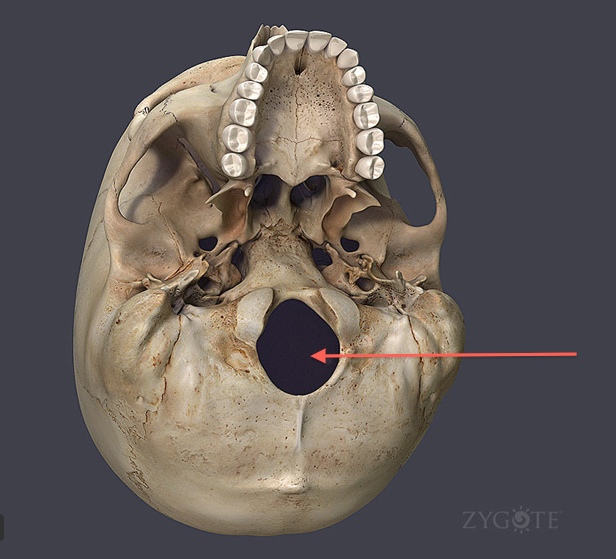
A large hole in the base of the skull where the spinal cord connects to the brain:

a)

foramen magnum

b)

sagittal crest

c)

cranial capacity

d)

S-shaped spine

98.

Which hominid species is most closely related to Homo sapiens?

a)

Homo habilis

b)

Australopithecus afarensis

c)

Homo neanderthalensis

d)

Homo heidelbergensis

99.

Which is the oldest of these four species?

a)

Australopithecines

b)

Tool-making hominins

c)

Neanderthals

d)

Homo sapiens

100.

According to the theory of evolution, which of the following statements is true?

a)

Humans evolved from chimpanzees

b)

Chimpanzees evolved from humans

c)

There is no evolutionary relationship between humans and chimpanzees

d)

Humans and chimps evolved from common ancestors

101.

If you wanted to excavate fossils of the earliest human ancestors, to what country might you travel?

a)

Australia

b)

China

c)

Kenya

d)

Iceland

102.

...... were the first homonids to create and use stone tools, an ability that reduced selection pressures for large jaws and teeth.

a)

Homo sapiens

b)

Homo erectus

c)

Homo habilis

d)

The australopithecus

103.
Which hominin species came first - Australopithecus or Homo?
a)
Australopithecus species
b)
Homo species
104.

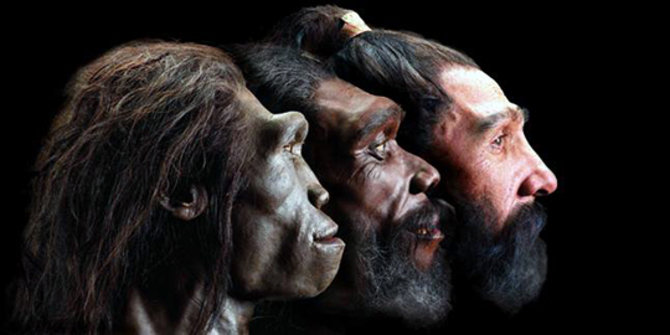
Scientists have found evidence that about 2.4 million years ago a gene regulating jaw muscles mutated and may have led to the more graceful human jaw we see today. The diagram below shows the skulls of 3 hominid species

Which statement below most closely explains the link between JAW size and hominid evolution?

a)

The jaws of hominids evolved to be smaller and less protruding over time.

b)

The jaws of hominids evolved to be larger and more protruding over time.

c)

There appears to be no change in the jaws of hominids over time.

d)

The jaws of hominids changed over time due to a change in brain size.

105.
What happened to the hominid jaw and brain size over time? 
a)
The jaw size decreased while the brain size decreased.
b)
The jaw size increased while the brain size decreased.
c)
The jaw size decreased while the brain size increased.
d)
The jaw size increased while the brain size increased.
106.
What three things are trends that scientists have seen in hominid evolution? 
a)
Smaller brain size, increasing jaw size, and broad forhead
b)
Increasing body size, thick skulls, and large brow bone.
c)
Decreasing brain size, large canines, and thick skulls.
d)
Bipedalism, increasing brain size, and use of tools.
107.
All rabbits living in a particular area would be an example of a(n)
a)
population
b)
species
c)
fossil
d)
individual organism
108.
Populations of different organisms living in an area
a)
species
b)
community
c)
niche
d)
biome
109.
All the living and non-living in an area
a)
ecosystem
b)
carnivore
c)
niche
d)
population
110.
Which biome covers most of the land mass near the Earth's equator?
a)
tundra
b)
desert
c)
grassland
d)
tropical rainforest
111.
Which biome is characterized by low temperatures and low amounts of rainfall?
a)
tundra
b)
desert
c)
temperate deciduous forest
d)
tropical rain forest
112.
Which biome receives between 0 to 25 centimeters of rain per year, has a temperature range of 0 to 50 degrees Celsius, has poor soil, and is home to lizards, scorpions, and snakes?
a)
desert
b)
mountain
c)
taiga
d)
tundra
113.
Which biome contains large populations of grazing herbivores, few species of birds, and deep, rich soil?
a)
taiga
b)
tundra
c)
deciduous forest
d)
grassland
114.
Areas defined by their geographical location and ecological similarity are called?
a)
ecozones
b)
biotopes
c)
biomes
d)
biodomes
115.
Which biome is represented by the rainfall amounts in letter C?
a)
desert
b)
prairie
c)
deciduous forest
d)
tropical rain forest
116.
1. What is the human microbiome?
a)
A all of the communities of microbes in and on the human body
b)
B a drug that destroys helpful bacteria along with harmful bacteria
c)
C a species of bacteria that helps protect humans against asthma
d)
D a group of people in developed countries who are infected with Heliobacter pylori
117.
3. What information in the text supports the following statement?
Bacteria that are helpful in one place may be harmful in another.
a)
A Heliobacter pylori is a bacterium that causes gastritis (irritation or inflammation of the stomach lining) and peptic ulcers, diseases which were once thought to be caused by too much acid.
b)
B Streptococcus salivarius appears to help prevent tooth decay in the mouth but can bedangerous to people with weakened immune systems if it gets outside the mouth.
c)
C Bacillus subtilis releases toxic chemicals to kill fungus, possibly including Trichophytoninterdigitale and other species that cause athlete’s foot.
d)
D Skin, which is our interface with the world, supports a large number of the human body’s most diverse populations of bacteria, including Bacillus subtilis.
118.
2. What information in the text supports the following statement?
Some species of bacteria benefit humans.

a)
A S. mutans is a bacterium that causes cavities, and S. pneumonia is a bacterium that causes pneumonia.
b)
B Fungi evolved the ability to produce anti-bacterial chemicals as they competed with bacteria over millions of years.
c)
C The bacterium Streptococcus pyogenes causes strep throat and rheumatic heart disease.
d)
D Species of bacteria belonging to the genus Bacteroides help the human body digest food.