wayground logo

Free Printable Worksheets

Font size

S
M
L
XL
Worksheets

AP biology final review

Total questions: 119

Worksheet time: 2hrs 42mins

Name
Class
Date
1.
Imagine you are performing a cross involving seed color in garden pea plants. What F1 offspring would you expect if you cross true-breeding parents with green seeds and yellow seeds? Yellow seed color is dominant over green.
a)
100 percent yellow-green seeds
b)
100 percent yellow seeds
c)
50 percent yellow, 50 percent green seeds
d)
25 percent green, 75 percent yellow seeds
2.
If black and white true-breeding mice are mated and the result is all gray offspring, what inheritance pattern would this be indicative of?
a)
dominance
b)
codominance
c)
multiple alleles
d)
incomplete dominance
3.
If black and white true-breeding mice are mated and the result is all gray offspring, what inheritance pattern would this be indicative of?
a)
dominance
b)
codominance
c)
multiple alleles
d)
incomplete dominance
4.
A recessive trait will be observed in individuals that are ________ for that trait.
a)
heterozygous
b)
homozygous or heterozygous
c)
homozygous
d)
diploid
5.
Meiosis results in ______.
a)
4 genetically distinct haploid gametes
b)
2 genetically distinct cells
c)
2 genetically identical cells
d)
4 genetically identical cells
6.
The chromosomes that pair up during meiosis, are called __________ chromosomes.  
a)
homozygous 
b)
asexual
c)
homologous
d)
genes
7.
When an area of a chromatid is exchanged with the matching area on a chromatid of its homologous chromosome, _________________ occurs
a)
crossing over
b)
mutagenesis
c)
hybridization
d)
fertilization
8.
The observable outward manifestation of the genes of an individual is referred to as its
a)
blueprint
b)
genotype
c)
phenotype
d)
genetic map
9.
Chromosomes that do NOT play a role in determining the sex of an individual are called
a)
sex chromosoems
b)
X and Y
c)
autosomes
d)
A and B are correct
10.
In a sex-linked inheritance pedigree you would expect to see
a)
more affected females
b)
all carrier males
c)
more affected males
d)
an equal number of affected males and females
11.
In humans, hemophilia is an X-linked recessive trait. If a man and a woman have a son who is affected with hemophilia, which of the following is definitely true?
a)
The mother carries an allele for hemophilia
b)
The father carries an allele for hemophilia
c)
The father is afflicted with hemophilia
d)
both parents carry an allele for hemophilia
12.
The red and blue pair of chromosomes in the bottom row are
a)
genetically identical
b)
carrying the same  genes, but different alleles
c)
carrying completely different genes
d)
carrying the same genes and the same alleles
13.
Give the genotype for person III-3
a)
GG
b)
Gg
c)
gg
d)
Cannot determine
14.
Hemophilia is a recessive x-linked disorder.
Which genotype represents a male with hemophilia?
a)
XHXh
b)
XhXh
c)
XHY
d)
XhY
15.
The range of human skin colors is caused by a variety of genes, each of which has at least 2 alleles.  This is an example of:
a)
incomplete dominance
b)
codominance
c)
multiple alleles
d)
polygenic inheritance
16.
Snap dragon color is a incomplete dominant trait.  A red flower (RR) is crossed with white flower (WW). What color are flowers that are heterozygous?
a)
Red
b)
Red and White
c)
White
d)
Pink
17.
If this image were real, it would represent what type of inheritance?
a)
incomplete dominance
b)
codominance
c)
polygenic inheritance
d)
compete dominance
18.
The physical appearance of an organism based on traits
a)
Genotype
b)
Phenotype
c)
Meiosis
d)
Genetics
19.
What fraction of offspring from the cross AaBB x Aabb will be heterozygous for both traits?
a)
1/16
b)
4/16
c)
8/16
d)
3/16
20.
Tendency for alleles of genes on the same chromosome to be inherited together
a)
genetic linkage
b)
genetics
c)
Punnett square
d)
gene locus
21.
If you are completing a Dihybrid cross and one parent's genotype is GgBb, what possible gametes could the parent contribute?
a)
GB, Gb, gB, gb
b)
Gb, Gb, gB, gB
c)
gb, gb, GB, GB
d)
gb, gb, gB, gB
22.
Hemophilia is a sex-linked genetic disease. If a male with hemophilia (XhY) and a homozygous normal female (XHXH) have a female child, what is the probability that the child will be a carrier for hemophilia?
a)
0%
b)
25%
c)
50%
d)
100%
23.
What pattern of inheritance is shown in this pedigree?
a)
polygenic
b)
codominance
c)
autosomal dominant
d)
sex-linked recessive
24.
What type of inheritance pattern does the pedigree display?
a)
autosomal dominant
b)
autosomal recessive
c)
sex-linked dominant
d)
sex-linked recessive
25.
What type of inheritance pattern does the pedigree display?
a)
autosomal dominant
b)
autosomal recessive
c)
sex-linked dominant
d)
sex-linked recessive
26.
This is a pedigree with an autosomal recessive disease. What is the probability that the male in the F2 generation will express the recessive disease?
a)
25%
b)
50%
c)
75%
d)
100%
27.
The pedigree shows a sex-linked recessive trait. What is the genotype of the male in the F2 generation in the pedigree shown?
a)
XAXA
b)
XaXa
c)
XAY
d)
XaY
28.
What type of inheritance is displayed in the pedigree?
a)
autosomal recessive
b)
autosomal dominance
c)
sex-linked recessive
d)
sex-linked dominant
29.
Which of the following individuals are married?
a)
II-4, I-3
b)
III-9, III-10
c)
II-6, II-7
d)
I-1, I-4
30.
Which of the following individuals are siblings?
a)
II-4, I-3
b)
III-9, III-10
c)
II-6, II-7
d)
I-1, I-4
31.
Which of the following individuals are male?
a)
IV-4, IV-7
b)
IV-5, IV-7
c)
IV-1, IV-4
d)
IV-3, IV-8
32.
Which of the following individuals are unaffected?
a)
IV-4, IV-7
b)
IV-5, IV-7
c)
IV-1, IV-4
d)
IV-3, IV-8
33.
Blood type is controlled by 3 alleles.  What inheritance pattern is this? 
a)
multiple alleles
b)
codominance
c)
incomplete dominance 
d)
law of dominance 
34.
A child born with blood type O could have parents with all of the following blood types except...?
a)
A and B
b)
A and O
c)
A and A
d)
AB and O
35.
AaBbCc x AABbcc
Chance of getting an AABBcc individual
a)
1/8
b)
1/2
c)
1/16
d)
1/32
36.
AaBbCcDD x AABbccdd
Chance of getting an AABBccDd individual
a)
1/8
b)
1/2
c)
1/16
d)
1/32
37.
Which of the following DOES NOT increase variation in the next generation?
a)
Independant Assortment
b)
Random Fertilization
c)
Crossing Over
d)
Assexual reproduction
38.
The cells produced via meiosis are called:
a)
gametes
b)
somatic cells
c)
body cells
d)
skin cells
39.
Human eggs and sperm are _____, and each has ____ chromosomes.
a)
diploid, 23
b)
diploid, 46
c)
haploid, 23
d)
haploid, 46
40.
A breed of chicken shows codominance for feather color. One allele codes for black feathers, another codes for white feathers. The feathers of heterozygous chickens of this breed will be:
a)
all black
b)
all white
c)
all gray
d)
speckled black and white
41.
The pedigree shown indicates the expression pattern of VHL in a specific family. Genetic counselors told the affected female that she and her non-carrier husband had a 50% chance of producing children with VHL.  Based on this information, which of the following best describes the inheritance pattern for this disorder?
a)
X-linked recessive
b)
Incomplete dominance
c)
Autosomal dominance
d)
Autosomal recessive
42.
How do you find degrees of freedom?
a)
one less than the possible genotypes
b)
one less than the possible phenotypes
c)
total number divided 2
d)
total number times 2
43.
What are the degrees of freedom for the following χ² test?
a)
6
b)
2
c)
5
d)
36
44.
You have been injured in the laboratory (cut, burned, etc.). First you should
a)
visit the school nurse after class
b)
see a doctor after school
c)
tell the teacher at once
d)
apply first aid yourself
45.
After completing an experiment, all chemical wastes should be -
a)
left at your lab station for the next class
b)
disposed of according to your teacher's directions
c)
dumped in the sink
d)
taken home
46.
When using a razor blade or scalpel, always cut material -
a)
away from you
b)
toward you
c)
in your hand
d)
perpendicular
47.
Always point the open end of a test tube
a)
toward yourself
b)
toward your lab partner
c)
toward another classmate
d)
away from people
48.
What does this symbol mean?
a)
fire safety 
b)
eye protection safety 
c)
animal safety 
d)
extreme temperatures 
49.
This is the symbol for -
a)
campfires 
b)
eye safety
c)
fume safety 
d)
fire safety
50.
What is this symbol for?
a)
glove safety 
b)
apron safety
c)
clapping safety
d)
chemical safety 
51.
What process to smell chemicals is this person doing
a)
sniffing 
b)
snorting 
c)
wafting 
d)
wifting 
52.
What is this science tool?
a)
jar
b)
beaker
c)
thermometer
d)
ruler
53.
All of the following should be done except...
a)
Returning ALL unused chemicals back to their original containers without being instructed to do so.
b)
Rinsing a minor cut or burn under cold water.
c)
Notifying the teacher of any safety concerns. 
d)
Know where safety equipment is located.
54.
What is a covalent bond?
a)
electrons are shared
b)
electrons are given up or taken
c)
there is an electrostatic attraction
d)
there is no such thing
55.
What are the valence electrons?
a)
electrons in the outer shell
b)
all electrons in the atom
c)
electrons the atom needs
d)
positive electrons
56.
Which of the following is NOT one of the main 4 elements found in living organisms?
a)
Carbon
b)
Nitrogen
c)
Sulfur
d)
Oxygen
57.
Atoms of the same element must always have the same number of _________
a)
electrons
b)
neutrons
c)
isotopes
d)
protons
58.
If an atom has an equal amount of Protons and electrons, what will its’ charge be?
a)
Positive
b)
Negative
c)
Neutral
d)
Infinite
59.
Which of the following is correctly defined as the attraction of the hydrogen from one molecule to the oxygen of a different molecule?
a)
amphipathic
b)
hydrophobic
c)
hydrogen bonding
d)
adhesion
60.
Because water has a positively charged end and a negatively charged end, it can be described as
a)
amphipathic
b)
hydrophobic
c)
polar
d)
nonpolar
61.
The property of water that allows water molecules to stick to each other is
a)
adhesion
b)
cohesion
c)
density
d)
specific heat
62.
The property of water that allows water molecules to stick to another substance is
a)
adhesion
b)
cohesion
c)
density
d)
specific heat
63.
When atoms combine, they may gain, lose, or share:
a)
protons
b)
electrons
c)
neutrons
d)
nuclei
64.
The number of protons in an atom is the same as the elements
a)
atomic mass
b)
atomic number
c)
mass number
d)
electron orbital
65.
The diagram shows a bond forming between two amino acids. What is the name of this reciprocation?
a)
Dehydration Synthesis
b)
Hydrolysis
c)
Pepysis
d)
Oxidation
66.
Which macromolecule is used to transport materials throughout living things and control the rate of reactions?
a)
carbs
b)
proteins
c)
lipids
67.
Which macromolecule is used as a protective waterproof covering for living things?
a)
lipids
b)
proteins
c)
nucleic acids
68.
Which macromolecule is used for storing and transmitting genetic information?
a)
nucleic acids
b)
proteins
c)
carbohyrdates
d)
lipids
69.
A nucleic acids monomer is a
a)
nucleotide
b)
monosaccharide
c)
glycerol and a fatty acid
70.
The monomer of a protein is a 
a)
amino acid
b)
nucleotide
c)
monosaccharide
71.
Sugar is an example of which macromolecule?
a)
carbohydrate
b)
lipid
c)
protein
d)
nucleic acid
72.
DNA and RNA are examples of which macromolecule?
a)
proteins
b)
nucleic acids
c)
carbohyrdates
73.
The following picture is a monomer for which macromolecule?
a)
nucleic acid
b)
protein
c)
carbohyrdate
74.
What is an unsaturated lipid?
a)
a lipid that has at least one double bond
b)
a lipid solid at room temperature
75.
What are the building blocks of proteins?
a)
amino acid
b)
fatty acid
c)
nucleotide
d)
lipid
76.
What are the single sugars that are the building blocks of carbohydrates?
a)
monosaccharides
b)
disaccharides
c)
polysaccharides
d)
amino acid
77.
Another name for fats and oils
a)
proteins
b)
sugar
c)
lipids
d)
nucleic acids
78.
What suffix (word ending) is used in the names of most carbohydrates?
a)
-ase
b)
-nic
c)
-ose
d)
-yme
79.
All organic compounds contain the element
a)
carbon
b)
nitrogen
c)
phosphorus
d)
sulfur
80.
What is the function of carbohydrates?
a)
store genetic information
b)
store energy (long-term)
c)
store energy (short-term)
d)
build skin, hair, nails, muscles
81.
What molecule is used for LONG term energy storage?
a)
carbohydrates
b)
lipids
c)
protiens
d)
nucleic acid
82.

One or more Polypeptide chains twisted folded and wound upon itself to form a specific 3 dimensional structure

a)

Carbohydrates

b)

Proteins

c)

Lipids

d)

Nucleic Acids

83.

A property that exists due to the organization or arrangement of the components that cannot be traced back to any single component

a)

Physical Property

b)

Chemical Property

c)

Emergent Property

d)

Rental Property

84.

A substance (usually a protein) that increases the rate of a chemical reaction in the body

a)

Cholesterol

b)

Enzymes

c)

Hemoglobins

d)

Reactant

85.

Carbon must form ___________ covalent bonds

a)

1

b)

2

c)

3

d)

4

86.

Prefix that means 1, or a single carbon

a)

But-

b)

Eth-

c)

Meth-

d)

Prop-

87.

Prefix that means same or similair

a)

Mono-

b)

Hyper-

c)

Hypo-

d)

Iso-

88.

a change in a species over generations

a)

Adaptation

b)

Adhesion

c)

Cohesion

d)

Evolution

89.

a change in an individual that increases its chance of survival

a)

Adaptaion

b)

Adhesion

c)

Cohesion

d)

Evolution

90.
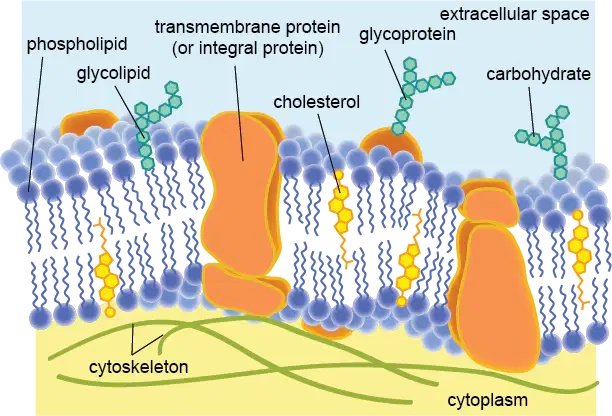
Outer Boundary of the cell composed of a phospholipid bilayer with proteins, and steroids in what is called a fluid mosaic. 
a)
Cell membrane
b)
Cell wall
c)
Plasma membrane
d)
Cytoskeleton
91.
A membranous organelle made of two membranes, an outer and an inner that is highly folded.  iIt produces cellular energy in the form of ATP 

a)
Endoplasmic Reticulum
b)
Nucleus
c)
Mitochondria
d)
Nucleolus
92.
A membranous organelle made of two membranes, an external and an internal which is arranged in stacks of sacks, and that contains chlorophyll.  It is the site of photosynthesis
a)
mitochondria
b)
stomata
c)
xylem
d)
chloroplast
93.
Directs all cell activities through the DNA located there.
a)
Lysosomes
b)
Nucleus
c)
ribosomes
d)
Mitochondria
94.
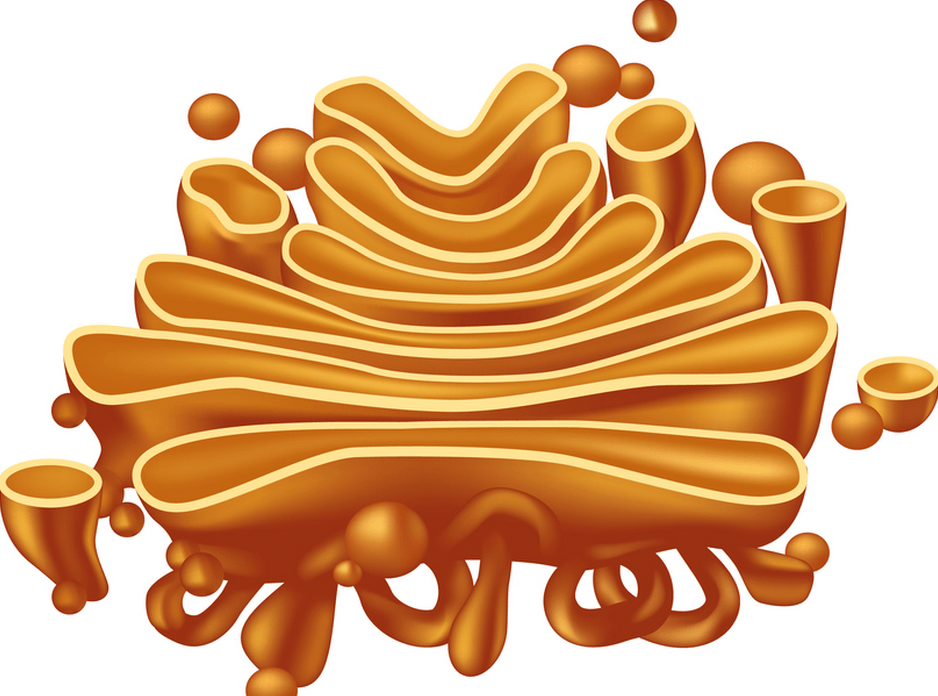
Stacks of membranous sacs which function as the processing, packaging and shipping organelle is 
a)
vacuole
b)
ribosome
c)
mitochondrion
d)
golgi apparatus
95.
A membranous sac that contains hydrolytic enzymes 
a)
mitochondria
b)
lysosome
c)
vacuole
d)
ribosome
96.
A rigid non-living secretion of the cell membrane that supports and protects plant cells is...
a)
Cytoskeleton
b)
Cilia
c)
Cell Wall
d)
Flagella
97.
A network of membranous canals that extend through the cytoplasm, sometimes has ribosomes attached
a)
Golgi apperattus
b)
Endoplasmic Reticulum
c)
Cytoskeleton
d)
Plasma Membrane
98.
This picture represents which type of cellular transport?
a)
passive transport
b)
endocytosis
c)
exocytosis
d)
osmosis
99.
Which is true about active transport?
a)
It requires energy
b)
it does not require energy
c)
It moves substances down the concentration gradient
d)
it moves material from high to low concentration
100.
The cell below is in a _________ solution.
a)
Hypotonic
b)
Hypertonic
c)
Isotonic
101.
The cell below is in a _____________ solution.
a)
Hypertonic
b)
Hypotonic
c)
Isotonic
102.
A cell in an isotonic solution will
a)
swell
b)
shrink
c)
stay the same size
d)
impossible to tell
103.
When a cell is placed in a hypertonic (more concentrated) solution water
a)
moves from the inside of the cell to the solution
b)
moves from the solution to the inside of the cell
c)
moves equally in and out of the cell
d)
none of these
104.
What reactant should be at 9
a)
Glucose
b)
CoA
c)
Oxygen
d)
Pyruvate
105.
What reactant should be at 1
a)
Glucose
b)
CoA
c)
Oxygen
d)
Pyruvate
106.
What reactant should be at 20
a)
Glucose
b)
CoA
c)
Oxygen
d)
Pyruvate
107.
What product should be at 13
a)
NAD+
b)
NADH
c)
FAD
d)
FADH2
108.
What product should be at 8
a)
CO2
b)
Pyruvate
c)
Lactic Acid
d)
Citric acid
109.
What type of Enzyme is 17
a)
Synthetase
b)
DeHydrogenase
c)
Kinase
d)
Isomerase
110.
What is the correct order for the stages of Cellular respiration
a)
Krebs, Glycolysis, Electron Transport Chain
b)
Citric acid Cycle, Krebs Cycle, Electron Transport Chain
c)
Glycolysis, Krebs cycle, Electron Transport Chain
d)
Electron Transport Chain, Krebs Cycle, Glycolycic
111.

type of Enzyme that assists in combining two or more substances to form a new substance

a)

Dehydrogenase

b)

Isomerase

c)

Kinase

d)

Synthetase

112.

type of Enzyme that assists in redox reactions, or the transfer of electrons from one substance to another

a)

Dehydrogenase

b)

Isomerase

c)

Kinase

d)

Synthetase

113.

type of Enzyme that assists in rearranging the atoms of a molecule to form a new molecule

a)

Dehydrogenase

b)

Isomerase

c)

Kinase

d)

Synthetase

114.

type of Enzyme that assists in the transfer of a phosphate from one substance to another

a)

Dehydrogenase

b)

Isomerase

c)

Kinase

d)

Synthetase

115.

Which part of cellular respiration does the Light reaction of Photosynthesis relate to most

a)

Electron Transport Chain

b)

Krebs Cycle

c)

Glycolysis

d)

none of these

116.

Which part of cellular respiration are C4 Plants adapted to Photosynthesis relate to most

a)

Electron Transport Chain

b)

Krebs Cycle

c)

Glycolysis

d)

Parts of both Krebs and Glycolysis

117.

In C4 plants the light and Dark reaction occur in separate cells. how are they separated in CAM plants

a)

different leaves

b)

different parts of the plants

c)

different times of day

d)

none of these

118.

The process of aerobic respiration produces a net gain of ______ ATP

a)

2

b)

36

c)

40

d)

None of these

119.

The process of anaerobic respiration produces a net gain of ______ ATP

a)

2

b)

36

c)

40

d)

None of these