wayground logo

Free Printable Worksheets

Font size

S
M
L
XL
Worksheets

Exam Review

Total questions: 129

Worksheet time: 2hrs 7mins

Name
Class
Date
1.
All matter is made up of .....
a)
Compounds
b)
Atoms
c)
Molecules
d)
Sunshine
2.

A combination that can be separated by physical processes is a .....

a)

Pure Substance

b)

Compound

c)

Element

d)

Mixture

3.
A mixture that is NOT evenly distributed is called ....
a)
Compounded
b)
Homogenous
c)
Heterogenous
d)
Salty
4.

Changing the phase, size or shape of something is a

a)

Chemical change

b)

Physical Change

c)

Suspension

d)

Colloid

5.

If you change a substance into a new substance it is...

a)

Partial Change

b)

Physical Change

c)

Chemical Change

d)

Freezing

6.

Any characteristic of a material, such as shape or size, that you can observe or attempt to observe without changing the identity of the material is called a:

a)

physical change

b)

chemical change

c)

physical property

d)

chemical property

7.

Substances with atoms that are all alike are called

a)

element

b)

compound

c)

homogeneous mixture

d)

heterogeneous mixture

8.
Which of the following is not a clue that a chemical change is taking place?
a)
rapid release of energy (heat, light, or sound)
b)
phase change
c)
formation of bubbles
d)
formation of a precipitate from solution
9.
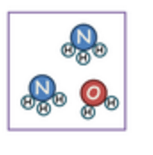
This picture represents: 
a)
Element
b)
Compound
c)
Mixture of Elements
d)
Mixture of Compounds
10.
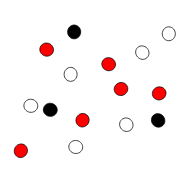
This picture represents: 
a)
Element
b)
Compound
c)
Mixture of Elements
d)
Mixture of Compounds
11.
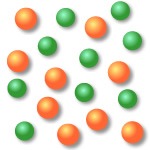
This picture represents: 
a)
Element
b)
Compound
c)
Mixture of Elements
d)
Mixture of Compounds
12.

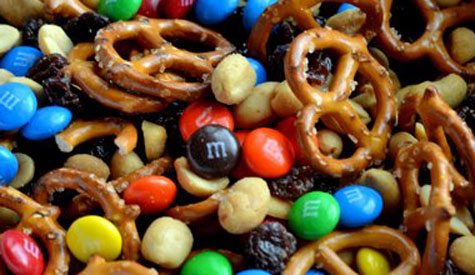
What type of mixture is this?

a)

homogenous mixture

b)

chemical

c)

heterogeneous mixture

d)

yummy!

13.
In an exothermic reaction, heat is ...
a)
taken in
b)
given out
14.

In an endothermic reaction, heat is ,,,

a)

absorbed

b)

released

15.

What type of reaction occurs in a hand warmer (aka hot hands)?

a)

exothermic

b)

endothermic

16.
Alex goes into the garden and digs up a shovel full of dirt.  This is a _____________ mixture.
a)
Homogeneous
b)
Heterogenous
17.
This picture represents which of the following?
a)
element
b)
compound
c)
mixture
18.

A mixture that is so evenly mixed you can't see the parts, such as Kool-Aid, is a

a)

Homogeneous Mixture

b)

Heterogeneous Mixture

c)

Pure Substance

19.

A substance with two or more elements that are combined in a fixed proportions is a(n)

a)

colloid

b)

compound

c)

element

d)

solution

20.
Which particle has a positive charge?
a)
electron
b)
orbital
c)
proton
d)
neutron
21.

Which particle determines what element you have - the element's identity?

a)

electron

b)

proton

c)

neutron

d)

valence shell

22.

What causes the mass of the nucleus to increase?

a)

adding an electron

b)

adding a neutron

c)

more orbitals

d)

adding negatively charged particles

23.
What is the mass number and name of an element with 8 protons and 8 neutrons?
a)
16 - Carbon
b)
16 - Oxygen
c)
24 - Oxygen
d)
8 - Neon
24.
An element with a mass number of 10 and an atomic number of 6 has how many protons?
a)
5
b)
8
c)
6
d)
10
25.
An element with a mass number of 11 and an atomic number of 5 has how many neutrons?
a)
11
b)
5
c)
6
d)
16
26.

What do the following properties describe: shiny, ductile, good conductor, high melting point?

a)

metal

b)

nonmetal

c)

metalloid

27.

Roasting marshmallows is a chemical change.

a)

True

b)

False

28.
Which is an example of a metalloid?
a)
Boron
b)
Lead
c)
Radon
d)
Gold
29.
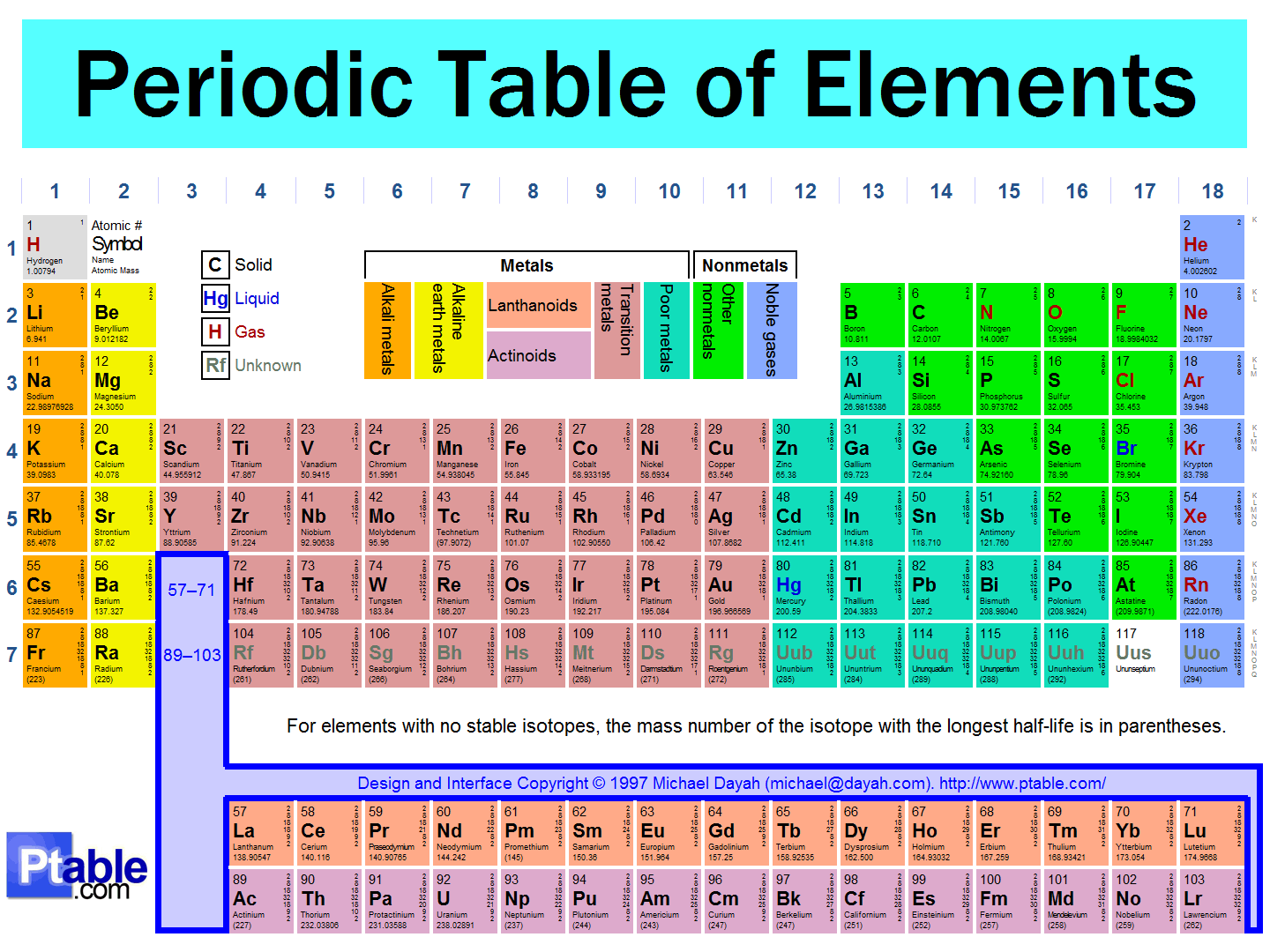
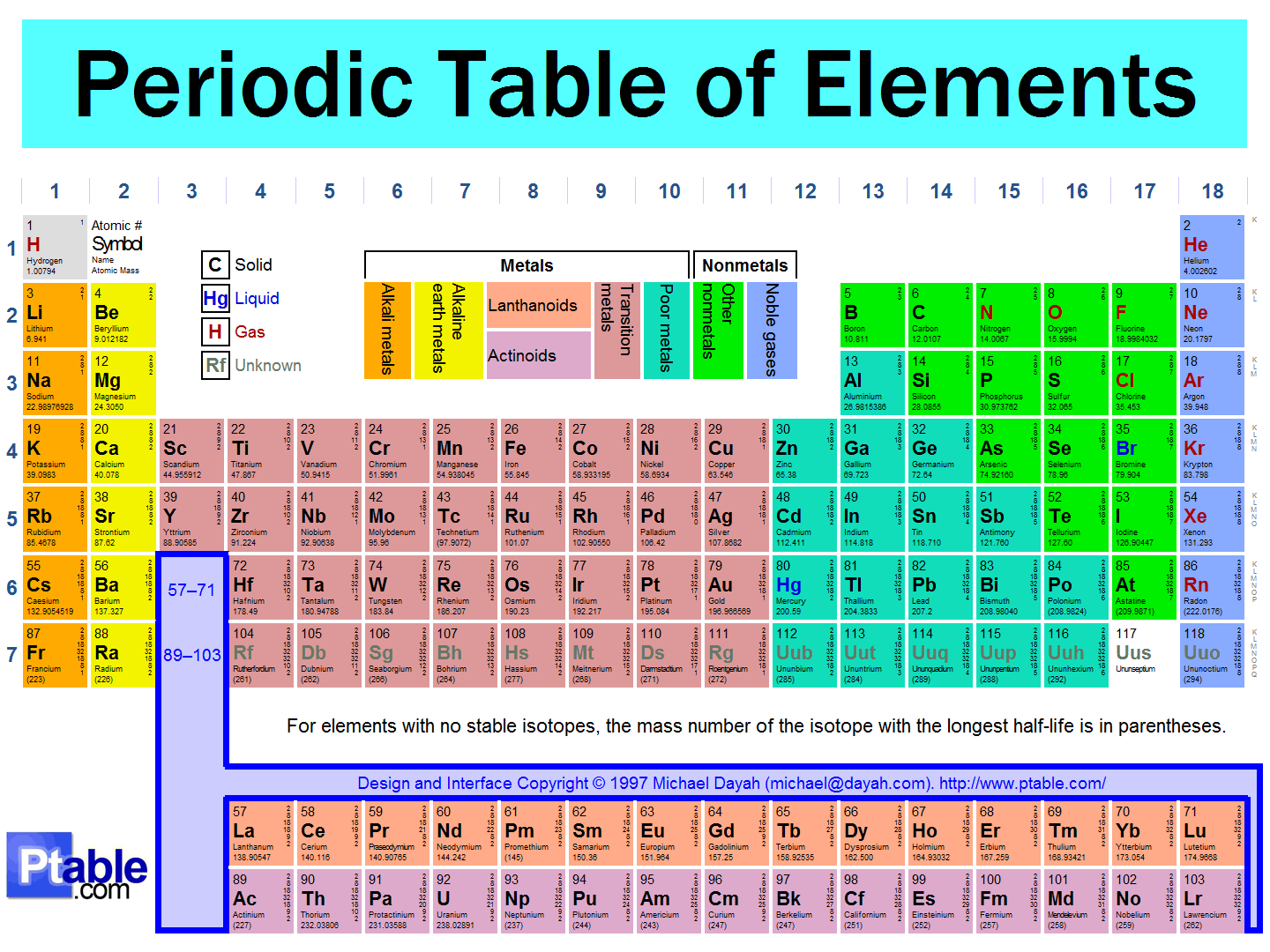
Which element is located at Period 5, Group 2? 
a)
Niobium
b)
Strontium
c)
Nitrogen
d)
Phosphorus
30.
Elements in the periodic table are arranged in order by their ...
a)
atomic number
b)
atomic mass (mass number)
c)
metal, nonmetal, or metalloid properties
31.

A vertical column is called...

a)

group

b)

tower

c)

period

d)

crew

e)

family

32.

A horizontal row on the periodic table is called a

a)

group

b)

family

c)

period

d)

atomic number

33.
This type of bond forms between a metal and nonmetal
a)
Covalent
b)
Ionic
c)
Hydrogen
d)
Metallic
34.

Electrons are transferred in this type of bond

a)

Hydrogen

b)

Ionic

c)

Covalent

d)

Metallic

35.

This is the type of bond in which electrons are shared equally

a)

Ionic

b)

Covalent

c)

Hydrogen

d)

Metallic

36.
# neutrons + # protons = ___
a)
Atomic number
b)
Atomic Mass
c)
Mass Number
d)
Valence Electrons
37.
Which two are equal in number in a neutral atom?
a)
protons and neutrons
b)
electrons and neutrons
c)
protons and electrons
d)
neutrons and valence electrons
38.
What does the number 37 represent in Chlorine-37?
a)
Atomic number
b)
Mass number
c)
Number of protons
d)
Number of neutrons
39.

What is the charge of a cation?

a)

positive

b)

negative

c)

neutral

40.

How many protons, electrons and neutrons does an neutral atom of Calcium have, if its atomic number is 20 and the mass number is 40?

a)

20 protons, 18 electrons and 40 neutrons

b)

20 protons, 20 electrons and 20 neutrons

c)

40 protons, 40 electrons and 20 neutrons

d)

20 protons, 18 electrons and 20 neutrons

41.
If Aluminum loses 3 electrons, what will its charge be?
a)
Neutral
b)
-3
c)
+3
d)
+8
42.
___ tend to form cations
a)
Metals
b)
Nonmetals
c)
Isotopes
43.
____ tend to form anions
a)
Nonmetals
b)
Metals
c)
Isotopes
44.
Which group of the periodic table is composed of inert (not reactive)  gases?
a)
alkali metals
b)
alkaline earth metals
c)
halogens
d)
noble gases
45.
The atoms along the staircase are called 
a)
metals
b)
nonmetals
c)
metalloids
d)
noble gases
46.
Which is a halogen?
a)
Helium
b)
Chlorine
c)
Oxygen
d)
Neptune
47.
Which is an alkali metal?
a)
Magnesium
b)
Iron
c)
Sodium
d)
Europium
48.
Elements in a ..................have similar chemical properties.  
a)
period
b)
group
c)
row
49.

Which has the greater electronegativity: chlorine or aluminum?

a)

Cl

b)

Al

50.
Which of the following will have a larger radius than Zinc?
a)
Gallium
b)
Aluminum
c)
Magnesium
d)
Strontium
51.

Which has a higher electronegativity: nitrogen or carbon?

a)

C

b)

N

52.
Which of the following will have a higher electronegativity than arsenic (As)?
a)
Carbon (C)
b)
Neon (Ne)
c)
Antimony (Sb)
d)
Germanium (Ge)
53.
As atoms of elements in group 16 are considered in order from top to bottom, the electronegativity of each successive element....
a)
decreases
b)
increases
c)
remains the same
d)
none of the above
54.
Which atom has the largest atomic radius?
a)
potassium
b)
rubidium 
c)
francium
d)
cesium
55.
As you move down the periodic table atoms get bigger.  This is because ____________.
a)
The atoms have more mass.
b)
The atoms have more protons.
c)
The atoms have more energy levels
d)
The atoms have more nuetrons
56.
The atom with the largest atomic radius in Group 18 is - 
a)
Ar
b)
He
c)
Kr
d)
Rn
57.
The element with the lowest electronegativity in Period 3 is - 
a)
Na
b)
Cl
c)
Ar
d)
Mg
58.
Which periodic group has the smallest atomic radius?
a)
Alkali metals
b)
Halogens
c)
Noble Gases
d)
Transition metals
59.
Which of the following is NOT and indicator of a chemical reaction/change?
a)
Gas is produced when vinegar and baking soda are mixed?
b)
A stick of butter is melted when placed in the microwave.
c)
A copper penny changes color when exposed to the atmosphere.
d)
Heat is released when two chemicals are mixed.
60.
According to the conservation of mass in a chemical reaction, the total amount of atoms
a)
can increase.
b)
can decrease.
c)
stays the same.
d)
doesn’t matter.
61.
What is letter A?
a)
coefficient
b)
subscript
c)
superscript
62.
What is letter C?
a)
coefficient
b)
subscript
c)
superscript
63.
What is letter E?
a)
coefficient
b)
subscript
c)
superscript
64.
What is letter H?
a)
product
b)
reactant
c)
yields
65.
What is letter G?
a)
product
b)
reactant
c)
yields
66.
What is letter F?
a)
chemical formula
b)
chemical symbol
c)
yields
67.
What is letter B?
a)
chemical formula
b)
chemical symbol
c)
yields
68.
What is letter D?
a)
product
b)
reactant
c)
yields
69.
If an atom of nitrogen gains 3 electrons, what is its overall charge?
a)
Neutral - No charge
b)
+3
c)
-3
d)
-1
70.
Which of the following is true of ionic bonds?
a)
Electrons are completely transferred during bonding
b)
Electrons are shared during bonding
c)
Electrons are not involved with bonding
d)
All of the above
71.
Which of the following describes covalent bonds?
a)
Bonds form because of opposite charges
b)
Bonds form to fill outer electron shells
c)
Electrons are transferred between atoms
d)
Covalent bonds are magical
72.
Carbon tetrachloride contains how many atoms of chlorine?
a)
1
b)
2
c)
3
d)
4
73.
Most atoms have no net charge because they have....
a)
an equal number of charged and non-charged particles
b)
neutrons in their nuclei
c)
an equal number of electrons and protons
d)
an equal number of neutrons and protons
74.
What group of elements satisfies the octet rule without forming compounds?
a)
halogen
b)
noble gas
c)
alkali metal
d)
alkaline-earth metal
75.
Why do bonds form?
a)
To fill the valence shell of electrons for the elements involved
b)
to release energy stored in the bonds
c)
because whenever you mix two chemicals, there will be a reaction
d)
because of attraction
76.

What type of bond is illustrated in this image?

a)

Metallic

b)

Ionic

c)

Covalent

d)

Wiggly

77.
A substance which has a high melting point, conducts electricity when dissolved in water, and has a crystalline structure probably has what type of bond?
a)
Ionic
b)
Metallic
c)
Covalent
d)
Crystalline
78.
A solid substance is an excellent conductor of electricity. The chemical bonds in this substance are most likely?
a)
ionic, because the valence electrons are shared between atoms
b)
covalent, because the valence electrons are mobile
c)
metallic, because the valence electrons are stationary
d)
metallic, because the valence electrons are mobile
79.

A compound that is a poor conductor and has low melting and boiling points is most likely

a)

ionic

b)

metallic

c)

covalent

80.

Which compound would have a very low melting point?

a)

sodium chloride

b)

copper (II) sulfate

c)

sulfur dioxide

d)

aluminum

81.

Classify:

3KOH + H3PO4 → K3PO4 + 3H2O

a)

Synthesis

b)

Decomposition

c)

Single replacement

d)

Double replacement

e)

Combustion

82.

Classify:

2Pb(NO3)2 → 2PbO + 4NO2 + O2

a)

Synthesis

b)

Decomposition

c)

Single replacement

d)

Double replacement

e)

Combustion

83.

Classify:

3Mg + N2 → Mg3N2

a)

Synthesis

b)

Decomposition

c)

Single replacement

d)

Double replacement

e)

Combustion

84.

Classify:

2NO2 → N2 + 2O2

a)

Synthesis

b)

Decomposition

c)

Single replacement

d)

Double replacement

e)

Combustion

85.

Classify:

2Fe + 3H2SO4 → Fe2(SO4)3 + 2H2

a)

Synthesis

b)

Decomposition

c)

Single replacement

d)

Double replacement

e)

Combustion

86.

Classify:

P4 + 3O2 → 2P2O3

a)

Synthesis

b)

Decomposition

c)

Single replacement

d)

Double replacement

e)

Combustion

87.

Which chemical reaction involves a switching of 2 elements or ions?

a)

Syntheiss

b)

Decomposition

c)

Single replacement

d)

Double replacement

e)

Combustion

88.

Classify:

C2H8 + 4O2 → 4H2O + 2CO2

a)

Synthesis

b)

Decomposition

c)

Single replacement

d)

Double replacement

e)

Combustion

89.
In order for the reaction 2Al + 6 HCl → 2AlCl3 + 3H2 to occur, which of the following must be true?
a)
Al must be above Cl on the activity series.
b)
Al must be above H on the activity series.
c)
Heat must be supplied for the reaction.
d)
A precipitate must be formed.
90.
In a chemical equation, the symbol (aq) indicates that the substance is
a)
water
b)
insoluble
c)
dissolved in water
d)
an acid
91.

Given the two reactants, would this reaction produce a precipitate, and if so, what?

BaCl2 + Na2CO3

a)

yes: NaCl

b)

yes: BaCO3

c)

no: NOR

d)

yes: BaNa2

92.

Is Pb(NO3)2 soluble or insoluble in water?

a)

Soluble

b)

Insoluble

c)

Neither

d)

Soluble and Insoluble

93.

Which chemical equation is balanced?

a)

PbO2 + 2H2 → H2SO4

b)

SO2 + H20 → H2SO4

c)

2Na + 2H2O → 2NaOH + H2

d)

2Na + 2H2O → 2NaOH + H

94.

Which of the following compounds is insoluble in water?

a)

NaCl

b)

CuI2

c)

NaHCO3

d)

KOH

e)

all choices are insoluble

95.

What occurs when you mix solutions of BaCl2 and Mg(HCO3)2?

a)

a white BaHCO3 precipitate forms

b)

a white Mg(OH)2 precipitate forms

c)

a white Ba(HCO3)2 precipitate forms

d)

two white precipitates form

e)

NOR

96.

What occurs when you mix solutions of NH4I and Ca(NO3)2?

a)

a white Ca(NH4)2 precipitate forms slowly

b)

an olive CuI2 precipitate forms

c)

a white CaI2 precipitate forms

d)

two white precipitates form

e)

NOR

97.

What could you add to HCl to produce hydrogen gas?

a)

Na

b)

HOH

c)

H2

d)

Si

98.

What occurs if the solutions CoI2 and Pb(NO3)2 are mixed?

a)

two different precipitates form

b)

a yellow PbI2 precipitate forms

c)

a blue to red precipitate forms

d)

NOR

99.

Which ion is most soluble?

a)

NH4+1

b)

Pb+2

c)

Cl-1

d)

OH-1

100.
What do we call a substance that increases the rate of a reaction without participating in the reaction?
a)
catalyst
b)
inhibitor
c)
accelerator
d)
decelerator
101.
Which of the following will increase the rate of a reaction?
a)
raising the temperature of reactants
b)
grinding the reactants into a powder
c)
increasing the concentration of reactants
d)
all of the above
102.
The pH of a solution is tested, and it is found to be a basic solution. Of the following choices, what could the pH have been?
a)
3
b)
9
c)
7
d)
5
103.
Human blood has a pH between 7.35 and 7.45. Which of the following best describes human blood?
a)
strongly acidic
b)
slightly acidic
c)
strongly basic
d)
slightly basic
104.
Which of these pH values would indicate that a solution is a weak base?
a)
4
b)
5.6
c)
8
d)
13
105.
When dissolved in water, acids produce:
a)
bases
b)
salts
c)
hydrogen ions
d)
hydroxide ions
106.
Which type of ion does a base produce when it is dissolved in water?
a)
oxide
b)
oxygen
c)
hydrogen
d)
hydroxide
107.
Soap is a weak base.  What is true about the taste of bases?
a)
they taste sour
b)
they taste sweet
c)
they taste bitter
d)
they taste salty
108.
A compound that changes color when it is in contact with an acid or base is called______________
a)
Acid
b)
Base 
c)
Neutral
d)
Indicator
109.
The pH scale measures...
a)
...the strength of an acid.
b)
...the strength of hydrogen ions.
c)
...the concentration of hydrogen ions.
d)
...the concentration of an acid
110.
Acid + base --> ?
a)
salt + hydrogen gas + water
b)
salt + carbon dioxide + water
c)
salt + water
d)
salt only
111.
If an acid is combined with a base of equal strength, the result will most likely be
a)
a neutral solution.
b)
a stronger acid.
c)
impossible to tell without testing the pH.
d)
a stronger base
112.
This variable in an experiment is the one being deliberately changed by the scientist. 
a)
dependent variable
b)
independent variable
c)
data
d)
control group
113.
There are two types of data. Which type of data involves numbers that are obtained by counting or measuring?
a)
quantitative
b)
qualitative
114.
There are two types of data. Which type of data involves descriptions/photographs/illustrations that cannot be counted or measured?
a)
qualitative
b)
quantitative
115.
In a controlled experiment, how many independent variables can be worked with at a time? 
a)
one
b)
none
c)
two or more
d)
how ever many makes sense.
116.
A list of the steps anyone could follow to conduct an experiment. 
a)
obervations
b)
question/problem
c)
materials
d)
procedures
117.
This part of the experiment serves as a basis of comparison; the one variable being tested has been omitted. 
a)
experimental group
b)
control group
c)
data
d)
variables
118.
In this graph, what is the independent variable? 
a)
Population
b)
Day
c)
Species 5
119.
In this graph, what is the dependent variable? 
a)
Walla Walla Island
b)
Time
c)
Number of Deer
120.

How close a measurement is to the true value is called..

a)

Accuracy

b)

Precision

c)

Significant

d)

Estimate

121.
A set of data are all close to each other, and they are close to the actual value.  This set of data can be described as...
a)
accurate
b)
precise
c)
both precise and accurate
122.
When a measurement is repeatable and consistent it is said to have...
a)
High precision
b)
Low precision
c)
High accuracy
d)
Low accuracy
123.
A set of data are all close to each other, but they are not close to the actual value.  This set of data can be described as...
a)
accurate
b)
precise
c)
both precise and accurate
124.
This bullseye demonstrates...
a)
High Accuracy & High Precision
b)
High Accuracy & Low Precision
c)
Low Accuracy & High Precision
d)
Low Accuracy & Low Precision
125.

What is the length?

a)

3.2 cm

b)

3.12 cm

c)

3 cm

d)

3.219 cm

126.
You place a rock on the electronic balance an it measures a mass of 12.38 g.  The estimated digit is....
a)
b)
2
c)
3
d)
8
127.
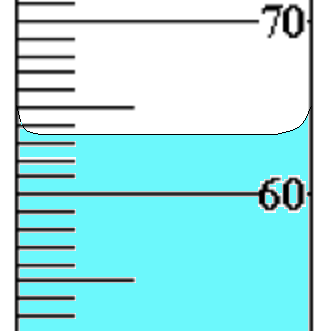
Volume?
a)
63.5 mL
b)
63 mL
c)
63.55 mL
d)
6 mL
128.
A set of data are not close to each other, but the average of the data is very close to the actual value.  This set of data can be described as...
a)
accurate
b)
precise
c)
both precise and accurate
129.
How many estimated digits should there be in an accepted measurement?
a)
0
b)
1
c)
2
d)
3