wayground logo

Free Printable Worksheets

Font size

S
M
L
XL
Worksheets

A&P Overview

Total questions: 112

Worksheet time: 53mins

Name
Class
Date
1.
The front is my ____________ side
a)
posterior 
b)
anterior
c)
dorsal
d)
sagital
2.
What is another word that can be used to describe "homeostasis"?
a)
STABLE
b)
EQUAL
c)
COMPLETE
d)
CORRECT
3.
Your skin and hair are parts of your ___________
a)
endocrine system
b)
excretory system
c)
lymphatic system
d)
integumentary system
4.
Which system uses hormones to regulate body activities?
a)
Integumentary
b)
Urinary
c)
Endocrine
d)
Immune
5.
This type of muscle tissue is found in the walls of hollow organs such as the stomach 
a)
Skeletal
b)
Cardiac
c)
Smooth
6.
Involuntary type(s) of muscle tissue
a)
skeletal
b)
cardiac
c)
smooth
d)
smooth and cardiac
7.
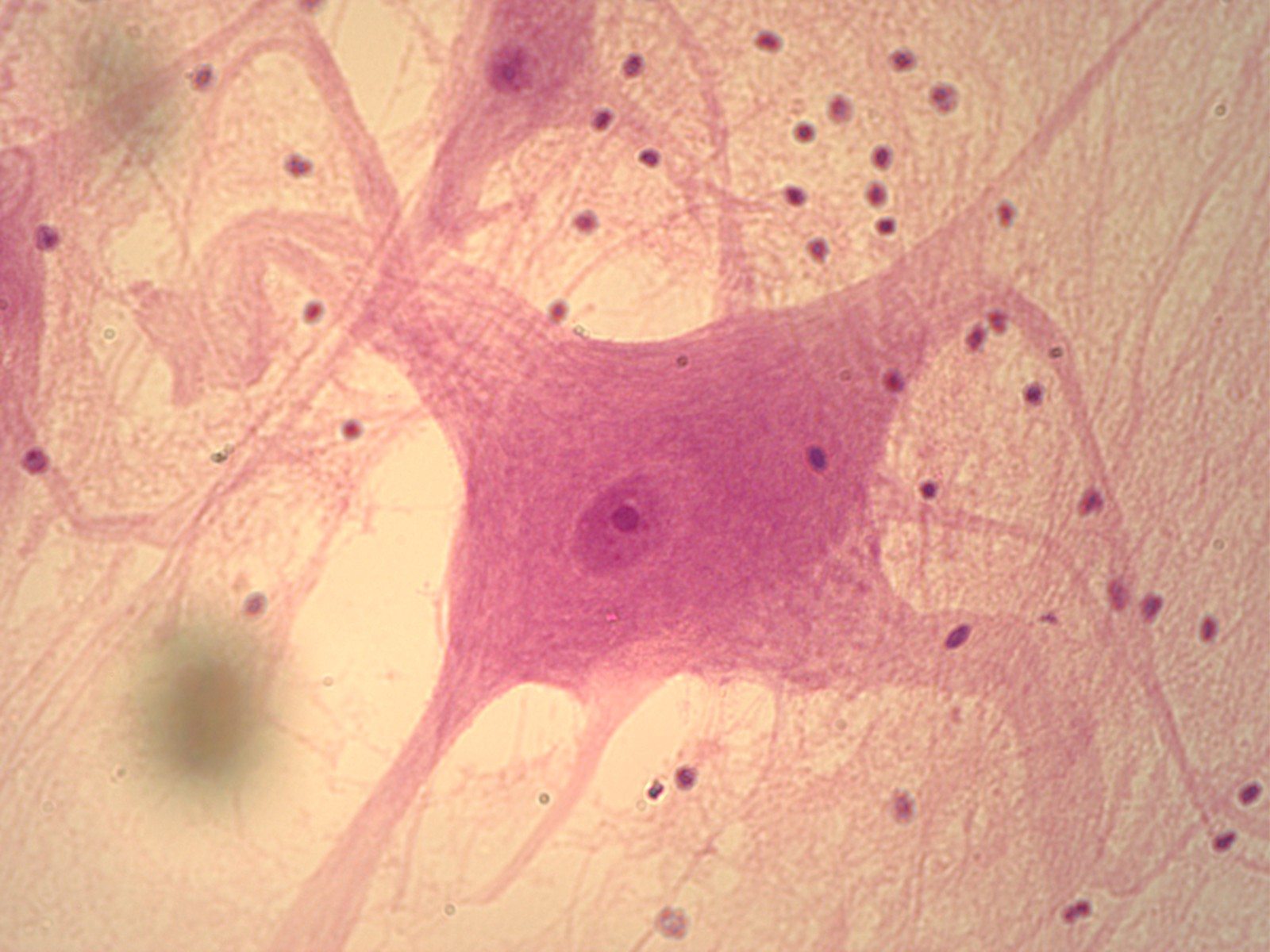
what is also known as a nerve cell?
a)
neuron
b)
sensory nerves
c)
dendrites
d)
toes
8.
Term meaning the study of how the body functions?
a)
Biology
b)
Zoology
c)
Anatomy
d)
Physiology
9.
A 33 year old has wrecked on a motorcycle and is going into shock. The body initially compensates to maintain balance. This is an example of ___________________?
a)
Homeostasis
b)
Ventilations
c)
Perfusion
d)
Physiology
10.
A term that means the study of the body's structure?
a)
Physiology
b)
Anatomy
c)
Biology
d)
Zoology
11.
The arms and legs are part of the
a)
axial skeleton
b)
appendicular skeleton
12.
Which of these properties are found in cardiac muscle?
a)
Intercalated
b)
Striated
c)
Neither Answer
d)
Both Answers
13.
The energy for muscle contraction comes from
a)
pyruvic acid
b)
ATP
c)
synovial fluid
d)
water
14.
A group of tissues that perform a similar function is called_____. (Examples include the heart, lungs or stomach)
a)
cells
b)
tissues
c)
organs
d)
organ systems
15.
The part of the nerve that sends or relays messages. 
a)
Synapse 
b)
Dendrite 
c)
Neuron 
d)
Axon 
16.
The part of the nerve cell that receives a message. 
a)
Nerve 
b)
Brain 
c)
Dendrite 
d)
Axon 
17.
What is the function of the nervous system?
a)
Transport nutrients around the body
b)
Send and receive messages to respond to a change in an organisms environment
c)
Brings oxygen into the body
d)
Moves body parts
18.
A student accidentally places her hand on a tack and quickly pulls her hand away. The tack represents
a)
a stimulus
b)
an effector                                 
c)
an impulse                               
d)
 a response
19.
The ______________________ is the body system that serves as a support framework. 
a)
muscular system
b)
skeletal system
c)
nervous system
d)
respiratory system
20.

The type of muscle found in body organs like those of the digestive system

a)

Cardiac

b)

Relaxed

c)

Skeletal

d)

Smooth

21.
Voluntary control of the body is restricted to which type of muscle tissue?
a)
SMOOTH MUSCLE TISSUE
b)
CARDIAC MUSCLE TISSUE
c)
SKELETAL MUSCLE TISSUE
d)
NEURAL MUSCLE TISSUE
22.
Which cavity holds the heart?
a)
abdominal
b)
cranial
c)
pelvic
d)
thoracic
23.
Which cavity holds the intestines?
a)
abdominal
b)
cranial
c)
pelvic
d)
thoracic
24.
Which cavity holds the ovaries?
a)
abdominal
b)
cranial
c)
pelvic
d)
thoracic
25.
Which plane divides the body into upper and lower halves?
a)
coronal
b)
sagittal
c)
transverse
26.
Which plane divides the body into front and back halves?
a)
coronal
b)
sagittal
c)
transverse
27.
Which plane divides the body into left and right halves?
a)
coronal
b)
sagittal
c)
transverse
28.
Which type of tissue forms the skin?
a)
muscle
b)
nerve
c)
epithelial
d)
connective
29.
Which type of tissue provides support for the body?
a)
muscle
b)
nerve
c)
epithelial
d)
connective
30.
What is another word for posterior?
a)
caudal
b)
cranial
c)
ventral
d)
dorsal
31.
What is another word for anterior?
a)
caudal
b)
cranial
c)
ventral
d)
dorsal
32.
What is another word for inferior?
a)
caudal
b)
cranial
c)
ventral
d)
dorsal
33.

The basic unit of life is called:

a)

Tissue

b)

Cell

c)

Organism

d)

Organ

34.

Produces cells used in sexual reproduction.

a)

Integument system

b)

Reproductive system

c)

Skeletal system

d)

Circulatory system

35.

creation of somatic/body cells

a)

Mitosis

b)

Meiosis

36.

Creation of sex cells

a)

Meiosis

b)

Mitosis

37.

System that holds things in for the cell, aka fluid mosaic model.

a)

cell membrane

b)

chromosomes

c)

DNA

d)

Mitochondria

38.

DNA is used to encode proteins.

a)

True

b)

False

39.

DNA is shaped like a

a)

single strand

b)

double helix

c)

triple helix

d)

quad helix

40.
A wound at the body's surface is
a)
superficial 
b)
deep 
c)
proximal 
d)
distal
41.
External body covering
a)
Endocrine 
b)
Integumentary 
c)
Nervous 
d)
Cardiovascular
42.
Body system that protects/supports organs, movement, blood cells formed here, stores minerals
a)
Nervous 
b)
Muscular 
c)
Endocrine
d)
Skeletal 
43.
Body system involved in movement, produces heat
a)
Muscular 
b)
Skeletal 
c)
Nervous 
d)
Excretory
44.
Body system that is the control system of the body, responds to changes
a)
Endocrine 
b)
Respiratory 
c)
Nervous 
d)
Lymphatic
45.
Body system that brings in oxygen, releases carbon dioxide
a)
Circulatory 
b)
Nervous 
c)
Respiratory 
d)
Excretory
46.
Body system that transports blood, which carries oxygen, nutrients, and wastes
a)
Digestive
b)
Endocrine 
c)
Respiratory 
d)
Cardiovascular 
47.
Houses white blood cells, returns leaked fluids
a)
Lymphatic/Immune 
b)
Digestive 
c)
Reproductive Excretory
d)
Reproductive Excretory
48.
Breaks food into the nutrients we need, expels solid waste
a)
Endocrine 
b)
Digestive 
c)
Excretory 
d)
Nervous
49.
Body system that removes metabolic wastes from the blood
a)
Digestive
b)
Cardiovascular 
c)
Respiratory 
d)
Excretory 
50.
This organelle protects the cell by only allowing certain molecules to pass through
a)
Chloroplast
b)
Nucleus
c)
Mitochondria
d)
Cell Memebrane
51.
This organelle found in the cell stores all your genetic information (DNA).
a)
Chloroplast
b)
Nucleus
c)
Mitochondria
d)
Cell Membrane
52.
This organelle in the cell converts energy from food, glucose, into a usable for of energy, ATP
a)
Chloroplast
b)
Nucleus
c)
Mitochondria
d)
Cell Memebrane
53.
Which structure is found inside of the nucleus and function includes making ribosomal RNA/ribosomes?
a)
nucleus
b)
nuclear membrane
c)
nuclear pore
d)
nucleolus
54.
Which organelle functions to digest and breakdown old organelles and/or removal of pathogens?
a)
lysosomes
b)
mitochondria
c)
centrioles
d)
chromatin
55.
The cell membrane is 
a)
impermeable
b)
freely permeable
c)
semipermeable
d)
uhhhhhh
56.
The movement of substances against its concentration gradient
a)
passive transport
b)
active transport
c)
diffusion
d)
osmosis
57.
The movement of chromosomes to opposite poles of the cell during nuclear division
a)
Prophase
b)
Metaphase
c)
Anaphase
d)
Telophase
58.
Cytoplasmic division
a)
Cytokinesis
b)
Mitosis
c)
Cytomitokinesis
d)
DNA Replication
59.
Which is the strongest of the chemical bonds?
a)
Ionic
b)
Hydrogen
c)
Covalent
d)
Neutral
60.
Ionic bonds are typically between....
a)
two metals
b)
a metal and nonmetal
c)
two anions
d)
two  cations
61.

Inferior means

a)

toward the bottom

b)

toward the middle

c)

toward the back

62.

Medial means

a)

toward the side

b)

toward the middle

c)

away from the trunk

63.

proximal means

a)

closer to the trunk

b)

further from the trunk

c)

toward the middle

64.

deep means

a)

a lower layer

b)

an outer layer

c)

toward the side

65.

Anatomical position is

a)

a standard reference for using directional terms

b)

a good position for a nap

c)

sitting in a chair

66.
Which of the following is directly involved in the transportation of materials inside/within the cell?
a)
Endoplasmic Reticulum
b)
Vacuole
c)
Lysosome
d)
Mitochondria
67.
Animal and Plant cells are both this type of cell.
a)
Eukaryote
b)
Prokaryote
68.
Cells without a nucleus are said to be _____________________.
a)
Eukaryotic
b)
Prokaryotic
69.
What organelle is called the "powerhouse" of a cell?

a)
Endoplasmic Reticulum
b)
Nucleus
c)
Mitochondria
d)
Nucleolus
70.
A(n) ______ is a substance with a pH less than 7
a)
Acid
b)
Alkaline
c)
Base
d)
Buffer
71.
A(n) _______ is a substance with a pH greater than 7.
a)
Base
b)
Acid
c)
Buffer
d)
Water
72.
Is this substance acidic, basic, or neutral?
a)
Acidic
b)
Basic
c)
Neutral
73.
Is this substance acidic, basic, or neutral?
a)
Acidic
b)
Basic
c)
Neutral
74.
pH measures the presence or what kind of ions?
a)
Sulfur
b)
Oxygen
c)
Nitrogen
d)
Hydrogen
75.
This particle has a positive charge
a)
electron
b)
proton
c)
neutron
d)
atom
76.
This particle has a negative charge
a)
electron
b)
proton
c)
neutron
d)
atom
77.
This particle has a neutral charge
a)
electron
b)
proton
c)
neutron
d)
atom
78.
These are made up of only one type of atom.
a)
compounds
b)
bonds
c)
molecule
d)
elements
79.
Atoms can become ions when its number of ________ changes.
a)
protons
b)
electrons
c)
neutrons
d)
nuclei
80.
Matter is defined as
a)
the simplest form of a substance
b)
anything that has mass and takes us space
c)
two or more elements bonded together
d)
when a water molecule is attracted to another water
81.
A atom is defined as
a)
the smallest unit of life
b)
the smallest unit of matter
c)
the largest unit of life
d)
the largest unit of matter
82.
An element is defined as
a)
A substance that cannot be broken into a simpler form
b)
Anything that has mass and takes up space
c)
A substance that cannot be dissolved in a solvent
d)
A substance that can be dissolved in a solvent
83.
The chemical symbol for Oxygen is
a)
Ox
b)
Og
c)
O
d)
On
84.
The chemical symbol for Carbon is
a)
C
b)
Cb
c)
Ca
d)
Cn
85.
a)

smooth muscle

b)

bone

c)

nerve

d)

blood

86.
a)
nerve
b)
elastic cartilage
c)
fibrocartilage
d)
cardiac muscle
87.
Define tissue with regards to anatomy
a)
A group of structurally and functionally related cells that come together to perform common functions
b)
Multiple sheets of thin paper used to clean your nose
c)
A series of different cells in the same area
d)
The smallest structural and functional unit of an organism
88.
Which type of muscle tissue would line the intestines?
a)
Smooth
b)
Cardiac
c)
Skeletal
d)
Transitional
89.
What tissue type is this?
a)
Nervous tissue
b)
Cardiac muscle
c)
Smooth muscle
d)
Connective tissue proper
90.
Which of the following tissues lines the interior and exterior of organs?
a)
Epithelial
b)
Connective
c)
Muscle 
d)
Nervous
91.
Which of the following tissues is made up of cells that contract when stimulated?
a)
Epithelial
b)
Connective
c)
Muscle 
d)
Nervous
92.
Which of the following is NOT one of the four primary tissue types?
a)
Gastric
b)
Connective
c)
Muscle
d)
Epithelial
93.
Which of the following cell types is correctly matched with it's cell shape?
a)
Squamous - flattened, pancake
b)
Cuboidal - rectangular
c)
Columnar - flattened, pancake
d)
Columnar - cubed/square
94.
Squamous cells are found where?
a)
Blood vessels and air sacs of lungs
b)
Respiratory passages
c)
Ducts of glands
d)
Uterine tube
95.
What is the general structure of cuboidal cells?
a)
Square with large central nucleus
b)
Flat, 'fried egg' appearance
c)
Rectangular with nucleus towards basal end
d)
Dead apical cells filled with keratin
96.
What is the difference between exocrine and endocrine functions?
a)
Exocrine cells secrete fluids into ducts; endocrine cells secrete fluids into the blood stream
b)
They are synonymous
c)
Exocrine cells secrete fluids to the outside of the body; endocrine cells secrete fluids into the inside of the body
d)
Exocrine cells secrete clear fluids; endocrine cells secrete opaque fluids
97.
The common term for adipose tissue is
a)
Fat
b)
Blood
c)
Bone
d)
Cartilage
98.
Cardiac muscle is specific to which organ?
a)
Heart
b)
Brain
c)
Pancreas
d)
Lungs
99.
What is the MATRIX of Blood tissue?
a)
Collagen
b)
Calcium and Salts
c)
Plasma
d)
Fat
100.
What  type of connective tissue has a hard matrix of calcium and salts?
a)
Osseous
b)
Adipose
c)
Blood
d)
Dense Connective
101.

This is an image of:

a)

Adipose tissue

b)

Necrotizing tissue

c)

Reticular tissue

d)

None of these

102.

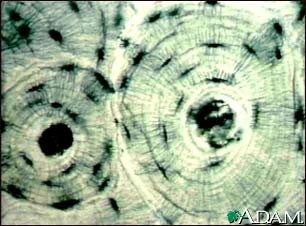
This is an image of:

a)

Dense Connective Tissue

b)

Osteons in lacunae

c)

Adipose Tissue

d)

Hyaline Cartilage

103.

This is an image of:

a)

Striated Smooth Muscle tissue

b)

Cardiac muscle tissue

c)

Dense regular fibrocartilage

d)

Voluntary Muscle tissue

104.

Small, hair-like structures on the exposed side of some cells are called the

a)

cilia

b)

cell beards

c)

nucleus

d)

flagellum

105.

Which cellular transport process is passive?

a)

Pinocytosis

b)

Phagocytosis

c)

Osmosis

d)

Riding the bus

106.

The cell process that actively traps solids and brings them into the cell is:

a)

kidnapping

b)

ion pumping

c)

pinocytosis

d)

phagocytosis

107.

Chromosomes line up in mid-cell during...

a)

interphase

b)

telophase

c)

metaphase

d)

notaphase

108.

What is an example of a monosaccharide?

a)

Pizza

b)

Glycogen

c)

Glucose

d)

Starch

109.

Which is a protein which functions like a lock and key?

a)

Glucose

b)

Enzymes

c)

Collagen

d)

None of these

110.

I am ready for the overview exam!

a)

Darn skippy!

b)

Umm. Yes.

c)

After a few more Red Bulls and another go at this

d)

Ask me when it's over

111.

Hydrolysis uses water to break bonds breaking larger molecules into smaller molecules

a)

TRUE

b)

FALSE

112.

Dehydration synthesis...

a)

Produces water and smaller molecules

b)

Happens in the desert

c)

Produces water and larger molecules

d)

Breaks stuff up