
 Worksheets
Body Systems
Total questions: 88
Worksheet time: 1hrs 24mins
Name
Class
Date
1.
Which system of the body functions to protect and support the body?
a)
Skeletal
b)
Muscular
c)
Integumentary
d)
Cardiovascular
2.
Which system of the body consists of bones, cartilage, and ligaments?
a)
Skeletal
b)
Muscular
c)
Respiratory
d)
Endocrine
3.
Which system of the body gets taken care of by eating foods high in Calcium as well as doing moderate weight training?
a)
Skeletal
b)
Nervous
c)
Integumentary
d)
Digestive
4.
Which system of the body functions to enable you to move?
a)
Muscular
b)
Respiratory
c)
Skeletal
d)
Digestive
5.
Which system of the body consists of Cardiac, Smooth, and Skeletal Muscles?
a)
Muscular
b)
Cardiovascular
c)
Integumentary
d)
Nervous
6.
Which system of the body is taken care of by eating foods high in protein and exercising.
a)
Muscular
b)
Nervous
c)
Respiratory
d)
Digestive
7.
Which system of the body functions to process information and control the body?
a)
Nervous
b)
Digestive
c)
Respiratory
d)
Cardiovascular
8.
Which system of the body consists of the brain, spinal cord, and nerves?
a)
Nervous
b)
Digestive
c)
Endocrine
d)
Immune
9.
Which system of the body is taken care of by avoiding drugs and alcohol and wearing a helmet during dangerous activities?
a)
Nervous
b)
Skeletal
c)
Endocrine
d)
Muscular
10.
Which system of the body functions to break food down into nutrients and fuel?
a)
Digestive
b)
Respiratory
c)
Cardiovascular
d)
Nervous
11.
Which system of the body consists of of mouth, esophagus, and stomach
a)
Digestive
b)
Cardiovascular
c)
Skeletal
d)
Nervous
12.
Which system of the body is taken care of by eating foods high in fiber and drinking alot of water?
a)
Digestive
b)
Urinary
c)
Cardiovascular
d)
Muscular
13.
Which system of the body functions to take oxygen and nutrients to cells, removes wastes from cells?
a)
Respiratory
b)
Digestive
c)
Urinary
d)
Circulatory
14.
Which system of the body consists of arteries, veins, and capillaries?
a)
Circulatory
b)
Cardiovascular
c)
Immune
d)
Respiratory
15.
Which system of the body is taken care of by intense exercise and avoiding fatty foods?
a)
Circulatory
b)
Respiratory
c)
Skeletal
d)
Muscular
16.
Which system of the body functions to provide the body with Oxygen and remove Carbon Dioxide?
a)
Respiratory
b)
Immune
c)
Endocrine
d)
Nervous
17.
Which system of the body consists of trachea, lungs, and diaphragm?
a)
Respiratory
b)
Skeletal
c)
Muscular
d)
Digestive
18.
Which system of the body functions to create and transport hormones?
a)
Endocrine
b)
Urinary
c)
Skeletal
d)
Digestive
19.
Which system of the body consists of the glands?
a)
Endocrine
b)
Nervous
c)
Respiratory
d)
Circulatory
20.
Which system of the body is taken care of by exercising daily and eating foods high in healthy fats (nuts, beans, fish, avocado, eggs, etc.)?
a)
Endocrine
b)
Muscular
c)
Circulatory
d)
Nervous
21.

Which produces egg cells and female hormones?
a)
cervix
b)
fallopian tube
c)
vagina
d)
ovaries
22.

Which serves as a temporary storage of sperm cells before they are released in the urethra?
a)
Testes
b)
Epididymis
c)
Prostate gland
d)
Cowper's gland
23.

What do you call the process in which the ovary releases a mature egg cell?
a)
penile erection
b)
ejaculation
c)
ovulation
d)
nocturnal emission
24.

Where does fertilization usually take place?
a)
ovary
b)
fallopian tube
c)
cervix
d)
vagina
25.

a)
Vagina
b)
Uterus
c)
Cervix
d)
Ovaries
26.

a)
Testes
b)
Prostate gland
c)
Bladder
d)
Seminal gland
27.

a)
Produces sperm
b)
Carries the sperm to the urethra
c)
Produces semen (seminal fluid)
d)
Carries the sperm out of the body
28.

a)
Ovary
b)
Fallopian tube
c)
Uterus
d)
Uterus lining
29.
Hypoglycemia is a ____ level of glucose in the blood.
a)
decreased
b)
elevated
30.
What hormone is produced in the pancreas that lowers blood sugar?
a)
Insulin
b)
Glucagon
c)
Ketones
d)
Glucose
31.
What is high blood pressure called?
a)
Hyperglycemia
b)
Hypertension
c)
Hypoglycemia
d)
Hypotension
32.
Which of the following are symptoms of diabetes?
a)
blurred vision
b)
fatigue
c)
dizziness
d)
all of these are symptoms.
33.
Which type of Diabetes is usually diagnosed early in life (early onset)
a)
Type 1
b)
Type 2
34.
No insulin is produced
a)
Type 1
b)
Type 2
35.
The result of an unhealthy lifestyle
a)
Type 1
b)
Type 2
36.
Diabetic patients have to worry most about their?
a)
Insulin blood level
b)
glucose blood level
c)
thirst
d)
urination
37.
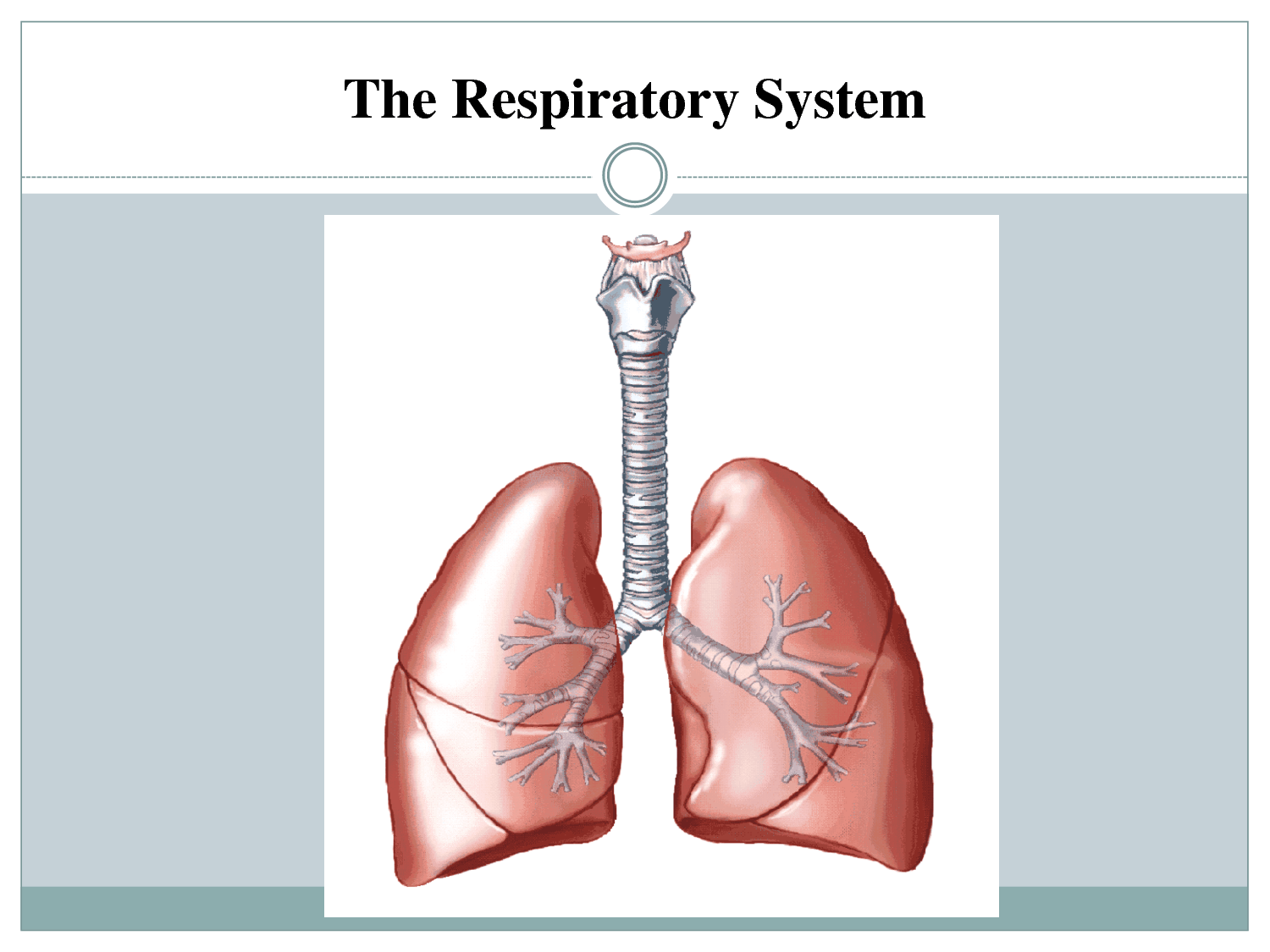
What is the main function of the respiratory system?
a)
to provide oxygen and remove carbon dioxide from the body
b)
to bring oxygen to the body
c)
to break down food and absorb nutrients
d)
to remove oxygen from the body and deliver carbon dioxide
38.
What are the main organs of gas exchange in the respiratory system?
a)
diapragm
b)
lungs
c)
trachea
d)
bronchi
39.
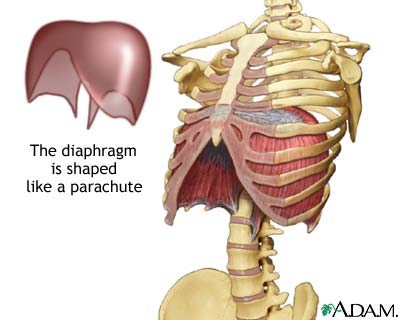
What is function of the dome-shaped diaphragm?
a)
This is where gas exchange happens.
b)
Air passes through the diaphragm on the way to the lungs.
c)
It attaches to the lungs to help in breathing.
d)
It is under the lungs and keeps them from falling down to your stomach.
40.
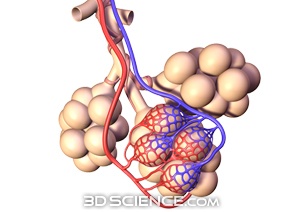
When you breathe, your lungs take in ___ and remove ___.
a)
air/oxygen
b)
oxygen/carbon dioxide
c)
carbon dioxide/waste
d)
waste/air
41.
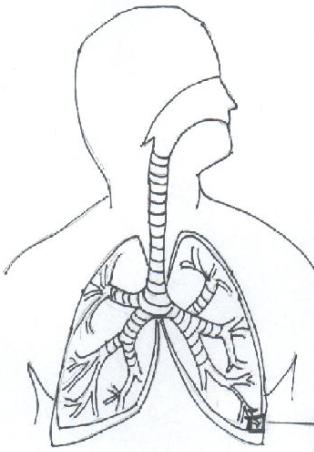
What is the function of the bronchi?
a)
Transport air from nose to lungs
b)
Transport air from trachea to lungs
c)
Transport air from lungs to alveoli
d)
Transport air from alveoli to blood
42.
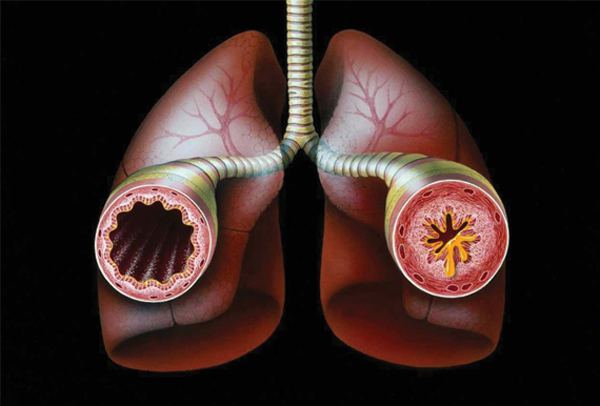
A disorder of the lungs called ____ causes the bronchi to become restricted (get smaller) so air can't get to the lungs.
a)
asthma
b)
cold
c)
influenza
d)
bronchitis
43.
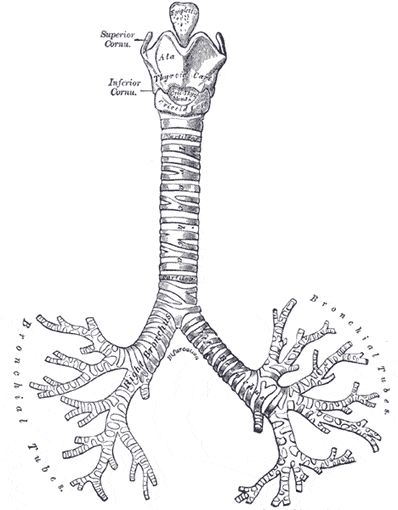
The two main branches from the trachea (one to each lung)
a)
bronchi
b)
alveoli
c)
capillaries
d)
bronchioles
44.
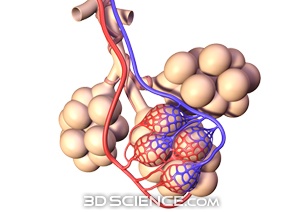
The air sacs that are covered with capillaries where gas exchange takes place
a)
bronchi
b)
lungs
c)
oxygen
d)
alveoli
45.
How many types of blood vessels are in our body?
a)
1
b)
2
c)
3
d)
4
46.
Arteries carry oxygen rich blood away from the heart.
a)
True
b)
False
47.
Veins carry oxygen poor blood back to the heart.
a)
False
b)
True
48.
The job of the heart is to . . .
a)
pump blood around the body.
b)
send food to the small intestines.
c)
break down food.
d)
give energy to the body.
49.
The heart has ___ chambers.
a)
1
b)
2
c)
3
d)
4
50.
Thin-walled vessels that allow for the exchange of O2 , CO2, nutrients and wastes between blood cells or air sacs in the lungs
a)
Arteries
b)
Veins
c)
Capillaries
51.
The aorta is the largest artery in the body. The blood leaving the aorta is full of?
a)
Oxygen
b)
Carbon Dioxide
c)
White blood Cells
d)
Potassium
52.

What do Red-Blood cells do?
a)
Carry oxygen from the lungs to the body cells and transport carbon dioxide from the cells back to the lungs
b)
keeps blood flowing in one direction to the heart and prevent blood from flowing backwards
c)
Collects blood from the capillaries and drain it into the veins
d)
Bring nutriients to the cells and carries away waste materials.
53.

What does blood do?
a)
Carries Water to cells
b)
Carries Oxygen to cells
c)
Carries Food to cells
d)
All of the above
54.

What bone is highlighted?
a)
Skull (Cranium)
b)
Mandible
c)
Clavicle
d)
Scapula
55.

What bone is highlighted?
a)
Radius
b)
Ulna
c)
Humerus
d)
Carpals
56.

What bone is highlighted?
a)
Femur
b)
Tibia
c)
Fibula
d)
Humerus
57.

What is the name for the connector that attaches muscle to bone?
a)
ligament
b)
tendon
c)
patella
d)
string
58.

What is the name for the connector that attaches bone to bone?
a)
ligament
b)
tendon
c)
patella
d)
string
59.
What is the disorder of the skeletal system that results in having very brittle, soft bones?
a)
Osteoporosis
b)
Osteomyelitis
c)
Arthritis
d)
Bursitits
60.
The skeletal system is composed of what as well as bones?
a)
Joints, ligaments, and tendons
b)
Joints, ligaments, and cartilage
c)
Cartilage, ligaments, and tendons
d)
Ligaments and joints
61.
The adult skeletal system is composed of how many bones?
a)
216
b)
371
c)
206
d)
199
62.
Tissue found in some bones that makes blood cells
a)
red marrow
b)
yellow marrow
c)
canaliculi
d)
lamellae
63.
The nerve cell that carries impulses from a sense receptor to the brain or spinal cord is a _____________.
a)
Motor Neuron
b)
Sensory Neuron
c)
Relay Neuron
64.
What two things are found in the central nervous system?
a)
brain/spinal cord
b)
spinal cord/motor neurons
c)
motor/sensory neurons
d)
only brain
65.
Which part of a neuron RECIEVES information?
a)
axon
b)
dendrite
c)
cell body
d)
axon terminal
66.
Which part of the neuron is a long fiber that send information to other cells?
a)
dendrite
b)
terminal
c)
cell body
d)
axon
67.
What are specialized nerve endings that detect change inside and outside the body?
a)
interneurons
b)
receptors
c)
motor neurons
d)
reflex arc
68.
What is the LARGEST of the 3 parts of your brain?
a)
cerebellum
b)
cerebrum
c)
spinal cord
d)
medulla
69.
Which part of the brain controls breathing?
a)
neurons
b)
medulla
c)
cerebellum
d)
cerebrum
70.

Tube that carries swallowed food to the stomach
a)
esophagus
b)
liver
c)
pancreas
d)
rectum
71.

Stores bile
a)
pancreas
b)
liver
c)
stomach
d)
gallbladder
72.
Which stage of digestion removes water?
a)
large intestine
b)
small intestine
c)
mouth
d)
stomach
73.
Gland that produces insulin as well as other chemicals needed for digestion
a)
pancreas
b)
esophagus
c)
large intestine
d)
gall bladder
74.
Flap of skin that covers the opening to the windpipe during swallowing
a)
Stomach
b)
Pepsin
c)
Pancreas
d)
Epiglottis
75.
_______ allow nutrients to be absorbed by the blood and taken through the body.
a)
salivary glands
b)
villi
c)
small intestine
76.
Acids and enzymes are used in
a)
physical digestion
b)
chemical digestion
77.
The Peripheral Nervous System contains the brain and the brain stem.
a)
True
b)
False
78.
What is another word for autonomic?
a)
voluntary
b)
involuntary
c)
central
d)
brain
79.

The chewing and grinding of food into smaller pieces is an example of...
a)
Mechanical Digestion
b)
Chemical Digestion
80.

What is one secondary (helper) organ of the digestive system?
a)
Small Intestine
b)
Esophagus
c)
Gallbladder
d)
Stomach
81.

Which digestive organ makes digestive juices to help the small intestine absorb nutrients?
a)
Liver
b)
Gallbladder
c)
Pancreas
d)
Esophagus
82.

Nutrients from digested food are absorbed in which digestive organ?
a)
Small Intestine
b)
Stomach
c)
Large Intestine
d)
Gallbladder
83.
Which of the following is NOT part of the digestive tract? (Hint: Identify the secondary organ.)
a)
Mouth
b)
Esophagus
c)
Small Intestine
d)
Liver
84.

Number 5 is pointing to the...
a)
Liver
b)
Gallbladder
c)
Pancreas
d)
Stomach
85.

Number 3 is pointing to the...
a)
Small intestine
b)
Rectum
c)
Large intestine
d)
Stomach
86.

Number 2 is pointing to the...
a)
Esophagus
b)
Stomach
c)
Small intestine
d)
Anus
87.

Which of the following illness is caused by pathogens?
a)
Bruise
b)
Blood Clot
c)
Diabetes
d)
Influenza
88.

Vaccinations are used for
a)
Curing the illness
b)
Preventing the Illness
c)
Getting the illness
100 %

