wayground logo

Free Printable Worksheets

Font size

S
M
L
XL
Worksheets

CP Bio - Semester 1 Exam Review Overview

Total questions: 132

Worksheet time: 2hrs 51mins

Name
Class
Date
1.
Proteins are made of monomers called ___________
a)
Nucleotides
b)
Monosaccharides
c)
Amino Acids
d)
Glycerol and fatty acids
2.
The element _______is found in all of the organic compounds.
a)
Iron
b)
Nitrogen
c)
Carbon
d)
Oxygen
3.
DNA and RNA are examples of 
a)
Carbohydrates
b)
Lipids
c)
Proteins
d)
Nucleic Acids
4.
Monosaccharides are monomers of
a)
Carbohydrates
b)
Lipids
c)
Proteins
d)
Nucleic Acids
5.
Waxes, oils and fats are examples of
a)
Carbohydrates
b)
Lipids
c)
Proteins
d)
Nucleic Acids
6.
Which macromolecule is shown?
 View Figure 1 (if not visible)
a)
lipid
b)
protein
c)
nucleic acid
d)
carbohydrate
7.
What is the function of nucleic acids?
a)
store genetic information
b)
store energy (long-term)
c)
store energy (short-term)
d)
build skin, hair, nails, muscles
8.

Which specific macromolecule is shown?

a)

cholesterol

b)

phospholipid

c)

diglyceride

d)

sterol

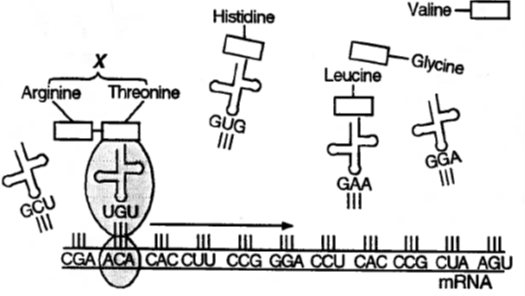
9.

Which category of macromolecules does this belong?

a)

lipid

b)

protein

c)

nucleic acid

d)

carbohydrate

10.
The image contains an example of which biological macromolecule?
a)
Carbohydrate
b)
Protein
c)
Nucleic Acid
d)
Lipid
11.
The image contains an example of which biological macromolecule?
a)
Carbohydrate
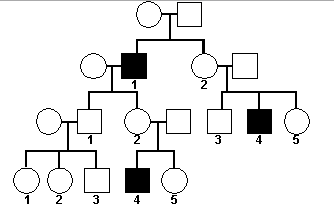
b)
Protein
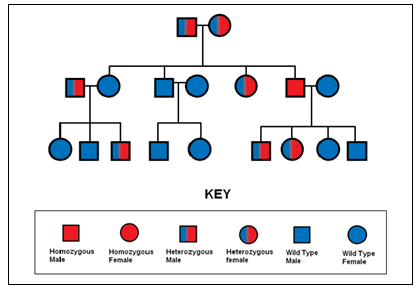
c)
Nucleic Acid
d)
Lipid
12.
What type of macromolecule is being represented in this image? 
a)
carbohydrate
b)
lipid
c)
protein
d)
nucleic acid
13.
Identify the biomolecule
a)
Lipid
b)
Protein
c)
Carbohydrate
d)
Nucleic Acid
14.

Photosynthesis involves the production of sugar and oxygen. Select the drawing that shows a carbohydrate that is formed in photosynthesis.

a)

A

b)

B

c)

C

d)

D

15.

Which of the four macromolecules shown represents your genetic information?

a)

A

b)

B

c)

C

d)

D

16.
Which of the following molecules make up the basic structure of a cell membrane?
a)
waxes
b)
steroids
c)
fatty acids
d)
phospholipids
17.

What type of macromolecule is this? Be specific!

a)

polysaccharide

b)

disaccharide

c)

monosaccharide

d)

trisaccharide

18.

Which of these macromolecules is a source of long-term stored energy?

a)

1

b)

2

c)

3

d)

4

19.
Contains a phosphate, sugar and nitrogen base
a)
nucleic acid
b)
lipid
c)
carbohydrate
d)
protein
20.
An experiment is performed on plants to see how different liquids affect plant growth. Each plant in the experiment is given a different liquid; water, apple juice, or milk. Each plant has the same amount of soil, sunlight, and listens to the same music. In this investigation, what is the dependent variable?
a)
Type of plant
b)
Water, apple juice, milk
c)
Plant growth
d)
Color of the plant's leaves
21.
What step does every scientific experiment begin with?
a)
hypothesis
b)
question/problem
c)
procedures
d)
conclusion
22.
An experiment is performed on plants to see how different liquids affect plant growth. Each plant in the experiment is given a different liquid; water, apple juice, or milk. Each plant has the same amount of soil, sunlight, and listens to the same music. In this investigation, what are the controlled variables?
a)
Type of plant, amount of music, and sunlight
b)
Water, apple juice, milk
c)
Plant growth
23.
A scientific theory...
a)
is based on lots of evidence
b)
is not valid
c)
is not reliable
d)
has not been tested many times
24.
What is the part of the experiment that is left alone or “natural", and is used to compare back to?
a)
Independent Variable
b)
Dependent Variable
c)
Control Group
d)
Experimental Group 
25.
Squidward found new reeds to tryout for his clarinet.  He used an APPLAUSOMETER to measure applause after playing  Under the Sea with each reed.  The results were put in the table.
What was controlled?
a)
The Song
b)
The Reed
c)
The Applause
26.
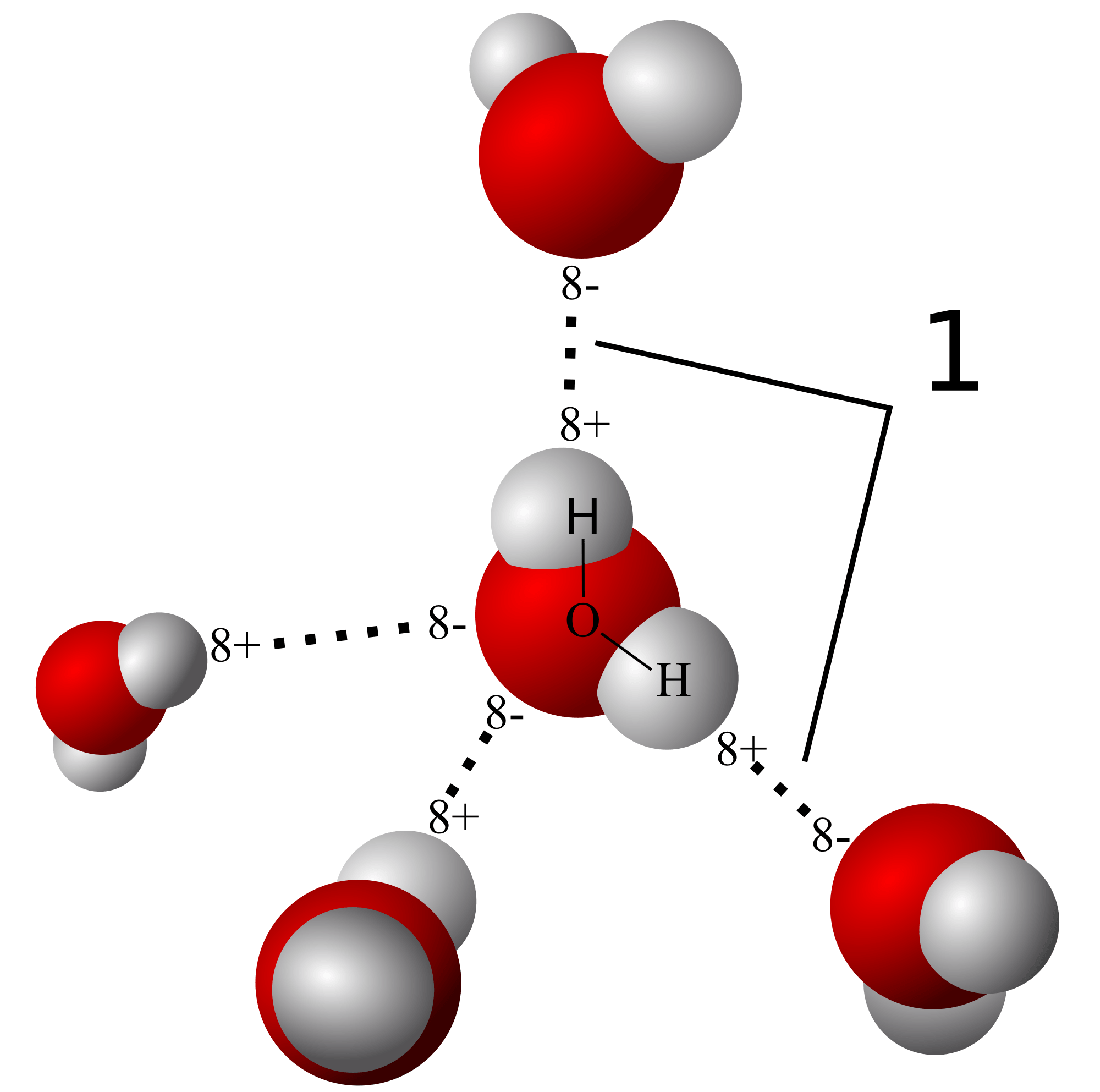
What property of water allows it to be such a versatile solvent that it is often called the "universal solvent?"
a)
Purity
b)
Polarity and cohesion
c)
High heat capacity
d)
Expansion upon freezing
27.
Large bodies of water do not quickly fluctuate in temperature. Why?
a)
Water is a solvent.
b)
Water has a high heat capacity.
c)
Water acts as a buffer.
d)
Water is non-polar.
28.
Attractions between water molecules are called
a)
Covalent bonds
b)
Ionic bonds
c)
Polar bonds
d)
Hydrogen bonds
29.
What property of water helps to moderate earth's temperature?
a)
adhesion
b)
chohesion
c)
Specific heat capacity
d)
Latent heat of vaporization
30.
Contains DNA and RNA
a)
lipids
b)
carbohydrates
c)
proteins
d)
nucleic acids
31.
Contains a phosphate, sugar and nitrogen base
a)
nucleic acid
b)
lipid
c)
carbohydrate
d)
protein
32.

Monomer is to Macrocolecule like ___ is to ____

a)

Building is to Bricks.

b)

Brick is to Building.

c)

Carpenter is to Building.

d)

Building is to Carpenter.

33.
What is the purpose  of an enzyme?
a)
give permission for the reaction
b)
raise activation energy
c)
speed up reactions
d)
control how many reactions occur
34.
When cells are damaged, new cells are created by cell division. How does the cell theory support this fact?
a)
It states that all cells have a nucleus which divides.
b)
It states that all living things are made up of one or more cells.
c)
It states that cells come from previously existing cells.
d)
 It states that the basic units of structure and function are cells.
35.
Which statement reflects one of the major components of the cell theory?
a)
All living things are multi-cellular.
b)
Organs are the basic unit of structure and function for all living things.
c)
All cells come from previously existing cells.
d)
Every organism has a reproductive system to ensure survival of the species.
36.
Rocks are not living because
a)
they never move
b)
they aren't needed for humans
c)
they are not made of cells
d)
they don't break down
37.
Which type of cell appeared first on earth?
a)
Prokaryotic cells
b)
Eukaryotic cells
c)
Animal Cells
38.
Prokaryotic cells do not have
a)
Cell Membrane
b)
Cytoplasm
c)
Nucleus
39.
Which type of cell has membrane bound organelles?
a)
Prokaryotic Cells
b)
Bacteria Cells
c)
Eukaryotic Cells
40.
Prokaryotic cells reproduce
a)
sexually
b)
asexually
41.
What can only be found in plant cells?
a)
Cell membrane
b)
Vacuole
c)
Chloroplast
d)
Mitochondrion
42.
The powerhouse of the cell is the...
a)
Mitochondrion
b)
Golgi body
c)
Nucleus
d)
Ribosomes
43.
Where are proteins made?
a)
Golgi body
b)
Mitoichondrion
c)
Chromosomes
d)
Ribosomes
44.
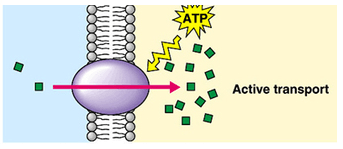
ATP is a form of energy.
a)
Passive Transport
b)
Active Transport
45.
Exocytosis
a)
Passive Transport
b)
Active Transport
46.
Low to High
a)
Passive Transport
b)
Active Transport
47.
When particles move from areas of high concentration to areas less concentrated, this has taken place.
a)
diffusion
b)
mitosis
c)
endocytosis
d)
photosynthesis
48.
What process occurs when WATER diffuses across a membrane?
a)
endocytosis
b)
mitosis
c)
osmosis
d)
nuclear fission 
49.
During osmosis
a)
water moves from high to low concentration
b)
large or oddly shaped molecules move across a cell membrane
c)
water moves when energy is used
d)
proteins are built
50.
The cell below is in a _________ solution.
a)
Hypotonic
b)
Hypertonic
c)
Isotonic
51.
The cell below is in a _____________ solution.
a)
Hypertonic
b)
Hypotonic
c)
Isotonic
52.
Which of the following is the correct equation for PHOTOSYNTHESIS?
a)
CO+ light + H2O --> O+ Sugar
b)
CO+ sugar + H2O --> O+ light
c)
O2 + light + H2O --> CO+ Sugar
d)
CO+ O2 + H2O --> Light+ Sugar
53.
What is the ultimate ORIGINAL source of energy for living things
a)
Sugar
b)
Sun
c)
Moon
d)
Carbon Dioxide
54.
What is produced as a result of photosynthesis?
a)
Glucose and Chlorophyll
b)
Glucose and Oxygen
c)
Water and Light energy
d)
Carbon dioxide and Water
55.
If all four plants were watered daily but placed in a closet, receiving no sunlight, what process would NOT occur?
a)
Ingestion of carbon dioxide
b)
Filtration of water through the soil
c)
Photosynthesis
d)
Water absorbtion
56.
What is the correct equation for cellular respiration?
a)
6O2 + C6H12O6 -> 6CO2 + 6H2O + Energy
b)
6O2 + C6H12O6 + Energy -> 6CO2 + 6H2O
c)
6CO2 + 6H2O -> 6O2 + C6H12O6 + Energy
d)
6CO2 + 6H2O + Energy -> 6O2 + C6H12O6
57.
Cellular Respiration's goal is to
a)
make water
b)
make ATP
c)
make glucose
d)
make  oxygen
58.
What is cellular respiration?
a)
the breakdown of glucose  to release ATP
b)
the breakdown of glucose to release NADH
c)
the breakdown of glucose to release FADH
d)
the breakdown of glucose to release carbon
59.

Yeast undergo alcoholic fermentation and produce these molecules.

a)

carbon dioxide and water

b)

alcohol and carbon dioxide

c)

water and alcohol

d)

alcohol and glucose

60.
What types of organisms use cellular respiration?
a)
Only plants
b)
Only animals
c)
Both plants and animals
61.
Cells of organism must replicate for ?
a)
growth
b)
repair of damaged cells
c)
replacement of dying cells.
d)
All of the above
62.
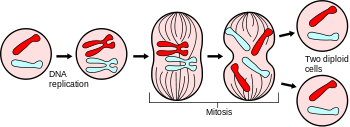
The division of the nucleus is known as:
a)
Synthesis
b)
Mitosis
c)
G1
d)
G2
63.
Eukaryotic cells store their genetic information(DNA) in __________.
a)
Chromosomes
b)
Centromeres
c)
karyotypes
d)
Proteins
64.
Uncontrollable cell growth is known as _____
a)
obesity
b)
cancer
c)
diabetes
d)
hepatitis
65.
The ___________ holds the replicated sister chromatids together.
a)
centriole
b)
chromosomes
c)
centromere
d)
cycles
66.
The cell spends most of it's life in ________________.
a)
mitosis
b)
cytokinesis
c)
Interphase
d)
None of the above
67.
In the S stage of interphase_______________
a)
the cell grows
b)
the nucleus divides
c)
the cell membrane divides
d)
the DNA is replicated
68.
A human cell has 46 chromosomes before mitotic division.  How many chromosomes will the daughter cells after mitosis.
a)
12
b)
23
c)
46
d)
92
69.
Fruit fly body cells have 8 chromosomes. After mitosis, you would expect a resulting fruit fly daughter cell to have ...
a)
16 chromosomes.
b)
46 chromosomes.
c)
8 chromosomes.
d)
4 chromosomes.
70.
The stages of mitosis in order
a)
Metaphase, Anaphase, Prophase, Telophase
b)
Prophase, Anaphase, Metaphase, Telophase
c)
Prophase, Metaphase, Anaphase, Telophase
d)
Anaphase, Prophase, Telophase, Metaphase
71.
Asexual reproduction will result in
a)
Identical offspring to the parent
b)
Twins
c)
Meiosis
d)
Non-identical offspring to the parent
72.

The purpose of meiosis is to form ________ cells.

a)

body

b)

sex or gametes

c)

somatic or body

d)

brain

73.
Why do we need meiosis?
a)
To double the number of chromosomes going into sex cells
b)
To halve the number of chromosomes going into sex cells
c)
To triple the number of chromosomes going into sex cells
d)
To not change the number of chromosomes going into sex cells
74.
A cell with only half the normal number of chromosomes is called a ___________ cell.
a)
haploid
b)
prokaryotic
c)
heterotrophic
d)
eubacterial
75.
a)

Prophase

b)

Interphase

c)

Anaphase

d)

Telophase

76.
a)
Anaphase
b)
Cytokinesis
c)
Telophase
d)
Metaphase
77.
a)
Cytokinesis
b)
Interphase
c)
Anaphase
d)
Metaphase
78.
a)
Cytokinesis
b)
Anaphase
c)
Telophase
d)
Prophase
79.
When an area of a chromatid is exchanged with the matching area on a chromatid of its homologous chromosome, _________________ occurs
a)
crossing over
b)
mutagenesis
c)
hybridization
d)
fertilization
80.
What process, and which type of resulting cells are represented?
a)
mitosis, gametes
b)
mitosis, body cells
c)
meiosis, gametes
d)
meiosis, body cells
81.
Which of these is a risk factor for developing cancer? 
a)
growing older
b)
genetic inheritance
c)
exposure to carcinogens (toxins that can damage DNA)
d)
all of the above
82.
The causes of cancer may include which of the following?
a)
environmental influences
b)
UV radiation
c)
viruses
d)
all of these
83.

Which of the following best describes a DNA molecule?

a)

double helix

b)

found in the cytoplasm

c)

made of amino acids

d)

contains Uracil

84.
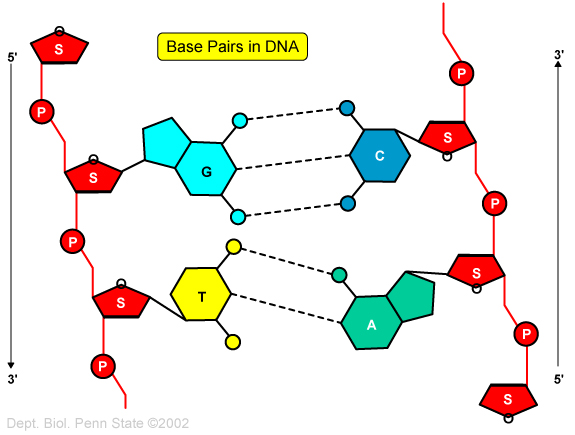
Adenine bonds with ______________.
a)
Guanine
b)
Thymine
c)
Cytosine
d)
Adenine
85.
Guanine bonds with ______________.
a)
Adenine
b)
Guanine
c)
Cytosine
d)
Thymine
86.
Which sequence of DNA bases would pair with this partial strand
ATG TGA CAG
a)
ATG TGA CAG
b)
TAC ACT GTC
c)
GTA AGT GAC
d)
CAT TCA CTG
87.
Nitrogenous bases are joined by which type of bond?
a)
polar bonds
b)
ionic bonds
c)
covalent bonds
d)
hydrogen bonds
88.
The diagram shows the process of
a)
Transcription
b)
Translation
c)
Replication
d)
Mitosis
89.
The process to go from DNA to mRNA is _______
a)
translation
b)
transcription
c)
replication
90.
The process to go from mRNA to a protein is called ____
a)
transcription
b)
rRNA
c)
replication
d)
translation
91.
Choose the nucleotide sequence of the RNA strand that would be complementary to the following strand: 
GTAGTCA
a)
UATUAGA
b)
ACGACTG
c)
CAUCAGU
d)
CATCAGT
92.
What process is going on in this photo? 
a)
Transcription 
b)
Translation 
c)
Replication 
d)
All the above 
93.
What is the three base sequence of mRNA that codes for a single amino acid?
a)
Anticodon
b)
Codon
c)
Protein
94.
Why is the order of amino acids so important?
a)
The order of amino acids dictates what shape the protein will fold into.
b)
It is not important. The protein folding chamber will force the protein to fold into the correct shape.
95.
What is occurring in this picture?
a)
Translation
b)
Replication
c)
Translocation
d)
Transcription
96.
The mRNA leaves the ________ to find the ribosome to make proteins.
a)
cell
b)
nucleotide
c)
nucleus
97.

TRANSLATION:

Place the order of events for

creating a protein in order (1- 4)


1.Polypeptide chain is created

2.mRNA attaches to ribosome

3.tRNA connects second amino acid by peptide bond to

4.codons are continuously read by tRNA

a)

1,3,4,2

b)

2,3,4,1

c)

1,2,3,4,5,6

d)

1,4,2,3

98.

Transcription:

Place the order of events for

creating a protein in order (1- 4)


1.RNA Polymerase reaches a termination/stopping point


2.Helicase attaches and unzips the desired gene


3.mRNA leaves the nucleus


4.RNA Polymerase adds new RNA nucleotides and makes mRNA

a)

3,1,4,2,

b)

1,2,3,4

c)

2,4,1,3

d)

3,1,2,4

99.
Which of the following statements about the genetic code is true?
a)
A codon can specify more than one amino acid
b)
Every codon specifies a different amino acid
c)
Some codons specify the same amino acid
d)
Some codons have no function at all
100.
In what phase of the cell cycle does DNA replication take place?
a)
G1
b)
S
c)
G2
d)
M
101.
What are the three components of a nucleotide?
a)
sugar, hydrogen, nitrogen base
b)
sugar, oxygen, nitrogen base
c)
sugar, phosphate, nitrogen base
d)
sugar, phosphate, protein
102.
What are the 4 nitrogen bases?
a)
adenine, thymine, cytoplasm, and guanine
b)
adenine, thymine cytosine, and guanine
c)
adenine, thymine, cytosine, and gylcerol
d)
adenine, thymine, cytosine, and glucose
103.

Which of the following best describes the cause of cystic fibrosis?

a)

a mutated blood clotting protein

b)

a mutated transport protein

c)

an extra 21st chromosome

d)

an extra 13th chromosome

104.

Which of the following cause frameshift mutations?

a)

insertions and deletions

b)

translocations and nondisjunctions

c)

duplicaitons and deletions

d)

inversions and substitutions

105.
What are the two ways that genetic disorders can be inherited?
a)
Through blood transfusions and meiosis.
b)
Mutations in DNA and changes in structure or number of chromosomes.
c)
Missing chromosomes or premature egg splitting.
d)
Unhealthy environments and heredity.
106.
This karyotype is taken from a  ________.
a)
female with Turner's syndrome
b)
male with Down's syndrome
c)
female with Down's syndrome
d)
normal female
107.

What are the different types of genetic diseases in humans?

a)

recessive

b)

dominant

c)

co-dominant

d)

chromosomal

e)

sex-linked

108.

How do genetic disorders happen ?

a)

mutations

b)

mistakes during meiosis

c)

eating unhealthy

d)

they are transmitted

109.

Some ethical issues in human genetics is the possibility of being able to design the human body and the cloning of humans.

a)

true

b)

false

110.

How many alleles does a person carry for a trait?

a)

1

b)

2

c)

3

d)

4

111.

How many alleles does a child get from each parent for a trait?

a)

1

b)

2

c)

3

d)

4

112.

Dominant alleles are represented by a ---

a)

capital letter.

b)

lowercase letter.

113.

Aa, DD, Bb, yy are all examples of ---

a)

genotypes.

b)

phenotypes.

114.

What you see, or the physical appearance of an organism, is called the ---

a)

genotype.

b)

phenotype.

115.
What do we use pedigrees for?
a)
To look at families
b)
To make determinations about the offspring
c)
To track traits in families
d)
Nothing
116.

In a pedigree, which shape represents a male?

a)

circle

b)

square

117.

Which gender has an X and a Y chromosome?

a)

male

b)

female

118.
What does a filled in square represent?
a)
Not affected Female
b)
Not affected Male
c)
Affected Male
d)
Affected Female
119.
In the second generation-how many people are carriers of the trait?
a)
2
b)
3
c)
5
d)
6
120.

If this pedigree shows a recessive disorder, what MUST the genotype of individual 4 be?

a)

HH

b)

Hh

c)

hh

121.

What type of heredity is shown in the pedigree?

a)

Sex-Linked Dominant

b)

Sex-Linked Recessive

c)

Autosomal Dominant

d)

Autosomal Recessive

122.
Does this pedigree show a dominant or recessive trait?
a)
Dominant
b)
Recessive
123.
Hemophilia is a recessive sex-linked trait. If H = normal & h = has hemophilia, which genotype represents a male with hemophilia. 
a)
XHY
b)
XHXh
c)
XhXh
d)
Xh
124.
What is the genotype of the father?
a)
AA
b)
aa
c)
Aa
d)
AA or aa
125.
T - tall and t = short
In the punnett square below, what belongs in the missing square
a)
tt
b)
Tt
c)
Bb
d)
TT
126.
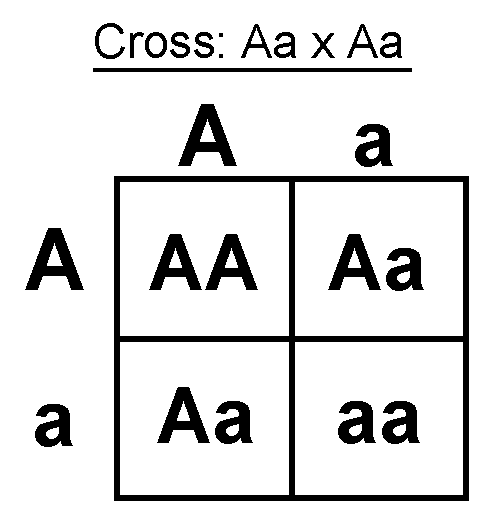
What allele combination should go in the missing box?
a)
AA
b)
Aa
c)
aa
d)
none of these
127.
If B = brown hair and b = blonde hair, what is the probability of brown hair?
a)
25%
b)
50%
c)
0%
d)
75%
128.
G = green, g = yellow
The genotype for a yellow plant is...
a)
GG
b)
Gg
c)
gg
d)
all of the choices result in yellow
129.
In rabbits, black fur (B) is dominant over brown fur (b). If a rabbit has brown fur, what can you conclude about its genotype?
a)
It is BB.
b)
It is Bb
c)
It is brown
d)
It is bb.
130.
What percent of offspring will have the recessive trait?
a)
25
b)
50
c)
75
d)
100
131.
What is the probability of homozygous dominant offspring?
a)
0%
b)
100%
c)
50%
d)
25%
132.
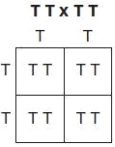
What ratio of the offspring from the cross shown will be homozygous recessive for the  trait of tallness? 
a)
0 in 4
b)
1 in 4
c)
2 in 4
d)
4 in 4