wayground logo

Free Printable Worksheets

Font size

S
M
L
XL
Worksheets

Review for Earth and magnetism

Total questions: 136

Worksheet time: 2hrs 29mins

Name
Class
Date
1.

Which of these human activities most relies on high-quality soil?

a)

hiking

b)

hunting

c)

coal mining

d)

growing crops

2.

Weathering contributes to the composition of soil by adding __________.

a)

color

b)

moisture

c)

nutrients

d)

sediment

3.

Soil is a mixture of weathered rock, minerals, water, air, and ____.

a)

sand

b)

decayed organic matter

c)

moss

d)

clay

4.

Weathering is the breaking down of rock into ______________.

a)

boulders

b)

mountains

c)

sediment

d)

ice

5.

_________ is the movement of sediment from one place to another.

a)

erosion

b)

weathering

c)

deposition

d)

river

6.
Which one is an example of WEATHERING that you might see at school?
a)
cracks in the sidewalk from nearby tree roots
b)
leaves falling off a tree
c)
dirt scattered by the wind
d)
shadows moving during the day
7.

Which is an example of Mechanical weathering?

a)

rain washes soil down the hill

b)

wind blows across the playground

c)

pieces of soil and rocks are carried down a fast stream

d)

water freezes between rocks, causing them to crack

8.
Mrs. Mueller is trying to explain the difference between weathering and erosion. What should she say?
a)
Weathering - breaks down rocks
Erosion - moves sediment
b)
Erosion - breaks down rocks
Weathering -moves sediment
c)
Weathering - transportation of water, wind and ice
Erosion - the separation of rocks
d)
Erosion - transportation of water, wind and ice
Weathering - the separation of rocks
9.
The thinnest layer of the Earth is the ___________.
a)
mantle
b)
crust
c)
core
10.
Tectonic plates are made up of continental crust and ________ crust.
a)
continental
b)
oceanic
c)
plates
d)
mantle
11.
There are how many different types of crust?
a)
1
b)
2
c)
5
d)
3
12.
What is the thickest layer of the Earth?
a)
the crust
b)
the mantle
c)
the outer core
d)
the inner core
13.
What is the core made of?
a)
steel
b)
iron 
c)
aluminum
d)
iron and nickel
14.
What describes the outer core?
a)
solid
b)
liquid
c)
viscous
d)
gas
15.
Why is the inner core solid?
a)
its unknown
b)
what it's made of
c)
the pressure
d)
it is colder than the outer core
16.
Which layer of the Earth is the only liquid layer?
a)
Outer Core
b)
Inner Core
c)
Mantle
d)
Lithosphere
17.
What is the correct order (starting from the surface) of Earth's layers?
a)
crust, outer core, inner core, mantle
b)
mantle, outer core, inner core, crust
c)
crust, mantle, outer core, inner core
d)
outer core, inner core, crust, mantle
18.
What layer is a semisolid and acts like a plastic?
a)
Lithosphere
b)
Mantle
c)
Asthenosphere
d)
crust
19.
The oceanic floor is made of?
a)
Granite
b)
Basalt
c)
Cookies
d)
Water
20.
The continental floor is made up of?
a)
Flowers and grass
b)
Basalt
c)
Granite
d)
Crust
21.
What happens to pressure as we move from the crust to the inner core?
a)
Pressure Decreases
b)
Pressure Increases
c)
Nothing
22.
What happens to temperature as we move from the crust to the inner core?
a)
Decreases
b)
Increases
c)
Nothing
23.
Which layer of Earth has the GREATEST density?
a)
crust
b)
mantle
c)
outer core
d)
inner core
24.
Which layer of Earth is made up of tectonic plates?
a)
outer core
b)
inner core
c)
asthenosphere
d)
lithosphere
25.
Which layer of the Earth is responsible for Earth's magnetic field?
a)
outer core
b)
inner core
c)
mantle
d)
crust
26.

What compositional layer is shown in Layer #3?

a)

Inner Core

b)

Outer Core

c)

Mantle

d)

Crust

27.

How are the compositional layers defined?

a)

Components of each layer

b)

Physical properties of each layer

c)

What each layer looks like

d)

How each layer moves

28.

How are the mechanical layers defined?

a)

Components of each layer

b)

Physical properties of each layer

c)

Elements of each layer

d)

Chemicals of each layer

29.

Which mechanical layer is the arrow pointing to?

a)

Lithosphere

b)

Asthenosphere

c)

Mesosphere

d)

Outer core

30.
The outermost solid layer of the Earth is called the
a)
mantle
b)
outer core
c)
inner core
d)
crust
31.
This layer of the Earth is found between the core and the crust.
a)
mantle
b)
outer core
c)
inner core
d)
crust
32.
The layer that lies beneath the mantle and surrounds the inner core. 
a)
mantle
b)
outer core
c)
inner core
d)
crust
33.
Is a layer of week of soft mantle that is made of rock that flows slowly.  Tectonic plates move on top of this layer. 
a)
Inner Core
b)
Asthensophere
c)
Lithosphere
d)
Outer Core
34.
This is the outermost, rigid layer of the Earth, made up of two parts, is divided into pieces call tectonic plates.
a)
Inner Core
b)
Asthensophere
c)
Lithosphere
d)
Outer Core
35.
The solid, dense center of our planet that extends from the bottom of the outer core to the center of the Earth.. 
a)
mantle
b)
outer core
c)
inner core
d)
crust
36.
Identify the letter in the diagram.  Identify letter A
a)
Lithosphere
b)
Asthenosphere
c)
Mantle
d)
Outer Core
37.
Identify the letter in the diagram.  Identify letter E
a)
Lithosphere
b)
Asthenosphere
c)
Mantle
d)
Outer Core
38.
Identify the letter in the diagram.  Identify letter F
a)
Lithosphere
b)
Asthenosphere
c)
Mantle
d)
Outer Core
39.
Identify the letter in the diagram.  Identify letter G
a)
Crust
b)
Convection Current
c)
Inner Core
d)
Outer Core 
40.
Identify the letter in the diagram.  Identify letter B
a)
Crust
b)
Convection Current
c)
Inner Core
d)
Outer Core 
41.

The driving force of the tectonic plates are convection currents, where can these be found?

a)

inner core

b)

crust

c)

mantle

d)

outer core

42.
Which layer of Earth is located above the outer core?
a)
crust
b)
inner core
c)
mantle
d)
lithosphere
43.
Which of these two layers is a solid?
a)
innercore
b)
Outercore
44.
What is the top layer of the Earth's surface called? 
a)
Mantle
b)
Innercore
c)
Outercore
d)
Crust
45.
A dense ball of solid iron and nickel.
a)
crust
b)
inner core
c)
mantle 
d)
outer core
46.
Which best describes the asthenosphere?
a)
molten metal
b)
dense, solid metal ball
c)
solid that flows
d)
dry land and ocean floor
47.
Which layer of Earth is located above the outer core?
a)
crust
b)
inner core
c)
mantle
d)
lithosphere
48.
Which layer of the earth is rock made mostly of iron?

a)
Lithosphere
b)
Core
c)
Asthenosphere
d)
Mantle
49.
What part of the earth is a layer of rock that comprises 67% of Earth’s mass?
a)
mesosphere
b)
mantle
c)
asthenosphere
d)
lithosphere
50.
What is the rigid layer of the Earth's surface made up of the  crust and upper mantle called?
a)
asthenosphere
b)
lithosphere
c)
mesosphere
d)
continental crust
51.
How many layers of the Earth's CORE are there?
a)
one
b)
two
c)
three
d)
four
52.
How many layers of the Earth's CORE are there?
a)
one
b)
two
c)
three
d)
four
53.
Is the outer core a liquid or solid?
a)
liquid
b)
solid
54.
Temperature _____________________ as you go deeper into the earth.
a)
increases
b)
decreases
c)
goes up and down depending on the layer
d)
stays the same
55.
Pressure ______________________ as you go deeper into the Earth
a)
increases
b)
decreases 
c)
goes up or down depending on the layer
d)
stays the same
56.
Which layer of Earth is characterized by rock that is plastic, or soft enough to flow?
a)
asthenosphere
b)
crust
c)
lithosphere
d)
inner core
57.

How have scientists been able to study Earth's mantle?

a)

In some places, Earth's crust thins enough to see mantle.

b)

Earth's surface heat warms the crust turning it into mantle.

c)

Cooling crust material becomes mantle over time.

d)

In some places, mantle rock pushes to Earth's surface.
58.
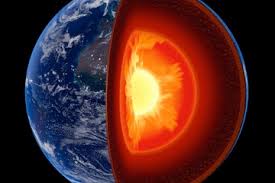
This layer of Earth is the thickest part
a)
crust
b)
outer core
c)
mantle
d)
inner core
59.
Which of these layers is ALL solid iron and nickle?
a)
inner core
b)
outer core
c)
lithosphere
d)
mesosphere
60.
The layer that makes up most of the earth's mass and volume is the
a)
crust
b)
mantle
c)
core
d)
asthenosphere
61.
Which of the following occurs because of convection currents?
a)
Tectonic plates on the crust move.
b)
The mantle increases in size.
c)
Pressure in the crust increases.
d)
Pressure in the crust decreases.
62.
As you travel from the inner core to the crust, how would temperature, pressure and density of the material change?
a)
The would all increase
b)
The would all decrease.
c)
They would stay the same.  
d)
Temperature would decrease, but pressure and density would increase. 
63.
The physical layer of Earth made of solid rock and soil is called the ___________. 
a)
mesosphere
b)
lithosphere
c)
asthenosphere
d)
mantle
64.
Where does the heat come from that drives this convection current in the mantle? 
a)
The sun
b)
The crust
c)
the mantle
d)
the core
65.
Oceanic crust is
a)
Younger and less dense than continental crust
b)
Thinner, younger and more dense than continental crust
c)
Older, thicker and less dense that continental crust
d)
Bigger and younger than continental crust
66.
The tectonic plates float on the 
a)
lithosphere
b)
lower mantle
c)
outer core
d)
asthenosphere
67.
The part of the earth that includes the crust and the upper mantle and is split into tectonic plates is the
a)
lithosphere
b)
 crust
c)
asthenosphere
d)
mantle
68.
The hottest layer
a)
crust
b)
inner core
c)
mantle
d)
outer core
69.
What are the two types of crust?
a)
top crust,bottom crust
b)
oceanic crust, continental crust
c)
water,land
d)
none of the above 
70.
What part of the crust is the arrow pointing to?
a)
Continental Crust
b)
Oceanic Crust
c)
Bread Crust
71.
Scientists determine what Earth’s interior looks like by using:
a)
Volcanoes
b)
Seismic Waves
c)
Continental Drift
d)
Convection Currents
72.

Which layer can be described as either Oceanic or Continental?

a)

crust

b)

mantle

c)

outer core

d)

inner core

73.

Which layer is responsible for creating Earth's magnetic field?

a)

crust

b)

mantle

c)

outer core

d)

inner core

74.

The ocean floor is made mostly of which rock?

a)

lava

b)

shells

c)

limestone

d)

basalt

75.

The continents are made mostly of which rock?

a)

magma

b)

soil

c)

sandstone

d)

granite

76.
This nutrient-rich, organic material is made from dead and decaying plant and animal remains. What is it called?
a)
Clay
b)
Humus
c)
Loam
d)
Site
77.
Which of these processes is NOT responsible for these land forms?
a)
weathering
b)
erosion
c)
deposition
d)
no right answer
78.
Which on of these agents did NOT cause weathering and erosion of this canyon?
a)
wind
b)
water
c)
waves
d)
ice
79.
Wind and rain caused the rock to break. What is this process called?
a)
weathering
b)
erosion
c)
deposition
d)
all the above
80.
Wind and rain caused the rock to break. What is this process called?
a)
weathering
b)
erosion
c)
deposition
d)
all the above
81.
What agent is responsible for the landforms shown here?
a)
wind
b)
water
c)
ice
d)
none
82.
Which agent created this valley by causing weathering and erosion?
a)
water
b)
wind
c)
ice
d)
none
83.
A beach front restaurant in Florida has noticed changes to the size of the beach during the past 13 years. In the pictures the restaurant is circled and the line shows the distance from the restaurant to the water. What is the most likely reason the beach has changed?
a)
Weathering of the beach by the ocean waves made the beach bigger from 2000 to 2013.
b)
Weathering of the beach by wind and rain made the beach bigger from 2000-2013.
c)
Deposition of sand by the ocean waves made the beach bigger from 2000-2013.
d)
Deposition of sand by wind and rain made the beach smaller from 2000-2013.
84.
The process of breaking down rocks by water, wind, ice, plants or temperature changes
a)
Weathering
b)
Erosion
c)
Deposition
d)
Shifting
85.
Valley glaciers are found
a)
at the top of mountains
b)
everywhere
c)
at the poles
d)
only in NJ
86.
Continental Glaciers are found
a)
at the tops of mountains
b)
only in Florida
c)
Pompton Lakes
d)
at the poles
87.
Many North-to-South elongated hills are found scattered across New York State. These hills contain a mixture of unsorted sediments of all sizes.
Erosion and deposition by which agent probably formed these hills?
a)
waves
b)
winds
c)
glaciers
d)
streams
88.
The natural chemical or physical processes that breaks down rock on Earth's surface.
a)
weathering
b)
erosion
c)
deposition
d)
jackhammering
89.
The process by which water, ice, wind or gravity moves weathered rock and soil from one place to another.
a)
weathering
b)
erosion
c)
deposition
d)
dumptruck
90.
This type of weathering occurs when rock is physically broken down into smaller pieces of rock.
a)
mechanical weathering
b)
chemical weathering
c)
erosion weathering
d)
deposition
91.
This type of weathering occurs when rock is physically broken down into smaller pieces of rock.
a)
mechanical weathering
b)
chemical weathering
c)
erosion weathering
d)
deposition
92.
This type of weathering occurs when rocks weaken then break down due to chemical changes in the composition of the rock.
a)
mechanical weathering
b)
chemical weathering
c)
erosion weathering
d)
deposition
93.
These rocks were made smooth by wind blowing smaller rock particles across their surface.  This is an example of:
a)
ice wedging
b)
chemical weathering
c)
acid rain
d)
abrasion
94.
These rocks were broken apart from the continuous freeze/thaw of water in the cracks of the rocks. This is an example of:
a)
ice wedging
b)
acid rain
c)
permeability
d)
abrasion
95.
This rock may chemically weather easily because is has many spaces or holes in it that allow water to seep through it, meaning it is:
a)
permeable
b)
abrasive
c)
erosion
d)
unchangable
96.
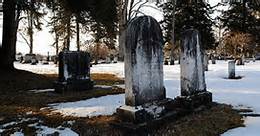
These gravestones have slowly broken down and turned a blackish color due to the action of:
a)
ice wedging
b)
abrasion
c)
acid rain
d)
mechanical weathering
97.
How might a weathered mountain appear different than an unweathered mountain?
a)
Weathered mountain would be taller.
b)
Weathered mountain would be rounder and less jagged.
c)
Weathered mountain would be more jagged and less rounded.
d)
Weathered mountain would have no trees.
98.
How is mechanical weathering different from chemical weathering?
a)
Chemical weathering happens over much shorter time frame than mechanical weathering.
b)
Chemical weathering changes the chemical composition of rocks; mechanical weathering does not.
c)
Chemical weathering occurs only in tropical climates; mechanical weathering occurs only in cool climates.
d)
Chemical weathering occurs only in the mountains; mechanical weathering occurs only on flat land.
99.
How is mechanical weathering different from chemical weathering?
a)
Chemical weathering happens over much shorter time frame than mechanical weathering.
b)
Chemical weathering changes the chemical composition of rocks; mechanical weathering does not.
c)
Chemical weathering occurs only in tropical climates; mechanical weathering occurs only in cool climates.
d)
Chemical weathering occurs only in the mountains; mechanical weathering occurs only on flat land.
100.
A metal statue slowly turning green after years of being outside is an example of:
a)
mechanical weathering
b)
chemical weathering
101.
Rocks along a riverbed that are smoothed from continuously moving water and sediment rubbing against them is an example of:
a)
mechanical weathering
b)
chemical weathering
102.
The formation of stalactites and stalagmites in a cave as water mixed with carbon dioxide creates carbonic acid, which dissolves away the limestone, is an example of:
a)
mechanical weathering
b)
chemical weathering
103.
The formation of large cracks in the face of a mountain from ice wedging is an example of:
a)
mechanical weathering
b)
chemical weathering
104.
Exposure to rain and oxygen causes the metal minerals in rocks to rust and fall apart.  This is an example of:
a)
mechanical weathering
b)
chemical weathering
105.
Lichens (small green plants) growing on a large boulder release enzymes and other acids that slowly break the rock apart. This is an example of:
a)
mechanical weathering
b)
chemical weathering
106.
A river flowing across a wide plain begins to form looplike bends called
a)
rills
b)
meanders
c)
outside curves
d)
deltas
107.
Deltas are built up by 
a)
deposition
b)
leaching
c)
abrasion
d)
erosion
108.
A wide sloping deposit of sediment formed where a stream leaves a mountain range is called a(n)
a)
divide
b)
drainage basin
c)
alluvial fan
d)
slump
109.
Which of the following is evidence that an area was once covered by a glacier?
a)
loess deposits
b)
V-shaped valley
c)
U-shaped valley
d)
alluvial fan
110.
A landscape in which a layer of limestone close to the surface erodes into deep valleys, caverns, and sinkholes is called
a)
loess
b)
till 
c)
headland
d)
karst topography
111.

Lake Michigan is a product of _____________

a)

Karst Topography

b)

Weathering

c)

Erosion

d)

Glaciation

112.

Karst topography is associated with limestone and other soluble rock. Which of the following geological features are related to it

a)

Sinkholes and caves

b)

Alluvial fan and deltas

c)

Floodplains and glaciers

d)

Mountains and deltas

113.
A soil profile consists of 3 main horizons, which is NOT  one of the main horizons
a)
topsoil
b)
subsoil
c)
partially weathered bedrock
d)
permafrost
114.
Decomposed or decomposing plant and animal material
a)
Coal
b)
Humus
c)
Plants
d)
Animal
115.
Living and once living material that is needed in soil
a)
Inorganic
b)
Organic
116.
This is a _________ layer of soil, which forms a soil profile
a)
Vertical
b)
Horizon
117.
Topsoil or 0 horizon is made up of ________
a)
permafrost
b)
Humus
c)
bedrock
d)
inorganic material
118.
Which layer is topsoil located in
a)
Horizon A
b)
Horizon B
c)
Horizon C
d)
Horizon Z
119.
What layer is the subsoil located in 
a)
Horizon A
b)
Horizon B
c)
Horizon C
d)
Horizon Z
120.
Land forms made from dissolving limestone
a)
Soil
b)
Bedrock
c)
Karst
d)
Calcium
121.
Which of the following is NOT formed from water dissolving limestone underground
a)
Cavern
b)
Cave
c)
Sinkhole
d)
Mountain
122.

landscape underlain by limestone that has been eroded by dissolution, producing ridges, towers, fissures, sinkholes, and other characteristic landforms.

a)

karst

b)

topography

c)

karst topography

d)

glaciation

123.

the arrangement of landscape underlain by limestone that has been eroded in an area

a)

karst

b)

topography

c)

karst topography

d)

glaciation

124.

Carbonic acid in groundwater breaks down limestone via what?

a)

phisical weathering

b)

chemical weathering

c)

chemical erosion

d)

physical erosion

125.

What caused Indiana's glaciation?

a)

ice age

b)

every winter

c)

Indiana doesn't have glaciation

d)

middle ages

126.

What is type of glacier covers much of a continent or large island

a)

continental

b)

valley

c)

abrasion

d)

plucking

127.

The type of glacier that likely flattened out northern Indiana is known as a ___________________________.

a)

continental glacier

b)

alpine glacier

c)

horn glacier

d)

cirque glacier

128.

Materials carried and deposited by a glacier are known as __________________.

a)

glacial drift

b)

weathering

c)

erosion

d)

none of these are correct

129.

The type of glacier that forms in a V-shaped valley in mountainous areas is called a(n) ______________________________.

a)

alpine glacier

b)

continental glacier

c)

arete glacier

d)

erratic glacier

130.

A Karst topography is a type of irregular landscape that forms on _____________________________ rock and has caves, sinkholes, and underground streams.

a)

limestone

b)

volcanic

c)

continental

d)

igneous

131.

When the roof of a cave collapses and leaves a circular depression in the ground above, this is called a(n) ___________________________.

a)

sinkhole

b)

glacier

c)

groundwater depression

d)

none of these are correct

132.

In glacier terms, this is a picture of a(n) ______________________.

a)

erratic

b)

arete

c)

horn

d)

none of these are correct

133.
A massive sheet of ice that may cover millions of square kilometers is a(n)...
a)
alpine glacier
b)
ice slick
c)
land mass
d)
continental glacier
134.
a sharp jagged ridge formed by a glacier is called a(n)...
a)
cirque
b)
erratic
c)
arete
d)
drumlin
135.
A alpine glacier is
a)
found in mountain creavasses
b)
an ice sheet covering an entire land mass
c)
formed in mountain and locally confined
d)
not confined by surrounding topography
136.
a body of rock that stores groundwater and allows it to flow
a)
water table
b)
aquifer
c)
porosity
d)
permeability