Wayground logo

Free Printable Worksheets

Font size

S
M
L
XL
Worksheets

Quizizz Review #2

Total questions: 125

Worksheet time: 2hrs 53mins

Name
Class
Date
1.

A graduated cylinder contains exactly 60 mL of water. A rock was dropped into the cylinder of water. The water level rose to 86 mL. What is the volume of the rock?

a)

86 mL

b)

60 mL

c)

146 mL

d)

26 mL

2.

What is the basic unit of liquid volume in the metric system?

a)

gram

b)

meter

c)

Liter

d)

cm3

3.

What is the basic unit of length in the metric system?

a)

gram

b)

meter

c)

Liter

d)

cm3

4.

What is the basic unit of mass in the metric system?

a)

gram

b)

meter

c)

Liter

d)

cm3

5.

What tool measures liquid volume?

a)

graduated cylinder

b)

metric ruler

c)

triple-beam balance

d)

thermometer

6.

What tool measures length?

a)

graduated cylinder

b)

metric ruler

c)

triple-beam balance

d)

thermometer

7.

What tool measures mass?

a)

graduated cylinder

b)

metric ruler

c)

triple-beam balance

d)

thermometer

8.

What is the measurement on the graduated cylinder shown?

a)

10.9 mL

b)

20 mL

c)

19 mL

d)

18 mL

9.

What is the measurement on the triple-beam balance shown?

a)

335g

b)

35g

c)

3.5g

d)

305g

10.

What is the measurement on the triple-beam balance shown?

a)

27g

b)

28g

c)

27.7g

d)

2.7g

11.

What is the volume of the two red beads?

a)

2.4 cm3

b)

4 cm3

c)

6 cm3

d)

2 cm3

12.
What is the abbreviation for milliliters?
a)
ML
b)
Ml
c)
mL
d)
ml
13.
What is the length of the screw?
a)
5cm
b)
6cm
c)
5mm
d)
6m
14.
What does the volume of liquid measure in this cylinder?
a)
15 liters
b)
10 meters
c)
15 mililiters
d)
25 mililiters
15.
This variable in an experiment is the one being deliberately changed by the scientist. 
a)
dependent variable
b)
independent variable
c)
data
d)
control group
16.
There are two types of data. Which type of data involves numbers that are obtained by counting or measuring?
a)
quantitative
b)
qualitative
17.
In a controlled experiment, how many variables can be worked with at a time? 
a)
one
b)
none
c)
two or more
d)
how ever many makes sense.
18.
Jane Goodall recorded chimpanzees hunt bushpigs, this type of data is called ___
a)
qualitative
b)
quantitative
c)
field study
d)
observation
19.
Recording data on how yellow or orange leaves turn in October by describing them as "green" "slightly yellow" "very yellow" or "orange" is ____ data
a)
quantitative
b)
qualitative
20.
A possible explanation to a problem that has not yet been tested. 
a)
data
b)
theory
c)
hypothesis
d)
fact
21.
What is a result or conclusion?  
a)
step by step directions on how to complete the experiment
b)
the end of Mrs. Neill's all time favorite novel
c)
the purpose of your experiment 
d)
a statement of the outcome of the experiment
22.
Qualitative or Quantitative:
The cat has orange fur on his ears. 
a)
Qualitative
b)
Quantitative
23.
The X axis is _______?
a)
vertical
b)
diagonal
c)
criss-cross
d)
horizontal
24.
The Y axis is _______?
a)
Vertical
b)
Horizontal
c)
criss-cross
d)
diagonal
25.
Scientists call the organized ways they answer questions the _________________________ .
a)
scientific method
b)
scientific explanation
c)
scientific notation
d)
scientific guesses
26.
The first step of the scientific method is to make a(n) ____________ of something in the world.
a)
observation
b)
paper airplane
c)
hypothesis
d)
conclusion
27.
Another word for prediction or educated guess is: ________________
a)
hypothesis
b)
conclusion
c)
experiment
d)
data
28.
The information you record in an experiment is called your ____________.
a)
data
b)
conclusions
c)
notebook
d)
inquiry
29.
In a well designed experiment, you should change how many variables?
a)
only one
b)
no more than two
c)
none at all
d)
as many as are needed
30.
The one variable you change is called the ___________ variable.
a)
independent
b)
dependent
c)
controlled
31.
The change that happens because of your experiment is called the ___________ variable.
a)
independent
b)
dependent
c)
controlled
32.
Everything you want to remain the same or unchanged is called are called  the ___________ variables.
a)
independent
b)
dependent
c)
controlled
33.
The final results and answers to your big question is shared in your ________________.
a)
conclusion
b)
hypothesis
c)
observation
d)
inquiry
34.
What organelles do plants have that animals do not?
a)
Cell Membrane and Cytoplasm
b)
Cell Membrane and Chloroplast
c)
Cell Wall and Chloroplast
d)
Cell Wall and Mitochondria
35.
Which organelle provides energy for the cell?
a)
Mitochondria
b)
Chloroplast
c)
Endoplasmic Reticulum
d)
Lysosome
36.
Which organelle produces protein for the cells?
a)
Lysosomes
b)
Endoplasmic Reticulum
c)
Mitochondria
d)
Ribosome
37.
What is the role of the cell membrane?
a)
Protect the cell
b)
Produce Energy
c)
Jelly-like substance that anchors everything in the cell
d)
Digest cellular waste
38.
Why do cells go through cell division
a)
Growth
b)
Reproduction
c)
Repair
d)
All of the above
39.
Identify this structure.
a)
cell wall
b)
cell membrane
c)
sap vacuole
d)
cytoplasm
40.
Which organelle converts the energy in food into energy for the cell (cellular respiration)?
a)
Ribosomes
b)
Nucleolus
c)
Mitochondria
d)
Golgi Body
41.
ALL living cells have this in common
a)
Nucleus
b)
Cell Membrane
c)
Cell Wall
d)
Mitochondria
42.
This process happens inside chloroplasts
a)
Cellular Respiration
b)
Photosynthesis
c)
Protein Synthesis
d)
Osmosis
43.
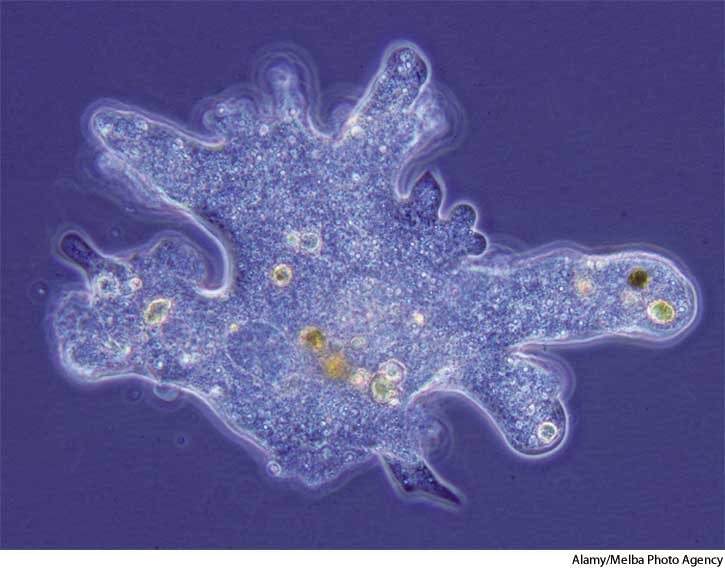
An Amoeba is a unicellular, animal-like protist that lives in ponds and streams. According to cell theory, where did this cell come from?
a)
another pre-existing amoeba cell.
b)
energy from sun that allowed the protist to reproduce.
c)
a multicellular organism.
d)
the nonliving environment.
44.
What tool do you use to view the cells?
a)
metric ruler
b)
centrifuge
c)
microscope
d)
telescope
45.
Which of the following is NOT a cell theory.
a)
All non-living things are made of cells
b)
All cells come from pre-existing cells
c)
Cells are the basic unit of structure and function of all living things
46.
All living things are made up of...
a)
cells
b)
cell tissues
c)
organ
d)
organ systems
47.
All cells come from___________ cells.
a)
pregnant
b)
pre-existing
c)
paternal
d)
pin size
48.
Rocks are not living because
a)
they never move
b)
they aren't needed for humans
c)
they are not made of cells
d)
they don't break down
49.
What is the basic structural and functional unit of all living things? 
a)
atom
b)
cell
c)
molecule
d)
human
50.
An organism made of one cell is called
a)
unicellular organism
b)
multicellular organism
51.
What is one way in which all living things on Earth are alike?
a)
All living things have hair.
b)
All living things are made of cells and come from other cells.
c)
The cells of all living things have chloroplast.
d)
All living things can move. 
52.
In order to sustain life, all cells must...
a)
digest nutrients and water
b)
excrete waste and fluids
c)
must be able to maintain a homeostasis environment (aka cellular respiration and regulation)
d)
All of the above
53.
What organelles are only found in PLANT cells
a)
lysosomes & centrioles
b)
cell wall & chloroplasts
c)
nucleus & nucleolus
d)
mitochondria & ribosomes
54.
Requires only one parent
a)
sexual
b)
asexual
55.
The offspring from asexually reproduced organisms are?
a)
Different than their parents
b)
Identical to parents
c)
Like a combination from both parents
d)
A different species
56.
If two organisms reproduce sexually, then their offspring will exhibit a genetic makeup that is -
a)
identical to only one parent
b)
identical to all of its siblings
c)
a unique combination of traits
d)
the recessive traits of each parent
57.
When comparing the offspring of sexually and asexually reproducing organisms, we would expect the genetic material (DNA) of the sexually reproducing organism to -
a)
contain fewer mutations
b)
be lesser in quantity
c)
be simpler overall
d)
show more variation
58.
Why is DNA important?
a)
it is very small and very complicated
b)
it's in everything
c)
it serves as the blueprint for traits of all living things
d)
because we eat it every day for energy
59.
In asexual reproduction, all of the offspring are:
a)
Physically Identical
b)
Genetically Identical
c)
Physically and Genetically Identical
d)
Not Identical
60.
a)
budding
b)
sporulation
c)
vegetative propagation
d)
binary fission
61.
What type of asexual reproduction is taking place?
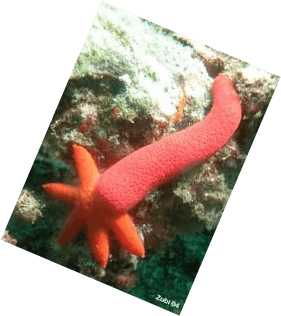
Fishermen work hard to catch and remove all the starfish that get into their favorite shell fishing beds and the “underwater farms” where they raise clams and oysters. In the past, they put the starfish into their boats, cut them up with knives, and then throw the pieces of starfish overboard. They thought this would kill the starfish. What they did not know was that each piece of starfish will grow into a whole new animal.
a)
Regeneration
b)
Vegetative propagation
c)
Budding
d)
Fission
62.
How many parent(s)are needed for asexual?
a)
4
b)
1
c)
9
d)
100
63.
When a starfish grows a new body off a broken arm, what kind of reproduction is this?
a)
Sexual
b)
Differentiation
c)
Asexual 
d)
Specialization
64.
What are some of the facts about asexual reproduction?
a)
Takes only one mate to reproduce and takes a longer time to reproduce
b)
Takes a shorter amount of time to reproduce and it takes two mates to reproduce
c)
Reproduces diverse offspring and takes a longer time to reproduce
d)
Takes only one mate to reproduce and takes a shorter time to reproduce
65.
This produces 2 identical cells.
a)
mitosis
b)
meiosis
66.
What is organized DNA called?
a)
Genes
b)
Deoxyribonucleic Acid
c)
Chromosomes
d)
Nucleus
67.
What parts of the chromosomes code for traits?
a)
Genes
b)
Deoxyribonucleic Acid
c)
Chromosomes
d)
Nucleus
68.
What parts of the chromosomes code for traits?
a)
Genes
b)
Deoxyribonucleic Acid
c)
Chromosomes
d)
Nucleus
69.
What does heredity mean?
a)
DNA being passed down from one generation to the next.
b)
Passing down acquired characteristics to your offspring.
c)
Leaving money in a will to your children
d)
all DNA is kept in the nucleus
70.
Where is all the genetic material inside a cell?
a)
nucleus
b)
vacuole
c)
cell membrane
d)
ribosome
71.
How many parents does asexual reproduction involve?
a)
one 
b)
two
c)
three
d)
four
72.
The offspring from asexually reproduced organisms are?
a)
Different than their parents
b)
Identical to parents
c)
Like a combination from both parents
d)
A different species
73.

Sexual reproduction results in

a)

Genetically unique offspring

b)

Genetically identical offspring

74.

Sexual reproduction results in

a)

No variation

b)

Large amounts of variation

75.

Which of the following is the female animal gamete?

a)

Sperm

b)

Egg

c)

Pollen

d)

Teste

76.
Which of the following describes the main advantages of sexual reproduction? 
a)
requires lots of time/energy
b)
no new gene combos can arise 
c)
diversity
d)
looks identical to the parent
77.
The cells produced via meiosis are called:
a)
sex cells
b)
somatic cells
c)
body cells
d)
skin cells
78.
How are your chromosomes inherited?
a)
most of your chromosomes from your mother
b)
most of your chromosomes from your father
c)
a random number of chromosomes from each parent
d)
half your chromosomes from your mother and half from your father.
79.

What process will have the greatest variety?

a)

asexual reproduction

b)

cloning

c)

meoisis and fertilization

d)

meiosis and mitosis

80.

variations in certain animals occur because of

a)

sexual reproduction

b)

genetic engineering

c)

mitotic division

d)

asexual reproduction

81.

Sexual reproduction results in

a)

increase in chromosome # in offspring

b)

decreased in biodiversity

c)

recombination of genes

d)

offspring genetically identical to parent

82.
Which of the following orders the rock layers accurately from youngest to oldest?
a)
1, 2, 3, 4, 5
b)
5, 4, 3, 2, 1
c)
2, 3, 4, 5, 1
d)
1, 2, 3, 5, 4
83.
Which of the following does the law of superposition tell scientists?
a)
Absolute age
b)
Relative age
c)
Exact age
d)
All of the answer choices
84.
Which rock layer in the diagram seems to be the oldest?
a)
F
b)
E
c)
B
d)
A
85.
This rock was formed when heat and pressure changed its minerals around into new minerals. What type of rock is it?
a)
Metamorphic Rock
b)
Igneous Rock
c)
Sedimentary Rock
d)
Boring Rock
86.
This rock was formed when molten rock cooled into a solid. What type of rock is it?
a)
Igneous Rock
b)
Metamorphic Rock
c)
Sedimentary Rock
87.
This rock formed when bits of other rocks became pressed into a solid. What type of rock is it?
a)
Sedimentary Rock
b)
Metamorphic Rock
c)
Igneous Rock
88.
What are the 3 major types of rocks?
a)
Igneous, Metamorphic, Sedimentary
b)
Metamorphic, Igneous, Cementation
c)
Brown, Red, Gray
d)
Streak, Hardness, Breakage
89.
The process by which water, wind, ice, and changes in temperature break down rock into fragments called sediments.
a)
Deposition
b)
Erosion
c)
Weathering
d)
Igneous Rock
90.
This rock started as molten magma. What type of rock is this?
a)
Sedimentary
b)
Igneous
c)
Metamorphic
91.
Evolution is a change in _________ over time.
a)
Populations
b)
Individuals
c)
Ecosystems
92.
Related organisms have similar _______.
a)
Genetic Material
b)
Diet
c)
Behavioral Patterns
93.
Darwin referred to this as survival of the fittest. Over time, it results in changes in the inherited characteristics of a population. 
a)
Natural Selection
b)
Genetic Variation
c)
Survival of the Fittest
94.
Genetic differences between organisms of the same species
a)
Variation
b)
Adaptation
c)
Behavior
d)
Environment
95.
Change over time is
a)
evolution
b)
generation
c)
growth
d)
biogenesis
96.
Relative dating
a)
gives the exact age of rocks and fossils
b)
is when you date your cousin
c)
gives the approximate age of rocks
d)
tells us who to trust
97.
Mutations are a change in what?
a)
DNA
b)
tRNA
c)
genotype
d)
phenotype
98.
Natural selection is the process by which
a)
change occurs in the genetic characteristics of individuals that live together in an environment from one generation to another
b)
organisms with traits well-suited to their environment reproduce at a greater rate than less well-adapted organisms in the same environment
c)
use and disuse of a characteristic leads to evolutionary change
d)
baseball players pass on the trait for strong arm muscles to children
99.
In natural selection, what does the selecting?
a)
fitness advantages
b)
phenotype of the individual
c)
genetic makeup of the individual
d)
environmental changes
100.
What could happen if people threw their trash into a stream?
a)
The animals would live longer
b)
Animals would drink all of the water
c)
The environment would not be affected
d)
Animals would not have clean water to drink
101.
A landfill overflows into the river. What could happen to the plants and animals that live in the area around the river?
a)
The river will dry up
b)
They might get sick
c)
They will be healthier
d)
They will stay the same
102.
Water from rivers, lakes and streams eventually end up in the ocean. 
a)
True
b)
False
103.
Most water pollution is the result of
a)
human activities.
b)
drought.
c)
volcanic eruptions.
d)
storms.
104.
Which human activity would be most likely to have a negative impact on the environment?
a)
Planting trees to control soil erosion
b)
Limiting the use of chemicals that kill weeds.
c)
Stopping the draining of swamps.
d)
Burning coal and oil to generate electric power.
105.
This type of pollution inhibits people from seeing the stars and planets.
a)
Light Pollution
b)
Water Pollutilon
c)
Air Pollution
106.
Which of these problems can be caused by air pollution?
a)
Respiratory problems
b)
Reduced food sources for humans
c)
Increased disease for humans
d)
Decrease in global temperatures
107.
Pollution is__________
a)
People have contaminated, or dirtied an area with waste
b)
People have cleaned, or fixed up an area
c)
People have gathered, or collected the trash in the area 
108.
What are fossil fuels?
a)
Dinosaur bones
b)
Resources made from once living organisms 
c)
Combination of different rocks
d)
Gas Stations
109.
Which of the following is not a type of fossil fuel? 
a)
Coal
b)
Light
c)
Petroleum
d)
Natural Gas
110.
Why do we depend on fossil fuels? 
a)
Electricity, transportation, and heating
b)
Food
c)
Sunlight
d)
Growing, building muscle, calcium
111.
Which system enables the body to move, moves food through the digestive system, and keeps the heart beating?
a)
skeletal 
b)
muscular
c)
digestive
d)
nervous
112.
Which system takes oxygen into the body and eliminates carbon dioxide?
a)
immune
b)
nervous
c)
respiratory
d)
circulatory
113.
Which system takes food into the body, breaks down food, and absorbs the digested materials?
a)
respiratory
b)
circulatory
c)
digestive
d)
excretory
114.
Which system is made of the smooth, skeletal, and cardiac muscles?
a)
skeletal
b)
muscular
c)
nervous
d)
excretory
115.
Which system detects information from the environment and directs the way your body responds to this information?
a)
excretory
b)
circulatory
c)
respiratory
d)
nervous
116.
Which system includes the nose, trachea and the lungs?
a)
respiratory
b)
circulatory
c)
immune
d)
digestive
117.
Which system includes the mouth, esophagus, and the small and large intestines?
a)
nervous
b)
excretory
c)
respiratory
d)
digestive
118.
Which system carries needed materials to the body cells and carries wastes away from the body cells?
a)
Circulatory
b)
Digestive
c)
Nervous
d)
Excretory
119.
What is the level o organization known as a group of cells that work together?
a)
cells
b)
organ system
c)
organ
d)
tissue
120.
Which two body systems work together to break down food and get rid of wastes?
a)
digestive and excretory
b)
digestive and circulatory
c)
excretory and respiratory
d)
nervous and digestive
121.
Which two body systems deliver oxygen to your cells and take away carbon dioxide?
a)
respiratory and nervous
b)
circulatory and nervous
c)
circulatory and excretory
d)
Respiratory and circulatory
122.
Which best describes a difference between single-celled organisms and multicellular organisms?
a)
Single-celled organisms are simple, while multicellular organisms are complex.
b)
Single-celled organisms have many functions, while multicellular organisms have one function.
c)
Single-celled organisms can live without water, while multicellular organisms cannot live without water.
d)
Single-celled organisms can only be found in one specific environment, while multicellular organisms can be found anywhere on Earth.
123.
The ___________ is the basic unit of life
a)
organ
b)
cell
c)
atom
d)
tissue
124.
 A group of cells that have similar functions? Examples are nervous, epithelial, muscle and connective
a)
cells
b)
tissues
c)
organs
d)
atoms
125.
A group of tissues that perform a similar function is called_____. (Examples include the heart, lungs or stomach)
a)
cells
b)
tissues
c)
organs
d)
organ system