wayground logo

Free Printable Worksheets

Font size

S
M
L
XL
Worksheets

.4 STAAR master Review

Total questions: 110

Worksheet time: 2hrs 36mins

Name
Class
Date
1.
Food is broken down to supply energy for your body in the ____________
a)
digestive system
b)
endocrine system
c)
excretory system
d)
reproductive system
2.
Which organ system removes cellular wastes as the result of cellular respiration?
a)
nervous
b)
digestive
c)
excretory
d)
circulatory
3.
Oxygen moves from the lungs to the blood and carbon dioxide moves from the blood to the lungs.
a)
muscular, circulatory
b)
respiratory, muscular
c)
respiratory, circulatory
d)
nervous, circulatory
4.
Breathing rate increases during exercise to help meet the increased oxygen demand by skeletal muscles.
a)
respiratory, circulatory
b)
muscular, skeletal
c)
respiratory, skeletal
d)
respiratory, muscular
5.
The respiratory system removes the waste carbon dioxide from the body.
a)
 muscular, circulatory
b)
nervous, circulatory
c)
respiratory, muscular
d)
respiratory, circulatory
6.
Pathogens are dangerous bacteria. What body systems are most important when dealing with pathogens that might be in your blood?
a)
immune, circulatory
b)
nervous, skeletal
c)
muscular, endocrine
d)
reproductive
7.
The process of taking in oxygen and releasing carbon dioxide from the body.
a)
transpiration 
b)
respiration 
c)
digestion
d)
relaxation
8.
This system carries oxygen, nutrients and waste around the body.
a)
Lymphatic
b)
Urinary
c)
Respiratory
d)
Circulatory
9.

Put the following terms in order from smallest to largest:


Tissue Cell Organ Organism Organ System

a)

Tissue Cell Organ Organism Organ System

b)

Cell Tissue Organism Organ system Organ

c)

Cell Tissue Organ Organ System Organism

d)

Organism Organ Tissue Cell Organ System

10.

The part of the plant

that is generally

under the ground

and in the soil

a)

Reproductive System

b)

Transpiration

c)

Shoot System

d)

Root System

11.

The part of the plant

that is generally above the ground including stems, leaves, buds and reproductive structures

a)

Stem System

b)

Leaf system

c)

Shoot system

d)

Xylem

12.

The tubes and support that transport water

and nutrients up, down and around in plants

a)

Vascular System

b)

Shoot System

c)

Root System

d)

Reproductive System

13.

Vascular tissue (tubes) responsible for the transportation of water and minerals up from the roots and around the plant.

a)

Stomata

b)

Transpiration

c)

Phloem

d)

Xylem

14.

Vascular tissue (tubes) responsible for the transportation of glucose down and around in a plant.

a)

Transpiration

b)

Xylem

c)

Phloem

d)

Root Hairs

15.

Pores under leaves

that allow for transpiration

and gas exchange

a)

Xylem

b)

Stomata

c)

Phloem

d)

Transpiration

16.

A large number of elongated cells that

grow out from the roots. They absorb water and minerals from the soil

via osmosis.

a)

Root Hairs

b)

Stomata

c)

Guard Cells

d)

Pholem

17.

The parts of the plant (angiosperms) involved in producing gametes (pollen and eggs) and seeds (fertilized eggs)

a)

Shoot System

b)

Phloem

c)

Xylem

d)

Reproductive System

18.

The plant hormone response to the

force of gravity

a)

Phototropism

b)

Geotropism

c)

Thigmotropism

d)

Transpiration

19.

The plant hormone response to light

a)

Transpiration

b)

Thigmotropism

c)

Geotropism

d)

Phototropism

20.

The plant hormone response to touch

a)

Thigmotropism

b)

Geotropism

c)

Phototropism

d)

Transpiration

21.
The ovary, style, and the stigma make up the female part of a plant called the ?
a)
stamen
b)
petals
c)
stem
d)
carpel (pistil)
22.

Which number or numbers identify the stamen?

a)

3,4

b)

5, 6, 7

c)

2

d)

8, 9

23.
Which part may develop into a fruit?
a)
E
b)
D
c)
C
d)
A
24.
The male reproductive structure of a flower is the ___.
a)
pistil
b)
ovary
c)
stamen
d)
ovule
25.
After fertilization what does the ovule develop into?
a)
Fruit
b)
Bud
c)
Seed
d)
Flower
26.
The tip of the style that has sticky hairs to trap pollen is the ___.
a)
stamen
b)
stigma
c)
ovary
d)
style
27.
Pollination is the process by which the pollen grains are transferred from the ________ to the _________. 
a)
anther... ovary
b)
anther ... stigma
c)
stigma ... ovary 
d)
stigma ... filament
28.
What is the function of the Digestive System?
a)
break down food into nutrients and gets rid of waste
b)
takes in oxygen and releases carbon dioxide
c)
sends messages to your body
d)
provides a structure and support for your body
29.
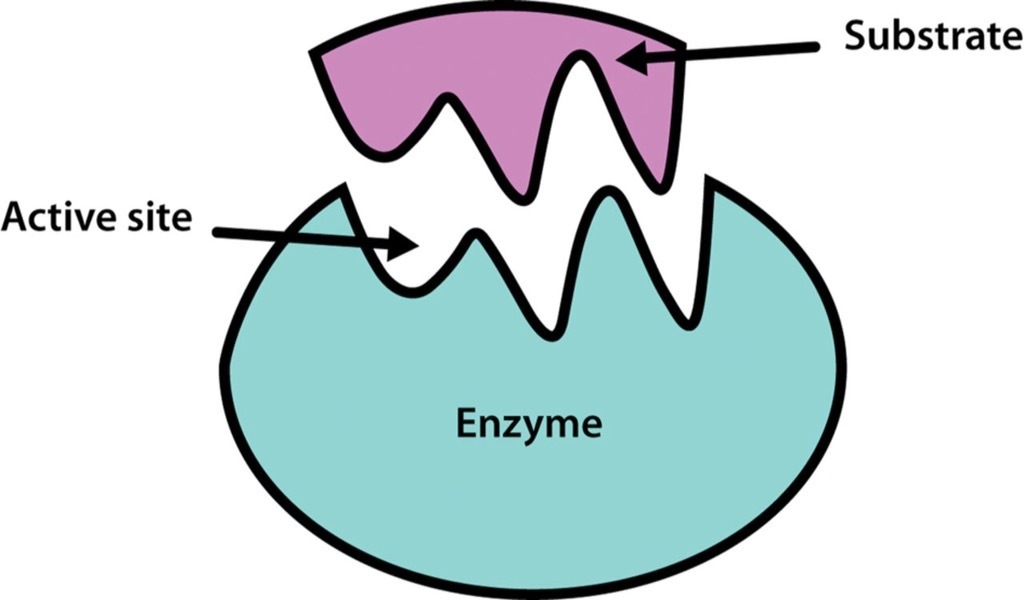
What will most likely happen if an appropriate enzyme is added to a chemical reaction? 
a)
The reaction rate will increase.
b)
The equilibrium of the reaction will be maintained. 
c)
The reaction rate will decrease.
d)
The reaction will stop. 
30.
The maintenance of an organism’s internal environment is called:
a)
compensating
b)
homeostasis
c)
balancing
d)
routine
31.
If the environment gets cold, we will often shiver in order to 
a)
keep body temperature the same as the external temperature
b)
decrease body temperature
c)
increase body temperature
d)
regulate blood pressure
32.
This system regulates body functions.
a)
Endocrine  System
b)
Muscular System
c)
Cardiovascular System
d)
Nervous System
33.
 What is the main function of the respiratory system?
a)
take in oxygen and exhale waste like carbon dioxide
b)
move nutrients throughout the body
c)
take in carbon dioxide and exhale oxygen
34.
Which system uses hormones to regulate body activities?
a)
Integumentary
b)
Urinary
c)
Endocrine
d)
Immune
35.
Which of the following is a phenotype?
a)
BB
b)
Bb
c)
bb
d)
Blue eyes
36.
the passing of genetic traits from parent to offspring.
a)
heredity
b)
trait
c)
gene
d)
allele
37.
having two of the same genes for the trait (sometimes called purebred).
a)
homozygous
b)
hetrozygous
c)
protein
d)
chromosome
38.
having two different genes for a trait (sometimes called hybrid).
a)
protein
b)
homozygous
c)
heterozygous
d)
genotype
39.
Two brown eyed parents (Bb) have a baby. What is the chance the baby is blue eyed?
a)
0 %
b)
25%
c)
50%
d)
75%
40.
An allele whose trait only shows up when no dominant allele is present.
a)
hidden allele
b)
dominant allele
c)
recessive allele
d)
present allele
41.
Snapdragon flowers come in red, pink and white.  What type of inheritance is this?
a)
Complete Dominance
b)
Incomplete Dominance
c)
Codominance
d)
Polygenic Inheritance
42.
Incomplete dominance means that the traits are
a)
expressed equally
b)
dominant
c)
recessive
d)
blended
43.
Which of the following genotypes is a purebred?
a)
Bb
b)
Gg
c)
bb
d)
Dd
44.
Brown fur color is dominant over black fur color. Which of the following is the actual genotype of ALL of the offspring in the next generation of this cross for fur color?
AA x aa
a)
AA
b)
Aa
c)
aa
d)
brown fur
45.
 Dominant alleles are-
a)
capital
b)
lowercase
c)
both
d)
neither
46.
 Recessive alleles are-
a)
capital
b)
lowercase
c)
both
d)
neither
47.
Tt is-
a)
homozygous dominant
b)
homozygous recessive
c)
heterozygous
d)
none of these
48.
What are the possible genotypes for this cross?
a)
TT = 25% Tt= 50% tt=25%
b)
all tall
c)
TT= 75% tt = 25%
d)
Tt = 100%
49.
Two brown eyed parents which are  both heterozygous(Bb) have a baby. What is the possibility of the baby being blue eyed?
a)
0 %
b)
25%
c)
50%
d)
75%
50.
Two heterozygous parents produce offspring. What is the probability of the HETEROZYGOUS GENOTYPE appearing in the offspring generation?
a)
75%
b)
25%
c)
50%
d)
100%
51.
Two heterozygous parents produce offspring. What is the probability of the HOMOZYGOUS DOMINANT GENOTYPE appearing in the offspring generation?
a)
75%
b)
25%
c)
50%
d)
100%
52.
HH crossed with Hh. What is the probability of hh?
a)
0%
b)
25%
c)
50%
d)
100%
53.
What would the genotypes be?
a)
TT, TT, Tt, Tt
b)
TT, Tt, Tt, tt
c)
Tt, Tt, tt, tt
d)
None of the above
54.
This diagram represents what type of inheritance pattern?
a)
sex-linked inheritance
b)
complete dominance
c)
codominance
d)
incomplete dominance
55.
If this image were real, it would represent what type of inheritance?
a)
incomplete dominance
b)
codominance
c)
polygenic inheritance
d)
compete dominance
56.
What gender is this individual?
a)
male
b)
female
c)
we cannot tell using a karyotype?
57.
What is the result of meiosis?
a)
2 daughter cells that are haploid and genetically different
b)
2 daughter cells that are haploid & identical
c)
4 daughter cells that are diploid & genetically different
d)
4 daughter cells that are haploid & genetically different 
58.
What percentage of the offspring will have this recessive disease?
a)
0%
b)
25%
c)
50%
d)
75%
59.
If a woman is a carrier for a sex linked recessive trait of hemophilia and her husband has hemophilia, which of the following is true? Make a punnett square!
a)
All sons will have hemophilia
b)
all daughters will have hemophilia
c)
50% of daughters and 50% of sons have hemophilia
d)
100% of sons have hemophilia and 100% of daughters are carriers
60.
What are the blood types of the possible children that a woman (type O) and man (type AB) can have?
a)
O and AB
b)
O and A
c)
O and B
d)
A and B
61.
What biomolecule do enzymes belong to? 
a)
Carbohydrate
b)
Lipid
c)
Nucleic Acid
d)
Protein
62.
Which biomolecule is a main source of quick energy?
a)
Nucleic Acid
b)
Protein
c)
Lipid
d)
Carbohydrate
63.
Which biomolecule is found in fats, oils, and waxes and is a source of long-term energy
a)
Proteins
b)
Nucleic Acid
c)
Lipids
d)
Carbohydrate
64.
What is the function of a nucleic acid?
a)
Stores genetic information
b)
Stores energy
c)
Quick source of energy
d)
Builds structures
65.
Plants and animals are composed of organic compounds. Which of the following are the common elements found in organic compounds?
a)
iron, oxygen, nickel, copper
b)
sodium, potassium, gold, hydrogen
c)
helium, neon,argon,krypton
d)
carbon,hydrogen, oxygen, nitrogen
66.
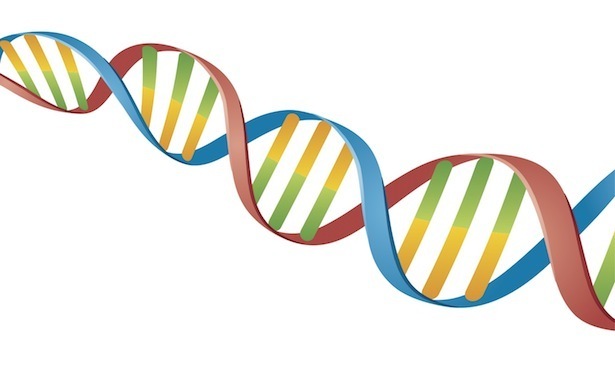
Which sequence of DNA bases would pair with this partial strand
ATG TGA CAG
a)
ATG TGA CAG
b)
TAC ACT GTC
c)
GTA AGT GAC
d)
CAT TCA CTG
67.
What determines the code, or information, of a DNA molecule?
a)
the shape (structure) of the nitrogen bases
b)
the order (sequence) of the nitrogen bases
c)
the color of the nitrogen bases
d)
the frequency (number) of nitrogen bases
68.
Replicate the following strand of DNA: 
AATCATGGA
a)
AATCATGGA
b)
TTAGTACCT
c)
UUAGUACCU
d)
GGATAUCUA
69.
What are the three components of a nucleotide?
a)
sugar, hydrogen, nitrogen base
b)
sugar, oxygen, nitrogen base
c)
sugar, phosphate, nitrogen base
d)
sugar, phosphate, protein
70.

Which of the following sequences best describes the flow of information that takes place when a gene directs the synthesis of a cellular component?

a)

RNA-DNA-RNA-PROTEIN

b)

DNA-RNA-PROTEIN

c)

PROTEIN-RNA-DNA

d)

DNA-AMINO ACID-RNA-PROTEIN

71.

The transfer of genetic info from DNA to RNA is called

a)

translation

b)

transcription

c)

initiation

d)

elongation

72.
In RNA, Uracil pairs with ______. 
a)
cytosine
b)
adenine
c)
guanine
d)
thymine
73.
The process to go from DNA to mRNA is _______
a)
translation
b)
transcription
c)
replication
74.
What is the location in the cell for translation?
a)
nucleus
b)
mitochondria
c)
ribosome
d)
chloroplast
75.
Which is the mRNA molecule that would be transcribed from this DNA template:
TGGCAAGTACGT
a)
ACCGTTCATGCA
b)
UGGCAAGUACGU
c)
UCCGUUCUUGCU
d)
ACCGUUCAUGCA
76.
Does the order of amino acids in a protein matter?
a)
YES!
b)
NO!
77.
The main function of tRNA is to...
a)
carry a message that, when translated, forms proteins
b)
form a portion of ribosomes
c)
string together complementary RNA and DNA strands
d)
bring amino acids from the cytoplasm to the ribosomes
78.
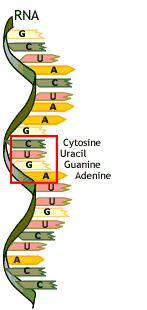
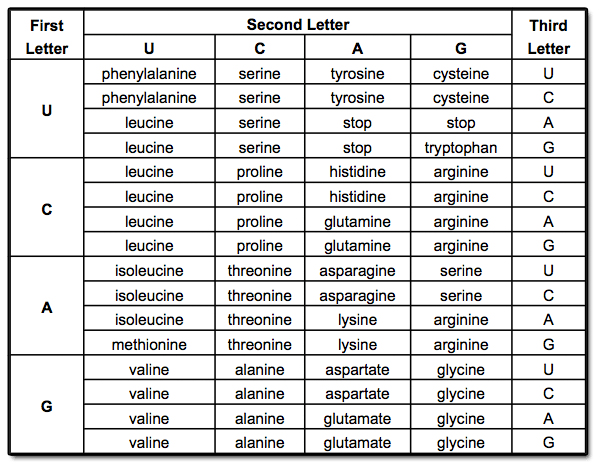
What amino acid is represented by the codon UUA?
a)
Phenylalanine
b)
Tyrosine
c)
Leucine
d)
Stop codon
79.
original chromosome
ABC-DEF
mutated chromosome
ABBC-DEF
a)
duplication
b)
point
c)
frameshift
80.
ATTTGAGCC- Original
ATTGAGCC - Mutated
The example above is an example of a 
a)
Insertion- Frameshift
b)
Deletion- Substitution
c)
Deletion -Frameshift
d)
All of the above
81.
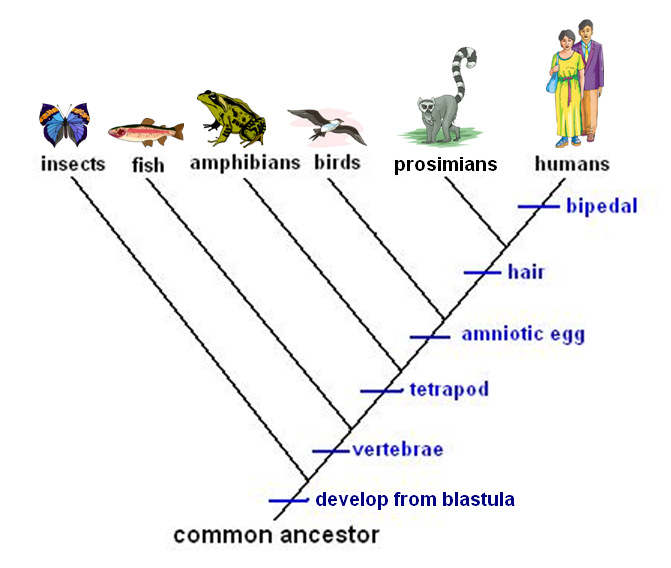
Which organisms pictured on the cladogram have hair?
a)
prosimians only
b)
prosimians and humans
c)
humans only
d)
prosimians and birds
82.
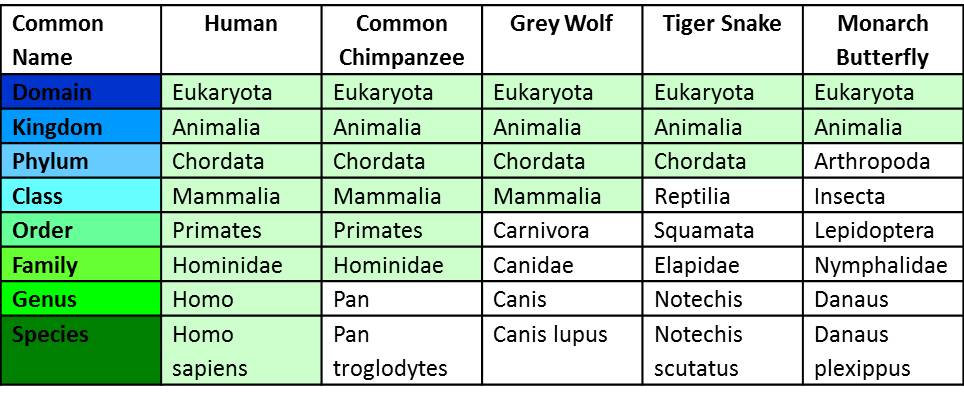
Which organism in the table is least closely related to the chimpanzee?
a)
human
b)
grey wolf
c)
tiger snake
d)
monarch butterfly
83.
Which organism in the table shown is most closely related to the common dolphin?
a)
human
b)
killer whale
c)
giant kelp
d)
bat star
84.
An illustration and a dichotomous key are given. What is the correct classification for this organism?
a)
Class Insecta
b)
Order Amblygygi
c)
Order Araneae
d)
Order Scorpiones
85.
What are the reactants (what is needed) for photosynthesis?
a)
glucose and oxygen
b)
light, water, and carbon dioxide
86.
Which of the following is the correct equation for PHOTOSYNTHESIS?
a)
carbon dioxide + water --> oxygen + glucose
b)
carbon dioxide + glucose + water --> oxygen 
c)
oxygen + water --> carbon dioxide + glucose
d)
glucose+ oxygen ---> water + carbon dioxide 
87.
What are the products  (what is made)  of photosynthesis?
a)
Glucose and oxygen
b)
sunlight energy
c)
carbon dioxide and water
d)
chlorophyll 
88.
Where does cellular respiration take place?
a)
Chloroplast
b)
Mitochondria
c)
Nucleus
89.

Which of the following best explains the purpose of photosynthesis?

a)

In photosynthesis, sunlight is used to make sugar

b)

In photosynthesis, sunlight is used to make ATP

c)

In photosynthesis, glucose is used to make ATP

d)

In photosynthesis, oxygen is used to make sugar

90.
Dolphins have the same arm structure as wolfs, what type of evidence for evolution does this represent?
a)
DNA
b)
vestigial structures
c)
homologous structures
d)
embryology
91.
Ostrich wings are examples of
a)
homologous structures
b)
vestigial structures
c)
adaptations
d)
traits
92.
Why is genetic variation within a species important for the survival of the species?
a)
It will likely result in larger individuals in the species.
b)
It will likely result in the species becoming predators.
c)
It will likely result in more intelligent individuals in the species
d)
It will likely result in individuals in the species being able to adapt to their environment.
93.
Which would best allow a species to survive environmental changes?
a)
similar physical features
b)
low mutation rate
c)
small population
d)
genetic diversity
94.
Osmosis is the movement of _____ across a membrane.
a)
food
b)
energy
c)
oxygen
d)
water
95.

Which is true about active transport?

a)

requires energy

b)

does not require energy

c)

moves substances down the concentration gradient

d)

moves material from high to low concentration

96.
This cell structure helps organisms maintain homeostasis by controlling what substances may enter or leave cells.
a)
vacuole
b)
nucleus
c)
cell membrane
d)
cell wall
97.
The picture is an example of...
a)
active tranport
b)
passive transport
c)
diffusion
d)
osmosis
98.
What gamete possibilities could come from this parent's genotype?
a)
AB, AB, aB, aB
b)
Ab, AB, Ab, ab
c)
Ab, Ab, Ab, Ab
d)
AB, aB, ab, aB
99.
What genotype is missing from this Punnett Square?
a)
RrYy
b)
RRYY
c)
rryy
d)
RrYY
100.
Based off this punnett square, what fraction of the offspring will have wrinkled, yellow seeds?
a)
9/16
b)
3/16
c)
1/16
d)
16/16
101.
Has membrane bound organelles
a)
Prokaryote
b)
Eukaryote
c)
both
102.
Bacteria
a)
Prokaryote
b)
Eukaryote
c)
both
103.
Has nucleus
a)
Prokaryote
b)
Eukaryote
c)
both
104.
What happens in the lytic cyle?
a)
Virus goes in and leaves the host cell
b)
Virus quickly kills the host cell
c)
Virus sleeps inside of the host cell
d)
Virus stay dormant for a long time
105.
What happens in the lysogenic cycle? 
a)
Virus goes in and leaves the host cell
b)
Virus quickly kills the host cell
c)
Virus inject the nucleic acid into the host cell, and the nucleic acid integrates into the host cell DNA, and stay dormant for a long time
d)
Bacteria injects DNA into a host cell
106.
Symptoms of HIV do not show up immediately because the virus can 
a)
stay dormant for years
b)
mutate quickly 
c)
stay outside the cell for a long time
107.
A pathogen.........
a)
makes proteins
b)
causes infection or disease
c)
is made of cells
d)
is a living thing
108.

Viruses are made up of three parts. Two of those parts are.....

a)

Nucleus, membrane

b)

Capsid, nucleus

c)

Capsid, nucleic acid

d)

Mitochondria, nucleus

109.
Which of these is a reason why viruses are not considered living things?
a)
They do not have a nucleus
b)
They cannot reproduce on their own
c)
They have no genetic material
d)
They do not evolve
110.

A relationship between two organisms in which one participant benefits and the other is neither harmed nor benefits is called

a)

commensalism

b)

parasitism

c)

amensalism

d)

mutualism