wayground logo

Free Printable Worksheets

Font size

S
M
L
XL
Worksheets

Ecosystems: What Are They and How Do They Work?

Total questions: 105

Worksheet time: 1hrs 22mins

Name
Class
Date
1.
Has membrane bound organelles
a)
Prokaryote
b)
Eukaryote
c)
both
2.
Which type of cell?
a)
Prokaryote
b)
Eukaryote
3.
Which type of cell?
a)
Prokaryote
b)
Eukaryote
4.
Where is the DNA found in a prokaryotic cell? 
a)
floating around in the cytoplasm 
b)
in the nucleus 
c)
in the ribosomes
d)
attached to the cell membrane
5.
Where is the DNA found in a eukaryotic cell? 
a)
floating around in the cytoplasm 
b)
in the nucleus 
6.
Bacteria are a type of...
a)
Prokaryote
b)
Eukaryote
c)
both
7.
How many kingdoms are there?
a)
2
b)
3
c)
6
d)
8
8.
All of the following have a nucleus except...
a)
Eubacteria
b)
Animalia
c)
Plantae
d)
Protista
9.
What structure is common to all 6 kingdoms?
a)
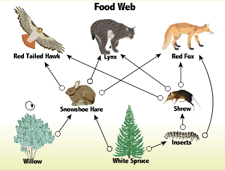
DNA
b)
Nucleus
c)
Cell wall
d)
Mitochondria
10.

Eubacteria are prokaryotes with single cells that lack a nucleus and other internal compartments found in the cells of species from other kingdoms.

a)

True

b)

False

11.

Archaea are multicellular bacteria that are closer to eukaryotic cells than to eubacteria.

a)

True

b)

False

12.

Protists are mostly single-celled eukaryotic organisms, such as diatoms, dinoflagellates, amoebas, golden brown and yellow-green algae, and protozoans.

a)

True

b)

False

13.

Fungi are mostly single celled eukaryotic organisms such as mushrooms, molds, mildews, and yeasts.

a)

True

b)

False

14.

Plants are mostly many-celled eukaryotic organisms such as red, brown, and green algae and mosses, ferns, and flowering plants.

a)

True

b)

False

15.

Animals are also many-celled, prokaryotic organisms.

a)

True

b)

False

16.

Which of the following is an invertebrate?

a)

Cat

b)

Snail

c)

Goldfish

d)

Humans

17.

What does invertebrate mean?

a)

Animals without a backbone

b)

Animals that change their form

c)

Animals with a backbone

d)

Animals that lay eggs

18.
Is the picture a vertebrate or invertebrate?
a)
Vertebrate
b)
Invertebrate
19.
Vertebrate or Invertebrate?
a)
Vertebrate
b)
Invertebrate
c)
Neither
20.
Vertebrate or Invertebrate?
a)
Vertebrate
b)
Invertebrate
c)
Neither
21.

What are vertebrates?

a)

Animals with backbone

b)

Animals without backbone

22.

The scientific name of a horse is Equus callabux. What is the genus name of the horse?

a)

Equus callabux

b)

Equus

c)

callabux

d)

Animalia

23.

What is the order of the taxon from LARGEST to SMALLEST?

a)

Genus, kingdom, phylum, class, order, species, family, domain

b)

Domain, kingdom, phylum, class, order, family, genus, species

c)

species, genus, family, order, class, phylum, kingdom, domain

d)

domain, family, species, order, class, phylum, kingdom, genus

24.

What is the scientific name of the buttercup?

a)

Plantae angiospermophyta

b)

Eudicotidae ranunculales

c)

Ranunculales ranunculacae

d)

Ranunculus acris

25.

Which taxon would include members from all other taxons?

a)

Species

b)

Kingdom

c)

Phlylum

d)

Family

26.

If humans and snakes are in the same phylum, what other taxons must they be in?

a)

Genus and species

b)

Order and family

c)

Kingdom and domain

d)

Class and order

27.

Of the taxon listed, which is the most specific?

a)

Kingdom

b)

Phylum

c)

Class

d)

Order

28.
What is binomial nomenclature?
a)
A two name naming system
b)
A two headed turtle
c)
A two grouped system to classify
d)
A two lensed microscope
29.
What taxa are in a scientific name?
a)
Genus and Kingdom
b)
Species and Family 
c)
Species and Class
d)
Genus and Species
30.
Which taxa has more organisms, family or phylum?
a)
phylum
b)
family
c)
they are equal
d)
not enough information to answer
31.
What is the scientific name for a dog?
a)
Dog
b)
familiarius
c)
Canis familiarius 
d)
Canis
32.

Look at the diagram of the food web. The arrows means “eaten by.”


What will happen if the number of snakes goes down?

a)

The owl will eat the grass

b)

The number of frogs will go down

c)

The hawk and owl will have less food

d)

The number of mice and grasshoppers will go up.

33.

The transfer of energy from one organism to the next in an ecosystem begins with a producer. A producer is an organism that produces its own food. A consumer is an organism in a food chain that obtains energy from producers or other consumers; consumers may be herbivores or carnivores.


Which food chain correctly describes the flow of energy in an ecosystem?

a)

grass → grasshopper → fish → human

b)

grasshopper → fish → human

c)

human → fish → grasshopper

d)

human → grasshopper → fish → grass

34.

What happens to the amount of available energy in the pyramid as it moves up through the different levels?

a)

it increases

b)

it decreases

c)

it remains the same

d)

it decreases, then increases

35.
An organism that can make its own food is called?
a)
Consumer
b)
Producer
c)
Decomposer
d)
Herbivore
36.
All food chains begin with a ____________.
a)
primary consumer
b)
secondary consumer
c)
producers
d)
scavengers
37.
A consumer gets energy by doing what?
a)
Making it themselves.
b)
Breaking down biotic wastes and dead organisms and returning raw materials to the ecosystem.
c)
Soaking it up from the ground.
d)
Feeding on other organisms.
38.
An organism that lives by breaking apart dead organic matter into simpler parts is...
a)
scavenger
b)
consumer
c)
decomposer
d)
carnivore
39.
This type of consumer only feeds on the bodies of dead animals.
a)
Herbivore.
b)
Decomposer.
c)
Carnivore.
d)
Scavenger
40.
An animal that eats other animals is a....
a)
carnivore
b)
omnivore
c)
herbivore
d)
decomposer
41.

Small consumers that are hunted and eaten by larger consumers

a)

producer

b)

prey

c)

predator

42.

Interacting food chains found in an ecosystem

a)

food web

b)

food chain

c)

predator

43.

Choose the producer.

a)

rock

b)

tree

c)

cow

d)

bird

44.
An organism that eats both plants and animals is called a what?
a)
herbivore
b)
carnivore
c)
omnivore
d)
decomposer
45.

What is this a picture of?

a)

food chain

b)

food web

c)

ecosystem

d)

a pond

46.
snakes, mice, small birds, crickets, hawks, cactus, tumbleweed
a)
organism
b)
community
c)
population 
47.
the entire Earth 
a)
biosphere 
b)
community 
c)
ecosystem 
48.
plants, rocks, air, sunlight, water, 
a)
ecosystem 
b)
population 
c)
community 
49.
all the snakes in the area 
a)
organism 
b)
ecosystem 
c)
population 
50.
a bird 
a)
abiotic 
b)
biotic 
51.
the sun 
a)
abiotic 
b)
biotic 
52.
soil 
a)
abiotic 
b)
biotic 
53.
a dead plant 
a)
abiotic 
b)
biotic 
54.

In a food web, each ____________ depends on the trophic level below it for energy.

a)

consumer

b)

producer

c)

decomposer

d)

detritivore

55.

In any food web, the organisms that are responsible for converting raw energy into usable chemical energy are collectively called ________ while organisms that recycle the nutrients trapped in dead organisms are collectively called ________.

a)

producers;consumers

b)

producers; decomposers

c)

heterotrophs; consumers

d)

heterotrophs;autotrophs

56.

Autotrophs are the same as producers.

a)

True

b)

False

57.

All of the factors listed are abiotic factors of this underwater ecosystem EXCEPT the

a)

sunlight

b)

water currents

c)

fish population

d)

water temperature

58.

Which organisms would be the energy for the hawk?

a)

rabbit, shrew, and snake

b)

rabbit, snake, and grasshopper

c)

shrew, snake, and insect eating bird

d)

grass, rabbit, and insect eating bird

59.

Something important is missing from this food web! The grass starts this food web. But the plant's energy comes from __________, the one picture that is missing from the food web.

a)

water

b)

the sun

c)

the air

d)

the soil

60.

Which order is correct? (Levels of Ecological Organization)

a)

Organism, Community, Ecosystem, Population, Biosphere

b)

Organism, Community, Population, Ecosystem, Biosphere

c)

Clownfish, Group of Clownfish, (Sea Turtle, Star Fish, Jelly Fish), Marine, The World

61.
What is the term used to describe all living things in an ecosystem?
a)
Biotic Factors
b)
Abiotic Factors
c)
Environmental Factors
d)
Population
62.
What is the term used to describe all non-living things in an ecosystem?
a)
Biotic Factors
b)
Abiotic Factors
c)
Environmental Factors
d)
Population
63.
When a plant is eaten by a grasshopper, the grasshopper is called
a)
Producer
b)
Primary consumer
c)
Secondary consumer
d)
Tertiary consumer
64.
When a plant is eaten by a caterpillar and the caterpillar is eaten by a frog, the frog belongs to
a)
Producer
b)
Primary consumer
c)
Secondary consumer
d)
Tertiary consumer
65.
When a plant is eaten by a caterpillar and the caterpillar is eaten by a frog, and the frog is eaten by a snake, the snake belongs to
a)
Producer
b)
Primary consumer
c)
Secondary consumer
d)
Tertiary consumer
66.
A __________ includes all living and non-living things in an environment. 
a)
population
b)
niche
c)
abitotic
d)
ecosystem
67.
_______ are consumers that eat only meat.
a)
Herbivore
b)
Omnivore
c)
Carnivore
68.
How many carnivores are shown in this food web?
a)
6
b)
4
c)
5
d)
3
69.
Which of the following is a herbivore?
a)
cricket
b)
frog
c)
hawk
d)
shrew
70.
Which organism do the owl and the weasel compete for in the food web?
a)
Hawk
b)
Spider
c)
Grasshopper
d)
Shrew
71.
Temperature, light, air, water, and soil are all  _____  parts of the environment
a)
alive
b)
biotic 
c)
abiotic
d)
living
72.
What is an example of a biotic factor?
a)
skunk
b)
rocks
c)
soil
d)
water
73.
What is this called?
a)
Food Web
b)
Food Chain
c)
Abiotic Factors
d)
Biotic Factors
74.
In the energy pyramid here, which organisms have the most energy available?
a)
Producers
b)
Carnivores
c)
Herbivores
d)
Top Predator
75.
An organism's ? is defined as the environment in which it lives.
a)
Habitat
b)
Niche
c)
Social Structure
d)
Ecology
76.
Which of these organisms would receive energy from the snake?
a)
Plant
b)
Rabbit
c)
Mouse
d)
Hawk
77.
True/False
Food webs show you everything an animal eats. Food chains show you one thing.
a)
True
b)
False
78.
Which of these is true about this food web?
a)
The Owl gets its energy from the producer.
b)
The Lion gets its energy only from a wild cat.
c)
The Kite gets its energy from the goat.
d)
The Mouse is most likely to die, several ways.
79.
The fox in this food web would be considered a:
a)
Tertiary Consumer
b)
Producer
c)
Secondary Consumer
d)
Primary Consumer
80.
The rabbit in this food web would be considered a:
a)
Decomposer
b)
Producer
c)
Secondary Consumer
d)
Primary Consumer
81.
What may happen if the snowshoe hare was removed from the food web pictured?
a)
The insects in the habitat would increase.
b)
The shrew population would decrease due to being only hawk food source.
c)
The willow tree population would decrease.
d)
Foxes would dies due to no food source. 
82.
The mouse in this food web would be considered a:
a)
Primary Consumer
b)
Producer
c)
Tertiary Consumer
d)
Secondary Consumer
83.
Which of the animals in this food web is a secondary consumer?
a)
Hawk
b)
Lizard
c)
Mouse
d)
Snake
84.
This sphere includes the continents, the ocean floor, all the rocks on the surface, and all of the sand in the deserts. 
a)
Hydrosphere 
b)
Biosphere 
c)
Atmosphere 
d)
Geosphere 
85.
Composed of all the water on or near the earth
a)
Hydrosphere 
b)
Biosphere 
c)
Atmosphere 
d)
Geosphere 
86.
This sphere is composed of all the living things 
a)
Hydrosphere 
b)
Biosphere 
c)
Atmosphere 
d)
Geosphere 
87.
Body of air surrounding our planet. 
a)
Hydrosphere 
b)
Biosphere 
c)
Atmosphere 
d)
Geosphere 
88.
Water evaporating from the surface of a lake moves from the...
a)
Atmosphere to the geosphere 
b)
Geosphere to the hydrosphere 
c)
Hydrosphere to the atmosphere 
d)
Atmosphere to the hydrosphere 
89.
When living things breathe, they interact with which of Earth's spheres? 
a)
Geosphere 
b)
Hydrosphere 
c)
Atmosphere 
d)
Biosphere 
90.
When dead plants decompose and nitrogen is returned to the soil, the interaction is between which two spheres? 
a)
The biosphere and atmosphere 
b)
The atmosphere and geosphere 
c)
The geosphere and atmosphere 
d)
The biosphere and geosphere 
91.
When carbon dioxide dissolves from the air into the ocean- the interaction is between...
a)
The atmosphere and geosphere 
b)
The atmosphere and hydrosphere 
c)
The atmosphere and biosphere 
d)
The atmosphere and atmosphere 
92.
Oceans, rivers, lakes, and the moisture in the air are all part of which of Earth's spheres? 
a)
Hydrosphere 
b)
Biosphere 
c)
Atmosphere 
d)
Geosphere 
93.
When a plants takes carbon dioxide from the air which two spheres are interacting? 
a)
Biosphere and atmosphere 
b)
Geosphere and atmosphere 
c)
Hydrosphere and atmosphere 
d)
Atmosphere and atmosphere 
94.
When volcanoes erupt, dust and ash particles spread through much of the air blocking the sun.  Which two spheres are interacting? 
a)
Hydrosphere and atmosphere 
b)
Geosphere and atmosphere 
c)
Biosphere and atmosphere 
d)
Atmosphere and atmosphere 
95.
When plants draw nutrients from the soil, the interaction is between which two spheres? 
a)
The atmosphere and the geosphere 
b)
The geosphere and the hydrosphere 
c)
The hydrosphere and atmosphere 
d)
The biosphere and the geosphere 
96.
The conversion of ammonium to nitrate is called what?
a)
nitrification
b)
renitrification
c)
denitrification
d)
unnitrification
97.
The conversion of nitrate to nitrogen gas is called what?
a)
nitrification
b)
renitrification
c)
denitrification
d)
unnitrification
98.
What is it called when water vapor cools and changes into a liquid?
a)
condensation
b)
respiration
c)
precipitation
d)
evaporation
99.
Which of the following is NOT a stage of the nitrogen cycle?
a)
organisms breathe in nitrogen gas
b)
organisms release nitrogen compounds via waste or decomposition
c)
bacteria convert unusable nitrogen to usable nitrogen
d)
plants absorb nitrogen compounds from the soil
100.
The three steps of the water cycle include:
a)
condensation, precipitation, filtration
b)
filtration, irrigation, evaporation
c)
precipitation, condensation, evaporation
d)
precipitation, filtration, evaporation
101.
Which of the following is NOT part of the carbon cycle?
a)
condensation
b)
photosynthesis
c)
combustion
d)
respiration
102.
Which of these is the greatest cause of harmful levels of carbon in the atmosphere?
a)
respiration
b)
combustion
c)
photosynthesis
d)
decomposition
103.
Which of these steps is part of the nitrogen cycle AND the phosphorous cycle?
a)
it starts off inside underwater rocks and dirt
b)
bacteria convert it into organic compounds
c)
animals leaving waste and death and decay release it back into the soil
d)
rain water and ocean waves break off pieces, putting it back into the ecosystem
104.
Which of these is in both the carbon cycle AND the phosphorous cycle?
a)
erosion
b)
respiration
c)
photosynthesis
d)
combustion
105.
Which type of bacteria would transform nitrate into nitrogen gas?
a)
nitrogen-fixing
b)
denitrifying
c)
nitrifying
d)
nitrogen-defixing