
 Worksheets
.4 Practice STAAR test
Total questions: 110
Worksheet time: 2hrs 32mins

The cladogram shows the evolution of land plants as indicated by fossil records.
Which discovery would challenge the validity of this cladogram?
A large aquatic vascular plant about 200 million years old
A species of algae that has existed for less than one million years
A moss species that has existed for less than 380 million years
A fossil of a fern more than 425 million years old

Scientists estimate that there are more than 20,000 species of ants. The species range in size from 1 mm long to 38 mm long and live in most environments. The diets of ants range from flowers and seeds to fluids from their own larvae. Ants have been able to successfully inhabit so many different environments because their populations have been able to --
hybridize with other species of insects
adapt to a variety of habitats and food sources
fill niches usually occupied by mammals
occupy habitats that have no other life-forms

Two populations of mice living in the same forest are separated by a large water-filled ditch. After a rainstorm, flooding brings several mice from one population to the other population. When the mice from the first population reproduce with members of the second population, which of the following will likely occur?
All of the offspring will die as a result of reproductive mutations.
The offspring will be forced to leave the second population.
The offspring will be genetically identical to their parent from the first population.
The offspring in the second population will have greater genetic variety.

The picture shows bean-shaped glands called nodes. The clusters of cells in the nodes include macrophages that break down viruses and other potentially harmful materials. Nodes also contain cells that produce protein particles capable of capturing harmful materials that flow in tissue fluid through the nodes. Different parts of the body are drained by nodes in different regions of the body.
Which body systems are directly responsible for regulating these nodes and protecting the body from harmful materials in tissue fluid?
Immune and lymphatic systems
Digestive and nervous systems
Endocrine and digestive systems
Circulatory and nervous systems

Organisms are classified today using the Linnaean system, and the following table shows the taxonomic classification of two marine organisms living along the Pacific Coast.
Taxonomic classification is important to marine biologists because it provides a way to -
prove that marine evolution occurs
discover and name every marine organism on Earth
designate Latin as the universal language of marine biology
identify marine organisms and find evolutionary relationships between them

When a person is suddenly cut by a sharp object, a nervous impulse is sent along a sensory neuron to the spinal cord. The impulse is immediately transmitted through motor neurons to produce a response. Which of the following correctly identifies and describes this response?
It is a conditioned response that occurs only to prevent injury.
It is a learned response that does not occur in infants and small children.
It is a reflex response that causes various muscles to contract in order to move away from the object.
It is a voluntary response that is initiated only after the impulse has been carried to the relevant area in the brain.

A student conducted an investigation to study phototropism in grasses. The only difference between the control group and the experimental group was the light conditions. The control group was provided full light, while the experimental group was shaded on one side. The diagrams show the average heights and positions of blades of grass in the investigation. (View Image)
Which statement best explains why the grass tips of the experimental group bent toward the light?
Water evaporated faster on the side of the plant having full light.
Light sensors in the grass tips simulated a hormone in the shoot system.
The xylem in the roots system absorbed more nutrients from the shaded side.
The side facing the light has greater chance of absorbing carbon dioxide from the atmosphere.

Part of an important cellular process involving a DNA strand is modeled in the image. (View image)
What is the purpose of this cellular process?
Preserving genetic information for future generations
Deleting the information in the sequence produced from the DNA template
Transcribing information in the DNA sequence for use by the cell
Producing more nucleotides for the DNA sequence

The energy pyramid shows the energy made available by producers. (View Image)
Base on the energy flow between trophic levels in an energy pyramid, how much energy would be expected to be found at the secondary consumer level in this pyramid?
100 joules
500 joules
1,000 joules
50 joules

Nitrogenous bases are located on both strands of the DNA double helix. What is the significance of the nitrogenous bases?
The number of adenines and cytosines determines the type of RNA that will be produced.
The order of nitrogenous bases determines the order of amino acids in the proteins synthesized.
The amount of thymine and guanine in the DNA molecules determines the length of the genes.
The type of hydrogen bonding between the nitrogenous bases determines which amino acid will be added to the peptide chain.

Oncogenes are mutated forms of genes. Oncogenes can transform a cell into a tumor cell. Some tumor cells are benign, while others are malignant. How does the presence of an oncogene lead to the formation of a tumor?
ATP Production is inhibited.
Cell division is unregulated.
Somatic cell growth is inhibited.
Antibody Activity is unregulated.

Some students used vinegar to dissolve away the shells of three eggs and used the eggs as models of human red blood cells. The students observed the changes in the eggs when they were placed in different solutions. (View Image)
Which statement best describes the role of the cell membrane in this model?
The cell membrane is an impermeable barrier that prevents water from entering the cell.
The cell membrane allows solutes to enter the cell, which causes the cell to shrink.
The cell membrane allows water to enter and leave the cell.
The cell membrane removes solutes from the environment.

Viruses can be transmitted through air, water, food, insect bites, and direct skin contact. Once a virus gains entry to the body, it invades a host cell in order to --
deactivate the host cell's defences
synthesize antibodies for defence
metabolize host proteins and grow
access cellular processes for replication

The diagram shows cells in different phases of mitosis. A student is trying to find a cell in a particular phase of mitosis. The student is looking for evidence that spindle fibers are separating the chromosomes to ensure that each new nucleus has one copy of each chromosome. (View Image)
Which cell is in the phase of mitosis that the student is searching for?
Cell 1
Cell 2
Cell 3
Cell 4

Albinism is an autosomal recessive condition. Which circle graph shows the genotype probability when an albino female mates with a male that is heterozygous for the albinism trait? (View Image)
F
G
H
J

Photosynthesis and cellular respiration both involve the use and release of gases. Which statement correctly identifies the role of gases in the two processes?
Photosynthesis and cellular respiration both use carbon dioxide and release oxygen.
Photosynthesis and cellular respiration both use oxygen and release carbon dioxide.
Cellular respiration uses oxygen and releases carbon dioxide, while photosynthesis uses carbon dioxide and releases oxygen.
Cellular respiration uses carbon dioxide and releases oxygen, while photosynthesis uses oxygen and releases carbon dioxide.

The diagram represents one way an enzyme can be inhibited. (View Image)
Which statement explains the effect of an inhibitor on an enzyme?
A substrate will be able to bond with the enzyme.
The enzyme will likely be attacked by immune cells.
The enzyme will be unable to produce more enzymes.
A substrate will be unable to attach to the enzyme.

Four common relationships between organisms are listed in the box. (View Image)
Which statements best describe these relationships?
Relationships 1 and 4 are examples of mutualism.
Relationship 2 is an example of commensalism.
Relationship 3 is an example of parasitism.
Relationships 1, 2, and 4 are examples of mutualism.
Relationship 3 is an example of parasitism.

The four butterflies in the illustration represent the offspring in the F1 generation. Which statement is best supported by the phenotypes of these offspring?
The F1 generation is composed only of males.
Two of the offspring in the F1 generation will not be able to reproduce.
The F1 generation is the result of a dihybrid cross.
Two of the offspring in the F1 generation will experience a spontaneous mutation
The survival of a species depends on its ability to adapt to changes in the environment. A species must be capable of surviving and reproducing despite changes to food sources, climate, or threats from predators. Which statement correctly describes a way that mutations increase the likelihood that a species will survive in a changing environment?
Mutations are a source of variation in species.
Mutations are the cause of disease in the species.
Mutations are not harmful when they occur in somatic cells of the species.
Mutations are always passed on to subsequent generations of the species.
Four different nucleotides are used as building blocks of DNA. Which of the following can be used to distinguish one nucleotide from another?
The nitrogenous base
The shape of the deoxyribose sugar
The length of the phosphate group
The type of fatty acid

The green frog (Lithobates clamitans clamitans) is found in many parts of the United States. The table contains some information about this frog. Why does the ability to lay 1,000 to 5,000 eggs increase the fitness of the species L. clamitans clamitans?
It increases opportunities for offspring to compete for limited resources.
It increases the probability that some offspring will survive long enough to reproduce.
It increases the probability that moving water will promote gene flow from one population to another.
It increases the chance of the recombination of alleles, leading to genetic drift in the population.

Food webs such as the one shown were first used in 1927 by the animal ecologist Charles Elton. The food web below represents the feeding relationships among organisms in an Alaskan ecosystem. An environmental change that removed which of these organisms from the ecosystem would cause the most instability in the ecosystem?
Auklets
Foxes
Salmon
Zooplankton
During the final stages of human gestation, receptors for the hormone oxytocin increase on the smooth muscle cells of the uterus. The release of oxytocin during labor stimulates the smooth muscle tissue in the wall of the uterus. The vigorous contraction of the uterine smooth muscle helps push the baby through the birth canal so that delivery can occur. This process involves the interaction of which organ systems?
Endocrine and muscular only
Endocrine and reproductive only
Endocrine, muscular, and reproductive
Endocrine, reproductive, and excretory
During meiosis, homologous chromosomes exchange genetic material. This exchange of genetic material
increases the genetic variation
reduces the diploid number to the haploid number
increases the haploid number to the diploid number
reduces the probability of mutations
Bactrian camels, dromedaries, llamas, and alpacas are all members of the same taxonomic family, Camelidae. Members of this family all have two toes, no hooves, true canine teeth, and a split upper lip. The family Camelidae originated in North America. The physical features of animals in this family and the family’s geographical origin provide evidence that all these animals
live in the same type of ecosystem
have slowly evolved to become herbivores
have a common ancestor
exchanged DNA at some point in the past
Which statement best describes the relationship between the products of photosynthesis and the reactants in cellular respiration?
The products of photosynthesis serve as the reactants in cellular respiration to provide chemical energy.
The products of photosynthesis combine with the reactants in cellular respiration to remove ATP from cells.
The products of photosynthesis inhibit the reactants in cellular respiration in the presence of light.
The products of photosynthesis change the structure of the reactants in cellular respiration in the presence of light.

The initial steps in gene expression are modeled. Double-stranded DNA first unwinds into two strands. Which process and product are represented in the diagrams?
Process: transcription; product: mRNA
Process: translation; product: protein
Process: replication; product: tRNA
Process: recombination; product: polymerase

Some relationships between different organisms are shown in the table. Which table correctly identifies each type of interaction described?


A prey population consists of individuals with a variety of running speeds. The adaptation that allows some of these animals to run fast would be an example of natural selection if it helps them--
survive and undergo mutations in their DNA
lower the mortality rates of the population
produce offspring that run at average speeds
reproduce and increase the frequency of their genes in the population
Nitrogenous bases are located on both strands of the DNA double helix. What is the significance of the nitrogenous bases?
The number of adenines and cytosines determines the type of RNA that will be produced.
The order of nitrogenous bases determines the order of amino acids in the proteins synthesized.
The amount of thymine and guanine in the DNA molecules determines the length of the genes.
The type of hydrogen bonding between the nitrogenous bases determines which amino
acid will be added to the peptide chain.

The diagram shows cellular activity across a cell membrane. Which two processes does this diagram most directly model?
Energy conversions and synthesis of new molecules
Synthesis of new molecules and homeostasis
Transport of molecules and energy conversions
Homeostasis and transport of molecules
Kidneys are part of the excretory system in a human body. They purify the impure blood and send it back to the rest of the body. Which system is mainly responsible for the transport of plasma to the kidneys?
Respiratory system
Circulatory system
Muscular system
Nervous system

Part of a hydrothermal vent food web is represented in the diagram. Which organisms are both secondary and tertiary consumers in this food web?
Chemosynthetic bacteria and amphipods
Zooplankton and mussels
Ratfish and octopuses
Galatheid crabs and zoarcid fish

Five general characteristics of organisms in kingdoms Plantae or Fungi are listed in the box. Which table correctly lists the characteristics of the organisms in the two kingdoms?


Several structures work together to allow flowering plants to reproduce. The diagram shows a typical flower. Which table correctly identifies the function of each structure or group of structures in the reproduction of the plant?


The table shows a DNA sequence and three types of mutations that can change the DNA sequence. Which mutation will cause translation to stop?
Mutations 1 and 3 only
Mutation 1 only
Mutation 2 only
Mutations 1, 2, and 3

The picture shows a 3-D model of a virus called a bacteriophage. Bacteriophages can infect
bacteria such as E. coli. In what way are the bacteriophage and E. coli alike?
They contain antibodies.
They reproduce by mitosis.
They have identical genomes.
They lack membrane-bound organelles.

The complex carbohydrates pictured below are made by linking molecules of glucose. In all three complex carbohydrates, the subunits of glucose are bonded together differently. Because they have different structures, they most likely —
contain different chemical elements
form different proteins
carry different nucleotides
perform different functions

The table shows some observations made by four students during a field trip to a nature area. Which student made observations of a community of organisms?
Student 1
Student 2
Student 3
Student 4

Each strand of a DNA molecule contains nitrogenous bases that pair with other nitrogenous bases in very specific ways. A diagram of a section of DNA is shown. Which DNA strand is complementary to the one shown above?


Nudibranchs are marine gastropods that lack shells. Many of these gastropods retain the foul-tasting poisons of their prey and secrete them when threatened. The bright coloration of the nudibranchs warns predators to avoid them. Based on this information, how has adaptation allowed marine gastropods to be successful without a shell?
They find enough food as they move through the marine environment.
They blend in with their environment to hide from their predators.
They are not attacked by most predators and are able to reproduce successfully.
They have bright colors that attract a mate.


The mutated DNA segment is TTCGCAAG. This is an example of ___ mutation.




Which level of biological organization has the student described in the table?

A section of a nucleic acid is shown below. The process represented in the diagram produces a molecule that is complementary to the template strand of DNA. What type of molecule is produced?
New DNA
Polypeptide
Messenger RNA
Carbohydrate

If several pea plants with the genotype TTYy are crossed with pea plants with the genotype Ttyy, what percentage of the offspring will be expected to have the TTYy allele combination?
25%
40%
50%
75%

A photomicrograph of onion root tip cells during mitosis is shown below. Which phase of mitosis is occurring in the cell indicated by the arrow?
Prophase
Metaphase
Anaphase
Telophase

A model of a DNA molecule is shown below. The arrow indicates —
the bond between adjacent phosphate and deoxyribose molecules
the junction of introns and exons in the sense strand of DNA
the hydrogen bond between complementary nucleotides
the junction of a codon and a DNA triplet

Crossing-over between nonsister chromatids during meiosis is significant in heredity. This process most likely leads to an increase in which of the following?
The expression of dominant traits
Number of gametes
The occurrence of polyploidy
Genetic variation


The picture below is an example of _________________.
facilitated diffusion
isotonic
diffusion
active transport

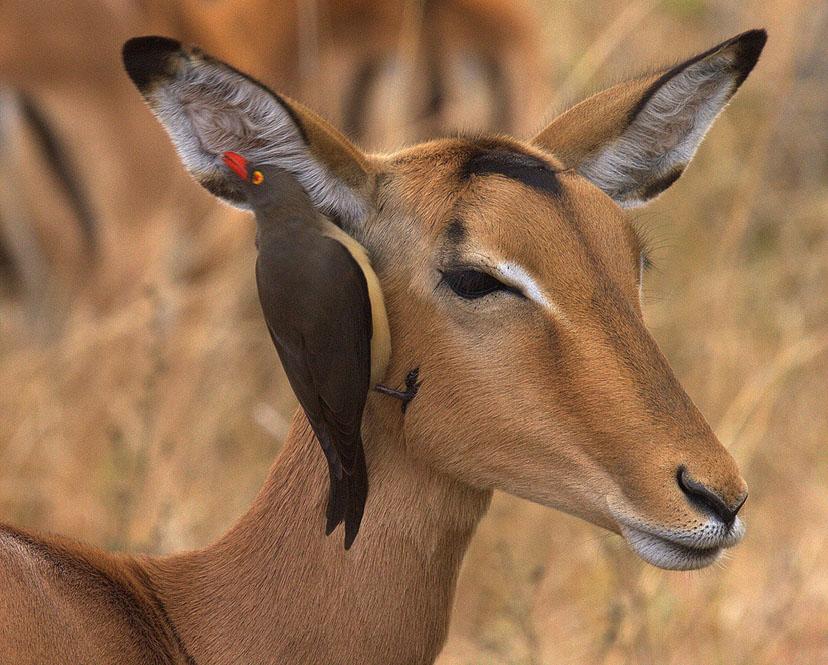

The scenario above is best described by the interaction of what three body systems?
X=respiratory system, Y=circulatory system, Z=reproductive system
X=muscular system, Y=nervous system, Z=immune system
X=circulatory system, Y=immune system, Z=muscular system
X=muscular system, Y=digestive system, Z=circulatory system

A deer hears a predator approaching and begins to run for safety. The deer has primarily engaged what body systems to escape?
nervous, respiratory, and muscular systems
muscular, digestive, and immune systems
respiratory, endocrine, and excretory systems
muscular, reproductive, and circulatory system

The diagram above represents an example of how the body regulates itself. This diagram describes what relationship in body systems?
The circulatory system and nervous system interact to absorb nutrients.
The circulatory system and digestive system interact to defend the body from diseases.
The circulatory system and nervous system interact to maintain homeostasis.
The nervous system and immune system interact for reproduction.
When one side of a plant is not getting enough light, a hormone is produced in the shoot system causing growth on the darker side of the plant. This growth on the darker side causes the plant to bend. This is an example of:
a plant’s ability to reproduce
uptake of water through the plant’s root system
defense from possible predators
a plant’s ability to respond to its environmental conditions
Health-care workers are exposed to many different types of pathogenic and nonpathogenic microorganisms. Which body systems work together to protect the body from pathogens?
Muscular and vascular
Digestive and excretory
Circulatory and immune
Endocrine and reproductive
Leaves are part of a plant’s shoot system. The xylem tissue in leaves transports —
the bacteria needed for nitrogen fixation in root nodules
the wax required to coat the surface of actively growing tissue
the water and minerals that are absorbed by the roots
the oxygen that regulates the rate of carbohydrate production
Plant hormones serve as chemical messengers between cells and tissues. Auxin is a plant hormone that causes the cells on the shady side of a plant shoot to elongate. The response enabled by auxin is known as —
Geotropism
Transpiration
Phototropism
Photosynthesis
Copper is a micronutrient that can be found in soil. Copper is important for reproductive growth in plants and plays an indirect role in chlorophyll production. Which statement correctly describes the interaction that occurs between the root and the shoot systems of plants to allow reproduction to occur?
Copper is produced in the roots when copper-containing compounds are hydrolyzed.
Copper that is absorbed by the roots is transported to reproductive tissues by the shoot system.
The shoot system stores copper for later use by the roots and the reproductive structures.
The shoot system transports copper to the roots after it is taken in through stomata in the leaves.

Some students are instructed to put a celery stalk in a red dye solution for a lab activity. First the students carefully cut the bottom of the stalk with a scalpel. Then they put the stalk in the beaker with the solution and place the beaker on a shelf in the lab room. The next day they check the stalk and make observations. The students note that the leaves at the end of the stalk have changed color from green to red. The students cut across the celery stalk and use a hand lens to see that the small tube openings along the edge of the celery stalk are also red. The cross section is shown below.
How do the plant systems work together to make this movement of liquid possible?
The roots absorb water and minerals and move them up to the stem, while the stem moves food produced in the leaves down to the roots in tiny tubes.
The roots anchor the plant in the soil, and the stem holds the leaves up.
The roots absorb their own water and minerals, while the stem absorbs its water and minerals through the leaves.
The roots lose water vapor to the soil, and the stem loses water vapor through the leaves.
The outermost layer of plant stems in dicotyledons consists of epidermal cells and guard cells that surround openings called stomata. The epidermal cells are usually covered with a waterproof layer that provides protection from injury and water loss. The stomata allow gas exchange. The epidermal cells and stomata have functions similar to those of which two human body systems?
Skeletal and respiratory
Cardiovasular and skeletal
Integumentary and respiratory
Cardiovascular and integumentary

In Holstein cattle the allele for black hair color (B) is dominant over the allele for red hair
color (b), and the allele for polled (P), or lacking horns, is dominant over the allele for having
horns (p).
What is the expected phenotypic ratio of the offspring of a BbPp × BbPp cross if these alleles
sort independently?
16 black/polled : 0 black/horned : 0 red/polled : 0 red/horned
12 black/polled : 0 black/horned : 0 red/polled : 4 red/horned
4 black/polled : 4 black/horned : 4 red/polled : 4 red/horned
9 black/polled : 3 black/horned : 3 red/polled : 1 red/horned

A segment of DNA produces methionine, threonine, histidine, aspartate, and glycine when translated. A substitution mutation occurs and causes the synthesis of the segment as shown. Which is the new peptide chain when the new DNA segment is translated?
Methionine, leucine, histidine, aspartate, glycine
Methionine, phenylalanine, histidine, aspartate, glycine
Methionine, proline, histidine, aspartate, glycine
Methionine, serine, histidine, aspartate, glycine

The model represents the change in the DNA content of a cell during the cell cycle. Which part of the model represents the S phase?
I
II
III
IV
Facial dimples and free earlobes are both considered dominant human traits. What are the expected phenotypes of the offspring of a female with dimples and free earlobes (DDFf) and a male with no dimples and attached earlobes (ddff)?
50% with dimples and free earlobes and 50% with dimples and attached earlobes
50% with dimples and free earlobes and 50% with no dimples and attached earlobes
75% with dimples and free earlobes and 25% with no dimples and attached earlobes
75% with dimples and attached earlobes and 25% with no dimples and free earlobes

Models of the human immunodeficiency virus (HIV) and an animal cell are shown. What is the difference in function of the glycoprotein structures of an HIV virion and the cilia of an animal cell?
The glycoprotein structures are used for attachment, and the cilia are used to move fluids surrounding the cell.
The glycoprotein structures are used to obtain nutrition, and the cilia are used to secrete proteins.
The glycoprotein structures are used to provide physical support for the viral envelope, and the cilia strengthen the cell membrane.
The glycoprotein structures are used for defense, and the cilia are used for locomotion.

What happens in the stage labeled "process 2"?

The results shown in the picture were obtained using a technique known as gel electrophoresis. This technique separates mixtures of DNA. In the picture nine different samples of DNA are compared.
determine the differences in ages of a set of people
identify how closely two individuals are related
determine how effective certain medications are
identify different blood types

The diagram illustrates the activity of vesicles during a cellular process.
Which statement best explains the function of the vesicles?
Delivering packaged materials to the Golgi apparatus for protein synthesis
Exchanging genetic information between the Golgi apparatuses of separate cells
Extracting portions of the Golgi apparatus to be regenerated for growth within the cell
Transporting packaged molecules from the Golgi apparatus to be released out of the cel

The graphs show the reaction rate for an enzyme across a range of temperatures and pH.
Based on these data, this enzyme functions best at what temperature and pH?
Temperature of 27°C and a pH of 4
Temperature of 37°C and a pH of 6
Temperature of 40°C and a pH of 8
Temperature of 50°C and a pH of 10
In humans blood type is determined by the A, B, and O alleles. The A and B alleles are codominant to each other and dominant over the O allele. An individual with the AO genotype and an individual with the BO genotype can produce offspring with which of the following phenotypes?
O only
A or B only
A, B, or O only
A, B, AB, or O

A student used a microscope to study four members of the phylum Ciliophora. Members of this phylum move when propelled by hundreds of tiny cilia.
Although these organisms belong to the same phylum, they are classified as different
families
species
kingdoms
orders
A mutation in which types of cells would only affect the organism and not future generations?
Egg cell and liver cell
Sperm cell and egg cell
Nerve cell and brain cell
Sperm cell and lung cell
Which list correctly identifies characteristics that protists share with animals?
• Motile F • Reproduce sexually • Photosynthetic
• Motile G • Multicellular • Photosynthetic
• Eukaryotic • Motile • Reproduce sexually
Motile • Prokaryotic • Multicellular
An advertisement for a health supplement for dogs claims to build lean muscle and strengthen tendons and ligaments, as well as provide energy. Which two biomolecules must the supplement contain to provide these benefits?
Carbohydrates and lipids
Proteins and carbohydrates
Nucleic acids and carbohydrates
Lipids and nucleic acids

A corn plant produces both male and female flowers. The male flower forms the tassel and the female flower forms the ear of corn. The silks that emerge from the ear are the stigma of the female flower. Each silk leads to an ovule that can become a corn seed.
Which of these must happen for corn seeds to develop on the ear?
More tassels than silks need to be present on the same plant.
Pollen grains must fall from tassels and land on the silks of the ear
Pollen must be transported from the tassel to the silk through the phloem.
The tassels must come into direct contact with the silks of the ear.
Some components of cells are listed.
1. Cytoplasm
2. Nucleus
3. Chloroplasts
4. Cell Wall
5. Cell membrane
Which of the components could be observed using a microscope in a prepared slide of leaf epidermal cells but not in a prepared slide of human cheek cells?
Components 2 and 3 only
Components 3 and 4 only
Components 1, 2, and 3 only
Components 1 and 5 only

A student groups different types of cells as shown.
Which table headings should the student use for the two groups?
1. Animal Cells 2. Plant Cells
1. Prokaryotic Cells 2. Eukaryotic Cells
1. Mobile Cells 2. Motile Cells
1. Fungal Cells 2. Bacterial Cells

This model of the cell cycle includes two arrows that each represent a process in the cycle.
What do the two arrows represent?
Arrow 1 represents prophase, and Arrow 2 represents interphase.
Arrow 1 represents mitosis, and Arrow 2 represents meiosis.
Arrow 1 represents interphase, and Arrow 2 represents mitosis.
Arrow 1 represents meiosis, and Arrow 2 represents prophase.
As part of the nitrogen cycle, animals acquire some amino acids by doing which of the following?
Breathing air
Eating plants
Drinking water
Producing waste

A certain mutation in the gene for hemoglobin results in the red blood cells becoming sticky, rigid, and irregularly shaped. These irregularly shaped red blood cells block the flow of blood throughout the body. A single base mutation is responsible for these irregularly shaped blood cells.
Which of these mutations most likely results in the mutated hemoglobin gene?
Insertion
Deletion
Duplication
Substitution

