Wayground logo

Free Printable Worksheets

Font size

S
M
L
XL
Worksheets

Biology Final Exam

Total questions: 90

Worksheet time: 1hrs 16mins

Name
Class
Date
1.

What are the building blocks of DNA?

a)

ribosomes

b)

amino acids

c)

nucleotides

d)

nucleic acids

2.

Which is NOT a part of a nucleotide?

a)

ribosome

b)

nitrogen base

c)

phosphate

d)

deoxyribose

3.

What does cytosine pair with in DNA?

a)

adenine

b)

uracil

c)

thymine

d)

guanine

4.
Which two processes are involved in protein synthesis?
a)
Replication and Transcription
b)
Replication and Translation
c)
Transcription and Translation
5.
Within the eukaryotic cell, where does transcription occur?
a)
Nucleus
b)
Cytoplasm
c)
Ribosome
6.
Which of the following molecules is made during transcription?
a)
DNA
b)
tRNA
c)
protein
d)
mRNA
7.
Within the cell, where does translation occur?
a)
Nucleus
b)
Cytoplasm
c)
Ribosome
8.
Which of the following bases is found only in RNA?
a)
Adenine
b)
Guanine
c)
Thymine
d)
Uracil
9.
A portion of DNA reads GAG. The corresponding mRNA would be
a)
GUG
b)
GTG
c)
CTC
d)
CUC
10.

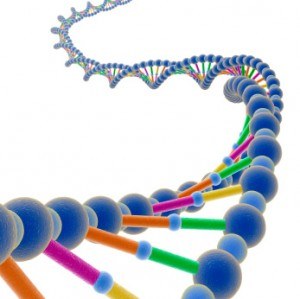
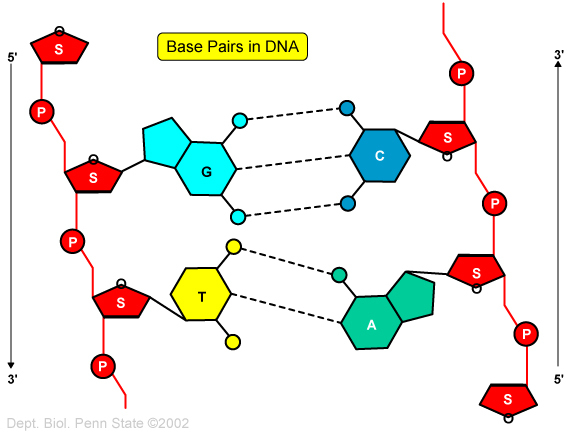
The diagram represents a process that occurs in a DNA molecule. Which best identifies this process?

a)

replication

b)

mutation

c)

translation

d)

transcription

11.

Which represents the correct sequential flow of information during protein synthesis?

a)

DNA→Protein→RNA

b)

RNA→DNA→Protein

c)

DNA→RNA→Protein

d)

RNA→Protein→DNA

12.

When using your codon chart, what sequence can you use to find the correct amino acid?

a)

DNA

b)

mRNA

c)

tRNA

d)

Any of these will do

13.

How many nucleotides make up a codon?

a)

1

b)

3

c)

5

d)

15

14.

How many codons: AAU GCG AUG

a)

9

b)

1

c)

3

d)

15

15.
In pea plants, the tall allele is dominant to the short allele. What key would demonstrate this?
a)
Tall = T
Short = S
b)
Tall = T
Short = t
c)
Tall = t
Short = T
d)
Tall = TT
Short = tt
16.
A heterozygous long-tusked elephant is crossed with a homozygous recessive short-tusked elephant. What is the probability of the offspring having short tusks?
a)
0%
b)
25%
c)
50%
d)
75%
17.
What is the probability of a purple-horned unicorn if a heterozygous pink-horned unicorn is crossed with a heterozygous pink-horned unicorn?
a)
0%
b)
25%
c)
50%
d)
75%
18.
Georgette wants to breed her pet phoenixes, but she isn't sure if the babies will burst into blue flames or red flames. Her documents show that her female phoenix is homozygous dominant for red flames, while her male phoenix is homozygous recessive for blue flames. What color flames will the babies have?
a)
Red
b)
Blue
c)
Purple
d)
50% Red, 50% Blue
19.
A brown-furred ewok has 12 babies with a black-furred ewok. 9 ewok babies have black fur, while 3 ewok babies have brown fur. What are the probable genotypes of the parents?
a)
BB and bb
b)
BB and Bb
c)
Bb and Bb
d)
Bb and bb
20.
Jabba the Hutt has finally decided to settle down and have a family. He has undergone genetic testing and learned that he is heterozygous for Hutt Fungal Syndrome, which is caused by recessive alleles. He is worried that his children might suffer from this syndrome. His Hutt mate has undergone genetic testing and discovered she is homozygous dominant for the syndrome. Should Jabba be worried?
a)
Yes
b)
No
21.
Identify the homozygous dominant genotype:
a)
FF
b)
Ff
c)
ff
22.

Complex molecule that carries genetic information that defines an organism's traits. It is stored in the nucleus.

a)

Protein

b)

DNA

c)

RNA

d)

Glucose nucleic acid (GNA)
23.
Dominant alleles are represented by a:
a)
Male gene
b)
lowercase letter
c)
recessive trait
d)
capital letter
24.
Aa, DD, bB, yy are all examples of
a)
genotypes
b)
phenotypes
25.
In a heterozygous genotype, the ___________ allele takes over in the phenotype.
a)
recessive
b)
dominant
c)
lower case letter
d)
both 
26.
What you see, or the physical appearance.
a)
Genotype
b)
Phenotype
c)
Homozygous
d)
Heterozygous
27.
How are individuals III-2 and II-4 related?
a)
Cousins
b)
Dad and Daughter
c)
Uncle and Niece
d)
Grandpa and Granddaughter
28.
In a pedigree, what shape represents a male?
a)
circle
b)
square
c)
triangle
d)
diamond
29.
Lisa has two grandmothers in this picture.
a)
Mona and Jackie
b)
Marge and Mona
c)
Selma and Jackie
d)
Patty and Selma
30.
How many generations are shown in this pedigree?
a)
1
b)
2
c)
3
d)
4
31.
What do half colored symbols represent?
a)
The individual is a carrier.
b)
The individual expresses the trait.
c)
The individual has both recessive alleles.
d)
The individual has both dominant alleles.
32.
How many chromosomes are shown in a normal human karyotype?
a)
2
b)
12
c)
25
d)
46
33.
Chromosome that is not a sex chromosome
a)
Chromosome
b)
Autosome
c)
Sex Chromosome
d)
Homologous pair
34.
Chart that shows the relationships within a family
a)
Pedigree
b)
Karyotype
c)
T chart
d)
Key
35.
Photograph of chromosomes grouped in ordered pairs
a)
pedigree
b)
Punnett Square
c)
Venn Diagram
d)
Karyotype
36.
a)
Not affected Female
b)
Not affected Male
c)
Affected Male
d)
Affected Female
37.
a)
Not Affected Male
b)
Not Affected Female
c)
Affected Male
d)
Affected Female
38.
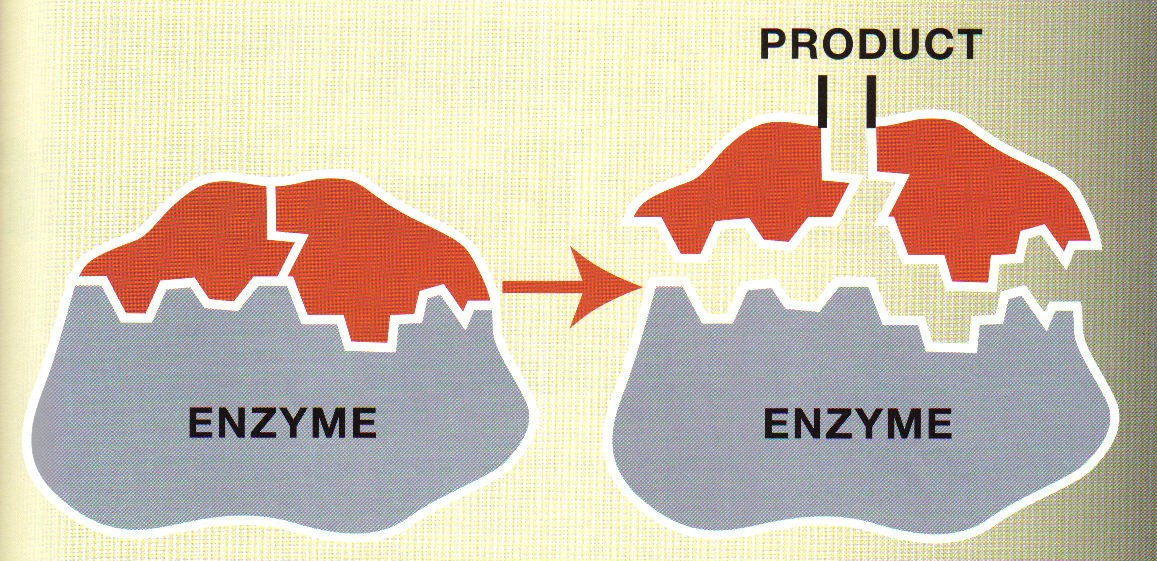
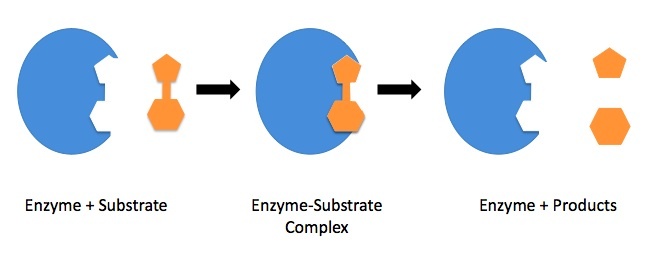
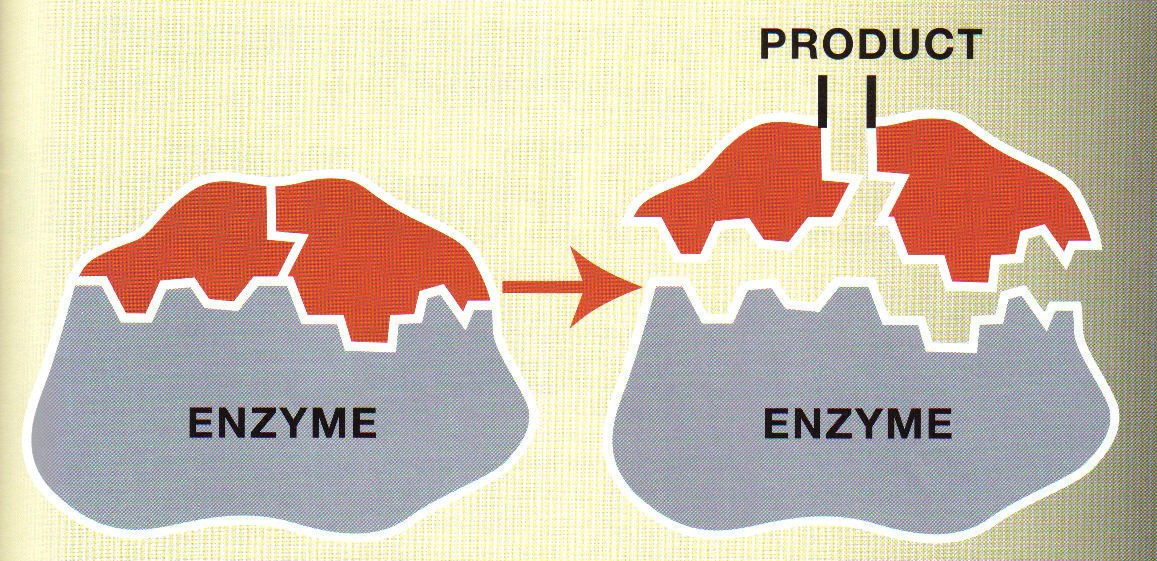
This reaction shows a(n) ____________ reaction
a)
Catabolic
b)
Anabolic
c)
Dehydration Synthesis
d)
Halogenation
39.
The area that the substrate fits into on the enzyme is called the:
a)
Active Site
b)
Allosteric Site
c)
DiSulphide Bridge
d)
β-Pleated Sheet
40.
The current model of enzyme action is referred to as the:
a)
Induced Fit Model
b)
Lock & Key Model
c)
Singer-Nicolson Model
d)
Davson-Danielli Model
41.
Enzymes catalyze reactions by ___________ Activation Energy.
a)
Increasing
b)
Decreasing
42.
Most enzymes have the ending:
a)
-ase
b)
-ose
c)
-ic acid
d)
-ate
43.
The molecule an enzyme is working on is called the:
a)
Substrate
b)
Solvent
c)
Allosteric Inhibitor
d)
CoEnzyme
44.
A receptor site that a molecule can bind to that changes the shape of the active site is called a(n):
a)
Allosteric Site
b)
Active Site
c)
DiSulphide Bridge
d)
MHC Receptor
45.
When a molecule can occupy the same active site as the substrate, a situation called __________________ can result
a)
Competitive lnhibition
b)
Allosteric Regulation
c)
Non-Competitive Inhibition
d)
Feedback Inhibition
46.
A reaction where electrons are moved around is a:
a)
Neutralization
b)
Hydrolysis
c)
RedOx Reaction
d)
Phosphorylation
47.
Enzymes are considered to be 
a)
Lipids
b)
Carbohydrate
c)
Protein
d)
Nucleic Acid
48.
Where do substrates bind on an enzyme?
a)
voltage-gated channels
b)
surface receptor
c)
calcium channels
d)
active site
49.
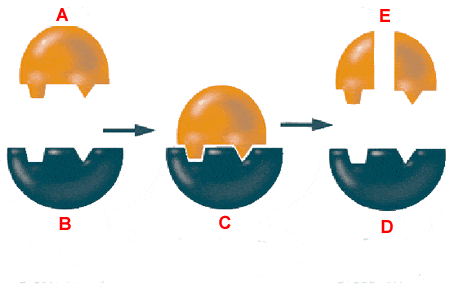
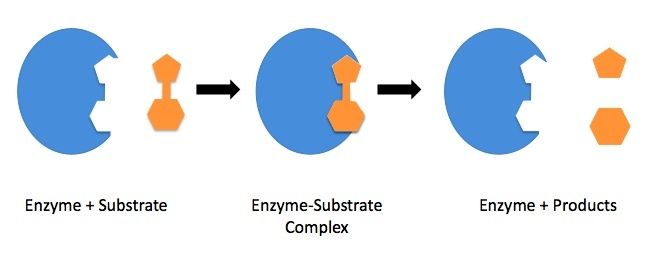
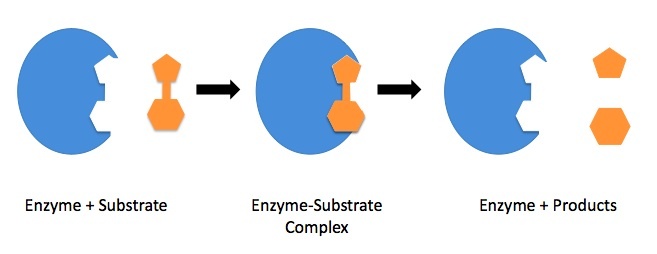
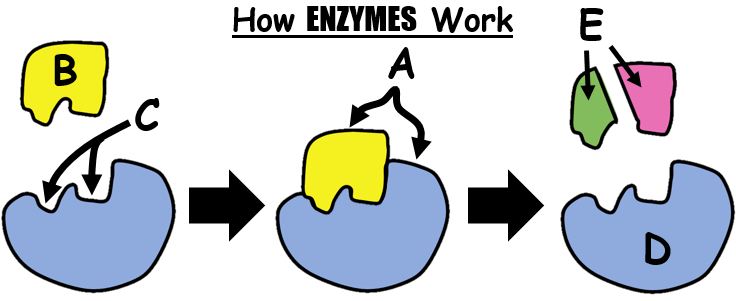
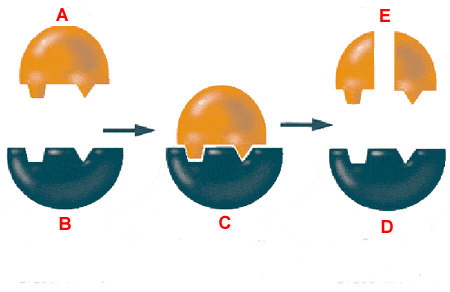
What is structure A?
a)
Substrate
b)
Active site
c)
Enzyme
d)
Products
50.
What is a substance called if it speeds up a chemical reaction?
a)
reusable
b)
catalyst
c)
specific
d)
fragile
51.
Each enzyme only has 1 substrate that will fit its active site.  What is this called?
a)
reusablility
b)
denaturation
c)
specificity
d)
fragility
52.
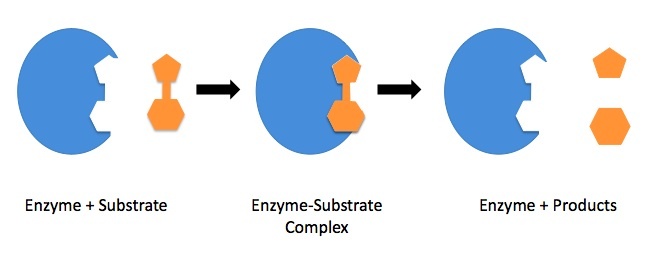
In the diagram, what is letter A? 
a)
product
b)
substrate
c)
enzyme-substrate complex
d)
active site
53.
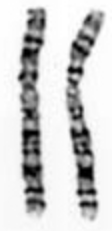
Determine the sex of the individual whose karyotype is displayed in the image.
a)
female
b)
male
54.
Which structure is labeled as A in the diagram?
a)
Centromere
b)
Chromosome
c)
Sister chromatids
55.
Which structure is labeled as B in the diagram?
a)
Centromere
b)
Chromosome
c)
Sister chromatids
56.
Which structure is labeled as C in the diagram?
a)
Centromere
b)
Chromosome
c)
Sister chromatids
57.
What is the structure that holds the sister chromatids together called?
a)
homologous chromosome
b)
centromere
c)
chromatid
d)
nondisjunction
58.
Nondisjunction can result in 
a)
trisomy conditions
b)
monosomy conditions
c)
additional sex chromosomes
d)
all of these
59.
A pair of identical chromosomes shown in a karyotype, one inherited from mom, and one inherited from dad are called
a)
sister chromotids
b)
centromeres
c)
homologous chromosomes
d)
autosomes
60.
A sperm contains
a)
Both an X and a Y chromosome
b)
Two X chromosomes
c)
An X OR a Y chromosome
d)
only a Y chromosome
61.
What makes this individual's karyotype not normal?
a)
An extra sex chromosome
b)
An extra autosome
c)
A missing sex chromosome
d)
A missing autosome
62.
Turner's Syndrome has a karyotype notation of
a)
47XX+21
b)
47XXY
c)
45XO
d)
44XX
63.
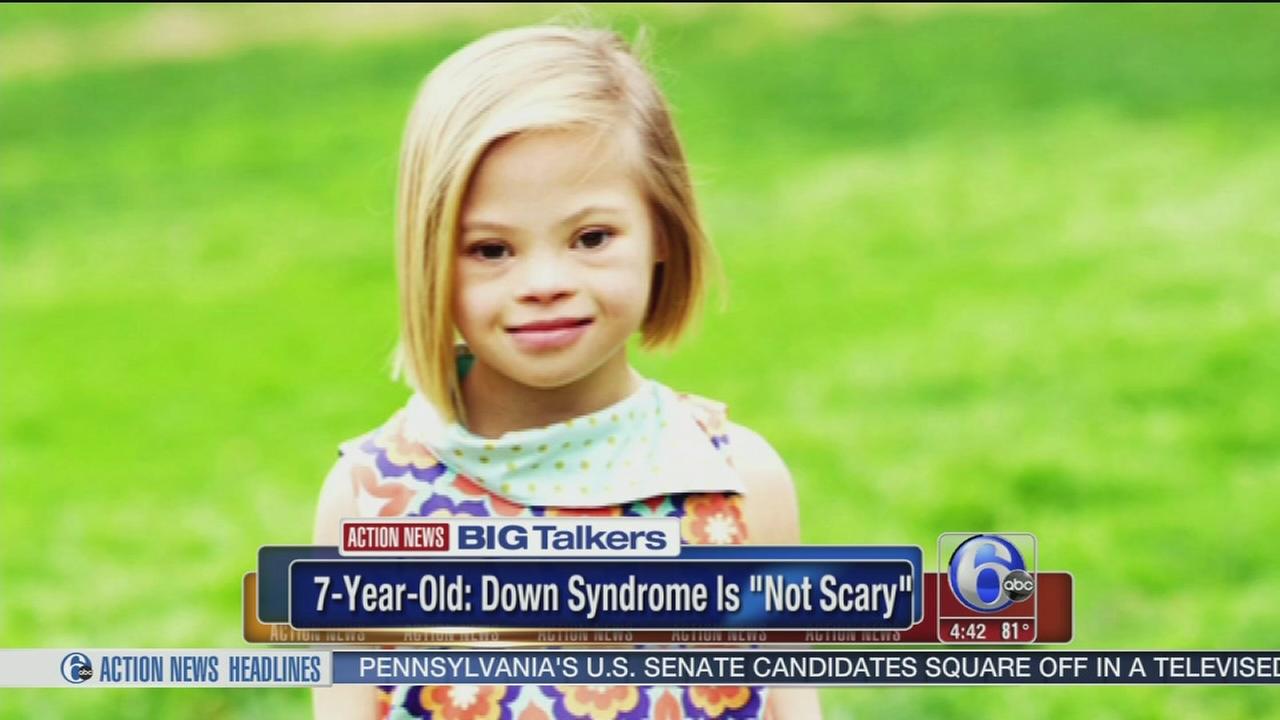
Down's syndrome occurs because of a(n)
a)
missing sex chromosome
b)
extra sex chromosome
c)
additional 21st chromosome
d)
additional 18th chromosome
64.
Klinefelter's Syndrome has the karyotype notation of 
a)
47XX+21
b)
47XXY
c)
45XO
d)
44XX
65.
Chromosome pairs 1-22 are referred to as
a)
sex chromosomes
b)
sister chromatids
c)
a karyotype
d)
autsomes
66.
A picture of paired chromosomes is a
a)
sister chromatid
b)
centromere
c)
syndrome
d)
karyotype
67.
Which domain is capable of living in extreme environments like hot springs, geysers, or very salty waters?
a)
Bacteria
b)
Archaea
c)
Eukarya
68.
Which domain includes all animals and plants?
a)
Archaea
b)
Eukarya
c)
Bacteria
69.
To say that an organism is heterotrophic means...
a)
it cannot reproduce asexually
b)
it cannot make its own food
c)
it cannot breathe oxygen gas
70.
True or False: All cells have DNA.
a)
True
b)
False
71.
What is the genus name here:
Canis lupus
a)
Canis
b)
lupus
72.
What is classification?
a)
organizing things into groups according to shared characteristics
b)
making a list of organisms
c)
the process of identifying different types of animals
d)
the study of animals
73.
Which organisms are closely related?
a)
Equus ceballas (horse) & Equus burchellii (zebra)
b)
Cyanea artica (jellyfish) & Asterias rubens (sea star)
c)
Naja naja (cobra) & Crotalus atrox (rattlesnake)
d)
Alligator mississippiensis (alligator) & Crocodylus porosus (crocodile)
74.
The grizzly bear is most related to the
a)
black bear
b)
panda bear
c)
fox
d)
sea star
75.
If two organisms are in the same phylum, they must also be in the same
a)
class
b)
species
c)
family
d)
kingdom
76.
A wolf's scientific name is Canis rufus. Which genus does it belong to?
a)
Canis
b)
rufus
c)
wolf
d)
animal
77.
Which of the following is NOT true when comparing scientific names and common names?
a)
Scientific names vary from place to place.
b)
Common names vary from place to place.
c)
Scientific names are in Latin.
d)
There can be multiple common names for one organism.
78.
The method of naming organisms by using two names is known as
a)
binomial nomenclature
b)
dinomial menoclature
c)
dichotomous naming
d)
the scientific method
79.
Who first proposed binomial nomenclature as a way of classifying organisms?
a)
Carl Linneaus
b)
Charles Darwin
c)
Albert Einstein
d)
Francis Crick
80.
The science of classifying and naming organisms is 
a)
taxonomy
b)
grouping
c)
anatomy
d)
evolution
81.
What is the most specific (smallest) level of classification?
a)
family
b)
domain
c)
species
d)
linneaus
82.
Which of the following best describes a DNA molecule?
a)
double helix
b)
contains ribose
c)
made of amino acids
d)
contains Uracil
83.
Which 2 molecules form the sides (backbone) of the DNA ladder?
a)
deoxyribose sugar and adenine
b)
deoxyribose sugar and a hydrogen bond
c)
deoxyribose sugar and the nucleus
d)
deoxyribose sugar and phosphate
84.
Nitrogenous bases are joined by which type of bond?
a)
polar bonds
b)
ionic bonds
c)
covalent bonds
d)
hydrogen bonds
85.
What does DNA stand for?
a)
Deoxyribonucleic acid
b)
Denitrogenous acid
c)
Deribonucleic acid
d)
Diribonucleic acid
86.
What are the three components of a nucleotide?
a)
sugar, hydrogen, nitrogen base
b)
sugar, oxygen, nitrogen base
c)
sugar, phosphate, nitrogen base
d)
sugar, phosphate, protein
87.

What is shown in the image above?

a)

Homologous structures

b)

Vestigial structures

c)

Analogous structures

d)

Embryological structures

88.

Over time, it was more beneficial for horses to have larger bodies and longer legs. Looking at the fossil record, we can see that horses have increased in size. Which pattern of natural selection does this best illustration?

a)

Stabilizing selection

b)

Directional selection

c)

Disruptive selection

89.

Due to human hunting of rhinos, their population has decreased dramatically and the allele frequencies within their population have shifted. Similar to what happens with a natural disaster, this is an example of...

a)

Gene flow

b)

Mutation

c)

Founder's effect

d)

Bottleneck effect

90.

Emigration and immigration are examples of...

a)

Genetic drift

b)

Gene flow

c)

Mutation

d)

Natural selection