wayground logo

Free Printable Worksheets

NEW

Font size

S
M
L
XL
Worksheets

BIO SEMESTER 2 FINAL EXAM

Total questions: 78

Worksheet time: 3580secs

Name
Class
Date
1.
Organisms that break down dead plants and animals into chemical nutrients that are released back into the soil, air and water
a)
Decomposers
b)
producers
c)
consumers
2.
A temporary union of two organisms for the purpose of DNA transfer.
a)
Conjugation
b)
Transformation
c)
Transduction
3.
The transfer of a DNA segment from a nonfunctional donor cell to that of a functional recipent cell.
a)
Transformation
b)
Transduction
c)
Conjugation
4.
Study of bacteria, archaeabacteria, viruses, unicellular eukaryotes
a)
microbiology
b)
histology
c)
mycology
5.
A form of asexual reproduction in which one cell divides to form two identical cells.
a)
binary fission
b)
meiosis
c)
budding
6.
Transfer of genetic material through a virus called a bacteriophage.
a)
Transduction
b)
Conjugation
c)
Transformation
7.
spiral, helical, or corkscrew-shaped bacterium
a)
spirillum
b)
coccus
c)
bacillus
8.
a microscopic, noncellular particle, composed of a nucleic acid core and a protein coat called the capsid; obligate parasite
a)
virus
b)
bacteria
c)
saphrophyte
d)
protist
9.
a viral reproductive cycle in which copies of a virus are made within a host cell, which then bursts open, releasing new viruses
a)
lytic cycle
b)
lysogenic cycle
10.
A cell that does not have an enclosed nucleus nor membrane bound organelles
a)
prokaryotic cell
b)
eukaryotic cell
11.
A cell characterized by the presence of a nucleus and other membrane-bound organelles. It can be unicellular or multicellular.
a)
eukaryotic cell
b)
prokaryotic cell
12.
A cell characterized by the presence of a nucleus and other membrane-bound organelles. It can be unicellular or multicellular.
a)
eukaryotic cell
b)
prokaryotic cell
13.
Name this bacteria shape
a)
coccus
b)
bacillus
c)
spirillum
14.

The bacteria shape seen in the picture is

a)

bacillus

b)

coccus

c)

spirilla

15.
Which protist has an eyespot?
a)
Amoeba
b)
Volvox
c)
Euglena 
d)
Paramecium 
16.
How are protist classified? 
a)
How the eat
b)
How they reproduce 
c)
Where they live
d)
How they move
17.

What type of cells are Protists?

a)

Prokaryote

b)

Eukaryote

18.

What are Protozoans?

a)

animal-like protist

b)

plant-like protist

19.

Slime molds are what type of protist

a)

fungi-like

b)

plant-like

c)

animal-like

20.
Hairlike projections that extend from the plasma membrane and are used for locomotion (i.e., paramecium)
a)
Cilia
b)
Flagella
c)
Pseudopod
21.
a very large, diverse group of organisms, that are plant-like, fungi-like, and the animal-like.
a)
Protists
b)
Eukaryotes
c)
Prokaryotes
22.
Protozoans that have no shape; pseudopods provide locomotion by the pushing movements of the endoplasm towards the ectoplasm
a)
Amoebas
b)
Euglena
c)
Paramecium
23.
Why are algae not considered plants?
a)
They lack true tissues.
b)
They don't photosynthesize.
c)
They lack chloroplasts.
24.
Which term describes the concept of how the environment impacts individual organisms in a population and determines which desirable traits are passed down to the next generation?
a)
Theory of descent with modification
b)
Theory of Environmental Determinism
c)
Theory of natural selection
d)
Common Ancestry
25.
Which term is used to support Darwin’s theory of evolution and explains that only the the organisms best suited to their environment will survive?
a)
common ancestry
b)
survival of the fittest
c)
overpopulation
26.
Similar structures that have similar functions in different organisms are used to support common ancestry.
a)
Structural homology
b)
Molecular Similarity
c)
Vestigial Structures
d)
Fossil Record
e)
Comparative Embryology Comparative Embryology
27.

Matching DNA sequences between organisms are used to support common ancestry.

a)

Structural homology

b)

Molecular Similarity

c)

Vestigial Structures

d)

Fossil Record

e)

Comparative Embryology

28.

Remnants of ancestral organisms that no longer provide essential functions are used to support common ancestry.

a)

Structural homology

b)

Molecular Similarity

c)

Vestigial Structures

d)

Fossil Record

e)

Comparative Embryology

29.

There is a progression of simple creatures to more complex creatures as you move up the geological column.

a)

Structural homology

b)

Molecular Similarity

c)

Vestigial Structures

d)

Fossil Record

e)

Comparative Embryology

30.

The female part of the flower is known as the ____.

a)

stamen

b)

anther

c)

filament

d)

Carpel/pistil

31.
The male part of the flower is known as the _____.
a)
stamen
b)
pistil
c)
ovary
d)
petal
32.
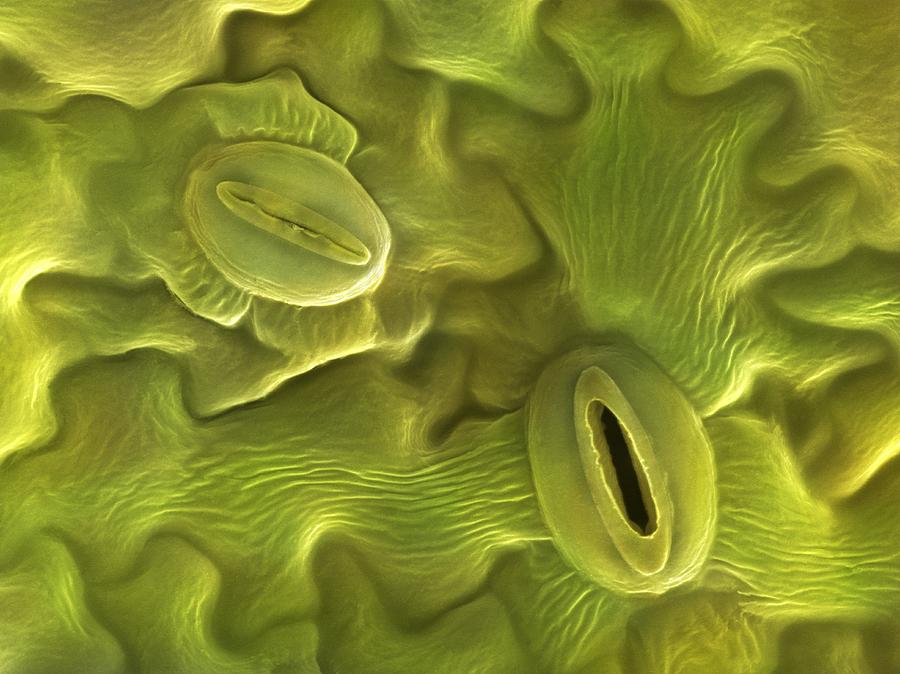
___ opens and closes the stomata.
a)
Guard cells
b)
Xylem
c)
Roots
d)
Phloem
33.
Both the xylem and phloem are considered-
a)
Stomata
b)
Leaves
c)
Roots
d)
Vascular tissue
34.
Opening that allows gas exchange
a)
Stomata
b)
Leaves
c)
Roots
d)
Vascular tissue
35.

How are plants classified into Phyla?

a)

PRESENCE of vascular tissue

b)

Method of asexual reproduction

c)

Size of mature plants

d)

Method of seed dispersal

36.

What is the study of plants?

a)

mycology

b)

botany

c)

taxonomy

d)

histology

37.
The scientific name for an organism includes which taxa?
a)
class and family 
b)
genus and species 
c)
domain and kingdom 
d)
kingdom and phylum 
38.
The science of classifying and naming organisms is ______________.
a)
evolution
b)
taxonomy
c)
grouping
d)
scientific names
39.
The 8 levels of classification, from most broad to most specific are ...
a)
Domain, Genus, Family, Order, Class, Phylum, Kingdom, Species
b)
Domain, Species, Kingdom, Genus, Phylum, Family, Class, Order
c)
Domain, Kingdom, Phylum, Class, Order, Family, Genus, Species
d)
Order, Kingdom, Species, Domain, Phylum, Family, Class, Genus
40.
Term given to describe the 2 name naming system is:
a)
dichotmous key
b)
binomial nomenclature
c)
2 scientific names
d)
binomial key
41.
original chromosome
ABC-DEF
mutated chromosome
AC-DEF
This is a _____________ mutation.
a)
frameshift
b)
point
c)
deletion
42.
A type of substitution in which no  amino acids change is called 
a)
Missense
b)
Nonsense
c)
Silent
d)
Deletion
43.
A frameshift mutation would result from...
a)
a base deletion only
b)
a base substitution only
c)
either an insertion or deletion of a base
d)
a base insertion only
44.
What is a Gene?
a)
A segment of RNA that encodes for a protein
b)
A chromosome
c)
A segment of DNA that encodes for a protein
d)
Your genome
45.
Normal-
GAG-CTC-GAC-AGA
Mutant
GAG CTC-CAC-AGA
a)
no mutation
b)
substitution
c)
insertion
d)
deletion
46.
Where does glycolysis take place?
a)
Cytoplasm
b)
Stroma
c)
Thylakoid
d)
Mitochondria
47.
Where does aerobic respiration take place?
a)
Cytoplasm
b)
Mitochondria
c)
Stroma
d)
Thylakoid
48.
Which type of respiration occurs in the presence of oxygen?
a)
Aerobic
b)
Anaerobic
49.
Glucose is broken down during which process?
a)
Calvin cycle
b)
Glycolysis
c)
Krebs Cycle
d)
Photosynthesis 
50.

What are the two products of aerobic respiration?

a)

Glucose & oxygen

b)

Carbon dioxide & water

c)

Lactic acid

d)

Carbon monoxide

51.
The overall goal of cellular respiration is to make:
a)
Glucose
b)
ATP
c)
Oxygen
d)
Water
52.
What are the two reactants of cellular respiration?
a)
C6H12O6 & 6CO2
b)
6 CO2 & 6H2O
c)
C6H12O& 6O2
d)
6CO2 & 6O2
53.
What is the total net gain of ATP at the end of aerobic respiration?
a)
2 ATP
b)
34 ATP 
c)
36 ATP
d)
38 ATP
54.

Which organelle performs PHOTOSYNTHESIS?

a)

Chloroplast

b)

Mitochondria

55.
Which of the following is the correct equation for PHOTOSYNTHESIS?
a)
CO+ light + H2O --> O+ Sugar
b)
CO+ sugar + H2O --> O+ light
c)
O2 + light + H2O --> CO+ Sugar
d)
CO+ O2 + H2O --> Light+ Sugar
56.
What process occurs when light energy is captured in autotrophs and converted into sugar?
a)
Photosynthesis
b)
Cellular Respiration
57.
What is the ultimate ORIGINAL source of energy for living things
a)
Sugar
b)
Sun
c)
Moon
d)
Carbon Dioxide
58.

What is the pigment in chloroplasts that catalyzes photosynthesis?

a)

Chlorosynthesis

b)

Chlorophyll

c)

ADP

d)

Electron Transport

59.
What are the products of photosynthesis?
a)
water and carbon dioxide
b)
oxygen and glucose
c)
oxygen and carbon dioxide
d)
oxygen and water
60.
Which gas is removed from the atmosphere during photosynthesis?
a)
hydrogen
b)
oxygen
c)
nitrogen
d)
carbon dioxide
61.
Fungi are made up of filaments known as _________, which allow the fungus to digest substances and absorb nutrients.
a)
Hyphae
b)
Spores
c)
Roots
d)
Fruiting Bodies
62.
True or False: Spores are used for both asexual and sexual reproduction in fungi.
a)
True
b)
False
63.
Organisms such as fungi return chemicals to the soil and the atmosphere and are called . . 
a)
Autotrophs
b)
Decomposers
c)
Photosynthetic
d)
Prokaryotes
64.

Organisms from which kingdom are most likely to chemically digest their food outside their bodies?

a)

Fungus

b)

Plant

c)

Protists

d)

Animal

65.

Some plant roots grow with mycorrhizal fungi. The fungi absorb water and minerals and pass them on to the plant and receive carbohydrates from the plant. This is an example of -

a)

predation

b)

competition

c)

mutualism

d)

parasitism

66.
What is an ecological model of the relationships that form a network of complex interactions among organisms in a community from producers to decomposers?
a)
food web
b)
an ecosystem
c)
food chain
d)
a population
67.
What does a food web represent?
a)
All connections of energy flow throughout all organisms in a habitat.
b)
The specific ways that mutualism is carried out.
c)
A single pathway or energy flow between organisms. 
d)
How carnivores get their food. 
68.
diagram that shows the energy available to each trophic level in an ecosystem; 10% is passed on to upper levels, the rest is lost as heat
a)
succession 
b)
cellular respiration
c)
energy pyramid
d)
biochemical cycle
69.
a relationship between two in which one species, the predator, feeds on the other species, the prey
a)
chemosynthesis
b)
predation
c)
cellular respiration 
d)
commensalism
70.
Study of interactions between organisms and their environment 
a)
niche
b)
community 
c)
ecology
d)
ecosystem
71.
symbiotic relationship in which one organisms benefits and the other organism is not affected
a)
invasive (non-native) species
b)
mutualism 
c)
nitrogen fixation
d)
commensalism
72.
Members of a species in a defined area
a)
Ecosystem
b)
community
c)
biodiversity
d)
population
73.
Non-living factor that affects an ecosystem
a)
biotic factor
b)
abiotic factor
c)
food chain 
d)
biome
74.
All the organisms in a particular location, including their nonliving environment
a)
ecosystem
b)
carnivore
c)
niche
d)
population
75.
Nitrogen fixation processes nitrogen from which of the following sources?
a)
lightning
b)
fertilizers
c)
dead plants
d)
atmosphere
76.
What is it called when plants give off water vapor as a waste product?
a)
condensation
b)
evaporation
c)
sublimation
d)
transpiration
77.

What is the role of denitrifying bacteria

a)

change nitrate back into nitrogen gas

b)

change nitrogen gas into nitrate

c)

absorb carbon dioxide in the soil

d)

release oxygen gas into the atmosphere

78.
The step in the nitrogen cycle where bacteria convert ammonia (NH3) to nitrate (NO3-) is:
a)
nitrification
b)
ammonification
c)
nitrogen fixation
d)
assimilation