Worksheets
HW R.1 Due by 11:59pm on 5/30
Total questions: 168
Worksheet time: 3hrs 49mins
Which cell type(s) can be multicellular?
Prokaryotes, but not eukaryotes
Eukaryotes, but not prokaryotes
Both prokaryotes and eukaryotes
Neither prokaryotes or eukaryotes
Which cell type(s) has DNA?
Prokaryotes, but not eukaryotes
Eukaryotes, but not prokaryotes
Both prokaryotes and eukaryotes
Neither prokaryotes or eukaryotes
Which cell type(s) have a nucleus?
Prokaryotes, but not eukaryotes
Eukaryotes, but not prokaryotes
Both prokaryotes and eukaryotes
Neither prokaryotes or eukaryotes
Which cell type(s) is small and simple?
Prokaryotes, but not eukaryotes
Eukaryotes, but not prokaryotes
Both prokaryotes and eukaryotes
Neither prokaryotes or eukaryotes
Which cell type(s) has a cell membrane?
Prokaryotes, but not eukaryotes
Eukaryotes, but not prokaryotes
Both prokaryotes and eukaryotes
Neither prokaryotes or eukaryotes
Which cell type(s) has lots of organelles like chloroplast, ER, golgi body, mitochondria, etc?
Prokaryotes, but not eukaryotes
Eukaryotes, but not prokaryotes
Both prokaryotes and eukaryotes
Neither prokaryotes or eukaryotes
Which cell type(s) is inorganic?
Prokaryotes, but not eukaryotes
Eukaryotes, but not prokaryotes
Both prokaryotes and eukaryotes
Neither prokaryotes or eukaryotes
Plants and animals are made up of what cell type?
Prokaryotes, but not eukaryotes
Eukaryotes, but not prokaryotes
Neither prokaryotes or eukaryotes
Protists are made up of what cell type?
Prokaryotes, but not eukaryotes
Eukaryotes, but not prokaryotes
Neither prokaryotes or eukaryotes
Bacteria are made up of what cell type?
Prokaryotes, but not eukaryotes
Eukaryotes, but not prokaryotes
Neither prokaryotes or eukaryotes
Which cell type means before or no nucleus?
Prokaryotes, but not eukaryotes
Eukaryotes, but not prokaryotes
Neither prokaryotes or eukaryotes
Which cell are you?
Prokaryotes, but not eukaryotes
Eukaryotes, but not prokaryotes
Neither prokaryotes or eukaryotes
Which cell type(s) has ribosomes?
Prokaryotes, but not eukaryotes
Eukaryotes, but not prokaryotes
Both prokaryotes and eukaryotes
Neither prokaryotes or eukaryotes
Which of the following can be found in all cell types (animal, plant, and bacteria)? Check all that apply.
Cell membrane
Ribosome
Nucleus
Cell wall
Which is not part of the cell theory?
All cells have a cell wall and a nucelus
All living things are composed of one or more cells
Cells are the most basic unit of life
Cells came from the reproduction of pre-existing cells

What cell part is number 1 pointing to?
nucleus
cell wall
ribosome
golgi body
What cell part is number 2 pointing to?
cell membrane
cell wall
ribosome
capsule
What cell part is number 3 pointing to?
DNA in the nucleoid region
DNA in the nucleus
ribosome
capsule
What cell part is number 4 pointing to?
cell wall
cell membrane
ribosome
capsule
What cell part is number 5 pointing to?
cell wall
cell membrane
cytoplasm
capsule
What cell part is number 6 pointing to?
flagella
nucleus
cytoplasm
capsule
What is a cell named after?
the "cell" that a monk lives in at a monestary
a jail "cell"
Crazy Elephants Like Lollipops
Robert Cell because he first discovered cells
What scientist first look at the cells of cork under a microscope?
Alisha Kennell
Anton van Leeuwenhoek
Robert Hooke
Bill Nye
What scientist looked at single celled swimming protists and called them "animalcules"?
Alisha Kennell
Anton van Leeuwenhoek
Robert Hooke
Bill Nye
Bacteria are always harmful to humans.
False
True
Which 3 molecules can diffuse easily across a membrane?
glucose
oxygen
starch
water
What can't some molecules diffuse?
some molecules like starch are too big
some molecules like glucose are too big
some molecules like starch are too small
the cell membrane doesn't allow anything to diffuse

What is A?
diaphragm
lungs
trachea
bronchi
What is B?
diaphragm
alveoli
trachea
bronchi
What is E?
diaphragm
alveoli
trachea
bronchioles
Where does gas exchange occur in the lungs?
larynx
diaphragm
bronchi
alveoli
Which process does not occur in the nasal cavity?
Trapping of large foreign items in nasal hair
Exchange of gasses
Humidification and warming of inhaled air
Sense of smell and taste
Which part of the respiratory system is responsible for a human's voice?
larynx
alveoli
trachea
bronchioles
What is the pathway that air goes from the outside into a person's respiratory system?
Larynx, pharynx, trachea, alveoli, bronchi, bronchioles
Pharynx, larynx, trachea, bronchi, bronchioles, alveoli
Pharynx, larynx, bronchioles, trachea, alveoli, bronchi
Pharynx, bronchioles, trachea, larynx, bronchi, alveoli
What 2 statements are correct about how gasses move within the lung alveoli.
Oxygen leaves the lungs and goes into the blood to go to the body
Oxygen leaves the blood and goes into the lungs to be exhaled
Carbon dioxide leaves the lungs and goes into the blood to go to the body
Carbon dioxide leaves the blood and goes into the lungs to be exhaled
Complete the blank:
Glucose + Oxygen → ________________ + Water + Carbon Dioxide
cellular respiration
mitochondria
sunlight
ATP
In order for starch to diffuse, it must be
digested by enzymes into simpler sugars
digested by enzymes into amino acids
diffused across the phospholipids
separated by water molecules
What is the waste gas you exhale?
oxygen
carbon monoxide
carbon dioxide
urine
Why do you need oxygen?
to survive!
to breathe, duh
to do cellular respiration and release ATP from glucose
to stay healthy and to grow big and strong
The main function of the human digestive system is to
rid the body of cellular waste materials
break down organic molecules so they can enter cells
break down glucose in order to release energy
change amino acids into proteins and carbohydrates
Food is
organic
inorganic
Fill in the spaces in the sentence below...
Organic compounds, such as proteins and starches, are too __A__ to diffuse into cells. Proteins are digested into __B__ and starches are digested into __C__.
A--large; B--simple sugars; C--amino acids
A--small; B--simple sugars; C--amino acids
A--large; B--amino acids; C--simple sugars
A--small; B--amino acids; C--simple sugars
In the cells of the human body, oxygen molecules are used directly in a process that
releases energy
digests fats
builds carbohydrate molecules
alters the genetic traits of the cell
Why do you need to eat food?
because it tastes good
because we are autotrophs
because we get energy from the chemical bonds in our food
because we need to make oxygen for plants
What process is NOT something that your mouth does during eating and digestion?
The tongue absorbs nutrients into blood
Saliva moistens food to make swallowing easy
Mouth enzymes break down carbohydrates into simple sugars
Teeth chew and break food into small pieces
What does amylase do?
Break down proteins into amino acids
Break down complex sugars into simple sugars
Break down fats into glycerol and fatty acids
Break down nucleic acids
What does pepsin do?
Break down proteins into amino acids
Break down complex sugars into simple sugars
Break down fats into glycerol and fatty acids
Break down nucleic acids
What does lipase do?
Break down proteins into amino acids
Break down complex sugars into simple sugars
Break down fats into glycerol and fatty acids
Break down nucleic acids
Where does the protein amylase start breaking down carbohydrates?
the pancreas
the intestines
the stomach
the mouth
Where does the protein pepsin start breaking down proteins?
the pancreas
the intestines
the stomach
the mouth
What organism can you thank for helping you digest fiber in your intestines?
plants
bacteria
eukaryotes
protists
What plant did Mendel use to study genetics?
peas
corn
flowers
apricots
If purple flowers show up more than white, that could mean that the purple color is....
recessive
dominant
Which of the following genotypes is homozygous dominant?
Tt
tt
TT
T
The product of reproduction of an animal or plant is known as ___.
a parent
an organism
an offspring
a kitten
Which type of reproduction involves offspring receiving traits from two parents?
asexual
sexual
If Mendel's first experiment involved cross-pollinated a homozygous round pea plant and a homozygous wrinkled pea plant, what would the genotypes of the parents have to be?
RR x Rr
Rr x Rr
rr x rr
RR x rr
A trait that is not expressed when a dominant allele is present.
Recessive
Homozygous
DNA
Dominant
The combination of alleles (ex: PP, Pp, and pp).
DNA
Phenotype
Genotype
Nucleus
Which of the following genotypes is homozygous recessive?
Tt
tt
TT
T
Which of the following genotypes is heterozygous?
Tt
tt
TT
T


Refer to the illustration. The child in box 1 in the Punnett square would
be homozygous for freckles
be homozygous recessive
be heterozygous for freckles
not have freckles


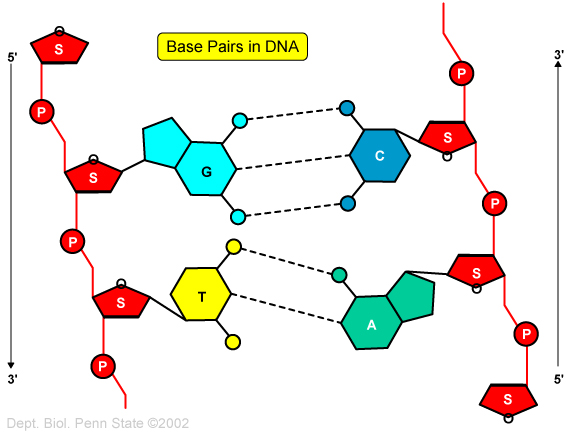
Nucleotides are joined by which type of bond?
polar bonds
ionic bonds
covalent bonds
hydrogen bonds

What important material is contained in the nucleus?
Jeans
Digestive enzymes
DNA
Nuclear ladders

The genotype for a yellow plant is...
Where are proteins synthesized?
Golgi body
Mitoichondrion
Chromosomes
Ribosomes




Which came first?
Oxygen
Photosynthetic bacteria
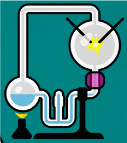
Miller/Urey and other scientists studying the origin of life have shown that:
Formation of life on early Earth required material from space
Simple cells can be produced in a laboratory using spontaneous generation
Oxygen and water were present in the atmosphere to support life
Organic molecules like amino acids and nucleotides could be produced from abiotic/inorganic molecules
In Stanley Miller's and Harold Urey's experiment what chemical was intentionally left out?
oxygen
hydrogen
methane
ammonia




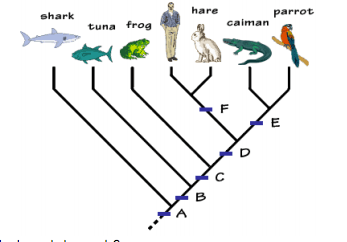


The first organisms to have likely inhabited Earth are
autotrophic eukaryotes
heterotrophic eukaryotes
autotrophic prokaryotes
heterotrophic prokaryotes
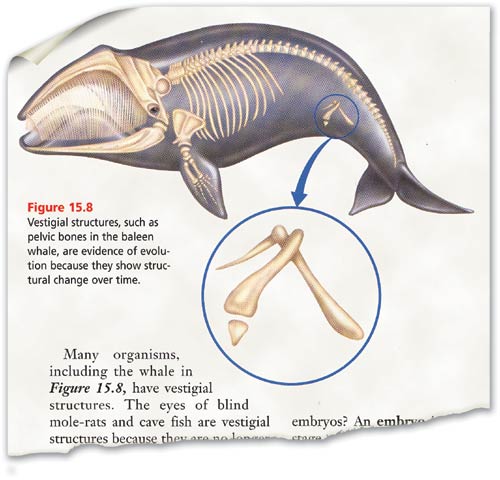
A human's wisdom teeth and a whale's pelvis seem to have no purpose in the life of an organism but still exist. What are these examples of?
vestigial organs
high level of reproductive fitness
mutations
selective breeding
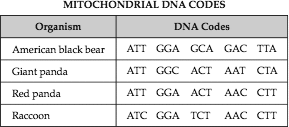
Two nucleotide sequences found in 2 different species are almost exactly the same. This suggests that these species
are evolving into the same species
contain identical DNA
may have similar evolutionary histories
have the same number of mutations
Which group of organisms is believed to be among the earliest to evolve on Earth?
dinosaurs and birds
humans and other mammals
single celled organisms like bacteria
fish and sea creatures
According to the heterotroph hypothesis, which statement is true?
Autotrophs do photosynthesis and make oxygen
Complex heterotrophs do cellular respiration and make carbon dioxide
Simple heterotrophs do fermentation and make carbon dioxide
All of the above
According to the heterotroph hypothesis, which came first?
autotrophs
advanced heterotrophs
early heterotrophs
fish
What was early Earth like?
hot temperatures with fire and volcanoes
poisonous and smelly gasses like methane and carbon monoxide, but no oxygen
rain, lightening, storms, and water filled oceans
All of the above
Scientists have now suggested that the hippopotamus is a relative of the whale. Earlier studies placed the hippo as a close relative of wild pigs, but recent studies have discovered stronger evidence for the connection to whales. This information suggests that
genetic engineering is used to make new species
structural evidence of looking at bones is the strongest evidence for evolution
evolution did not occur in the hippopotamus
scientific explanations are tentative and can be changed with new information
Scientists have now suggested that the hippopotamus is a relative of the whale. Earlier studies placed the hippo as a close relative of wild pigs, but recent studies have discovered stronger evidence for the connection to whales. This information suggests that
genetic engineering is used to make new species
structural evidence of looking at bones is the strongest evidence for evolution
evolution did not occur in the hippopotamus
scientific explanations are tentative and can be changed with new information
Evolutionary relationships between different species is most accurately determined by comparing their
environments in which they live
the structure of their cells
the sequence of their DNA bases
the shape of their leaves

Based on the data above, which two species are most closely related?
Species A and B
Species A and C
Species B and C
Species BC and Z
The remains or trace of an organism that lived long ago is called...
fossil
species
extinct
endangered
An organism that eats another organism to get energy
Producer
Consumer
Decomposer
Prey
An organism that makes its own food through the process of photosynthesis.
decomposer
carnivore
producer
herbivore
An organism that breaks down dead organisms and puts the nutrients back into the soil.
consumer
producer
decomposer
omnivore
An animal that gets its energy from eating only plants.
producer
herbivore
carnivore
omnivore
An animal that gets its energy from eating only other animals.
decomposer
omnivore
herbivore
carnivore
An animal that gets its energy from eating both plants and animals.
decomposer
producer
omnivore
prey
An animals that hunts and eats other animals.
herbivore
omnivore
predator
prey