wayground logo

Free Printable Worksheets

Font size

S
M
L
XL
Worksheets

Test Review Stoich, Reactions, Acids/Bases, Gases, Nuclear

Total questions: 112

Worksheet time: 5hrs 34mins

Name
Class
Date
1.
Mole ratios are obtained from the
a)
balanced chemical equation
b)
periodic table
c)
molar mass
2.
2Al + 3H2SO4 -> Al2(SO4)3 + 3H2
How many grams of aluminum sulfate would be formed if 250g H2SO4 completely reacted with aluminum?
a)
0.85 g
b)
290 g
c)
450 g
d)
870 g
3.
How many grams are in 7.8 moles of NaCl?
a)
476grams
b)
460 grams
c)
452 grams
d)
462 grams
4.
Balance the following reaction :
 
CaC₂(s)   +   H₂O(l)   -->   C₂H₂(g)   +   Ca(OH)₂(aq)
a)
1,2,2,2
b)
1,2,1,1
c)
2,1,1,1
d)
2,1,2,1
5.
Using the following equation:
Fe2O3(s) + 3H2(g) → 2Fe(s) + 3H2O(l)
How many moles of iron can be made from  6 moles H2
a)
4 moles Fe
b)
6 moles Fe
c)
9 moles Fe
d)
2 moles Fe
6.
Fe (s) + S (l) --> FeS (s)  

In the experiment above, 7.62 g of Fe are allowed to react with 8.67 g of S.
How much FeS is formed?
a)
14.8 g
b)
12.2 g
c)
13.7 g
d)
19.9 g
7.
KNO3 --> KNO2 + O2
What coefficients are needed to balance the reaction?
a)
2, 2, 1
b)
2, 3, 2
c)
1, 2, 2
d)
1, 3, 1
8.
O2 + CS2 --> CO2 + SO2
What coefficient would go in front of the O2?
a)
1
b)
2
c)
3
d)
4
9.
WO3 + H2 --> W + H2O
What coefficient goes in front of H2?
a)
1
b)
2
c)
3
d)
4
10.
2H2   +   O2  →  2H2O
How many moles of water can be produced if 8 moles H2 are used?
a)
4 moles
b)
8 moles
c)
16 moles
d)
2 moles
11.
For the Balanced Reaction: 3 Mg + 1 Fe2O3 → 3 MgO + 2 Fe; What is the Ratio of moles of Mg to moles Fe?
a)
3mol Mg / 2 mol Fe
b)
2 mol Mg/ 3 mol Fe
c)
1 mol Fe/ 2 mol Fe
d)
3 mol MgO / 2 mol Fe
12.
How many moles are in 16.94g of water?
a)
16.94 mol H2O
b)
0.9401 mol H2O
c)
305.3 mol H2O
d)
1.063 mol H2O
13.
How many molecules are in 9.44 moles of aluminum chloride?
a)
5.68 molecules AlCl3
b)
5.68x1024 molecules AlCl3
c)
0.705 molecules AlCl3
d)
1.25x10²³ molecules AlCl3
14.
What is the molar mass of sodium?
a)
11
b)
22.990
c)
45.98
d)
3
15.
Using the following equation:
Fe2O3(s) + 3H2(g) → 2Fe(s) + 3H2O(l)
How many moles of iron can be made from  6 moles H2
a)
4 moles Fe
b)
6 moles Fe
c)
9 moles Fe
d)
2 moles Fe
16.
N2 +  3H2 → 2NH3 
How many moles of hydrogen are needed to react with 2 moles of nitrogen?
a)
6
b)
2
c)
3
d)
1
17.
2 NaClO3 (s) --> 2NaCl (s) +3 O2 (g)  
12.00 moles of NaClO3 will produce how many grams of O2?
a)
256 g of O2
b)
576 g of O2
c)
288 g O2
18.
N2 + 3H2 --> 2NH3
What is the total number of moles of NH3 produced when 10 moles of H2 reacts completely with N2?
a)
6.7
b)
2.0
c)
3.0
d)
15.0
19.
In an exothermic reaction, heat is ...
a)
taken in
b)
given out
20.
A substance that increases speed of chemical reaction without being being changed is called:
a)
Catalyst
b)
Acid
c)
Base
d)
pressure
21.
Activation energy is required to start a chemical reaction. What is activation energy?
a)
The energy needed for a reaction to occur
b)
The minimum amount of energy needed for a reaction to potentially occur
c)
The energy added by a catalyst
d)
The energy possessed by the products
22.
Increase in temperature of the reactants can do one of the following
a)
Slow collision frequency
b)
Allow less effective collision between the particles
c)
Cause particles to lose speed
d)
Increase collision between the particles thus increasing the rate.
23.
Grinding a seltzer tablet into powder increases the rate of reaction due to increased
a)
concentration
b)
surface area
c)
temperature
d)
reactants
24.
Increasing the concentration increases the speed of reaction by
a)
lowering activation energy
b)
increasing collisions
c)
speeding up the reactants
d)
exposing more reactant
25.
In a chemical reaction, if the reactants are heated, the reaction usually happens
a)
Faster
b)
Slower
c)
At the same rate
d)
In a smaller volume
26.
Smaller particle size allows for a _________ surface area to be exposed for the reaction.
a)
larger
b)
smaller
27.
Is photosynthesis an exothermic or endothermic reaction?
a)
Endothermic
b)
Exothermic
c)
Neither
28.
If a chemical reaction is EXOTHERMIC, the temperature would....
a)
Stay the same
b)
Increase
c)
Decrease
29.
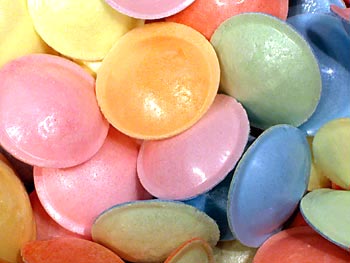
Have you ever eaten sherbet sweets candy? They fizz in your mouth and your tongue feels cold. Why do you think that is?
a)
It is an exothermic reaction
b)
It is an endothermic reaction
c)
It is made of ice
d)
It is dissolving your mouth
30.

Which of the following process is exothermic?

a)

Candle was melting

b)

A puddle evaporating

c)

Dry ice (solid carbon dioxide) subliming to form gaseous carbon dioxide

d)

Water freezing to form ice

31.

Which of the following statements is true concerning acids and bases?

a)

acids and bases don't react with each other

b)

acids mixed with bases neutralize each other

c)

acids mixed with bases make stronger bases

d)

acids mixed with bases make stronger acids

32.

Which is the correct set of acid properties, as described by Boyle:

a)

sour taste, corrosive, change litmus from red to blue

b)

sour taste, corrosive, change litmus from blue to red

c)

sweet taste, slippery, change litmus from blue to red

d)

sour taste, slippery, change litmus from blue to red

33.

Neutral solutions have a pH of:

a)

0

b)

1

c)

7

d)

14

34.

Vinegar, fruit juice, and cola are examples of:

a)

strong acids

b)

strong bases

c)

strong bases

d)

weak acids

35.

NaOH may be found in drain cleaners and as a component of soaps. Is NaOH an acid or a base?

a)

Acid

b)

Base

c)

Neither (Neutral)

36.

HCl is found in household products, including some toilet bowl cleaners. Is HCl an acid or a base?

a)

Acid

b)

Base

c)

Neither (Neutral)

37.
Which of the following is a pH for a strong base? 
a)
1
b)
8
c)
7
d)
13
38.

The color of litmus in acid:

a)

Red

b)

Blue

c)

Purple

d)

Green

39.

The color of universal indicator in pure water:

a)

Red

b)

Blue

c)

Purple

d)

Green

40.

Acids taste .....

a)

sour

b)

bitter

c)

sweet

d)

umami

41.

Rain water is slightly acidic. What is its pH?

a)

1.0

b)

5.6

c)

7.0

d)

8.2

42.

Reaction between acid and alkali producing salt and water:

a)

Combustion

b)

Neutralization

c)

Precipitation

d)

Decomposition

43.
Holly has an unknown substance in a beaker. She wants to determine the relative pH of the unknown substance. She places a piece of blue litmus paper into the substance, and the litmus paper stays blue.
The substance in the beaker
a)
is a base.
b)
has a neutral pH.
c)
is an acid.
d)
does not have a pH.
44.
Which of the following statements is correct?
a)
Blue litmus paper turns red when placed in a base.
b)
Red litmus paper turns blue when placed in a base.
c)
Blue litmus paper stays blue when placed in an acid.
d)
Red litmus paper stays red when placed in a base.
45.
Many cleaning solutions are bases. Which of the following is a property of most bases?
a)
feels slippery
b)
white colour
c)
can only be liquid
d)
tastes sour
46.
Which of the following word pairs correctly completes the sentence below?
_______ are corrosive substances characterized as having a strong smell, a sour taste, and a _______.
a)
Acids; pH less than 7
b)
Acids; pH greater than 7
c)
Bases; pH greater than 7
d)
Bases; pH less than 7
47.
Any substance that produces hydroxide ions in water is known as _____________.
a)
an acid
b)
a hydrogen ion
c)
a base
d)
a neutral
48.
Forms hydroxide ions (OH-) in water
a)
Acids
b)
Bases
c)
All
49.
What salt is produced if you react sodium hydroxide with hydrochloric acid?
a)
sodium hydroxide
b)
sodium sulfate
c)
sodium nitrate
d)
sodium chloride
50.
What kind of reaction is shown in the picture
a)
Endothermic
b)
Exothermic
c)
Explosive
d)
Boring
51.
Phenophalien will turn pink in the presence of:
a)
A base
b)
An acid
c)
A liquid
d)
A solid
52.
What are the products to a neutralization reaction?
a)
H2 + Ionic Salt
b)
H2O + Ionic Salt
c)
H3O+ + Ionic Salt
d)
OH- + Ionic Salt
53.
If a solution is basic which ion will be more present?
a)
H+
b)
K+
c)
OH-
d)
H-
54.
reacts with metals
a)
base
b)
acid
55.
What is the pH of a 1 x 10⁻⁸ solution of HNO3?
a)
8
b)
6
c)
7
d)
7.5
56.

The pH of a substance is defined as:

a)

log[H+]

b)

–log[H–]

c)

-log[H+]

d)

–log[OH–]

57.

If the pOH of a solution is 5.25, what is [H+]?

a)

8.75 M

b)

5.25 M

c)

5.6 × 10⁻⁶ M

d)

1.8X10⁻⁹ M

58.

Donate protons (H+)

a)

ACID

b)

BASE

c)

NEITHER

59.

Dissociation occurs when a solute is broken down into positive ions & negative ions (cations & anions)

a)

False

b)

True

60.
This uses a log function to describe the concentration of OH- ions in solution:
a)
pOH
b)
pH
c)
acid
d)
base
61.
What is the [H+] if the pH is 4.0?
a)
1.0 x 10⁻¹⁰  M
b)
1.0 x 10⁻⁴  M
c)
1.0 x 10⁻¹⁴  M
d)
1.0 x 10⁻⁷  M
62.
What is the pOH of a solution that has a pH of 2?
a)
10
b)
12
c)
14
d)
1
63.
What is the [OH-] if the [H+] is 1.0 x 10⁻³M?
a)
1.0 x 10⁻³ M
b)
6.02 x 10⁻²³ M
c)
1.0 x 10⁻¹⁴ M
d)
1.0 x 10⁻¹¹ M
64.

What nuclear process occurs in the sun?

a)

fission

b)

fusion

c)

endothermic

d)

atomic bomb

65.

A nuclear reaction involves what two parts of the atom?

a)

electrons and protons

b)

protons and neutrons

c)

neutrons and electrons

d)

nucleus and protons

66.

The process where one neutron hits a nuclei, which causes it to split releasing more neutrons which hit more nuclei causing more more neutrons to be released which hit more nuclei and so for and so on is called what?

a)

fusion

b)

hydrogen bomb

c)

chain reaction

67.

The splitting of a nucleus into smaller, lighter nuclei is called what?

a)

fusion

b)

fission

c)

hydrogen bomb

68.

The amount of time it take for 1/2 of any sample to decay is know as its what?

a)

half life

b)

chain reaction

c)

half reaction

d)

U-235

69.

When does a nuclear power plant create energy?

a)

when uranium is added

b)

when water is added

c)

when steam turns a turbine

d)

when heat is added

70.
What type of radioactive decay is in this picture? 
a)
Alpha
b)
Beta
c)
Gamma
d)
Fission
71.
What type of radioactive decay is in this picture? 
a)
Alpha
b)
Beta
c)
Gamma
d)
Fusion
72.
What decay emits (releases) a He atom (2 protons and 4 neutrons?)
a)
Alpha
b)
Beta
c)
Gamma
d)
Fission
73.
Solve this decaying equation: 
4He+  ______ --->    238U92
a)
234Th90
b)
236Th90
c)
236Ra88
d)
234U90
74.
Solve this decay question: 
14C6 -----> ____ +  0β-1
a)
14C7
b)
13C6
c)
14N7
d)
15N7
75.
C-14 has 8 neutrons and C-13 has 7 neutrons.  How many protons are in C-14? 
a)
6
b)
12.01
c)
7
d)
8
76.
A radioactive isotope has a half life of 30 years.  At year 0, there are 400 radioactive atoms.  How many are left after 120 years of decay
a)
50 atoms
b)
30 atoms
c)
25 atoms
d)
12.5 atoms
77.
What is the same about an element and its isotopes? 
a)
Same number of neutrons
b)
Same number of protons
c)
Same number of electrons or neutrons
d)
Same atomic mass
78.
What are the atomic numbers of the two main elements that make up the Sun? 
a)
6 and 2
b)
1 and 2
c)
6 and 12
d)
2 and 12
79.
The half-life of Zn-71 is 2.4 minutes. If one had 100.0 g at the beginning, how many grams would be left after 7.2 minutes has elapsed?
a)
100.0g
b)
50.0g
c)
12.5g
d)
8.5g
80.
 Fermium-253 has a half-life of 0.334 seconds. A radioactive sample is considered to be completely decayed after 10 half-lives. How much time will elapse for this sample to be considered gone?
a)
0.334 seconds
b)
3.34 seconds
c)
1.77 seconds
d)
13.4 seconds
81.
After the third half-life, how much of the sample is left?
a)
1/2
b)
1/3
c)
1/16
d)
1/8
82.
Barium-122 has a half-life of 2 minutes. A fresh sample weighing 80 g was obtained. If it takes 10 minutes to set up an experiment using barium-122, how much barium-122 will be left when the experiment begins?
a)
0.25g
b)
2.5g
c)
25g
d)
80g
83.
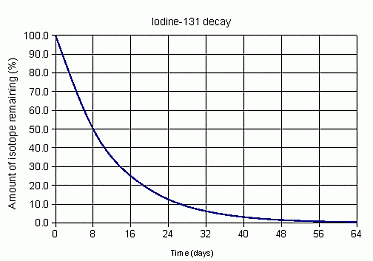
If 10 mg of iodine 131 is given to a patient, how much is left after 24 days? The half-life of iodine-131 is 8 days.
a)
1.25mg
b)
1.25g
c)
10g
d)
10mg
84.
If the half-life of uranium-232 is 70 years, how many half-lives will it take for 10 g of it to be reduced to 1.25 g?
a)
1 half-life
b)
2 half-lives
c)
3 half-lives
d)
4 half-lives
85.
The half-life of strontium-90 is 25 years. How much strontium-90 will remain after 100 years if the initial amount is 4.0 g?
a)
3.0g
b)
0.25mg
c)
0.3g
d)
0.25g
86.
After 4 half-lives, 1g of a sample of Krypton-85 remains unchanged.  What was the original mass of the sample?
a)
16g
b)
32g
c)
0.0625g
d)
4g
87.
What is the half-life of iodine-131?
a)
32 days
b)
8 days
c)
16 days
d)
24 days
88.
Which of the following do the units need to be converted to be used in gas law equations
a)
Temperature
b)
Volume
c)
Pressure
d)
moles
89.
A gas has a volume of 3L at 200 kPa. What will its volume be if the pressure is changed to 500 kPa?
a)
1.0L
b)
1.2L
c)
2.0L
d)
7.5L
90.
A gas has a volume of 4.0 L at 5.0 atm. What will be the volume at 2.0 atm?
a)
10L
b)
15L
c)
20L
d)
24L
91.
A gas has a volume of 5 liters at 3 atm. To expand the volume to 6L, what the new pressure ( in atm ) have to be?
a)
0.5atm
b)
1.5atm
c)
2.5atm
d)
3.0atm
92.
A gas has a volume of 3.50L at 200K. If the volume changes to 7L, what is the new temperature?
a)
100K
b)
300K
c)
350K
d)
400K
93.
A gas has a pressure of 2 atm at 400K. If the temperature changes to 200K, what is the new pressure be?
a)
0.5atm
b)
1.0atm
c)
2.5atm
d)
3.0atm
94.
4L of a gas is contained at 300 kPa and 200K. What will its volume be in L at 140 kPa and 100K?
a)
4.3L
b)
4.8L
c)
6.2L
d)
8.5L
95.
5L of gas is contained at STP. The volume changes to 6L at 300K and what pressure (in atm )?
a)
0.98atm
b)
1.3atm
c)
2.7atm
d)
3.8atm
96.
If I have 1.00 moles of a gas at a pressure of 1.20 atm and a volume of 16.0 liters, what is the temperature?
a)
128K
b)
234K
c)
341K
d)
426K
97.
If I have 2.00 moles of a gas at a temperature of 250.K and a volume of 8.50 liters, what is the pressure?
a)
0.673atm
b)
1.41atm
c)
2.91atm
d)
4.83atm
98.
An unknown gas weighs 88.0g and occupies 55L at 1.80 atm and 300.K. What is its molecular weight?
a)
4 g/mol
b)
12 g/mol
c)
22 g/mol
d)
62 g/mol
99.
If I have 12.0L volume of a gas at a pressure of 1.10 atm and a temperature of 200.K , what is the number of moles?
a)
0.8 mol
b)
1.2 mol
c)
1.8 mol
d)
2.4 mol
100.
For the reaction...
SO2 + O2  <−>  SO3
If the concentration of SOis increased, the equilibrium of the reaction will shift ___________.
a)
left
b)
right
c)
left and right 
d)
neither left nor right
101.
For the reaction...
SO2 + O2 <−>  SO3
If the equilibrium shifts to the right, the concentration of SO3 will ___________.
a)
increase
b)
decrease
c)
remain the same
d)
double
102.
For the reaction...
SO2 + O2 <−>  SO3
If the concentration of Ois decreased, the equilibrium of the reaction will shift ___________.
a)
left
b)
right
c)
left and right
d)
neither left nor right
103.
For the reaction...
SO2 + O2 <−>  SO3
If the equilibrium shifts to the left, the concentration of SO2 will ___________.
a)
increase
b)
decrease
104.
For the reaction...
heat  +  N2  +  O2  <−>  2NO
If  O2 is removed, the  concentration of N2 will _______.
a)
increase
b)
decrease
c)
remain the same
d)
double
105.
For the reaction...
heat  +  N2  +  O2  <−>  2NO
If  NO is removed  from the system, the concentration of N2 will _______.
a)
increase
b)
decrease
c)
remain the same
d)
double
106.
For the reaction...
heat  +  N2  +  O2  <−>  2NO
If the heat is added to the chemical system, the equilibrium will shift _______.
a)
left
b)
right
c)
left and right
d)
neither left nor right
107.
For the reaction...
heat  +  N2  +  O2  <−>  2NO
If the heat is removed to the chemical system, the equilibrium will shift _______.
a)
left
b)
right
c)
both left and right
d)
neither left nor right
108.
For the reaction...
heat  +  N2  +  O2  <−>  2NO
If the heat is removed from the chemical system, the concentration of N2 will _______.
a)
increase
b)
decrease
c)
remain the same
d)
double
109.
For the reaction...
heat  +  N2  +  O2  <−>  2NO
If the heat is added to the chemical system, the concentration of O2 will _______.
a)
increase
b)
decrease
c)
remain the same
d)
triple
110.
For the reaction...
H2 (g)  + Cl2 (g) <−>  2HCl (g)  +  heat
If the temperature is cooled, the _________ reaction will be favored.
a)
forward
b)
reverse
c)
forward and reverse
111.
For the reaction...
N2 (g) +  3 H2 (g) <−> 2 NH3 (g)

If the pressure in the system is increased,  _______ reaction will be favored.
a)
 the forward
b)
the reverse
c)
neither
112.
For the reaction...
N2 (g) +  3 H2 (g) <−> 2 NH3 (g)

If the pressure in the system is decreased,  which substance will increase in concentration?

a)
N2
b)
H2
c)
N2 and H2
d)
NH3