
 Worksheets
AP Chemistry Test Practice 11/14
Total questions: 109
Worksheet time: 2hrs 5mins
The measurement, 206 cm, has how many significant (measured) digits?
1
2
3
4
5
The measurement, 0.0020600mole g, has how many significant digits?
1
2
3
4
5
The measurement, 20,600 molecules has how many significant digits?
1
2
3
4
5
Add the following three numbers and report your answer using significant figures:
2.5 cm + 0.50 cm + 0.055 cm = ?
3.055 cm
3.06 cm
3.1 cm
3.0 cm
3 cm
Multiply the following three numbers and report your answer to the correct number of significant figures:
0.020 cm x 50 cm x 11.1 cm = ?
10 cm3
11 cm3
11. cm3
11.1 cm3
11.10 cm3

What is the measurement to the right in the correct number of significant figures.
35 mL
35.0 mL
35.2 mL
35.00 mL
35.10 mL

2.00 gallons is equal to how many liters?
0.1321 L
0.528 L
7.57 L
8.45 L
8.5 L
What is the mass of one mole of (NH4)2CO3?
144 g
138 g
96 g
78 g
43 g
How many moles of carbon dioxide are there in 52.06 g of carbon dioxide?
8.648 × 10²³
0.8452
3.134 × 1025
1.183
6.022 × 10²³
There are __________ molecules of methane in 0.123 mol of methane (CH4)
2.46 × 10⁻²
7.40 × 10²²
5
0.615
2.04 × 10⁻²⁵
A compound contains 6.0 g of carbon and 1.0 g of hydrogen. The percent composition of the compound is:
14 % hydrogen and 86 % carbon
86 % hydrogen and 14 % carbon
17 % hydrogen and 83 % carbon
83 % hydrogen and 17 % carbon
None of these answers are correct.
18 L of O2 would have how many molecules?
4.1 x 10 -27 molecules
0.80 molecules
4.8 x 10 23 molecules
8.0 x 10 23 molecules
2.4 x 10 26 molecules
Given the following: 42.07% Na, 18.89% P, and 39.04% O, determine the empirical formula.
NaPO2
Na2PO3
Na3PO4
NaPO4
Which of the following shows a correct way to balance the chemical equation:
Fe + O2 --> Fe2O3
4 Fe + 3 O2 --> 2 Fe2O3
2 Fe + 3 O2 --> Fe2O6
4 Fe + O6 --> 2 Fe2O3
2 Fe + 3/2 O2 --> Fe2O3
Actual yield = 62g
Calculate the percent yield.
How many grams of NO are formed if 6.30g of ammonia react with 1.80g of oxygen?
The reaction of 75.0g P4 with excess chlorine gas produces 110g PCl3 in lab. Find the theoretical yield and calculate percent yield for the reaction.
In the quantum-mechanical model of the atom, an orbital is defined as a
region of the most probable proton location.
region of the most probable electron location.
circular path traveled by an electron around an orbital.
circular path traveled by a proton around an orbital.
Which type of orbital is shaped like a clover
s orbital
p orbital
d orbital
f orbital
What is the electron configuration for an atom of Sodium?
3s1
[He] 3s1
1s22s23s1
1s22s22p63s1
The electron configuration of Fe is __________.
1s2 2s2 3s2 3p6 3d6
1s2 2s2 2p6 3s2 3p6 4s2 3d6
1s2 2s2 2p6 3s2 3p6 4s2
1s2 2s2 2p6 3s2 3p6 4s2 4d6
The electron configuration of Ga is __________.
1s2 2s2 3s2 3p6 3d10 4s2 4p1
1s2 2s2 2p6 3s2 3p6 4s2 4d10 4p1
1s2 2s2 2p6 3s2 3p6 4s2 3d10 4p1
1s2 2s2 2p6 3s2 3p6 4s2 3d10 4d1
Which one of the following is the correct electron configuration for a nitrogen atom?
1s↑↓ 2s↑↓ 2p↑↓ ↑
1s↑↓ 2s↑↑ 2p↑ ↑ ↑
1s↑↑ 2s↑↓ 2p↑ ↑ ↑
1s↑↓ 2s↑↓ 2p↑ ↑ ↑
The electron configuration for an ion of Ga is __________.
1s2 2s2 2p6 3s2 3p6 3d10
1s2 2s2 3s2 3p6 3d10 4s2 4p1
1s2 2s2 2p6 3s2 3p6 4s2 4d10
1s2 2s2 2p6 3s2 3p6 4s2 3d10 4p1
How many electrons does potassium need to gain or lose to become stable?
Gain 1
Gain 2
Lose 1
Lose 2
Anions tend to be __________ and cations tend to be __________.
metals, metals
nonmetals, nonmetals
metals, nonmetals
nonmetals, metals
The electron dot diagram that correctly shows the bonding in H2N2 is:


The structural formula for the nitrite ion, NO3- is:


Electronegativity is a measure of _____.
the attraction of atoms for paired electrons within a bond.
the energy released when an electron is added to an atom.
the energy required to remove an electron from an atom.
None of the answers listed are correct.
What is the formula of the compound formed between strontium ions and nitrogen ions?
SrN
Sr3N2
Sr2N3
SrN2
The charge on the iron ion in the salt Fe2O3 is __________.
1-
2+
3+
5-
The ions Ca2+ and PO4 3- form a salt with the formula __________.
CaPO4
Ca2(PO4)3
Ca2PO4
Ca3(PO4)2
In the Lewis structures of __________ which central atoms do not have a lone pair of electrons. (select ALL possible)
(i) PCl3 (ii) CH2Cl2 (iii) HCN (iv) C2H4 (v) NH3
i
ii
iii
iv
v
According to VSEPR theory, if there are five electron domains in the valence shell of an atom, they will be arranged in a(n) __________ geometry.
octahedral
linear
trigonal Planar
trigonal bipyramidal
tetrahedral
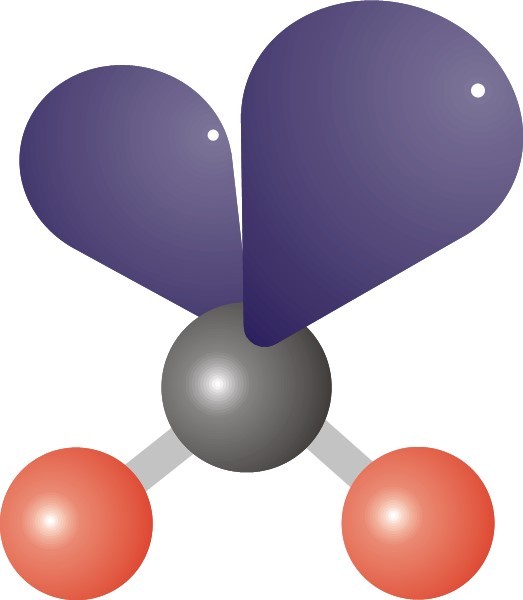


Is this molecule polar or non-polar?
Polar
Non-polar

Is this molecule polar or non-polar?
Non-polar
Polar
What pH is the strongest base?
1
7
4
14
Which of the following are properties of acids?
They conduct electricity when dissolved in water
They taste sour
They react with metals to produce hydrogen gas
All of the answer choices are correct
The pH value of an acid represents its __________ of positive ions in the solution
amount
concentration
color
charge
The higher the concentration of negative (hydroxide) ions in the solution, the stronger the base is.
True
False
If the substance is neutral, what would the pH be?11
3
5
7
9
11


What is the conjugate base of HClO4?
H+
Cl-
ClO3-
ClO4-
Which is a strong acid?
12.0M HNO2
10.0M H2SO3
5.0M HI
5.0M HF
The [OH-] = 4.0 x 10⁻⁹, what is the pH of the solution?
9.0
5.7
8.3
4.3
Which acid produces the strongest conjugate base?
HClO4 (Ka= 1.0 x 10⁷)
HCN (Ka= 4.0 x 10⁻¹⁰)
H3PO4 (Ka= 7.5 x 10⁻³)
H2CO3 (Ka = 4.2 x 10⁻⁷)
Which relationship relates Ka, Kb and Kw?
Kw = Ka + Kb
Kw = Kb/Ka
Ka = Kw + Kb
Kb = Kw/Ka
Acetic Acid is a weak monoprotic acid. It's concentration is 0.20M and it's equilibrium concentration of H+ ions is 0.0019M. Calculate it's Ka value.
1.8x10 -5
1.8x10 -15
.0019
5.56x10 -10
Formic Acid is a weak monoprotic acid. It's initial concentration is 0.10M and it's equilibrium concentration of H+ ions is 0.0042M. Calculate it's Ka value.
.150
12.56x10 -6
1.8x10 -4
None of these are correct
Isobutlyamine is a weak base. It's initial concentration is 0.55M and it's equilibrium concentration of OH- ions is 0.0040M. Calculate it's Kb value.
.055
4.0x10 -3
1.6x10 -5
3.1x10 -4
Gallic Acid is a weak monoprotic acid. It's concentration is 0.280M and it's equilibrium concentration of H+ ions is 0.0033M. Calculate it's pH value.
3.9x10 -5
4.96
2.48
.280
Uric Acid is a weak monoprotic acid. It's initial concentration is 0.110M and it's equilibrium concentration of H+ ions is 0.034M. Calculate the final concentration of Uric acid.
.011
.034
.076
1.47
Ammonia is a weak base. It's concentration is 0.150M and it's Kb value is 1.7x10 -5. Calculate it's pH value.
2.80
11.2
Both answers are correct
None of the above are correct
calculate the pKb of solution with a pKa of 6.9
7.1
6.5
14
9.6
calculate the Ka of a solution with a pKb of 3.38
3.38x10⁻¹¹
6.76x10⁻¹¹
2.40x10⁻¹¹
2.39x10⁻¹¹
Calculate the Kb of a solution that has a pKb of 4.2
0.62
6.3x10⁻⁵
9.8
4.2
What are the two factors to look for when determining if the reaction is at equilibrium?
Forward reaction rate is faster than the reverse and concentrations are equal
Forward and reverse reaction rates are equal and concentration is constant
Forward and revers reaction rates are equal and concentration is equal
Forward reaction rate is faster than the reverse and concentration is equal


SO2 + O2 <=> SO3
If the concentration of SO2 is increased, the equilibrium position of the reaction will shift ___________.
SO2 + O2 <=> SO3
If the equilibrium position shifts to the right, the concentration of O2 will ___________.
N2 + O2 <=> 2NO
If O2 is removed, the concentration of N2 will _______.
N2 (g) + 3 H2 (g) <=> 2 NH3 (g)
If the pressure in the system is increased, which substance(s) will increase in concentration?
For the endothermic reaction...
N2 + O2 <=> 2NO
If the temperature is increased the equilibrium position will shift _______.
to the left
to the right
to the left and right
neither left nor right
If a (dynamic) equilibrium is disturbed by changing the conditions, the position of equilibrium................
2 NO(g) + O2(g) ⇌ 2 NO2(g)
Raising the pressure, by decreasing the volume of the container, will...

SO2 (g) + NO2 (g) <=> SO3 (g) + NO (g)
had reached a state of equilibrium, was found to contain
0.40 mol L-1 SO3 , and 0.30 mol L-1 NO,
0.15 mol L-1NO2 , and 0.20 mol L-1 SO2.
Calculate the equilibrium constant for this reaction.
Fe3O4(s) + 4H2(g) <=> 3Fe(s) + 4H2O(g)
Kc =
H2 (g) + Cl2 (g) <=> 2HCl (g) + heat
If the pressure in the system is increased, the equilibrium position will _______.
2 NO(g) + O2(g) ⇌ 2 NO2(g)
CaCO3(s) ⇋ CaO(s) + CO2(g)
heat + N2 + O2 <−> 2NO
If the heat is removed to the chemical system, the equilibrium will shift _______.
heat + N2 + O2 <−> 2NO
If the heat is added to the chemical system, the equilibrium will shift _______.

