wayground logo

Free Printable Worksheets

Font size

S
M
L
XL
Worksheets

Benchmark Review

Total questions: 131

Worksheet time: 2hrs 11mins

Name
Class
Date
1.
All cells have DNA.
a)
True
b)
False
2.
Plants and animal cells are examples of ____________ cells 
a)
prokaryotic cells 
b)
eukaryotic cells 
3.
These cells have DNA surrounded by a nucleus.
a)
Eukaryotic
b)
Prokaryotic
c)
Neither
d)
Both prokaryotic and eukaryotic
4.
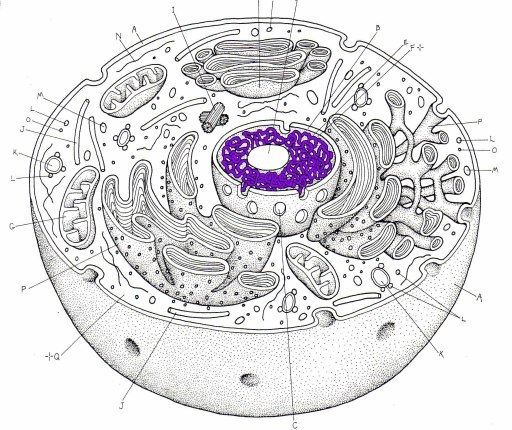
What kind of cell is this?
a)
Eukaryotic
b)
Prokaryotic
5.

All cells have cell membranes. What is the function (job) of the cell membrane?

a)

Allow certain things to enter and exit the cell.

b)

Allows all things to enter the cell.

c)

Does not allow anything to enter and exit.

d)

It is made out of wood.

6.
What is cytoplasm? 
a)
The outside of the cell
b)
Another name for cells
c)
Another name for a nucleus
d)
The gel like liquid inside all cells
7.
Ribosomes are found in both prokaryotic and eukaryotic cells. What is the main function of ribosomes.
a)
to make proteins 
b)
to make sugar
c)
to make oil
d)
to make cells 
8.
Bacteria are all made of ...
a)
Eukaryotic cells
b)
Plant cells
c)
Prokaryotic cells
d)
fungi cells
9.

Which of the following distinguishes prokaryotic and eukaryotic cells?

a)

The presence of a nucleus

b)

The presence of ribosomes

c)

The presence of a cell wall

d)

The presence of genetic material

10.
Which structures are found in every living cell?
a)
cell membrane and cytoplasm
b)
chloroplasts and mitochondria
c)
a cell wall and nucleus
d)
chloroplasts and cell wall
11.

An organism that is made of a prokaryotic cell is called ....

a)

mold

b)

mushrooms

c)

plants

d)

bacteria

12.
Which of the following is the correct equation for PHOTOSYNTHESIS?
a)
CO+ light + H2O --> O+ Sugar
b)
CO+ sugar + H2O --> O+ light
c)
O2 + light + H2O --> CO+ Sugar
d)
CO+ O2 + H2O --> Light+ Sugar
13.
What is the ultimate ORIGINAL source of energy for living things
a)
Sugar
b)
Sun
c)
Moon
d)
Carbon Dioxide
14.
Which gas is removed from the atmosphere during photosynthesis?
a)
hydrogen
b)
oxygen
c)
nitrogen
d)
carbon dioxide
15.
What are the products of photosynthesis?
a)
water and carbon dioxide
b)
oxygen and glucose
c)
oxygen and carbon dioxide
d)
oxygen and water
16.
Plants need ________ for photosynthesis
a)
oxygen
b)
soil
c)
carbon dioxide
d)
sugar
17.
Chloroplasts are...
a)
Structures of animal cells to produce ATP
b)
Organelles where lipids are elaborated
c)
Specialized structures of plants where food is made
d)
Waste organelle of plants
18.
Which organelle from the plant cell is primarily responsible for converting sunlight to energy?
a)
Mitochonria
b)
Nucleus
c)
Vacuole
d)
Chloroplast
19.
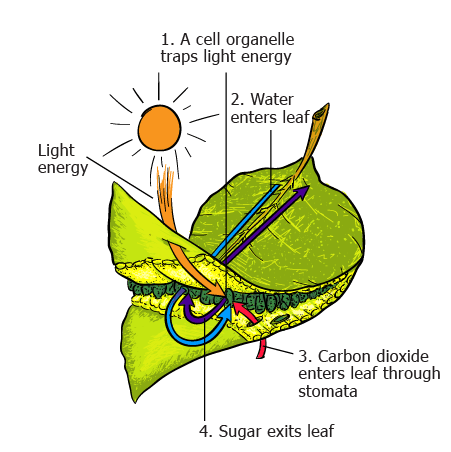
What process is the diagram representing?
a)
Photosynthesis
b)
Soil development
c)
Plant reproduction
d)
Nitrogen Cycle
Nitrogen cycle
20.
Look at the image
What substances and organelle work together to absorb sunlight to perform photosynthesis in this example?
a)
cell wall and chloroplast
b)
mitochondria and water
c)
vacuole and carbon dioxide
d)
chloroplast and chlorophyll
21.
What is one of the reactants of cellular respiration?
a)
energy
b)
glucose
c)
carbon dioxide
d)
water
22.
______________ produces the most ATP.
a)
photosnthesis
b)
aerobic respiration
c)
anaerobic respiration
d)
glycolysis
23.
What is the name of the 1st step of cellular respiration?
a)
Glycolysis
b)
Kreb's Cycle
c)
ETC
d)
Anaerobic respiration
24.
Where does aerobic respiration take place?
a)
Cytoplasm
b)
Mitochondria
c)
Stroma
d)
Thylakoid
25.
Which type of respiration occurs without the presence of oxygen?
a)
Aerobic 
b)
Anaerobic 
26.
What are the two reactants of cellular respiration?
a)
C6H12O6 & 6CO2
b)
6 CO2 & 6H2O
c)
C6H12O& 6O2
d)
6CO2 & 6O2
27.
The overall goal of cellular respiration is to make:
a)
Glucose
b)
ATP
c)
Oxygen
d)
Water
28.
What is the name of the process that helps make beer and wine?
a)
Fermentation
b)
Alcoholic fermentation
c)
Lactic acid fermentation
d)
Glycolysis
29.
Which type of fermentation occurs in muscles?
a)
Alcoholic 
b)
Lactic acid
30.
Which statement best compares aerobic and anaerobic respiration? 
a)
Less ATP is generated during anaerobic respiration than during aerobic respiration. 
b)
More water is generated during anaerobic respiration than during aerobic respiration. 
c)
More oxygen is generated during anaerobic respiration than during aerobic respiration. 
d)
Less lactic acid is generated during anaerobic respiration than during aerobic respiration. 
31.
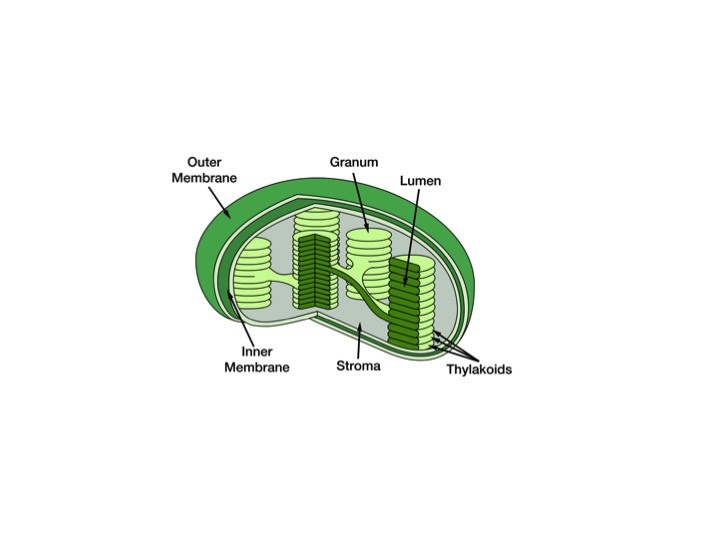
This organelle could likely be found in 
a)
plant cells only.
b)
animal cells only.
c)
prokaryotes only.
d)
plant and animal cells.
32.
The inner membrane of this organelle is highly folded.  What is the advantage of this folding?
a)
It increases the amount of light absorbed by the organelle.
b)
It increases the structural support of the organelle.
c)
It increases the surface area, allowing greater ATP production.
d)
It increases the surface area and the rate of glucose production.
33.
Which of the following is the correct equation for aerobic cellular respiration?
a)
6CO2 + 6H2O     --->   C6H12O6 + 6O+ ATP
b)
6O2 + C6H12O6  ---> 6H2O + 6CO+ ATP
c)
C6H12O+ 6H2O ---> 6CO2 + 6O+ ATP
d)
6O2 + 6H2O ---> C6H12O6 + 6CO+ ATP
34.
Aerobic respiration yields about  ___ ATP molecules per glucose, whereas anaerobic respiration yields ____ ATP molecules per glucose.
a)
36; 2
b)
2; 36
c)
6; 2
d)
36; 18
35.
Aerobic cellular respiration requires
a)
Carbon dioxide
b)
Oxygen
c)
Nitrogen
d)
Water
36.
Plant and animal cells both carry out this process
a)
Photosynthesis
b)
Cellular respiraton
37.

you breathe in oxygen for

a)

photosynthesis

b)

fermentation

c)

mitosis

d)

cellular respiration

38.
Where does carbon dioxide enter plants?
a)
The leaves
b)
Stem
c)
Roots
39.
What does photo mean?
a)
Print
b)
Picture
c)
Make
d)
Light or Color
40.
What does synthesis mean?
a)
Photo
b)
Process
c)
Light
d)
Color
41.
What gas is released by plants during photosynthesis?
a)
sulfur
b)
carbon dioxide
c)
oxygen
d)
hydrogen
42.
In which way are photosynthesis and cellular respiration different?
a)
Cellular respiration stores ATP, while photosynthesis releases ATP.
b)
Cellular respiration produces oxygen, while photosynthesis uses oxygen.
c)
Photosynthesis releases energy, while cellular respiration stores energy.
d)
Photosynthesis used carbon dioxide, while cellular respiration produces carbon dioxide.
43.
Cellular Respiration's goal is to
a)
make water
b)
make ATP
c)
make glucose
d)
make  oxygen
44.
What is the function of ATP in living things?
a)
provides energy for cells
b)
stores genetic information
c)
provides structure in the nucleus
45.
Energy is released from ATP when
a)
a phosphate group is added
b)
adenine bonds to ribose
c)
ATP is exposed to sunlight
d)
a phosphate group is removed
46.
What does the "TP" in ATP stand for?
a)
2 phosphates
b)
tri (3) phosphates
c)
Two proteins
d)
tri (3) proteins
47.
Which of the following results in the storage of energy in terms of the ATP/ADP cycle?
a)
The breaking of the bond between the 5-carbon sugar and the 1st phosphate group
b)
The addition of a phosphate group
c)
The removal of a phosphate group
d)
The addition of glucose 
48.

What is a substrate?

a)

Substrate

b)

Co-enzyme

c)

reactant

d)

protein

49.
Enzymes are...
a)
nucleic acids
b)
proteins
c)
lipids
d)
carbohydrates
50.
What happens when enzymes are heated to a high temperature?
a)
The enzymes die.
b)
The shapes of the enzyme are altered denature
c)
The enzymes' amino acid sequence changes.
d)
The enzymes remain the same
51.
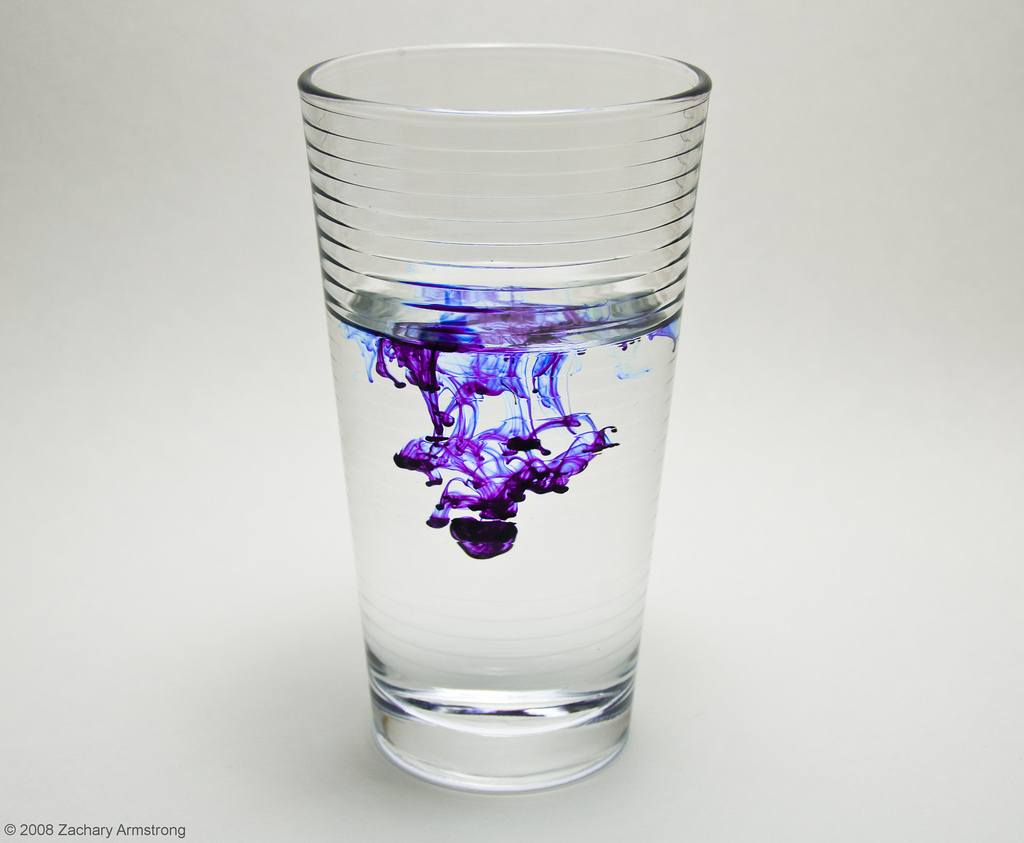
Where is there a low concentration of dye?
a)
at the bottom of cup
b)
in the color
c)
at the top of cup 
d)
no concentration gradient
52.
Osmosis is the movement of _____ across a membrane.
a)
food
b)
energy
c)
oxygen
d)
water
53.
Permeable means
a)
things can pass through
b)
the concentration levels are different
c)
it is permanent
d)
things are stuck
54.
Passive transport requires no
a)
concentration gradients
b)
osmosis
c)
motion
d)
energy
55.
What is diffusion?
a)
when molecules move 
b)
when molecules move from a high concentration to a low.
c)
no movement 
d)
molecules move everywhere
56.
Which type of transport requires an input of energy?
a)
Passive Transport
b)
Osmosis
c)
Simple Diffusion
d)
Active Transport
57.
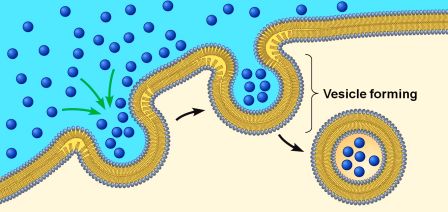
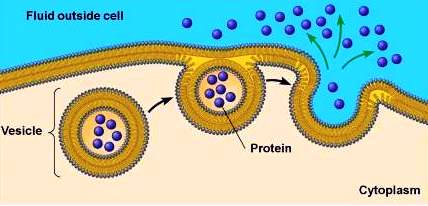
Which form of active transport is being shown?
a)
Facilitated Diffusion
b)
Exocytosis
c)
Endocytosis
d)
Protein Pumps
58.
Which form of active transport is being shown?
a)
Pinocytosis
b)
Endocytosis
c)
Exocytosis
d)
Osmosis
59.
What is the difference between active and passive transport?
a)
Active does not need energy and passive uses ATP (energy)
b)
Active uses ATP (energy) and passive does not need energy
c)
Active stores transport proteins and passive releases 
d)
Active uses hormones and passive does not 
60.

The process of osmosis is best illustrated by the movement of:

a)

water into root hair cells

b)

oxygen into red blood cells

c)

carbon dioxide through stomates

d)

glucose through phloem

61.

Which process requires cellular energy to move molecules across the cellular membrane from a region of low concentration to a region of higher concentration?

a)

active transport

b)

diffusion

c)

osmosis

d)

hydrolysis

62.

A biologist diluted a blood sample with distilled water. While observing the sample under a microscope, she noticed the blood cells burst. This bursting is most likely caused by which process?

a)

staining

b)

ingestion

c)

osmosis

d)

active transport

63.

Here is a picture of an animal cell. What organelle is the arrow pointing to?

a)

Cell Wall

b)

Mitochondrion

c)

Nucleus

d)

Cell Membrane

64.

In the picture of the animal cell, what is the function of he organelle the arrow is pointing to? (select all that apply)

a)

maintain homeostasis

b)

allow materials in and out of the cell

c)

only allows materials to enter the cell

d)

only allows materials to exit the cell

65.

What does semi-permeable mean?

a)

Some molecules can move through the membrane

b)

Nothing can move through the membrane

c)

All molecules can pass through the membrane.

66.
What is equilibrium?
a)
When concentrations cannot be balanced between two substances 
b)
When concentrations are balanced between two substances 
c)
Making the energy in the top half of your body equal the the energy in the bottom half
d)
Concentrations do not exist 
67.
Which diagram best shows the end result of diffusion?
a)
F
b)
G
c)
H
d)
J
68.

Movement of molecules through the cell membrane from high to low concentration

a)

passive transport

b)

active transport

69.
What happens to a cell placed in a HYPOTONIC solution?
a)
It shrinks
b)
It swells
c)
Nothing Happens
70.
What happens to a cell placed in a HYPERTONIC solution
a)
It shrinks
b)
It swells
c)
Nothing happens
71.
In which solution will water move into a cell?
a)
Hypertonic
b)
Hypotonic
c)
Isotonic
d)
Equilibrium
72.
What type of transport is this?
a)
Diffusion
b)
Osmosis
c)
Facilitated Diffusion
d)
Active Transport
73.
What type of transport is this?
a)
Endocytosis
b)
Facilitated Diffusion
c)
Active Transport Pump
d)
Osmosis
74.
What type of transport is this?
a)
Facilitated Diffusion
b)
Exocytosis
c)
Active Transport
d)
Diffusion
75.
What atoms make up all carbohydrates?
a)
Carbon, Sulfur, Hydrogen
b)
Carbon, Oxygen, Phosphorus
c)
Carbon, Oxygen, Nitrogen
d)
Carbon, Oxygen, Hydrogen
76.
How many sugar units make up monosaccharides?
a)
one
b)
two
c)
three
d)
zero
77.
How many sugar units make up disaccharides?
a)
one
b)
two
c)
three
d)
zero
78.
Which do all carbohydrates do for us?
a)
provide energy
b)
make muscle
c)
make brains
d)
make hair
79.
What molecule is this
a)
sucrose
b)
protein
c)
glucose
d)
cellulose
80.
All carbohydrate names end with which ending:
a)
ise
b)
ase
c)
ese
d)
ose
81.
These are all properties of a disaccharide EXCEPT:
a)
made up of two sugars
b)
sucrose
c)
2 monosaccharides joined by dehydration synthesis
d)
ratio of 1:2:1
82.
Which of these are examples of carbohydrates?
a)
DNA, RNA
b)
Fats, hormones
c)
amino acids
d)
starches, glucose, chitin
83.
Important to the structural integrity of plant cells, this is the single most popular polysaccharide in the world.
a)
Starch
b)
Glycogen
c)
Cellulose
d)
Chitin
84.
Which has more energy, 1.0 g of carbohydrate or 1.0 g of lipid?
a)
Carbohydrate
b)
Lipid
85.
Which is NOT one of the three types of carbohydrates?
a)
Sugars
b)
Fats
c)
Fibers
d)
Starches
86.

Cellulose is a structural carbohydrate found in-

a)

plants

b)

fungi

c)

insects

d)

polyvinyl

87.
What type of lipid is this?
a)
steroid
b)
cholesterol
c)
phospholipid
d)
triglyceride
88.
Saturated fats have _______________
a)
straight structure
b)
single bonds
c)
solidity at room temperature
d)
all of the above
89.
Unsaturated fats have _______________
a)
bent structure
b)
double bonds
c)
liqudity at room temperature
d)
all of the above
90.
Which of the following molecules make up the basic structure of a cell membrane?
a)
waxes
b)
steroids
c)
fatty acids
d)
phospholipids
91.

The transport process in which a substance moves across a cell membrane, with the aid of membrane proteins, from a region of higher concentration to a region of lower concentration without the expenditure of cellular energy.

a)

Facilitated transport

b)

Active transport

c)

Passive transport

92.

Long term energy storage,

help form cell membranes, and provide parts of other biomolecules like hormones.

a)

Functions of Sugars

b)

Functions of Polysaccharides

c)

Functions of Carbohydrates

d)

Functions of Lipids

93.

A hydrocarbon chain that is sometimes considered to be a monomer of lipids.

a)

Fatty Acids

b)

Nucleic Acids

c)

Proteins

d)

Lipids

94.

What is this molecule called?

a)

nucleotide

b)

fatty acid

c)

amino acid

d)

monosaccharide

e)

glycerol

95.

Two amino acids will bond together as the result of _______.

a)

Dehydration synthesis

b)

Hydrolysis

c)

pHolysis

d)

Rehydration synthesis

96.

What is a long chain of amino acids called?

a)

Polysaccharide

b)

Lipid

c)

Carbohydrate

d)

Polypeptide

e)

Nucleic acid

97.

Which of the following is not an enzyme?

a)

Maltase

b)

Maltose

c)

Lactase

d)

Sucrase

98.

All proteins

a)

have a unique structure that determines their unique function.

b)

are exactly the same in function but different in structure.

c)

are exactly the same in structure but different in function.

d)

are enzymes.

99.

The order of amino acids determines the ______ and ultimately the function of a protein.

a)

shape

b)

color

c)

flavor

d)

texture

100.

Enzymes are ________ that act as ________.

a)

proteins, catalysts

b)

amino acids, proteins

c)

proteins, amino acids

d)

catalysts, carbohydrates

101.

Identify the enzyme in the diagram.

a)

A

b)

B

c)

C

d)

D

102.

Identify the active site in the diagram.

a)

A

b)

B

c)

C

d)

D

103.

Identify the substrate in the diagram.

a)

A

b)

B

c)

C

d)

D

104.

What does D represent in the diagram.

a)

product

b)

reactant

c)

substrate

d)

activation energy

105.

What is an element found in amino acids and proteins but NOT typically found in carbohydrates or fats?

a)

Amino Acids

b)

Nitrogen

c)

Peptide bond

d)

Polypeptide

106.

What do proteins form the main structural component of? Select all that apply

a)

Skeletal muscle

b)

Skin

c)

Cartilage

d)

Hair

e)

Feathers

107.

What type of covalent bond joins together amino acids?

a)

polypeptide

b)

peptide bond

c)

enzyme

108.
Enzymes are...
a)
Proteins
b)
Nucleic Acids
c)
Sugars
d)
Lipids
109.
Which macromolecule is this?
a)
carbohydrate
b)
lipid
c)
protein
d)
nucleic acid
110.
What are the components of a nucleotide?
a)
nitrogen base, phosphate group, and pentose sugar
b)
pentose sugar, purine, and pyrimidine
c)
nitrogen base and a phosphate group
d)
DNA, phosphate group, monosaccharide
111.

Identify the following biomolecule.

a)

ATP

b)

carbohydrate

c)

nucleotide

d)

protein

112.

What is the function of nucleic acids?

a)

Energy

b)

Energy Storage

c)

Building Cell Structures

d)

Information Storage

113.

What suffix tells identifies an enzyme?

a)

ose

b)

ese

c)

ise

d)

ase

114.
All living things are made of...
a)
atoms 
b)
cells 
c)
bacteria 
d)
plants 
115.
Under a microscope, what kind of cells lack membrane-bound internal organelles?
a)
Prokaryotes
b)
Eukaryotes
c)
Plants
d)
Animals
116.
The picture illustrates a
a)
Prokaryotic Plant Cell
b)
Prokaryotic Animal Cell
c)
Eukaryotic Plant Cell
d)
Eukaryotic Animal Cell
117.
Controls what enters/leaves a cell
a)
cell membrane
b)
Nuclear membrane
c)
cell wall
d)
cytoplasm
118.
stiff, protective outer layer of plant cells
a)
cell membrane
b)
nuclear membrane
c)
cell wall
d)
cytoplasm
119.
packages proteins for delivery
a)
Endoplasmic reticulum
b)
ribosomes
c)
golgi apparatus
d)
lysosomes
120.
collect sunlight which it converts to sugars
a)
chloroplasts
b)
cytoplasm
c)
cell wall
d)
mitochondria
121.
hold/store water, mainly found in plant cells
a)
nuclolus
b)
ribosomes
c)
golgi bodies
d)
vacuoles
122.
break down (digest) worn out cell parts, mostly in animal cells
a)
cytoplasm
b)
lysosomes
c)
mitochondria
d)
vacuoles
123.
jello-like material, fills the space between cell organelles, is where many chemical reactions occur
a)
cytoplasm
b)
chromatin
c)
chloroplast
d)
cell membrane
124.
Transportation network for the cell, moves materials around in the cell
a)
Lysosome
b)
Nuclear Membrane
c)
Endoplasmic Reticulum
d)
Centriole
125.
What am I?
a)
mitochondria
b)
lysosomes
c)
chloroplast
d)
endoplasmic reticulum
126.
What am I?
a)
cell wall
b)
mitochondria
c)
cytoplasm
d)
chloroplast
127.
What am I?
a)
vacuole
b)
ribosome
c)
endoplasmic reticulum
d)
golgi apparatus
128.
I make proteins for the cell. What am I?
a)
ribosome
b)
mitochondria
c)
chloroplast
d)
lysosome
129.
The two kinds of cells are Prokaryotes and Eukaryotes. How are they different?
a)
Prokaryotes have a nucleus.
b)
Eukaryotes have a nucleus.
c)
Prokaryotes are plant cells.
d)
There is no difference.
130.
What cell part is NOT found in all cells?
a)
Cell Wall
b)
Cell Membrane
c)
Cytoplasm
d)
Genetic Material
131.
What makes the endoplasmic reticulum rough?
a)
Vessicles
b)
Vacuoles
c)
Ribosomes
d)
Chromosomes