wayground logo

Free Printable Worksheets

Font size

S
M
L
XL
Worksheets

Thanksgiving Break Make-Up Work

Total questions: 100

Worksheet time: 3hrs 20mins

Name
Class
Date
1.
What is the longest stage of the cell cycle called?
a)
Cytokinesis
b)
M phase
c)
Interphase
d)
G1 Phase
2.
During which stage of the cell cycle does mitosis and cytokinesis occur?
a)
Interphase
b)
S phase
c)
M phase
d)
G1 phase
3.
During what phase of the cell cycle is DNA replicated?
a)
G1 phase
b)
S phase
c)
G2 phase
d)
M phase
4.
Put the following stages of mitosis in order: anaphase, prophase, metaphase, and telophase. 
a)
prophase, metaphase, telophase, anaphase
b)
prophase, anaphase, metaphase, telophase
c)
prophase, metaphase, anaphase, telophase
d)
prophase, telophase, metaphase, anaphase
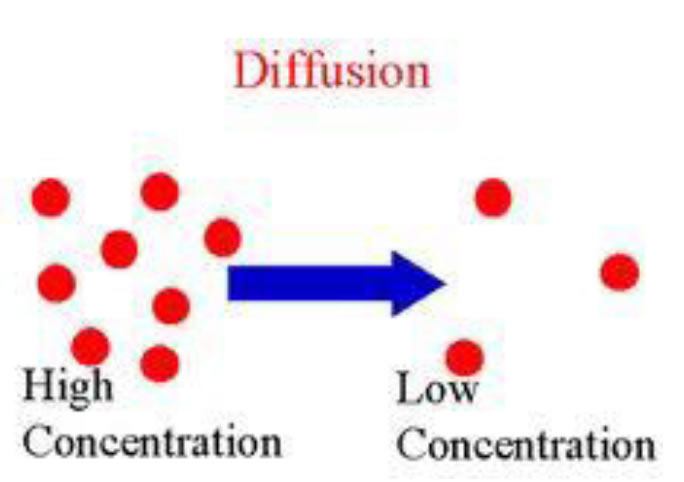
5.
Put the following stages of the cell cycle in order: G2, S, G1, M. 
a)
G1, S, G2, M
b)
S, G1, G2, M
c)
G1, M, G2, S
d)
M, G1, S, G2
6.
a)

Anaphase

b)

Cytokinesis

c)

Telophase

d)

Metaphase

7.
a)

Cytokinesis

b)

Interphase

c)

Anaphase

d)

Metaphase

8.
a)
Cytokinesis
b)
Anaphase
c)
Telophase
d)
Prophase
9.
The phase in mitosis where chromosomes move away and are pulled apart by spindles to opposite sides of the cell.
a)
prophase
b)
anaphase
c)
metaphase
d)
telephase
10.
In mitosis, the two resulting cells are
a)
different from the starting cell and identical to each other.
b)
different from the starting cell and different from each other.
c)
identical to the starting cell and different from each other.
d)
identical to the starting cell and identical to each other.
11.
Fruit fly body cells have 8 chromosomes. After mitosis, you would expect a resulting fruit fly daughter cell to have -
a)
16 chromosomes.
b)
46 chromosomes.
c)
8 chromosomes.
d)
4 chromosomes.
12.

The cell membrane splits and 2 new daughter cells are formed

a)

Metaphase

b)

Anaphase

c)

Telephase

d)

Cytokinesis

13.

How many chromosomes do humans have?

a)

46

b)

21

c)

10

d)

23

14.
Name the phase:
a)
Prophase
b)
Metaphase
c)
Anaphase
d)
Telophase
15.
Cell division is represented by what letter?
a)
A
b)
B
c)
C
d)
D
16.
A cell spends __% of its cycle in ____.
a)
100, interphase
b)
10, cytokinesis
c)
40, mitosis
d)
90, interphase
17.
The division of the nucleus is called ____.
a)
mitosis
b)
interphase
c)
cytokinesis
d)
somatic
18.

the division of the cytoplasm is called

a)

mitosis

b)

interphase

c)

cytokinesis

d)

somatic

19.
A repeating sequence of growth and division...
a)
Mitosis
b)
Interphase
c)

Cell Cycle

d)
Somatic
20.
Which of the following is a phase in the cell cycle?
a)
G1
b)
M
c)
G2
d)
all of the above
21.
Which of the following is correct?
a)
S phase, cell division
b)
M phase, cell growth
c)
G1 phase, DNA replication
d)
G2 phase, preparation for division
22.
Which of the following shows the correct order for mitosis
a)
Prophase, telophase, anaphase, metaphase
b)
telophase, metaphase, anaphase, prophase
c)
prophase, metaphase, anaphase, telophase
d)
prophase, metaphase, telophase, anaphase
23.
What stage is this?
a)
Prophase
b)
Metaphase
c)
Anaphase
d)
Telophase
24.
What stage is this?
a)
Prophase
b)
Metaphase
c)
Anaphase
d)
Telophase
25.
What stage is this?
a)
Prophase
b)
Metaphase
c)
Anaphase
d)
Telophase
26.

Which is NOT a phase of the cell cycle?

a)

Interphase

b)

Cytokinesis

c)

Mitosis

d)

Duplication

27.

Select ALL stages of Interphase

a)

G1

b)

S

c)

G2

d)

Mitosis

28.

In which stage of the cell cycle does the cell grow in size?

a)

G1

b)

S

c)

G2

d)

Mitosis

29.

In which stage of the cell cycle does the DNA replicate?

a)

G1

b)

S

c)

G2

d)

Mitosis

30.

A process where one cell forms two identical daughter calls is called...

a)

cell cycle

b)

interphase

c)

meiosis

d)

cytokinesis

31.

The following describes_________________________ during mitosis. The chromosomes line up along the middle of the cell and the spindle fibers attach to each chromosome at the centromere.

a)

prophase

b)

metaphase

c)

anaphase

d)

telophase

32.

How many chromosomes do human somatic cells (body cells) have?

a)

23

b)

48

c)

46

d)

92

33.

When you start with 1 cell, at the end of mitosis, how many identical cells will you have?

a)

1

b)

2

c)

3

d)

4

34.

After mitosis is complete, the new cells:

a)

are all identical

b)

are half identical and half different

c)

are all different

d)

are all stretched out

35.
What is a series of events a cell goes through as they grow and divide?
a)
Cell Division
b)
Cell Cycle
c)
Cytokinesis
d)
Mitosis
36.
What is the longest stage of the cell cycle called?
a)
Cytokinesis
b)
M phase
c)
Interphase
d)
G1 Phase
37.
During what stage does the G1, S and G2 phases happen?
a)
Interphase
b)
M phase
c)
Mitosis
d)
Cytokinesis
38.
During what phase of the cell cycle does cell division occur?
a)
Interphase
b)
M phase
c)
S phase
d)
G2 phase
39.
During what phase of the cell cycle is DNA replicated?
a)
G1 phase
b)
S phase
c)
G2 phase
d)
M phase
40.
Why would it be important to replicate DNA before a cell divides in mitosis or meiosis?
a)
In order for genetic information to be transferred into daughter cells.
b)
In order for the cell to be able to increase in size.
c)
In order for the DNA to be contained in the nucleus.
d)
In order for the cell to re-order the DNA sequencing in the new cells.
41.
a)
Anaphase
b)
Cytokinesis
c)
Telophase
d)
Metaphase
42.
a)
Cytokinesis
b)
Interphase
c)
Anaphase
d)
Metaphase
43.
a)
Cytokinesis
b)
Anaphase
c)
Telophase
d)
Prophase
44.
Which is Metaphase?
a)
A
b)
E
c)
C
d)
F
45.
The cell membrane pinches in, cutting the cytoplasm into 2 cells
a)
Metaphase
b)
Anaphase
c)
Telephase
d)
Cytokinesis
46.
Cells of organism must replicate for ?
a)
growth
b)
repair of damaged cells
c)
replacement of dying cells.
d)
All of the above
47.
Which structures are found in plant cells, but not in animal cells?
a)
Cell membranes and mitochondria
b)
Vacuoles and cholorplasts
c)
Cell walls and cytoplasm
d)
Chloroplasts and cell walls
48.
Which cellular structure in plants is responsible for photosynthesis?
a)
Nucleus
b)
Cell membrane
c)
Mitochondrion
d)
Chloroplast
49.
What is the function of the cell membrane, in ALL living organisms?
a)
Provides support and structure in the cell.
b)
Synthesizes protein for ATP for the cell.
c)
Storage of raw materials (food) and ATP for the cell. 
d)
Regulates the transport of materials into and out of the cell. 
50.
What characteristic is found in both prokaryotic and eukaryotic cells?
a)
Mitochondrion
b)
ER
c)
Vacuole 
d)
Ribosome
51.
This form of transport requires energy.
a)
Active
b)
Passive
52.
When water diffuses across a membrane we call it...
a)
Facilitated Diffusion
b)
Endocytosis
c)
Exocytosis
d)
Osmosis
53.
What macromolecule is used by the cell membrane to move large molecules across the membrane?
a)
lipid
b)
nucleic acid
c)
carbohydrate
d)
protein
54.
Movement of particles from high to low concentration. 
a)
Passive Transport
b)
Active Transport
55.
Osmosis is the movement of _____ across a membrane.
a)
food
b)
energy
c)
oxygen
d)
water
56.
Which is true about active transport?
a)
It requires energy
b)
it does not require energy
c)
It moves substances down the concentration gradient
d)
it moves material from high to low concentration
57.
Passive transport requires no
a)
concentration gradients
b)
osmosis
c)
motion
d)
energy
58.
The movement of molecules from higher concentration to lower concentration is
a)
diffusion
b)
cell division
active transport
c)
active transport
d)
tonicity
59.
What organelles are only found in PLANT cells
a)
lysosomes & centrioles
b)
cell wall & chloroplasts
c)
nucleus & nucleolus
d)
mitochondria & ribosomes
60.
What organelles is NOT found in a PROkaryote
a)
nucleus
b)
cell membrane
c)
Chromosomes (DNA)
DNA
d)
ribosomes
61.
What is the membrane around the NUCLEus called?
a)
nuclear membrane
b)
mitochondria
c)
cell membrane
cell emmbrane
d)
nucleolus
62.
The mitochondria....
a)
produces energy
b)
causes cell division
c)
is not an organelle
d)
is found in a prokaryote
63.
how are chloroplasts and mitochondria similar? They both...
a)
produce energy products
b)
are found in animal cells
c)
are found in prokaryotes
d)
destroy cell products
64.
The cell membrane
a)
regulates what enters/leaves cell
b)
helps maintain homeostasis
c)
keeps contents of cell in place
d)
all of the above
65.
What organelle PRODUCES proteins?
a)
ribosomes
b)
centrioles
c)
lysosomes
d)
nucleus
66.

Which organelle is responsible for the production of ribosomes?

a)

Nucleolus

b)

Nucleus

c)

Rough ER

d)

Golgi Apparatus

67.

This cell is a(n)

a)

prokaryote

b)

eukaryote

68.

This cell is a eukaryote because it

a)

contains cytoplasm

b)

has a nucleus

c)

has no nucleus

d)

has DNA

69.
The jellylike substance that contains proteins, nucleic acids, minerals, ions, and organelles is what?
a)
Prokaryote
b)
Nucleus
c)
Cytoplasm
d)
Eukaryote
70.
The smallest unit that can perform the basic activities of life is
a)
a cell 
b)
a tissue
c)
an organ
d)
an organism
71.
I am the outer most layer of an animal cell. What am I?
a)
cell wall
b)
nucleus
c)
cell membrane 
d)
cell skin
72.
I am a protein packaging and shipping machine! Who am I?
a)
vacuole
b)
ribosome
c)
endoplasmic reticulum
d)
golgi apparatus
73.
What is the definition of  Selective Permeability?
a)
The movement of materials across the cell membrane that requires NO ENERGY from the cell.
b)
The movement of materials through (or across) the cell membrane
c)
The ability of the cell membrane to allow some things to pass through while preventing other things from passing through.
d)
The movement of molecules from an area of high concentration to a area of low concentration 
74.
The maintenance of an organism’s internal environment is called:
a)
compensating
b)
homeostasis
c)
balancing
d)
routine
75.
Smaller
a)
Prokaryote
b)
Eukaryote
c)
both
76.

How do viruses survive?

a)

Host

b)

Water

c)

Oxygen

d)

Carbon dioxide

77.

What type viral reproduction is happening if it is a quick spreading viruses?

a)

Lytic Cycle

b)

Lysogenic Cycle

78.

What type viral reproduction is happening if symptoms do not show for a long time?

a)

Lytic Cycle

b)

Lysogenic Cycle

79.
Movement of particles from high to low concentration. 
a)
Passive Transport
b)
Active Transport
80.
Osmosis is a form of ______________. 
a)
Passive Transport
b)
Active Transport
81.

Which of the following is a virus?

a)

A

b)

B

c)

C

d)

D

82.

Which of the following would be a prokaryotic cell?

a)

A

b)

B

c)

C

d)

D

83.

This virus needs what in order to reproduce?

a)

to undergo mitosis

b)

to undergo meiosis

c)

a virus of the opposite sex

d)

a host cell

84.

What is this a picture of?

a)

Prokaryote

b)

Eukaryote

c)

Virus

d)

Animal Cell

85.

What is the only example of a Prokaryotic cell?

a)

Bacteria

b)

Mushroom

c)

Plant

d)

Dog

86.
What are the nucleotides made of?
a)
Sugar, Phosphate, nitrogen base
b)
Phosphate, Adenine, nitrogen base
c)
Thymine, Adenine, Cytomine
d)
Phosphate, Nitrogen, Adenine
87.

If a strand reads:

3' A A A T T T C 5'

The matching strand would read...

a)

5' T T T A A A G 3'

b)

3' T T U A A A G 5'

c)

5' A A A T T T C 3'

d)

3' U U U A A A G 5'

88.
What is the shape of DNA?
a)
Double helix
b)
Triple helix
c)
Flat, bilayer
d)
Three-pronged rigid ladder
89.
What is the sugar in the DNA molecule?
a)
deoxyribose
b)
ribose
c)
glucose
d)
fructose
90.

Identify the name of this structure.

a)

Phosphate

b)

Sugar

c)

Deoxyribose

d)

Nitrogenous base

e)

Nucleotide

91.

What part of the nucleotide holds your genetic makeup?

a)

Phosphate

b)

Sugar

c)

Nitrogenous base

92.

A nucleotide is made up of how many parts?

a)

0

b)

1

c)

2

d)

3

e)

4

93.

How many nitrogenous bases are there?

a)

0

b)

1

c)

2

d)

3

e)

4

94.

In a EUKARYOTIC cell, where is DNA found?

a)

free-floating in the cell

b)

in the nucleus

c)

there is no DNA, prokaryotic cells are not living

95.

In a PROKARYOTIC cell, where is DNA found?

a)

free-floating in the cell

b)

in the nucleus

c)

there is no DNA, prokaryotic cells are not living

96.

Which part of the nucleotide represents the phosphate?

a)

A

b)

B

c)

C

97.

Which part of the nucleotide represents the nitrogenous base?

a)

A

b)

B

c)

C

98.

Which part of the nucleotide represents the sugar?

a)

A

b)

B

c)

C

99.

Which of the following nucleotide base sequences complements the section of DNA modeled? 5 'TTTAAACCCGGG 3'

a)

3' AAATTTGGGCCC 5'

b)

3' TTTAAACCCGGG 5'

c)

3' ATATTTGGGCCC 5'

100.

What does the prefix "Eu-" mean?

a)

True

b)

False

c)

No

d)

Before